Vocabularios

Descubra, aprenda y domine el vocabulario en inglés

noun
/ˈbriːðɪŋ/
felicidad (felicidad)

the process of taking air into and expelling it from the lungs.

"Deep breathing can help you relax."

"Ella no pudo ocultar su felicidad cuando recibió el premio." (Ella no pudo ocultar su felicidad cuando recibió el premio.)
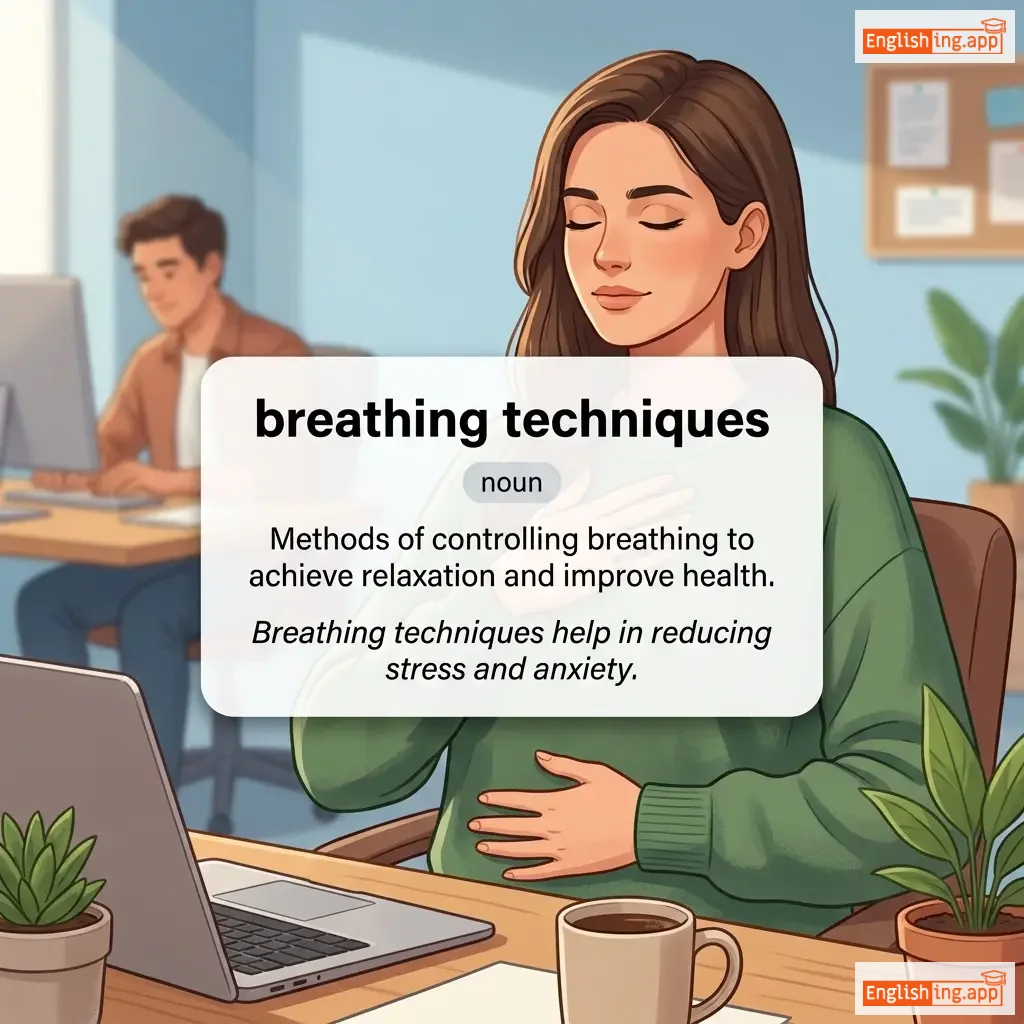
breathing techniques definition card — visual illustration of the meaning
noun
/ˈbriː.ðɪŋ tɛkˌniːks/
técnicas de respiración (teknikas de respiracion)

Methods of controlling breathing to achieve relaxation and improve health.

"Breathing techniques help in reducing stress and anxiety."

"Las técnicas de respiración ayudan a reducir el estrés y la ansiedad." (Las tecnicas de respiracion ayudan a reducir el estres y la ansiedad.)
noun
/briːtʃ/
La parte posterior del cañón de un arma; la posición de un bebé en el útero donde los glúteos o los pies salen primero al nacer. (La parte posterior del canon de un arma; la posicion de un bebe en el utero donde los gluteos o los pies salen primero al nacer.)

The back part of a gun barrel; a position of a baby in the womb where the buttocks or feet come out first at birth.

"The rifle was loaded through the breech."

"El rifle fue cargado a través de la culata." (El rifle fue cargado a traves de la culata.)
noun
/ˈbriːtʃɪz/
pantalones cortos hasta la rodilla (pantalones cortos hasta la rodilla)

knee-length trousers; short pants

"He wore riding breeches for the equestrian event."

"Él usó pantalones cortos hasta la rodilla para el evento ecuestre." (Él usó pantalones cortos hasta la rodilla para el evento ecuestre.)
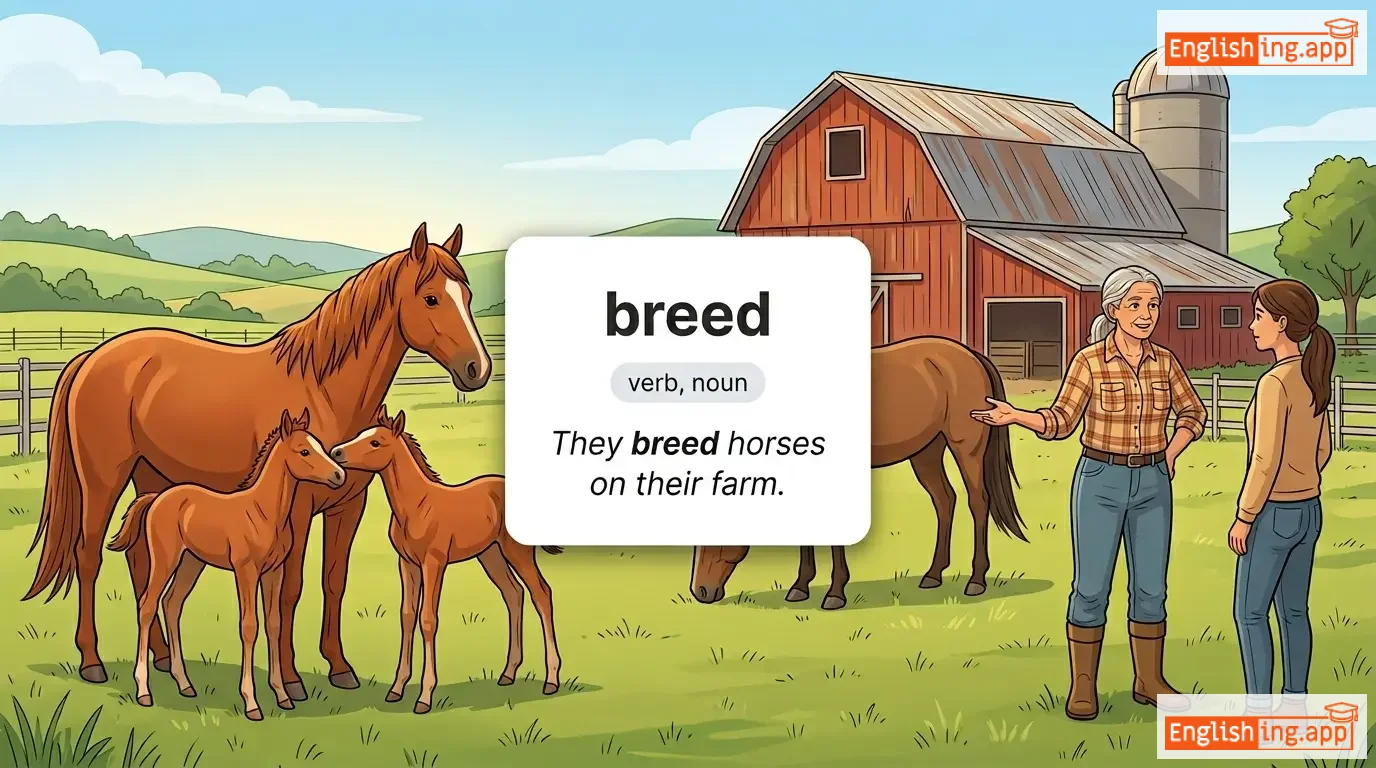
breed definition card — visual illustration of the meaning
verb, noun
/briːd/
criar, raza (criar, raza)

To cause an animal to reproduce; to raise or train; a type or variety of animal or plant.

"They breed horses on their farm."

"Ellos crían caballos en su granja." (Ellos crían caballos en su granja.)
noun
/briːz/
brisa suave (brisa suave)

a gentle wind; a light and pleasant current of air.

"A cool breeze came through the window."

"Una brisa fresca entró por la ventana." (Una brisa fresca entró por la ventana.)
noun
/ˈbriːzˌweɪ/
pasillo techado (pasillo techado)

A roofed outdoor passage, often connecting two buildings.

"The breezeway connected the house to the garage."

"El pasillo techado conectaba la casa con el garaje." (El pasillo techado conectaba la casa con el garaje.)
noun
/ˈbrɛviˌɛri/
libro de oraciones (libro de oraciones)

A book containing the service for each day, used in Christian liturgy.

"The monk read from the breviary during morning prayers."

"El monje leyó del libro de oraciones durante las oraciones matutinas." (El monje leyó del libro de oraciones durante las oraciones matutinas.)
noun
/ˈbrɛvɪti/
breviedad (breviedad)

Concise and exact use of words in writing or speech.

"The brevity of the speech kept the audience engaged."

"La brevedad del discurso mantuvo a la audiencia comprometida." (La brevedad del discurso mantuvo a la audiencia comprometida.)
verb
/braɪb/
soborno (soborno)

To persuade someone to act in one's favor, typically illegally, by offering money or gifts.

"The official was caught trying to bribe the inspector."

"El oficial fue atrapado intentando sobornar al inspector." (El oficial fue atrapado intentando sobornar al inspector.)
noun
/ˈbrɪk ə ˌbræk/
objetos decorativos pequeños (objetos decorativos pequenos)

Small decorative objects or ornaments, often of little value.

"The shelves were filled with old bric-a-brac from her travels."

"Las estanterías estaban llenas de pequeños objetos decorativos de sus viajes." (Las estanterías estaban llenas de pequeños objetos decorativos de sus viajes.)
noun
/brɪk/
ladrillo (ladrillo)

A rectangular block of clay or similar material used in building walls and other structures.

"The workers laid brick after brick to build the wall."

"Los trabajadores colocaron ladrillo tras ladrillo para construir la pared." (Los trabajadores colocaron ladrillo tras ladrillo para construir la pared.)
noun
/ˈbrɪk.bæt/
un pedazo de ladrillo; crítica severa o censura (un pedazo de ladrillo; critica severa o censura)

a piece of brick, especially one used as a missile; harsh criticism or censure

"The angry protesters threw brickbats at the building windows."

"Los manifestantes enfadados arrojaron ladrillos a las ventanas del edificio." (Los manifestantes enfadados arrojaron ladrillos a las ventanas del edificio.)
noun
/braɪd/
novia (novia)

a woman on her wedding day or just before and after the event

"The bride looked stunning in her white dress."

"La novia se veía impresionante con su vestido blanco." (La novia se veia impresionante con su vestido blanco.)
noun
/ˈbraɪd.ɡrʊm/
novio (novio)

a man on his wedding day or just before and after the event

"The nervous bridegroom waited at the altar for his bride to arrive."

"El nervioso novio esperó en el altar a que llegara su novia." (El nervioso novio espero en el altar a que llegara su novia.)
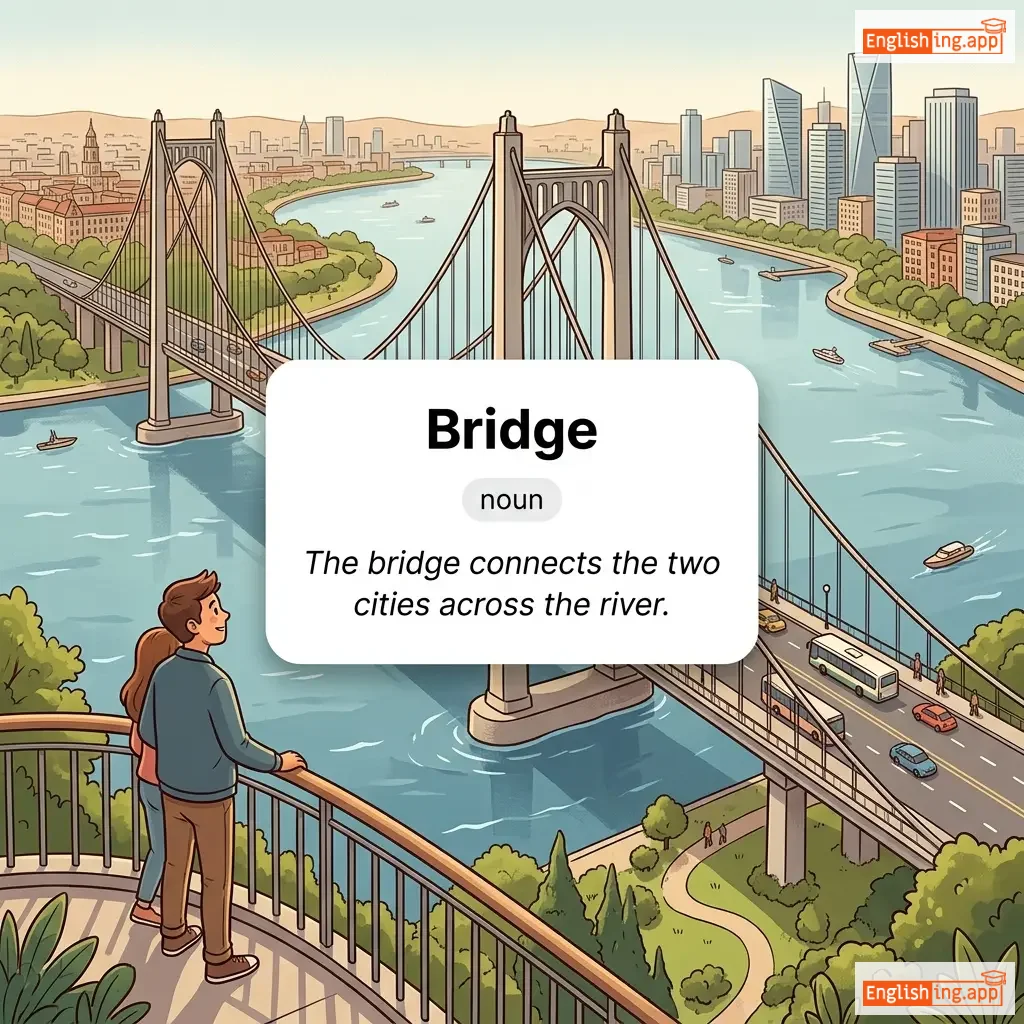
Bridge definition card — visual illustration of the meaning
noun
/brɪdʒ/
puente (puente)

A structure built to span a physical obstacle, such as a river or road, for the purpose of providing passage.

"The bridge connects the two cities across the river."

"El puente conecta las dos ciudades a través del río." (El puente conecta las dos ciudades a través del río.)
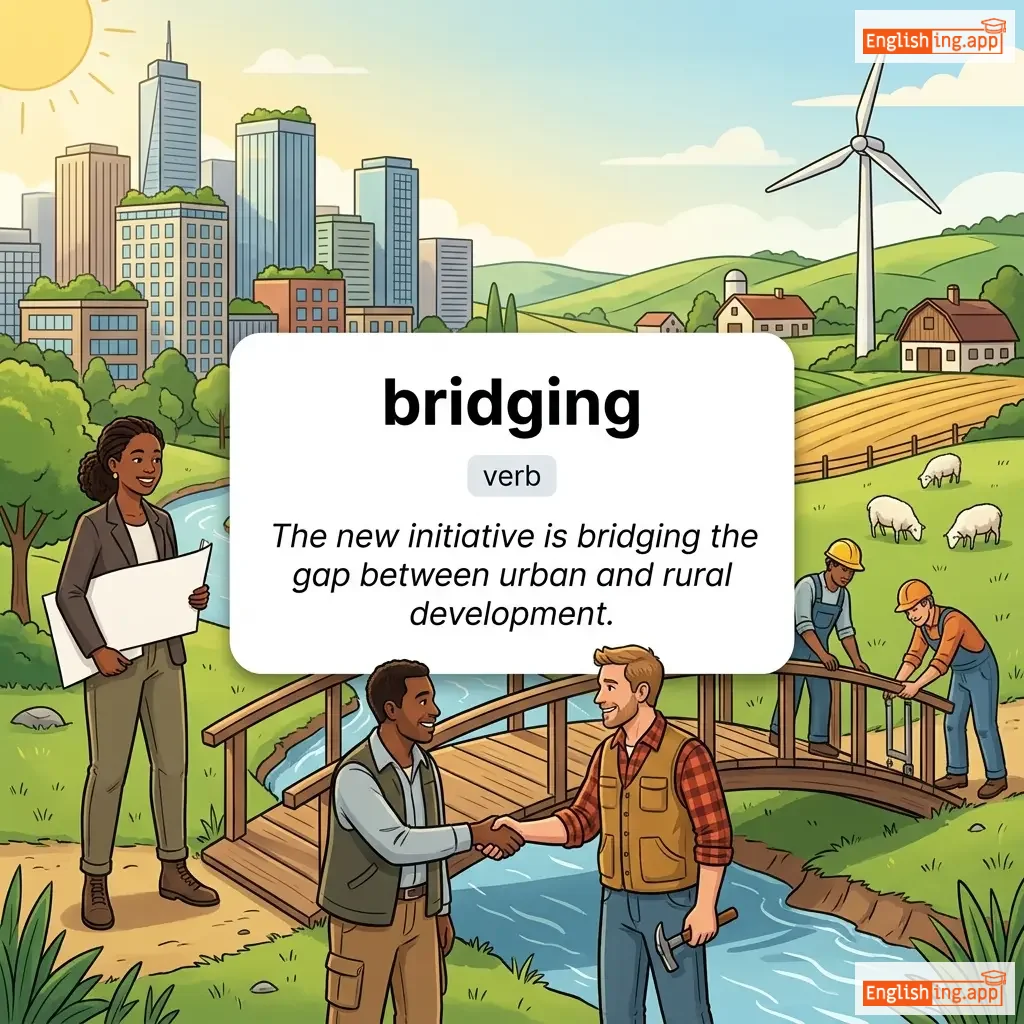
bridging definition card — visual illustration of the meaning
verb
/ˈbrɪdʒɪŋ/
construir un puente, hacer conexiones (construir un puente, hacer conexiones)

The action of building a bridge over something; connecting or reducing the distance between two things.

"The new initiative is bridging the gap between urban and rural development."

"La nueva iniciativa está tendiendo un puente entre el desarrollo urbano y rural." (La nueva iniciativa está tendiendo un puente entre el desarrollo urbano y rural.)
noun/verb
/ˈbraɪ.dəl/
frenuela (frenuela)

A bridle is a piece of equipment used to control a horse; as a verb, it means to show anger or to restrain.

"The rider tightened the bridle before setting off."

"El jinete apretó el freno antes de partir." (El jinete apretó el freno antes de partir.)
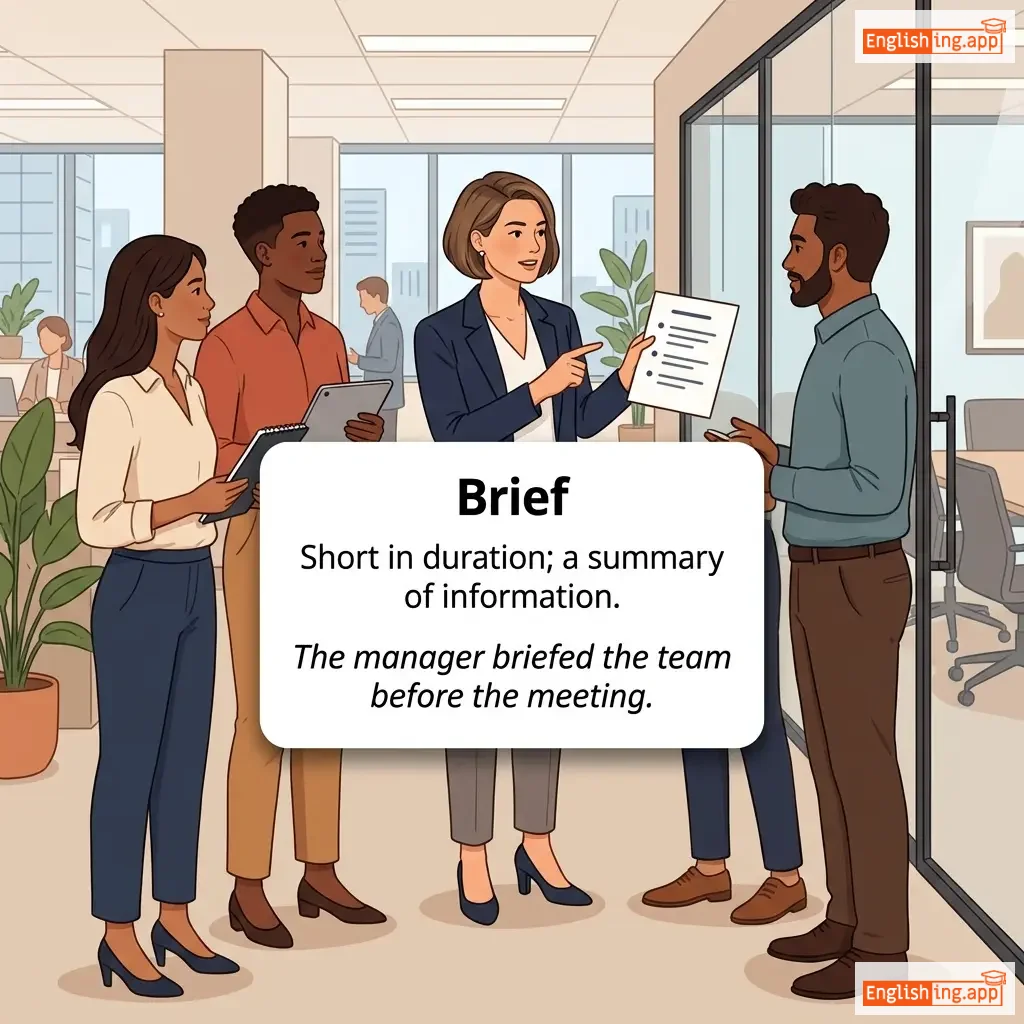
Brief definition card — visual illustration of the meaning
adjective, noun, verb
/briːf/
breve (breh-veh)

Short in duration; a summary of information.

"The manager briefed the team before the meeting."

"El gerente dio un informe breve al equipo antes de la reunión." (El ge-ren-te dio un in-for-me breh-ve al e-ki-po an-tes de la re-u-nyon.)
adverb
/ˈbriːfli/
brevemente (brevemente)

For a short time; in a few words.

"She spoke briefly about her travel experience."

"Ella habló brevemente sobre su experiencia de viaje." (Ella habló brevemente sobre su experiencia de viaje.)
noun
/brɪˈɡeɪd/
brigada (brigada)

A large group of people organized for a specific purpose, especially a military unit.

"The fire brigade arrived quickly to put out the flames."

"La brigada de bomberos llegó rápidamente para apagar las llamas." (La brigada de bomberos llego rapidamente para apagar las llamas.)
noun
/ˌbrɪɡ.əˈdɪər/
brigadier (brigadier)

A military officer rank, usually commanding a brigade.

"The brigadier inspected the troops before the parade."

"El brigadier inspeccionó las tropas antes del desfile." (El brigadier inspeccionó las tropas antes del desfile.)
noun
/ˈbrɪɡ.ənd/
bandido (bandido)

A member of a gang that ambushes and robs people in forests or mountains; a bandit.

"The travelers were attacked by brigands in the mountains."

"Los viajeros fueron atacados por bandidos en las montañas." (Los viajeros fueron atacados por bandidos en las montañas.)
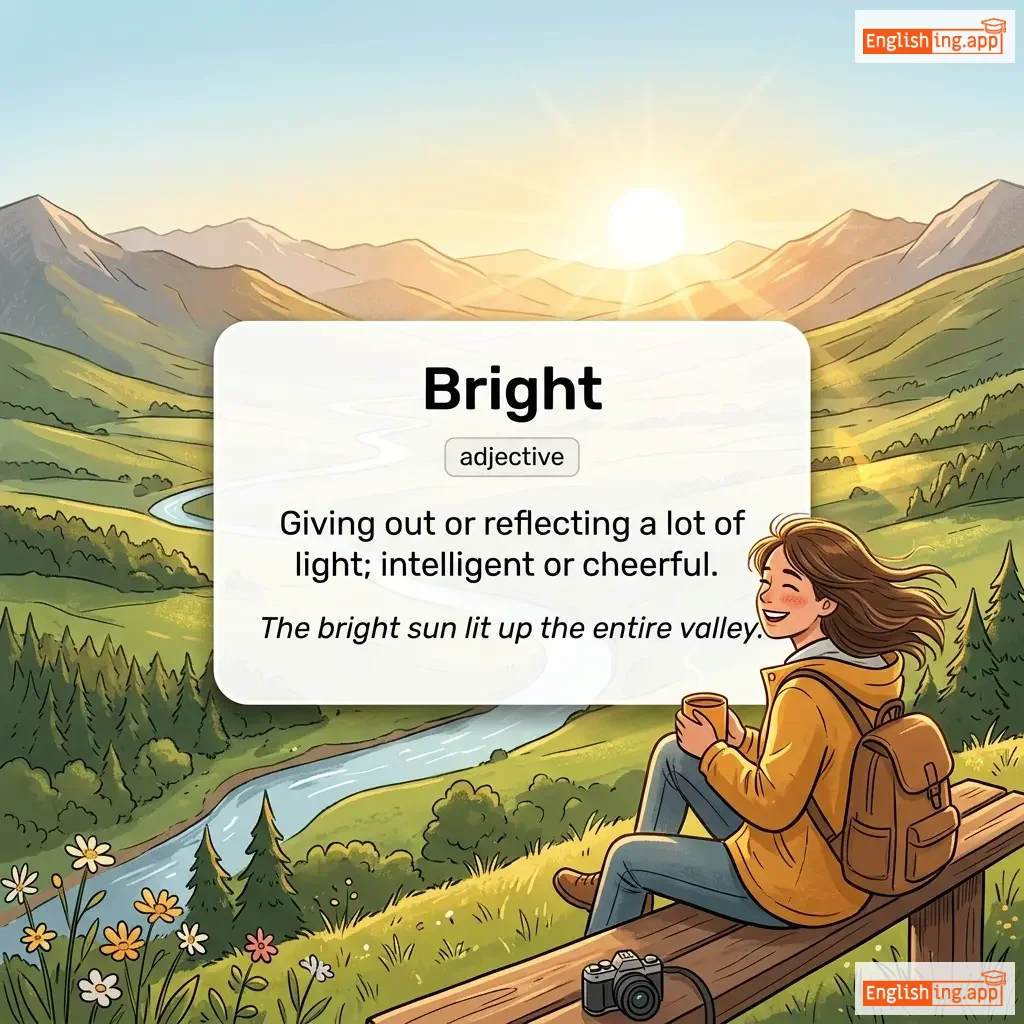
Bright definition card — visual illustration of the meaning
adjective
/braɪt/
brillante (brillante)

Giving out or reflecting a lot of light; intelligent or cheerful.

"The bright sun lit up the entire valley."

"El brillante sol iluminó todo el valle." (El brillante sol iluminó todo el valle.)
verb
/ˈbraɪtən/
iluminar (iluminar)

to make something lighter or more colorful; to improve mood or make happier

"A few kind words can brighten someone's day."

"Unas palabras amables pueden alegrar el día de alguien." (unas palabras amables pueden alegrar el dia de alguien)
adverb
/ˈbraɪtli/
brillantemente (brillantemente)

in a way that gives off a lot of light; in a vivid, cheerful, or intelligent manner

"The stars shone brightly in the clear night sky."

"Las estrellas brillaban brillantemente en el cielo nocturno despejado." (Las estrellas brillaban brillantemente en el cielo nocturno despejado)
adjective
/ˈbrɪliənt/
brillante (brillante)

Exceptionally clever, talented, or impressive; very bright or radiant.

"She gave a brilliant performance on stage."

"Ella dio una actuación brillante en el escenario." (Ella dio una actuacion brillante en el escenario.)
noun/verb
/brɪm/
borde (borde)

The edge of a container; as a verb, to be full to the point of overflowing.

"Her eyes brimmed with tears of joy."

"Sus ojos se llenaron de lágrimas de alegría." (Sus ojos se llenaron de lagrimas de alegria.)
noun
/ˈbrɪmˌstoʊn/
azufre (azufre)

Sulfur, especially when considered as fiery and associated with hell or divine punishment.

"The preacher spoke of fire and brimstone to warn the congregation."

"El predicador habló de fuego y azufre para advertir a la congregación." (El predicador hablo de fuego y azufre para advertir a la congregacion.)
adjective
/ˈbrɪndl̩d/
atigrado (atigrado)

Having a brownish or tawny color with streaks or spots of another color.

"The farmer owned a brindled cow with distinctive stripes."

"El granjero tenía una vaca atigrada con rayas distintivas." (El granjero tenía una vaca atigrada con rayas distintivas.)
noun
/braɪn/
agua salada (agua salada)

Water saturated with salt, often used for preserving food.

"The olives were stored in brine to keep them fresh."

"Las aceitunas se guardaron en agua salada para mantenerlas frescas." (Las aceitunas se guardaron en agua salada para mantenerlas frescas.)
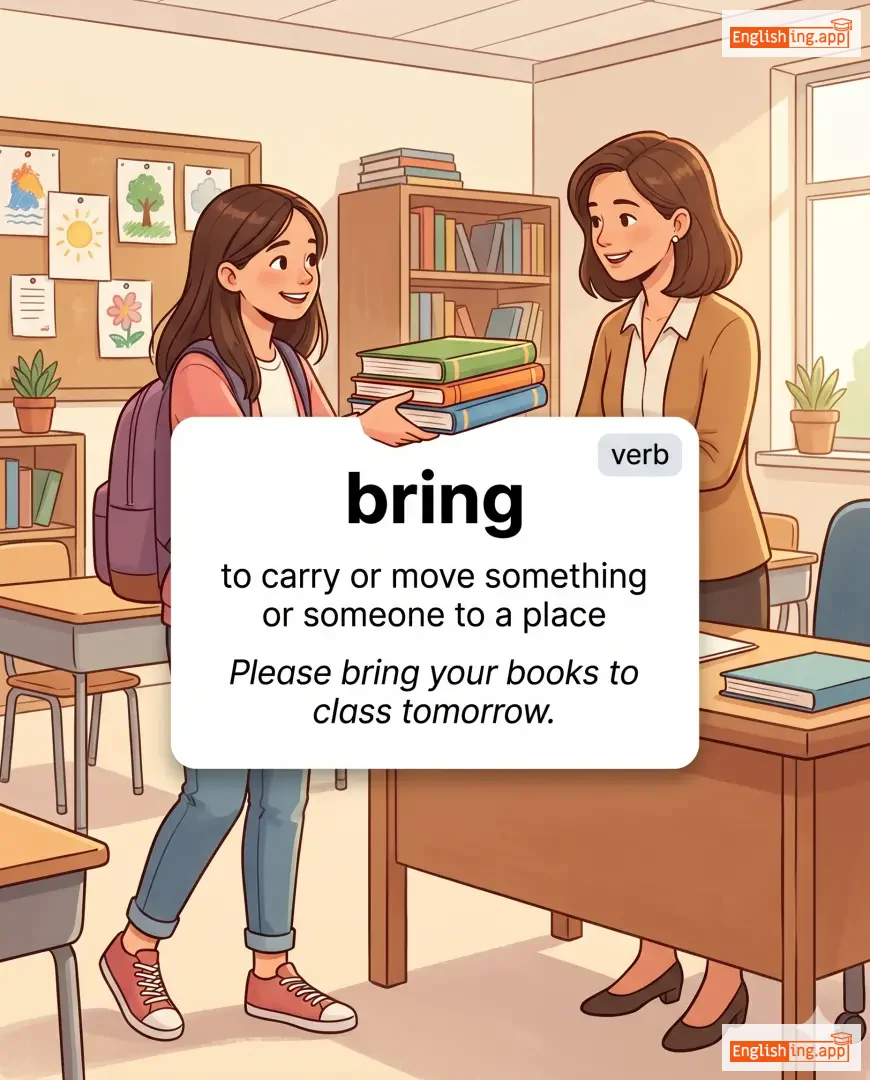
bring definition card — visual illustration of the meaning
verb
/brɪŋ/
traer (traer)

to carry or move something or someone to a place

"Please bring your books to class tomorrow."

"Por favor trae tus libros a clase mañana." (Por favor trae tus libros a clase mañana.)
noun
/ˈbrɪn.dʒəl/
berenjena (berenjena)

a large purple vegetable that is white inside; also called eggplant

"My mother cooked brinjal curry for lunch."

"Mi madre cocinó curry de berenjena para el almuerzo." (Mi madre cocino curry de berenjena para el almuerzo.)
noun
/brɪŋk/
borde (borde)

The edge or point just before a significant event or change.

"The company was on the brink of bankruptcy."

"La empresa estaba al borde de la quiebra." (La empresa estaba al borde de la quiebra.)
adjective
/brɪsk/
rápido (rapido)

Quick, energetic, and active in movement or speech.

"She took a brisk walk in the morning to stay healthy."

"Ella dio una caminata rápida por la mañana para mantenerse saludable." (Ella dio una caminata rapida por la mañana para mantenerse saludable.)
verb, noun
/ˈbrɪsəl/
pelos rígidos; reaccionar con ira (pelos rigidos; reaccionar con ira)

to react angrily or defensively; a short stiff hair or fiber

"The cat bristled when it saw the dog."

"El gato se erizó cuando vio al perro." (El gato se erizó cuando vio al perro.)
adjective
/ˈbrɪslɪŋ/
erizado; lleno de energía (erizado; lleno de energia)

full of energy, anger, or excitement; showing bristles standing up

"He entered the room bristling with confidence."

"Entró en la habitación lleno de confianza." (Entro en la habitacion lleno de confianza.)
noun
/brɪˈtæniə/
Britania (Britania)

the personification of Britain, often shown as a woman with a helmet and shield

"Britannia has been a symbol of Britain since Roman times."

"Britania ha sido un símbolo de Gran Bretaña desde la época romana." (Britania ha sido un simbolo de Gran Bretana desde la epoca romana.)
noun
/ˈbrɪtɪˌsɪzəm/
palabra o característica del inglés británico (palabra o caracteristica del ingles britanico)

a word, phrase, or characteristic feature of British English

"The word 'lorry' is a well-known Briticism."

"La palabra 'lorry' es un briticismo bien conocido." (La palabra 'lorry' es un briticismo bien conocido.)
adjective
/ˈbrɪtɪʃ/
británico (britanico)

relating to Great Britain or its people

"She loves British culture and traditions."

"A ella le encanta la cultura y las tradiciones británicas." (A ella le encanta la cultura y las tradiciones británicas.)
adjective
/ˈbrɪtl/
quebradizo (quebradizo)

easily broken or cracked; hard but liable to break

"The glass was so brittle that it cracked easily."

"El cristal era tan quebradizo que se rompió fácilmente." (El cristal era tan quebradizo que se rompió fácilmente.)
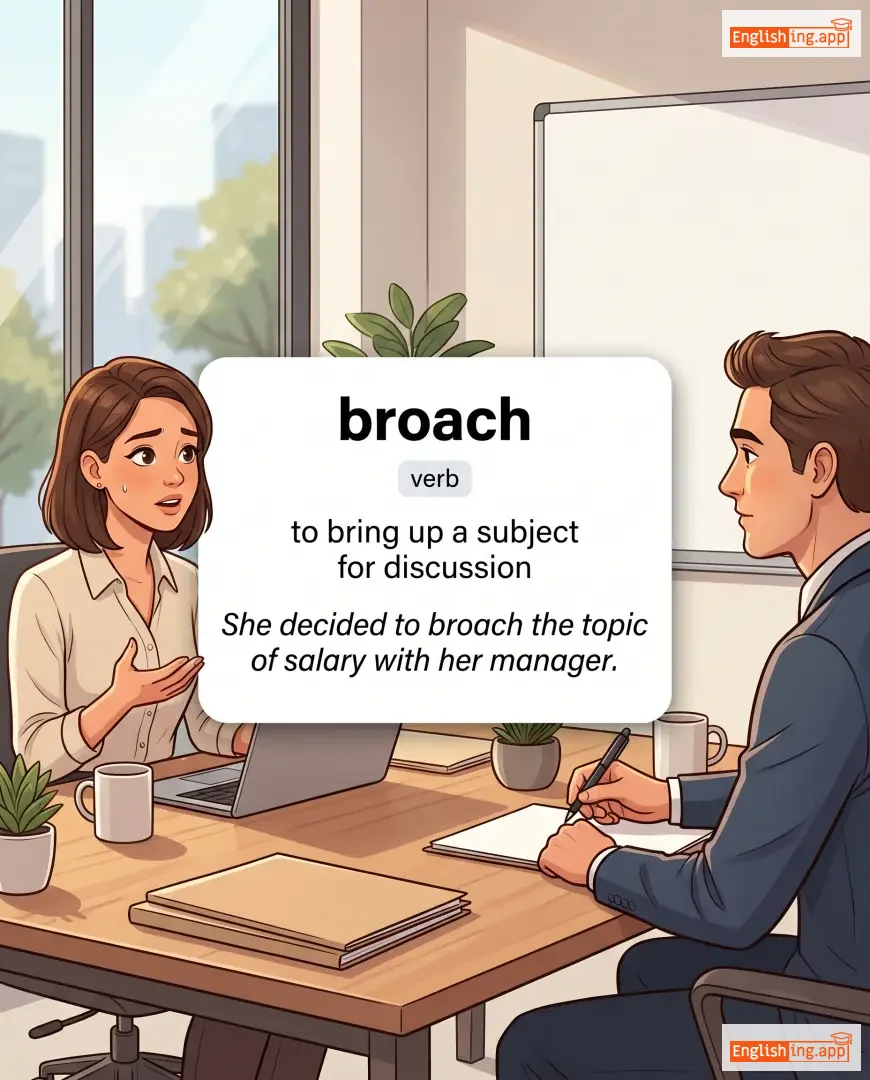
broach definition card — visual illustration of the meaning
verb
/broʊtʃ/
abordar (abordar)

to bring up a subject for discussion

"She decided to broach the topic of salary with her manager."

"Ella decidió abordar el tema del salario con su jefe." (Ella decidió abordar el tema del salario con su jefe.)
adjective
/brɔːd/
ancho (ancho)

wide in extent, range, or scope

"The river is very broad at this point."

"El río es muy ancho en este punto." (El río es muy ancho en este punto.)
noun
/ˈbrɔːd.bænd/
banda ancha (banda ancha)

a high-capacity transmission technique using a wide range of frequencies.

"Broadband internet has become a necessity in modern homes."

"Internet de banda ancha se ha convertido en una necesidad en los hogares modernos." (Internet de banda ancha se ha convertido en una necesidad en los hogares modernos.)
verb
/ˈbrɔːdˌkæst/
transmitir (transmitir)

to transmit a program or information by radio, television, or online media

"The match was broadcast live on television."

"El partido fue transmitido en vivo por televisión." (El partido fue transmitido en vivo por television.)
noun
/ˈbrɔːdˌkæstər/
locutor (locutor)

a person or organization that transmits a broadcast program.

"The broadcaster aired the match live to millions of viewers."

"El locutor transmitió el partido en vivo a millones de espectadores." (El locutor transmitió el partido en vivo a millones de espectadores.)
verb
/ˈbrɔːdən/
ampliar (ampliar)

to make wider or larger in scope; to expand ideas, experience, or understanding

"Travel can broaden your perspective on different cultures."

"Viajar puede ampliar tu perspectiva sobre diferentes culturas." (Viajar puede ampliar tu perspectiva sobre diferentes culturas)
adverb
/ˈbrɔːdli/
ampliamente (ampliamente)

in a general or wide manner.

"The rules are broadly similar across all regions."

"Las reglas son generalmente similares en todas las regiones." (Las reglas son generalmente similares en todas las regiones.)
noun
/ˈbrɔːdˌsaɪd/
ataque contundente (ataque contundente)

a strong verbal attack or a sheet of paper printed on one side

"The politician launched a broadside against his opponent."

"El político lanzó un ataque contundente contra su oponente." (El político lanzó un ataque contundente contra su oponente.)
noun
/brəˈkeɪd/
tela bordada (tela bordada)

a rich fabric woven with a raised pattern, often in gold or silver thread

"She wore a beautiful brocade dress to the wedding."

"Ella llevaba un hermoso vestido de brocado en la boda." (Ella llevaba un hermoso vestido de brocado en la boda.)