Словари

Словарь английского языка | Значения слов, определения и примеры

noun
/ˈbriːðɪŋ/
счастье (schastye)

the process of taking air into and expelling it from the lungs.

"Deep breathing can help you relax."

"Она не могла скрыть своего счастья, когда получила награду." (Ona ne mogla skryt' svoego schast'ya, kogda poluchila nagradu.)
breathing techniques definition card — visual illustration of the meaning
noun
/ˈbriː.ðɪŋ tɛkˌniːks/
дыхательные техники (dyhatelnye tekhniki)

Methods of controlling breathing to achieve relaxation and improve health.

"Breathing techniques help in reducing stress and anxiety."

"Дыхательные техники помогают снизить стресс и тревогу." (Dykhatelnye tekhniki pomogayut snizit' stress i trevogu.)
noun
/briːtʃ/
Задняя часть ствола оружия; положение ребенка в утробе, когда ягодицы или ноги выходят первыми при родах. (Zadnyaya chast' stvola oruzhiya; polozhenie rebenka v utrobe, kogda yagoditsy ili nogi vykhodyat pervymi pri rodakh.)

The back part of a gun barrel; a position of a baby in the womb where the buttocks or feet come out first at birth.

"The rifle was loaded through the breech."

"Винтовка была загружена через затвор." (Vintovka byla zagruzhena cherez zatvor.)
noun
/ˈbriːtʃɪz/
бриджи (bridzhi)

knee-length trousers; short pants

"He wore riding breeches for the equestrian event."
"Он носил бриджи для конного соревнования." (On nosil bridzhi dlya konnogo sorevnovaniya.)
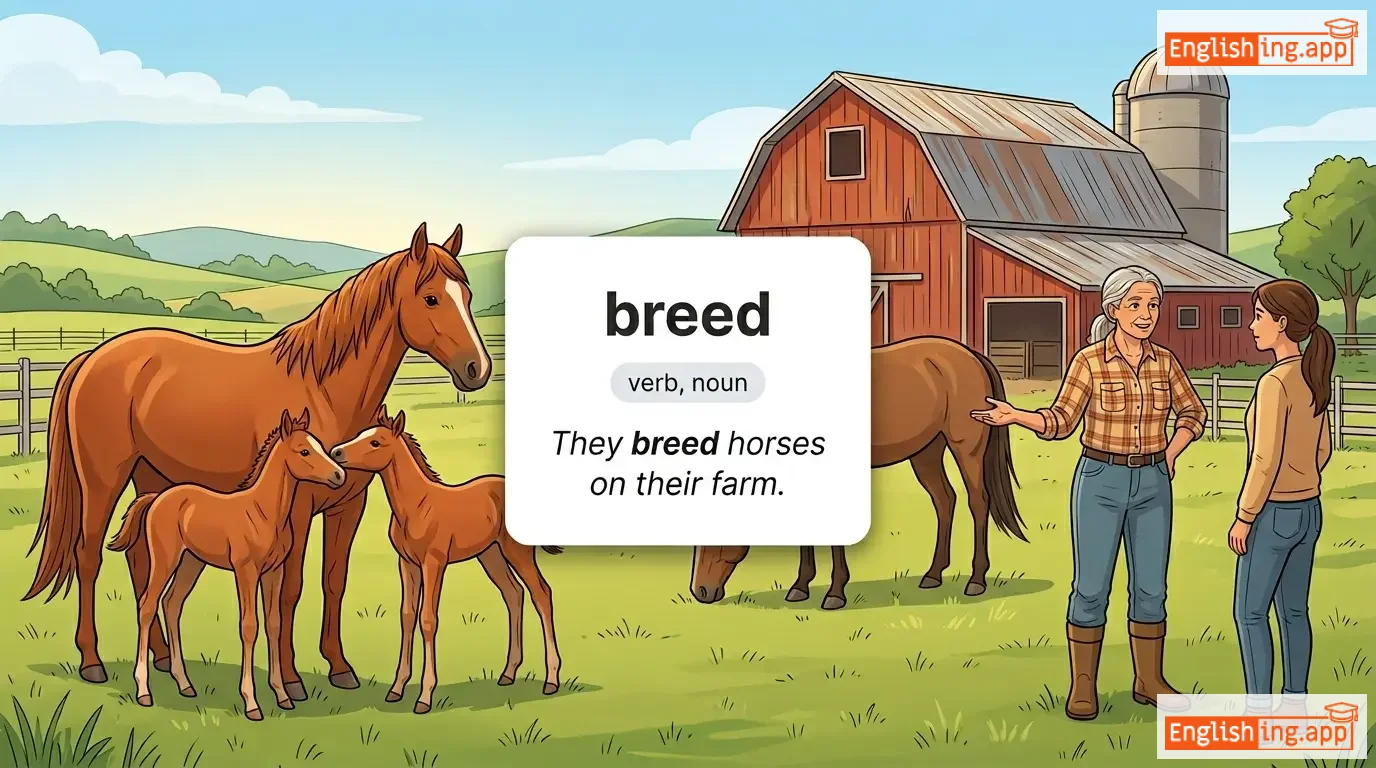
breed definition card — visual illustration of the meaning
verb, noun
/briːd/
разводить, порода (razvodit, poroda)

To cause an animal to reproduce; to raise or train; a type or variety of animal or plant.

"They breed horses on their farm."

"Они разводят лошадей на своей ферме." (Oni razvodjat loshadej na svojej ferme.)
noun
/briːz/
легкий ветерок (legkiy veterok)

a gentle wind; a light and pleasant current of air.

"A cool breeze came through the window."

"Прохладный ветерок прошел через окно." (Prokhladnyy veterok proshel cherez okno.)
noun
/ˈbriːzˌweɪ/
крышный проход (kryshny prohod)

A roofed outdoor passage, often connecting two buildings.

"The breezeway connected the house to the garage."

"Крышный проход соединял дом с гаражом." (Kryshny prohod soedinyal dom s garazhom.)
noun
/ˈbrɛviˌɛri/
молитвенная книга (molitvennaya kniga)

A book containing the service for each day, used in Christian liturgy.

"The monk read from the breviary during morning prayers."

"Монах читал из молитвенной книги во время утренних молитв." (Monakh chital iz molitvennoi knigi vo vremya utrebnikh molitv.)
noun
/ˈbrɛvɪti/
краткость (kratkost)

Concise and exact use of words in writing or speech.

"The brevity of the speech kept the audience engaged."

"Краткость речи удерживала внимание аудитории." (Kratkost rechi uderzhivala vnimanie auditorii.)
💵

Bribe

verb
/braɪb/

To persuade someone to act in one's favor, typically illegally, by offering money or gifts.

"The official was caught trying to bribe the inspector."

noun
/ˈbrɪk ə ˌbræk/
декоративные безделушки (dekorativnye bezdelushki)

Small decorative objects or ornaments, often of little value.

"The shelves were filled with old bric-a-brac from her travels."

"Полки были заполнены старыми декоративными безделушками из её путешествий." (Polki byli zapolneny starymi dekorativnymi bezdelushkami iz yey puteshestviy.)
noun
/brɪk/
кирпич (kirpich)

A rectangular block of clay or similar material used in building walls and other structures.

"The workers laid brick after brick to build the wall."

"Рабочие укладывали кирпич за кирпичом, чтобы построить стену." (Rabochie ukladyvali kirpich za kirpichom, chtoby postroit' stenu.)
noun
/ˈbrɪk.bæt/
кусок кирпича; резкая критика или осуждение (kusok kirpicha; rezkaya kritika ili osuzhdenie)

a piece of brick, especially one used as a missile; harsh criticism or censure

"The angry protesters threw brickbats at the building windows."

"Разъяренные протестующие кидали кирпичи в окна здания." (Raz'yarenniye protestuyushchiye kidali kirpichi v okna zdaniya.)
noun
/braɪd/
невеста (nevesta)

a woman on her wedding day or just before and after the event

"The bride looked stunning in her white dress."

"Невеста выглядела потрясающе в своем белом платье." (Nevesta vyglyadela potresayushche v svoem belom plat'ye.)
noun
/ˈbraɪd.ɡrʊm/
жених (zhenikh)

a man on his wedding day or just before and after the event

"The nervous bridegroom waited at the altar for his bride to arrive."
"Нервный жених ждал у алтаря, когда придет его невеста." (Nervny zhenikh zhdal u altarya, kogda pridyot ego nevesta.)
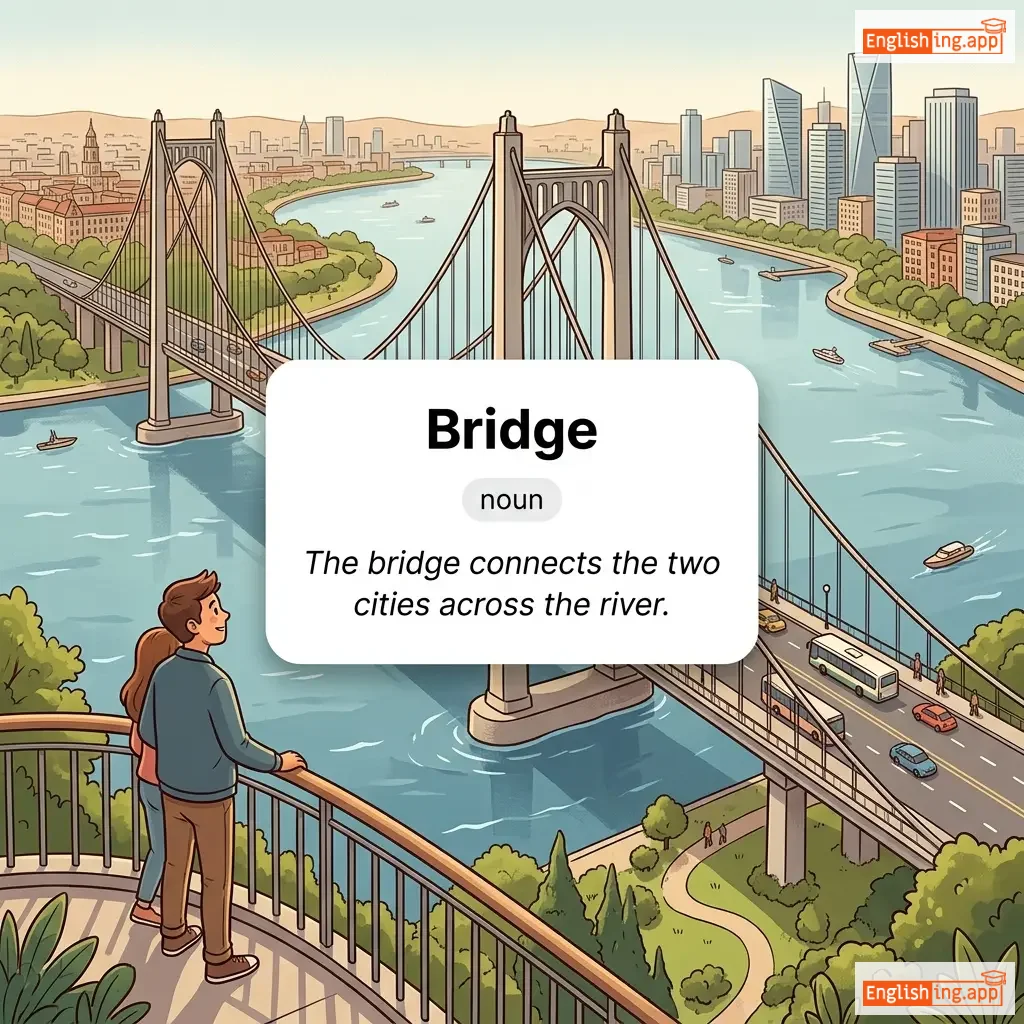
Bridge definition card — visual illustration of the meaning
noun
/brɪdʒ/
мост (most)

A structure built to span a physical obstacle, such as a river or road, for the purpose of providing passage.

"The bridge connects the two cities across the river."
"Мост соединяет два города через реку." (Most soyedinyayet dva goroda cherez reku.)
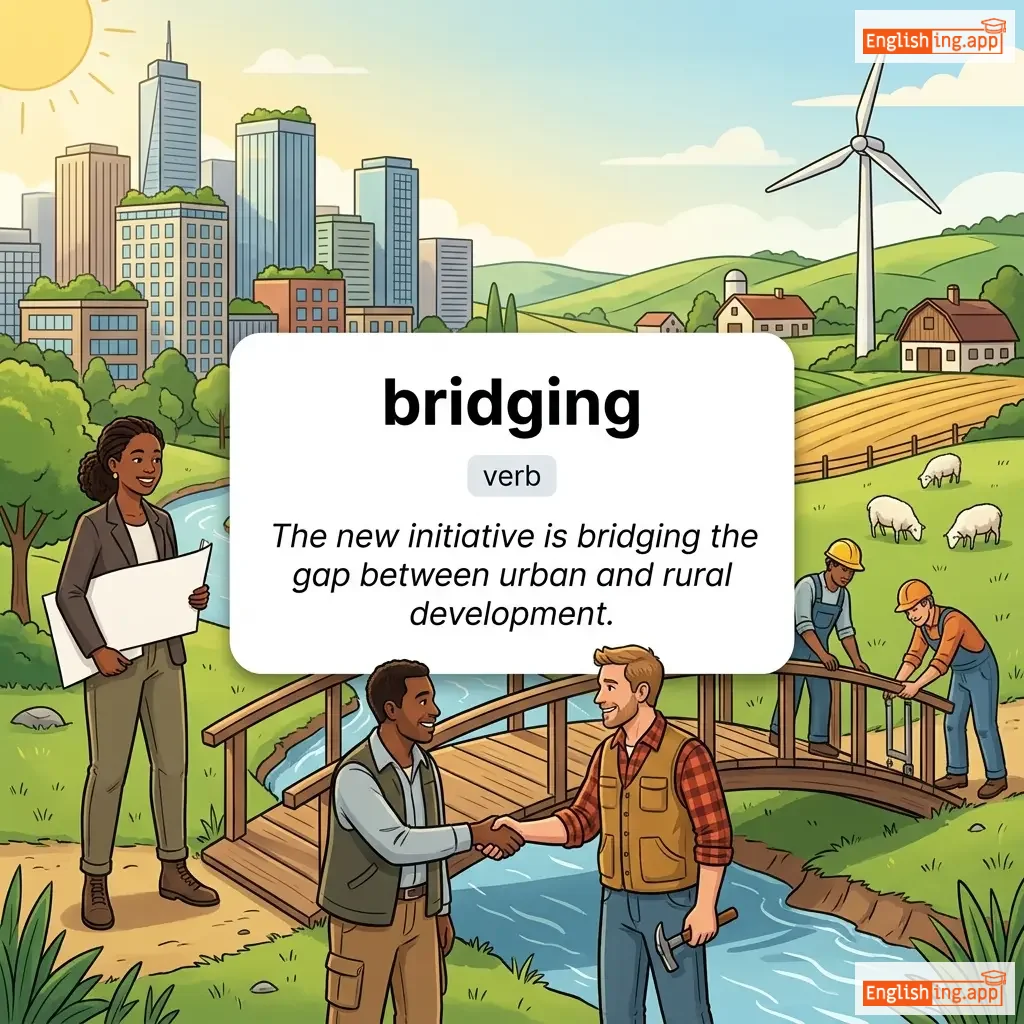
bridging definition card — visual illustration of the meaning
verb
/ˈbrɪdʒɪŋ/
строить мост, создавать соединения (stroit' most, sozdavat' soedinenija)

The action of building a bridge over something; connecting or reducing the distance between two things.

"The new initiative is bridging the gap between urban and rural development."

"Новая инициатива сокращает разрыв между городским и сельским развитием." (Novaya initsiativa sokrashchaet razryv mezhdu gorodskim i selskim razvitiyem.)
noun/verb
/ˈbraɪ.dəl/

A bridle is a piece of equipment used to control a horse; as a verb, it means to show anger or to restrain.

"The rider tightened the bridle before setting off."

Brief definition card — visual illustration of the meaning
adjective, noun, verb
/briːf/
краткий (kratkiy)

Short in duration; a summary of information.

"The manager briefed the team before the meeting."

"Менеджер дал краткое изложение команде перед встречей." (Menedzher dal kratkoe izlozhenie komande pered vstrechey.)
adverb
/ˈbriːfli/
кратко (kratko)

For a short time; in a few words.

"She spoke briefly about her travel experience."

"Она коротко рассказала о своем путешествии." (Ona korotko rasskazala o svoem puteshestvii.)
noun
/brɪˈɡeɪd/
бригада (brigada)

A large group of people organized for a specific purpose, especially a military unit.

"The fire brigade arrived quickly to put out the flames."

"Пожарная бригада быстро приехала, чтобы потушить пламя." (Pozharnaya brigada bystro priekhala, chtoby potushit' plamya.)
noun
/ˌbrɪɡ.əˈdɪər/
бригадир (brigadir)

A military officer rank, usually commanding a brigade.

"The brigadier inspected the troops before the parade."

"Бригадир осмотрел войска перед парадом." (Brigadir osmotrel vojska pered parodom.)
noun
/ˈbrɪɡ.ənd/
разбойник (razboynik)

A member of a gang that ambushes and robs people in forests or mountains; a bandit.

"The travelers were attacked by brigands in the mountains."
"Путники были атакованы разбойниками в горах." (Putniki byli atakovany razboynikami v gorakh.)
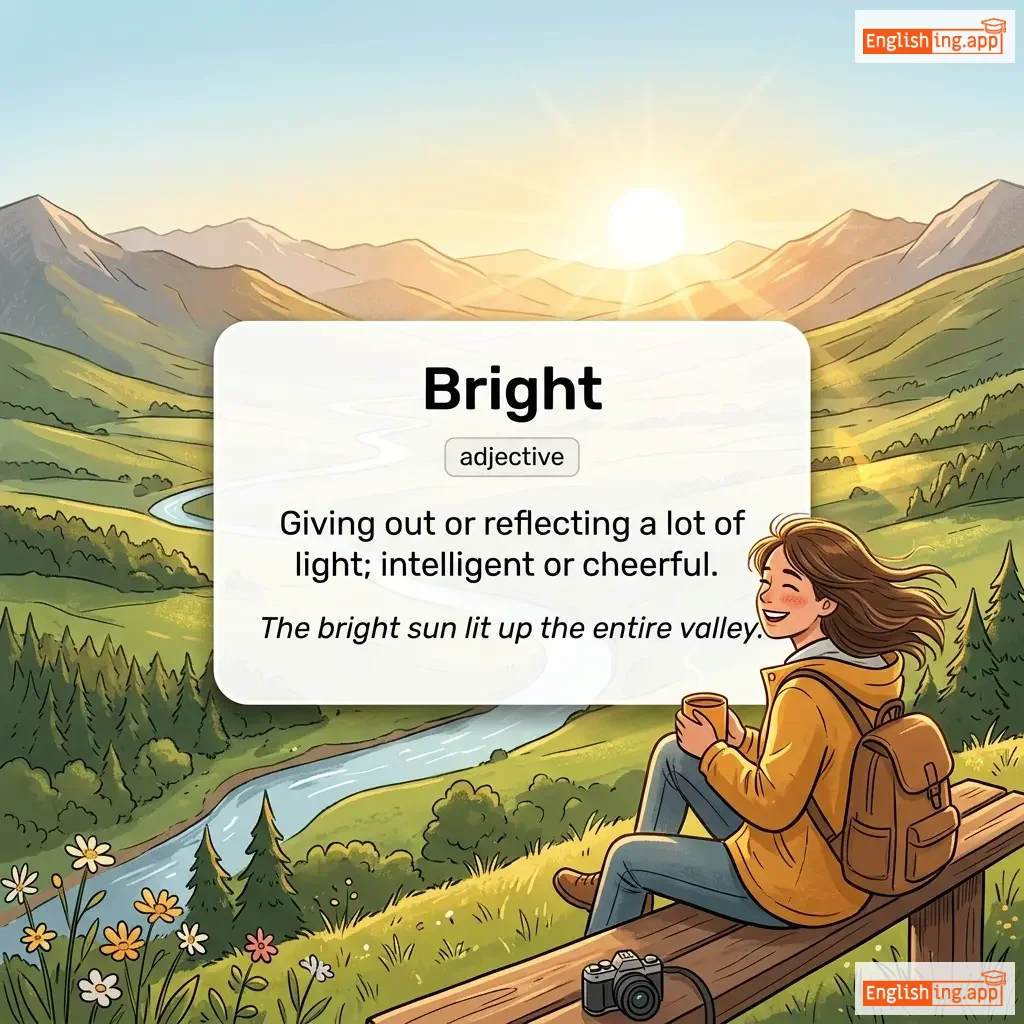
Bright definition card — visual illustration of the meaning
adjective
/braɪt/
яркий (yarkiy)

Giving out or reflecting a lot of light; intelligent or cheerful.

"The bright sun lit up the entire valley."

"Яркое солнце осветило всю долину." (Yarkoye solntse osvetilo vsyu dolinu.)
verb
/ˈbraɪtən/
осветлять (osvetlyat)

to make something lighter or more colorful; to improve mood or make happier

"A few kind words can brighten someone's day."

"Несколько добрых слов могут скрасить чей-то день." (neskolko dobrykh slov mogut skrasit chei to den)
adverb
/ˈbraɪtli/
ярко (yarko)

in a way that gives off a lot of light; in a vivid, cheerful, or intelligent manner

"The stars shone brightly in the clear night sky."

"Звезды ярко сияли на чистом ночном небе." (Zvezdy yarko siyali na chistom nochnom nebe)
adjective
/ˈbrɪliənt/
блестящий (blestyashchiy)

Exceptionally clever, talented, or impressive; very bright or radiant.

"She gave a brilliant performance on stage."

"Она дала блестящее представление на сцене." (Ona dala blestyashchee predstavlenie na stsene.)
noun/verb
/brɪm/
край (kraj)

The edge of a container; as a verb, to be full to the point of overflowing.

"Her eyes brimmed with tears of joy."

"Её глаза были полны слёз радости." (Eyo glaza byli polny slez radosti.)
noun
/ˈbrɪmˌstoʊn/

Sulfur, especially when considered as fiery and associated with hell or divine punishment.

"The preacher spoke of fire and brimstone to warn the congregation."

adjective
/ˈbrɪndl̩d/
пегий (pegiy)

Having a brownish or tawny color with streaks or spots of another color.

"The farmer owned a brindled cow with distinctive stripes."

"Фермер владел пегой коровой с характерными полосами." (Fermyer vlade pigoj korovoj s kharakternymi polosami.)
noun
/braɪn/
солёная вода (solyonaya voda)

Water saturated with salt, often used for preserving food.

"The olives were stored in brine to keep them fresh."
"Оливки хранились в солёной воде, чтобы оставаться свежими." (Olivki khranilis' v solyonykh vode, chtoby ostavat'sya svezhimi.)
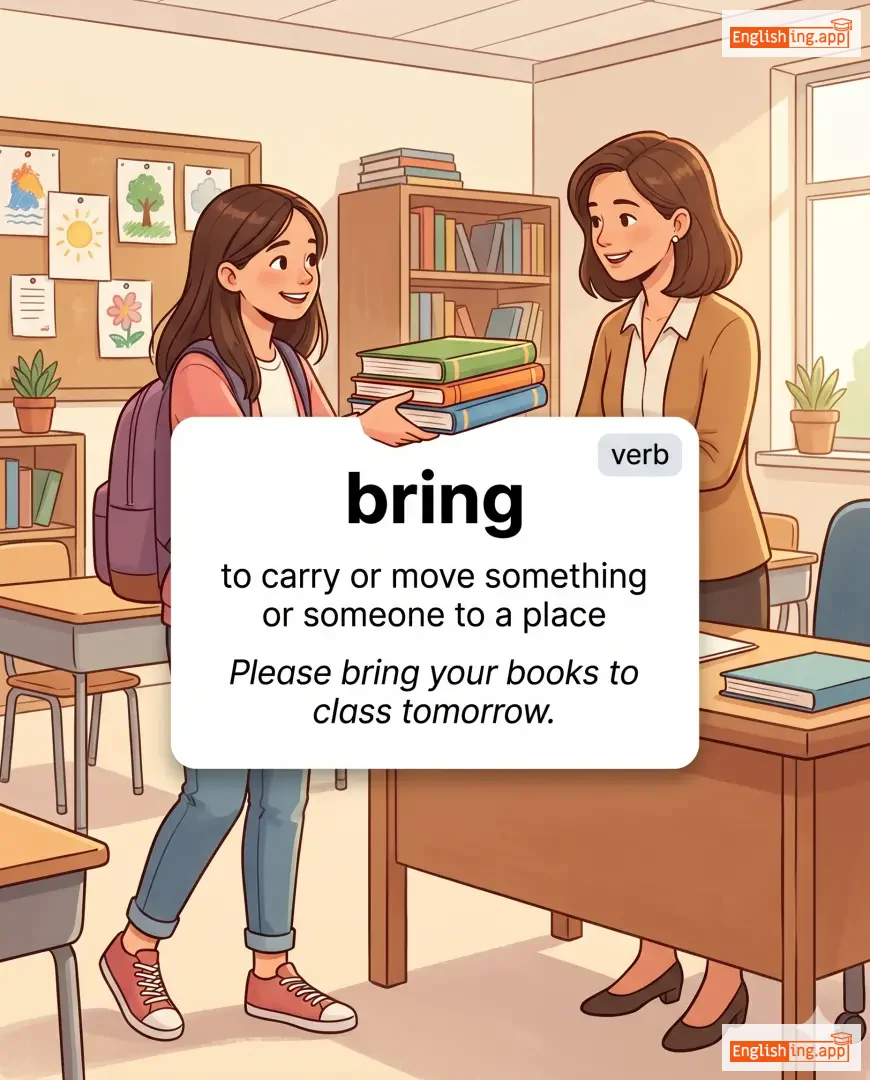
bring definition card — visual illustration of the meaning
verb
/brɪŋ/
приносить (prinosit)

to carry or move something or someone to a place

"Please bring your books to class tomorrow."

"Пожалуйста, принесите ваши книги в класс завтра." (Pozhaluysta, prinesite vashi knigi v klass zavtra.)
noun
/ˈbrɪn.dʒəl/
баклажан (baklazhan)

a large purple vegetable that is white inside; also called eggplant

"My mother cooked brinjal curry for lunch."

"Моя мама приготовила карри из баклажанов на обед." (Moya mama prigotovila karri iz baklazhanov na obed.)
noun
/brɪŋk/
край (kray)

The edge or point just before a significant event or change.

"The company was on the brink of bankruptcy."

"Компания была на грани банкротства." (Kompaniya byla na grani bankrotstva.)
adjective
/brɪsk/
быстрый (bystryy)

Quick, energetic, and active in movement or speech.

"She took a brisk walk in the morning to stay healthy."

"Она сделала быструю прогулку утром, чтобы оставаться здоровой." (Ona sdelala bystruyu progulku utrom, chtoby ostavatsya zdorovoy.)
verb, noun
/ˈbrɪsəl/
жесткие волосы; реагировать с гневом (zhestkie volosy; reaguye s gnevom)

to react angrily or defensively; a short stiff hair or fiber

"The cat bristled when it saw the dog."

"Кошка встала на дыбы, когда увидела собаку." (Koshka vstala na dyby, kogda uvidela sobaku.)
adjective
/ˈbrɪslɪŋ/
взъерошенный; полный энергии (vzyeroshennyy; polnyy energii)

full of energy, anger, or excitement; showing bristles standing up

"He entered the room bristling with confidence."

"Он вошел в комнату, полон уверенности." (On voshel v komnatu, polon uverennosti.)
noun
/brɪˈtæniə/
Британия (Britaniya)

the personification of Britain, often shown as a woman with a helmet and shield

"Britannia has been a symbol of Britain since Roman times."

"Британия является символом Великобритании с римских времен." (Britaniya yavlyaetsya simvolom Velikobritanii s rimskikh vremen.)
noun
/ˈbrɪtɪˌsɪzəm/
слово или характеристика британского английского (slovo ili kharakteristika britanskogo angliyskogo)

a word, phrase, or characteristic feature of British English

"The word 'lorry' is a well-known Briticism."

"Слово 'lorry' — это хорошо известный бритицизм." (Slovo 'lorry' — eto khorosho izvestnyy brititsizm.)
adjective
/ˈbrɪtɪʃ/
британский (britanskiy)

relating to Great Britain or its people

"She loves British culture and traditions."

"Ей нравится британская культура и традиции." (Ey nravitsya britanskaya kultura i traditsii.)
adjective
/ˈbrɪtl/
хрупкий (khrupkiy)

easily broken or cracked; hard but liable to break

"The glass was so brittle that it cracked easily."

"Стекло было настолько хрупким, что оно легко треснуло." (Steklo bylo nastol'ko khrupkim, chto ono legko tresnulo.)
broach definition card — visual illustration of the meaning
verb
/broʊtʃ/
поднять (podnyat)

to bring up a subject for discussion

"She decided to broach the topic of salary with her manager."

"Она решила поднять вопрос о зарплате с менеджером." (Ona reshilа podnyat vopros o zarplate s menedzherom.)
adjective
/brɔːd/
широкий (shirokiy)

wide in extent, range, or scope

"The river is very broad at this point."

"Река очень широкая в этой точке." (Reka ochen' shirokaya v etoy tochke.)
noun
/ˈbrɔːd.bænd/
широкополосный интернет (shirokopolosnyy internet)

a high-capacity transmission technique using a wide range of frequencies.

"Broadband internet has become a necessity in modern homes."

"Широкополосный интернет стал необходимостью в современных домах." (Shirokopolosnyy internet stal neobkhodimost'yu v sovremennykh domakh.)
verb
/ˈbrɔːdˌkæst/
транслировать (translirovat)

to transmit a program or information by radio, television, or online media

"The match was broadcast live on television."

"Матч был транслирован в прямом эфире по телевидению." (Match byl translirovann v pryamom efire po televizionu.)
noun
/ˈbrɔːdˌkæstər/
ведущий (vedushchiy)

a person or organization that transmits a broadcast program.

"The broadcaster aired the match live to millions of viewers."

"Ведущий транслировал матч в прямом эфире для миллионов зрителей." (Vedushchiy transliroval match v pryamom efire dlya millionov zriteley.)
verb
/ˈbrɔːdən/
расширять (rasshiryat)

to make wider or larger in scope; to expand ideas, experience, or understanding

"Travel can broaden your perspective on different cultures."

"Путешествия могут расширить ваш кругозор о разных культурах." (Puteshestviya mogut rasshirit vash krugozor o raznykh kulturakh)
adverb
/ˈbrɔːdli/
широко (shiroko)

in a general or wide manner.

"The rules are broadly similar across all regions."

"Правила в целом схожи во всех регионах." (Pravila v tselom skhozhi vo vsekh regionakh.)
noun
/ˈbrɔːdˌsaɪd/
жестокая атака (zhestokaya ataka)

a strong verbal attack or a sheet of paper printed on one side

"The politician launched a broadside against his opponent."

"Политик начал жестокую атаку против своего оппонента." (Politik nachal zhestokuyu ataku protiv svoego opponent.)
noun
/brəˈkeɪd/
брокатная ткань (brokatnaya tkansh)

a rich fabric woven with a raised pattern, often in gold or silver thread

"She wore a beautiful brocade dress to the wedding."

"Она надела красивое платье из броката на свадьбу." (Ona nadela krasivoye plat'ye iz brokataa na svad'bu.)