Словари

Словарь английского языка | Значения слов, определения и примеры

noun
/ˈsɪstərn/
резервуар (rezervuar)

A tank or container for storing water, usually for household use.

"The old house still had a cistern to collect rainwater."

"В старом доме всё ещё был резервуар для сбора дождевой воды." (V starom dome vse eshche byl rezervuar dlya sbora dozhdevoy vody.)
noun
/ˈsɪtəˌdɛl/
цитадель (tsitadél')

A fortress protecting or dominating a city.

"The ancient citadel stood guard over the town for centuries."

"Древняя цитадель защищала город на протяжении веков." (Drevnyaya tsitadel' zashchishchala gorod na protyazhenii vekov.)
noun
/saɪˈteɪʃən/
цитата (tsitata)

a quotation from or reference to a book, paper, or author

"The research paper included a citation from Shakespeare."

"Научная работа включала цитату из Шекспира." (Nauchnaya rabota vklyuchala tsitatu iz Shekspira.)
verb
/saɪt/
цитировать (tsitirovat)

To refer to or quote a source as evidence or justification.

"She cited several studies to support her argument."

"Она процитировала несколько исследований, чтобы подкрепить свой аргумент." (Ona protsitirovala neskol'ko issledovaniy, chtoby podkrepit' svoy argument.)
🧑‍🤝‍🧑

citizen (сити́зен)

noun
/ˈsɪtɪzən/
гражданин (grazhdanin)

a legally recognized subject or national of a state

"Every citizen has the right to vote."
"Каждый гражданин имеет право голосовать." (Kazhdyi grazhdanin imeyet pravo golosovat'.)
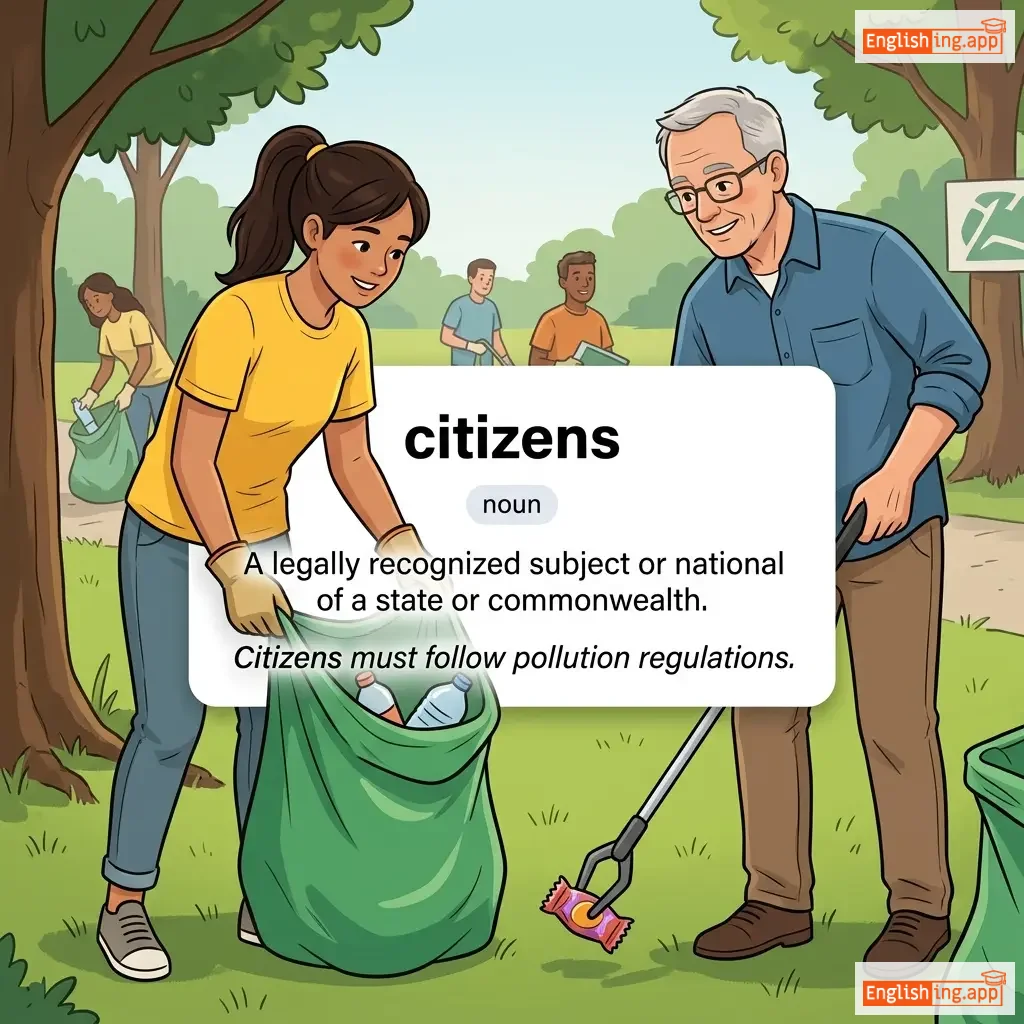
citizens definition card — visual illustration of the meaning
noun
/ˈsɪt.ɪ.zənz/
граждане (grazhdane)

A legally recognized subject or national of a state or commonwealth.

"Citizens must follow pollution regulations."

"Граждане должны соблюдать правила по загрязнению окружающей среды." (Grazhdane dolzhny soblyudat' pravila po zagriazneniyu okruzhayushchey sredy.)
noun
/ˈsɪtɪzənʃɪp/
гражданство (grazhdanstvo)

the status of being a recognized member of a state or country, with rights and duties

"He applied for American citizenship after living there for ten years."

"Он подал заявление на американское гражданство после того, как прожил там десять лет." (On podal zayavlenie na amerikanskoe grazhdanstvo posle togo, kak prozhil tam desyat' let.)
noun
/ˈsɪtrɪk ˈæsɪd/
цитрусовая кислота (tsitrusovaya kisota)

a natural acid found in citrus fruits, used as a food preservative and flavoring agent

"Add a pinch of citric acid to preserve the color of the fruit jam."
"Добавьте щепотку цитрусовой кислоты, чтобы сохранить цвет фруктового варенья." (Dobav'te shchepotku tsitrusovoy kisloty, chtoby sokhranit' tsvet fruktovogo varenya.)
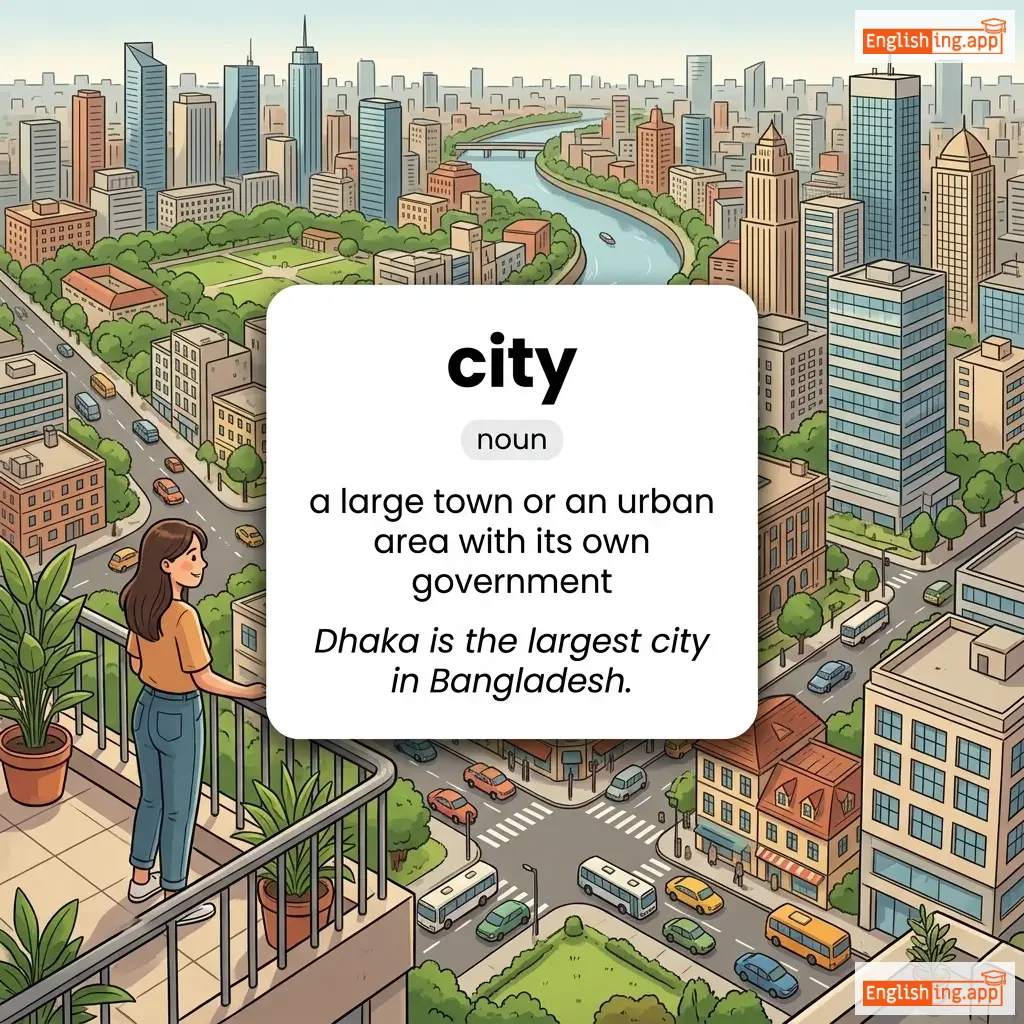
city definition card — visual illustration of the meaning
noun
/ˈsɪti/
город (gorod)

a large town or an urban area with its own government

"Dhaka is the largest city in Bangladesh."

"Москва - самый большой город в России." (Moskva - samyy bol'shoy gorod v Rossii.)
adjective
/ˈsɪvɪk/
гражданский (grazhdanskiy)

relating to a city, town, or the duties of its citizens

"The mayor encouraged people to take part in civic activities."

"Мэр призвал людей принимать участие в гражданских мероприятиях." (Mer prizval lyudey prinimat' uchastiye v grazhdanskikh meropriyatiyakh.)
noun
/ˈsɪvɪks/
граждановедение (grazhdanovedenie)

the study of the rights and duties of citizens and how government works

"Civics helps students understand their responsibilities as citizens."

"Граждановедение помогает ученикам понять обязанности граждан." (grazhdanovedenie pomogaet uchenikam ponyat obyazannosti grazhdan)
adjective
/ˈsɪvəl/
гражданский (grazhdanskiy)

Relating to ordinary citizens and their concerns, or being polite and courteous.

"They settled the matter through civil discussion."

"Они решили вопрос через гражданское обсуждение." (Oni reshilі vopros cherez grazhdanskoye obsuzhdeniye.)
noun/adjective
/səˈvɪliən/
гражданский (grazhdanskiy)

a person not in the armed forces or police

"The area was evacuated to protect the civilians."

"Зону эвакуировали для защиты гражданских." (Zonu evakuirovali dlya zashchity grazhdanskikh.)
noun
/səˈvɪləti/
вежливость (vezhlivost)

Polite and courteous behavior.

"He treated his opponent with civility despite their differences."

"Он относился к своему оппоненту с вежливостью, несмотря на их различия." (On otnosilsya k svoemu opponentu s vezhlivost'yu, nesmotrya na ikh razlichiya.)
noun
/ˌsɪvɪlaɪˈzeɪʃən/
цивилизация (tsivilizatsiya)

the stage of human social and cultural development and organization considered most advanced

"Ancient Egypt is known for its remarkable civilization."
"Древний Египет известен своей замечательной цивилизацией." (Drevniy Egipet izvesten svoey zamechatel'noy tsivilizatsiyey.)
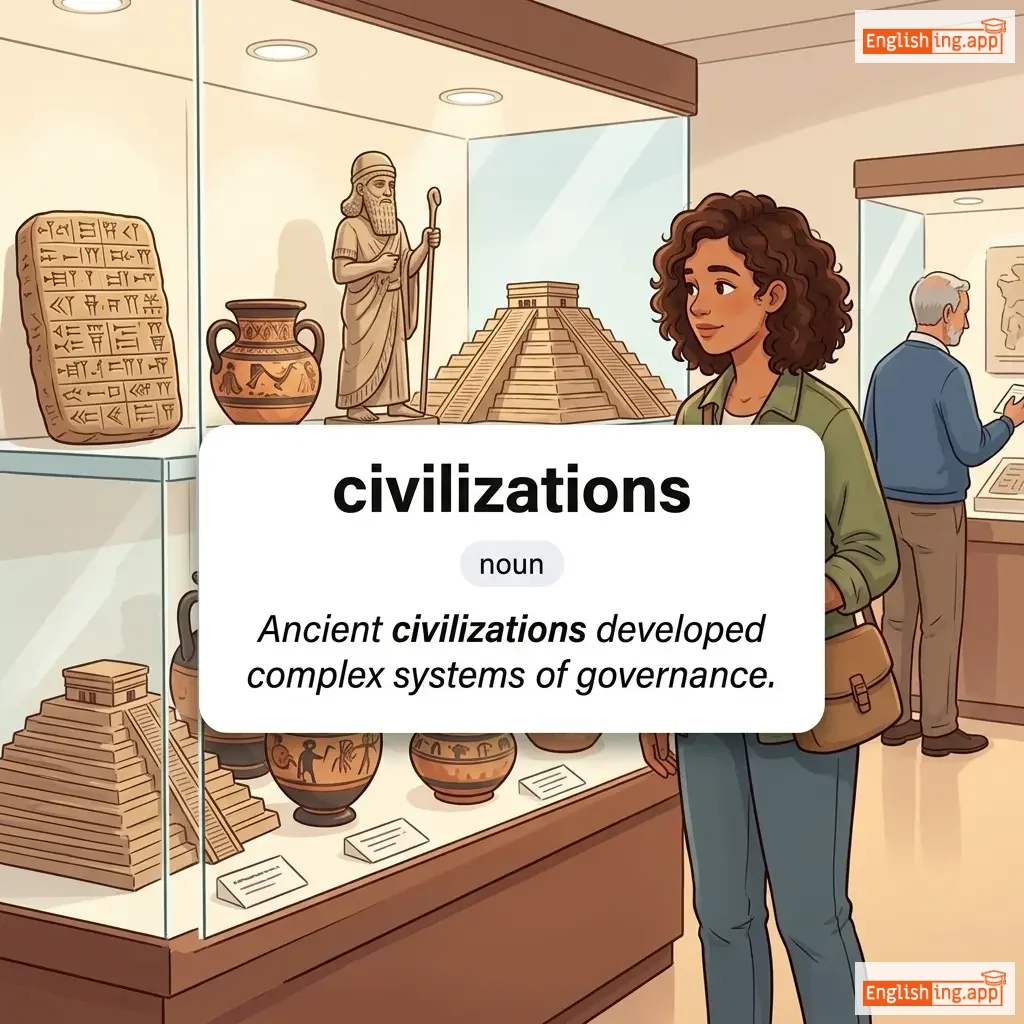
civilizations definition card — visual illustration of the meaning
noun
sɪvɪˈlɪzeɪʃənz
цивилизации (tsivilizatsii)

The stage of human social development and organization that is considered most advanced.

"Ancient civilizations developed complex systems of governance."

"Древние цивилизации развили сложные системы управления." (Drevnie tsivilizatsii razvili slozhnye sistemy upravleniya.)
verb
/ˈsɪvɪlaɪz/
цивилизовать (tsivilizovat)

to bring a society or group to a more developed, organized, or socially acceptable state; to educate and refine behavior

"Education can help civilize communities by promoting shared values and respect."

"Образование может помочь цивилизовать сообщества, продвигая общие ценности и уважение." (Obrazovanie mozhet pomoch tsivilizovat soobshchestva, prodvigaya obshchie tsennosti i uvazhenie)
adjective
/klæd/
одет / покрыт (odet / pokryt)

dressed or covered in a particular way

"The knight was clad in shining armor."

"Рыцарь был одет в сверкающие доспехи." (Ritsar' byl odet v sverkayushchie dospekhi.)
claim definition card — visual illustration of the meaning
verb
/kleɪm/
заявить (zayavit')

to state something as true, often without proof; to demand ownership or right

"He claimed the prize after winning the competition."

"Он заявил о своем праве на приз после победы в конкурсе." (On zayavil o svoem prave na priz posle pobedy v konkurse.)
noun
/ˈkleɪmənt/
истец (isteets)

a person who makes a claim, especially in a legal or financial context

"The claimant filed for compensation after the accident."

"Истец подал заявление о компенсации после аварии." (Isteets podal zayavlenie o kompensatsii posle avarii.)
claims definition card — visual illustration of the meaning
verb
kleɪmz
забирать жизни (zabirat' zhizni)

To take someone's life, to cause death

"Workplace pollution claims thousands of lives annually."

"Загрязнение на рабочих местах уносит тысячи жизней ежегодно." (Zagryaznenie na rabochikh mestakh unosit tysyachi zhizney ezhegodno.)
noun
/klɛərˈvɔɪəns/
предсказание (predskazanie)

the supposed ability to perceive events beyond normal sensory contact; psychic insight

"She claimed to have clairvoyance and predicted the future."

"Она утверждала, что у нее есть предсказания, и предсказала будущее." (Ona utverzhdala, chto u nee yest' predskazaniya, i predskazala budushchee.)
clairvoyant definition card — visual illustration of the meaning
🧙‍♀️

clairvoyant

noun, adjective
/klɛərˈvɔɪənt/

a person who claims to have clairvoyance; having the ability to see beyond normal senses

"The clairvoyant predicted that she would travel abroad soon."

verb
/ˈklæmbər/
взбираться с усилием (vzbiraт'sya s usilieм)

to climb with effort or difficulty, often using both hands and feet

"The children clambered over the rocks to reach the cave."
"Дети взбирались по скалам, чтобы добраться до пещеры." (Deti vzbiralis' po skalam, chtoby dobrat'sya do peshchery.)
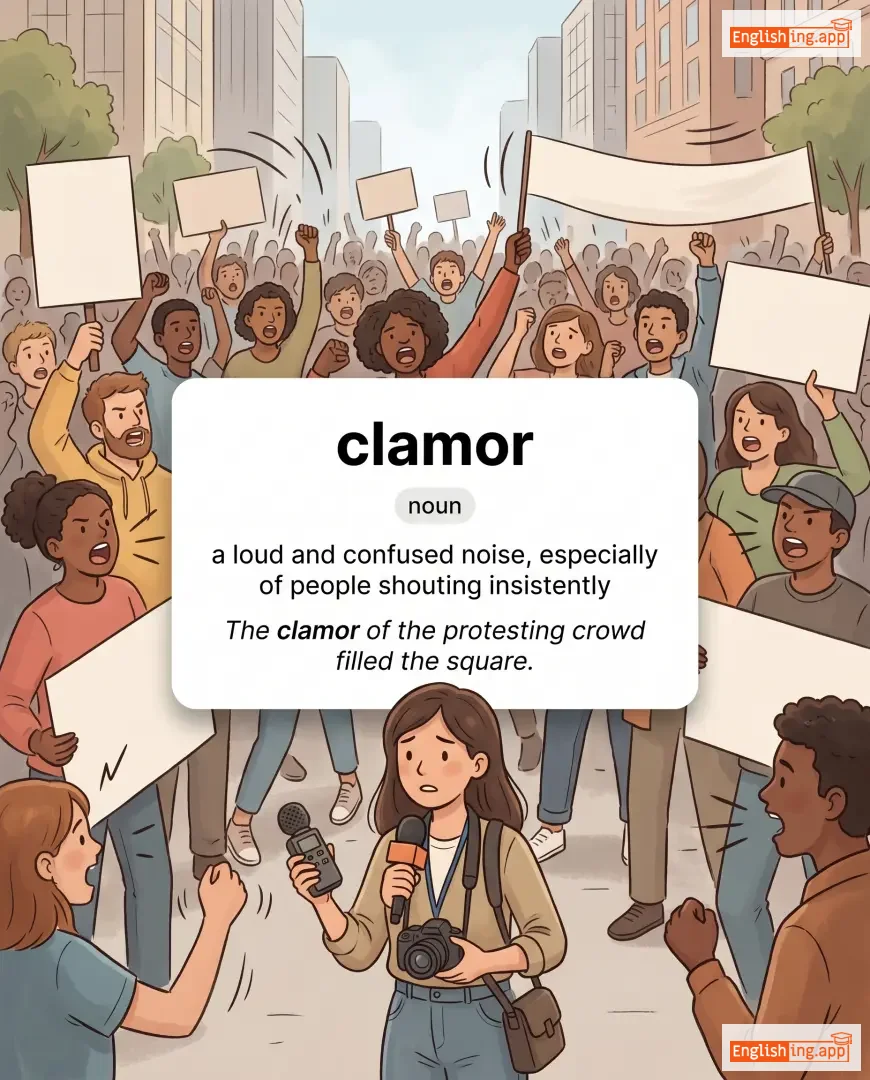
clamor definition card — visual illustration of the meaning
noun
/ˈklæmər/
гвалт (gvalt)

a loud and confused noise, especially of people shouting insistently

"The clamor of the protesting crowd filled the square."

"Гвалт протестующих заполнил площадь." (Gvalt protestuyushchikh zapolnil ploshchad.)
adjective
/ˈklæmərəs/
шумный (shumnyy)

making a loud and confused noise; expressing strong demands noisily

"The clamorous audience demanded an encore from the band."

"Шумная аудитория потребовала дополнительный номер от группы." (Shumnaya auditoriya potrebovala dopolnitel'nyy nomer ot gruppy.)
👨‍👩‍👧‍👦

clan (клан)

noun
/klæn/
клан (klan)

a large family group or a close-knit community with shared interests or ancestry

"The entire clan gathered to celebrate the festival."

"Весь клан собрался, чтобы отпраздновать фестиваль." (Ves' klan sobralsya, chtoby otprrazdnovat' festival'.)
adjective
/klænˈdɛstaɪn/

kept secret or done secretly, especially for illicit purposes

"They held a clandestine meeting late at night."

noun
/ˈklæŋər/
шум, грохот (shum, grokhot)

A loud, resonant, and continuous noise, often metallic.

"The clangor of the church bells filled the town square."

"Грохот церковных колоколов заполнил площадь города." (Grohot tserkovnykh kolokolov zapolnil ploshchad' goroda.)
verb
/klæp/
хлопать (khlopat)

To strike the palms of the hands together, usually to express approval or create a sharp sound.

"The audience began to clap loudly after the performance."

"Зрители начали громко хлопать после выступления." (Zriteli nachali gromko khlopat' posle vystupleniya.)
noun
/ˈklæpər/
металлическая деталь внутри колокола, которая ударяет по нему, чтобы издать звук (metallicheskaya detal' vnutri kolokola, kotoraya udaryayet po nemu, chtoby izdat' zvuk)

The free-swinging metal piece inside a bell that strikes it to produce sound.

"The clapper inside the bell was broken."

"Металлическая деталь внутри колокола была сломана." (Metallicheskaya detal' vnutri kolokola byla slomana.)
clarification definition card — visual illustration of the meaning
noun
/ˌklærɪfɪˈkeɪʃən/
уточнение (utochnenie)

The action of making a statement or situation less confused and more clearly comprehensible.

"The manager requested clarification on the project details."
"Менеджер запросил уточнение деталей проекта." (Menedzher zaprosil utochnenie detalej proekta.)
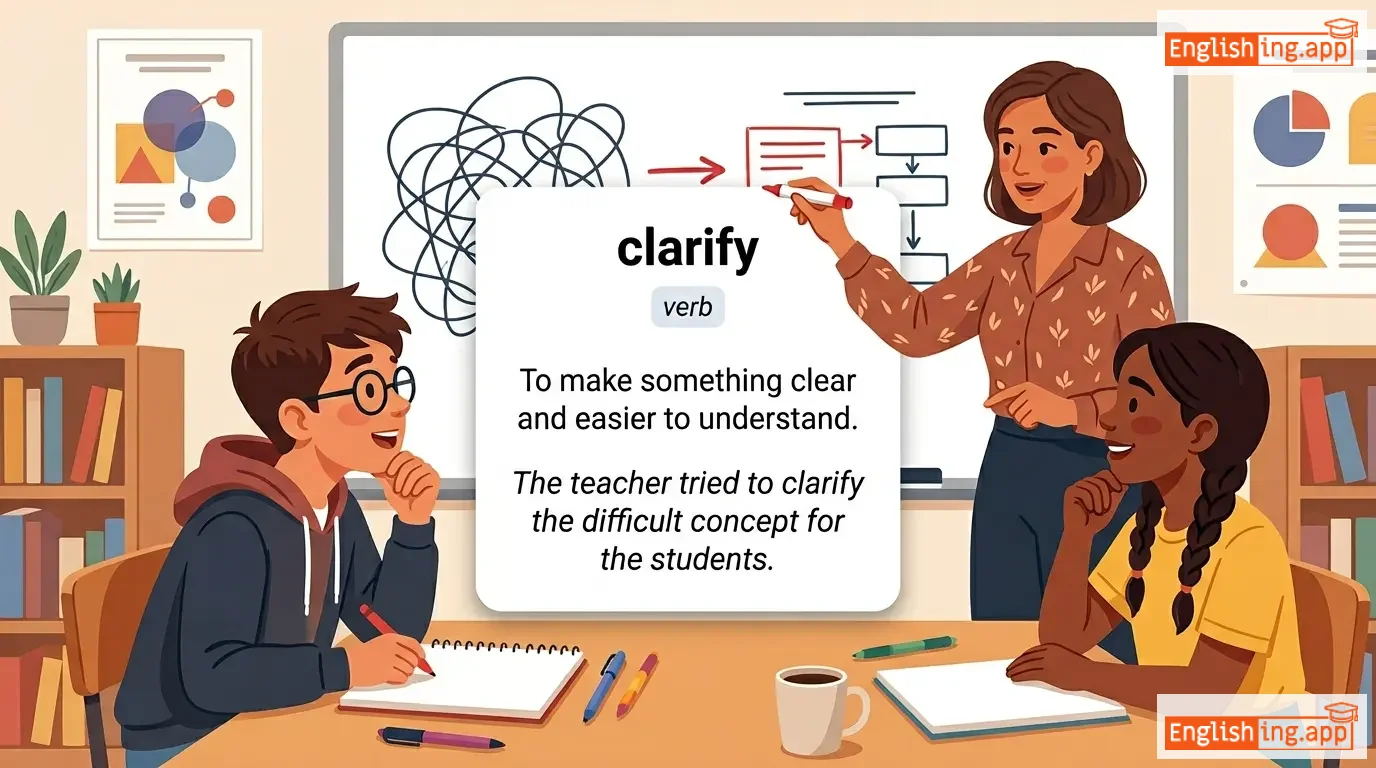
clarify definition card — visual illustration of the meaning
verb
/ˈklærɪfaɪ/
прояснять (proyasnyat)

To make something clear and easier to understand.

"The teacher tried to clarify the difficult concept for the students."

"Учитель попытался прояснить сложную концепцию для студентов." (Uchitel' popytalsya proyasnit' slozhnuyu kontseptsiyu dlya studentov.)
adjective
/ˈklæriən/
громкий и ясный призыв (gromkiy i yasnyy prizyv)

Loud and clear, like the sound of a trumpet; strongly expressed.

"The leader’s clarion call for unity inspired the crowd."

"Ясный призыв лидера к единству вдохновил толпу." (Yasnyy prizyv lidera k yedinstvu vdokhnovil tolpu.)
clarity definition card — visual illustration of the meaning
noun
/ˈklærəti/
ясность (yasnost)

the quality of being clear, easy to understand, or transparent

"The teacher's clarity helped the students understand the complex topic."

"Ясность учителя помогла студентам понять сложную тему." (Yasnost' uchitelya pomogla studentam ponyat' slozhnuyu temu.)
verb
/klæʃ/
столкновение (stolknoveniye)

to come into conflict or collision with something or someone.

"The two cars clashed in the intersection."

"Два автомобиля столкнулись на перекрёстке." (Dva avtomobilya stolknulis na perekrёstke.)
verb
/klæsp/
схватить / застежка (skhvatit' / zastezhka)

to grasp or hold tightly; also a device for fastening

"She clasped her hands together in prayer."

"Она сжала руки вместе в молитве." (Ona szhala ruki vmeste v molitve.)
class definition card — visual illustration of the meaning
noun
/klɑːs/
класс (klass)

a group of students taught together or a category of people or things with shared characteristics

"Our class meets every morning at nine."

"Наш класс собирается каждое утро в девять." (Nash klass sobiraetsya kazhdoe utro v devyat'.)
adjective
/ˈklæsɪk/
классика, выдающийся (klassika, vydajushchijsya)

Judged over a period of time to be of the highest quality and outstanding of its kind.

"That movie is a classic example of 90s comedy."

"Этот фильм является классическим примером комедии 90-х." (Etot film yavlyaetsya klassicheskim primerom komedii 90-h.)
adjective
/ˈklæsɪkəl/
классический или традиционный (klassicheskiy ili traditsionnyy)

relating to ancient Greek or Roman culture, or representing traditional excellence in art, music, or literature

"She loves listening to classical music while studying."

"Она любит слушать классическую музыку, занимаясь учёбой." (Ona lyubit slushat' klassicheskuyu muzyku, zanimayas' ucheboy.)
noun
/ˌklæsɪfɪˈkeɪʃən/
классификация (klassifikatsiya)

the action or process of classifying something into groups based on shared characteristics.

"The classification of animals helps in understanding their biology."

"Классификация животных помогает понять их биологию." (Klassifikatsiya zhivotnykh pomogayet ponyat' ikh biologiyu.)
adjective
/ˈklæsɪfaɪd/
секретный; классифицированный (sekretnyi; klassifitsirovannyi)

arranged into categories; officially secret or restricted

"The report contains classified information and cannot be shared publicly."

"Отчёт содержит секретную информацию." (Otchyot soderzhit sekretnuyu informatsiyu)
verb
/ˈklæsɪfaɪ/
классифицировать (klassifitsirovat)

to arrange or organize into categories or groups

"The librarian classified the books by subject."

"Библиотекарь классифицировал книги по темам." (Bibliotekar' klassifitsiroval knigi po temam.)
noun
/ˈklɑːsmeɪt/
одноклассник (odnoklassnik)

a person who is in the same class or course of study as another

"I met one of my old classmates at the university event."
"Я встретил одного из своих старых одноклассников на университетском мероприятии." (ya vstretil odnogo iz svoikh starykh odnoklassnikov na universitetskom meropriyatii)
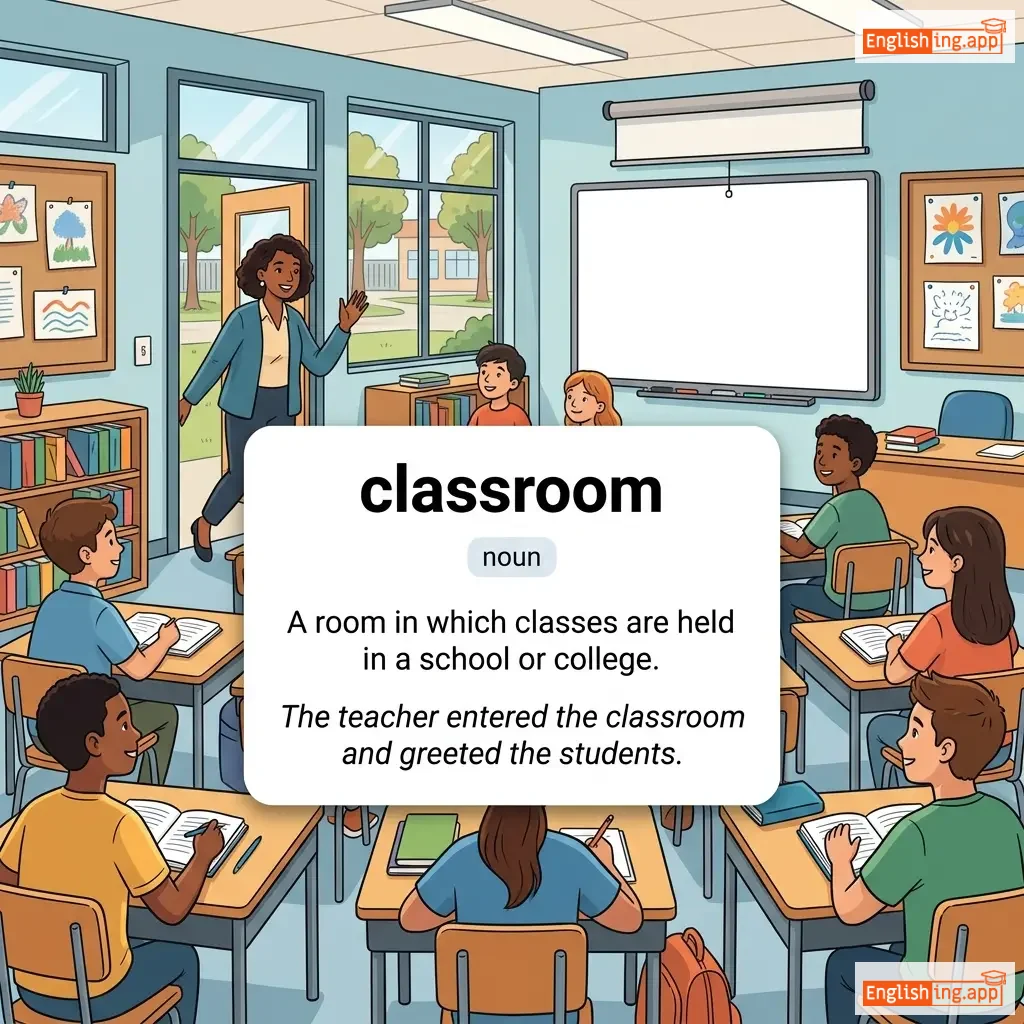
classroom definition card — visual illustration of the meaning
noun
/ˈklæsˌruːm/
классная комната (klassnaya komnata)

A room in which classes are held in a school or college.

"The teacher entered the classroom and greeted the students."

"Учитель вошел в классную комнату и поприветствовал студентов." (Uchitel' voshel v klassnuyu komnatu i poprivetsvoval studentov.)
noun
/ˌklɔːstrəˈfəʊbiə/

an extreme or irrational fear of being in confined spaces

"He avoids elevators because of his claustrophobia."

noun
/bɑːks/
коробка (korobka)

a container with flat sides, typically square or rectangular, used for storing things

"He packed his clothes in a cardboard box."

"Он упаковал свою одежду в картонную коробку." (On upakovav svoyu odezhdu v kartonnuyu korobku.)
noun
/ˈbɒksər/
боксёр; боксёрские трусы; порода собаки (boksyor; boksyorskie trusy; poroda sobaki)

a person who fights in the sport of boxing; a type of short loose-fitting underwear; a breed of medium-to-large dog

"The boxer trained hard every morning before the championship match."

"Боксёр усердно тренировался каждое утро перед чемпионатом." (Boksyor userdno trenirovalsya kazhdoe utro pered chempionatom)
noun; gerund
/ˈbɒksɪŋ/
бокс (boks)

the sport of fighting with fists using padded gloves; the act of putting something into a box

"He has been training hard for a professional boxing match."
"Он усердно тренируется к боксерскому поединку." (on userdno treniruetsya k boksyorskomu poedinku)
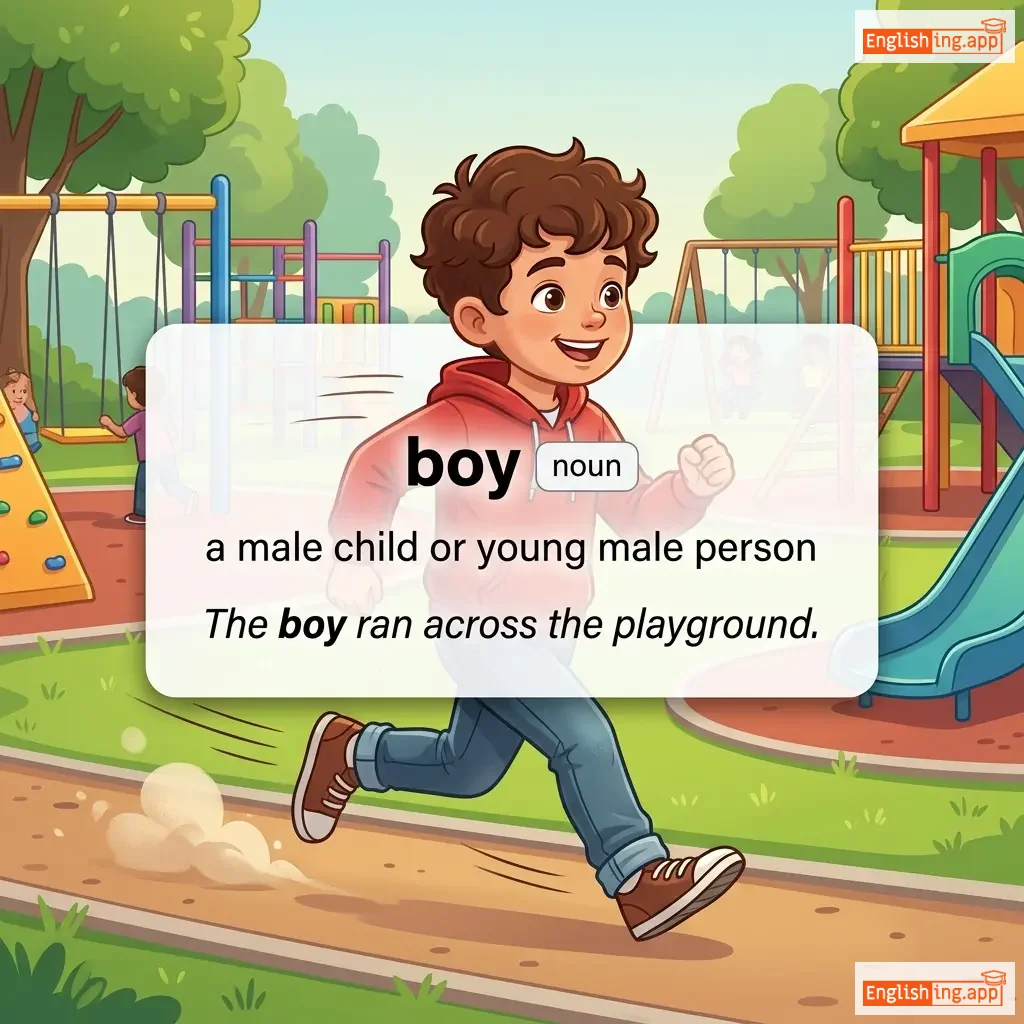
boy definition card — visual illustration of the meaning
noun
/bɔɪ/
мальчик (malchik)

a male child or young male person

"The boy ran across the playground."

"Мальчик бегал по игровой площадке." (Malchik begal po igrovoy ploshchadke.)