Vocabulaires

Découvrez, apprenez et maîtrisez le vocabulaire anglais

noun
/ˈsɪstərn/
réservoir (reservoir)

A tank or container for storing water, usually for household use.

"The old house still had a cistern to collect rainwater."

"La vieille maison avait encore un réservoir pour recueillir l'eau de pluie." (La vieille maison avait encore un réservoir pour recueillir l'eau de pluie.)
noun
/ˈsɪtəˌdɛl/
citadelle (citadelle)

A fortress protecting or dominating a city.

"The ancient citadel stood guard over the town for centuries."

"L'ancienne citadelle a protégé la ville pendant des siècles." (L'ancienne citadelle a protégé la ville pendant des siècles.)
noun
/saɪˈteɪʃən/
citation (citation)

a quotation from or reference to a book, paper, or author

"The research paper included a citation from Shakespeare."

"L'article de recherche comprenait une citation de Shakespeare." (L'article de recherche comprenait une citation de Shakespeare.)
verb
/saɪt/
citer (siter)

To refer to or quote a source as evidence or justification.

"She cited several studies to support her argument."

"Elle a cité plusieurs études pour étayer son argument." (Elle a cité plusieurs études pour étayer son argument.)
🧑‍🤝‍🧑

citizen (sɪtɪzən)

noun
/ˈsɪtɪzən/
citoyen (citoyen)

a legally recognized subject or national of a state

"Every citizen has the right to vote."

"Chaque citoyen a le droit de voter." (Chaque citoyen a le droit de voter.)
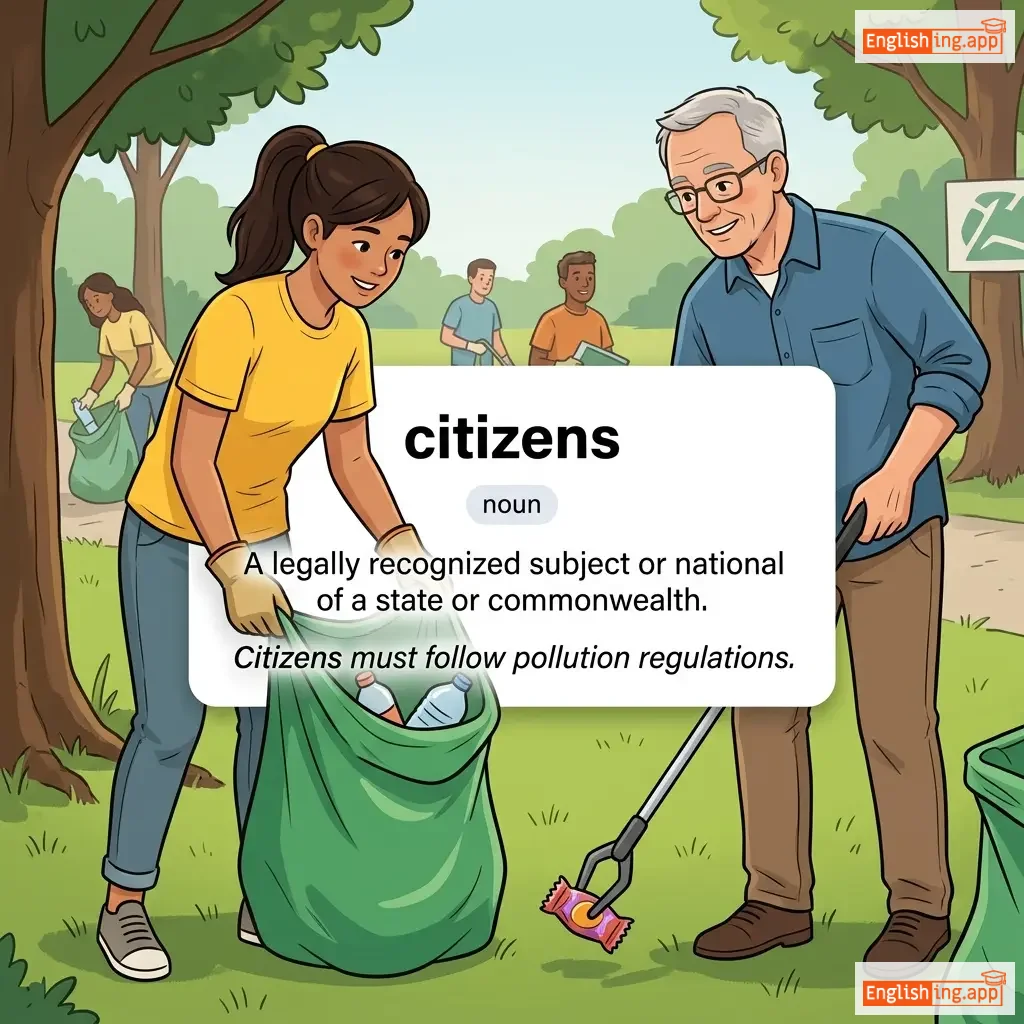
citizens definition card — visual illustration of the meaning
noun
/ˈsɪt.ɪ.zənz/
citoyens (citoyens)

A legally recognized subject or national of a state or commonwealth.

"Citizens must follow pollution regulations."

"Les citoyens doivent respecter les réglementations sur la pollution." (Les citoyens doivent respecter les réglementations sur la pollution.)
noun
/ˈsɪtɪzənʃɪp/
citoyenneté (citoyennete)

the status of being a recognized member of a state or country, with rights and duties

"He applied for American citizenship after living there for ten years."

"Il a demandé la citoyenneté américaine après y avoir vécu pendant dix ans." (Il a demande la citoyennete americaine apres y avoir vecu pendant dix ans.)
noun
/ˈsɪtrɪk ˈæsɪd/
acide citrique (acide citrique)

a natural acid found in citrus fruits, used as a food preservative and flavoring agent

"Add a pinch of citric acid to preserve the color of the fruit jam."

"Ajoutez une pincée d'acide citrique pour préserver la couleur de la confiture de fruits." (Ajoutez une pincee d'acide citrique pour preserver la couleur de la confiture de fruits.)
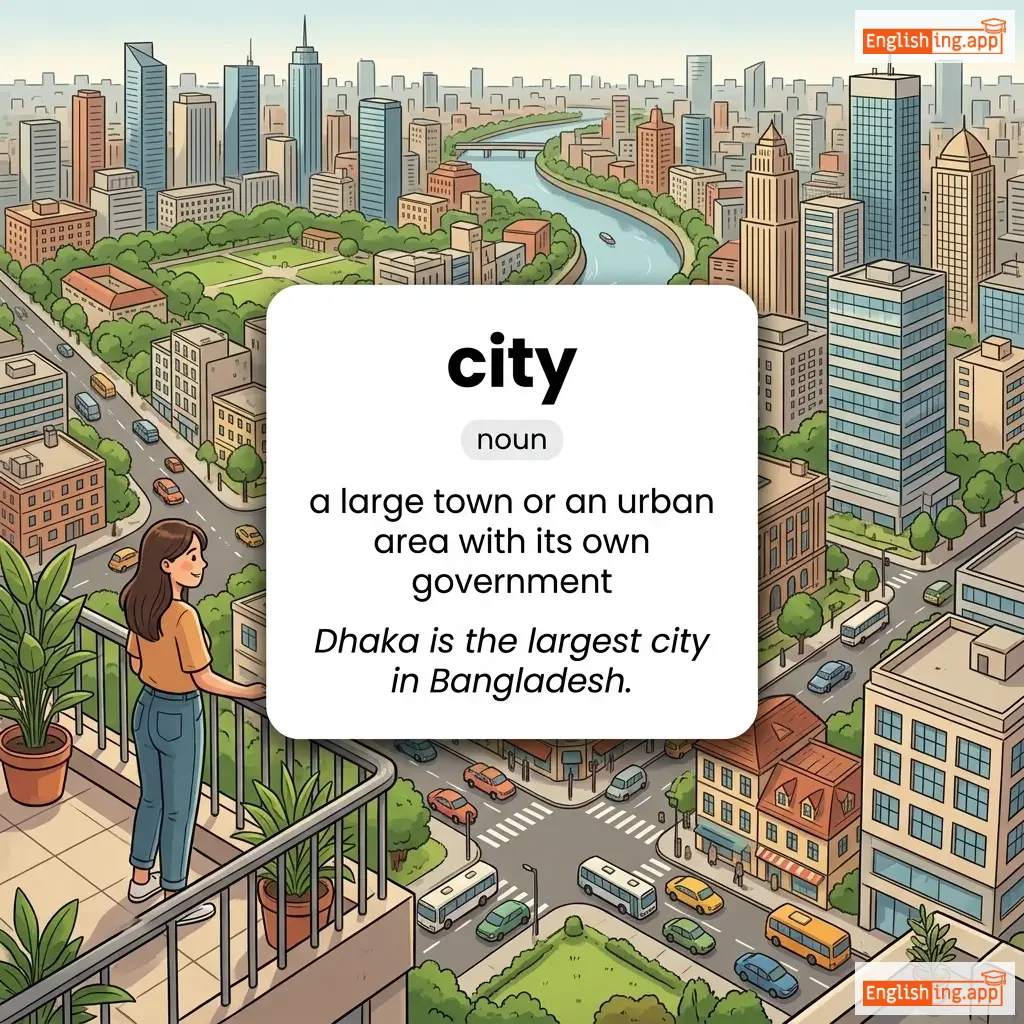
city definition card — visual illustration of the meaning
noun
/ˈsɪti/
ville (ville)

a large town or an urban area with its own government

"Dhaka is the largest city in Bangladesh."

"Paris est la plus grande ville de France." (Paris est la plus grande ville de France.)
adjective
/ˈsɪvɪk/
civique (sivik)

relating to a city, town, or the duties of its citizens

"The mayor encouraged people to take part in civic activities."

"Le maire a encouragé les gens à participer aux activités civiques." (Le maire a encouragé les gens à participer aux activités civiques.)
noun
/ˈsɪvɪks/
instruction civique (instruction civique)

the study of the rights and duties of citizens and how government works

"Civics helps students understand their responsibilities as citizens."

"L’instruction civique aide les élèves à comprendre leurs devoirs de citoyens." (linstruction civique aide les eleves a comprendre leurs devoirs de citoyens)
adjective
/ˈsɪvəl/
civil (civil)

Relating to ordinary citizens and their concerns, or being polite and courteous.

"They settled the matter through civil discussion."

"Ils ont réglé la question par une discussion civile." (Ils ont réglé la question par une discussion civile.)
noun/adjective
/səˈvɪliən/
civil (civil)

a person not in the armed forces or police

"The area was evacuated to protect the civilians."

"La zone a été évacuée pour protéger les civils." (La zone a été évacuée pour protéger les civils.)
noun
/səˈvɪləti/
civisme (civisme)

Polite and courteous behavior.

"He treated his opponent with civility despite their differences."

"Il a traité son adversaire avec civilité malgré leurs différences." (Il a traité son adversaire avec civilité malgré leurs différences.)
noun
/ˌsɪvɪlaɪˈzeɪʃən/
civilisation (civilisation)

the stage of human social and cultural development and organization considered most advanced

"Ancient Egypt is known for its remarkable civilization."

"L'Égypte ancienne est connue pour sa civilisation remarquable." (L'Egypte ancienne est connue pour sa civilisation remarquable.)
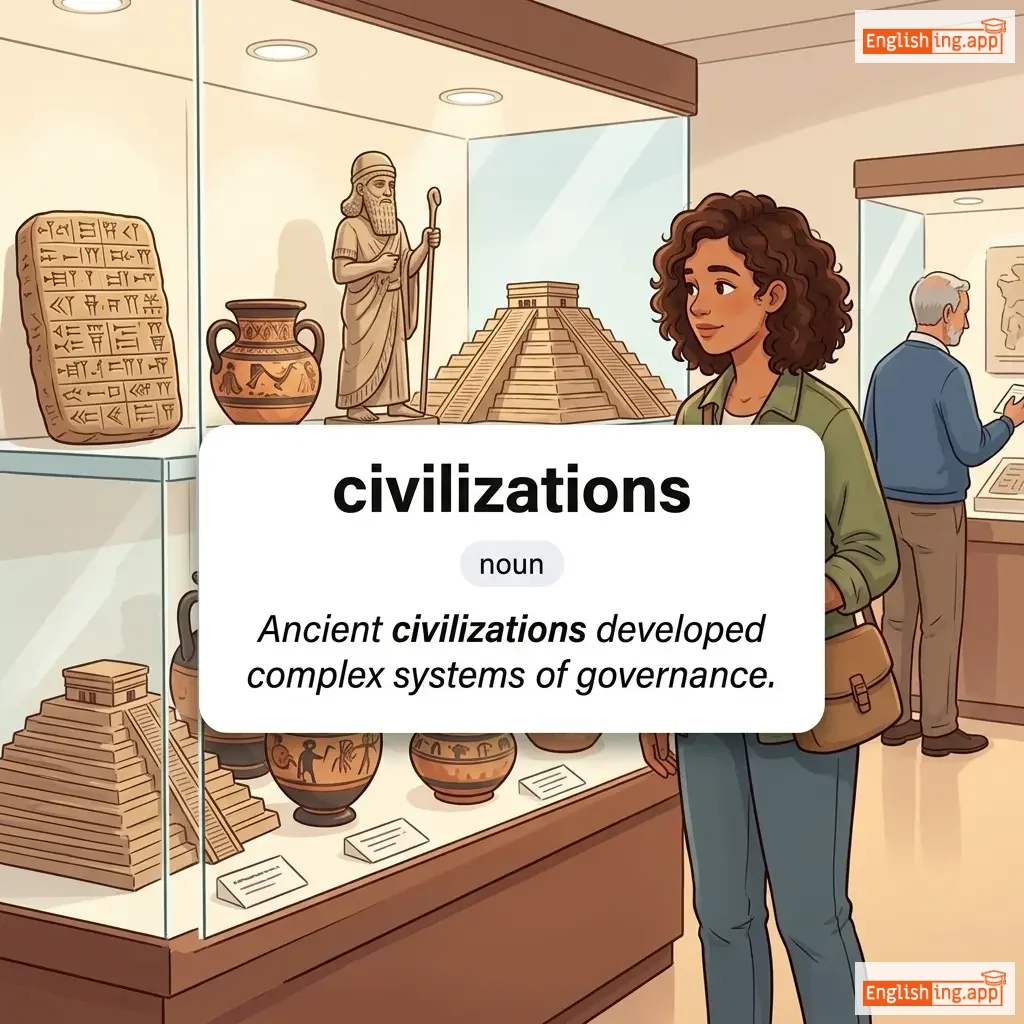
civilizations definition card — visual illustration of the meaning
noun
sɪvɪˈlɪzeɪʃənz
civilisations (civilisations)

The stage of human social development and organization that is considered most advanced.

"Ancient civilizations developed complex systems of governance."

"Les civilisations anciennes ont développé des systèmes complexes de gouvernance." (Les civilisations anciennes ont développé des systèmes complexes de gouvernance.)
verb
/ˈsɪvɪlaɪz/
civiliser (civiliser)

to bring a society or group to a more developed, organized, or socially acceptable state; to educate and refine behavior

"Education can help civilize communities by promoting shared values and respect."

"L’éducation peut aider à civiliser les communautés en favorisant des valeurs partagées et le respect." (L education peut aider a civiliser les communautes en favorisant des valeurs partagees et le respect)
adjective
/klæd/
habillé / couvert (habille / couvert)

dressed or covered in a particular way

"The knight was clad in shining armor."

"Le chevalier était habillé d'une armure brillante." (Le chevalier etait habille d'une armure brillante.)
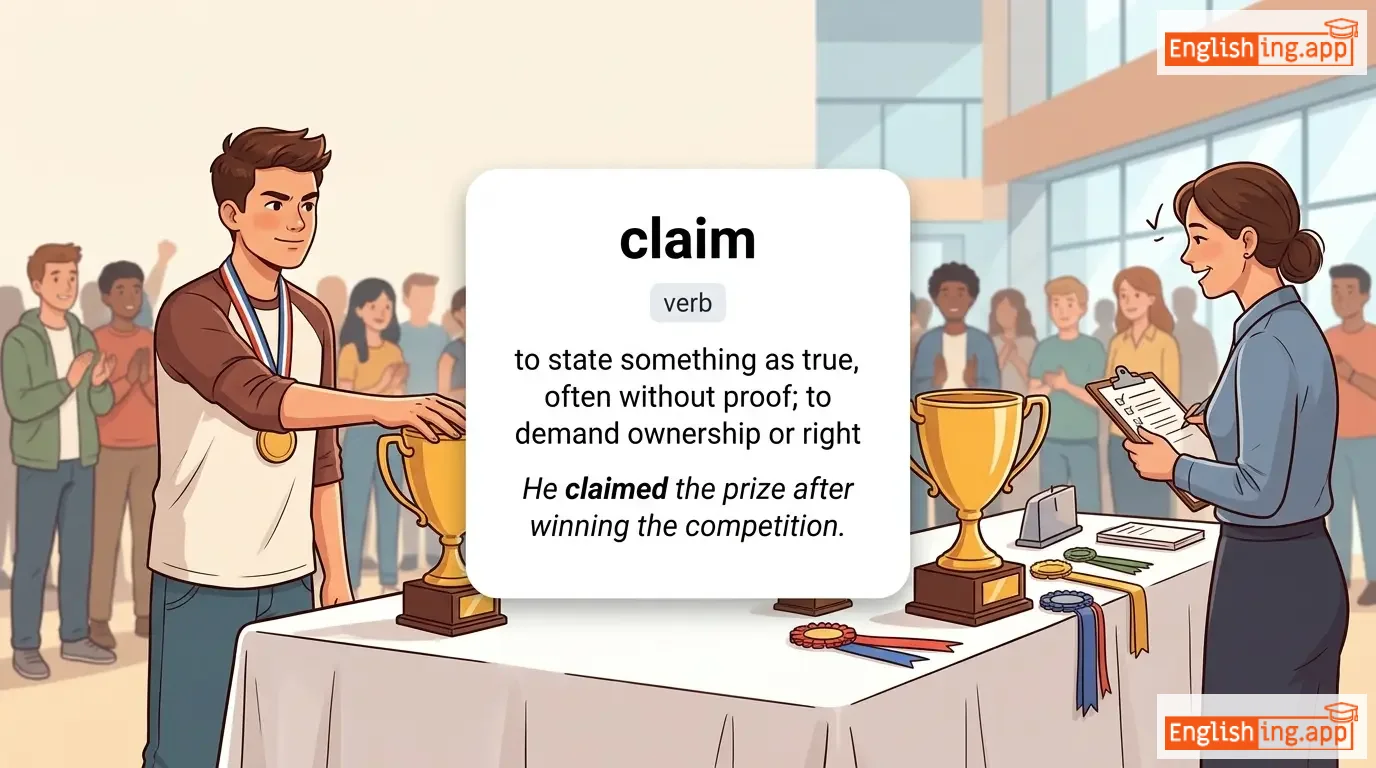
claim definition card — visual illustration of the meaning
verb
/kleɪm/
revendiquer (revendiquer)

to state something as true, often without proof; to demand ownership or right

"He claimed the prize after winning the competition."

"Il a réclamé le prix après avoir gagné le concours." (Il a réclamé le prix après avoir gagné le concours.)
noun
/ˈkleɪmənt/
demandeur (demandeur)

a person who makes a claim, especially in a legal or financial context

"The claimant filed for compensation after the accident."

"Le demandeur a déposé une demande de compensation après l'accident." (Le demandeur a déposé une demande de compensation après l'accident.)
claims definition card — visual illustration of the meaning
verb
kleɪmz
réclamer des vies (reklamer des vies)

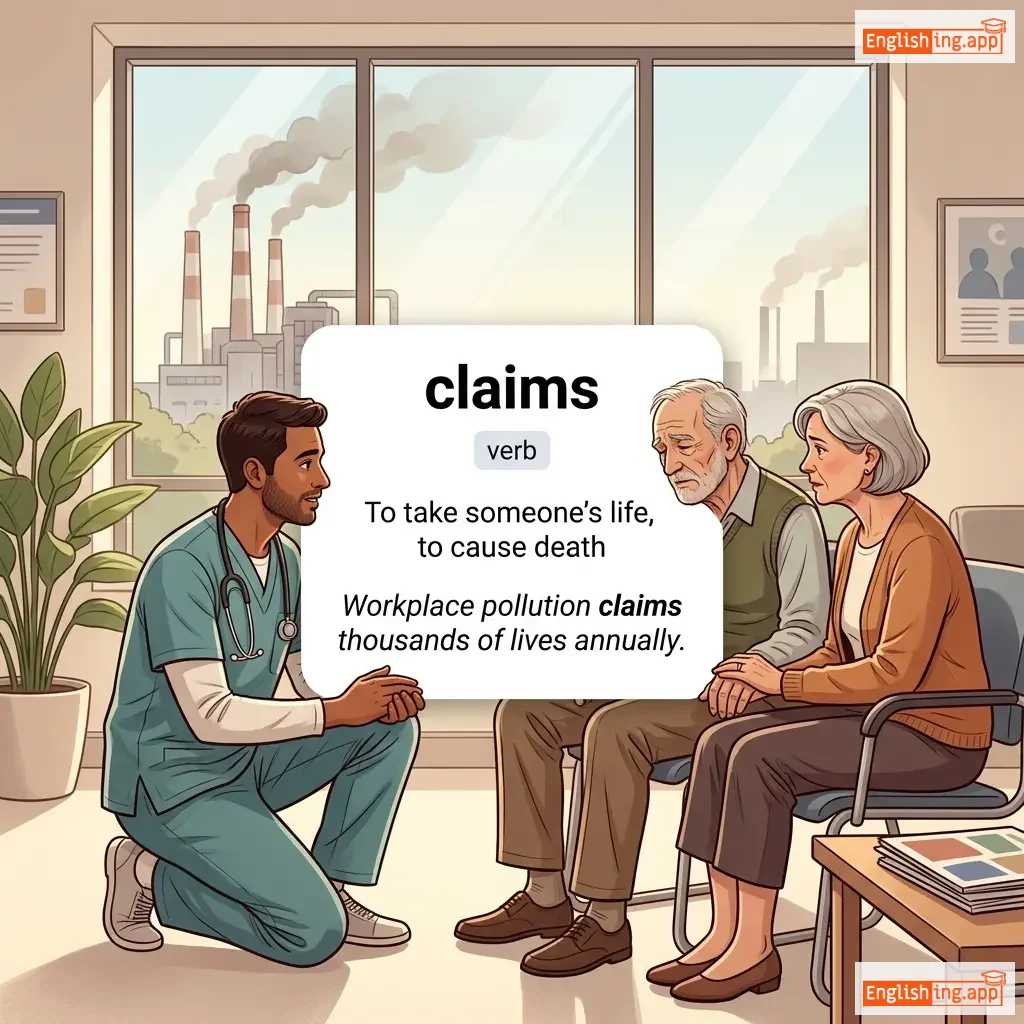
To take someone's life, to cause death

"Workplace pollution claims thousands of lives annually."

"La pollution sur le lieu de travail réclame des milliers de vies chaque année." (La pollution sur le lieu de travail reclame des milliers de vies chaque annee.)
noun
/klɛərˈvɔɪəns/
clairvoyance (clairvoyance)

the supposed ability to perceive events beyond normal sensory contact; psychic insight

"She claimed to have clairvoyance and predicted the future."

"Elle a prétendu avoir de la clairvoyance et a prédit l'avenir." (Elle a preteendu avoir de la clairvoyance et a predit l'avenir.)
clairvoyant definition card — visual illustration of the meaning
noun, adjective
/klɛərˈvɔɪənt/
clairvoyant (clairvoyant)

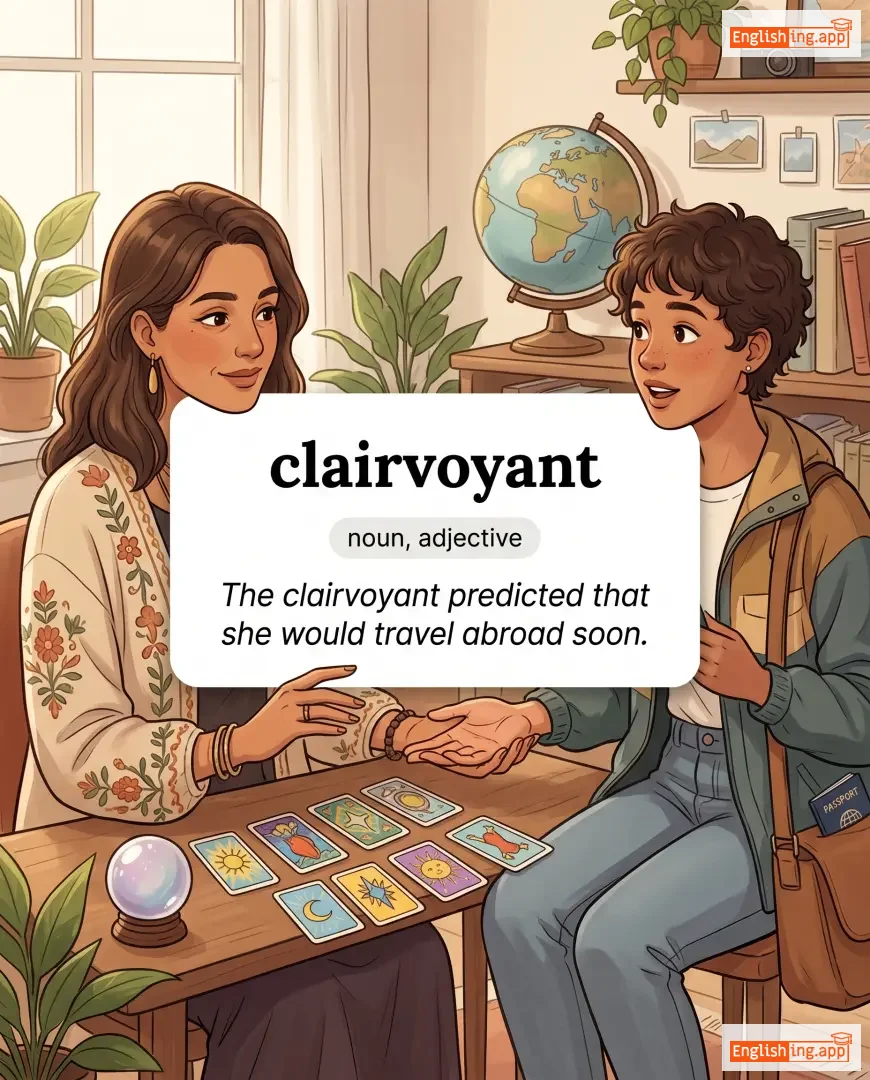
a person who claims to have clairvoyance; having the ability to see beyond normal senses

"The clairvoyant predicted that she would travel abroad soon."

"Le clairvoyant a prédit qu'elle voyagerait bientôt à l'étranger." (Le clairvoyant a predit qu elle voyagerait bientot a l etranger)
verb
/ˈklæmbər/
grimper avec effort (grimper avec effort)

to climb with effort or difficulty, often using both hands and feet

"The children clambered over the rocks to reach the cave."

"Les enfants ont grimpé sur les rochers pour atteindre la grotte." (Les enfants ont grimpé sur les rochers pour atteindre la grotte.)
clamor definition card — visual illustration of the meaning
noun
/ˈklæmər/
tumulte (tumulte)

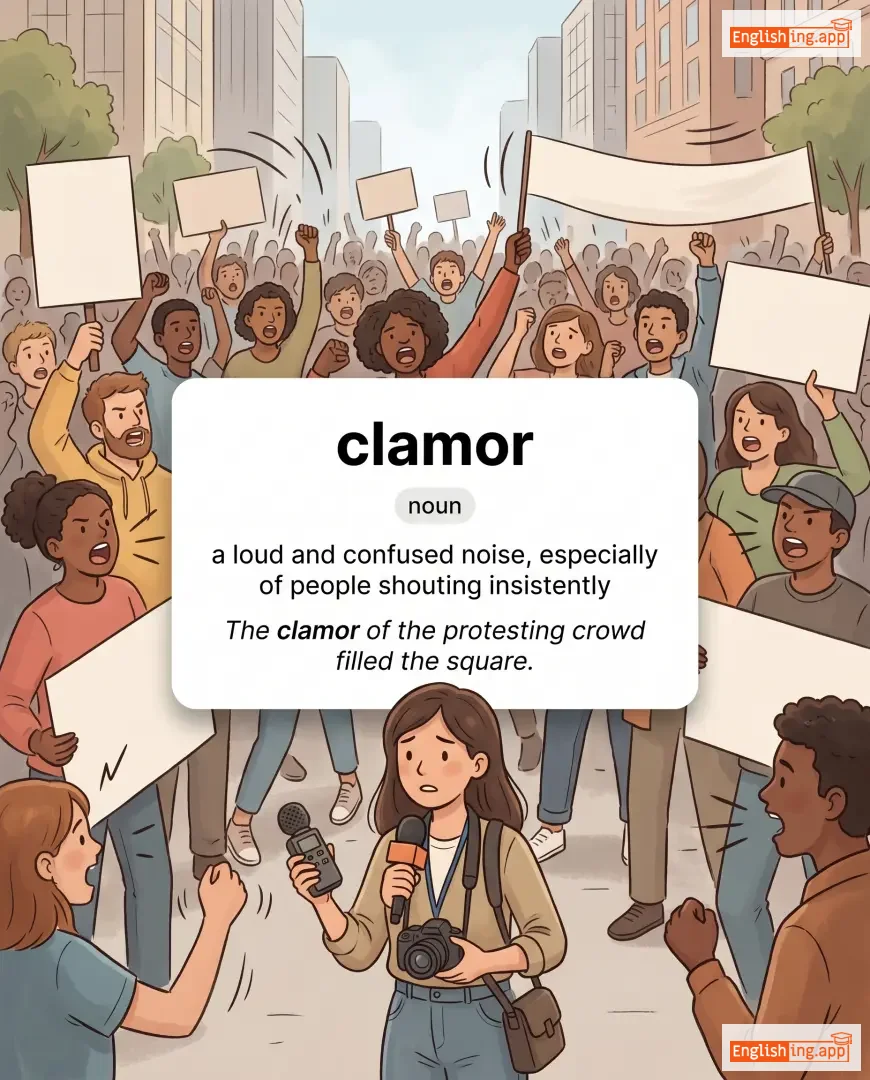
a loud and confused noise, especially of people shouting insistently

"The clamor of the protesting crowd filled the square."

"Le tumulte de la foule en colère a rempli la place." (Le tumulte de la foule en colère a rempli la place.)
adjective
/ˈklæmərəs/
bruyant (bruyant)

making a loud and confused noise; expressing strong demands noisily

"The clamorous audience demanded an encore from the band."

"Le public bruyant a exigé un rappel du groupe." (Le public bruyant a exigé un rappel du groupe.)
👨‍👩‍👧‍👦

clan (klan)

noun
/klæn/
clan (clan)

a large family group or a close-knit community with shared interests or ancestry

"The entire clan gathered to celebrate the festival."

"Le clan entier s'est réuni pour célébrer le festival." (Le clan entier s'est réuni pour célébrer le festival.)
adjective
/klænˈdɛstaɪn/
clandestin (klandestine)

kept secret or done secretly, especially for illicit purposes

"They held a clandestine meeting late at night."

"Ils ont tenu une réunion clandestine tard dans la nuit." (Ils ont tenu une reunion clandestine tard dans la nuit)
noun
/ˈklæŋər/
bruit, fracas (bruit, fracas)

A loud, resonant, and continuous noise, often metallic.

"The clangor of the church bells filled the town square."

"Le fracas des cloches de l'église remplissait la place du village." (Le fracas des cloches de l'église remplissait la place du village.)
verb
/klæp/
applaudir (applaudir)

To strike the palms of the hands together, usually to express approval or create a sharp sound.

"The audience began to clap loudly after the performance."

"Le public a commencé à applaudir bruyamment après la performance." (Le public a commencé à applaudir bruyamment après la performance.)
noun
/ˈklæpər/
pièce métallique à l'intérieur d'une cloche qui la frappe pour produire un son (piece metallique a l'interieur d'une cloche qui la frappe pour produire un son)

The free-swinging metal piece inside a bell that strikes it to produce sound.

"The clapper inside the bell was broken."

"La pièce métallique à l'intérieur de la cloche était cassée." (La piece metallique a l'interieur de la cloche etait casse.)
clarification definition card — visual illustration of the meaning
noun
/ˌklærɪfɪˈkeɪʃən/
clarification (clarification)

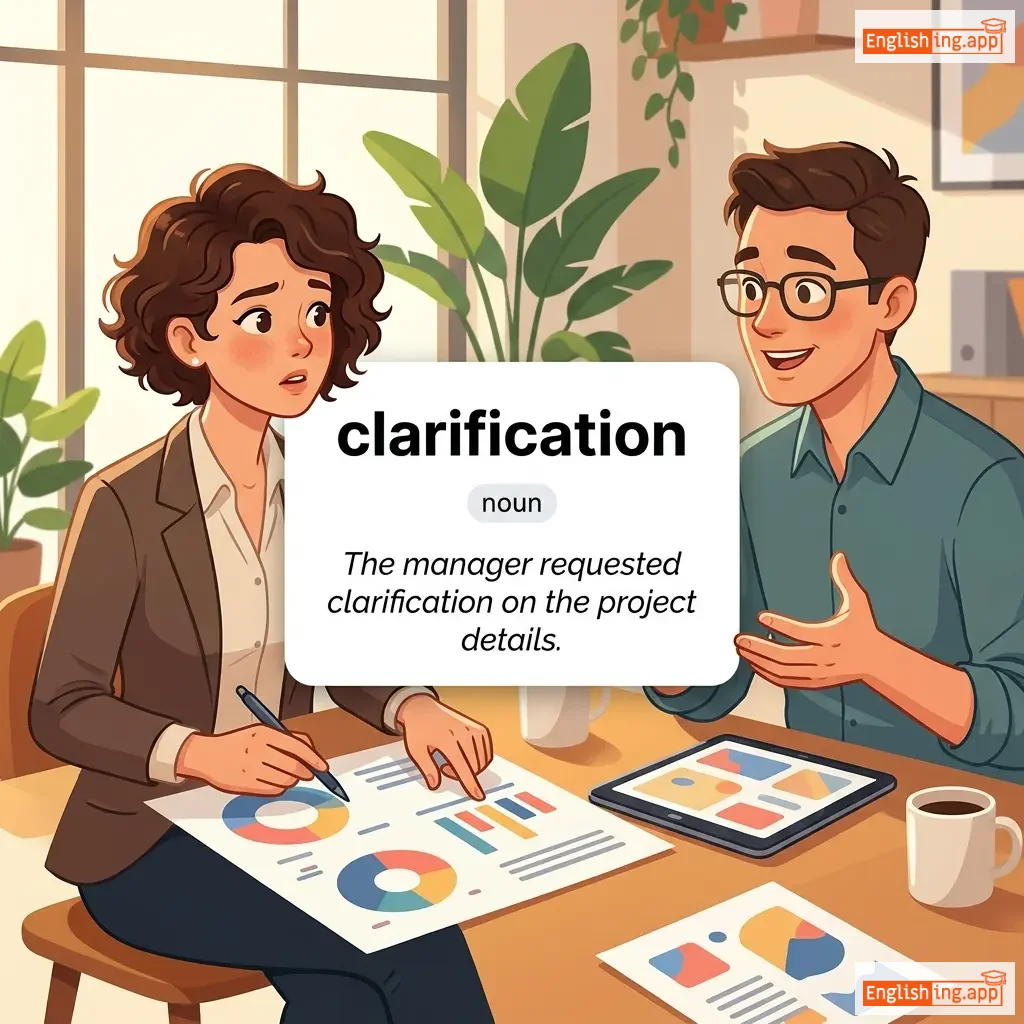
The action of making a statement or situation less confused and more clearly comprehensible.

"The manager requested clarification on the project details."

"Le gestionnaire a demandé des clarifications sur les détails du projet." (Le gestionnaire a demandé des clarifications sur les détails du projet.)
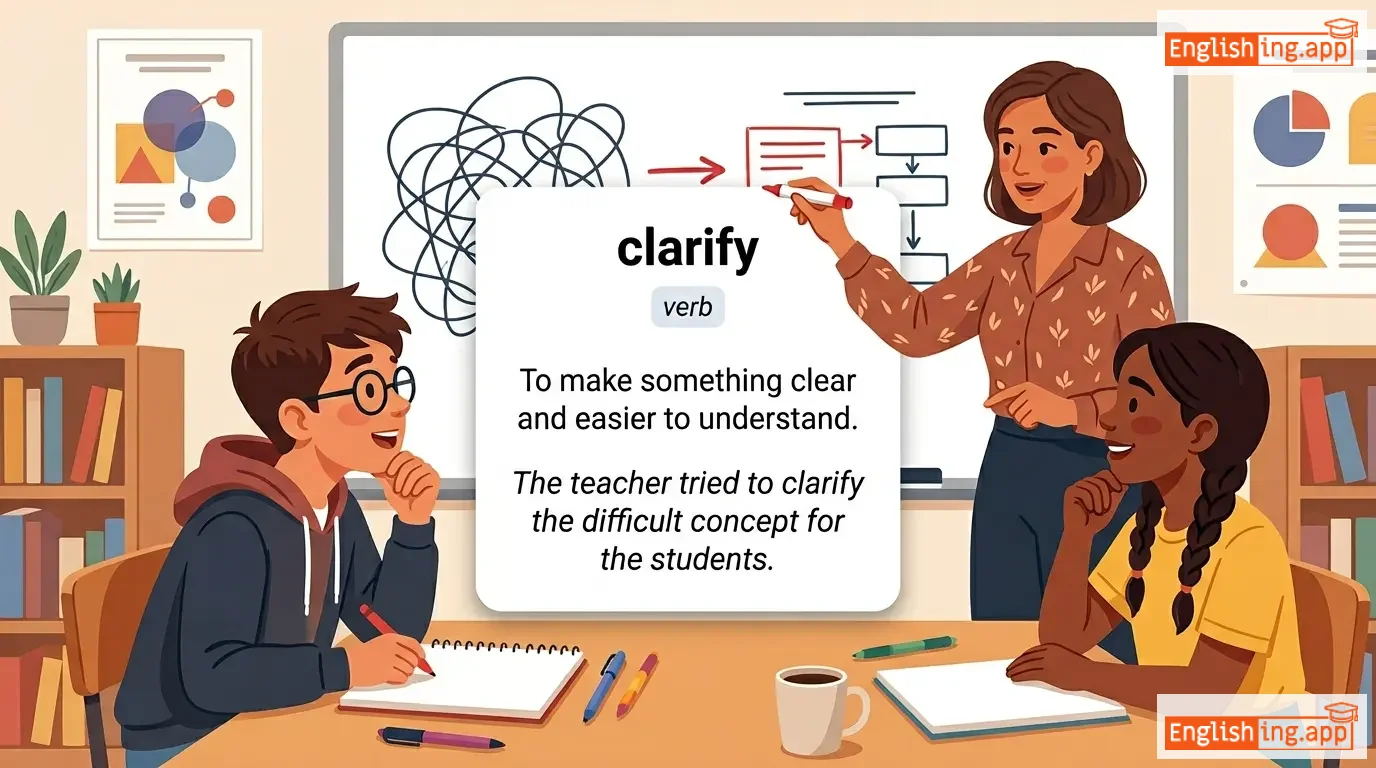
clarify definition card — visual illustration of the meaning
verb
/ˈklærɪfaɪ/
clarifier (clarifier)

To make something clear and easier to understand.

"The teacher tried to clarify the difficult concept for the students."

"Le professeur a essayé de clarifier le concept difficile pour les étudiants." (Le professeur a essayé de clarifier le concept difficile pour les étudiants.)
adjective
/ˈklæriən/
appel clair et fort (appel clair et fort)

Loud and clear, like the sound of a trumpet; strongly expressed.

"The leader’s clarion call for unity inspired the crowd."

"L'appel clair du leader à l'unité a inspiré la foule." (L'appel clair du leader à l'unité a inspiré la foule.)
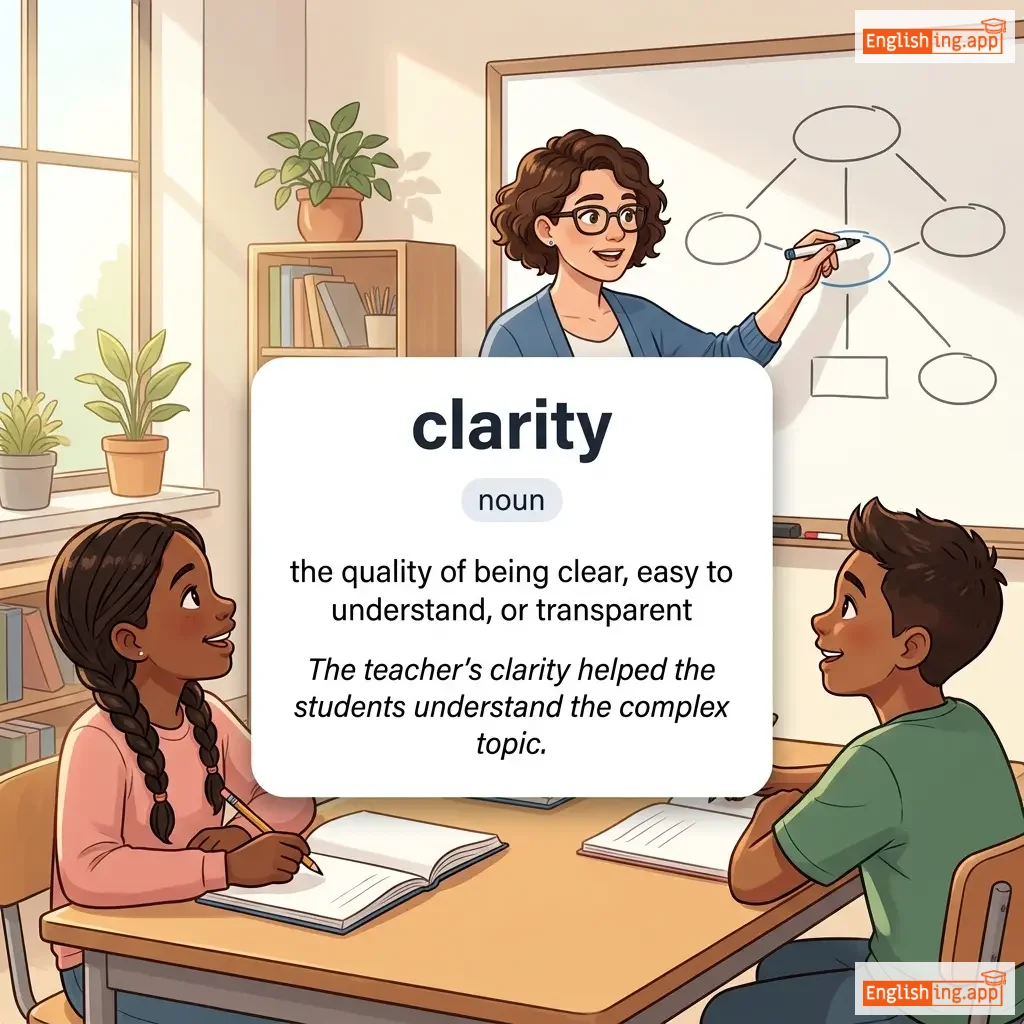
clarity definition card — visual illustration of the meaning
noun
/ˈklærəti/
clarté (clarte)

the quality of being clear, easy to understand, or transparent

"The teacher's clarity helped the students understand the complex topic."

"La clarté de l'enseignant a aidé les élèves à comprendre le sujet complexe." (La clarte de l'enseignant a aide les eleves a comprendre le sujet complexe.)
verb
/klæʃ/
collision (collision)

to come into conflict or collision with something or someone.

"The two cars clashed in the intersection."

"Les deux voitures se sont percutées à l'intersection." (Les deux voitures se sont percutées à l'intersection.)
verb
/klæsp/
attraper / fermoir (attraper / fermoir)

to grasp or hold tightly; also a device for fastening

"She clasped her hands together in prayer."

"Elle a entrelacé ses mains ensemble en prière." (Elle a entrelacé ses mains ensemble en prière.)
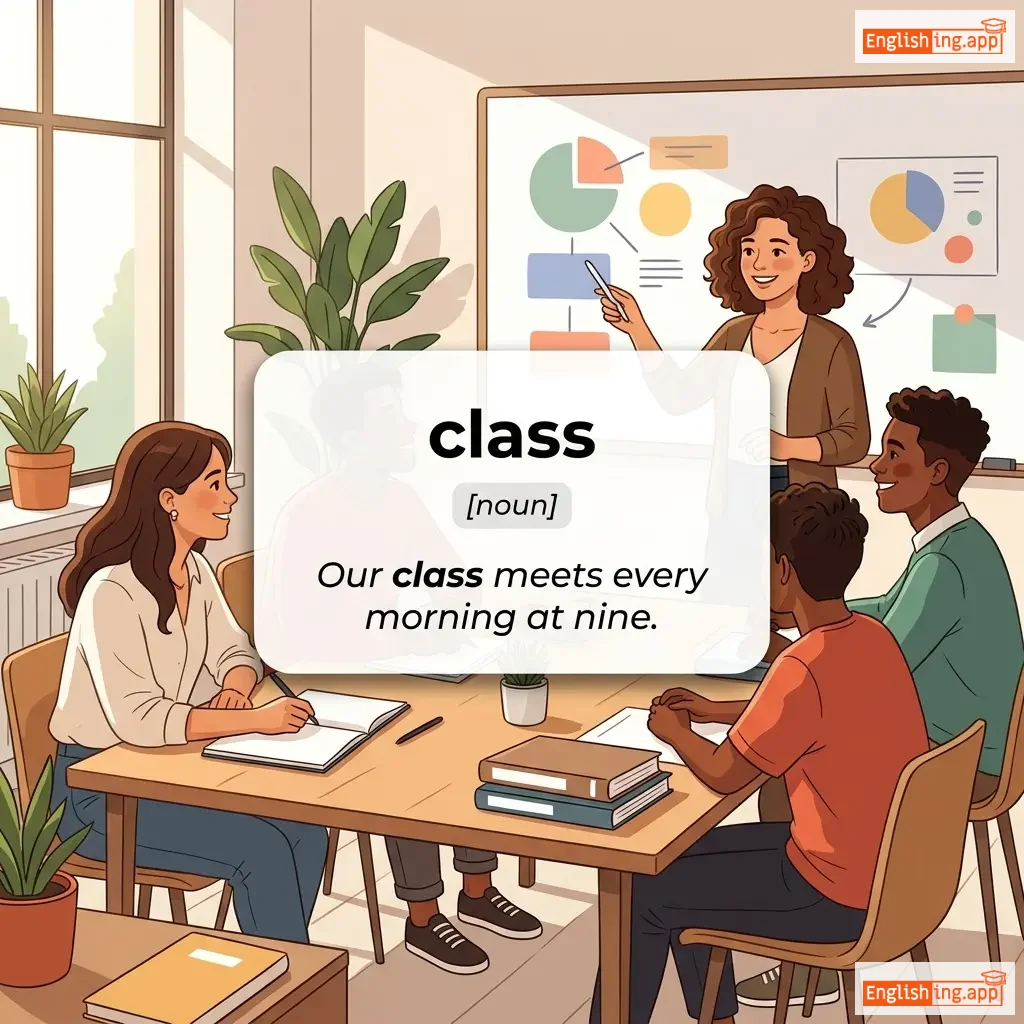
class definition card — visual illustration of the meaning
noun
/klɑːs/
classe (classe)

a group of students taught together or a category of people or things with shared characteristics

"Our class meets every morning at nine."

"Notre classe se réunit tous les matins à neuf heures." (Notre classe se réunit tous les matins à neuf heures.)
adjective
/ˈklæsɪk/
classique, exceptionnel (klasik, exceptionnel)

Judged over a period of time to be of the highest quality and outstanding of its kind.

"That movie is a classic example of 90s comedy."

"Ce film est un exemple classique de la comédie des années 90." (Ce film est un exemple classique de la comédie des années 90.)
adjective
/ˈklæsɪkəl/
classique ou traditionnel (classique ou traditionnel)

relating to ancient Greek or Roman culture, or representing traditional excellence in art, music, or literature

"She loves listening to classical music while studying."

"Elle adore écouter de la musique classique en étudiant." (Elle adore écouter de la musique classique en étudiant.)
noun
/ˌklæsɪfɪˈkeɪʃən/
classification (classification)

the action or process of classifying something into groups based on shared characteristics.

"The classification of animals helps in understanding their biology."

"La classification des animaux aide à comprendre leur biologie." (La classification des animaux aide a comprendre leur biologie.)
adjective
/ˈklæsɪfaɪd/
classifié (classifie)

arranged into categories; officially secret or restricted

"The report contains classified information and cannot be shared publicly."

"Le rapport contient des informations classifiées." (Le rapport contient des informations classifiees)
verb
/ˈklæsɪfaɪ/
classer (classer)

to arrange or organize into categories or groups

"The librarian classified the books by subject."

"Le bibliothécaire a classé les livres par sujet." (Le bibliothécaire a classé les livres par sujet.)
noun
/ˈklɑːsmeɪt/
camarade de classe (camarade de classe)

a person who is in the same class or course of study as another

"I met one of my old classmates at the university event."

"J’ai rencontré un ancien camarade de classe lors de l’événement universitaire." (jai rencontre un ancien camarade de classe lors de levenement universitaire)
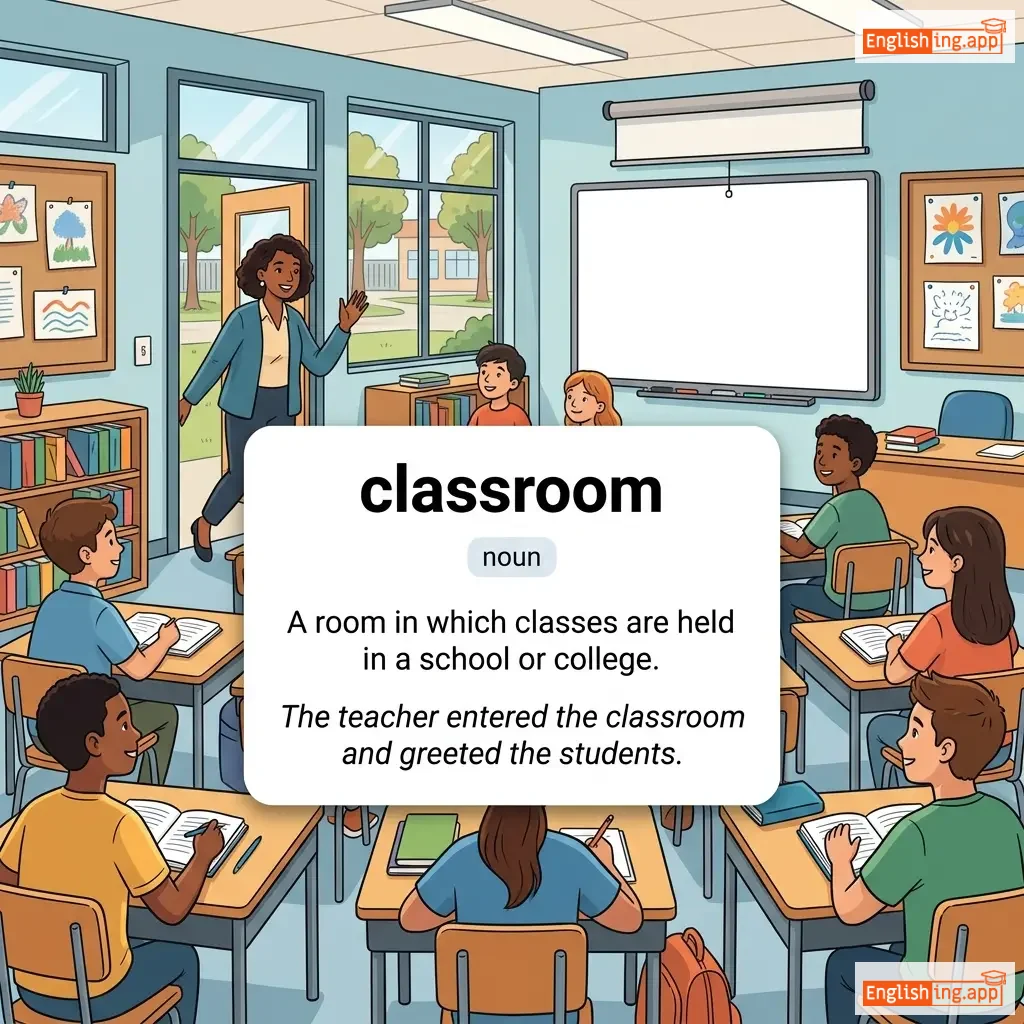
classroom definition card — visual illustration of the meaning
noun
/ˈklæsˌruːm/
salle de classe (salle de classe)

A room in which classes are held in a school or college.

"The teacher entered the classroom and greeted the students."

"L'enseignant est entré dans la salle de classe et a salué les étudiants." (L'enseignant est entre dans la salle de classe et a salue les etudiants.)
noun
/ˌklɔːstrəˈfəʊbiə/
claustrophobie (claustrophobie)

an extreme or irrational fear of being in confined spaces

"He avoids elevators because of his claustrophobia."

"Il évite les ascenseurs à cause de sa claustrophobie." (Il evite les ascenseurs a cause de sa claustrophobie)
noun
/bɑːks/
boîte (boite)

a container with flat sides, typically square or rectangular, used for storing things

"He packed his clothes in a cardboard box."

"Il a emballé ses vêtements dans une boîte en carton." (Il a emballe ses vetements dans une boite en carton.)
noun
/ˈbɒksər/
boxeur; boxer (boxeur; boxer)

a person who fights in the sport of boxing; a type of short loose-fitting underwear; a breed of medium-to-large dog

"The boxer trained hard every morning before the championship match."

"Le boxeur s'entraînait dur chaque matin avant le championnat." (Le boxeur s entrainait dur chaque matin avant le championnat)
noun; gerund
/ˈbɒksɪŋ/
boxe (boxe)

the sport of fighting with fists using padded gloves; the act of putting something into a box

"He has been training hard for a professional boxing match."

"Il s'entraîne dur pour un match de boxe." (il s entraine dur pour un match de boxe)
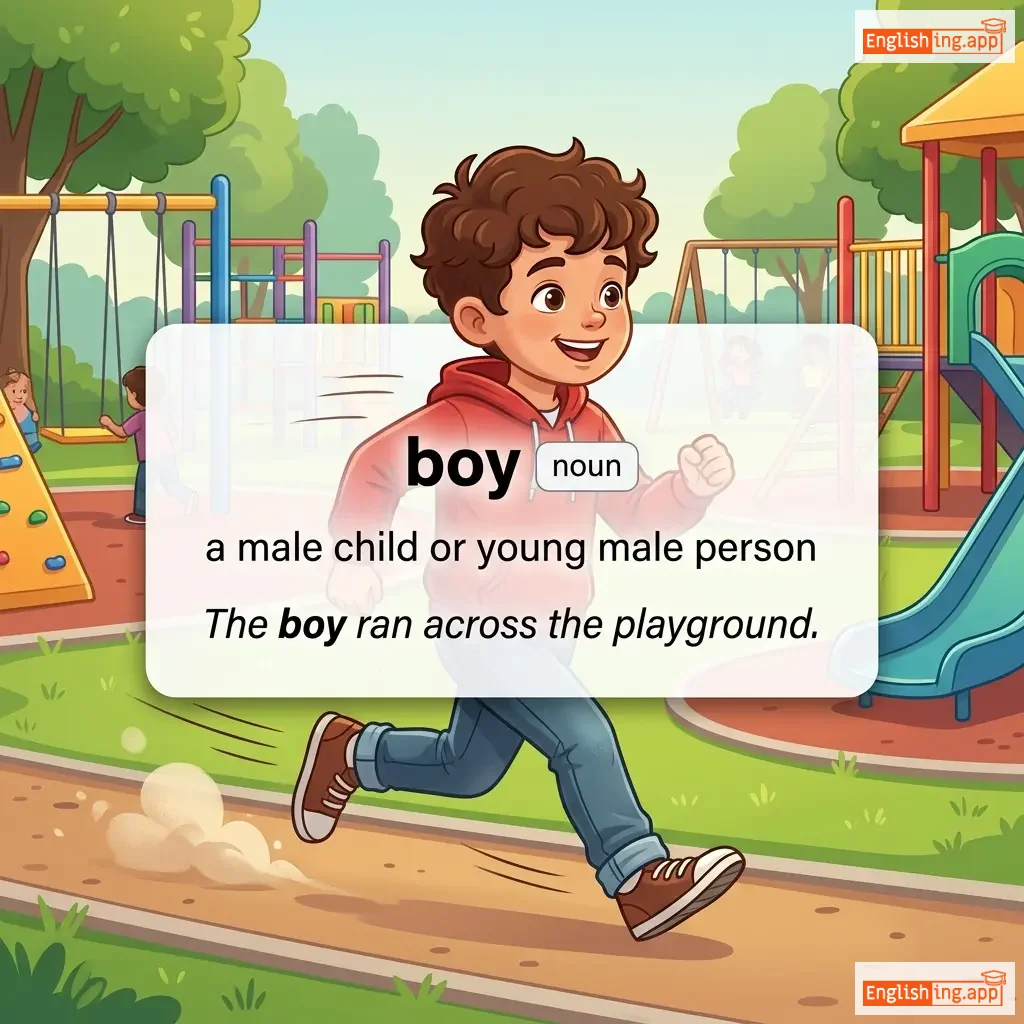
boy definition card — visual illustration of the meaning
noun
/bɔɪ/
garçon (garcon)

a male child or young male person

"The boy ran across the playground."

"Le garçon courait à travers la cour de récréation." (Le garcon courait à travers la cour de récréation.)