词汇表

英语词汇词典 | 单词含义、定义和示例

noun
/ˈsɪstərn/
蓄水池 (xushui chi)

A tank or container for storing water, usually for household use.

"The old house still had a cistern to collect rainwater."

"这座老房子仍然有一个蓄水池来收集雨水。" (Zhè zuò lǎo fángzi réngrán yǒu yīgè xùshuǐchí lái shōují yǔshuǐ.)
noun
/ˈsɪtəˌdɛl/
城堡 (chéngbǎo)

A fortress protecting or dominating a city.

"The ancient citadel stood guard over the town for centuries."

"古老的城堡为城市守卫了几个世纪。" (Gǔlǎo de chéngbǎo wèi chéngshì shǒuwèi le jǐ gè shìjì.)
noun
/saɪˈteɪʃən/
引用 (yǐn yòng)

a quotation from or reference to a book, paper, or author

"The research paper included a citation from Shakespeare."

"研究论文中包含了莎士比亚的引用。" (Yánjiū lùn wén zhōng bāo hán le Shā shì bǐ yà de yǐn yòng.)
verb
/saɪt/
引用 (yǐn yòng)

To refer to or quote a source as evidence or justification.

"She cited several studies to support her argument."

"她引用了几项研究来支持她的论点。" (Tā yǐn yòng le jǐ xiàng yán jiū lái zhīchí tā de lùn diǎn.)
🧑‍🤝‍🧑

citizen (sìtízhèn)

noun
/ˈsɪtɪzən/
公民 (gongmin)

a legally recognized subject or national of a state

"Every citizen has the right to vote."
"每个公民都有投票权。" (Měi gè gōngmín dōu yǒu tóupiào quán.)
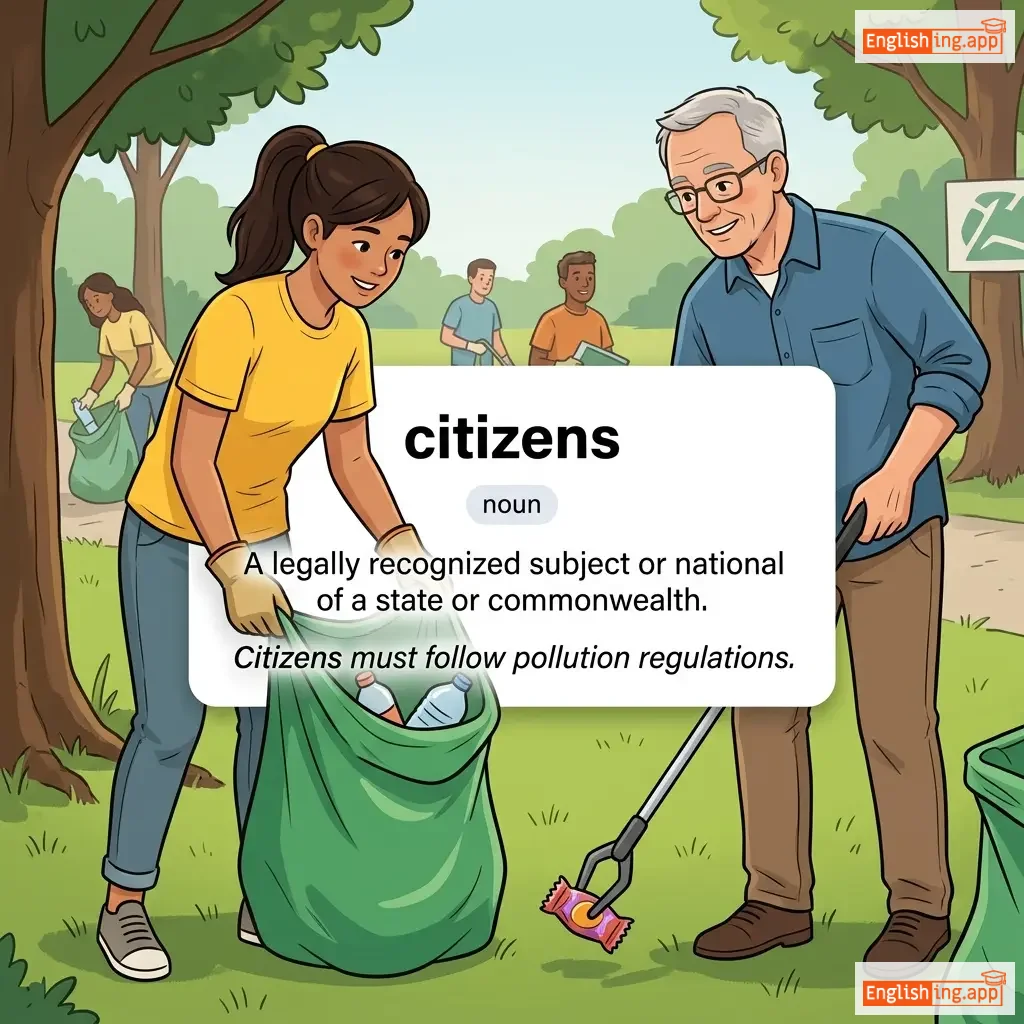
citizens definition card — visual illustration of the meaning
noun
/ˈsɪt.ɪ.zənz/
公民 (gongmin)

A legally recognized subject or national of a state or commonwealth.

"Citizens must follow pollution regulations."

"公民必须遵守污染法规。" (Gōngmín bìxū zūnshǒu wūrǎn fǎguī.)
noun
/ˈsɪtɪzənʃɪp/
国籍 (guójí)

the status of being a recognized member of a state or country, with rights and duties

"He applied for American citizenship after living there for ten years."

"他在美国生活了十年后申请了美国国籍。" (Tā zài Měiguó shēnghuóle shí nián hòu shēnqǐngle Měiguó guójí.)
noun
/ˈsɪtrɪk ˈæsɪd/
柠檬酸 (ningmengsuan)

a natural acid found in citrus fruits, used as a food preservative and flavoring agent

"Add a pinch of citric acid to preserve the color of the fruit jam."
"加入一撮柠檬酸以保持果酱的颜色。" (Jia ru yi cuo ningmengsuan yi baochi guojiang de yanse.)
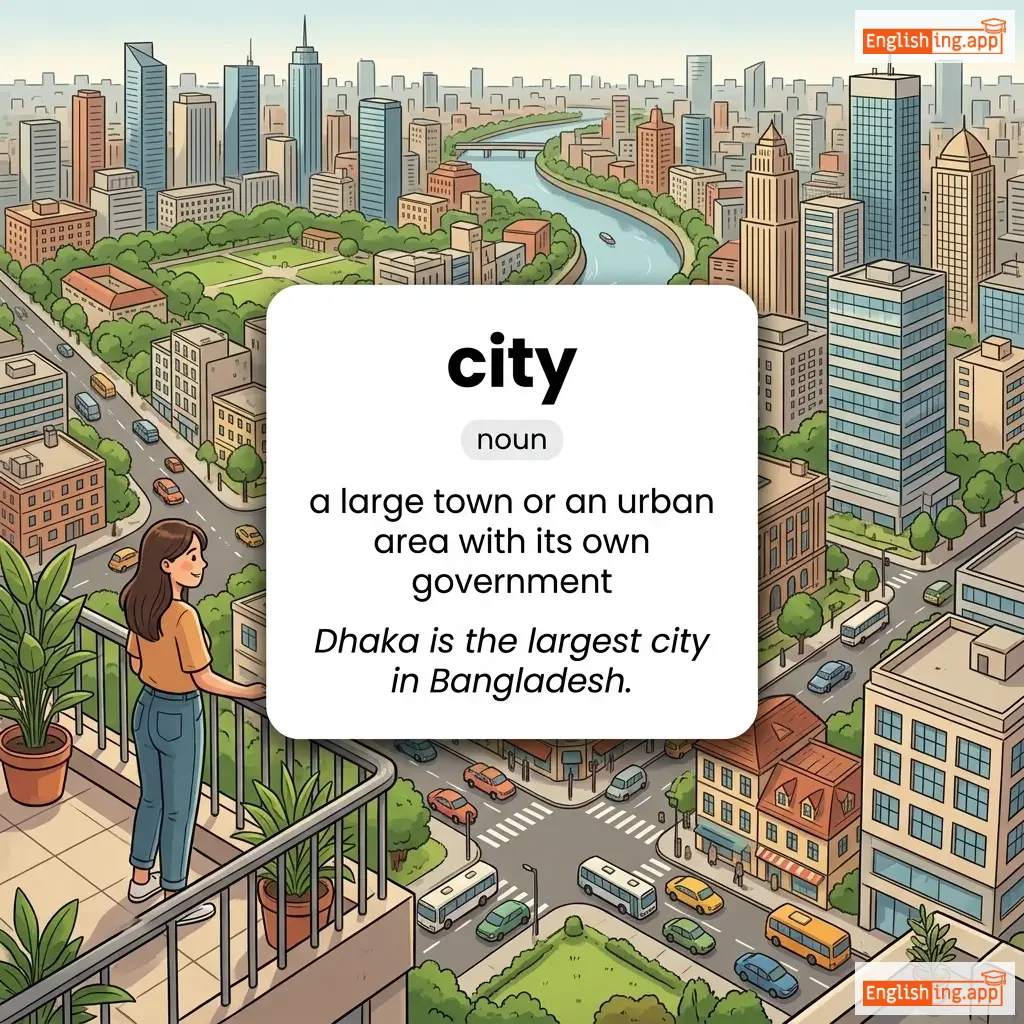
city definition card — visual illustration of the meaning
noun
/ˈsɪti/
城市 (chengshi)

a large town or an urban area with its own government

"Dhaka is the largest city in Bangladesh."

"北京是中国最大的城市。" (Běijīng shì zhōngguó zuì dà de chéngshì.)
adjective
/ˈsɪvɪk/
市民 (shìmín)

relating to a city, town, or the duties of its citizens

"The mayor encouraged people to take part in civic activities."

"市长鼓励人们参与市民活动。" (Shìzhǎng gǔlì rénmen cānyù shìmín huódòng.)
noun
/ˈsɪvɪks/
公民教育 (gongmin jiaoyu)

the study of the rights and duties of citizens and how government works

"Civics helps students understand their responsibilities as citizens."

"公民教育帮助学生理解作为公民的责任。" (gongmin jiaoyu bangzhu xuesheng lijie zuowei gongmin de zeren)
adjective
/ˈsɪvəl/
公民的 (gongmin de)

Relating to ordinary citizens and their concerns, or being polite and courteous.

"They settled the matter through civil discussion."

"他们通过公民的讨论解决了这个问题。" (Tāmen tōngguò gōngmín de tǎolùn jiějuéle zhège wèntí.)
noun/adjective
/səˈvɪliən/
平民 (pingmin)

a person not in the armed forces or police

"The area was evacuated to protect the civilians."

"该区域已被疏散以保护平民。" (Gai quyu yi bei shuxian yi baohu pingmin.)
noun
/səˈvɪləti/
文明 (wenming)

Polite and courteous behavior.

"He treated his opponent with civility despite their differences."

"他以文明礼貌对待他的对手,尽管他们之间存在差异。" (Tā yǐ wénmíng lǐmào duìdài tā de duìshǒu, jǐnguǎn tāmen zhījiān cúnzài chāyì.)
noun
/ˌsɪvɪlaɪˈzeɪʃən/
文明 (wenming)

the stage of human social and cultural development and organization considered most advanced

"Ancient Egypt is known for its remarkable civilization."
"古埃及因其卓越的文明而闻名。" (Gu Aiji yin qi zhuoyue de wenming er wenming.)
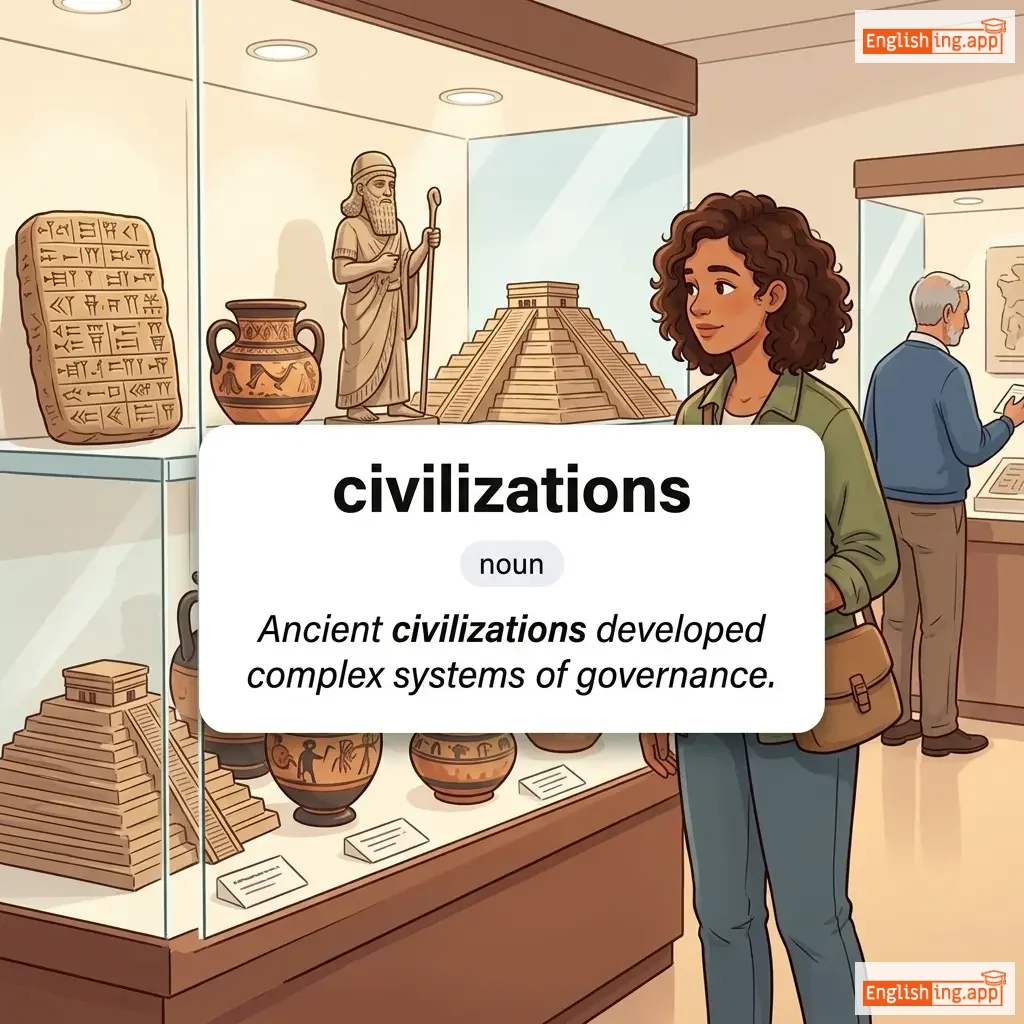
civilizations definition card — visual illustration of the meaning
noun
sɪvɪˈlɪzeɪʃənz
文明 (wenming)

The stage of human social development and organization that is considered most advanced.

"Ancient civilizations developed complex systems of governance."

"古代文明发展了复杂的治理体系。" (Gudai wenming fazhan le fuzha de zhili tixi.)
verb
/ˈsɪvɪlaɪz/
使文明 (shi wenming)

to bring a society or group to a more developed, organized, or socially acceptable state; to educate and refine behavior

"Education can help civilize communities by promoting shared values and respect."

"教育可以通过促进共同价值观和尊重来使社区更加文明。" (Jiaoyu keyi tongguo cujin gongtong jiazhiguan he zunzhong lai shi shequ gengjia wenming)
adjective
/klæd/
穿戴 / 覆盖 (chuandai / fugai)

dressed or covered in a particular way

"The knight was clad in shining armor."

"骑士穿戴着闪亮的盔甲。" (Qishi chuandaizhe shanliang de kuijia.)
claim definition card — visual illustration of the meaning
verb
/kleɪm/
声称 (shengcheng)

to state something as true, often without proof; to demand ownership or right

"He claimed the prize after winning the competition."

"他在赢得比赛后声称获得了奖金。" (Ta zai yingde bisai hou shengcheng huode le jiangjin.)
noun
/ˈkleɪmənt/
索赔人 (suǒpéi rén)

a person who makes a claim, especially in a legal or financial context

"The claimant filed for compensation after the accident."

"索赔人事故后申请赔偿。" (Suǒpéi rén shìgù hòu shēnqǐng péicháng.)
claims definition card — visual illustration of the meaning
verb
kleɪmz
夺取生命 (duoqu shengming)

To take someone's life, to cause death

"Workplace pollution claims thousands of lives annually."

"工作场所污染每年夺走成千上万的生命。" (Gongzuo changsuo wuran meinian duozuochengqian shangwan de shengming.)
noun
/klɛərˈvɔɪəns/
通灵 (tōng líng)

the supposed ability to perceive events beyond normal sensory contact; psychic insight

"She claimed to have clairvoyance and predicted the future."

"她声称自己有通灵能力,并预言了未来。" (Tā shēngchēng zìjǐ yǒu tōng líng nénglì, bìng yùyánle wèilái.)
clairvoyant definition card — visual illustration of the meaning
🧙‍♀️

clairvoyant

noun, adjective
/klɛərˈvɔɪənt/

a person who claims to have clairvoyance; having the ability to see beyond normal senses

"The clairvoyant predicted that she would travel abroad soon."

verb
/ˈklæmbər/
吃力地爬 (chilide pa)

to climb with effort or difficulty, often using both hands and feet

"The children clambered over the rocks to reach the cave."
"孩子们费力地爬过岩石,到达了洞穴。" (Haizimen feili de paguo yan shi, daole dongxue.)
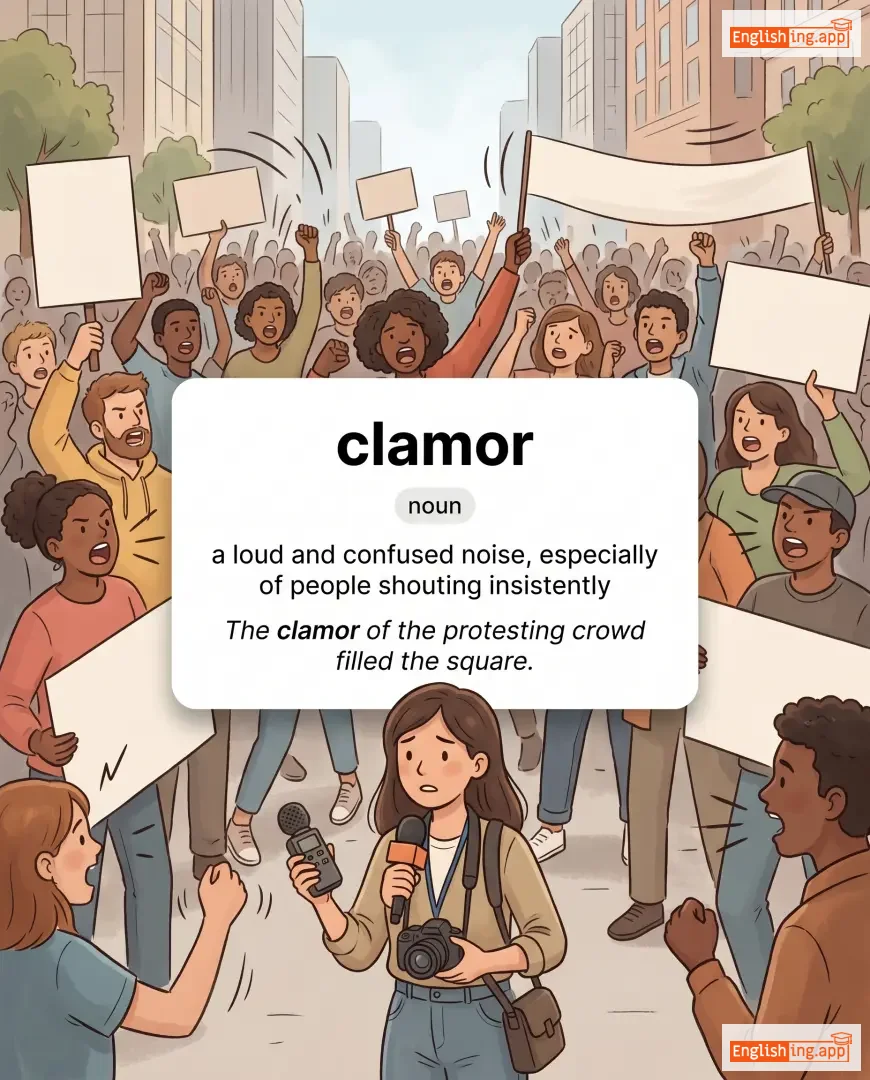
clamor definition card — visual illustration of the meaning
noun
/ˈklæmər/
喧嚣 (xuānxiāo)

a loud and confused noise, especially of people shouting insistently

"The clamor of the protesting crowd filled the square."

"抗议人群的喧嚣充满了广场。" (Kàngyì rénqún de xuānxiāo chōngmǎnle guǎngchǎng.)
adjective
/ˈklæmərəs/
喧闹的 (xuānnào de)

making a loud and confused noise; expressing strong demands noisily

"The clamorous audience demanded an encore from the band."

"喧闹的观众要求乐队再来一首歌。" (Xuānnào de guānzhòng yāoqiú yuèduì zài lái yī shǒu gē.)
👨‍👩‍👧‍👦

clan (klan)

noun
/klæn/
氏族 (shìzú)

a large family group or a close-knit community with shared interests or ancestry

"The entire clan gathered to celebrate the festival."

"整个氏族聚集在一起庆祝节日。" (Zhěng gè shìzú jù jí zài yīqǐ qìng zhù jiérì.)
adjective
/klænˈdɛstaɪn/

kept secret or done secretly, especially for illicit purposes

"They held a clandestine meeting late at night."

noun
/ˈklæŋər/
响声,轰鸣 (xiangsheng, hongming)

A loud, resonant, and continuous noise, often metallic.

"The clangor of the church bells filled the town square."

"教堂钟声的轰鸣充满了小镇的广场。" (Jiaotang zhongsheng de hongming chongman le xiaozhen de guangchang.)
👏

clap

verb
/klæp/

To strike the palms of the hands together, usually to express approval or create a sharp sound.

"The audience began to clap loudly after the performance."

noun
/ˈklæpər/
钟内的金属部件,敲击钟体发出声音 (zhōng nèi de jīnshǔ bùjiàn, qiāojī zhōng tǐ fāchū shēngyīn)

The free-swinging metal piece inside a bell that strikes it to produce sound.

"The clapper inside the bell was broken."

"钟内的金属部件坏了。" (Zhōng nèi de jīnshǔ bùjiàn huài le.)
clarification definition card — visual illustration of the meaning
noun
/ˌklærɪfɪˈkeɪʃən/
澄清 (chengqing)

The action of making a statement or situation less confused and more clearly comprehensible.

"The manager requested clarification on the project details."

"经理要求对项目细节进行澄清。" (Jīnglǐ yāoqiú duì xiàngmù xìjié jìnxíng chéngqīng.)
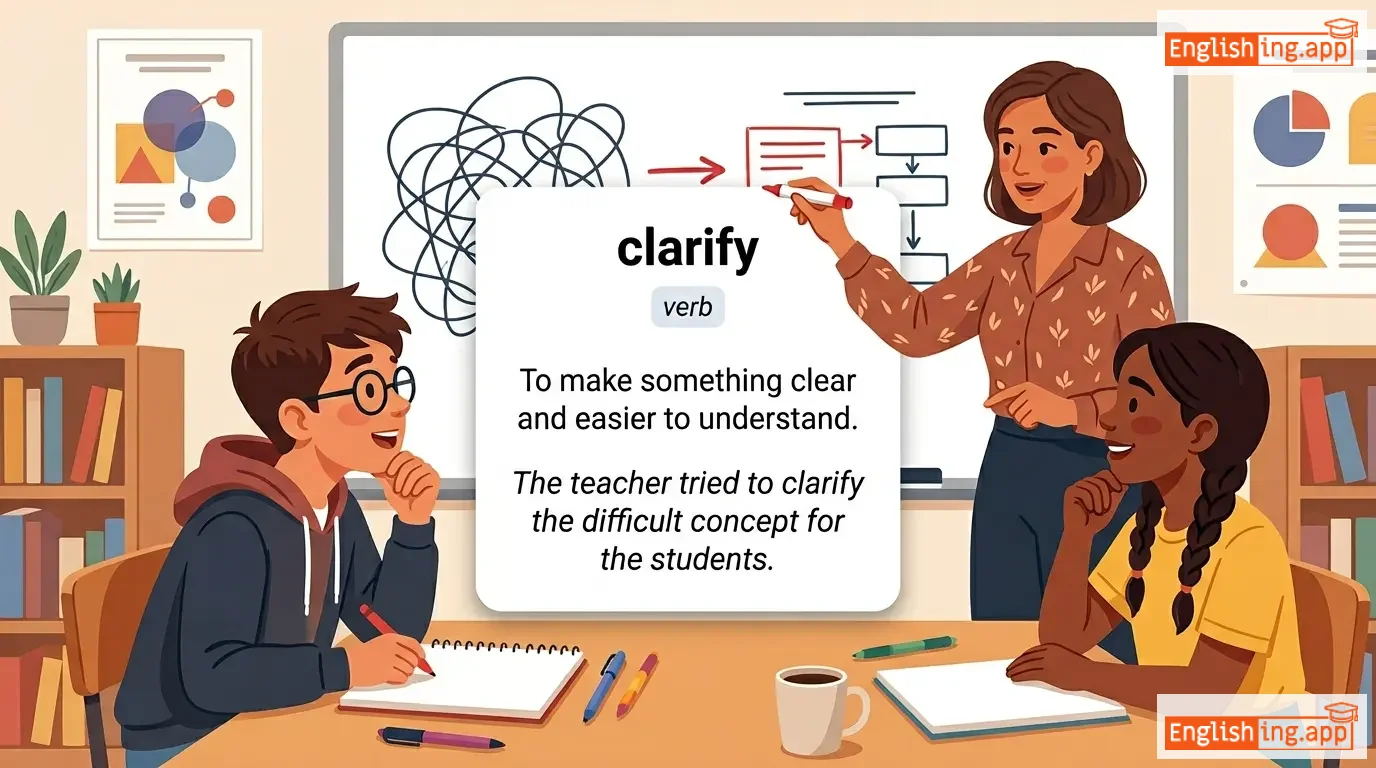
clarify definition card — visual illustration of the meaning
verb
/ˈklærɪfaɪ/

To make something clear and easier to understand.

"The teacher tried to clarify the difficult concept for the students."

adjective
/ˈklæriən/
响亮而清晰的号召 (xiangliang er qingxi de haozhao)

Loud and clear, like the sound of a trumpet; strongly expressed.

"The leader’s clarion call for unity inspired the crowd."
"领导人对团结的号召激励了人群。" (Lingdaoren dui tuanjie de haozhao jili le renqun.)
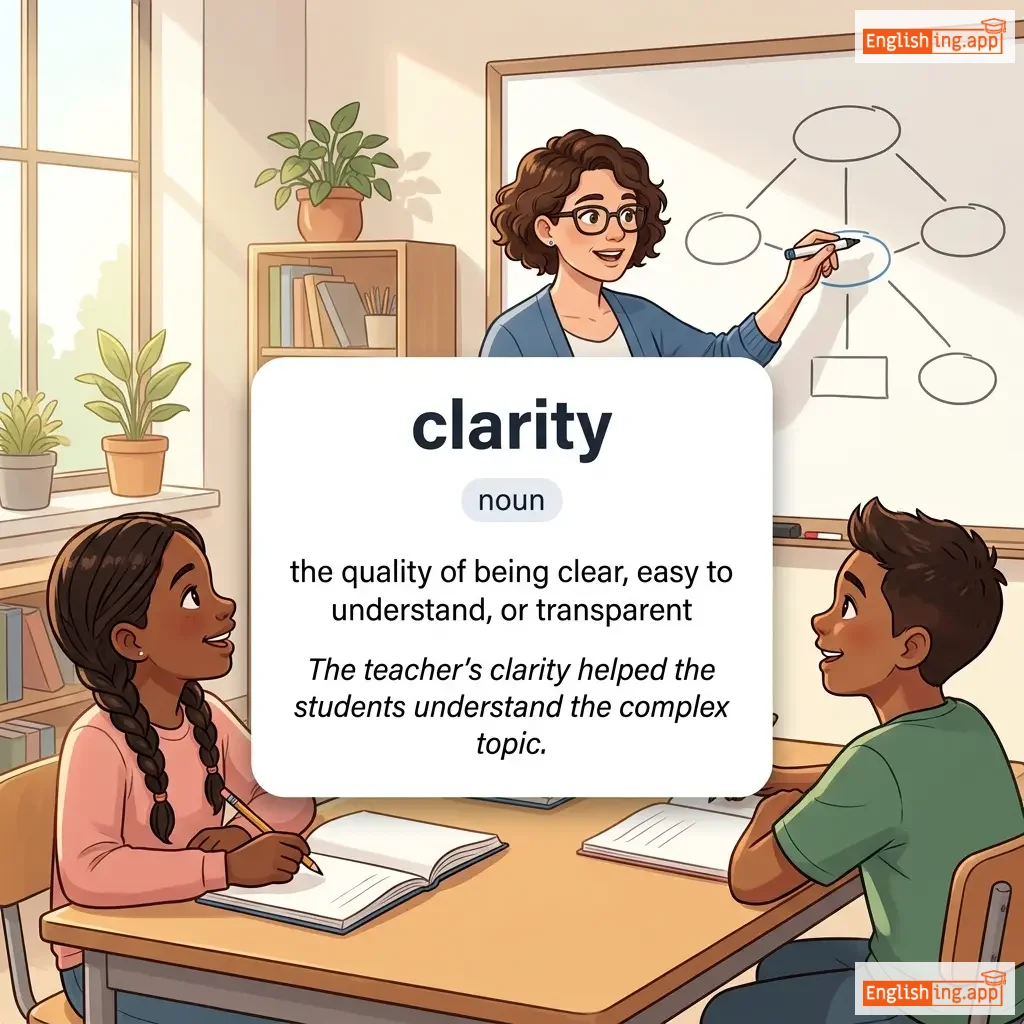
clarity definition card — visual illustration of the meaning
noun
/ˈklærəti/
清晰 (qīngxī)

the quality of being clear, easy to understand, or transparent

"The teacher's clarity helped the students understand the complex topic."

"老师的清晰帮助学生理解了复杂的主题。" (Lǎoshī de qīngxī bāngzhù xuéshēng lǐjiěle fùzá de zhǔtí.)
verb
/klæʃ/
碰撞 (pengzhuang)

to come into conflict or collision with something or someone.

"The two cars clashed in the intersection."

"两辆车在交叉路口发生了碰撞。" (Liang liang che zai jiaochalu kou fasheng le pengzhuang.)
verb
/klæsp/
抓住 / 扣子 (zhuazhu / kouzi)

to grasp or hold tightly; also a device for fastening

"She clasped her hands together in prayer."

"她在祈祷时将手紧紧地握在一起。" (Ta zai qidao shi jiang shou jinjing de wo zai yiqi.)
class definition card — visual illustration of the meaning
noun
/klɑːs/
班级 (banji)

a group of students taught together or a category of people or things with shared characteristics

"Our class meets every morning at nine."

"我们的班级每天早上九点见面。" (wo men de ban ji mei tian zao shang jiu dian jian mian.)
adjective
/ˈklæsɪk/
经典,杰出 (jingdian, jiechu)

Judged over a period of time to be of the highest quality and outstanding of its kind.

"That movie is a classic example of 90s comedy."

"那部电影是90年代喜剧的经典范例。" (Nà bù diànyǐng shì 90 niándài xǐjù de jīngdiǎn fànlì.)
adjective
/ˈklæsɪkəl/
经典或传统 (jingdian huo chuantong)

relating to ancient Greek or Roman culture, or representing traditional excellence in art, music, or literature

"She loves listening to classical music while studying."

"她喜欢在学习时听古典音乐。" (Ta xihuan zai xuexi shi ting gudian yinyue.)
noun
/ˌklæsɪfɪˈkeɪʃən/
分类 (fenlei)

the action or process of classifying something into groups based on shared characteristics.

"The classification of animals helps in understanding their biology."

"动物的分类有助于理解它们的生物学。" (Dòngwù de fēnlèi yǒuzhù yú lǐjiě tāmen de shēngwùxué.)
adjective
/ˈklæsɪfaɪd/
机密的;分类的 (jimi de; fenlei de)

arranged into categories; officially secret or restricted

"The report contains classified information and cannot be shared publicly."

"这份报告包含机密信息。" (Zhe fen baogao baohan jimi xinxi)
🗂️

classify

verb
/ˈklæsɪfaɪ/

to arrange or organize into categories or groups

"The librarian classified the books by subject."

noun
/ˈklɑːsmeɪt/
同学 (tongxue)

a person who is in the same class or course of study as another

"I met one of my old classmates at the university event."
"我在大学活动中遇到了一位老同学。" (wo zai daxue huodong zhong yudao le yi wei lao tongxue)
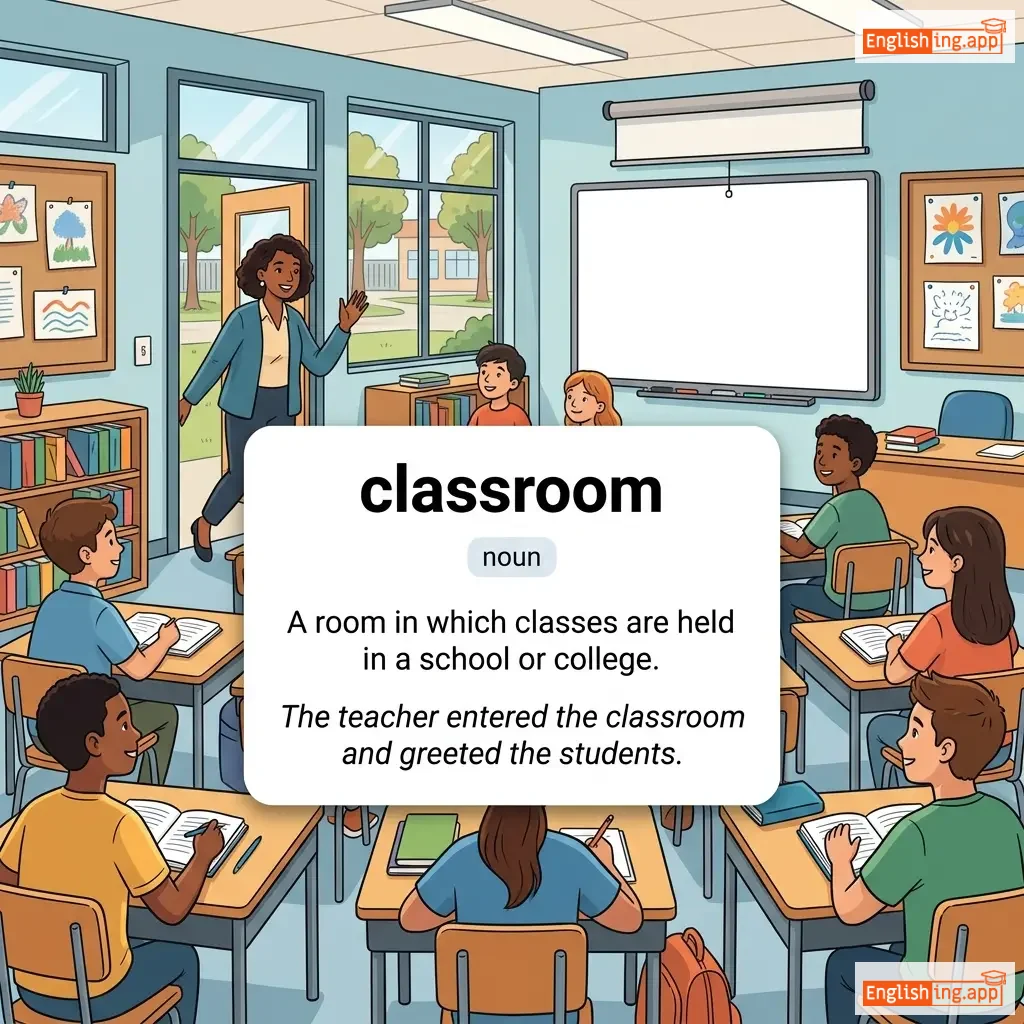
classroom definition card — visual illustration of the meaning
noun
/ˈklæsˌruːm/
教室 (jiaoshi)

A room in which classes are held in a school or college.

"The teacher entered the classroom and greeted the students."

"老师走进了教室并向学生们问好。" (Lǎoshī zǒu jìnle jiàoshì bìng xiàng xuéshēngmen wèn hǎo.)
noun
/ˌklɔːstrəˈfəʊbiə/

an extreme or irrational fear of being in confined spaces

"He avoids elevators because of his claustrophobia."

noun
/bɑːks/
盒子 (hezi)

a container with flat sides, typically square or rectangular, used for storing things

"He packed his clothes in a cardboard box."

"他把衣服打包进一个纸箱里。" (Ta ba yifu dabao jin yi ge zhi xiang li.)
noun
/ˈbɒksər/
拳击手; 平角内裤; 拳师犬 (quanjishou; pingjiao neiku; quanshi quan)

a person who fights in the sport of boxing; a type of short loose-fitting underwear; a breed of medium-to-large dog

"The boxer trained hard every morning before the championship match."

"那名拳击手在冠军赛前每天早上刻苦训练。" (na ming quanjishou zai guanjunsai qian meitian zaoshang keku xunlian)
noun; gerund
/ˈbɒksɪŋ/
拳击 (quanji)

the sport of fighting with fists using padded gloves; the act of putting something into a box

"He has been training hard for a professional boxing match."
"他正在为一场职业拳击比赛刻苦训练。" (ta zhengzai wei yi chang zhiye quanji bisai keku xunlian)
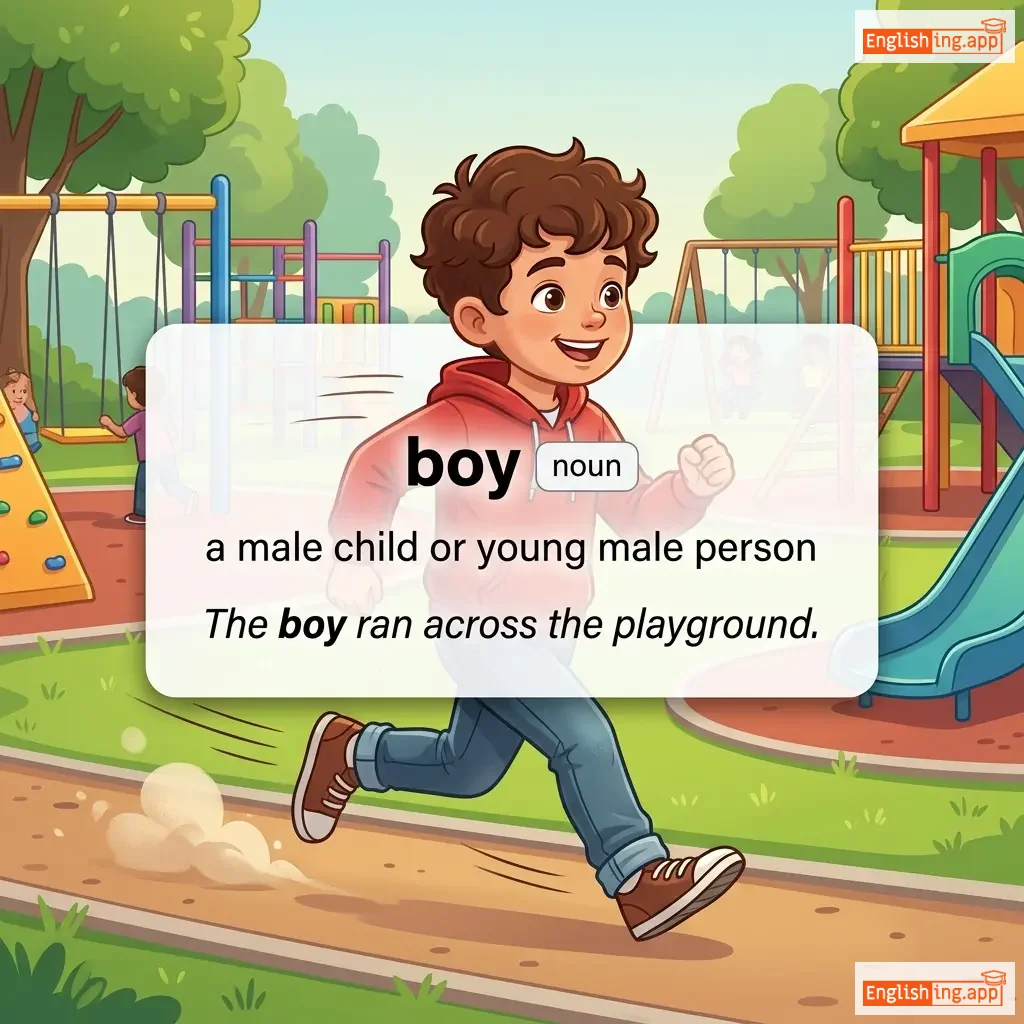
boy definition card — visual illustration of the meaning
noun
/bɔɪ/
男孩 (nánhái)

a male child or young male person

"The boy ran across the playground."

"那个男孩跑过了操场。" (Nàgè nánhái pǎo guòle cāochǎng.)