Vocabulaires

Découvrez, apprenez et maîtrisez le vocabulaire anglais

noun
/ˈbriːðɪŋ/
bonheur (bonheur)

the process of taking air into and expelling it from the lungs.

"Deep breathing can help you relax."

"Elle ne pouvait pas cacher son bonheur quand elle a reçu le prix." (Elle ne pouvait pas cacher son bonheur quand elle a reçu le prix.)
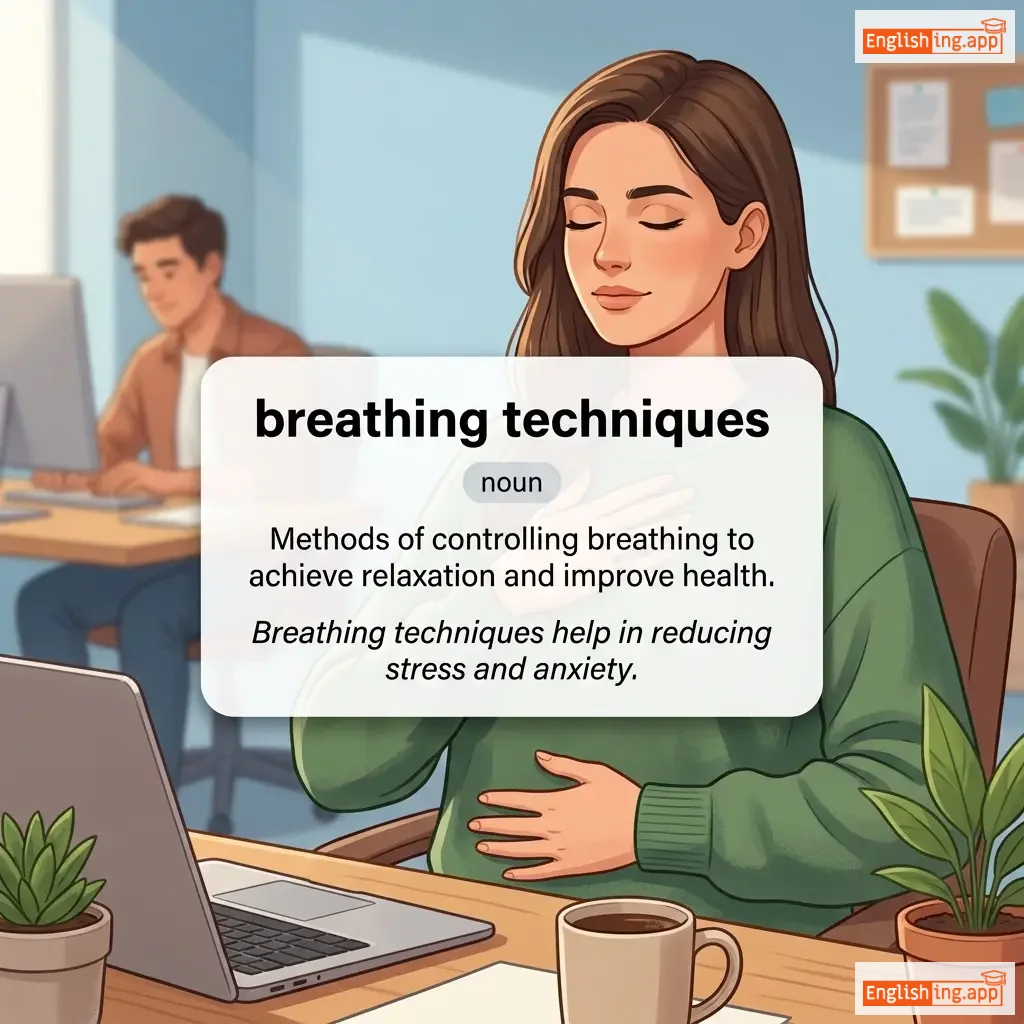
breathing techniques definition card — visual illustration of the meaning
noun
/ˈbriː.ðɪŋ tɛkˌniːks/
techniques de respiration (teknik de respirasyon)

Methods of controlling breathing to achieve relaxation and improve health.

"Breathing techniques help in reducing stress and anxiety."

"Les techniques de respiration aident à réduire le stress et l'anxiété." (Les techniques de respiration aident a reduire le stress et l'anxiete.)
noun
/briːtʃ/
La partie arrière du canon d'une arme; une position d'un bébé dans l'utérus où les fesses ou les pieds sortent en premier à la naissance. (La partie arriere du canon d'une arme; une position d'un bebe dans l'uterus ou les fesses ou les pieds sortent en premier a la naissance.)

The back part of a gun barrel; a position of a baby in the womb where the buttocks or feet come out first at birth.

"The rifle was loaded through the breech."

"Le fusil a été chargé par la culasse." (Le fusil a ete charge par la culasse.)
noun
/ˈbriːtʃɪz/
pantalons jusqu'aux genoux (pantalons jusqu'aux genoux)

knee-length trousers; short pants

"He wore riding breeches for the equestrian event."

"Il portait des pantalons jusqu'aux genoux pour l'événement équestre." (Il portait des pantalons jusqu'aux genoux pour l'événement équestre.)
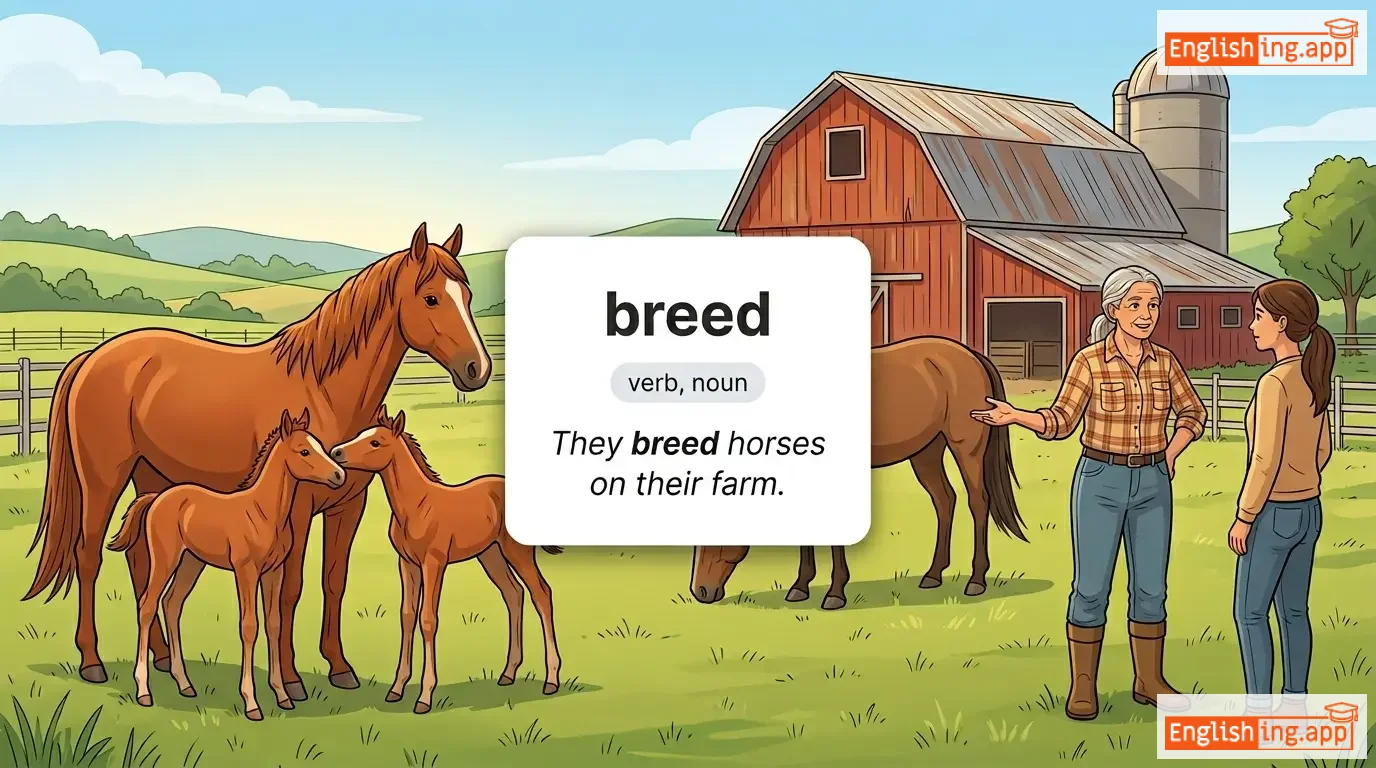
breed definition card — visual illustration of the meaning
verb, noun
/briːd/
élever, race (elever, race)

To cause an animal to reproduce; to raise or train; a type or variety of animal or plant.

"They breed horses on their farm."

"Ils élèvent des chevaux à la ferme." (Ils élèvent des chevaux à la ferme.)
noun
/briːz/
brise légère (brise légère)

a gentle wind; a light and pleasant current of air.

"A cool breeze came through the window."

"Une brise fraîche est entrée par la fenêtre." (Une brise fraîche est entrée par la fenêtre.)
noun
/ˈbriːzˌweɪ/
passage couvert (passage couvert)

A roofed outdoor passage, often connecting two buildings.

"The breezeway connected the house to the garage."

"Le passage couvert reliait la maison au garage." (Le passage couvert reliait la maison au garage.)
noun
/ˈbrɛviˌɛri/
livre de prières (livre de prières)

A book containing the service for each day, used in Christian liturgy.

"The monk read from the breviary during morning prayers."

"Le moine a lu du livre de prières pendant les prières du matin." (Le moine a lu du livre de prières pendant les prières du matin.)
noun
/ˈbrɛvɪti/
brièveté (brièveté)

Concise and exact use of words in writing or speech.

"The brevity of the speech kept the audience engaged."

"La brièveté du discours a captivé le public." (La brièveté du discours a captivé le public.)
verb
/braɪb/
pot-de-vin (pot-de-vin)

To persuade someone to act in one's favor, typically illegally, by offering money or gifts.

"The official was caught trying to bribe the inspector."

"L'officiel a été pris en train d'essayer de soudoyer l'inspecteur." (L'officiel a été pris en train d'essayer de soudoyer l'inspecteur.)
noun
/ˈbrɪk ə ˌbræk/
objets décoratifs (objets decoratifs)

Small decorative objects or ornaments, often of little value.

"The shelves were filled with old bric-a-brac from her travels."

"Les étagères étaient remplies de vieux objets décoratifs de ses voyages." (Les étagères étaient remplies de vieux objets décoratifs de ses voyages.)
noun
/brɪk/
brique (brique)

A rectangular block of clay or similar material used in building walls and other structures.

"The workers laid brick after brick to build the wall."

"Les travailleurs ont posé brique après brique pour construire le mur." (Les travailleurs ont posé brique après brique pour construire le mur.)
noun
/ˈbrɪk.bæt/
un morceau de brique; critique sévère ou censure (un morceau de brique; critique severe ou censure)

a piece of brick, especially one used as a missile; harsh criticism or censure

"The angry protesters threw brickbats at the building windows."

"Les manifestants en colère ont lancé des briques contre les fenêtres du bâtiment." (Les manifestants en colere ont lance des briques contre les fenetres du batiment.)
noun
/braɪd/
mariée (mariee)

a woman on her wedding day or just before and after the event

"The bride looked stunning in her white dress."

"La mariée avait l'air magnifique dans sa robe blanche." (La mariee avait l'air magnifique dans sa robe blanche.)
noun
/ˈbraɪd.ɡrʊm/
marié (marie)

a man on his wedding day or just before and after the event

"The nervous bridegroom waited at the altar for his bride to arrive."

"Le marié nerveux attendait à l'autel que sa mariée arrive." (Le marie nerveux attendait a l'autel que sa mariee arrive.)
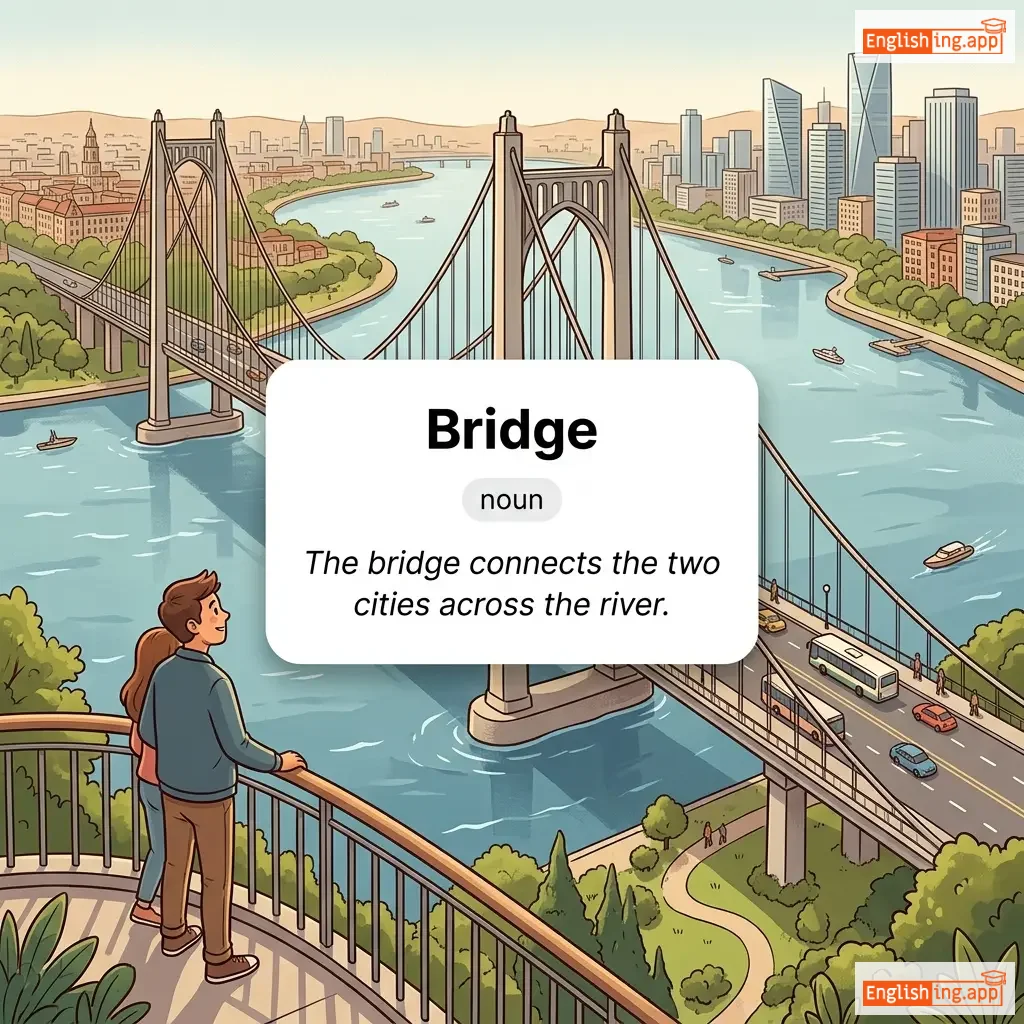
Bridge definition card — visual illustration of the meaning
noun
/brɪdʒ/
pont (pont)

A structure built to span a physical obstacle, such as a river or road, for the purpose of providing passage.

"The bridge connects the two cities across the river."

"Le pont relie les deux villes à travers la rivière." (Le pont relie les deux villes à travers la rivière.)
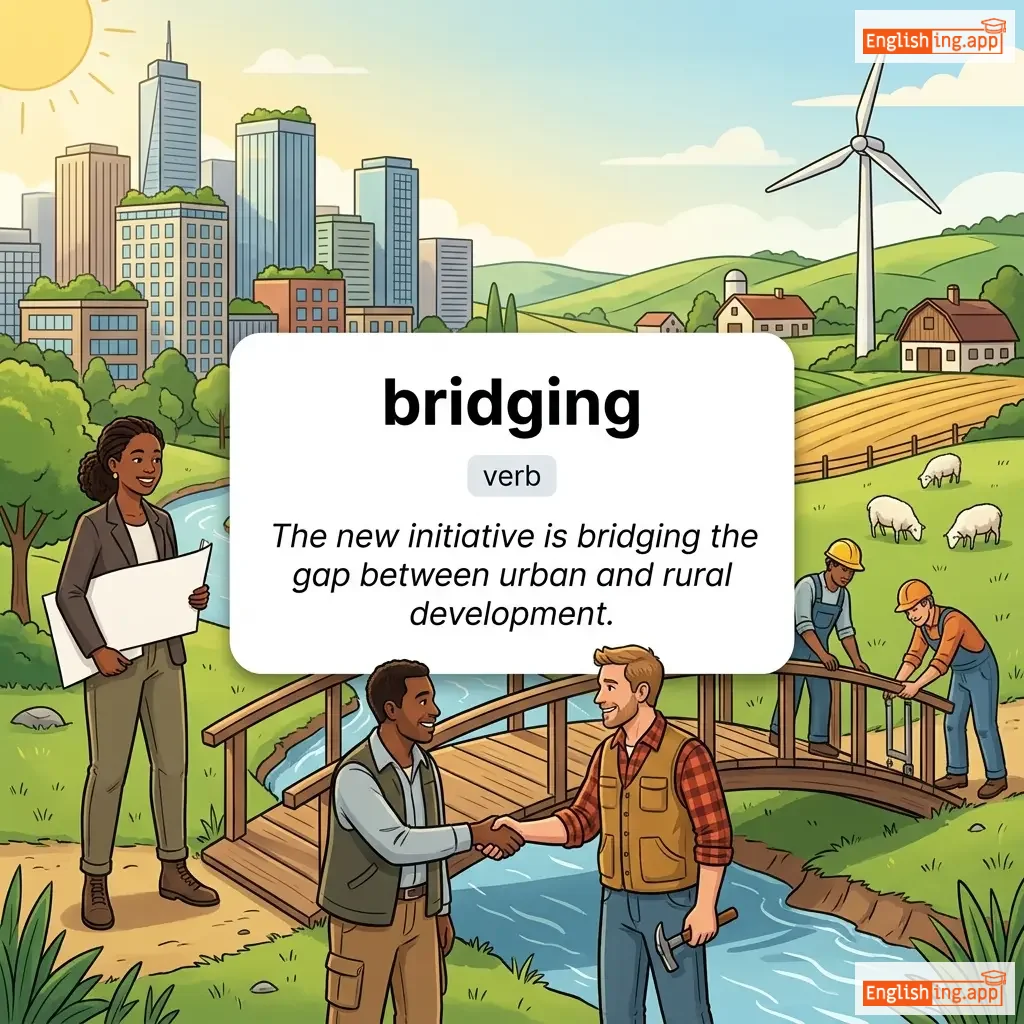
bridging definition card — visual illustration of the meaning
verb
/ˈbrɪdʒɪŋ/
construire un pont, établir une connexion (construire un pont, établir une connexion)

The action of building a bridge over something; connecting or reducing the distance between two things.

"The new initiative is bridging the gap between urban and rural development."

"La nouvelle initiative comble l'écart entre le développement urbain et rural." (La nouvelle initiative comble l'écart entre le développement urbain et rural.)
noun/verb
/ˈbraɪ.dəl/
muserolle (muserolle)

A bridle is a piece of equipment used to control a horse; as a verb, it means to show anger or to restrain.

"The rider tightened the bridle before setting off."

"Le cavalier a serré la bride avant de partir." (Le cavalier a serré la bride avant de partir.)
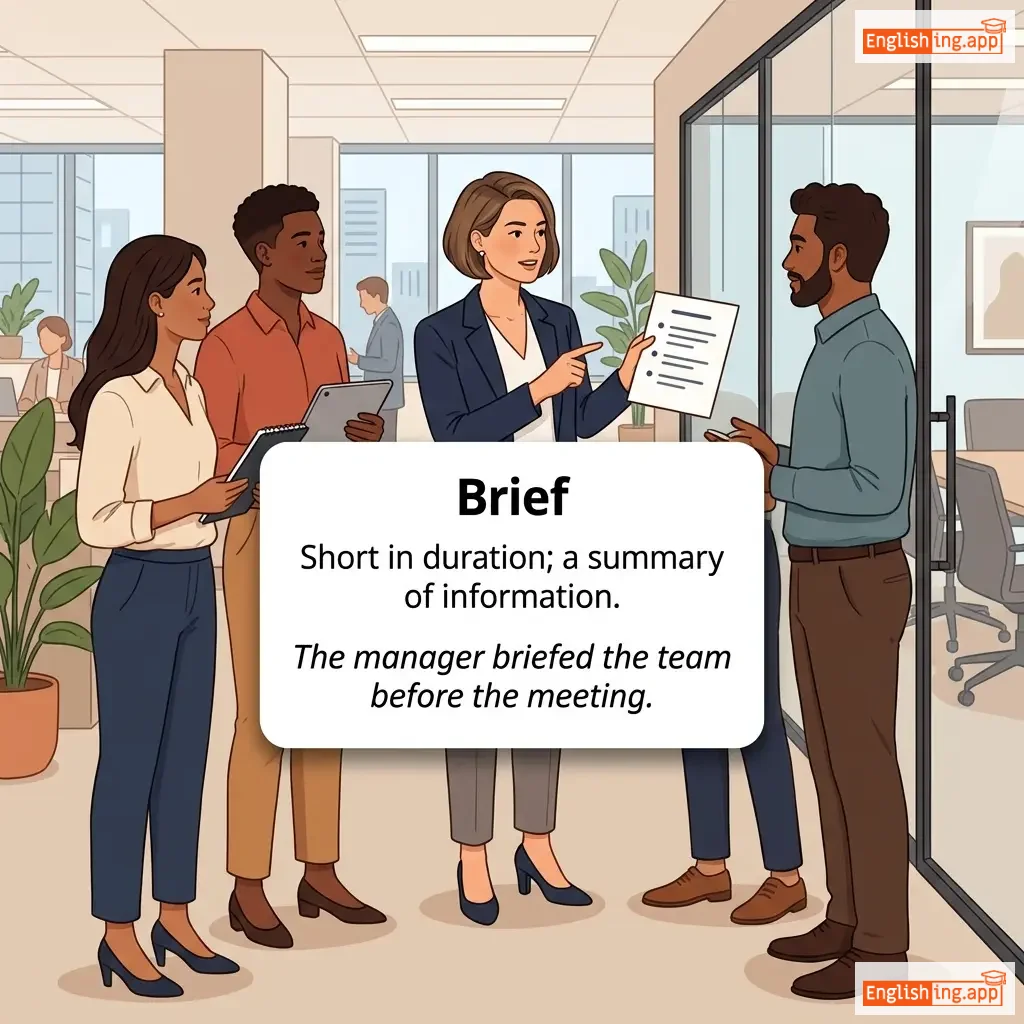
Brief definition card — visual illustration of the meaning
adjective, noun, verb
/briːf/
bref (bref)

Short in duration; a summary of information.

"The manager briefed the team before the meeting."

"Le manager a briefé l'équipe avant la réunion." (Le man-a-jer a briefé l'é-kipe a-vant la re-uni-on.)
adverb
/ˈbriːfli/
brièvement (brièvement)

For a short time; in a few words.

"She spoke briefly about her travel experience."

"Elle a parlé brièvement de son expérience de voyage." (Elle a parlé brièvement de son expérience de voyage.)
noun
/brɪˈɡeɪd/
brigade (brigade)

A large group of people organized for a specific purpose, especially a military unit.

"The fire brigade arrived quickly to put out the flames."

"La brigade de pompiers est arrivée rapidement pour éteindre les flammes." (La brigade de pompiers est arrivee rapidement pour eteindre les flammes.)
noun
/ˌbrɪɡ.əˈdɪər/
brigadier (brigadier)

A military officer rank, usually commanding a brigade.

"The brigadier inspected the troops before the parade."

"Le brigadier a inspecté les troupes avant le défilé." (Le brigadier a inspecté les troupes avant le défilé.)
noun
/ˈbrɪɡ.ənd/
brigand (brigand)

A member of a gang that ambushes and robs people in forests or mountains; a bandit.

"The travelers were attacked by brigands in the mountains."

"Les voyageurs ont été attaqués par des brigands dans les montagnes." (Les voyageurs ont été attaqués par des brigands dans les montagnes.)
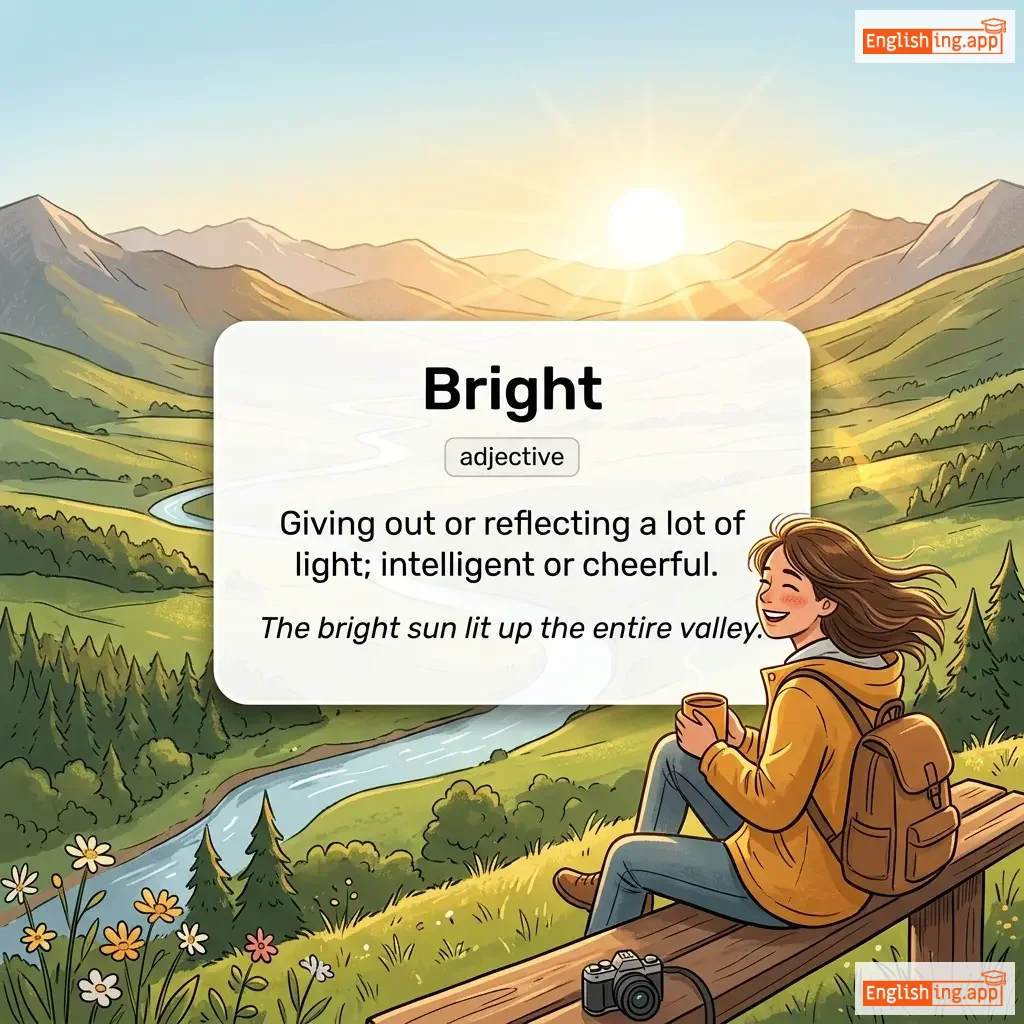
Bright definition card — visual illustration of the meaning
adjective
/braɪt/
brillant (brillant)

Giving out or reflecting a lot of light; intelligent or cheerful.

"The bright sun lit up the entire valley."

"Le soleil brillant a illuminé toute la vallée." (Le soleil brillant a illuminé toute la vallée.)
verb
/ˈbraɪtən/
illuminer (illuminer)

to make something lighter or more colorful; to improve mood or make happier

"A few kind words can brighten someone's day."

"Quelques mots gentils peuvent illuminer la journée de quelqu'un." (quelques mots gentils peuvent illuminer la journee de quelqu un)
adverb
/ˈbraɪtli/
brillamment (brillamment)

in a way that gives off a lot of light; in a vivid, cheerful, or intelligent manner

"The stars shone brightly in the clear night sky."

"Les étoiles brillaient brillamment dans le ciel nocturne clair." (Les etoiles brillaient brillamment dans le ciel nocturne clair)
adjective
/ˈbrɪliənt/
brillant (brillant)

Exceptionally clever, talented, or impressive; very bright or radiant.

"She gave a brilliant performance on stage."

"Elle a donné une performance brillante sur scène." (Elle a donne une performance brillante sur scene.)
noun/verb
/brɪm/
bord (bord)

The edge of a container; as a verb, to be full to the point of overflowing.

"Her eyes brimmed with tears of joy."

"Ses yeux étaient remplis de larmes de joie." (Ses yeux etaient remplis de larmes de joie.)
noun
/ˈbrɪmˌstoʊn/
soufre (brimstone)

Sulfur, especially when considered as fiery and associated with hell or divine punishment.

"The preacher spoke of fire and brimstone to warn the congregation."

"The preacher spoke of fire and brimstone to warn the congregation." (Le predicateur a parle de feu et de soufre pour avertir la congregacion.)
adjective
/ˈbrɪndl̩d/
bringé (bringe)

Having a brownish or tawny color with streaks or spots of another color.

"The farmer owned a brindled cow with distinctive stripes."

"L'agriculteur possédait une vache bringée avec des rayures distinctes." (L'agriculteur possédait une vache bringée avec des rayures distinctes.)
noun
/braɪn/
eau salée (o salee)

Water saturated with salt, often used for preserving food.

"The olives were stored in brine to keep them fresh."

"Les olives ont été conservées dans de l'eau salée pour les garder fraîches." (Les olives ont été conservées dans de l'eau salée pour les garder fraîches.)
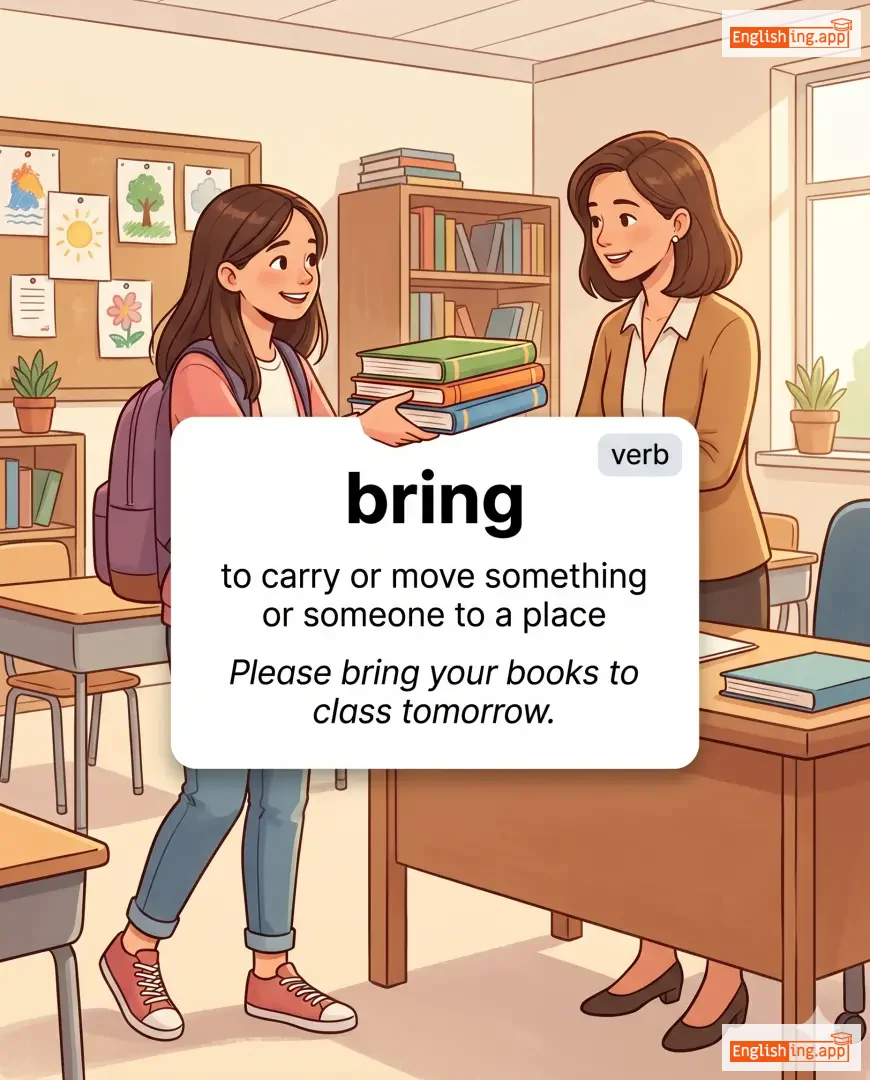
bring definition card — visual illustration of the meaning
verb
/brɪŋ/
apporter (apporter)

to carry or move something or someone to a place

"Please bring your books to class tomorrow."

"S'il vous plaît, apportez vos livres en classe demain." (S'il vous plaît, apportez vos livres en classe demain.)
noun
/ˈbrɪn.dʒəl/
aubergine (aubergine)

a large purple vegetable that is white inside; also called eggplant

"My mother cooked brinjal curry for lunch."

"Ma mère a cuisiné un curry d'aubergine pour le déjeuner." (Ma mere a cuisine un curry d'aubergine pour le dejeuner.)
noun
/brɪŋk/
bord (bord)

The edge or point just before a significant event or change.

"The company was on the brink of bankruptcy."

"L'entreprise était au bord de la faillite." (L'entreprise était au bord de la faillite.)
adjective
/brɪsk/
rapide (rapide)

Quick, energetic, and active in movement or speech.

"She took a brisk walk in the morning to stay healthy."

"Elle a fait une promenade rapide le matin pour rester en bonne santé." (Elle a fait une promenade rapide le matin pour rester en bonne santé.)
verb, noun
/ˈbrɪsəl/
poils raides; réagir avec colère (poils raides; reagir avec colere)

to react angrily or defensively; a short stiff hair or fiber

"The cat bristled when it saw the dog."

"Le chat s'est hérissé quand il a vu le chien." (Le chat s'est hérissé quand il a vu le chien.)
adjective
/ˈbrɪslɪŋ/
hérissé; rempli d'énergie (herisse; rempli d'energie)

full of energy, anger, or excitement; showing bristles standing up

"He entered the room bristling with confidence."

"Il entra dans la pièce tout en confiance." (Il entra dans la piece tout en confiance.)
noun
/brɪˈtæniə/
Britannia (Britannia)

the personification of Britain, often shown as a woman with a helmet and shield

"Britannia has been a symbol of Britain since Roman times."

"Britania est un symbole de la Grande-Bretagne depuis l'époque romaine." (Britania est un symbole de la Grande-Bretagne depuis l'epoque romaine.)
noun
/ˈbrɪtɪˌsɪzəm/
mot ou caractéristique de l'anglais britannique (mot ou caractéristique de l'anglais britannique)

a word, phrase, or characteristic feature of British English

"The word 'lorry' is a well-known Briticism."

"Le mot 'lorry' est un briticisme bien connu." (Le mot 'lorry' est un briticisme bien connu.)
adjective
/ˈbrɪtɪʃ/
britannique (britannique)

relating to Great Britain or its people

"She loves British culture and traditions."

"Elle aime la culture et les traditions britanniques." (Elle aime la culture et les traditions britanniques.)
adjective
/ˈbrɪtl/
fragile (fragile)

easily broken or cracked; hard but liable to break

"The glass was so brittle that it cracked easily."

"Le verre était tellement fragile qu'il s'est cassé facilement." (Le verre était tellement fragile qu'il s'est cassé facilement.)
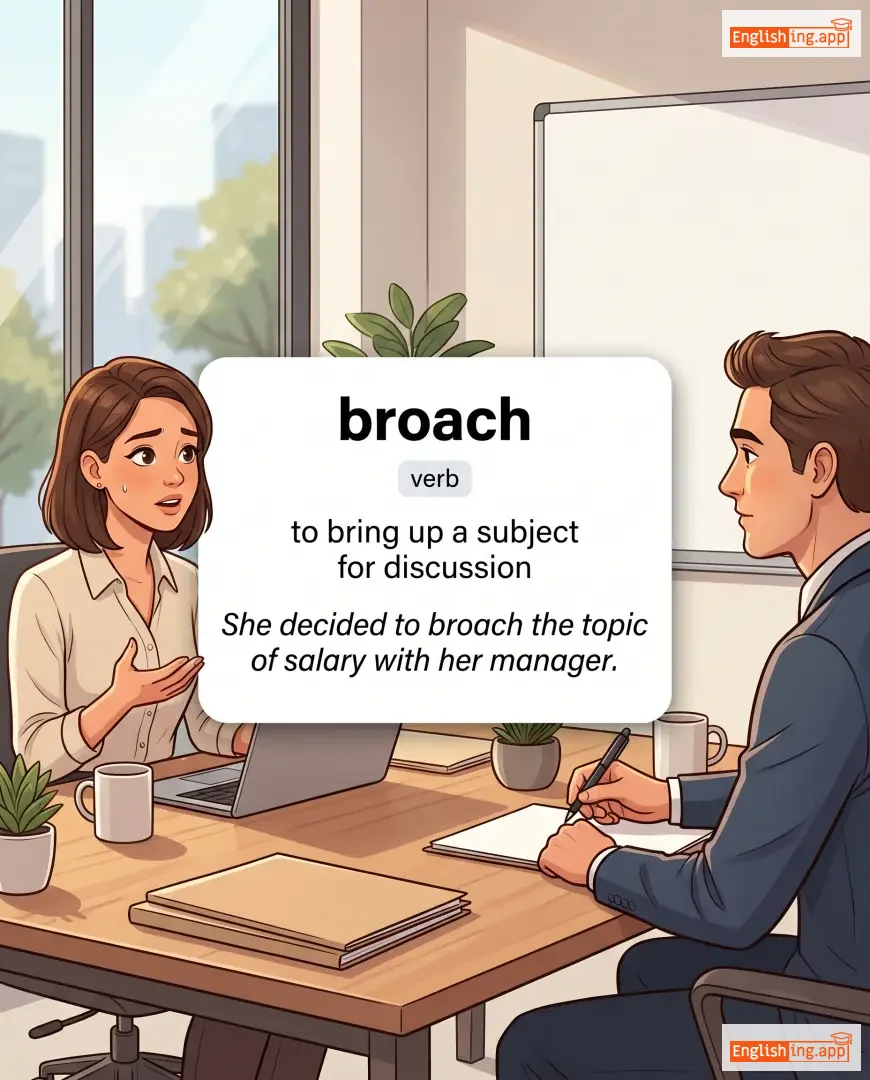
broach definition card — visual illustration of the meaning
verb
/broʊtʃ/
aborder (aborder)

to bring up a subject for discussion

"She decided to broach the topic of salary with her manager."

"Elle a décidé d'aborder le sujet du salaire avec son responsable." (Elle a décidé d'aborder le sujet du salaire avec son responsable.)
adjective
/brɔːd/
large (large)

wide in extent, range, or scope

"The river is very broad at this point."

"Le fleuve est très large à ce point." (Le fleuve est très large à ce point.)
noun
/ˈbrɔːd.bænd/
bande passante (bande passante)

a high-capacity transmission technique using a wide range of frequencies.

"Broadband internet has become a necessity in modern homes."

"L'internet à large bande est devenu une nécessité dans les foyers modernes." (L'internet à large bande est devenu une nécessité dans les foyers modernes.)
verb
/ˈbrɔːdˌkæst/
diffuser (diffuser)

to transmit a program or information by radio, television, or online media

"The match was broadcast live on television."

"Le match a été diffusé en direct à la télévision." (Le match a ete diffuse en direct a la television.)
noun
/ˈbrɔːdˌkæstər/
diffuseur (diffuseur)

a person or organization that transmits a broadcast program.

"The broadcaster aired the match live to millions of viewers."

"Le diffuseur a diffusé le match en direct à des millions de téléspectateurs." (Le diffuseur a diffusé le match en direct à des millions de téléspectateurs.)
verb
/ˈbrɔːdən/
élargir (elargir)

to make wider or larger in scope; to expand ideas, experience, or understanding

"Travel can broaden your perspective on different cultures."

"Voyager peut élargir votre perspective sur différentes cultures." (Voyager peut elargir votre perspective sur differentes cultures)
adverb
/ˈbrɔːdli/
généralement (generalement)

in a general or wide manner.

"The rules are broadly similar across all regions."

"Les règles sont globalement similaires dans toutes les régions." (Les regles sont globalement similaires dans toutes les regions.)
noun
/ˈbrɔːdˌsaɪd/
attaque violente (attaque violente)

a strong verbal attack or a sheet of paper printed on one side

"The politician launched a broadside against his opponent."

"Le politicien a lancé une attaque violente contre son opposant." (Le politicien a lancé une attaque violente contre son opposant.)
noun
/brəˈkeɪd/
tissu brodé (tissu brodé)

a rich fabric woven with a raised pattern, often in gold or silver thread

"She wore a beautiful brocade dress to the wedding."

"Elle portait une belle robe en brocart au mariage." (Elle portait une belle robe en brocart au mariage.)