Словари

Словарь английского языка | Значения слов, определения и примеры

noun
/broʊˈʃʊr/
брошюра (broshyura)

a small booklet or pamphlet containing information or advertising

"The travel agent gave us a brochure about the holiday package."

"Туристический агент дал нам брошюру о пакете для отдыха." (Turisticheskiy agent dal nam broshyuru o pakete dlya otdyha.)
noun
/ˈbroʊɡən/
тяжелый ботинок (tyazhelyy botinok)

A heavy, sturdy shoe, often made of leather.

"The farmer wore old brogans while working in the field."

"Фермер носил старые броуганы, работая в поле." (Fermyer nosil staryye brougany, rabotaya v pole.)
noun
/broʊɡ/
прочный ботинок; акцент (prochnyy botinok; aktsent)

A strong outdoor shoe; also a marked accent, especially Irish or Scottish.

"He bought a pair of stylish brogues for the wedding."

"Он купил пару стильных броуг для свадьбы." (On kupil paru stil'nykh broug dlya svad'by.)
verb
/brɔɪl/
жарить на гриле (zharit' na grile)

To cook food by direct heat, usually under a grill or over a fire.

"She broiled the chicken until it was golden brown."

"Она жарила курицу до золотистой корочки." (Ona zharyla kuritsu do zolotistoy korochki.)
verb; adjective
/broʊk/
сломал; без денег (slomal; bez deneg)

past tense of break; having no money or being financially poor

"I broke my phone last night and now I’m completely broke."

"Я сломал свой телефон прошлой ночью и теперь я без денег." (ya slomal svoy telefon proshloy nochyu i teper ya bez deneg)
adjective
/ˈbroʊkən/
сломанный (slomanny)

damaged or not working properly

"The chair is broken and needs repair."

"Стул сломался и требует ремонта." (Stul slomalsya i trebuyet remonta.)
noun
/ˈbroʊ.kər/
брокер (broker)

a person who buys and sells things for others as a middleman, especially in financial or property deals

"He works as a real estate broker in the city."

"Он работает риэлтором в городе." (On rabotaet rieltorom v gorode)
noun
/ˈbroʊkərɪdʒ/
брокерская комиссия (brokerskaya komissiya)

A firm that acts as an intermediary between buyers and sellers, often charging a fee.

"The real estate brokerage helped them find a new home."

"Недвижимость брокерская комиссия помогла им найти новый дом." (Nedvizhimost brokerskaya komissiya pomogla im nayti novyy dom.)
noun
/ˈbroʊmaɪd/
банальная идея (banal'naya ideya)

A trite or unoriginal idea or remark; also a chemical compound of bromine.

"His speech was full of old bromides about hard work."

"Его речь была полна старых банальных идей о тяжелом труде." (Yego rech' byla polna starykh banal'nykh idey o tyazhelom trude.)
noun
/ˈbroʊmiːn/
бром (brom)

a dark red, dense, toxic liquid element used in making dyes, flame retardants, and medications

"Bromine is commonly used in water treatment chemicals."

"Бром используется в основном в химикатах для очистки воды." (Brom ispol'zuyetsya v osnovnom v khimikataakh dlya ochistki vody.)
noun
/brɒŋˈkaɪtɪs/
бронхит (bronkhit)

inflammation of the lining of the bronchial tubes, which carry air to and from the lungs

"The doctor diagnosed him with acute bronchitis."

"Врач диагностировал у него острый бронхит." (Vrach diagnostiroval u nego ostry bronkhit.)
noun
/ˈbrɒŋkəs/
бронх (bronkh)

either of the two main branches of the trachea that lead directly into the lungs

"The left bronchus carries air into the left lung."

"Левый бронх доставляет воздух в левое легкое." (Levyy bronkh dostavlyayet vozdukh v levoye legkoye.)
noun
/brɑːnz/
бронза (bronza)

a metal made by combining copper and tin, often used for statues and medals

"The statue was made of solid bronze."

"Статуя была сделана из твердой бронзы." (Statuya byla sdelana iz tverdoi bronzy.)
noun
/broʊtʃ/

a decorative jewelry pin that is attached to clothing

"She wore a beautiful silver brooch on her jacket."

verb
/bruːd/
размышлять тревожно (razmyshlyat)

to think deeply about something that makes one unhappy; also, a group of young birds hatched at the same time

"He sat alone, brooding over his failures."

"Он сидел один, тревожно размышляя над своими неудачами." (On sidel odin, trevozhno razmyshlyaya nad svoimi neudachami.)
noun/verb
/brʊk/
ручей / терпеть (ruchey / terpet)

As a noun: a small natural stream; As a verb: to tolerate or endure something

"The village was built near a clear brook."

"Деревня была построена рядом с чистым ручьем." (Derevnya byla postroyena ryadom s chistym rucheyom.)
noun
/brum/
метла (metla)

a long-handled brush of bristles or twigs, used for sweeping

"She used an old broom to sweep the fallen leaves from the porch."

"Она использовала старую метлу, чтобы подмести опавшие листья с веранды." (Ona ispol'zovala staruyu metlu, chtoby podmesti opavshie list'ya s verandы.)
noun
/ˈbrʌðər/
брат (brat)

a male sibling

"My brother is two years older than me."

"Мой брат старше меня на два года." (Moy brat starshe menya na dva goda.)
noun
/ˈbrʌðərhʊd/
братство (bratstvo)

The relationship between brothers; an association of people with common interests

"The soldiers shared a strong sense of brotherhood."

"Солдаты поделились сильным чувством братства." (Soldaty podelilis' sil'nym chuvstvom bratstva.)
noun
/braʊ/
лоб (lob)

the part of the face above the eyes; forehead

"She wiped the sweat from her brow."

"Она вытерла пот со лба." (Ona vyterla pot so lba.)
verb
/ˈbraʊˌbiːt/
запугивать / принуждать (zapugivat' / prinuzhdat')

To intimidate or bully someone into doing something

"The lawyer tried to browbeat the witness."

"Адвокат пытался запугать свидетеля." (Advokat pytalsya zapugat' svidetelya.)
adjective
/braʊn/
коричневый (korichnevyy)

of a color produced by mixing red, yellow, and black

"She wore a brown dress to the party."

"Она надела коричневое платье на вечеринку." (Ona nadela korichnevoye plat'ye na vecherinku.)
adjective
/ˈbraʊn.ɪʃ/
коричневатый (korichnevaty)

having a color somewhat like brown; tending toward brown

"The old paper had a brownish tint from age."

"Старая бумага имела коричневатый оттенок из-за возраста." (Staraya bumaga imela korichnevatyy otnenok iz-za vozrasta)
verb
/braʊz/
просматривать (prosmatrivat)

To look at or skim through casually, especially online or in a store

"She likes to browse books in the library."
"Она любит просматривать книги в библиотеке." (Ona lyubit prosmatrivat' knigi v biblioteke.)
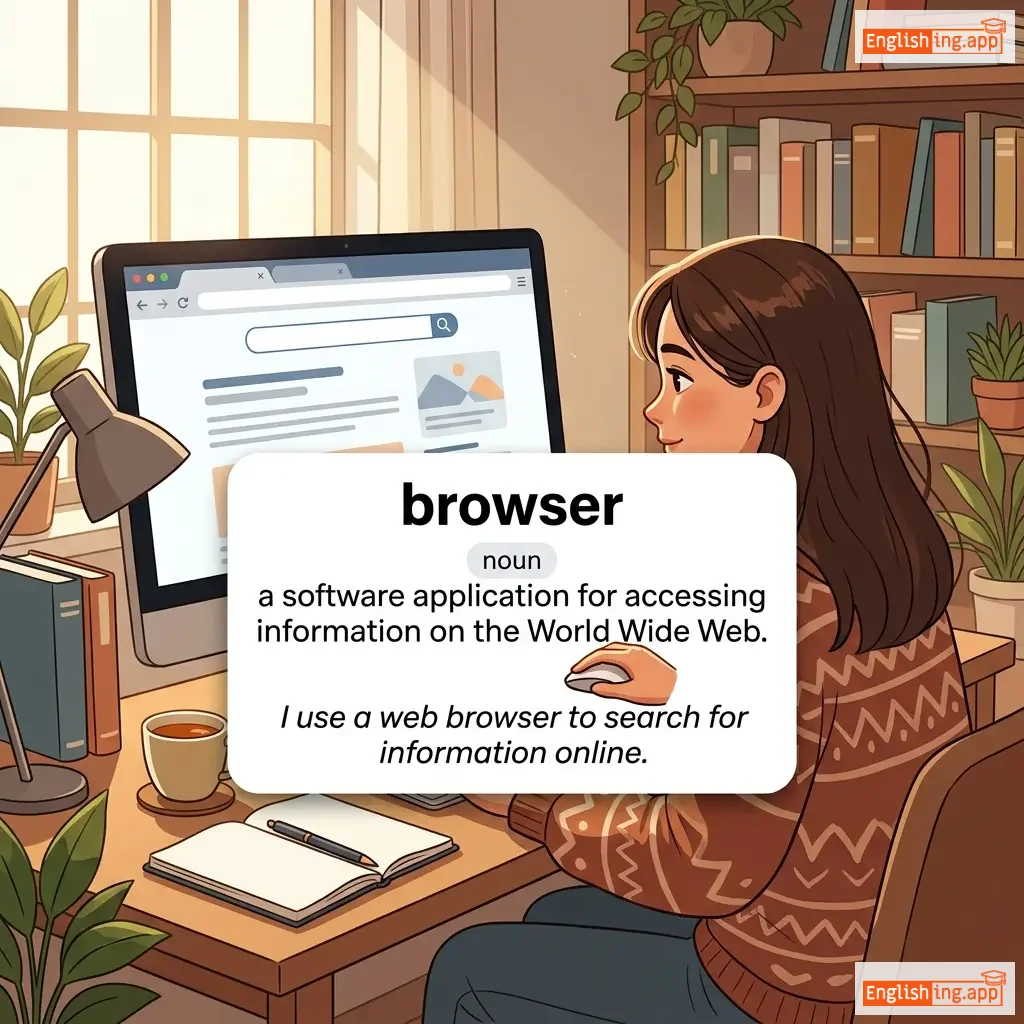
browser definition card — visual illustration of the meaning
noun
/ˈbraʊzər/
браузер (brauzer)

a software application for accessing information on the World Wide Web.

"I use a web browser to search for information online."

"Я использую веб-браузер для поиска информации в интернете." (Ya ispol'zuyu veb-brauzer dlya poiska informatsii v internete.)
noun/verb
/bruːz/

As a noun: an injury appearing as a purple or blue mark on the skin; As a verb: to injure without breaking the skin

"He got a bruise on his arm after falling."

verb
/bruːt/
распространять слухи (rasprostranyat slukhi)

to spread a rumor or report widely

"The scandal was quickly bruited about the town."

"Скандал быстро разнесся по городу." (Skandal bystro raznesilsya po gorodu.)
noun
/brʌnt/
основной удар (osnovnoy udar)

the worst part or main impact of something unpleasant

"The small town bore the brunt of the storm."

"Маленький город испытал основной удар шторма." (Malen'kiy gorod ispyltal osnovnoy udar shtorma.)
🖌️

Brush

noun/verb
/brʌʃ/

A tool with bristles for cleaning, painting, or grooming; to clean, arrange, or apply with a brush.

"She used a brush to paint the fence."

adjective
/bruːsk/ or /brʌsk/
резкий (rezkiy)

abrupt or blunt in manner or speech, often seen as rude

"His brusque reply ended the conversation."

"Его резкий ответ завершил разговор." (Ego rezkiy otvet zavershil razgovor.)
adverb
/ˈbruːskli/ or /ˈbrʌskli/
резко (rezko)

in a blunt, abrupt, or rude manner

"She brusquely dismissed the suggestion."

"Она резко отклонила предложение." (Ona rezko otklonila predlozhenie.)
adjective
/ˈbruː.təl/
жестокий (zhestokiy)

extremely cruel or harsh; violent and without feeling

"The dictator’s rule was marked by brutal violence."

"Правление диктатора было отмечено жестокой насилием." (Pravlenie diktatora bylo otmecheno zhestokoy nasiliem.)
noun
/bruːˈtæləti/
жестокость (zhestokost)

extreme cruelty or violence; savage or inhumane treatment

"The brutality of the attack shocked the entire community."

"Жестокость нападения потрясла всё сообщество." (Zhestokost napadeniya potryasla vsyo soobshchestvo)
verb
/ˈbruːtəlaɪz/
жестоко обращаться (zhestoko obrashchatsya)

to treat someone with extreme violence or cruelty; to make something harsh or cruel

"The regime was accused of brutalizing innocent civilians."

"Режим обвинили в жестоком обращении с мирными жителями." (Rezhim obvinili v zhestokom obrashchenii s mirnymi zhitelyami)
adverb
/ˈbruːtəli/
жестоко (zhestoko)

in a cruel, violent, or harsh manner; in a very direct and blunt way

"The prisoners were treated brutally by the guards."

"Охранники обращались с заключёнными жестоко." (okhranniki obrashchalis s zaklyuchennymi zhestoko)
noun
/ˈbʌb.əl/
пузырь (puzir')

a thin sphere of liquid enclosing air or gas; a temporary state of inflated value or excitement

"The children chased the bubbles in the air."

"Дети гнались за пузырями в воздухе." (Deti gnalis' za puzyryami v vozdukhe.)
noun
/ˌbʌkəˈnɪər/
пират (pirat)

a pirate, especially one active in the Caribbean during the 17th and 18th centuries

"The buccaneer sailed across the Caribbean in search of treasure."

"Пират плавал по Карибскому морю в поисках сокровищ." (Pirat plaval po Karibskomu moryu v poiskakh sokrovishch.)
noun/verb
/bʌk/
мужской олень / сопротивляться (muzhskoy oleg / soprotivlyat'sya)

A male deer; also to resist or oppose strongly.

"The horse began to buck wildly as the rider tried to hold on."
"Лошадь начала сильно прыгать, когда всадник пытался удержать ее." (Loshad' nachala sil'no prygat', kogda vsadnik pytalsya uderzhat' yeye.)
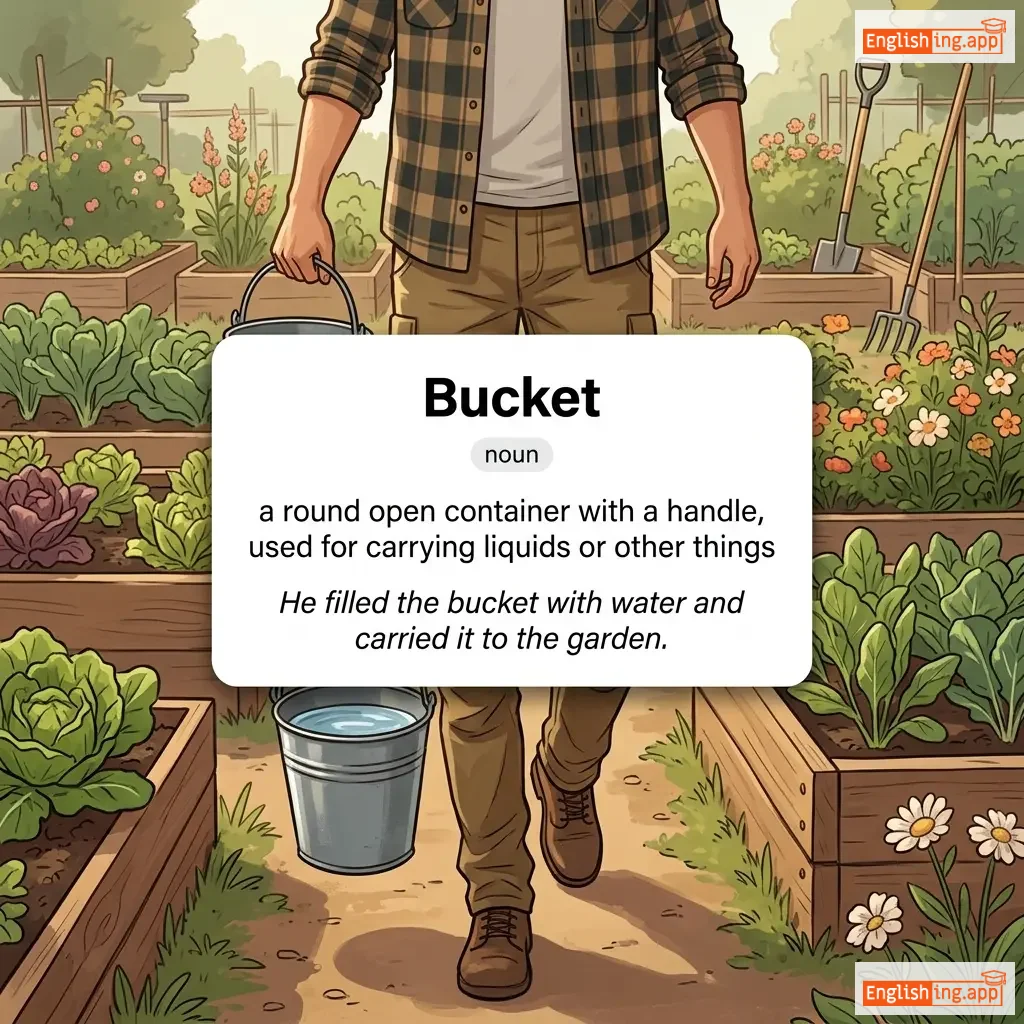
Bucket definition card — visual illustration of the meaning
noun
/ˈbʌkɪt/
ведро (vedro)

a round open container with a handle, used for carrying liquids or other things

"He filled the bucket with water and carried it to the garden."
"Он наполнил ведро водой и отнес его в сад." (On napolnil vedro vodoy i otnes ego v sad.)
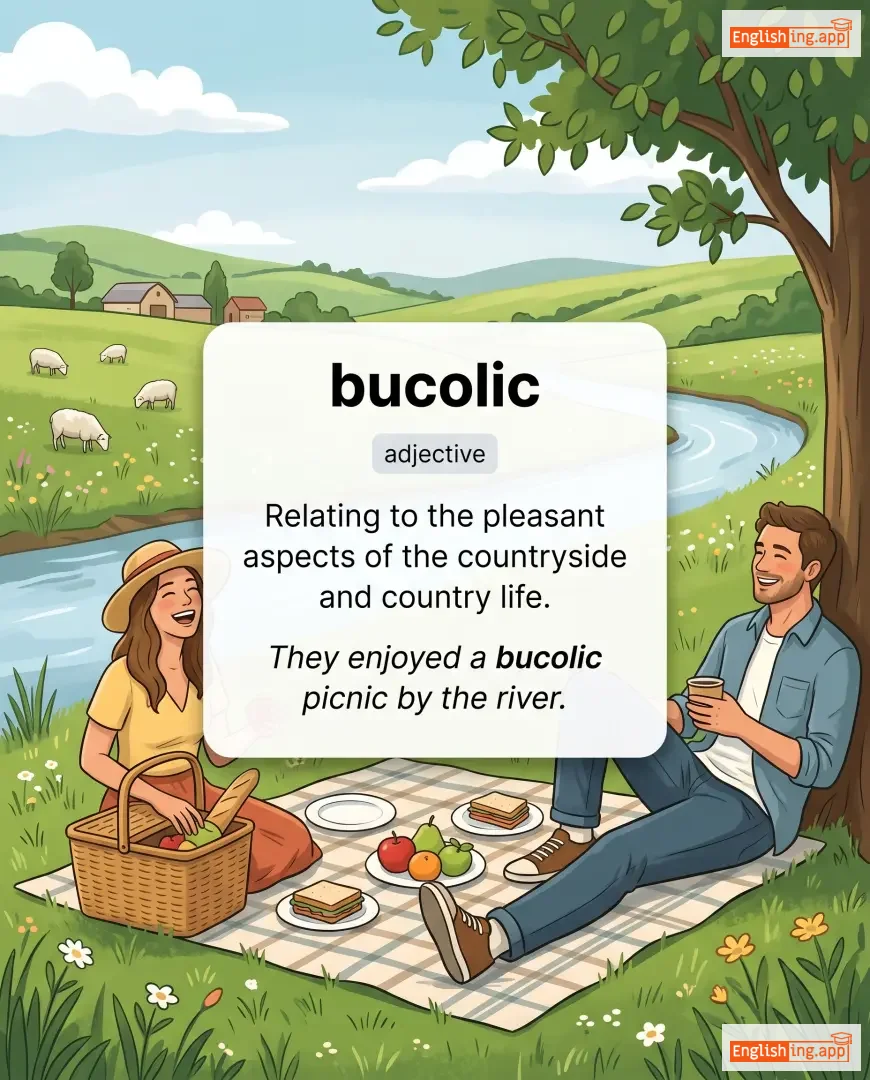
bucolic definition card — visual illustration of the meaning
adjective
/bjuːˈkɒlɪk/
бучолический (bucolicheskiy)

Relating to the pleasant aspects of the countryside and country life.

"They enjoyed a bucolic picnic by the river."

"Они наслаждались буколическим пикником у реки." (Oni naslazhdalis' bukolicheskim piknikom u reki.)
noun
/bʌd/
почка (pochka)

An undeveloped or immature flower before it opens

"The rose bud will bloom into a beautiful flower in a few days."

"Почка розы распустится в красивый цветок через несколько дней." (Pochka rozy raspustitsya v krasivyy tsvetok cherez neskol'ko dney)
noun
/ˈbʌdi/
приятель (priyatel)

a close friend or companion, used informally

"He went to the movies with his best buddy."

"Он пошел в кино со своим лучшим приятелем." (On poshel v kino so svoim luchshim priyatelem.)
🚶

budge

verb
/bʌdʒ/

To move slightly; to change one’s opinion or position.

"Despite the pressure, he refused to budge from his decision."

noun/verb
/ˈbʌdʒɪt/
бюджет (byudzhet)

An estimate of income and expenditure for a set period of time; to plan expenses and income.

"The family created a budget to manage their expenses."

"Семья составила бюджет для управления своими расходами." (Sem'ya sostavila byudzhet dlya upravleniya svoimi raskhodami.)
noun/adjective/verb
/bʌf/
фанат / полировать (fanat / polirovat)

A fan or enthusiast; also to polish or shine something.

"He is a movie buff who watches films every weekend."

"Он фанат кино, который смотрит фильмы каждую неделю." (On fanat kino, kotoryy smotrit fil'my kazhduyu nedelyu.)
noun
/ˈbʌf.ə.loʊ/
бизон (bizon)

a large wild ox with heavy horns; American bison

"The buffalo grazed peacefully in the meadow."

"Буйвол пасся мирно на лугу." (Builvol pasya mirno na lugu.)
noun/verb
/ˈbʌfər/
буфер / поглотитель удара (buffer / poglotitel udara)

Something that lessens or absorbs the impact of a shock; to act as a protective barrier.

"The organization acts as a buffer between workers and management."

"Организация выступает в качестве буфера между рабочими и руководством." (Organizatsiya vystupayet v kachestve buffera mezhdu rabochimi i rukovodstvom.)
🍽️

buffet

noun, verb
/bəˈfeɪ/ (noun), /ˈbʌfɪt/ (verb)

A meal where guests serve themselves from a variety of dishes arranged on a table; also means to strike repeatedly (as a verb).

"We enjoyed a large buffet at the wedding reception."

noun
/bəˈfuːn/
дурак (durak)

A ridiculous but amusing person; a clown or jester.

"He acted like a buffoon at the party, making everyone laugh."

"Он вел себя как буфон на вечеринке, заставляя всех смеяться." (On vel sebya kak bufon na vecherinke, zastavlyaya vsekh smeyat'sya.)
noun
/bəˈfuːnəri/
глупость (glupost)

Foolish or ridiculous behavior intended to amuse.

"His constant buffoonery irritated the serious audience."

"Его постоянная глупость раздражала серьезную аудиторию." (Ego postoyannaya glupost' razdrazhalo ser'yoznuyu auditoriyu.)