Словари

Словарь английского языка | Значения слов, определения и примеры
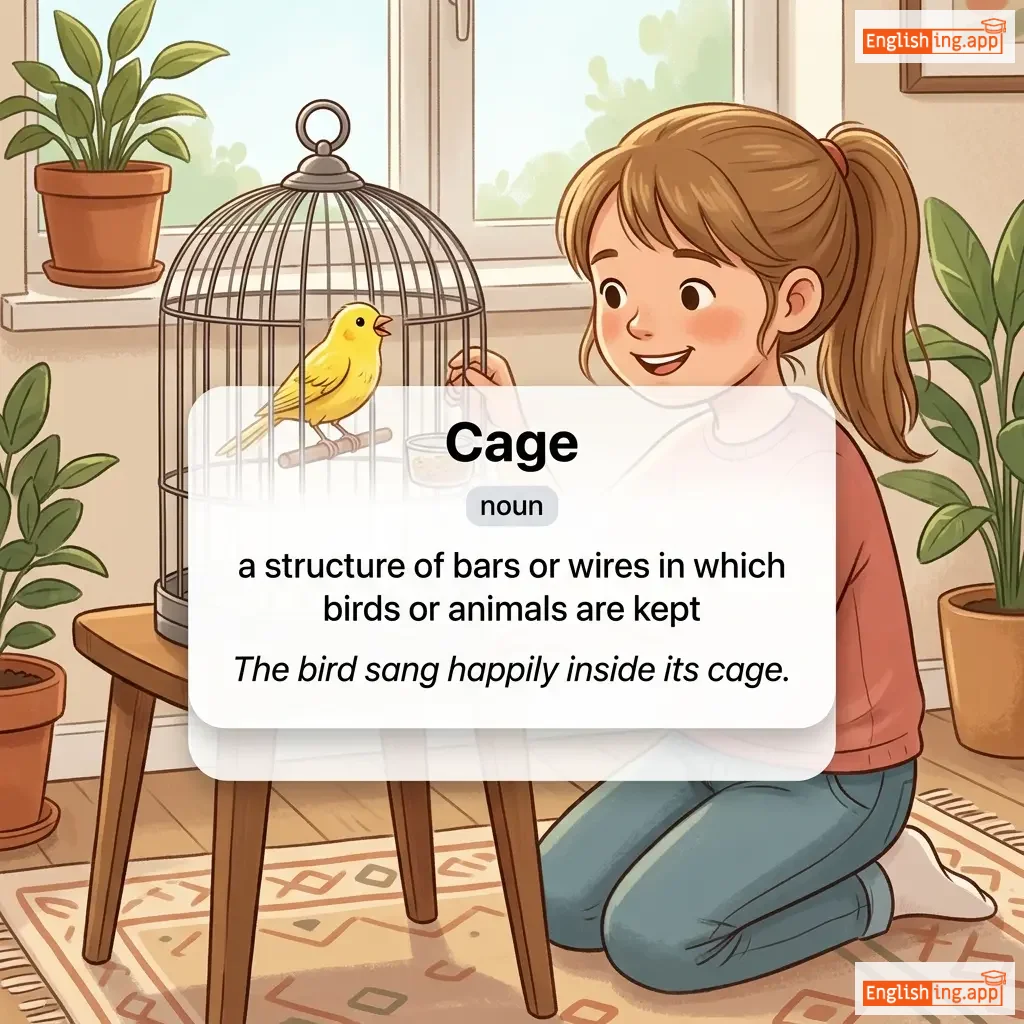
Cage definition card — visual illustration of the meaning
noun
/keɪdʒ/
клетка (kletka)

a structure of bars or wires in which birds or animals are kept

"The bird sang happily inside its cage."

"Птица весело пела в своей клетке." (Ptitsa veselo pela v svoey kletke.)
noun
/ˈkeɪ.tɪf/
трус (trus)

A contemptible or cowardly person.

"The knight despised the caitiff who betrayed his comrades."

"Рыцарь презирал труса, который предал своих товарищей." (Rytsar' preziral trusa, kotoryy predal svoikh tovarishchey.)
verb
/kəˈdʒoʊl/
умасливать (umaslivat)

To persuade someone to do something by flattery or gentle urging.

"She managed to cajole her friend into joining the trip."

"Она смогла уговорить свою подругу присоединиться к поездке." (Ona smogla ugovorit' svoju podrugu prisoedinit'sya k poezdke.)
noun
/kəˈdʒoʊləri/
подхалимство (podkhalimstvo)

Flattering or coaxing talk intended to persuade someone.

"Through cajolery, he convinced his boss to grant him a raise."

"Через подхалимство он убедил своего начальника дать ему повышение зарплаты." (Cherez podkhalimstvo on ubedil svoego nachal'nika dat' emu povyshenie zarplaty.)
noun
/keɪk/
торт (tort)

a sweet baked food made from flour, sugar, and other ingredients

"She baked a chocolate cake for her friend's birthday."

"Она испекла шоколадный торт для дня рождения своего друга." (Ona ispekla shokoladnyy tort dlya dnya rozhdeniya svoego druga.)
noun
/kəˈlæmɪti/
катастрофа (katastrofa)

An event causing great damage, distress, or disaster.

"The earthquake was a calamity that left thousands homeless."
"Землетрясение стало катастрофой, оставившей тысячи без крова." (Zemletryasenie stalo katastrofoj, ostavshej tysyachi bez krova.)
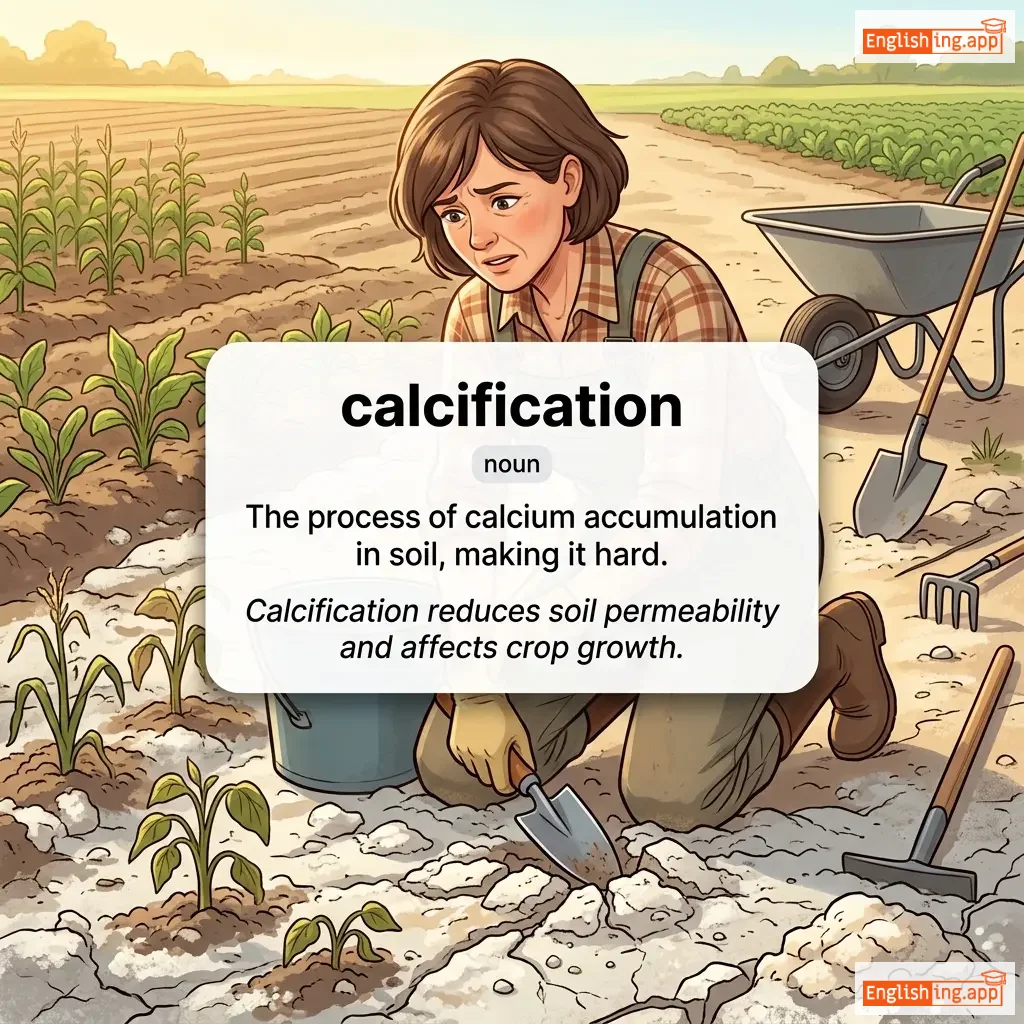
calcification definition card — visual illustration of the meaning
noun
/ˌkæl.sɪ.fɪˈkeɪ.ʃən/
кальцификация (kaltsifikatsiya)

The process of calcium accumulation in soil, making it hard.

"Calcification reduces soil permeability and affects crop growth."

"Кальцификация уменьшает проницаемость почвы и влияет на рост растений." (Kaltsifikatsiya umenshaet pronitsaemost pochvy i vliyaet na rost rasteniy.)
verb
/ˈkælsɪfaɪ/
окаменеть из-за осаждения кальциевых солей (okamenet' iz-za osazhdeniya kalsiyevykh soley)

To harden by deposition of calcium salts; to become rigid or inflexible.

"Over time, the tissue began to calcify and lose flexibility."

"Со временем ткань начала кальцинироваться и потеряла гибкость." (So vremenem tkan' nachala kal'tsinirovatsya i poteryala gibkost'.)
adjective
/ˈkælkjʊləbl/
вычислимый (vychislimy)

Capable of being calculated, estimated, or measured.

"The risk involved in the project is calculable."
"Риск, связанный с проектом, может быть вычислен." (Risk, svyazannyy s proyektom, mozhet byt' vychislen.)
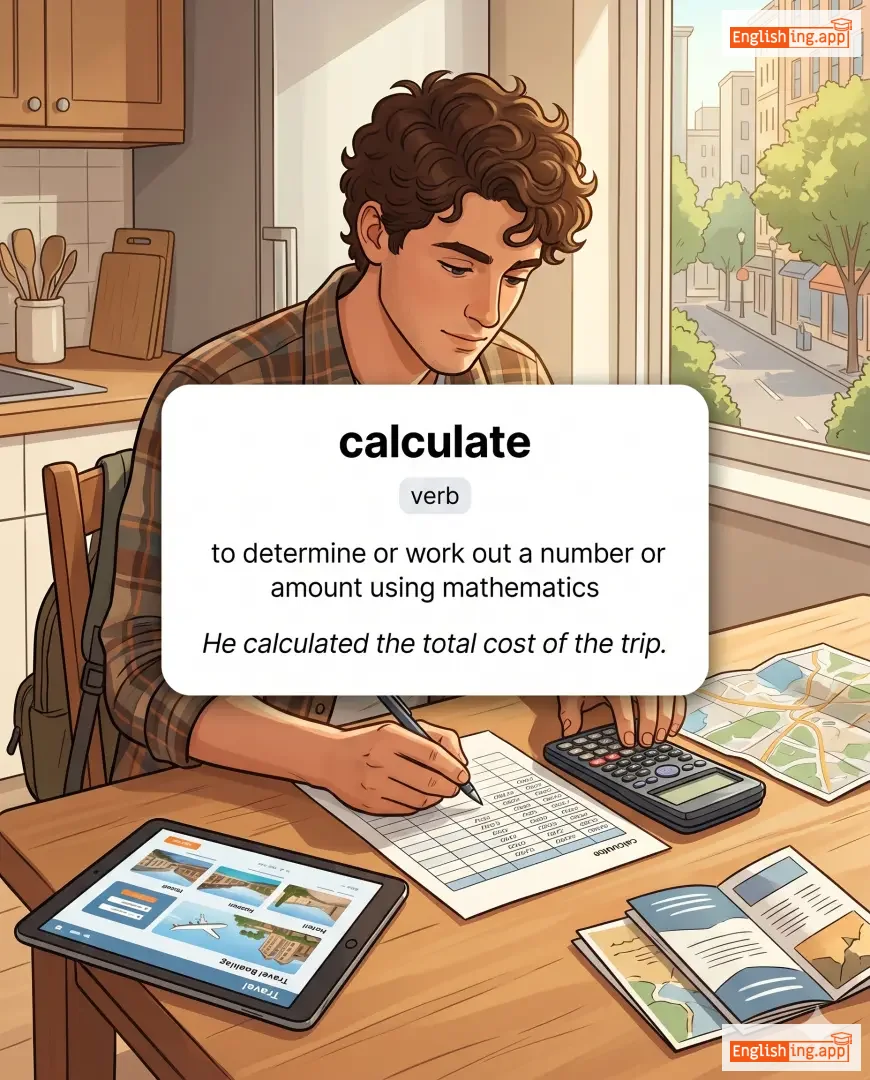
calculate definition card — visual illustration of the meaning
verb
/ˈkæl.kjʊ.leɪt/
рассчитывать (raschityvat)

to determine or work out a number or amount using mathematics

"He calculated the total cost of the trip."

"Он подсчитал общую стоимость поездки." (On podschital obshchuyu stoimost' poyezdki.)
adjective
/ˈkælkjuleɪtɪd/
рассчитанный (rasschitannyy)

Done with full awareness of the consequences; deliberate or carefully planned.

"Her calculated move gave her an advantage over her competitors."

"Ее рассчитанный ход дал ей преимущество над конкурентами." (Eyo rasschitannyy khod dal yey preimushchestvo nad konkurentami.)
adjective
/ˈkælkjʊleɪtɪŋ/
рассчитывающий (rasschityvayushchiy)

acting in a scheming and ruthlessly determined way

"He had a cold and calculating approach to business."

"У него был холодный и расчетливый подход к бизнесу." (U nego byl kholodnyy i rasschityvayushchiy podkhod k biznesu.)
noun
/ˌkælkjʊˈleɪʃən/
расчет (raschet)

the process of using numbers to find an amount or result

"His calculation of the total cost was accurate."

"Его расчет общей стоимости был точным." (Ego raschet obshchey stoimosti byl tochnym.)
noun
/ˈkælkjʊleɪtər/
калькулятор (kalkulyator)

an electronic or mechanical device used to perform mathematical calculations

"She used a calculator to solve the complex equation."

"Она использовала калькулятор, чтобы решить сложное уравнение." (Ona ispolzovala kalkulyator chtoby reshit slozhnoe uravnenie)
noun
/ˈkælkjʊləs/
калькуляс (kalkulyas)

A branch of mathematics concerned with rates of change and accumulation; also a hard mineral deposit in the body such as on teeth.

"Calculus is essential for advanced studies in physics and engineering."

"Калькуляс необходим для продвинутых исследований в физике и инженерии." (Kalkulyas neobkhodim dlya prodvinutykh issledovaniy v fizike i inzhenerii.)
noun
/ˈkɔːldrən/
большой металлический котел (bol'shoy metallicheskiy kotel)

A large metal pot used for boiling liquids or cooking over an open fire.

"The witch stirred her potion in a bubbling caldron."

"Ведьма мешала своё зелье в бурлящем котле." (Ved'ma meshala svoyo zelye v burlyashchem kotle.)
noun
/ˈkælɪndər/
календарь (kalendar)

a system for organizing days, months, and years; a chart showing days of the year

"She marked her birthday on the calendar."

"Она отметила свой день рождения в календаре." (Ona otmetila svoi den' rozhdeniya v kalendare.)
noun
/kæf/
теленок (telenok)

a young cow or bull; young of various large mammals

"The calf stayed close to its mother."

"Теленок остался рядом с матерью." (Telenok ostalsya ryadom s mater'yu.)
noun
/ˈkælɪbər/
калибр (kalibr)

The quality of someone's ability or character; the internal diameter of a gun barrel.

"The university attracts students of high caliber."

"Университет привлекает студентов высокого калибра." (Universitet privlekaet studentov vysokogo kalibra.)
verb
/ˈkælɪˌbreɪt/

To adjust or mark something so it can be used accurately; to standardize.

"The technician calibrated the machine before starting the experiment."
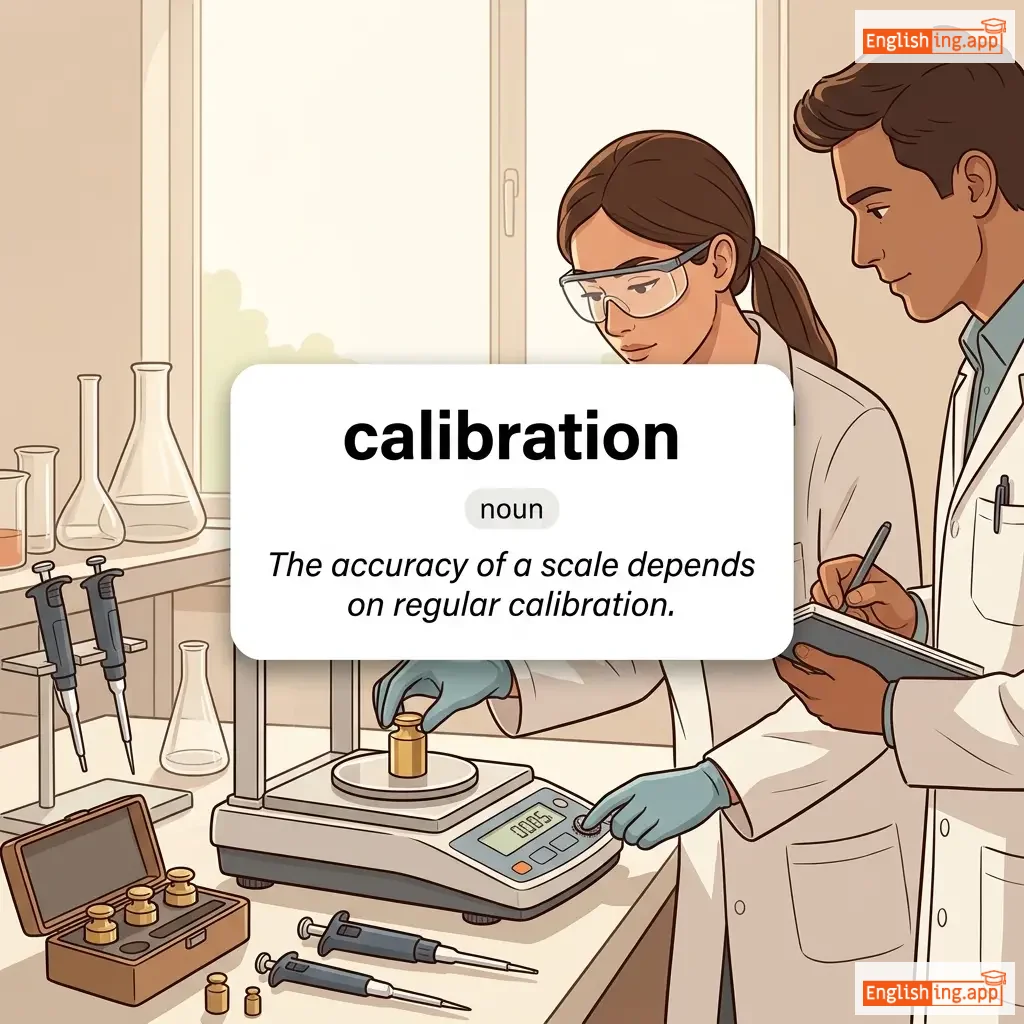
calibration definition card — visual illustration of the meaning
noun
ˌkæl.ɪˈbreɪ.ʃən
калибровка (kalibrovka)

The action or process of adjusting or determining the accuracy of measuring instruments.

"The accuracy of a scale depends on regular calibration."

"Точность весов зависит от регулярной калибровки." (Tochnost' vesov zavisit ot regulyarnoy kalibrovki.)
noun
/ˌkælɪsˈθɛnɪks/
физические упражнения (fizicheskie uprazhneniya)

exercises that use body weight for strength and flexibility

"She practices calisthenics every morning in the park."

"Она занимается калистеникой каждое утро в парке." (Ona zanimayetsya kalistenikoy kazhdoe utro v parke.)
verb
/kɔːk/
запечатывать трещины на лодке (zapechatyvat' treshchiny na lodke)

To make a boat or ship watertight by filling seams or cracks.

"The workers calked the seams of the old boat to prevent leaks."

"Рабочие заделали швы старой лодки, чтобы предотвратить утечку." (Rabochie zadelali shvy staroy lodki, chtoby predotvratit' utechku.)
call definition card — visual illustration of the meaning
verb
/kɔːl/
звонить (zvonit)

to speak to someone on the phone or to shout to attract attention

"She called her mother to share the good news."

"Она позвонила своей матери, чтобы поделиться хорошими новостями." (Ona pozvonila svoey mater, chtoby podelit'sya khoroshimi novostyami.)
noun
/kəˈlɪɡrəfi/
искусство красивого и декоративного письма (iskusstvo krasivogo i dekorativnogo pis'ma)

The art of beautiful and decorative handwriting.

"She took a course to improve her calligraphy skills."

"Она прошла курс, чтобы улучшить свои навыки каллиграфии." (Ona proshla kurs, chtoby uluchshit' svoi navyki kalligrafii.)
noun
/kəˈlɒsəti/
огрубевшая кожа (ogrubevshaya kozha)

A thickened or hardened area of skin; insensitivity or hardness of character.

"Years of manual labor left callosity on his hands."
"Годы тяжелого труда оставили огрубевшую кожу на его руках." (Gody tyazhelogo truda ostavili ogrubevshuyu kozhu na ego rukakh.)
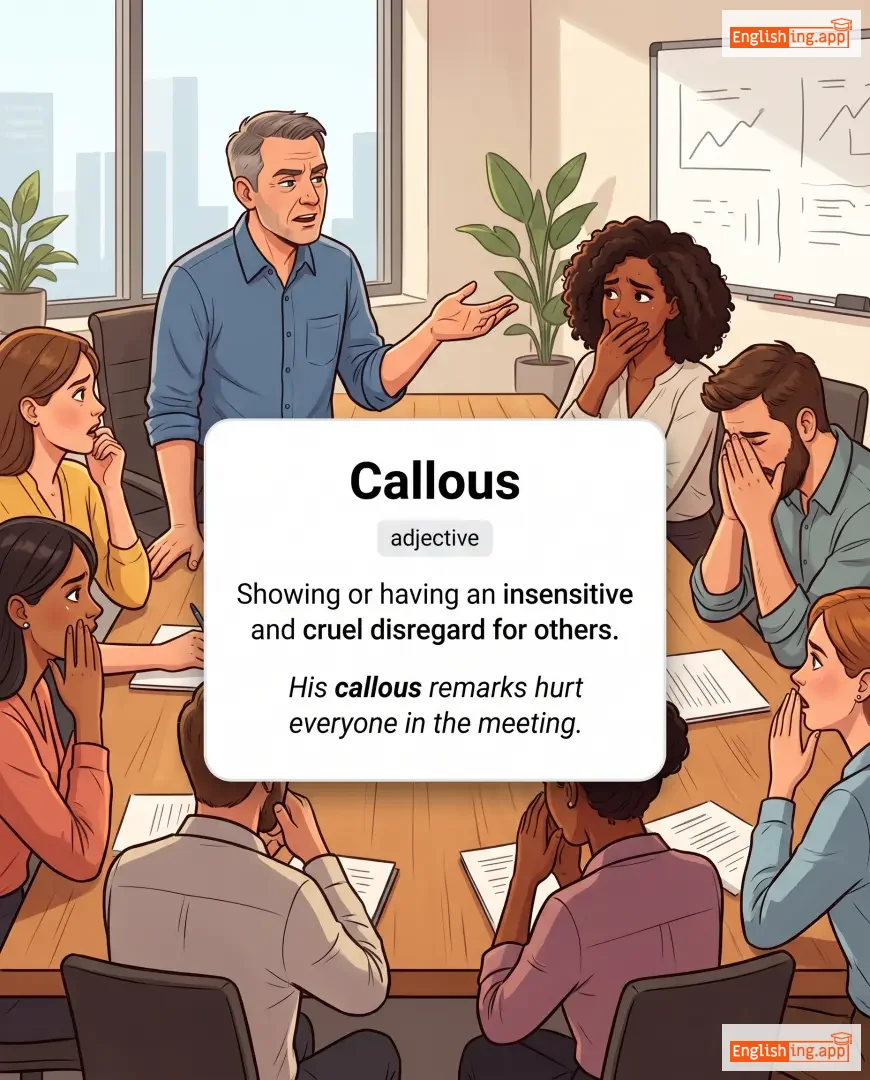
Callous definition card — visual illustration of the meaning
adjective
/ˈkæləs/

Showing or having an insensitive and cruel disregard for others.

"His callous remarks hurt everyone in the meeting."

adjective
/ˈkæloʊ/
незрелый (nezrely)

Inexperienced and immature.

"The callow intern made several mistakes on his first day."

"Неопытный стажёр совершил несколько ошибок в свой первый день." (Neopitnyy stazhor sovershil neskol'ko oshibok v svoy pervyy den'.)
noun
/ˈkæləs/
огрубевшая часть кожи (ogrubevshaya chast' kozhi)

A thickened and hardened part of the skin or soft tissue, especially in an area subjected to friction.

"A callus formed on his palm from using tools every day."

"На его ладони образовался каллус от использования инструментов каждый день." (Na ego ladoni obrazovalsya kallus ot ispol'zovaniya instrumentov kazhdyy den'.)
calm definition card — visual illustration of the meaning
adjective
/kɑːm/
спокойный (spokoynyy)

not showing or feeling nervousness, anger, or other strong emotions

"She stayed calm during the crisis."

"Она оставалась спокойной во время кризиса." (Ona ostavalas' spokoynoy vo vremya krizisa.)
adverb
/ˈkɑːm.li/
спокойно (spokoyno)

in a peaceful way without showing strong emotions; quietly and without excitement

"She spoke calmly despite being angry."

"Она говорила спокойно, несмотря на злость." (Ona govorila spokoyno, nesmotrya na zlost'.)
noun
/ˈkæləri/
калория (kaloriya)

A unit of energy, often used to measure the energy content of food and drink.

"She checks the calorie count before eating any packaged food."

"Она проверяет количество калорий перед тем, как съесть любую упакованную пищу." (Ona proveryayet kolichestvo kaloriy pered tem, kak syest' lyubuyu upakovannuyu pishchu.)
adjective
/ˌkæləˈrɪfɪk/
калорийный (kaloriynyy)

Relating to the amount of energy contained in food or fuel.

"Chocolate is highly calorific, so it should be eaten in moderation."

"Шоколад очень калорийный, поэтому его следует есть в умеренных количествах." (Shokolad ochen' kaloriynyy, poetomu ego sleduyet yest' v umerenykh kolichestvakh.)
verb
/kəˈlʌmnieɪt/
клеветать (kleveatat)

To make false and damaging statements about someone; to slander.

"He was furious when he realized they had calumniated his reputation."
"Он был в ярости, когда понял, что они клеветали на его репутацию." (On byl v yarosti, kogda ponyal, chto oni klevetali na ego reputatsiyu.)
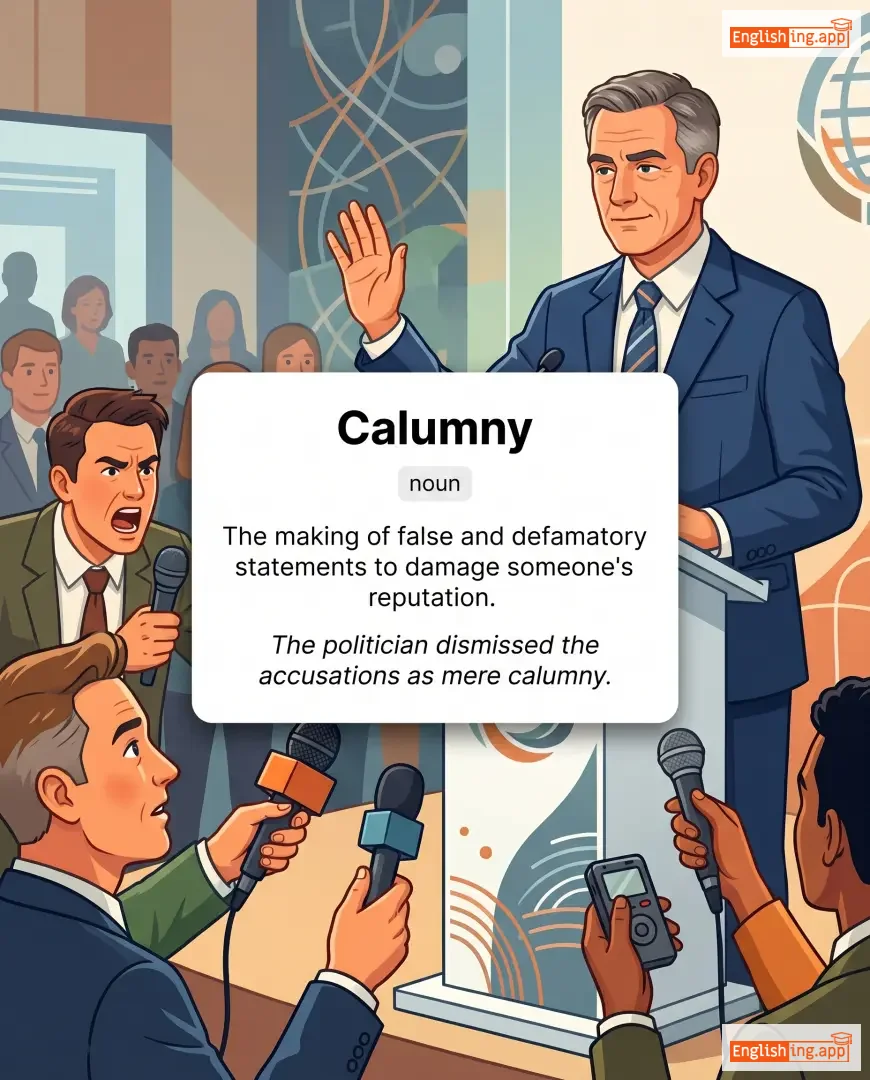
Calumny definition card — visual illustration of the meaning
noun
/ˈkæləmni/
клевета (kleveta)

The making of false and defamatory statements to damage someone's reputation.

"The politician dismissed the accusations as mere calumny."

"Политик отверг обвинения как просто клевету." (Politik otverg obvineniya kak prosto klevetu.)
✝️

calvary

noun
/ˈkælvəri/

A place or experience of intense suffering, originally the site of Jesus’s crucifixion.

"For many refugees, the journey across the desert was a calvary."

noun
/ˈkælvɪnɪzəm/
кальвинизм (kalvinizm)

A Protestant theological system based on John Calvin’s teachings, emphasizing predestination and the sovereignty of God.

"Calvinism played a major role in shaping Protestant theology."

"Кальвинизм сыграл важную роль в формировании протестантской теологии." (Kalvinizm sygral vazhnuyu rol' v formirovanii protestantskoy teologii.)
verb
/ˈkælvɪnaɪz/
Наполнять принципами кальвинизма (Napolnyat' printsipami kalvinizma)

to imbue with the principles or doctrines of Calvinism

"The preacher sought to calvinize the community with strict teachings."
"Проповедник пытался кальвинизировать сообщество с помощью строгих учений." (Propovednik pytalsya kalvinizirovat' soobshchestvo s pomoshch'yu strogikh ucheniy.)
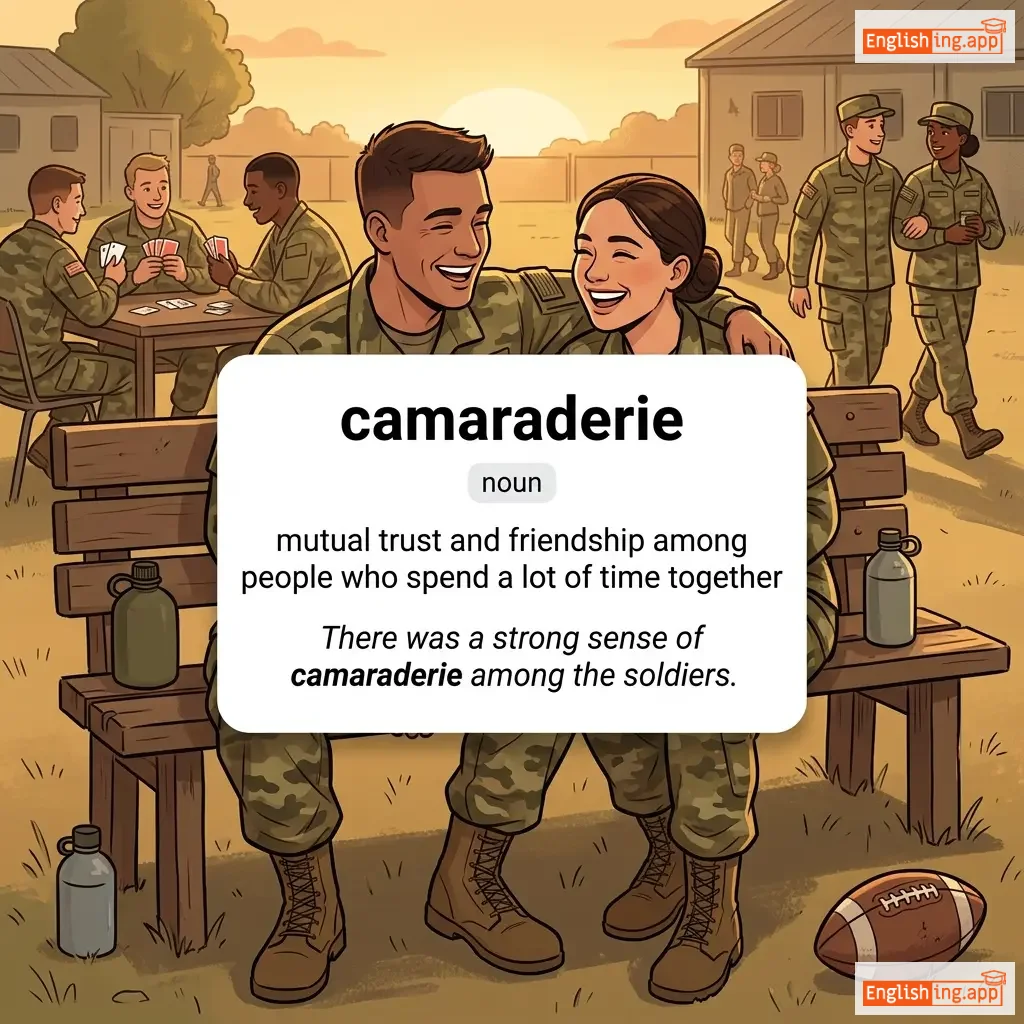
camaraderie definition card — visual illustration of the meaning
noun
/ˌkæməˈrɑːdəri/
товарищество (tovarishchestvo)

mutual trust and friendship among people who spend a lot of time together

"There was a strong sense of camaraderie among the soldiers."

"Среди солдат было сильное чувство товарищества." (Sredi soldat bylo sil'noe chuvstvo tovarishchestva.)
verb
/keɪm/
пришёл (prishyol)

past tense of 'come'

"She came to the party on time."

"Она пришла на вечеринку вовремя." (Ona prishla na vecherinku vovremya.)
noun
/ˈkæm.əl/
верблюд (verblyud)

a large animal with one or two humps on its back that lives in hot dry places

"The camel walked slowly across the desert sand."

"Верблюд медленно шел по песку пустыни." (Verblyud medlenno shel po pesku pustyni.)
noun
/ˈkæmi.oʊ/
камео (cameo)

a small but significant role in a play, film, or show, often performed by a well-known person

"The actor made a surprise cameo in the movie."

"Актер сыграл неожиданное камео в фильме." (Aktor sygral neozhidannoe cameo v filme.)
noun
/ˈkæm.rə/
камера (kamera)

a device used for taking photographs or recording videos

"She bought a new camera for her photography class."

"Она купила новую камеру для своего курса фотографии." (Ona kupila novuyu kameru dlya svoego kursa fotografii.)
noun
/ˈkæməˌflɑːʒ/
маскировка (maskirovka)

the act of hiding or disguising something by making it blend with its surroundings

"The soldiers used camouflage to hide from the enemy."

"Солдаты использовали маскировку, чтобы спрятаться от врага." (Soldaty ispol'zovali maskirovku, chtoby spryatatsya ot vraga.)
noun, verb
/kæmp/
лагерь (lager)

a place where people stay temporarily in tents or cabins, often outdoors; to stay in such a place

"We decided to camp by the lake during the summer holiday."

"Мы решили разбить лагерь у озера во время летнего отпуска." (My reshili razbit' lager' u ozera vo vremya letnego otpuska.)
Campaign definition card — visual illustration of the meaning
noun, verb
/kæmˈpeɪn/
кампания (kampaniya)

a planned series of activities to achieve a specific goal, especially in politics, marketing, or war

"The company launched a campaign to promote its new product."

"Компания запустила кампанию для продвижения своего нового продукта." (Kompaniya zapustila kampaniyu dlya prodvizheniya svoego novogo produkta.)
noun
/ˈkæm.fər/
камфора (kamfora)

a white crystalline substance with a strong aromatic smell, used in medicine and religious ceremonies

"The temple was filled with the fragrant smoke of burning camphor."
"Храм был наполнен ароматным дымом горящего камфора." (Khram byl napolnen aromatnym dymom goryashchego kamfora.)
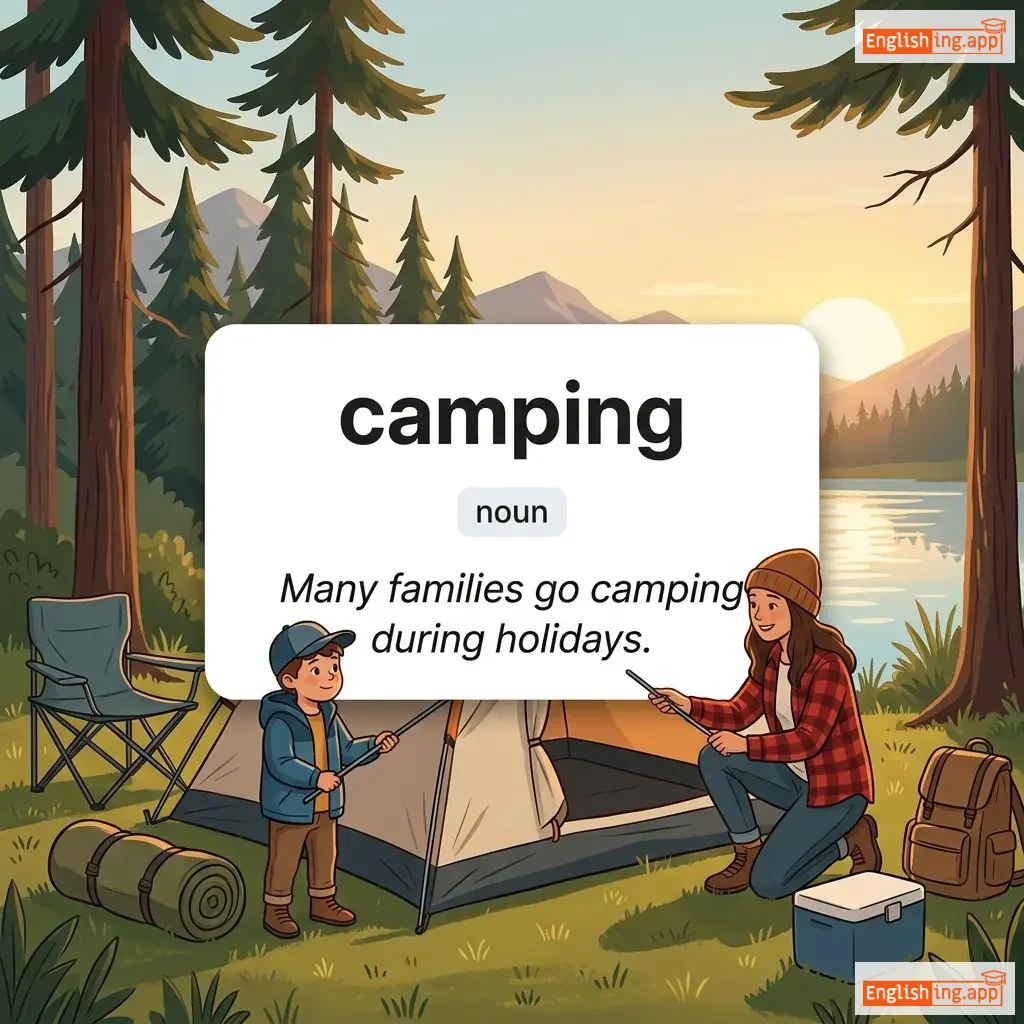
camping definition card — visual illustration of the meaning
noun
ˈkæm.pɪŋ
кемпинг (kemping)

Living outdoors temporarily, especially for recreation; staying in a tent or similar shelter.

"Many families go camping during holidays."
"Многие семьи идут в поход в отпуске." (Mnogie sem'i idut v pokhod v otpuske.)
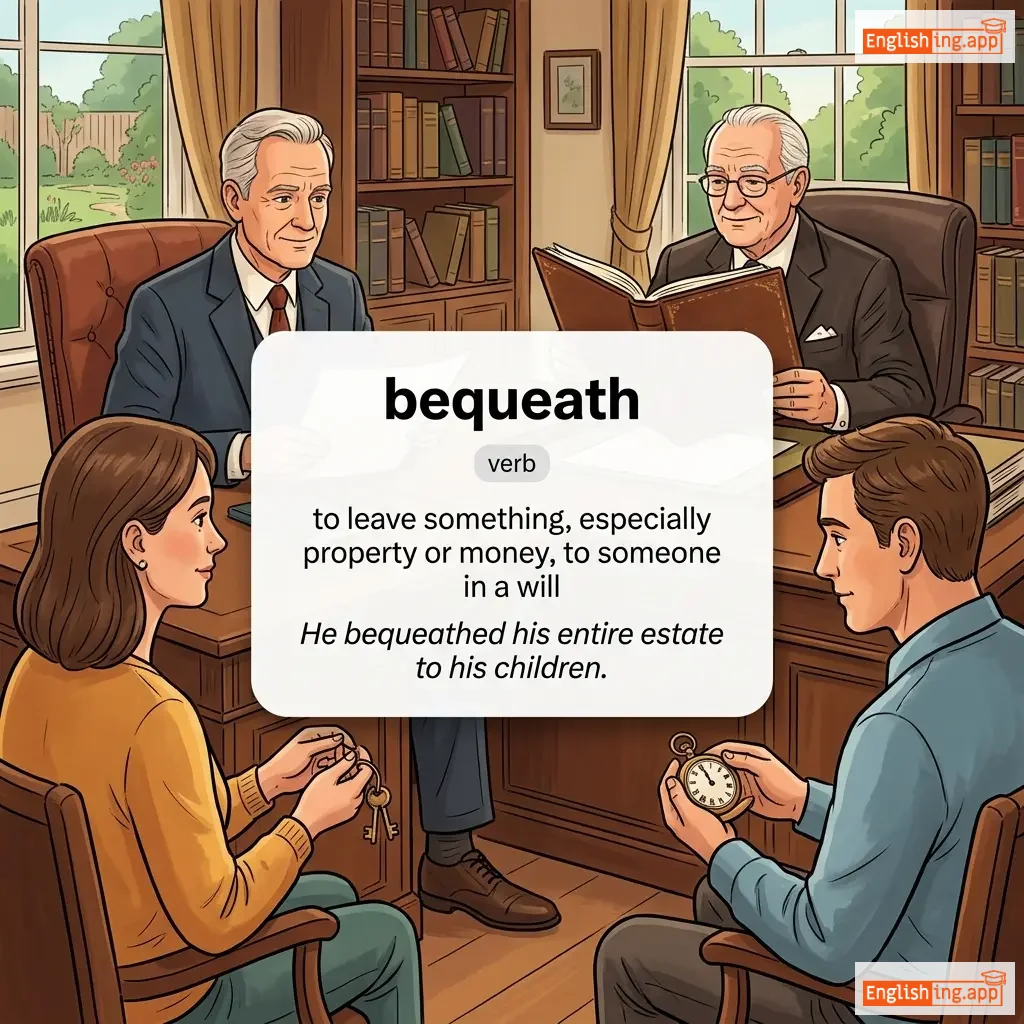
bequeath definition card — visual illustration of the meaning
verb
/bɪˈkwiːð/
завещать (zaveshchat)

to leave something, especially property or money, to someone in a will

"He bequeathed his entire estate to his children."

"Он завещал все свое имущество своим детям." (On zaveshchal vse svoe imushchestvo svoim detyam.)
verb
/bɪˈreɪt/
ругать (rugat')

to scold or criticize angrily

"The teacher berated the student for being late."

"Учитель отругал ученика за опоздание." (Uchitel' otrugal uchenika za opozdanie.)