Словари

Словарь английского языка | Значения слов, определения и примеры

noun
/ˈbɪbliəfaɪl/
библиофил (bibliofil)

A person who loves or collects books.

"She is a true bibliophile who spends weekends at old bookstores."

"Она настоящая библиофил, которая проводит выходные в старых книжных магазинах." (Ona nastoyashchaya bibliofil, kotoraya provodit vykhodnye v starykh knizhnykh magazinakh.)
adjective
/ˈbɪbjələs/
пьяница (p'yanytsa)

Excessively fond of drinking alcohol.

"His bibulous habits worried his family."

"Его пьянствующие привычки беспокоили его семью." (Ego p'yanstvuyushchie privychki bespokoili ego sem'yu.)
adjective
/baɪˈkæmərəl/
двухпалатный (dvukhpalatnyy)

Having two branches or chambers, especially in a legislature.

"The United States has a bicameral legislature consisting of the Senate and the House of Representatives."

"В Соединенных Штатах есть двухпалатный парламент, состоящий из Сената и Палаты представителей." (V Soyedinennykh Shtatakh yest' dvukhpalatnyy parlament, sostoyashchiy iz Senata i Palaty predstaviteley.)
verb
/ˈbɪkər/
ссориться по мелочам (ssorit'sya po melocham)

To argue or quarrel about trivial matters.

"The children began to bicker over the last piece of cake."
"Дети начали спорить из-за последнего куска торта." (Deti nachali sporit' iz-za poslednego kuska torta.)
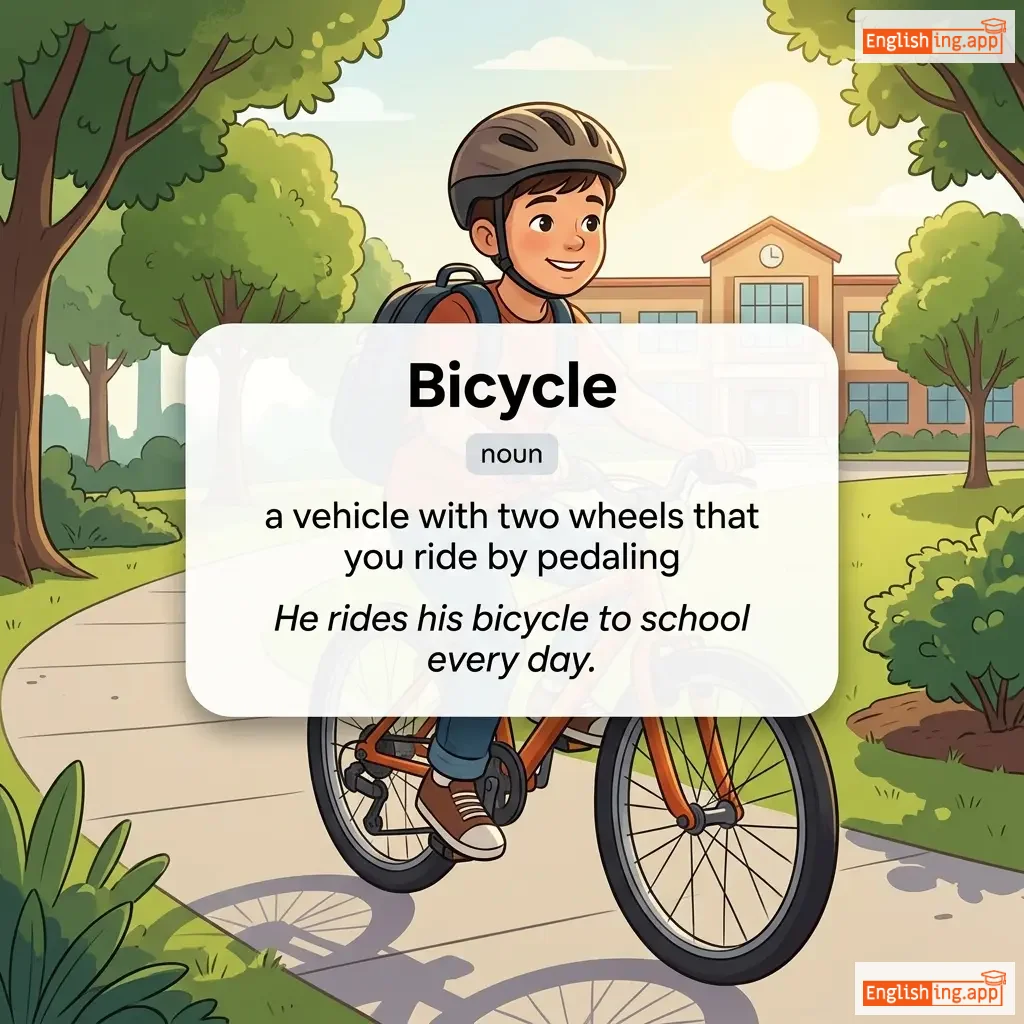
Bicycle definition card — visual illustration of the meaning
noun
/ˈbaɪsɪkl/
счастье (schast'ye)

a vehicle with two wheels that you ride by pedaling

"He rides his bicycle to school every day."

"Она не могла скрыть свое счастье, когда получила награду." (Ona ne mogla skryt' svoyo schast'ye, kogda poluchila nagradu.)
verb
/bɪd/
сделать ставку (sdelat' stavku)

to offer a certain amount of money for something, especially at an auction

"She bid $200 for the antique vase."

"Она предложила 200 $ за антикварную вазу." (Ona predlozhila 200 dollarov za antikvarnuyu vazu.)
verb
/baɪd/
ждать (zhdat)

to wait patiently for the right time or opportunity

"He decided to bide his time before making a move."

"Он решил подождать, прежде чем сделать шаг." (On reshil podozhdat', prezhde chem sdelat' shag.)
adjective
/baɪˈɛniəl/
двухлетний (dvukhletniy)

happening every two years

"The biennial festival attracts thousands of visitors."

"Двухлетний фестиваль привлекает тысячи посетителей." (Dvukhletniy festival privlekat tysjachi posetiteley.)
noun
/bɪər/
гробница (grobnitsa)

a frame or stand on which a coffin or body is placed before burial or cremation

"The coffin was placed on the bier during the funeral service."
"Гроб был размещен на гробнице во время похоронной службы." (Grob byl razmeshchen na grobnitse vo vremya pokhoronnoy sluzhby.)
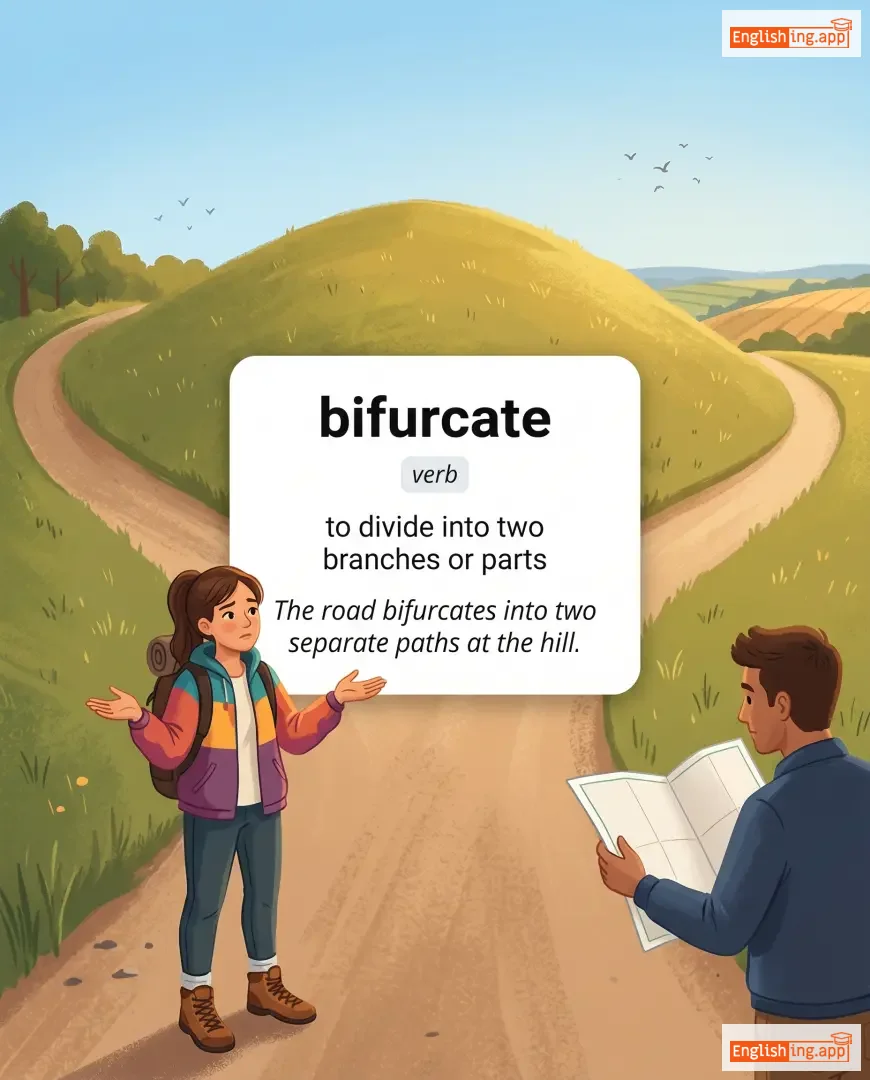
bifurcate definition card — visual illustration of the meaning
verb
/ˈbaɪfərˌkeɪt/
разделить на две части (razdelit na dve chasti)

to divide into two branches or parts

"The road bifurcates into two separate paths at the hill."

"Дорога разделяется на два отдельных пути на холме." (Doroga razdelyaetsya na dva otdel'nykh puti na kholme.)
adjective
/ˈbaɪ.fərˌkeɪ.tɪd/
разделенный на две части (razdelyonnyy na dve chasti)

Divided into two branches or parts.

"The river became bifurcated as it flowed around the island."

"Река разделилась на две части, когда она текла вокруг острова." (Reka razdelyilas' na dve chasti, kogda ona tekla vokrug ostrova.)
big definition card — visual illustration of the meaning
adjective
/bɪɡ/
большой (bolshoy)

large in size, extent, or importance

"They moved into a big house with plenty of space."

"Они переехали в большой дом с большим количеством пространства." (Oni pereekhali v bol'shoy dom s bol'shim kolichestvom prostranstva.)
noun
/bɪɡ boʊl/
большая миска (bolshaya miska)

a large, round, shallow container used for serving food, mixing ingredients, or washing

"She mixed the ingredients in a big bowl."

"Она смешала ингредиенты в большой миске." (Ona smeshala ingredienty v bol'shoy miske.)
noun
/ˈbɪɡ.ə.mɪst/
бигамист (bigamist)

A person who commits the crime of marrying someone while already married to another.

"The man was arrested for being a bigamist."

"Этот человек был арестован за то, что был бигамистом." (Eto chelovek byl arestovan za to, chto byl bigamistom.)
noun
/ˈbɪɡ.ə.mi/
бигамия (bigamiya)

The act of marrying one person while still legally married to another.

"He was charged with bigamy after his second marriage was discovered."

"Его обвинили в бигамии после того, как его второй брак был раскрыт." (Ego obvinili v bigamii posle togo, kak ego vtoroy brak byl raskryt.)
adjective
/ˈbɪɡɪst/
самый большой (samyy bolshoy)

largest in size, amount, degree, or importance; superlative form of big

"This is the biggest challenge we have ever faced."

"Это самая большая проблема, с которой мы сталкивались." (eto samaya bolshaya problema s kotoroy my stalkivalis)
noun
/baɪt/
бухта (bukhta)

A bend or curve in a geographical feature, especially a coastline, or a loop in a rope.

"The sailors anchored in the calm waters of the bight."

"Моряки пришвартовались в тихих водах бухты." (Moryaki prishvartovalis' v tikhikh vodakh bukhty.)
noun
/ˈbɪɡ.ət/
фанатик (fanatik)

A person who is intolerant toward those holding different opinions or beliefs.

"He was called a bigot for refusing to listen to others' views."

"Его называли фанатиком, потому что он отказался слушать мнения других." (Ego nazyvali fanatikom, potomu chto on otkazalsya slushat' mneniya drugikh.)
noun
/ˈbɪɡətri/
нетерпимость (neterpimost)

Intolerance toward those who hold different opinions or lifestyles.

"Her bigotry prevented her from accepting people with different beliefs."

"Её нетерпимость мешала ей принимать людей с другими убеждениями." (Eё neterpimost meshal a yey prinimat' lyudey s drugimi ubezhdeniyami.)
noun, verb
/baɪk/
велосипед (velosiped)

a bicycle or motorcycle; to ride a bicycle

"He biked to school every day."
"Он ездил в школу на велосипеде каждый день." (On ezdil v shkolu na velosipede kazhdyi den.)
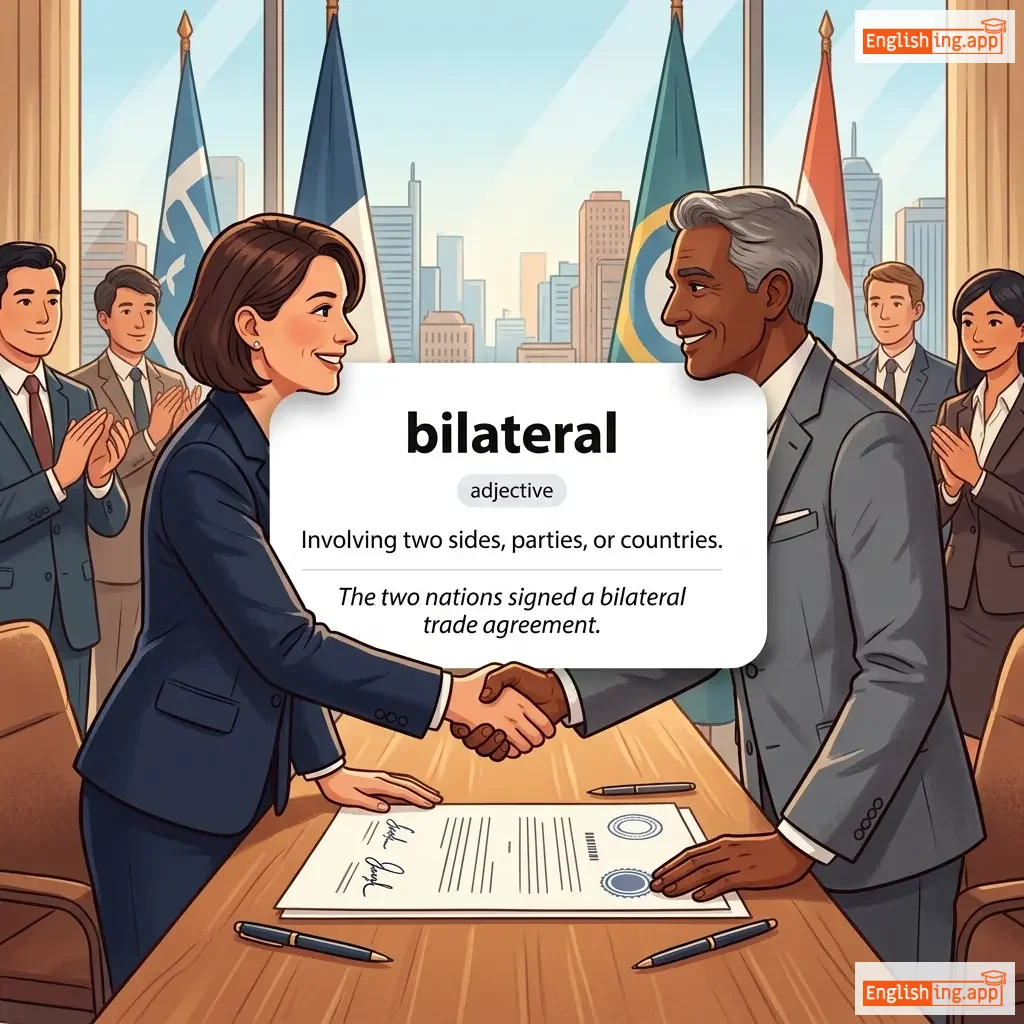
bilateral definition card — visual illustration of the meaning
adjective
/ˌbaɪˈlætərəl/
двусторонний (dvustoronniy)

Involving two sides, parties, or countries.

"The two nations signed a bilateral trade agreement."

"Два государства подписали двустороннее торговое соглашение." (Dva gosudarstva podpisali dvustoronnee torgovoe soglashenie.)
bilateral negotiations definition card — visual illustration of the meaning
noun
/ˌbaɪˈlæt.ər.əl nɪˌɡəʊ.ʃiˈeɪ.ʃənz/
двусторонние переговоры (dvustoronniye peregovory)

Negotiations or discussions between two parties, typically countries or organizations.

"Bilateral negotiations resolve disputes."

"Двусторонние переговоры решают споры." (Dvustoronniye peregovory reshayut spory.)
noun
/baɪl/
желчь (zhelch)

a bitter greenish-brown alkaline fluid that aids digestion and is secreted by the liver and stored in the gallbladder

"The liver produces bile to help digest fats."

"Печень вырабатывает желчь, чтобы помочь переваривать жиры." (Pechyen' vyrabotayvet zhelch', chtoby pomoch' perevarivat' zhiry)
adjective
/ˌbaɪˈlɪŋɡwəl/
билингвальный (bilingval'nyy)

Able to speak two languages fluently.

"She grew up in a bilingual household speaking both English and Spanish."

"Она выросла в билингвальной семье, говорящей как на английском, так и на испанском." (Ona vyrosla v bilingval'noy sem'ye, govoryashchey kak na angliyskom, tak i na ispanskom.)
adjective
/ˈbɪliəs/
желчный (zhelchnyy)

Relating to bile or an ill-tempered, irritable disposition.

"He became bilious after hearing the unfair criticism."

"Он стал желчным после того, как услышал несправедливую критику." (On stal zhelchnym posle togo, kak uslyshal nespravedlivuyu kritiku.)
verb
/bɪlk/
обмануть (obmanut')

To cheat or defraud someone of money or rights.

"The scammer tried to bilk elderly people out of their savings."

"Мошенник пытался обмануть пожилых людей и забрать их сбережения." (Moshennik pytalsya obmanut' pozhilykh lyudey i zabrat' ikh sberezhaniya.)
🧾

Bill

noun
/bɪl/

a written statement of money owed for goods or services; also a proposed law presented to a legislature

"He received the electricity bill yesterday."

noun
/ˈbɪlɪŋzˌɡeɪt/
грубый или оскорбительный язык (grubyy ili oskorbitel'nyy yazyk)

Coarse or abusive language; vulgar or offensive speech.

"The heated argument quickly descended into billingsgate."

"Разгорячённая ссора быстро перешла на грубый язык." (Razgoryachennaya ssora bystro pereshla na grubyy yazyk.)
noun
/ˈbɪljən/
миллиард (milliard)

the number 1,000,000,000 (one thousand million)

"The company is worth more than a billion dollars."

"Компания стоит более одного миллиарда долларов." (Kompaniya stoit bolee odnogo milliarda dollarov.)
verb
/ˈbɪloʊ/
развиваться как волны (razvivat'sya kak volny)

To swell or rise in large waves or surges; to flow outward in a rolling motion.

"Smoke billowed from the burning building."

"Дым развивался как волны из горящего здания." (Dym razvivalas' kak volny iz goryashchego zdaniya.)
adjective
/ˈbɪloʊɪŋ/
колышущийся (kolyshushchijsya)

Describing something that swells or surges outward in waves or large masses.

"She walked through the billowing curtains."

"Она прошла сквозь колышущиеся занавески." (Ona proshla skvoz' kolyshushchiesya zanaveski.)
noun
/baɪˈmɛstər/
период в два месяца (period v dva mesyatsa)

A period of two months.

"The academic program is divided into six bimesters."

"Академическая программа делится на шесть биместров." (Akademicheskaya programma delitsya na shest' bimestroy.)
bind definition card — visual illustration of the meaning
verb
/baɪnd/
связывать (svyazyvat)

to tie or fasten tightly; to unite or restrict

"The contract will bind both parties to the agreement."

"Контракт свяжет обе стороны с соглашением." (Kontrakt svyazhet obe storony s soglasheniem.)
noun
/ˈbaɪoʊ ˌdeɪtə/
резюме (rezjume)

biographical data; a resume or curriculum vitae containing personal and professional information

"Please submit your bio-data along with the job application."
"Пожалуйста, отправьте свое резюме вместе с заявкой на работу." (Pozhaluysta, otpravyte svoe rezjume vmeste s zayavkoy na rabotu.)
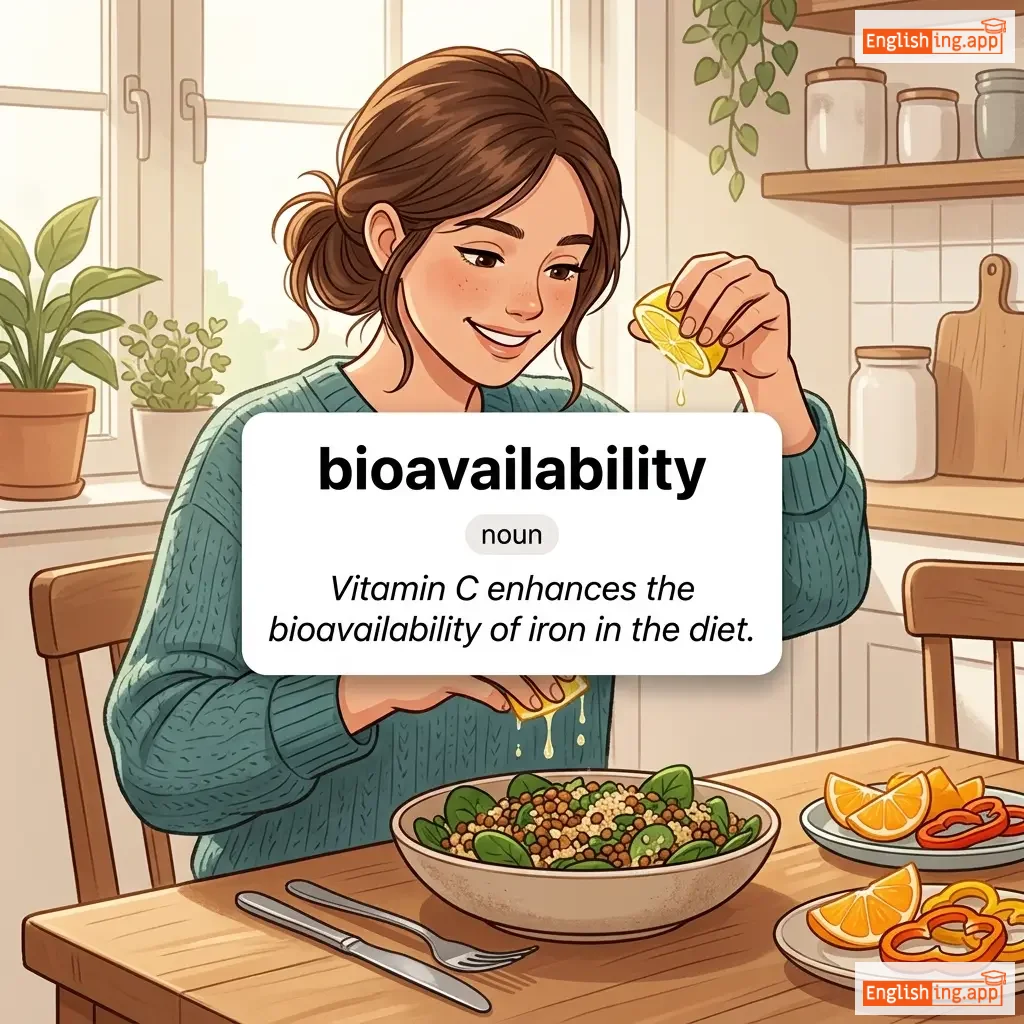
bioavailability definition card — visual illustration of the meaning
noun
/ˌbaɪ.oʊ.əˌveɪ.ləˈbɪl.ə.ti/
биодоступность (biodostupnost)

The degree and rate at which a substance is absorbed or becomes available at the site of physiological activity.

"Vitamin C enhances the bioavailability of iron in the diet."

"Витамин C увеличивает биодоступность железа в пище." (Vitamin C uvelichivayet biodostupnost' zheleza v pishche.)
noun
ˈbaɪəʊˌsaɪd
биоцид (biotsid)

A chemical substance or microorganism intended to destroy, deter, render harmless, or exert a controlling effect on any harmful organism.

"Biocides help control pests and reduce the spread of diseases."
"Биоциды помогают контролировать вредителей и уменьшать распространение болезней." (Biotsidy pomogayut kontrol'irovat' vrediteley i umenshat' rasprostraneniye bolezney.)
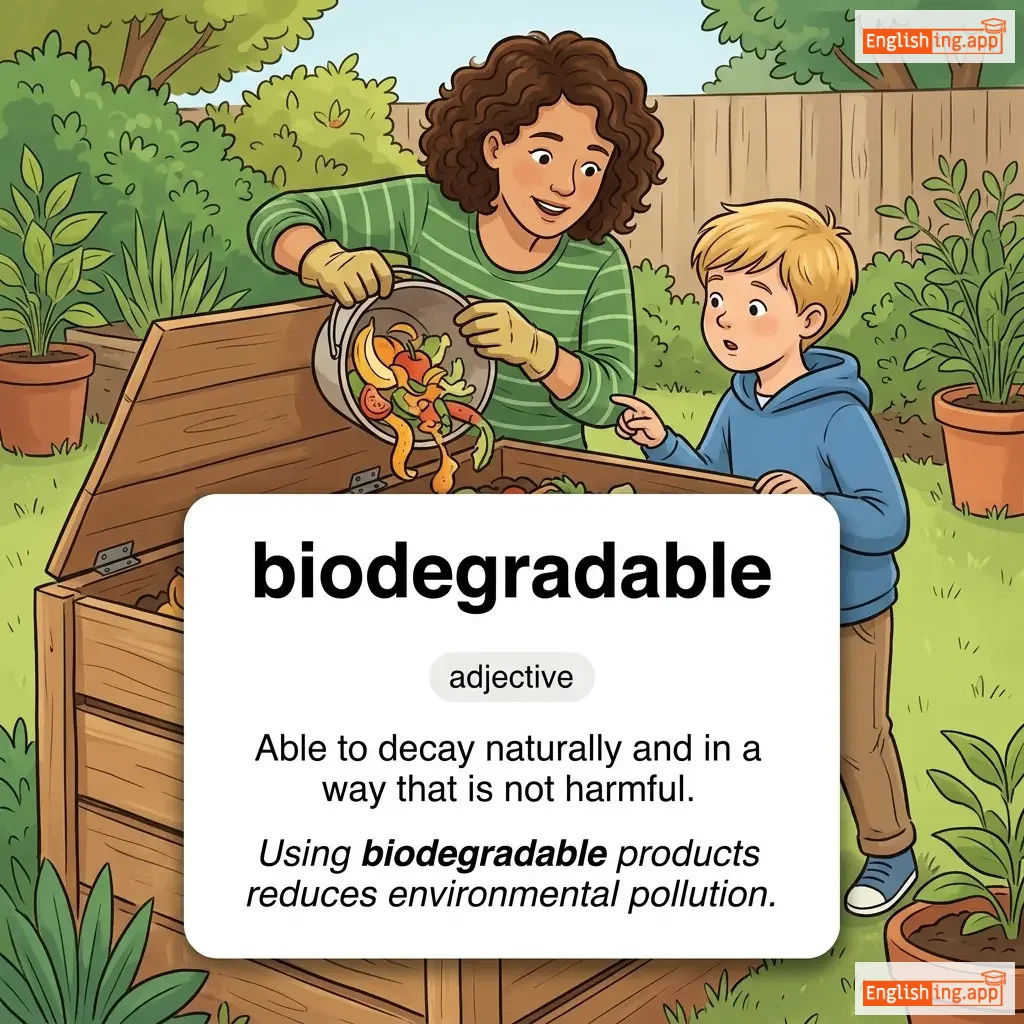
biodegradable definition card — visual illustration of the meaning
adjective
/ˌbaɪ.oʊ.dɪˈɡreɪ.də.bəl/
биоразлагаемый (bioprazlagayemyy)

Able to decay naturally and in a way that is not harmful.

"Using biodegradable products reduces environmental pollution."
"Использование биоразлагаемых продуктов снижает загрязнение окружающей среды." (Ispol'zovanie biorazlagaemykh produktov snizhaet zagrjaznenie okruzhayushchey sredy.)
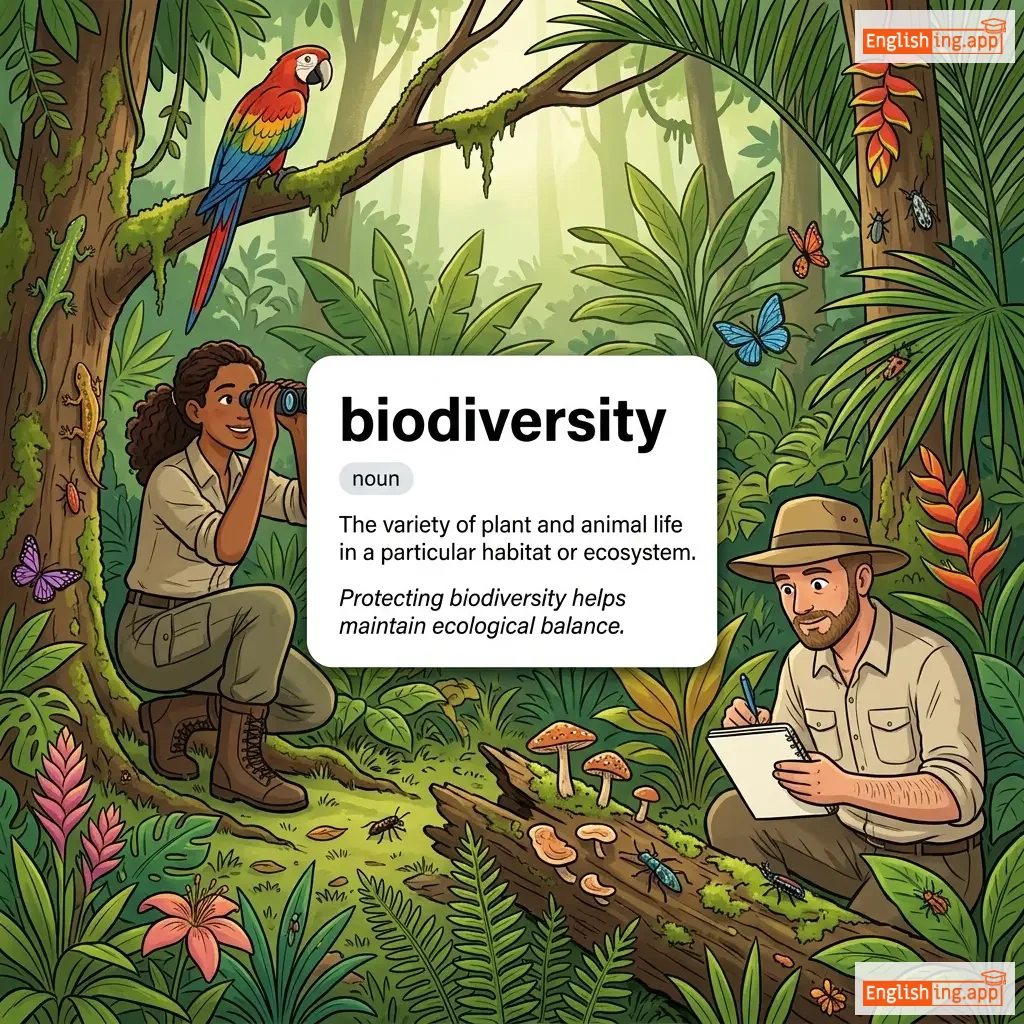
biodiversity definition card — visual illustration of the meaning
noun
/ˌbaɪ.oʊ.daɪˈvɜː.sɪ.ti/
биоразнообразие (bioraznoobrazie)

The variety of life in the world or in a particular habitat or ecosystem.

"Deforestation is a major threat to biodiversity."
"Вырубка лесов — это большая угроза для биоразнообразия." (Vyrubka lesov — eto bol'shaya ugroza dlya bioraznoobraziya.)
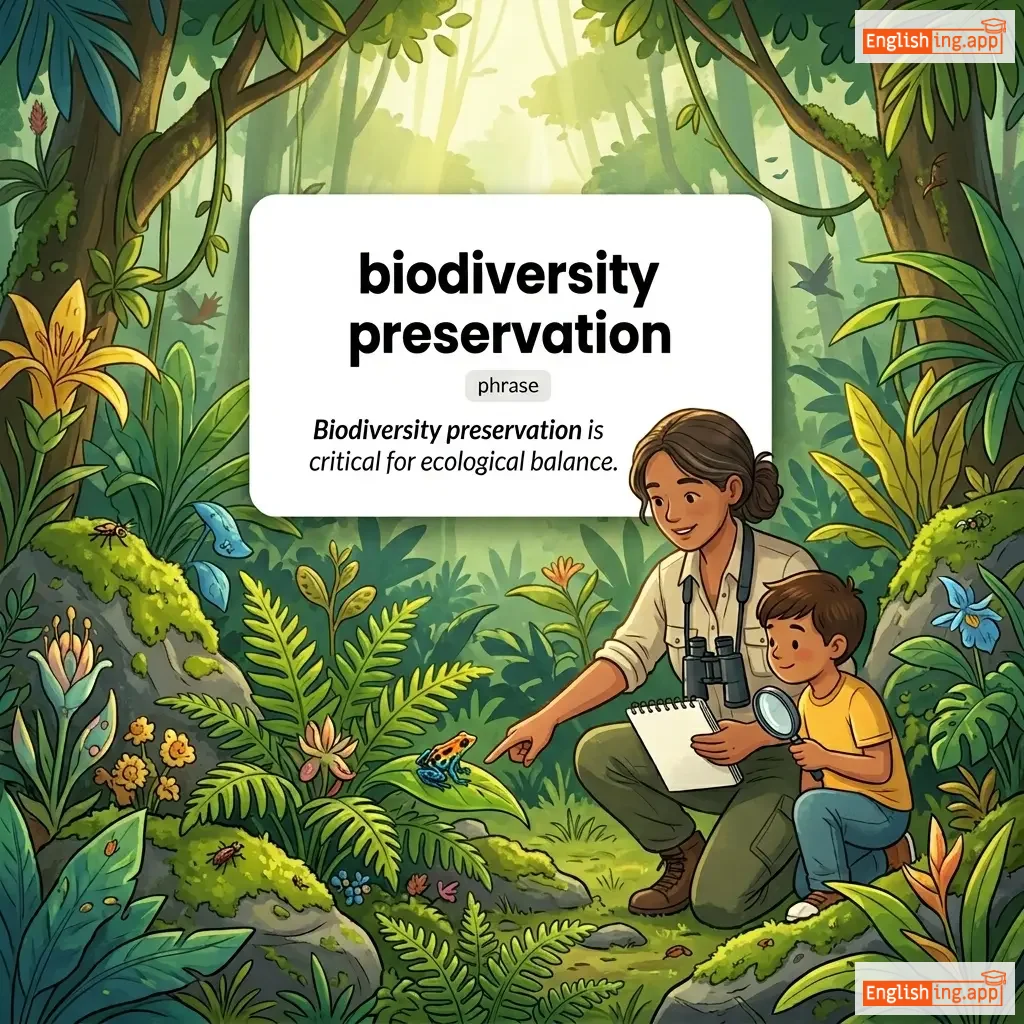
biodiversity preservation definition card — visual illustration of the meaning
phrase
ˌbaɪ.oʊ.daɪˈvɜː.sɪ.ti ˌprez.əˈveɪ.ʃən
сохранение биоразнообразия (soxranenie bioraznoobraziya)

The protection and conservation of the variety of life in all its forms, including different species, genetic diversity, and ecosystems.

"Biodiversity preservation is critical for ecological balance."
"Сохранение биоразнообразия критически важно для экологического баланса." (Sohranenie bioraznoobraziya kriticheski vazhno dlya ekologicheskogo balansa.)
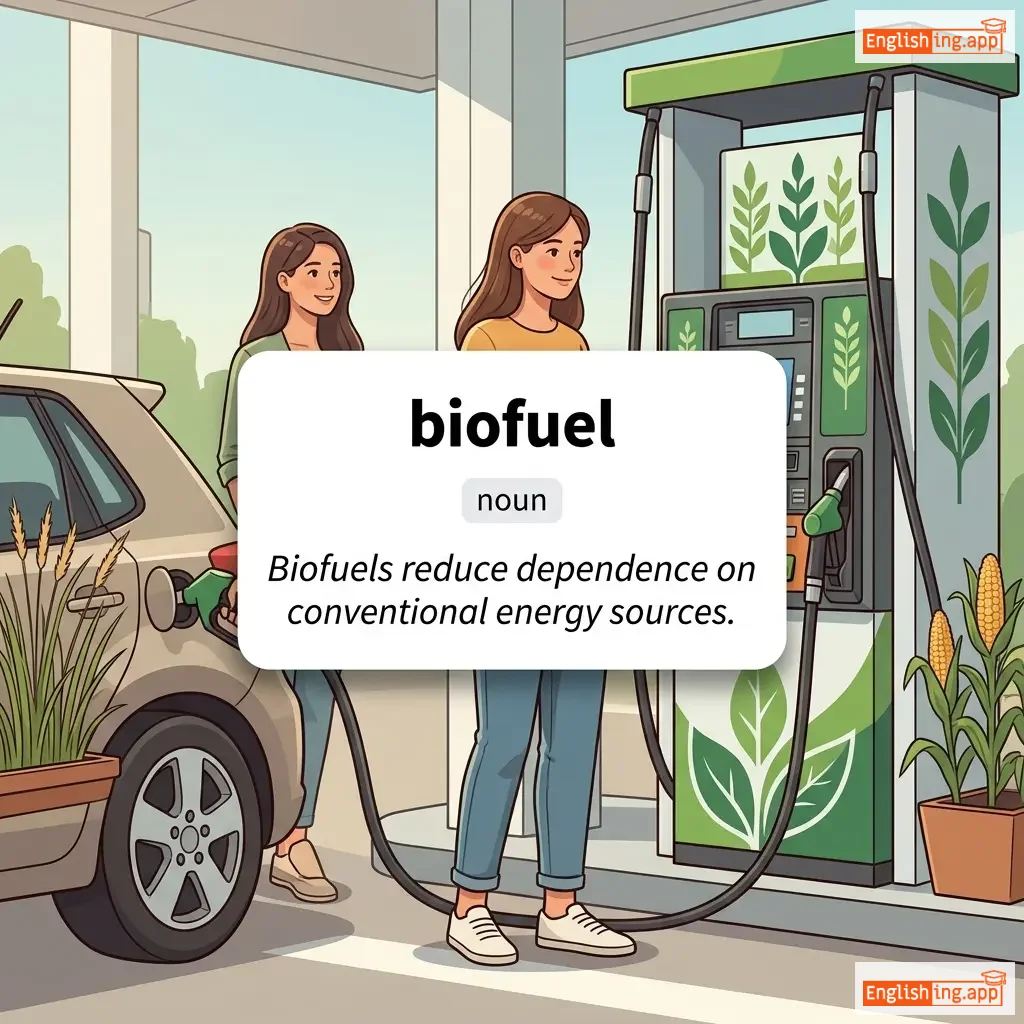
biofuel definition card — visual illustration of the meaning
noun
ˈbaɪ.əʊˌfjuː.əl
биотопливо (biotoplivo)

A fuel derived immediately from living matter, as opposed to fossil fuels derived from long-dead biological matter.

"Biofuels reduce dependence on conventional energy sources."

"Биотопливо снижает зависимость от традиционных источников энергии." (Biotoplivo snizhaet zavisimost' ot traditsionnykh istochnikov energii.)
noun
/ˈbaɪəˌɡræf/
биография (biografiya)

A written account of a person's life; an early motion-picture projector (historical use).

"The library holds an old biograph of the poet."

"В библиотеке есть старая биография поэта." (V biblioteke yest' staraya biografiya poetá.)
noun
/baɪˈɒɡrəfi/
биография (biografiya)

A written account of someone's life.

"She is writing a biography of the famous poet."

"Она пишет биографию известного поэта." (Ona pishet biografiyu izvestnogo poetá.)
adjective
/ˌbaɪəˈlɒdʒɪkl̩/
биологический (biologicheskiy)

relating to the science of biology or to life and living organisms

"She is studying biological sciences at university."

"Она изучает биологические науки в университете." (Ona izuchayet biologicheskie nauki v universitete.)
noun
/baɪˈɒlədʒi/
биология (biologiya)

The scientific study of living organisms.

"Biology explains how plants and animals function."
"Биология объясняет, как функционируют растения и животные." (Biologiya ob'yasnyayet, kak funktsioniruyut rasteniya i zhivotnyye.)
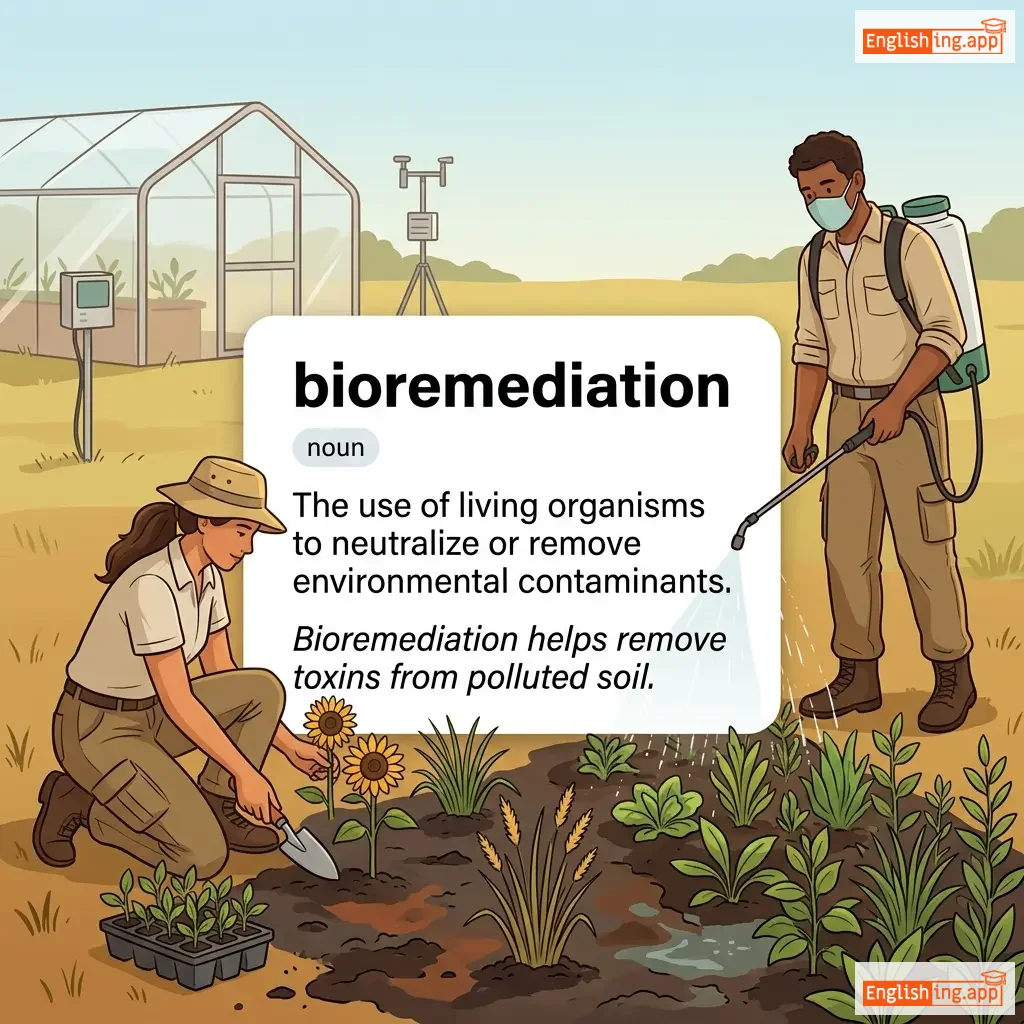
bioremediation definition card — visual illustration of the meaning
noun
/ˌbaɪ.oʊ.rɪˌmiː.diˈeɪ.ʃən/
биоремедиация (bioremediaciya)

The use of living organisms to neutralize or remove environmental contaminants.

"Bioremediation helps remove toxins from polluted soil."

"Биоремедиация помогает удалять токсины из загрязненной почвы." (Bioremediaciya pomogaet udalyat' toksiny iz zagryaznennoy pochvy.)
noun
/ˈbaɪoʊˌsfɪr/
биосфера (biosfera)

the regions of the surface and atmosphere of the earth occupied by living organisms

"Climate change is affecting the entire biosphere."

"Изменение климата влияет на всю биосферу." (Izmenenie klimata vliyayet na vsyu biosferu.)
noun
/ˈbaɪpɛd/
двупалый (dvupalyy)

An animal that walks on two feet.

"Humans are examples of biped creatures."

"Люди — примеры двупалых существ." (Lyudi — primery dvupalykh sushchestv.)
noun
/bɜːrd/
птица (ptitsa)

a warm-blooded animal with feathers and wings that usually lays eggs and can often fly

"A bird was singing on the tree branch."
"Птица пела на ветке дерева." (Ptitsa pela na vetke dereva)
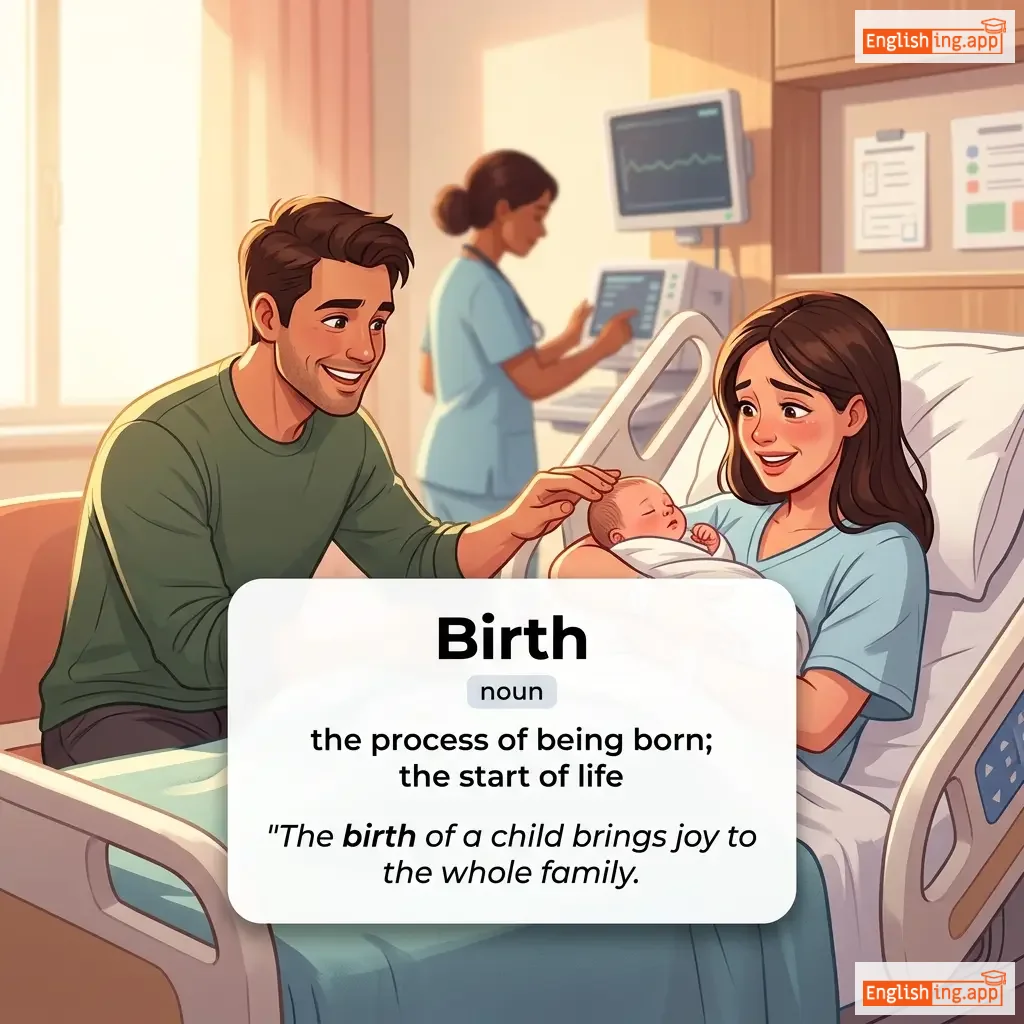
Birth definition card — visual illustration of the meaning
noun
/bɜːrθ/
рождение (rozhdenie)

the process of being born; the start of life

"The birth of a child brings joy to the whole family."

"Рождение ребенка приносит радость всей семье." (Rozhdenie rebenka prinosit radost vsei sem'e.)
noun
/ˈbɜːrθ.deɪ/

the anniversary of the day on which a person was born, typically celebrated annually

"We are planning a surprise birthday party for her."