ভোকাবুলারিসমূহ

ইংরেজি শব্দের বাংলা অর্থ | English to Bangla Word Meaning Dictionary

noun
/broʊˈʃʊr/
পুস্তিকা (pustika)

a small booklet or pamphlet containing information or advertising

"The travel agent gave us a brochure about the holiday package."

"ট্রাভেল এজেন্ট আমাদের ছুটির প্যাকেজ সম্পর্কে একটি ব্রোশিউর দিলেন।" (Travel agent amader chhutir package somporke ekti brochure dilen.)
noun
/ˈbroʊɡən/
ভারী জুতো (bhari juto)

A heavy, sturdy shoe, often made of leather.

"The farmer wore old brogans while working in the field."

"কৃষক মাঠে কাজ করার সময় পুরানো ব্রোগান পরেছিলেন।" (Krishok mathe kaj korar somoy purano brogan porichhilen.)
noun
/broʊɡ/
চামড়ার জুতো; উচ্চারণ (chamarer juto; uccharon)

A strong outdoor shoe; also a marked accent, especially Irish or Scottish.

"He bought a pair of stylish brogues for the wedding."

"সে বিয়ের জন্য একটি স্টাইলিশ ব্রোগ কিনেছিল।" (Se biyer jonno ekti stylish brog kinechhilo.)
verb
/brɔɪl/
সেঁকা/গ্রিল করা (senka/grill kora)

To cook food by direct heat, usually under a grill or over a fire.

"She broiled the chicken until it was golden brown."

"সে মুরগিটিকে ব্রইল করেছিল যতক্ষণ না তা সোনালি বাদামী হয়।" (Se murgitike broil korechhilo jotokkhon na ta sonali badami hoy.)
verb; adjective
/broʊk/
ভেঙেছিল; নিঃস্ব (bhenggechhilo; nihsso)

past tense of break; having no money or being financially poor

"I broke my phone last night and now I’m completely broke."

"আমি গত রাতে আমার ফোনটি ভেঙেছিলাম এবং এখন আমি একদম নিঃস্ব।" (ami goto rate amar phone ti bhenggechhilam ebong ekhon ami ekdom nihsso)
adjective
/ˈbroʊkən/
ভাঙা (bhanga)

damaged or not working properly

"The chair is broken and needs repair."

"চেয়ারটি ভেঙে গেছে এবং মেরামত প্রয়োজন।" (Chairti venge geche ebong meramot proyojon.)
noun
/ˈbroʊ.kər/
দালাল (dalal)

a person who buys and sells things for others as a middleman, especially in financial or property deals

"He works as a real estate broker in the city."

"সে শহরে একটি রিয়েল এস্টেট ব্রোকার হিসেবে কাজ করে।" (Se shohore ekti real estate broker hisebe kaj kore.)
noun
/ˈbroʊkərɪdʒ/
দালাল প্রতিষ্ঠান (dalal protisthan)

A firm that acts as an intermediary between buyers and sellers, often charging a fee.

"The real estate brokerage helped them find a new home."

"রিয়েল এস্টেট ব্রোকারেজ তাদের একটি নতুন বাড়ি খুঁজে পেতে সাহায্য করেছিল।" (Real estate brokerage tader ekti notun bari khuje pete sahajyo korechhilo.)
noun
/ˈbroʊmaɪd/
বস্তাপচা মন্তব্য (bostapocha montobbo)

A trite or unoriginal idea or remark; also a chemical compound of bromine.

"His speech was full of old bromides about hard work."

"তার বক্তৃতা ছিল কঠোর পরিশ্রম নিয়ে পুরনো বস্তাপচা মন্তব্যে ভরা।" (Tar boktrita chhilo kothor porishrom niye purono bostapocha montobbote bhora.)
noun
/ˈbroʊmiːn/
ব্রোমিন (bromin)

a dark red, dense, toxic liquid element used in making dyes, flame retardants, and medications

"Bromine is commonly used in water treatment chemicals."

"ব্রোমিন সাধারণত পানি পরিশোধন রাসায়নিক পদার্থে ব্যবহৃত হয়।" (Bromin sadharonoto pani porishodhon rashayonik podorthe byabohar hoy.)
noun
/brɒŋˈkaɪtɪs/
ব্রংকাইটিস (bronkhaitis)

inflammation of the lining of the bronchial tubes, which carry air to and from the lungs

"The doctor diagnosed him with acute bronchitis."

"ডাক্তার তাকে তীব্র ব্রংকাইটিস হিসেবে নির্ণয় করেছিলেন।" (Daktar take tibro bronkhaitis hisebe nirnoy korechilen.)
noun
/ˈbrɒŋkəs/
শ্বাসনালী শাখা (bronkas)

either of the two main branches of the trachea that lead directly into the lungs

"The left bronchus carries air into the left lung."

"বাম ব্রঙ্কাস বাম ফুসফুসে বাতাস নিয়ে যায়।" (Bam bronkas bam fushfuse batas niye jay.)
noun
/brɑːnz/
পিতল (pital)

a metal made by combining copper and tin, often used for statues and medals

"The statue was made of solid bronze."

"মূর্তিটি কঠিন পিতল দিয়ে তৈরি করা হয়েছিল।" (Murtiti kothin pital diye toiri kora hoyechhilo.)
noun
/broʊtʃ/
ব্রোচ (broch)

a decorative jewelry pin that is attached to clothing

"She wore a beautiful silver brooch on her jacket."

"সে তার জ্যাকেটে একটি সুন্দর রূপার ব্রোচ পরেছিল।" (Se tar jacket e ekti sundor rupar broch porechilo.)
verb
/bruːd/
ভাবনা করা, বাচ্চা পাখির দল (brud)

to think deeply about something that makes one unhappy; also, a group of young birds hatched at the same time

"He sat alone, brooding over his failures."

"সে একা বসে তার ব্যর্থতা নিয়ে গভীরভাবে চিন্তা করছিল।" (Se eka bose tar byarthata nie gobirbhabe chinta korchilo.)
noun/verb
/brʊk/
ছোট নদী / সহ্য করা (chhoto nodi / sohojjo kora)

As a noun: a small natural stream; As a verb: to tolerate or endure something

"The village was built near a clear brook."

"গ্রামটি একটি পরিষ্কার ছোট নদীর পাশে নির্মিত হয়েছিল।" (Gramti ekti porishkar chhoto nodir pashe nirmito hoyechhilo.)
noun
/brum/
ঝাঁটা; ঝাড়ু; (jhanta, jharu)

a long-handled brush of bristles or twigs, used for sweeping

"She used an old broom to sweep the fallen leaves from the porch."

"তিনি বারান্দা থেকে পড়ে যাওয়া পাতা সাফ করতে একটি পুরানো ঝাঁটা ব্যবহার করেছিলেন।" (tini baranda theke pore jaowa pata shaf korte ekti purano jhanta bybohar korechhilen.)
noun
/ˈbrʌðər/
ভাই (bhai)

a male sibling

"My brother is two years older than me."

"আমার ভাই আমার থেকে দুই বছর বড়।" (Amar bhai amar theke dui bochor boro.)
noun
/ˈbrʌðərhʊd/
ভ্রাতৃত্ব (bhratrityo)

The relationship between brothers; an association of people with common interests

"The soldiers shared a strong sense of brotherhood."

"সৈন্যরা ভ্রাতৃত্বের এক শক্তিশালী অনুভূতি ভাগ করে নিয়েছিল।" (Soinyora bhratrityer ek shoktishali onubhuti bhag kore niechhilo.)
noun
/braʊ/
কপাল (kopal)

the part of the face above the eyes; forehead

"She wiped the sweat from her brow."

"সে তার কপাল থেকে ঘাম মুছে ফেলল।" (Se tar kopal theke gham muche felllo.)
verb
/ˈbraʊˌbiːt/
ভয় দেখানো / জোর করা (voy dekhano / jor kora)

To intimidate or bully someone into doing something

"The lawyer tried to browbeat the witness."

"আইনজীবী সাক্ষীকে ভয় দেখানোর চেষ্টা করেছিলেন।" (Ainjibi sakhike voy dekhano cheshta korechhilen.)
adjective
/braʊn/
বাদামী (badami)

of a color produced by mixing red, yellow, and black

"She wore a brown dress to the party."

"সে পার্টিতে বাদামী পোশাক পরেছিল।" (Se partite badami poshak porechilo.)
adjective
/ˈbraʊn.ɪʃ/
ইটের বাদামী (iter badami)

having a color somewhat like brown; tending toward brown

"The old paper had a brownish tint from age."

"পুরানো কাগজটি বয়সের কারণে বাদামী রঙ ধারণ করেছিল।" (purano kagjoti boishor karone badami rong dharoon korechilo)
verb
/braʊz/
দেখাশোনা করা / ব্রাউজ করা (dekhashona kora / browse kora)

To look at or skim through casually, especially online or in a store

"She likes to browse books in the library."

"সে লাইব্রেরিতে বই ব্রাউজ করতে পছন্দ করে।" (Se libraryte boi browse korte pochhondo kore.)
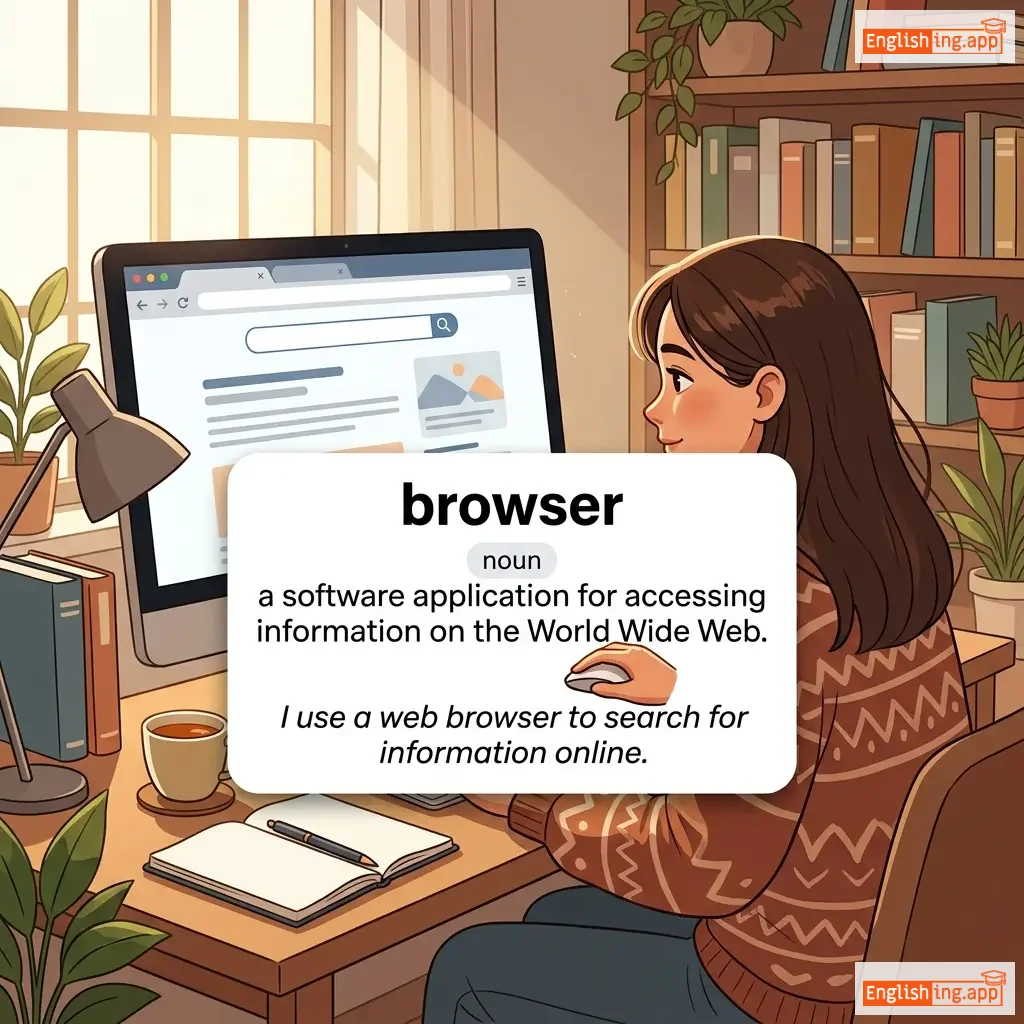
browser definition card — visual illustration of the meaning
noun
/ˈbraʊzər/
ব্রাউজার (browser)

a software application for accessing information on the World Wide Web.

"I use a web browser to search for information online."

"আমি অনলাইনে তথ্য খুঁজতে একটি ওয়েব ব্রাউজার ব্যবহার করি।" (Ami onlayne tothho khujte ekti web browser byabohar kori.)
noun/verb
/bruːz/
নীল দাগ / আঘাত (nil dag / aghat)

As a noun: an injury appearing as a purple or blue mark on the skin; As a verb: to injure without breaking the skin

"He got a bruise on his arm after falling."

"সে পড়ে যাওয়ার পর হাতে একটি নীল দাগ পেয়েছিল।" (Se pore jawar por hate ekti nil dag peyechhilo.)
verb
/bruːt/
গুজব ছড়ানো (gujob charano)

to spread a rumor or report widely

"The scandal was quickly bruited about the town."

"স্ক্যান্ডালটি দ্রুত শহরে ছড়িয়ে পড়েছিল।" (Skandalti druto shoho re chariye porechilo.)
noun
/brʌnt/
মূল আঘাত (mul aghat)

the worst part or main impact of something unpleasant

"The small town bore the brunt of the storm."

"ছোট শহরটি ঝড়ের প্রধান আঘাত বহন করেছিল।" (Choto shohorti jhorer prodhan aghat bohon korechilo.)
noun/verb
/brʌʃ/
ব্রাশ (brash)

A tool with bristles for cleaning, painting, or grooming; to clean, arrange, or apply with a brush.

"She used a brush to paint the fence."

"সে বেড়াটি রঙ করার জন্য ব্রাশ ব্যবহার করেছিল।" (Se berati rong korar jonno brash byabohar korechilo.)
adjective
/bruːsk/ or /brʌsk/
রূঢ় (ruhd)

abrupt or blunt in manner or speech, often seen as rude

"His brusque reply ended the conversation."

"তার রূঢ় উত্তরেই আলাপ শেষ হয়ে গেল।" (Tar ruh uttar ei alap shesh hoye gelo.)
adverb
/ˈbruːskli/ or /ˈbrʌskli/
রূঢ়ভাবে (ruhbhabe)

in a blunt, abrupt, or rude manner

"She brusquely dismissed the suggestion."

"সে রূঢ়ভাবে প্রস্তাবটি বাতিল করল।" (Se ruhbhabe prostabti batil korlo.)
adjective
/ˈbruː.təl/
নৃশংস (nrishongsho)

extremely cruel or harsh; violent and without feeling

"The dictator’s rule was marked by brutal violence."

"একনায়কের শাসন ছিল নৃশংস সহিংসতায় ভরা।" (Eknayoker shashon chhilo nrishongsho sohingshotay bhora.)
noun
/bruːˈtæləti/
নৃশংসতা (nrishongshota)

extreme cruelty or violence; savage or inhumane treatment

"The brutality of the attack shocked the entire community."

"আক্রমণের নৃশংসতা পুরো সম্প্রদায়কে হতবাক করে দেয়।" (akromoner nrishongshota puro shomprodayke hotobak kore dey)
verb
/ˈbruːtəlaɪz/
নৃশংসভাবে নির্যাতন করা (nrishongshobhabe niryaton kora)

to treat someone with extreme violence or cruelty; to make something harsh or cruel

"The regime was accused of brutalizing innocent civilians."

"শাসনব্যবস্থাটি নিরীহ বেসামরিক মানুষদের নৃশংসভাবে নির্যাতন করার অভিযোগে অভিযুক্ত হয়।" (shashonbyabosthati niriho besamorik manushder nrishongshobhabe niryaton korar ovijoge ovijukto hoy)
adverb
/ˈbruːtəli/
নিষ্ঠুরভাবে (nishthurvabe)

in a cruel, violent, or harsh manner; in a very direct and blunt way

"The prisoners were treated brutally by the guards."

"প্রহরীরা বন্দীদের সঙ্গে নিষ্ঠুরভাবে আচরণ করেছিল।" (prohorira bondider songe nishthurvabe acharon korechilo)
noun
/ˈbʌb.əl/
বুদবুদ (budbud)

a thin sphere of liquid enclosing air or gas; a temporary state of inflated value or excitement

"The children chased the bubbles in the air."

"শিশুরা বাতাসে বুদবুদগুলো তাড়া করছিল।" (Shishura batashe budbudgulo tara korchhilo.)
noun
/ˌbʌkəˈnɪər/
সমুদ্র ডাকাত (somudro dakat)

a pirate, especially one active in the Caribbean during the 17th and 18th centuries

"The buccaneer sailed across the Caribbean in search of treasure."

"বাকানিয়ার ধনরত্নের খোঁজে ক্যারিবিয়ান সাগরে ভেসে বেড়াত।" (Bacaneer dhonorotner khoje Caribbean sagore bhese berato.)
noun/verb
/bʌk/
হরিণ / প্রতিরোধ করা (horin / protirrodh kora)

A male deer; also to resist or oppose strongly.

"The horse began to buck wildly as the rider tried to hold on."

"ঘোড়াটি বুনোভাবে লাফাতে শুরু করল যখন অশ্বারোহী ধরে রাখার চেষ্টা করছিল।" (Ghorati bunovabe lafate shuru korlo jokhon aswarohi dhore rakhar cheshta korchhilo.)
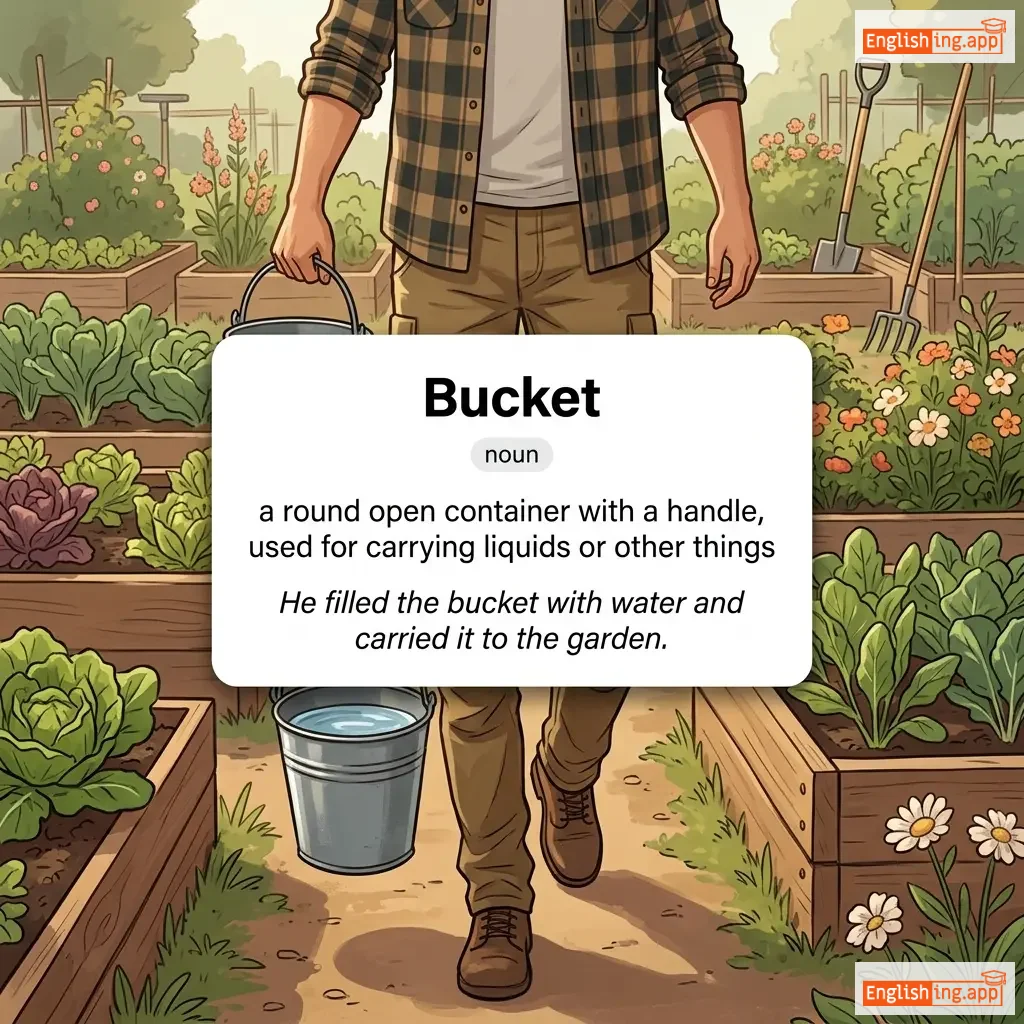
Bucket definition card — visual illustration of the meaning
noun
/ˈbʌkɪt/
বালতি (balti)

a round open container with a handle, used for carrying liquids or other things

"He filled the bucket with water and carried it to the garden."

"সে বালতিতে পানি ভরে বাগানে নিয়ে গেল।" (se baltite pani bhore bagane niye gelo.)
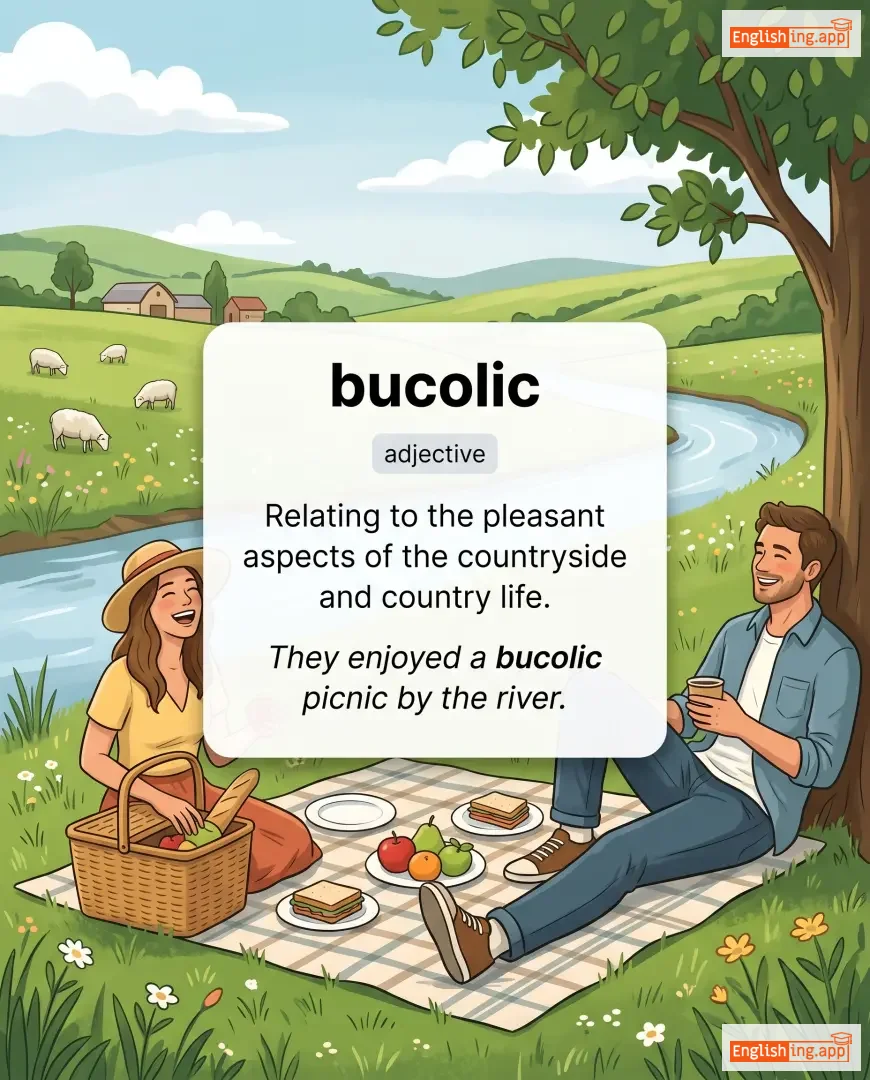
bucolic definition card — visual illustration of the meaning
adjective
/bjuːˈkɒlɪk/
গ্রামীণ (gramin)

Relating to the pleasant aspects of the countryside and country life.

"They enjoyed a bucolic picnic by the river."

"তারা নদীর ধারে একটি গ্রামীণ পিকনিক উপভোগ করেছিল।" (Tara nodir dhare ekti gramin picnic upovog korechhilo.)
noun
/bʌd/
ফুলের কুঁড়ি (phuler kuri)

An undeveloped or immature flower before it opens

"The rose bud will bloom into a beautiful flower in a few days."

"গোলাপের কুঁড়ি কয়েক দিনের মধ্যে একটি সুন্দর ফুলে ফুটবে।" (golaper kuri koyok diner moddhe ekti shundor phule phutbe)
noun
/ˈbʌdi/
বন্ধু (bondhu)

a close friend or companion, used informally

"He went to the movies with his best buddy."

"সে তার সেরা বন্ধুর সাথে সিনেমা দেখতে গিয়েছিল।" (se tar sera bondhur sathe cinema dekhte giechhilo.)
verb
/bʌdʒ/
একটু নড়া / মত পরিবর্তন করা (ektu nora / mot poriborton kora)

To move slightly; to change one’s opinion or position.

"Despite the pressure, he refused to budge from his decision."

"চাপ সত্ত্বেও, সে তার সিদ্ধান্ত থেকে নড়তে অস্বীকার করল।" (Chap sottweo, se tar siddhanto theke norte oshikar korlo.)
noun/verb
/ˈbʌdʒɪt/
বাজেট (bajet)

An estimate of income and expenditure for a set period of time; to plan expenses and income.

"The family created a budget to manage their expenses."

"পরিবার তাদের খরচ নিয়ন্ত্রণের জন্য একটি বাজেট তৈরি করেছিল।" (Poribar tader khoroch niyontroner jonno ekti bajet toiri korechilo.)
noun/adjective/verb
/bʌf/
ভক্ত / ঘষে চকচকে করা (bhokto / ghose chokchoke kora)

A fan or enthusiast; also to polish or shine something.

"He is a movie buff who watches films every weekend."

"সে একজন মুভির ভক্ত, যে প্রতি সপ্তাহে সিনেমা দেখে।" (Se ekjon movir bhokto, je proti soptah cinema dekhe.)
noun
/ˈbʌf.ə.loʊ/
মহিষ (mohish)

a large wild ox with heavy horns; American bison

"The buffalo grazed peacefully in the meadow."

"মহিষটি তৃণভূমিতে শান্তিতে ঘাস খাচ্ছিল।" (mohishti trinvhumite shantite ghas khacchilo)
noun/verb
/ˈbʌfər/
রক্ষাকবচ / আঘাত শোষক (rokshakoboch / aghat shoshok)

Something that lessens or absorbs the impact of a shock; to act as a protective barrier.

"The organization acts as a buffer between workers and management."

"প্রতিষ্ঠানটি শ্রমিক এবং ব্যবস্থাপনার মধ্যে একটি রক্ষাকবচ হিসেবে কাজ করে।" (Protisthanti shromik ebong byabosthapanar moddhe ekti rokshakoboch hisebe kaj kore.)
noun, verb
/bəˈfeɪ/ (noun), /ˈbʌfɪt/ (verb)
বাফে / ভোজসভা (bafe / bhojsobha)

A meal where guests serve themselves from a variety of dishes arranged on a table; also means to strike repeatedly (as a verb).

"We enjoyed a large buffet at the wedding reception."

"আমরা বিয়ের অনুষ্ঠানে একটি বড় বাফে উপভোগ করেছি।" (Amra biyer onusthane ekti boro bafe upobhog korechi.)
noun
/bəˈfuːn/
ভাঁড় / বিদূষক (bhanr / bidushok)

A ridiculous but amusing person; a clown or jester.

"He acted like a buffoon at the party, making everyone laugh."

"সে পার্টিতে ভাঁড়ের মতো আচরণ করছিল, সবাইকে হাসাচ্ছিল।" (Se partite bhanrer moto acharon korchhilo, sobaike hasachhilo.)
noun
/bəˈfuːnəri/
ভাঁড়ামি (bhanrami)

Foolish or ridiculous behavior intended to amuse.

"His constant buffoonery irritated the serious audience."

"তার ক্রমাগত ভাঁড়ামি গম্ভীর দর্শকদের বিরক্ত করেছিল।" (Tar kromogoto bhanrami gombhir dorkhokder birokt korechhilo.)