Словари

Словарь английского языка | Значения слов, определения и примеры

adjective
/ˈkɔːrəl/
относящийся к хору (otnosyashchiesya k kchoru)

Relating to, written for, or performed by a choir or chorus.

"The church hosted a choral performance on Sunday."

"Церковь провела хоровое выступление в воскресенье." (Tserkov' provela khorovoye vystupleniye v voskresen'ye.)
noun
/kɔːrd/
аккорд (akkord)

A group of musical notes played or sung together; also a straight line segment joining two points on a curve.

"She strummed a simple chord on the guitar."

"Она заиграла простой аккорд на гитаре." (Ona zaigrala prostoy akkord na gitare.)
noun
/tʃɔːr/
работа по дому (rabota po domu)

A routine task, especially a household duty.

"Washing the dishes is my least favorite chore."

"Мыть посуду - моя наименее любимая работа по дому." (Myt' posudu - moya naimeneye lyubimaya rabota po domu.)
noun
/ˌkɔːriˈɒɡrəfi/
хореография (khoreografiya)

The art of designing and arranging dances and movements.

"The choreography of the ballet was breathtaking."

"Хореография балета была захватывающей." (Khoreografiya baleta byla zakhvatyvayushchey.)
verb
/ˈtʃɔːrtl/
смеяться от радости (smejat'sja ot radosti)

to laugh in a breathy, gleeful way

"The audience chortled at the comedian's witty remarks."
"Зрители хихикали от умных замечаний комика." (Zriteli xikhikali ot umnykh zamechanij komika.)
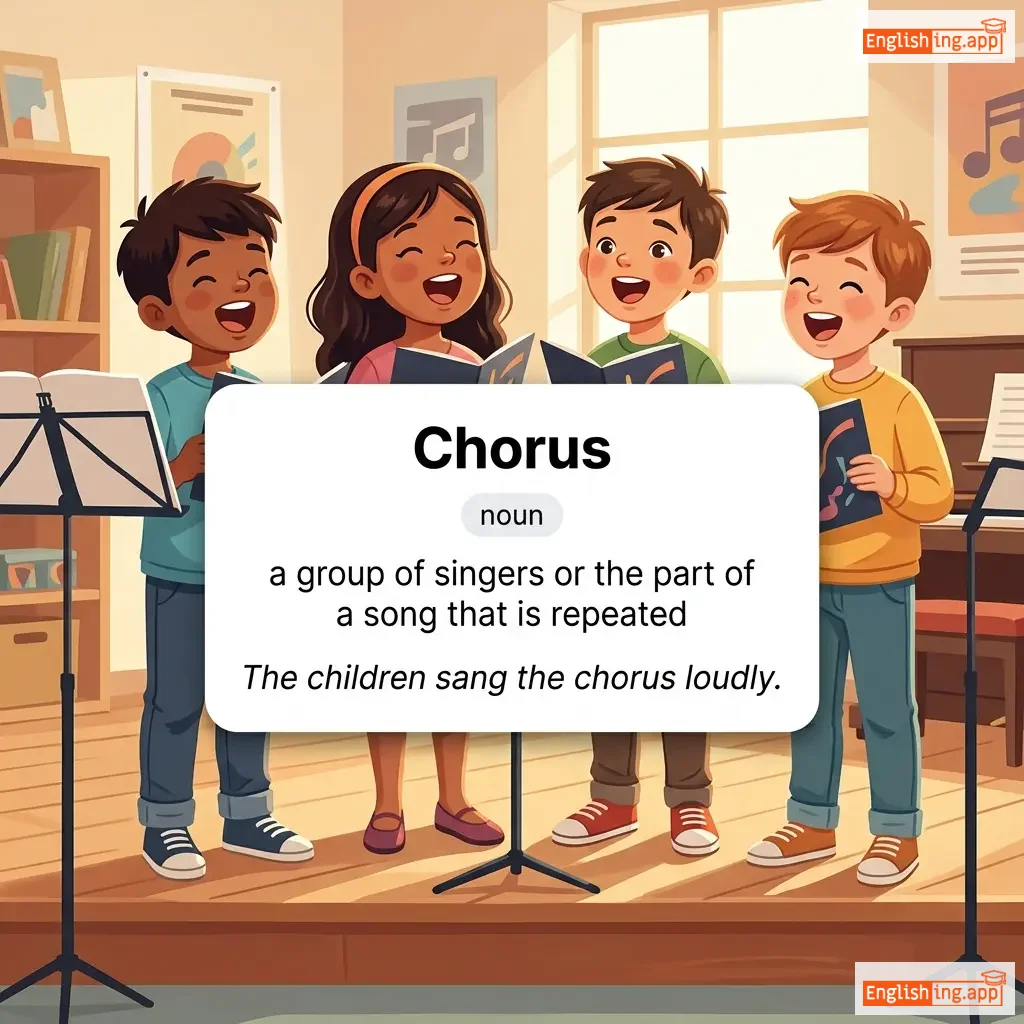
Chorus definition card — visual illustration of the meaning
noun
/ˈkɔːrəs/
хор; припев (korus)

a group of singers or the part of a song that is repeated

"The children sang the chorus loudly."

"Дети громко пели хор." (Deti gromko peli khor.)
noun
/kraɪst/
Христос (Khristos)

the title given to Jesus, considered the Messiah in Christianity

"Christ is central to Christian faith."

"Христос является центральной фигурой христианской веры." (Khristos yavlyaetsya tsentral'noy figuroy khristianskoy very.)
verb
/ˈkrɪsən/
крестить (krestit)

to give a name to someone at baptism or to name something officially

"They christened the ship after the queen."

"Они крестили судно после королевы." (Oni krestili sudno posle korolevy.)
noun
/ˈkrɪsəndəm/
христианский мир (khristianskiy mir)

the worldwide body or community of Christians

"The news spread quickly across Christendom."

"Новость быстро распространилась по всему христианскому миру." (Novost' bystro rasprostranilas' po vsemu khristianskomu miru.)
noun, adjective
/ˈkrɪstʃən/
христианин (khristianin)

a person who follows the religion based on the teachings of Jesus Christ

"She is a devoted Christian who attends church every Sunday."

"Она преданный христианин, который ходит в церковь каждое воскресенье." (Ona predannyy khristianin, kotoryy khodit v tserkov' kazhdoe voskresen'ye.)
noun
/ˌkrɪstiˈænɪti/
христианство (khristianstvo)

the religion based on the teachings of Jesus Christ

"Christianity has millions of followers around the world."

"Христианство имеет миллионы последователей по всему миру." (Khristianstvo imeet milliony posledovateley po vsemu miru.)
noun
/ˈkrɪsməs/
Рождество (Rozhdestvo)

an annual festival celebrating the birth of Jesus Christ, observed on December 25

"Families gather to celebrate Christmas with joy and love."

"Семьи собираются, чтобы отпраздновать Рождество с радостью и любовью." (Semyi sobirayutsya, chtoby otprizdnovat' Rozhdestvo s radost'yu i lyubov'yu.)
adjective
/krəˈmætɪk/
хроматический (khromaticheskiy)

Relating to colors or, in music, notes outside the standard scale.

"The artist used a chromatic palette to create vibrant contrasts."

"Художник использовал хроматическую палитру для создания ярких контрастов." (Khodozhnik ispol'zoval khromaticheskuyu palitru dlya sozdaniya yarkikh kontrastov.)
adjective
/ˈkrɒnɪk/
хронический (khronicheskiy)

Lasting for a long time or constantly recurring, often describing illness.

"She suffers from chronic back pain."
"Она страдает от хронической боли в спине." (Ona stradayet ot khronicheskoy boli v spine.)
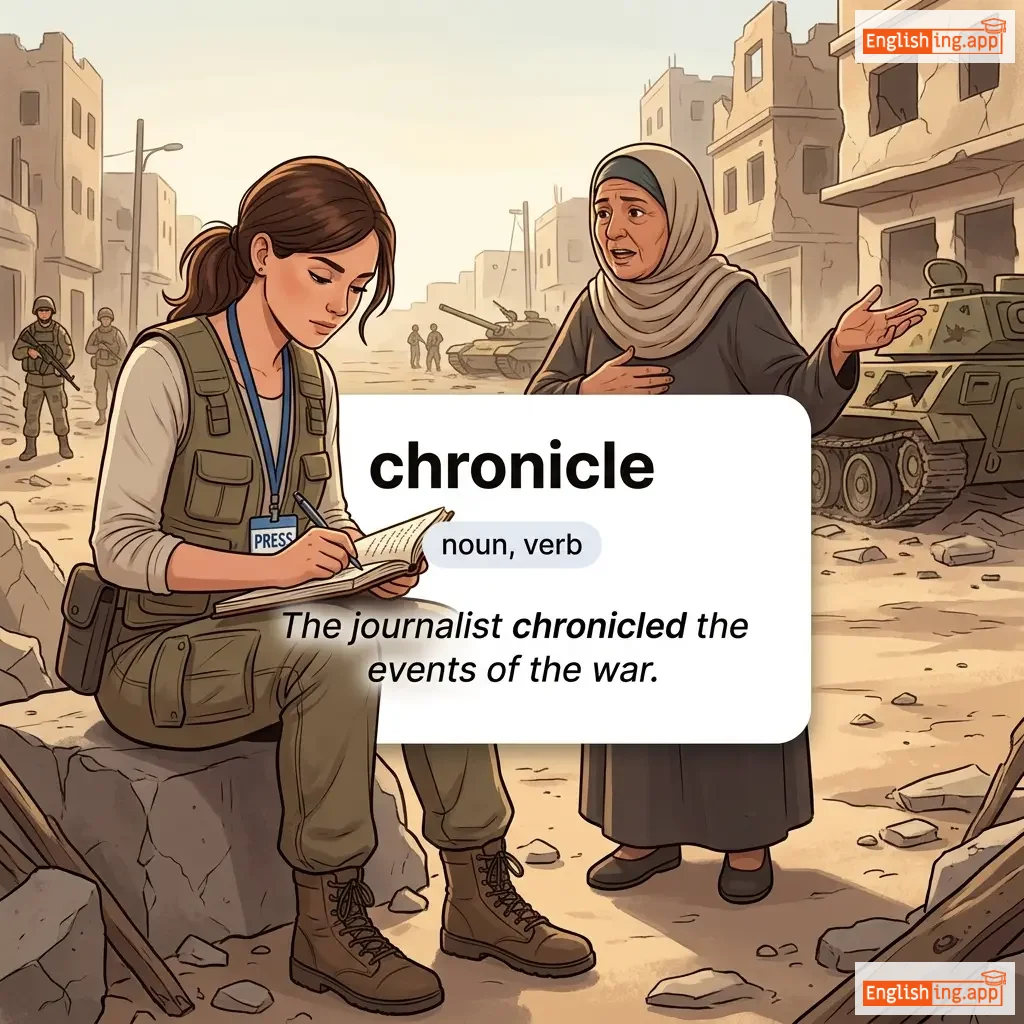
chronicle definition card — visual illustration of the meaning
noun, verb
/ˈkrɒnɪkəl/
хроника (kronika)

A factual written account of important events in order of time; to record such events.

"The journalist chronicled the events of the war."

"Журналист хронизировал события войны." (Zhurnalist khroniziroval sobytiya voyny.)
adjective
/ˌkrɒnəˈlɒdʒɪkəl/
хронологический (khronologicheskiy)

Arranged in the order in which events happened.

"The events were listed in chronological order."

"События были перечислены в хронологическом порядке." (Sobytiya byli perechislenny v khronologicheskom poryadke.)
noun
/krəˈnɒlədʒi/

The arrangement of events or dates in the order of their occurrence.

"The chronology of the dynasty was carefully studied by historians."

noun
/krəˈnɒmɪtər/
хронометр (khronometr)

An instrument for measuring time precisely, especially used in navigation.

"The sailor relied on the chronometer to determine his position at sea."

"Моряк полагался на хронометр, чтобы определить свое местоположение в море." (Moryak polagalsya na khronometr, chtoby opredelit' svoyo mestopolozhenie v more.)
adjective
/ˈtʃʌbi/
пухлый (pukhlyi)

slightly fat in a way that looks healthy and pleasant

"The baby has chubby cheeks."

"У малыша пухлые щечки." (U malysha pukhlye shchyochki.)
verb
/ˈtʃʌkəl/
тихо смеяться (tikho smeyatsya)

To laugh quietly or to oneself.

"She chuckled at the joke her friend told."

"Она тихо посмеялась над шуткой, которую рассказала её подруга." (Ona tikho posmeyalas' nad shutkoy, kotoruyu rasskazala yeye podruga.)
noun
/tʃʌŋk/
кусок / ломоть (kusok / lomot)

a thick or solid piece of something

"She cut the cake into large chunks."

"Она нарезала торт большими кусками." (Ona narezala tort bol'shimi kuskami.)
noun
/tʃɜːrtʃ/
церковь (tserkov)

a building used for public Christian worship

"The old church in the village was built in the 18th century."

"Старая церковь в деревне была построена в 18 веке." (Staraya tserkov v derevne byla postroyena v 18 veke.)
😠

churl

noun
/tʃɜːrl/

A rude, boorish, or ill-mannered person.

"The waiter was such a churl that customers left unhappy."

churlish definition card — visual illustration of the meaning
adjective
/ˈtʃɜːrlɪʃ/
грубый (grubyy)

Rude in a mean-spirited and surly way.

"It would be churlish to refuse her kind invitation."

"Было бы грубо отвергнуть ее любезное приглашение." (Bylo by grubo otvergout' yejo lyubeznoe priglashenie.)
noun
/ˈtʃɜː.nɪŋ stɪk/
палка для взбивания (palka dlya vzbivaniya)

a wooden stick used for stirring and churning butter, milk, or other liquids

"Grandmother used a churning stick to make fresh butter."

"Бабушка использовала палку для взбивания для приготовления свежего масла." (Babushka ispol'zovala palku dlya vzbivaniya dlya prigotovleniya svezhego masla.)
noun
/ˈsɪɡəˌrɛt/
сигарета (sigareta)

a small roll of finely cut tobacco wrapped in paper for smoking

"He lit a cigarette after dinner."

"Он закурил сигарету после ужина." (On zakuril sigaretu posle uzhina.)
adjective
/ˈsɪlieɪtɪd/
с ресничками (s resnichkami)

Having minute hairlike projections (cilia) on the surface of cells or organisms.

"The ciliated cells in the respiratory tract help move mucus out of the lungs."

"Цилированные клетки в дыхательных путях помогают перемещать слизь из легких." (Tsilirovannye kletki v dykhatel'nykh putyakh pomogayut peremeshchat' sliz' iz legkikh.)
noun
/ˈsɪniæst/
кинематографист (kinematografist)

A film enthusiast or filmmaker; a person deeply interested in cinema.

"As a true cineast, she spends most weekends watching classic films."

"Как истинный синьяст, она проводит большинство выходных, смотря классические фильмы." (Kak istinnij sinjast, ona provodit bol'shinstvo vykhodnykh, smotrya klassicheskie fil'my.)
noun
/ˈsɪnəmə/
кино (kino)

a place where films are shown to the public; the art or industry of making and showing films

"We went to the cinema to watch a new movie."

"Мы пошли в кино, чтобы посмотреть новый фильм." (my poshli v kino chtoby posmotret novyi film)
noun
/ˈsɪnəmən/
корица (koritsa)

aromatic spice obtained from the inner bark of several tree species

"Cinnamon is often used in baking and desserts."

"Корица часто используется при выпечке и десертах." (Koritsa chasto ispol'zuyetsya pri vypechke i dessertakh.)
cipher definition card — visual illustration of the meaning
noun
/ˈsaɪfər/
секретный код (sekretnyj kod)

A secret or disguised way of writing; a code.

"The spy sent a message written in cipher."
"Шпион отправил сообщение, написанное шифром." (Shpion otpravil soobshchenie, napisannoe shifrom.)
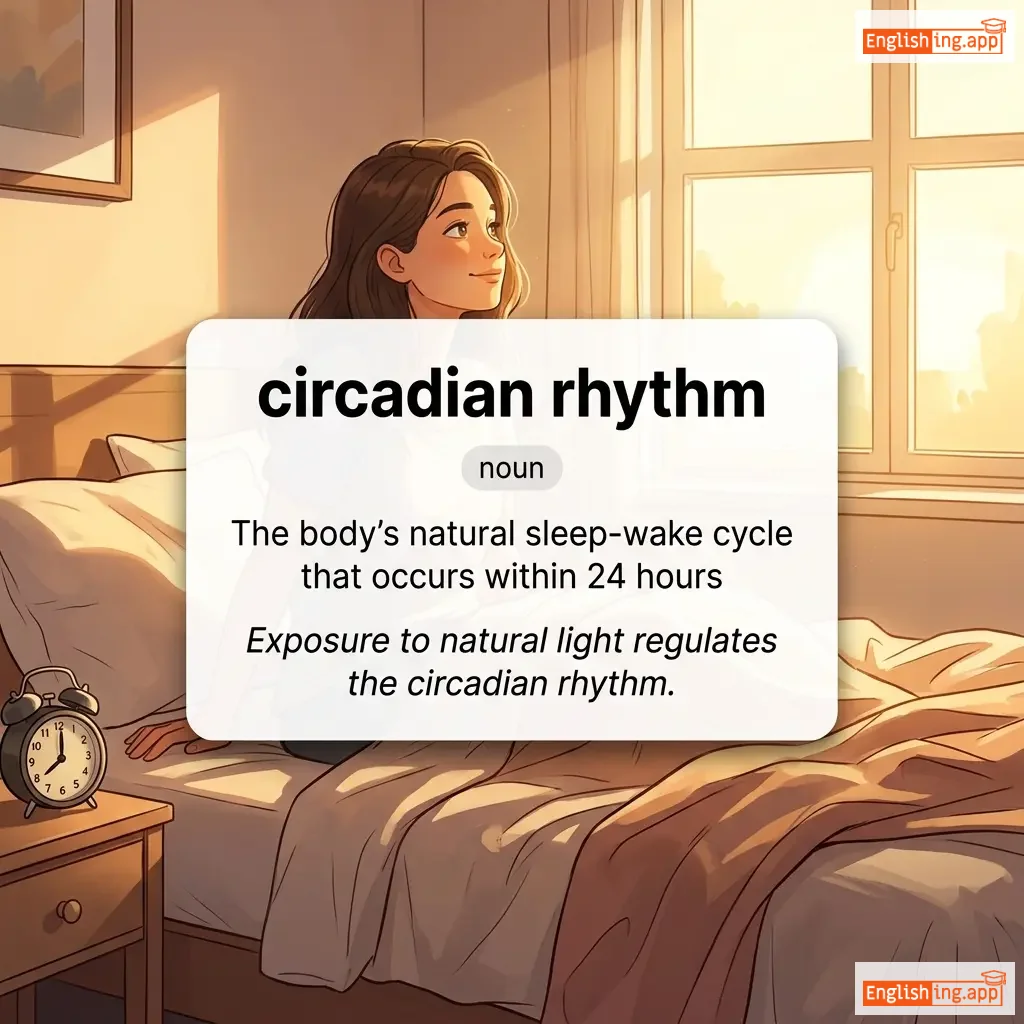
circadian rhythm definition card — visual illustration of the meaning
noun
sɜːrˈkeɪdiən ˈrɪðəm
циркадианный ритм (tsirkadianny ritm)

The body's natural sleep-wake cycle that occurs within 24 hours

"Exposure to natural light regulates the circadian rhythm."

"Воздействие естественного света регулирует циркадианный ритм." (Vozdeystviye yestestvennogo sveta regulyruyet tsirkadianny ritm.)
noun/verb
/ˈsɜːrkəl/
круг (krug)

a round shape; to move all the way around something

"The children sat in a circle."

"Дети сидели в кругу." (Deti siddel v krugu.)
noun
/ˈsɜːrklət/
ободок (obodok)

A small circular band, typically worn as an ornament on the head.

"The princess wore a golden circlet on her forehead."

"Принцесса носила золотой ободок на лбу." (Printsessa nosila zolotoy obodok na lbu.)
noun
/ˈsɜːrkɪt/
круг / электрический путь (krug / elektricheskiy put)

A roughly circular line, route, or movement that starts and ends at the same place; also an electrical pathway.

"The runners completed the circuit around the park."

"Бегуны завершили круг вокруг парка." (Beguny zavershili krug vokrug parka.)
circuitous definition card — visual illustration of the meaning
adjective
/sərˈkjuːɪtəs/
окольный путь (okólnyj put')

Longer than the most direct way; roundabout.

"He took a circuitous route to avoid traffic."

"Он выбрал окольный путь, чтобы избежать пробок." (On vybral okólnyj put', chtoby izbezhat' probok.)
adjective
/ˈsɜːrkjələr/
круглый (krugly)

shaped like a circle; round in form

"The kids sat in a circular arrangement around the campfire."

"Дети сидели в круглом порядке вокруг костра." (Deti sidel v kruglom poryadke vokrug kostra.)
circular economy definition card — visual illustration of the meaning
noun
ˈsɜːrkjələr ɪˈkɒnəmi
циркулярная экономика (tsirkulyarnaya ekonomiya)

An economic system aimed at eliminating waste and the continual use of resources through reuse, sharing, repair, refurbishment, remanufacturing and recycling.

"Adopting a circular economy can reduce waste."

"Принятие циркулярной экономики может сократить отходы." (Prinyatie tsirkulyarnoy ekonomiki mozhet sokratit' otkhody.)
verb
/ˈsɜːrkjəˌleɪt/
циркулировать, двигаться (tsirkulirovat', dvizhatsya)

to move continuously or freely through a closed system or area

"Air circulated freely in the open hall."

"Воздух свободно циркулировал в открытом зале." (Vozdukh svobodno tsirkuliroval v otkrytom zale.)
circulation definition card — visual illustration of the meaning
noun
/ˌsɜːr.kjʊˈleɪ.ʃən/
циркуляция (tsirkulyatsiya)

the movement of something (like blood, air, or information) through a system or area.

"The circulation of blood is essential for a healthy body."

"Циркуляция крови важна для здорового тела." (Tsirkulyatsiya krovi vazhna dlya zdorovogo tela.)
noun
/sərˈkʌmfərəns/
окружность (okruzhnost)

the distance around the edge of a circle

"The teacher asked us to calculate the circumference of the circle."

"Учитель попросил нас вычислить окружность круга." (Uchitel' poprosil nas vychislit' okruzhnost' kruga.)
noun
/ˌsɜːrkəmləˈkjuːʃn/
циркумлокация (tsirkumlokatsiya)

the use of many words when fewer would do, especially to avoid stating something directly

"The politician's speech was filled with circumlocution."

"Речь политика была полна циркумлокаций." (Rech' politika byla polna tsirkumlokatsiy.)
verb
/ˌsɜːrkəmˈnævɪɡeɪt/
совершить кругосветное плавание (sovershit' krugosvetnoe plavanie)

to travel all the way around something, especially the earth

"Magellan was the first to circumnavigate the globe."

"Магеллан был первым, кто совершил кругосветное плавание." (Magellan byl pervym, kto sovershil krugosvetnoe plavanie.)
verb
/ˈsɜːrkəmskraɪb/
ограничивать (ogranichivat)

to limit or restrict something within boundaries

"The rules circumscribe the powers of the committee."

"Правила ограничивают полномочия комитета." (Pravila ogranichivayut polnomochiya komiteta.)
adjective
/ˈsɜːrkəmskraɪbd/
ограниченный (ogranichennyy)

restricted or limited in scope or freedom

"Her freedom of choice was circumscribed by social rules."

"Ее свобода выбора была ограничена социальными правилами." (Eyo svoboda vibora byla ogranichena sotsial'nymi praviliyami.)
circumspect definition card — visual illustration of the meaning
adjective
/ˈsɜːrkəmspekt/
осмотрительный (osmotritel'nyy)

careful and unwilling to take risks; cautious

"He was circumspect in his business dealings."

"Он был осмотрителен в своих деловых сделках." (On byl osmotritel'nym v svoikh delovykh sdelkakh.)
circumspection definition card — visual illustration of the meaning
noun
ˌsɜːkəmˈspekʃən
осторожность, избегание рисков (ostorozhnost', izbeganie riskov)

The quality of being wary and unwilling to take risks; prudence.

"His circumspection ensured no mistakes were made."

"Его осторожность гарантировала, что ошибок не было." (Ego ostorozhnost' garantirovala, chto oshibok ne bylo.)
noun
/ˈsɜːrkəmstæns/
обстоятельство (obstoyatel'stvo)

a fact or condition connected with an event or action

"She handled the difficult circumstances bravely."

"Она храбро справилась с трудными обстоятельствами." (Ona khrabro spravilas' s trudnymi obstoyatel'stvami.)
noun
/ˈsɜːrkəmstænsɪz/
обстоятельства (obstoyatel'stva)

the conditions or facts that affect a situation

"She was forced to leave due to financial circumstances."

"Она была вынуждена уйти из-за финансовых обстоятельств." (Ona byla vynuzhdena uyti iz-za finansovykh obstoyatel'stv.)
circumvent definition card — visual illustration of the meaning
verb
/ˌsɜːrkəmˈvent/
обойти (oboyti)

to find a way around an obstacle; to avoid a rule or problem cleverly

"The company found a way to circumvent the new tax laws."

"Компания нашла способ обойти новые налоговые законы." (Kompaniya nashla sposob oboyti novye nalogovye zakony.)