語彙集

英単語辞書 | 単語の意味、定義、例文

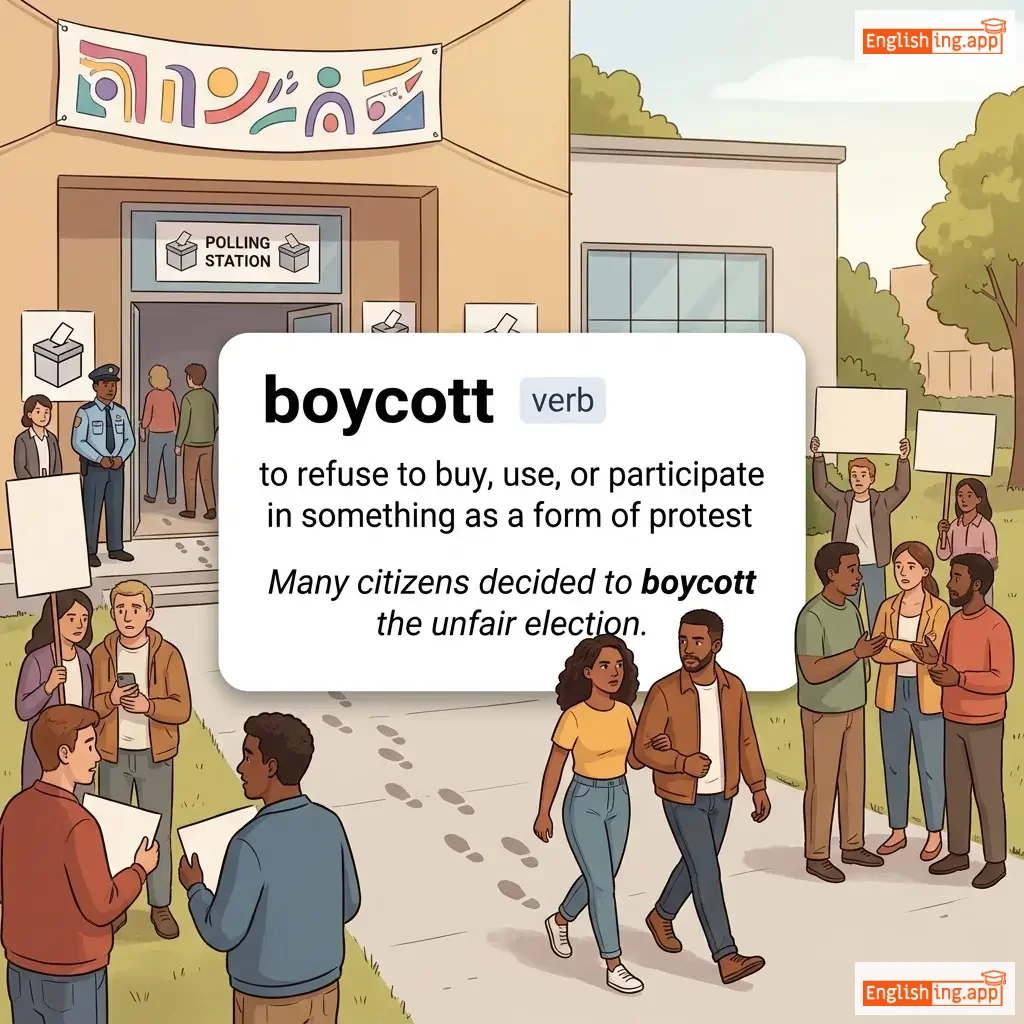
boycott definition card — visual illustration of the meaning
verb
/ˈbɔɪkɒt/
ボイコットする (boikotto suru)

to refuse to buy, use, or participate in something as a form of protest

"Many citizens decided to boycott the unfair election."

"多くの市民が不公正な選挙をボイコットすることを決定しました。" (ooku no shimin ga fukousei na senkyo o boikotto suru koto o kettei shimashita.)
👨‍❤️‍👩

boyfriend

noun
/ˈbɔɪˌfrɛnd/

a man or boy that someone is having a romantic or close relationship with

"She introduced her boyfriend to her parents."

noun
/brɑː/
ブラジャー (burajaa)

a woman's undergarment worn to support and cover the breasts

"She bought a comfortable bra for everyday wear."

"彼女は普段使いのために快適なブラジャーを買った。" (kanojo wa fudanzukai no tame ni kaiteki na burajaa o katta)
noun; verb
/breɪs/
装具;備える (sogu; sonaeru)

a device that supports or strengthens something; to prepare mentally or physically for something difficult

"She braced herself for the strong wind."

"彼女は強い風に備えた。" (kanojo wa tsuyoi kaze ni sonaeta)
noun
/ˈbreɪs.lət/
ブレスレット (buresuretto)

an ornamental band worn around the wrist

"She received a gold bracelet as a birthday gift."

"彼女は誕生日のプレゼントとして金のブレスレットをもらった。" (Kanojo wa tanjōbi no purezento to shite kin no buresuretto o moratta.)
adjective
/ˈbreɪsɪŋ/
爽快な (soukai na)

Invigorating, refreshing, or providing strength and energy.

"The hikers enjoyed the bracing mountain air."

"登山者たちは爽快な山の空気を楽しんだ。" (Tozansha-tachi wa soukai na yama no kuuki o tanoshinda.)
noun/verb
/ˈbrækɪt/
金属ブラケット (kinzoku buraketto)

A support attached to a wall for holding something; also, to group things together.

"The shelf was held up by a strong metal bracket."

"棚は強い金属製のブラケットで支えられていました。" (Tana wa tsuyoi kinzoku-sei no buraketto de sasaerareteimashita.)
adjective
/ˈbrækɪʃ/
塩水混合 (en sui kongou)

Slightly salty, often describing water that is a mix of fresh and seawater.

"The river estuary contained brackish water."

"川の河口には塩水混合の水があった。" (Kawa no kakou ni wa en sui kongou no mizu ga atta.)
noun
/breɪ/
斜面 (shamen)

A hillside or slope, especially in Scotland.

"They climbed up the grassy brae to see the sunset."

"彼らは草に覆われた斜面を登って夕日を見ました。" (Karera wa kusa ni owareta shamen o nobotte yūhi o mimashita.)
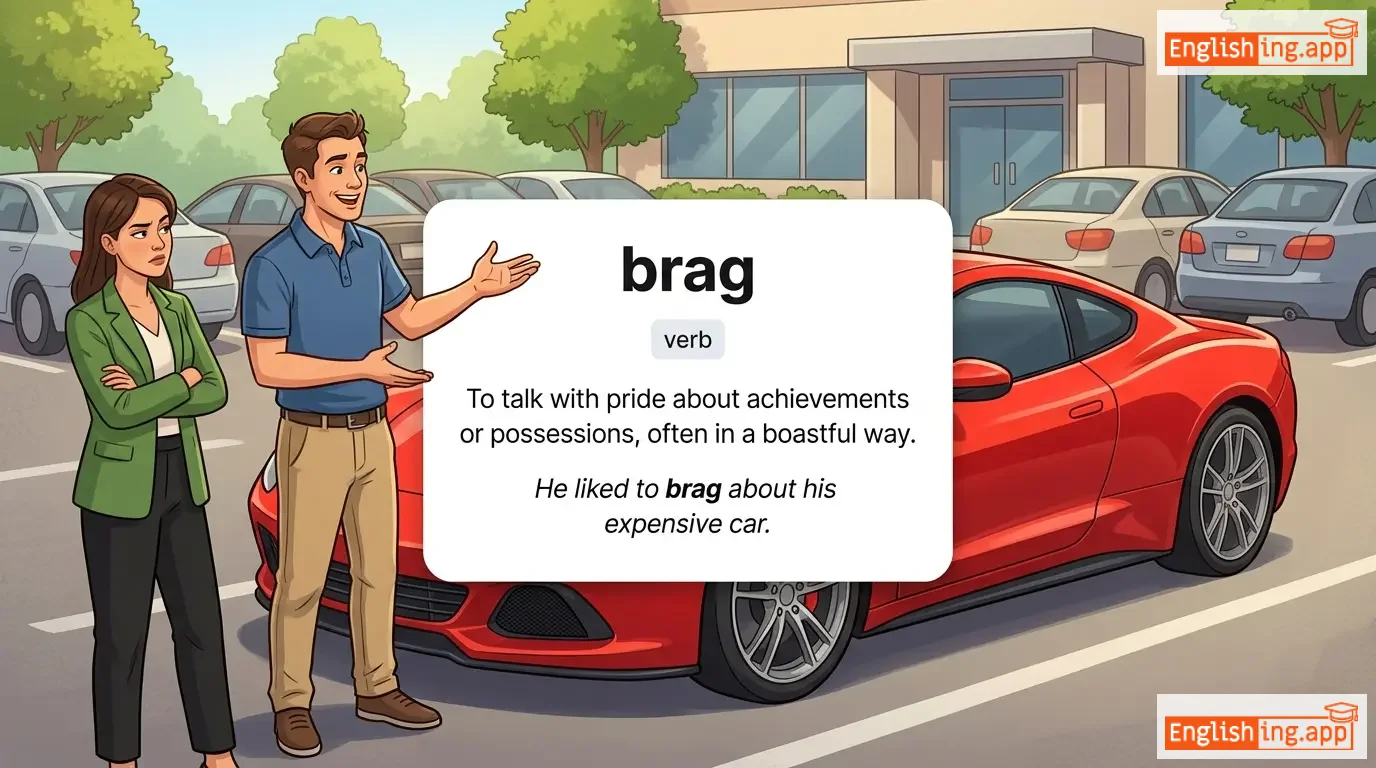
brag definition card — visual illustration of the meaning
😏

brag

verb
/bræɡ/

To talk with pride about achievements or possessions, often in a boastful way.

"He liked to brag about his expensive car."

noun
/ˌbræɡəˈdoʊʃioʊ/
自慢話 (jimanbanashi)

boastful or arrogant behavior; empty boasting

"His endless braggadocio annoyed everyone at the party."

"彼の終わりのない自慢話はパーティーの皆をイライラさせた。" (Kare no owari no nai jimanbanashi wa paatii no mina wo iraira saseta.)
noun
/ˈbræɡərt/
自慢屋 (jiman'ya)

a person who boasts about achievements or possessions

"No one liked him because he was such a braggart."

"誰も彼を好きではなかった、なぜなら彼は大きな自慢屋だったから。" (Dare mo kare o suki de wa nakatta, nazenara kare wa ōkina jimanya datta kara.)
verb
/breɪd/
編み込み (amikomi)

to weave together strands of hair or material

"She braided her hair before going to school."
"彼女は学校に行く前に髪を編みました。" (Kanojo wa gakkou ni iku mae ni kami o amimashita.)
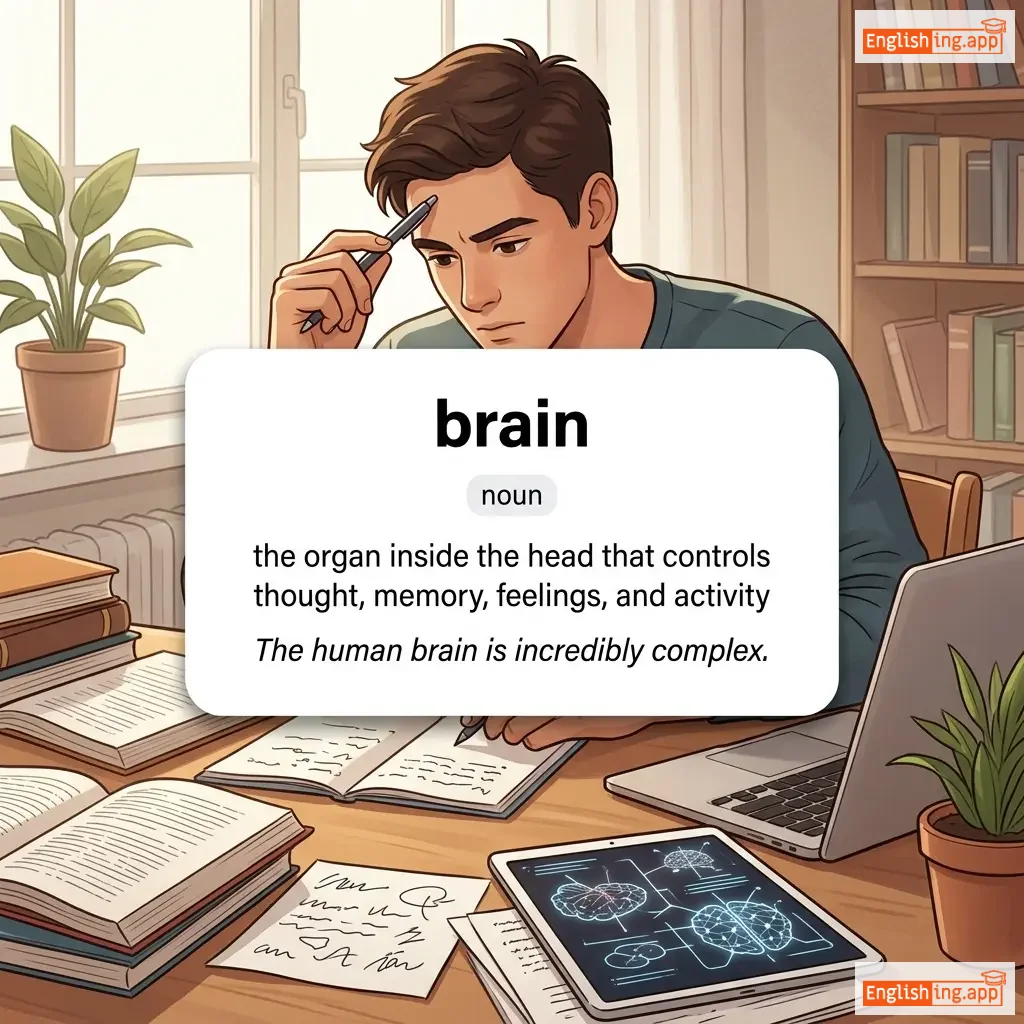
brain definition card — visual illustration of the meaning
noun
/breɪn/
(nō)

the organ inside the head that controls thought, memory, feelings, and activity

"The human brain is incredibly complex."
"人間の脳は非常に複雑です。" (ningen no nō wa hijō ni fukuzatsu desu.)
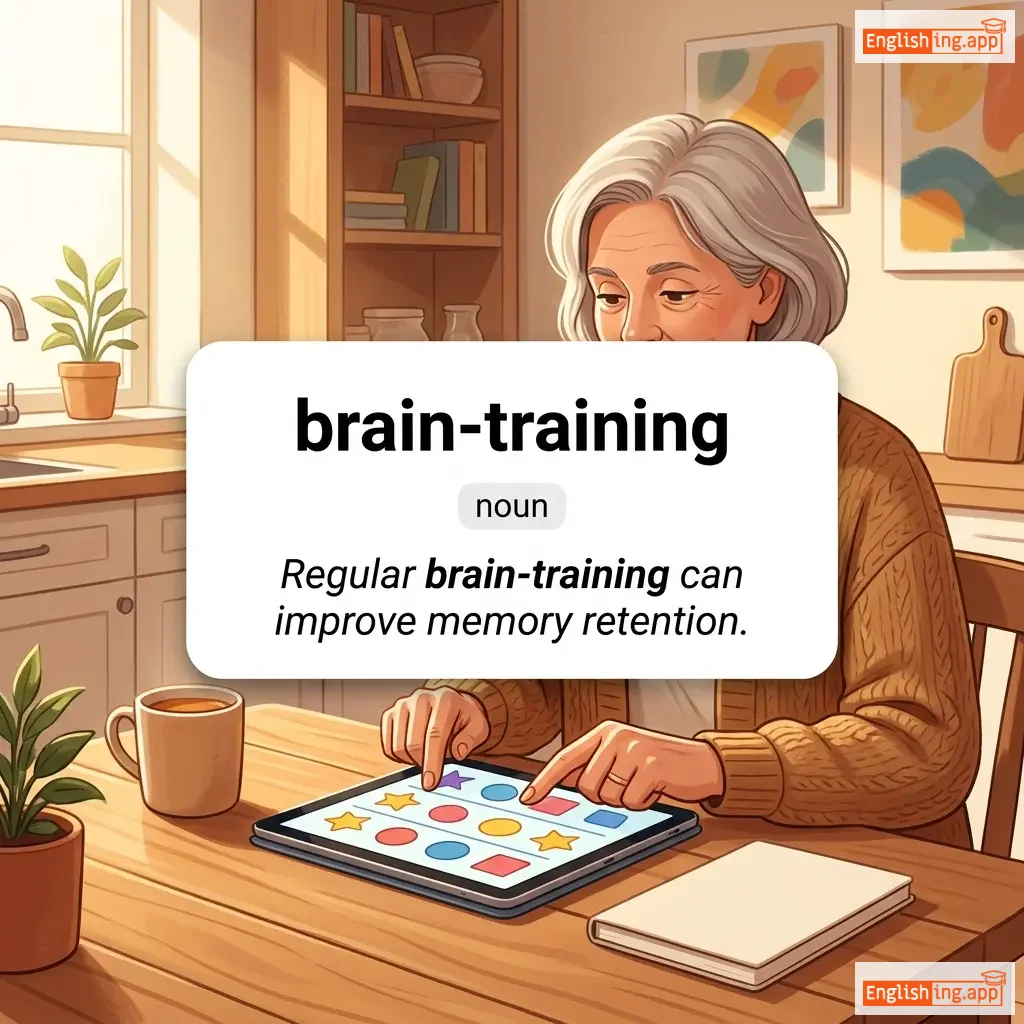
brain-training definition card — visual illustration of the meaning
noun
breɪn ˈtreɪ.nɪŋ
脳のトレーニング (nō no torēningu)

Mental exercises designed to improve cognitive functions, memory retention, and overall brain performance.

"Regular brain-training can improve memory retention."

"定期的な脳トレーニングは記憶力を向上させることができます。" (Teikiteki na nō torēningu wa kioku ryoku o kōjō saseru koto ga dekimasu.)
verb, noun
/ˈbreɪnˌwɒʃ/
洗脳する (senno suru)

to manipulate someone into adopting certain beliefs by repeated pressure or propaganda; the act or process of such manipulation

"The group tried to brainwash new members with constant propaganda."

"その団体は新しいメンバーを洗脳しようとした。" (sono dantai wa atarashii menbaa o senno shiyou to shita)
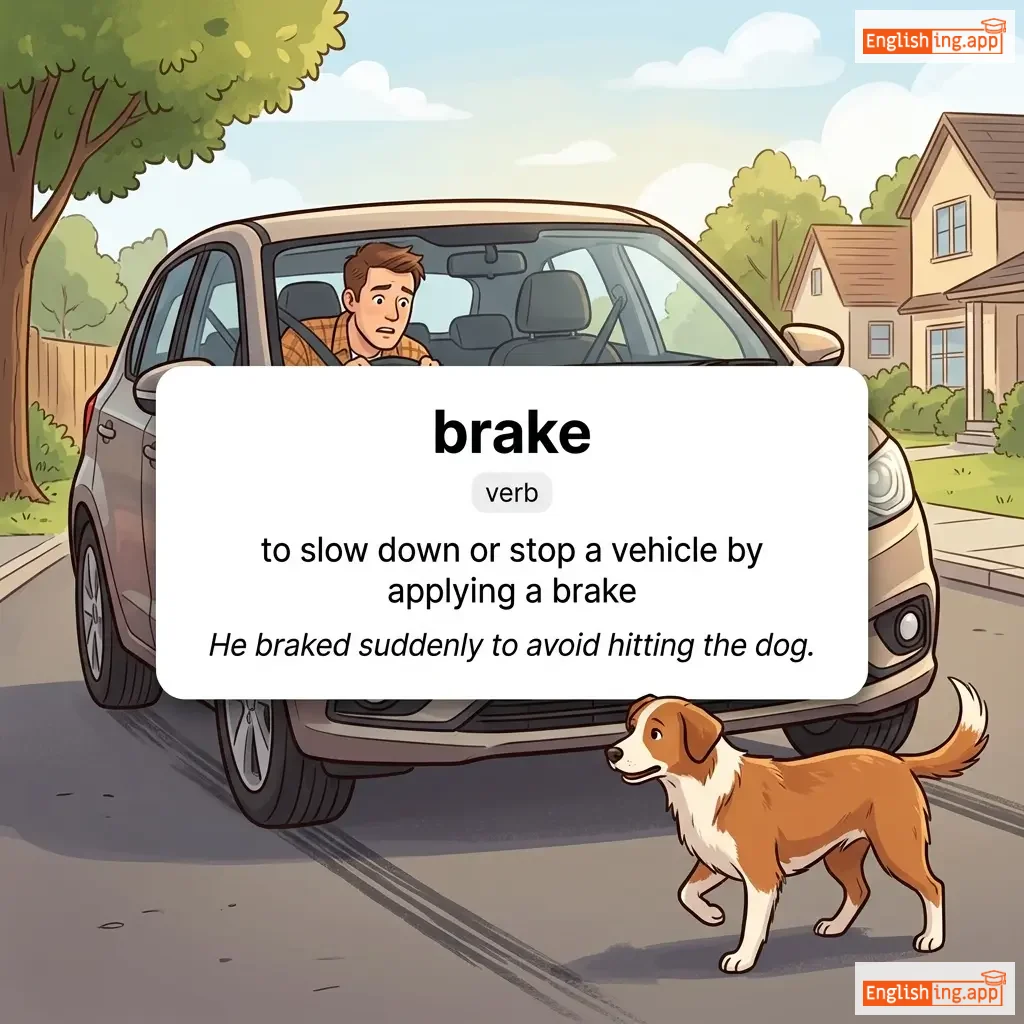
brake definition card — visual illustration of the meaning
🚗

brake

verb
/breɪk/

to slow down or stop a vehicle by applying a brake

"He braked suddenly to avoid hitting the dog."

noun, verb
/bræntʃ/
支店 (shiten)

A part of a tree that grows out from the trunk; a division of an organization or subject.

"The company opened a new branch in Dhaka."
"会社はダッカに新しい支店を開設しました。" (Kaisha wa Dakkā ni atarashī shiten o kaisetsu shimashita.)
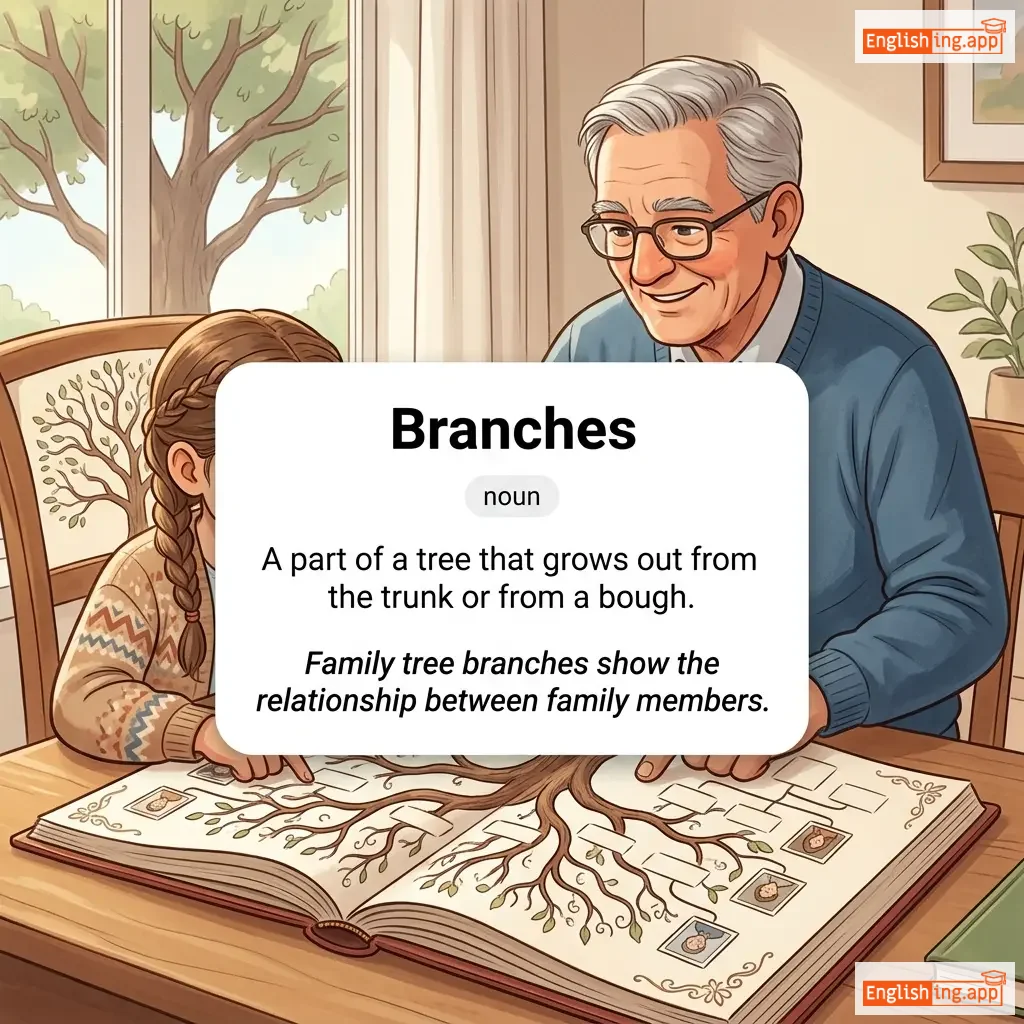
Branches definition card — visual illustration of the meaning
noun
ˈbræntʃɪz
(eda)

A part of a tree that grows out from the trunk or from a bough.

"Family tree branches show the relationship between family members."

"家系図の枝は家族のメンバー間の関係を示します。" (Kakeizu no eda wa kazoku no menbākan no kankei o shimeshimasu.)
noun
/brænd/
ブランド (burando)

a type of product manufactured by a company under a particular name

"Nike is a popular brand of sportswear."

"ナイキは人気のあるスポーツウェアブランドです。" (Naiki wa ninki no aru supōtsuwear burando desu.)
branding definition card — visual illustration of the meaning
noun
/ˈbræn.dɪŋ/
ブランド構築 (burando kōchiku)

The process involved in creating a unique name and image for a product in the consumers' mind, mainly through advertising campaigns with a consistent theme.

"Strong branding helps build customer trust."

"強力なブランド構築は顧客の信頼を築くのに役立ちます。" (Kyōryoku na burando kōchiku wa kokyaku no shinrai o kizuku no ni yakudachimasu.)
verb
/ˈbrændɪʃ/
振る (furu)

to wave or flourish something, especially a weapon, in a threatening or showy way

"He brandished a sword to scare off the intruders."

"彼は侵入者を怖がらせるために剣を振った。" (Kare wa shin'nyūsha o kowagaraseru tame ni ken o futta.)
adjective
/bræʃ/
図々しい (zuzushii)

self-assertive in a rude, noisy, or overconfident way

"His brash comments offended many people at the meeting."

"彼の図々しいコメントは会議で多くの人々を怒らせました。" (Kare no zuzushii komentou wa kaigi de ooku no hitobito wo okorase mashita.)
noun
/brəˈzɪər/
ブラジャー (burajaa)

a woman's undergarment designed to support the breasts

"She bought a comfortable brassiere for daily wear."

"彼女は日常的に着るために快適なブラジャーを買いました。" (kanojo wa nichijō-teki ni kiru tame ni kaiteki na burajaa o kaimashita)
adjective
/ˈbræsi/
派手な (hade na)

loud and showy in a way that lacks good taste; resembling brass in color or sound

"She wore a brassy necklace that caught everyone’s attention."

"彼女は目立つネックレスをしていて、みんなの注目を集めていた。" (Kanojo wa medatsu nekkuresu o shiteite, minna no chūmoku o atsumete ita.)
adjective
/ˈbrætɪʃ/
わがまま (wagamama)

acting like a spoiled child; behaving in an annoying, self-centered way

"The brattish boy threw a tantrum when he didn’t get his toy."

"わがままな男の子は、おもちゃがもらえなかったときに駄々をこねました。" (Wagamama na otokonoko wa, omocha ga moraenakatta toki ni dada o konemashita.)
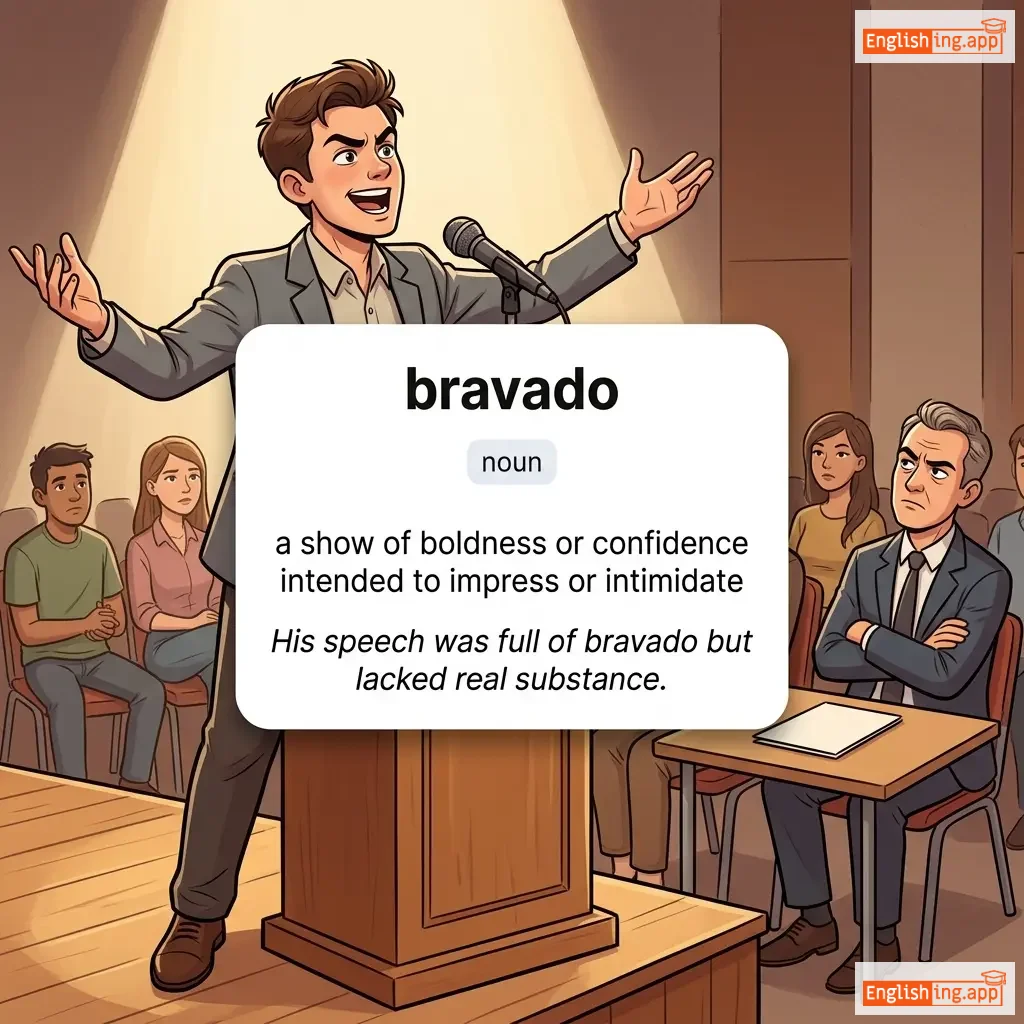
bravado definition card — visual illustration of the meaning
noun
/brəˈvɑːdoʊ/

a show of boldness or confidence intended to impress or intimidate

"His speech was full of bravado but lacked real substance."

adjective
/breɪv/
勇敢な (yūkan na)

showing courage in the face of danger or difficulty

"The brave firefighter rushed into the burning building."

"勇敢な消防士が燃える建物に飛び込んだ。" (Yūkan na shōbōshi ga moeru tatemono ni tobikonda.)
adverb
/ˈbreɪv.li/
勇敢に (yūkan ni)

in a way that shows courage and determination

"The firefighter bravely entered the burning building."
"消防士は勇敢に燃えている建物に入った。" (Shōbōshi wa yūkan ni moete iru tatemono ni haitta.)
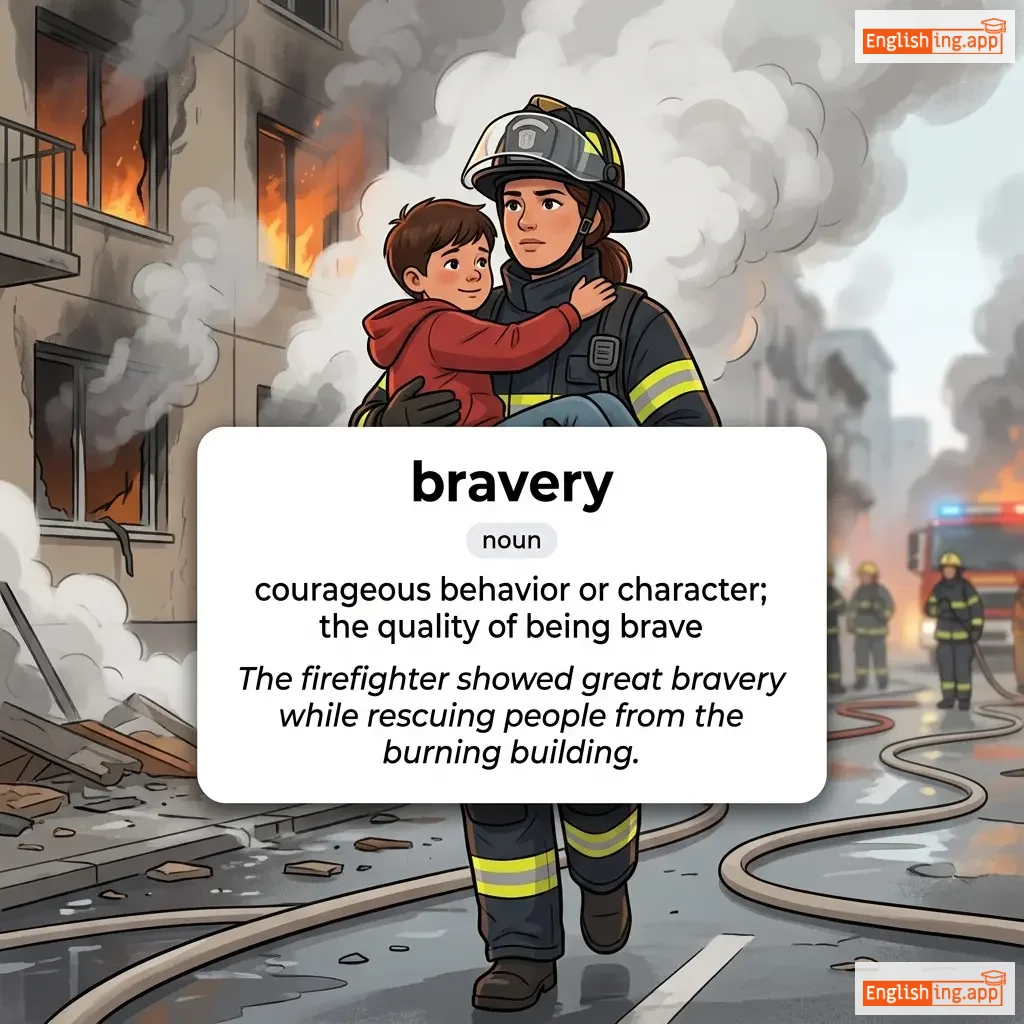
bravery definition card — visual illustration of the meaning
noun
/ˈbreɪ.vər.i/
勇気 (yūki)

courageous behavior or character; the quality of being brave

"The firefighter showed great bravery while rescuing people from the burning building."

"消防士は燃えている建物から人々を救出する際に大きな勇気を示しました。" (Shōbōshi wa moete iru tatemono kara hitobito o kyūshutsu suru sai ni ōkina yūki o shimeshimasita.)
interjection
/ˈbrɑː.voʊ/
ブラボー (burabō)

used to express approval, admiration, or praise

"The audience shouted 'Bravo!' after the stunning performance."

"観客は素晴らしいパフォーマンスの後で「ブラボー!」と叫びました。" (Kankyaku wa subarashī pafōmansu no ato de 'burabō!' to sakebimashita.)
noun
/brəˈvjʊrə/

a display of great skill and brilliance, especially in music or performance

"The pianist delivered a bravura performance that left the audience spellbound."

noun
/brɔːl/
乱闘 (rantou)

a noisy fight in a public place

"A brawl broke out outside the bar late at night."

"夜遅くにバーの外で乱闘が起こった。" (Yoru osoku ni baa no soto de rantou ga okotta.)
noun
/brɔːn/
体力 (tairyoku)

physical strength in contrast to intelligence

"He used his brawn to lift the heavy box."

"彼は重い箱を持ち上げるために体力を使いました。" (Kare wa omoi hako o mochiageru tame ni tairyoku o tsukaimashita.)
adjective
/ˈbrɔːni/
筋肉質な (kinnikutsubu na)

Physically strong and muscular.

"The brawny man lifted the heavy box with ease."

"その筋肉質の男性は重い箱を軽々と持ち上げた。" (Sono kinnikutsubu na dansei wa omoi hako wo karukaru to mochiageta.)
verb
/breɪ/
鳴き声 (nakigoe)

To make a loud, harsh sound like a donkey.

"The donkey began to bray loudly in the field."

"ロバは畑で大声で鳴き始めました。" (Roba wa hatake de ōgoe de nakihajimemashita.)
verb
/breɪz/
ブレイズ (bureizu)

To join two pieces of metal by heating and melting a filler metal into the joint.

"The mechanic brazed the broken pipe to fix the leak."

"メカニックは壊れたパイプを溶接して漏れを修理しました。" (Mekanikku wa kowareta paipu o yōsetsu shite more o shūri shimashita.)
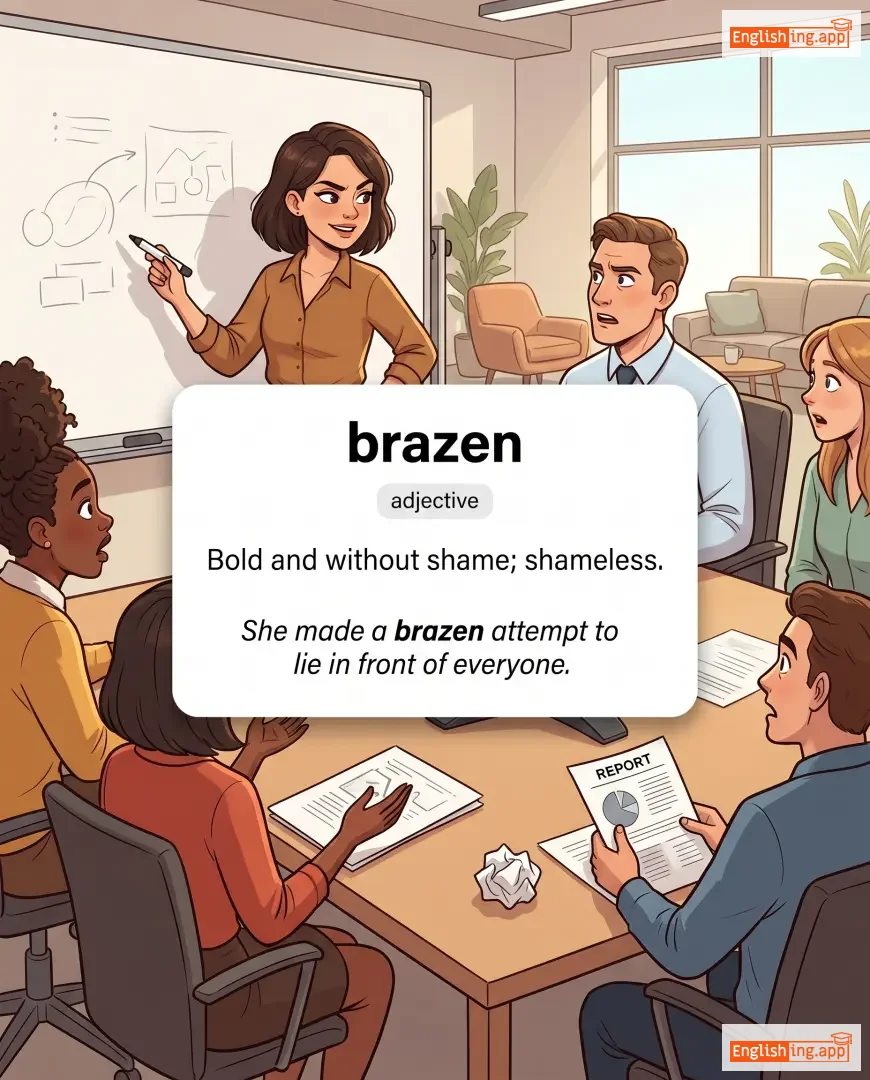
brazen definition card — visual illustration of the meaning
adjective
/ˈbreɪzən/

Bold and without shame; shameless.

"She made a brazen attempt to lie in front of everyone."

noun
/ˈbreɪziər/
(ro)

A container for holding burning coal or charcoal, used for heating or cooking.

"The street vendor cooked chestnuts on a brazier."

"ストリートベンダーはブレイジアで栗を焼いた。" (Sutorīto bendorā wa bureijia de kuri o yaita.)
breach definition card — visual illustration of the meaning
noun, verb
/briːtʃ/
違反 (ihan)

An act of breaking or failing to observe a law, agreement, or code of conduct; to break through.

"The company was fined for a breach of contract."

"その会社は契約違反で罰金を科せられました。" (Sono kaisha wa keiyaku ihan de bakkin wo kaseraremashita.)
🍞

Bread

noun
/brɛd/

A type of food made from flour, water, and yeast, mixed and baked.

"She bought a loaf of bread from the bakery."

noun
/brɛdθ/
(fuku)

The distance or measurement from side to side; width; a wide range.

"The breadth of his knowledge impressed everyone."
"彼の知識の幅は皆に感銘を与えました。" (Kare no chishiki no fuku wa mina ni kanmei o ataemashita.)
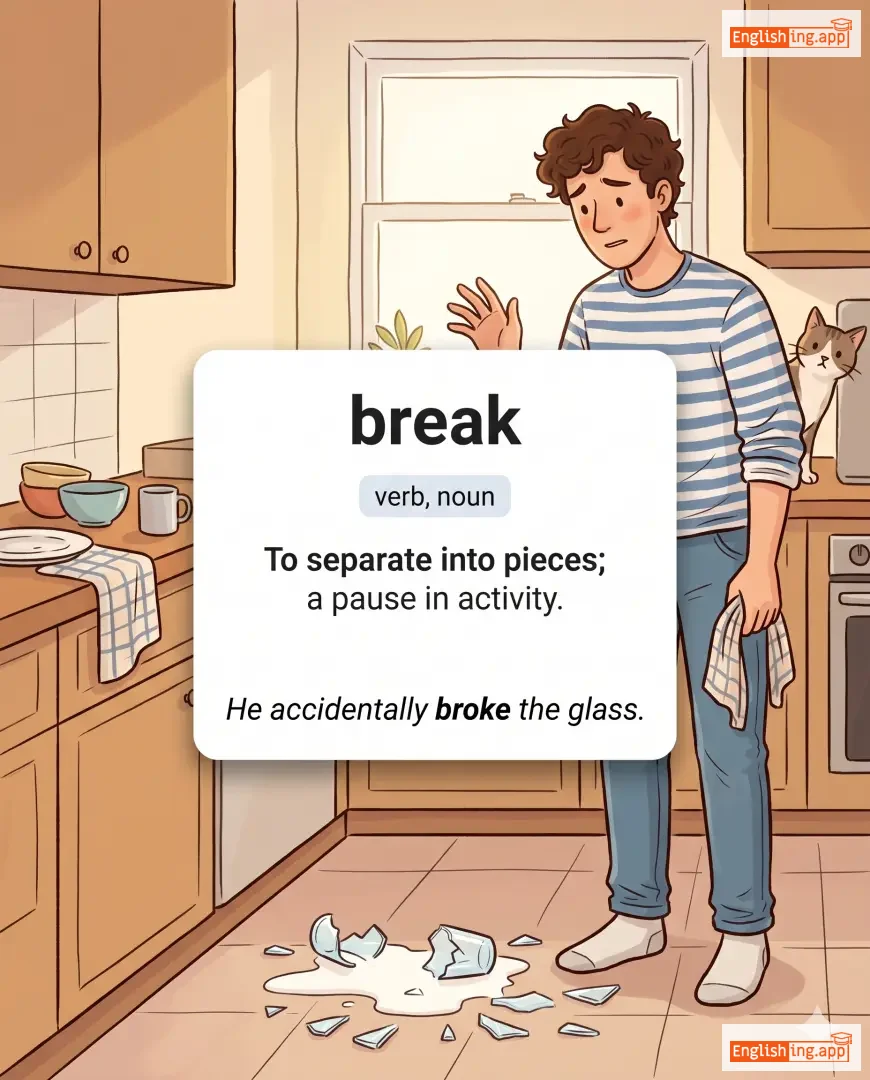
break definition card — visual illustration of the meaning
verb, noun
/breɪk/
壊す / 休憩 (kowasu / kyūkei)

To separate into pieces; a pause in activity.

"He accidentally broke the glass."

"彼はうっかりガラスを割ってしまった。" (Kare wa ukkari garasu o watte shimatta.)
noun
/ˈbrɛkdaʊn/
故障 (koshou)

a failure or collapse of a system or machinery

"The car had a breakdown on the highway."

"車は高速道路で故障しました。" (Kuruma wa kousokudouro de koshou shimashita.)
noun
/ˈbreɪkər/
ブレーカー(何かを壊す人や物、海岸近くで泡に壊れる大きな波、電気回路を中断する装置) (bureikā)

A person or thing that breaks something; a large sea wave that breaks into foam near the shore; a device that interrupts an electric circuit.

"The breaker tripped during the storm, cutting off electricity."

"嵐の間にブレーカーがトリップし、電気が切断されました。" (Arashi no aida ni bureikā ga torippu shi, denki ga setsudan saremashita.)
noun
/ˈbrɛkfəst/

The first meal of the day, usually eaten in the morning.

"We had eggs and toast for breakfast."

breakthrough definition card — visual illustration of the meaning
noun
/ˈbrɛkθruː/

a significant or sudden advance or discovery

"The scientist made a breakthrough in cancer research."

noun
/brɛst/
胸部 (kyoubu)

Either of the two soft, rounded parts on a woman’s chest that produce milk after childbirth.

"The baby was fed from his mother's breast."

"赤ちゃんは母親の胸部から授乳されました。" (Akachan wa hahaoya no kyōbu kara junyū saremashita.)
noun
/brɛθ/
呼吸 (kokyū)

The air taken into or expelled from the lungs during breathing.

"He took a deep breath before speaking."

"彼は話す前に深く息を吸いました。" (Kare wa hanasu mae ni fukaku iki o suimashita.)
verb
/briːð/
呼吸 (kokyuu)

To take air into the lungs and send it out again.

"It was hard to breathe in the smoky room."

"煙の部屋で呼吸するのは難しかった。" (Kemuri no heya de kokyuu suru no wa muzukashikatta.)