語彙集

英単語辞書 | 単語の意味、定義、例文

noun
/hɪp/
腰部 (yōbu)

The part of the body on either side of the pelvis, or informal: trendy and fashionable.

"She put her hands on her hips."

"彼女は手を腰に置きました。" (kanojo wa te o yōbu ni okimashita.)
noun
/ˌhɪp.əˈpɒt.ə.məs/
カバ (kaba)

a large, mostly herbivorous mammal that lives in and around water in Africa

"The hippopotamus spends most of its day in the water."

"カバは一日のほとんどを水の中で過ごします。" (Kaba wa ichinichi no hotondo o mizu no naka de sugoshimasu)
hire definition card — visual illustration of the meaning
verb
/ˈhaɪə(r)/
雇う (katsu)

to employ someone for a job or task

"The company decided to hire more staff this year."

"その会社は今年、より多くのスタッフを雇うことを決定しました。" (Sono kaisha wa kotoshi, yori ōku no sutaffu o yatō koto o kettei shimashita.)
noun
/ˈhaɪərlɪŋ/
傭兵 (yōhei)

A person who works for payment only, often with little loyalty or principle.

"The mercenary was dismissed as just a hireling with no real loyalty."

"傭兵は、忠誠心のないただのハイヤーリングとして解雇された。" (Yōhei wa, chūseishin no nai tada no hayāringu toshite kaiko sareta.)
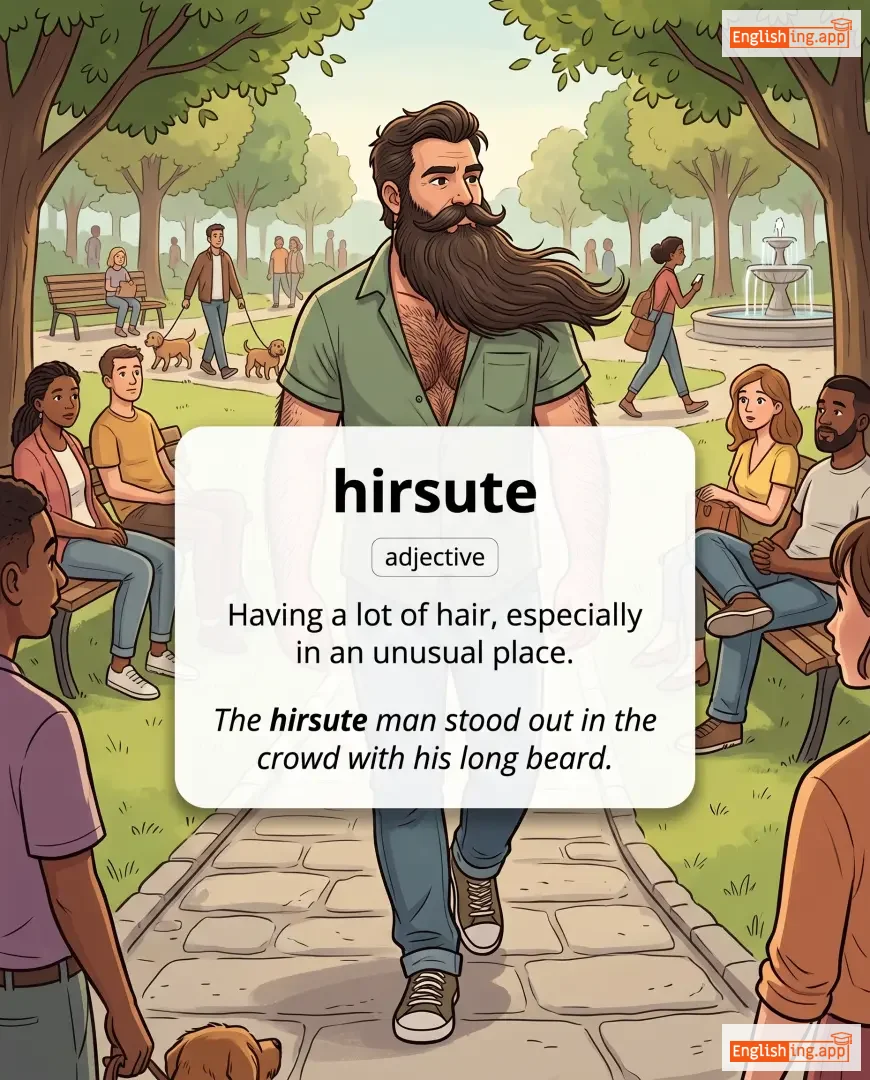
hirsute definition card — visual illustration of the meaning
adjective
/ˈhɜːrsuːt/

Having a lot of hair, especially in an unusual place.

"The hirsute man stood out in the crowd with his long beard."

pronoun
/hɪz/
彼の (kare no)

belonging to or associated with a male person previously mentioned

"This is his book on the table."

"これは彼の本です、テーブルの上にあります。" (Kore wa kare no hon desu, tēburu no ue ni arimasu.)
adjective
/hɪˈspænɪk/
ヒスパニック / スペイン語を話す (hispanikku / supeingo o hanasu)

relating to Spain or Spanish-speaking countries, especially Latin America.

"She studies Hispanic culture and language."

"彼女はヒスパニック文化と言語を学んでいます。" (Kanojo wa hispanikku bunka to gengo o manandeimasu.)
noun
/hɪˈstɔːriən/
歴史学者 (rekishigakusha)

a person who studies or writes about history

"The historian gave a lecture on ancient civilizations."

"歴史学者は古代文明について講義を行いました。" (Rekishigakusha wa kodai bunmei ni tsuite kōgi o okonaimashita.)
historic definition card — visual illustration of the meaning
adjective
/hɪˈstɔːrɪk/
歴史的 (rekishiteki)

Famous or important in history; likely to be remembered in history.

"The historic agreement changed the course of the nation."

"その歴史的な合意は国の進路を変えました。" (Sono rekishiteki na gōi wa kuni no shinro o kaemashita.)
adjective
/hɪˈstɔːrɪkəl/
歴史的 (rekishiteki)

Related to history or past events.

"The museum has a large collection of historical documents."

"博物館には多くの歴史的な文書が収蔵されています。" (Hakubutsukan ni wa ooku no rekishiteki na bunsho ga shūzō sareteimasu.)
adverb
/hɪˈstɒrɪkli/
歴史的に (rekishiteki ni)

in a way that relates to history or past events

"Historically, this city was a major trade center."

"歴史的に、この都市は主要な貿易の中心地でした。" (Rekishiteki ni, kono toshi wa shuyou na boueki no chuushinchi deshita.)
History definition card — visual illustration of the meaning
noun
/ˈhɪstəri/
歴史 (rekishi)

the study of past events

"She is studying the history of medieval Europe."
"彼女は中世ヨーロッパの歴史を学んでいます。" (Kanojo wa chuusei Yooroppa no rekishi o manandeimasu.)
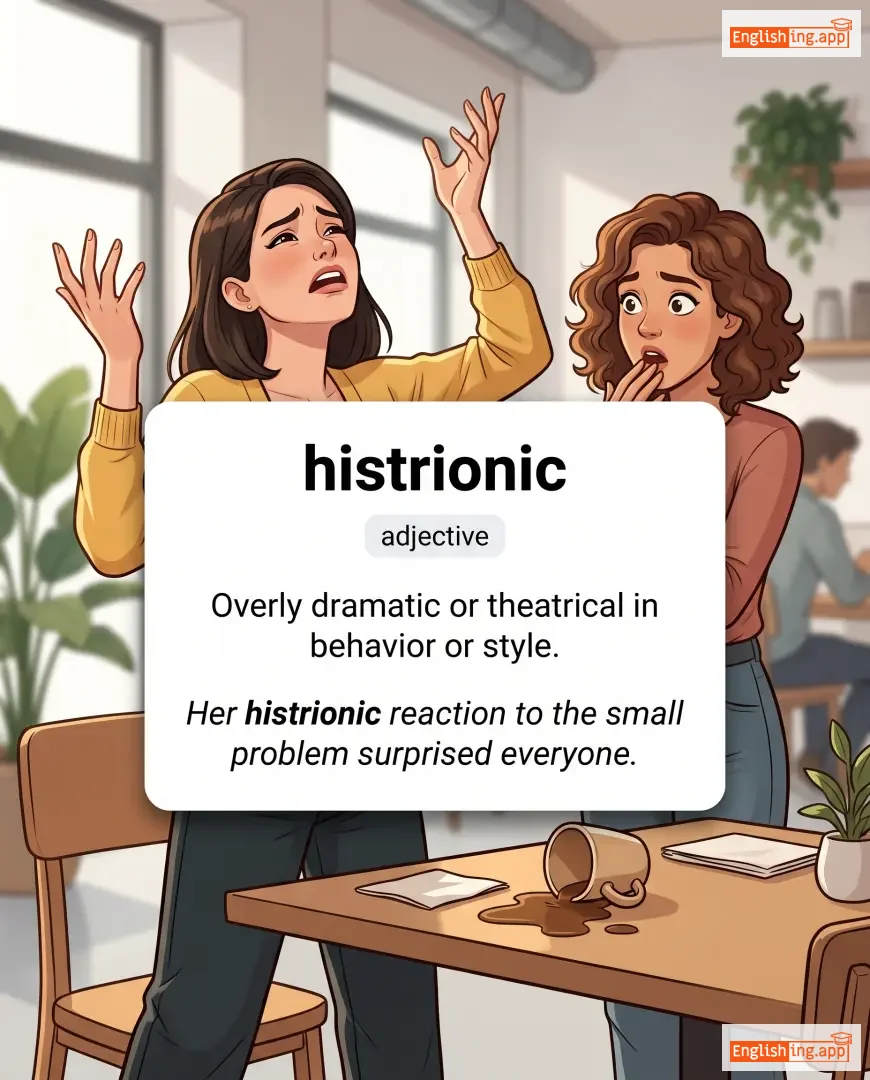
histrionic definition card — visual illustration of the meaning
adjective
/ˌhɪstriˈɒnɪk/

Overly dramatic or theatrical in behavior or style.

"Her histrionic reaction to the small problem surprised everyone."

verb
/hɪt/
打つ (utsu)

to strike someone or something with force

"He accidentally hit the ball into the window."

"彼は偶然ボールを窓に打ちました。" (Kare wa guuzen booru wo mado ni uchimashita.)
noun
/haɪv/
ハイブ (haibu)

A structure where bees live and produce honey; also a place full of busy activity.

"The office was a hive of activity before the deadline."

"締め切り前のオフィスは活動のハイブのようだった。" (Shimekiri mae no ofisu wa katsudō no haibu no yō datta.)
verb
/hɔːrd/
蓄える (takuwaeru)

to accumulate and hide away a large supply of something, often secretly

"During the crisis, many people began to hoard food and water."

"危機の間、多くの人々が食べ物と水を蓄え始めました。" (Kiki no aida, ooku no hitobito ga tabemono to mizu o takuwae hajimemashita.)
adjective
/hɔːrs/
しゃがれた (shagareta)

having a rough, harsh, or weak voice, often due to illness or shouting

"After shouting all day at the rally, his voice was hoarse."

"集会で一日中叫んだ後、彼の声はかすれていた。" (Shūkai de ichinichijū sakenda ato, kare no koe wa kasureteita.)
adjective
/ˈhɔːri/
灰色の, 古い (haiiro no, furui)

gray or white with age; very old and respected

"The hoary oak tree stood as a witness to centuries of history."

"古いオークの木は何世代にもわたる歴史の証人として立っていた。" (Furui ōku no ki wa nan sedai ni mo wataru rekishi no shōnin to shite tatte ita.)
noun
/hoʊks/
騙し、虚偽 (damashi, kyogi)

a trick or false story meant to deceive people

"The news about aliens landing turned out to be a hoax."

"エイリアンが着陸するというニュースは、実際には詐欺でした。" (Eirian ga chakuriku suru to iu nyuusu wa, jissai ni wa sagi deshita.)
verb
/ˈhɑːbəl/
よろけて歩く (yorokete aruku)

to walk awkwardly with difficulty, usually due to injury

"He hobbled across the room after twisting his ankle."

"彼は足首をひねった後、部屋をよろよろと歩いた。" (Kare wa ashi kubi o hinetta ato, heya o yorokete aruita.)
noun
/ˈhɑː.bi/
趣味; お楽しみ; 遊び (shumi, o-tanoshimi, asobi)

an activity done regularly in one's leisure time for pleasure; a pastime or recreation

"Photography became her favorite hobby after she received a camera for her birthday."

"写真は彼女のお気に入りの趣味になりました、彼女の誕生日にカメラをもらった後で。" (Shashin wa kanojo no okiniiri no shumi ni narimashita, kanojo no tanjōbi ni kamera o moratta ato de.)
noun
/ˈhɒki/
ホッケー (hokkei)

a sport played with sticks and a ball or puck on ice or a field

"He plays hockey for the national team."

"彼は代表チームのためにホッケーをします。" (Kare wa daihyō chīmu no tame ni hokkei o shimasu.)
noun
/ˈhɒdʒ.pɒdʒ/
寄せ集め (yoseatsume)

A confusing mixture of different things; a jumble.

"The essay was a hodgepodge of unrelated ideas."

"そのエッセイは関係のないアイデアの寄せ集めだった。" (Sono essei wa kankei no nai aidea no yoseatsume datta.)
noun
/hoʊ/
クワ (kuwa)

a gardening tool with a thin metal blade used for breaking up soil and removing weeds

"The farmer used a hoe to remove weeds from his vegetable garden."

"農夫は野菜畑から雑草を取り除くためにクワを使いました。" (Noufu wa yasai hatake kara zassou o torinozoku tame ni kuwa o tsukaimashita.)
noun
/hɔːɡ plʌm/
ホッグプラム (Hog puramu)

tropical fruit with yellow skin and sour taste

"Hog plums are often used to make pickles and chutneys."

"ホッグプラムはよくピクルスやチャツネを作るために使われます。" (Hog puramu wa yoku pikurusu ya chatune o tsukuru tame ni tsukawaremasu.)
noun
/ˈhɒɡz.hɛd/
大樽 (dai-taru)

A large cask or barrel, traditionally used for storing liquids like wine or beer.

"The cellar was filled with hogsheads of ale."

"地下室はビールの大樽でいっぱいだった。" (Chikashitsu wa biiru no dai-taru de ippai datta.)
hold definition card — visual illustration of the meaning
verb
/hoʊld/
持つ (motsu)

to grasp, carry, or keep in position; to maintain

"Please hold the door open for me."

"私のためにドアを開けたままにしておいてください。" (Watashi no tame ni doa o aketa mama ni shite oite kudasai.)
noun
/hoʊl/
(ana)

an opening, gap, or hollow place in a solid surface

"There is a hole in my shirt."

"シャツに穴があります。" (Shatsu ni ana ga arimasu.)
noun
/ˈhɒlɪdeɪ/
休暇 (kyūka)

A day of celebration or rest when most people do not work.

"We are planning a trip during the summer holiday."
"私たちは夏休みの間に旅行を計画しています。" (watashitachi wa natsu yasumi no aida ni ryokō o keikaku shiteimasu.)
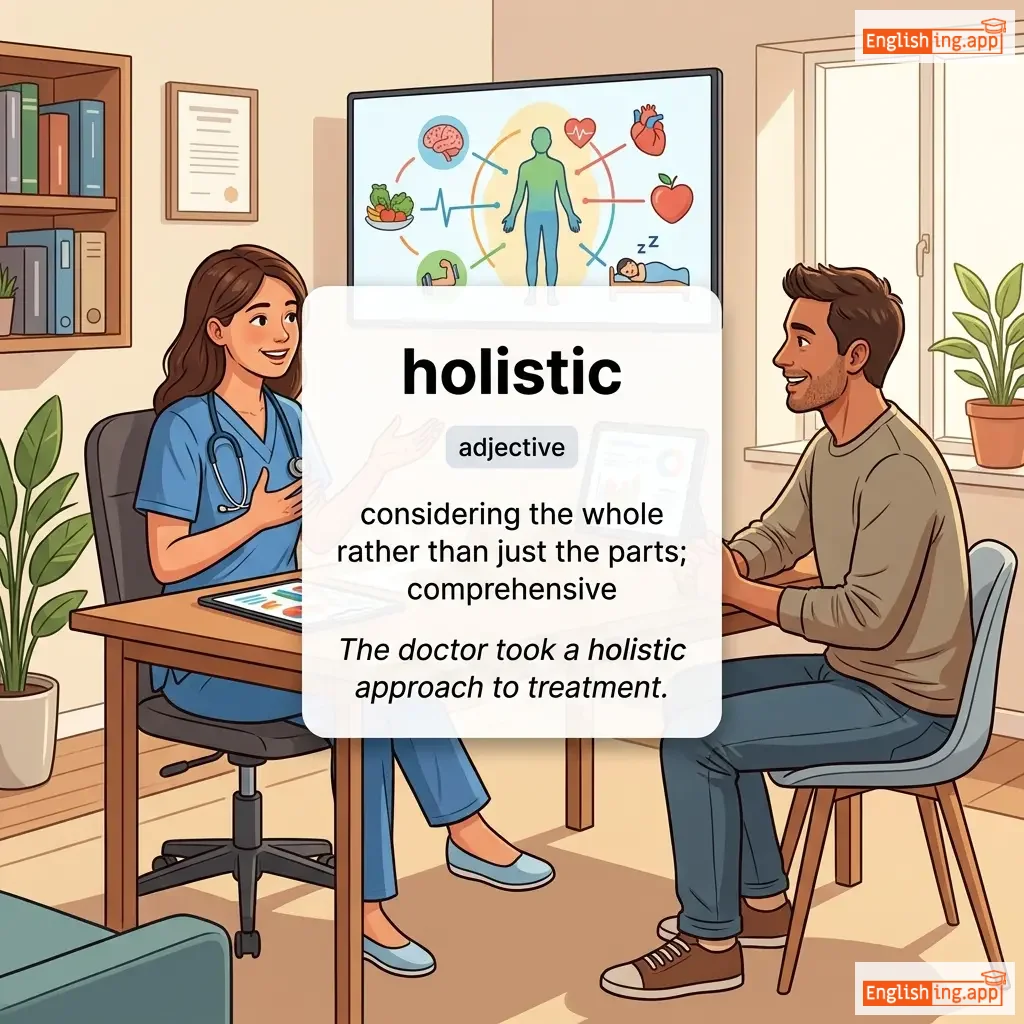
holistic definition card — visual illustration of the meaning
adjective
/hoʊˈlɪstɪk/
全体的な (zentai-teki na)

considering the whole rather than just the parts; comprehensive

"The doctor took a holistic approach to treatment."

"医者は治療に対して全体的なアプローチを採用しました。" (Isha wa chiryo ni taishite zentai-teki na apurōchi o saiyō shimashita.)
adjective
/ˈhɑlːoʊ/
空洞; 中身がない; (kudou; nakami ga nai;)

having an empty space inside; lacking substance or meaning; insincere

"The hollow tree trunk provided shelter for small animals."

"空洞の木の幹は小さな動物に避難場所を提供しました。" (Kudou no ki no mi wa chiisana doubutsu ni hinan basho o teikyō shimashita.)
noun
/ˈhɒl.ə.kɔːst/
ホロコースト (horokōsuto)

A large-scale destruction, especially by fire; historically, the genocide of Jews during World War II.

"Millions of people perished during the Holocaust."

"ホロコースト中に何百万もの人々が命を落としました。" (Horokōsuto-chū ni nanbyakuman mo no hitobito ga inochi o otoshimashita.)
noun
/ˈhoʊl.stər/
ホルスター (horusutā)

A holder or case for carrying a gun, typically worn on a belt or shoulder.

"The sheriff kept his revolver in a leather holster."

"保安官は自分のリボルバーを革製のホルスターに入れておいた。" (Hoankan wa jibun no riborubā o kawa-sei no horusutā ni irete oita.)
adjective
/ˈhoʊli/
聖なる (seinaru)

Dedicated to God or a religious purpose; sacred.

"This temple is considered a holy place."

"この寺院は聖なる場所と見なされています。" (Kono jiin wa seinaru basho to minasa reteimasu.)
noun
/ˈhɒm.ɪdʒ/ or /ˈɑː.mɑːʒ/
オマージュ (omāju)

Special honor, respect, or tribute shown publicly.

"The statue was built as an homage to the national hero."
"その像は国民的英雄へのオマージュとして建てられました。" (Sono zō wa kokumin-teki eiyū e no omāju toshite tateraremashita.)
noun
/hoʊm/
(ie)

the place where one lives, especially with family; a residence

"She finally returned home after a long journey."

"彼女は長い旅の後、やっと家に帰りました。" (Kanojo wa nagai tabi no ato, yatto ie ni kaerimashita.)
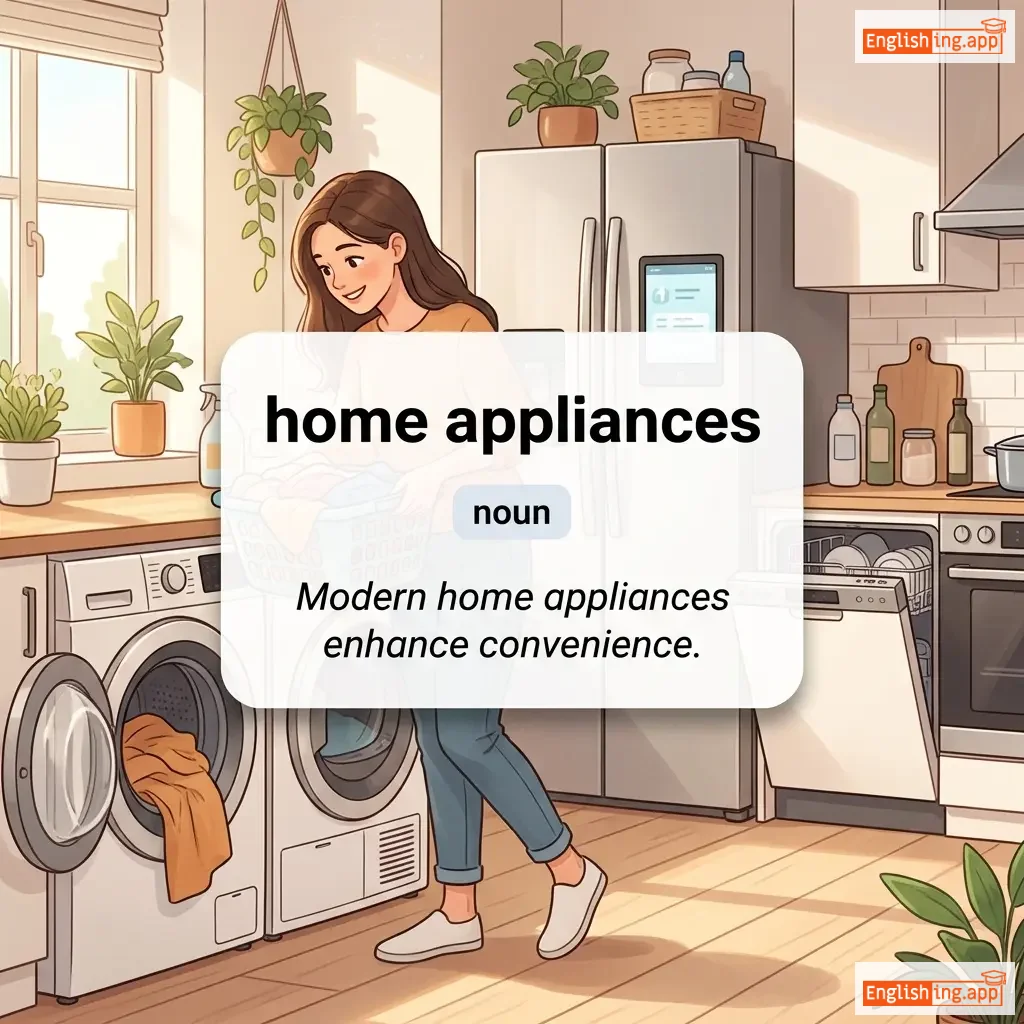
home appliances definition card — visual illustration of the meaning
noun
hoʊm əˈplaɪ.ənsɪz
家電製品 (kaden seihin)

Electrical devices and machines used in households for daily tasks and convenience.

"Modern home appliances enhance convenience."

"最新の家電製品は便利さを高めます。" (Saishin no kaden seihin wa benri-sa o takamemasu.)
noun
/hoʊm ˈdɪstrɪkt/
出身地区 (shusshin chiku)

the district where a person was born or originally comes from

"He returned to his home district after many years abroad."

"彼は長年の海外生活の後、出身地区に戻った。" (kare wa naganen no kaigai seikatsu no ato shusshin chiku ni modotta)
noun
/ˈhoʊmlænd/
故郷 (furusato)

a person's native country or region

"She returned to her homeland after ten years abroad."

"彼女は10年間海外に住んだ後、故郷に帰国した。" (Kanojo wa 10 nenkan kaigai ni sunda ato, furusato ni kikoku shita.)
adjective
/ˈhoʊmləs/
ホームレス (hōmuresu)

Without a home, and therefore typically living on the streets.

"The organization helps homeless people find shelter."

"その組織はホームレスの人々が避難所を見つけるのを助けています。" (Sono soshiki wa hōmuresu no hitobito ga hinanjo o mitsukeru no o tasuketeimasu.)
adjective
/ˈhoʊmli/
素朴 (soboku)

Plain or unattractive in appearance; simple and comfortable in style or character.

"Despite being homely, the cottage felt warm and welcoming."

"素朴な見た目にもかかわらず、小屋は温かく居心地が良いと感じました。" (Soboku na mitame ni mo kakawarazu, koya wa atatakai ku igokochi ga yoi to kanjimashita.)
noun
/ˌhoʊmiˈɑːpəθi/
ホメオパシー (homeopathy)

a system of alternative medicine based on treating diseases with highly diluted substances

"He believes in homeopathy for treating common colds."
"彼は風邪を治すためにホメオパシーを信じています。" (Kare wa kaze o naosu tame ni homeopathy o shinjiteimasu.)
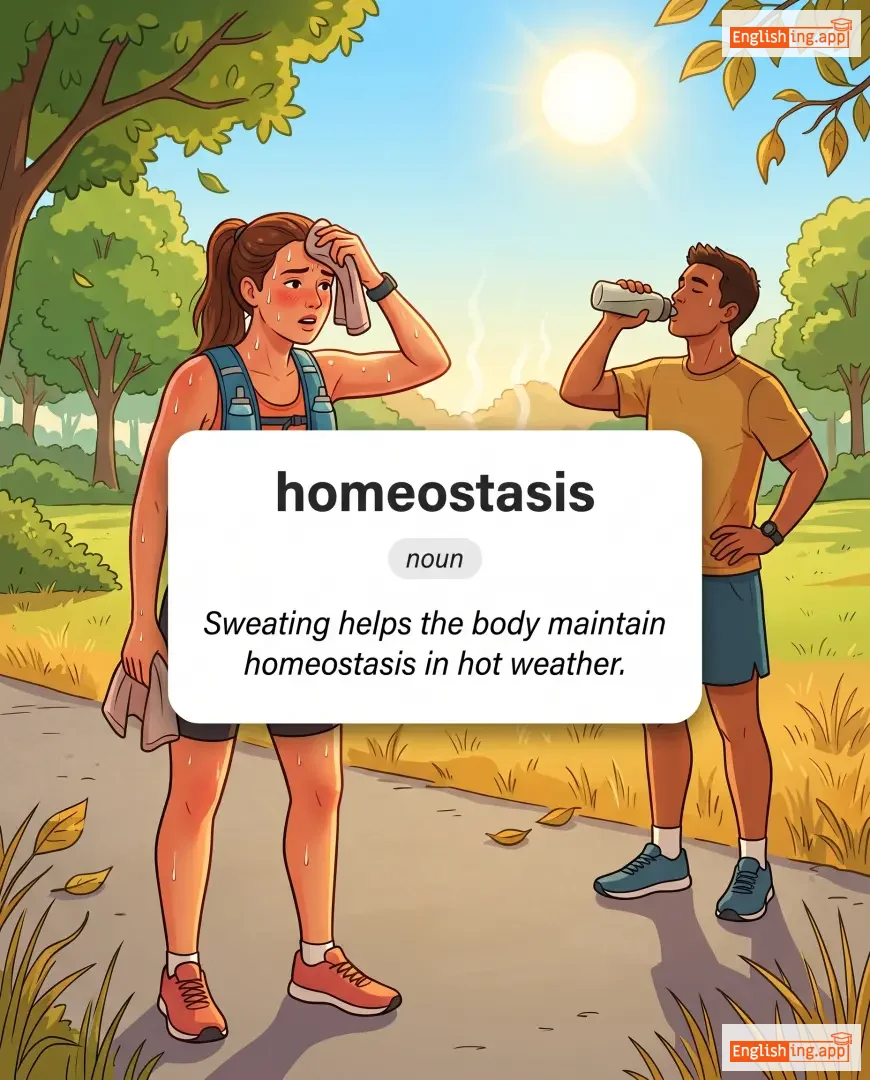
homeostasis definition card — visual illustration of the meaning
noun
/ˌhoʊmi.oʊˈsteɪsɪs/
恒常性 (kōjōsei)

The ability of a living system or organism to maintain internal stability despite changes in external conditions.

"Sweating helps the body maintain homeostasis in hot weather."
"汗をかくことで、暑い天気の中で体が恒常性を維持するのを助けます。" (Ase o kaku koto de, atsui tenki no naka de karada ga kōjōsei o iji suru no o tasukemasu.)
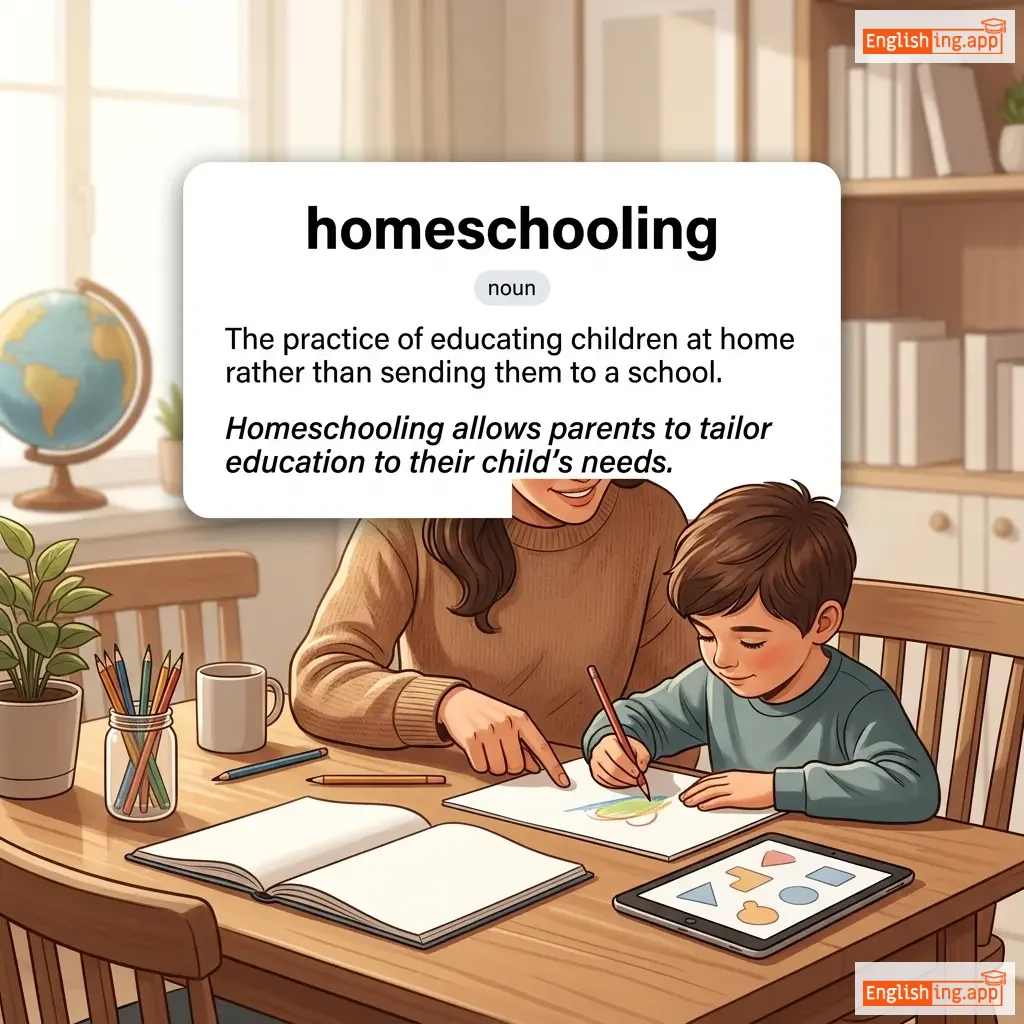
homeschooling definition card — visual illustration of the meaning
noun
ˈhoʊmˌskuː.lɪŋ
ホームスクーリング (hōmusukūringu)

The practice of educating children at home rather than sending them to a school.

"Homeschooling allows parents to tailor education to their child's needs."

"ホームスクーリングは、親が子供のニーズに合わせて教育を提供することを可能にします。" (Hōmusukūringu wa, oya ga kodomo no nīzu ni awasete kyōiku o teikyō suru koto o kanō ni shimasu.)
adjective
/ˈhoʊmˌsɪk/
ホームシック; 家と家族を恋しがる (hōmu shikku; ie to kazoku o koishigaru)

feeling sad because you are away from home; longing for one's home and family

"She felt homesick during her first week at college."

"彼女は大学の最初の週にホームシックを感じていました。" (Kanojo wa daigaku no saisho no shū ni hōmu shikku o kanjite imashita.)
adjective
/ˈhoʊm.spʌn/
手作り (tezukuri)

Simple and unsophisticated; made at home rather than in a factory.

"She wore a homespun dress to the village festival."

"彼女は村の祭りに手作りのドレスを着て行った。" (Kanojo wa mura no matsuri ni tezukuri no doresu o kite itta.)
noun
/ˈhoʊmwɜːrk/
宿題 (shukudai)

schoolwork that a student does at home

"I need to finish my math homework before dinner."

"夕食前に数学の宿題を終わらせなければなりません。" (Yūshoku mae ni sūgaku no shukudai o owarasenakereba narimasen.)
noun
/ˈhɑːmɪsaɪd/
殺人 (satsujin)

the killing of one human being by another

"The police are investigating a case of homicide."
"警察は殺人事件を調査している。" (Keisatsu wa satsujin jiken o chōsa shite iru.)
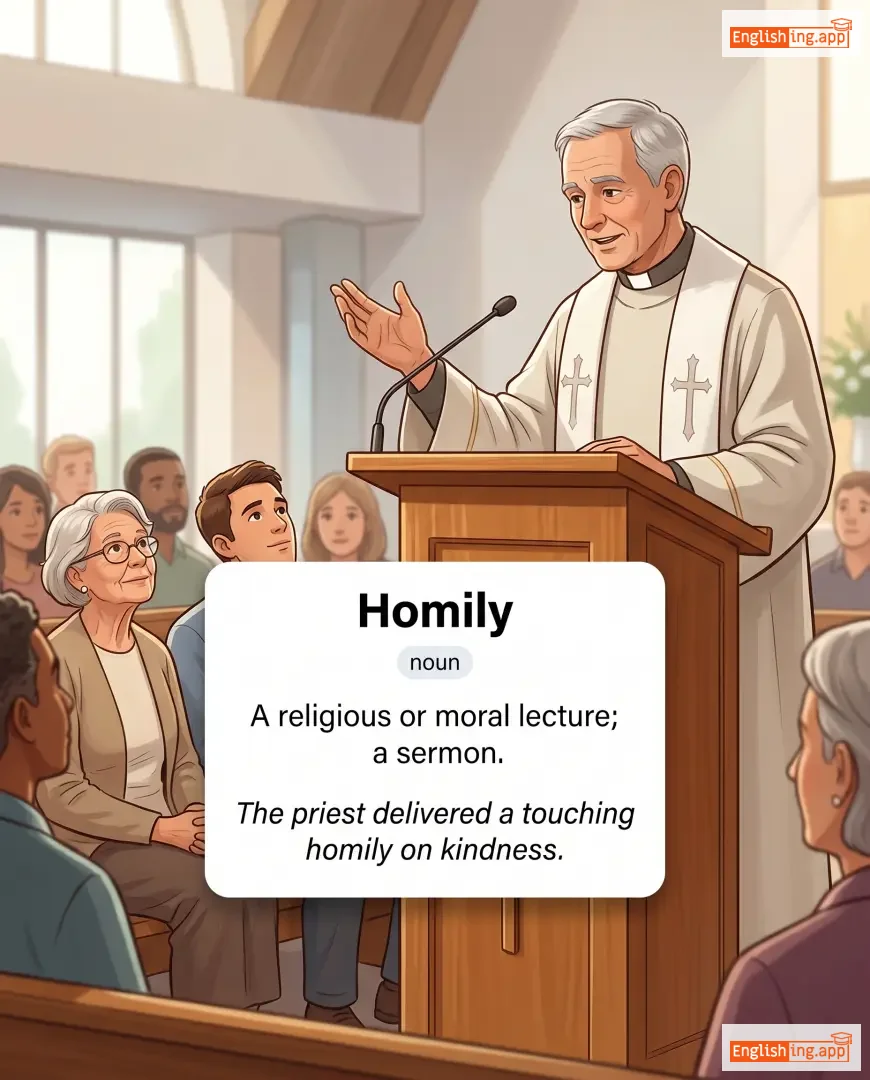
Homily definition card — visual illustration of the meaning
noun
/ˈhɑː.mə.li/
説教 (sekkyou)

A religious or moral lecture; a sermon.

"The priest delivered a touching homily on kindness."

"司祭は親切について感動的な説教をしました。" (Shisai wa shinsetsu ni tsuite kandō-teki na sekkyō o shimashita.)
noun
/ˌhoʊmə.dʒəˈniːəti/

The quality or state of being all the same or all of the same kind.

"The cultural homogeneity of the village made it feel unified."