語彙集

英単語辞書 | 単語の意味、定義、例文

adjective
/təˈrɛnʃəl/
豪雨 (gouu)

Relating to or resembling a torrent; very heavy and fast flowing.

"The hikers were caught in torrential rain."

"ハイカーたちは豪雨に捕まった。" (Haikaa tachi wa gouu ni tsukamatta.)
adjective
/ˈtɒrɪd/
非常に暑く乾燥している; 強い感情や情熱に満ちている (hijou ni atsuku kansou shite iru; tsuyoi kanjou ya jounetsu ni michite iru)

Very hot and dry; full of strong emotions or passion.

"The desert heat was torrid during the day."

"砂漠の熱は昼間非常に暑かった。" (sabaku no netsu wa hiruma hijou ni atsukatta.)
noun
/ˈtɔːrsoʊ/
胴体 (doutai)

The trunk of the human body, excluding the head and limbs.

"The artist painted the torso of the model in great detail."

"芸術家はモデルの胴体を詳細に描きました。" (Geijutsuka wa moderu no doutai o shousai ni kakimashita.)
noun
/tɔːrˈtiːə/
トルティーヤ (torutiya)

A thin round flatbread made from corn or wheat, common in Mexican cuisine.

"She wrapped the vegetables in a warm tortilla."

"彼女は温かいトルティーヤに野菜を包みました。" (Kanojo wa atatakai torutiya ni yasai o tsumimashita.)
adjective
/ˈtɔːrʃəs/
不法行為 (fuhou koui)

Relating to or involving a wrongful act leading to legal liability.

"The company was found guilty of tortious interference with contracts."

"その企業は契約への不法干渉で有罪判決を受けた。" (Sono kigyou wa keiyaku e no fuhou kanshou de yuuzen hanketsu wo uketa.)
noun
/ˈtɔːr.təs/
カメ (kame)

A slow-moving land reptile with a hard shell.

"The tortoise slowly crossed the garden."

"カメはゆっくり庭を横切った。" (Kame wa yukkuri niwa o yokotta.)
adjective
/ˈtɔːrtʃuəs/
曲がりくねった, 複雑 (magarikunetta, fukuzatsu)

Full of twists and turns; excessively complex or complicated.

"The tortuous mountain road made driving very difficult."

"曲がりくねった山道が運転を非常に難しくした。" (Magarikunetta yamamichi ga unten o hijō ni muzukashiku shita.)
noun
/ˈtɔːtʃər/
拷問 (goumon)

the action or practice of inflicting severe pain on someone as a punishment or to force them to do something

"He was subjected to torture during the interrogation."

"彼は尋問中に拷問を受けました。" (Kare wa shinmon-chuu ni goumon o ukemashita.)
adjective
/ˈtɔːrtʃərəs/
痛ましい (itamashii)

Extremely painful or causing great suffering; relating to or involving torture.

"The journey through the desert was long and torturous."

"砂漠を横断する旅は長くて痛ましいものでした。" (Sabaku o ōdan suru tabi wa nagakute itamashī mono deshita.)
verb
/tɔs/
軽く投げる (karuku nageru)

To throw something lightly or casually; to move or turn suddenly.

"He tossed the keys onto the table."

"彼は鍵をテーブルに投げた。" (Kare wa kagi wo teeburu ni nageta.)
adjective, noun, verb
/ˈtoʊ.təl/
合計 (goukei)

the whole amount; complete

"The total cost was too high."

"合計費用は高すぎました。" (Goukei hiyou wa takasugimashita.)
adverb
/ˈtoʊtəli/
完全に (kanzen ni)

completely or in an absolute way

"She was totally shocked by the news."

"彼女はそのニュースに完全にショックを受けていました。" (Kanojo wa sono nyūsu ni kanzen ni shokku o uketeimashita.)
noun
/ˈtoʊtəm/
聖なる象徴 (seinaru shōchō)

A natural object, animal, or symbol that is revered as a spiritual emblem by a group or tribe.

"The eagle is considered a sacred totem in many cultures."

"イーグルは多くの文化で神聖なトーテムと見なされています。" (Iiguru wa ōku no bunka de seinaru tōtemu to minasareteimasu.)
verb
/ˈtɑːtər/
ふらふら歩く (furafura aruku)

To move unsteadily, as if about to fall; to be on the point of collapse.

"The old man tottered across the street with a cane."
"その老人は杖をついて道路をふらふら歩きながら渡った。" (Sono rōjin wa tsue o tsuite dōro o furafura arukinagara watatta.)
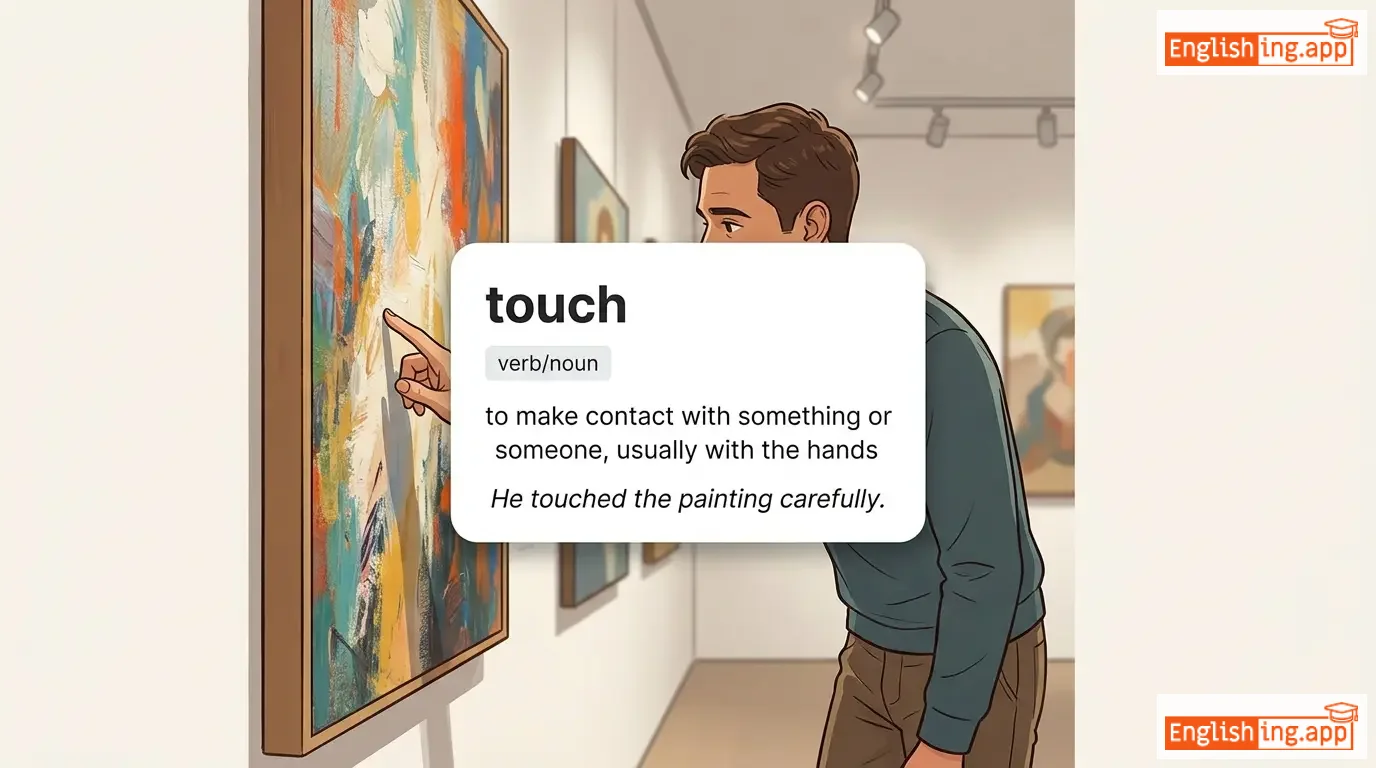
touch definition card — visual illustration of the meaning
verb/noun
/tʌtʃ/
触る (sawaru)

to make contact with something or someone, usually with the hands

"He touched the painting carefully."
"彼は慎重に絵を触った。" (Kare wa shinchou ni e wo sawatta.)
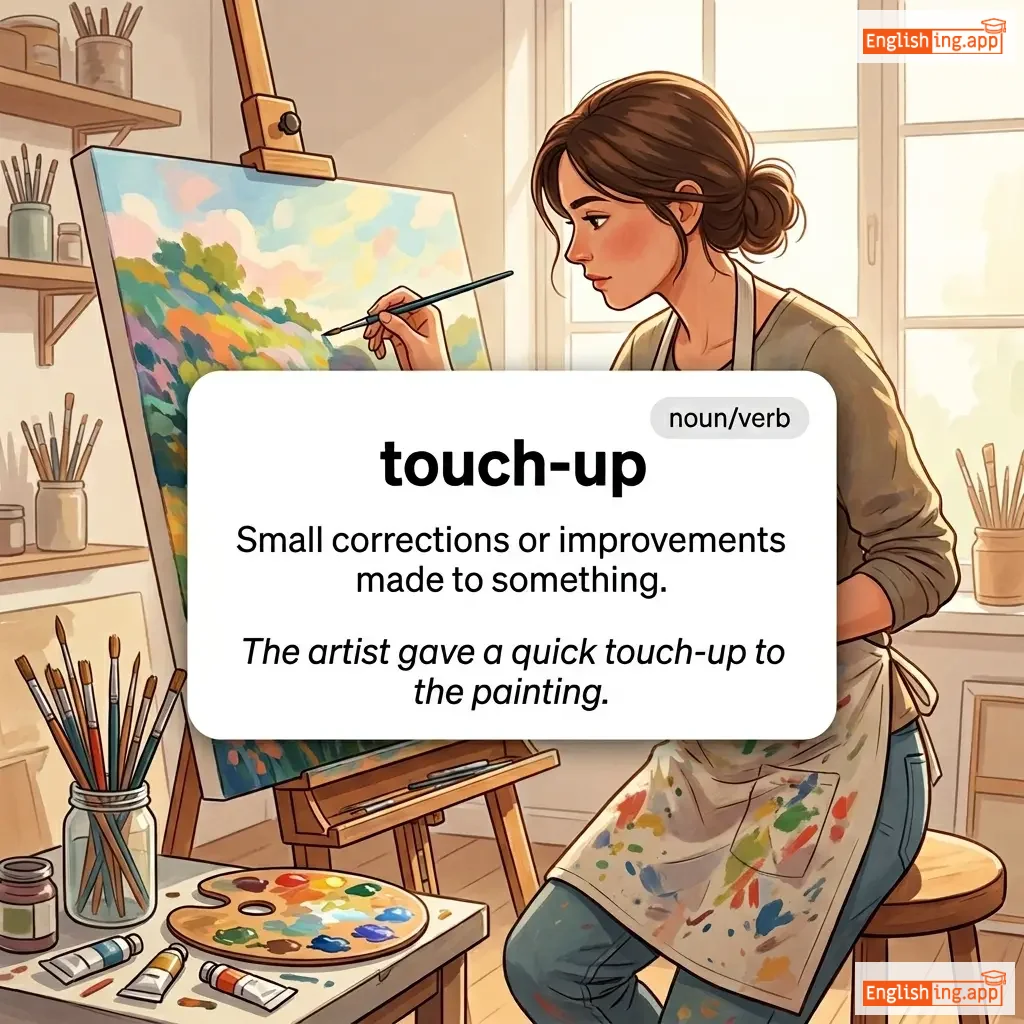
touch-up definition card — visual illustration of the meaning
noun/verb
/ˈtʌtʃ.ʌp/
小さな修正や改善 (chiisana shūsei ya kaizen)

Small corrections or improvements made to something.

"The artist gave a quick touch-up to the painting."

"アーティストは絵画に素早くタッチアップをしました。" (Ātisuto wa kaiga ni subayaku tacchiappu o shimashita.)
noun
/ˈtʌtʃ.daʊn/
タッチダウン (tacchidaun)

the moment when an aircraft lands, or a score in American football

"The plane made a smooth touchdown."

"飛行機は滑らかにタッチダウンしました。" (Hikōki wa nameraka ni tacchidaun shimashita.)
adjective
/ˈtʌtʃɪŋ/
感動的な (kandō-teki na)

causing strong feelings of sympathy, sadness, or tenderness

"The movie had a touching ending that made everyone cry."

"その映画には、誰もが泣いてしまう感動的な結末がありました。" (Sono eiga ni wa, daremo ga naite shimau kandō-teki na ketsumatsu ga arimashita.)
noun
/ˈtʌtʃstoʊn/
試金石 (shikinseki)

a standard or criterion by which something is judged or recognized

"Her work has become the touchstone of modern literature."

"彼女の作品は現代文学のタッチストーンになった。" (Kanojo no sakuhin wa gendai bungaku no tacchisuto-n ni natta.)
adjective
/ˈtʌtʃi/
敏感 (binkan)

easily offended or sensitive to criticism or remarks

"Be careful what you say, he's very touchy about his work."

"何を言っても、彼は自分の仕事に敏感です。" (Nani o ittemo, kare wa jibun no shigoto ni binkan desu.)
adjective
/tʌf/
頑丈 (ganjou)

strong, durable, and difficult to break or deal with

"He had a tough day at work."

"彼は仕事で厳しい一日を過ごしました。" (Kare wa shigoto de kibishii ichinichi o sugoshimashita.)
Tour definition card — visual illustration of the meaning
noun/verb
/tʊr/
ツアー (tsuaa)

a journey or trip, often for pleasure, during which you visit different places

"They went on a tour of Europe last summer."

"彼らは昨年の夏にヨーロッパツアーに行きました。" (Karera wa sakunen no natsu ni Yōroppa tsuaa ni ikimashita.)
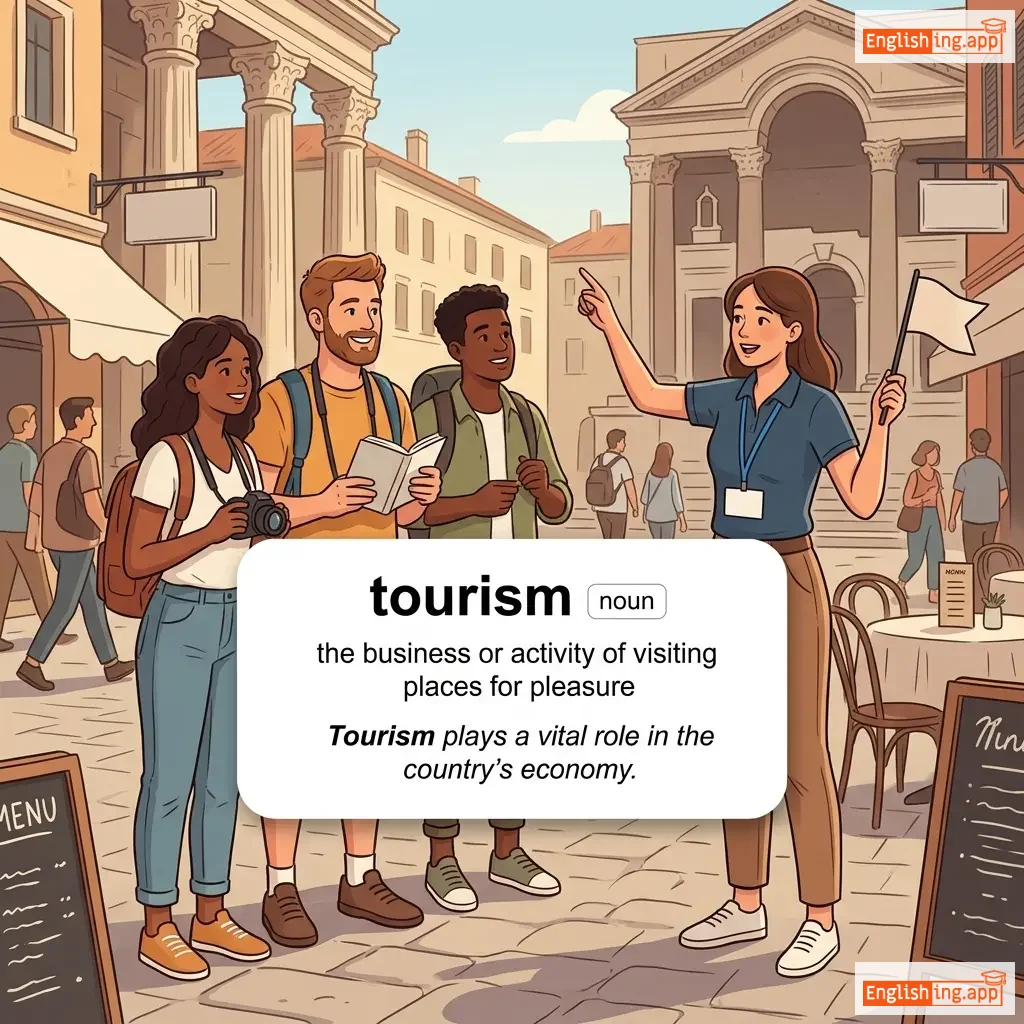
tourism definition card — visual illustration of the meaning
noun
/ˈtʊərɪzəm/

the business or activity of visiting places for pleasure

"Tourism plays a vital role in the country’s economy."

noun
/ˈtʊərɪst/
観光客 (kankōkyaku)

a person who is traveling or visiting a place for pleasure

"The city attracts many tourists every year."
"その都市は毎年多くの観光客を引き付けます。" (Sono toshi wa mainen ōku no kankōkyaku o hikitsukemasu.)
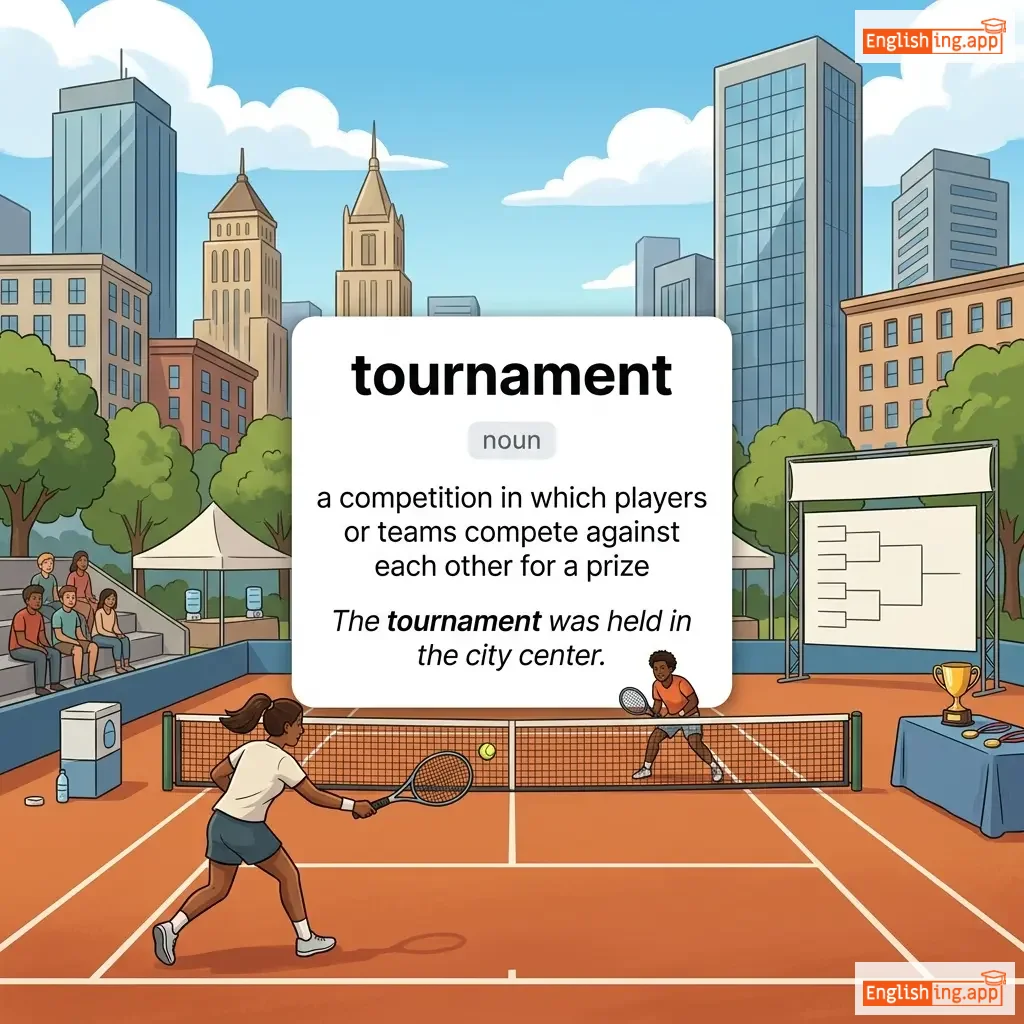
tournament definition card — visual illustration of the meaning
noun
/ˈtʊənəmənt/
トーナメント (tōnamento)

a competition in which players or teams compete against each other for a prize

"The tournament was held in the city center."

"トーナメントは市内中心部で開催されました。" (Tōnamento wa shinai chūshinbu de kaisai saremashita.)
noun
/ˈtʊrnɪkɪt/
止血帯 (shikketsudai)

a device used to stop bleeding by compressing blood vessels

"The medic applied a tourniquet to stop the bleeding."

"医師は出血を止めるために止血帯を使用しました。" (Ishi wa shukketsu o tomeru tame ni shikketsudai o shiyou shimashita.)
verb
/taʊt/
宣伝する (senden suru)

to promote, praise, or advertise aggressively

"The company touted its new product as a game-changer."

"その会社は新しい製品をゲームチェンジャーとして宣伝した。" (Sono kaisha wa atarashī seihin o gēmu chenjā to shite senden shita.)
preposition
/tɔːrd/
に向かって (ni mukatte)

in the direction of

"She walked toward the door."

"彼女はドアに向かって歩いた。" (Kanojo wa doa ni mukatte aruita.)
preposition
/tɔːrdz/
(e)

in the direction of

"He is running towards the park."

"彼は公園へ向かって走っています。" (Kare wa kōen e mukatte hashitteimasu.)
noun
/ˈtaʊəl/
タオル (taoru)

a piece of absorbent cloth used for drying or wiping

"She grabbed a towel after her shower."

"彼女はシャワー後にタオルを取った。" (Kanojo wa shawāgo ni taoru o totta.)
noun
/ˈtaʊər/
(tou)

a tall, narrow structure, often a part of a building

"The tower stood tall above the city."

"塔は街の上に高くそびえていた。" (Tou wa machi no ue ni takaku sobiiete ita.)
noun
/taʊn/
(machi)

a human settlement smaller than a city

"The town was quiet on Sundays."

"町は日曜日は静かでした。" (Machi wa nichiyoubi wa shizuka deshita.)
adjective
/ˈtɒksɪk/
有毒な (yūdoku na)

poisonous or harmful; causing damage physically or emotionally

"The waste materials were highly toxic to the environment."
"廃棄物は環境に非常に有毒でした。" (Haikimono wa kankyō ni hijō ni yūdoku deshita.)
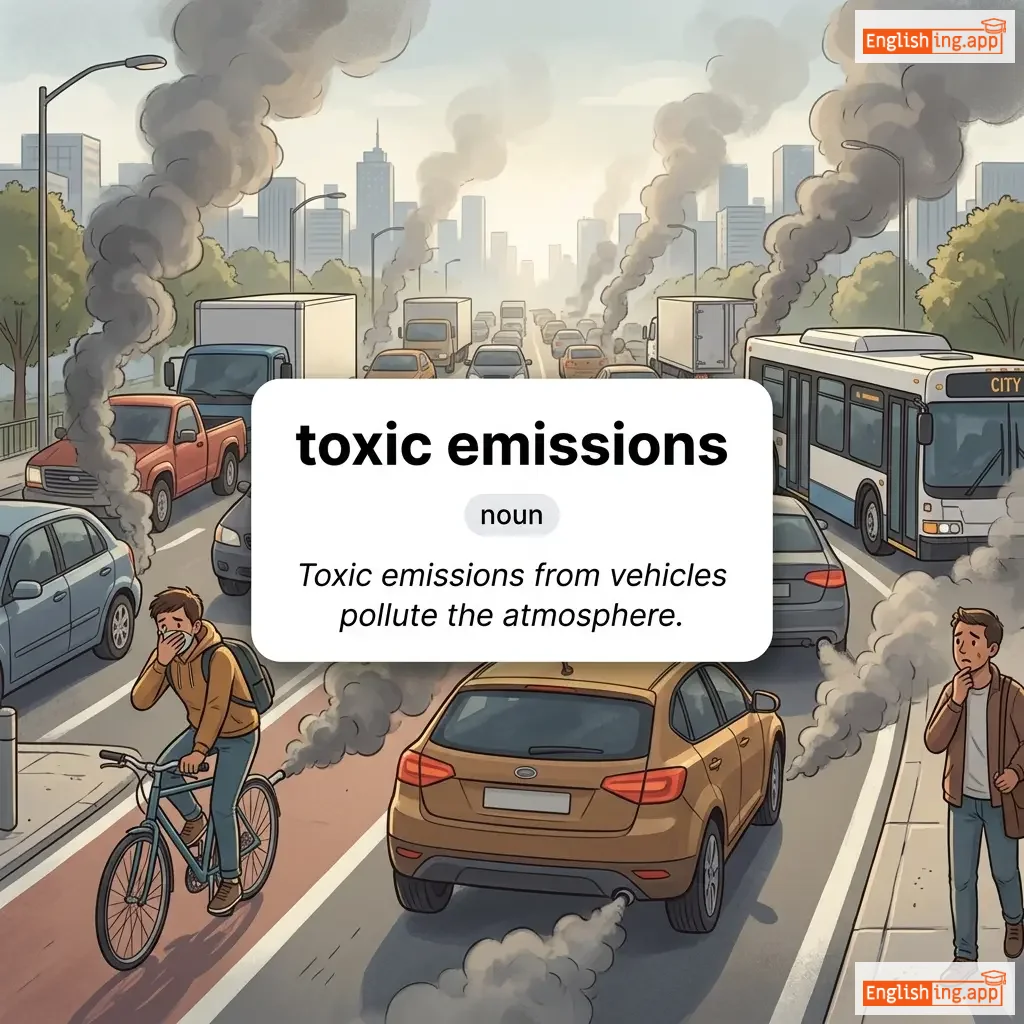
toxic emissions definition card — visual illustration of the meaning
noun
ˈtɑksɪk ɪˈmɪʃənz
有毒排出 (yūdoku haishutsu)

Harmful or poisonous substances released into the environment, especially the atmosphere.

"Toxic emissions from vehicles pollute the atmosphere."
"車両の有毒排出物が大気を汚染します。" (Sharyō no yūdoku haishutsumotsu ga taiki o osen shimasu.)
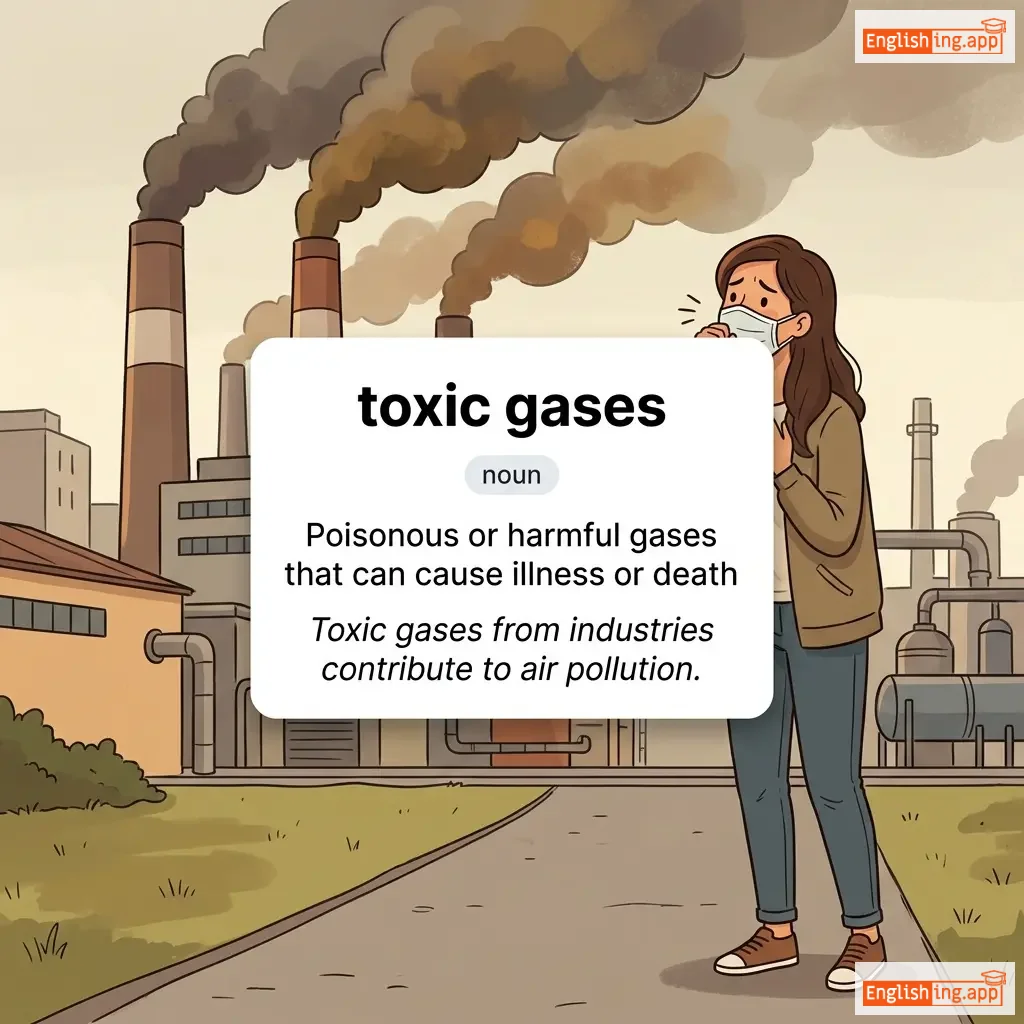
toxic gases definition card — visual illustration of the meaning
noun
ˈtɒksɪk ˈɡæsɪz
有毒ガス (yūdoku gasu)

Poisonous or harmful gases that can cause illness or death

"Toxic gases from industries contribute to air pollution."

"産業からの有毒ガスは大気汚染に貢献しています。" (Sangyou kara no yūdoku gasu wa taiki osen ni kouken shiteimasu.)
noun
/tɔɪ/
おもちゃ (omocha)

an object for children to play with

"The child received a toy car for his birthday."

"その子は誕生日におもちゃの車をもらいました。" (Sono ko wa tanjoubi ni omocha no kuruma o moraimashita.)
noun, verb
/treɪs/
痕跡 (koseki)

a mark, object, or sign that shows the existence or development of something

"She traced the path of the river on the map."

"彼女は地図に川の道をトレースしました。" (Kanojo wa chizu ni kawa no michi o toresu shimashita.)
noun
/ˈtreɪ.ki.ə/
気管 (kikan)

the tube that carries air from the throat to the lungs; windpipe

"The trachea is protected by cartilage rings that keep it open."

"気管は軟骨環によって保護され、開いた状態を保ちます。" (Kikan wa nankotsu kan ni yotte hogo sare, hiraita jōtai o tamochimasu.)
track definition card — visual illustration of the meaning
noun
/træk/
(michi)

a path, route, or course followed by someone or something

"He ran along the track every morning."
"彼は毎朝その道を走っていました。" (Kare wa mai asa sono michi o hashitte imashita.)
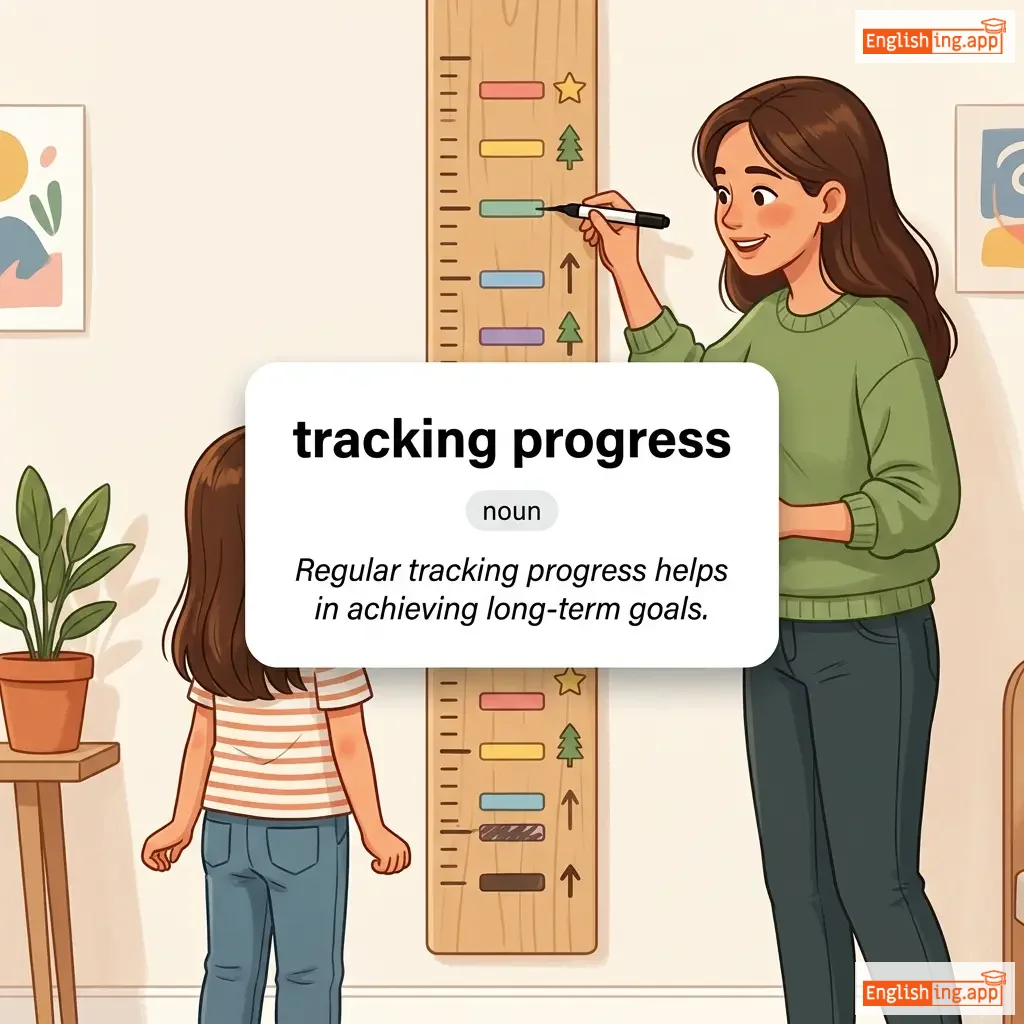
tracking progress definition card — visual illustration of the meaning
noun
ˈtrækɪŋ ˈprɒɡrɛs
進捗追跡 (shinchoku tsuiseki)

The process of monitoring and evaluating advancement towards goals or objectives.

"Regular tracking progress helps in achieving long-term goals."

"定期的な進捗の追跡は、長期的な目標を達成するのに役立ちます。" (Teikiteki na shinchoku no tsuiseki wa, chōkiteki na mokuhyō o tassei suru no ni yakudachimasu.)
noun
/trækt/
区画 (kuka)

an area of land; a system of organs in the body; a written pamphlet

"The forest tract was preserved as a wildlife sanctuary."
"その森林区画は野生動物保護区として保存されました。" (Sono shinrin kuka wa yasei doubutsu hogo-ku toshite hozon saremashita.)
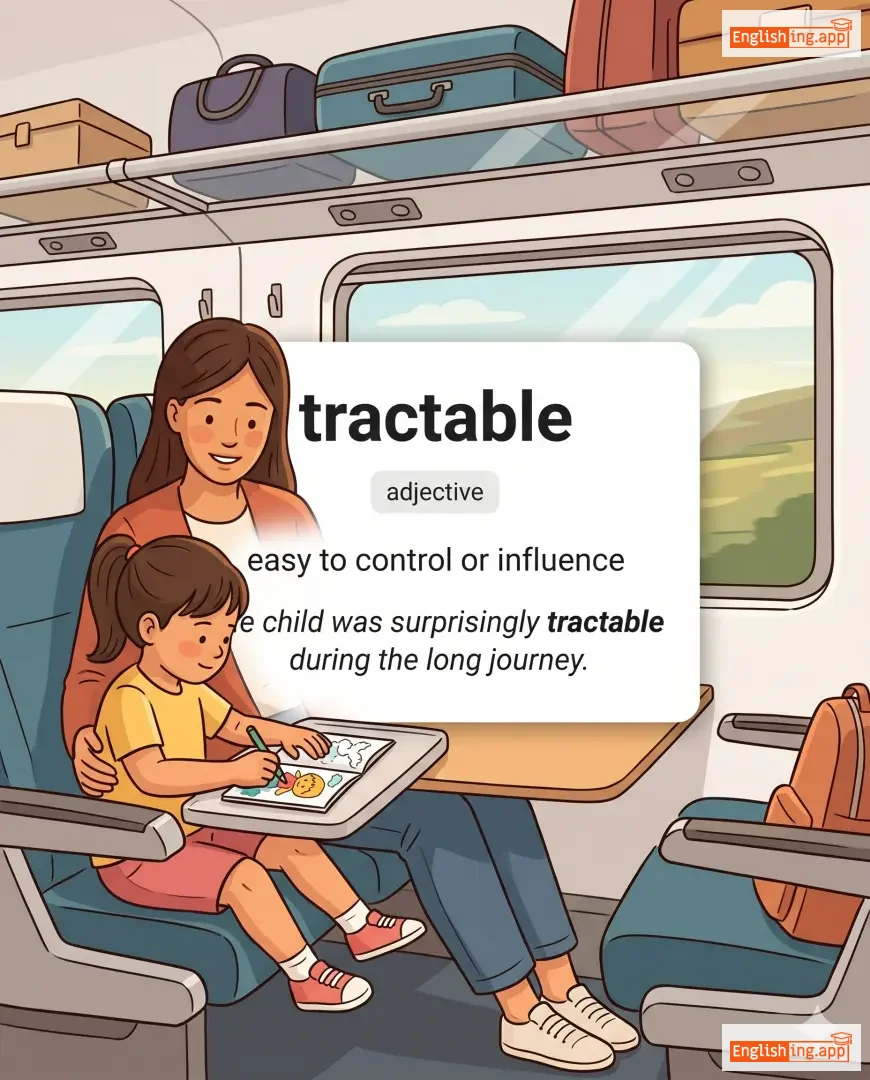
tractable definition card — visual illustration of the meaning
adjective
/ˈtræktəbəl/
制御可能または影響を与えることができる (seigyo kanou mata wa eikyou wo ataeru koto ga dekiru)

easy to control or influence

"The child was surprisingly tractable during the long journey."

"その子供は長い旅の間、驚くほど制御可能だった。" (Sono kodomo wa nagai tabi no aida, odoroku hodo seigyo kanou datta.)
trade definition card — visual illustration of the meaning
💱

trade

noun, verb
/treɪd/

The action of buying, selling, or exchanging goods and services.

"The company trades in electronic goods worldwide."

trade facilitation definition card — visual illustration of the meaning
noun
/treɪd fəˌsɪl.ɪˈteɪ.ʃən/
貿易促進 (bōeki sokushin)

The simplification, modernization and harmonization of export and import processes.

"Trade facilitation boosts economic growth."

"貿易促進は経済成長を促進します。" (Bōeki sokushin wa keizai seichō o sokushin shimasu.)
trade-off definition card — visual illustration of the meaning
noun
ˈtreɪd.ɒf
トレードオフ (toreedoofu)

A situation where accepting one advantage means giving up another benefit.

"There is always a trade-off between price and quality."

"価格と品質の間には常にトレードオフがあります。" (kakaku to hinshitsu no aida ni wa itsumo toreedoofu ga arimasu.)
noun
/ˈtreɪdmɑːrk/
商標 (shōhyō)

a symbol, word, or words legally registered or established by use as representing a company or product

"The company’s logo is its trademark."

"その会社のロゴはその商標です。" (Sono kaisha no rogo wa sono shōhyō desu.)
noun
/ˈtreɪ.dər/
商人 (shounin)

a person who buys and sells goods or financial securities for profit

"The trader made a good profit from selling imported goods."

"商人は輸入品を売ることで良い利益を得ました。" (Shounin wa yunyuuhin o uru koto de yoi rieki o emashita)
noun
/ˈtreɪdɪŋ/
取引 (torihiki)

the act or business of buying and selling goods or services

"She made a fortune through online trading."

"彼女はオンライン取引で大金を稼ぎました。" (Kanojo wa onrain torihiki de taikin wo kasegimashita.)
noun
/trəˈdɪʃən/
伝統 (dentou)

the transmission of customs or beliefs from generation to generation

"It is a tradition to celebrate New Year with family."

"新年を家族と祝うことは伝統です。" (Shinnen o kazoku to iwau koto wa dentou desu.)
adjective
/trəˈdɪʃənəl/
伝統的 (dentō-teki)

existing in or as part of a tradition

"The traditional dance of this village is performed every year."

"この村の伝統的な踊りは毎年行われます。" (Kono mura no dentō-teki na odori wa mainen okonawaremasu.)