語彙集

英単語辞書 | 単語の意味、定義、例文

noun
/ˈtiː ʃɜːt/
Tシャツ (T-shatsu)

a casual short-sleeved cotton shirt with no collar

"He wore a white t-shirt and jeans to the party."

"彼はパーティーに白いTシャツとジーンズを着て行った。" (Kare wa pātii ni shiroi T-shatsu to jīnzu o kite itta.)
noun
/ˈteɪbəl/
テーブル (teeburu)

A piece of furniture with a flat top and legs, used for working at or placing items on.

"They placed the documents on the table."

"彼らは書類をテーブルに置きました。" (Karera wa shorui o teeburu ni okimashita.)
noun
/ˈtæbloʊ/
タブロー (taburo)

a striking or artistic scene or arrangement of people or objects, often presented on stage or in art

"The actors froze in a tableau that captured the final moment of the play."

"俳優たちは、舞台の最後の瞬間を捉えたタブローで凍りつきました。" (Haiyū-tachi wa, butai no saigo no shunkan o toraeta taburō de kōritsukimashita.)
noun
/ˈteɪbəlˌspun/
テーブルスプーン (teeburusu pun)

a spoon used for serving or eating food, typically holding about 15 milliliters

"She stirred the soup with a tablespoon."

"彼女はテーブルスプーンでスープをかき混ぜました。" (Kanojo wa teeburusu pun de suupu o kakimazemashita.)
noun
/ˈtæblət/

a small flat computer or a small solid dose of medicine

"She took a tablet to relieve her headache."

🚫

taboo

noun
/təˈbuː/

a social or cultural prohibition against certain practices or discussions

"Talking about money is considered a taboo in some cultures."

noun
/ˈteɪbər/
タムボール (tamboo-ru)

a small side drum or tambourine used especially in folk music

"The folk musician played a lively tune on his tabour."
"フォークミュージシャンは自分のタムボールで生き生きとしたメロディーを演奏しました。" (Fooku myu-jishan wa jibun no tambooru de ikikito shita merodii o ensou shimashita.)
tacit definition card — visual illustration of the meaning
adjective
/ˈtæsɪt/
暗黙の了解 (anmoku no ryōkai)

understood or implied without being stated

"There was a tacit agreement to avoid the subject."

"そのテーマを避けるために暗黙の了解があった。" (Sono tēma o yokeru tame ni anmoku no ryōkai ga atta.)
adjective
/ˈtæsɪtɜrn/
寡黙 (kamoku)

reserved or uncommunicative in speech; saying little

"He was a taciturn man who rarely spoke in meetings."
"彼は会議でほとんど話さない寡黙な人だった。" (Kare wa kaigi de hotondo hanasanai kamoku na hito datta.)
📌

tack

noun/verb
/tæk/

a small sharp nail; or to change direction in sailing or approach something differently

"She used a tack to pin the paper on the wall."

verb, noun
/ˈtæk.əl/

to try to deal with or solve a difficult problem; to physically stop someone in sports by knocking them down

"The coach taught the players how to tackle properly."

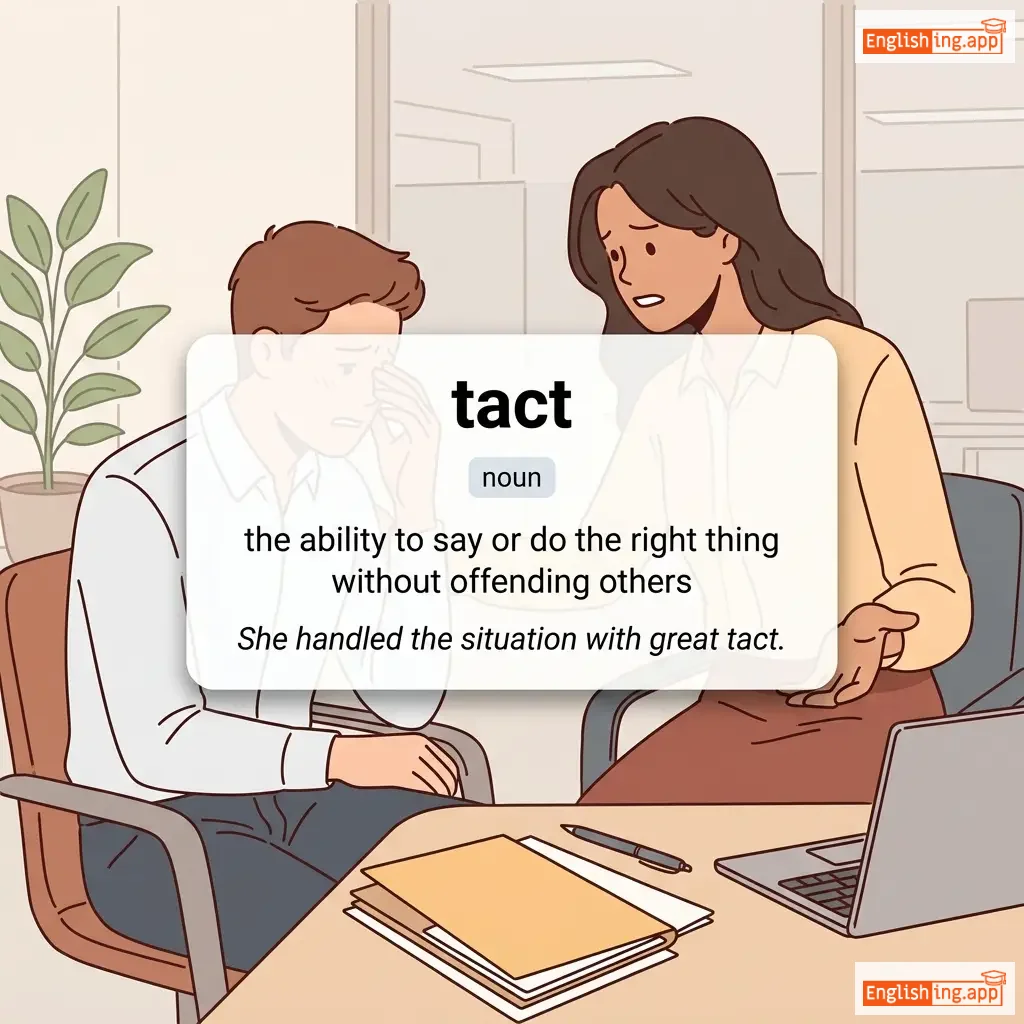
tact definition card — visual illustration of the meaning
noun
/tækt/
機転, 思いやり (kiten, omoiyari)

the ability to say or do the right thing without offending others

"She handled the situation with great tact."

"彼女はその状況を非常に上手く対処しました。" (Kanojo wa sono jōkyō o hijō ni umaku taisho shimashita.)
adjective
/ˈtækt.fəl/
機転の利いた (kiten no kiita)

showing skill and sensitivity in dealing with others

"He is always tactful when giving feedback."

"彼はフィードバックを与える時、いつも機転の利いた対応をします。" (Kare wa fīdobakku o ataeru toki, itsumo kiten no kiita taiō o shimasu.)
noun
/ˈtæktɪk/
戦術 (senjutsu)

a carefully planned action or strategy to achieve a specific goal

"The coach used a defensive tactic to win the game."

"コーチは試合に勝つために防御的な戦術を使用しました。" (Kōchi wa shiai ni katsu tame ni bōgyo-teki na senjutsu o shiyō shimashita.)
adjective
/ˈtæktɪkəl/
戦略に関連する (senryaku ni kanren suru)

relating to or involving tactics or strategy

"The team had a tactical plan for the final match."

"チームは最終試合のための戦術的な計画を立てていた。" (Chīmu wa saishū shiai no tame no senjutsuteki na keikaku o tatete ita.)
noun
/tækˈtɪʃ.ən/
戦術家 (senjutsuka)

a person who is skilled at planning and achieving goals, especially in military or business

"Napoleon was a brilliant tactician."

"ナポレオンは素晴らしい戦術家でした。" (Napoleon wa subarashī senjutsuka deshita.)
noun (plural)
/ˈtæk.tɪks/
戦術 (senjutsu)

specific methods or actions used to achieve a goal, especially in military or competition

"The team changed their tactics to win the game."
"チームは試合に勝つために戦術を変えた。" (Chīmu wa shiai ni katsu tame ni senjutsu o kaeta.)
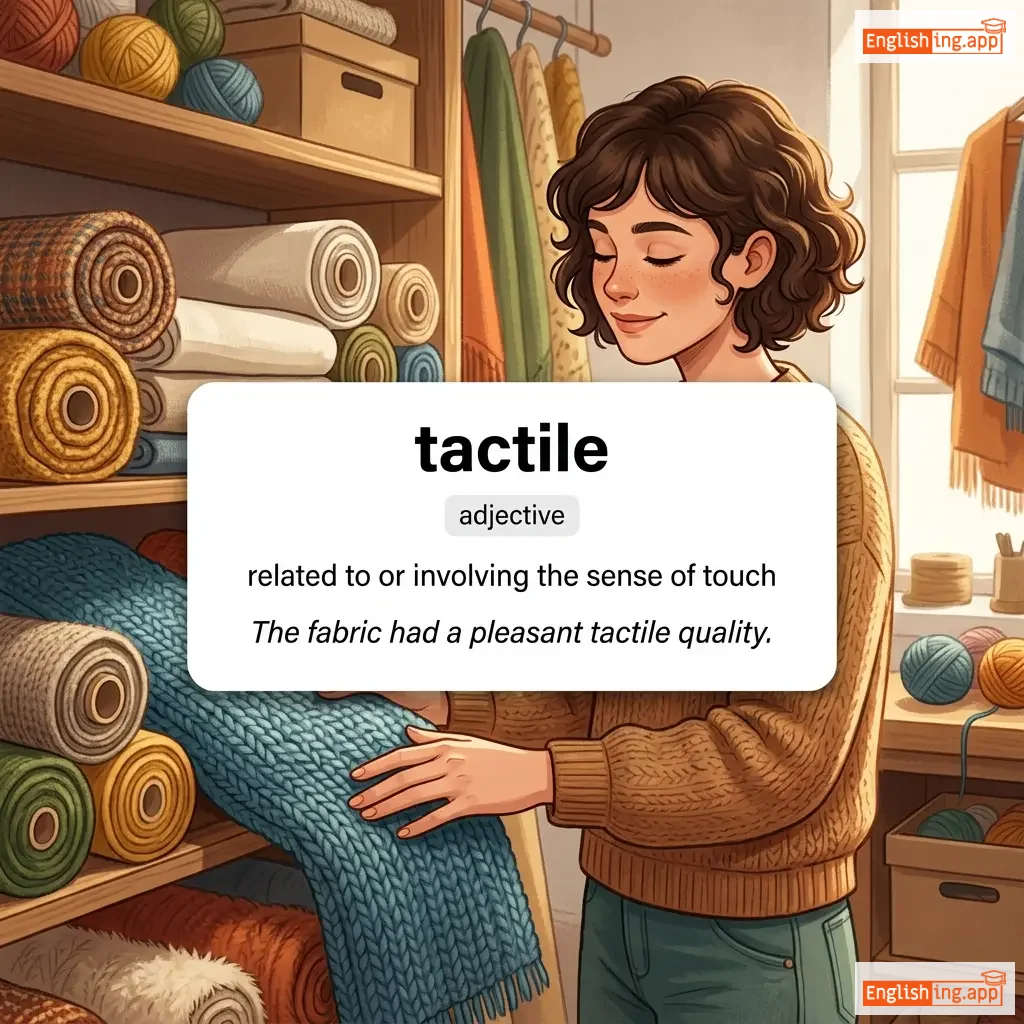
tactile definition card — visual illustration of the meaning
adjective
/ˈtæk.taɪl/
触覚の (shokkaku no)

related to or involving the sense of touch

"The fabric had a pleasant tactile quality."

"その生地は心地よい触覚の質感がありました。" (Sono kiji wa kokochi yoi shokkaku no shitsukan ga arimashita.)
adjective
/ˈtækt.ləs/
不作法 (fusaho)

showing a lack of sensitivity in dealing with others

"His tactless remark embarrassed everyone at the meeting."

"彼の不作法なコメントは、会議でみんなを恥ずかしがらせました。" (Kare no fusaho na komento wa, kaigi de minna wo hazukashigarasemashita.)
noun
/ˈtæd.poʊl/
おたまじゃくし (otamajakushi)

the larval stage of a frog or toad, living in water with gills and a tail

"The children watched the tadpoles swimming in the pond."

"子供たちは池で泳ぐおたまじゃくしを見ました。" (Kodomotachi wa ike de oyogu otamajakushi o mimashita.)
🏷️

tag

noun, verb
/tæɡ/

a label attached to something for identification or information; or to attach such a label

"She tagged her luggage before boarding the plane."

noun
/teɪl/
(o)

the part of an animal that extends from the back and is often used for balance or communication

"The dog wagged its tail when it saw its owner."

"犬は飼い主を見たとき、尻尾を振った。" (Inu wa kainushi o mita toki, shippo o futta.)
noun
/ˈteɪ.lər/
仕立て屋 (shitateya)

a person whose job is making and altering clothes

"The tailor measured him for a new suit."

"仕立て屋は彼に新しいスーツのサイズを測りました。" (Shitateya wa kare ni atarashī sūtsu no saizu o hakarimashita)
tailored definition card — visual illustration of the meaning
adjective
/ˈteɪlərd/
オーダーメイド (ōdāmeido)

made or adapted for a particular purpose, person, or situation

"The company offers tailored solutions for small businesses."

"その会社は小規模企業向けにオーダーメイドのソリューションを提供しています。" (Sono kaisha wa shōkibo kigyō muke ni ōdāmeido no sorūshon o teikyō shiteimasu.)
verb
/teɪnt/
汚す (yogosu)

to damage or spoil something by adding an undesirable quality

"The scandal tainted his reputation."

"そのスキャンダルは彼の評判を汚した。" (Sono sukyandaru wa kare no hyōban o yogoshita.)
adjective
/ˈteɪn.tɪd/
汚れた (yogoreta)

spoiled, corrupted, or made impure

"The tainted food caused several people to fall ill."
"汚れた食べ物は何人かを病気にさせました。" (Yogoreta tabemono wa nanninka o byōki ni sasemashita.)
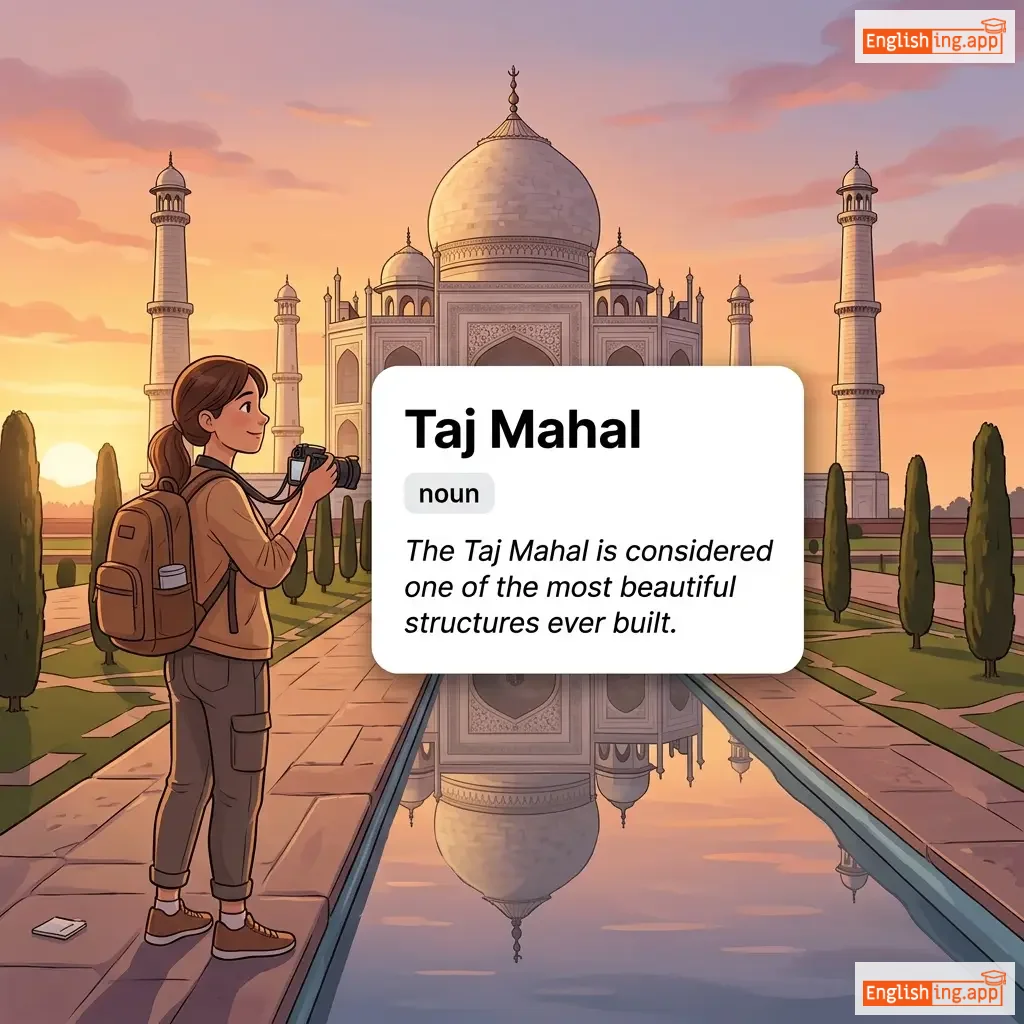
Taj Mahal definition card — visual illustration of the meaning
noun
ˌtɑːdʒ məˈhɑːl
タージ・マハル (taaji maharu)

A famous mausoleum in India, considered one of the most beautiful structures ever built and a symbol of love.

"The Taj Mahal is considered one of the most beautiful structures ever built."
"タージ・マハルはこれまでに建てられた中で最も美しい建造物の一つとされている。" (taaji maharu wa kore made taterareta naka de motto utsukushii kenchobutsu no hitotsu to sareru)
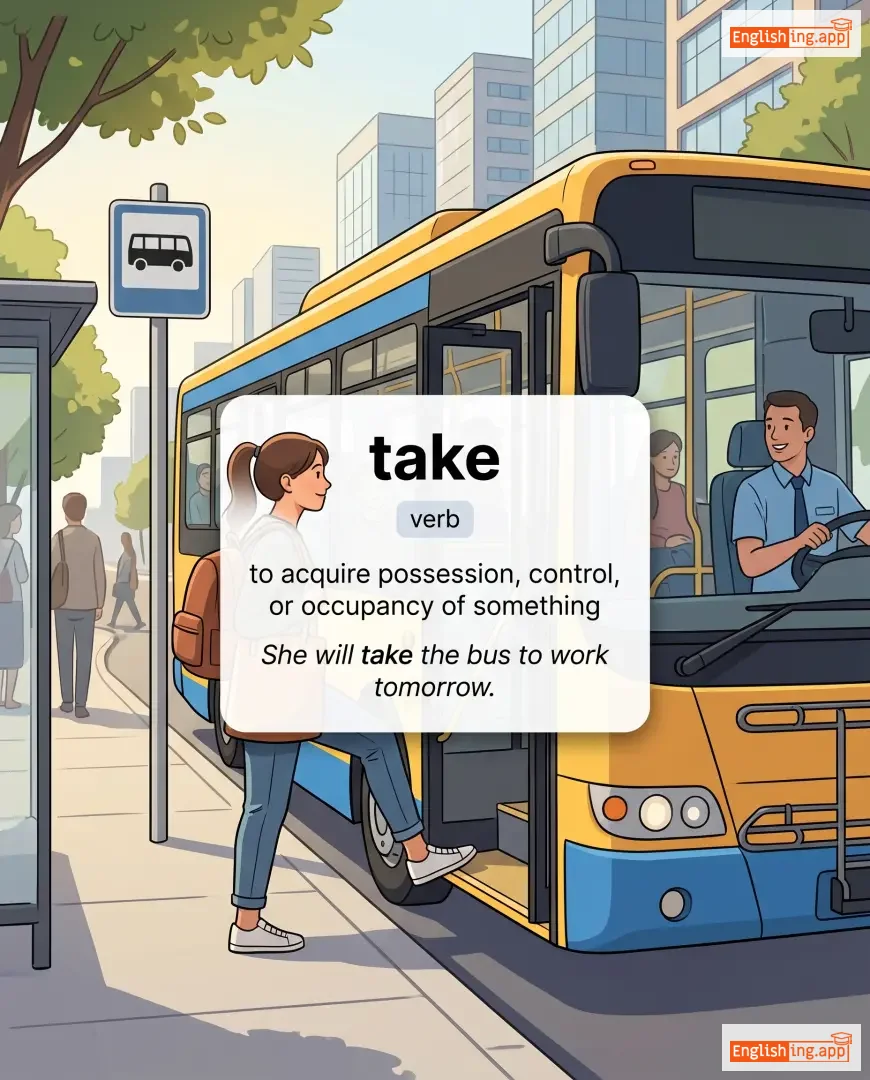
take definition card — visual illustration of the meaning
verb
/teɪk/
取る (toru)

to acquire possession, control, or occupancy of something

"She will take the bus to work tomorrow."

"彼女は明日バスで仕事に行く。" (Kanojo wa ashita basu de shigoto ni iku.)
verb
/teɪk ɒf/
離陸する; 取り除く (ririku suru; torinozoku)

to remove something; to leave the ground and begin flying (airplane); to suddenly become successful or popular

"The airplane will take off in ten minutes."
"飛行機は10分後に離陸します。" (Hikouki wa 10-pun go ni ririku shimasu.)
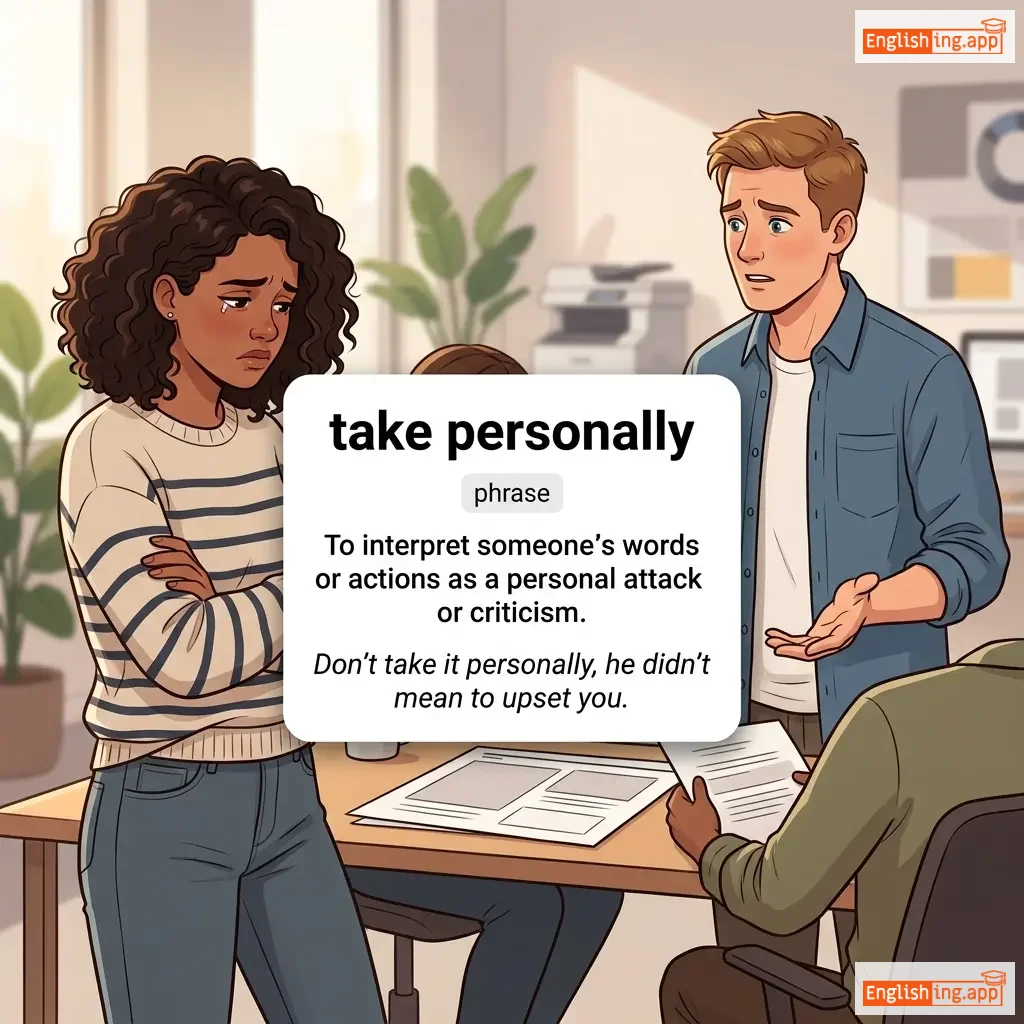
take personally definition card — visual illustration of the meaning
phrase
teɪk ˈpɜː.sən.əl.i
個人的に受け取る (kojin-teki ni uketoru)

To interpret someone's words or actions as a personal attack or criticism.

"Don't take it personally, he didn't mean to upset you."

"個人的に受け取らないで、彼はあなたを怒らせるつもりはなかった。" (Kojin-teki ni uketoranai de, kare wa anata o okoraseru tsumori wa nakatta.)
noun
/ˈteɪkˌɔːf/
離陸 (ririku)

The moment an aircraft leaves the ground and begins to fly; also a sudden rise or start in activity or success.

"The plane's takeoff was delayed due to bad weather."

"悪天候のため、飛行機の離陸は遅れました。" (Akutenkō no tame, hikōki no ririku wa okuremashita.)
noun
/teɪl/
物語 (monogatari)

a narrative of imaginary events, especially one that is presented as true

"The old man told a tale of his adventures."

"その老人は冒険の物語を話した。" (Sono rōjin wa bōken no monogatari o hanashita.)
noun
/ˈtælənt/
才能 (sainou)

natural aptitude or skill

"She has a great talent for painting."

"彼女は絵画において素晴らしい才能を持っています。" (Kanojo wa kaiga ni oite subarashī sainō o motteimasu.)
adjective
/ˈtæləntɪd/
才能のある (sainou no aru)

having a natural ability or skill in something

"She is a talented singer with a beautiful voice."
"彼女は美しい声を持つ才能のある歌手です。" (Kanojo wa utsukushī koe o motsu sainou no aru kashu desu.)
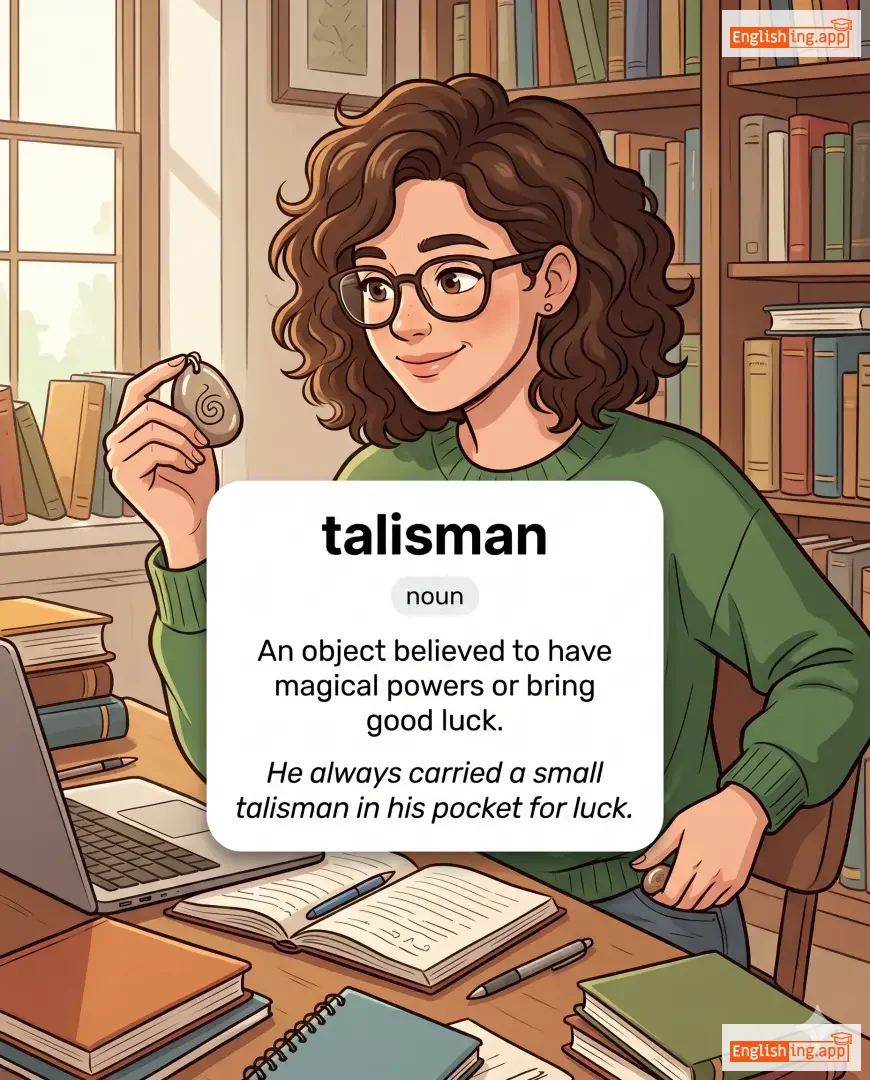
talisman definition card — visual illustration of the meaning
noun
/ˈtælɪzmən/
お守り (omamori)

An object believed to have magical powers or bring good luck.

"He always carried a small talisman in his pocket for luck."
"彼は幸運のためにポケットに小さなお守りをいつも持っていました。" (Kare wa kōun no tame ni poketto ni chiisana omamori o itsumo motteimashita.)
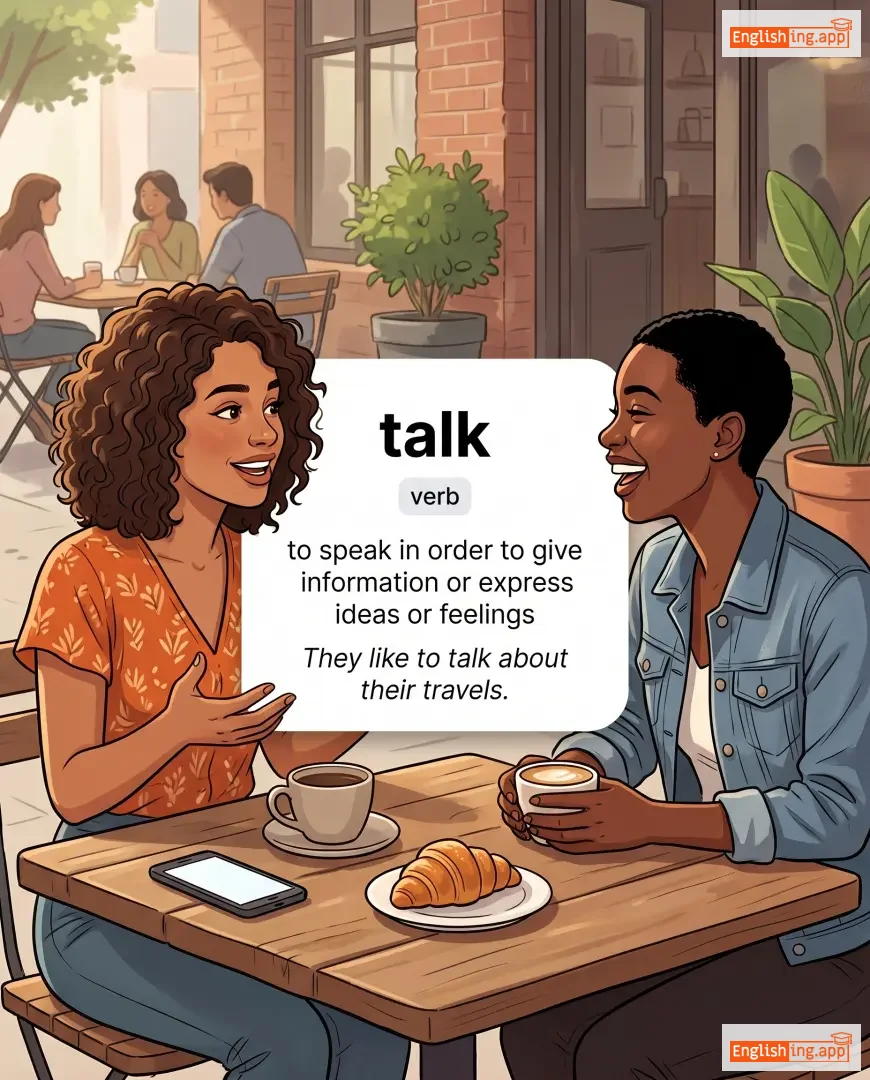
talk definition card — visual illustration of the meaning
verb
/tɔːk/
話す (hanasu)

to speak in order to give information or express ideas or feelings

"They like to talk about their travels."

"彼らは旅行について話すのが好きです。" (Karera wa ryokou ni tsuite hanasu no ga suki desu.)
adjective
/ˈtɔː.kə.tɪv/
おしゃべり (oshaberi)

fond of talking; speaking freely and at length

"My talkative neighbor loves to chat about everything."

"私のおしゃべりな隣人は、何でも話すのが大好きです。" (Watashi no oshaberi na rinjin wa, nandemo hanasu no ga daisuki desu.)
adjective
/tɔːl/
高い (takai)

having a greater than average height

"He is the tallest player on the team."

"彼はチームで一番高い選手です。" (Kare wa chiimu de ichiban takai senshu desu.)
noun
/ˈtæl.i/
集計; 記録; スコア (shūkei; kiroku; sukōa)

a count or record of a number or amount; a score or total

"Keep a tally of how many books you read this month."

"今月読んだ本の数を集計してください。" (Kongetsu yonda hon no kazu o shūkei shite kudasai.)
noun
/ˈtælən/
(tsume)

A claw, especially one belonging to a bird of prey.

"The eagle gripped the fish with its sharp talons."

"ワシはその魚を鋭い爪で捕まえた。" (Washi wa sono sakana o surudoi tsume de tsukamaeta.)
noun
/ˈtæm.ə.rɪnd/
タマリンド (tamarindo)

tropical fruit with a brown pod containing a sour pulp used in cooking

"The chef used tamarind paste to add tangy flavor to the curry."

"シェフはカレーに酸味を加えるためにタマリンドペーストを使用しました。" (shefu wa karē ni sanmi o kuwaeru tame ni tamarindo pēsu to shiyō shimashita.)
noun
/ˌtæmbəˈriːn/
タンバリン (tanbarin)

A musical instrument with a circular frame, metal jingles, and a drumhead, played by shaking or striking.

"She played the tambourine during the festival parade."
"彼女は祭りのパレードでタンバリンを演奏しました。" (Kanojo wa matsuri no parēdo de tanbarin o ensō shimashita.)
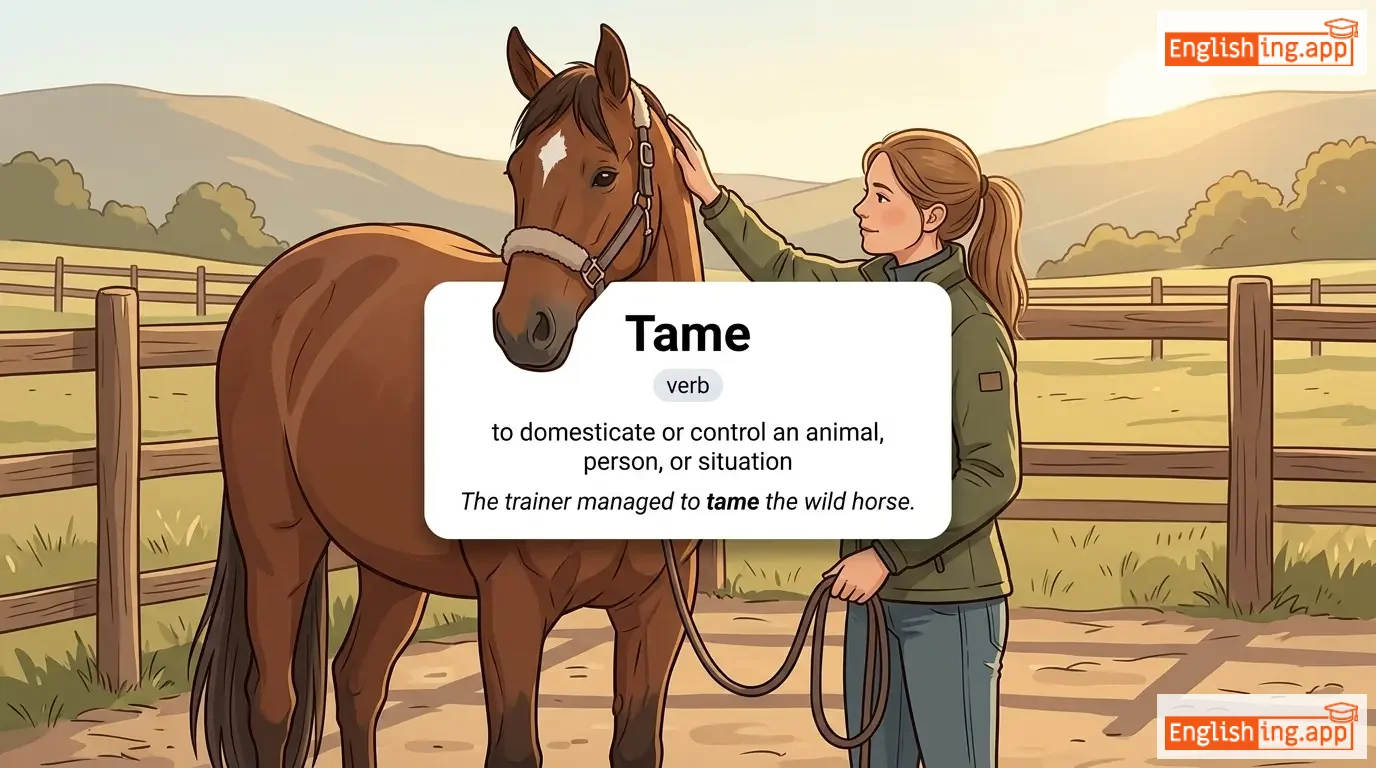
Tame definition card — visual illustration of the meaning
verb
/teɪm/
飼い慣らす (kainarasu)

to domesticate or control an animal, person, or situation

"The trainer managed to tame the wild horse."

"トレーナーは野生の馬を飼い慣らすことに成功しました。" (Torēnā wa yasei no uma wo kainarasu koto ni seikō shimashita.)
verb
/tæmp/
押し固める (oshikatameru)

to press down tightly by packing

"He tamped the soil around the plant to secure it."
"彼は植物の周りの土を押し固めて、それを固定しました。" (Kare wa shokubutsu no mawari no tsuchi o oshikatamete, sore o kotei shimashita.)
⚠️

tamper

verb
/ˈtæmpər/

To interfere with something in a harmful, unauthorized, or improper way.

"The evidence was tampered with before the trial."

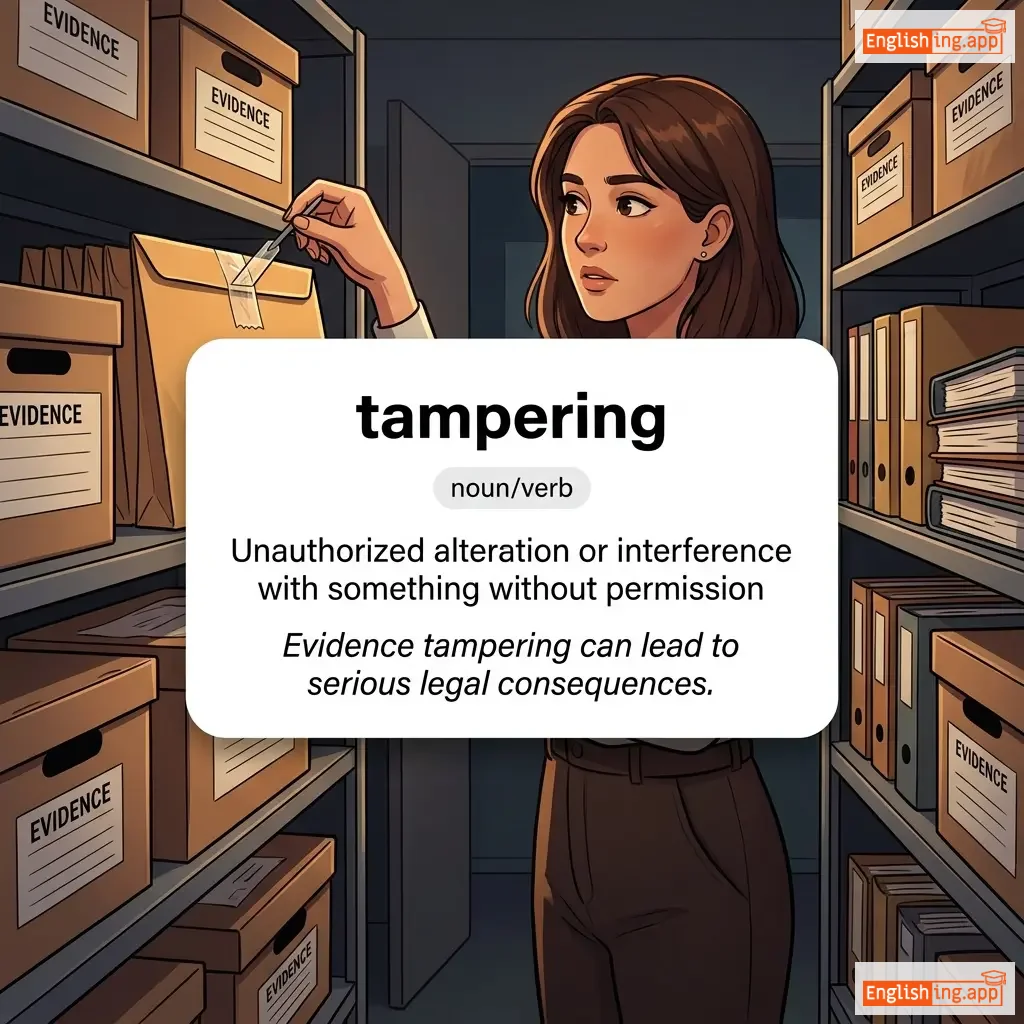
tampering definition card — visual illustration of the meaning
noun/verb
/ˈtæm.pər.ɪŋ/
不正な改ざんまたは干渉 (fusei na kaizan matawa kanshou)

Unauthorized alteration or interference with something without permission

"Evidence tampering can lead to serious legal consequences."

"証拠の改ざんは深刻な法的影響を引き起こす可能性があります。" (shouko no kaizan wa shinkoku na houteki eikyou wo hikiokosu kanousei ga arimasu.)
🌞

tan

verb
/tæn/

to make skin or a hide brown by exposure to the sun or by using chemicals

"She tanned her skin after spending the summer at the beach."

noun
/ˈtæn.dəm/
タンデム自転車 (tandemu jitensha)

a bicycle built for two riders, one behind the other

"The couple enjoyed riding their tandem bicycle through the park."

"カップルは公園で自分たちのタンデム自転車に乗って楽しんでいました。" (Kappuru wa kōen de jibun-tachi no tandemu jitensha ni notte tanoshinde imashita.)
noun
/ˈtændʒənsi/
接線 (sesssen)

the condition of touching but not intersecting, especially in geometry

"The circle and the line are in a state of tangency at one point."

"円と直線は1点で接する状態にあります。" (En to chokusen wa itten de sessuru joutai ni arimasu.)
noun
/ˈtændʒənt/

a straight line or plane that touches a curve or curved surface at a point but does not cross it

"The teacher drew a tangent to the circle on the board."