
語彙集

英単語辞書 | 単語の意味、定義、例文

shroud definition card — visual illustration of the meaning
verb
/ʃraʊd/
覆う (ōu)

to cover or hide; to wrap in cloth

"The mountain peak was shrouded in mist."

"山頂は霧に包まれていました。" (Sanchō wa kiri ni tsutsumarete imashita.)
verb
/ʃrʌɡ/
肩をすくめる (kata o sukumeru)

To raise and lower the shoulders to express uncertainty or indifference.

"He shrugged when asked about the missing file."

"彼は失われたファイルについて聞かれると肩をすくめました。" (Kare wa ushinawareta fairu ni tsuite kikareru to kata o sukumemashita.)
verb
/ʃʌk/
殻を剥く (kara o muku)

To remove the outer covering, such as the husk of corn or shell of shellfish.

"She learned how to shuck oysters quickly."

"彼女は牡蠣の殻を素早く剥く方法を学びました。" (Kanojo wa kaki no kara o subayaku muku hōhō o manabimashita.)
verb
/ˈʃʌdər/
震える (furueru)

to tremble or shake suddenly, often due to fear, cold, or strong emotion

"She shuddered at the thought of walking alone in the dark forest."
"彼女は暗い森を一人で歩くことを考えただけで震えた。" (Kanojo wa kurai mori o hitori de aruku koto o kangaeta dake de furueta.)
verb
/ˈʃʌfəl/

to walk by dragging one's feet along or without lifting them fully; to mix or rearrange

"He shuffled the cards before dealing them."

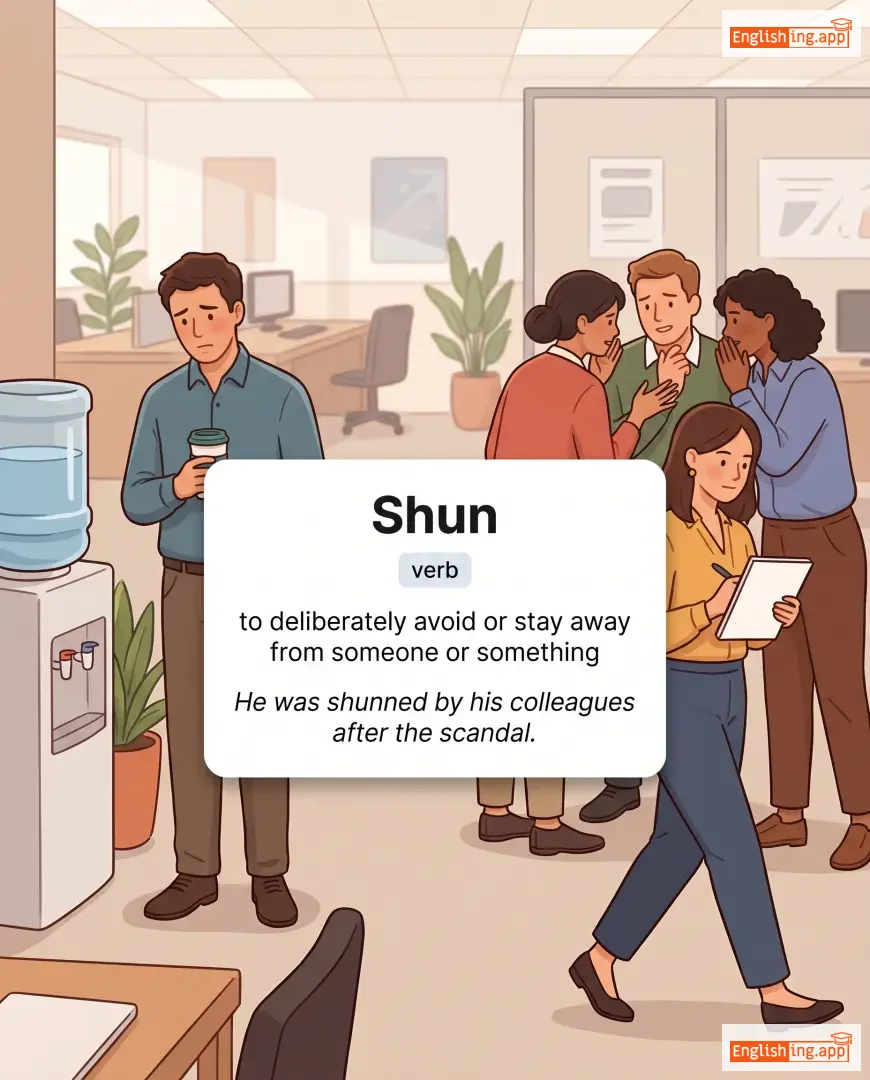
Shun definition card — visual illustration of the meaning
verb
/ʃʌn/
避ける (sakeru)

to deliberately avoid or stay away from someone or something

"He was shunned by his colleagues after the scandal."

"彼はスキャンダルの後、同僚から避けられました。" (Kare wa sukyandaru no ato, dōryō kara sakeraremashita.)
verb
/ʃʌnt/
切り替える (kirikaeru)

to move or turn aside; to push or divert from one track to another

"The train was shunted onto a different track."

"列車は別の線路に切り替えられました。" (Ressha wa betsu no senro ni kirikaeraremashita.)
verb
/ʃʌt/
閉じる (tojiru)

to close something, especially a door or window

"Please shut the door before you leave."

"出かける前にドアを閉めてください。" (Dekakeru mae ni doa o shimete kudasai.)
noun
/ˈʃʌtəl/
定期的に二地点間を往復する車両または乗り物 (teikiteki ni nichitenkan o ōfuku suru sharyō mata wa norimono)

a vehicle or craft that travels regularly between two places.

"The airport shuttle runs every 30 minutes."

"空港シャトルは30分ごとに運行しています。" (Kūkō shatoru wa 30-pun goto ni un kō shiteimasu.)
adjective
/ʃaɪ/
恥ずかしがり屋 (hazukashigariya)

Being reserved or nervous around other people.

"The child was too shy to speak in class."

"その子はクラスで話すのが恥ずかしすぎた。" (Sono ko wa kurasu de hanasu no ga hazukashisugita.)
noun
/ˈʃaɪstər/
詐欺師 (sagishi)

a person, especially a lawyer, who uses unscrupulous or dishonest methods

"The businessman was exposed as a shyster who cheated clients."

"そのビジネスマンは、顧客を騙す詐欺師として暴露されました。" (Sono bijinesuman wa, kokyaku o damasu sagishi to shite bakuro saremashita.)
noun
/ˈsɪbɪləns/
シューシュー音 (shūshū on)

A hissing or hushing sound, especially in speech with 's' or 'sh'.

"The poet used sibilance to create a soft, hissing effect in the verse."

"詩人は詩の中で柔らかいシューシュー音を作り出すためにシビランスを使いました。" (Shijin wa shi no naka de yawarakai shūshū on o tsukuridashu tame ni shibiransu o tsukaimashita.)
adjective
/ˈsɪbɪlənt/
シーシー音がする (shīshī on ga suru)

Making or characterized by a hissing sound.

"The word 'snake' starts with a sibilant sound."

"'snake' という単語はシビラント音で始まります。" ('Snake' to iu tango wa shibiranto oto de hajimarimasu.)
verb
/ˈsɪbəleɪt/
シューという音で発音する (shū to iu oto de hatsuon suru)

To pronounce with a hissing sound.

"The actor sibilated his lines for dramatic effect."

"俳優はドラマチックな効果のためにセリフをシューという音で発音しました。" (Haiyū wa doramachikku na kōka no tame ni serifu o shū to iu oto de hatsuon shimashita.)
noun
/ˈsɪblɪŋ/
兄弟姉妹 (kyoudai shimai)

A brother or sister.

"She has three siblings, two brothers and one sister."
"彼女は三人の兄弟姉妹がいます。二人の兄と一人の妹。" (Kanojo wa sannin no kyoudai shimai ga imasu. Futari no ani to hitori no imouto.)
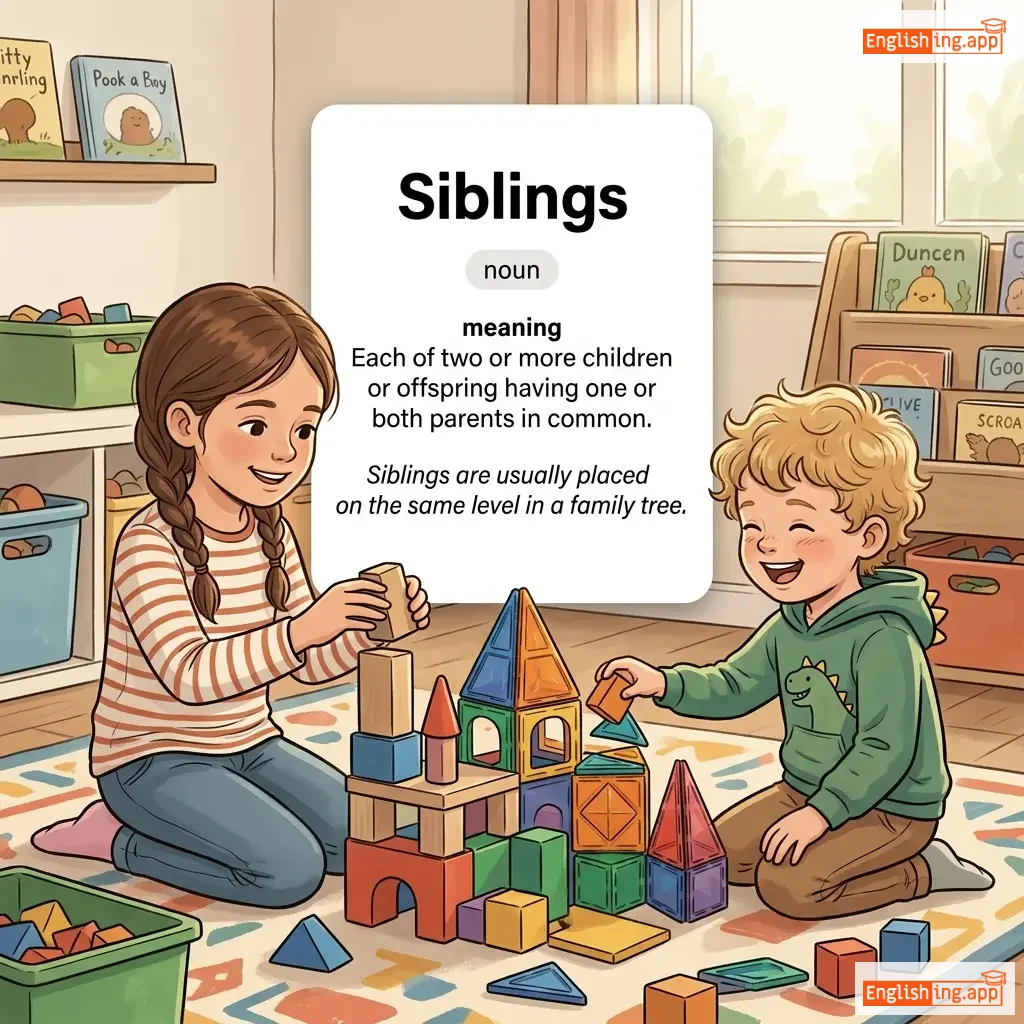
Siblings definition card — visual illustration of the meaning
noun
ˈsɪblɪŋz
兄弟姉妹 (kyōdai shimai)

Each of two or more children or offspring having one or both parents in common.

"Siblings are usually placed on the same level in a family tree."

"兄弟姉妹は通常、家系図で同じレベルに配置されます。" (Kyōdai shimai wa tsūjō, kakeizu de onaji reberu ni haichi saremasu.)
adjective
/ˈsɪbɪlaɪn/
神託的 (shintokuteki)

Prophetic, mysterious, or cryptic in meaning.

"The old woman gave a sibylline warning about the future."

"その老婦人は未来について神託的な警告をした。" (Sono rō fujin wa mirai ni tsuite shintokuteki na keikoku o shita.)
adjective
/sɪk/
病気 (byouki)

feeling unwell or suffering from illness

"She stayed home because she was feeling sick."

"彼女は気分が悪かったので家にいました。" (kanojo wa kibun ga warukatta node ie ni imashita)
noun
/ˈsɪk.əl/
(kama)

a tool with a curved metal blade and short handle used for cutting grain crops

"The farmer harvested wheat using a traditional sickle."

"農夫は伝統的な鎌を使って小麦を収穫しました。" (Nōfu wa dentō-teki na kama o tsukatte komugi o shūkaku shimashita.)
adjective
/ˈsɪk.li/
弱い; 病気; 青白い (yowai)

weak and unhealthy; prone to illness; appearing weak or pale

"The sickly child needed extra care and attention."

"その弱い子供は、特別なケアと注意が必要だった。" (Sono yowai kodomo wa, tokubetsuna kea to chuui ga hitsuyou datta)
noun
/ˈsɪk.nəs/
病気; 疾患 (byōki; shikkan)

the state of being ill; a disease or illness

"She took time off work due to sickness."

"彼女は病気のため仕事を休みました。" (Kanojo wa byōki no tame shigoto o yasumimashita.)
noun
/saɪd/
(sokozu)

a position to the left or right of something

"The store is on the side of the road."
"店は道路の側にあります。" (Mise wa douro no soko ni arimasu.)
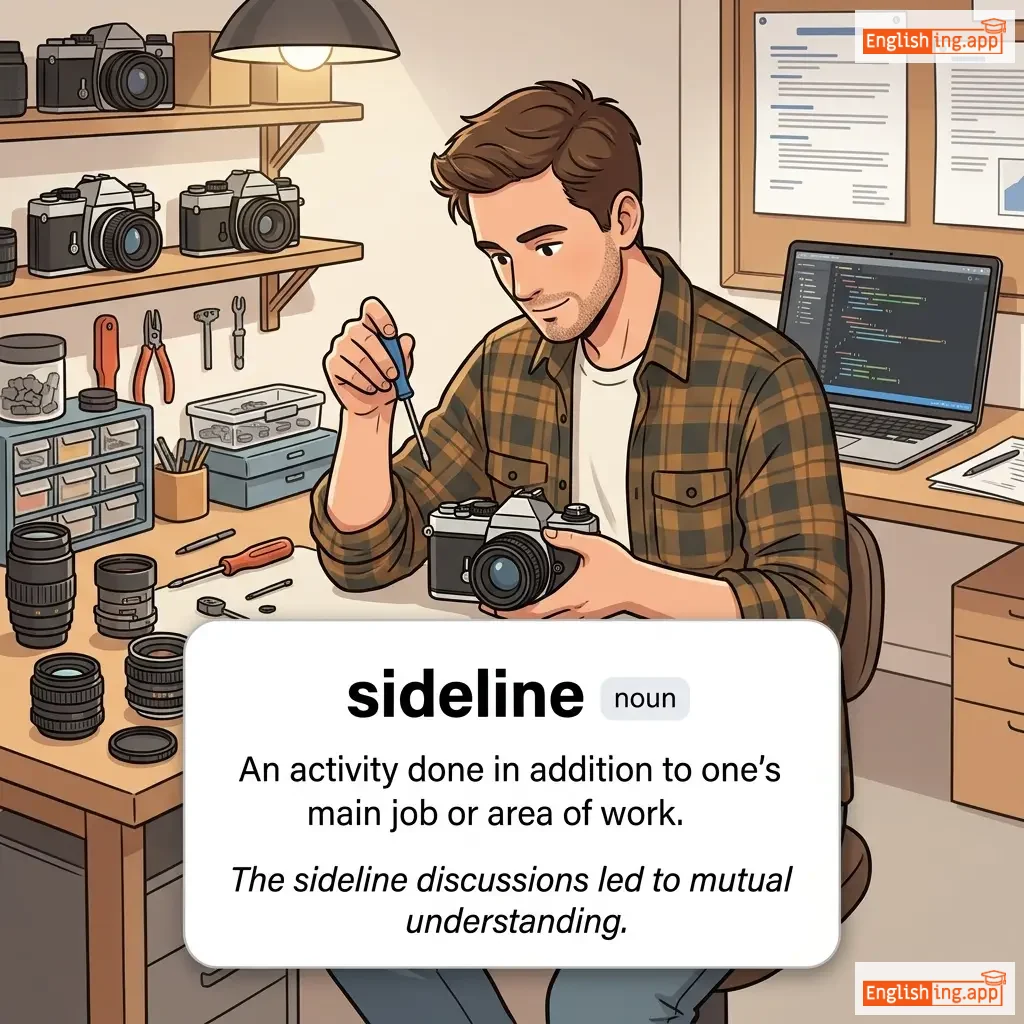
sideline definition card — visual illustration of the meaning
noun
/ˈsaɪd.laɪn/
副業 (fukugyo)

An activity done in addition to one's main job or area of work.

"The sideline discussions led to mutual understanding."

"副業の議論が相互理解を促進した。" (Fukugyo no giron ga sōgo rikai o sokushin shita.)
sideline discussions definition card — visual illustration of the meaning
noun
/ˈsaɪd.laɪn dɪˈskʌʃənz/
サイドラインの議論 (saidrain no giron)

Informal or secondary conversations that occur outside the main agenda of a formal meeting.

"Sideline discussions often lead to agreements."

"サイドラインの議論はしばしば合意に至ります。" (Saidrain no giron wa shibashiba gōi ni itarimasu.)
adjective, adverb
/ˈsaɪdlɔːŋ/
斜め目線 (naname mesen)

Directed to the side; indirect, furtive, or not straightforward.

"She gave him a sidelong glance across the room."

"彼女は部屋を横切って彼に斜め目線を送った。" (Kanojo wa heya o yokogitte kare ni naname mesen o okutta.)
sidereal definition card — visual illustration of the meaning
adjective
/saɪˈdɪəriəl/
恒星の (kōsei no)

Relating to the stars or constellations; measured relative to the stars.

"Astronomers use sidereal time to track the positions of stars."

"天文学者は恒星時を使用して星の位置を追跡します。" (tenmongakusha wa kōsei-ji o shiyō shite hoshi no ichi o tsuiseki shimasu.)
verb
/ˈsaɪdˌstɛp/
回避する (kaihi suru)

To avoid something by stepping aside; to evade a problem or question indirectly.

"The politician tried to sidestep the difficult question."

"政治家はその難しい質問を避けようとした。" (Seijika wa sono muzukashii shitsumon wo sakeyou to shita.)
verb
/ˈsaɪdˌtræk/
気を散らす (ki o chirasu)

To distract from the main subject or activity.

"She was sidetracked by an unexpected phone call."

"彼女は予期しない電話で気を取られた。" (Kanojo wa yokishinai denwa de ki o torareta.)
noun
/ˈsaɪdˌwɔːk/
歩道 (hodou)

a paved path for pedestrians at the side of a street.

"Children were playing on the sidewalk."

"子供たちは歩道で遊んでいました。" (Kodomotachi wa hodou de asonde imashita.)
noun
/siːdʒ/
包囲 (hōi)

A military operation in which a place is surrounded to force its surrender.

"The castle fell after a long siege."

"城は長い包囲戦の後に落ちました。" (Shiro wa nagai hōisen no ato ni ochimashita.)
Sierra Club definition card — visual illustration of the meaning
noun
/siˈɛrə klʌb/
シエラクラブ (Shiera Kurabu)

An American environmental organization founded in 1892 by John Muir, focused on promoting conservation of the natural environment by influencing public policy decisions.

"John Muir founded the Sierra Club in 1892 to protect wild areas."

"ジョン・ミューアは1892年にシエラクラブを設立し、野生地帯を保護しました。" (Jon Myua wa 1892-nen ni Shiera Kurabu o setsuritsu shi, yasei chitai o hogo shimashita.)
noun
/sɪv/
ふるい (furui)

a utensil with a mesh or perforated bottom, used for straining or sifting

"She used a sieve to strain the pasta."

"彼女はパスタをこすためにふるいを使いました。" (Kanojo wa pasuta o kosu tame ni furui o tsukaimashita.)
noun
/siːdʒ/
包囲 (hōi)

a military operation to capture a place by surrounding it and cutting off supplies

"The siege of the castle lasted for three months."

"城塞の包囲は三ヶ月続いた。" (Jōsai no hōi wa sankagetsu tsuzuita.)
verb
/sɪft/
ふるいにかける / 注意深く調べる (furui ni kakeru / chuui-bukaku shiraberu)

to separate or sort through carefully, often using a sieve or by examining closely

"She sifted the flour before adding it to the cake mixture."

"ケーキのミックスに加える前に、小麦粉をふるいにかけました。" (Kēki no mikkusu ni kuwaeru mae ni, komugiko o furui ni kakemashita.)
verb
/saɪ/
ため息をつく (tameiki o tsuku)

to let out a long, deep breath as an expression of tiredness, relief, or sadness

"She sighed with relief when she heard the good news."

"良いニュースを聞いたとき、彼女は安心してため息をついた。" (Yoi nyuusu o kiita toki, kanojo wa anshin shite tameiki o tsuita.)
noun
/saɪt/
視力 (shiryoku)

the ability to see or something that is seen

"The sight of the sunset took her breath away."

"夕日の光景は彼女を驚かせた。" (Yūhi no kōkei wa kanojo o odorokaseta.)
👁️‍🗨️

Sightless (saitoresu)

adjective
/ˈsaɪt.ləs/
盲目; 視力なし (moumoku; shiryoku nashi)

unable to see; blind; lacking vision

"The sightless man navigated the street with his guide dog."

"盲目の男性はガイド犬と一緒に通りを歩きました。" (Moumoku no dansei wa gaido inu to issho ni toori o arukimashita)
sign definition card — visual illustration of the meaning
noun
/saɪn/
サイン (sain)

a symbol, mark, or gesture that conveys information or instructions

"The sign on the door said 'Closed for lunch'."

"ドアにあったサインには「ランチのため閉店」と書かれていました。" (Doa ni atta sain ni wa 'ranchi no tame heiten' to kakarete imashita.)
noun/verb
/ˈsɪɡnəl/
合図 (aizu)

a gesture, sound, or action used to convey information or instructions

"The driver gave a hand signal before turning left."
"運転手は左に曲がる前に手の合図を出した。" (Unten-shu wa hidari ni magaru mae ni te no aizu o dashita.)
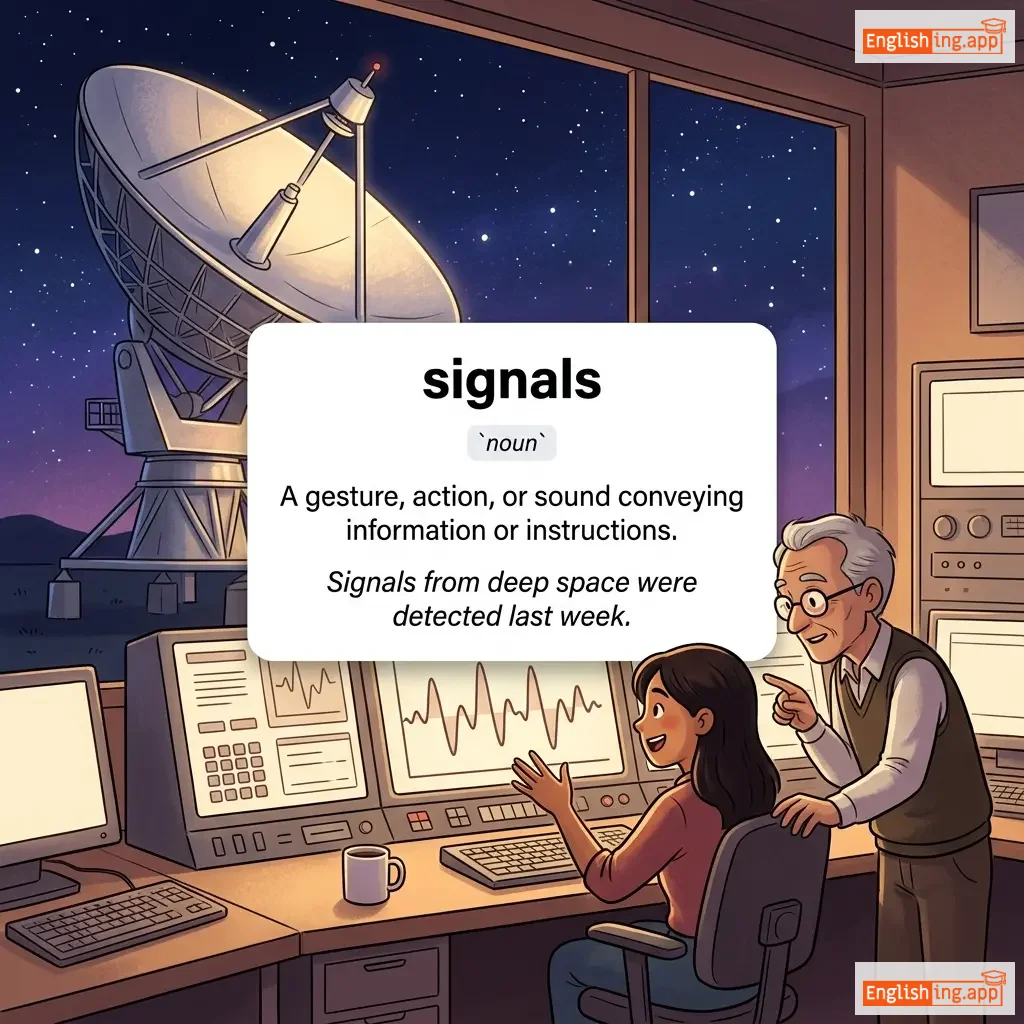
signals definition card — visual illustration of the meaning
noun
/ˈsɪɡ.nəlz/
信号 (shingou)

A gesture, action, or sound conveying information or instructions.

"Signals from deep space were detected last week."

"深宇宙からの信号は先週検出されました。" (Shin uchū kara no shingou wa senshū kenshutsu saremashita.)
noun
/ˈsɪɡ.nə.tʃər/
署名 (shomei)

a person's name written by themselves, often as a form of identification or authorization

"She signed the contract with her elegant signature."

"彼女は優雅な署名で契約書にサインしました。" (Kanojo wa yūga na shomei de keiyakusho ni sain shimashita.)
noun
/sɪɡˈnɪfɪkəns/
重要性 (jūyō-sei)

the quality of being important, meaningful, or worthy of attention

"The significance of the discovery was recognized worldwide."

"その発見の重要性は世界中で認識されました。" (Sono hakken no jūyō-sei wa sekaijū de ninshiki saremashita.)
significant definition card — visual illustration of the meaning
adjective
/sɪɡˈnɪfɪkənt/
重要な (jūyōna)

important, meaningful, or having a noticeable effect

"The company made a significant investment in new technology."

"会社は新しい技術に重要な投資をしました。" (Kaisha wa atarashī gijutsu ni jūyōna tōshi o shimashita.)
adverb
/sɪɡˈnɪfɪkəntli/
顕著に (kenchoni)

in a way that is large or important enough to have an effect

"The economy has significantly improved over the last decade."

"経済は過去10年間で顕著に改善しました。" (Keizai wa kako 10 nenkan de kencho ni kaizen shimashita.)
noun
/ˌsɪɡnɪfɪˈkeɪʃən/
意味 (imi)

the meaning or sense conveyed by a word, action, or symbol

"The signification of the gesture was misunderstood."
"そのジェスチャーの意味は誤解されていました。" (Sono jesuchā no imi wa gokai sarete imashita.)
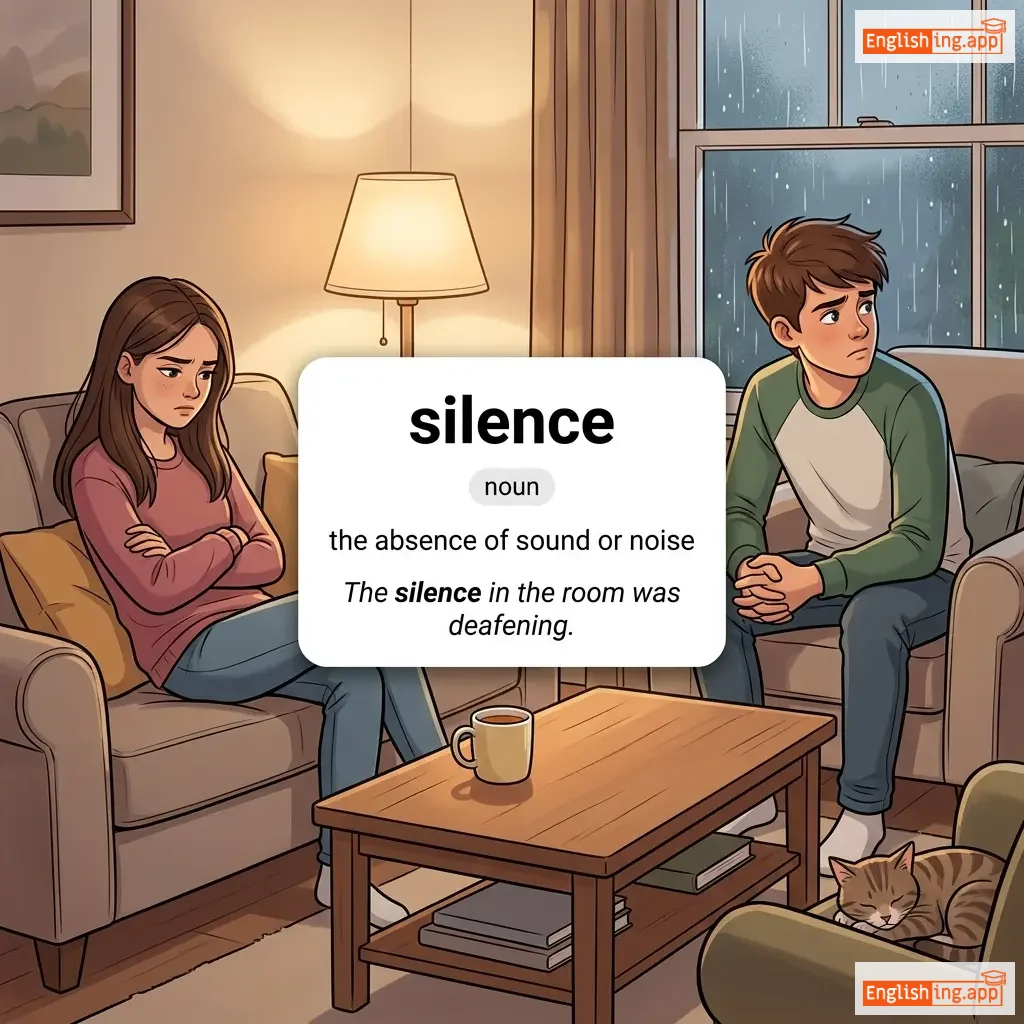
silence definition card — visual illustration of the meaning
noun
/ˈsaɪləns/
静けさ (shizukesa)

the absence of sound or noise

"The silence in the room was deafening."

"部屋の中の静けさは耳をつんざくようだった。" (Heya no naka no shizukesa wa mimi wo tsunzaku you datta.)
adjective
/ˈsaɪlənt/
静かな (shizukana)

not speaking or making noise

"The room was silent as everyone waited for the announcement."

"部屋は静かで、皆が発表を待っていた。" (Heya wa shizuka de, minna ga happyou o matte ita.)
noun
/sɪlk/
(kinu)

a fine, smooth fabric made from the threads produced by silkworms

"The dress was made of pure silk."

"そのドレスは純粋な絹で作られていた。" (Sono doresu wa junsuina kinu de tsukurarete ita.)
noun
/sɪlk klɔːθ/
シルクの布 (shiruku no nuno)

fabric made from natural fibers produced by silkworms

"The bride wore a beautiful dress made of silk cloth."

"花嫁はシルクの布で作られた美しいドレスを着ていました。" (hanayome wa shiruku no nuno de tsukurareta utsukushī doresu o kiteimashita.)
noun
/ˈsɪlk.wɜːrm/
かいこ (kaiko)

the caterpillar of a moth that produces silk fibers used to make silk fabric

"Silkworms feed on mulberry leaves to produce silk."

"カイコは桑の葉を食べて、絹を生産します。" (Kaiko wa kuwa no ha o tabete, kinu o seisan shimasu.)