語彙集

英単語辞書 | 単語の意味、定義、例文

adjective
/ˈsɛksi/
セクシー (sekushī)

sexually attractive or exciting

"She wore a sexy red dress to the party."

"彼女はパーティーでセクシーな赤いドレスを着ていました。" (Kanojo wa pāti de sekushī na akai doresu o kite imashita.)
adjective
/ˈʃæbi/
使い古し (tsukaigurushi)

In poor condition through long use or lack of care; of low quality.

"The hotel room looked shabby and old-fashioned."

"ホテルの部屋は使い古されていて、古臭く見えました。" (Hoteru no heya wa tsukaigurushiteite, furukusaku miemashita.)
noun
/ʃæk/
小屋 (koya)

a small, roughly built house or hut, often poor or temporary

"They spent the weekend in a small wooden shack by the river."

"彼らは川沿いの小さな木製の小屋で週末を過ごしました。" (Karera wa kawa-zoi no chiisana mokusei no koya de shūmatsu o sugoshimashita.)
verb
/ˈʃækəl/
足かせ (ashikase)

to chain or restrain; to restrict someone’s actions or freedom

"Outdated regulations shackle small businesses and slow innovation."

"古い規制は小規模なビジネスを足かせし、革新を遅らせます。" (Furui kisei wa shōkibo na bijinesu o asikase shi, kakushin o okurasemasu.)
noun
/ˈʃæd.ək/
ポメロ (pomero)

a large citrus fruit similar to grapefruit; pomelo

"The shaddock is the largest citrus fruit in the world."
"シャドックは世界で最も大きな柑橘類の果物です。" (Shadokku wa sekai de mottomo ōkina kankitsurui no kudamono desu.)
🌳

shade

noun, verb
/ʃeɪd/

a sheltered or darker area where direct light is blocked; to block light from something

"We sat under the tree for some shade."

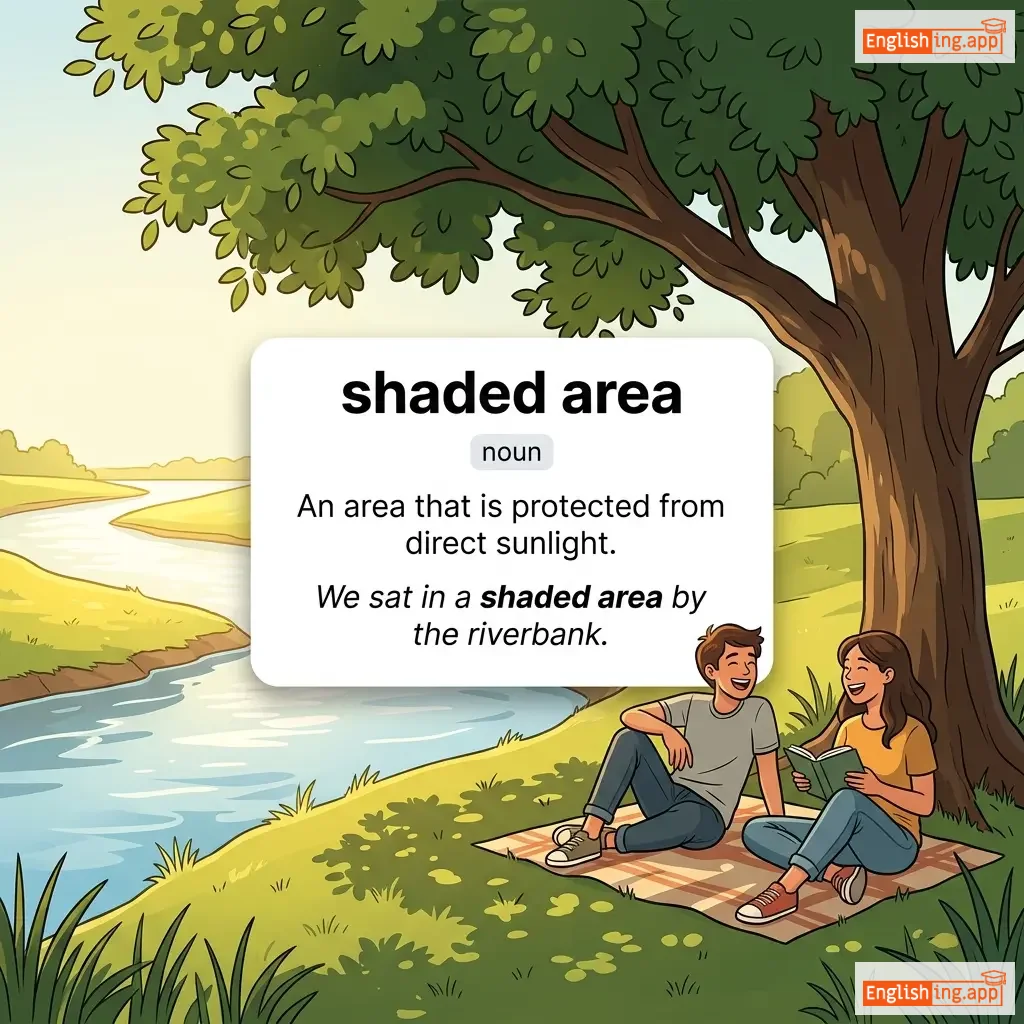
shaded area definition card — visual illustration of the meaning
noun
ˈʃeɪdɪd ˈɛəriə
日陰のエリア (hikage no eria)

An area that is protected from direct sunlight.

"We sat in a shaded area by the riverbank."

"私たちは川の岸辺の日陰のエリアに座っていました。" (Watashitachi wa kawa no kishibe no hikage no eria ni suwatte imashita.)
noun, verb
/ˈʃæd.oʊ/
(kage)

a dark area or shape made when something blocks light; to follow or observe secretly

"His shadow stretched long in the evening sun."

"彼の影は夕方の太陽の中で長く伸びていました。" (Kare no kage wa yūgata no taiyō no naka de nagaku nobite imashita.)
adjective
/ˈʃeɪ.di/
日陰の; 疑わしい; 不誠実な; (higasa no; utagawashī; fuseijitsuna)

providing shade; dishonest; suspicious

"The shady businessman made a suspicious deal."
"その日陰の商人は疑わしい取引をしました。" (Sono higasa no shōnin wa utagawashī torihiki o shimashita.)
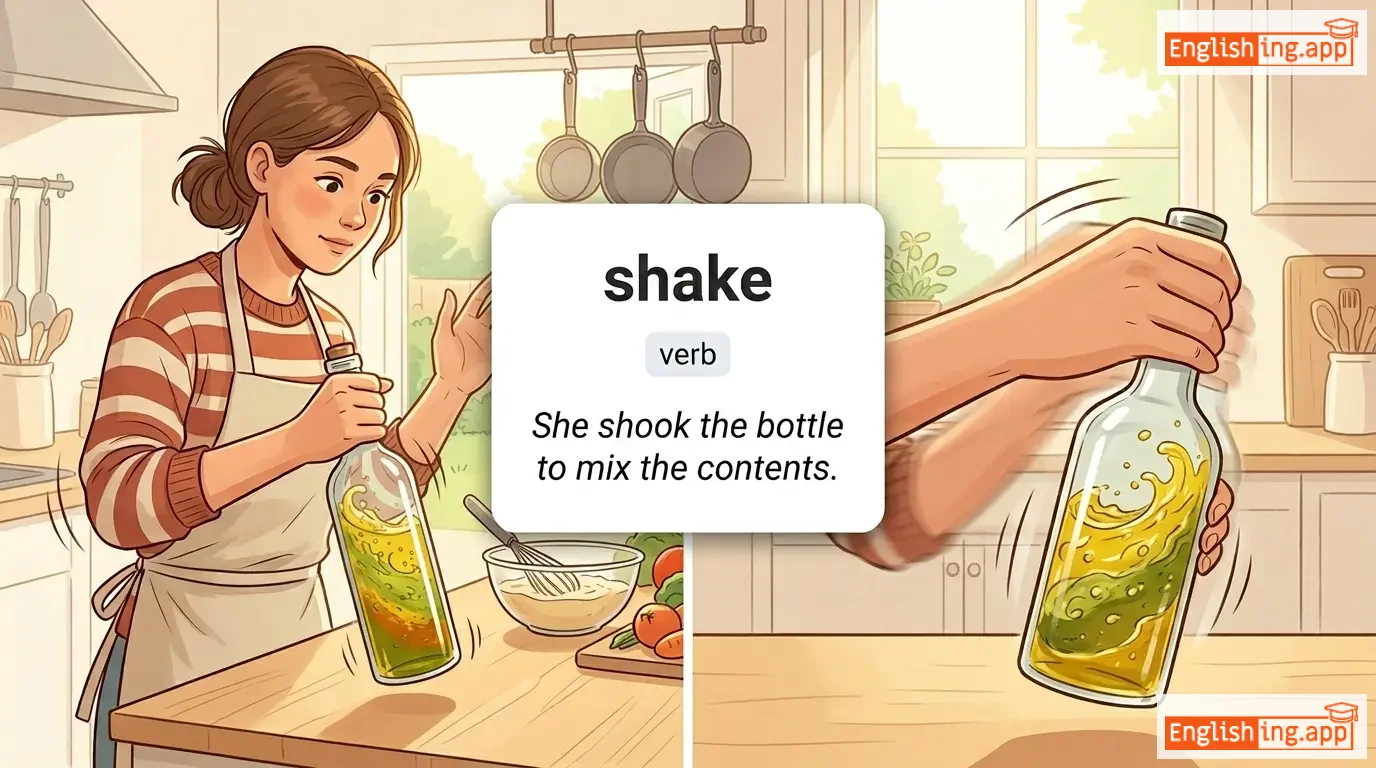
shake definition card — visual illustration of the meaning
verb
/ʃeɪk/
シェイク (sheiku)

to move or cause to move up and down or from side to side with rapid, short movements

"She shook the bottle to mix the contents."

"彼女はボトルをシェイクして内容を混ぜました。" (Kanojo wa botoru o sheiku shite naiyō o mazemashita.)
adjective
/ˈʃeɪ.ki/
不安定な; 震える; 信頼できない; 弱い (fuanteina; furueru; shinraidekinai; yowai)

unstable; trembling; unreliable; weak

"His voice was shaky with nervousness."

"彼の声は緊張で震えていた。" (Kare no koe wa kinchou de furueteita.)
noun
/ʃeɪl/
頁岩 (yegane)

a fine-grained sedimentary rock that can be split into thin layers

"The region is rich in shale and natural gas deposits."

"その地域は頁岩と天然ガスの埋蔵量が豊富です。" (sono chiiki wa yegane to tennen gasu no maizōryō ga hōfu desu.)
modal verb
/ʃæl/
〜するつもり (suru tsumori)

used to express the future or indicate an intention or determination

"I shall return before sunset."

"私は日没前に戻ります。" (Watashi wa nichibotsu mae ni modorimasu.)
adjective
/ˈʃæl.oʊ/
浅い (asai)

not deep; lacking depth of thought or feeling

"The children played in the shallow water near the shore."

"子供たちは岸近くの浅い水で遊んでいました。" (Kodomotachi wa kishi chikaku no asai mizu de asondeimashita.)
noun, adjective, verb
/ʃæm/
偽り (itsuwari)

something that is not what it appears to be; a false or fake thing; to pretend

"The deal turned out to be a sham."

"その取引は偽りであることが判明しました。" (Sono torihiki wa itsuwari de aru koto ga hanmei shimashita.)
noun
/ˈʃæmbəlz/
大混乱 (daikonran)

a state of complete disorder or ruin

"After the storm, the whole town was in shambles."

"嵐の後、町全体が大混乱に陥った。" (Arashi no ato, machi zentai ga daikonran ni ochītta.)
noun
/ʃeɪm/
(haji)

a painful feeling of humiliation or distress caused by the consciousness of wrong or foolish behavior

"He felt deep shame after lying to his friend."

"彼は友人に嘘をついた後、深い恥を感じた。" (Kare wa yūjin ni uso o tsuita ato, fukai haji o kanjita.)
adjective
/ˈʃeɪm.fəl/
恥ずかしい; 不名誉な; 恥ずかしい (hazukashii; fumeiyo na; hazukashii)

causing shame; disgraceful; embarrassing

"His shameful behavior embarrassed the entire family."

"彼の恥ずかしい行動は家族全員を困惑させました。" (Kare no hazukashii kōdō wa kazoku zen'in o konwaku sasemashita.)
adjective
/ˈʃeɪm.ləs/
恥知らず (hajishirazu)

having no shame; bold and rude; impudent

"The shameless politician refused to apologize for his mistakes."

"恥知らずな政治家は自分の過ちを謝罪することを拒んだ。" (hajishirazuna seijika wa jibun no ayamachi o shazai suru koto o kobanda)
noun
/ˌʃæŋɡriˈlɑː/
架空の楽園 (kakū no rakuen)

a remote, beautiful, imaginary place where life is perfect and peaceful

"They described the island as a modern-day Shangri-La."

"彼らはその島を現代版シャングリ・ラとして描写しました。" (Karera wa sono shima o gendai-ban Shangri-La to shite byōsha shimashita.)
noun
/ʃeɪp/
(katachi)

the external form, contours, or outline of someone or something

"The shape of the mountain was clearly visible from the valley."

"山の形は谷からはっきりと見えた。" (Yama no katachi wa tani kara hakkiri to mieta.)
adjective
/ʃeɪpt/
形作られた (katachi tsukurareta)

having a particular form or appearance

"The sculpture was shaped like a human figure."

"彫刻は人間の姿のように形作られていました。" (Choukoku wa ningen no sugata no you ni katachi tsukurareteimashita.)
adjective
/ˈʃeɪp.ləs/
形のない (katachi no nai)

having no definite or well-defined shape or form

"The fog created a shapeless mass in the distance."
"霧は遠くに形のない塊を作り出しました。" (Kiri wa tōku ni katachi no nai katamari o tsukuridashimashita.)
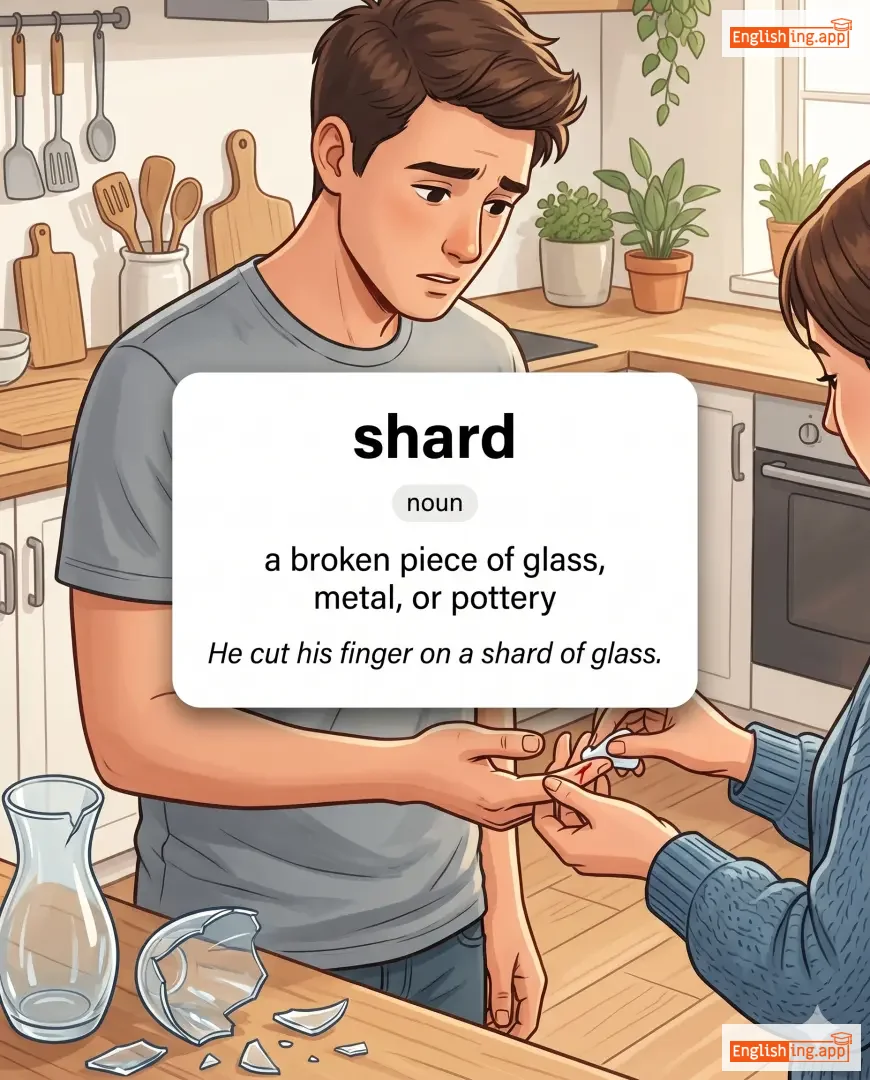
shard definition card — visual illustration of the meaning
noun
/ʃɑːrd/
破片 (hapen)

a broken piece of glass, metal, or pottery

"He cut his finger on a shard of glass."

"彼はガラスの破片で指を切った。" (Kare wa garasu no hapen de yubi o kitta.)
verb
/ʃɛər/
共有する (kyōyū suru)

to give a portion of (something) to others or allow others to use or enjoy it

"She decided to share her lunch with her friends."

"彼女は友達と昼食を共有することに決めました。" (Kanojo wa tomodachi to chūshoku o kyōyū suru koto ni kimemashita.)
adjective
/ʃɛrd/
共有 (kyōyū)

used, done, or experienced by two or more people together

"They live in a shared apartment near the university."

"彼らは大学の近くのシェアアパートに住んでいます。" (Karera wa daigaku no chikaku no shea apāto ni sundeimasu.)
noun
/ˈʃɛərˌhoʊldər/
株主 (kabunushi)

an individual or organization that owns shares in a company

"Each shareholder has the right to vote at the annual meeting."

"各株主は年次総会で投票する権利を持っています。" (Kaku kabunushi wa nenji sōkai de tōhyō suru kenri o motteimasu.)
noun
/ʃɑːrk/
サメ (same)

a large fish with sharp teeth known for being a strong predator in the ocean

"The shark swam silently beneath the boat."

"サメは船の下で静かに泳いでいました。" (Same wa fune no shita de shizukani oyoide imashita.)
noun
/ˈʃær.ən fruːt/
シャロンフルーツ (Sharón furu-tsu)

a sweet orange persimmon fruit that can be eaten when firm

"The Sharon fruit is sweet and can be eaten like an apple."

"シャロンフルーツは甘く、リンゴのように食べることができます。" (Sharón furu-tsu wa amakute, ringo no yō ni taberu koto ga dekimasu.)
adjective
/ʃɑːrp/
鋭い (surudoi)

having a fine edge or point; keen

"The knife is sharp enough to cut through the meat easily."

"ナイフは肉を簡単に切るために十分鋭いです。" (Naifu wa niku o kantan ni kiru tame ni jūbun surudoi desu.)
adverb
/ˈʃɑːrpli/
急激に (kyūgeki ni)

suddenly and strongly; in a cutting or intense way

"Prices rose sharply after the announcement."

"発表後、価格は急激に上昇した。" (Happyōgo, kakaku wa kyūgeki ni jōshō shita.)
verb
/ˈʃætər/
壊れる (kowareru)

To break suddenly into many small pieces.

"The glass will shatter if you drop it."

"ガラスは落とすと壊れる。" (Garasu wa otosu to kowareru.)
verb, noun
/ʃeɪv/
髭を剃る (hige o soru)

To remove hair from the body, typically using a razor; the act of removing hair

"He likes to shave every morning before work."

"彼は毎朝仕事の前に髭を剃るのが好きです。" (Kare wa maiasa shigoto no mae ni hige o soru no ga suki desu)
noun
/ˈʃeɪvɪŋ/
ひげ剃り (higesori)

the act of removing hair with a razor; a thin strip or piece shaved from something

"He bought a new cream for shaving."

"彼は新しいひげ剃りクリームを買いました。" (Kare wa atarashī higesori kurīmu o kaimashita.)
pronoun
/ʃi/
彼女 (kanojo)

a female person or animal previously mentioned or easily identified

"She is going to the market to buy vegetables."

"彼女は市場に行って野菜を買います。" (Kanojo wa ichiba ni itte yasai o kaimasu.)
noun
/ʃiːf/
麦の束 (mugi no taba)

a bundle of grain stalks laid lengthwise and tied together after reaping; a bundle of objects tied together

"The farmer carried a sheaf of wheat on his shoulder."

"農夫は肩に小麦の束を運んでいました。" (Nōfu wa kata ni komugi no taba o hakonde imashita.)
verb
/ʃɪə/
刈る (karu)

to cut the wool off a sheep or to cut something with sharp tools like scissors or shears

"The farmer will shear the sheep in the spring."

"農夫は春に羊の毛を刈ります。" (Nōfu wa haru ni hitsuji no ke o karimasu.)
noun
/ʃiːt fɪʃ/
ナマズ (namazu)

A large freshwater catfish with a broad flat head and long barbels

"The sheat-fish is one of the largest freshwater fish in South Asia."

"ナマズは南アジアで最大の淡水魚の一つです。" (Namazu wa minami ajia de saidai no tansui gyo no hitotsu desu)
verb
/ʃiːð/
鞘に戻す (saya ni modosu)

to put a sword or knife back into its cover

"He quickly sheathed his sword after the duel."

"彼は決闘の後、素早く剣を鞘に戻した。" (Kare wa kettou no ato, subayaku ken o saya ni modoshita.)
verb
/ʃɛd/
落ちる (ochiru)

to let something fall off naturally, such as leaves, hair, or tears

"Trees shed their leaves in autumn."

"木々は秋に葉を落とします。" (Kigi wa aki ni ha wo otoshimasu.)
noun
/ʃiːp/
(hitsuji)

a farm animal with thick wool that is raised for its wool, meat, and milk

"The farmer keeps a large flock of sheep."

"農夫は大きな羊の群れを飼っています。" (Noufu wa ookina hitsuji no mure o katte imasu.)
adjective
/ʃɪə/
完全 (kanzen)

complete and utter; very steep or transparent

"The cliff was a sheer drop into the sea."

"崖は海に向かって完全に落ちていました。" (Gake wa umi ni mukatte kanzen ni ochite imashita.)
noun
/ʃiːt/
シーツ (shītsu)

a large piece of cloth or paper, typically used to cover or protect something

"I need a clean sheet to cover the bed."

"ベッドを覆うために清潔なシーツが必要です。" (Beddo o ōu tame ni seiketsu na shītsu ga hitsuyō desu.)
noun
/ʃɛlf/
(tana)

a flat surface used for storing or displaying things, typically fixed to a wall or inside a cabinet

"I placed the books on the shelf next to the window."

"窓の近くの棚に本を置きました。" (Mado no chikaku no tana ni hon o okimashita.)
noun
/ʃɛl/
貝殻 (kaigara)

the hard outer covering of a mollusk or a crustacean, or something similar

"She picked up a beautiful seashell on the beach."

"彼女はビーチで美しい貝殻を拾った。" (Kanojo wa bīchi de utsukushī kaigara o hirotta.)
noun
/ˈʃɛltər/
避難所 (hinanjo)

a place giving temporary protection from bad weather or danger

"They found shelter from the storm in the nearby barn."

"彼らは嵐から避難するために近くの納屋で避難所を見つけました。" (Karera wa arashi kara hinan suru tame ni chikaku no naya de hinanjo o mitsukemashita.)
noun
/ˈʃepərd/
羊飼い (hitsuji kai)

a person who tends and guards sheep

"The shepherd guided his flock to the green pasture."

"羊飼いは自分の群れを緑の牧草地に導いた。" (hitsuji kai wa jibun no mure o midori no bokusouchi ni michibita.)
noun
/ˈʃɜːrbət/
シャーベット (shaabetto)

a sweet flavored drink or a frozen dessert made from sweetened fruit juice

"On hot days, she enjoys a glass of lemon sherbet."

"暑い日には、彼女はレモンシャーベットを一杯楽しんでいます。" (Atsui hi ni wa, kanojo wa remon shaabetto o ippai tanoshindeimasu.)
noun
/ˈʃɪbəˌlɛθ/
特定のグループを識別するための表現や信念 (tokutei no gurūpu o shikibetsu suru tame no hyōgen ya shin'nen)

A custom, phrase, or belief distinguishing a particular group of people, often used to identify outsiders.

"The phrase became a political shibboleth during the campaign."

"そのフレーズはキャンペーン中に政治的なシボレスとなった。" (Sono furēzu wa kyanpēn-chū ni seijiteki na shiboresu to natta.)
verb
/ʃɪft/
シフトする (shifuto suru)

To move or change from one place, position, or situation to another.

"She had to shift her focus to the new project."

"彼女は新しいプロジェクトに焦点を移さなければならなかった。" (Kanojo wa atarashii purojekuto ni shouten wo utsusanakereba naranakatta.)