語彙集

英単語辞書 | 単語の意味、定義、例文

noun
/læb/
実験室 (jikken-shitsu)

a place equipped for scientific experiments, research, or teaching

"The students conducted an experiment in the chemistry lab."

"学生たちは化学実験室で実験を行いました。" (Gakusei-tachi wa kagaku jikken-shitsu de jikken o okonaimashita.)
noun/verb
/ˈleɪ.bəl/
幸福 (kōfuku)

a small piece of paper, fabric, or material attached to an object giving information about it; to attach such a tag or to describe someone or something in a particular way

"She labeled the boxes to make moving easier."
"彼女は賞を受け取ったとき、幸せを隠せなかった。" (Kanojo wa shō o uketotta toki, kōfuku o kakusenakatta.)
labile definition card — visual illustration of the meaning
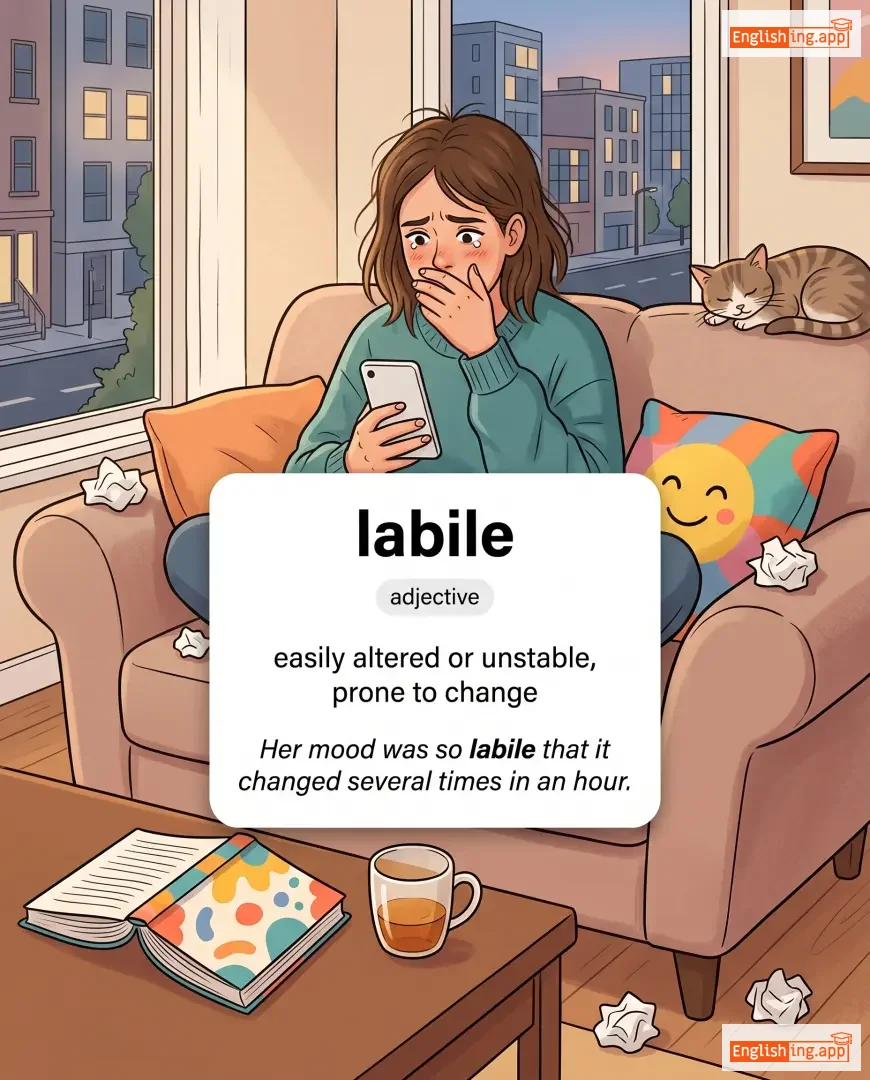
adjective
/ˈleɪ.baɪl/ or /ˈlæb.aɪl/
不安定な (fuanteina)

easily altered or unstable; prone to change

"Her mood was so labile that it changed several times in an hour."

"彼女の気分は非常に不安定で、1時間で何度も変わりました。" (Kanojo no kibun wa hijō ni fuantei de, 1-jikan de nando mo kawarimashita.)
noun/verb
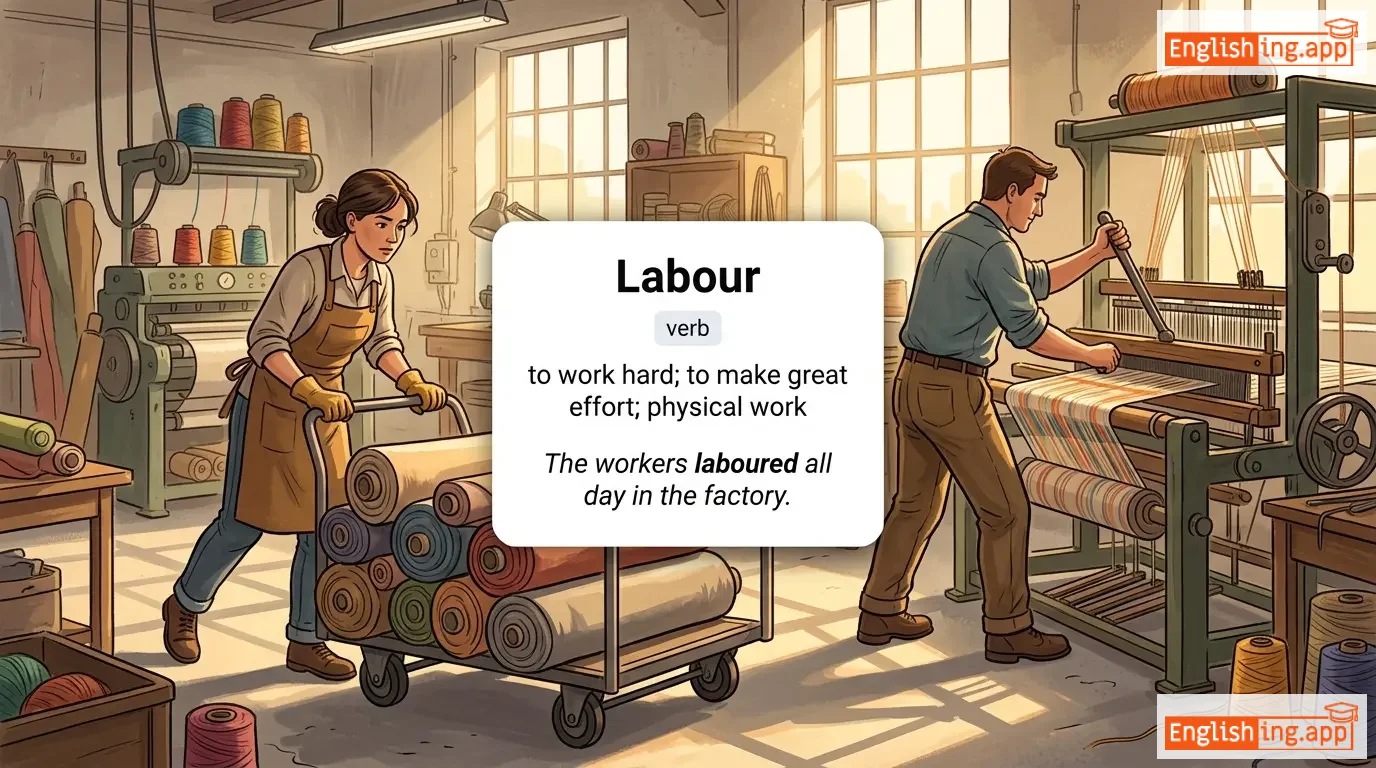
/ˈleɪ.bər/
労働 (roudou)

work, especially hard physical work; to work hard

"The workers labored in the hot sun all day."

"作業員たちは暑い太陽の下で一日中働いた。" (Sagyouin tachi wa atsui taiyou no shita de ichinichijuu hataraita.)
laboratories definition card — visual illustration of the meaning
noun
ˈlæbrətɔːriz
実験室 (jikken-shitsu)

A room or building equipped for scientific experiments, research, or teaching, or for the manufacture of drugs or chemicals.

"Advanced laboratories enabled groundbreaking discoveries."

"先進的な実験室は画期的な発見を可能にしました。" (Senshin-tekina jikken-shitsu wa kakkiteki na hakken o kanō ni shimashita.)
noun
/ˈlæbrətɔːri/
実験室 (jikken-shitsu)

A room or building equipped for scientific experiments, research, or teaching.

"The students conducted the experiment in the chemistry laboratory."

"学生たちは化学実験室で実験を行った。" (Gakusei-tachi wa kagaku jikken-shitsu de jikken o okonatta.)
noun
/ləˈbɔːr.ə.tɔːr.i/
実験室 (jikken shitsu)

a room or building equipped for scientific experiments, research, or teaching

"The scientists conducted their experiments in the well-equipped laboratory."

"科学者たちは設備の整った実験室で実験を行いました。" (Kagakusha-tachi wa setsubi no totonatta jikken-shitsu de jikken o okonai mashita.)
adjective/verb
/ˈleɪ.bərd/
苦労した (kurou shita)

done with great effort and difficulty; or past tense of labor

"He gave a labored explanation that confused the audience."

"彼は観客を混乱させた苦しげな説明をした。" (Kare wa kankyaku o konran saseta kurushige na setsumei o shita.)
noun
/ˈleɪbərər/
労働者 (roudousha)

a person who does physical work, especially work that requires strength rather than skill

"The laborer worked long hours at the construction site."

"その労働者は建設現場で長時間働いた。" (Sono roudousha wa kensetsu genba de choujikan hataraita)
adjective
/ləˈbɔːr.i.əs/
骨の折れる (hone no oreru)

requiring considerable effort and time; difficult and hard-working

"Writing the long report was a laborious task."
"長いレポートを書くことは骨の折れる仕事でした。" (Nagai repōto o kaku koto wa hone no oreru shigoto deshita.)
Labour definition card — visual illustration of the meaning
noun
/ˈleɪ.bər/
肉体的または精神的な労働 (nikutai-teki mata wa seishin-teki na rōdō)

work involving physical or mental effort; workers as a group

"The construction required months of hard labour to complete."

"建設には数ヶ月の厳しい労働が必要でした。" (kensetsu ni wa sū-kagetsu no kibishī rōdō ga hitsuyō deshita.)
noun
/ˈleɪ.bər.ər/
労働者 (roudousha)

a person who does unskilled physical work for wages

"The labourer worked hard all day at the construction site."
"労働者は建設現場で一日中一生懸命働きました。" (Roudousha wa kensetsu genba de ichinichijuu isshoukenmei hatarakimashita)
labyrinth definition card — visual illustration of the meaning
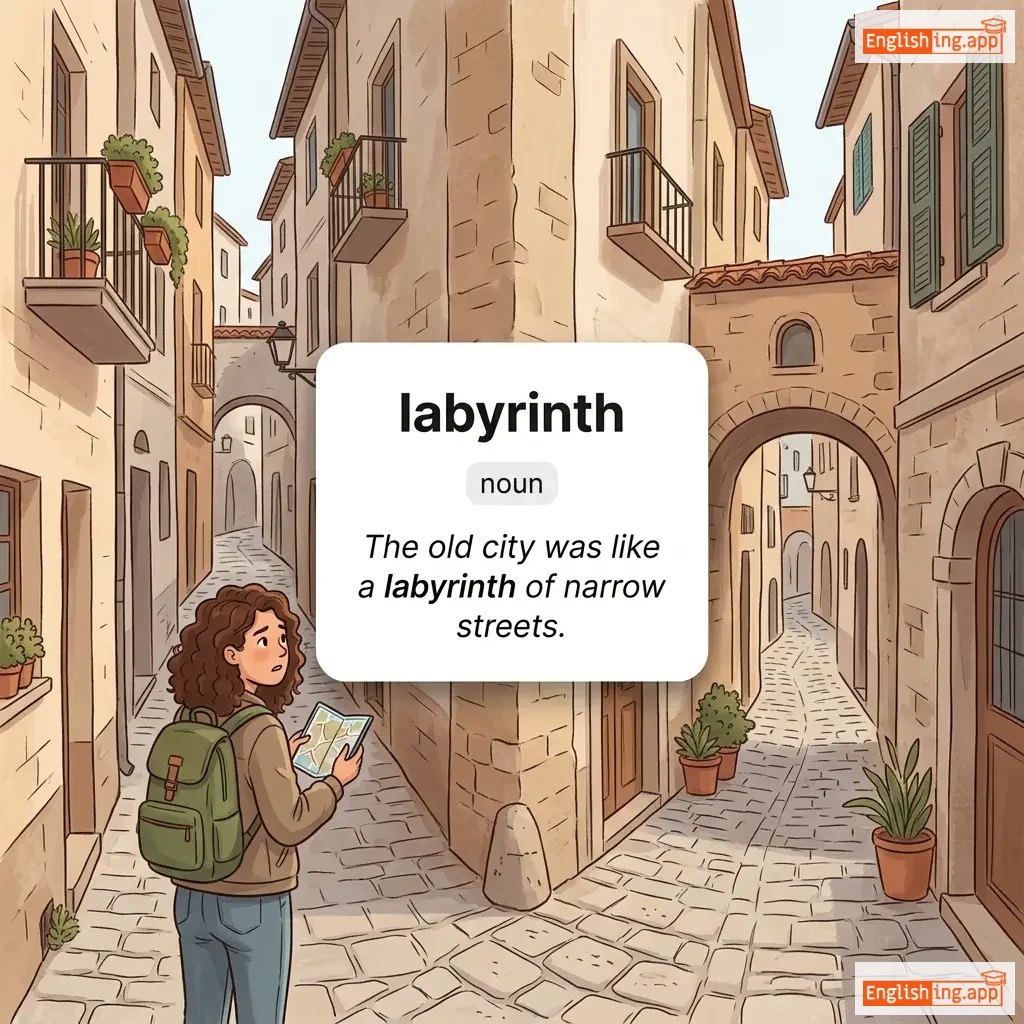
noun
/ˈlæb.ə.rɪnθ/
迷路 (meiro)

a complex, confusing network of paths or passages; something very intricate or confusing

"The old city was like a labyrinth of narrow streets."
"古い街は狭い通りの迷路のようでした。" (Furui machi wa semai tōri no meiro no yō deshita.)
labyrinthine definition card — visual illustration of the meaning
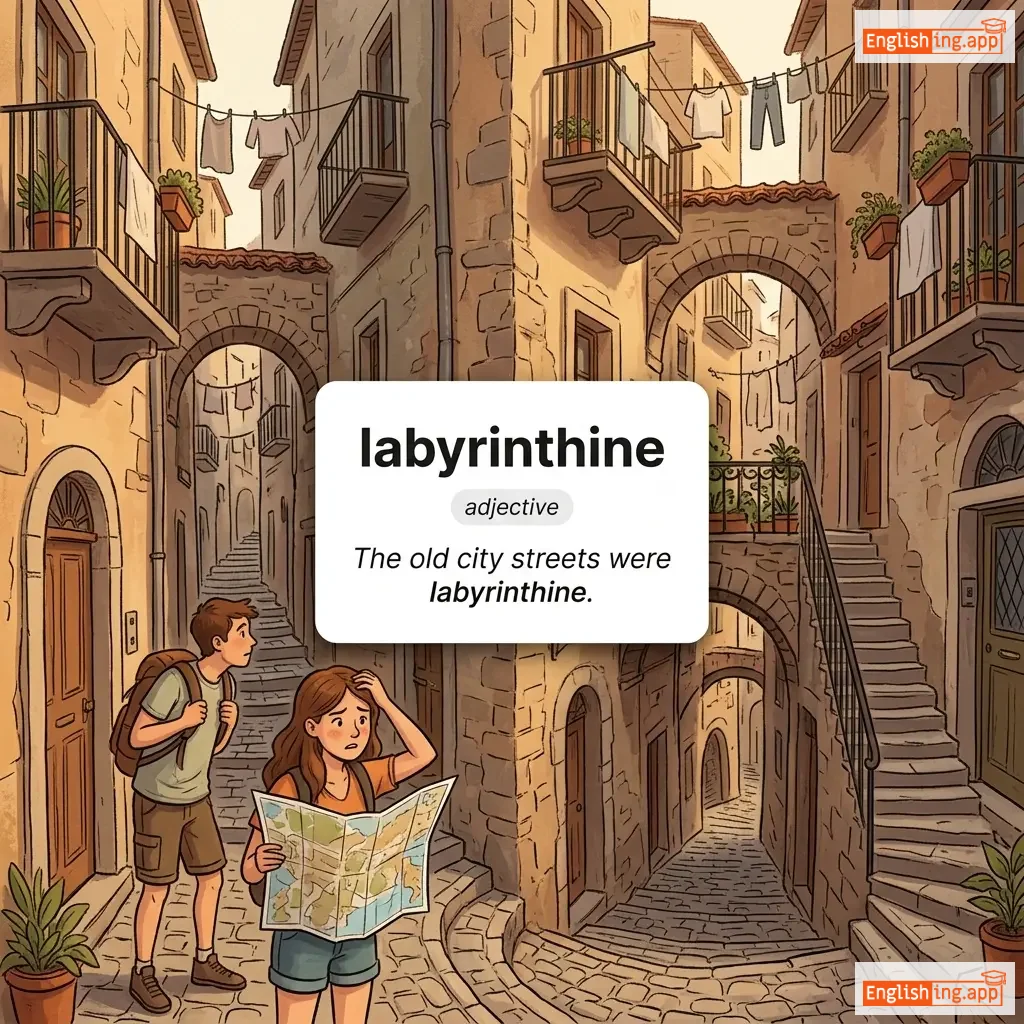
adjective
ˌlæb.əˈrɪn.θaɪn
迷路のような (meiro no yō na)

Like a labyrinth; complicated and confusing; having many interconnected paths or passages.

"The old city streets were labyrinthine."

"古い街の通りは迷路のようだった。" (Furui machi no tōri wa meiro no yō datta.)
noun/verb
/leɪs/
レース, 靴ひも (re-su, kutsu himo)

a delicate fabric made of threads; or to fasten or tie with a lace

"She laced up her shoes before leaving."

"彼女は出かける前に靴ひもを結んだ。" (Kanojo wa dekakeru mae ni kutsu himo o musunda.)
verb
/ˈlæs.ə.reɪt/
裂ける、引き裂く (sakeru, hikisaku)

to tear or cut deeply in the skin or flesh

"The broken glass lacerated his hand."

"壊れたガラスが彼の手を切った。" (Kowareta garasu ga kare no te o kitta.)
noun
/ˌlæs.əˈreɪ.ʃən/
深い切り傷 (fukai kirikizu)

a deep cut or tear in skin or flesh

"He needed stitches for a laceration on his leg."

"彼は足の深い切り傷に縫い合わせが必要でした。" (Kare wa ashi no fukai kirikizu ni nui awase ga hitsuyou deshita.)
adjective
/ˈlæk.rɪ.moʊs/
涙を流す、悲しむ (namida o nagasu, kanashimu)

tearful or given to weeping; sad and mournful

"The movie's lachrymose ending left the audience in tears."

"映画の悲しい結末は観客を涙で満たしました。" (Eiga no kanashī ketsumatsu wa kankyaku o namida de mitashimashita.)
noun/verb
/læk/
欠如 (ketsujo)

The state of being without or not having enough of something.

"He failed the exam due to a lack of preparation."

"準備不足で試験に失敗した。" (Junbi fusoku de shiken ni shippai shita.)
adjective
/ˌlækəˈdeɪzɪkəl/
怠惰または無関心 (taida mata wa mukanshin)

lacking enthusiasm, energy, or determination; careless or lazy

"His lackadaisical attitude toward work annoyed his boss."

"彼の怠惰な態度は、仕事に対する上司の不満を引き起こした。" (Kare no taida na taido wa, shigoto ni taisuru jōshi no fuman o hikiokoshita.)
noun
/ˈlæki/
従者 (jūsha)

a person who is overly willing to serve or obey someone else

"He treated his assistant like a mere lackey."

"彼は助手を単なる従者として扱った。" (Kare wa joshu o tannaru jūsha toshite atsukatta.)
adjective
/ˈlækɪŋ/
不足 (fusoku)

not having enough of something; missing

"His report was lacking in detail."
"彼の報告書には詳細が欠けていた。" (Kare no hōkokusho ni wa shōsai ga kakete ita.)
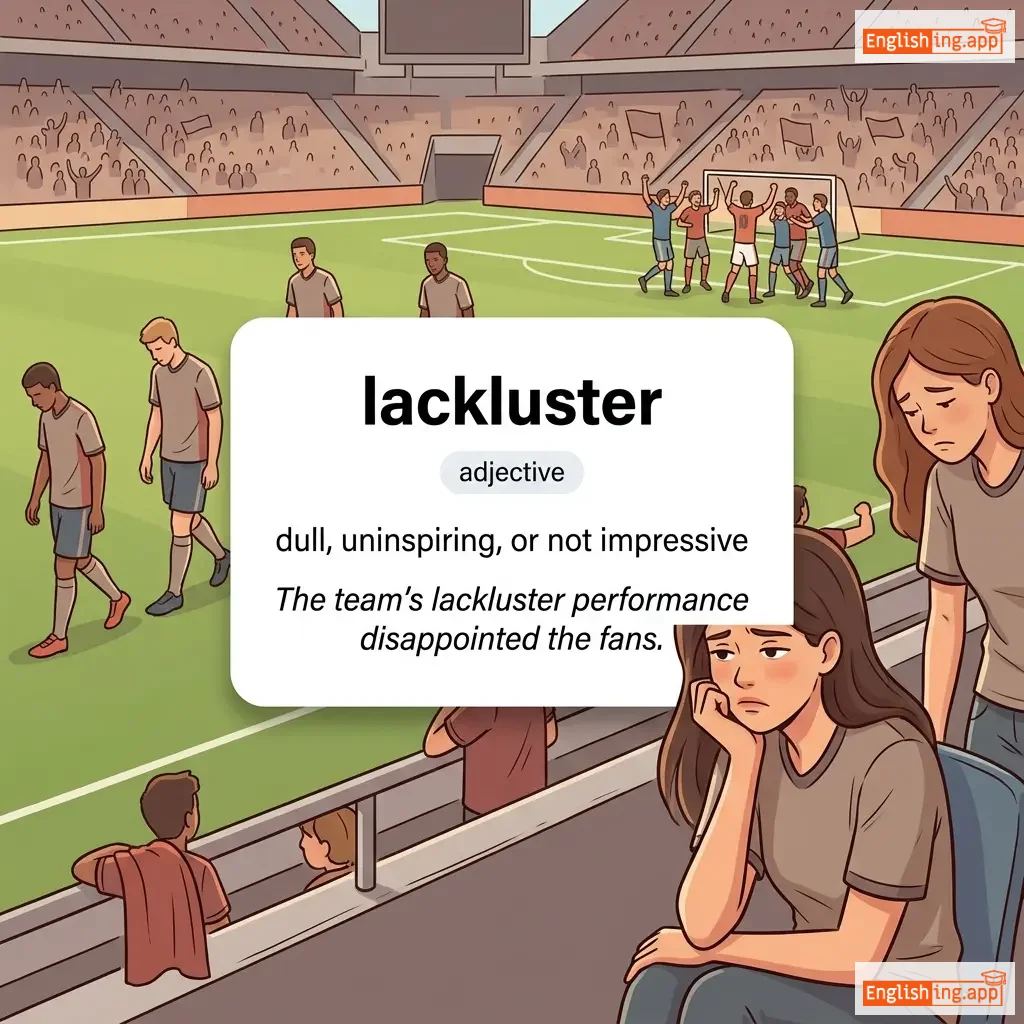
lackluster definition card — visual illustration of the meaning
adjective
/ˈlækˌlʌstər/
冴えないまたはインスピレーションのない (saenai matawa insupirēshon no nai)

dull, uninspiring, or not impressive

"The team's lackluster performance disappointed the fans."

"チームの冴えないパフォーマンスはファンを失望させました。" (Chīmu no saenai pafōmansu wa fan o shitsubō sasemashita.)
laconic definition card — visual illustration of the meaning
adjective
/ləˈkɒnɪk/
簡潔な (kanketsu na)

using very few words; concise to the point of seeming rude or mysterious

"His laconic reply ended the conversation quickly."

"彼の簡潔な返答は会話を迅速に終わらせた。" (Kare no kanketsu na hentō wa kaiwa o jinsoku ni owaraseta.)
noun
/lækˈteɪʃən/
授乳 (junyu)

the secretion of milk by the mammary glands of female mammals

"The doctor explained that lactation is a natural process after childbirth."

"医者は、出産後の授乳が自然なプロセスであると説明しました。" (Isha wa, shussango no junyu ga shizen na purosesu de aru to setsumei shimashita.)
adjective
/ˈlæk.ti.əl/
ミルクに関連するまたはミルクのような (miruku ni kanren suru matawa miruku no yōna)

Relating to or resembling milk; conveying chyle or milky fluid.

"The lacteal vessels in the small intestine absorb dietary fats."

"小腸の乳腺血管が食事の脂肪を吸収します。" (Shōchō no nyūsen kekkan ga shokuji no shibō o kyūshū shimasu.)
adjective
/ˈlæk.tɪk/
乳または乳酸に関連する (nyū mata wa nyūsann ni kanren suru)

Relating to milk or lactic acid.

"Intense exercise can lead to a buildup of lactic acid in the muscles."

"激しい運動は筋肉に乳酸が蓄積される原因となることがあります。" (Hageshii undō wa kinniku ni nyūsann ga chikuseki sareru gen'in to naru koto ga arimasu.)
noun
/læd/
少年 (shounen)

a boy or young man; a male youth

"The young lad helped his father in the shop."

"その若い少年は店で父親を手伝った。" (sono wakai shounen wa mise de chichioya o tetsudatta)
noun
/ˈlædər/
はしご (hashigo)

a structure with steps used for climbing up or down

"He used a ladder to reach the roof."

"彼は屋根に登るためにはしごを使いました。" (Kare wa yane ni noboru tame ni hashigo o tsukaimashita.)
noun
/ˈlæd.i/
若い男の子 (wakai otokonoko)

A young boy or lad.

"The old man gave the young laddie a kind smile."

"老人は若い男の子に親切な笑顔をくれました。" (Rojin wa wakai otokonoko ni shinsetsu na egao o kuremashita.)
noun, verb
/ˈleɪ.dl̩/
幸せ (shiawase)

A large spoon for serving soup or liquids; to serve with such a spoon.

"She used a ladle to serve the hot soup into bowls."

"彼女は賞を受け取ったとき、自分の幸せを隠すことができませんでした。" (Kanojo wa shō o uketotta toki, jibun no shiawase o kakusu koto ga dekimasen deshita.)
noun
/ˈleɪdi/
幸せ (shiawase)

A polite or formal way of referring to a woman.

"The lady at the counter was very helpful."

"彼女は賞を受け取ったとき、自分の幸せを隠すことができなかった。" (Kanojo wa shō o uketotta toki, jibun no shiawase o kakusu koto ga dekinakatta.)
verb, noun
/læɡ/
遅れるまたは遅延する (okureru mata wa chien suru)

To fall behind in movement, progress, or development; a delay or period of falling behind.

"The old computer tends to lag when running new software."

"古いコンピューターは新しいソフトウェアを実行するときにラグが発生しやすい。" (Furui konpyu-ta wa atarashii sofutouea wo jikkou suru toki ni ragu ga hassei shiyasui.)
noun
/ˈlæɡərd/
遅れた者 (okureta mono)

A person or thing that is slow or falls behind others.

"The company has been a laggard in adopting new technology."

"その会社は新しい技術の採用に遅れています。" (Sono kaisha wa atarashī gijutsu no saiyō ni okureteimasu.)
noun
/ˈlænjæp/
追加の贈り物 (tsuika no okurimono)

A small gift or bonus given by a seller to a customer.

"The shopkeeper offered a piece of candy as a lagniappe."

"店主はおまけとしてキャンディを提供しました。" (Tenshu wa omake toshite kyandi o teikyō shimashita.)
noun
/ləˈɡuːn/
ラグーン (ragūn)

A shallow body of water separated from the sea by sandbars or reefs.

"We swam in the calm waters of the lagoon."

"私たちはラグーンの穏やかな水で泳ぎました。" (Watashitachi wa ragūn no odayakana mizu de oyogimashita.)
laissez-faire definition card — visual illustration of the meaning
noun
/ˌlɛ.seɪˈfɛər/
不干渉政策 (fukan-shou seisaku)

A free-market policy of minimal government intervention in economic affairs, characterized by non-interventionism and capitalism.

"The country adopted a laissez-faire approach to economic policies."

"その国は経済政策においてレセフェールアプローチを採用した。" (Sono kuni wa keizai seisaku ni oite reseferu apurōchi o sai-yō shita.)
noun
/ˈleɪ.ɪ.ti/
信徒 (shintō)

Ordinary members of a religious community who are not clergy.

"The church welcomed the laity to participate in the event."

"教会は信徒を歓迎し、イベントに参加するよう呼びかけた。" (Kyōkai wa shintō o kangei shi, ibento ni sankasuru yō yobikaketa.)
noun
/leɪk/
(mizuumi)

A large area of water surrounded by land.

"They enjoyed boating on the lake during summer."

"彼らは夏の間、湖でボートを楽しみました。" (Karera wa natsu no aida, mizuumi de bōto o tanoshimimashita.)
noun
/læm/
子羊 (kohitsuji)

a young sheep; meat from a young sheep

"The little lamb followed its mother everywhere."

"その小さな子羊は母親の後をどこでも追いかけた。" (Sono chiisana kohitsuji wa hahaoya no ato o doko demo oikaketa.)
verb
/læmˈbæst/
厳しく批判する (kisoku hihan suru)

To criticize harshly or to beat severely.

"The coach lambasted the team for their poor performance."
"コーチはチームのパフォーマンスの悪さを厳しく非難しました。" (Ko-chi wa chi-mu no pafo-mansu no warusa o kibishiku hinan shimashita.)
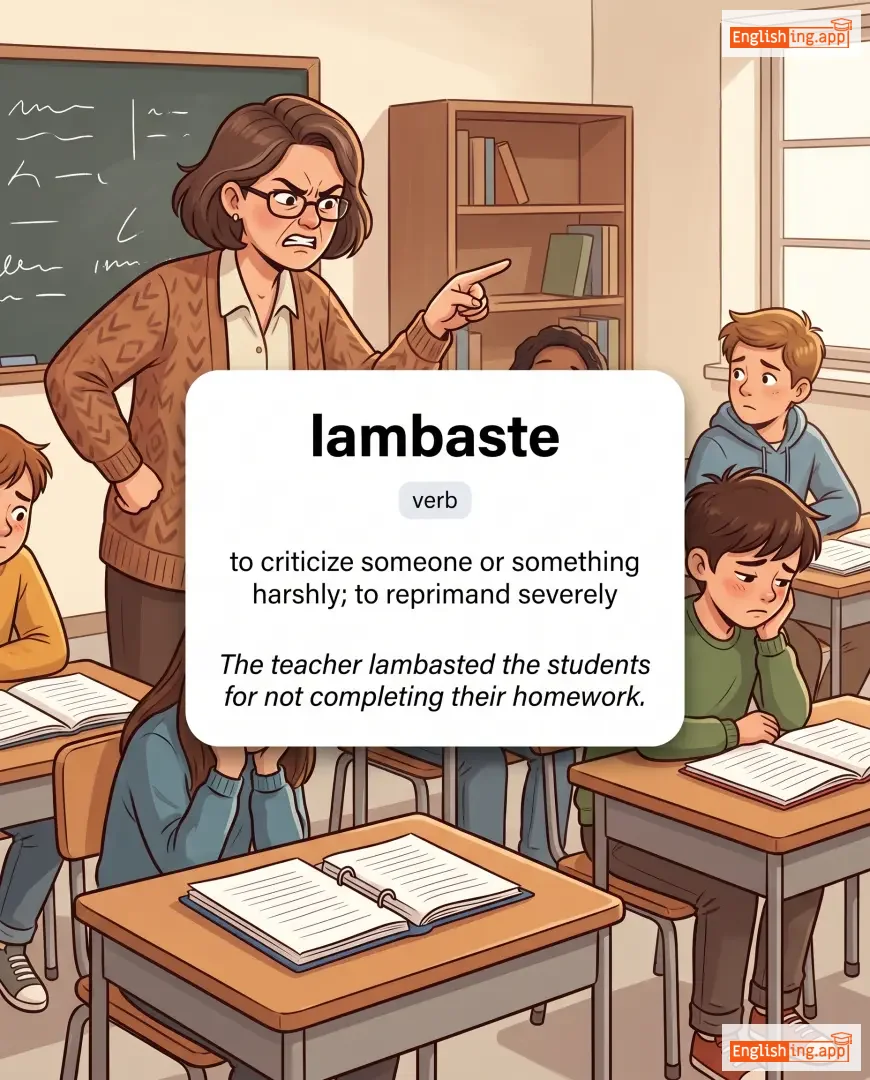
lambaste definition card — visual illustration of the meaning
verb
/læmˈbeɪst/
厳しく非難する (kibishiku hinansuru)

to criticize someone or something harshly; to reprimand severely

"The teacher lambasted the students for not completing their homework."

"教師は宿題をやらなかった学生を厳しく叱責しました。" (Kyoushi wa shukudai o yaranakatta gakusei o kibishiku shikkeshi mashita.)
adjective
/ˈlæmbənt/
柔らかな輝き (yawarakana kagayaki)

glowing or flickering softly; having a gentle radiance

"The lambent light of the candle filled the room with warmth."

"ろうそくの柔らかな輝きが部屋を暖かさで満たした。" (Rōsoku no yawarakana kagayaki ga heya o atatakasa de mitashita.)
adjective
/leɪm/
足が不自由; 病気 (Ashi ga fujiyū; byōki)

unable to walk normally because of an injury or illness affecting the leg or foot; weak and unconvincing

"The injured horse was lame and couldn't walk properly."
"怪我をした馬は足を引きずり、正常に歩くことができなかった。" (Kega o shita uma wa ashi o hikizuri, seijō ni aruku koto ga dekinakatta.)
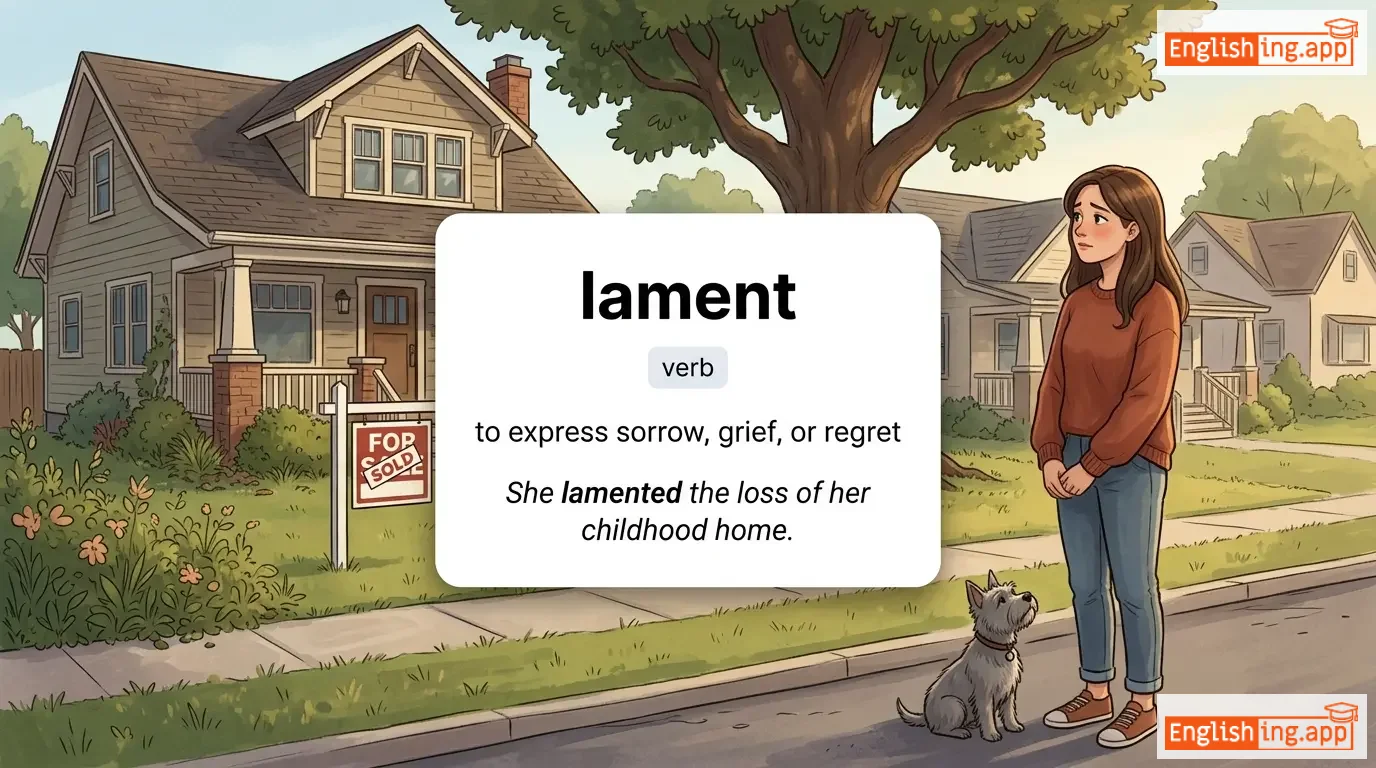
lament definition card — visual illustration of the meaning
verb
/ləˈmɛnt/
嘆く (nageku)

to express sorrow, grief, or regret

"She lamented the loss of her childhood home."

"彼女は幼少期の家の喪失を嘆いた。" (Kanojo wa youshouki no ie no soushitsu o nageita.)
adjective
/ˈlæm.ən.tə.bəl/
嘆かわしい (nakanokawashii)

deserving to be criticized or regretted; unfortunate

"The team’s lamentable performance disappointed their fans."

"チームの嘆かわしいパフォーマンスは、ファンを失望させました。" (Chīmu no nakanokawashī pafōmansu wa, fan o shitsubō sasemashita.)
verb
/ˈlæmɪˌneɪt/
ラミネート (ramineeto)

to cover or enclose something with a protective layer, usually plastic

"She laminated her important documents to protect them from damage."

"彼女は重要な書類をダメージから守るためにラミネートしました。" (Kanojo wa jūyō na shorui o damēji kara mamoru tame ni ramineeto shimashita.)
noun
/læmp/
幸福 (kōfuku)

a device that produces light, often using electricity

"She turned on the lamp beside the bed."

"彼女は賞を受け取ったとき、喜びを隠せなかった。" (Kanojo wa shō o uketotta toki, yorokobi o kakusenakatta.)
verb
/læmˈpuːn/
嘲笑する (choushou suru)

to publicly criticize or ridicule someone or something with humor, irony, or sarcasm

"The cartoonist lampooned the politician for his contradictory statements."

"カリカチュアリストはその矛盾する発言で政治家を嘲笑した。" (Karikachuarisuto wa sono moujun suru hatsugen de seijika wo choushou shita.)
noun
/læns/
(yari)

a long weapon with a pointed tip used by knights or soldiers on horseback

"The knight lowered his lance before charging at the opponent."

"騎士は対戦相手に突進する前に槍を下ろした。" (Kishi wa taisen aite ni toshin suru mae ni yari o oroshita.)