語彙集

英単語辞書 | 単語の意味、定義、例文

noun
/kəmˈpænjən/
仲間 (nakama)

a person or animal you spend time with or travel with

"He was my companion during the long journey."

"彼は長い旅の間、私の仲間でした。" (kare wa nagai tabi no aida, watashi no nakama deshita.)
noun
/ˈkʌm.pə.ni/
会社 (kaisha)

a business organization; the presence of other people

"She started her own company to sell handmade products."

"彼女は手作りの製品を販売するために自分の会社を始めました。" (Kanojo wa tedzukuri no seihin o hanbai suru tame ni jibun no kaisha o hajimemashita.)
adjective
/ˈkɒmp(ə)rəbl/
比較できる (hikaku dekiru)

Able to be likened to something else in size, amount, or quality.

"The two products are comparable in quality but differ in price."

"二つの製品は品質が比較できるが、価格が異なる。" (futatsu no seihin wa hinshitsu ga hikaku dekiru ga kakaku ga kotonaru)
adjective
/kəmˈpærətɪv/
比較の (hikaku no)

Measured or considered by comparison; relative.

"She lives in comparative comfort after moving to the city."

"彼女は都市に引っ越した後、比較的快適に暮らしている。" (kanojo wa toshi ni hikkoshita ato hikakuteki kaiteki ni kurashite iru)
compare definition card — visual illustration of the meaning
verb
/kəmˈpeər/
比較する (hikaku suru)

to examine the similarities and differences between two or more things

"The teacher asked us to compare two poems."

"先生は私たちに二つの詩を比較するように頼みました。" (Sensei wa watashitachi ni futatsu no shi o hikaku suru yō ni tanomimashita.)
noun
/kəmˈpærɪsən/
比較 (hikaku)

The act or process of examining the similarities and differences between things.

"A comparison of the two reports shows several inconsistencies."

"2つの報告書を比較すると、いくつかの不一致が見られます。" (futatsu no houkokusho o hikaku suru to ikutsuka no fuicchi ga mirarerumasu)
noun
/kəmˈpɑːtmənt/
区画 (kuka)

A separate section or space within a larger structure, such as a train or a container.

"He kept his passport in a small compartment of his bag."

"彼は自分のパスポートをバッグの小さな区画に入れました。" (Kare wa jibun no pasupōto o baggu no chīsana kuka ni iremashita.)
compartmentalize definition card — visual illustration of the meaning
verb
/kəmˈpɑːtməntəˌlaɪz/
区別する (kubetsu suru)

To divide into sections or categories.

"It is important to compartmentalize work and personal life to maintain balance."

"仕事と個人の生活を分けてバランスを保つことが重要です。" (Shigoto to kojin no seikatsu o wakete baransu o tamotsu koto ga jūyōdesu.)
noun
/ˈkʌm.pəs/
コンパス (konpasu)

an instrument for finding direction with a magnetic needle pointing to magnetic north

"The hiker used a compass to find the right direction."

"ハイカーは正しい方向を見つけるためにコンパスを使った。" (haikā wa tadashī hōkō o mitsukeru tame ni konpasu o tsukatta)
noun
/kəmˈpæʃən/
思いやり (omoiyari)

Sympathetic concern for the sufferings or misfortunes of others.

"The nurse treated the patients with great compassion."

"看護師は患者を大きな思いやりで治療しました。" (Kangoshi wa kanja o ōkina omoiyari de chiryō shimashita.)
adjective
/kəmˈpæʃənət/
思いやりのある; 哀れみ深い (omoiyari no aru; awaremi fukai)

feeling or showing sympathy and concern for others who are suffering

"The compassionate nurse took extra time to comfort the worried patients."

"思いやりのある看護師は、心配している患者を慰めるために追加の時間を取った。" (omoiyari no aru kangoshi wa, shinpai shite iru kanja o nagusameru tame ni tsuika no jikan o totta)
adjective
/kəmˈpætəbl/
互換性のある (gokan-sei no aru)

Able to exist or work together without conflict; harmonious.

"This software is compatible with both Windows and Mac systems."

"このソフトウェアはWindowsとMacの両方のシステムと互換性があります。" (Kono software wa Windows to Mac no ryōhō no shisutemu to gokan-sei ga arimasu.)
verb
/kəmˈpɛl/
強制する (kyousei suru)

To force or drive someone to do something.

"The law compels citizens to pay taxes."

"法律は市民に税金を支払うことを強制します。" (Hōritsu wa shimin ni zeikin o shiharau koto o kyōsei shimasu.)
adjective
/kəmˈpɛlɪŋ/
魅力的な (miryokuteki na)

Evoking interest, attention, or admiration in a powerful way.

"She gave a compelling speech about climate change."

"彼女は気候変動について魅力的なスピーチをしました。" (Kanojo wa kikō hendō ni tsuite miryokuteki na supīchi o shimashita.)
compendium definition card — visual illustration of the meaning
noun
/kəmˈpɛndiəm/
コンペンディウム (konpendium)

A collection of concise but detailed information about a subject.

"The book is a compendium of ancient myths and legends."

"その本は古代の神話と伝説のコンペンディウムです。" (Sono hon wa kodai no shinwa to densetsu no konpendium desu.)
verb
/ˈkɒmpənseɪt/
補償する (hoshō suru)

To give something, typically money, in recognition of loss, suffering, or work done.

"The company compensated the worker for his injury."

"会社は彼の怪我に対して労働者に賠償金を支払いました。" (Kaisha wa kare no kega ni taishite rōdōsha ni baishōkin o shiharai mashita.)
verb
/ˈkɒmpənseɪtɪd/

to have been given something, typically money, as a recompense for loss, suffering, or work done

"The workers were compensated for their overtime hours."

noun
/ˌkɒmpənˈseɪʃən/
補償 (hoshō)

something, typically money, given to make up for loss, injury, or work done

"She received financial compensation for the accident."

"彼女は事故のために金銭的補償を受けました。" (Kanojo wa jiko no tame ni kinseiteki hoshō o ukemashita.)
adjective
/kəmˈpensətɔːri/
補償的 (hoshouteki)

serving to make up for a loss, damage, or injury

"The court awarded him compensatory damages."

"裁判所は彼に補償的損害賠償を授与しました。" (Saibansho wa kare ni hoshouteki songai baishou wo juyo shimashita.)
verb
/kəmˈpiːt/
競争する (kyousou suru)

to try to win or be more successful than others in a contest or activity

"Several companies compete for dominance in the market."

"いくつかの会社が市場での支配を競い合っています。" (Ikutsuka no kaisha ga shijou de no shihai o kisoiatteimasu.)
noun
/ˈkɒmpɪtəns/
能力 (nōryoku)

the ability to do something successfully or efficiently

"Her competence as a manager impressed the board."

"マネージャーとしての彼女の能力は、取締役会に感銘を与えました。" (Manējā toshite no kanojo no nōryoku wa, torishimariyakukai ni kanmei o ataemashita.)
adjective
/ˈkɒmpɪtənt/
有能 (yūnō)

having the necessary ability, knowledge, or skill to do something successfully

"He is a competent driver who rarely makes mistakes."

"彼はミスをほとんど犯さない有能なドライバーです。" (Kare wa misu o hotondo okasanai yūnōna doraibā desu.)
competition definition card — visual illustration of the meaning
noun
/ˌkɒmpəˈtɪʃən/
競争 (kyousou)

a situation in which people or organizations try to be more successful than others

"The competition in the tech industry is very intense."

"テクノロジー業界の競争は非常に激しいです。" (tekunorojii gyoukai no kyousou wa hijou ni hageshii desu.)
adjective
/kəmˈpetətɪv/
競争的 (kyousouteki)

relating to or characterized by competition; having a strong desire to win or be more successful

"She has a competitive spirit that drives her to excel."

"彼女は競争心にあふれ、それが彼女を卓越に向かわせる。" (Kanojo wa kyousoushin ni afure, sore ga kanojo wo taketsu ni mukawaseru.)
competitiveness definition card — visual illustration of the meaning
noun
kəmˈpet.ɪ.tɪv.nəs
競争力 (kyousouryoku)

The quality of being as good as or better than others of a comparable nature; the ability to compete successfully.

"Competitiveness is vital for economic sustainability."

"競争力は経済的持続可能性にとって重要です。" (Kyousouryoku wa keizaiteki jizoku kanousei ni totte juuyou desu.)
noun
/kəmˈpɛtɪtər/
競争相手 (kyousou aite)

a person, team, or company that competes with others

"The company lowered its prices to beat its main competitor."

"その会社は主要な競争相手を打ち負かすために価格を引き下げました。" (Sono kaisha wa shuyou na kyousou aite wo uchimakasu tame ni kakaku wo hikisagemashita.)
noun
/ˌkɒmpɪˈleɪʃən/
コンピレーション (konpireeshon)

a collection of things, especially pieces of writing or music, gathered together

"The book is a compilation of his best essays."

"その本は彼の最高のエッセイのコンピレーションです。" (Sono hon wa kare no saikou no essei no konpireeshon desu.)
verb
/kəmˈpaɪl/
コンパイルする (konpairu suru)

to collect information or material and put it together in a list, report, or book

"She compiled the research data into a detailed report."

"彼女は調査データを詳細なレポートにコンパイルしました。" (Kanojo wa chōsa dēta o shōsai na repōto ni konpairu shimashita.)
noun
/kəmˈpleɪsəns/

a feeling of quiet pleasure or self-satisfaction, often without awareness of potential danger

"His complacence prevented him from noticing the risks."
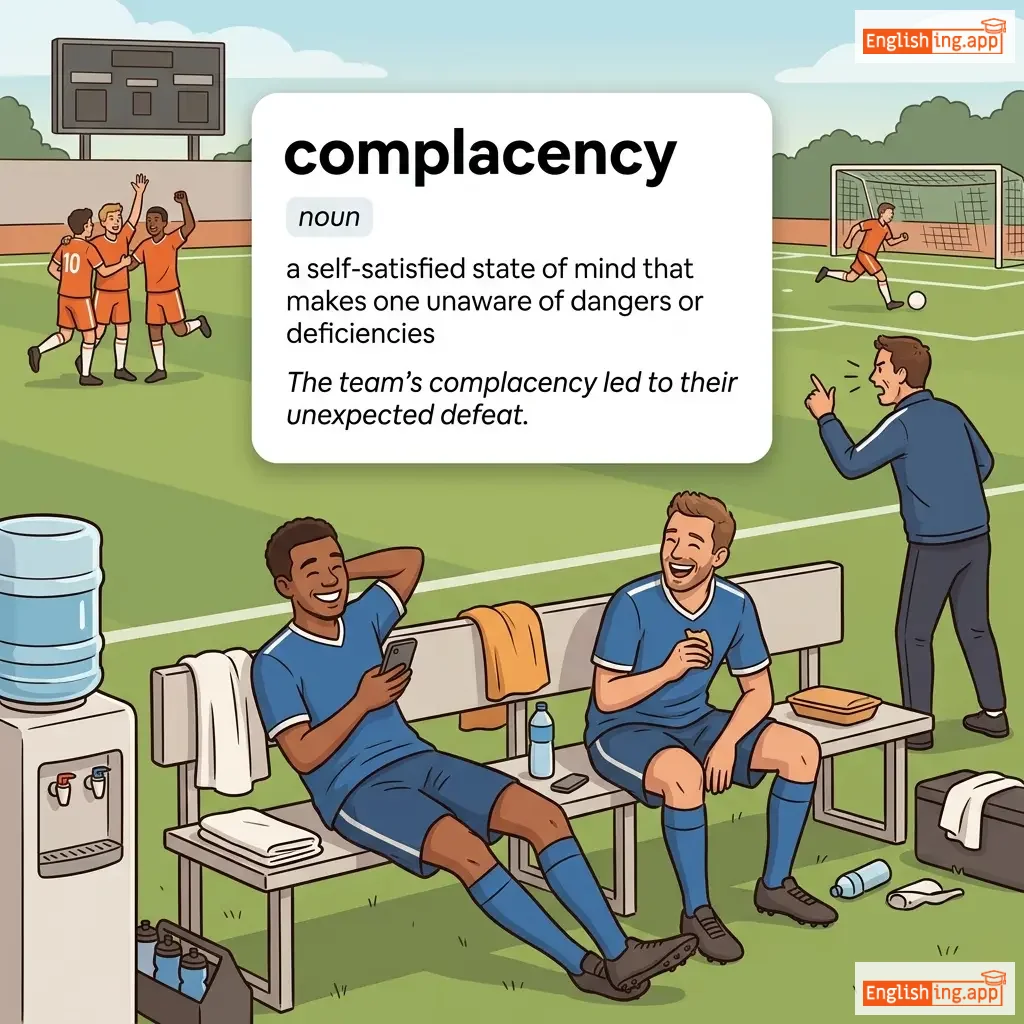
complacency definition card — visual illustration of the meaning
noun
/kəmˈpleɪsənsi/
自己満足 (jikimanzoku)

a self-satisfied state of mind that makes one unaware of dangers or deficiencies

"The team's complacency led to their unexpected defeat."
"チームの自己満足が予期せぬ敗北につながった。" (Chiimu no jikimanzoku ga yokisenu haiboku ni tsunagatta.)
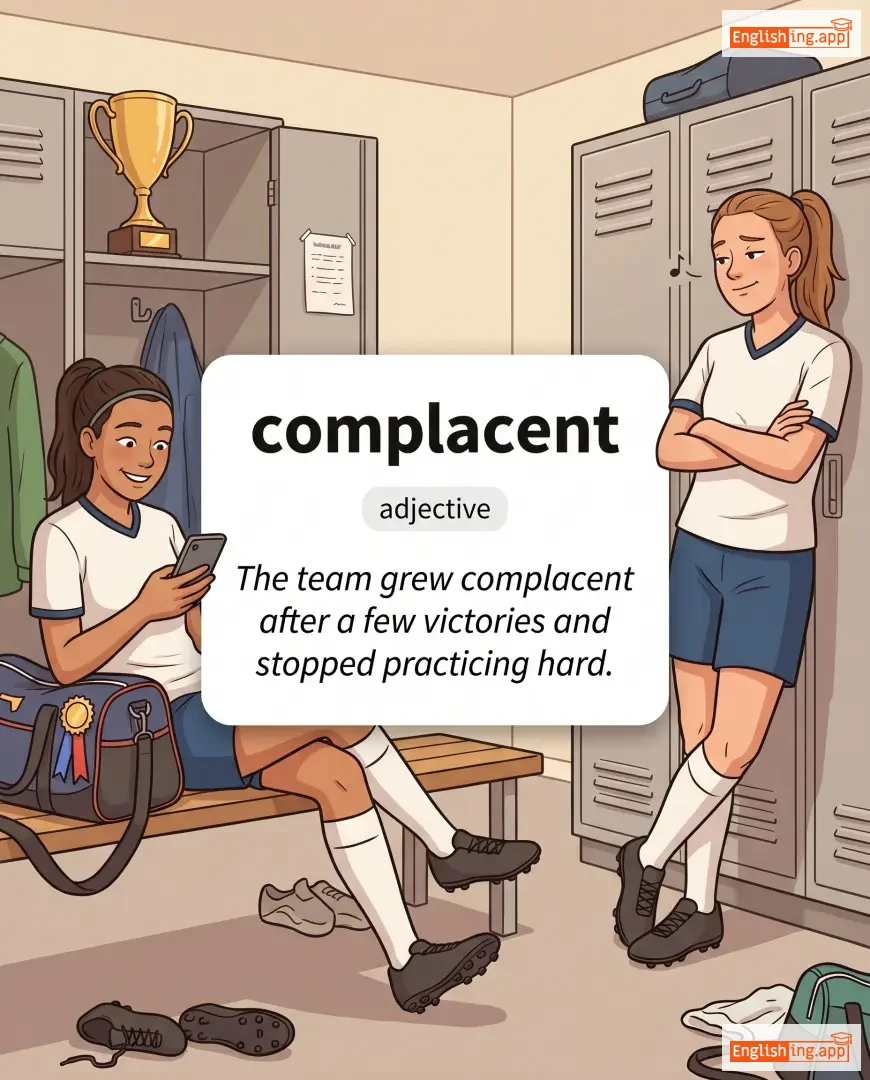
complacent definition card — visual illustration of the meaning
adjective
/kəmˈpleɪsənt/
自己満足 (jikimanzoku)

showing self-satisfaction and a lack of concern about potential dangers or problems

"The team grew complacent after a few victories and stopped practicing hard."

"チームは数回の勝利の後、自己満足し、練習をやめた。" (Chiimu wa suukai no shouri no ato, jikimanzoku shi, renshuu o yameta.)
verb
/kəmˈpleɪn/
不平を言う (fuhei o iu)

to express dissatisfaction or annoyance about something

"He often complains about the noise in the neighborhood."

"彼は近所の騒音についてよく不平を言います。" (Kare wa kinjo no sōon ni tsuite yoku fuhei o iimasu.)
noun
/kəmˈpleɪnt/
苦情 (kuchou)

a statement that something is wrong or not satisfactory

"The manager received a complaint from a customer about poor service."

"マネージャーは、顧客からのサービスが悪いという苦情を受け取りました。" (Manejā wa, kokyaku kara no sābisu ga warui to iu kuchō o uketorimashita.)
noun
/kəmˈpleɪsəns/
従順 (jūjun)

willingness to please others; courteous compliance

"Her complaisance made her popular among her colleagues."

"彼女の従順さは彼女を同僚の中で人気者にしました。" (Kanojo no jūjunsa wa kanojo wo dōryō no naka de ninkimono ni shimashita.)
complaisant definition card — visual illustration of the meaning
adjective
/kəmˈpleɪzənt/
過度に従順 (kado ni jūjun)

willing to please others or to accept what they do or say without protest

"He was too complaisant to refuse their demands."

"彼は彼らの要求を断るにはあまりにも従順すぎた。" (Kare wa karera no yōkyū wo kotowaru ni wa amari ni mo jūjun sugita.)
complement definition card — visual illustration of the meaning
noun/verb
/ˈkɒmplɪmənt/
補完 (hokan)

something that completes or goes well with something; to add something that enhances or improves

"The scarf complements her outfit perfectly."

"スカーフは彼女の服装を完璧に補完します。" (Sukafu wa kanojo no fukusou o kanpeki ni hokan shimasu.)
adjective
/ˌkɒmplɪˈmɛntəri/
補完的な (hokanteki na)

combining in such a way as to enhance or emphasize the qualities of each other

"The two partners have complementary skills."

"二人のパートナーは補完的なスキルを持っています。" (Futari no pātonā wa hokanteki na sukiru o motteimasu.)
verb
/kəmˈpliːt/
完了する (kanryou suru)

to finish making or doing something; to bring something to an end

"She managed to complete the project on time."

"彼女はプロジェクトを時間通りに完了させました。" (Kanojo wa purojekuto wo jikan doori ni kanryou sasemashita.)
adverb
/kəmˈpliːtli/
完全に (kanzen ni)

totally; in every way possible

"The room was completely silent."

"部屋は完全に静かでした。" (Heya wa kanzen ni shizuka deshita.)
noun
/kəmˈpliːʃən/
完了 (kanryo)

the action or process of finishing something

"The completion of the project will take another few weeks."
"プロジェクトの完了にはさらに数週間かかります。" (Purojekuto no kanryo ni wa sara ni sūshūkan kakarimasu.)
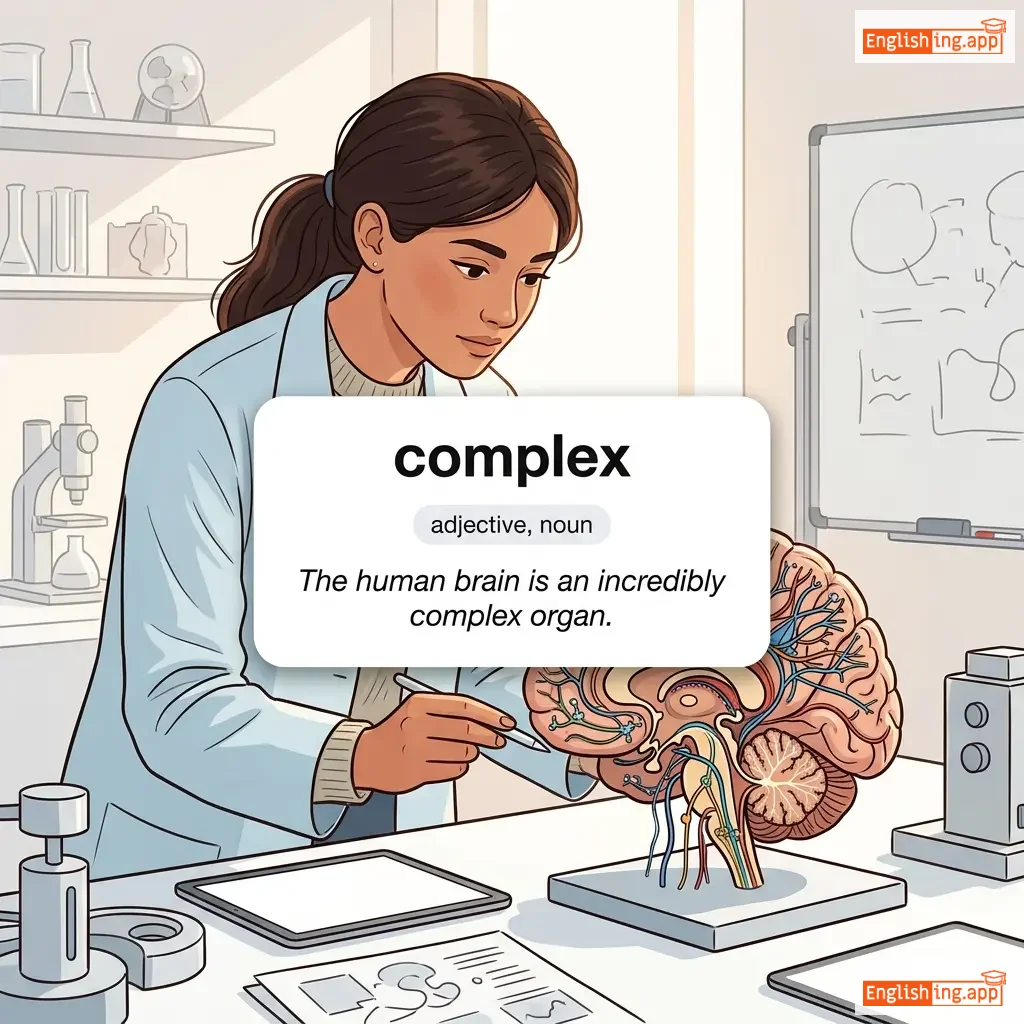
complex definition card — visual illustration of the meaning
adjective, noun
/ˈkɒm.pleks/
複雑な (fukuzatsuna)

Consisting of many different and connected parts; not easy to understand or analyze.

"The human brain is an incredibly complex organ."

"人間の脳は非常に複雑な器官です。" (Ningen no nō wa hijō ni fukuzatsuna kikan desu.)
noun
/kəmˈplek.ʃən/
肌の色 (hada no iro)

the natural color, texture, and appearance of a person's skin, especially on the face

"Her fair complexion glowed beautifully in the morning sunlight."

"彼女の明るい肌は朝の光の中で美しく輝いていました。" (Kanojo no akarui hada wa asa no hikari no naka de utsukushiku kagayaiteimashita.)
complexity definition card — visual illustration of the meaning
noun
/kəmˈplɛksɪti/
複雑さ (fukuzatsusa)

the state or quality of being intricate or complicated

"The complexity of the problem surprised the engineers."
"問題の複雑さはエンジニアたちを驚かせました。" (Mondai no fukuzatsusa wa enjinia-tachi o odorokasemashita.)
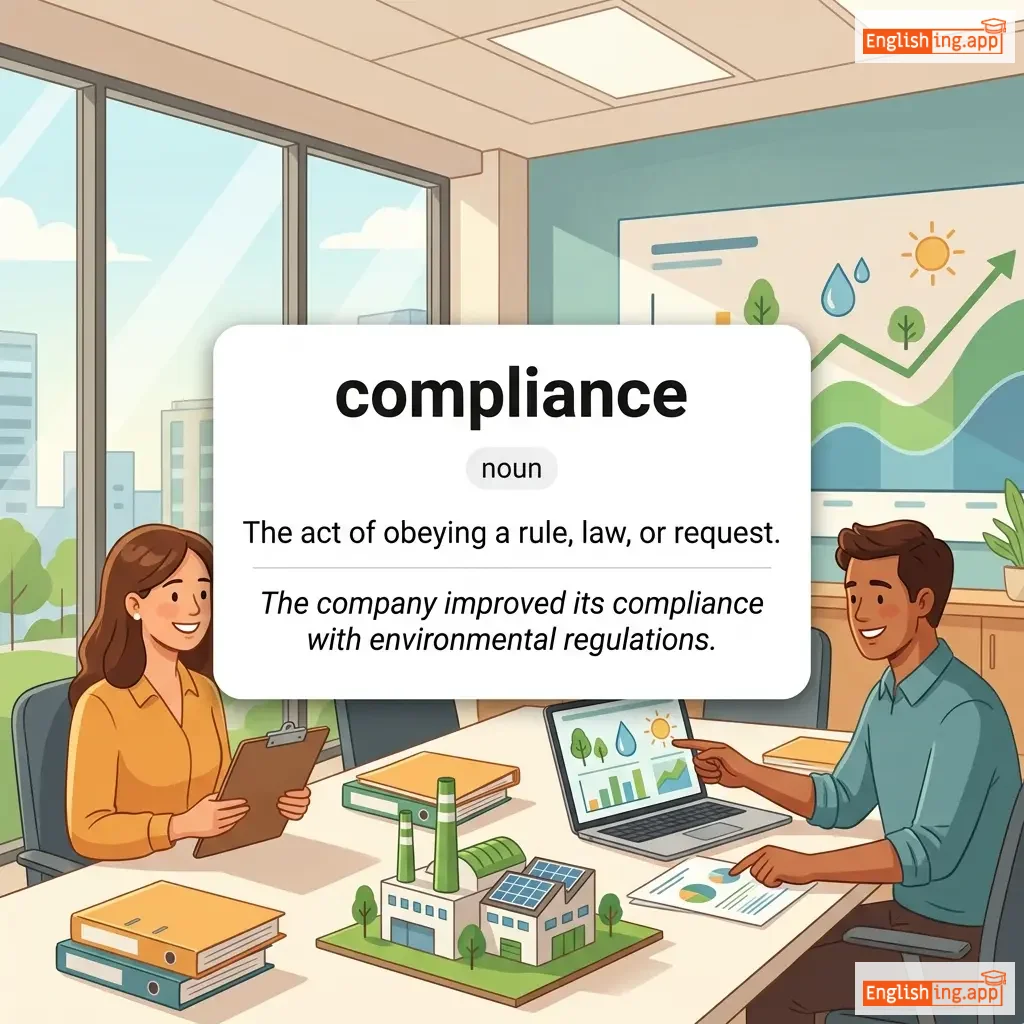
compliance definition card — visual illustration of the meaning
noun
/kəmˈplaɪəns/
コンプライアンス (konpuraiansu)

The act of obeying a rule, law, or request.

"The company improved its compliance with environmental regulations."
"企業は環境規制へのコンプライアンスを改善しました。" (Kigyou wa kankyō kisei e no konpuraiansu o kaizen shimashita.)
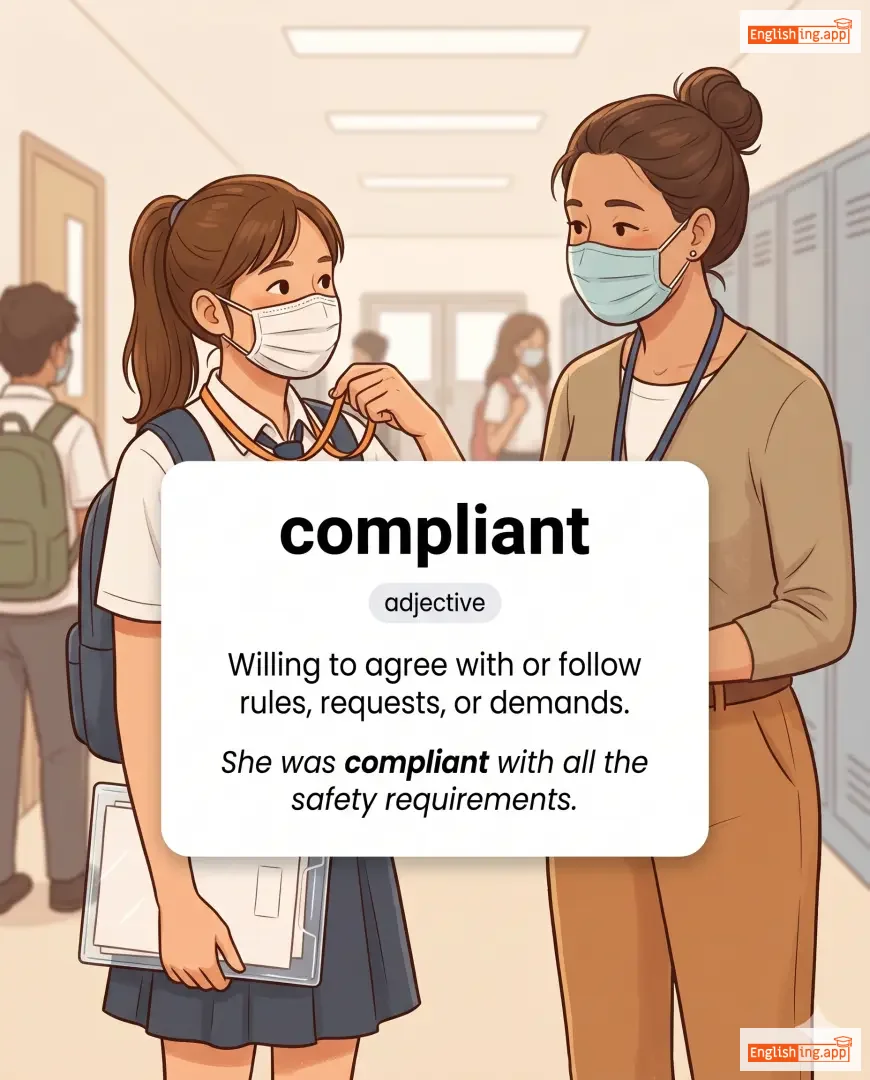
compliant definition card — visual illustration of the meaning
adjective
/kəmˈplaɪənt/
従順 (juujun)

Willing to agree with or follow rules, requests, or demands.

"She was compliant with all the safety requirements."

"彼女はすべての安全要件に従いました。" (Kanojo wa subete no anzen youken ni shitagaimashita.)
verb
/ˈkɒm.plɪ.keɪt/
複雑にする (fukuzatsu ni suru)

To make something more difficult or confusing.

"The new rules will only complicate the process."

"新しいルールはプロセスをさらに複雑にするだけです。" (Atarashī rūru wa purosesu o sara ni fukuzatsu ni suru dake desu.)
adjective
/ˈkɒmplɪˌkeɪtɪd/
複雑 (fukuzatsu)

consisting of many interconnected parts; difficult to understand

"The instructions for the machine are too complicated to follow."

"機械の指示は従うにはあまりにも複雑です。" (Kikai no shiji wa shitagau ni wa amari ni mo fukuzatsu desu.)
noun
/ˌkɒmplɪˈkeɪʃən/
合併症 (gōheishō)

A problem or difficulty that makes a situation harder to deal with.

"His illness led to serious complications after surgery."

"彼の病気は手術後に深刻な合併症を引き起こしました。" (Kare no byōki wa shujutsugo ni shinkoku na gōheishō o hikiokoshimashita.)
adjective
/kəmˈplɪsɪt/
共犯者 (犯罪で) (kyōhansha (hanzai de))

involved with others in an illegal activity or wrongdoing

"He was found complicit in the crime."

"彼は犯罪で共犯者として見つかりました。" (Kare wa hanzai de kyōhansha to shite mitsukarimashita.)
noun
/kəmˈplɪsəti/
共謀 (kyoubou)

the state of being involved with others in an illegal activity or wrongdoing

"The court revealed his complicity in the fraud scheme."

"裁判所は彼の詐欺計画における共謀を明らかにした。" (Saibansho wa kare no sagi keikaku ni okeru kyoubou o akiraka ni shita.)