

The Voice of the Silent Majority
Karim is an influential spokesman who fights for democracy and universal rights. In his country, there was widespread inequality and discrimination that was completely against constitutional rights. The government's conservative politicians only imposed their own regulations and didn't listen to the people. One day, Karim went to give testimony at a congressional hearing where he spoke against injustice. "We need to reform our electoral system," he said. "These legislations only protect the rich, not ordinary people." Hearing his words, many protesters took to the streets, demanding liberation from this oppressive system. Some people were calling it a rebellion, but Karim knew it was actually a peaceful revolution. The government resisted at first, but due to public pressure, they were eventually forced to pass new legislation. Karim's courageous step ushered in a new era in his country where democracy and universal rights were protected for everyone.
Upgrade to Access All Vocabulary
Get unlimited access to all vocabulary items with Pro membership
Upgrade to ProTranslation
Past
Past Participle
Third Person Singular
Gerund
Meaning
Example Sentence
Example Sentence Translation
Synonyms
Antonyms
Collocations
Mnemonic
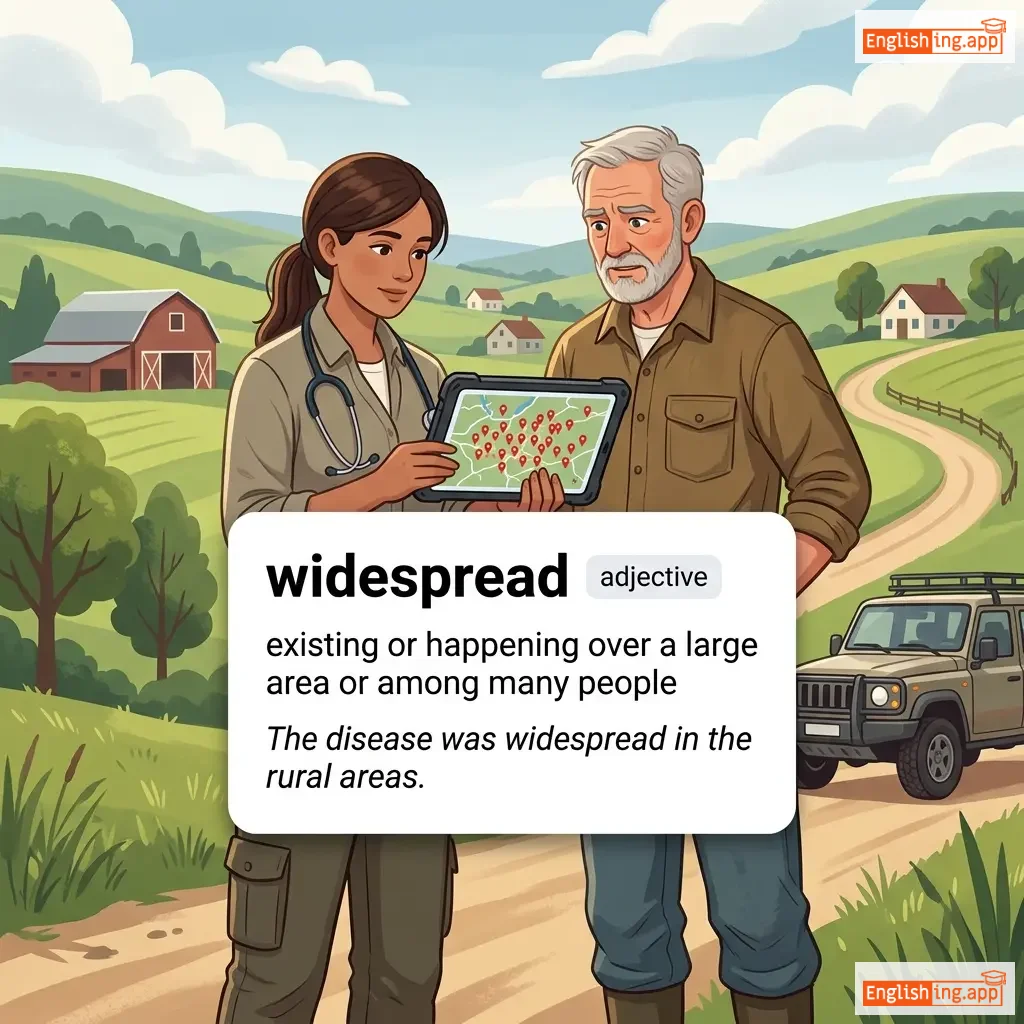
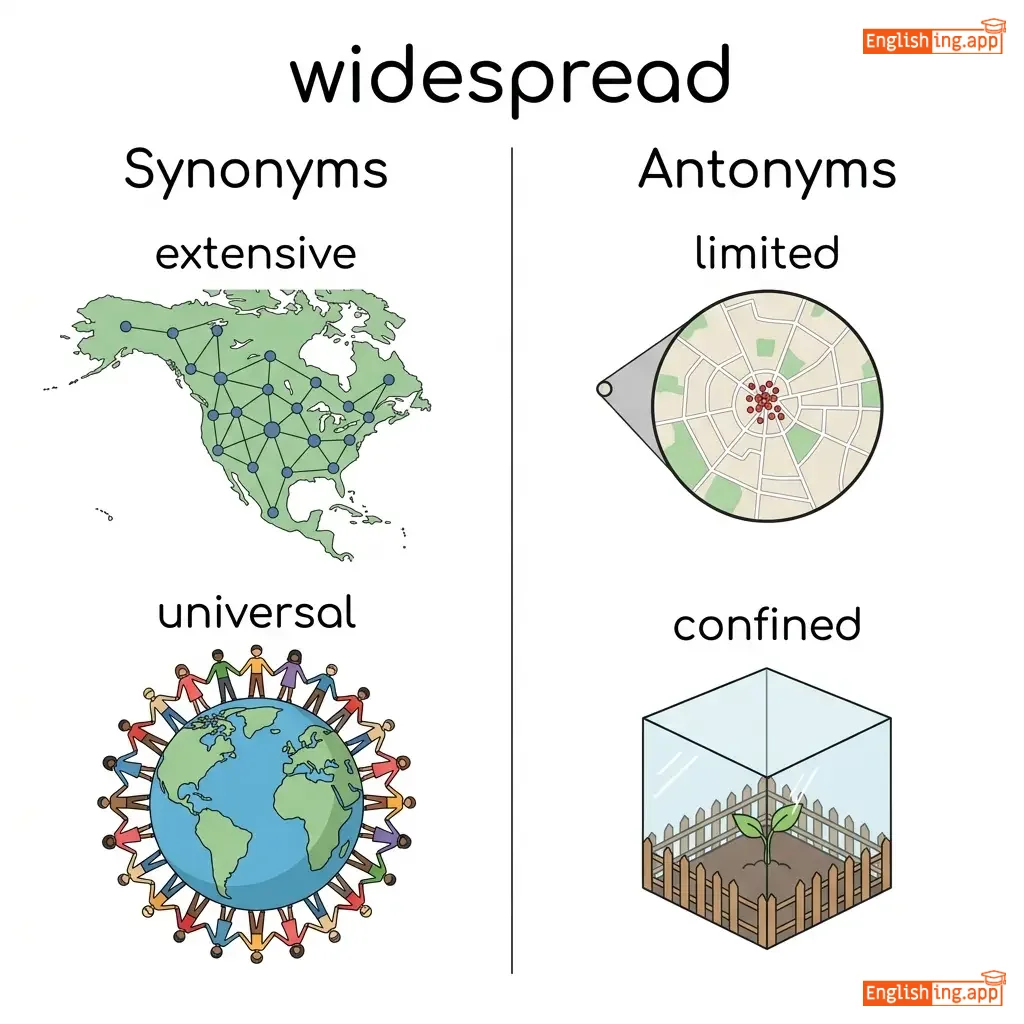
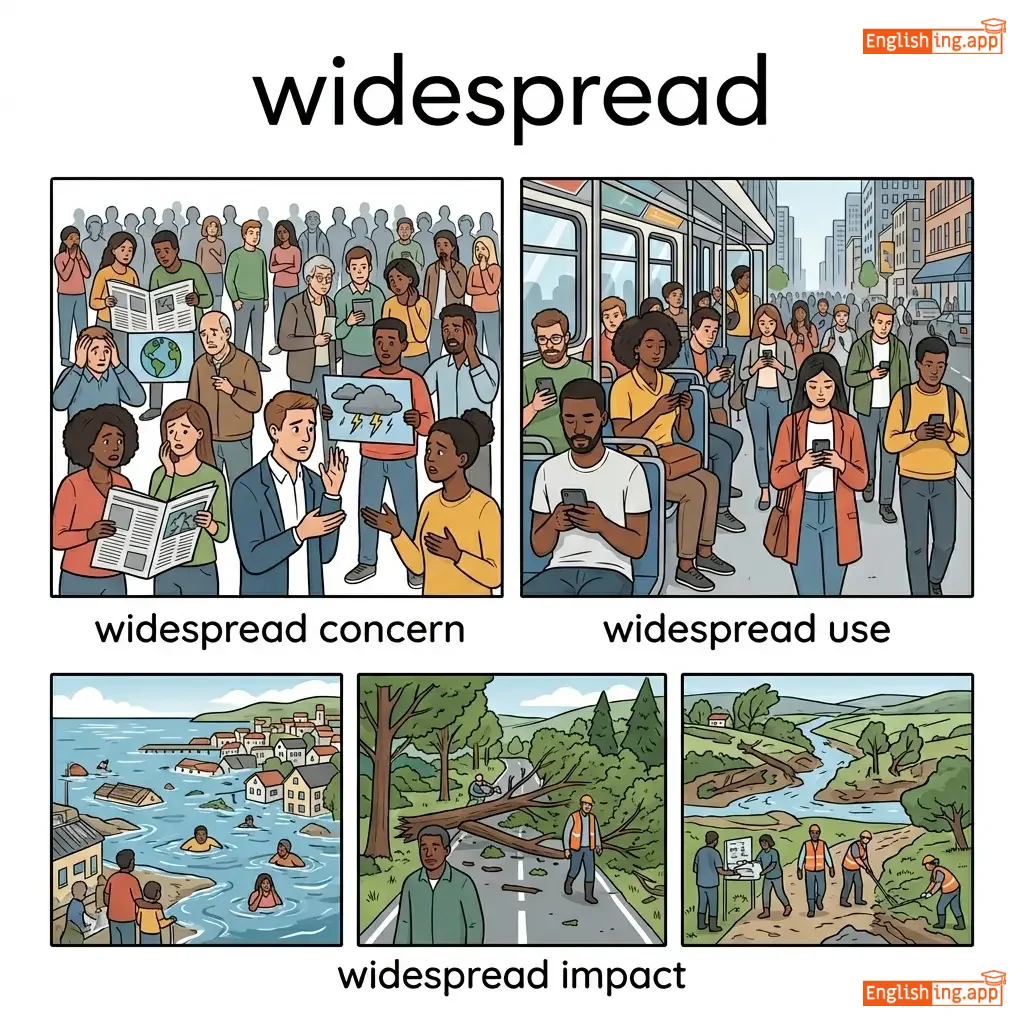
Swipe left or right, or use the buttons. Tap image to zoom.
Upgrade to Access All Sentences
Get unlimited access to all sentences with Pro membership
Upgrade to ProExample Sentence Translation
Word
The Voice of the Silent Majority - Mask Toggle
|
Emoji
|
Word | Images | Meaning | Example Sentence | Example Expression | Example Expression Meaning | Synonyms | Antonyms | Collocations |
|---|---|---|---|---|---|---|---|---|---|
|
#0
📜
|
/kənˈɡrɛʃənl/
adjective
••••••
|
- •••••• |
relating to a congress, especially the US Congress
••••••
|
The bill received strong congressional support. |
- •••••• | - •••••• |
legislative, parliamentary, governmental, political
••••••
|
individual, unofficial
••••••
|
congressional hearing, congressional approval, congressional committee, congressional election
••••••
|
|
#0
🛡️
|
/kənˈsɜːvətɪv/
adjective
••••••
|
- •••••• |
Favoring traditional views and values; resistant to change.
••••••
|
He has conservative views on family and society. |
conservative estimate |
An estimate deliberately kept lower or more cautious.
••••••
|
traditional, cautious, orthodox, conventional
••••••
|
progressive, liberal, radical
••••••
|
conservative values, conservative politics, conservative approach, conservative estimate
••••••
|
|
#0
⚖️
|
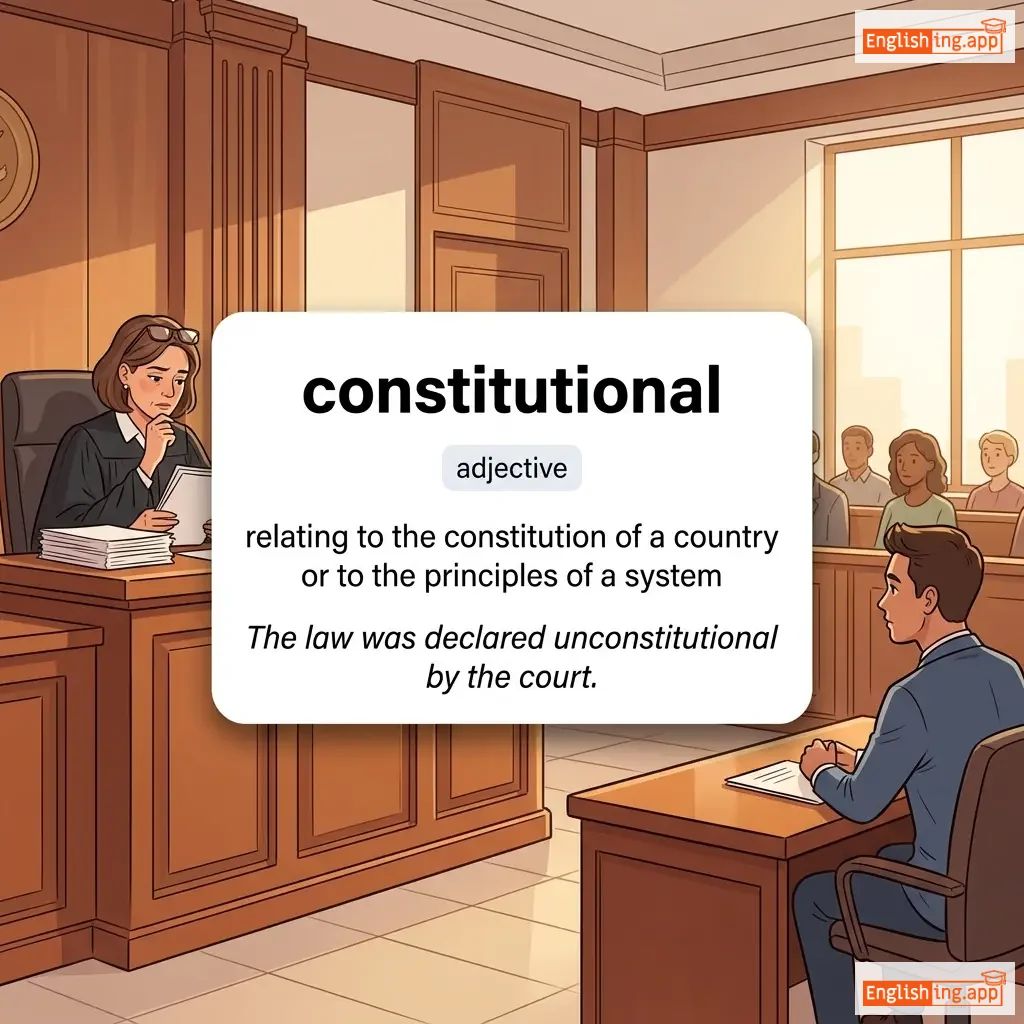
/ˌkɒnstɪˈtjuːʃənəl/
adjective
••••••
|
|
relating to the constitution of a country or to the principles of a system
••••••
|
The law was declared unconstitutional by the court. |
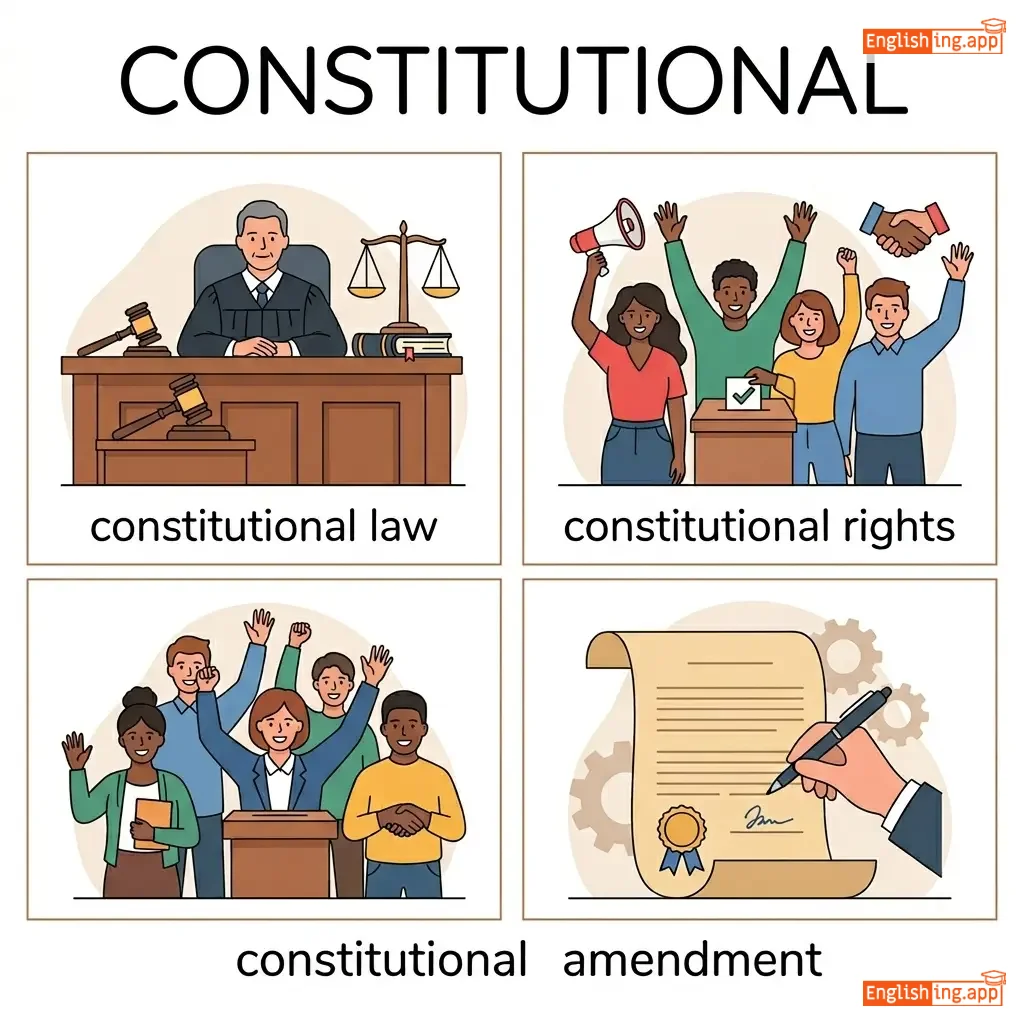
constitutional rights |
basic legal rights guaranteed by a constitution
••••••
|
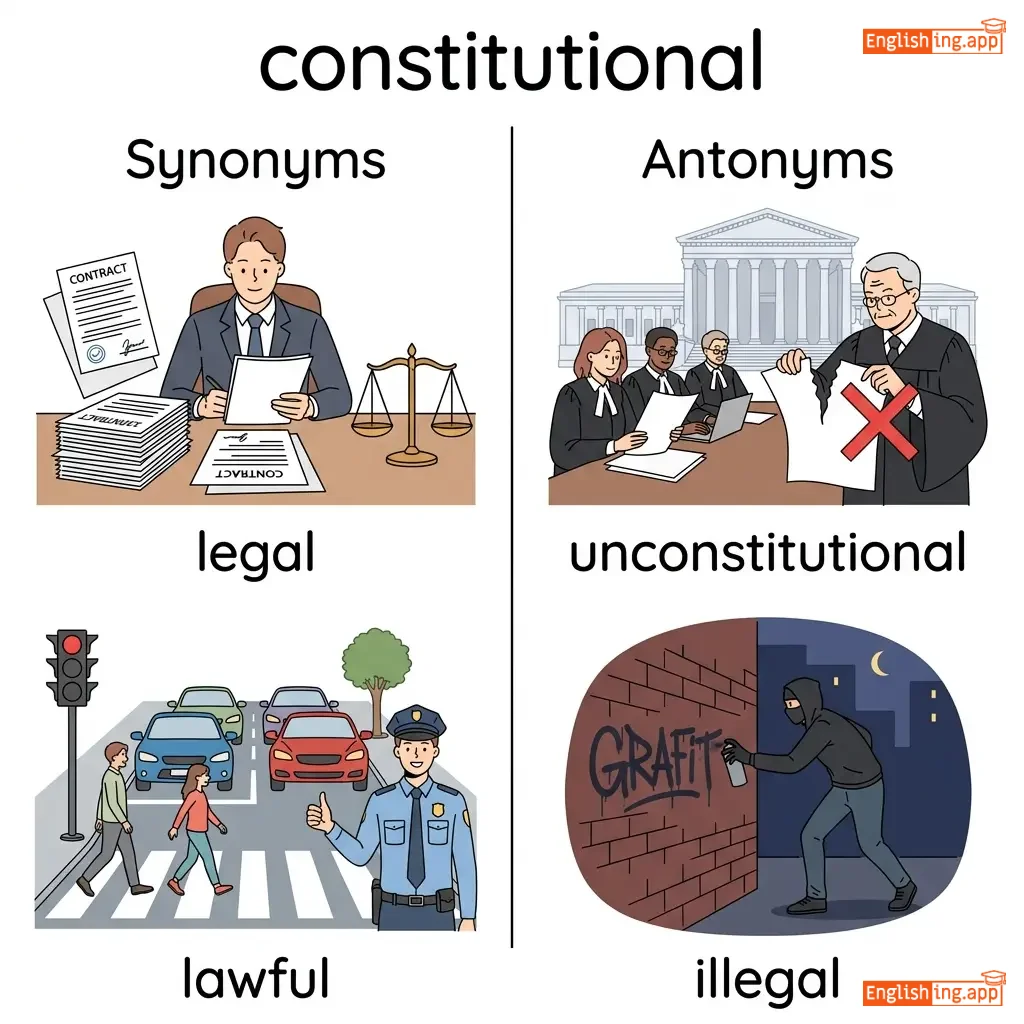
legal, lawful, legitimate, chartered
••••••
|
unconstitutional, illegal, unlawful
••••••
|
constitutional law, constitutional rights, constitutional amendment, constitutional crisis
••••••
|
|
#0
🗳️
|
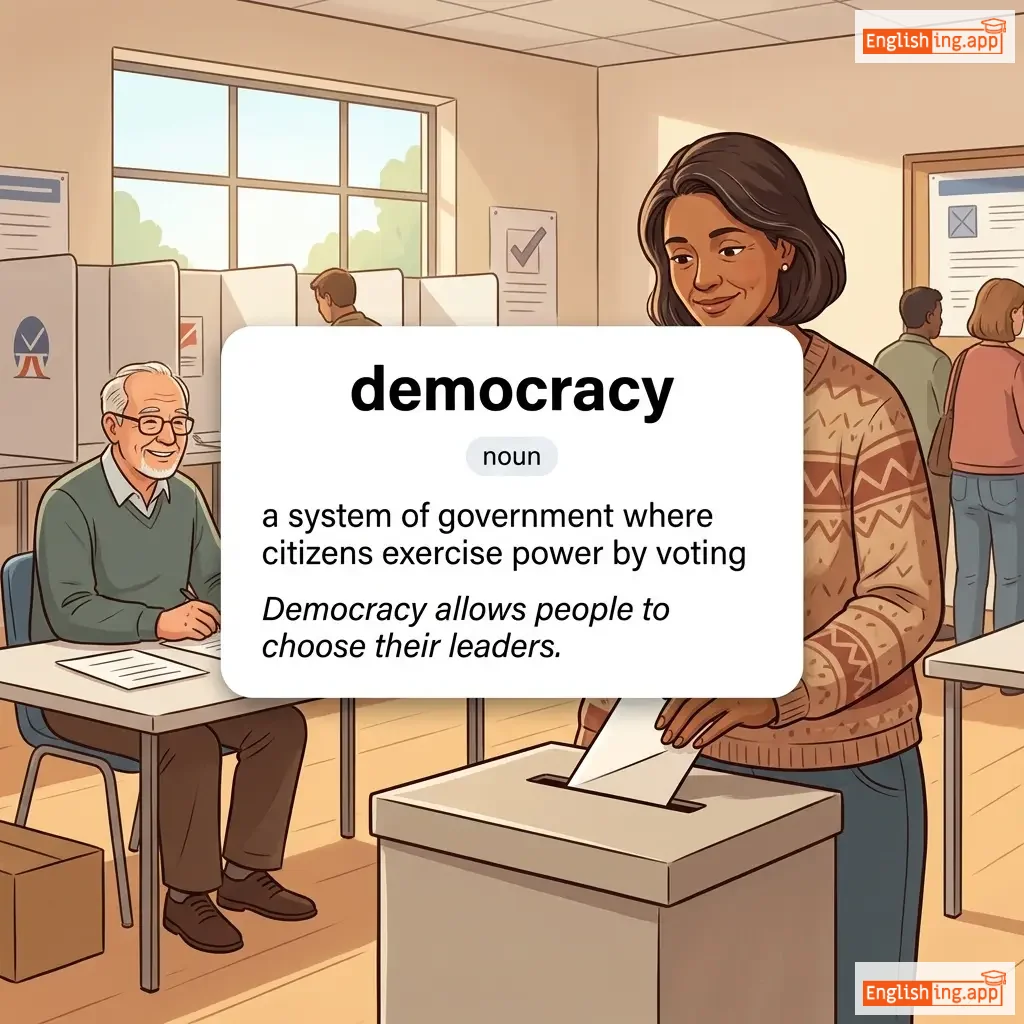
/dɪˈmɑːkrəsi/
noun
••••••
|
|
a system of government where citizens exercise power by voting
••••••
|
Democracy allows people to choose their leaders. |
true democracy |
a genuine practice of democratic values
••••••
|
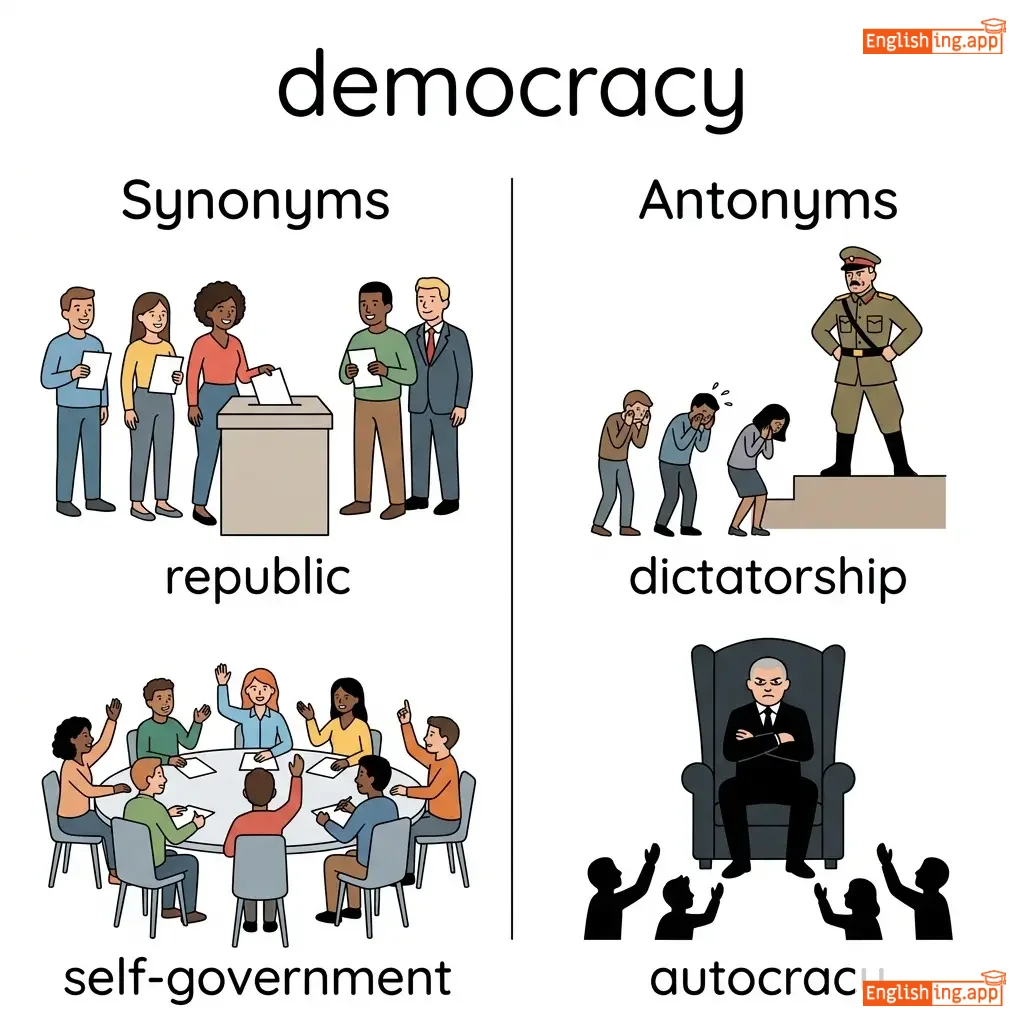
republic, self-government, representative government, popular government
••••••
|
dictatorship, autocracy, monarchy
••••••
|
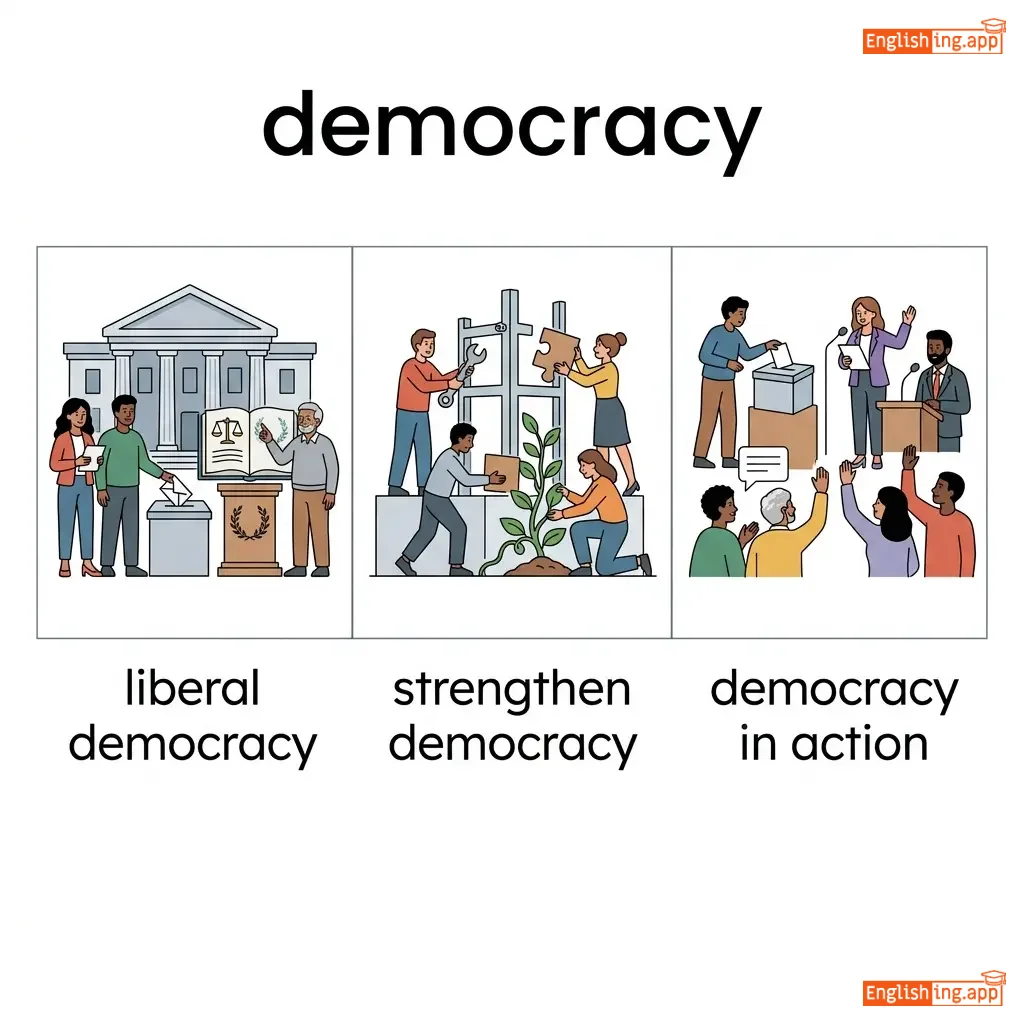
liberal democracy, strengthen democracy, democracy in action, democracy movement
••••••
|
|
#0
⚖️
|
/dɪˌskrɪmɪˈneɪʃən/
noun
••••••
|
- •••••• |
Unfair treatment of people based on race, gender, age, or other differences.
••••••
|
The law prohibits discrimination in the workplace. |
racial discrimination |
unfair treatment based on race
••••••
|
prejudice, bias, unfairness, inequality
••••••
|
equality, fairness, justice
••••••
|
racial discrimination, gender discrimination, fight discrimination, workplace discrimination
••••••
|
|
#0
🗳️
|
/ɪˈlɛktərəl/
adjective
••••••
|
- •••••• |
related to elections or voting
••••••
|
The electoral process in the country has been reformed in recent years. |
- •••••• | - •••••• |
voting, electoral system, election-related
••••••
|
non-electoral, non-voting
••••••
|
electoral process, electoral system, electoral reform
••••••
|
|
#0
🏛️
|
/ˈɡʌvərnmənt/
noun
••••••
|
|
The governing body of a nation, state, or community responsible for making and enforcing laws.
••••••
|
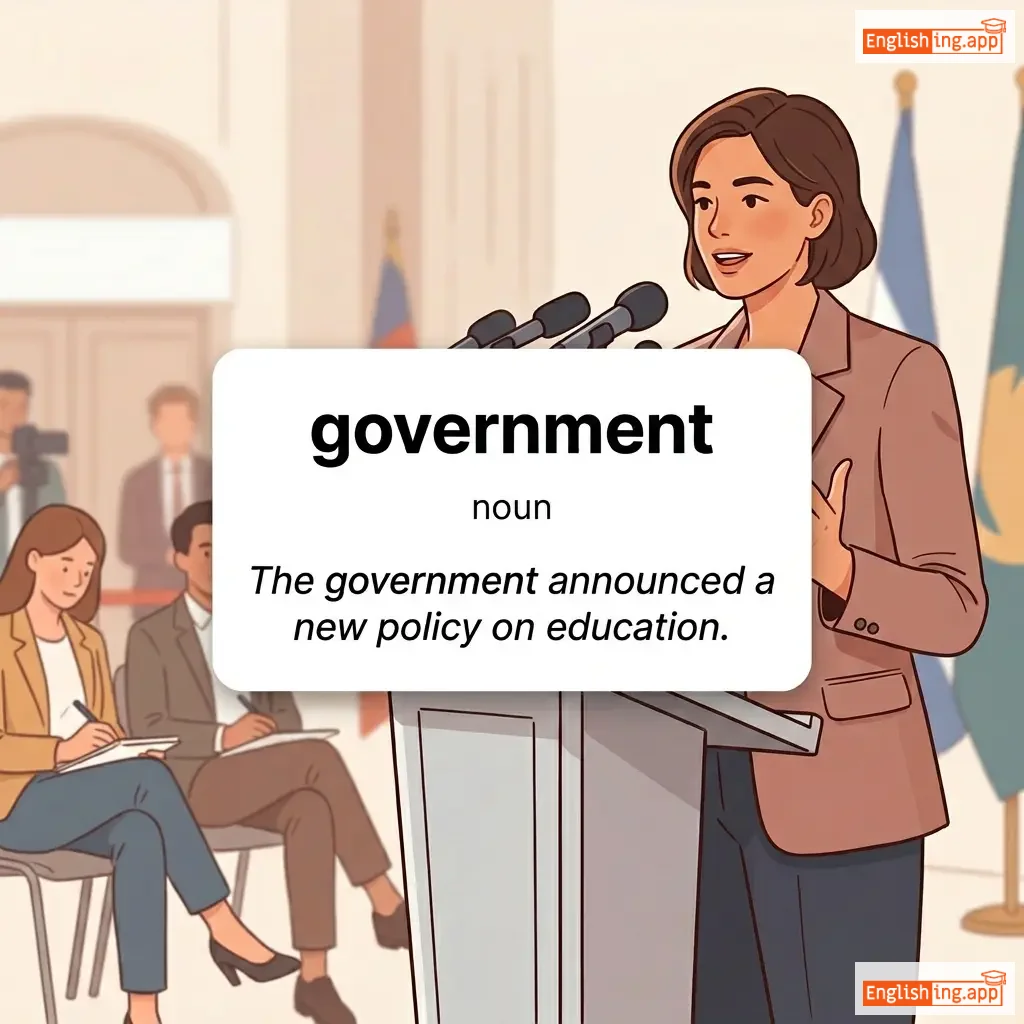
The government announced a new policy on education. |
big government |
A political concept referring to a government that is large and heavily involved in society.
••••••
|
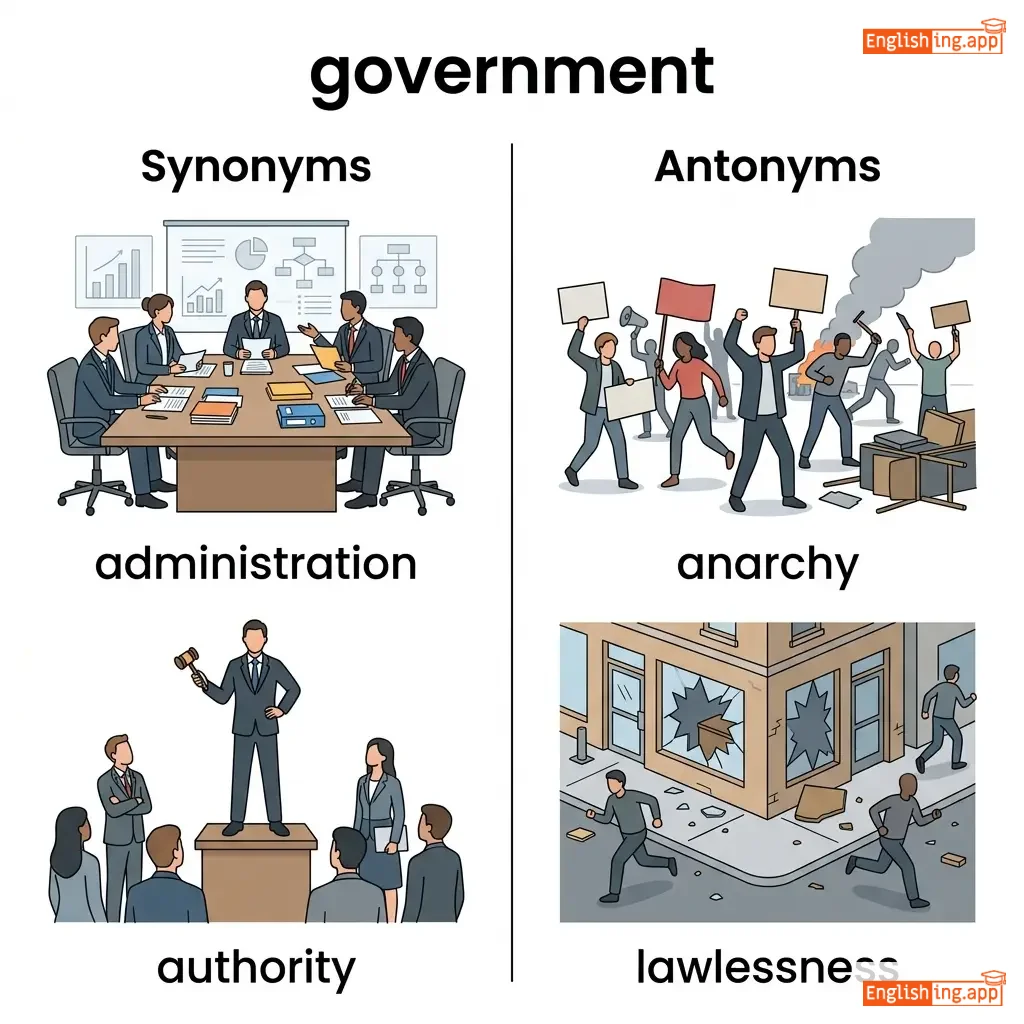
administration, authority, regime, state, leadership
••••••
|
anarchy, lawlessness
••••••
|
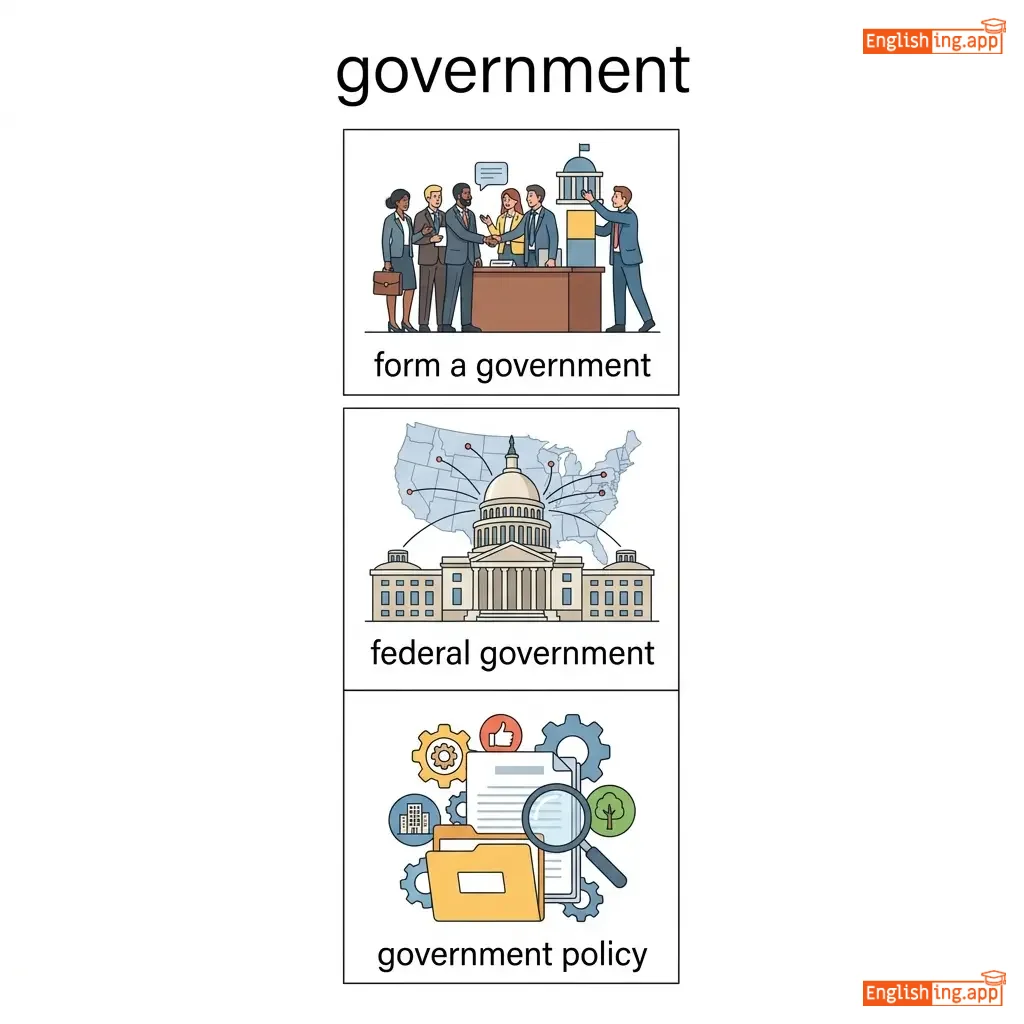
form a government, federal government, government policy, government official
••••••
|
|
#0
⚖️
|
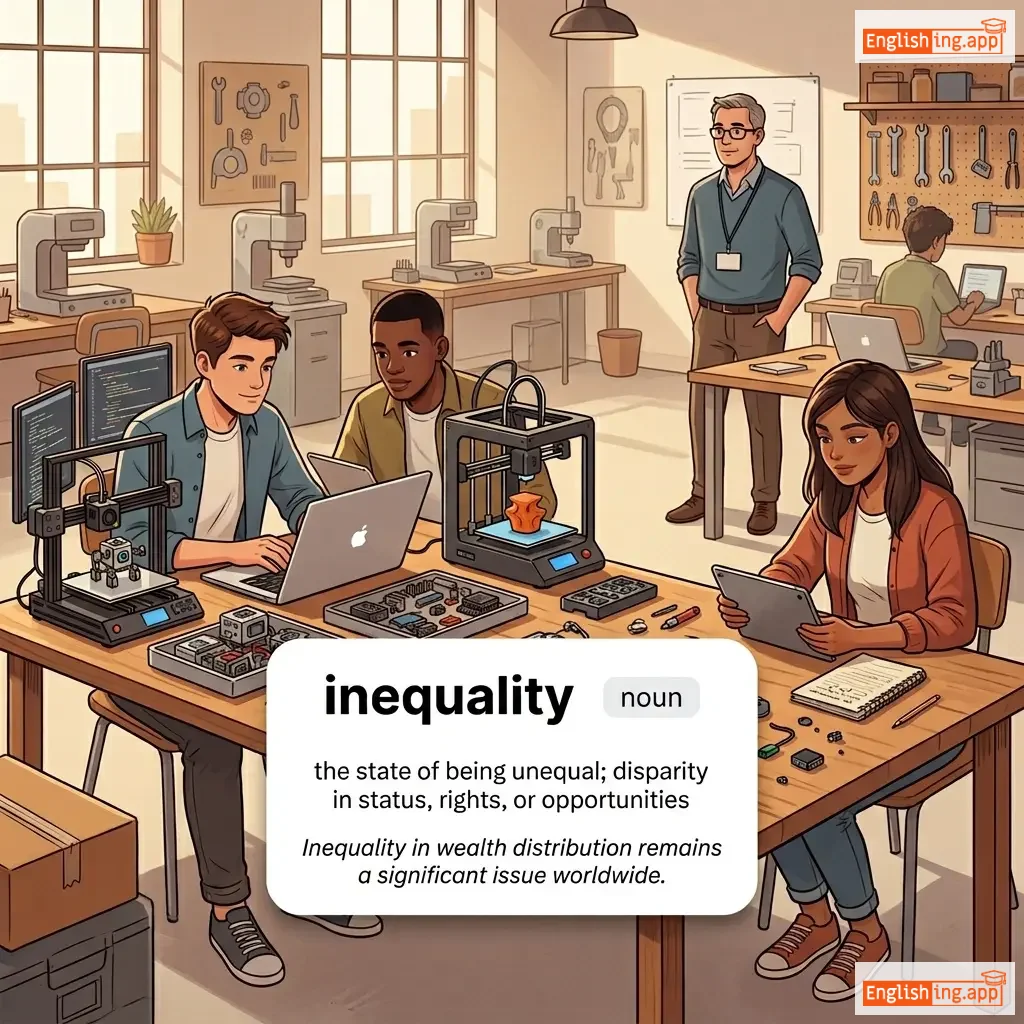
/ˌɪnɪˈkwɒləti/
noun
••••••
|
|
the state of being unequal; disparity in status, rights, or opportunities
••••••
|
Inequality in wealth distribution remains a significant issue worldwide. |
- •••••• | - •••••• |
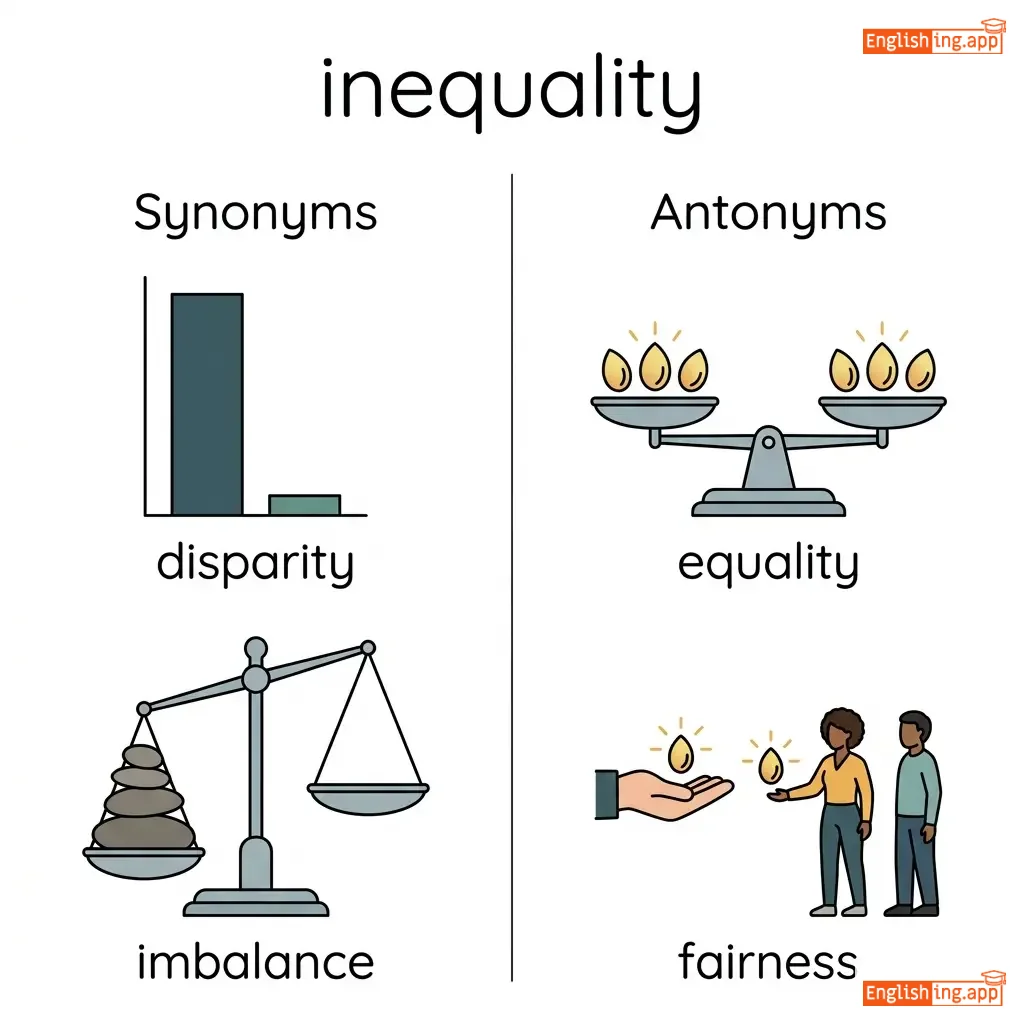
disparity, imbalance, discrimination, inequity
••••••
|
equality, fairness
••••••
|
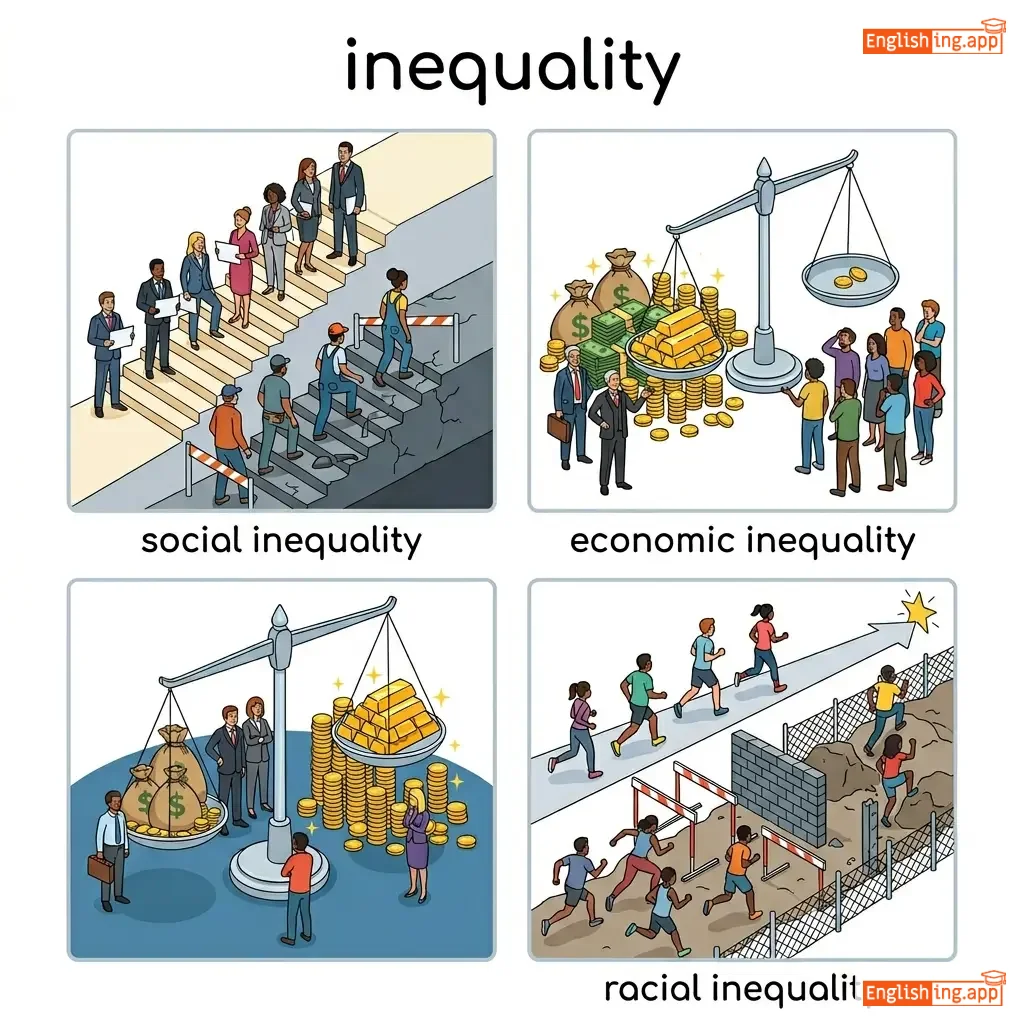
social inequality, economic inequality, racial inequality
••••••
|
|
#0
👑
|
/ˌɪnfluˈɛnʃl/
adjective
••••••
|
- •••••• |
Having great power to change or affect people or things.
••••••
|
She is one of the most influential leaders of our time. |
influential figure |
a person who has a significant effect on others
••••••
|
powerful, significant, prominent, impactful, persuasive
••••••
|
insignificant, powerless
••••••
|
influential leader, influential role, highly influential
••••••
|
|
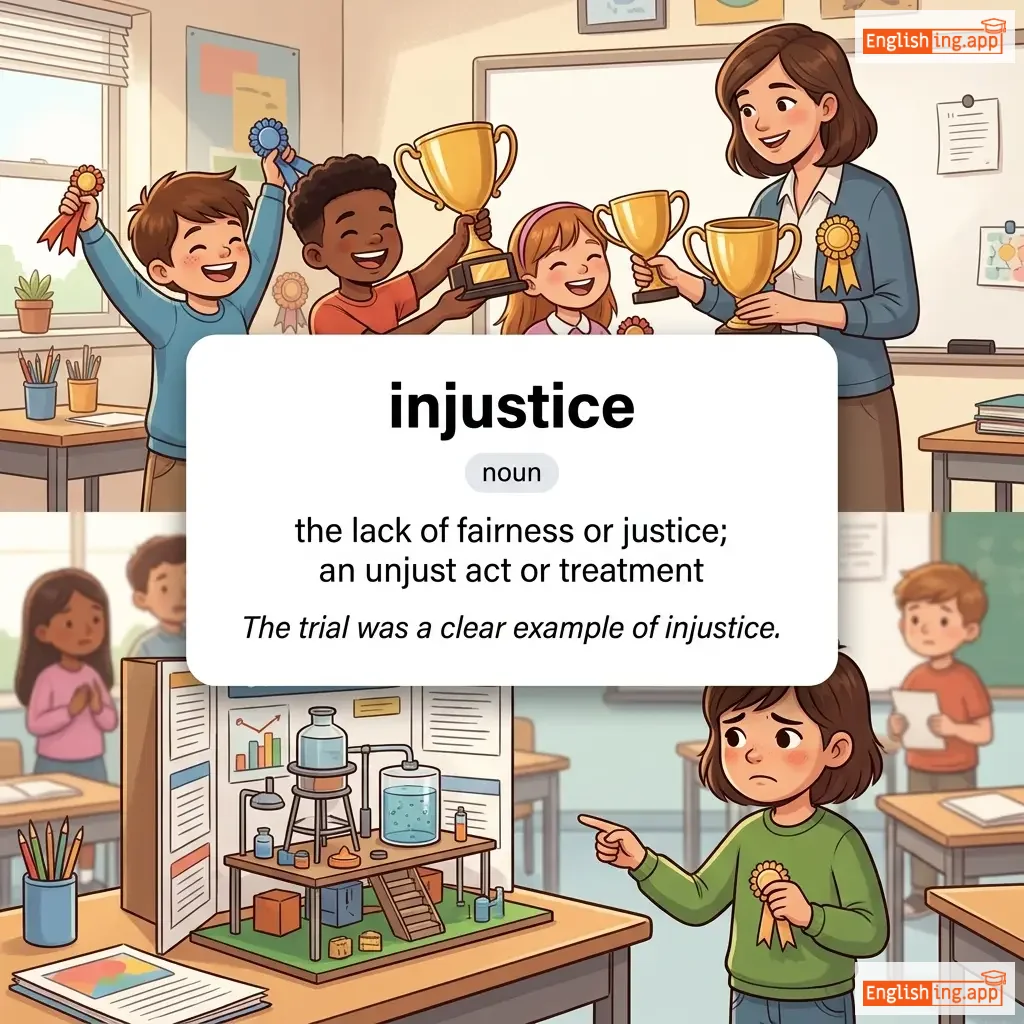
#0
⚖️
|
/ɪnˈdʒʌstɪs/
noun
••••••
|
|
the lack of fairness or justice; an unjust act or treatment
••••••
|
The trial was a clear example of injustice. |
A great injustice has been done. |
A situation where something unfair or wrong has happened.
••••••
|
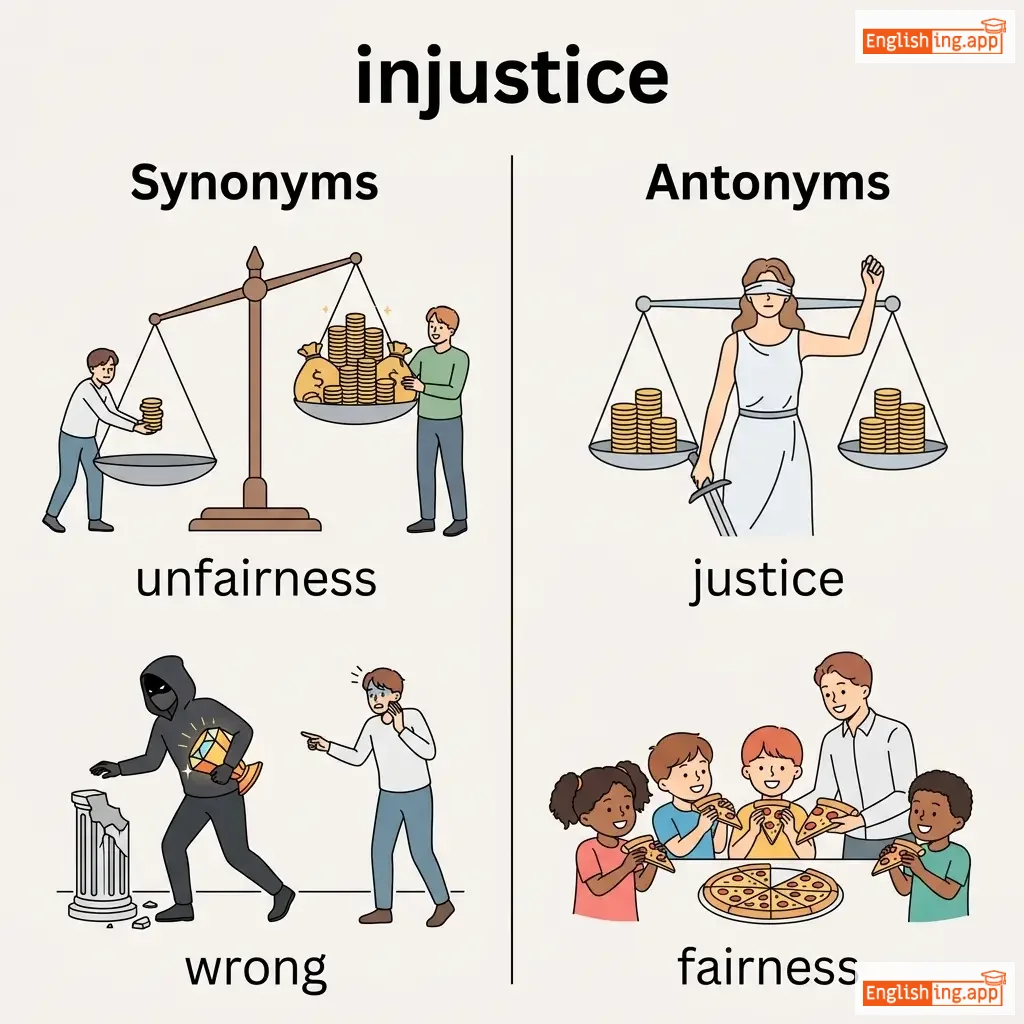
unfairness, wrong, discrimination, bias
••••••
|
justice, fairness
••••••
|
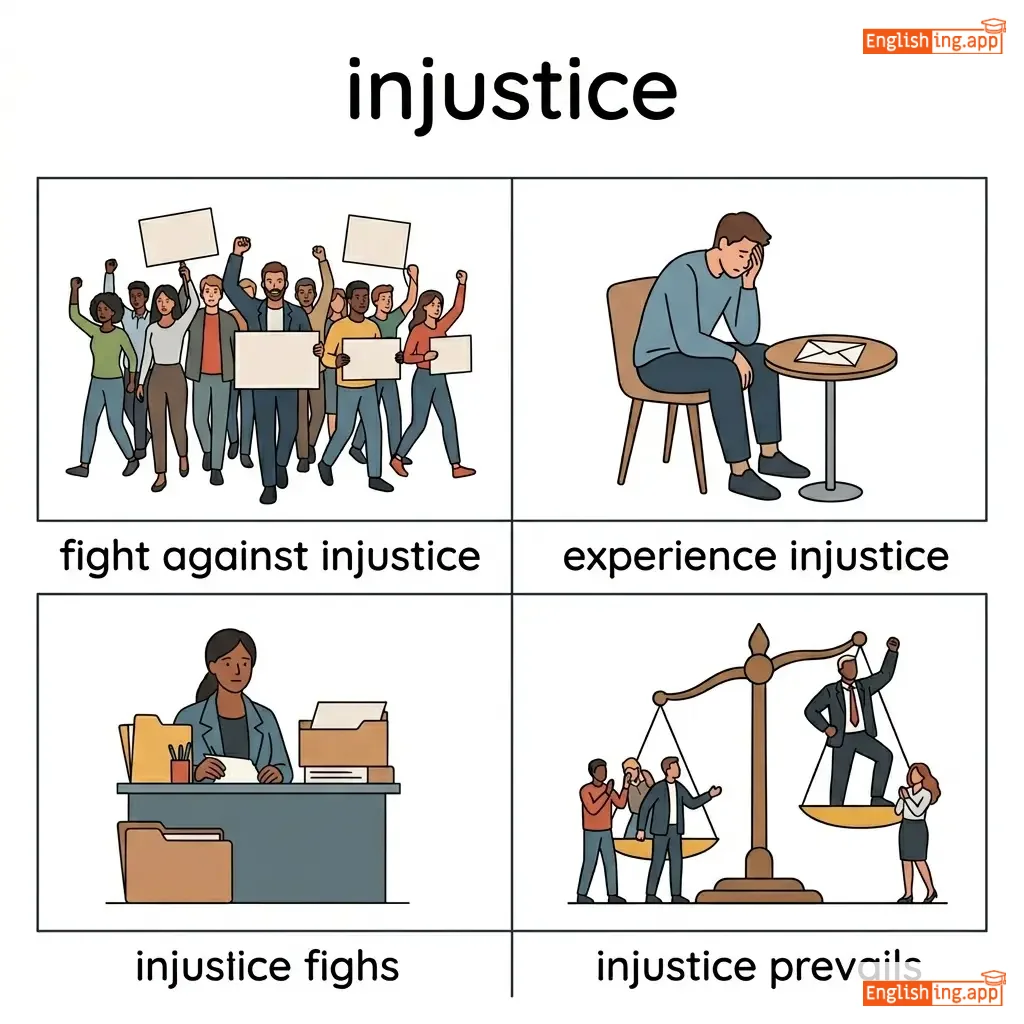
fight against injustice, experience injustice, injustice prevails
••••••
|
|
#0
⚖️
|
/ˌledʒɪsˈleɪʃən/
noun
••••••
|
- •••••• |
laws considered collectively, or the act of making laws
••••••
|
The government passed new legislation to protect the environment. |
piece of legislation |
a single law or act passed by a legislature
••••••
|
law, regulation, statute, decree, ordinance
••••••
|
anarchy, lawlessness
••••••
|
pass legislation, new legislation, environmental legislation, draft legislation
••••••
|
|
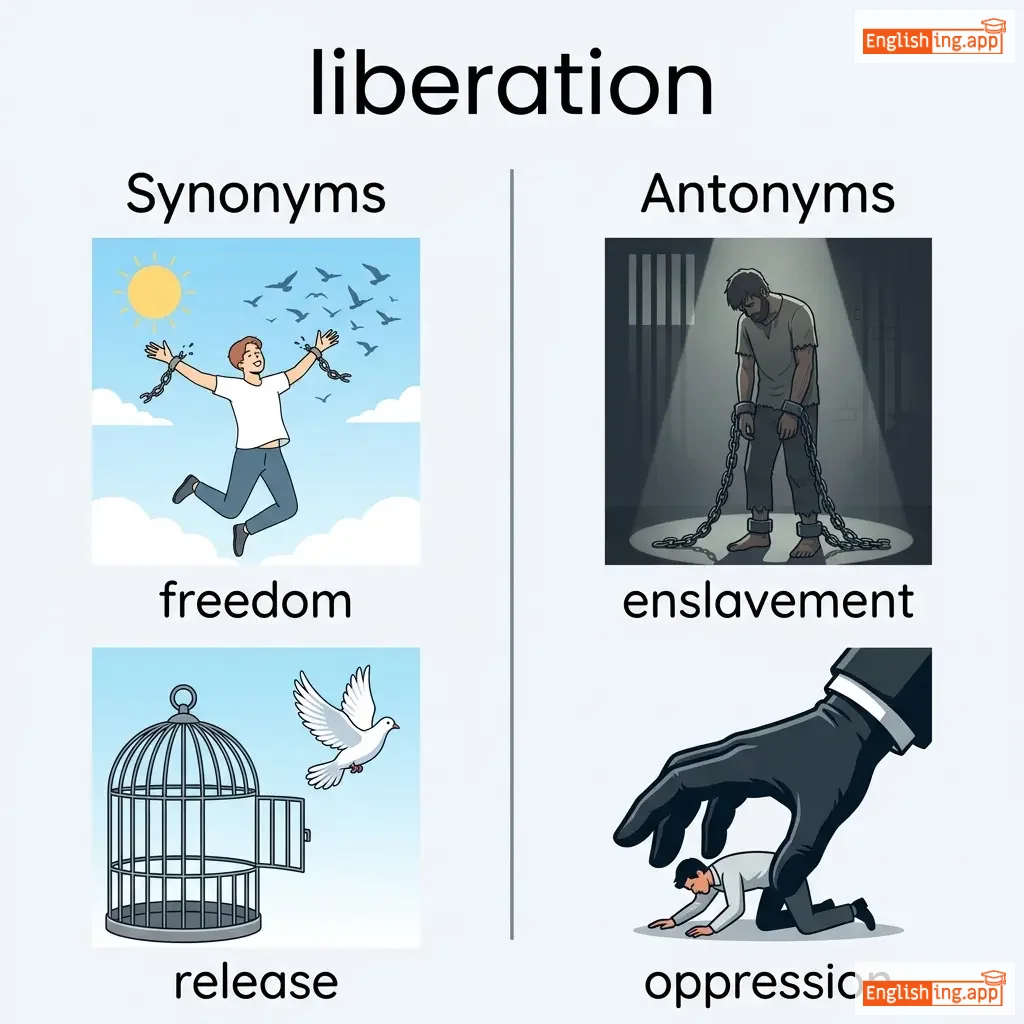
#0
🕓
|
/ˌlɪb.əˈreɪ.ʃən/
noun
••••••
|
|
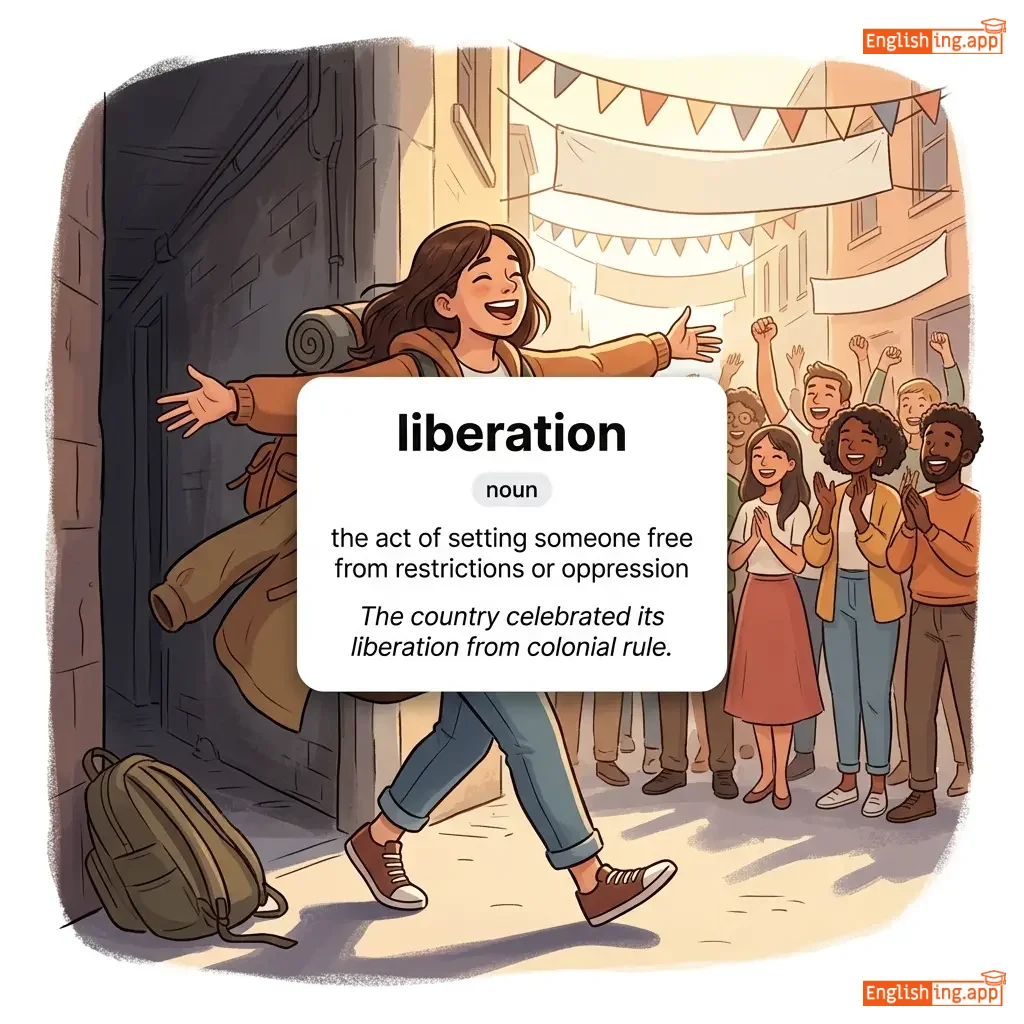
the action of setting someone free from imprisonment, slavery, or oppression; release
••••••
|
The liberation of the country took many years. |
- •••••• | - •••••• |
freedom, emancipation, release, independence
••••••
|
oppression, captivity, enslavement
••••••
|
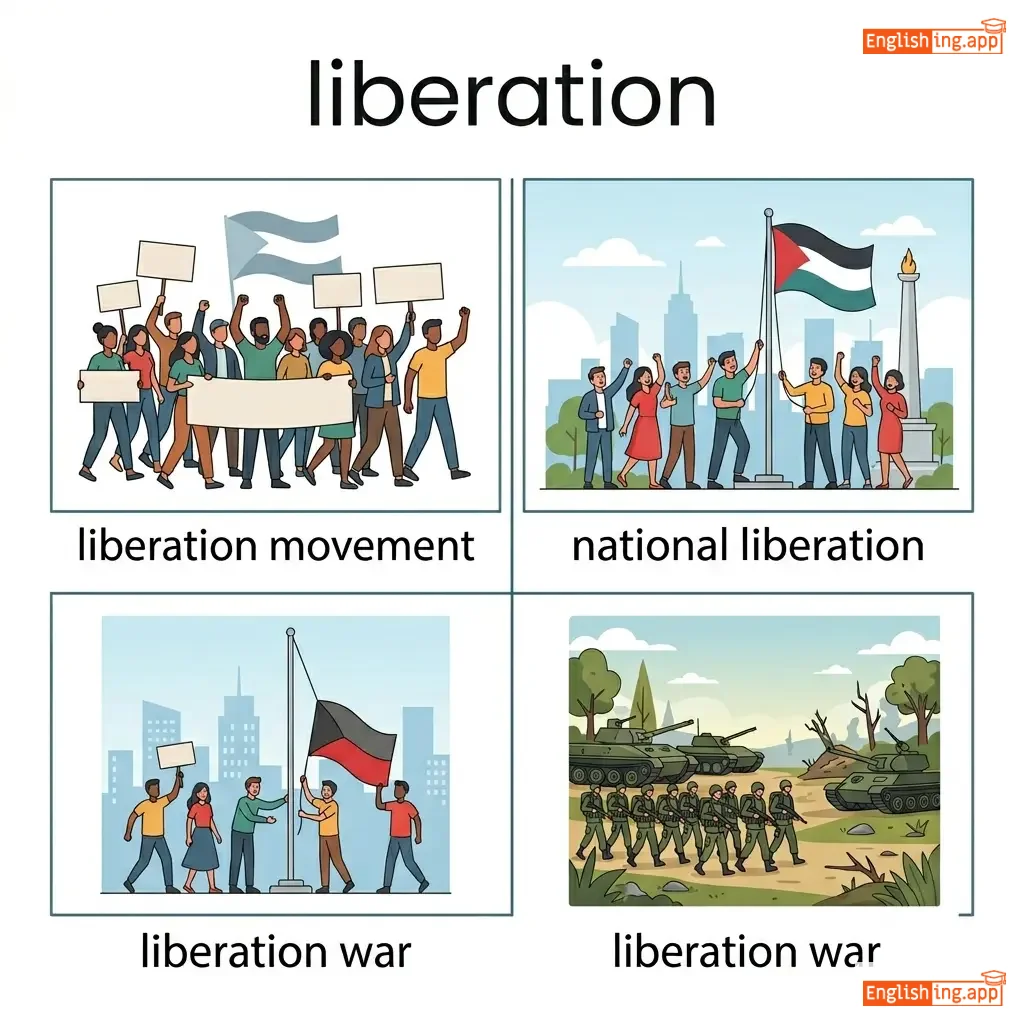
national liberation, women's liberation, liberation movement
••••••
|
|
#0
👨💼
|
/pəˈlɪtɪʃən/
noun
••••••
|
- •••••• |
a person who is involved in politics, especially as a profession
••••••
|
The politician promised to improve the economy. |
- •••••• | - •••••• |
statesman, lawmaker, representative, public servant
••••••
|
citizen, layman
••••••
|
politician career, influential politician, corrupt politician
••••••
|
|
#0
🧑🎤
|
/prəˈtɛstər/
noun
••••••
|
- •••••• |
a person who takes part in a protest or demonstration
••••••
|
The protester spoke passionately about the cause. |
- •••••• | - •••••• |
demonstrator, activist, campaigner, challenger
••••••
|
supporter, follower, bystander
••••••
|
peaceful protester, passionate protester, angry protester, student protester
••••••
|
|
#0
⚔️
|
/rɪˈbel.jən/
noun
••••••
|
- •••••• |
an act of armed resistance to an established government or leader
••••••
|
The rebellion against the king lasted for three years. |
- •••••• | - •••••• |
revolt, uprising, insurrection
••••••
|
obedience, submission, compliance
••••••
|
armed rebellion, suppress rebellion, lead rebellion
••••••
|
|
#0
⚖️
|
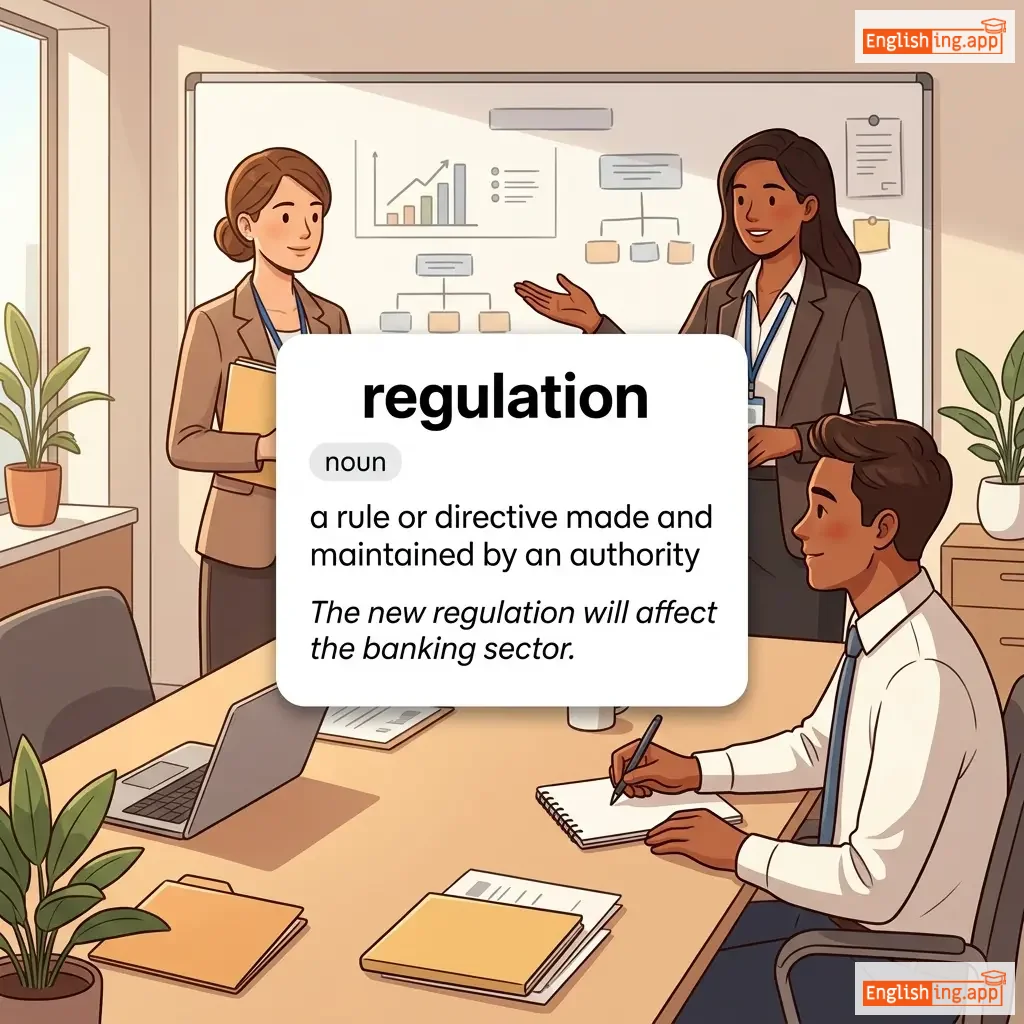
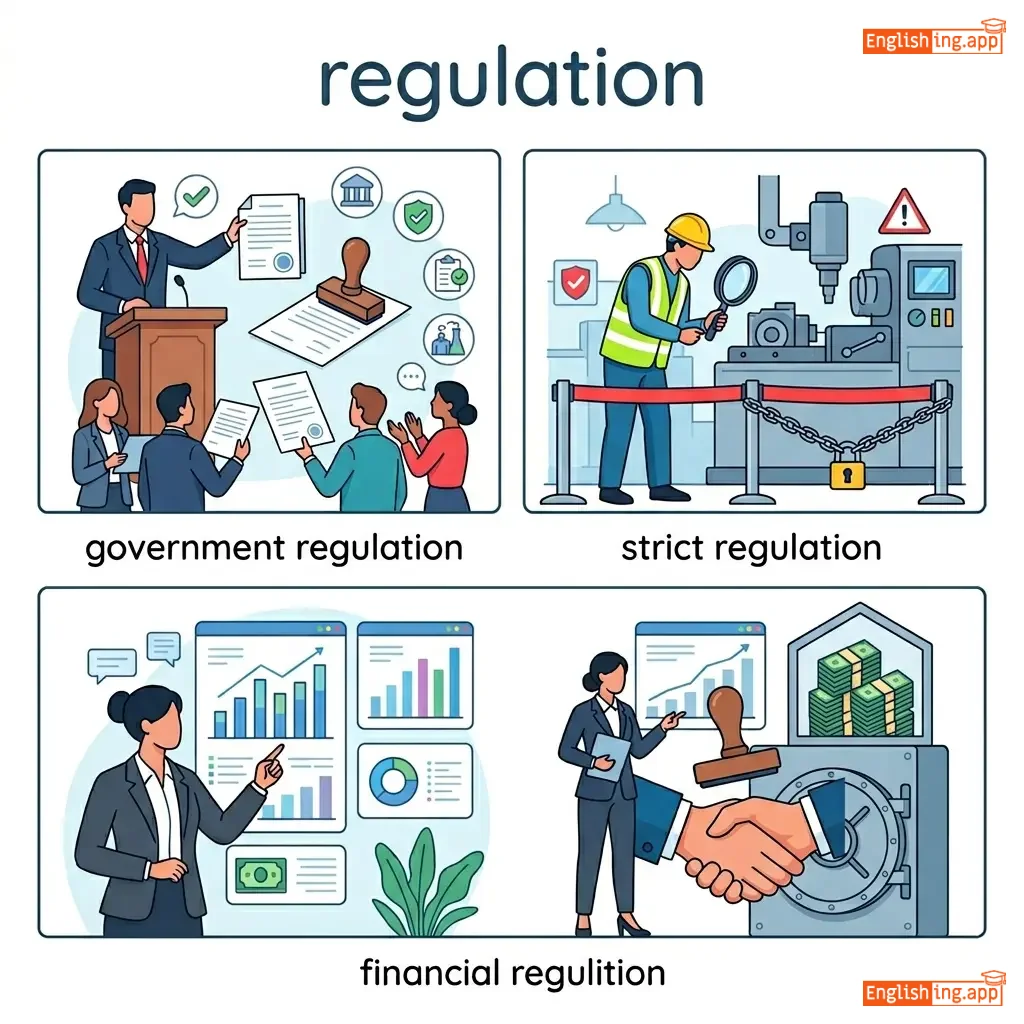
/ˌrɛɡjuˈleɪʃən/
noun
••••••
|
|
a rule or directive made and maintained by an authority
••••••
|
The new regulation will affect the banking sector. |
- •••••• | - •••••• |
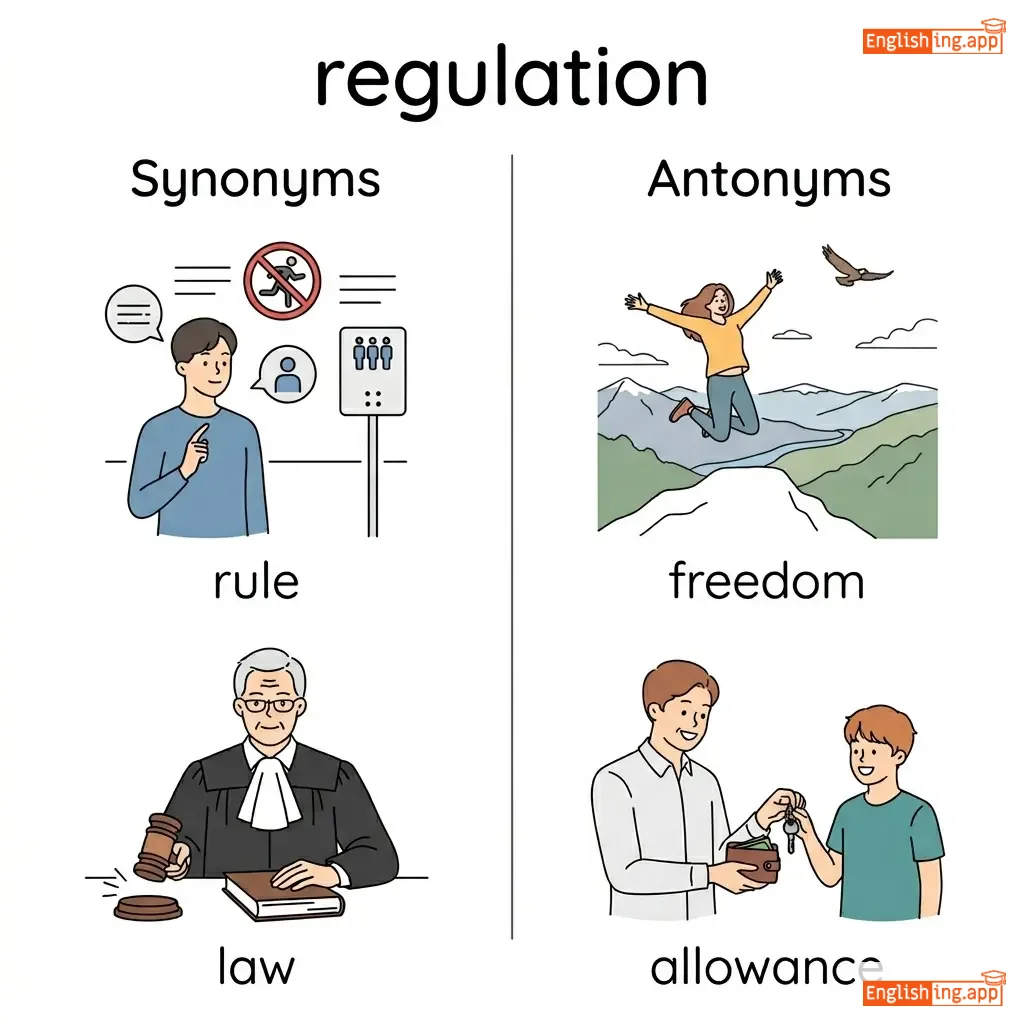
rule, law, guideline, directive
••••••
|
freedom, allowance
••••••
|
government regulation, strict regulation, financial regulation, safety regulation
••••••
|
|
#0
🔄
|
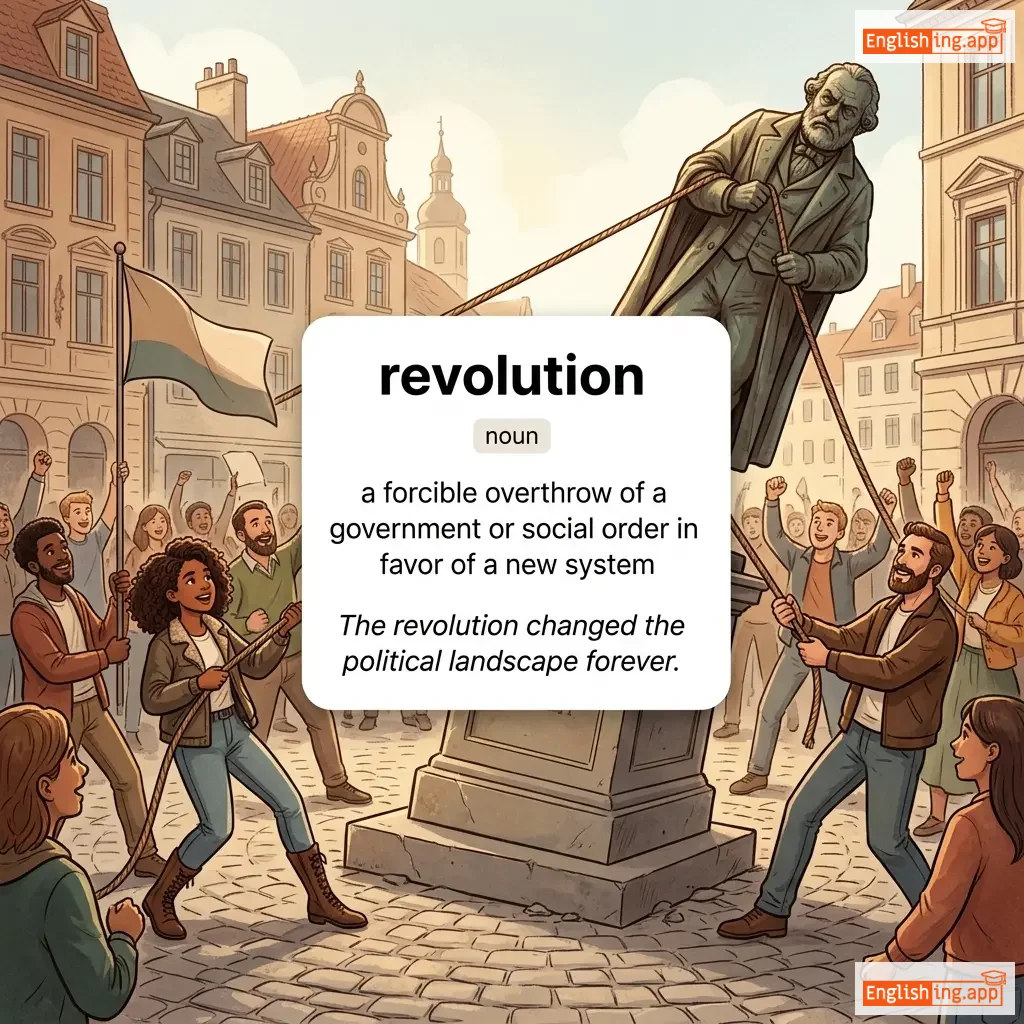
/ˌrevəˈluːʃən/
noun
••••••
|
|
a dramatic and wide-reaching change in conditions, attitudes, or operation; a forcible overthrow of a government or social order
••••••
|
The industrial revolution changed the way people lived and worked. |
- •••••• | - •••••• |
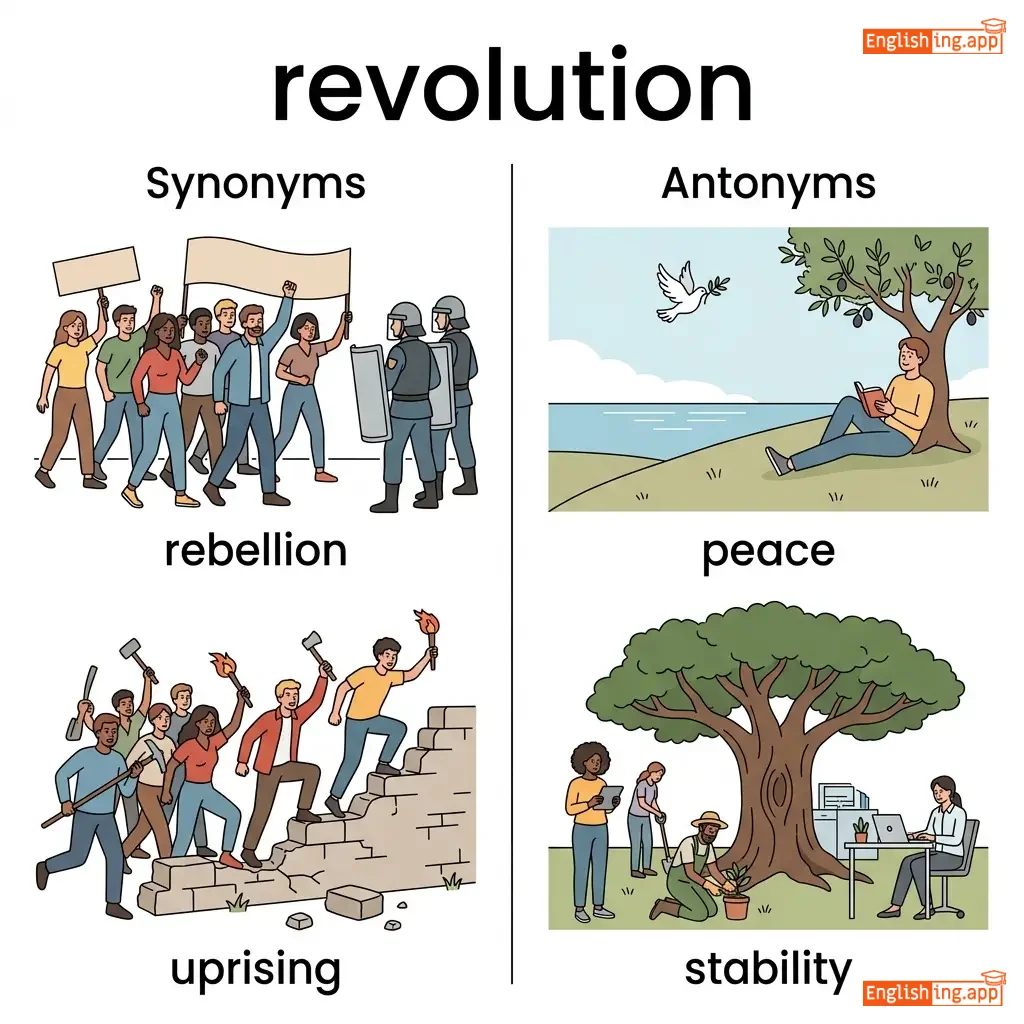
upheaval, transformation, rebellion, revolt
••••••
|
stability, conservation, tradition
••••••
|
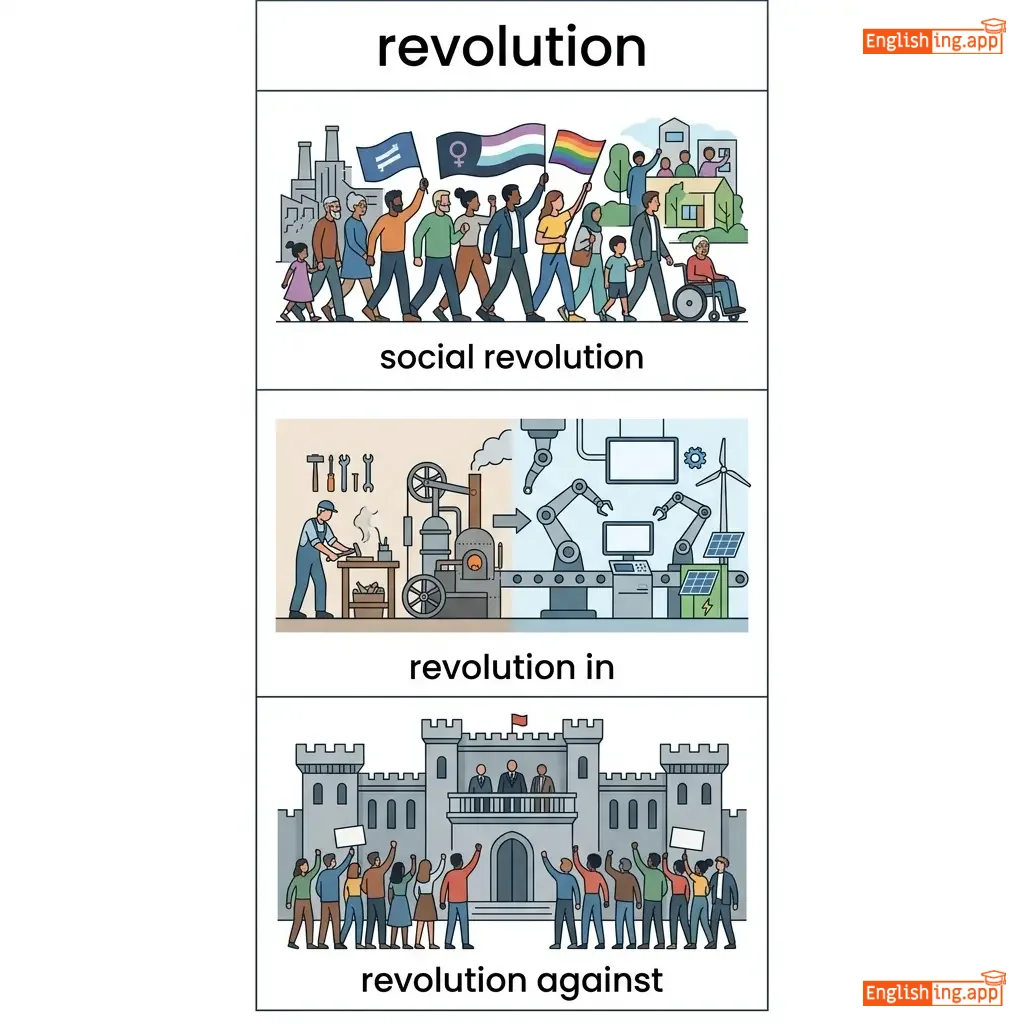
industrial revolution, political revolution, scientific revolution
••••••
|
|
#0
🗣️
|
/ˈspəʊksmən/
noun
••••••
|
- •••••• |
a person who speaks on behalf of others, especially for a group or organization
••••••
|
The spokesman addressed the crowd during the rally. |
- •••••• | - •••••• |
representative, delegate, spokesman, ambassador
••••••
|
opponent, adversary
••••••
|
chief spokesman, official spokesman, media spokesman
••••••
|
|
#0
🌍
|
/ˌjuːnɪˈvɜːsəl/
adjective
••••••
|
- •••••• |
Relating to or done by all people or things in the world; applicable everywhere or in all cases.
••••••
|
There is a universal need for love and acceptance. |
universal truth |
A truth accepted by everyone and valid everywhere
••••••
|
global, worldwide, common, general, all-encompassing
••••••
|
particular, local
••••••
|
universal truth, universal law, universal rights, universal principle
••••••
|
|
#0
🌍
|
/ˈwaɪd.sprɛd/
adjective
••••••
|
|
existing or happening in many places or among many people
••••••
|
There is widespread support for the new policy. |
- •••••• | - •••••• |
extensive, prevalent, universal, common
••••••
|
limited, localized, restricted, rare
••••••
|
widespread support, widespread use, widespread damage, widespread belief
••••••
|
Comments (0)
Share your thoughts and join the discussion.
Join the discussion by logging in
Login to CommentNo comments yet
Be the first to share your thoughts!