語彙集

英単語辞書 | 単語の意味、定義、例文

noun
/ˈsɑːrdʒənt/
軍曹 (gunsou)

A rank of non-commissioned officer in the armed forces or police.

"The sergeant gave orders to the soldiers before the mission."

"軍曹は任務の前に兵士たちに命令を出した。" (Gunsou wa ninmu no mae ni heishitachi ni meirei wo dashita.)
noun
/ˈsɑːrdʒənt ət ɑːrmz/
会議警備員 (kaigi keibiin)

An officer responsible for maintaining order during meetings or legislative sessions.

"The sergeant-at-arms escorted the disruptive member out of the hall."

"会議警備員は、秩序を乱すメンバーを会場から退場させました。" (Kaigi keibiin wa, chitsujo o midasu menbā o kaijō kara taijō saseshimashita.)
noun
/ˌsɑːrdʒənt ˈmeɪdʒər/
サージェント・メイジャー (saajento-meijaa)

A senior non-commissioned officer in the army responsible for discipline and administration within a unit.

"The sergeant-major inspected the troops before the parade."

"サージェント・メイジャーはパレード前に部隊を点検しました。" (Saajento-meijaa wa pareedo mae ni butai o tenken shimashita.)
adjective
/ˈsɪəriəl/
連続 (renzoku)

occurring in a series or sequence

"The serial killer was apprehended after a long investigation."

"シリアルキラーは長い調査の後、逮捕された。" (Shiriarukiraa wa nagai chousa no ato, taiho sareta.)
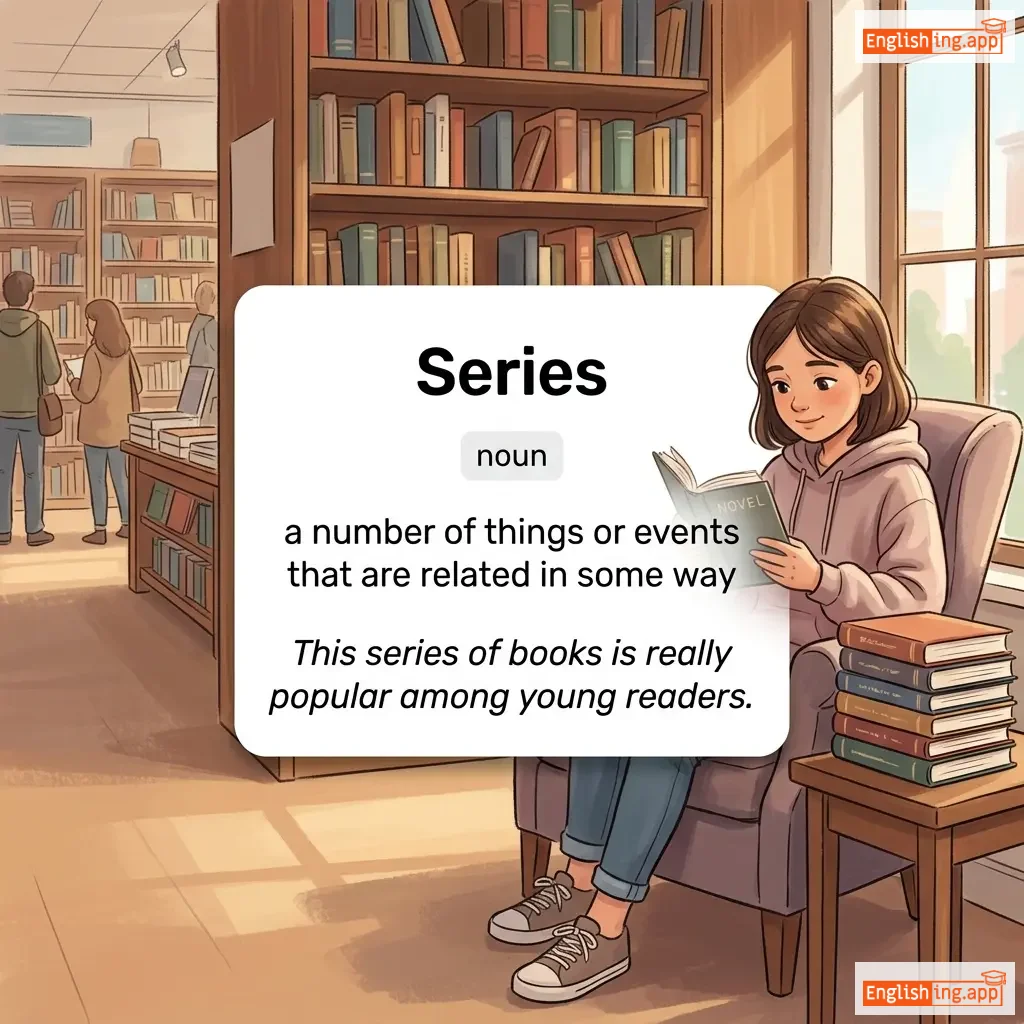
Series definition card — visual illustration of the meaning
noun
/ˈsɪəriːz/

a number of things or events that are related in some way

"This series of books is really popular among young readers."

adjective
/ˈsɪəriəs/
真剣 (shinken)

showing deep thought, sincerity, or importance; not joking

"She gave me a serious look before making her decision."

"彼女は決定を下す前に真剣な目で私を見ました。" (Kanojo wa kettei o kudasu mae ni shinken na me de watashi o mimashita.)
adverb
/ˈsɪə.ri.əs.li/
真剣に (shinken ni)

in a solemn or thoughtful manner

"She took the matter very seriously."

"彼女はその問題を非常に真剣に取り扱った。" (Kanojo wa sono mondai o hijō ni shinken ni toriatsukatta.)
noun
/ˈsɪr.i.əs.nəs/
真剣さ; 重要性 (shinkensa; jūyōsei)

the quality of being serious; gravity; importance

"The seriousness of the situation became clear when the doctor spoke."

"その状況の真剣さは、医者が話すときに明らかになりました。" (Sono jōkyō no shinkensa wa, isha ga hanasu toki ni akiraka ni narimashita.)
noun
/ˈsɜːrmən/
説教 (sekkyou)

A religious discourse delivered by a preacher, often offering moral instruction or spiritual guidance.

"The pastor gave a moving sermon about compassion and forgiveness."

"牧師は思いやりと許しについて感動的な説教をしました。" (Bokushi wa omoiyari to yurushi ni tsuite kandō-tekina sekkyō o shimashita.)
adjective
/ˈsɜːrpənˌtiːn/
蛇行の (daikou no)

Having the shape, movement, or qualities of a serpent; winding or twisting.

"The road took a serpentine path through the mountains."

"その道は山を通り、蛇行する道を取った。" (Sono michi wa yama o tōri, dakō suru michi o totta.)
verb
/ˈsɛreɪt/
ギザギザの縁を作る (gizagiza no fuchi o tsukuru)

To make a saw-toothed edge or notched margin.

"The craftsman serrated the knife blade for better cutting."

"職人はより良い切断のためにナイフの刃をセレイトしました。" (Shokunin wa yori yoi setsudan no tame ni naifu no ha o sereito shimashita.)
adjective
/ˈsɛreɪtɪd/
鋸歯状の (nokogirashō no)

Having a notched or saw-toothed edge.

"The bread knife had a serrated blade."

"パンナイフは鋸歯状の刃を持っていた。" (Pannaihu wa nokogirashō no ha o motte ita.)
adjective
/ˈsɛrid/
整列した (seiretsu shita)

pressed or crowded together, often in rows or ranks

"The soldiers stood in serried ranks, ready for inspection."

"兵士たちは整列した行列で立って、点検の準備ができていました。" (Heishi-tachi wa seiretsu shita gyōretsu de tatte, tenken no junbi ga dekiteimashita.)
noun
/ˈsɜːvənt/
召使い (meshi-tsukai)

a person who performs duties for others, especially in a household

"The servant opened the door for the guests."

"召使いは客のためにドアを開けました。" (Meshi-tsukai wa kyaku no tame ni doa o akemashita.)
serve definition card — visual illustration of the meaning
verb
/sɜːv/
サービスする (saabisu suru)

to provide service or assistance to others

"He serves the customers with a smile."
"彼は笑顔でお客様にサービスを提供しています。" (Kare wa egao de okyakusama ni sābisu o teikyō shiteimasu.)
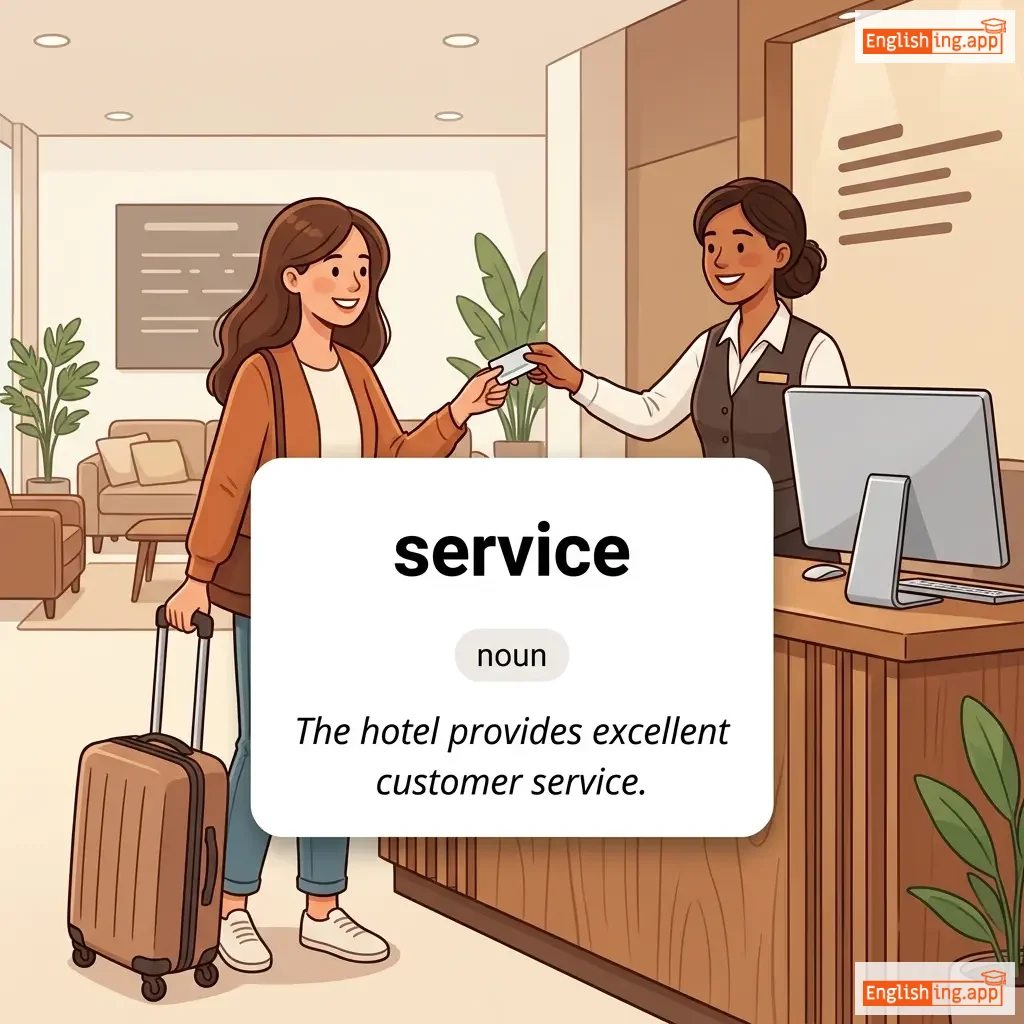
service definition card — visual illustration of the meaning
noun
/ˈsɜːrvɪs/
サービス (sābisu)

the action of helping or doing work for someone; a system providing a public need

"The hotel provides excellent customer service."

"ホテルは優れた顧客サービスを提供しています。" (Hoteru wa sugureta kokyaku sābisu o teikyō shiteimasu.)
adjective
/ˈsɜːrvɪsəbl/
使用可能 (shiyou kanou)

fit for use; usable; in working order

"The old bicycle is still serviceable despite its age."
"その古い自転車は年齢に関係なく、まだ使用可能です。" (Sono furui jitensha wa nenrei ni kankeinaku, mada shiyou kanou desu.)
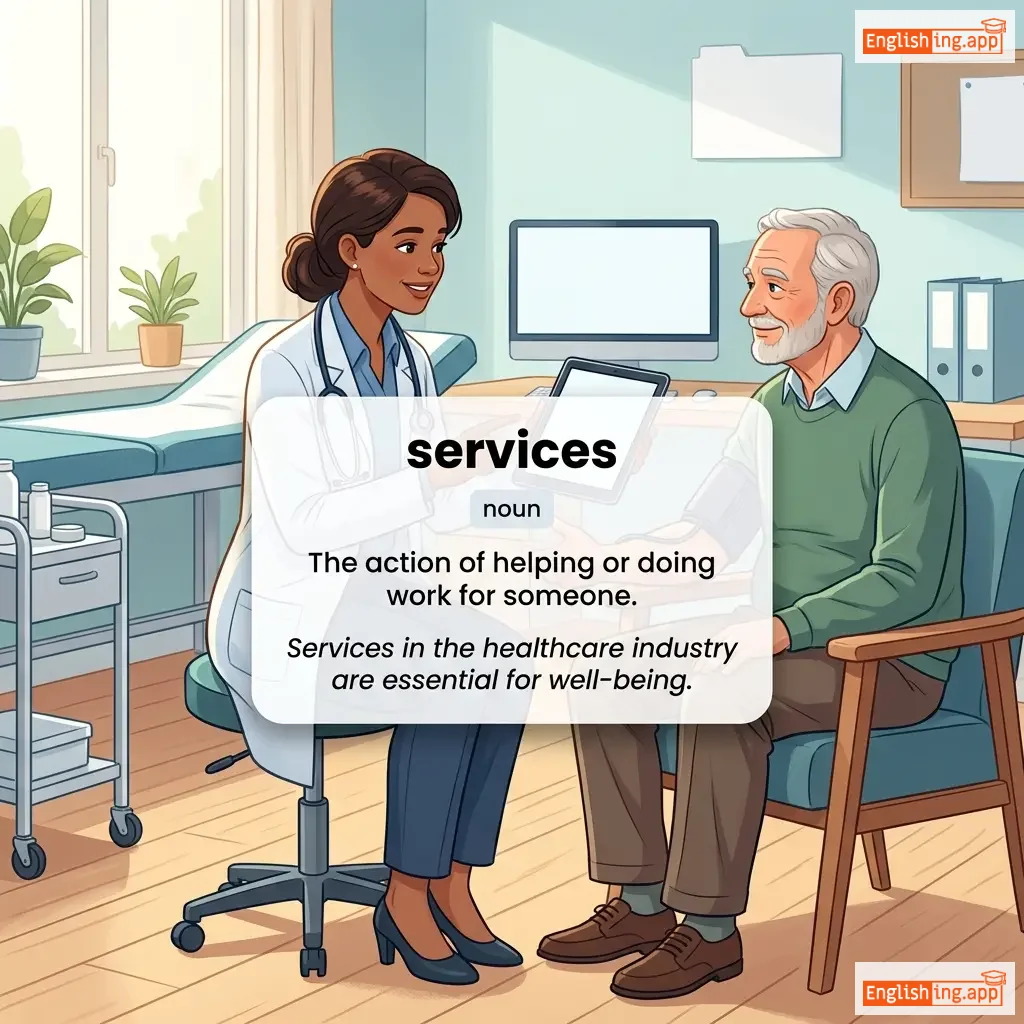
services definition card — visual illustration of the meaning
noun
ˈsɜːvɪsɪz
サービス (sābisu)

The action of helping or doing work for someone.

"Services in the healthcare industry are essential for well-being."
"医療業界のサービスは、福祉に不可欠です。" (Iryō gyōkai no sābisu wa, fukushi ni fukaketsu desu.)
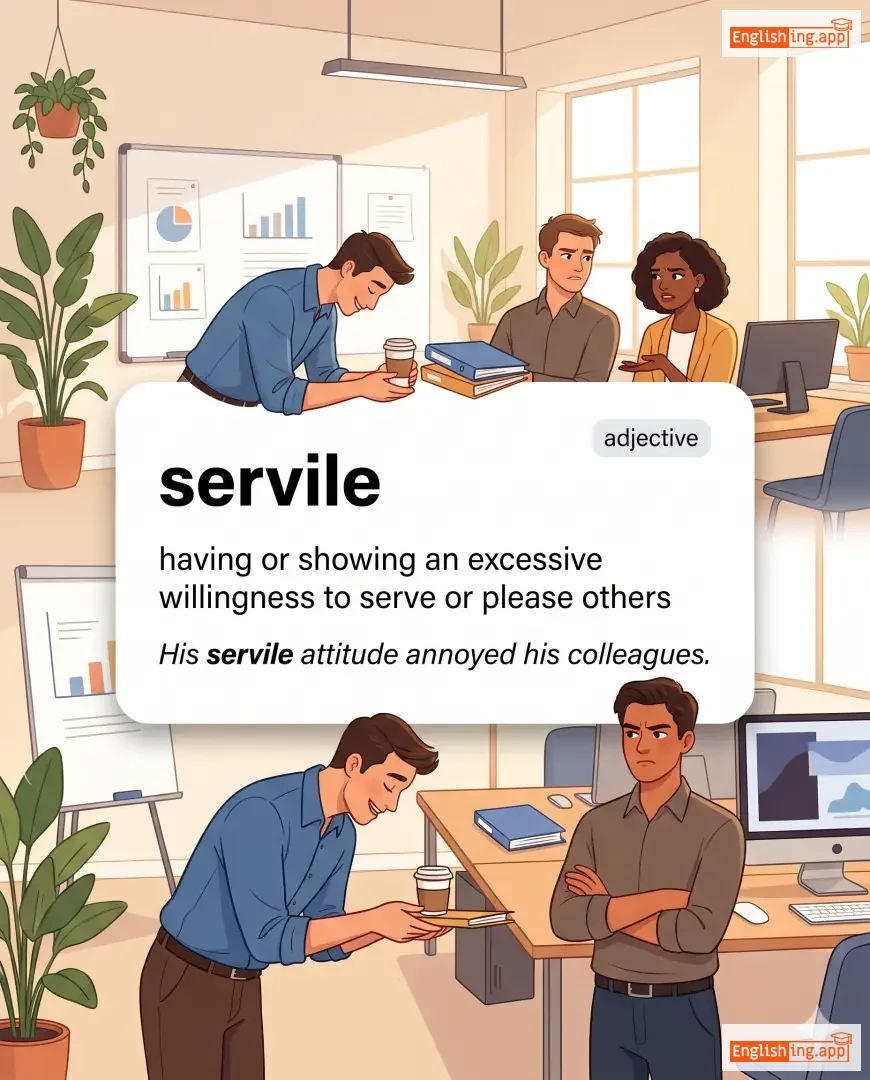
servile definition card — visual illustration of the meaning
adjective
/ˈsɜːrvaɪl/ or /ˈsɜːrvəl/
卑屈な (hikutsuna)

having or showing an excessive willingness to serve or please others

"His servile attitude annoyed his colleagues."

"彼の卑屈な態度は同僚を困らせていました。" (Kare no hikutsuna taido wa dōryō o komarasete imashita.)
noun
/ˈsɜːvɪŋ/
ポーション (poshon)

a portion of food for one person; the act of giving food or drink to someone

"He ate a large serving of rice and curry."

"彼は大きなポーションのご飯とカレーを食べました。" (Kare wa ōkina poshon no gohan to karē o tabemashita.)
noun
/ˈsɜːrvɪtuːd/
隷属 (reisoku)

the state of being a slave or completely subject to someone more powerful

"The prisoners were forced into servitude."

"囚人たちは強制的に隷属させられました。" (Shūjin-tachi wa kyōseiteki ni reisoku saseraremashita.)
noun
/ˈsɛsəmi sidz/
ゴマの種 (goma no tane)

small edible seeds from the sesame plant used in cooking and baking

"Sprinkle sesame seeds on top of the bread before baking."
"パンの上にゴマの種を振りかけてから焼いてください。" (Pan no ue ni goma no tane o furikakete kara yaite kudasai.)
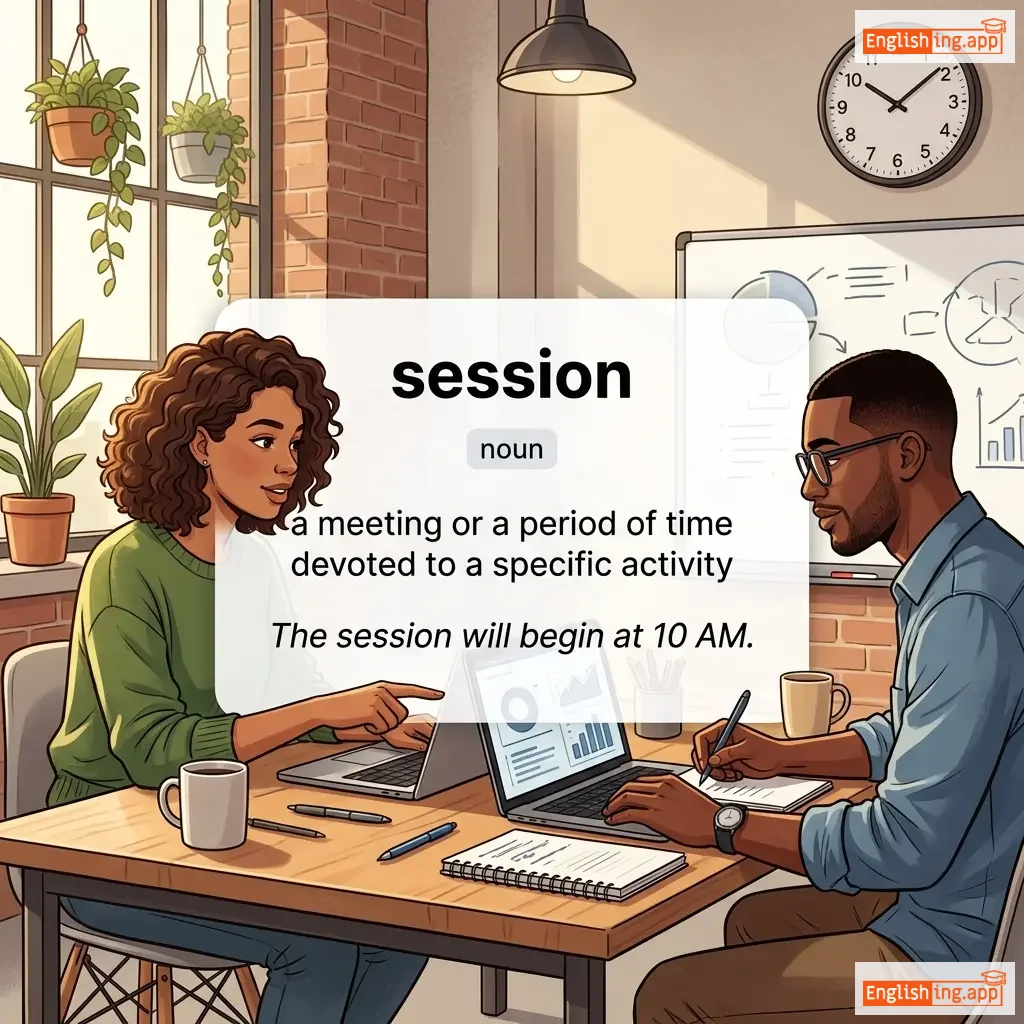
session definition card — visual illustration of the meaning
noun
/ˈsɛʃ.ən/
セッション (sesshon)

a meeting or a period of time devoted to a specific activity

"The session will begin at 10 AM."
"セッションは午前10時に開始します。" (Sesshon wa gozen 10-ji ni kaishi shimasu.)
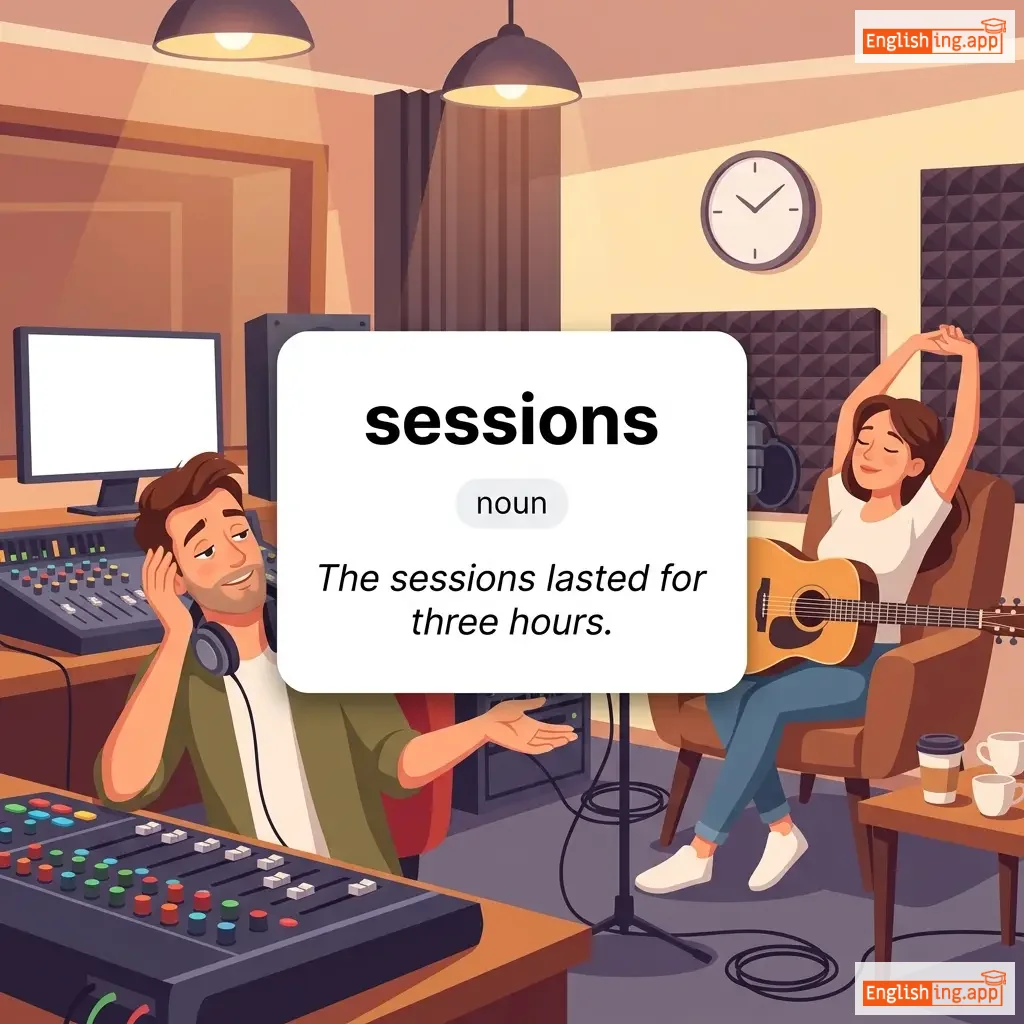
sessions definition card — visual illustration of the meaning
noun
ˈsɛʃənz
セッション, 会議, 時間帯 (sesshon, kaigi, jikan-tai)

A meeting of an official body, especially a court of law, to conduct its business; a period devoted to a particular activity.

"The sessions lasted for three hours."

"セッションは3時間続きました。" (Sesshon wa san jikan tsuzukimashita.)
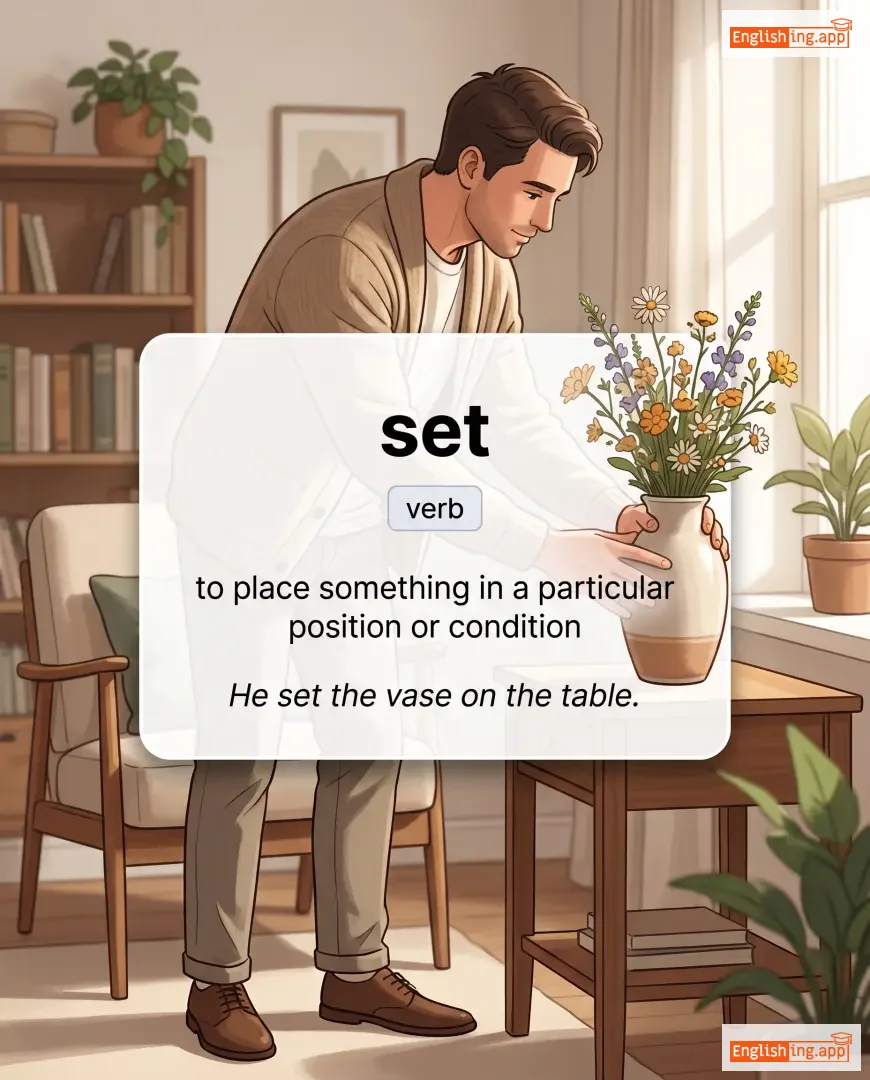
set definition card — visual illustration of the meaning
verb
/sɛt/
置く (oku)

to place something in a particular position or condition

"He set the vase on the table."

"彼は花瓶をテーブルの上にセットした。" (Kare wa kabin o tēburu no ue ni setto shita.)
noun
/ˈsɛt ʌp/
構成 (kousei)

The arrangement or organization of something; a planned structure or scheme

"The company presented a new set-up for the office layout."
"会社はオフィスレイアウトのために新しいセットアップを発表した。" (Kaisha wa ofisu reiauto no tame ni atarashii settoappu o happyou shita.)
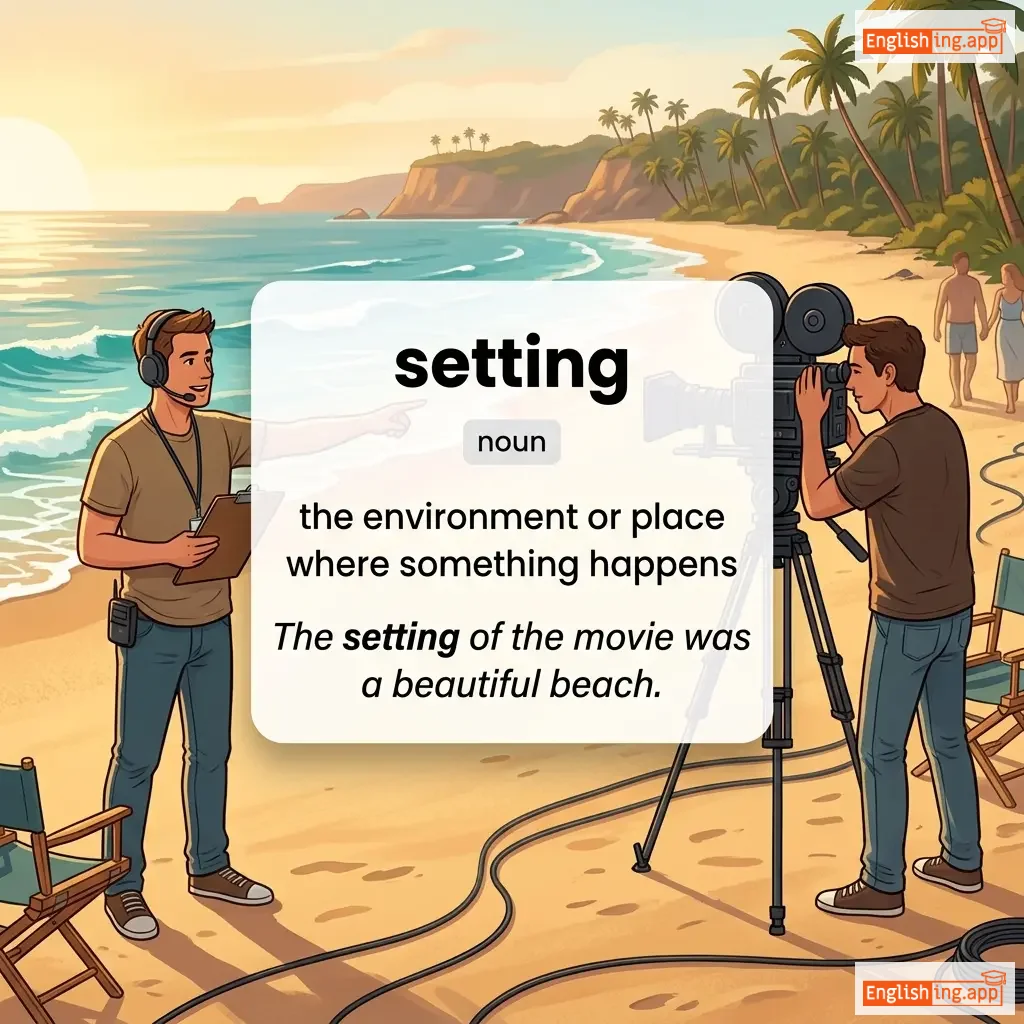
setting definition card — visual illustration of the meaning
noun
/ˈsɛtɪŋ/
セット (setto)

the environment or place where something happens

"The setting of the movie was a beautiful beach."

"映画の舞台は美しいビーチでした。" (Eiga no butai wa utsukushī bīchi deshita.)
settle definition card — visual illustration of the meaning
verb
/ˈsɛtl/
解決する (kaiketsu suru)

to resolve or come to an agreement about something; to establish a residence or position

"After a long negotiation, they were able to settle the dispute."

"長い交渉の後、彼らはついに争いを解決することができました。" (Nagai kōshō no ato, karera wa tsuini arasoi o kaiketsu suru koto ga dekimashita.)
noun
/ˈsɛtlmənt/
合意 (goi)

an agreement reached after a dispute, or a community or area where people establish a home

"The settlement between the companies was finalized after months of talks."

"企業間の合意は、数ヶ月にわたる交渉の後に最終的に決定されました。" (Kigyōkan no gōi wa, sū kagetsu ni wataru kōshō no ato ni saishūteki ni kettei saremashita.)
noun
/ˈsɛtlər/
入植者 (nyūshokusha)

a person who settles in a new area or land

"The settlers arrived in the new town and started building homes."

"入植者たちは新しい町に到着し、家を建て始めました。" (Nyūshokusha-tachi wa atarashī machi ni tōchaku shi, ie o tatehajimemashita.)
noun
/ˈsɛtʌp/
設置 (setchi)

an arrangement of things or the way in which something is organized or prepared

"The setup of the event took hours to complete."
"イベントのセットアップには数時間かかりました。" (Ibento no settoappu ni wa suujikan kakarimashita.)
7️⃣

seven

noun
/ˈsɛvən/

the number following six and preceding eight

"She has seven apples in her basket."

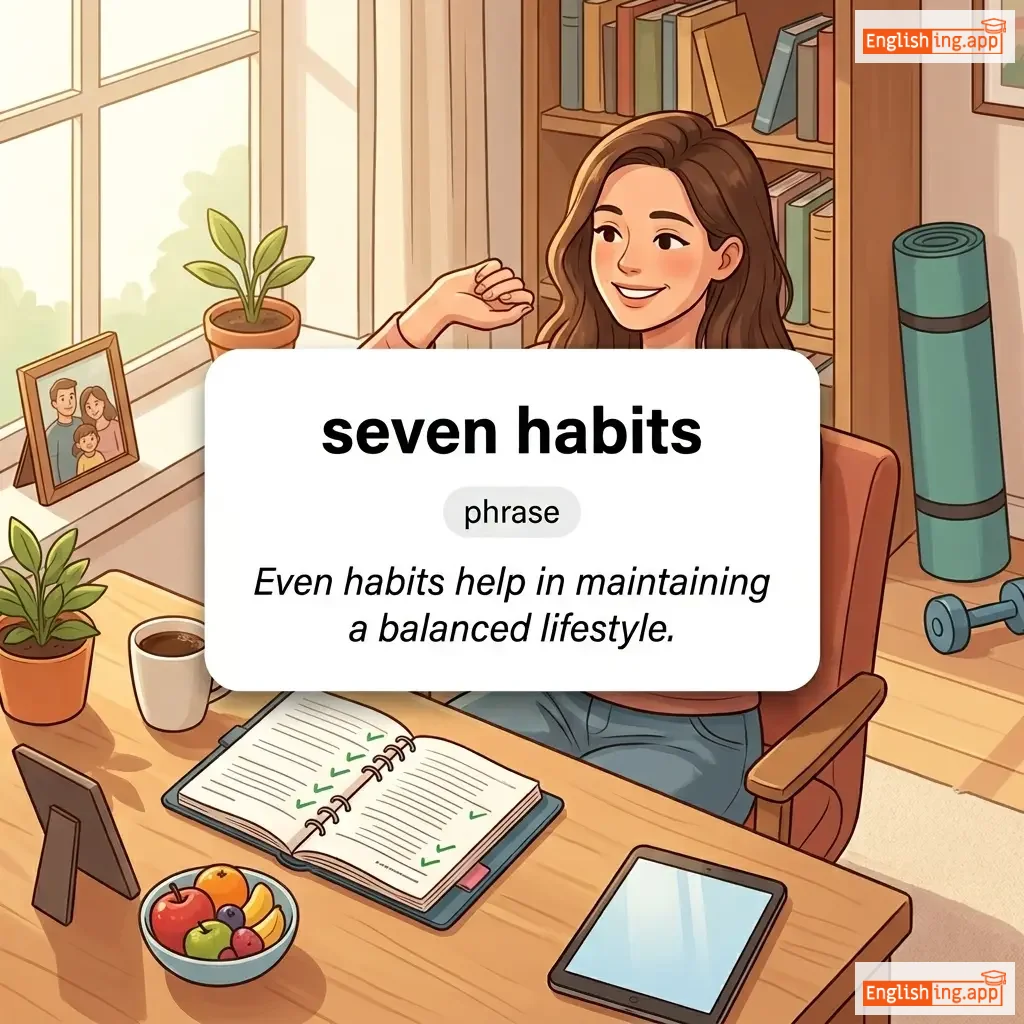
seven habits definition card — visual illustration of the meaning
phrase
ˈsɛvən ˈhæbɪts
七つの習慣 (nanatsu no shūkan)

Regular behaviors or actions that are done consistently over time, specifically referring to a set of seven key practices.

"Even habits help in maintaining a balanced lifestyle."

"習慣はバランスの取れたライフスタイルを維持するのに役立ちます。" (Shūkan wa baransu no toreta raifusutairu o iji suru no ni yakudachimasu.)
Seven Wonders definition card — visual illustration of the meaning
noun
ˈsɛv.ən ˈwʌn.dərz
七不思議 (shichi fushigi)

The seven most remarkable and famous structures in the world, representing architectural feats and cultural significance.

"The Seven Wonders of the world reflect human brilliance."

"世界の七不思議は人類の素晴らしさを反映しています。" (Sekai no shichi fushigi wa jinrui no subarashisa o han'ei shiteimasu.)
adjective
/ˈsɛvənθ/
七番目 (nanabanme)

constituting number seven in a sequence; coming after the sixth

"Her birthday is on the seventh of July."

"彼女の誕生日は7月7日です。" (Kanojo no tanjoubi wa shichigatsu nanoka desu.)
verb
/ˈsɛvər/
切る、関係を断つ (kiru, kankei wo tatsu)

to cut off or separate, especially by cutting; to end a connection or relationship

"He had to sever ties with the company after the dispute."

"彼は争いの後、会社との関係を断たなければならなかった。" (Kare wa arasoi no ato, kaisha to no kankei wo tatanakereba naranakatta.)
adjective
/ˈsɛvrəl/
いくつか (ikutsuka)

more than one but not many; a few

"Several people attended the meeting yesterday."

"数人が昨日の会議に出席した。" (Sūnin ga kinō no kaigi ni shusseki shita.)
noun
/ˈsɛvərəns/
退職金 (taishokukin)

the act of ending something, especially a relationship or employment; compensation paid upon termination

"The company offered him severance pay after his job ended."
"会社は彼の仕事が終了した後、退職金を提供しました。" (Kaisha wa kare no shigoto ga shūryō shita ato, taishokukin o teikyō shimashita.)
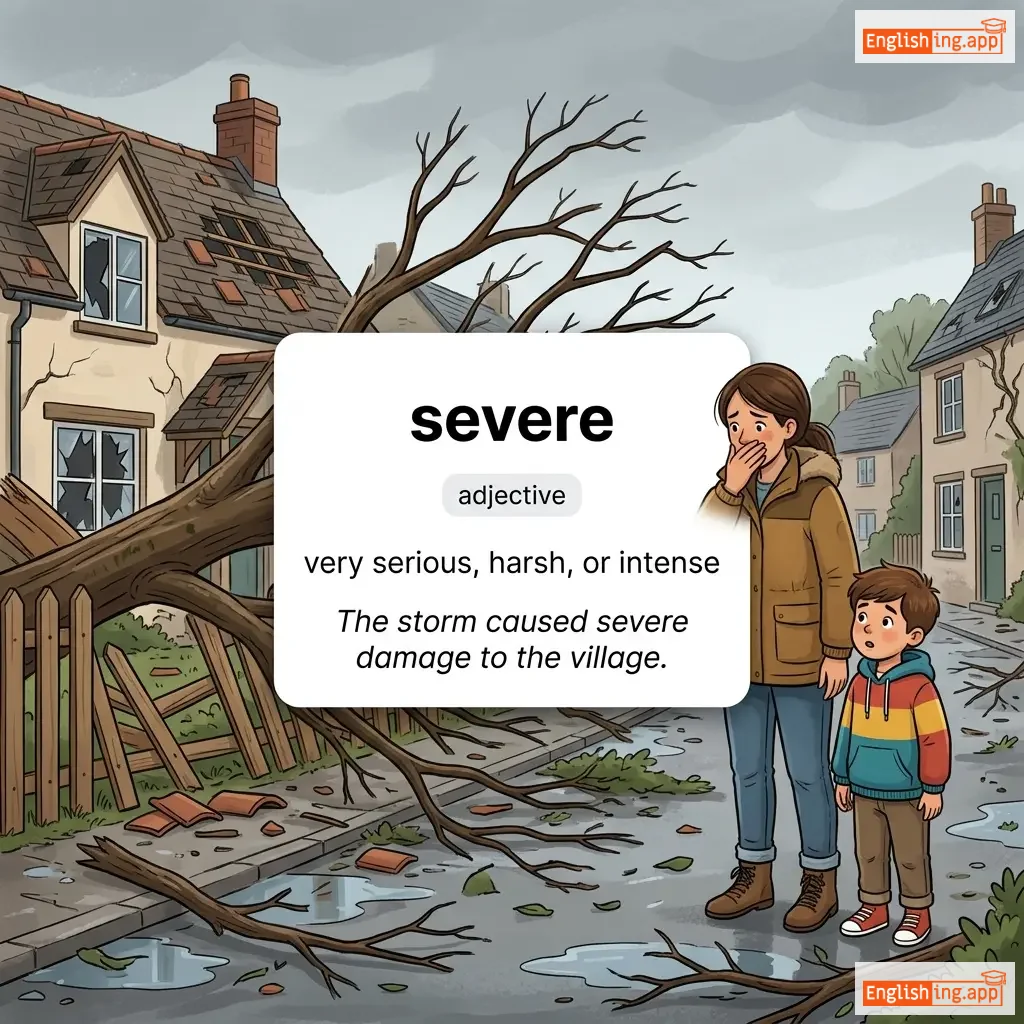
severe definition card — visual illustration of the meaning
adjective
/sɪˈvɪər/
深刻な (shinkokuna)

very serious, harsh, or intense

"The storm caused severe damage to the village."

"嵐は村に深刻な被害を与えました。" (Arashi wa mura ni shinkokuna higai o ataemashita.)
adverb
/sɪˈvɪərli/
ひどく (hidoku)

to a great degree; very seriously or harshly

"The patient was severely injured in the accident."

"患者は事故でひどく負傷しました。" (Kanja wa jiko de hidoku fushou shimashita.)
noun
/sɪˈvɛrɪti/
深刻さ (shinkokusa)

the quality of being very serious or harsh

"The doctor explained the severity of the disease."

"医者は病気の深刻さを説明しました。" (Isha wa byouki no shinkokusa wo setsumei shimashita.)
verb
/səʊ/
幸せ (shiawase)

to join pieces of fabric or material together using a needle and thread

"She learned to sew her own clothes at an early age."

"彼女は賞を受け取ったとき、自分の幸せを隠すことができませんでした。" (Kanojo wa shō o uketotta toki, jibun no shiawase o kakusu koto ga dekimasen deshita.)
noun/verb
/ˈsoʊ.ɪŋ/
裁縫 (saihō)

The activity or skill of joining fabric using a needle and thread

"She enjoys sewing her own clothes on weekends."

"彼女は週末に自分の服を裁縫するのを楽しみます。" (Kanojo wa shūmatsu ni jibun no fuku o saihō suru no o tanoshimimasu.)
noun
/sɛks/
性別 (seibetsu)

the biological distinction between male and female; sexual activity

"He was asked about his sex at the doctor's office."
"彼は医者のオフィスで自分の性別について尋ねられました。" (Kare wa isha no ofisu de jibun no seibetsu ni tsuite tazuneraremashita.)
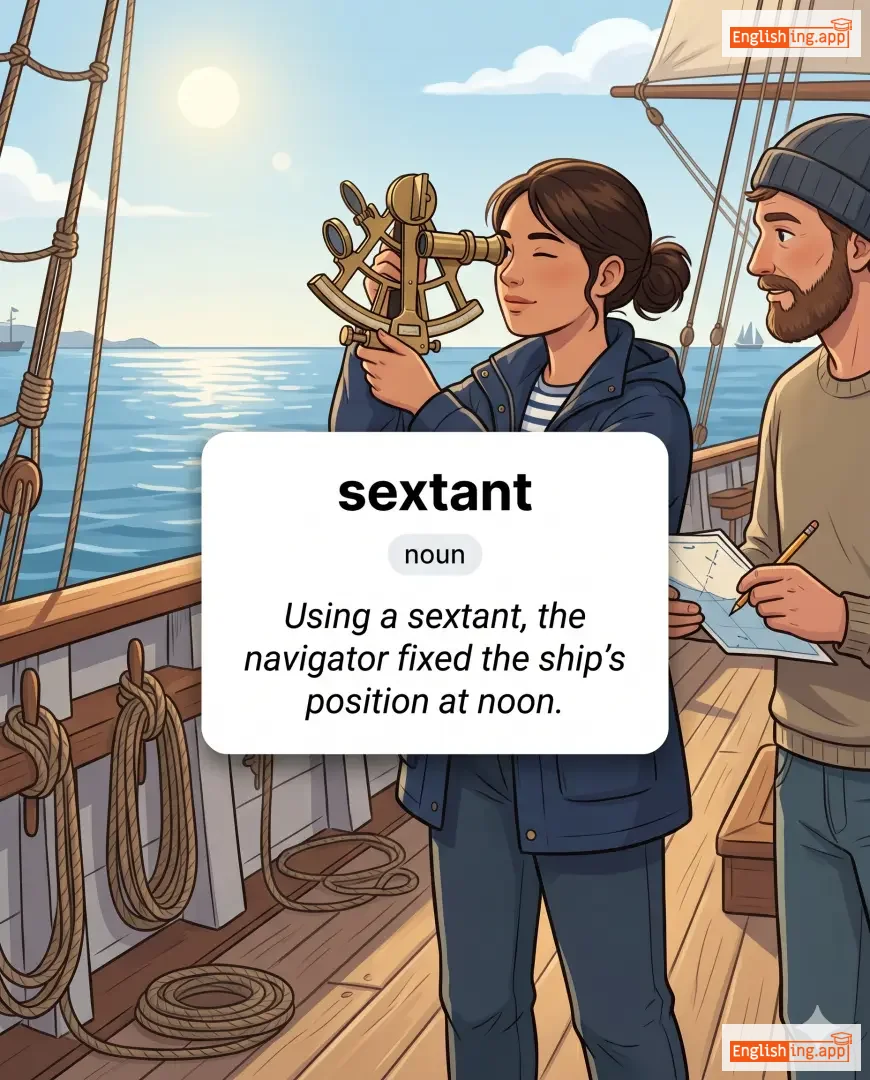
sextant definition card — visual illustration of the meaning
noun
/ˈsɛkstənt/
セクスタント (sekusutanto)

a navigational instrument with a graduated arc of 60°, used to measure the angle between a celestial object and the horizon

"Using a sextant, the navigator fixed the ship’s position at noon."

"セクスタントを使用して、ナビゲーターは正午に船の位置を特定しました。" (Sekusutanto o shiyō shite, nabigētā wa shōgo ni fune no ichi o tokutei shimashita.)
noun
/sɛkˈstɛt/
六重奏 (rokujūzō)

a group of six people playing music or a piece written for six performers

"The jazz sextet filled the small club with a warm, layered sound."

"ジャズのセクステットは、小さなクラブを温かく層状の音で満たしました。" (Jazu no sekusutetto wa, chīsana kurabu o atatakai sōjō no oto de mitashimashita.)
verb
/sɛkˈstuːpəl/
セクストゥプル (sekusutupuru)

to make or become six times as great or as many

"Within two quarters, the campaign sextupled their daily sign-ups."

"2つの四半期で、キャンペーンは毎日のサインアップ数を6倍にしました。" (Futatsu no shihanki de, kyanpēn wa mainichi no sain appu sū o roku-bai ni shimashita.)
adjective
/ˈsɛkʃʊəl/
セクシャル (sekusharu)

relating to the instincts, physiological processes, and activities connected with physical attraction or intimate physical contact between individuals

"The sexual health of individuals is an important topic in modern medicine."

"個々の性の健康は現代医学において重要なトピックです。" (Koko no sei no kenko wa gendai igaku ni oite juuyou na topikku desu.)
noun
/ˌsɛkʃuˈæləti/
セクシュアリティ (sekushuarity)

a person's capacity for sexual feelings and orientation

"She spoke openly about her sexuality and identity."

"彼女は自分のセクシュアリティとアイデンティティについてオープンに話しました。" (Kanojo wa jibun no sekushuarity to aidentiti ni tsuite oopun ni hanashimashita.)
adverb
/ˈsɛkʃuəli/
性的に (seiteki ni)

in a way that relates to or involves sexual activity or feelings

"The film was considered too sexually explicit for young audiences."

"その映画は若い観客には過度に性的に露骨だと見なされました。" (Sono eiga wa wakai kankyaku ni wa kadoni seiteki ni rokotsu da to minasaremashita.)