語彙集

英単語辞書 | 単語の意味、定義、例文

noun
/ˌsɒlɪˈdærɪti/
連帯 (rentai)

Unity or agreement of feeling or action, especially among individuals with a common interest.

"Workers held a strike in solidarity with their colleagues."

"労働者たちは同僚たちとの連帯のためにストライキを行った。" (Roudousha tachi wa douryou tachi to no rentai no tame ni sutoraiki o okonatta.)
verb
/səˈlɪdəˌfaɪ/
強化する (kyouka suru)

To make something firm, strong, or more certain.

"The company solidified its position in the market."
"その会社は市場での位置を固めました。" (Sono kaisha wa shijou de no ichi wo katamemashita.)
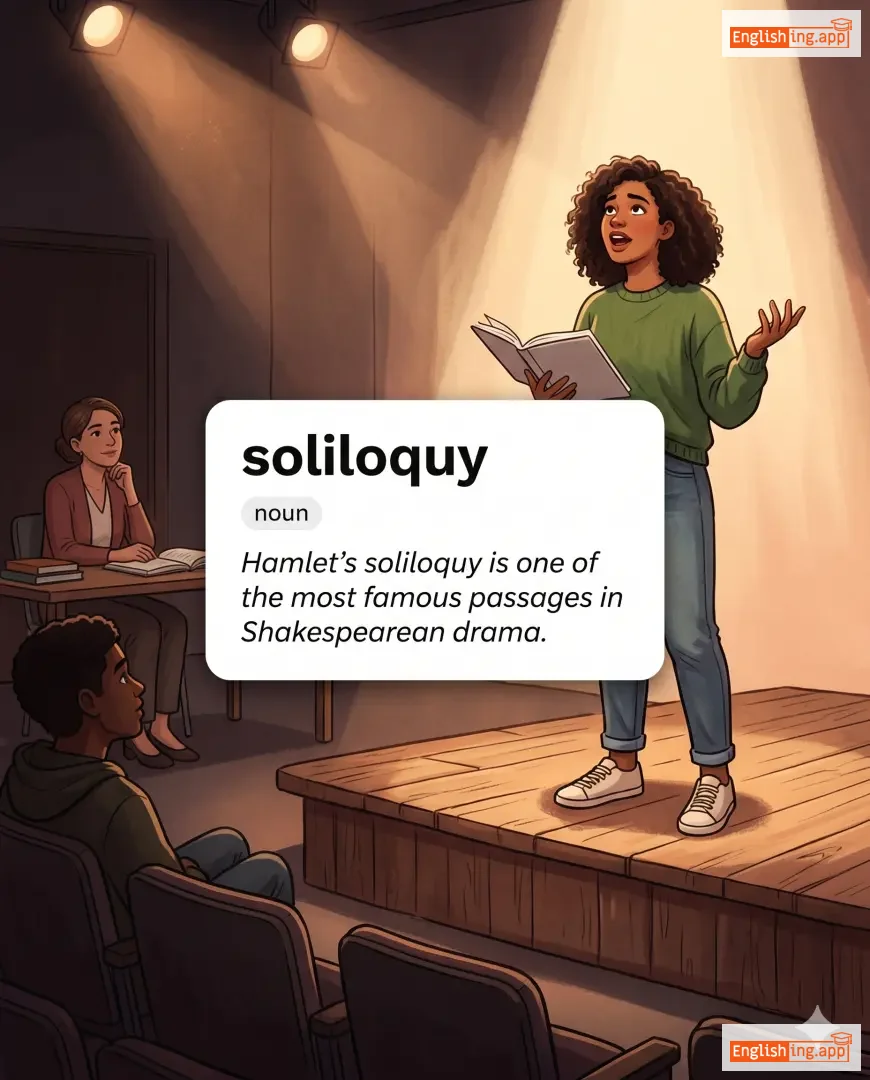
soliloquy definition card — visual illustration of the meaning
noun
/səˈlɪləkwi/
独白 (dohaku)

a speech in which a character talks to themselves, often used in drama to reveal inner thoughts

"Hamlet's soliloquy is one of the most famous passages in Shakespearean drama."

"ハムレットの独白はシェイクスピアのドラマの中で最も有名なパッセージの一つです。" (Hamuretto no dohaku wa Sheikusupia no dorama no naka de mottomo yūmei na passēji no hitotsu desu.)
adjective
/ˈsɒl.ɪ.ter.i/
孤独; 孤立; 一人 (kodoku; koritsu; hitori)

alone; without companions; single; isolated

"He lived a solitary life in the mountains."
"彼は山中で孤独な生活を送っていました。" (Kare wa sanchu de kodoku na seikatsu o okutte imashita.)
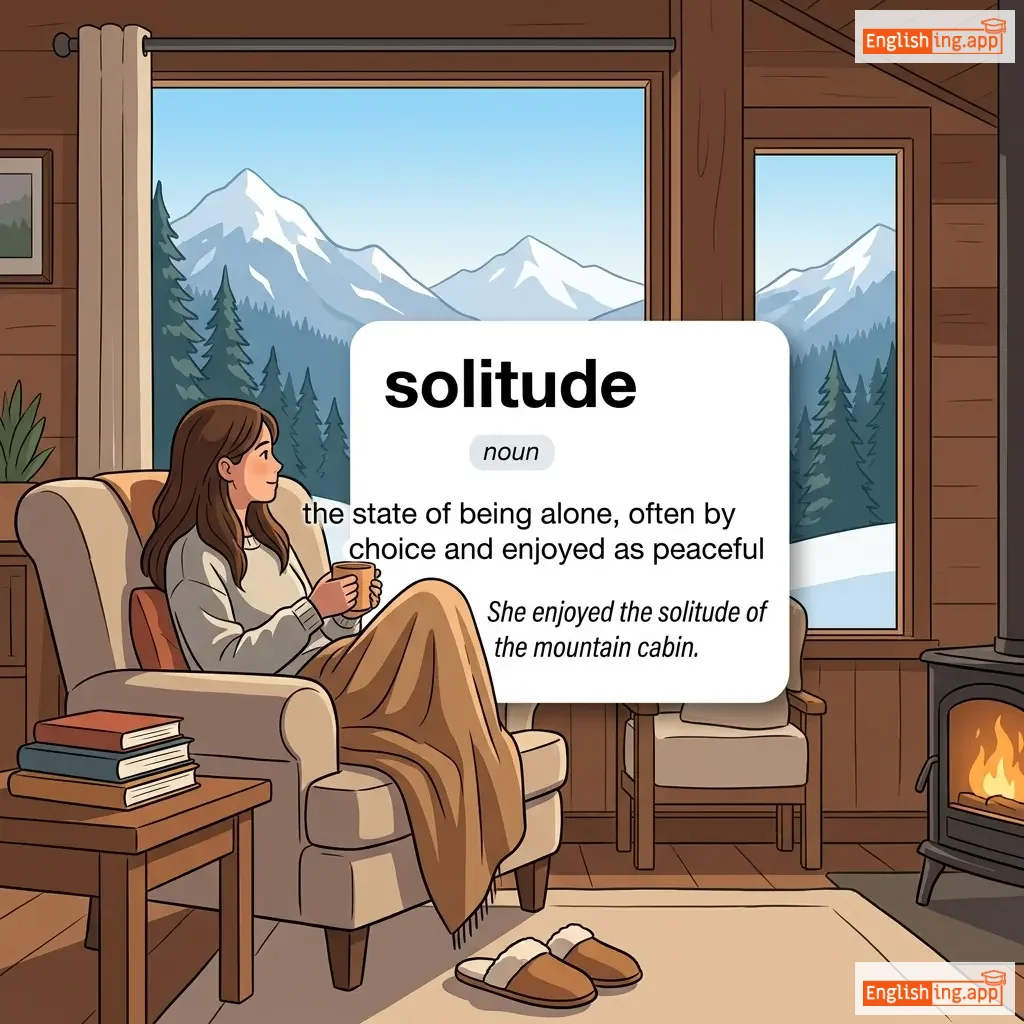
solitude definition card — visual illustration of the meaning
noun
/ˈsɒlɪtjuːd/
孤独 (kodoku)

the state of being alone, often by choice and enjoyed as peaceful

"She enjoyed the solitude of the mountain cabin."

"彼女は山小屋での孤独を楽しんだ。" (Kanojo wa yamagoya de no kodoku o tanoshinda.)
adjective
/ˈsoʊloʊ/
ソロ (soro)

performed by one person alone; a single performance

"She decided to perform a solo dance at the talent show."

"彼女は才能ショーでソロダンスを披露することに決めた。" (Kanojo wa sainō shō de soro dansu o hirō suru koto ni kimeta.)
noun
/ˈsɒlstɪs/
至点 (shiten)

the two times in the year when the sun is at its greatest distance from the equator (summer and winter solstice)

"People celebrate the summer solstice with festivals and rituals."
"人々は夏至を祝うために祭りや儀式を行います。" (Hitobito wa geshi o iwau tame ni matsuri ya gishiki o okonai masu.)
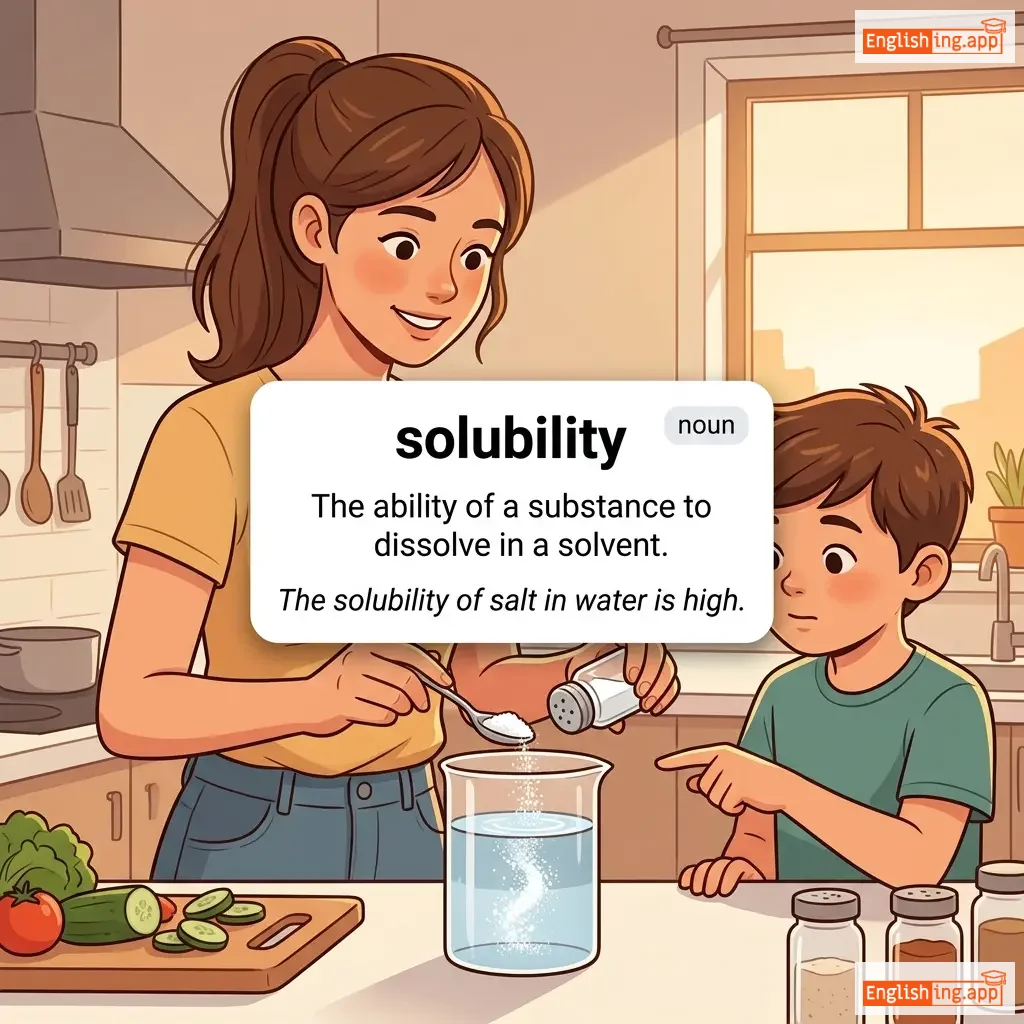
solubility definition card — visual illustration of the meaning
noun
/ˌsɒl.jʊˈbɪləti/
溶解度 (yōkaido)

The ability of a substance to dissolve in a solvent.

"The solubility of salt in water is high."

"塩の水における溶解度は高い。" (shio no mizu ni okeru yōkaido wa takai.)
adjective
/ˈsɒljʊbəl/
可溶性 (koyosei)

able to be dissolved, especially in water

"Sugar is soluble in water."

"砂糖は水に溶けやすい。" (Satou wa mizu ni tokeyasui.)
noun
/səˈluːʃən/
解決策 (kaiketsusaku)

a means of solving a problem or dealing with a difficult situation

"The solution to the problem was simpler than we thought."
"問題の解決策は思ったより簡単でした。" (Mondai no kaiketsusaku wa omotta yori kantan deshita.)
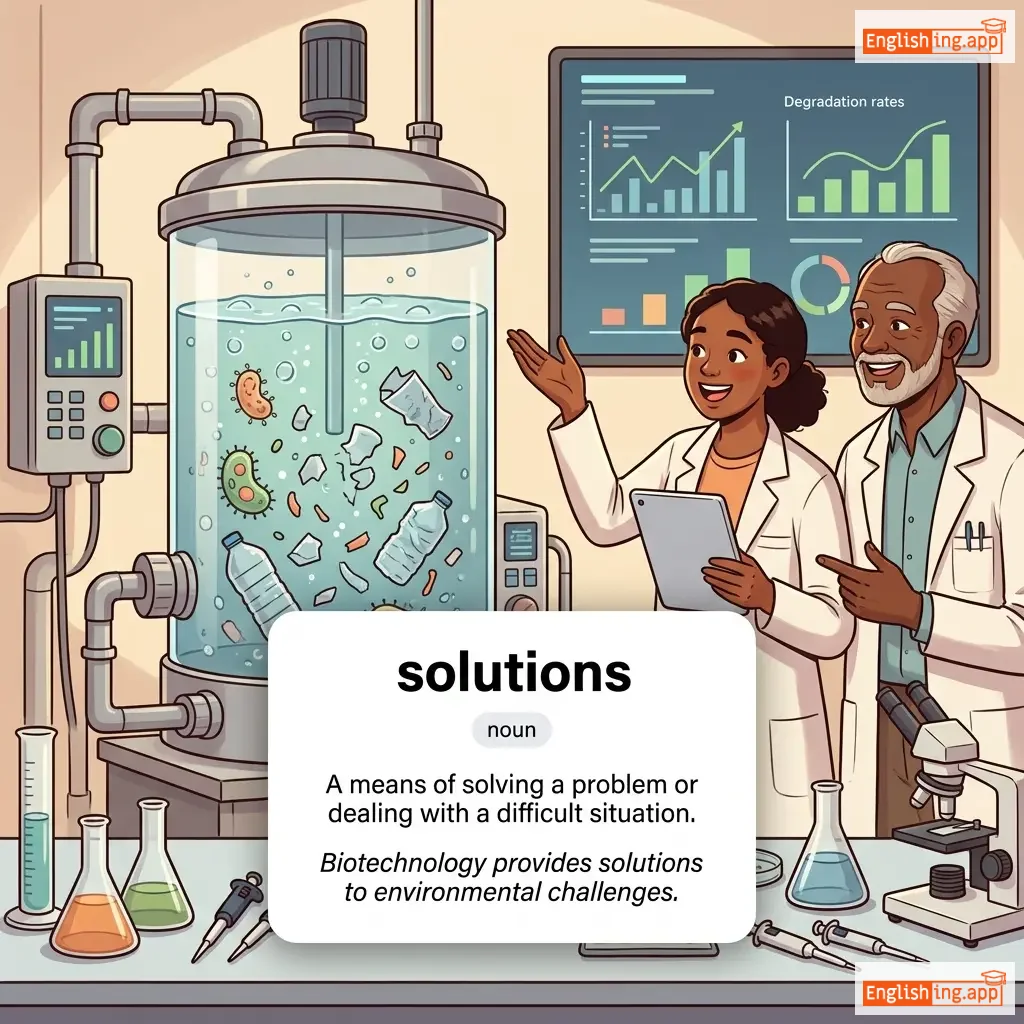
solutions definition card — visual illustration of the meaning
noun
səˈluː.ʃənz
解決策 (kaiketsusaku)

A means of solving a problem or dealing with a difficult situation.

"Biotechnology provides solutions to environmental challenges."
"バイオテクノロジーは環境問題に対する解決策を提供します。" (Baiotekunorojii wa kankyō mondai ni taisuru kaiketsusaku wo teikyō shimasu.)
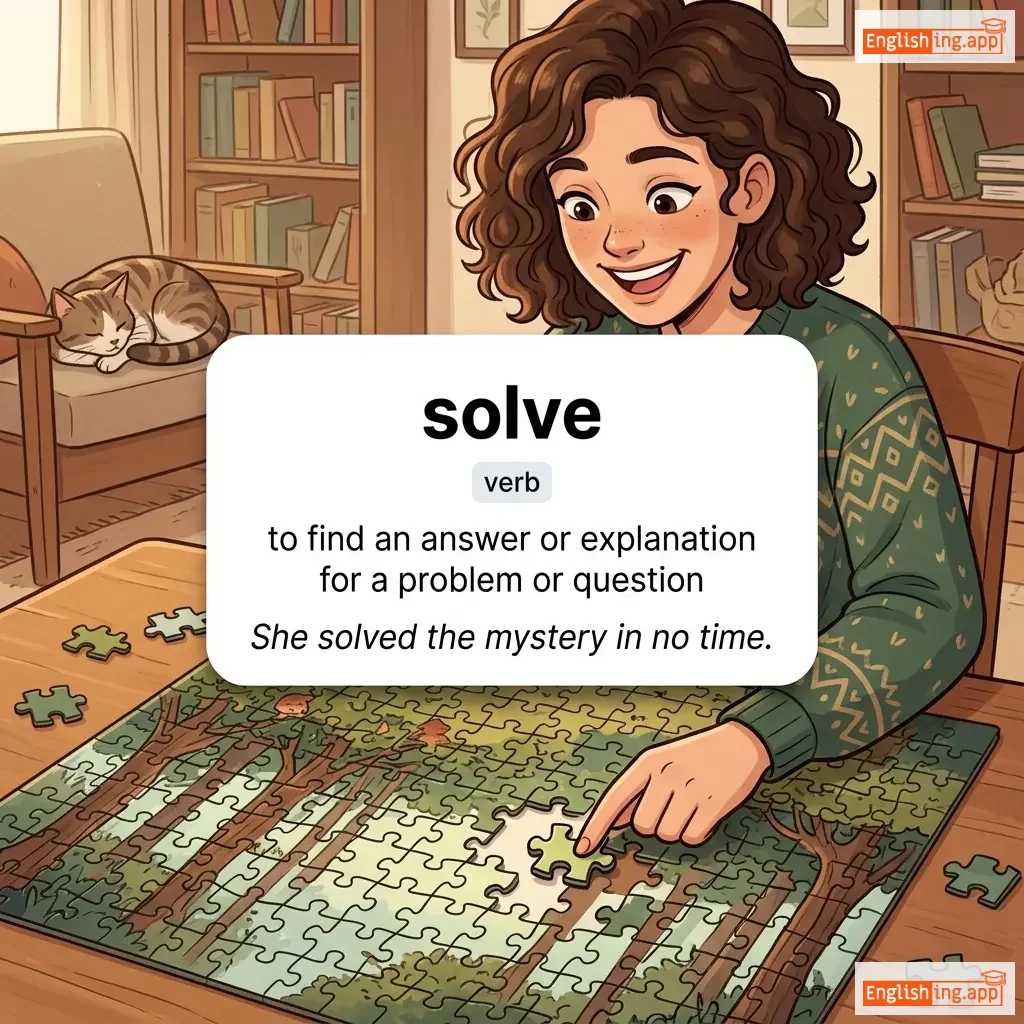
solve definition card — visual illustration of the meaning
verb
/sɒlv/
解決する (kaiketsu suru)

to find an answer or explanation for a problem or question

"She solved the mystery in no time."

"彼女はすぐに謎を解決しました。" (Kanojo wa sugu ni nazo o kaiketsu shimashita.)
solvency definition card — visual illustration of the meaning
noun
/ˈsɒl.vən.si/
資産が負債を上回る状態; 借金を返済する能力 (shisan ga fusai o uwamawaru jōtai; shakkin o hensai suru nōryoku)

The possession of assets in excess of liabilities; ability to pay debts.

"The company's solvency determines its financial health."
"企業のソルベンシーはその財務健全性を決定します。" (Kigyō no sorubenshī wa sono zaimu kenzen-sei o kettei shimasu.)
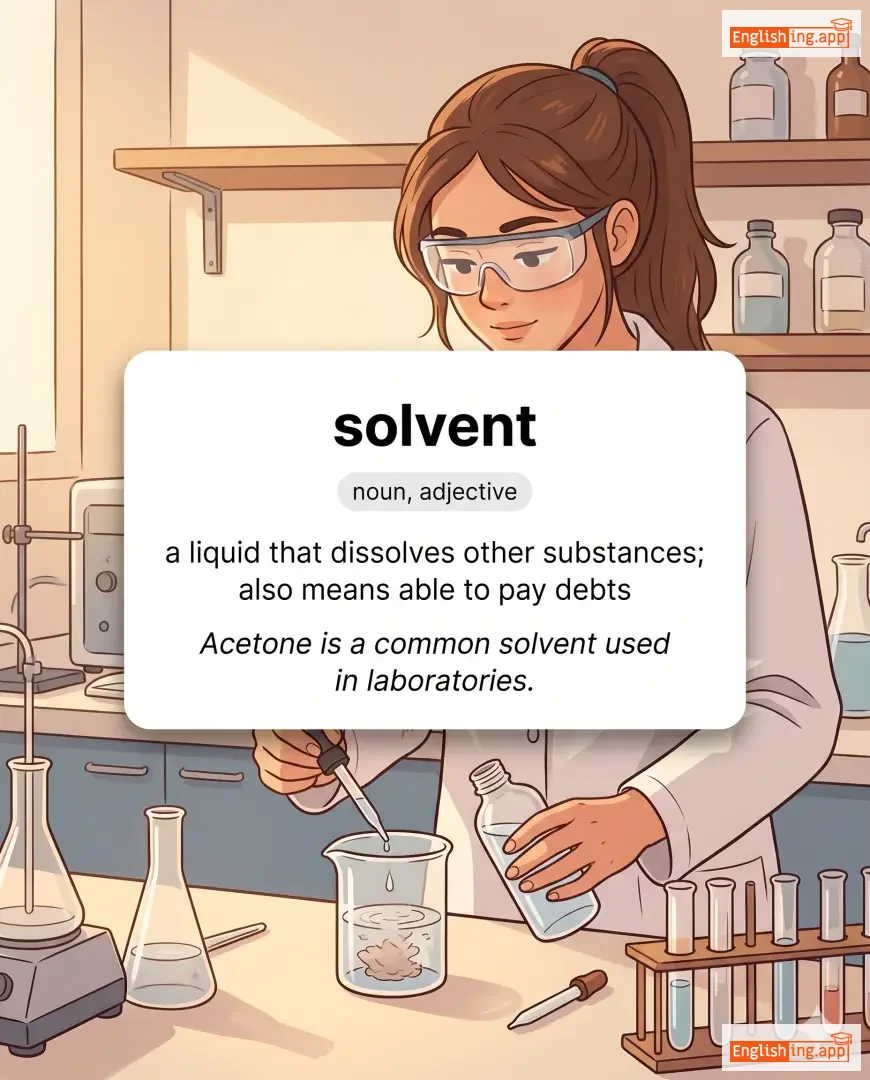
solvent definition card — visual illustration of the meaning
noun, adjective
/ˈsɒlvənt/
溶剤, 債務を支払う能力 (yōzai, saimu o shiharau nōryoku)

a liquid that dissolves other substances; also means able to pay debts

"Acetone is a common solvent used in laboratories."
"アセトンは実験室でよく使われる溶剤です。" (Aseton wa jikken-shitsu de yoku tsukawareru yōzai desu.)
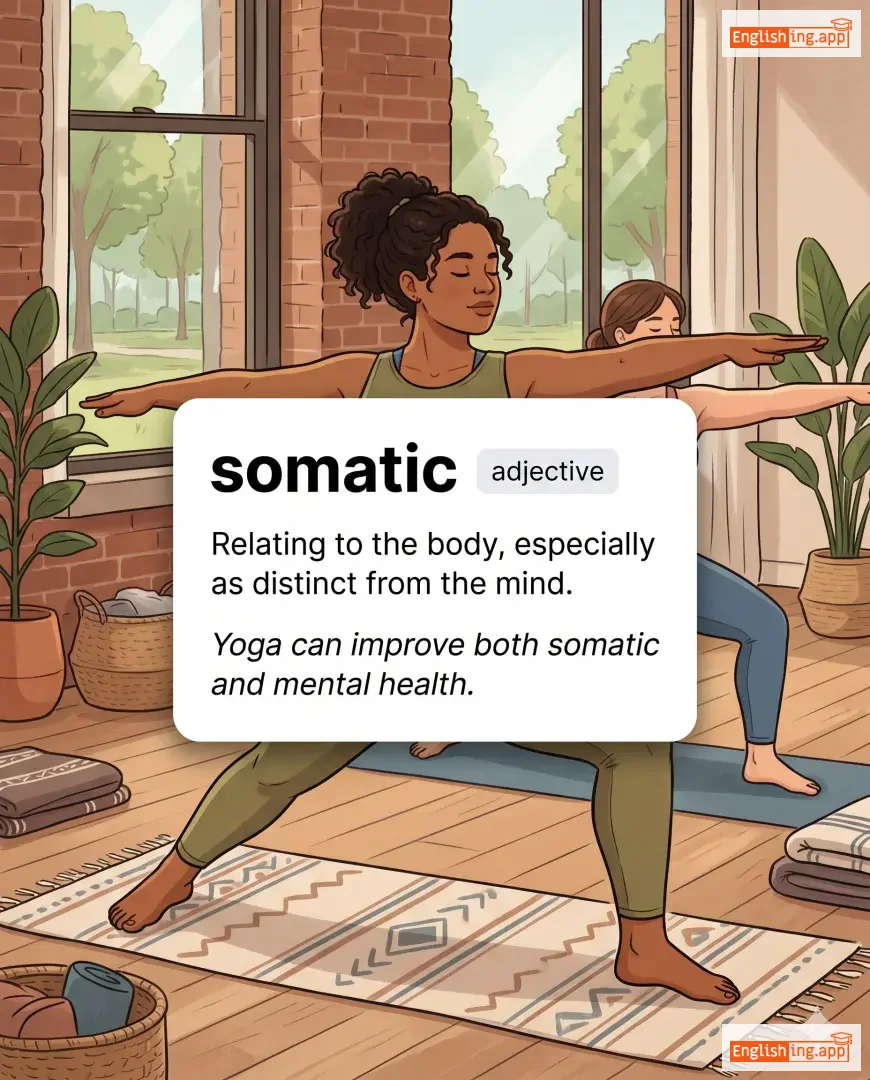
somatic definition card — visual illustration of the meaning
adjective
/səˈmætɪk/
身体的 (shintai teki)

Relating to the body, especially as distinct from the mind.

"Yoga can improve both somatic and mental health."

"ヨガは身体的および精神的健康を改善することができます。" (Yoga wa shintaiteki oyobi seishinteki kenko wo kaizen suru koto ga dekimasu.)
adjective
/ˈsɒmbər/
陰気 (inki)

Dark or dull in color or tone; gloomy or serious.

"The funeral had a somber atmosphere."

"葬式には暗い雰囲気がありました。" (Sōshiki ni wa kurai fun'iki ga arimashita.)
determiner
/sʌm/
いくつか (ikutsuka)

an unspecified amount or number of something

"I have some money in my wallet."

"財布に少しお金があります。" (Saifu ni sukoshi okane ga arimasu.)
pronoun
/ˈsʌmbədi/
誰か (dareka)

an unspecified person

"Somebody is knocking at the door."

"誰かがドアをノックしています。" (Dareka ga doa o nokkushiteimasu.)
adverb
/ˈsʌm.deɪ/
いつか (itsuka)

at some time in the future

"Someday, I want to travel the world."

"いつか、私は世界中を旅したい。" (Itsuka, watashi wa sekaijuu o tabishitai.)
adverb
/ˈsʌmˌhaʊ/
なんとか (nantoka)

in some way, but not exactly known or specified

"Somehow, they managed to finish the project on time."

"なんとか、彼らはプロジェクトを時間通りに終わらせることができました。" (Nantoka, karera wa purojekuto o jikan douri ni owaraseru koto ga dekimashita.)
pronoun
/ˈsʌmwʌn/
誰か (dareka)

a person, but not specifically known or named

"Someone left their umbrella in the hallway."

"誰かが廊下に傘を忘れました。" (Dareka ga rouka ni kasa o wasuremashita.)
pronoun
/ˈsʌmθɪŋ/
何か (nanika)

an unspecified or unknown thing

"I think something is wrong with my phone."

"私の電話に何か問題があると思う。" (Watashi no denwa ni nanika mondai ga aru to omou.)
adverb
/ˈsʌm.taɪm/
そのうち (sono uchi)

at a time that is not known or stated; occasionally

"Let's meet for coffee sometime next week."

"来週のどこかでコーヒーを飲むために会おう。" (Raishū no dokoka de kōhī o nomu tame ni aō.)
adverb
/ˈsʌmˌtaɪmz/
時々 (tokidoki)

at certain times, but not always

"Sometimes I wonder what life would have been like if I had made different choices."

"時々、もし私が違う選択をしていたら、人生がどうなっていたか考えることがあります。" (Tokidoki, moshi watashi ga chigau sentaku o shite itara, jinsei ga dō natte ita ka kangaeru koto ga arimasu.)
adverb
/ˈsʌmˌwʌt/
少し (sukoshi)

to a small degree or extent

"The new policy is somewhat better than the previous one."

"新しい政策は前のものより少し良いです。" (Atarashii seisaku wa mae no mono yori sukoshi yoi desu.)
adverb
/ˈsʌmˌwɛr/
どこか (dokoka)

in, at, or to a place that is not known or specified

"Somewhere in the city, there is a hidden café."

"街のどこかに隠れたカフェがあります。" (Machi no dokoka ni kakureta kafe ga arimasu.)
noun
/sɒmˈnæmbjʊlɪst/
夢遊病者 (memyūbyōsha)

A person who sleepwalks.

"The somnambulist wandered out of the house at night."

"夢遊病者は夜に家を出た。" (Memyūbyōsha wa yoru ni ie o deta.)
adjective
/sɒmˈnɪfərəs/
眠気を引き起こす (nemuke o hikiokosu)

Tending to induce sleep; soporific.

"The professor's somniferous lecture put half the class to sleep."
"教授のソムニフェラスな講義はクラスの半分を眠らせた。" (Kyouju no somniferasu na kougi wa kurasu no hanbun o nemuraseta.)
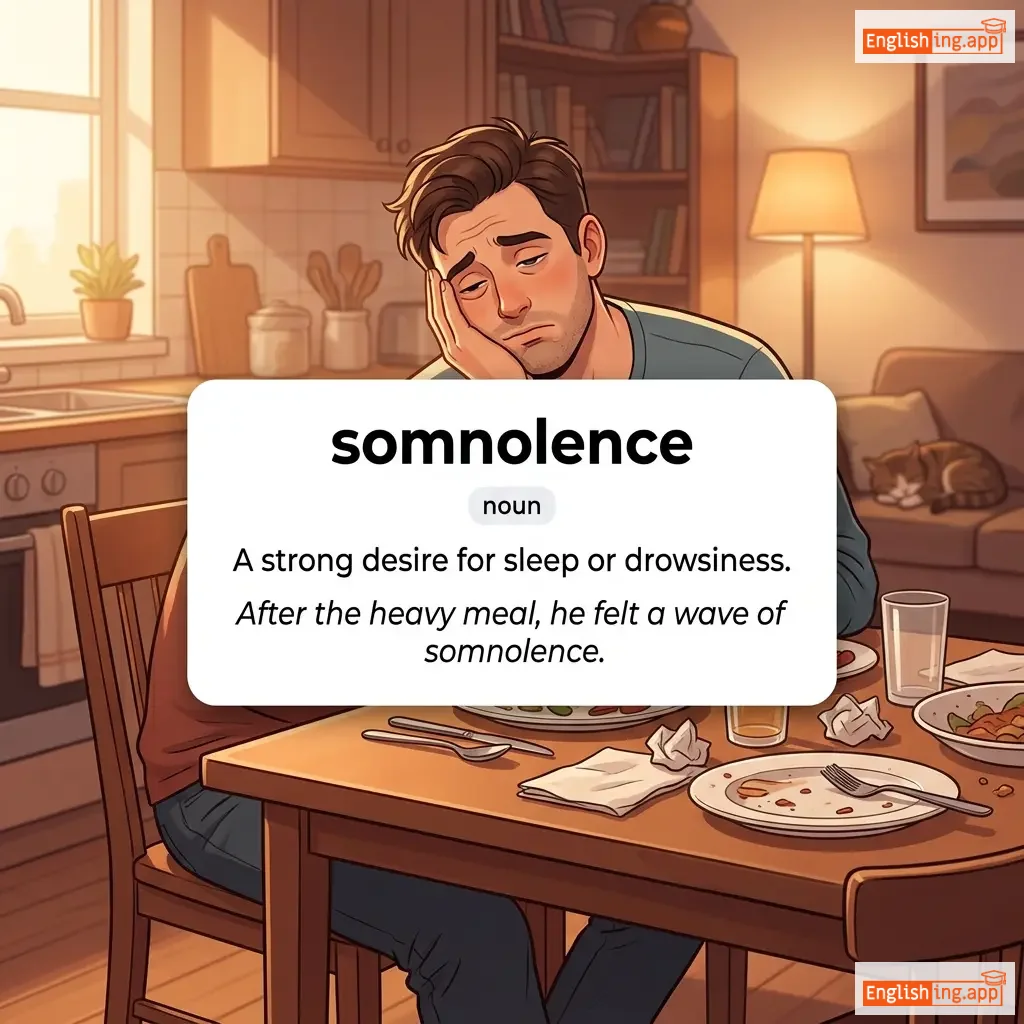
somnolence definition card — visual illustration of the meaning
noun
/ˈsɒmnələns/
眠気 (nemuke)

A strong desire for sleep or drowsiness.

"After the heavy meal, he felt a wave of somnolence."

"重い食事の後、彼は眠気を感じました。" (Omoi shokuji no ato, kare wa nemuke o kanjimashita.)
adjective
/ˈsɒmnələnt/
眠気を催す (nemuke o moyasu)

Sleepy or drowsy; causing a desire to sleep.

"The somnolent lecture made half the class fall asleep."

"その眠気を催す講義は、クラスの半分を寝かせてしまった。" (Sono nemuke o moyasu kougi wa, kurasu no hanbun o nekasete shimatta.)
noun
/sʌn/
息子 (musuko)

a male child of a parent

"His son is very talented in music."

"彼の息子は音楽に非常に才能があります。" (Kare no musuko wa ongaku ni hijou ni sainou ga arimasu.)
noun
/səˈnɑːtə/
音楽作品 (ソナタ) (ongaku sakuhin (sonata))

A musical composition for one or more instruments, typically in several movements.

"She performed a beautiful Beethoven sonata on the piano."

"彼女はピアノで美しいベートーヴェンのソナタを演奏しました。" (Kanojo wa piano de utsukushī Beethoven no sonata o ensō shimashita.)
noun
/sɔːŋ/
(uta)

a short piece of music with words that are sung

"She sang a beautiful song at the concert."
"彼女はコンサートで美しい歌を歌った。" (Kanojo wa konsāto de utsukushī uta o utatta.)
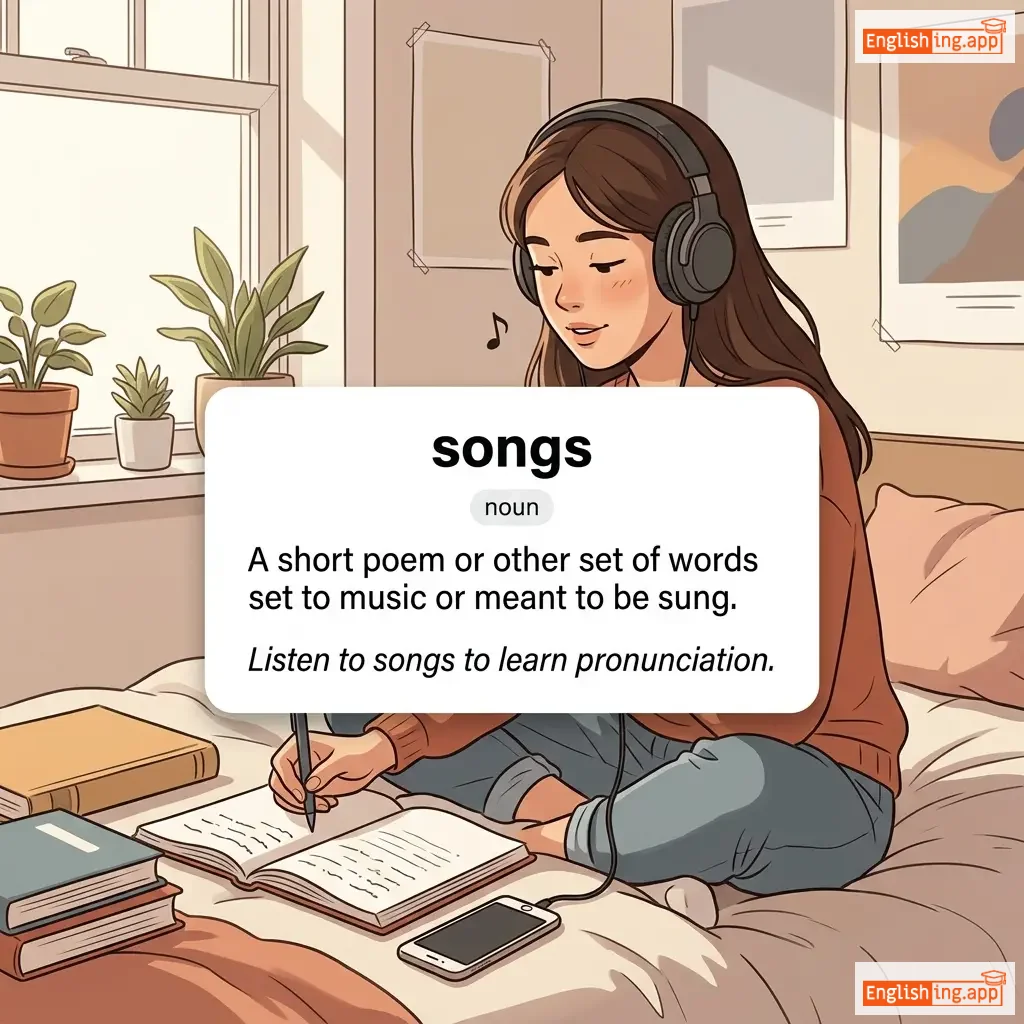
songs definition card — visual illustration of the meaning
noun
sɔːŋz
(uta)

A short poem or other set of words set to music or meant to be sung.

"Listen to songs to learn pronunciation."

"発音を学ぶために歌を聞いてください。" (Hatsuon o manabu tame ni uta o kiite kudasai.)
adjective
/ˈsɒnɪk/
音速の (onsoku no)

Relating to or involving sound waves or speed of sound.

"The jet created a loud boom when it broke the sonic barrier."

"ジェット機は音速の壁を越えたとき、大きな爆発音を作り出しました。" (Jettoki wa onsoku no kabe wo koeta toki, ookina bakuhatsuon wo tsukuridashimashita.)
noun
/ˈsɒnɪt/
ソネット (sonetto)

A poem of 14 lines using formal rhyme schemes, often about love.

"Shakespeare wrote many famous sonnets about love and beauty."

"シェイクスピアは愛と美について多くの有名なソネットを書きました。" (Sheikusupia wa ai to bi ni tsuite ōku no yūmei na sonetto o kakimashita.)
adjective
/səˈnɔːrəs/
深い音 (fukai oto)

Deep, full, and rich in sound.

"The actor's sonorous voice filled the entire theater."

"俳優のソノラスな声が劇場全体に響き渡った。" (Haiyū no sonorasu na koe ga gekijō zentai ni hibikiwatta.)
adverb
/suːn/
すぐ (sugu)

in a short time; shortly

"I will be home soon."
"私はすぐ家に帰ります。" (Watashi wa sugu ie ni kaerimasu.)
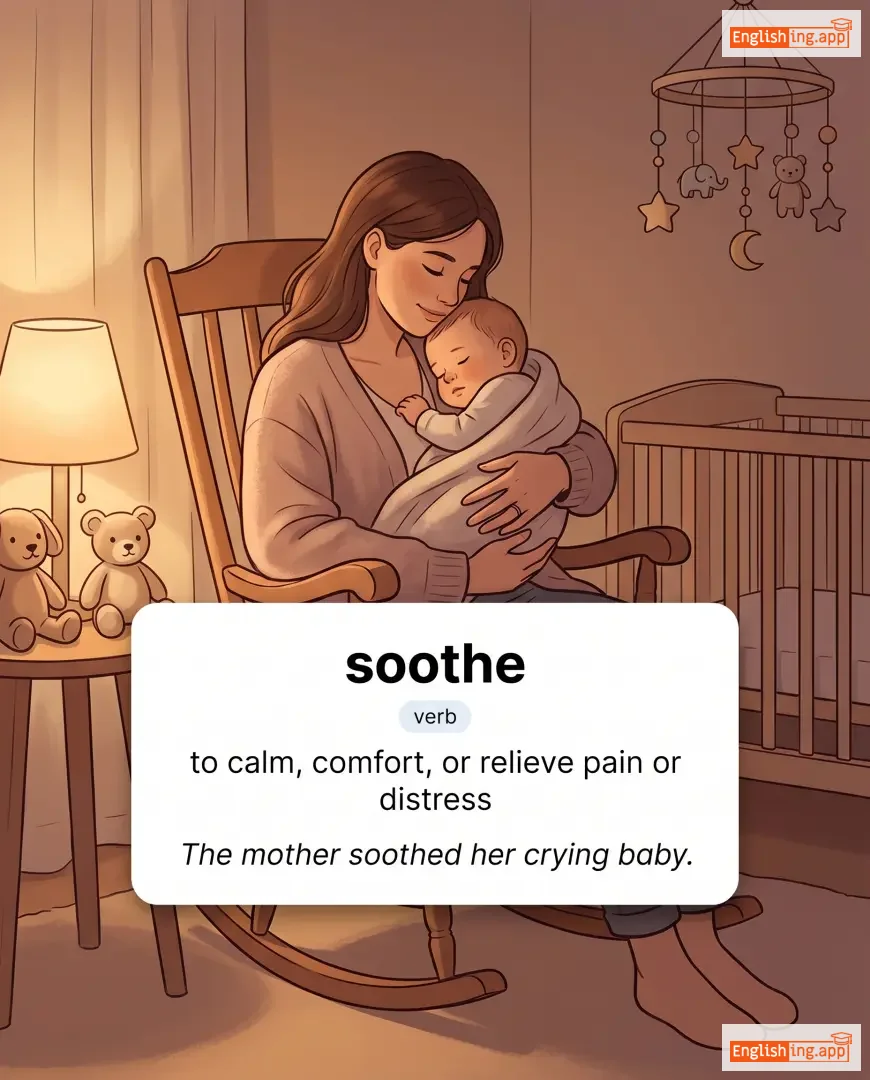
soothe definition card — visual illustration of the meaning
verb
/suːð/
和らげる (yawarageru)

to calm, comfort, or relieve pain or distress

"The mother soothed her crying baby."

"母親は泣いている赤ちゃんを慰めました。" (Hahaoya wa naiteiru akachan o nagusamemashita.)
noun
/ˈsuːθˌseɪər/
占い師 (uranaishi)

a person who claims to predict the future

"The king consulted a soothsayer before going to war."

"王は戦争に行く前に占い師に相談した。" (Ō wa sensō ni iku mae ni uranaishi ni sōdan shita.)
🥖

sop

noun
/sɒp/

a concession or appeasement to pacify someone; also a piece of bread dipped in liquid

"The manager offered a bonus as a sop to the unhappy employees."

noun
/ˈsɒfɪzəm/
詭弁 (kiben)

a clever but misleading argument; fallacious reasoning

"The politician's speech was full of sophism designed to mislead voters."

"その政治家の演説は、有権者を誤導することを目的とした詭弁で満ちていた。" (Sono seijika no enzetsu wa, yūken-sha o godō suru koto o mokuteki to shita kiben de michite ita.)
noun
/ˈsɒfɪst/
詭弁家 (kibenka)

a person who uses clever but misleading arguments

"He was dismissed as a sophist who twisted facts to win debates."

"彼は討論に勝つために事実を歪める詭弁家として解雇されました。" (Kare wa tōron ni katsu tame ni jijitsu o yuzumeru kibenka toshite kaiko saremashita.)
verb
/səˈfɪstɪkeɪt/
洗練する (senren suru)

to make something more complex or refined; to educate or develop in taste and manners

"Traveling abroad helped sophisticate his worldview."
"海外旅行は彼の世界観を洗練させる手助けとなった。" (Kaigai ryokō wa kare no sekaikan o senren saseru tedasuke to natta.)
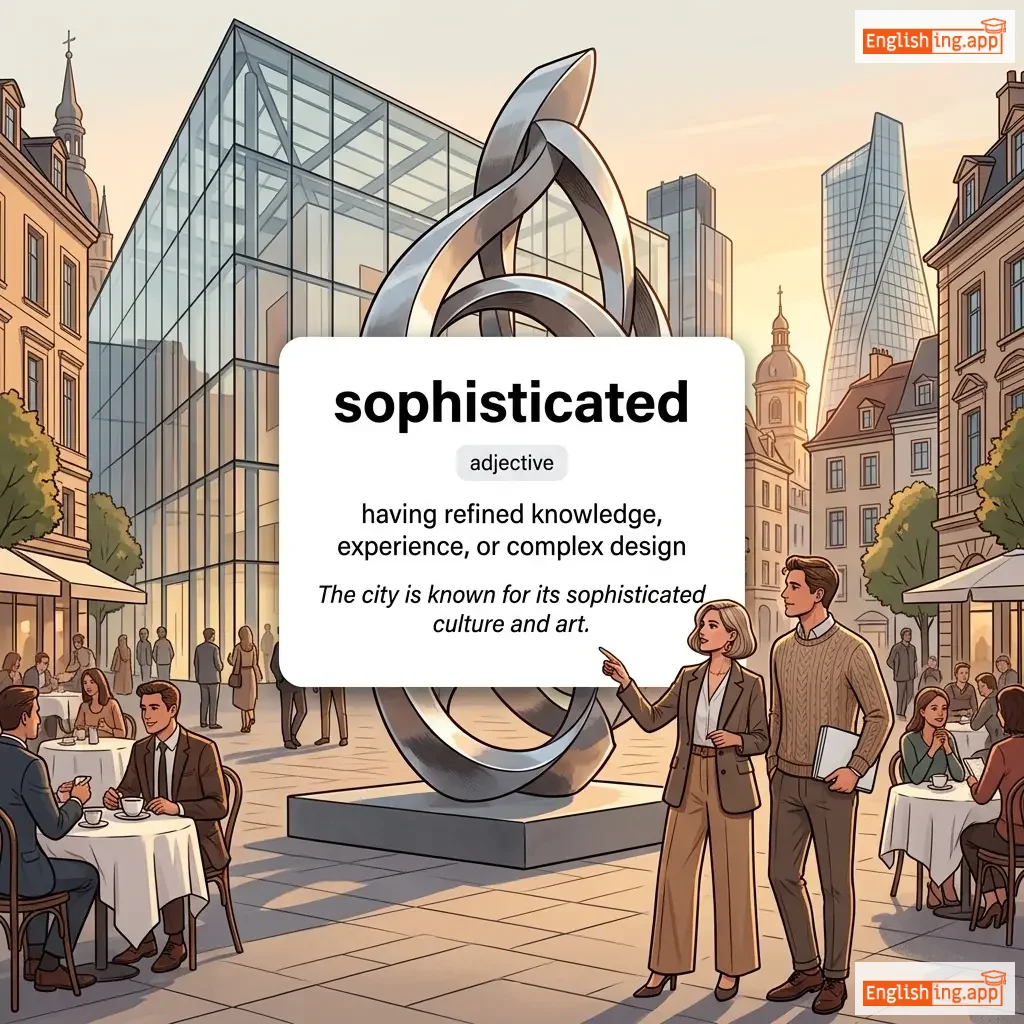
sophisticated definition card — visual illustration of the meaning
adjective
/səˈfɪstɪkeɪtɪd/
洗練された (senrensareta)

having refined knowledge, experience, or complex design

"The city is known for its sophisticated culture and art."
"この都市はその洗練された文化と芸術で知られています。" (Kono toshi wa sono senrensareta bunka to geijutsu de shirareteimasu.)
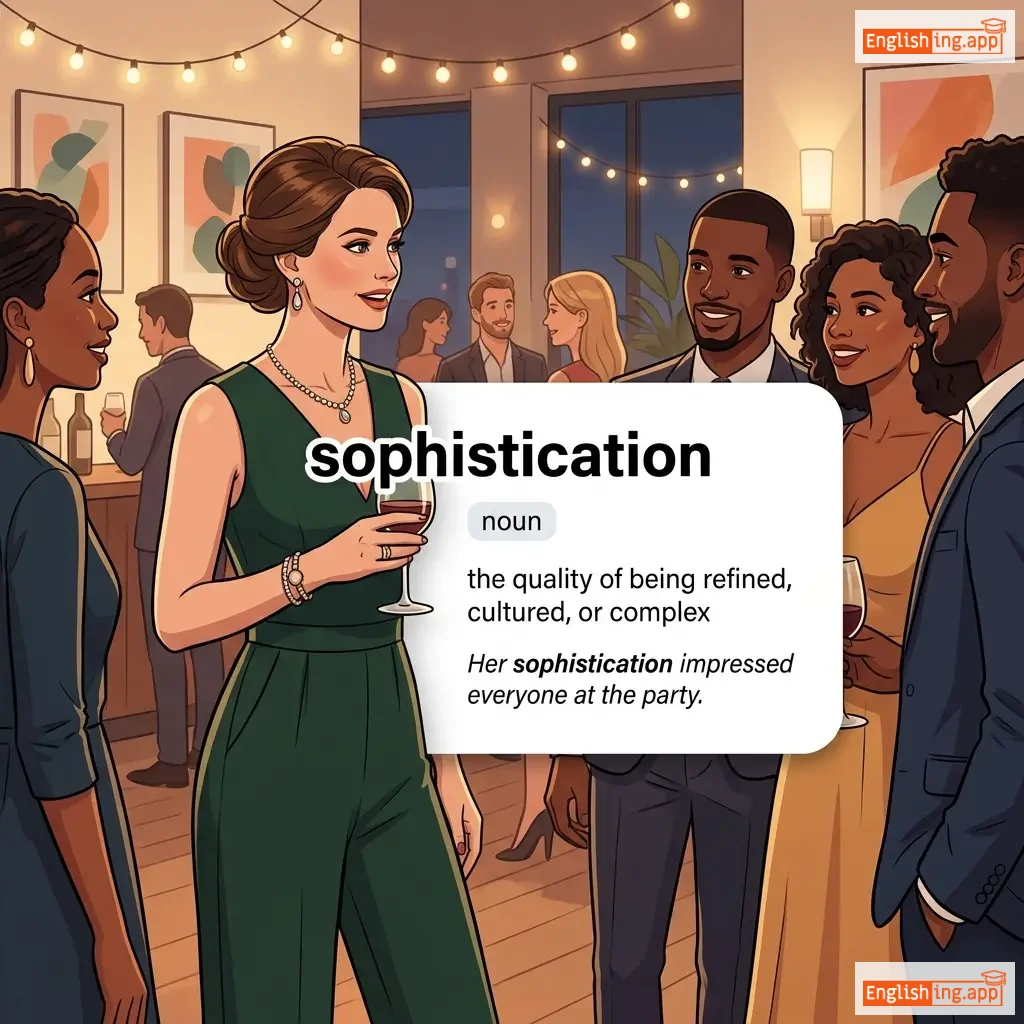
sophistication definition card — visual illustration of the meaning
noun
/səˌfɪstɪˈkeɪʃən/
洗練 (senren)

the quality of being refined, cultured, or complex

"Her sophistication impressed everyone at the party."

"彼女の洗練はパーティーで皆を感動させました。" (Kanojo no senren wa pātī de mina o kandō sasemashita.)
noun
/ˈsɒfɪstri/
詭弁 (kiben)

the use of clever but false arguments, often to deceive

"The politician's speech was full of sophistry."

"その政治家の演説は詭弁に満ちていた。" (Sono seijika no enzetsu wa kiben ni michite ita.)
noun
/ˈsɑːfmɔːr/
二年生 (ninen-sei)

a student in their second year of study at a university or high school

"He’s a sophomore in college, studying computer science."

"彼は大学で2年生で、コンピュータサイエンスを勉強しています。" (Kare wa daigaku de ninen-sei de, konpyūta saiensu o benkyō shiteimasu.)
adjective
/ˌsɒfəˈmɒrɪk/
未熟 (mijuku)

showing immaturity and overconfidence, like a sophomore

"His sophomoric behavior embarrassed his friends."
"彼の未熟な行動は友人たちを恥ずかしい思いにさせた。" (Kare no mijuku na kōdō wa yūjin-tachi o hazukashī omoi ni saseta.)
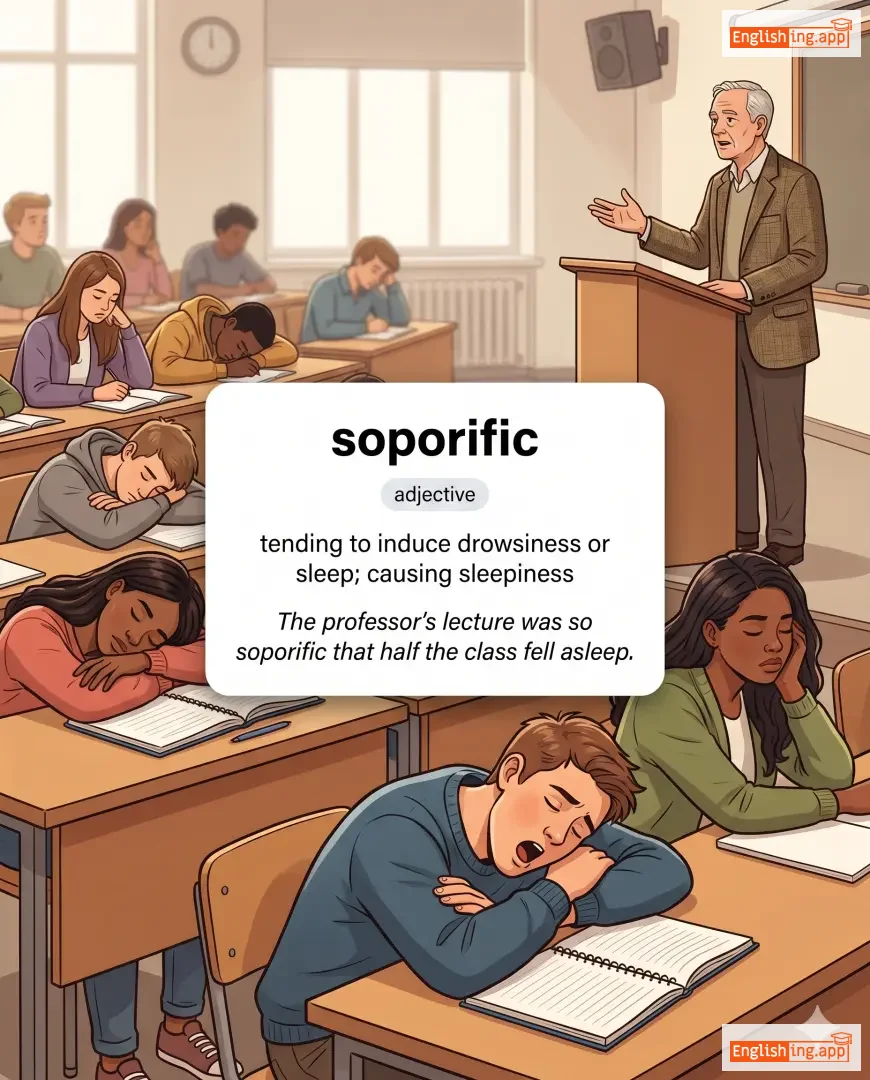
soporific definition card — visual illustration of the meaning
adjective
/ˌsɒpəˈrɪfɪk/
幸せ (shiawase)

tending to induce drowsiness or sleep; causing sleepiness

"The professor's lecture was so soporific that half the class fell asleep."

"彼女は賞を受け取ったとき、その幸せを隠すことができませんでした。" (Kanojo wa shō o uketotta toki, sono shiawase o kakusu koto ga dekimasen deshita.)