語彙集

英単語辞書 | 単語の意味、定義、例文

adjective
/rɪˈɡret.ə.bəl/
残念な; 失望させる; 悲しい (zannen na; shitsubō saseru; kanashī)

causing or deserving regret; unfortunate; deplorable

"It is regrettable that so many talented people left the company."

"こんなに多くの才能ある人々が会社を辞めたのは残念です。" (Konnani ōku no sainō aru hitobito ga kaisha o yameta no wa zannen desu.)
adjective
/ˈrɛɡjələr/
定期的な (teikiteki na)

Happening at fixed intervals; usual or normal in pattern or quality

"He is a regular visitor to the library."

"彼は図書館の定期的な訪問者です。" (Kare wa toshokan no teikiteki na hōmon-sha desu.)
noun
/ˌreɡ.jʊˈlær.ɪ.ti/
規則正しさ (kisoku tadashisa)

the quality of being regular; occurring at fixed intervals or in a consistent pattern

"The regularity of his exercise routine helped him stay healthy."

"彼の運動習慣の規則正しさが健康を維持するのに役立ちました。" (kare no undō shūkan no kisoku tadashisa ga kenkō o iji suru no ni yakudachimashita)
adverb
/ˈrɛɡjələrli/
定期的に (teikiteki ni)

at regular intervals; in a regular manner

"She exercises regularly to stay healthy."
"彼女は健康を保つために定期的に運動します。" (Kanojo wa kenko o tamotsu tame ni teikiteki ni undou shimasu.)
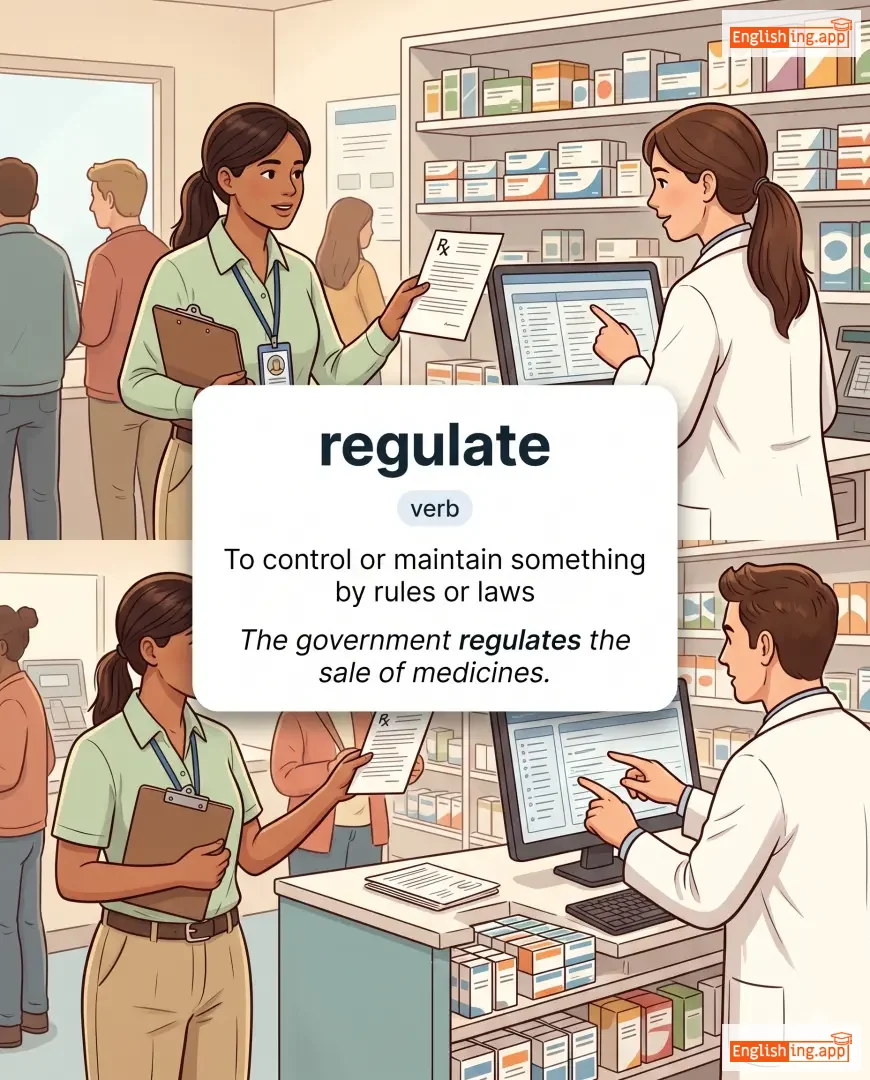
regulate definition card — visual illustration of the meaning
verb
/ˈrɛɡjʊˌleɪt/
規制する (kisei suru)

To control or maintain something by rules or laws

"The government regulates the sale of medicines."
"政府は薬の販売を規制しています。" (Seifu wa kusuri no hanbai o kisei shiteimasu.)
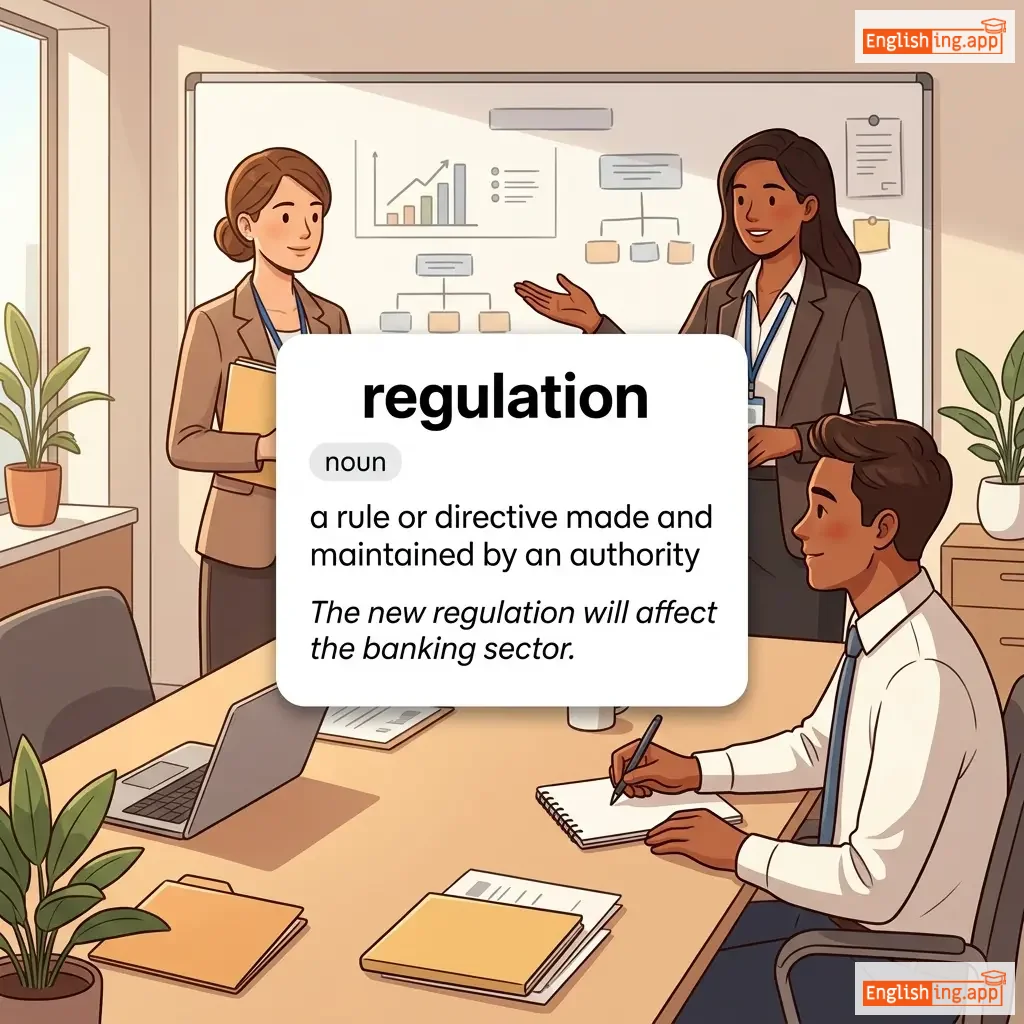
regulation definition card — visual illustration of the meaning
noun
/ˌrɛɡjuˈleɪʃən/
規制 (kisei)

a rule or directive made and maintained by an authority

"The new regulation will affect the banking sector."
"新しい規制は銀行業界に影響を与えるでしょう。" (Atarashii kisei wa ginkou gyoukai ni eikyou wo ataerudeshou.)
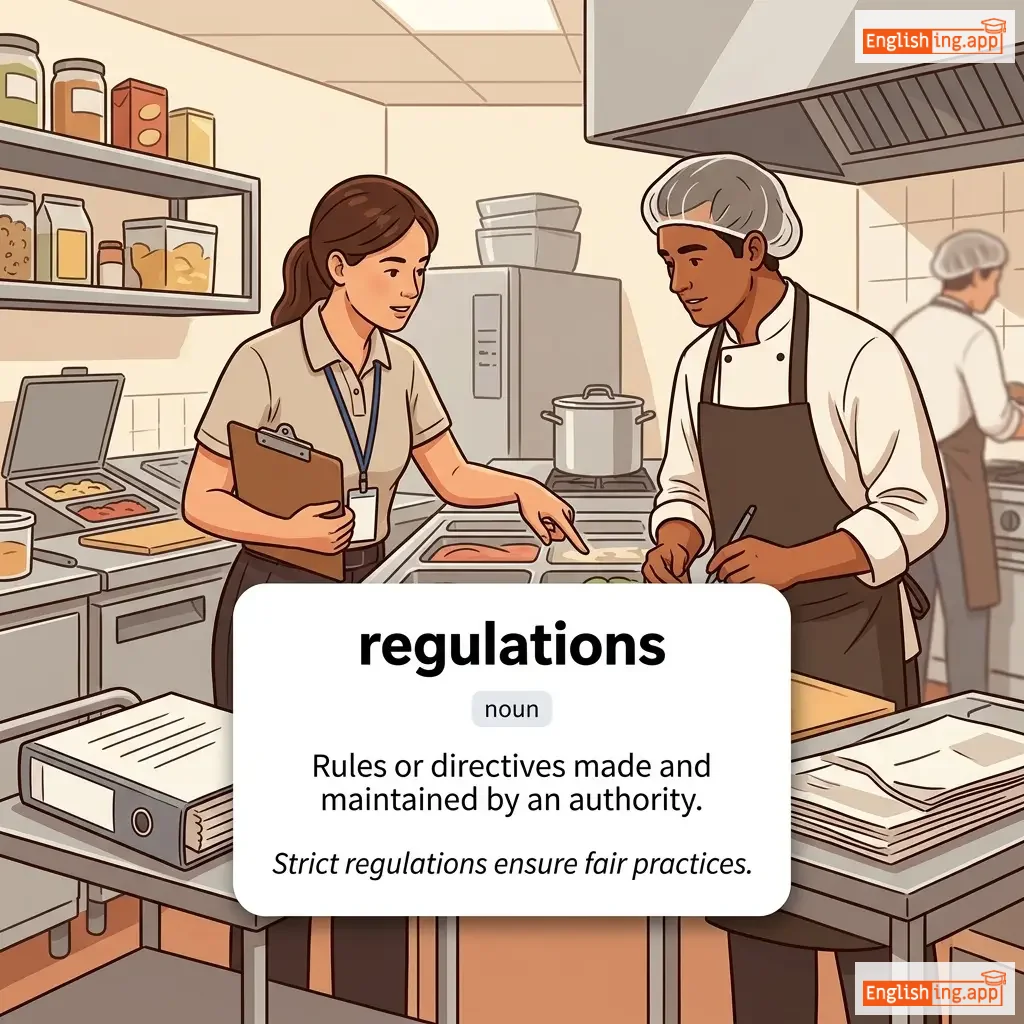
regulations definition card — visual illustration of the meaning
noun
/ˌreɡ.jʊˈleɪ.ʃənz/
規制 (kisei)

Rules or directives made and maintained by an authority.

"Strict regulations ensure fair practices."

"厳格な規制は公正な慣行を確保します。" (Gengaku na kisei wa kōsei na kankō o kakuho shimasu.)
noun
/ˈrɛɡjəleɪtər/
調整装置 (chōsei sōchi)

a person or device that controls or maintains the operation of a system

"The government appointed a new regulator for the financial sector."
"政府は金融セクターの新しい規制機関を任命した。" (Seifu wa kin'yū sekutā no atarashī kisei kikan o ninmei shita.)
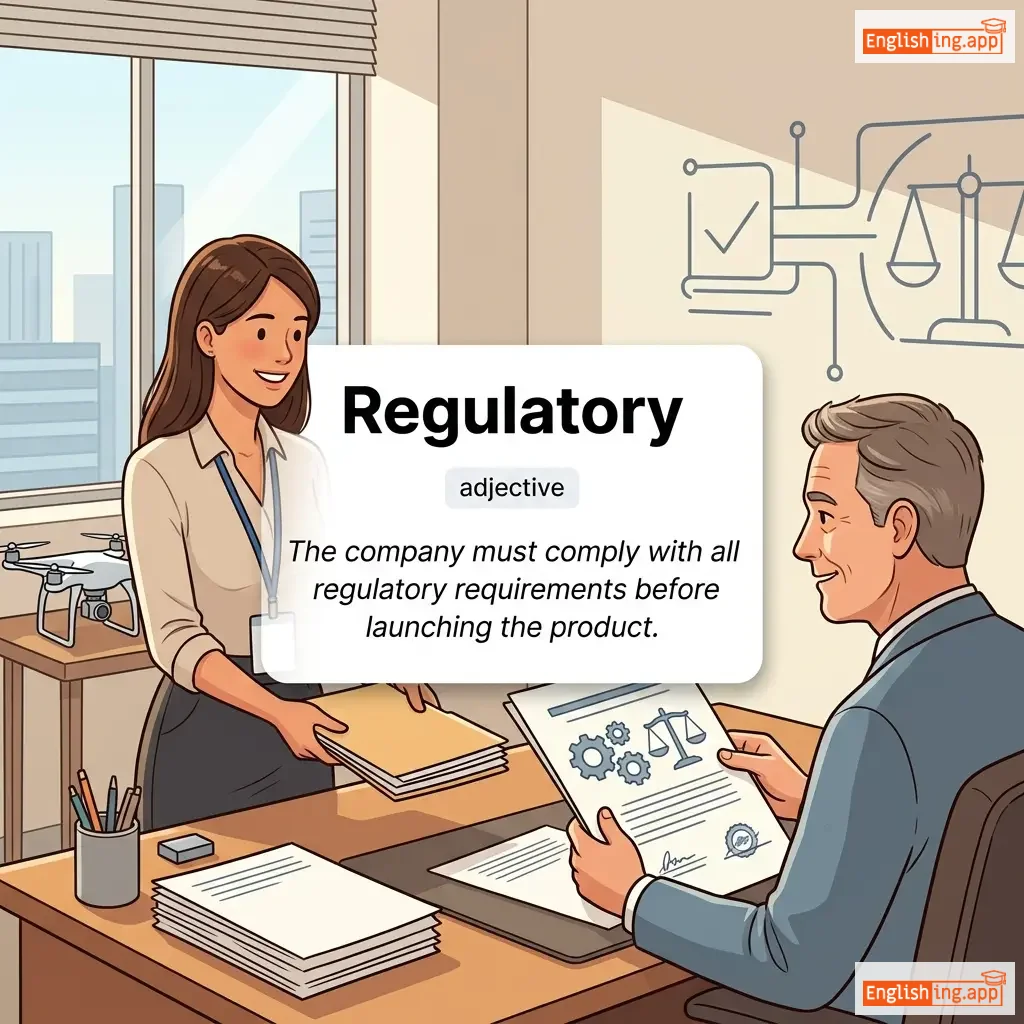
Regulatory definition card — visual illustration of the meaning
adjective
/ˈrɛɡjʊlətɔːri/
規制の (kisei no)

relating to the rules or laws made by an authority to control an activity or process

"The company must comply with all regulatory requirements before launching the product."

"企業は製品を発売する前にすべての規制要件を満たさなければなりません。" (Kigyō wa seihin o hatsubai suru mae ni subete no kisei yōken o mitasanakereba narimasen.)
verb
/ˌriːhəˈbɪlɪteɪt/

to restore someone to health, normal life, or a good condition after illness, injury, or imprisonment

"The clinic helps rehabilitate injured athletes."

noun
/ˌriːhəˌbɪlɪˈteɪʃən/
幸福 (kōfuku)

the process of restoring someone or something to health or normal life through training or therapy

"After the accident, he went through months of rehabilitation to walk again."

"彼女は賞を受け取ったとき、自分の幸福を隠せなかった。" (Kanojo wa shō o uketotta toki, jibun no kōfuku o kakusenakatta.)
noun
/rɪˈhɜːrsəl/
リハーサル (rihāsaru)

a practice or trial performance of a play, music, or other work for later public performance

"The actors had a final rehearsal before the play."

"俳優たちは本番前に最終リハーサルを行いました。" (Haiyū-tachi wa honban mae ni saishū rihaasaru o okonai mashita.)
verb, noun
/reɪn/
支配する (shihai suru)

to rule as a king or queen; the period during which a sovereign rules

"Queen Elizabeth II reigned for many decades."

"エリザベス2世は何十年も統治していました。" (Erizabesu 2-sei wa nannenzō mo tōchi shiteimashita.)
verb
/ˌriːɪmˈbɜːrs/
払い戻す (haraimodosu)

to pay back money to someone who has spent it or lost it

"The company reimbursed him for travel expenses."

"会社は彼に旅行費用を払い戻しました。" (Kaisha wa kare ni ryokou hiyou wo haraimodoshimashita.)
🐎

rein

noun/verb
/reɪn/

A strap used to control a horse; to control or guide something.

"The rider pulled the rein to stop the horse."

noun
/ˈreɪn.dɪər/
トナカイ (tonakai)

a large deer with branched horns that lives in cold northern areas

"Santa's reindeer pulled his sleigh across the sky."
"サンタのトナカイは空を越えてソリを引きました。" (Santa no tonakai wa sora o koete sori o hikimashita)
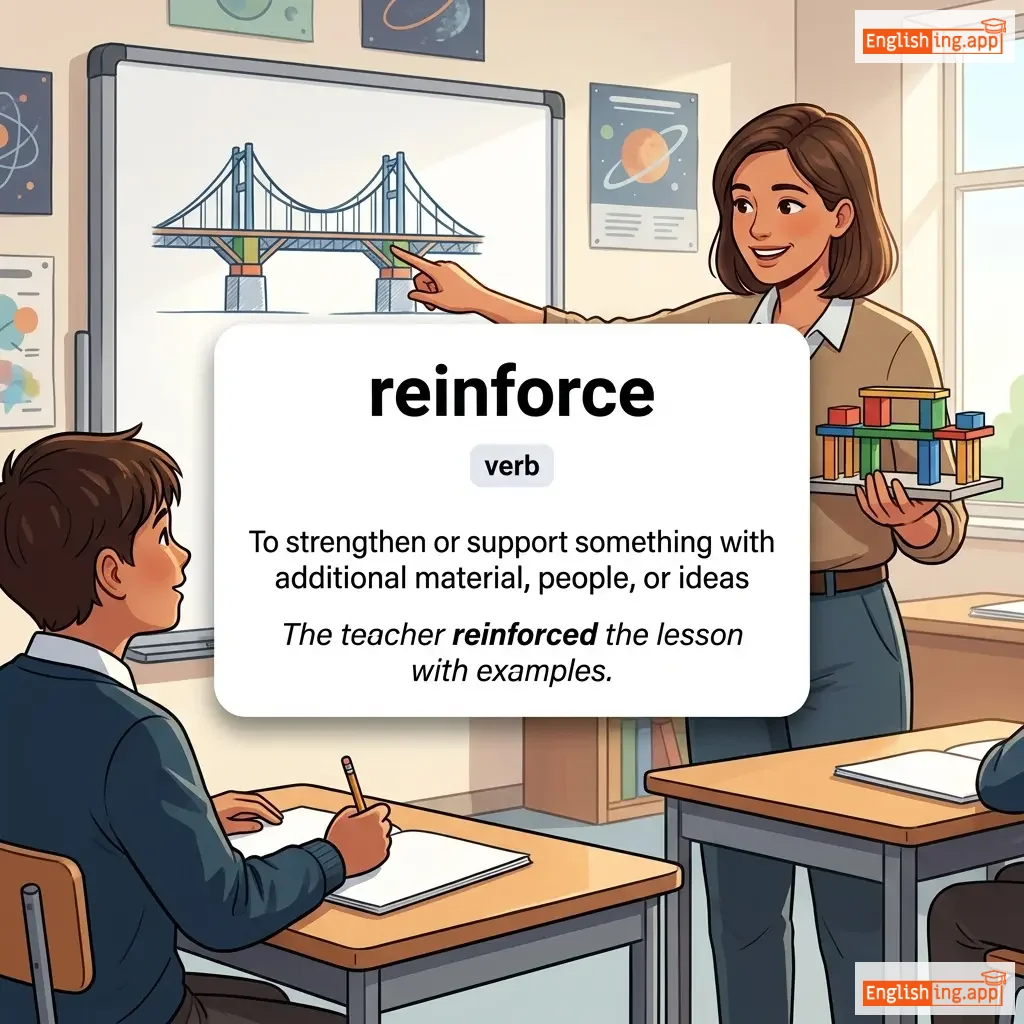
reinforce definition card — visual illustration of the meaning
verb
/ˌriːɪnˈfɔːrs/
強化する (kyouka suru)

To strengthen or support something with additional material, people, or ideas

"The teacher reinforced the lesson with examples."
"先生は例を使ってレッスンを強化しました。" (Sensei wa rei o tsukatte ressun o kyōka shimashita.)
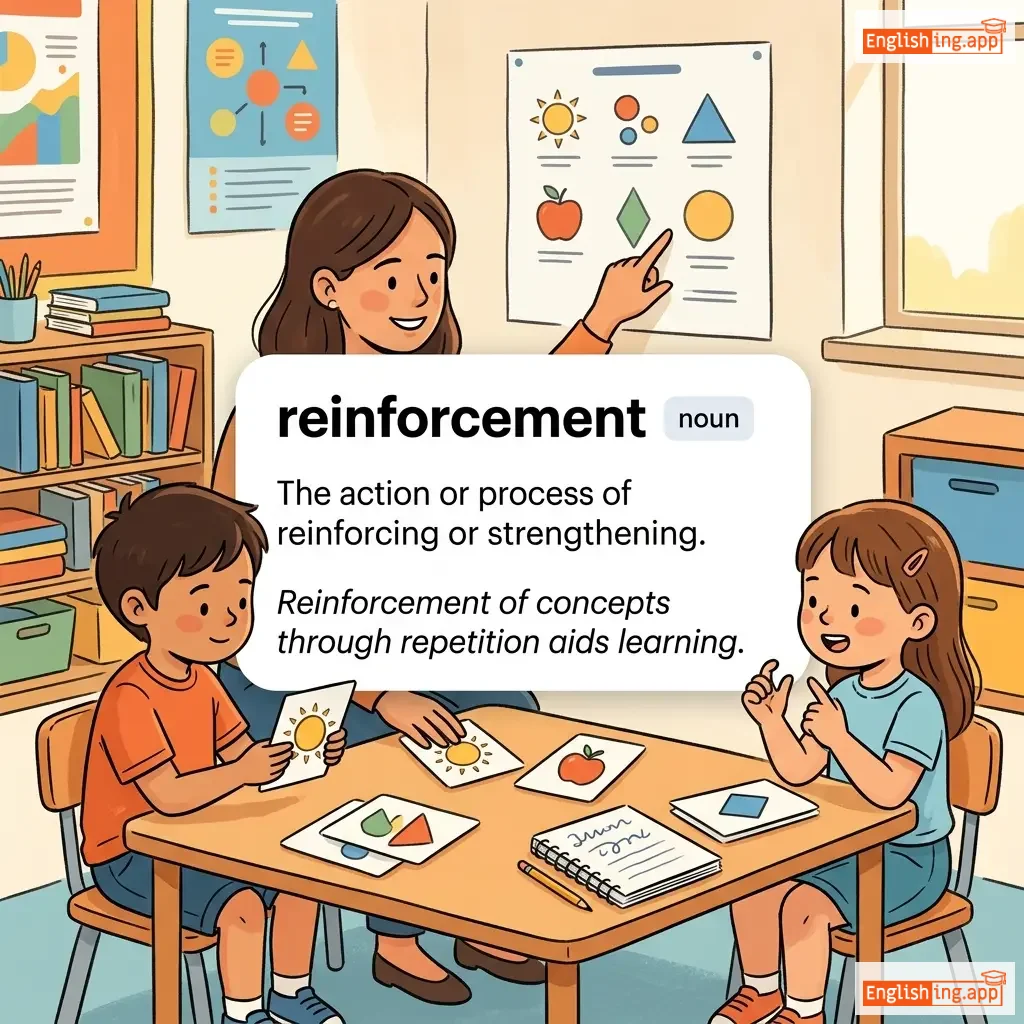
reinforcement definition card — visual illustration of the meaning
noun
ˌriː.ɪnˈfɔːrs.mənt
強化または強固化 (kyouka mata wa kyoukokuka)

The action or process of reinforcing or strengthening.

"Reinforcement of concepts through repetition aids learning."

"繰り返しを通じて概念の強化は学習を助ける。" (Kurikaeshi wo tsuujite gainen no kyouka wa gakushuu wo tasukeru.)
verb
/ˌriːɪnˈsteɪt/
再雇用する (saikoyou suru)

To restore someone or something to their former position or condition.

"The company decided to reinstate the suspended employee."

"その会社は停止された従業員を再雇用することを決定した。" (Sono kaisha wa teishi sareta juugyouin o saikoyou suru koto o kettei shita.)
verb
/ˌriːɪnˈtɪɡreɪt/
再統合する (saitougou suru)

To bring someone or something back into a group or society after being separated.

"The program helps prisoners reintegrate into society."

"そのプログラムは囚人が社会に再統合するのを助けます。" (Sono puroguramu wa shūjin ga shakai ni saitōgō suru no o tasukemasu.)
verb
/riˈɪtəreɪt/
繰り返す (kurikaesu)

To say something again or repeatedly for emphasis or clarity.

"The teacher reiterated the importance of honesty."
"教師は正直さの重要性を繰り返し述べました。" (Kyōshi wa shōjiki-sa no jūyō-sei o kurikaeshi nobemashita.)
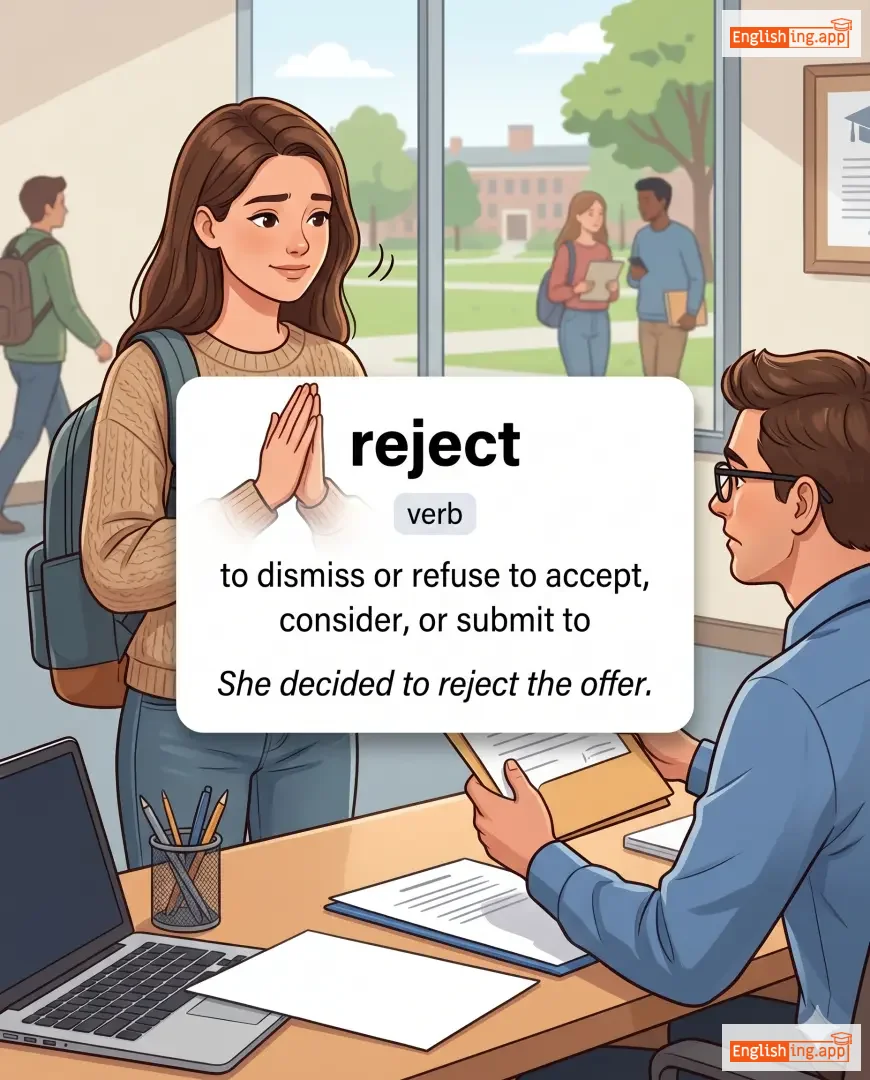
reject definition card — visual illustration of the meaning
verb
/rɪˈdʒɛkt/
拒絶する (kyozetsu suru)

to dismiss or refuse to accept, consider, or submit to

"She decided to reject the offer."

"彼女はその提案を拒絶することに決めました。" (Kanojo wa sono teian o kyozetsu suru koto ni kimemashita.)
noun
/rɪˈdʒɛkʃən/
拒絶 (kyozetsu)

the action of refusing or dismissing something or someone

"Her rejection of the offer surprised everyone."

"彼女の提案の拒絶は皆を驚かせた。" (Kanojo no teian no kyozetsu wa mina o odorokaseta.)
verb
/rɪˈdʒɔɪs/
喜ぶ (yorokobu)

To feel or show great joy or delight.

"The fans rejoiced after their team won the championship."

"ファンはチームがチャンピオンシップに勝った後、喜びました。" (Fan wa chīmu ga chanpionshipu ni katta ato, yorokobimashita.)
noun
/rɪˈdʒɔɪsɪŋ/
喜び (yorokobi)

The action of showing great joy or happiness

"There was much rejoicing after the victory."

"勝利後、多くの喜びがありました。" (Shōri go, ōku no yorokobi ga arimashita.)
verb
/riˈdʒɔɪn/
再参加する (saikansuru)

to join again or return to a group, place, or activity

"After a short break, she decided to rejoin the team."

"短い休憩後、彼女はチームに再参加することに決めました。" (Mijikai kyūkei-go, kanojo wa chīmu ni saikansuru koto ni kimemashita.)
noun
/rɪˈdʒɔɪndər/
返答 (hentou)

a quick or witty reply; a response to a remark or argument

"His sharp rejoinder silenced the crowd."
"彼の鋭い返答が群衆を沈黙させた。" (kare no surudoi hentou ga gunshuu o chinmoku saseta.)
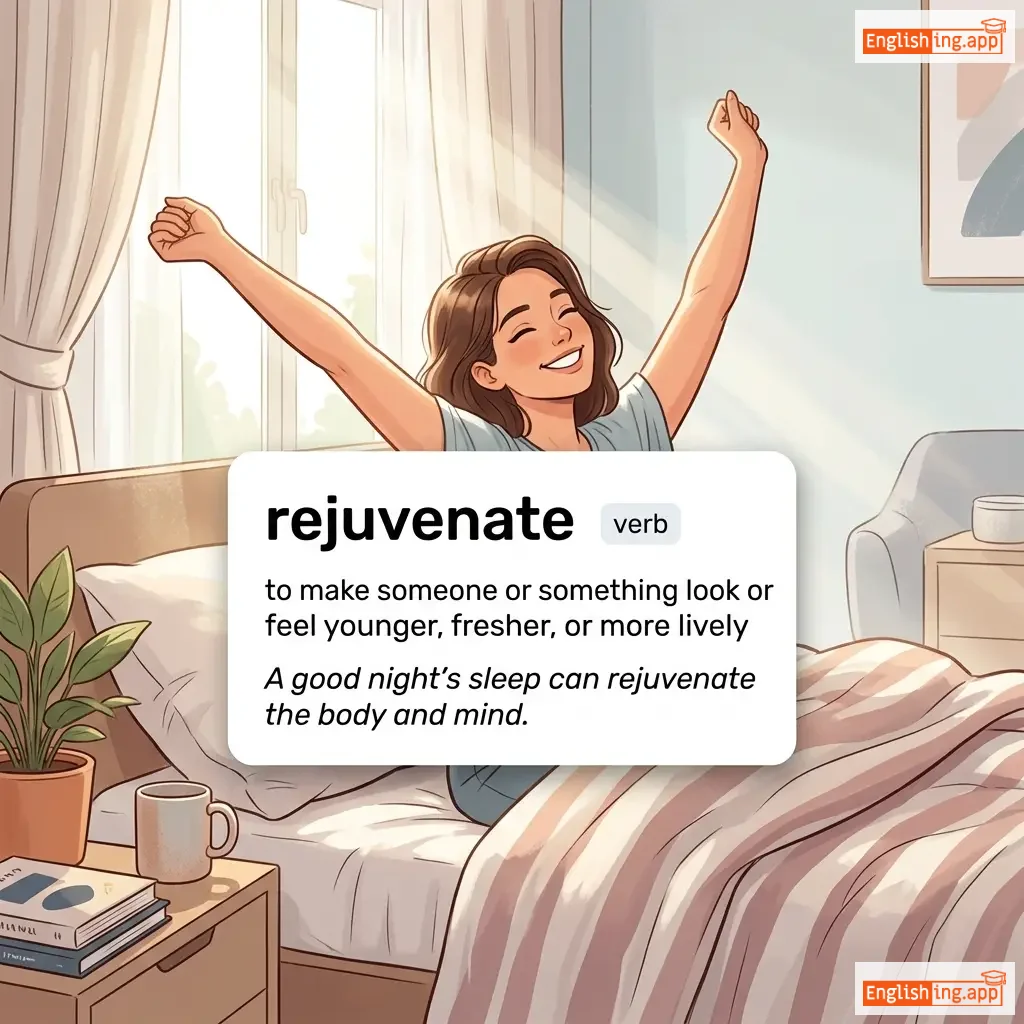
rejuvenate definition card — visual illustration of the meaning
verb
/rɪˈdʒuːvəˌneɪt/
若返る (waka kaeru)

to make someone or something look or feel younger, fresher, or more lively

"A good night's sleep can rejuvenate the body and mind."
"良い夜の睡眠は体と心を若返らせることができます。" (Yoi yoru no suimin wa karada to kokoro wo wakakae raseru koto ga dekimasu.)
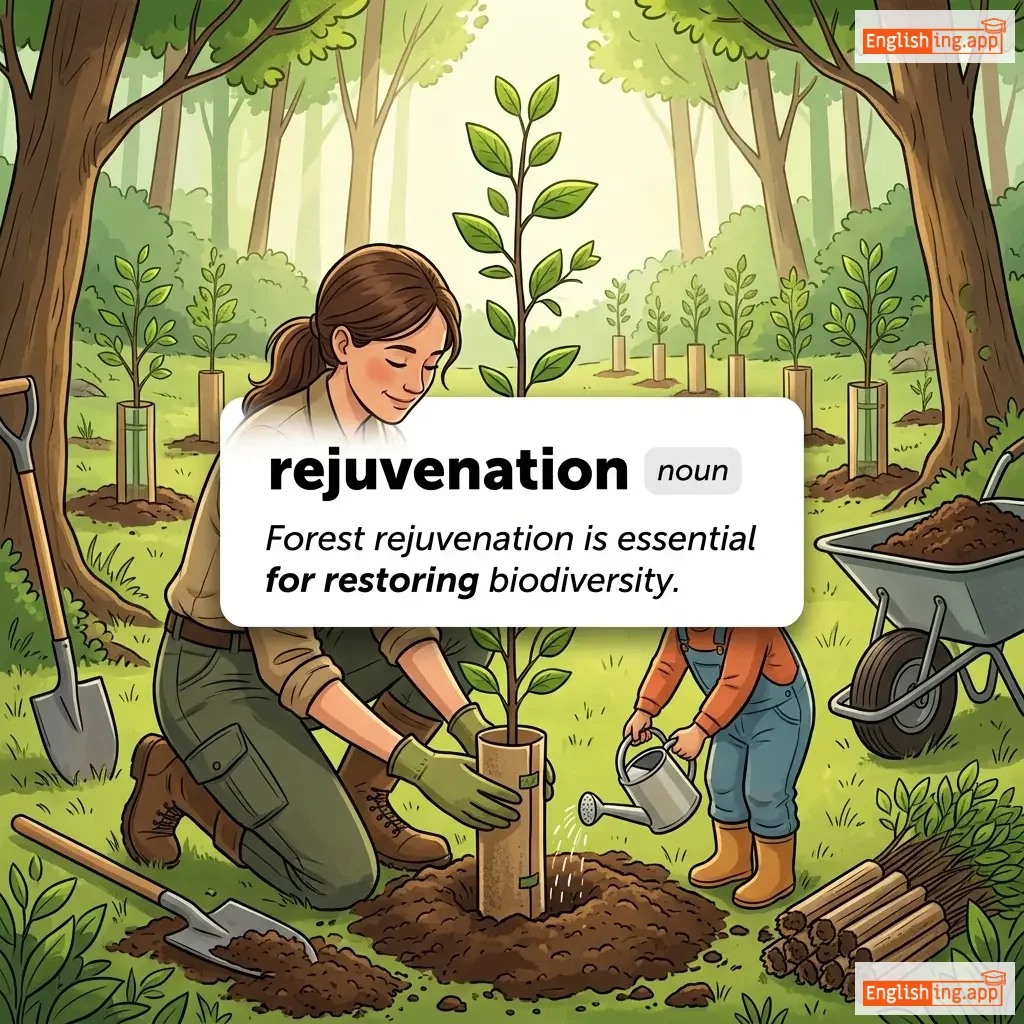
rejuvenation definition card — visual illustration of the meaning
noun
rɪˌdʒuː.vɪˈneɪ.ʃən
再生 (saisei)

The action or process of making someone or something look or feel better, younger, or more vital.

"Forest rejuvenation is essential for restoring biodiversity."

"森林の再生は生物多様性の回復に不可欠です。" (Shinrin no saisei wa seibutsu tayousei no kaifuku ni fukaketsu desu.)
noun
/rɪˌdʒuːvəˈnɛsəns/
再生 (saisei)

the action or process of becoming young or fresh again

"The forest showed signs of rejuvenescence after the rains."

"雨の後、森は再生の兆しを見せました。" (Ame no ato, mori wa saisei no kizashi wo misemashita.)
noun/verb
/rɪˈlæps/
再発 (saihatsu)

to return to a worse condition, especially after improvement; a deterioration after recovery

"After months of progress, he suffered a relapse."

"数ヶ月の進歩の後、彼は再発しました。" (suukagetsu no shinpo no ato, kare wa saihatsu shimashita.)
verb
/rɪˈleɪt/
関連する (kannensuru)

to show or make a connection between things or people

"She could relate to his feelings of loss."

"彼女は彼の喪失感に共感できた。" (Kanojo wa kare no sōshitsukan ni kyōkan dekita.)
adjective
/rɪˈleɪtɪd/
関連 (kanren)

connected or associated with something else

"The documents are all related to the same project."

"文書はすべて同じプロジェクトに関連しています。" (Bunsho wa subete onaji purojekuto ni kanren shiteimasu.)
noun
/rɪˈleɪʃən/
関係 (kankei)

the way in which two or more concepts, objects, or people are connected

"Their relation has always been one of mutual respect."

"彼らの関係は常に相互尊重に基づいていました。" (Karera no kankei wa tsuneni sougo sonchou ni motozuite imashita.)
noun
/rɪˈleɪʃənʃɪp/
関係 (kankei)

the state of being connected or involved with someone or something in a significant way

"They have a strong, supportive relationship."

"彼らは強力で支援的な関係を持っています。" (Karera wa kyōryoku de shien-tekina kankei o motteimasu.)
👨‍👩‍👧‍👦

Relative (リラティブ)

noun
/ˈrɛlətɪv/
親戚 (shinseki)

a person who is part of your family

"He invited his close relatives to the wedding."

"彼は結婚式に近い親戚を招待しました。" (Kare wa kekkonshiki ni chikai shinseki o shoutai shimashita.)
adverb
/ˈrɛlətɪvli/
相対的に (soutaiteki ni)

in comparison with something else

"The task was relatively easy compared to others."
"その作業は他の作業と比べて相対的に簡単でした。" (Sono sagyou wa hoka no sagyou to kurebete soutaiteki ni kantan deshita.)
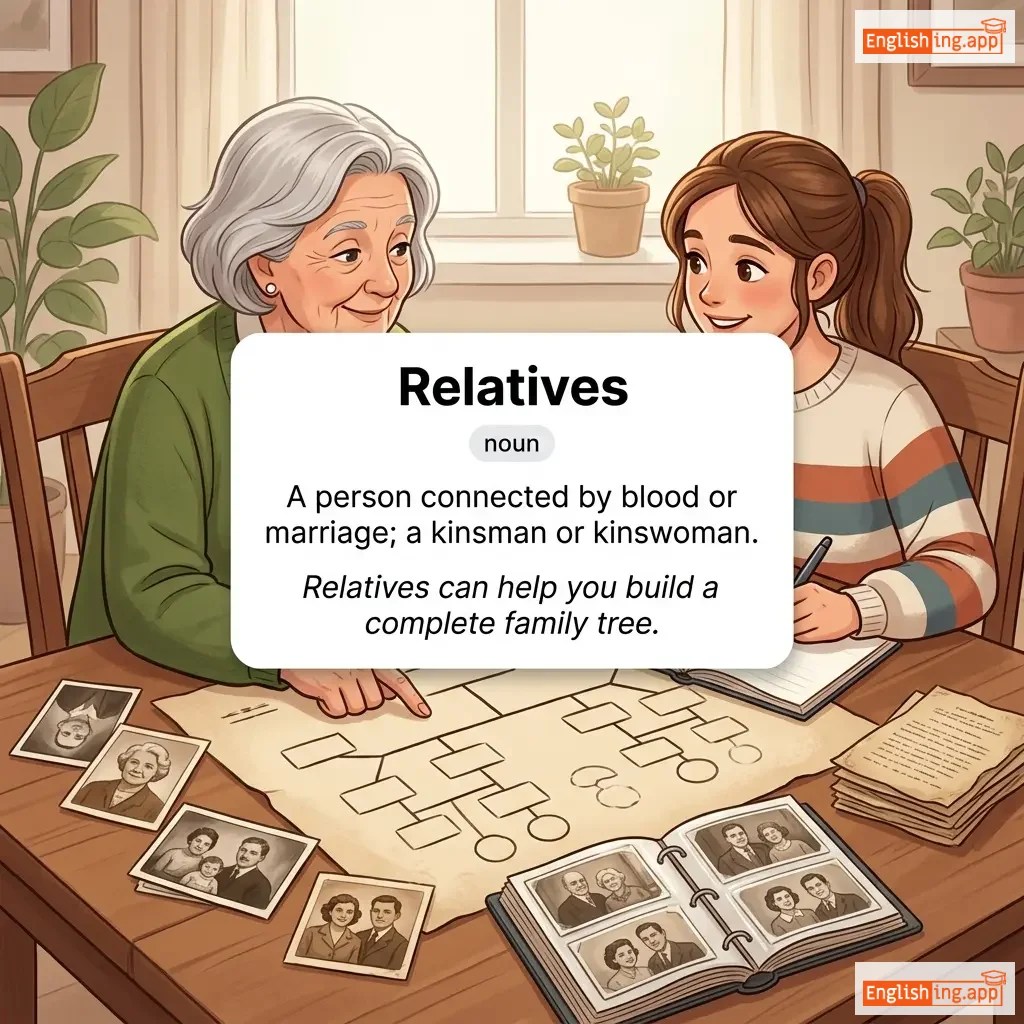
Relatives definition card — visual illustration of the meaning
👨‍👩‍👧‍👦

Relatives (リラティブス)

noun
ˈrɛlətɪvz
親戚 (shinseki)

A person connected by blood or marriage; a kinsman or kinswoman.

"Relatives can help you build a complete family tree."

"親戚はあなたが完全な家系図を作る手助けをしてくれるかもしれません。" (Shinseki wa anata ga kanzen'na kakeizu o tsukuru tedasuke o shite kureru kamoshiremasen.)
verb
/rɪˈlæks/
リラックスする (rirakkusu suru)

to make or become less tense or anxious; to rest

"After a long day, she likes to relax with a good book."

"長い一日の後で、彼女は良い本を持ってリラックスするのが好きです。" (Nagai ichinichi no ato de, kanojo wa yoi hon wo motte rirakkusu suru no ga suki desu.)
adjective
/rɪˈlækst/
リラックスした (rirakkusu shita)

free from tension or stress; calm and comfortable

"She felt relaxed after listening to soft music."

"柔らかい音楽を聞いて、彼女はリラックスした。" (Yawarakai ongaku o kiite, kanojo wa rirakkusu shita)
release definition card — visual illustration of the meaning
verb
/rɪˈliːs/
リリース, 公開 (rirīsu, kōkai)

to set free, to make available, or to allow something to go out

"The company will release the new product next month."
"その会社は来月新しい製品をリリースします。" (Sono kaisha wa raigetsu atarashī seihin o rirīsu shimasu.)
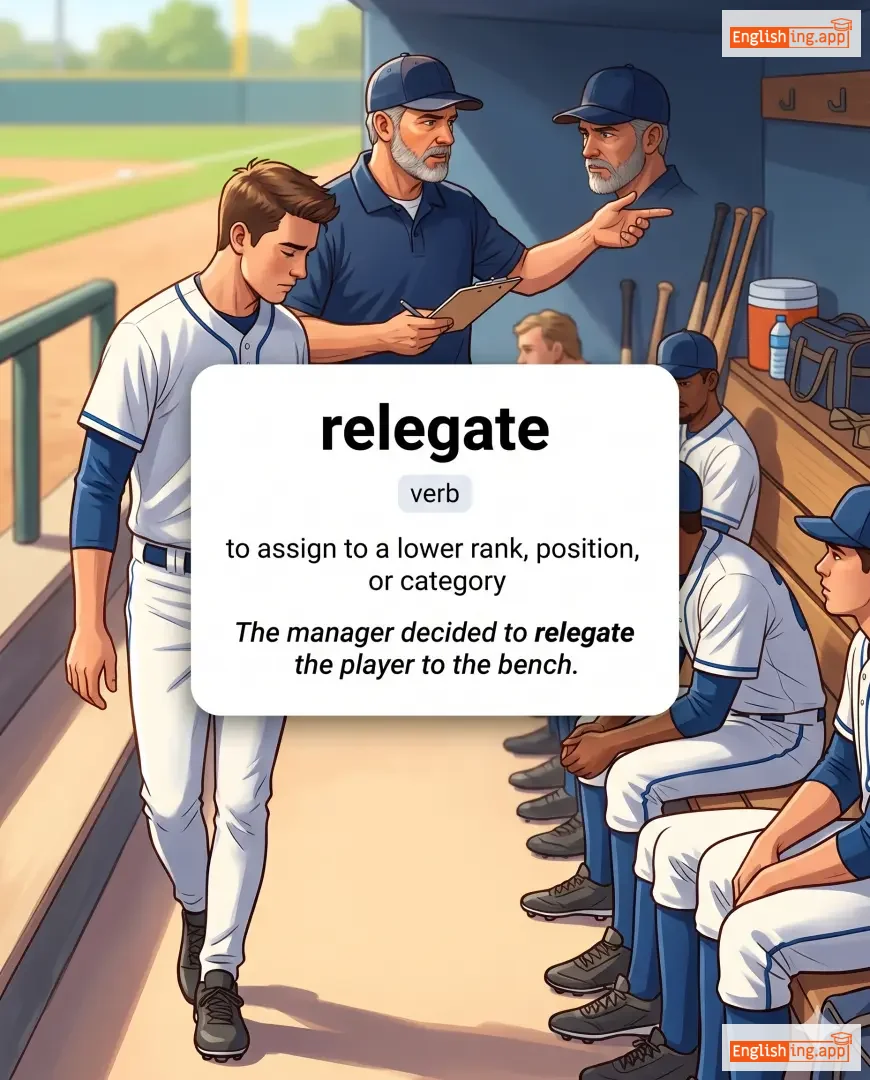
relegate definition card — visual illustration of the meaning
verb
/ˈrɛlɪɡeɪt/
降格する (kōkaku suru)

to assign to a lower rank, position, or category

"The manager decided to relegate the player to the bench."

"マネージャーは選手をベンチにレリゲートすることを決定しました。" (Manējā wa senshu o benchi ni rerigēto suru koto o kettei shimashita.)
verb
/rɪˈlɛnt/
譲歩する、柔らかくなる (jouho suru, yawarakaku naru)

to become less severe, harsh, or strict

"After hours of begging, she finally relented."
"何時間もの懇願の後、彼女はついに譲歩した。" (Nan jikan mono kongan no ato, kanojo wa tsuini jouho shita.)
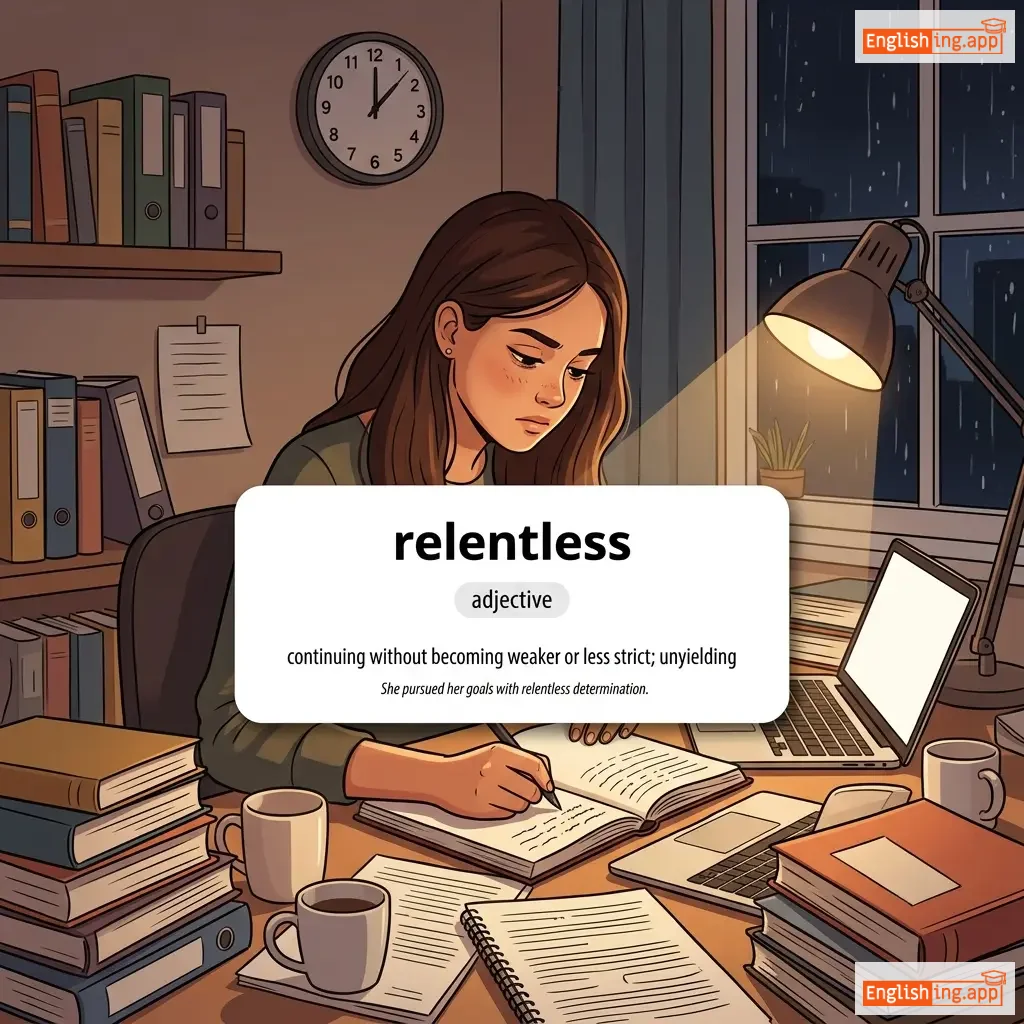
relentless definition card — visual illustration of the meaning
adjective
/rɪˈlɛntləs/

continuing without becoming weaker or less strict; unyielding

"She pursued her goals with relentless determination."

noun
/ˈrɛlɪvəns/
関連性 (kanrensei)

the quality or state of being closely connected or appropriate

"The relevance of the information was clear to everyone."

"情報の関連性はすべての人に明確でした。" (Jouhou no kanrensei wa subete no hito ni meikaku deshita.)
noun
/ˈrɛlɪvənsi/
関連性 (kanrensei)

the quality of being closely connected or appropriate

"The professor questioned the relevancy of the example to the topic."

"教授はその例がトピックに関連しているかどうかを疑問視しました。" (Kyoju wa sono rei ga topikku ni kanren shite iru ka dō ka o gimon-shimashita.)
adjective
/ˈrɛl.ə.vənt/
関連する (kannensuru)

closely connected or appropriate to what is being considered or done

"Your comments are not relevant to the discussion."

"あなたのコメントは議論に関連していません。" (Anata no komento wa giron ni kanrenshiteimasen.)
noun
/rɪˌlaɪəˈbɪləti/
信頼性 (shinraisei)

the quality of being trustworthy or performing consistently well

"Customers value the reliability of our service."
"お客様は私たちのサービスの信頼性を重視しています。" (Okyakusama wa watashitachi no sābisu no shinraisei o jūshi shiteimasu.)
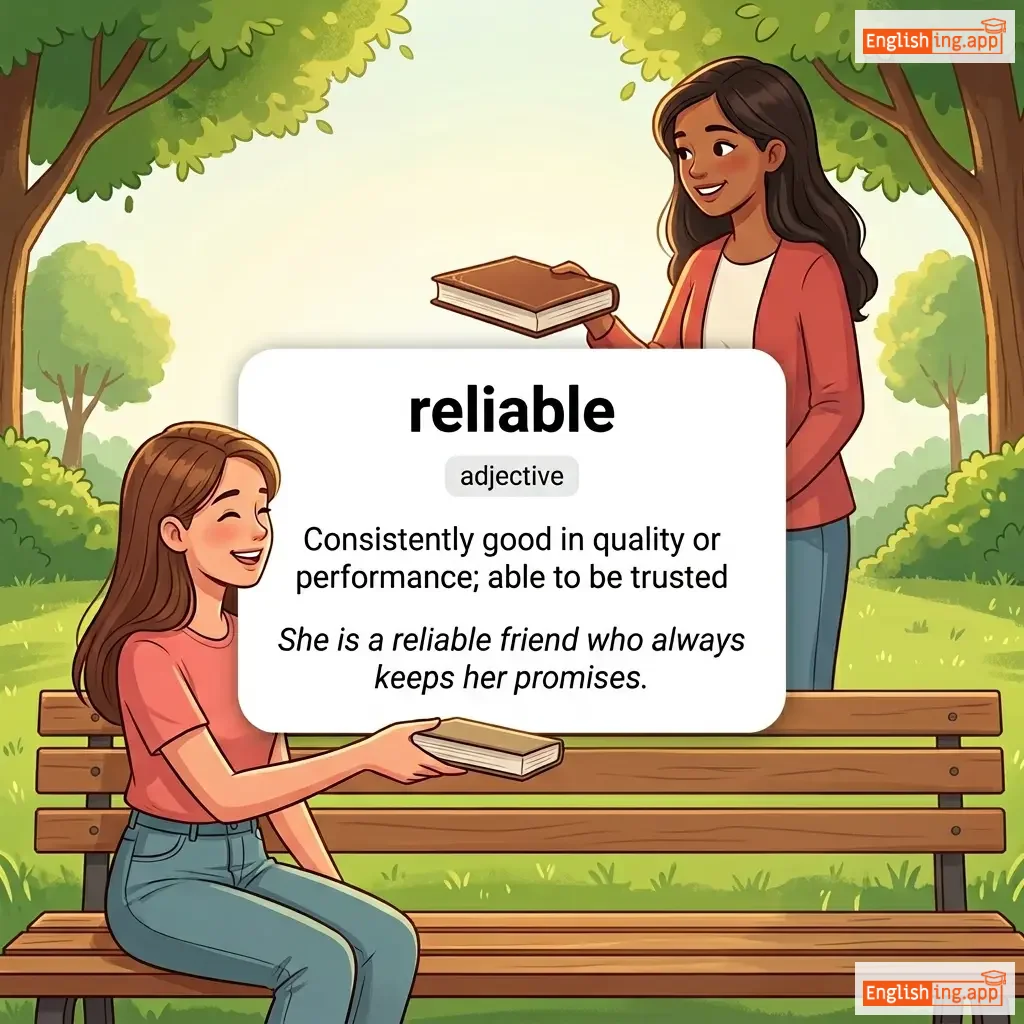
reliable definition card — visual illustration of the meaning
adjective
/rɪˈlaɪəbl/
信頼できる (shinraidekiru)

Consistently good in quality or performance; able to be trusted

"She is a reliable friend who always keeps her promises."

"彼女はいつも約束を守る信頼できる友人です。" (Kanojo wa itsumo yakusoku o mamoru shinraidekiru yūjin desu.)
noun
/rɪˈlaɪ.əns/
依存 (izon)

dependence on or trust in someone or something

"Her reliance on her friends helped her through difficult times."

"友人への依存が彼女を困難な時期に助けた。" (Yujin e no izon ga kanojo o konnan na jiki ni tasuketa.)