語彙集

英単語辞書 | 単語の意味、定義、例文

noun, verb, adjective
/ˈpeɪtənt/ or /ˈpætənt/
特許 (tokkyo)

a government license granting exclusive rights to an inventor; also to obtain such rights

"He patented his new invention to protect it from being copied."

"彼は自分の新しい発明をコピーから守るために特許を取った。" (Kare wa jibun no atarashī hatsumei o kopī kara mamoru tame ni tokkyo o totta.)
adjective
/pəˈtɜːrnəl/
父性的 (chichisei)

Relating to or characteristic of a father.

"He took a paternal interest in the boy’s education."

"彼はその男の子の教育に父性的な関心を示しました。" (Kare wa sono otokonoko no kyōiku ni chichiseina kanshin o shimashita.)
noun
/pəˈtɜːrnəti/
父性 (hosei)

The state of being someone's father.

"He demanded a paternity test to confirm his relationship with the child."

"彼は子供との関係を確認するために、父性検査を要求しました。" (Kare wa kodomo to no kankei o kakunin suru tame ni, hosei kensa o yōkyū shimashita.)
noun
/pæθ/
小道 (komichi)

a way or track laid down for walking or made by continual treading

"She walked along the narrow path through the forest."

"彼女は森の中の狭い道を歩きました。" (Kanojo wa mori no naka no semai michi wo arukimashita.)
adjective
/pəˈθɛtɪk/

Causing feelings of pity, sadness, or sometimes contempt.

"The team’s performance in the match was simply pathetic."

adjective
/ˌpæθəˈdʒɛnɪk/
病原性 (byōgensei)

Capable of causing disease.

"Some bacteria are harmless, while others are highly pathogenic."
"いくつかの細菌は無害で、他の細菌は非常に病原性があります。" (Ikutsuka no saikin wa mugai de, hoka no saikin wa hijō ni byōgensei ga arimasu.)
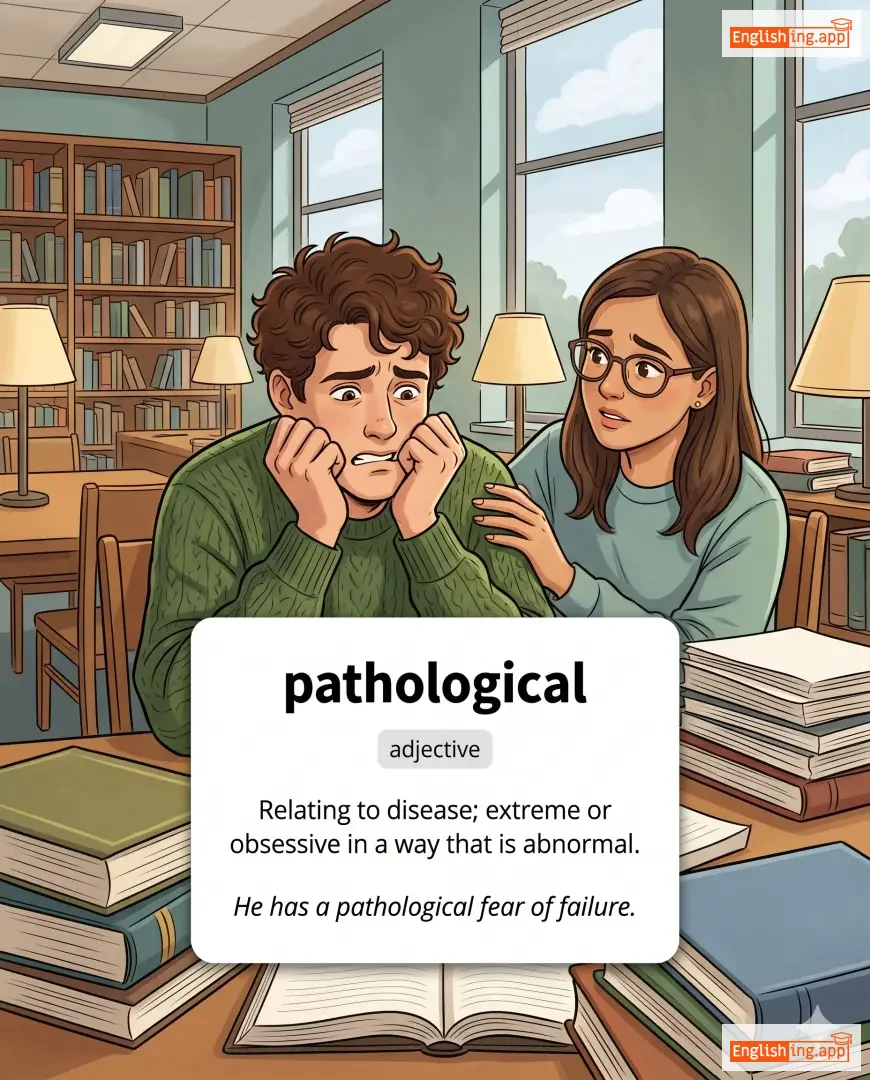
pathological definition card — visual illustration of the meaning
adjective
/ˌpæθəˈlɑːdʒɪkəl/
病理的, 病的 (byōriteki, byōteki)

Relating to disease; extreme or obsessive in a way that is abnormal.

"He has a pathological fear of failure."

"彼は失敗に対して病理的な恐怖を抱えている。" (Kare wa shippai ni taishite byōriteki na kyōfu o kakaete iru.)
noun
/pəˈθɒlədʒi/
病理学 (byōrigaku)

the scientific study of diseases, their causes, processes, and effects on the body

"Advances in pathology helped the doctors identify the rare infection quickly."

"病理学の進歩により、医師は珍しい感染症を迅速に特定できました。" (Byōrigaku no shinpo ni yori, ishi wa mezurashī kansenshō o jinsoku ni tokutei dekimashita.)
noun
/ˈpeɪθɒs/
パトス (pathos)

a quality in speech, writing, or events that evokes pity or deep emotion

"The documentary balanced pathos with hope, making the audience both weep and think."

"ドキュメンタリーは、パトスと希望をうまくバランスさせ、観客を泣かせ、考えさせました。" (dokyumentarī wa, patosu to kibō o umaku baransu sase, kankyaku o nakase, kangaesasemashita.)
noun
/ˈpæθweɪ/
小道 (komichi)

a route or course along which something travels or progresses

"The narrow pathway led to the hidden garden."
"狭い小道が隠れた庭へと続いていた。" (Semai komichi ga kakureta niwa e to tsuzuiteita.)
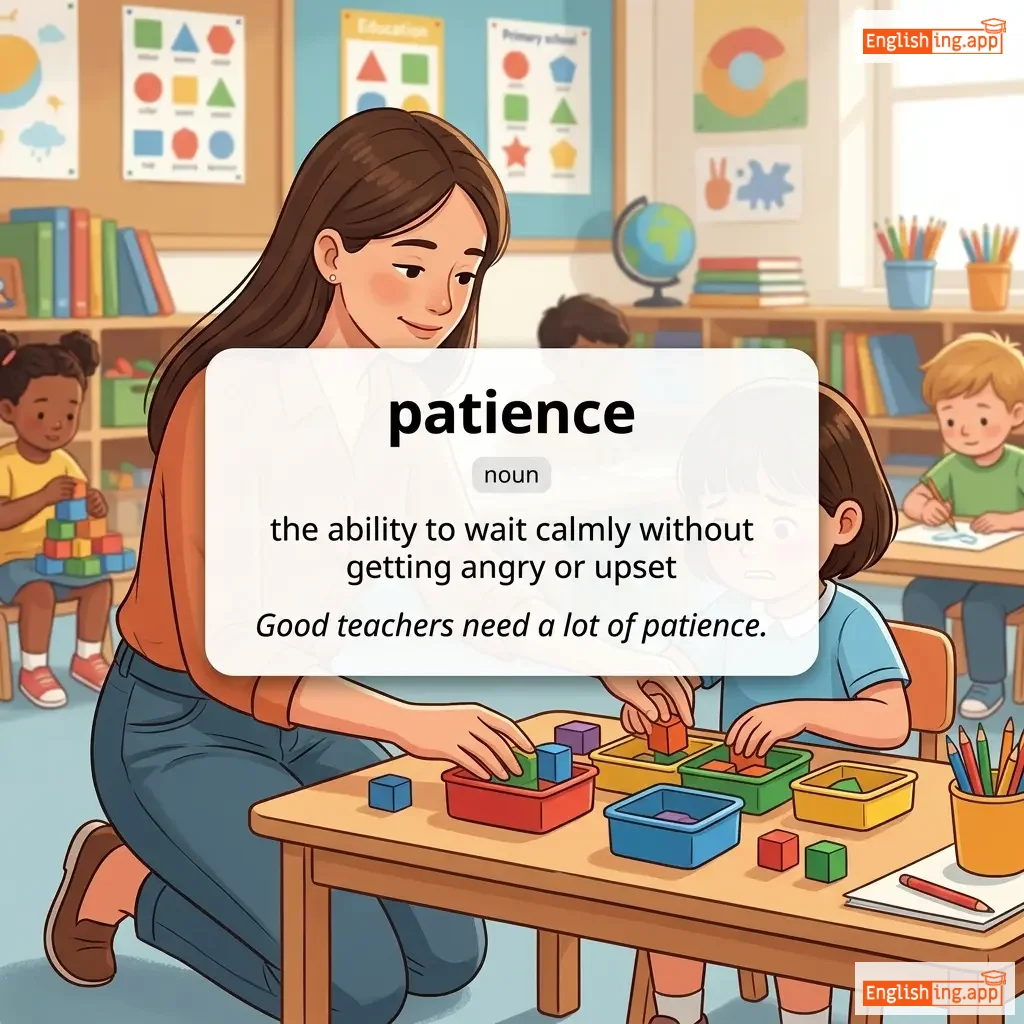
patience definition card — visual illustration of the meaning
noun
/ˈpeɪ.ʃəns/
忍耐 (nintai)

the ability to wait calmly without getting angry or upset

"Good teachers need a lot of patience."

"良い教師は多くの忍耐を必要とします。" (Yoi kyōshi wa ōku no nintai o hitsuyō to shimasu.)
🧘‍♀️

Patient

adjective
/ˈpeɪʃənt/

able to accept or tolerate delays, problems, or suffering without becoming annoyed or anxious

"She remained patient despite the long wait."

noun
/pəˈtiːnə/
金属、石、または木材の表面に年齢または使用によって形成される薄い膜または光沢; また、表面的な外観 (kinzoku, ishi, matawa mokuzai no hyōmen ni nenrei matawa shiyō ni yotte keisei sareru usui maku matawa kōtaku; mata, hyōmen-teki na gaikan)

a surface film or sheen on metal, stone, or wood due to age or use; also, a superficial appearance

"The bronze statue developed a green patina after years in the sea air."

"海風に数年さらされた後、青銅の像には緑色のパティナが形成されました。" (Kaikaze ni sūnen sarasareta ato, seidō no zō ni wa midori iro no patina ga keisei saremashita.)
noun
/ˈpætwɑː/
方言 (hōgen)

a regional or social dialect, especially one considered nonstandard or informal

"The guide slipped into local patois when chatting with the fishermen."

"ガイドは漁師と話すときに現地のパトワを使い始めました。" (gaido wa ryōshi to hanasu toki ni genchi no patoā o tsukai hajimemashita.)
noun
/ˈpeɪtriɑːrk/
家長 (kachou)

a male head of a family or tribe; an older respected man who leads a group

"As the family patriarch, he mediated disputes and kept long traditions alive."

"家族の家長として、彼は争いごとを解決し、長い伝統を守りました。" (kazoku no kachou toshite, kare wa arasoi goto o kaiketsu shi, nagai dentou o mamorimashita.)
noun, adjective
/pəˈtrɪʃən/
貴族 (kizoku)

A person of noble rank or high social standing; relating to aristocracy.

"The patrician families of Rome wielded great power in politics."

"ローマの貴族の家族は政治で大きな力を持っていた。" (Rōma no kizoku no kazoku wa seiji de ōkina chikara o motte ita.)
noun
/ˈpætrɪsaɪd/
父殺し (chichi-goroshi)

The act of killing one's own father.

"The ancient myth describes a son committing patricide to take the throne."

"古代の神話は、王位を取るために父殺しをした息子を描いています。" (Kodai no shinwa wa, oui o toru tame ni chichi-goroshi o shita musuko o egaiteimasu.)
noun
/ˈpætrɪˌmoʊni/
遺産 (isan)

Property or inheritance passed down from one's father or ancestors.

"The castle was part of his patrimony from his noble ancestors."

"その城は彼の貴族の先祖から受け継いだ遺産の一部でした。" (Sono shiro wa kare no kizoku no senzo kara uketsuida isan no ichibu deshita.)
noun
/ˈpeɪtriət/
愛国者 (aikokusha)

A person who loves and strongly supports their country.

"The patriot stood proudly under the national flag."

"愛国者は国旗の下で誇りを持って立っていた。" (Aikokusha wa kokki no moto de hokori wo motte tatte ita.)
adjective
/ˌpeɪ.triˈɑː.tɪk/
愛国的な (aikokuteki na)

showing love for one's country

"The patriotic citizens celebrated Independence Day with great enthusiasm."

"愛国的な市民たちは独立記念日を大きな熱意で祝いました。" (Aikokuteki na shimin-tachi wa dokuritsu kinenbi o ōkina netsui de iwai mashita.)
patriotism definition card — visual illustration of the meaning
noun
/ˈpeɪtriətɪzəm/
愛国心 (aikokushin)

Love for and devotion to one's country.

"His patriotism was evident when he volunteered for military service."

"彼の愛国心は、軍事サービスに志願したときに明らかでした。" (Kare no aikokushin wa, gunji sābisu ni shigan shita toki ni akiraka deshita.)
verb
/pəˈtroʊl/
パトロールする (patorōru suru)

to move around an area to watch or guard it

"The police patrol the streets at night to ensure safety."

"警察は夜に街をパトロールして安全を確保しています。" (Keisatsu wa yoru ni machi o patorōru shite anzen o kakuho shiteimasu.)
noun
/ˈpeɪtrən/
後援者 (kouensha)

a person who gives financial or other support to a person, organization, or cause

"The library is supported by generous patrons."

"図書館は寛大な後援者によって支えられています。" (Toshokan wa kandai na kouensha ni yotte sasaerareteimasu.)
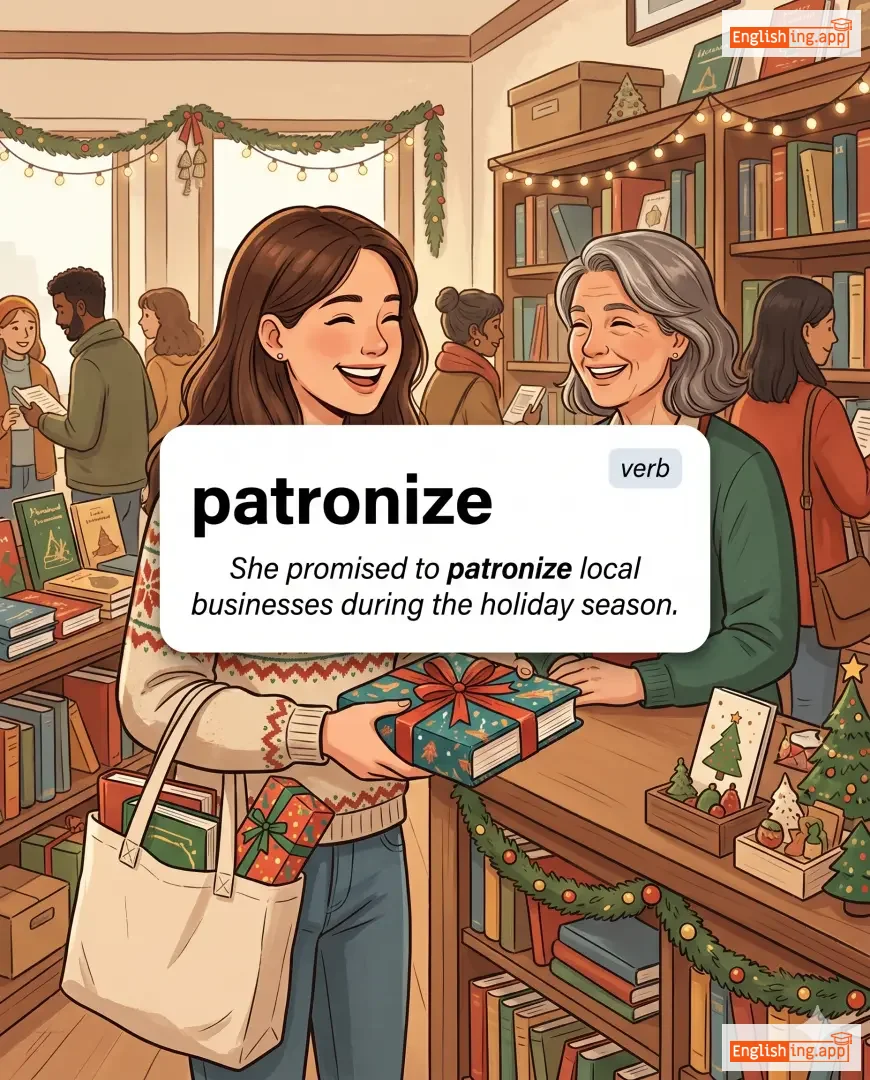
patronize definition card — visual illustration of the meaning
🛍️

patronize

verb
/ˈpeɪtrənaɪz/

to support or sponsor; to treat someone with apparent kindness that betrays a sense of superiority; to be a regular customer of a business

"She promised to patronize local businesses during the holiday season."

adjective
/ˈpeɪtrənaɪzɪŋ/
見下す (mikedasu)

showing kindness that is perceived as condescending or superior

"His patronizing tone offended the audience."

"彼の見下すような口調は観客を不快にさせた。" (Kare no mikedasu yōna kuchō wa kankyaku o fukai ni saseta.)
noun
/ˌpætrəˈnɪmɪk/
父系姓 (chikei sei)

a name derived from the name of a father or ancestor

"In many cultures, surnames are patronymic in origin."

"多くの文化では、姓は父系姓に由来します。" (Ōku no bunka de wa, sei wa chikei sei ni yurai shimasu.)
verb
/ˈpætər/
繰り返される軽いタップ音を立てる / 機械的に素早く話す (kurikaesaru karui tappu-on wo tateru / kikai-teki ni subayaku hanasu)

to make a repeated light tapping sound; to talk quickly in a rehearsed or mechanical way

"Rain pattered softly on the window."

"雨は窓に静かにパタパタと音を立てていた。" (Ame wa mado ni shizuka ni patapata to oto wo tatete ita.)
/ˈpæt.ən/
模様 / パターン (moyou / patān)

A repeated decorative design or a regular way in which something happens or is done.

"The dress had a beautiful floral pattern."
"そのドレスには美しい花柄のパターンがありました。" (Sono doresu ni wa utsukushī hanagara no patān ga arimashita.)
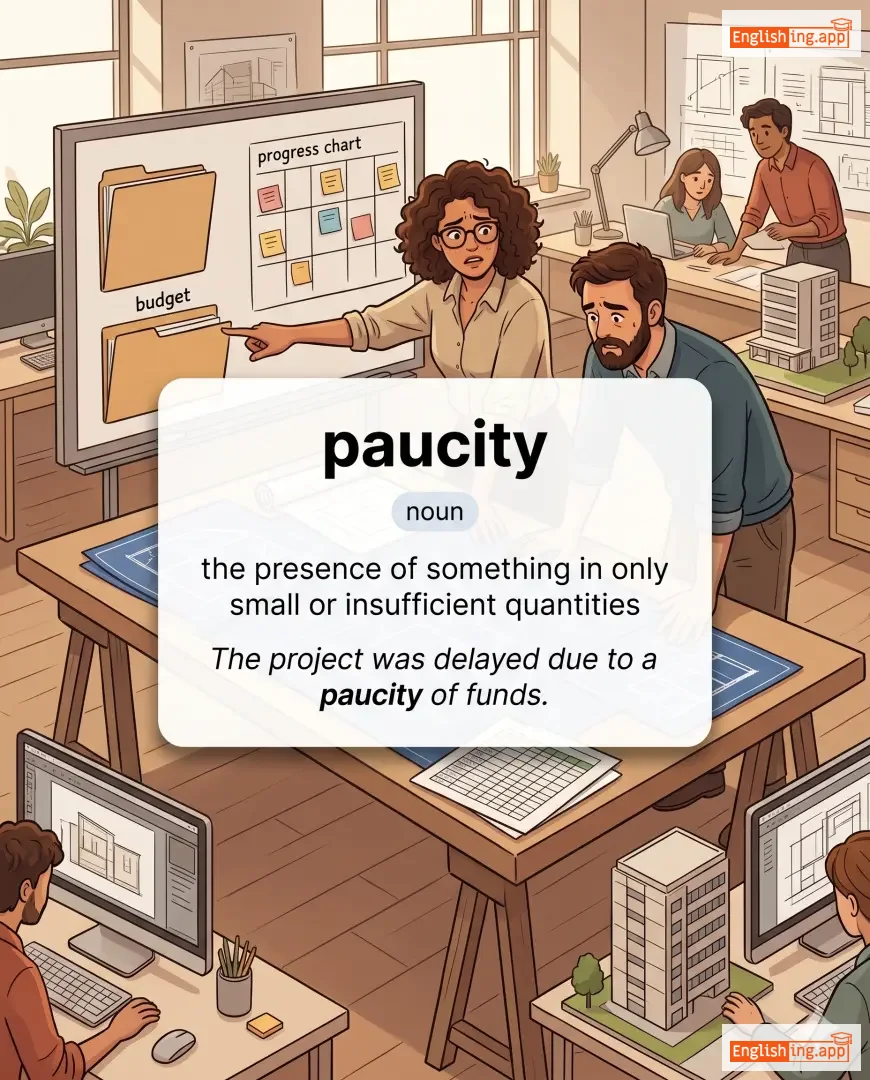
paucity definition card — visual illustration of the meaning
noun
/ˈpɔːsɪti/
不足 / 欠乏 (fusoku / ketsubou)

the presence of something in only small or insufficient quantities

"The project was delayed due to a paucity of funds."

"プロジェクトは資金不足のため遅れました。" (Purojekuto wa shikin fusoku no tame okuremashita.)
adjective
/ˈpɔːntʃi/
ぽっこりお腹 (pokkori onaka)

Having a large or protruding belly.

"The paunchy man struggled to button his shirt."

"ぽっこりお腹の男はシャツのボタンを留めるのに苦労していた。" (Pokkori onaka no otoko wa shatsu no botton o tomeru no ni kurō shite ita.)
noun
/ˈpɔːpər/
乞食人 (kōjiki jin)

A very poor person.

"The pauper begged for food on the street corner."

"その乞食人は街角で食べ物を求めていた。" (Sono kōjiki jin wa machikado de tabemono o motomete ita.)
noun
/ˈpɔːpərɪzəm/
貧困 (hinkon)

The state of being extremely poor.

"The country struggled with rising pauperism in the 19th century."
"その国は19世紀に増大する貧困と戦っていました。" (Sono kuni wa 19 seiki ni zoudai suru hinkon to tatakatte imashita.)
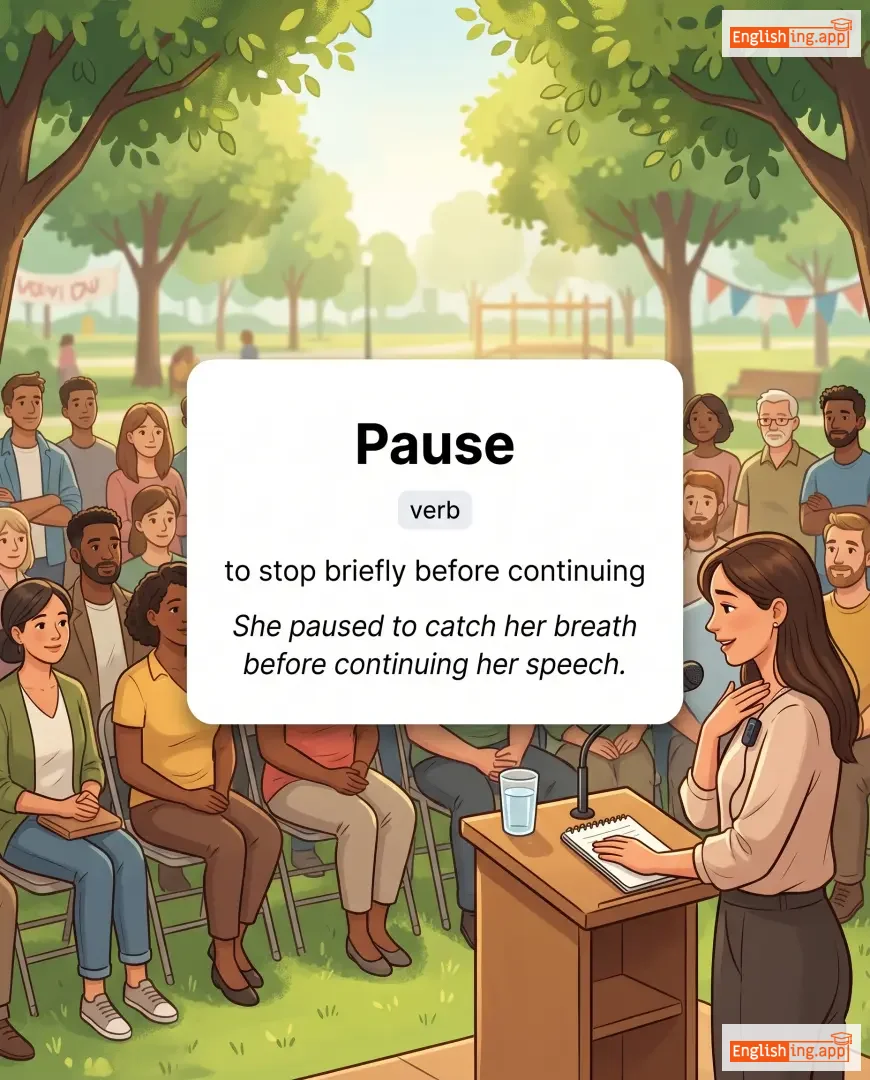
Pause definition card — visual illustration of the meaning
verb
/pɔːz/
一時停止 (ichijiteishi)

to stop briefly before continuing

"She paused to catch her breath before continuing her speech."

"彼女は呼吸を整えるために少し一時停止をした。" (Kanojo wa kokyū o totonoeru tame ni sukoshi ichijiteishi o shita.)
noun
/ˈpeɪvmənt/
歩道 (hodo)

a hard paved surface such as a road or sidewalk; the act or result of paving

"She walked along the pavement to reach the bus stop."

"彼女はバス停まで歩道を歩いた。" (kanojo wa basutei made hodo o aruita)
noun
/pəˈvɪliən/
パビリオン (pabirion)

A large tent or temporary building, often used for events or exhibitions.

"The wedding reception was held in a decorated pavilion."

"結婚式のレセプションは装飾されたパビリオンで開催されました。" (Kekkonshiki no resepushon wa sōshoku sareta pabirion de kaisai saremashita.)
pay definition card — visual illustration of the meaning
verb
/peɪ/
支払う (shiharau)

to give money in exchange for goods or services

"I need to pay for the groceries."

"私は食料品の支払いをしなければなりません。" (Watashi wa shokuryōhin no shiharai o shinakereba narimasen.)
adjective
/ˈpeɪ.ə.bəl/
支払期限 (shiharai kigen)

required to be paid; owed as a debt

"The amount is payable within thirty days of the invoice date."

"金額は請求書の日付から30日以内に支払期限となります。" (Kingaku wa seikyūsho no hizuke kara 30-nichi inai ni shiharai kigen to narimasu.)
noun
/peɪˈiː/
受取人 (uketorinin)

A person to whom money is paid or is to be paid.

"The payee must sign the check before cashing it."

"受取人は小切手を現金化する前に署名する必要があります。" (Uketorinin wa kogitte o genkin ka suru mae ni shomei suru hitsuyō ga arimasu.)
noun
/ˈpeɪmənt/
支払い (shiharai)

the action or process of paying money for something

"The payment for the order was received yesterday."

"注文の支払いは昨日受け取られました。" (Chūmon no shiharai wa kinō uketoraremashita.)
noun
/ˈpiːˈsi/
パーソナルコンピュータ (paasonaru konpyuuta)

abbreviation for 'personal computer', a machine for performing digital operations

"I just bought a new PC for work."

"私は仕事のために新しいパーソナルコンピュータを買いました。" (Watashi wa shigoto no tame ni atarashii paasonaru konpyuuta wo kaimashita.)
noun
/piː/
エンドウ豆 (endōmame)

a small round green seed eaten as a vegetable

"The children enjoyed eating sweet peas with dinner."

"子供たちはディナーで甘いエンドウ豆を食べるのが好きでした。" (Kodomotachi wa dinā de amai endōmame o taberu no ga sukideshita)
noun
/piːs/
平和 (heiwa)

a state of tranquility or quiet, freedom from disturbance

"They hope for peace in the region."

"彼らは地域での平和を望んでいます。" (Karera wa chiiki de no heiwa o nozondeimasu.)
adjective
/ˈpiːsəbl/
平和な (heiwa na)

inclined to avoid conflict; friendly and non-violent in nature

"She is a peaceable neighbor who never quarrels with anyone."

"彼女は争いごとをしない平和な隣人です。" (Kanojo wa arasoi goto o shinai heiwa na rinjin desu.)
adjective
/ˈpiːsfl/
幸せ (shiawase)

free from disturbance; calm and tranquil

"The village remained peaceful even during the festival."

"彼女は賞を受け取ったとき、幸せを隠すことができませんでした。" (Kanojo wa shō o uketotta toki, shiawase o kakusu koto ga dekimasen deshita.)
noun
/piːtʃ/
ピーチ (pīchi)

a soft round fruit with fuzzy skin, sweet flesh, and a large pit in the center

"The peach was perfectly ripe and juicy when I bit into it."

"そのピーチは完璧に熟し、ジューシーで、かじるととても美味しかった。" (Sono pīchi wa kanpeki ni jukushi, jūshī de, kajiru to totemo oishikatta.)
noun
/ˈpiː.kɒk/
クジャク (kujaku)

a large bird with beautiful colorful tail feathers that can spread out like a fan

"The magnificent peacock displayed its colorful feathers to attract attention."

"その素晴らしいクジャクは、注目を集めるために色鮮やかな羽を広げました。" (sono subarashī kujaku wa, chūmoku o atsumeru tame ni iro azayakana hane o hirogemashita.)
noun
/ˈpiː.kɒk ˈflaʊ.ər/
クジャクの花 (kujaku no hana)

a tropical tree with bright orange and red flowers that resemble a peacock's tail

"The peacock flower tree blooms with stunning orange flowers in summer."

"クジャクの花の木は夏に素晴らしいオレンジ色の花を咲かせます。" (Kujaku no hana no ki wa natsu ni subarashī orenji-iro no hana o sakasemasu.)
noun
/ˈpiː.hən/
メスのクジャク (mesu no kujaku)

female peacock

"The peahen is less colorful than the male peacock."

"メスのクジャクはオスよりも色が少ない。" (Mesu no kujaku wa osu yori mo iro ga sukunai.)
noun
/piːk/
頂点 (chōten)

the pointed top of a mountain or hill, or the highest point of something

"They reached the peak of the mountain after hours of hiking."

"彼らは数時間のハイキングの後、山の頂点に到達しました。" (Karera wa sūjikan no haikingu no ato, yama no chōten ni tōtatsu shimashita.)
noun
/ˈpiːnʌt/
ピーナッツ (pīnattsu)

a small seed with a thin shell, eaten as a snack or used to make oil and butter

"He loves eating roasted peanuts during the evening."

"彼は夕方にローストピーナッツを食べるのが好きです。" (Kare wa yūgata ni rōsuto pīnattsu o taberu no ga suki desu.)