語彙集

英単語辞書 | 単語の意味、定義、例文

adjective
/ˈpɒndərəbl/
考慮できる, 思案可能 (kōryo dekiru, shian kanō)

able to be considered or thought about

"The evidence was substantial and ponderable."

"証拠は重要であり、思案可能でした。" (Shōko wa jūyō de ari, shian kanō deshita.)
adjective
/ˈpɑːndərəs/
重くて遅い (omokute osoi)

slow and clumsy because of great weight; dull and labored

"The ponderous lecture made it hard for students to stay awake."

"重くて遅い講義は学生たちが目を覚ましているのを難しくした。" (Omokute osoi kougi wa gakuseitachi ga me o samashite iru no o muzukashiku shita.)
noun
/ˈpɒntɪf/
教皇または高位の司教 (kyoukou matawa koui no shikyou)

the pope or a high-ranking bishop in the Christian church

"The pontiff addressed the nation in a televised speech."

"教皇はテレビで国民に向けて演説を行いました。" (Kyoukou wa terebi de kokumin ni mukete enzetsu wo okonai mashita.)
adjective
/pɒnˈtɪfɪkəl/
教皇または司教に関連する; 傲慢または高慢な (kyoukou matawa shikyou ni kanren suru; gouman matawa kouman na)

relating to a pope or bishop; pompous or self-important

"His pontifical manner annoyed the other members of the committee."

"彼の高慢な態度は委員会の他のメンバーを困らせた。" (Kare no kouman na taido wa iinkai no hoka no menbaa o komarase ta.)
verb
/ˈpɒntɪfɪkeɪt/
傲慢または教義的な方法で話すまたは行動する; 教皇として務める (gōman matawa kyōgitekina hōhō de hanasu matawa kōdō suru; kyōkō toshite tsutomeru)

to speak or act in a pompous or dogmatic way; to officiate as a pontiff

"He pontificated on the importance of education for over an hour."

"彼は1時間以上にわたり教育の重要性について傲慢に話しました。" (Kare wa ichi-jikan ijō ni watari kyōiku no jūyō-sei ni tsuite gōman ni hanashimashita.)
noun
/ˈpoʊni/
ポニー (ponī)

a small horse, typically under 14.2 hands high

"The children enjoyed riding the gentle pony at the farm."

"子供たちは農場で優しいポニーに乗ることを楽しみました。" (Kodomotachi wa nōjō de yasashī ponī ni noru koto o tanoshimimashita.)
noun/verb
/puːl/
プール (puuru)

a small body of still water, or a game played in a rectangular table with balls

"The children swam in the pool all afternoon."

"子供たちは午後ずっとプールで泳いでいました。" (Kodomotachi wa gogo zutto pūru de oyoideimashita.)
adjective
/pʊr/ or /pɔːr/
貧しい (mazushii)

Lacking sufficient money, resources, or quality.

"The poor family struggled to buy food."

"貧しい家族は食料を買うのに苦しんでいました。" (mazushii kazoku wa shokuryō o kau noni kurushinde imashita.)
verb
/pɒp/
弾ける (hikeru)

to make a short, sharp sound, or to burst or break with such a sound

"The balloon popped when I accidentally pricked it with a pin."

"風船は、私が間違ってピンで刺したときに破裂しました。" (Fūsen wa, watashi ga machigatte pin de sashita toki ni hakiretsu shimashita.)
noun
/ˈpɒp.i/
ケシの花 (keshi no hana)

a bright red flower with black seeds, often used as a symbol of remembrance

"The red poppy bloomed beautifully in the garden."

"赤いケシの花が庭で美しく咲きました。" (akai keshi no hana ga niwa de utsukushiku sakimashita)
noun
/ˈpɒp.i siːdz/
ケシの実 (keshi no mi)

tiny round seeds from the poppy plant used as a spice or garnish in cooking

"Poppy seeds are sprinkled on top of breads and used in Bengali curries."

"ケシの実はパンの上に振りかけられ、ベンガルカリーに使われます。" (Keshi no mi wa pan no ue ni furikakerare, bengaru karī ni tsukawaremasu.)
noun
/ˈpɒpjʊləs/
住民 (jumins)

the general public; the ordinary people living in a country or area

"The new law was welcomed by the local populace."

"新しい法律は地元の住民によって歓迎されました。" (Atarashī hōritsu wa jimoto no jūmin ni yotte kangei saremashita.)
adjective
/ˈpɒpjʊlər/
人気 (ninki)

liked or admired by many people

"She is a popular singer with a huge fan base."

"彼女は大きなファンベースを持つ人気のある歌手です。" (Kanojo wa ookina fan beesu o motsu ninki no aru kashu desu.)
noun
/ˌpɒpjəˈlærəti/
人気 (ninki)

the state of being liked, admired, or supported by many people

"The singer gained huge popularity after her new album release."
"その歌手は新しいアルバムのリリース後に大きな人気を得ました。" (Sono kashu wa atarashī arubamu no rirīsu go ni ōkina ninki o emashita.)
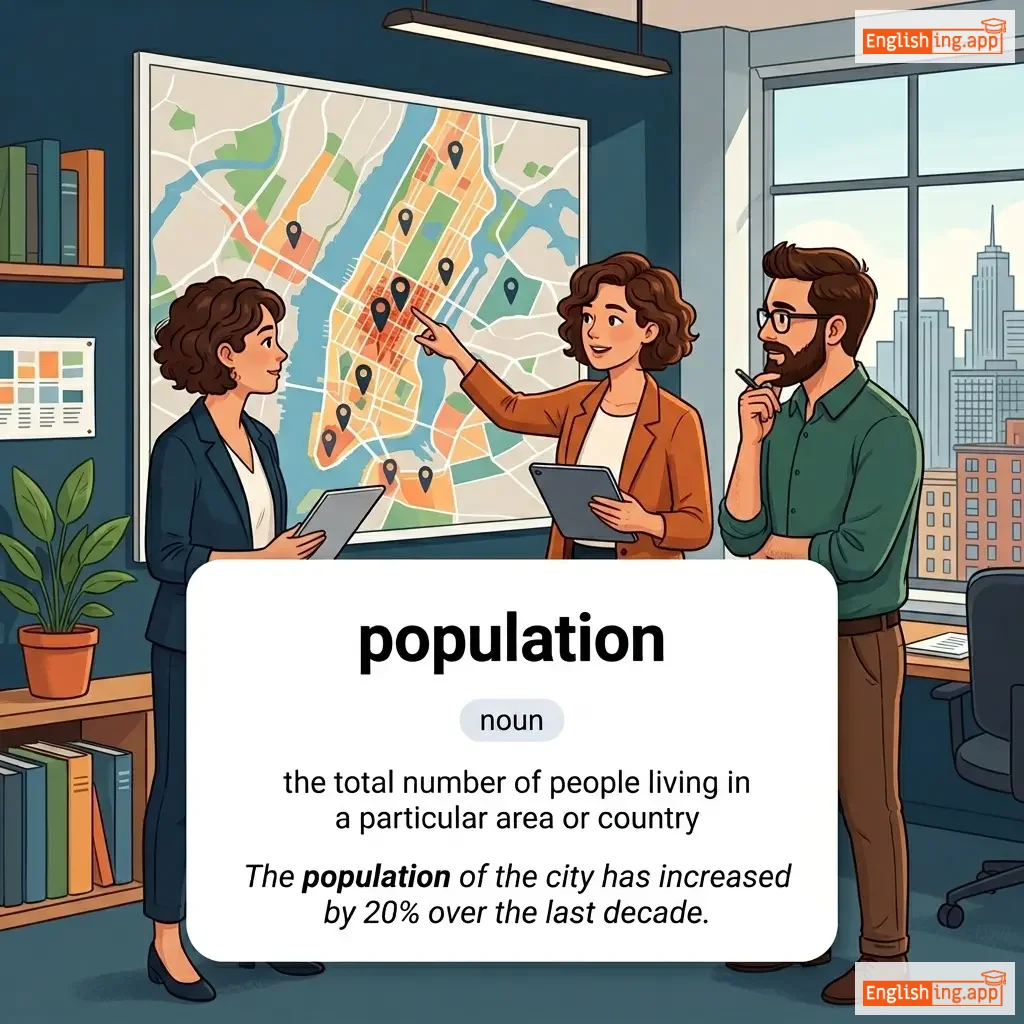
population definition card — visual illustration of the meaning
noun
/ˌpɒpjʊˈleɪʃən/
人口 (jinkou)

the total number of people living in a particular area or country

"The population of the city has increased by 20% over the last decade."

"その都市の人口は過去10年で20%増加しました。" (Sono toshi no jinkou wa kako 10 nen de 20% zouka shimashita.)
noun
/ˈpɒpjʊlɪst/
ポピュリストのリーダー (popyurisuto no rīdā)

A politician or person who seeks to appeal to ordinary people who feel their concerns are ignored by elites.

"The populist leader promised to put the needs of common citizens first."

"ポピュリストのリーダーは、一般市民のニーズを最優先すると約束しました。" (Popyurisuto no rīdā wa, ippan shimin no nīzu o saiyūsen suru to yakusoku shimashita.)
adjective
/ˈpɒpjələs/
人口密度の高い (jinkō mitsudo no takai)

Having a large population; densely inhabited.

"Dhaka is one of the most populous cities in the world."

"東京は世界で最も人口密度の高い都市の一つです。" (Tōkyō wa sekai de mottomo jinkō mitsudo no takai toshi no hitotsu desu.)
noun
/ˈpɔːrsəlɪn/
磁器 (jiki)

A white, hard ceramic material often used for dishes and ornaments.

"The museum displayed ancient porcelain vases from China."

"博物館は中国の古代のポーセリンの花瓶を展示しました。" (Hakubutsukan wa Chūgoku no kodai no pōserin no kabin o tenji shimashita.)
noun
/pɔːrtʃ/
ポーチ (pōchi)

a covered area at the entrance of a building, often with a roof and open sides

"We sat on the porch and enjoyed the evening breeze."

"私たちはポーチに座って、夕方の風を楽しみました。" (Watashitachi wa pōchi ni suwatte, yūgata no kaze o tanoshimimashita.)
noun
/ˈpɔːr.kjə.paɪn/
ヤマアラシ (yama arashi)

a large rodent with defensive spines or quills on its body

"The porcupine raised its quills when threatened."

"ヤマアラシは脅威を感じると針を立てた。" (Yama arashi wa kyōi o kanjiru to hari o tateta.)
noun/verb
/pɔːr/
毛穴 / 注意深く研究する (mōana / chūi fukaku kenkyū suru)

As a noun: a tiny opening in the skin or surface. As a verb: to study something carefully.

"She pored over the documents for hours before making a decision."

"彼女は決定を下す前に何時間も書類をじっくりと読みました。" (Kanojo wa kettei o kudasu mae ni nanjikan mo shorui o jikkuri to yomimashita.)
noun
/pɔːrk/
幸せ (shiawase)

the flesh of a pig used as food

"He doesn't eat pork for religious reasons."
"彼女は賞を受け取ったとき、幸せを隠せませんでした。" (Kanojo wa shō wo uketotta toki, shiawase wo kakusemasen deshita.)
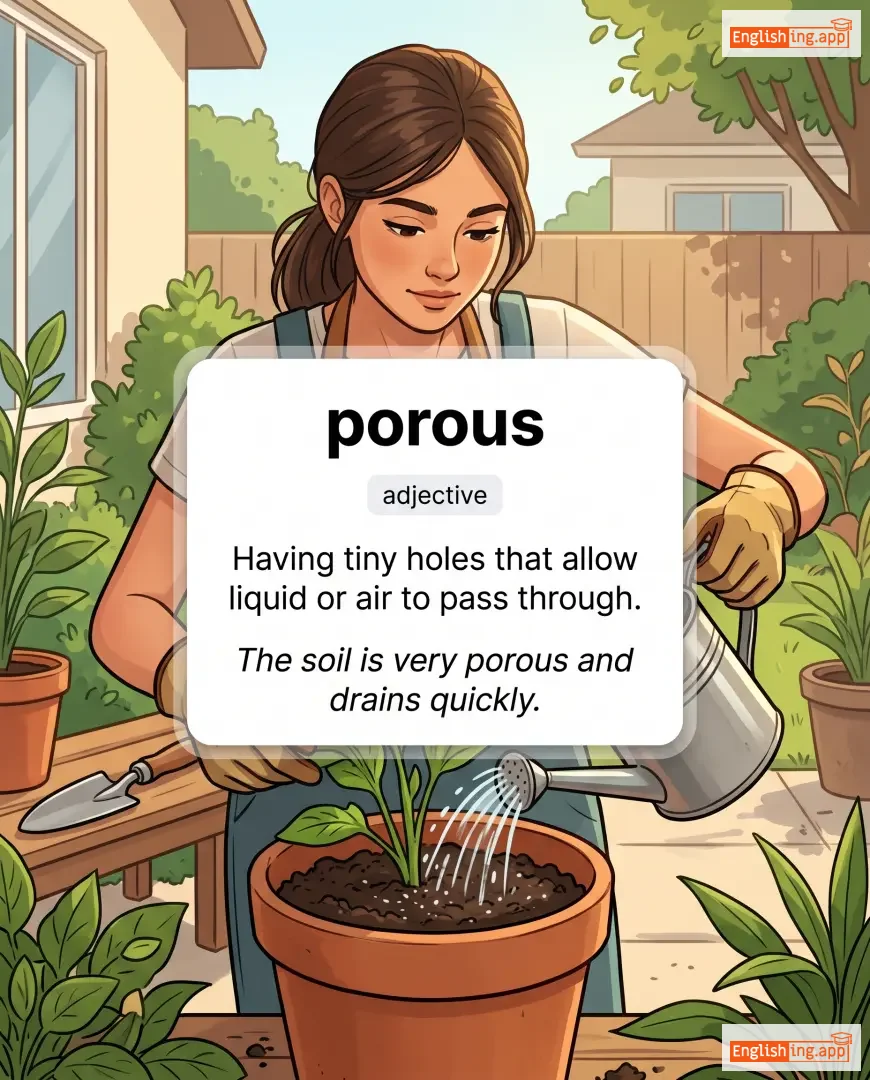
porous definition card — visual illustration of the meaning
adjective
/ˈpɔːrəs/
多孔性の (takōsei no)

Having tiny holes that allow liquid or air to pass through.

"The soil is very porous and drains quickly."

"土壌は非常に多孔性で、すぐに水を排出します。" (Dojō wa hijō ni takōsei de, sugu ni mizu o haishutsu shimasu.)
noun
/ˈpɔːrfəri/
硬い火成岩 (katai kaseigan)

A hard igneous rock containing crystals, often used for decorative or building purposes.

"The ancient Romans used porphyry to make columns and statues."

"古代ローマ人はポルフィリを使って柱や彫像を作った。" (Kodai Rōmajin wa porufiri o tsukatte hashi ya chōzō o tsukutta.)
noun
/ˈpɔː.pəs/
ハクジラ (hakujira)

a small toothed whale with a low triangular dorsal fin and a blunt rounded snout

"The porpoise jumped gracefully out of the water."

"ハクジラは優雅に水から飛び跳ねた。" (Hakujira wa yūga ni mizu kara tobi haneta.)
noun
/ˈpɔːrɪdʒ/

A soft food made by boiling oats or other grains in milk or water.

"She had a bowl of porridge for breakfast."

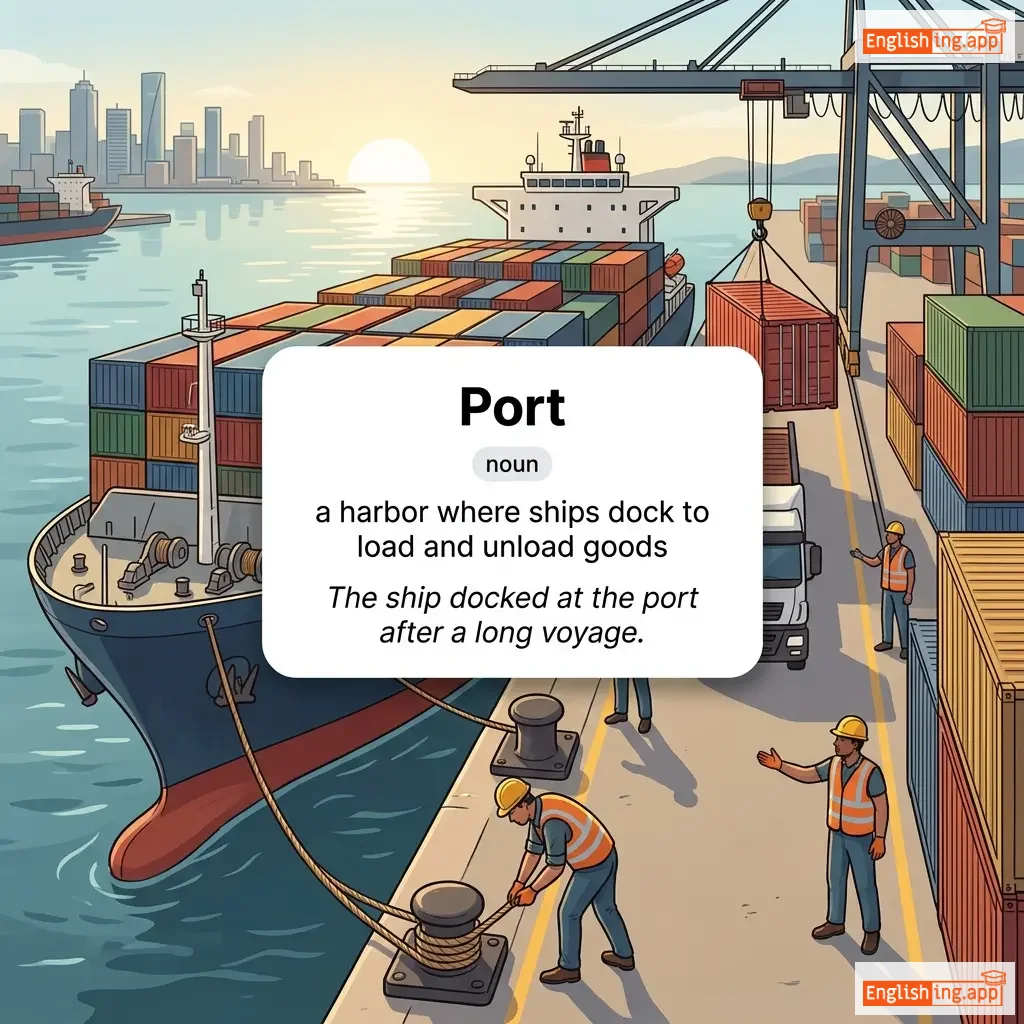
Port definition card — visual illustration of the meaning

Port

noun
/pɔːrt/

a harbor where ships dock to load and unload goods

"The ship docked at the port after a long voyage."

verb
/pɔːrˈtɛnd/
前兆 (zenchou)

To be a sign or warning that something, especially something bad, is going to happen.

"Dark clouds portend a storm."

"暗い雲は嵐を予兆します。" (Kurai kumo wa arashi o yochou shimasu.)
noun
/ˈpɔːrtɛnt/
前兆 (zenchou)

A sign or warning that something, especially something momentous or calamitous, is likely to happen.

"The sudden drop in stock prices was seen as a portent of economic trouble."

"株価の急落は、経済的な問題の前兆として見なされました。" (Kabuka no kyūraku wa, keizaiteki na mondai no zenchou toshite minasaremashita.)
adjective
/pɔːrˈtɛntəs/
前兆的な、重大な (zenjō-tekina, jūdaina)

Giving a sign or warning that something, often bad or serious, is going to happen; or overly solemn and pompous.

"His portentous tone made everyone nervous about the news."

"彼の前兆的な口調は、ニュースについて皆を不安にさせた。" (Kare no zenzō-teki na kuchō wa, nyūsu ni tsuite mina o fuan ni saseta.)
portfolio definition card — visual illustration of the meaning
noun
/pɔːrtˈfoʊlioʊ/
ポートフォリオ (pōtoforio)

A collection of financial investments, artworks, or documents presented as a body of work.

"The designer showcased her portfolio during the interview."

"デザイナーはインタビュー中に彼女のポートフォリオを展示しました。" (Dezainā wa intabyū chū ni kanojo no pōtoforio o tenji shimashita.)
noun
/ˈpɔːrʃən/
部分 (bubun)

A part or share of something.

"She ate only a small portion of the meal."

"彼女は食事のほんの一部を食べました。" (Kanojo wa shokuji no honno ichibu o tabemashita.)
adjective
/ˈpɔːrtli/
ぽっちゃり (pocchari)

Having a stout or somewhat fat body, often implying dignity or authority.

"The portly man entered the room with confidence."

"ぽっちゃりな男性は自信を持って部屋に入った。" (Pocchari na dansei wa jishin o motte heya ni haitta.)
noun
/ˈpɔːtrət/
ポートレート (pōtorēto)

a painting, drawing, photograph, or engraving of a person, especially one showing the face

"The artist painted a beautiful portrait of his wife."

"アーティストは妻の美しいポートレートを描きました。" (Ātisuto wa tsuma no utsukushī pōtorēto o kakimashita.)
verb
/pɔːˈtreɪ/
描く (kaku)

to describe or represent something or someone in a work of art or literature

"The novel portrays a vivid picture of life in the countryside."

"その小説は田舎での生活の生き生きとした絵を描いています。" (Sono shōsetsu wa inaka de no seikatsu no ikikito shita e o kaiteimasu.)
verb
/poʊz/
幸せ (shiawase)

To assume a particular position, especially for a photograph or display; to present a problem or question.

"She posed for a picture in front of the monument."

"彼女は賞を受け取ったとき、幸せを隠すことができませんでした。" (Kanojo wa shō o uketotta toki, shiawase o kakusu koto ga dekimasen deshita.)
noun
/poʊˈzɜːr/

A person who pretends to be something they are not, often to impress others.

"Many considered him a poseur because he exaggerated his accomplishments."

💡

posit

verb
/ˈpɑːzɪt/

To assume or suggest something as a fact or basis for reasoning.

"The scientist posited a new theory to explain the phenomenon."

position definition card — visual illustration of the meaning
noun
/pəˈzɪʃən/
ポジション / 位置 (pojishon / ichi)

A place, job, or status; the way in which someone or something is placed or arranged.

"She applied for a teaching position at the university."

"彼女は大学の教職に応募しました。" (Kanojo wa daigaku no kyōshoku ni ōbo shimashita.)
positive definition card — visual illustration of the meaning
adjective
/ˈpɒzɪtɪv/
ポジティブ (pojitibu)

Characterized by optimism, certainty, or something favorable.

"She always tries to maintain a positive attitude."

"彼女はいつもポジティブな態度を保とうとしています。" (Kanojo wa itsumo pojitibu na taido o tamotsu to shiteimasu.)
noun
/ˈpɒsi/
ギャング / 友達グループ (gyangu / tomodachi gurūpu)

A group of people, often friends or a group organized to support or enforce the law.

"He arrived at the party with his posse of friends."

"彼は友達グループと一緒にパーティーに到着しました。" (Kare wa tomodachi gurūpu to issho ni pātī ni tōchaku shimashita.)
verb
/pəˈzɛs/
持つ / 所有する (motsu / shoyuu suru)

To have or own something; to hold a quality or characteristic.

"She possesses great talent in music."

"彼女は音楽において素晴らしい才能を持っています。" (Kanojo wa ongaku ni oite subarashii sainou wo motteimasu.)
noun
/pəˈzɛʃən/
所有 (shoyū)

The state of owning, controlling, or holding something.

"The ring was her most valuable possession."

"その指輪は彼女の最も貴重な所有物でした。" (Sono yubiwa wa kanojo no mottomo kichōna shoyūbutsu deshita.)
adjective
/pəˈzɛsɪv/
所有欲の強い (shoyoyoku no tsuyoi)

Showing a desire to own or control; relating to possession.

"He became very possessive about his old books."

"彼は自分の古い本について非常に所有欲が強くなった。" (Kare wa jibun no furui hon ni tsuite hijou ni shoyoyoku ga tsuyoku natta.)
noun
/pəˈzɛsər/
所有者 (shoyuusha)

A person who owns or holds something.

"The possessor of the land built a new house."

"土地の所有者は新しい家を建てました。" (Tochi no shoyuusha wa atarashii ie o tatemashita.)
noun
/ˌpɒsəˈbɪləti/
可能性 (kanousei)

something that may happen or be the case; a chance that something exists or might occur

"There is a strong possibility of rain tomorrow."

"明日は雨の強い可能性があります。" (Ashita wa ame no tsuyoi kanousei ga arimasu.)
adjective
/ˈpɒsəbl̩/
可能 (kanou)

Able to be done or achieved.

"Anything is possible if you work hard."

"一生懸命働けば、何でも可能です。" (Isshoukenmei hataraakeba, nandemo kanou desu.)
adverb
/ˈpɒsɪbli/
おそらく (osoraku)

maybe, or in a way that is not certain

"It could possibly rain later today."

"今日の後でおそらく雨が降るでしょう。" (Kyou no ato de osoraku ame ga furu deshou.)
noun, verb
/pəʊst/
ポスト (posuto)

a job or position, or to send something by mail

"She posted a letter to her friend yesterday."

"彼女は昨日友達に手紙をポストした。" (Kanojo wa kinō tomodachi ni tegami o posuto shita.)
noun
/ˈpoʊst ˌɒfɪs/
郵便局 (yuubinkyoku)

a public building or agency where mail is sent, received, and other postal services are provided

"I went to the post office to mail a package."

"私は荷物を送るために郵便局へ行きました。" (watashi wa nimotsu o okuru tame ni yuubinkyoku e ikimashita)