語彙集

英単語辞書 | 単語の意味、定義、例文

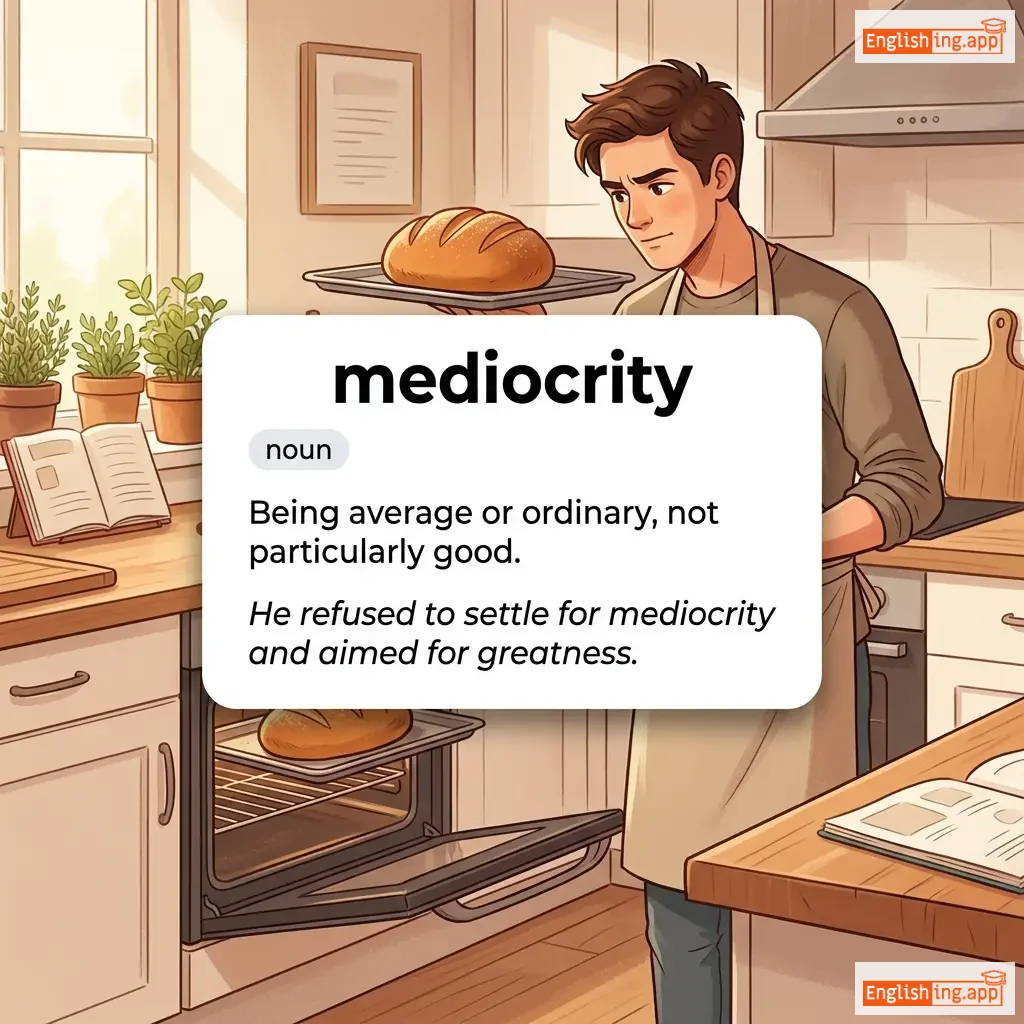
mediocrity definition card — visual illustration of the meaning
noun
ˌmiː.diˈɒk.rə.ti
平凡さ (heibansā)

Being average or ordinary, not particularly good.

"He refused to settle for mediocrity and aimed for greatness."

"彼は平凡さに満足せず、偉大さを目指して努力した。" (Kare wa heibansā ni manzoku sezu, idaisa o mezashite doryoku shita.)
noun
/ˌmɛdɪˈteɪʃən/
瞑想 (meisou)

The practice of focusing the mind to achieve calmness, clarity, or spiritual growth.

"She practices meditation every morning to start her day peacefully."

"彼女は毎朝瞑想を実践して、穏やかな一日を始めます。" (Kanojo wa mai asa meisou o jissen shite, odayakana ichinichi o hajimemasu.)
noun
/ˈmiːdiəm/
メディア (media)

A means or channel of communication, expression, or artistic work.

"Television is a powerful medium for spreading information."

"テレビは情報を広めるための強力なメディアです。" (Terebi wa jōhō o hiromeru tame no kyōryokuna media desu.)
noun
/ˈmɛdli/
メドレー (medorē)

A mixture of different things, especially musical tunes combined together.

"The band played a medley of popular songs."

"バンドは人気のある曲のメドレーを演奏しました。" (Band wa ninki no aru kyoku no medorē o ensō shimashita.)
adjective
/miːk/
おとなしい (otonashii)

Quiet, gentle, and submissive in nature.

"Despite his strength, he remained meek and humble."

"力強さにもかかわらず、彼はおとなしく謙虚でした。" (Chikaradzuyosa ni mo kakawarazu, kare wa otonashiku kenkyō deshita.)
adverb
/ˈmiːk.li/
従順に; おとなしく (jūjun ni; otonashiku)

in a quiet, gentle way; without resistance or protest

"He meekly accepted the criticism without arguing."

"彼は反論せずに従順に批判を受け入れた。" (Kare wa hanron sezu ni jūjun ni hihan o ukeireta.)
noun
/ˈmiːknəs/
謙遜 (kenson)

The quality of being quiet, gentle, and submissive

"His meekness was often mistaken for weakness by his colleagues."

"彼の謙遜はしばしば同僚に弱さだと誤解された。" (Kare no kenson wa shibashiba dōryō ni yowasa da to gokai sareta.)
meet definition card — visual illustration of the meaning
verb
/miːt/
会う (au)

To come into the presence of someone by chance or arrangement.

"I will meet you at the cafe tomorrow."

"私は明日カフェであなたに会います。" (Watashi wa ashita kafe de anata ni aimasu.)
noun
/ˈmiːtɪŋ/
会議 (kaigi)

A gathering of people for discussion or decision-making.

"The board had a meeting to finalize the budget."
"取締役会は予算を最終決定するために会議を開きました。" (Torishimariyakukai wa yosan o saishuu kettei suru tame ni kaigi o hirakimashita.)
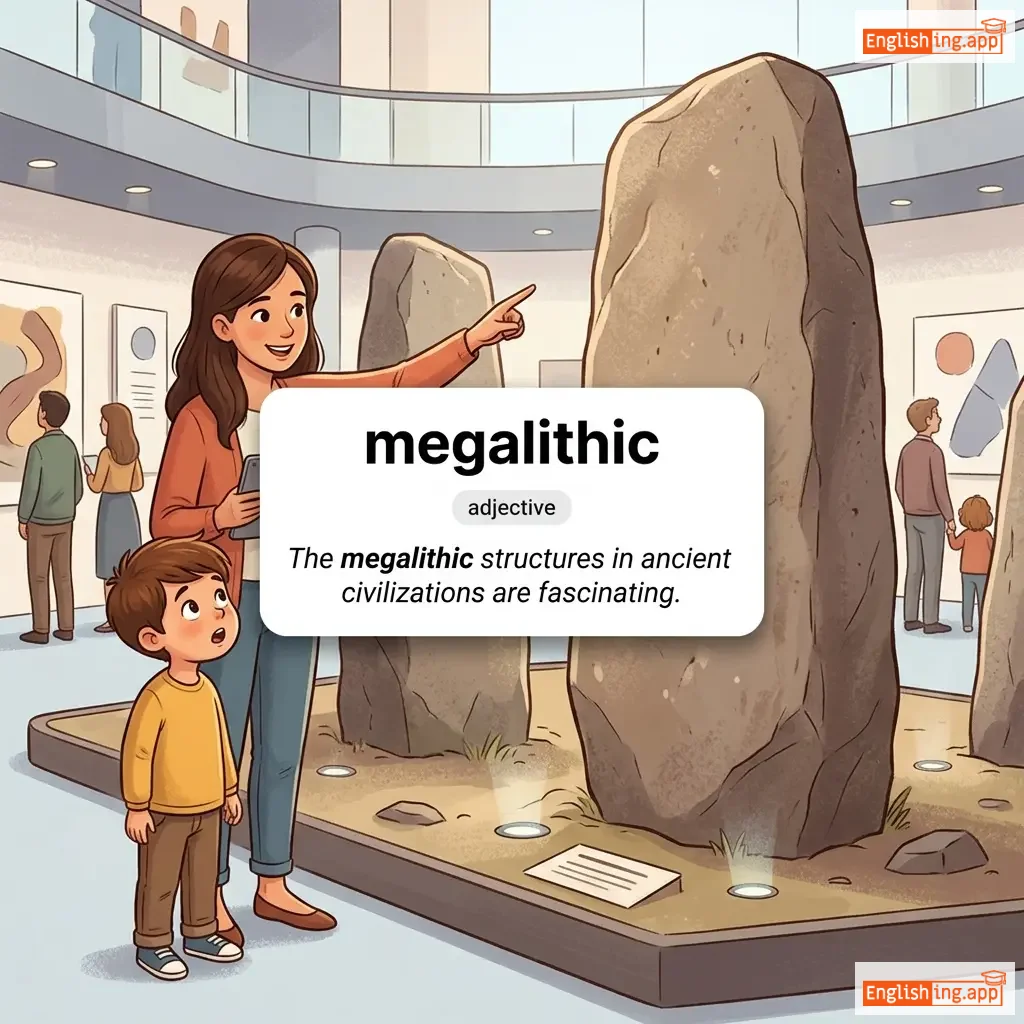
megalithic definition card — visual illustration of the meaning
adjective
ˌmɛɡəˈlɪθɪk
巨石 (kyoseki)

Relating to or denoting prehistoric monuments made of or containing large stones.

"The megalithic structures in ancient civilizations are fascinating."
"古代文明の巨石構造物は魅力的です。" (Kodai bunmei no kyoseki kouzou-butsu wa miryokuteki desu.)
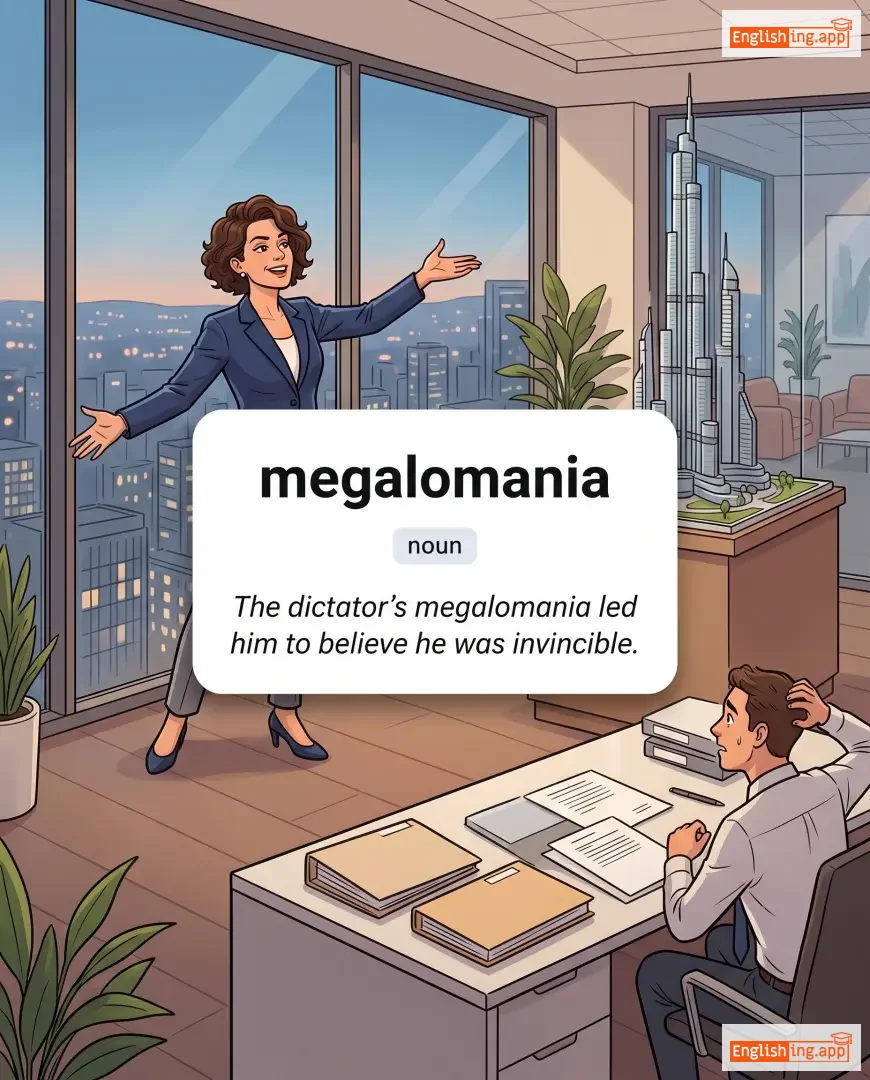
megalomania definition card — visual illustration of the meaning
noun
/ˌmɛɡələˈmeɪniə/
権力、富、または全能の幻想 (kenryoku, tomi, matawa zennou no gensou)

A condition characterized by delusional fantasies of power, wealth, or omnipotence.

"The dictator’s megalomania led him to believe he was invincible."

"独裁者のメガロマニアは彼に自分が無敵だと信じさせました。" (Dokusai-sha no megaromania wa kare ni jibun ga muteki da to shinjisasemashita.)
adjective
/ˌmel.ənˈkɒl.ɪk/
悲しくて思慮深い; 悲しみを表現するまたは感じる (merankorikku)

sad and thoughtful; feeling or expressing sadness

"The melancholic music made everyone feel sad."

"メランコリックな音楽は、誰もが悲しく感じさせました。" (Merankorikku na ongaku wa, daremo ga kanashiku kanjisasemashita)
noun
/ˈmɛlənˌkɒli/
憂鬱 (yuuatsu)

A deep, persistent sadness or gloom.

"She felt a deep melancholy after hearing the tragic news."

"彼女は悲劇的なニュースを聞いた後、深い憂鬱を感じた。" (Kanojo wa higeki-teki na nyuusu wo kiita ato, fukai yuuatsu wo kanjita.)
noun
/meɪˈlɑːnʒ/
混合 (kongo)

A mixture of different things or styles.

"The festival offered a melange of music, food, and art."

"そのフェスティバルでは、音楽、食べ物、アートの混合が提供されました。" (Sono fesutibaru de wa, ongaku, tabemono, āto no kongou ga teikyō saremashita.)
noun
/ˈmeɪleɪ/
騒乱の戦い (souran no tatakai)

A noisy, confused fight or crowd situation.

"A melee broke out during the football match."

"サッカーの試合中に騒乱の戦いが起きました。" (Sakkaa no shiaichuu ni souran no tatakai ga okimashita.)
verb
/ˈmiːliəˌreɪt/
改善する (kaizen suru)

To make something better or improve a condition.

"The new policies aim to meliorate the living conditions of the poor."

"新しい政策は貧しい人々の生活条件を改善することを目指しています。" (Atarashī seisaku wa mazushī hitobito no seikatsu jōken o kaizen suru koto o mezashiteimasu.)
noun
/ˈmiːliərɪzəm/
改良主義 (kairyō shugi)

The belief that the world tends to improve and that humans can aid its betterment.

"Her philosophy of meliorism kept her hopeful during difficult times."

"彼女の改良主義的な哲学は、困難な時期に彼女を希望に満ちた状態に保ちました。" (kanojo no kairyō shugi-teki na tetsugaku wa, kon'nan'na jiki ni kanojo o kibō ni michita jōtai ni tamochimashita.)
adjective
/məˈlɪfluəs/
甘美な (kanbina)

Sweet or musical; pleasant to hear.

"The singer’s mellifluous voice enchanted the audience."

"歌手の甘美な声が観客を魅了した。" (Kashu no kanbina koe ga kankyaku o miryō shita.)
adjective
/ˈmel.əʊ/
柔らかくて心地よい; 落ち着いていて優しい (merou)

soft and pleasant; relaxed and gentle

"The mellow evening light created a peaceful atmosphere."

"穏やかな夕方の光が平和な雰囲気を作り出しました。" (odayakana yūgata no hikari ga heiwa na fun'iki o tsukuridashimashita.)
adjective
/məˈloʊdiəs/
メロディアス (merodiasu)

Having a pleasant tune; tuneful.

"She played a melodious tune on the piano."

"彼女はピアノでメロディアスな曲を演奏した。" (Kanojo wa piano de merodiasu na kyoku o ensō shita.)
noun
/ˈmɛləˌdrɑːmə/
誇張したドラマ (kochou shita dorama)

A dramatic piece with exaggerated characters and exciting events intended to appeal to the emotions.

"The movie was criticized for its excessive melodrama."

"その映画は過剰なメロドラマで批判されました。" (Sono eiga wa kajou na merodorama de hihan saremashita.)
noun
/ˈmɛlədi/
メロディー (merodii)

A sequence of musical notes that are musically satisfying; a tune.

"The melody of the song stayed in my mind all day."
"その歌のメロディーは一日中私の頭の中に残っていた。" (Sono uta no merodii wa ichinichijuu watashi no atama no naka ni nokotteita.)
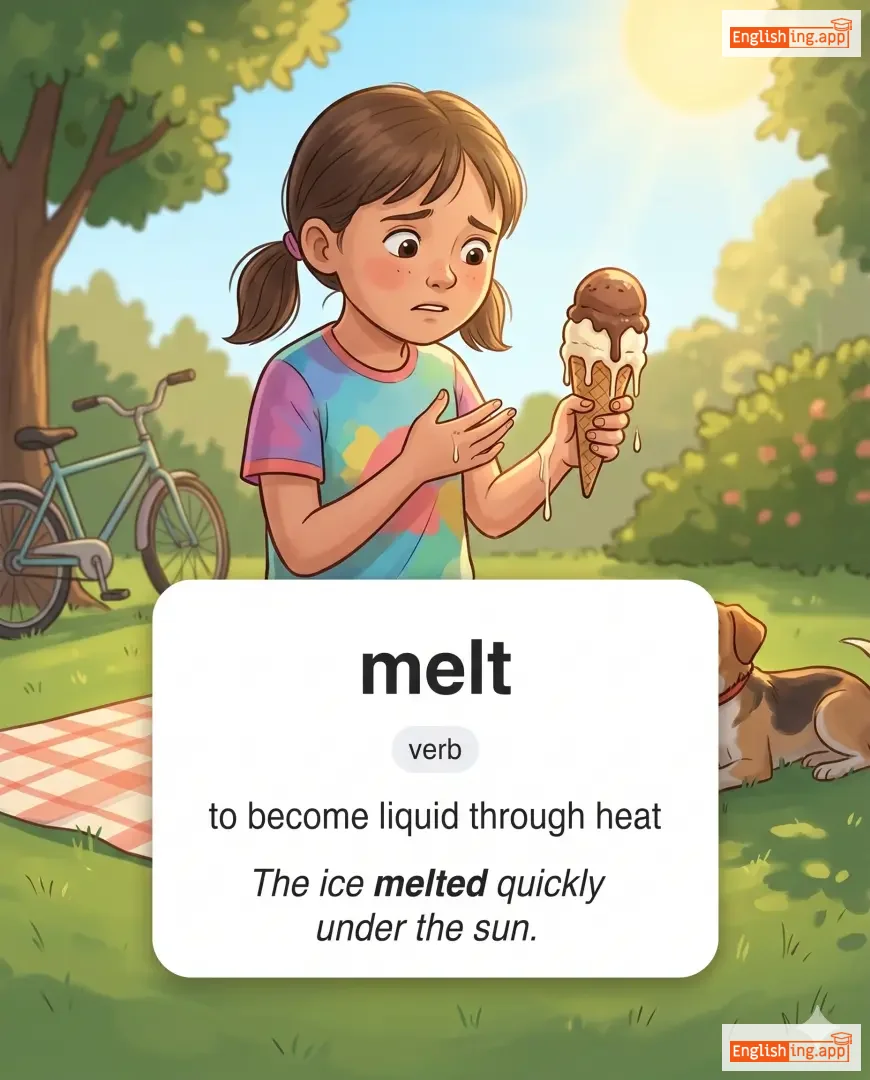
melt definition card — visual illustration of the meaning
verb
/mɛlt/
溶ける (tokeru)

to become liquid through heat

"The ice melted quickly under the sun."

"氷は太陽の下で素早く溶けました。" (Kōri wa taiyō no shita de subayaku tokemashita.)
verb, noun, adjective
/ˈmeltɪŋ/
溶けること (tokeru koto)

the process of changing from solid to liquid due to heat; becoming softer or less rigid; emotionally moving or tender

"The ice is melting quickly under the hot sun."

"氷は強い日差しで早く溶けています。" (Kori wa tsuyoi hizashi de hayaku tokete imasu)
noun
/ˈmembər/
メンバー (menbā)

a person or thing that belongs to a group or organization

"She is a member of the local sports club."

"彼女は地元のスポーツクラブのメンバーです。" (Kanojo wa jimoto no supōtsu kurabu no menbā desu.)
members definition card — visual illustration of the meaning
noun
ˈmem.bərz
メンバー (menbā)

A person, animal, or plant belonging to a particular group; an individual belonging to a group such as a society or team.

"Members collaborate to finalize recruitment decisions."

"メンバーは採用決定を完了するために協力します。" (Menbā wa saiyō kettei o kanryō suru tame ni kyōryoku shimasu.)
membership definition card — visual illustration of the meaning
noun
/ˈmɛmbərʃɪp/
会員資格 (kaiinshikaku)

The state of being a member of a group, organization, or club.

"Her membership in the gym expires next month."

"ジムの会員資格は来月終了します。" (Jimu no kaiinshikaku wa raigetsu shūryō shimasu.)
noun
/ˈmɛm.breɪn/
(maku)

A thin layer of tissue or material that covers, separates, or connects structures.

"The cell membrane controls the movement of substances in and out of the cell."

"細胞膜は物質の細胞内外の移動を制御します。" (Saibōmaku wa busshitsu no saibōnaigai no idō o seigyō shimasu.)
noun
/məˈmɛn.toʊ/
記念品 (kinenhin)

An object kept as a reminder of a person, place, or event.

"She kept the ticket as a memento of their first concert together."

"彼女は最初のコンサートの記念品としてチケットを保存しました。" (Kanojo wa saisho no konsaato no kinenhin toshite chiketto o hozon shimashita.)
📝

memo

noun
/ˈmɛmoʊ/

a written message, typically in a business setting

"He wrote a memo to the staff about the upcoming meeting."

noun
/ˈmɛm.wɑːr/
回想録 (kaisōroku)

A historical account or autobiography written from personal experience.

"The author’s memoir details her journey through hardship and success."

"著者の回想録は、彼女の苦難と成功の旅路を詳述しています。" (Chosha no kaisōroku wa, kanojo no kunan to seikō no tabiji o shōjutsu shiteimasu.)
memorable definition card — visual illustration of the meaning
adjective
/ˈmɛm.ər.ə.bəl/
記憶に残る (kioku ni nokoru)

Worth remembering because it is special or unusual.

"Their wedding was one of the most memorable days of their lives."
"彼らの結婚式は彼らの人生で最も記憶に残る日々の一つでした。" (Karera no kekkonshiki wa karera no jinsei de mottomo kioku ni nokoru hibi no hitotsu deshita.)
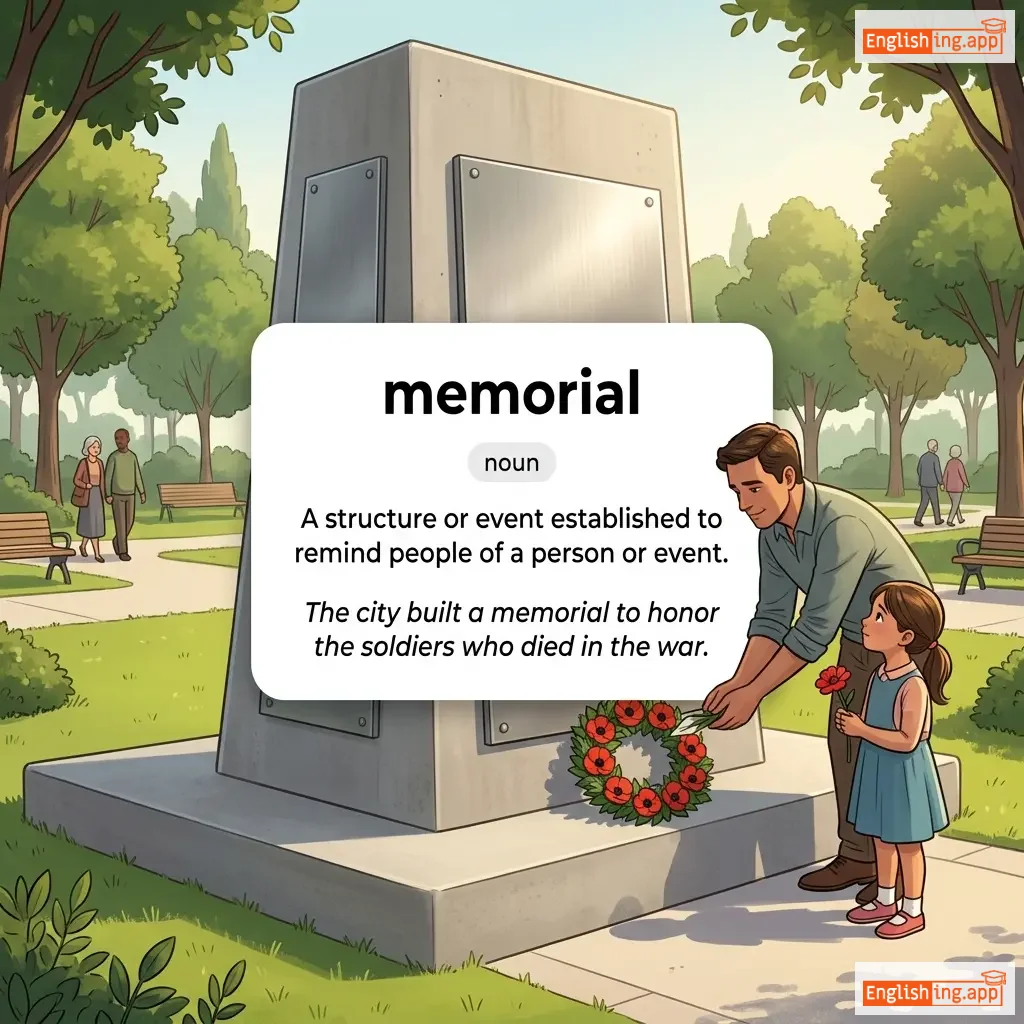
memorial definition card — visual illustration of the meaning
noun
/məˈmɔːr.i.əl/
記念碑 (kinenhi)

A structure or event established to remind people of a person or event.

"The city built a memorial to honor the soldiers who died in the war."

"その都市は戦争で亡くなった兵士たちを称えるために記念碑を建てました。" (Sono toshi wa sensō de nakunatta heishi-tachi o tataeru tame ni kinenhi o tatemashita.)
verb
/məˈmɔːriəlaɪz/
記念する (kinen suru)

to preserve the memory of a person or event, often through a ceremony, monument, or record

"The city decided to memorialize the hero with a statue in the central square."

"その都市は中央広場に英雄の像を立てて英雄を記念することに決めました。" (Sono toshi wa chuou hiroba ni eiyuu no zou o tatete eiyuu o kinen suru koto ni kimemashita.)
memorization definition card — visual illustration of the meaning
noun
ˌmɛməraɪˈzeɪʃən
暗記 (anki)

The process of learning or committing something to memory

"Memorization of important information is crucial for exams."

"重要な情報の暗記は試験において重要です。" (Jūyōna jōhō no anki wa shiken ni oite jūyō desu.)
memorize definition card — visual illustration of the meaning
verb
/ˈmeməraɪz/
暗記する (anki suru)

to learn something by heart; to commit to memory

"Students need to memorize important formulas for the exam."

"学生は試験のために重要な公式を覚える必要があります。" (Gakusei wa shiken no tame ni jūyōna kōshiki o oboeru hitsuyō ga arimasu.)
noun
/ˈmɛməri/
記憶 (kioku)

The faculty of the mind by which information is stored and remembered.

"She has a vivid memory of her childhood home."

"彼女は子供時代の家について鮮明な記憶を持っています。" (Kanojo wa kodomojidai no ie ni tsuite senmei na kioku o motteimasu.)
noun/verb
/ˈmɛnəs/
幸福 (kōfuku)

a person or thing that is likely to cause harm; to threaten in a hostile manner

"The hurricane became a menace to the coastal towns."

"彼女は賞を受け取ったとき、幸福を隠すことができませんでした。" (kanojo wa shō o uketotta toki, kōfuku o kakusu koto ga dekimasen deshita.)
noun
/məˈnæʒəri/
野生動物のコレクション (yasei dōbutsu no korekushon)

a collection of wild animals kept for exhibition; a diverse or strange group of people or things

"The circus had a menagerie of exotic animals."

"サーカスには異国的な動物のコレクションがありました。" (Sākasu ni wa ikokuteki na dōbutsu no korekushon ga arimashita.)
verb
/mɛnd/
修理する (shūri suru)

To repair something that is broken or damaged.

"She learned to mend her torn dress."

"彼女は裂けたドレスを修理することを学びました。" (Kanojo wa saketa doresu o shūri suru koto o manabimashita.)
mendacious definition card — visual illustration of the meaning
adjective
/mɛnˈdeɪʃəs/
虚偽の (kyogi no)

not telling the truth; lying

"The politician was known for his mendacious statements."

"その政治家は嘘の発言で知られていました。" (Sono seijika wa uso no hatsugen de shirarete imashita.)
noun
/mɛnˈdæsəti/
虚偽 (kyogi)

the tendency to be untruthful; dishonesty

"The journalist exposed the mendacity of the officials."

"ジャーナリストは役人たちの虚偽を暴露しました。" (Jānarisuto wa yakunin-tachi no kyogi o bakuro shimashita.)
noun
/ˈmɛndɪkənt/
乞食 (koshiki)

a beggar; a person who lives by asking for alms

"The mendicant asked for food at the monastery gate."

"乞食は修道院の門で食べ物を求めた。" (Koshiki wa shūdōin no mon de tabemono o motometa.)
noun
/ˈmɪstəs/
ミスタス属 (misutasu zoku)

a genus of catfish found in Asia, commonly known as bagrid catfish

"The mystus fish is commonly found in rivers and streams of South Asia."

"ミスタス属の魚は南アジアの川や小川によく見られます。" (misutasu zoku no sakana wa minami ajia no kawa ya ogawa ni yoku mirarerumasu)
menial definition card — visual illustration of the meaning
adjective
/ˈmiːniəl/
つまらない仕事 (tsumaranai shigoto)

lowly and sometimes degrading; related to unskilled or routine tasks

"He worked long hours doing menial tasks in the factory."

"彼は工場でつまらない仕事を長時間行っていました。" (Kare wa kōjō de tsumaranai shigoto o chōjikan okonatte imashita.)
adjective
/ˈmɛntəl/
精神的 (seishinteki)

Relating to the mind, thoughts, or intellectual processes.

"He needs to take a break for his mental health."

"彼は精神的な健康のために休憩が必要です。" (kare wa seishinteki na kenkō no tame ni kyūkei ga hitsuyō desu.)
mental focus definition card — visual illustration of the meaning
noun
ˈmɛn.təl ˈfoʊ.kəs
精神的集中 (seishinteki shuuchuu)

The ability to concentrate deeply on a specific task or thought; mental concentration and attention.

"Meditation improves mental focus and cognitive performance."

"瞑想は精神的集中と認知能力の向上に役立ちます。" (Meisou wa seishinteki shuuchuu to ninchi nouryoku no koujou ni yakudachimasu.)
noun
/mɛnˈtæləti/
メンタリティ (mentariti)

a particular way of thinking; mindset or outlook

"Her positive mentality helped her overcome many challenges."

"彼女の前向きなメンタリティが多くの挑戦を乗り越える助けとなった。" (Kanojo no maemuki na mentariti ga ōku no chōsen o norikoeru tasuke to natta.)
adverb
/ˈmɛntəli/
精神的に (seishinteki ni)

in a way that relates to the mind or intellect rather than the body

"She felt mentally exhausted after the long exam."

"彼女は長い試験の後で精神的に疲れていると感じていました。" (Kanojo wa nagai shiken no ato de seishinteki ni tsukarete iru to kanjite imashita.)
verb
/ˈmɛnʃən/
言及する (genkyu suru)

To refer to something briefly without giving much detail.

"He mentioned her name during the meeting."

"彼は会議で彼女の名前に言及した。" (Kare wa kaigi de kanojo no namae ni genkyu shita.)