語彙集

英単語辞書 | 単語の意味、定義、例文

🐕

groom

verb
/ɡruːm/

to clean, brush, and care for the appearance of someone or something

"She spends hours grooming her dog every week."

noun
/ɡruːv/
溝 / リズム (kō / rizumu)

a long narrow cut or depression, or a rhythmic pattern in music

"The DJ kept the crowd dancing to the groove."

"DJは群衆をグルーヴに合わせて踊らせた。" (DJ wa gunshū o gurūvu ni awasete odoraseta.)
adjective
/ɡroʊs/
不快な / 下品な (fukai na / gehin na)

extremely unpleasant or disgusting; total before deductions

"He thought the food looked gross, but it tasted fine."

"彼は食べ物が不快に見えると思ったが、味は良かった。" (Kare wa tabemono ga fukai ni mieru to omotta ga, aji wa yokatta.)
adjective
/ɡroʊˈtɛsk/

comically or repulsively ugly or distorted

"The sculpture was so grotesque that it frightened the children."

noun
/ˈɡrɑːtoʊ/
洞窟 (dōkutsu)

a small picturesque cave, often artificial

"Tourists visited the grotto hidden behind the waterfall."

"観光客は滝の後ろに隠れた洞窟を訪れました。" (Kankōkyaku wa taki no ushiro ni kakureta dōkutsu o otozuremashita.)
noun/verb
/ɡraʊtʃ/
不機嫌な人 (fukigen na hito)

a person who complains a lot or to complain in a grumpy way

"He is such a grouch in the morning before coffee."

"彼は朝、コーヒーの前にいつもグラウチだ。" (Kare wa asa, kōhī no mae ni itsumo gurauchi da.)
noun/verb
/ɡraʊnd/
地面 (jimen)

the solid surface of the earth; to prohibit someone (often a child) from going out

"The children played on the ground near the house."

"子供たちは家の近くの地面で遊びました。" (Kodomotachi wa ie no chikaku no jimen de asobimashita.)
noun
/ˈɡraʊnd kruː/
グラウンドクルー (guraundo kurū)

a team of people who maintain and service aircraft on the ground

"The ground crew prepared the plane for takeoff."

"グラウンドクルーは飛行機を離陸の準備をしました。" (Guraundo kurū wa hikōki o ririku no junbi o shimashita.)
noun
/ˈɡraʊnd flɔːr/
1階 (ikkai)

the floor of a building at ground level; the starting level of an organization or activity

"The grocery shop is located on the ground floor of the building."

"食料品店は1階にあります。" (shokuryohinten wa ikkai ni arimasu)
groundbreaking definition card — visual illustration of the meaning
adjective
ˈɡraʊndˌbreɪ.kɪŋ
画期的 (kakki-teki)

Innovative and pioneering; introducing new ideas or methods that change conventional approaches.

"The company introduced a groundbreaking technology."
"その会社は画期的な技術を導入しました。" (Sono kaisha wa kakki-teki na gijutsu o dōnyū shimashita.)
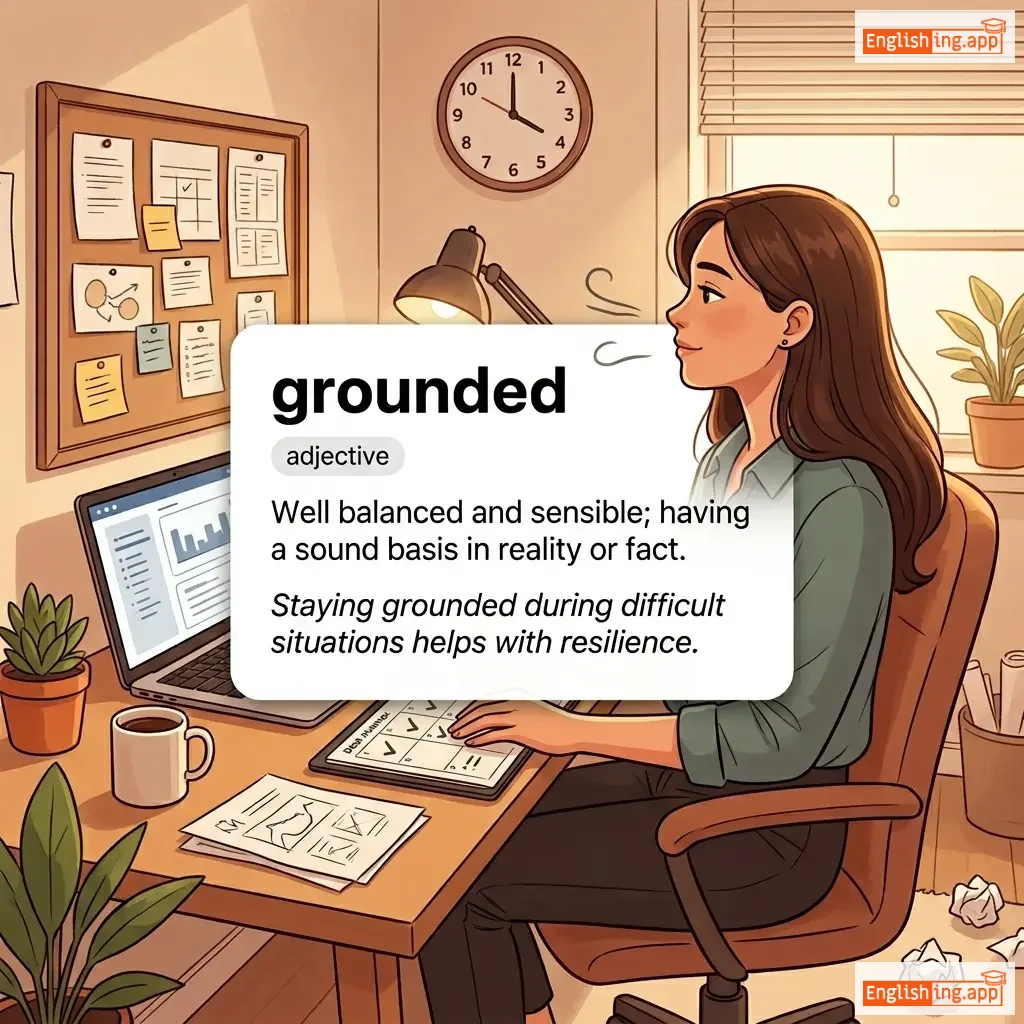
grounded definition card — visual illustration of the meaning
adjective
/ˈɡraʊndɪd/
地に足のついた (chi ni ashi no tsuita)

Well balanced and sensible; having a sound basis in reality or fact.

"Staying grounded during difficult situations helps with resilience."

"困難な状況でも地に足のついた態度を保つことがレジリエンスの向上に役立ちます。" (Kon'nan na jōkyō demo chi ni ashi no tsuita taido o tamotsu koto ga rejiriensu no kōjō ni yakudachimasu.)
adjective
/ˈɡraʊnd.ləs/
根拠がない; 理由がない (konkyo ga nai; riyuu ga nai)

without foundation or justification; baseless

"His accusations against her were completely groundless."

"彼の彼女に対する非難は完全に根拠がなかった。" (Kare no kanojo ni taisuru hinan wa kanzen ni konkyo ga nakatta.)
noun, verb
/ɡruːp/
グループ (guru-pu)

A number of people or things considered together; to arrange things or people into categories.

"The students formed a study group."
"学生たちは勉強グループを作った。" (Gakuseitachi wa benkyou guru-pu o tsukutta.)
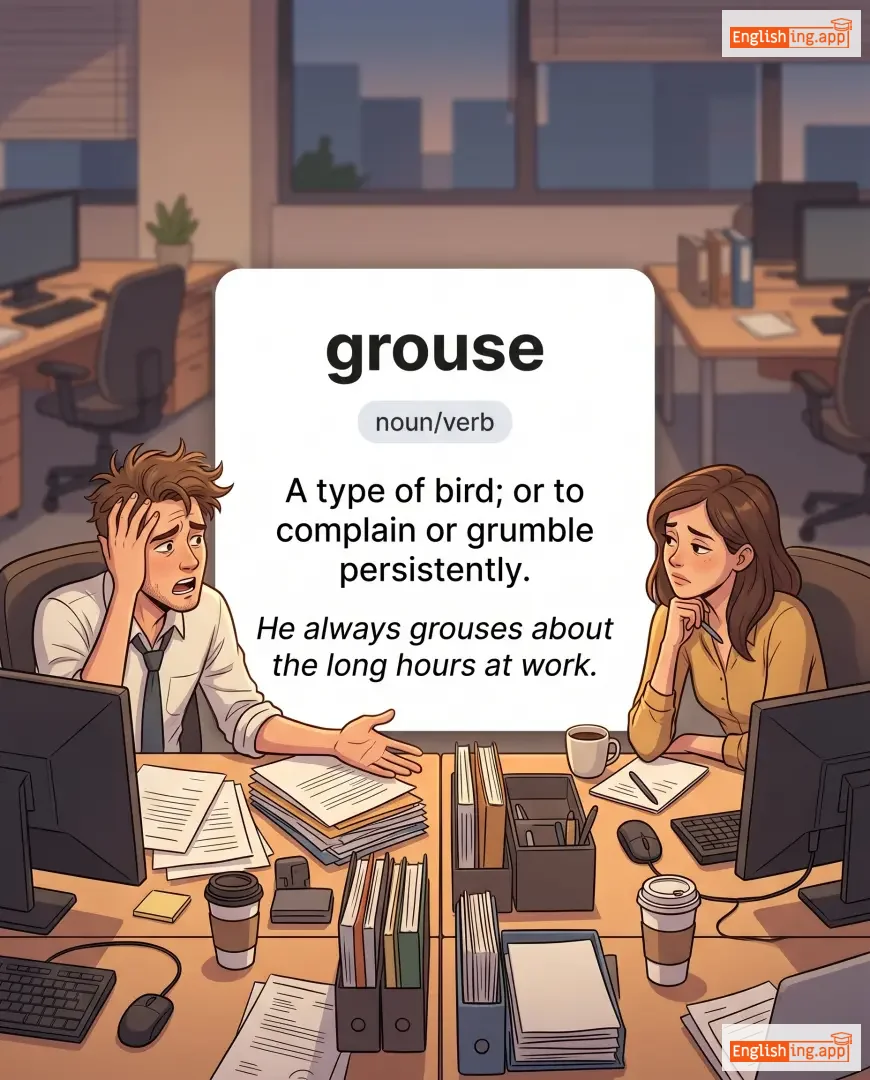
grouse definition card — visual illustration of the meaning
noun/verb
/ɡraʊs/
不平を言う / 鳥の一種 (fuhē o iu / tori no isshu)

A type of bird; or to complain or grumble persistently.

"He always grouses about the long hours at work."

"彼はいつも長時間働くことに不平を言います。" (Kare wa itsumo chōjikan hataraku koto ni fuhē o iimasu.)
noun
/ɡroʊv/
木立 / 小さな果樹園 (kodachi / chiisana kaju-en)

A small group of trees growing close together.

"They walked through the orange grove."
"彼らはオレンジの林を歩いていました。" (Karera wa orenji no hayashi o aruiteimashita.)
verb
/ˈɡrʌvəl/

To act in an excessively humble or submissive way to gain favor.

"He groveled before his boss to avoid punishment."

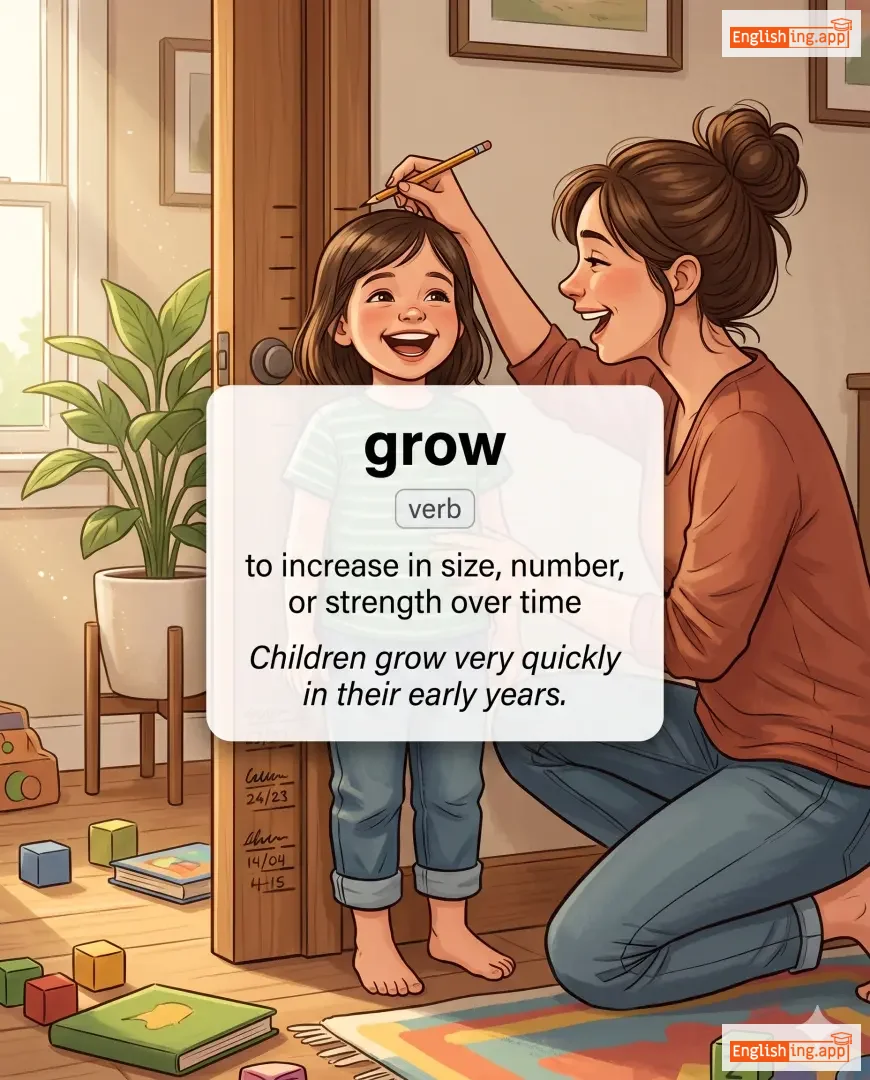
grow definition card — visual illustration of the meaning
verb
/ɡroʊ/
成長する (seichou suru)

to increase in size, number, or strength over time

"Children grow very quickly in their early years."

"子供たちは非常に早く成長します。" (Kodomo-tachi wa hijou ni hayaku seichou shimasu.)
verb
/ˈɡroʊ.ɪŋ/
増加している (zōkashite iru)

continuously increasing or developing

"There is a growing demand for renewable energy."

"再生可能エネルギーへの需要が増加しています。" (Saisei kanō enerugī e no juyō ga zōka shiteimasu.)
verb/noun
/ɡraʊl/
うなり声 (unari koe)

To make a low, guttural sound, often in anger (by animals or humans).

"The dog growled at the stranger."

"犬は見知らぬ人にうなった。" (Inu wa mishiranu hito ni unatta.)
Growth definition card — visual illustration of the meaning
noun
/ɡroʊθ/
成長 (seichou)

the process of increasing in size, number, or importance

"The company has shown remarkable growth in the last year."

"その会社は昨年、顕著な成長を示しました。" (Sono kaisha wa sakunen, kencho na seichou wo shimashita.)
growth mindset definition card — visual illustration of the meaning
noun
/ɡroʊθ ˈmaɪnd.sɛt/
成長マインドセット (seichō maindo setto)

A mindset that believes in learning, developing, and improving skills.

"A growth mindset helps individuals embrace challenges."

"成長マインドセットは人々が挑戦に立ち向かうのを助けます。" (Seichō maindo setto wa hitobito ga chōsen ni tachimukau no o tasukemasu.)
noun/verb
/ɡrʌdʒ/

A persistent feeling of ill will or resentment from a past insult or injury.

"She still holds a grudge against him for what happened years ago."

adjective
/ˈɡrʌdʒɪŋ/
しぶしぶの (shibushibu no)

Reluctant or unwilling; given or allowed only with hesitation.

"She gave him a grudging smile after the argument."

"口論の後、彼女はしぶしぶ笑顔を見せた。" (Kōron no ato, kanojo wa shibushibu egao wo miseta.)
noun
/ˈɡruːəl/
水またはミルクで穀物を煮て作った薄い液体の食べ物 (mizu matawa miruku de kokumotsu o nite tsukutta usui ekitai no tabemono)

A thin liquid food made by boiling cereal (like oats) in water or milk.

"The poor children were given a bowl of gruel each morning."

"貧しい子供たちは毎朝、一杯のグルエルをもらいました。" (Mazushī kodomotachi wa mai asa, ippai no gurueru o moraimashita.)
adjective
/ˈɡruːəlɪŋ/
過酷な (kakoku na)

Extremely tiring and demanding.

"The athletes faced a grueling training session."

"アスリートたちは過酷なトレーニングセッションに直面しました。" (Asurīto-tachi wa kakoku na torēningu sesshon ni chokumen shimashita.)
adjective
/ˈɡruːsəm/
恐ろしい (osoroshī)

Causing horror or disgust.

"The police discovered a gruesome crime scene."

"警察は恐ろしい犯罪現場を発見しました。" (Keisatsu wa osoroshī hanzai genba o hakken shimashita.)
adjective
/ɡrʌf/
粗野な (arogana)

Rough or stern in manner, speech, or voice.

"Despite his gruff manner, he was very kind-hearted."

"彼の粗野な態度にもかかわらず、彼はとても優しい心を持っていた。" (Kare no arōna taido ni mo kakawarazu, kare wa totemo yasashī kokoro o motte ita.)
verb
/ˈɡrʌmbəl/
ぶつぶつ言う (butsubutsu iu)

to complain quietly or in a low voice

"She often grumbles about the traffic."

"彼女はよく交通渋滞についてぶつぶつ言います。" (Kanojo wa yoku kōtsū jūtai ni tsuite butsubutsu iimasu.)
adjective
/ˈɡrʌm.pi/
不機嫌な; イライラした; (fukigen na; iraira shita;)

bad-tempered and irritable; easily annoyed

"He was grumpy all morning because he didn't sleep well."
"彼は朝からずっと不機嫌でした、よく眠れなかったからです。" (Kare wa asa kara zutto fukigen deshita, yoku nemurenakatta kara desu.)
🐗

grunt

verb
/ɡrʌnt/

to make a low, rough sound, often when exerting effort or expressing annoyance

"He grunted as he lifted the heavy box."

noun/verb
/ˌɡærənˈtiː/

a formal promise or assurance, especially about the quality or durability of a product

"The company guarantees a refund if the product is faulty."

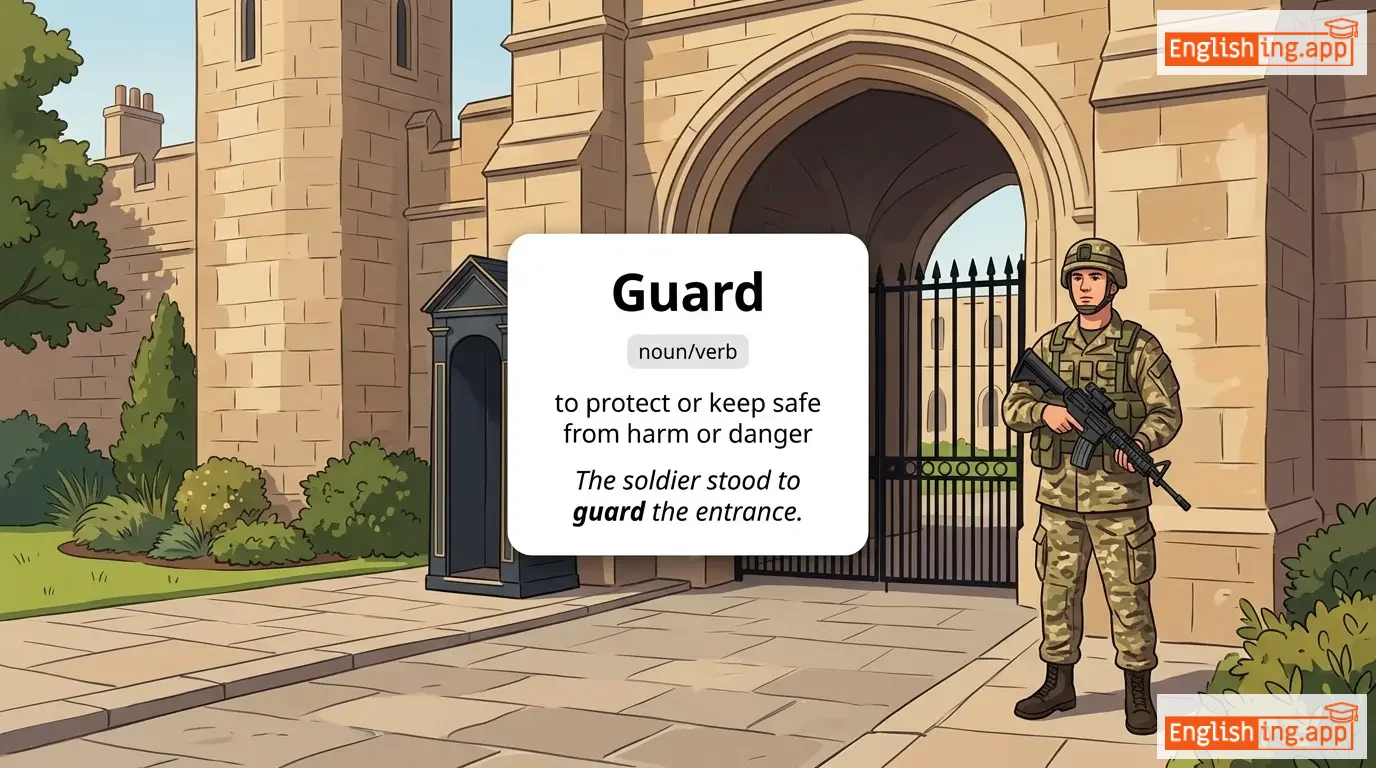
Guard definition card — visual illustration of the meaning
noun/verb
/ɡɑːrd/
警備員 / 守る (keibiin / mamoru)

to protect or keep safe from harm or danger

"The soldier stood to guard the entrance."

"兵士は入り口を守るために立っていました。" (Heishi wa iriguchi o mamoru tame ni tatte imashita.)
adjective
/ˈɡɑːrdɪd/
慎重 (shinchou)

Cautious and careful in speech or action, often to avoid giving too much away.

"He gave a guarded reply to the journalist."

"彼はジャーナリストに慎重な返答をした。" (Kare wa jaanarisuto ni shinchou na hentou o shita.)
👨‍👩‍👧‍👦

Guardian (ガーディアン)

noun
/ˈɡɑːr.di.ən/
守護者; 後見人 (shugosha; kōkennin)

a defender, protector, or keeper; a person legally responsible for the care of someone unable to manage their own affairs

"After her parents died, her uncle became her legal guardian and took care of her."

"両親が亡くなった後、彼女の叔父は彼女の法的な後見人となり、彼女の世話をしました。" (Ryōshin ga nakunatta ato, kanojo no oji wa kanojo no hōteki na kōkennin to nari, kanojo no sewa o shimashita.)
noun
/ˈɡwɑːvə/
グアバ (guaba)

a tropical fruit with sweet pink or white flesh and small seeds

"I love eating fresh guava from the tree in our garden."

"私は庭の木から新鮮なグアバを食べるのが大好きです。" (Watashi wa niwa no ki kara shinsemana guaba wo taberu no ga daisuki desu)
noun
/ˈɡɜːrn.zi/
セーター (seetā)

a knitted sweater; a type of woolen pullover

"He wore a warm guernsey during the cold winter evening."
"彼は寒い冬の夕方に温かいセーターを着ていた。" (Kare wa samui fuyu no yūgata ni atatakai seetā o kite ita.)
noun
/ɡəˈrɪlə/

a member of a small independent group taking part in irregular fighting, typically against larger forces

"The guerrilla fighters used ambushes to attack enemy positions."

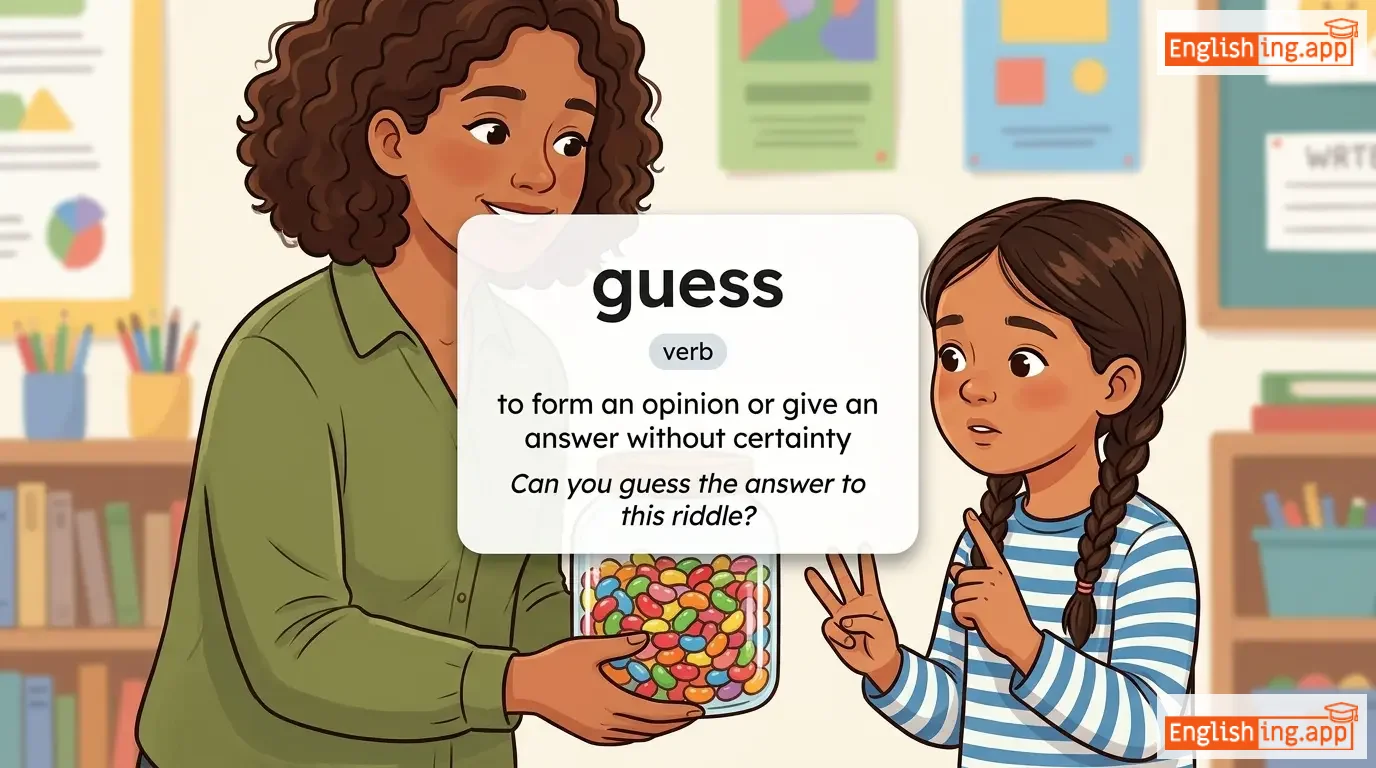
guess definition card — visual illustration of the meaning
verb
/ɡɛs/
推測する (すいそくする)

to form an opinion or give an answer without certainty

"Can you guess the answer to this riddle?"

"この謎の答えを当ててみてください。" (Kono nazo no kotae o atete mite kudasai.)
noun
/ɡɛst/
ゲスト (gesuto)

a person invited to visit or stay in someone's home or attend an event

"We welcomed our guest with a warm smile."

"私たちはゲストを温かい笑顔で迎えました。" (Watashitachi wa gesuto o atatakai egao de mukaemashita.)
noun/verb
/ɡəˈfɔː/
大笑い (ōwarai)

a loud and boisterous laugh

"The audience guffawed at the comedian’s joke."

"観客はコメディアンのジョークに大笑いしました。" (Kankyaku wa komedian no jōku ni ōwarai shimashita.)
noun
/ˈɡaɪdəns/
指導 (shidō)

help or advice that is given to someone about what to do

"She sought her teacher’s guidance before making a decision."
"彼女は決定を下す前に教師に指導を求めた。" (Kanojo wa kettei o kudasu mae ni kyōshi ni shidō o motometa.)
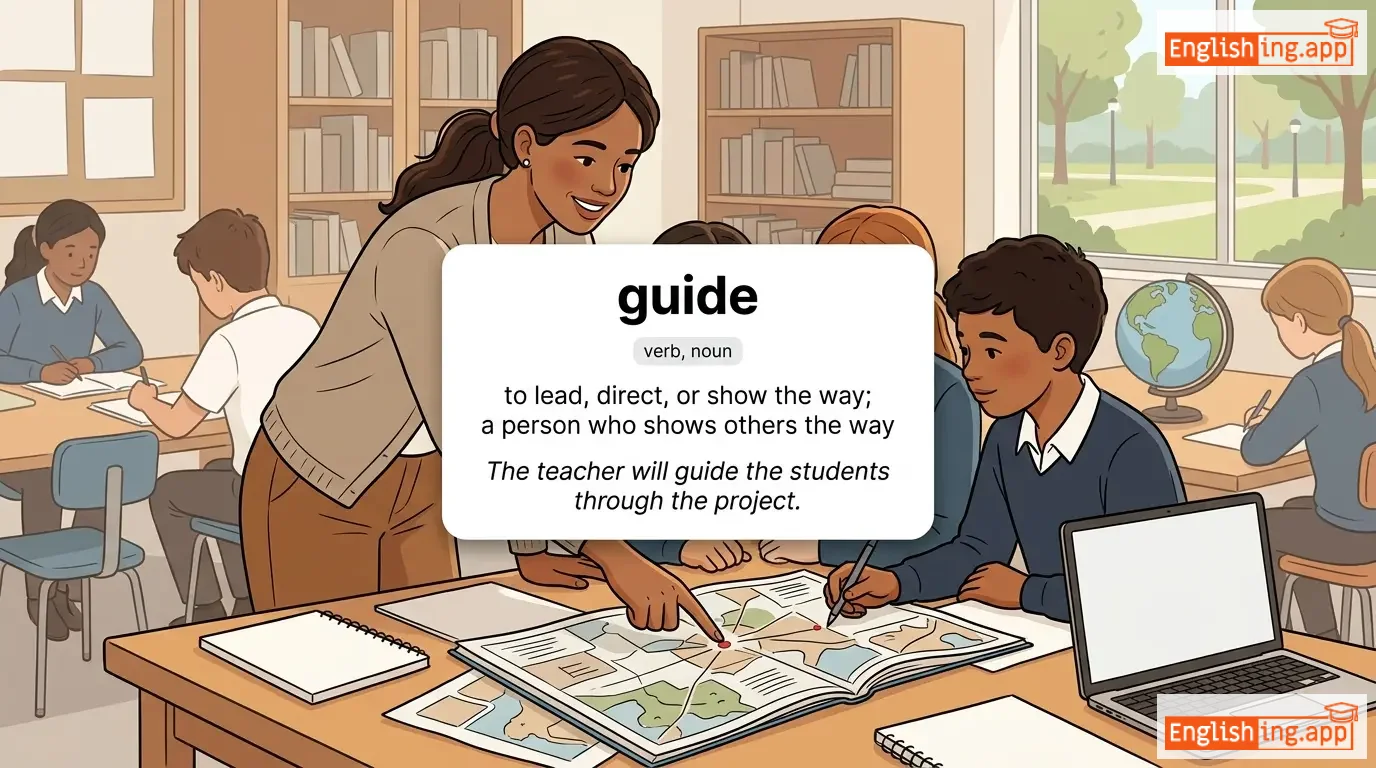
guide definition card — visual illustration of the meaning
verb, noun
/ɡaɪd/
幸福 (kōfuku)

to lead, direct, or show the way; a person who shows others the way

"The teacher will guide the students through the project."

"彼女は賞を受け取ったとき、自分の幸福を隠すことができませんでした。" (Kanojo wa shō o uketotta toki, jibun no kōfuku o kakusu koto ga dekimasen deshita.)
noun
/ˈɡaɪd.laɪn/
ガイドライン (gaidorain)

a rule, instruction, or principle that provides direction

"The company issued new guidelines for employee safety."
"会社は従業員の安全のために新しいガイドラインを発表しました。" (Kaisha wa jūgyōin no anzen no tame ni atarashī gaidorain o happyō shimashita.)
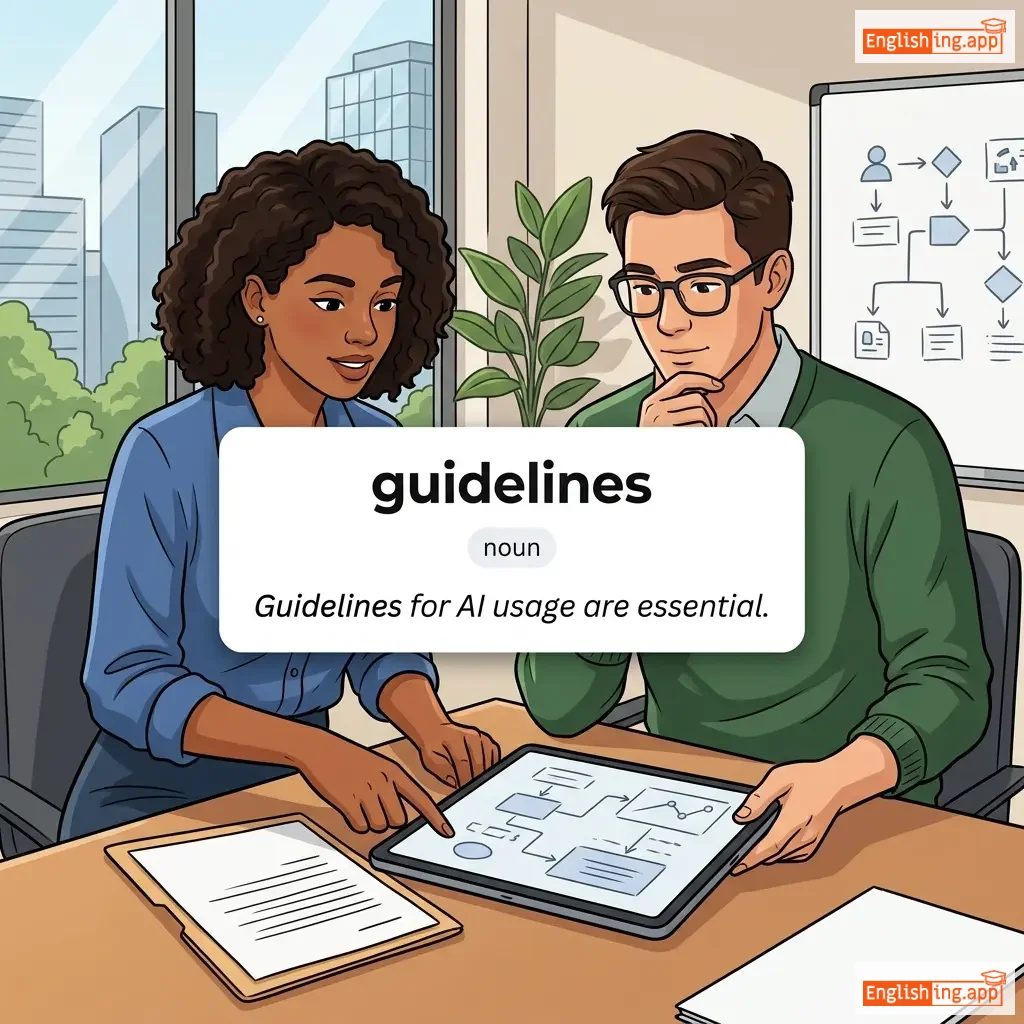
guidelines definition card — visual illustration of the meaning
noun
ˈɡaɪd.laɪnz
ガイドライン (gaidorain)

Rules or instructions that are given by an official organization telling you how to do something

"Guidelines for AI usage are essential."

"AIの使用に関するガイドラインは必須です。" (AI no shiyō ni kansuru gaidorain wa hissu desu.)
noun
/ɡaɪl/
策略 (sakuryaku)

Cleverness or cunning used to achieve a goal, often in a deceptive way

"He used guile to win the negotiation."
"彼は交渉で勝つために策略を使った。" (Kare wa kōshō de katsu tame ni sakuryaku o tsukatta.)
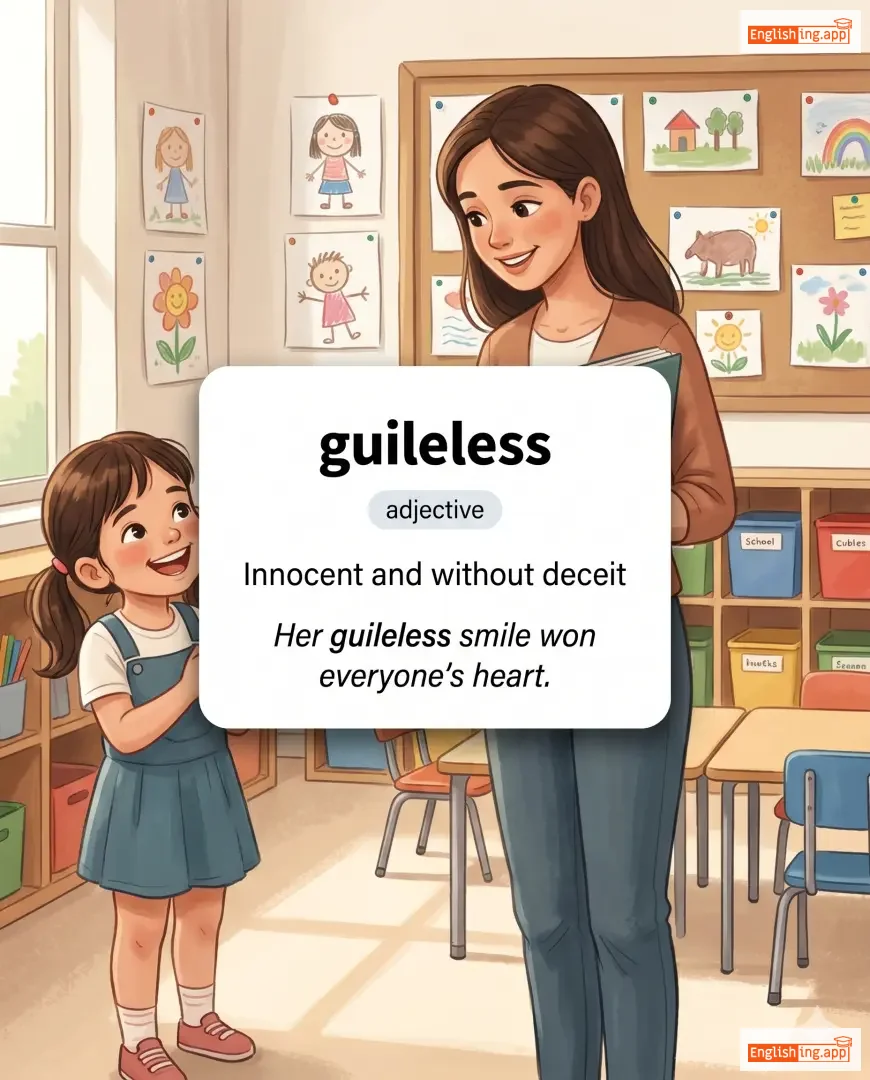
guileless definition card — visual illustration of the meaning
adjective
/ˈɡaɪlləs/
無邪気 (musyaki)

Innocent and without deceit

"Her guileless smile won everyone’s heart."

"彼女の無邪気な笑顔は皆の心をつかみました。" (Kanojo no musyaki na egao wa mina no kokoro o tsukamimashita.)
noun
/ɡɪlt/
罪悪感 (zaiakukan)

A feeling of responsibility or remorse for an offense or wrongdoing

"She felt deep guilt after lying to her friend."

"彼女は友達に嘘をついた後、深い罪悪感を感じた。" (Kanojo wa tomodachi ni uso o tsuita ato, fukai zaiakukan o kanjita.)
adjective
/ˈɡɪl.ti/
有罪の (yūzai no)

responsible for a crime or wrongdoing; feeling shame or regret

"He felt guilty after lying to his friend."

"彼は友達に嘘をついた後、有罪だと感じた。" (Kare wa tomodachi ni uso o tsuita ato, yūzai da to kanjita.)
noun
/ˈɡɪni/
ギニー (古いイギリスの金貨) (gini)

A former British gold coin; also refers to Guinea, a country in West Africa

"The antique coin was worth one guinea."

"アンティークコインは1ギニーの価値がありました。" (Antīku koin wa 1 gini no kachi ga arimashita.)
guise definition card — visual illustration of the meaning
noun
/ɡaɪz/
仮装 (kasou)

An external form, appearance, or manner of presentation, often hiding the true nature

"He approached in the guise of a friend."

"彼は友達の仮装で近づいてきた。" (Kare wa tomodachi no kasou de chikadzuite kita.)