語彙集

英単語辞書 | 単語の意味、定義、例文

noun
/ˈsɜːrkəmstæns/
状況 (joukyou)

a fact or condition connected with an event or action

"She handled the difficult circumstances bravely."

"彼女は困難な状況に勇敢に対処しました。" (Kanojo wa konnan na joukyou ni yuukan ni taisho shimashita.)
noun
/ˈsɜːrkəmstænsɪz/
状況 (joukyou)

the conditions or facts that affect a situation

"She was forced to leave due to financial circumstances."
"彼女は財政的な状況のために去らざるを得なかった。" (Kanojo wa zaiseiteki na joukyou no tame ni sarazaru wo enakatta.)
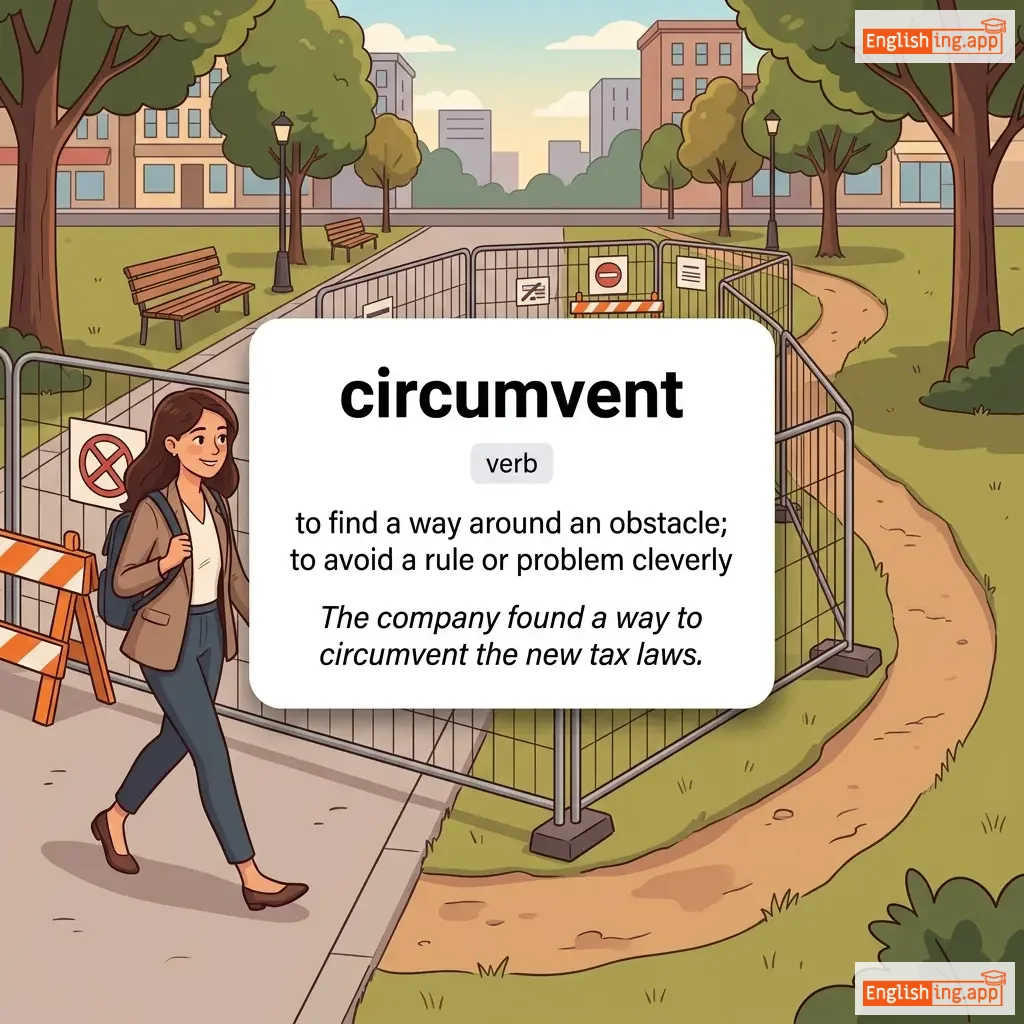
circumvent definition card — visual illustration of the meaning
verb
/ˌsɜːrkəmˈvent/
回避する (kaihi suru)

to find a way around an obstacle; to avoid a rule or problem cleverly

"The company found a way to circumvent the new tax laws."

"その会社は新しい税法を回避する方法を見つけました。" (Sono kaisha wa atarashii zeihou wo kaihi suru houhou wo mitsukemashita.)
noun
/ˈsɪstərn/
貯水槽 (chosuisou)

A tank or container for storing water, usually for household use.

"The old house still had a cistern to collect rainwater."

"古い家にはまだ雨水を集めるための貯水槽がありました。" (Furui ie ni wa mada amemizu o atsumeru tame no chosuisou ga arimashita.)
noun
/ˈsɪtəˌdɛl/
要塞 (yōsai)

A fortress protecting or dominating a city.

"The ancient citadel stood guard over the town for centuries."

"古代の要塞は何世代にもわたり町を守っていた。" (Kodai no yōsai wa nan-sedai ni mo watari machi o mamotte ita.)
noun
/saɪˈteɪʃən/
引用 (in'yō)

a quotation from or reference to a book, paper, or author

"The research paper included a citation from Shakespeare."

"研究論文にはシェイクスピアからの引用が含まれていました。" (Kenkyū ronbun ni wa Sheikusupia kara no in'yō ga fukumarete imashita.)
verb
/saɪt/
引用する (in'yō suru)

To refer to or quote a source as evidence or justification.

"She cited several studies to support her argument."

"彼女は論点をサポートするためにいくつかの研究を引用した。" (Kanojo wa ronten o sapōto suru tame ni ikutsu ka no kenkyū o in'yō shita.)
🧑‍🤝‍🧑

citizen (シティズン)

noun
/ˈsɪtɪzən/
市民 (shimin)

a legally recognized subject or national of a state

"Every citizen has the right to vote."
"すべての市民は投票する権利を持っています。" (Subete no shimin wa tōhyo suru kenri o motteimasu.)
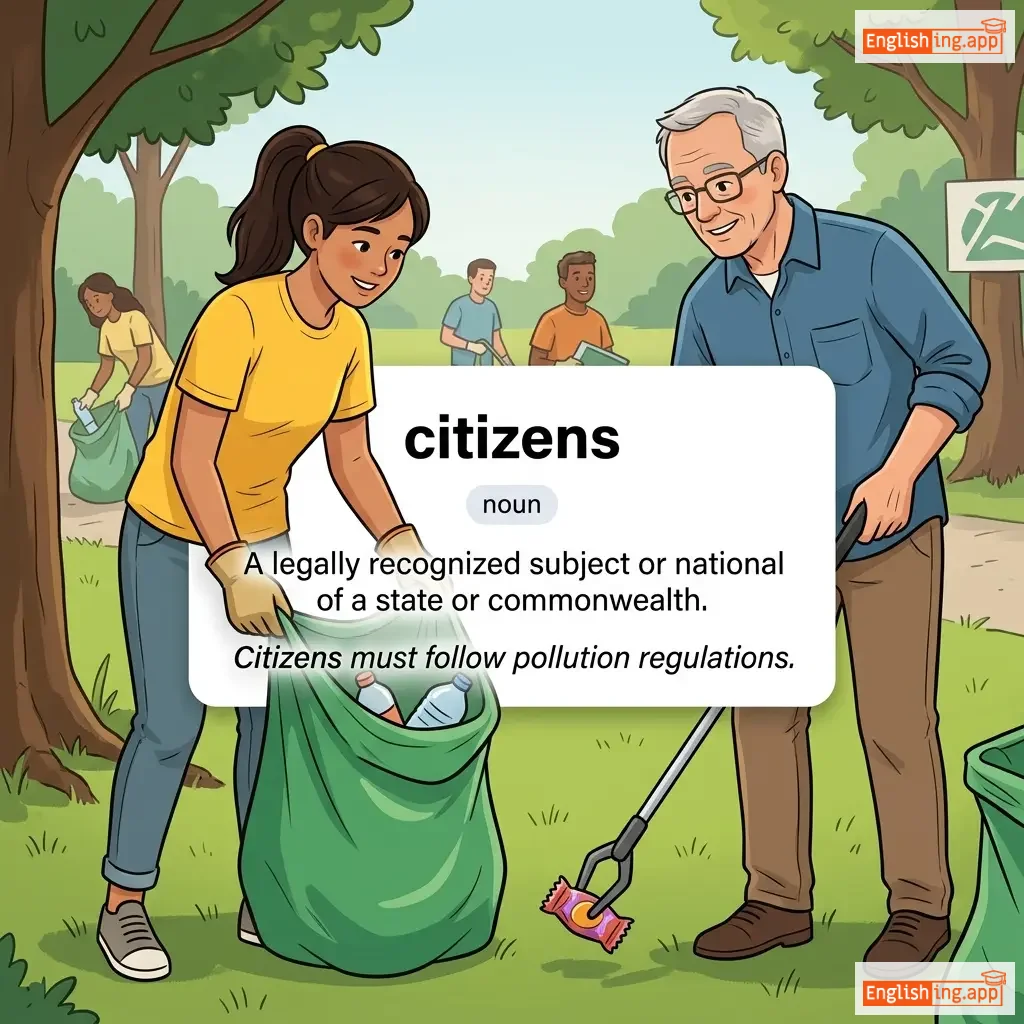
citizens definition card — visual illustration of the meaning
noun
/ˈsɪt.ɪ.zənz/
市民 (shimin)

A legally recognized subject or national of a state or commonwealth.

"Citizens must follow pollution regulations."

"市民は汚染規制に従わなければなりません。" (Shimin wa osen kisei ni shitagawanakereba narimasen.)
noun
/ˈsɪtɪzənʃɪp/
市民権 (shimin-ken)

the status of being a recognized member of a state or country, with rights and duties

"He applied for American citizenship after living there for ten years."

"彼はアメリカに10年間住んだ後、アメリカ市民権を申請しました。" (Kare wa Amerika ni 10-nenkan sunda ato, Amerika shimin-ken o shinsei shimashita.)
noun
/ˈsɪtrɪk ˈæsɪd/
クエン酸 (kuensan)

a natural acid found in citrus fruits, used as a food preservative and flavoring agent

"Add a pinch of citric acid to preserve the color of the fruit jam."

"果物ジャムの色を保つためにクエン酸をひとつまみ加えてください。" (Kudamono jamu no iro o tamotsu tame ni kuensan o hitotsumami kuwaete kudasai.)
noun
/ˈsɪti/
都市 (toshi)

a large town or an urban area with its own government

"Dhaka is the largest city in Bangladesh."

"東京は日本で最も大きな都市です。" (Tōkyō wa Nihon de mottomo ōkina toshi desu.)
adjective
/ˈsɪvɪk/
市民の (shimin no)

relating to a city, town, or the duties of its citizens

"The mayor encouraged people to take part in civic activities."

"市長は人々に市民活動に参加するように促しました。" (Shichou wa hitobito ni shimin katsudou ni sanka suru you ni unagashimashita.)
noun
/ˈsɪvɪks/
公民 (koumin)

the study of the rights and duties of citizens and how government works

"Civics helps students understand their responsibilities as citizens."

"公民は市民としての責任を理解するのに役立つ。" (koumin wa shimin to shite no sekinin o rikai suru no ni yakudatsu)
adjective
/ˈsɪvəl/
市民の (shimin no)

Relating to ordinary citizens and their concerns, or being polite and courteous.

"They settled the matter through civil discussion."

"彼らは市民的な議論を通じて問題を解決しました。" (Karera wa shimin-teki na giron o tsūjite mondai o kaiketsu shimashita.)
noun/adjective
/səˈvɪliən/
市民 (shimin)

a person not in the armed forces or police

"The area was evacuated to protect the civilians."

"その地域は市民を守るために避難されました。" (Sono chiiki wa shimin o mamoru tame ni hinan saremashita.)
noun
/səˈvɪləti/
礼儀 (reigi)

Polite and courteous behavior.

"He treated his opponent with civility despite their differences."

"彼は彼の対戦相手に対して礼儀を持って接した、彼らの違いにもかかわらず。" (Kare wa kare no taisen aite ni taishite reigi o motte sesshita, karera no chigai ni mo kakawarazu.)
noun
/ˌsɪvɪlaɪˈzeɪʃən/
文明 (bunmei)

the stage of human social and cultural development and organization considered most advanced

"Ancient Egypt is known for its remarkable civilization."
"古代エジプトはその優れた文明で知られています。" (Kodai Ejiputo wa sono sugureta bunmei de shirareteimasu.)
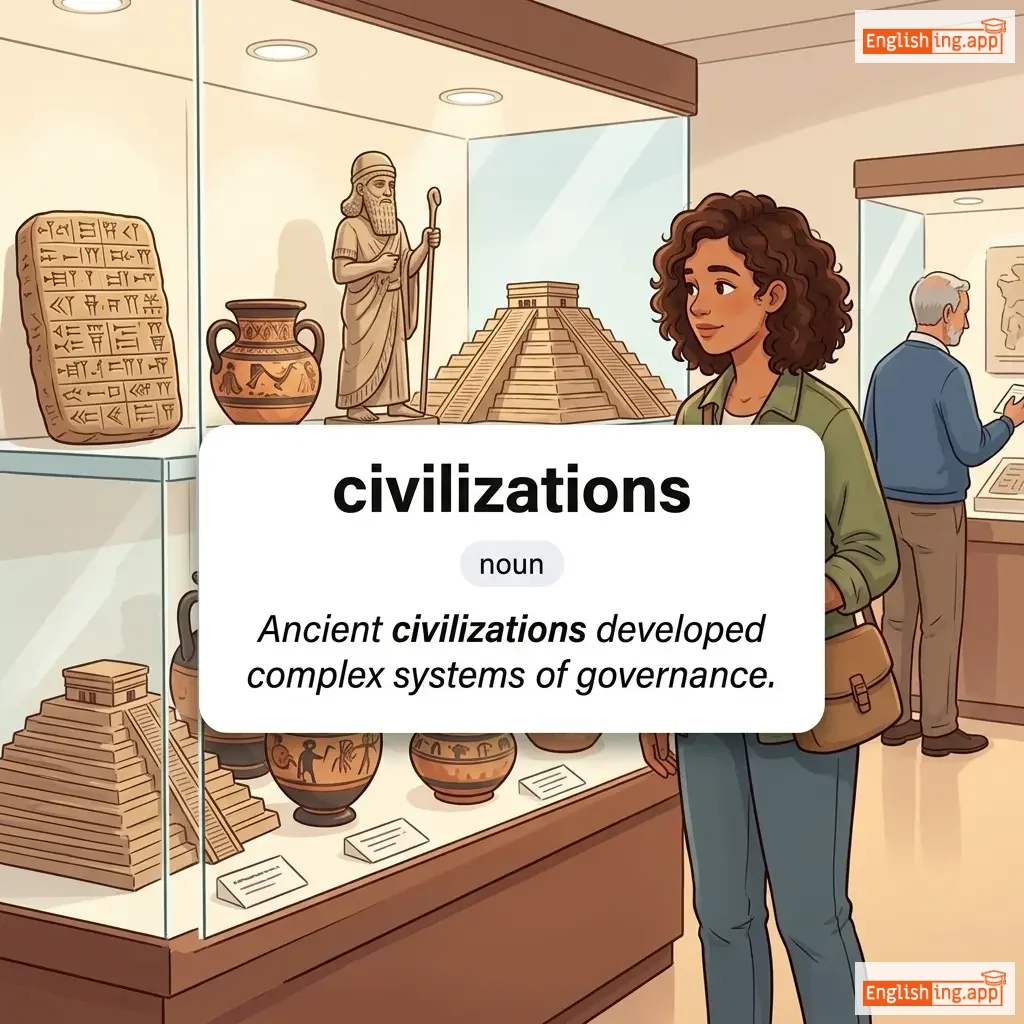
civilizations definition card — visual illustration of the meaning
noun
sɪvɪˈlɪzeɪʃənz
文明 (bunmei)

The stage of human social development and organization that is considered most advanced.

"Ancient civilizations developed complex systems of governance."

"古代の文明は複雑な統治システムを発展させました。" (Kodai no bunmei wa fukuzatsu na tochi shisutemu o hatten sasemashita.)
verb
/ˈsɪvɪlaɪz/
文明化する (bunmeika suru)

to bring a society or group to a more developed, organized, or socially acceptable state; to educate and refine behavior

"Education can help civilize communities by promoting shared values and respect."

"教育は共有された価値観と尊重を促進することで、地域社会を文明化する助けになります。" (Kyoiku wa kyoyu sareta kachikan to soncho o sokushin suru koto de, chiiki shakai o bunmeika suru tasuke ni narimasu)
adjective
/klæd/
服を着た / 覆われた (fuku o kita / owareta)

dressed or covered in a particular way

"The knight was clad in shining armor."

"騎士は輝く鎧を着ていた。" (Kishi wa kagayaku yoroi o kite ita.)
claim definition card — visual illustration of the meaning
verb
/kleɪm/
主張する (shuchou suru)

to state something as true, often without proof; to demand ownership or right

"He claimed the prize after winning the competition."

"彼は競技会に勝った後、賞金を主張しました。" (Kare wa kyougikai ni katta ato, shoukin o shuchou shimashita.)
noun
/ˈkleɪmənt/
請求者 (seikyū-sha)

a person who makes a claim, especially in a legal or financial context

"The claimant filed for compensation after the accident."
"事故後、請求者は補償を申し立てました。" (Jiko go, seikyū-sha wa hoshō o mōshitatemashita.)
claims definition card — visual illustration of the meaning
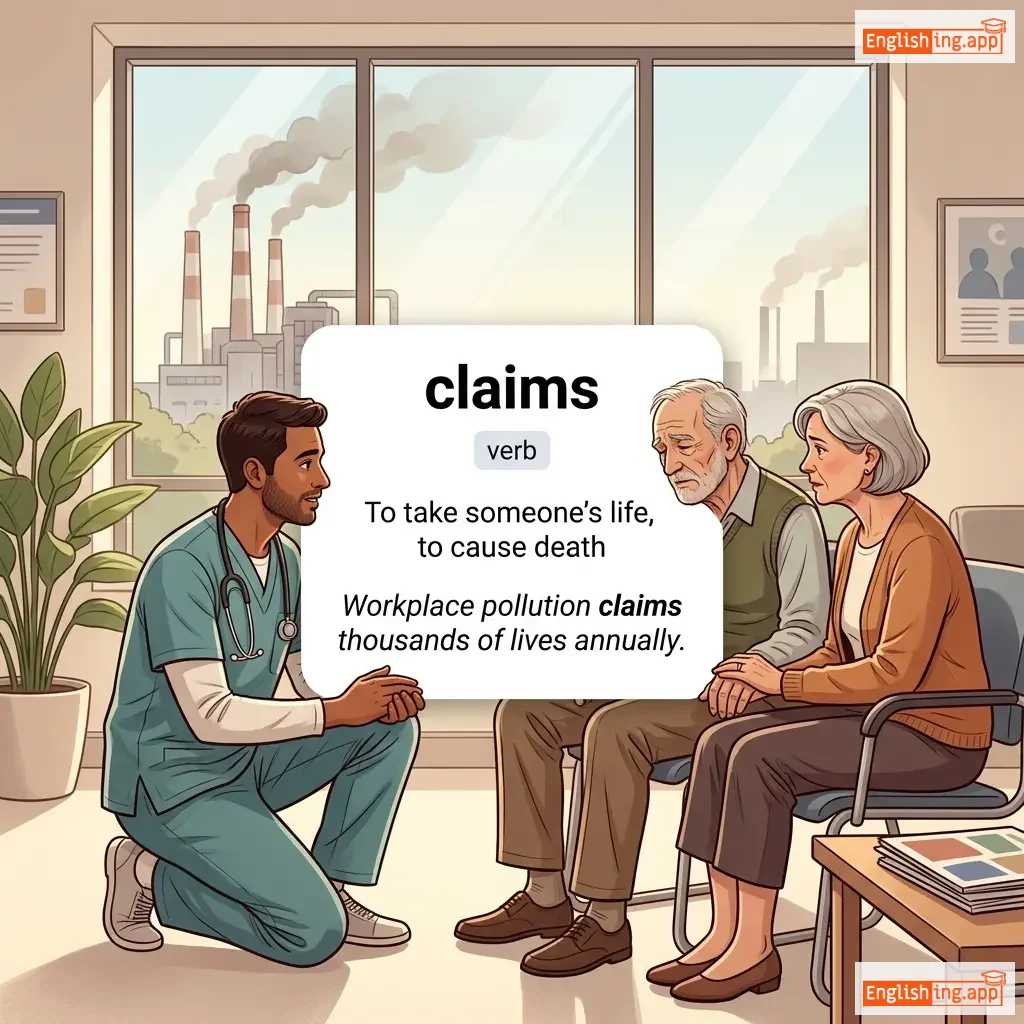
verb
kleɪmz
命を奪う (inochi o ubau)

To take someone's life, to cause death

"Workplace pollution claims thousands of lives annually."

"職場の汚染は毎年何千もの命を奪います。" (Shokuba no osen wa mainen nanzen mo no inochi o ubaimasu.)
noun
/klɛərˈvɔɪəns/
透視能力 (toushi nouryoku)

the supposed ability to perceive events beyond normal sensory contact; psychic insight

"She claimed to have clairvoyance and predicted the future."

"彼女は透視能力を持っていると主張し、未来を予知しました。" (Kanojo wa toushi nouryoku o motte iru to shuchou shi, mirai o yochi shimashita.)
clairvoyant definition card — visual illustration of the meaning
🧙‍♀️

clairvoyant

noun, adjective
/klɛərˈvɔɪənt/

a person who claims to have clairvoyance; having the ability to see beyond normal senses

"The clairvoyant predicted that she would travel abroad soon."

verb
/ˈklæmbər/
力を入れて登る (chikara o irete noboru)

to climb with effort or difficulty, often using both hands and feet

"The children clambered over the rocks to reach the cave."
"子供たちは洞窟に到達するために岩を登った。" (Kodomotachi wa dōkutsu ni tōtatsu suru tame ni iwa o nobotta.)
clamor definition card — visual illustration of the meaning
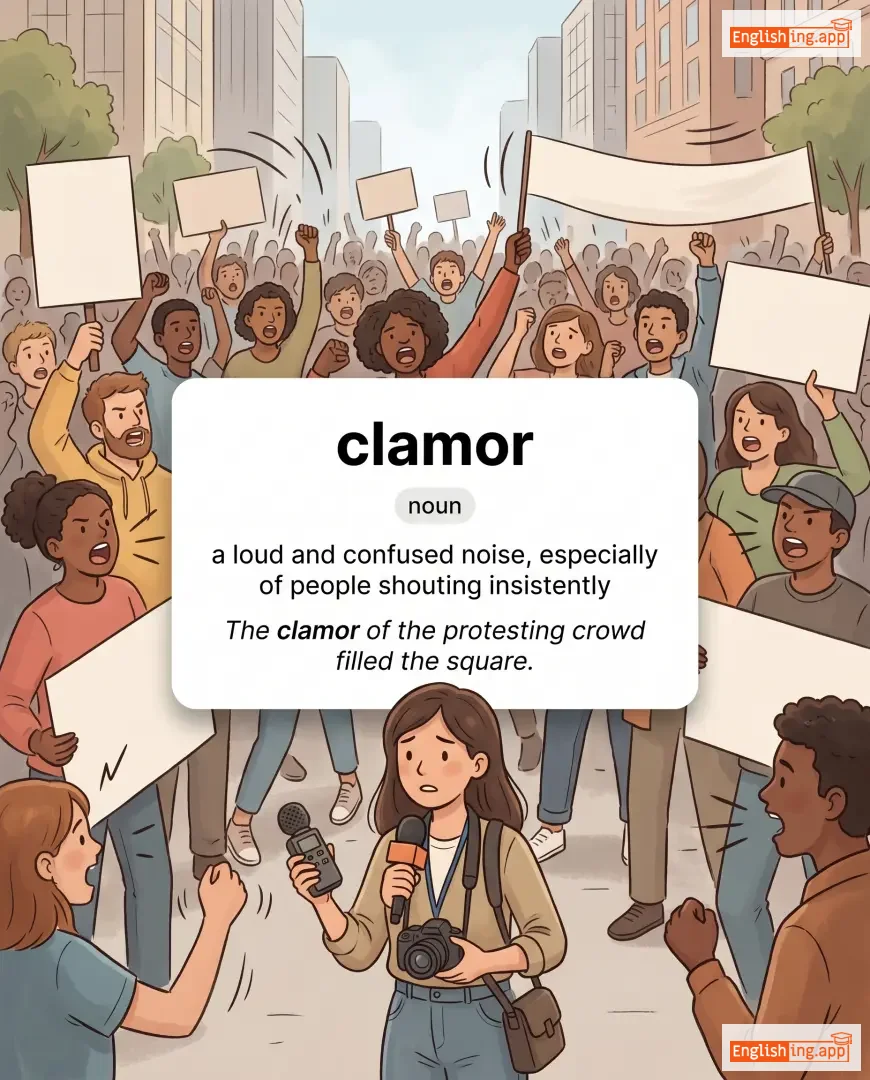
noun
/ˈklæmər/
騒音 (souon)

a loud and confused noise, especially of people shouting insistently

"The clamor of the protesting crowd filled the square."

"抗議する群衆の騒音が広場を埋め尽くした。" (Kougi suru gunshuu no souon ga hiroba wo umetsukushita.)
adjective
/ˈklæmərəs/
騒々しい (sōzōshī)

making a loud and confused noise; expressing strong demands noisily

"The clamorous audience demanded an encore from the band."

"騒々しい観客がバンドにアンコールを要求した。" (Sōzōshī kankyaku ga bando ni ankōru o yōkyū shita.)
👨‍👩‍👧‍👦

clan (クラン)

noun
/klæn/
一族 (ichizoku)

a large family group or a close-knit community with shared interests or ancestry

"The entire clan gathered to celebrate the festival."

"一族全員が祭りを祝うために集まりました。" (Ichizoku zen'in ga matsuri o iwau tame ni atsumarimashita.)
adjective
/klænˈdɛstaɪn/

kept secret or done secretly, especially for illicit purposes

"They held a clandestine meeting late at night."

noun
/ˈklæŋər/
音、騒音 (oto, souon)

A loud, resonant, and continuous noise, often metallic.

"The clangor of the church bells filled the town square."

"教会の鐘の音が町の広場に響き渡った。" (Kyōkai no kane no oto ga machi no hiroba ni hibiki watatta.)
👏

clap

verb
/klæp/

To strike the palms of the hands together, usually to express approval or create a sharp sound.

"The audience began to clap loudly after the performance."

noun
/ˈklæpər/
鐘の中にある金属部品、鐘を打って音を出す (kane no naka ni aru kinzoku buhin, kane o utte oto o dasu)

The free-swinging metal piece inside a bell that strikes it to produce sound.

"The clapper inside the bell was broken."
"鐘の中の金属部品は壊れていた。" (Kane no naka no kinzoku buhin wa kowarete ita.)
clarification definition card — visual illustration of the meaning
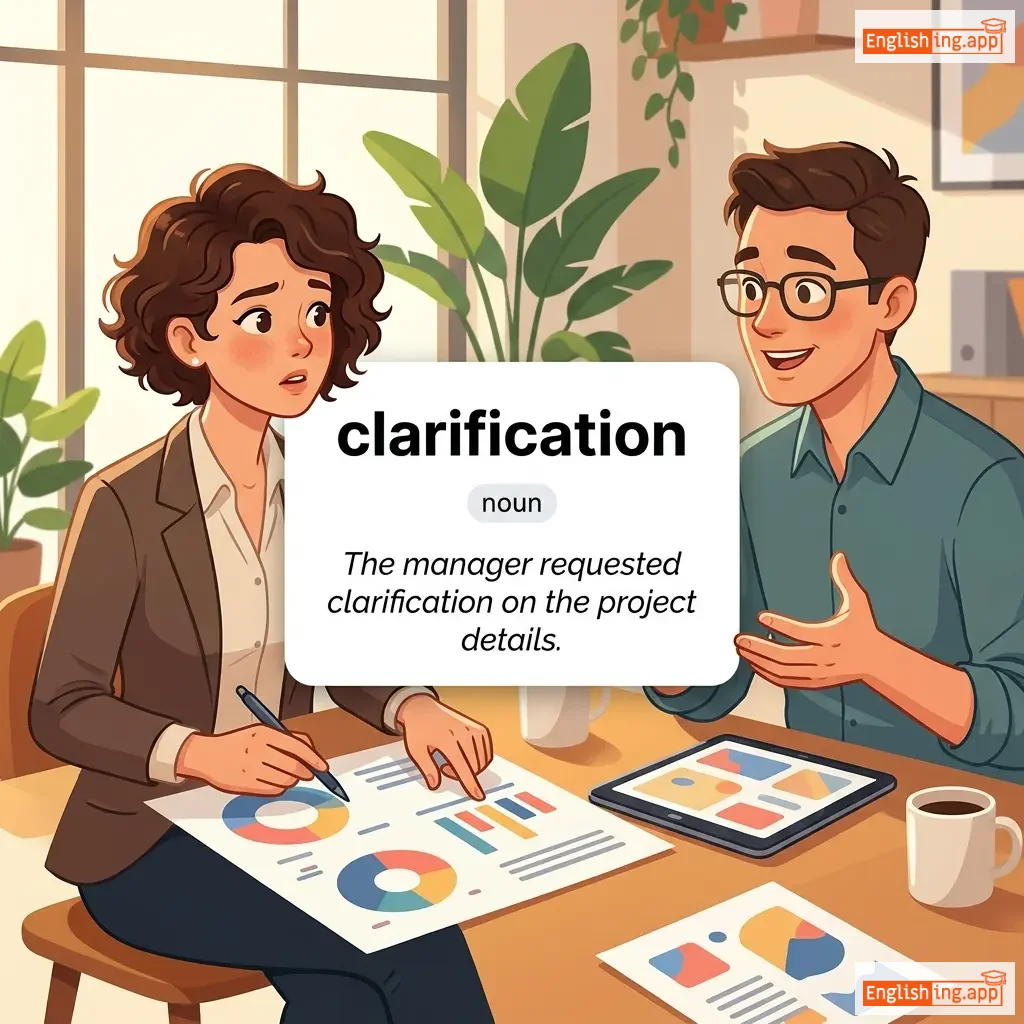
noun
/ˌklærɪfɪˈkeɪʃən/
明確化 (meikakuka)

The action of making a statement or situation less confused and more clearly comprehensible.

"The manager requested clarification on the project details."

"マネージャーはプロジェクトの詳細に関する明確化を求めました。" (Manējā wa purojekuto no shōsai ni kansuru meikakuka o motomemashita.)
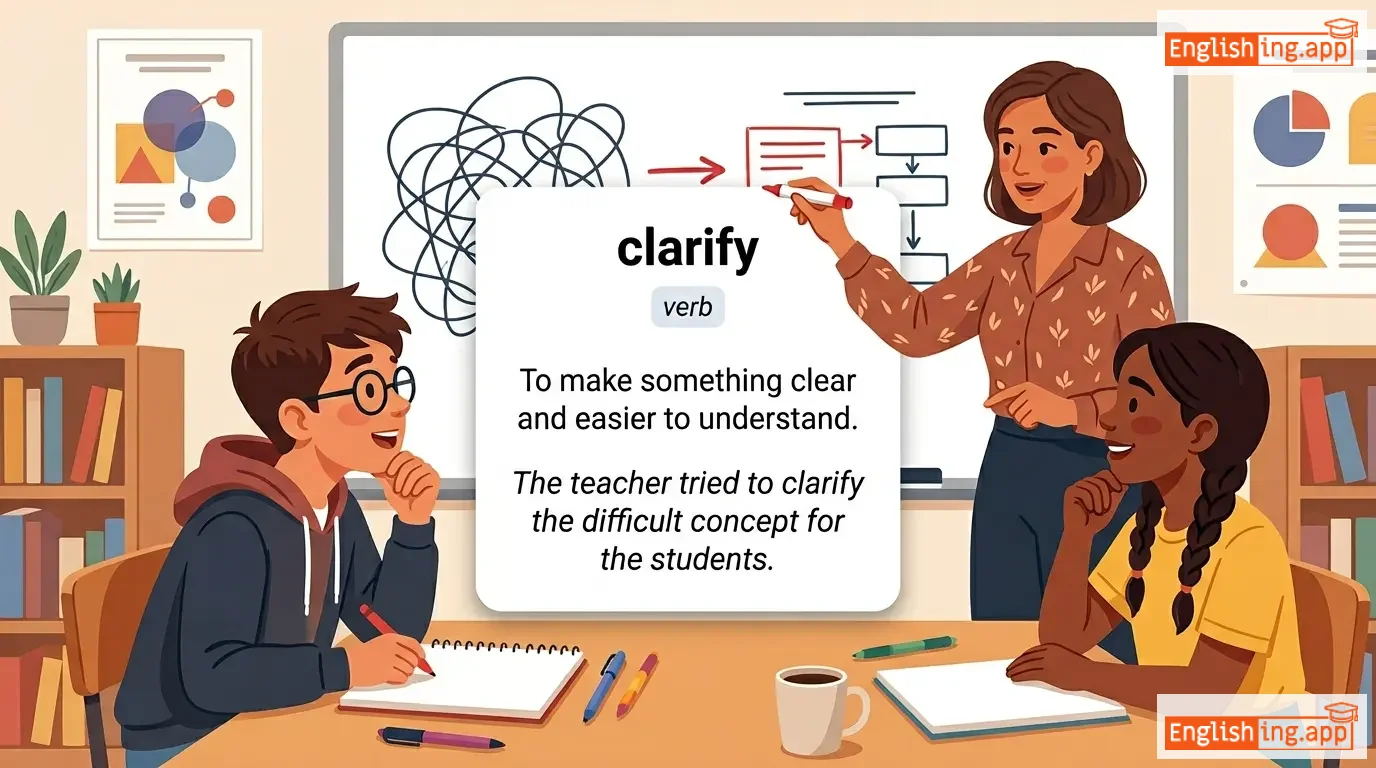
clarify definition card — visual illustration of the meaning
verb
/ˈklærɪfaɪ/

To make something clear and easier to understand.

"The teacher tried to clarify the difficult concept for the students."

adjective
/ˈklæriən/
大きくて明確な呼びかけ (ookikute meikakuna yobikake)

Loud and clear, like the sound of a trumpet; strongly expressed.

"The leader’s clarion call for unity inspired the crowd."
"リーダーの団結への明確な呼びかけは群衆を鼓舞した。" (Rīdā no danketsu e no meikakuna yobikake wa gunshū o kobu shita.)
clarity definition card — visual illustration of the meaning
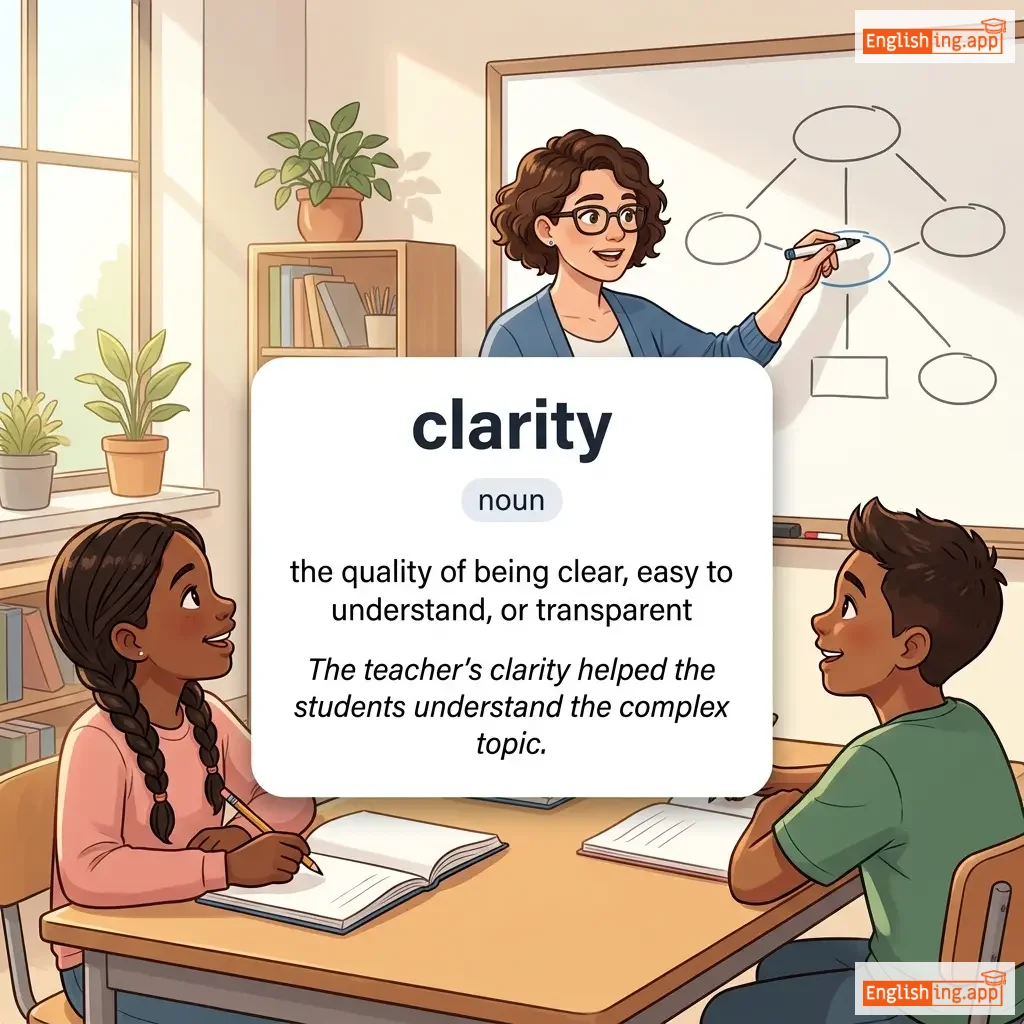
noun
/ˈklærəti/
明確さ (meikakusa)

the quality of being clear, easy to understand, or transparent

"The teacher's clarity helped the students understand the complex topic."

"先生の明確さは、生徒たちが複雑なテーマを理解するのを助けました。" (Sensei no meikakusa wa, seito-tachi ga fukuzatsu na tēma o rikai suru no o tasukemashita.)
verb
/klæʃ/
衝突 (shōtotsu)

to come into conflict or collision with something or someone.

"The two cars clashed in the intersection."

"2台の車が交差点で衝突しました。" (2-dai no kuruma ga kōsaten de shōtotsu shimashita.)
verb
/klæsp/
握る / 留め金 (nigiru / tomegane)

to grasp or hold tightly; also a device for fastening

"She clasped her hands together in prayer."

"彼女は祈りの中で手を合わせた。" (Kanojo wa inori no naka de te o awaseta.)
noun
/klɑːs/
クラス (kurasu)

a group of students taught together or a category of people or things with shared characteristics

"Our class meets every morning at nine."

"私たちのクラスは毎朝9時に会います。" (Watashitachi no kurasu wa mai asa kuji ni aimasu.)
adjective
/ˈklæsɪk/
クラシック, 優れた (kurashikku, sugureta)

Judged over a period of time to be of the highest quality and outstanding of its kind.

"That movie is a classic example of 90s comedy."

"その映画は90年代のコメディのクラシックな例です。" (Sono eiga wa 90 nendai no komedi no kurashikku na rei desu.)
adjective
/ˈklæsɪkəl/
古典的または伝統的な (koten teki mata wa dentoteki na)

relating to ancient Greek or Roman culture, or representing traditional excellence in art, music, or literature

"She loves listening to classical music while studying."

"彼女は勉強中にクラシック音楽を聴くのが好きです。" (Kanojo wa benkyō-chū ni kurashikku ongaku o kiku no ga suki desu.)
noun
/ˌklæsɪfɪˈkeɪʃən/
分類 (bunrui)

the action or process of classifying something into groups based on shared characteristics.

"The classification of animals helps in understanding their biology."

"動物の分類は、彼らの生物学を理解するのに役立ちます。" (Dōbutsu no bunrui wa, karera no seibutsugaku o rikai suru no ni yakudachimasu.)
adjective
/ˈklæsɪfaɪd/
機密の;分類された (kimitsu no; bunrui sareta)

arranged into categories; officially secret or restricted

"The report contains classified information and cannot be shared publicly."

"その報告書には機密情報が含まれている。" (sono houkokusho niwa kimitsu jouhou ga fukumarete iru)
🗂️

classify

verb
/ˈklæsɪfaɪ/

to arrange or organize into categories or groups

"The librarian classified the books by subject."

noun
/ˈklɑːsmeɪt/
同級生 (dokyusei)

a person who is in the same class or course of study as another

"I met one of my old classmates at the university event."

"大学のイベントで昔の同級生に会いました。" (daigaku no ibento de mukashi no dokyusei ni aimashita)
noun
/ˈklæsˌruːm/
教室 (kyōshitsu)

A room in which classes are held in a school or college.

"The teacher entered the classroom and greeted the students."

"先生は教室に入って、生徒たちに挨拶しました。" (Sensei wa kyōshitsu ni haitte, seito-tachi ni aisatsu shimashita.)
noun
/ˌklɔːstrəˈfəʊbiə/

an extreme or irrational fear of being in confined spaces

"He avoids elevators because of his claustrophobia."

noun
/ˈklævɪkəl/
鎖骨 (sakotsu)

the collarbone, a long bone that serves as a strut between the shoulder blade and the sternum

"He fractured his clavicle in the accident."

"彼は事故で鎖骨を骨折した。" (Kare wa jiko de sakotsu o kossetsu shita.)