語彙集

英単語辞書 | 単語の意味、定義、例文

noun
/ˈbɑːr.nɪ.kəl/
フジツボ (fujitsubo)

a marine crustacean that attaches itself permanently to underwater surfaces

"The old ship's hull was covered with barnacles."

"古い船の船体にはフジツボがびっしりと付いていた。" (furui fune no sentai ni wa fujitsubo ga bisshiri to tsuite ita.)
noun
/ˈbærəˌɡræf/
大気圧の変化を記録する機器 (taikiatsu no henka o kiroku suru kiki)

an instrument that records changes in atmospheric pressure

"The scientist checked the barograph for pressure variations."

"科学者は圧力の変動を調べるためにバログラフを確認した。" (Kagakusha wa atsuryoku no hendou o shiraberu tame ni barogurafu o kakunin shita.)
noun
/bəˈrɒmɪtər/
気圧計 (kiatsukei)

an instrument that measures atmospheric pressure

"The barometer indicated a storm was approaching."

"バロメーターは嵐が近づいていることを示しました。" (Barometaa wa arashi ga chikadzuite iru koto o shimeshimashita.)
adjective
/bəˈroʊk/
バロック様式 (barokku yōshiki)

relating to a highly ornate and extravagant style of art, architecture, or music from the 17th and early 18th centuries; excessively elaborate or complex

"The church was decorated in a baroque style with intricate details."

"教会はバロック様式で複雑な詳細で飾られていました。" (Kyōkai wa barokku yōshiki de fukuzatsu na shōsai de kazararete imashita.)
noun
/bəˈrɑːʒ/
集中攻撃または速攻 (barāji)

a concentrated outpouring of questions, criticisms, or blows; a rapid, continuous attack

"The politician faced a barrage of tough questions from reporters."

"政治家は記者からの厳しい質問の集中攻撃に直面していました。" (Seijika wa kishā kara no kibishī shitsumon no shūchū kōgeki ni chokumen shite imashita.)
noun
/ˈbærəl/
大樽 (o-taru)

a large cylindrical container used to hold liquids

"The wine was stored in a wooden barrel."

"ワインは木製の大樽に保管されていた。" (Wain wa mokusei no o-taru ni hokan sarete ita.)
adjective
/ˈbærən/
不毛 (fumou)

too poor to produce much or any vegetation; unproductive or empty

"The land was barren and could not support crops."

"その土地は不毛で、作物を育てることができませんでした。" (Sono tochi wa fumou de, sakumotsu o sodateru koto ga dekimasen deshita.)
noun/verb
/ˌbærɪˈkeɪd/
バリケード (barikēdo)

a barrier erected to block or defend against movement; to block a passage with obstacles

"Protesters built a barricade across the street."
"抗議者たちは通りにバリケードを作った。" (Kōgisha-tachi wa tōri ni barikēdo o tsukutta.)
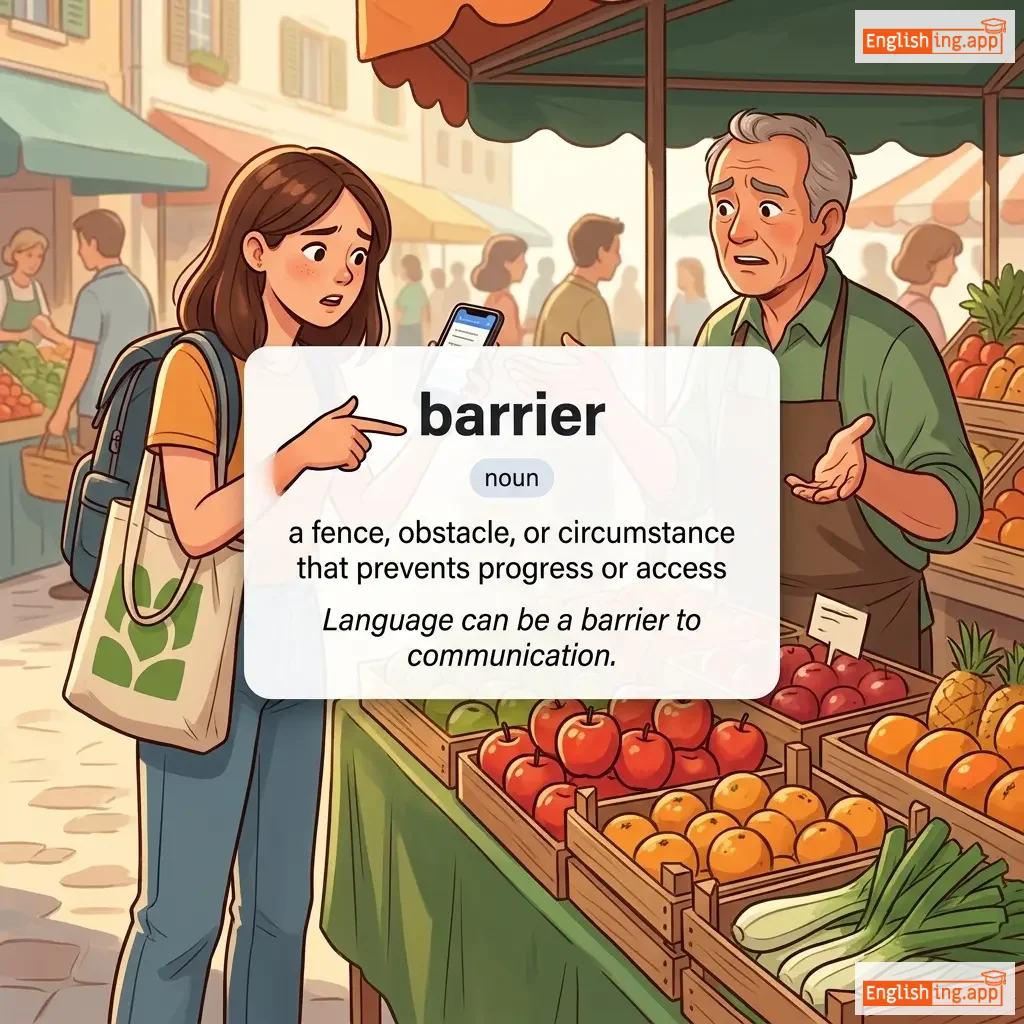
barrier definition card — visual illustration of the meaning
noun
/ˈbæriər/
障壁 (shōheki)

a fence, obstacle, or circumstance that prevents progress or access

"Language can be a barrier to communication."
"言語はコミュニケーションの障壁となることがあります。" (Gengo wa komyunikēshon no shōheki to naru koto ga arimasu.)
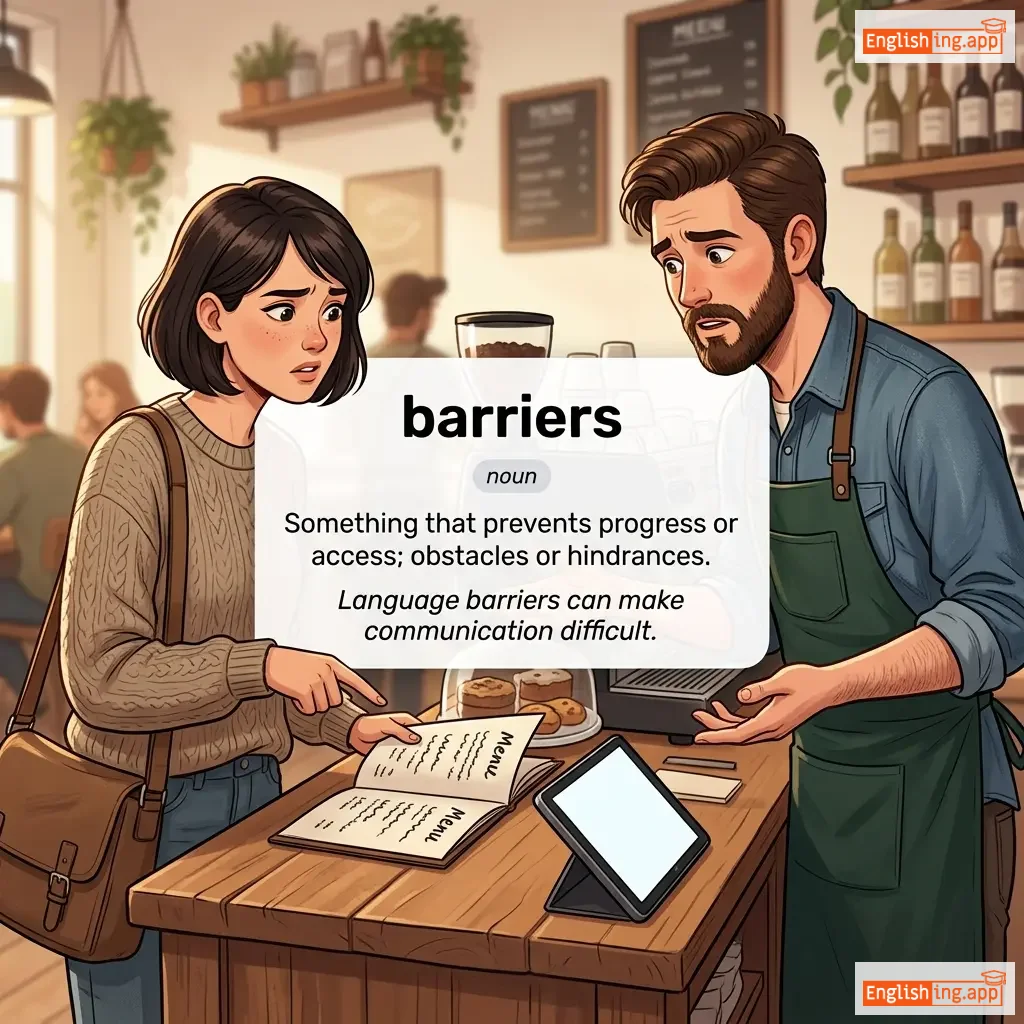
barriers definition card — visual illustration of the meaning
noun
/ˈbæɹɪəz/
障壁 (shōheki)

Something that prevents progress or access; obstacles or hindrances.

"Language barriers can make communication difficult."

"言語の壁がコミュニケーションを困難にすることがあります。" (Gengo no kabe ga komyunikēshon o kon'nan ni suru koto ga arimasu.)
preposition
/ˈbɑːrɪŋ/
を除いて、を除く (wo nozoite, wo nozoku)

except for; if not for

"Barring a miracle, the team will not win the championship."

"奇跡を除いて、チームはチャンピオンシップを勝ち取らない。" (Kiseki wo nozoite, chīmu wa chanpionship wo kachitoranai.)
noun
/ˈbærɪstər/
弁護士 (bengoshi)

A type of lawyer in certain legal systems who specializes in courtroom advocacy and litigation.

"The barrister argued the case passionately before the judge."
"弁護士は裁判官の前で情熱的にケースを弁論しました。" (Bengoshi wa saibankan no mae de jōnetsuteki ni kēsu o benron shimashita.)
verb
/ˈbɑːrtər/

To exchange goods or services without using money.

"They bartered their crops for handmade tools."

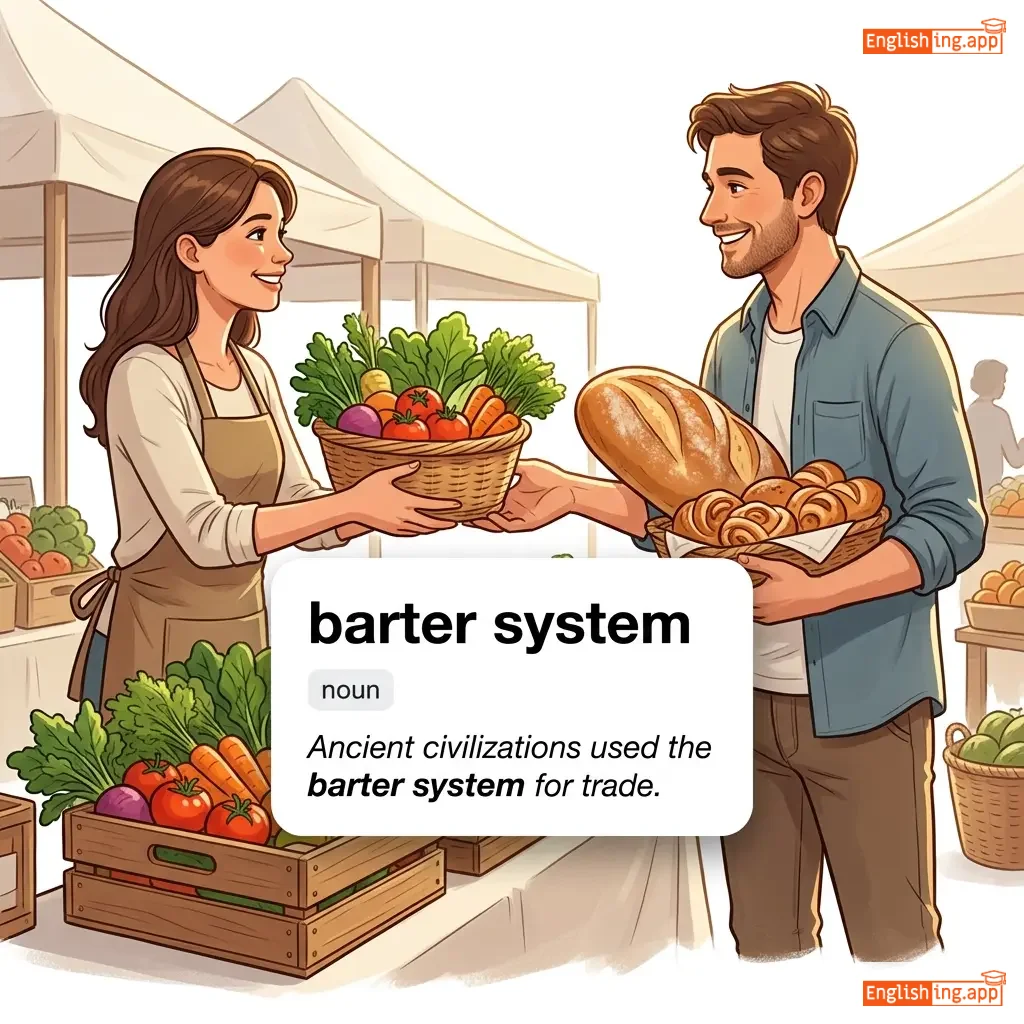
barter system definition card — visual illustration of the meaning
noun
/ˈbɑːr.tər ˌsɪs.təm/
物々交換システム (butsubutsu kōkan shisutemu)

A system of exchange where goods and services are traded directly without using money.

"Ancient civilizations used the barter system for trade."

"古代の文明は貿易のために物々交換システムを使用していました。" (Kodai no bunmei wa bōeki no tame ni butsubutsu kōkan shisutemu o shiyou shite imashita.)
noun
/ˈbɑːrtərər/
物々交換者 (monomono koukan-sha)

A person who trades goods or services without using money.

"The barterer exchanged fruits for some pottery."
"物々交換者は果物を陶器と交換しました。" (Monomono koukan-sha wa kudamono o tōki to kōkan shimashita.)
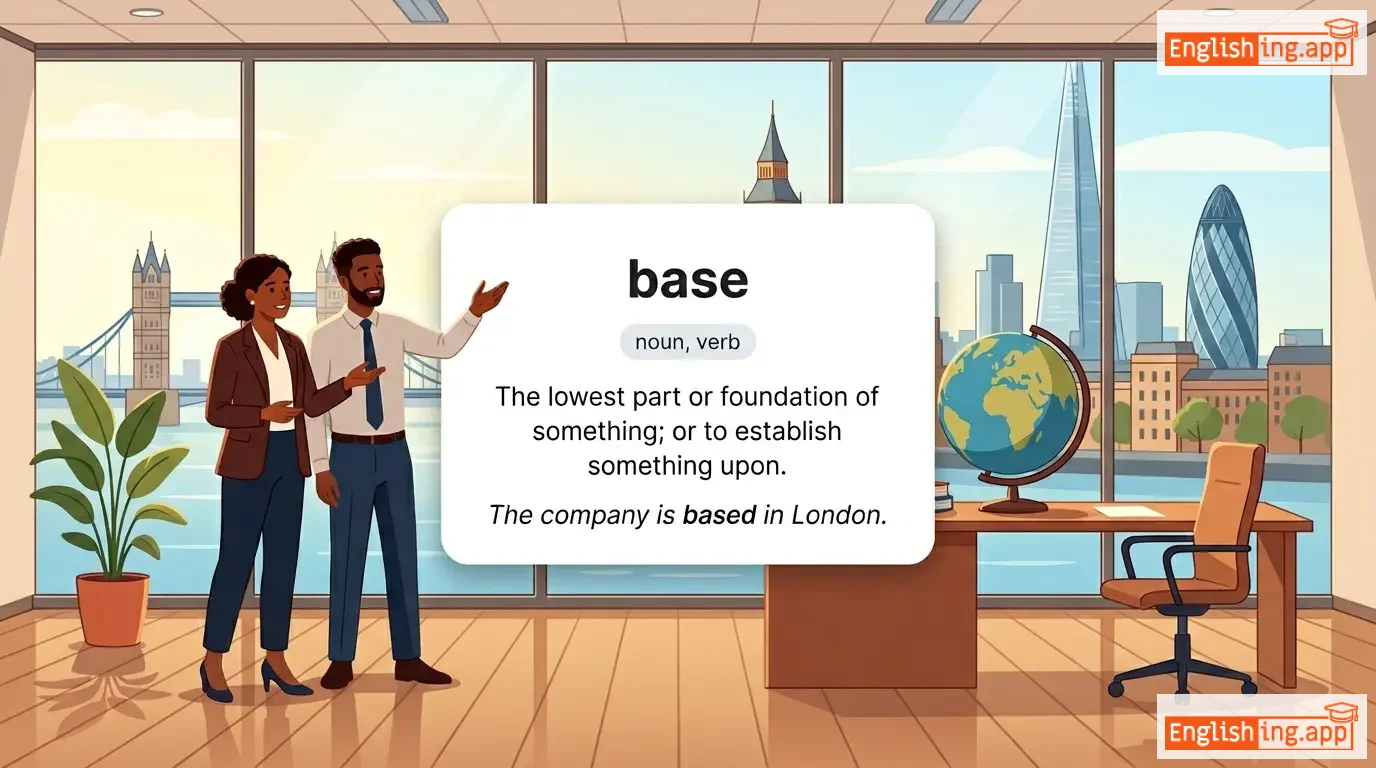
base definition card — visual illustration of the meaning
noun, verb
/beɪs/
基盤 (kiban)

The lowest part or foundation of something; or to establish something upon.

"The company is based in London."

"その会社はロンドンに拠点を置いています。" (Sono kaisha wa Rondon ni kyoten o oiteimasu.)
noun
/ˈbeɪsˌbɔːl/
ベースボール (bēsubōru)

a sport in which two teams try to score runs by hitting a ball and running around bases

"He loves watching baseball games on TV."

"彼はテレビで野球の試合を見るのが好きです。" (Kare wa terebi de yakyū no shiai o miru no ga suki desu.)
noun
/ˈbeɪsbɔːrd/
基板 (kiban)

A narrow board running along the bottom of an interior wall, covering the joint between wall and floor.

"The carpenter painted the baseboard white."

"大工は基板を白く塗った。" (Daiku wa kiban o shiroku nitta.)
adjective
/ˈbeɪs.ləs/
根拠のない; 事実無根の; 無根拠の (konkyo no nai; jijitsu mukon no; mukonkyo no)

without foundation; groundless; unfounded

"The accusations against him were completely baseless."

"彼に対する告発は完全に根拠のないものでした。" (Kare ni taisuru kokuhatsu wa kanzen ni konkyo no nai mono deshita.)
noun
/ˈbeɪsmənt/
地下室 (chikashitsu)

the lowest floor of a building, usually partly or completely below ground

"The laundry room is in the basement."

"ランドリールームは地下室にあります。" (Randorī rūmu wa chikashitsu ni arimasu.)
adjective
/ˈbæʃ.fəl/
恥ずかしがり屋 (hazukashigariya)

shy, easily embarrassed, or reluctant to draw attention

"She gave a bashful smile when he complimented her."

"彼が彼女を褒めたとき、彼女は恥ずかしそうに微笑んだ。" (Kare ga kanojo wo hometa toki, kanojo wa hazukashisou ni bishounda.)
adjective
/ˈbeɪsɪk/
基本的 (kibanteki)

forming the most important or simplest part of something

"She taught me the basic rules of chess."

"彼女は私にチェスの基本的なルールを教えてくれました。" (Kanojo wa watashi ni chesu no kibanteki na ruuru wo oshiete kuremashita.)
adverb
/ˈbeɪsɪkli/
基本的に (kihon teki ni)

in the most important or fundamental way; essentially

"Basically, the project was a success despite some small issues."

"基本的に、いくつかの小さな問題があったにもかかわらず、そのプロジェクトは成功でした。" (Kihon teki ni, ikutsuka no chiisana mondai ga atta ni mo kakawarazu, sono purojekuto wa seikou deshita.)
noun
/ˈbeɪ.zəl/
バジル (bajiru)

an aromatic herb with green leaves used in cooking, especially Italian cuisine

"The pasta sauce was flavored with fresh basil."

"パスタソースには新鮮なバジルが加えられていました。" (Pasuta sōsu ni wa shinsen na bajiru ga kuwaerarete imashita.)
noun
/ˈbeɪ.zəl siːdz/
バジルシード (bajiru shīdo)

small black seeds from the basil plant, often used in drinks and desserts

"I added basil seeds to my lemonade for a refreshing drink."

"私はレモネードにバジルシードを加えて、さっぱりとした飲み物を作りました。" (Watashi wa remonēdo ni bajiru shīdo o kuwaete, sappari to shita nomimono o tsukurimashita.)
noun
/ˈbeɪsɪs/
基礎 (kiso)

the underlying support or foundation for an idea, argument, or process

"Trust is the basis of any strong relationship."

"信頼は強い関係の基礎です。" (Shinrai wa tsuyoi kankei no kiso desu.)
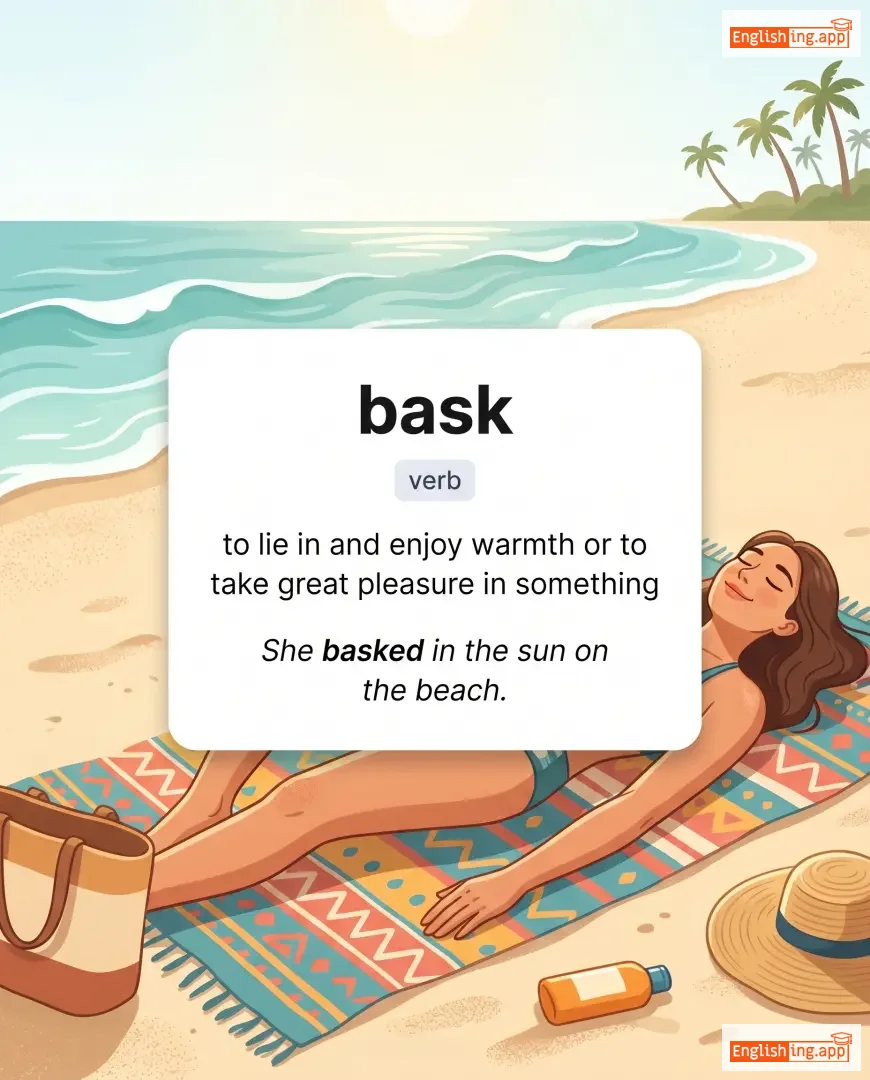
bask definition card — visual illustration of the meaning
☀️

bask

verb
/bæsk/

to lie in and enjoy warmth or to take great pleasure in something

"She basked in the sun on the beach."

noun
/ˈbæskɪt/
かご (kago)

a container made of woven materials used for carrying or storing things

"She carried the apples in a basket."

"彼女はバスケットにリンゴを入れて運んだ。" (Kanojo wa basuketto ni ringo o irete hakonda.)
noun
/ˈbæskɪtbɔːl/

a game played by two teams who try to score points by throwing a ball through a hoop

"He loves playing basketball with his friends."

noun
/beɪs/
低い男性の声 / ベースギター (hikui dansei no koe / bēsu gitā)

the lowest adult male singing voice; also, low-frequency sounds in music or a type of fish

"He played the bass guitar at the concert."

"彼はコンサートでベースギターを弾いた。" (Kare wa konsāto de bēsu gitā o hīta.)
noun
/bəˈsuːn/
一種の大型木管楽器 (isshu no ōgata mokukan gakki)

a large woodwind instrument with a deep sound

"The orchestra featured a beautiful bassoon solo."

"オーケストラは素晴らしいバスーンのソロを披露しました。" (Ōkesutora wa subarashī basūn no soro o hirō shimashita.)
noun/adjective
/ˈbæstərd/
私生児 (shiseiji)

a child born to unmarried parents (offensive); also used informally as an insult or to describe something unpleasant

"He called him a bastard in anger."

"彼は怒りで彼をバスタードと呼んだ。" (Kare wa ikari de kare o basutādo to yonda.)
noun
/ˈbæs.tərd tiːk/
バスタードティーク (basutādo tīku)

A flowering tree with bright orange-red flowers, also known as flame of the forest

"The bastard teak tree blooms with vibrant orange flowers in spring."

"バスタードティークの木は春に鮮やかなオレンジ色の花を咲かせます。" (Basutādo tīku no ki wa haru ni azayakana orenji-iro no hana o sakasemasu.)
noun
/ˌbæstərdaɪˈzeɪʃən/
歪曲 / 堕落 (iwaku / daraku)

the act of corrupting, degrading, or misrepresenting something

"Critics called the remake a bastardization of the original film."

"批評家たちはリメイクをオリジナル映画の歪曲だと言った。" (Hihyoutachi wa rimeiku wo orijinaru eiga no iwaku da to itta.)
verb
/ˈbæstərdaɪz/
歪める (yugameru)

to corrupt or debase something by altering it from its original form; to change in a way that reduces quality or purity

"Critics argue that the remake bastardized the original novel."

"批評家たちはそのリメイクが原作を歪めたと言っている。" (hihyoka tachi wa sono rimeiku ga gensaku o yugameta to itte iru)
verb
/beɪst/
調理中に肉に溶かした脂肪、ジュース、または液体をかけて、ジューシーさを保つ (chouri chuu ni niku ni tokashita shibou, juusu, mata wa ekitai wo kakete, juushi-sa wo tamotsu)

to pour or brush melted fat, juices, or liquid over meat during cooking to keep it moist

"She basted the turkey every 30 minutes to keep it juicy."

"彼女は30分ごとに七面鳥をベイステッドしてジューシーに保ちました。" (Kanojo wa 30 pun goto ni shichimenchou wo beisuteddo shite juushi ni tamochimashita.)
noun
/ˈbæs.ti.ən/
要塞, 防衛拠点 (yousai, bouei kyoten)

a stronghold or fortification; a place or institution strongly defending particular principles

"The castle stood as a bastion against enemy attacks."

"その城は敵の攻撃に対する要塞として立っていました。" (Sono shiro wa teki no kougeki ni taisuru yousai to shite tatte imashita.)
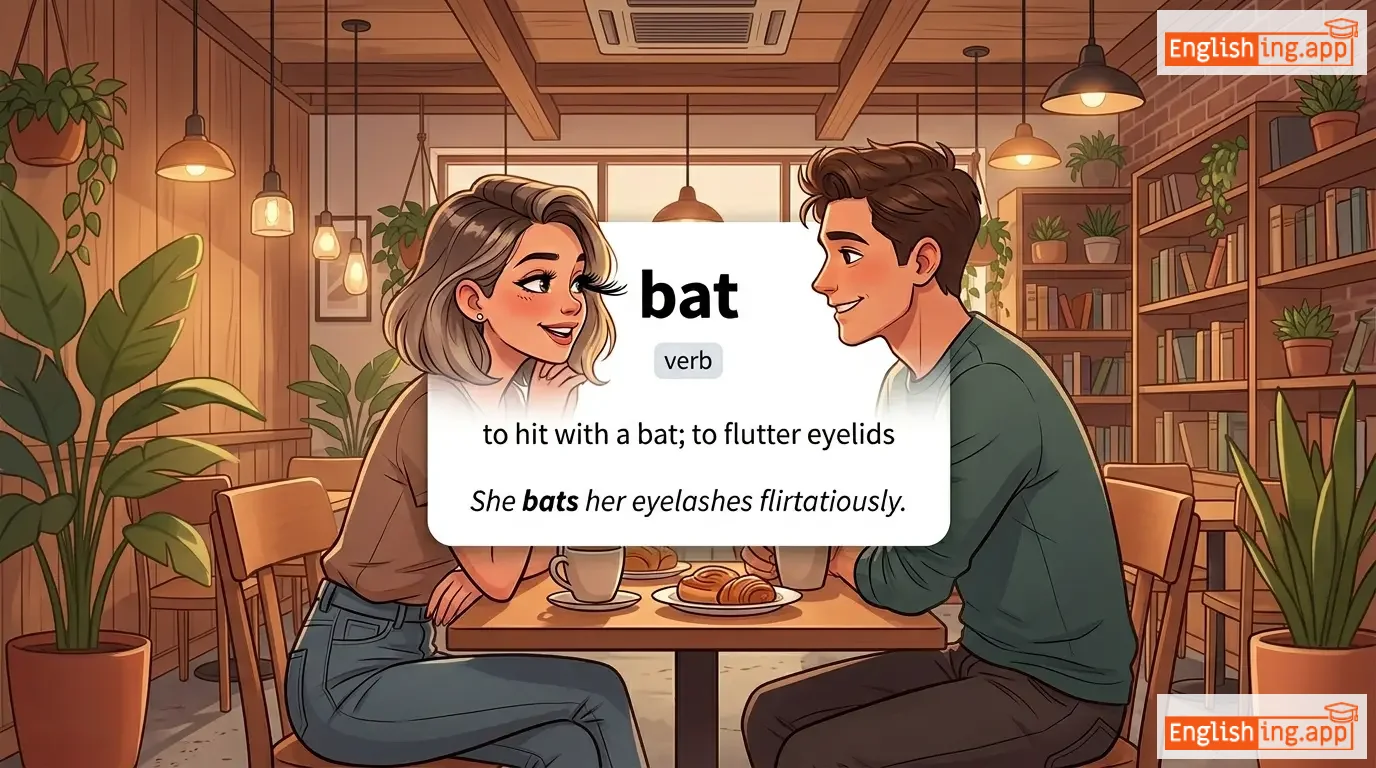
bat definition card — visual illustration of the meaning
noun
/bæt/
バット (batto)

a wooden or metal club used to hit a ball in sports like baseball or cricket

"He swung the bat and hit the ball hard."

"彼はバットを振ってボールを強く打った。" (Kare wa batto o futte bōru o tsuyoku utta.)
noun
/bætʃ/
一度に生産または処理されたアイテムの量 (ichido ni seisan mata wa shori sareta aitemu no ryo)

a quantity of items produced or processed at one time

"She baked a fresh batch of cookies this morning."

"彼女は今朝、新しいバッチのクッキーを焼いた。" (Kanojo wa kesa, atarashii batch no kukkii o yaita.)
😮‍💨

bate (ベイト)

verb
/beɪt/
減らす、抑える (herasu, osaeru)

to lessen or restrain; to diminish the force or intensity of something

"He spoke with bated breath as he waited for the result."
"彼は結果を待ちながら息を呑んで話した。" (Kare wa kekka o machinagara iki o nonde hanashita.)
noun
/bɑːθ/
お風呂 (ofuro)

an act of washing the body in water; or the container used for this purpose

"She took a long bath after work."

"彼女は仕事の後で長いお風呂に入りました。" (Kanojo wa shigoto no ato de nagai ofuro ni hairimashita.)
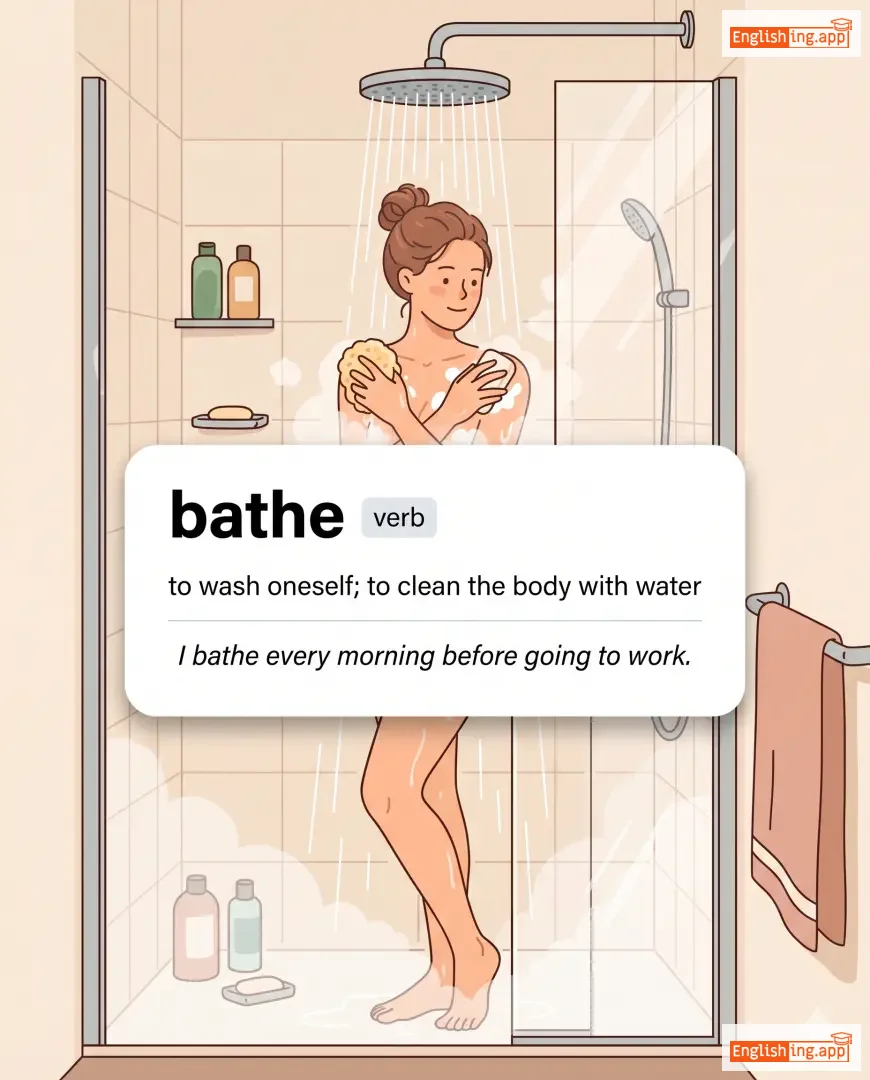
bathe definition card — visual illustration of the meaning
verb
/beɪð/
入浴 (nyuuyoku)

to wash oneself; to clean the body with water

"I bathe every morning before going to work."

"私は毎朝、仕事に行く前にお風呂に入ります。" (Watashi wa maiasa, shigoto ni iku mae ni ofuro ni hairimasu)
adjective
/bəˈθɛt.ɪk/
取るに足りない感情 (toruni tarinai kanjō)

displaying insincere or trivial emotion; producing an unintended ridiculous effect through sudden change from serious to silly

"The movie's ending was unintentionally bathetic rather than tragic."

"映画の結末は悲劇的ではなく、取るに足りないものでした。" (Eiga no ketsumatsu wa higekiteki de wa naku, toruni tarinai mono deshita.)
noun
/ˈbɑːθruːm/
バスルーム (basurūmu)

a room containing a toilet and usually a sink or shower

"The bathroom is on the second floor."
"バスルームは2階にあります。" (Basurūmu wa nikai ni arimasu.)
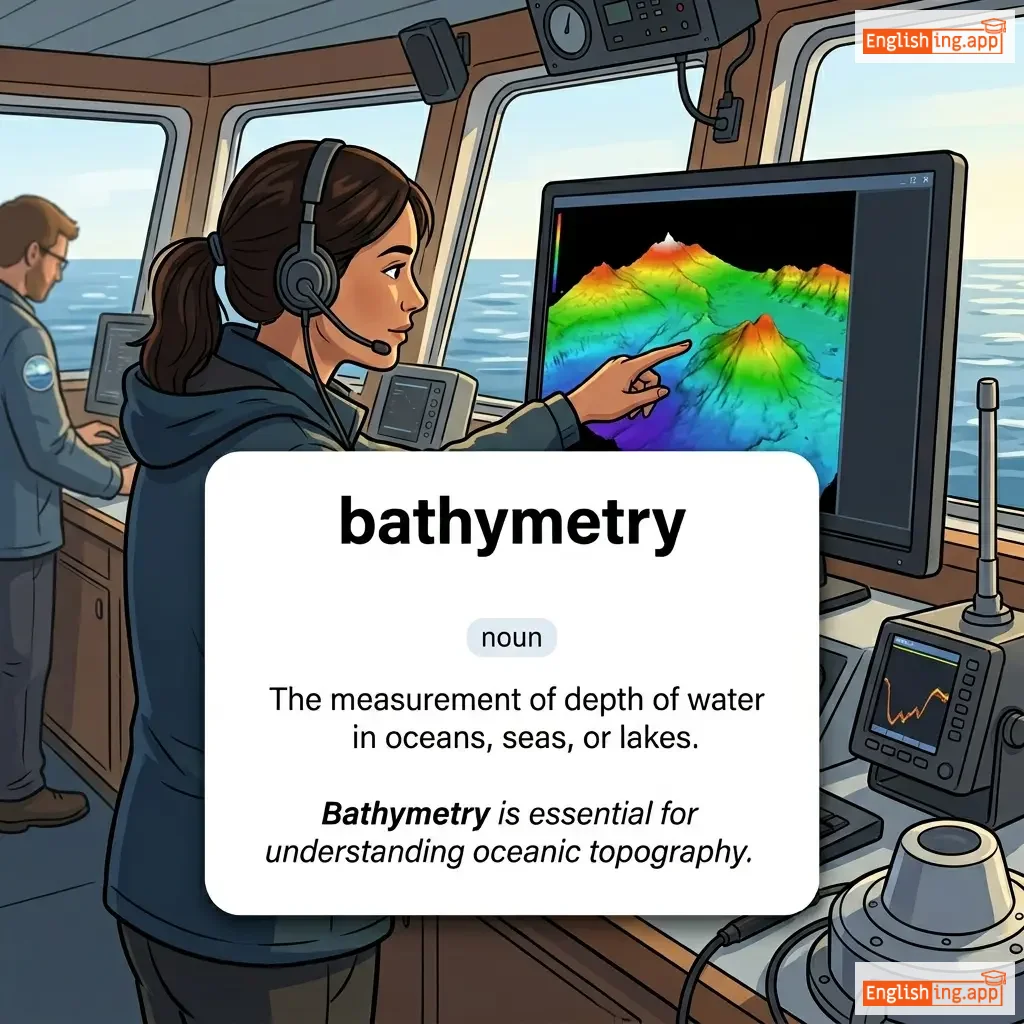
bathymetry definition card — visual illustration of the meaning
noun
/bəˈθɪm.ə.tri/
水深測定学 (suishin sokutei gaku)

The measurement of depth of water in oceans, seas, or lakes.

"Bathymetry is essential for understanding oceanic topography."

"バチメトリーは海洋の地形を理解するために不可欠です。" (Bathymetry wa kaiyō no chikei o rikai suru tame ni fukaketsu desu.)
🎶

baton

noun
/bəˈtɒn/

A thin stick carried by a conductor to direct an orchestra, or used as a symbol of authority.

"The conductor raised his baton to begin the symphony."

noun
/bəˈtæljən/
大隊 (daitai)

A large body of soldiers ready for battle, typically consisting of several companies.

"The battalion was deployed to the front line."

"その大隊は前線に展開されました。" (Sono daitai wa zensen ni tenkai saremashita.)
verb
/ˈbætn/
固定する (kotei suru)

To fasten or secure something tightly.

"They battened down the hatches before the storm."

"彼らは嵐の前にハッチをしっかりと固定した。" (Karera wa arashi no mae ni hatchi o shikkari to kotei shita.)
verb
/ˈbætər/
繰り返し打つ (kurikaeshi utsu)

To strike repeatedly with force.

"The waves battered the shoreline all night."

"波が一晩中海岸を打ちました。" (Nami ga ichiban-jū kaigan wo uchimashita.)
noun
/ˈbætəri/
バッテリー (batterī)

A device that stores and provides electrical energy; also refers to a group of similar things or repeated blows.

"The phone battery ran out after a long day."

"電話のバッテリーは長い一日の後に切れました。" (Denwa no batterī wa nagai ichinichi no ato ni kiremashita.)