語彙集

英単語辞書 | 単語の意味、定義、例文

noun
/ˌæplɪˈkeɪʃən/
申請 / アプリケーション / ソフトウェア (shinsei / apurikeeshon / sofuto wea)

a formal request for something; the act of putting something into operation; or a software program

"She submitted her application for the scholarship."

"彼女は奨学金の申請を提出しました。" (Kanojo wa shōgakukin no shinsei o teishutsu shimashita.)
verb
/əˈplaɪ/
申請する / 適用する (shinsei suru / tekiyou suru)

to make a formal request for something; to put into practice

"He decided to apply for the scholarship."

"彼は奨学金の申請を決めた。" (Kare wa shougakukin no shinsei wo kimeta.)
appoint definition card — visual illustration of the meaning
verb
/əˈpɔɪnt/
任命する (ninmei suru)

to officially assign a job or role to someone

"The board decided to appoint her as the new manager."

"ボードは彼女を新しいマネージャーに任命することを決定しました。" (Bōdo wa kanojo o atarashī manējā ni ninmei suru koto o kettei shimashita.)
appointed definition card — visual illustration of the meaning
verb
əˈpɔɪn.tɪd
任命された (ninmei sareta)

Assigned to a job or role; nominated or designated for a position.

"He was appointed as the commission leader."

"彼は委員会のリーダーに任命されました。" (Kare wa iinkai no rīdā ni ninmei saremashita.)
noun
/əˈpɔɪntmənt/
予約 (yoyaku)

an arrangement to meet someone at a particular time

"I have a doctor's appointment tomorrow."
"明日、医者の予約があります。" (Ashita, isha no yoyaku ga arimasu.)
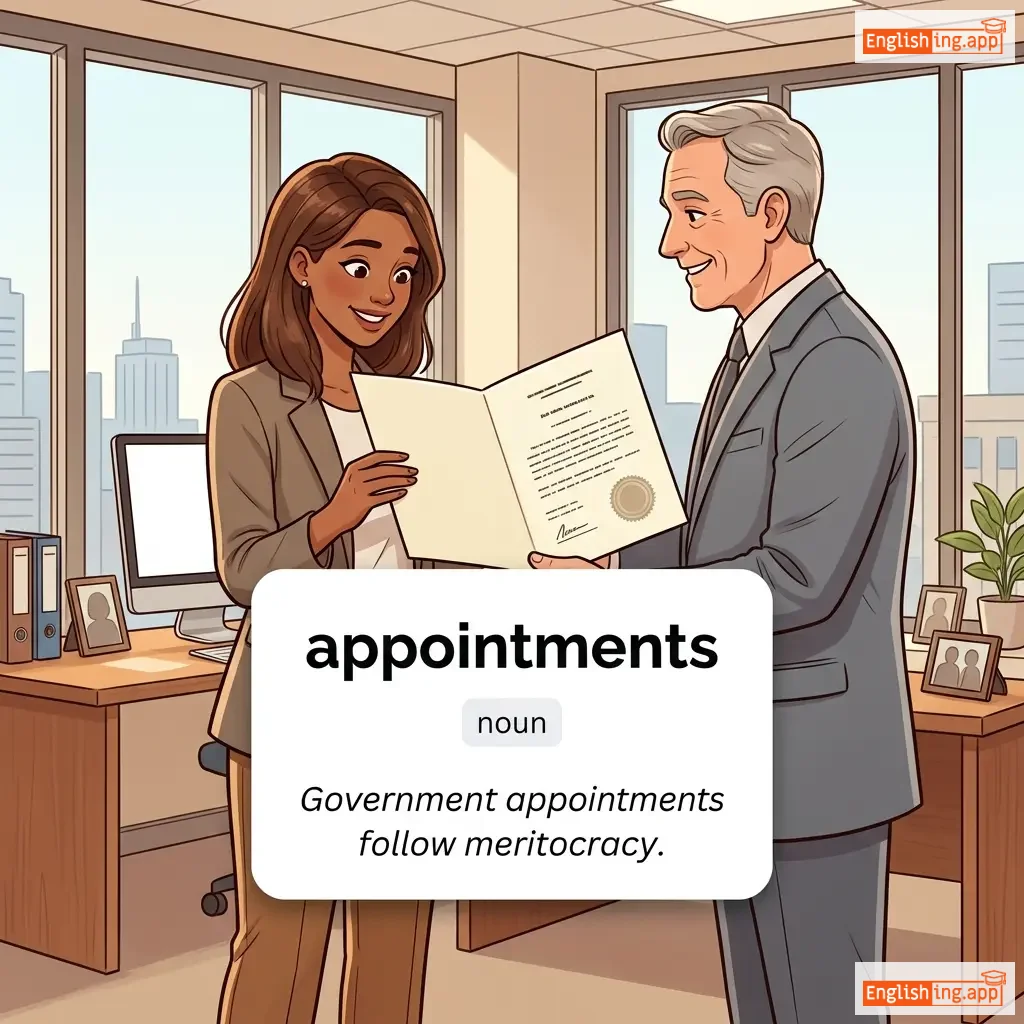
appointments definition card — visual illustration of the meaning
noun
əˈpɔɪnt.mənts
任命 (ninmei)

An arrangement to meet someone at a particular time and place; the action of assigning a job or role to someone.

"Government appointments follow meritocracy."
"政府の任命は功績に基づいて行われる。" (Seifu no ninmei wa kōseki ni motozuite okonawareru.)
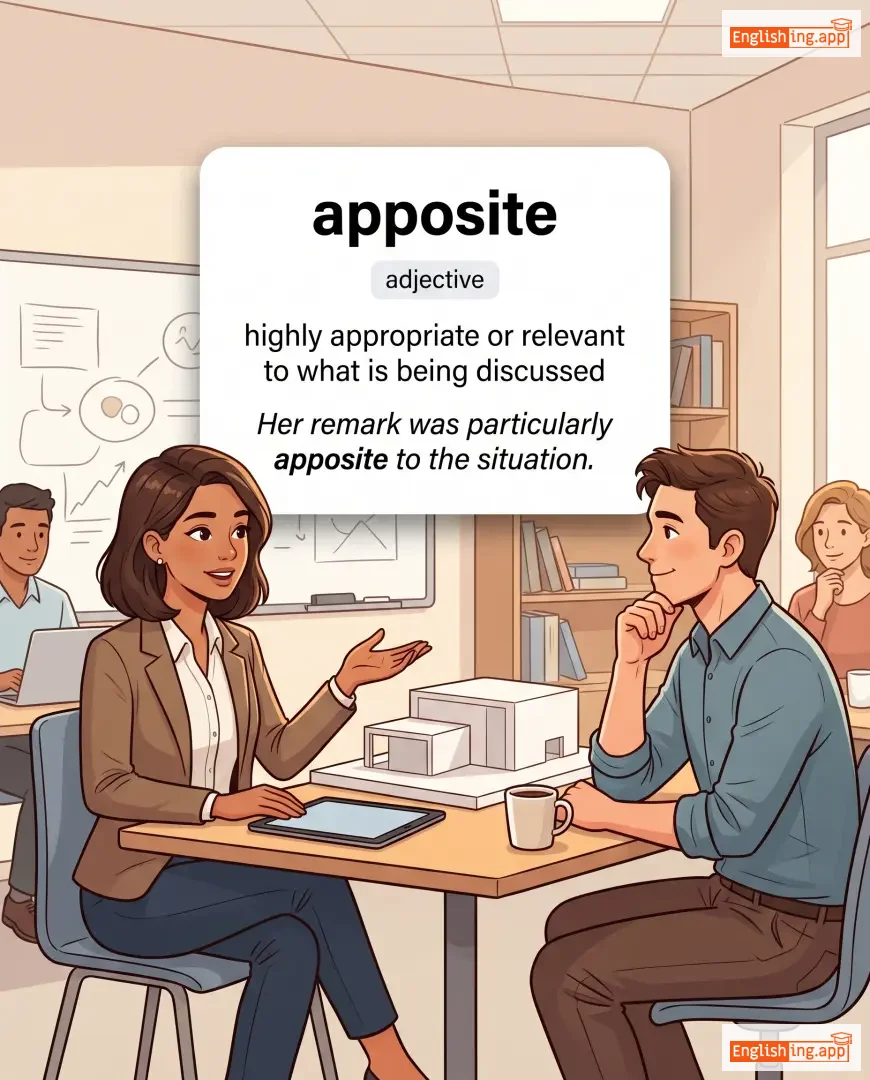
apposite definition card — visual illustration of the meaning
adjective
/ˈæpəzɪt/
適切 (tekisetsu)

highly appropriate or relevant to what is being discussed

"Her remark was particularly apposite to the situation."

"彼女のコメントはその状況に非常に適切でした。" (Kanojo no komento wa sono joukyou ni hijou ni tekisetsu deshita.)
noun
/ˌæpəˈzɪʃən/
同格 (並列文法) (tōkaku (bairitsu bunpō))

a grammatical construction in which two elements are placed side by side, with one explaining the other

"In the phrase 'my friend John,' the word 'John' is in apposition to 'my friend.'"
"'私の友人ジョン'というフレーズでは、'ジョン'という単語が'私の友人'とアポジションにあります。" ('Watashi no yūjin John' to iu furēzu de wa, 'John' to iu tango ga 'Watashi no yūjin' to apojishon ni arimasu.)
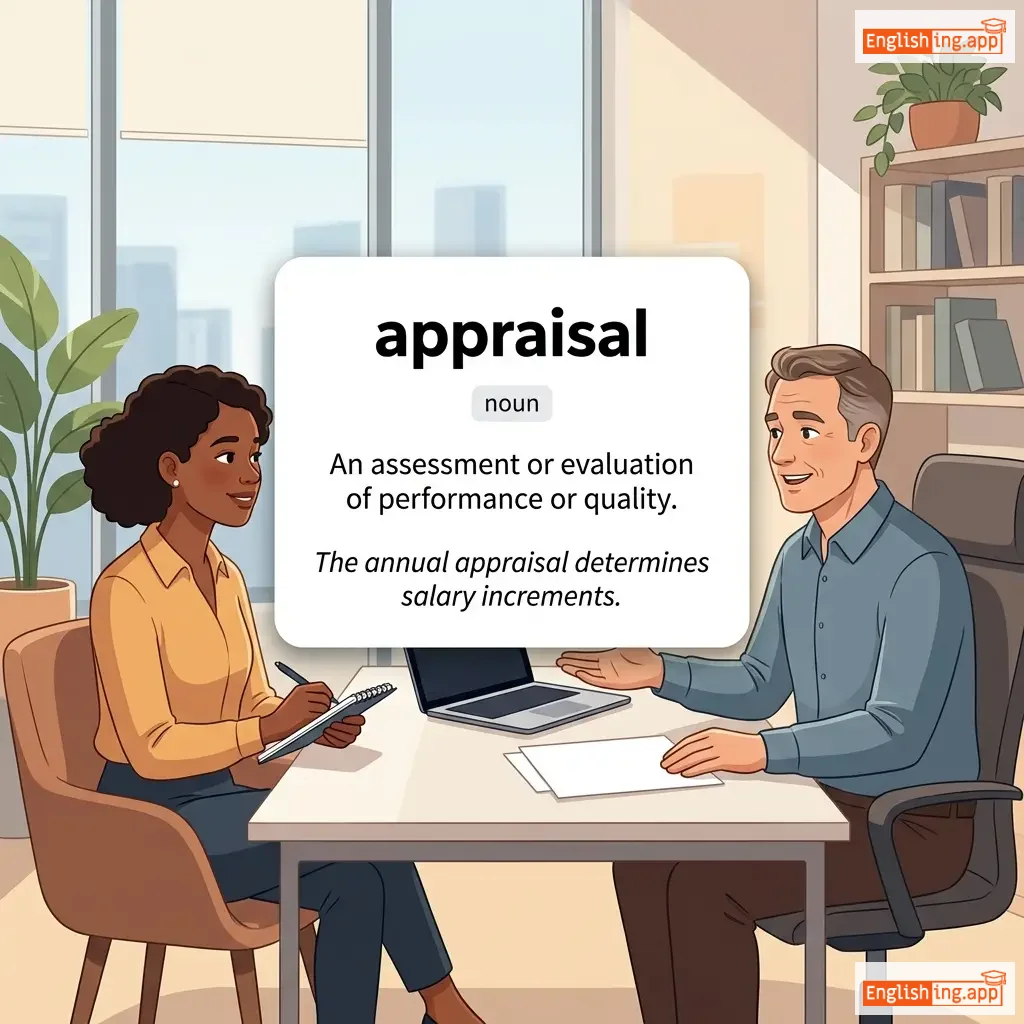
appraisal definition card — visual illustration of the meaning
noun
əˈpreɪ.zəl
評価 (hyōka)

An assessment or evaluation of performance or quality.

"The annual appraisal determines salary increments."

"年間の評価は給与の増加を決定します。" (Nenkan no hyōka wa kyūyo no zōka o kettei shimasu.)
verb
/əˈpreɪz/
評価する (hyouka suru)

to evaluate the value, quality, or importance of something

"The jeweler appraised the diamond before buying it."

"宝石商はダイヤモンドを購入する前に評価しました。" (Houseki shou wa daiyamondo o kounyuu suru mae ni hyouka shimashita.)
adjective
/əˈpriːʃəbl/
顕著な (kenchona)

large or noticeable enough to be important

"There has been an appreciable improvement in her performance."

"彼女のパフォーマンスには顕著な改善がありました。" (Kanojo no pafōmansu ni wa kenchona kaizen ga arimashita.)
appreciate definition card — visual illustration of the meaning
verb
/əˈpriːʃieɪt/
感謝する (kansha suru)

to recognize the value of something or to be thankful for it

"I really appreciate your help with this project."
"私はこのプロジェクトであなたの助けに本当に感謝しています。" (Watashi wa kono purojekuto de anata no tasuke ni hontō ni kansha shiteimasu.)
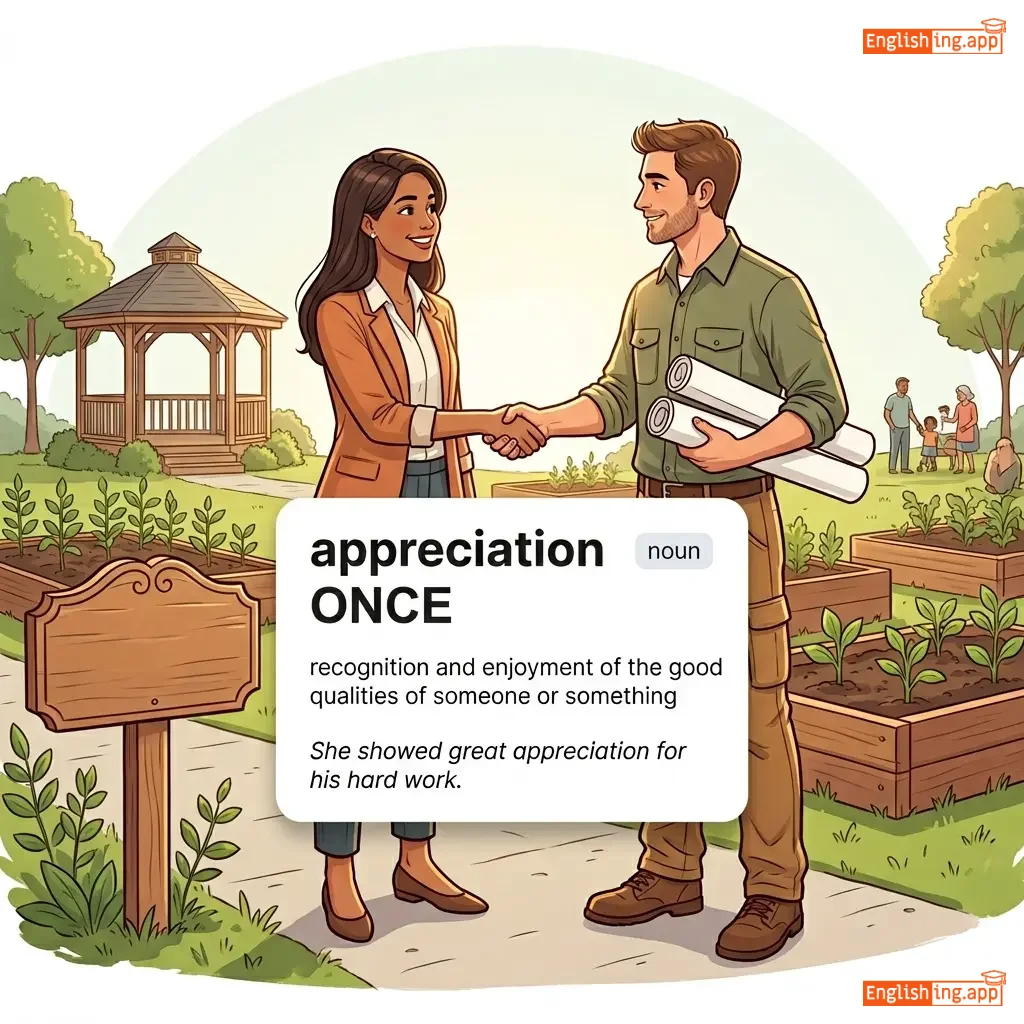
appreciation definition card — visual illustration of the meaning
noun
/əˌpriːʃiˈeɪʃən/
感謝、評価 (kansha, hyōka)

recognition and enjoyment of the good qualities of someone or something

"She showed great appreciation for his hard work."

"彼女は彼の懸命な働きに対して大きな感謝を示しました。" (Kanojo wa kare no kenmei na hataraki ni taishite ōkina kansha o shimeshimashita.)
verb
/ˌæprɪˈhɛnd/
逮捕する (taiho suru)

to arrest or seize someone; to understand or perceive something

"The police managed to apprehend the thief after a long chase."

"警察は長い追跡の後、泥棒を捕まえることに成功した。" (Keisatsu wa nagai tsuiseki no ato, dorobō o tsukamaeru koto ni seikō shita.)
adjective
/ˌæprɪˈhɛnsəbl̩/
理解できる (rikai dekiru)

capable of being understood or grasped

"The concept was not easily apprehensible to the new students."
"その概念は新しい学生には簡単に理解できませんでした。" (Sono gainen wa atarashī gakusei ni wa kantan ni rikai dekimasen deshita.)
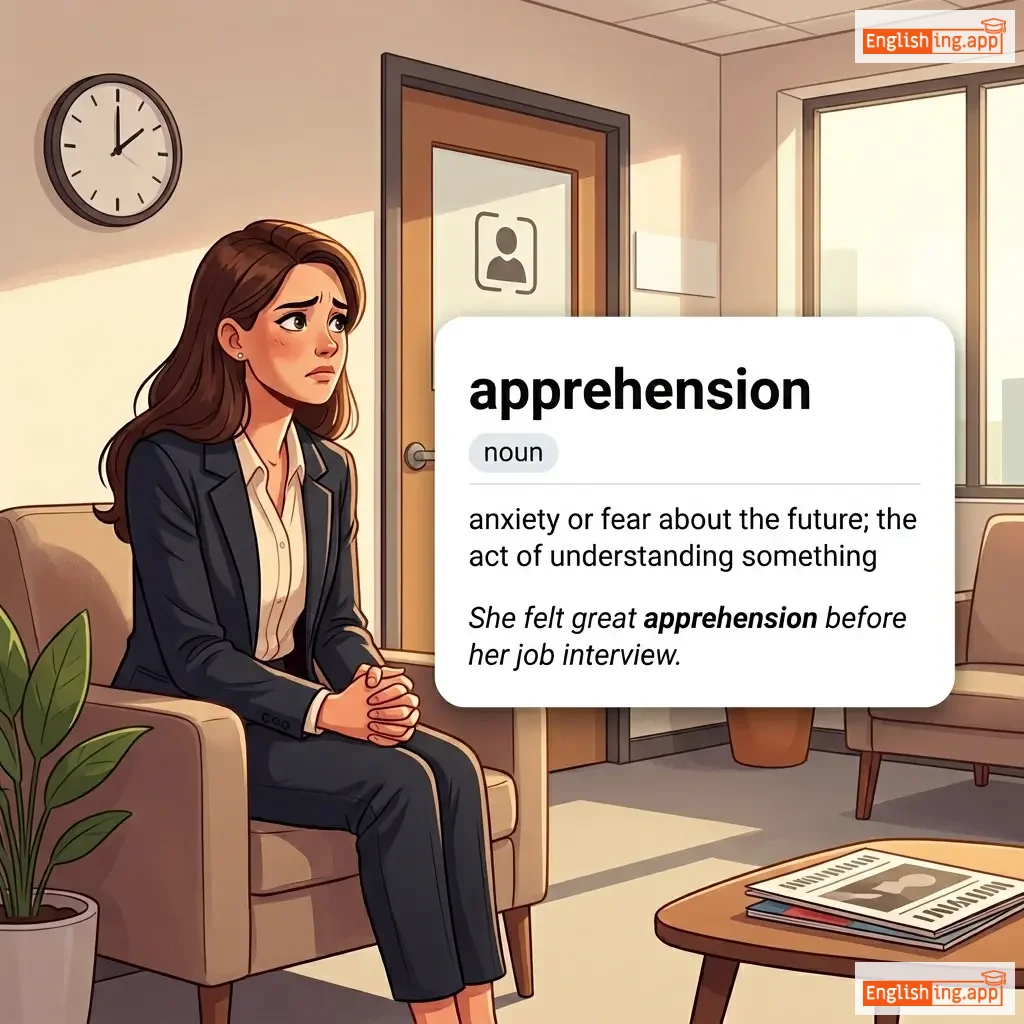
apprehension definition card — visual illustration of the meaning
noun
/ˌæprɪˈhɛnʃən/
不安や恐れ (fuan ya osore)

anxiety or fear about the future; the act of understanding something

"She felt great apprehension before her job interview."

"彼女は面接の前に大きな不安を感じていた。" (Kanojo wa mensetsu no mae ni ōkina fuan o kanjite ita.)
adjective
/ˌæprɪˈhɛnsɪv/
不安な (fuan na)

feeling anxious or fearful that something bad will happen

"He was apprehensive about starting a new job in a foreign country."
"彼は外国で新しい仕事を始めることに不安を感じていた。" (Kare wa gaikoku de atarashī shigoto o hajimeru koto ni fuan o kanjite ita.)
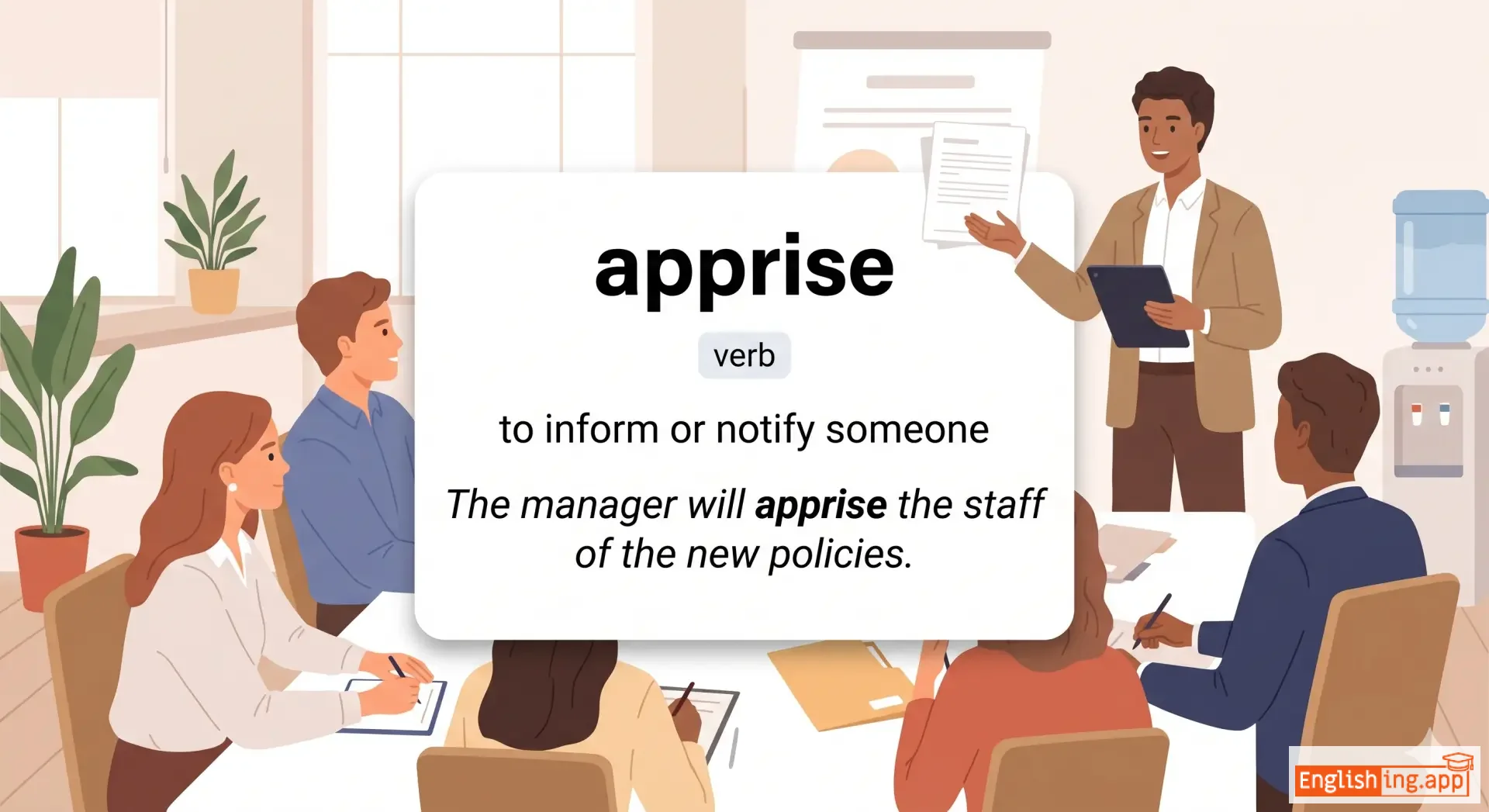
apprise definition card — visual illustration of the meaning
verb
/əˈpraɪz/
知らせる (shiraseru)

to inform or notify someone

"The manager will apprise the staff of the new policies."

"マネージャーはスタッフに新しい方針について知らせます。" (Manejā wa sutaffu ni atarashī hōshin ni tsuite shirasemasu.)
verb
/əˈproʊtʃ/
近づく / 解決する (chikaduku / kaiketsu suru)

to move closer to someone or something; to deal with a situation or problem

"The teacher approached the student to offer help."
"教師は学生に近づいて助けを申し出た。" (Kyoushi wa gakusei ni chikaduite tasuke o moushita.)
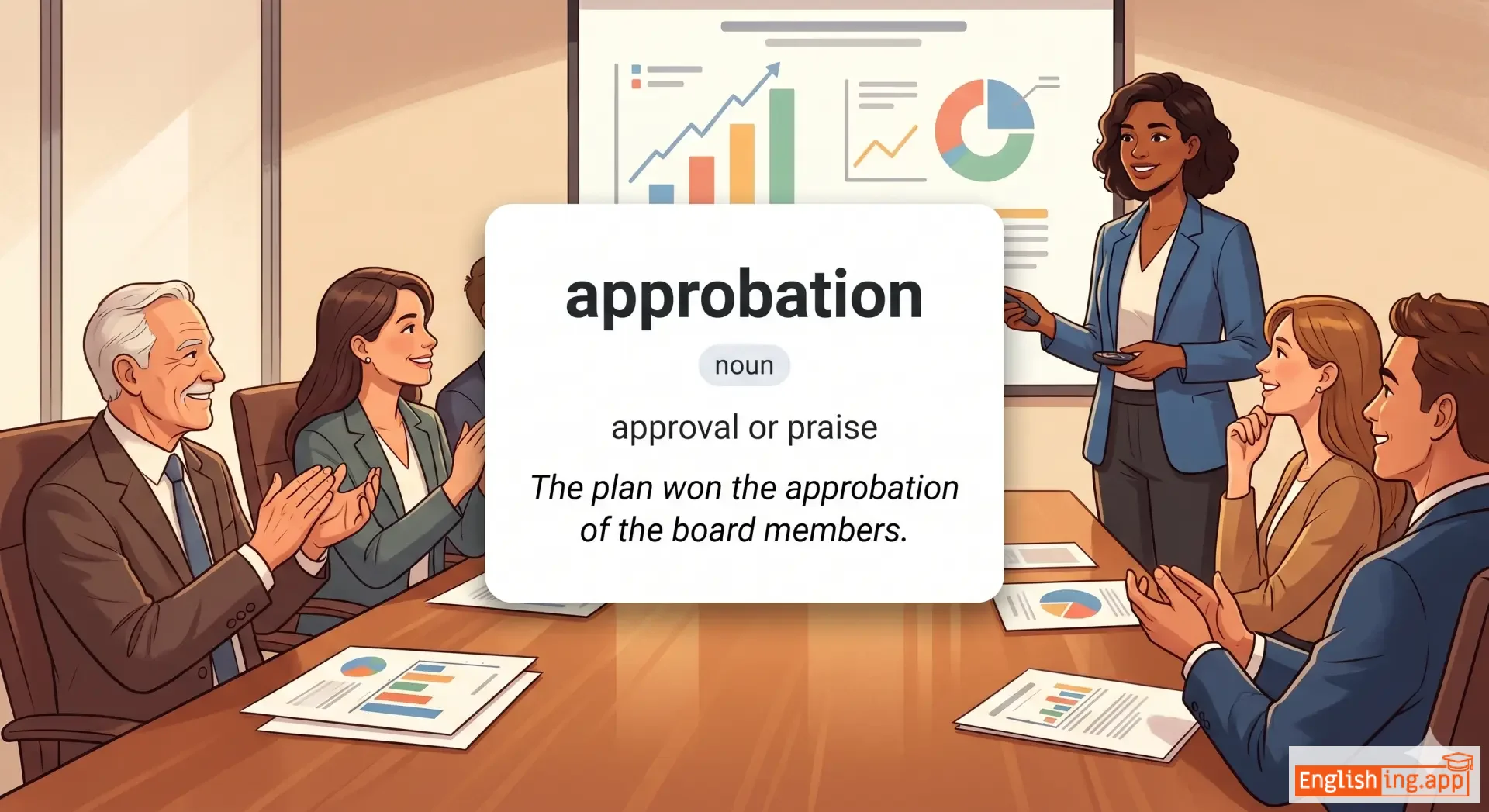
approbation definition card — visual illustration of the meaning
noun
/ˌæprəˈbeɪʃən/
承認 / 賞賛 (shōnin / shōsan)

approval or praise

"The plan won the approbation of the board members."

"その計画は理事会メンバーの承認を得ました。" (Sono keikaku wa rijikai menbā no shōnin o emashita.)
adjective
/ˈæprəbəˌtɔːri/
称賛の (shōsan no)

expressing approval or praise

"The teacher gave an approbatory nod after reading the essay."

"教師はエッセイを読んだ後、称賛の意を込めてうなずいた。" (Kyōshi wa essei o yonda ato, shōsan no i o komete unazuita.)
appropriate definition card — visual illustration of the meaning
adjective, verb
/əˈproʊpriət/ (adj), /əˈproʊprieɪt/ (verb)
適切 / 取る (tekisetsu / toru)

suitable or proper in the circumstances (adj); to take something for one’s own use, often without permission (verb)

"Wearing formal clothes was appropriate for the ceremony."

"フォーマルな服を着ることはその儀式には適切でした。" (Fōmaru na fuku o kiru koto wa sono gishiki ni wa tekisetsu deshita.)
adverb
/əˈproʊpriətli/
適切に (tekisetsu ni)

in a way that is suitable or proper for a particular situation

"She was dressed appropriately for the event."

"彼女はイベントに適切に服を着ていました。" (Kanojo wa ibento ni tekisetsu ni fuku wo kiteimashita.)
noun
/əˈpruː.vəl/
承認 (shounin)

official permission or agreement for something

"The project received government approval."

"そのプロジェクトは政府の承認を得た。" (Sono purojekuto wa seifu no shōnin o eta.)
verb
/əˈpruːv/
承認する (shōnin suru)

to officially accept, agree to, or allow something

"The manager approved the budget for next year."

"マネージャーは来年の予算を承認しました。" (Manējā wa rainen no yosan o shōnin shimashita.)
adjective/verb
/əˈprɒksɪmət/
おおよその (ooyoso no)

close to the actual but not exact; to estimate or calculate roughly

"The cost is approximate and may change later."

"その費用はおおよそのもので、後で変わるかもしれません。" (sono hiyou wa ooyoso no mono de atode kawaru kamoshiremasen)
adverb
/əˈprɒk.sɪ.mət.li/
おおよそ (oyoso)

used to show that something is almost, but not completely, accurate or exact

"The journey takes approximately three hours."

"旅行はおおよそ3時間かかります。" (Ryokou wa oyoso san jikan kakarimasu.)
noun
/əˈpɜːrtənəns/
付属物 / 付加部分 (fuzokumotsu / fuka bubun)

an accessory or supplementary part of something

"The garage is an appurtenance of the main house."

"ガレージはメインハウスの付属物です。" (Gareeji wa mein haus no fuzokumotsu desu.)
noun
/əˈpɜːrtənənsɪz/
付属物 (fuzokubutsu)

Additional items or accessories associated with something, often used in a legal or property context.

"The house was sold along with all its appurtenances, including the garage and garden."

"その家は、ガレージや庭を含むすべての付属物と一緒に売られました。" (Sono ie wa, garēji ya niwa o fukumu subete no fuzokubutsu to issho ni uraremashita.)
adjective
/əˈpɜːrtənənt/
附属 (fuzoku)

Belonging to or associated with something, often used in legal/property contexts.

"The right of way is appurtenant to the landowner’s property."

"通行権は土地所有者の財産に付随しています。" (Tōkōken wa tochi shoyūsha no zaisan ni fuzoku shiteimasu.)
noun
/ˈeɪ.prɪ.kɒt/
アプリコット (apurikotto)

a small orange-colored fruit with a soft skin and sweet flesh

"The apricot tree produces sweet fruit in summer."

"アプリコットの木は夏に甘い果物を実らせる。" (Apurikotto no ki wa natsu ni amai kudamono o minoraseru.)
noun
/ˈeɪprɪl/
4月 (shigatsu)

the fourth month of the year in the Gregorian calendar

"April is known for its pleasant spring weather."
"4月は心地よい春の天気で知られています。" (shigatsu wa kokochiyoi haru no tenki de shirarete imasu)
👩‍🍳

apron

noun
/ˈeɪ.prən/

A protective garment worn over the front of one's clothes to keep them clean, especially while cooking.

"She tied an apron around her waist before cooking dinner."

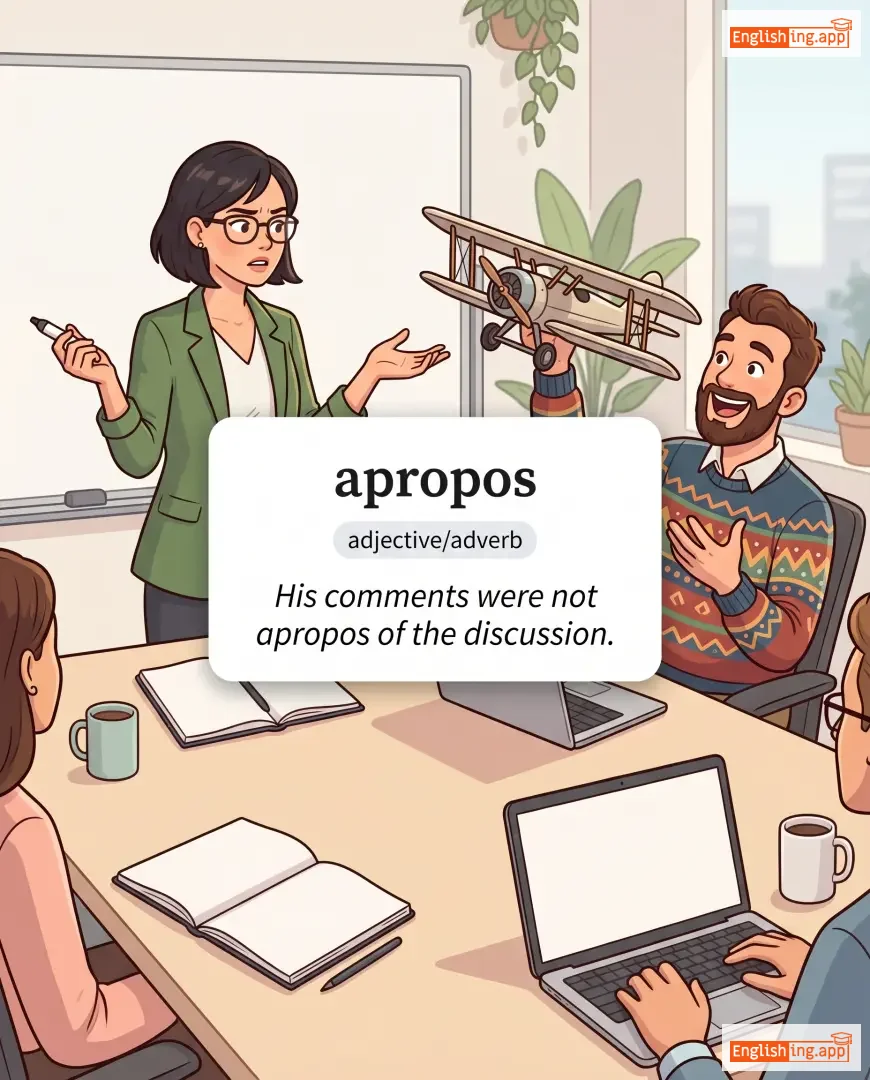
apropos definition card — visual illustration of the meaning
adjective/adverb
/ˌæ.prəˈpoʊ/
適切 (tekisetsu)

Appropriate to the situation; relevant. As an adverb, it means 'with reference to' or 'regarding'.

"His comments were not apropos of the discussion."

"彼のコメントは議論には適切ではなかった。" (Kare no komento wa giron ni wa tekisetsu de wa nakatta.)
adjective
/æpt/
適切な (tekisetsuna)

Appropriate or suitable; having a natural tendency or quick to learn.

"She is an apt student who quickly understands new concepts."

"彼女は新しい概念をすぐに理解できる適切な学生です。" (Kanojo wa atarashī gainen o sugu ni rikai dekiru tekisetsu na gakusei desu.)
noun
/ˈæptɪˌtjuːd/
適性 (tekisei)

a natural ability or talent to do something well

"She has a strong aptitude for learning new languages."
"彼女は新しい言語を学ぶのに強い適性を持っています。" (kanojo wa atarashī gengo o manabu no ni tsuyoi tekisei o motteimasu.)
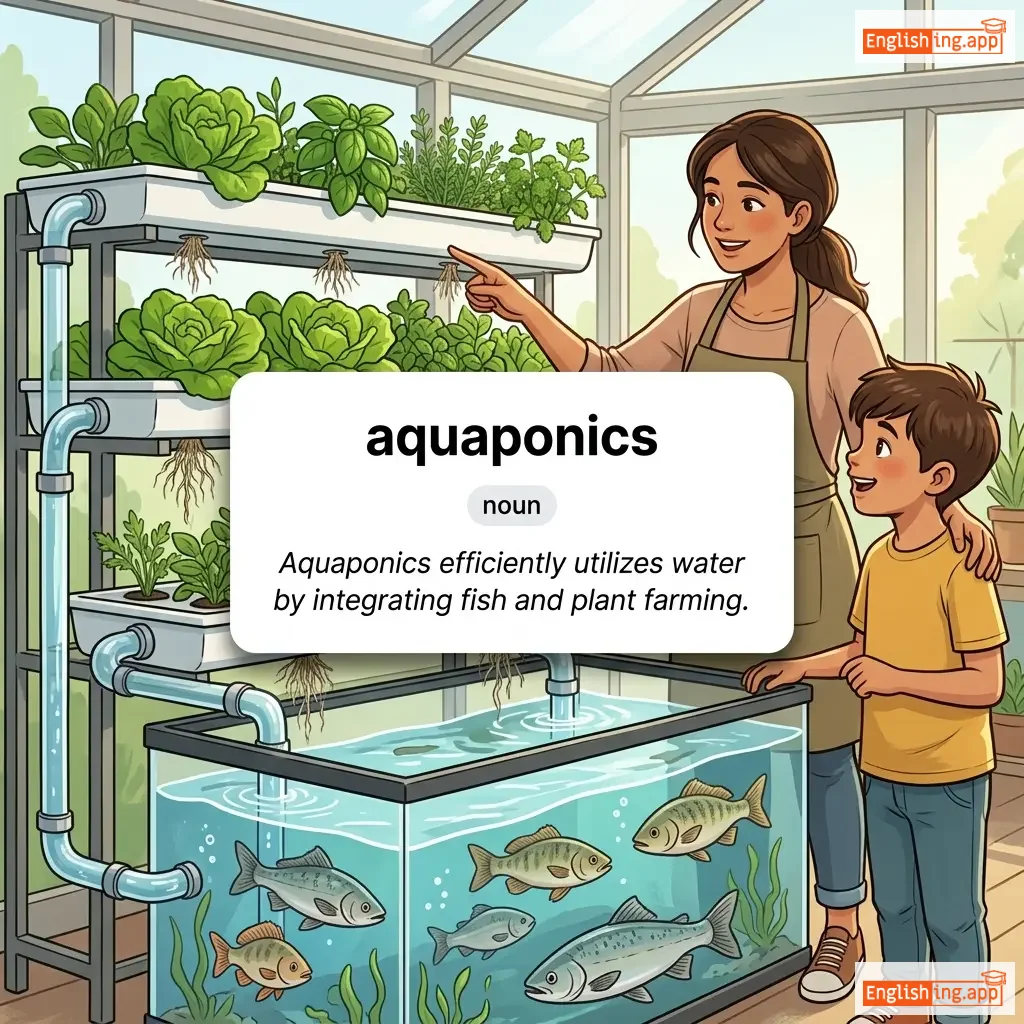
aquaponics definition card — visual illustration of the meaning
noun
/ˌækwəˈpɒnɪks/
アクアポニックス (akuwaponikkusu)

A system of aquaculture in which the waste produced by farmed fish or other aquatic animals supplies nutrients for plants grown hydroponically.

"Aquaponics efficiently utilizes water by integrating fish and plant farming."
"アクアポニックスは魚と植物の農業を統合することによって水を効率的に利用します。" (Akuwa ponikkusu wa sakana to shokubutsu no nōgyō o tōgō suru koto ni yotte mizu o kōritsu-teki ni riyō shimasu.)
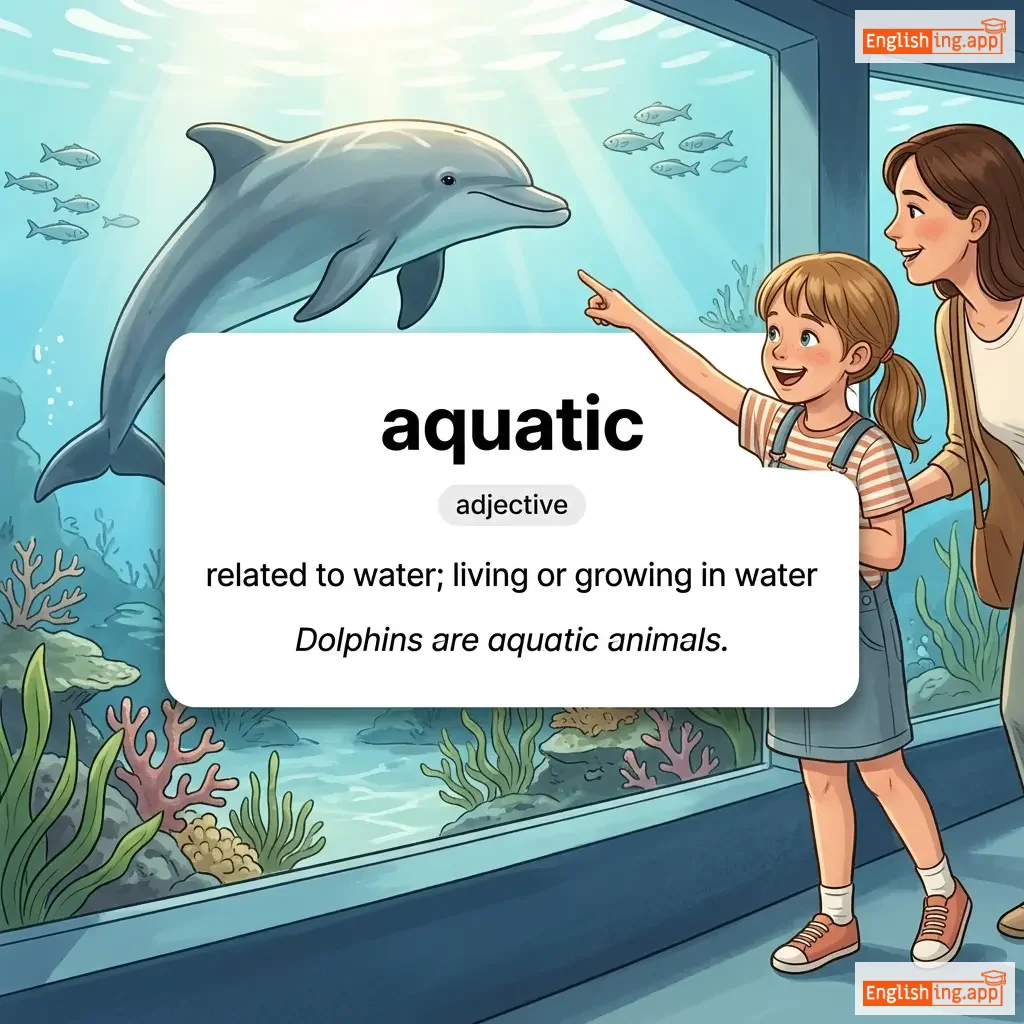
aquatic definition card — visual illustration of the meaning
adjective
/əˈkwætɪk/
水生の (suisei no)

related to water; living or growing in water

"Dolphins are aquatic animals."

"イルカは水生動物です。" (Iruka wa suisei dōbutsu desu.)
noun
/ˈækwɪˌdʌkt/
水道橋 (suidōkyō)

a structure built to carry water over long distances

"The Romans built aqueducts to supply water to their cities."

"ローマ人は都市に水を供給するために水道橋を建設しました。" (Rōma jin wa toshi ni mizu o kyōkyū suru tame ni suidōkyō o kensetsu shimashita.)
adjective
/ˈeɪkwiəs/
水性の (suisei no)

related to or containing water; watery

"The solution was in an aqueous form."

"溶液は水性の形でした。" (Yōeki wa suisei no katachi deshita.)
adjective
/ˈækwɪˌlaɪn/
ワシのくちばしのような (washi no kuchibashi no you na)

curved like an eagle's beak; hooked

"He had an aquiline nose that gave him a distinguished appearance."
"彼はワシのくちばしのような鼻を持っており、それが彼に優れた外見を与えていました。" (Kare wa washi no kuchibashi no you na hana o motte ori, sore ga kare ni sugureta gaiken o ataete imashita.)
🕌

arab

noun
/ˈær.əb/

a person belonging to the Semitic people of the Middle East and North Africa

"He is an Arab living in Dubai."

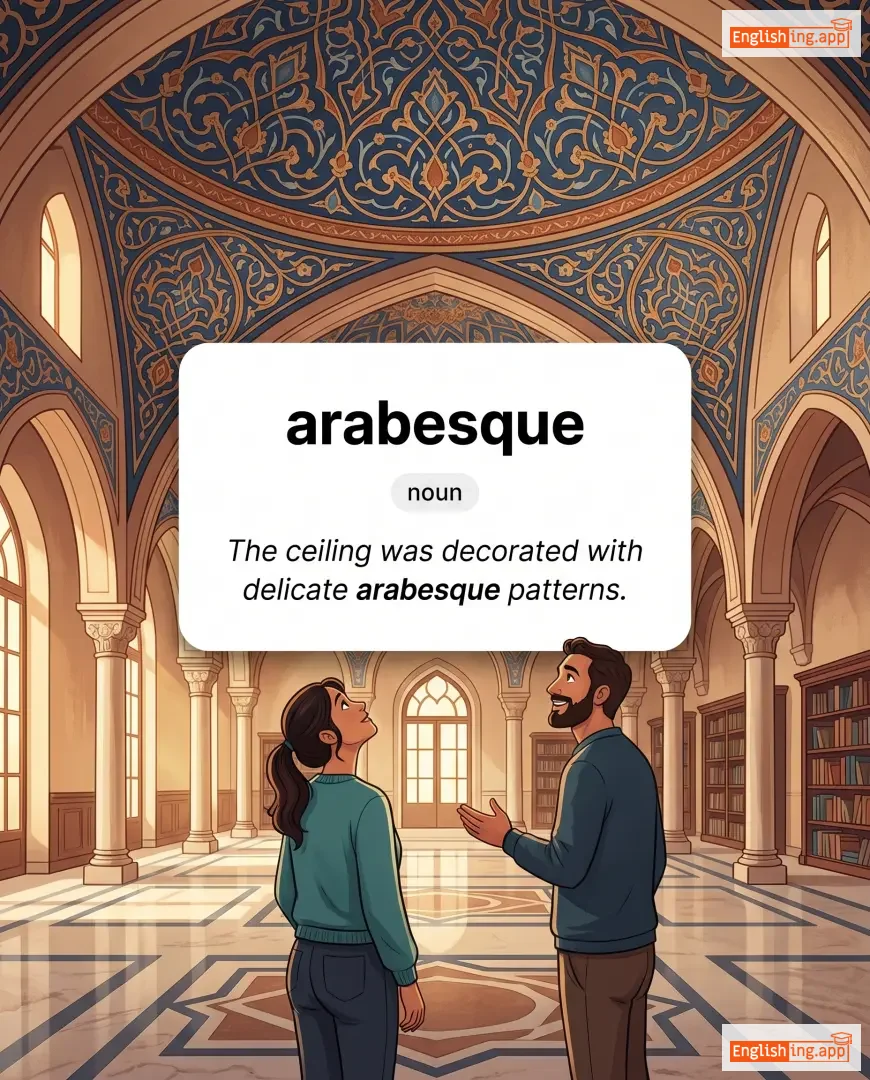
arabesque definition card — visual illustration of the meaning
noun
/ˌær.əˈbesk/
装飾的デザイン (sōshokuteki dezain)

a complex, ornate design featuring intertwined flowing lines, often used in architecture or ballet poses

"The ceiling was decorated with delicate arabesque patterns."

"天井は繊細なアラベスク模様で飾られていました。" (Tenjō wa sensaina arabesuku moyō de kazararete imashita.)
noun
/əˈreɪ.bi.ən ˈdʒæz.mɪn/
アラビアジャスミン (arabia jasumin)

A fragrant white flower native to South and Southeast Asia, commonly used in perfumes and religious ceremonies

"The Arabian jasmine filled the garden with its sweet fragrance."
"アラビアジャスミンはその甘い香りで庭を満たしました。" (Arabia jasumin wa sono amai kaori de niwa o mitashimashita.)
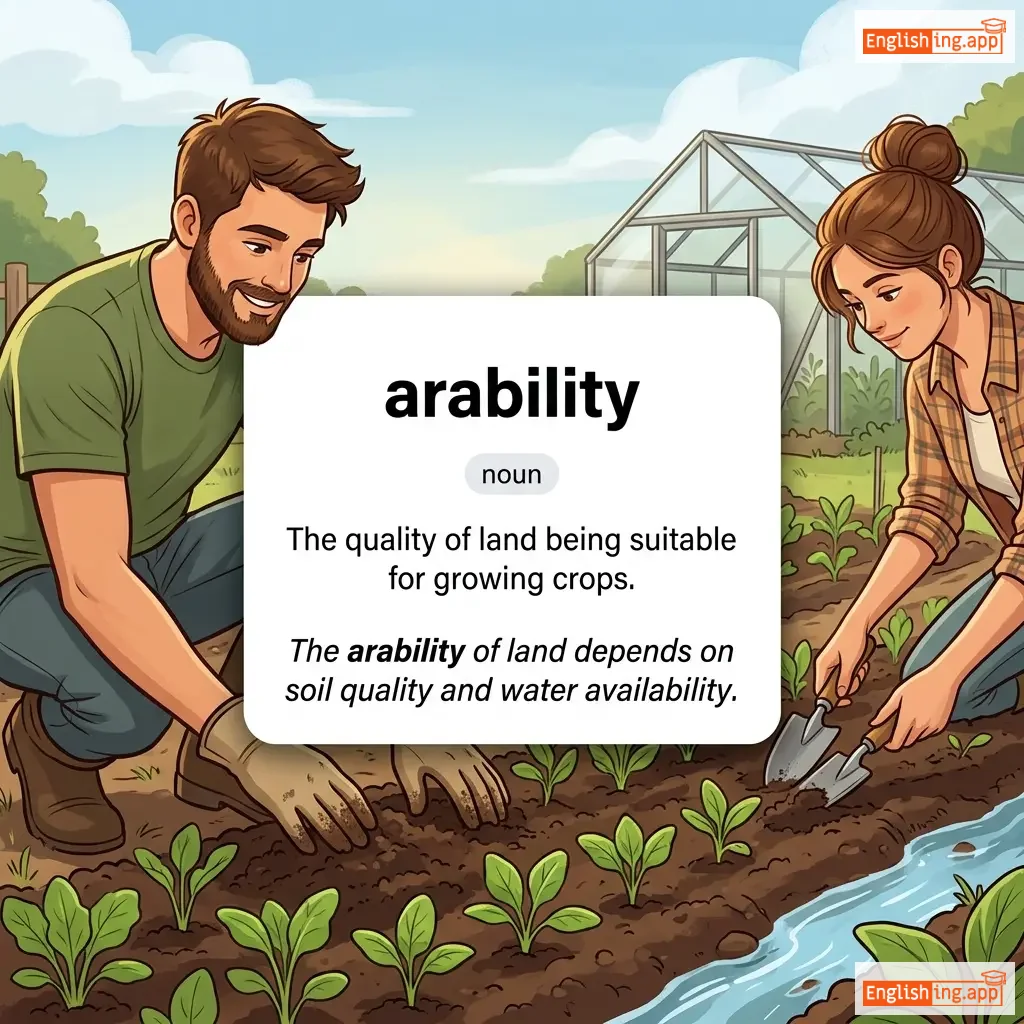
arability definition card — visual illustration of the meaning
noun
/ˌær.əˈbɪl.ɪ.ti/
耕作能力 (kōsaku nōryoku)

The quality of land being suitable for growing crops.

"The arability of land depends on soil quality and water availability."

"土地の耕作能力は土壌の質と水の利用可能性に依存しています。" (Tochi no kōsaku nōryoku wa dojo no shitsu to mizu no riyō kanō-sei ni izon shiteimasu.)
adjective
/ˈærəbəl/
耕作可能 (kousaku kanou)

suitable for growing crops or farming

"The farmer purchased arable land to expand his crops."

"農家は作物を拡大するために耕作可能な土地を購入しました。" (Nouka wa sakumotsu o kakudai suru tame ni kousaku kanou na tochi o kounyuu shimashita.)
noun
/ˈɑːrbɪtər/
仲裁者 (chūsai-sha)

a person who has the authority to settle a dispute or decide an issue

"The principal acted as the arbiter in the conflict between the students."

"校長は生徒間の対立で仲裁者として行動した。" (Kōchō wa seitokan no tairitsu de chūsai-sha toshite kōdō shita.)
arbitrage definition card — visual illustration of the meaning
noun
/ˈɑː.bɪ.trɑːʒ/
異なる市場で証券、通貨、または商品を同時に購入および販売して価格差を利用して利益を得ること (kotonaru shijō de shōken, tsūka, matawa shōhin o dōji ni kōnyū oyobi hanbai shite kakaku sa o riyō shite rieki o eru koto)

The simultaneous buying and selling of securities, currency, or commodities in different markets to take advantage of price differences.

"Investors use arbitrage strategies in financial markets."

"投資家は金融市場でアービトラージ戦略を使用します。" (Tōshika wa kin'yū shijō de ābito rāji senryaku o shiyō shimasu.)
adjective
/ˈɑːrbɪˌtrɛri/
任意の (nin'i no)

based on random choice or personal whim, rather than reason or system

"The teacher's arbitrary grading upset many students."

"教師の任意の採点は多くの学生を困らせました。" (Kyoushi no nin'i no saiten wa ooku no gakusei o komarase mashita.)
verb
/ˈɑːrbɪtreɪt/
仲裁する (chūsai suru)

to settle a dispute between two parties by acting as an impartial judge

"The committee agreed to arbitrate the contract dispute."

"委員会は契約紛争を仲裁することに同意しました。" (Iinkai wa keiyaku funsō o chūsai suru koto ni dōi shimashita.)