词汇表

英语词汇词典 | 单词含义、定义和示例

verb
/ˈaɪdəlaɪz/
偶像崇拜 (ǒuxiàng chóngbài)

To admire or worship someone excessively.

"Fans often idolize celebrities for their talent and lifestyle."

"粉丝们常常因为他们的才华和生活方式而崇拜名人。" (Fěnsīmen chángcháng yīnwèi tāmen de cáihuá hé shēnghuó fāngshì ér chóngbài míngrén.)
noun
/ˈaɪdɪl/
田园诗般的场景 (tianyuanshi ban de changjing)

An extremely happy, peaceful, or picturesque episode or scene, often idealized.

"Their honeymoon was an idyll on a tropical island."

"他们的蜜月是在一个热带岛屿上的田园诗般的场景。" (Tamen de miyue shi zai yige re dai daoyu shang de tianyuanshi ban de changjing.)
adjective
/aɪˈdɪlɪk/
田园诗般的美丽 (tiányuánshī bān de měilì)

Like an idyll; extremely happy, peaceful, or picturesque.

"They enjoyed an idyllic vacation by the sea."

"他们享受了一个田园诗般的海边假期。" (Tāmen xiǎngshòule yīgè tiányuánshī bān de hǎibiān jiàqī.)
abbreviation
/ˌaɪˈiː/
(ji)

That is to say; used to clarify or explain something more precisely.

"Many amphibians, i.e., frogs and salamanders, can live both in water and on land."
"许多两栖动物,即青蛙和蝾螈,能够同时在水中和陆地上生活。" (Xu duo liangqi dongwu, ji qingwa he rongyan, nenggou tongshi zai shui zhong he ludi shang shenghuo.)
conjunction
/ɪf/
如果 (ruguo)

used to introduce a condition or supposition

"If it rains tomorrow, we will stay home."

"如果明天下雨,我们就待在家里。" (Ruguo mingtian xiaoyu, women jiu dai zai jiali.)
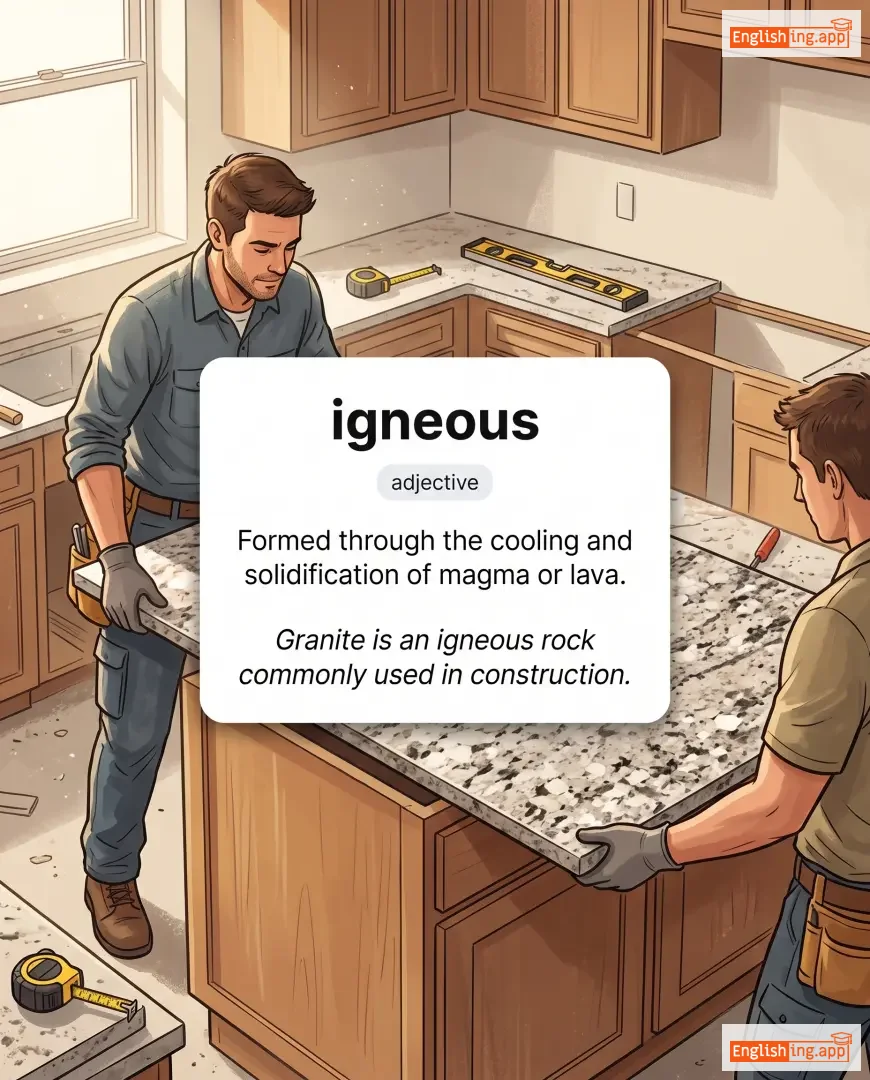
igneous definition card — visual illustration of the meaning
adjective
/ˈɪɡ.ni.əs/
火成 (huǒchéng)

Formed through the cooling and solidification of magma or lava.

"Granite is an igneous rock commonly used in construction."

"花岗岩是一种常用于建筑的火成岩。" (Huāgāngyán shì yī zhǒng cháng yòng yú jiànzhú de huǒchéng yán.)
verb
/ɪɡˈnaɪt/
点燃 (diǎnrán)

To catch fire or cause to catch fire; to start or arouse.

"The sparks ignited the dry leaves in seconds."

"火花在几秒钟内点燃了干叶。" (huǒ huā zài jǐ miǎo zhōng nèi diǎn rán le gān yè.)
adjective
/ɪɡˈnoʊ.bəl/
卑鄙的 (bēibǐ de)

Dishonorable, shameful, or lacking nobility.

"His ignoble actions ruined his reputation."

"他的卑鄙行为毁掉了他的声誉。" (Tā de bēibǐ xíngwéi huǐ diào le tā de shēngyù.)
adjective
/ˌɪɡ.nəˈmɪn.i.əs/
可耻的 (kechi de)

Marked by shame, disgrace, or humiliation.

"The team suffered an ignominious defeat in the finals."

"队伍在决赛中遭遇了可耻的失败。" (Duiwu zai jue sai zhong zao yu le kechi de shibai.)
noun
/ˈɪɡ.nəˌmɪn.i/
耻辱 (chiru)

Public shame, disgrace, or dishonor.

"He lived the rest of his life in ignominy after the scandal."

"他在丑闻后余生都活在耻辱中。" (Tā zài chǒuwén hòu yúshēng dōu huó zài chīrǔ zhōng.)
noun
/ˈɪɡnərəns/
无知 (wuzhi)

lack of knowledge or awareness in general

"His ignorance about the subject was evident."

"他对这个话题的无知显而易见。" (Tā duì zhège huàtí de wúzhī xiǎn'ér yìjiàn.)
adjective
/ˈɪɡ.nər.ənt/
无知 (wuzhi)

lacking knowledge, awareness, or education

"He made an ignorant comment about the culture."
"他对文化做出了无知的评论。" (Ta dui wenhua zuo chu le wuzhi de pinglun.)
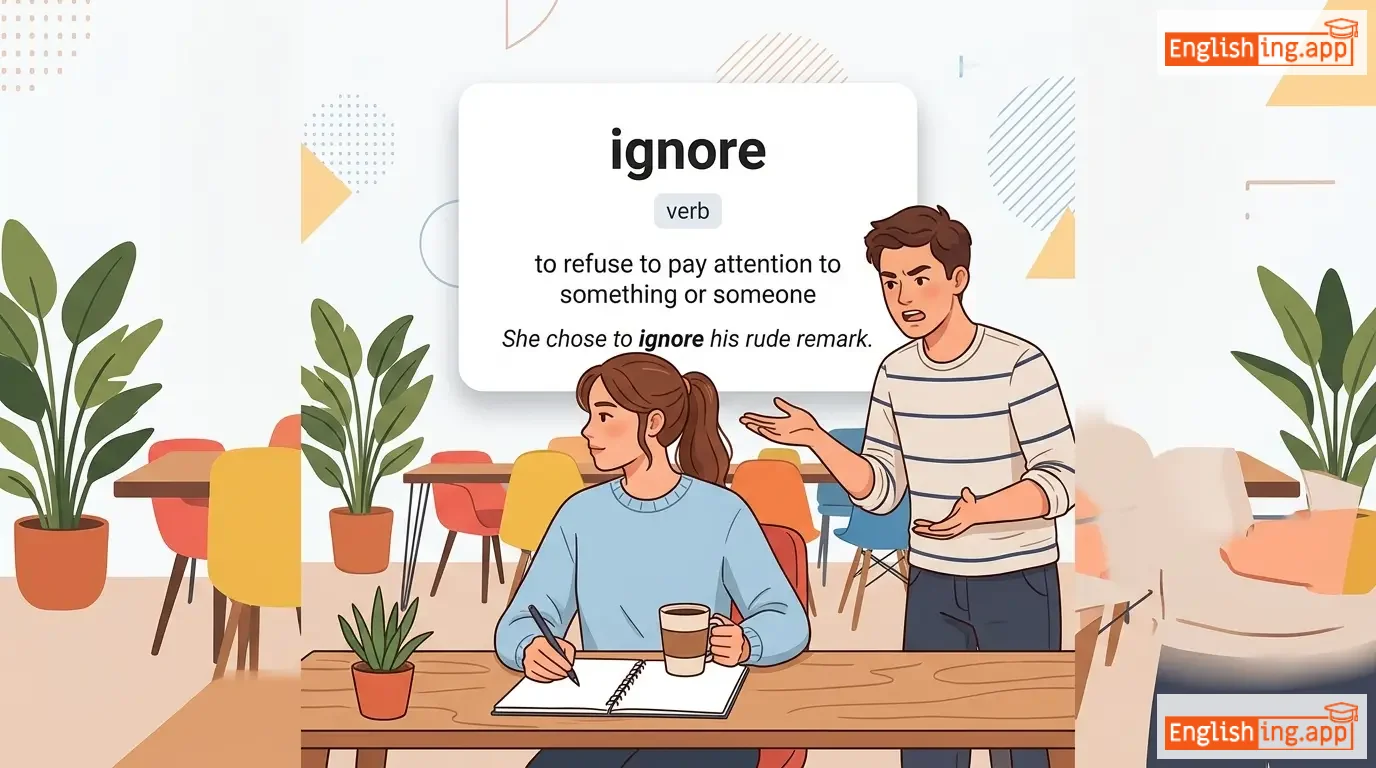
ignore definition card — visual illustration of the meaning
verb
/ɪɡˈnɔːr/
忽略 (hūlüè)

to refuse to pay attention to something or someone

"She chose to ignore his rude remark."

"她选择忽略他粗鲁的评论。" (Tā xuǎnzé hūlüè tā cūlǔ de pínglùn.)
noun
/ˈaɪ.kɒn/
宗教图像或符号 (zongjiao tushang huo fuhuo)

A religious image or symbol, especially in the Eastern Orthodox Church.

"The church displayed a beautifully painted ikon of the Virgin Mary."

"教堂展示了美丽的圣母玛利亚圣像。" (Jiàotáng zhǎnshìle měilì de shèngmǔ mǎlìyà shèngxiàng.)
noun
/ˈɪl.i.æd/
伊利亚特 (Iliate)

An ancient Greek epic poem attributed to Homer, describing the events of the Trojan War.

"Students studied the Iliad to understand Greek mythology and heroism."

"学生们学习了《伊利亚特》,以理解希腊神话和英雄主义。" (Xueshengmen xuexi le 'Iliate', yi lijie Xila shenhua he yingxiong zhuyi.)
adjective
/ɪl/
生病 (shengbing)

Not in good health; sick or unwell.

"He has been feeling ill since yesterday."

"他从昨天开始感觉不舒服。" (Ta cong zuotian kaishi ganjue bushi fu.)
adjective
/ˈɪl bred/
无教养的 (illbred)

lacking good manners; rude; showing poor upbringing

"His ill-bred behavior shocked everyone at the dinner party."

"他的无教养行为让晚宴上的每个人都震惊。" (ta de wujiaoyang xingwei rang wan yan shang de mei ge ren dou zhenjing)
adjective
/ˌɪlˈneɪ.tʃəd/
性格恶劣 (xingge e lie)

Having a bad or unpleasant character; unkind or malicious.

"He made an ill-natured remark about his colleague."

"他对他的同事做出了恶意的评论。" (Ta dui tade tongshi zuo chule eyi de pinglun.)
adjective
/ɪˈliː.ɡəl/
非法 (feifa)

Not allowed by law; unlawful.

"It is illegal to drive without a valid license."

"没有有效许可证驾驶是非法的。" (Meiyou youxiao xukezheng jiaoshi shi feifa de.)
noun
/ɪˌledʒ.əˈbɪl.ə.ti/
难以辨认 (nanyi bianren)

the quality of being impossible or difficult to read; unclear writing or print

"The doctor's handwriting was famous for its illegibility among the pharmacy staff."

"医生的字迹因其难以辨认而在药房工作人员中广为人知。" (Yisheng de ziji yin qi nanyi bianren er zai yaofang gongzuoren yuan zhong guangwei renzhi.)
adjective
/ɪˈledʒ.ə.bəl/
难以辨认 (nán yǐ biàn rèn)

Not clear enough to be read; unreadable.

"The doctor’s handwriting was almost illegible."

"医生的字迹几乎难以辨认。" (Yīshēng de zìjì jīhū nán yǐ biàn rèn.)
adjective
/ˌɪlɪˈdʒɪtɪmət/
非法 (feifa)

Not authorized by law, rules, or standards; not recognized as valid.

"The court ruled the contract to be illegitimate."

"法院裁定合同是非法的。" (Fayuan caiding hetong shi feifa de.)
adjective
/ɪˈlɪbərəl/
非自由主义的 (fei zi you zhu yi de)

Opposed to liberal principles; restricting freedom of thought or behavior.

"The government was criticized for its illiberal policies."

"政府因其非自由主义的政策而受到批评。" (Zhengfu yin qi fei ziyou zhuyi de zhengce er shoudao piping.)
noun
/ˌɪlɪbəˈræləti/
不宽容 (bù kuānróng)

The quality of being illiberal; lack of tolerance or generosity.

"The illiberality of the new laws alarmed the citizens."

"新法律的不宽容让市民感到警觉。" (Xīn fǎlǜ de bù kuānróng ràng shìmín gǎndào jǐngjué.)
adjective
/ɪˈlɪsɪt/
非法的 (feifa de)

Forbidden by law, rules, or custom.

"The police shut down the illicit drug operation."

"警方关闭了非法毒品交易。" (Jǐngfāng guānbìle fēifǎ dúpǐn jiāoyì.)
adjective
/ɪˈlɪmɪtəbl/
无限 (wuxian)

Without limits or bounds.

"The universe is often described as illimitable."
"宇宙常被描述为无限的。" (Yuzhou chang bei miaoshu wei wuxian de.)
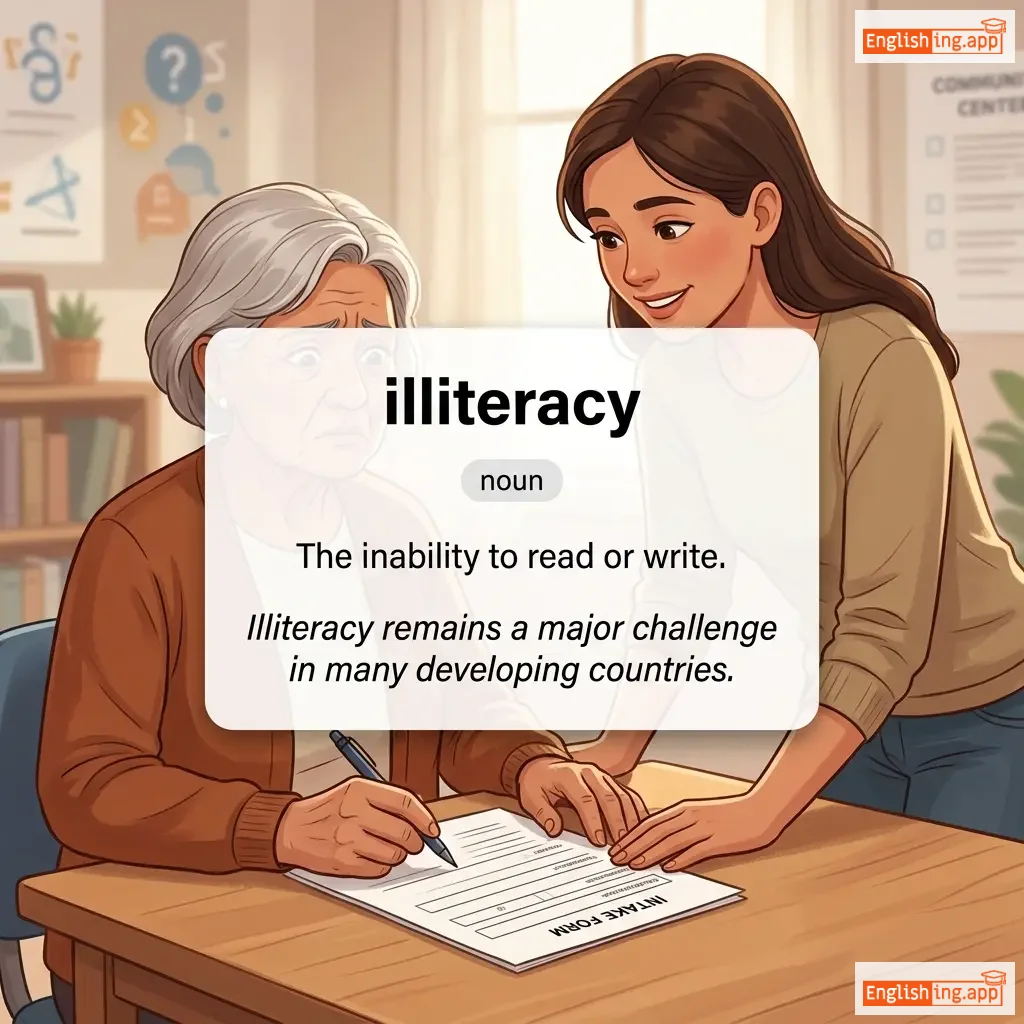
illiteracy definition card — visual illustration of the meaning
noun
/ɪˈlɪtərəsi/
文盲 (wenmang)

The inability to read or write.

"Illiteracy remains a major challenge in many developing countries."

"文盲在许多发展中国家仍然是一个重大挑战。" (Wenmang zai xu duo fazhan zhongguo jia rengran shi yige zhongda tiaozhan.)
adjective
/ɪˈlɪtərət/
文盲 (wenmang)

Unable to read or write.

"Many villagers were still illiterate in the past."

"许多村民过去仍然是文盲。" (Xuduo cunmin guoqu rengran shi wenmang.)
noun
/ˈɪlnəs/
疾病 (jíbìng)

A condition of being unwell or suffering from a disease.

"She missed school due to a serious illness."

"她因为严重的疾病错过了学校。" (Tā yīnwèi yánzhòng de jíbìng cuòguòle xuéxiào.)
adjective
/ɪˈlɒdʒɪkl/
不合逻辑 (bù hé luó jí)

Not making sense or lacking clear reasoning.

"It is illogical to blame children for adult mistakes."

"把儿童归咎于成年人的错误是没有道理的。" (Bǎ ér tóng guī jiù yú chéng nián rén de cuò wù shì méiyǒu dào lǐ de.)
noun
/ɪˈluːmɪnənt/
光源 (guāngyuán)

A substance or device that produces light.

"The lamp acted as an illuminant in the dark cave."

"这盏灯在黑暗的洞穴中充当了光源。" (Zhè zhǎn dēng zài hēi'àn de dòngxué zhōng chōngdāngle guāngyuán.)
verb
/ɪˈluːmɪneɪt/
照亮 (zhaoliang)

To light up or make something clearer.

"Streetlights illuminate the road at night."

"路灯在夜晚照亮了道路。" (Ludeng zai yewan zhaoliang le daolu.)
noun
/ɪˌluːmɪˈnɑːti/
光明会 (guangming hui)

a group of people claiming to have special enlightenment or secret knowledge, often linked to conspiracies

"Many conspiracy theories involve the Illuminati as a secret world-controlling group."

"许多阴谋论涉及光明会,认为它是一个秘密的、控制世界的组织。" (Xǔ duō yīn móu lùn shè jí guāng míng huì, rèn wéi tā shì yí gè mìmì de, kòng zhì shì jiè de zǔ zhī.)
noun
/ɪˌluːmɪˈneɪʃən/

the act of lighting something or making something clear

"The street was filled with bright illumination from the lamps."

verb
/ɪˈluːmɪn/
照亮 (zhaoliang)

to light up or make clear

"The rising sun illumined the mountain peaks."

"初升的太阳照亮了山峰。" (Chusheng de taiyang zhaoliang le shanfeng.)
noun
/ɪˈluːʒən/
错觉 (cuòjué)

a false idea or belief; a deceptive appearance

"The magician created the illusion of a floating woman."

"魔术师创造了一个漂浮女人的错觉。" (Móshùshī chuàngzàole yīgè piāofú nǚrén de cuòjué.)
adjective
/ɪˈluːsɪv/
虚幻的 (xūhuàn de)

deceptive or misleading; based on illusion

"His hopes of sudden wealth proved to be illusive."
"他对突然财富的希望证明是虚幻的。" (Tā duì túrán cáifù de xīwàng zhèngmíng shì xūhuàn de.)
illusory definition card — visual illustration of the meaning
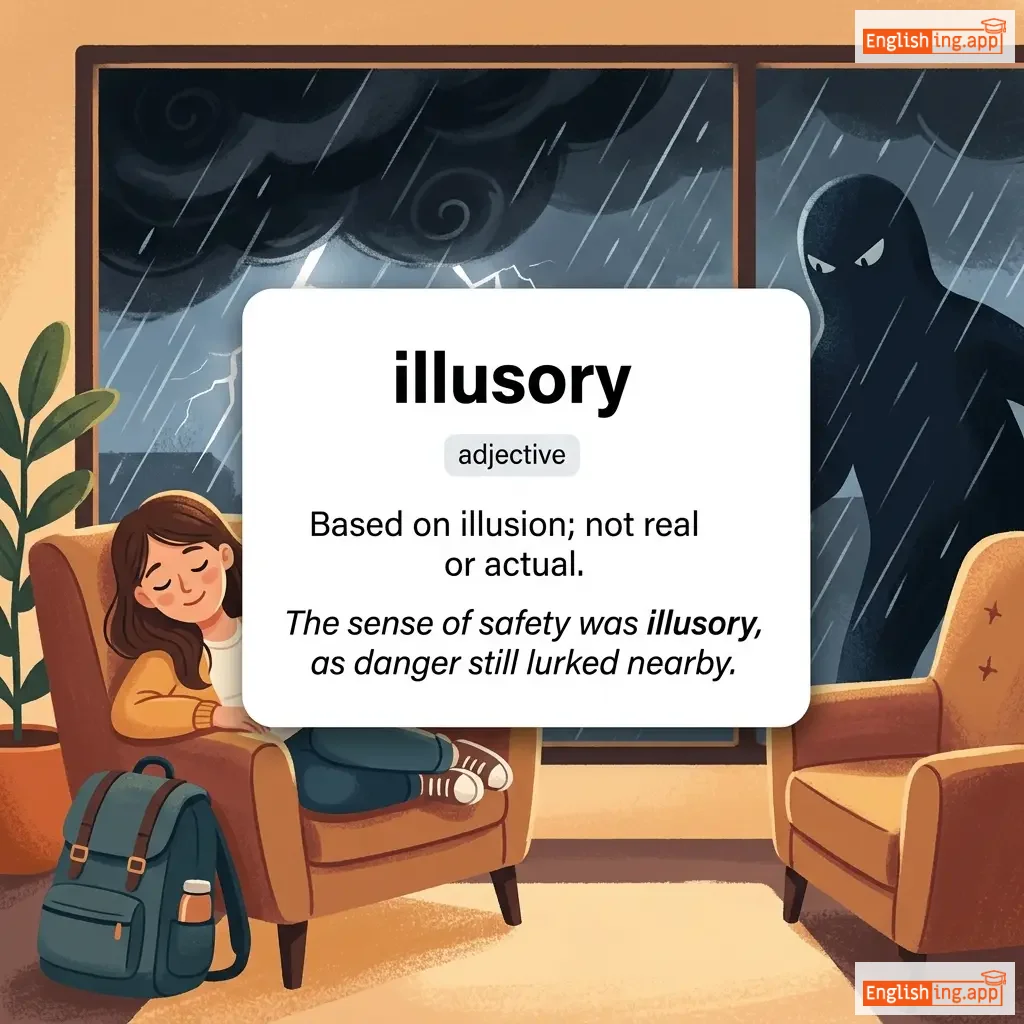
adjective
/ɪˈluːsəri/
虚幻的 (xū huàn de)

Based on illusion; not real or actual.

"The sense of safety was illusory, as danger still lurked nearby."

"安全感是虚幻的,因为危险依然潜伏在附近。" (Ānquán gǎn shì xūhuàn de, yīnwèi wēixiǎn yīrán qiánfú zài fùjìn.)
verb
/ˈɪl.ə.streɪt/
插图 (chātú)

to explain or make something clear by using examples, pictures, or comparisons

"The teacher used diagrams to illustrate the concept."

"老师用图表来说明这个概念。" (Lǎoshī yòng túbiǎo lái shuōmíng zhège gàiniàn.)
adjective
/ɪˈlʌstriəs/
著名 (zhuoming)

Well known, respected, and admired for past achievements.

"She had an illustrious career in medicine."

"她在医学界有着著名的事业。" (Tā zài yīxué jiè yǒuzhe zhùmíng de shìyè.)
noun
/ˈɪmɪdʒ/
图像 (túxiàng)

A visual representation of something, such as a picture or likeness.

"The magazine published a clear image of the celebrity."

"杂志发布了名人的清晰图像。" (Zázhì fābùle míngrén de qīngxī túxiàng.)
noun
/ˈɪmɪdʒəri/
意象 (yixiang)

visually descriptive or figurative language, especially in a literary work

"The poet's use of imagery brought the scene to life."

"诗人的意象使用使场景栩栩如生。" (Shīrén de yìxiàng shǐyòng shǐ chǎngjǐng xǔxǔ rúshēng.)
adjective
/ɪˈmædʒɪnəbl/
可想象的 (kě xiǎngxiàng de)

Capable of being imagined or conceived.

"They offered every imaginable type of food at the festival."

"他们在节日上提供了所有可以想象的食物类型。" (Tāmen zài jiérì shàng tígōngle suǒyǒu kě xiǎngxiàng de shíwù lèixíng.)
adjective
/ɪˈmædʒɪnəri/
虚构的 (xugude)

Existing only in the imagination; not real.

"Children often have imaginary friends."
"孩子们常常有虚构的朋友。" (Haizimen changchang you xugude pengyou.)
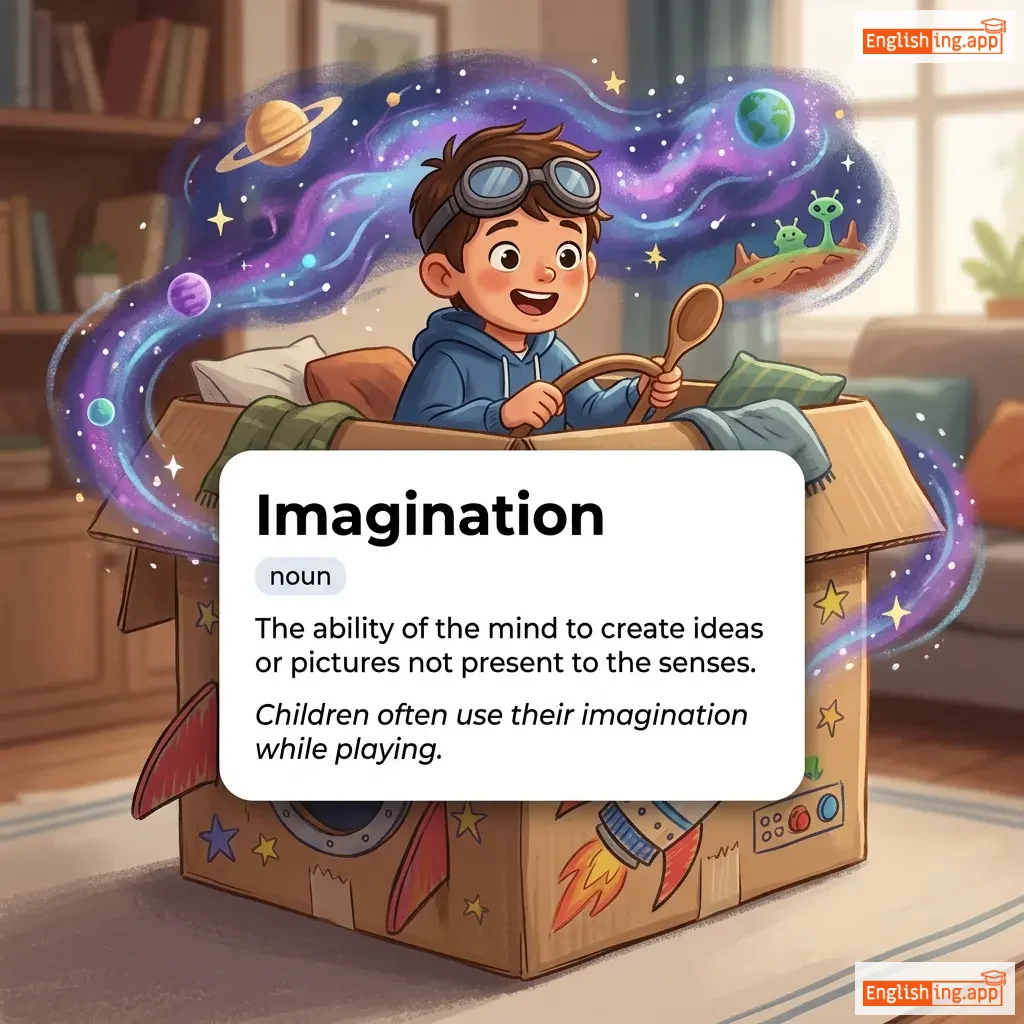
Imagination definition card — visual illustration of the meaning
noun
/ɪˌmædʒɪˈneɪʃən/
想象力 (xiǎngxiànglì)

The ability of the mind to create ideas or pictures not present to the senses.

"Children often use their imagination while playing."

"孩子们在玩耍时经常使用他们的想象力。" (Háizimen zài wánshuǎ shí jīngcháng shǐyòng tāmen de xiǎngxiànglì.)
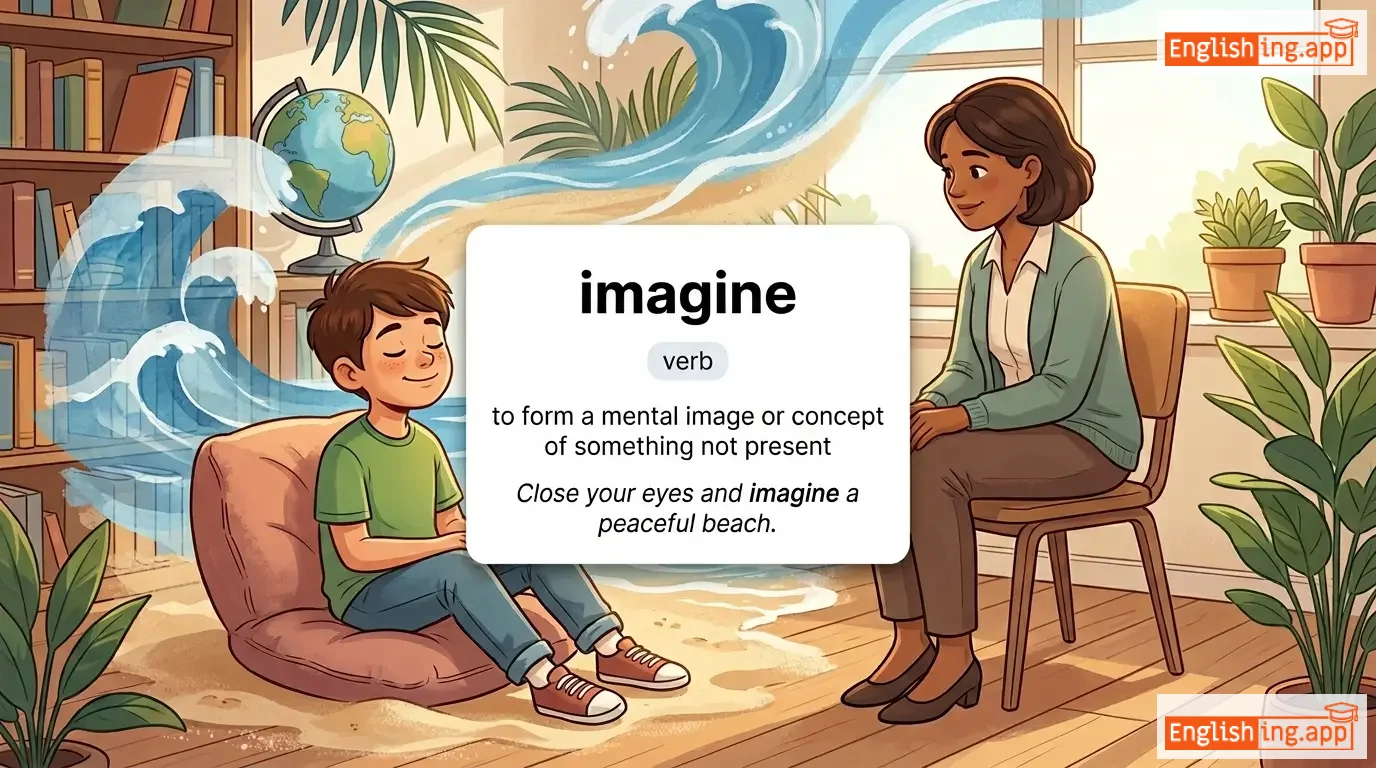
imagine definition card — visual illustration of the meaning
verb
/ɪˈmædʒ.ɪn/

to form a mental image or concept of something not present

"Close your eyes and imagine a peaceful beach."

noun
/ɪmˈbæləns/
不平衡 (bupingheng)

A lack of balance; a state of inequality or disproportion.

"The imbalance of power led to conflict."

"权力的不平衡导致了冲突。" (Quanli de bupingheng daozhilu chongtu.)
noun
/ˌɪmbəˈsɪləti/
愚蠢 (yúchǔn)

Extreme foolishness, stupidity, or weakness of mind.

"The plan was abandoned due to its sheer imbecility."

"由于其极端的愚蠢,计划被放弃。" (Yóuyú qí jíduān de yúchǔn, jìhuà bèi fàngqì.)
verb
/ɪmˈbɛd/
嵌入 (qian ru)

To fix firmly or deeply in a surrounding mass.

"The journalist imbedded himself with the troops to report firsthand."
"记者将自己嵌入部队中以第一时间进行报道。" (Jizhe jiang ziji qian ru budui zhong yi di yi shijian jinxing baodao.)
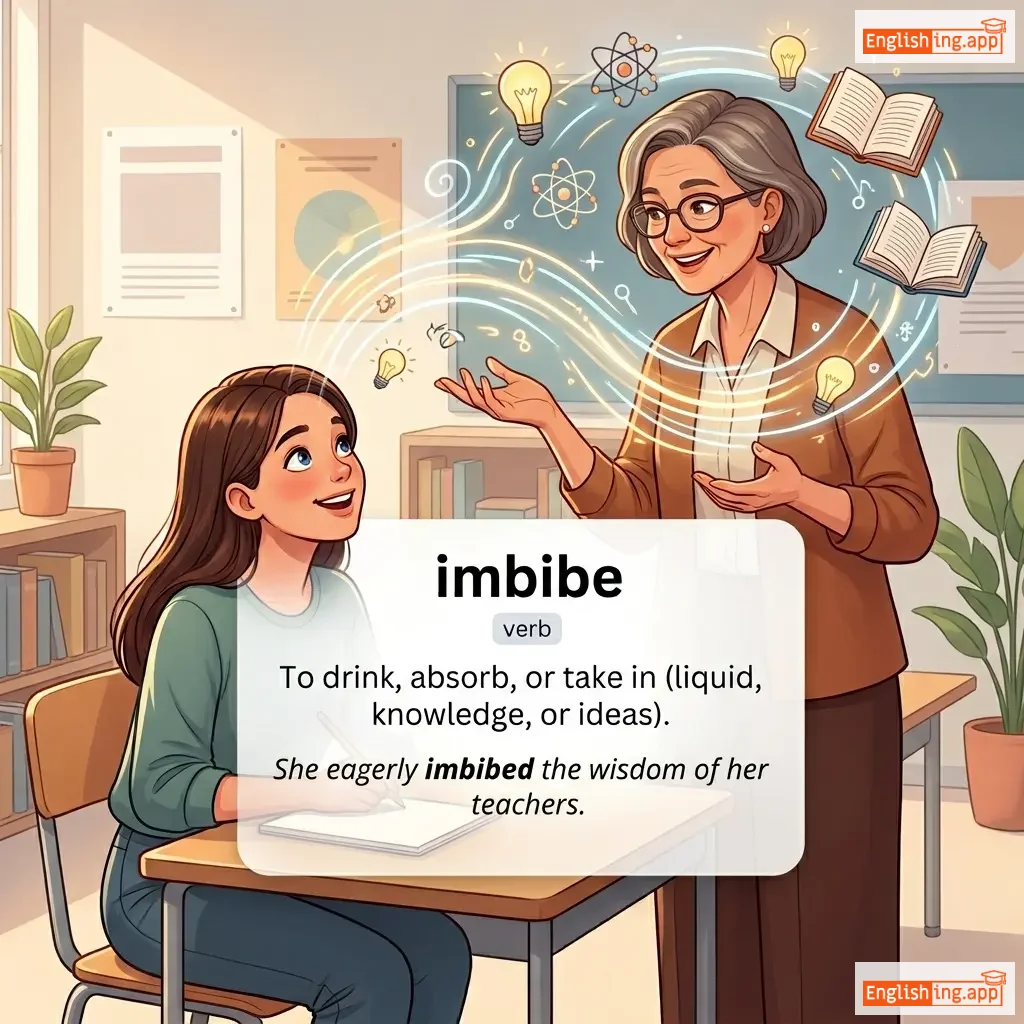
imbibe definition card — visual illustration of the meaning
verb
/ɪmˈbaɪb/
吸收 (xishou)

To drink, absorb, or take in (liquid, knowledge, or ideas).

"She eagerly imbibed the wisdom of her teachers."

"她热衷于吸收老师们的智慧。" (Ta rezhong yu xishou laoshimen de zhihui.)