词汇表

英语词汇词典 | 单词含义、定义和示例

adjective
/ˌhɪpəˈkrɪtɪkəl/
虚伪的 (xūwěi de)

behaving in a way that suggests you have higher standards than you actually do

"It was hypocritical of him to complain about dishonesty."

"他抱怨不诚实的行为是虚伪的。" (Tā bào yuàn bù chéngshí de xíngwéi shì xūwěi de.)
adjective
/ˌhaɪpəˈdɜːrmɪk/

relating to the region immediately beneath the skin; also refers to a type of needle or syringe used to inject drugs beneath the skin.

"The doctor used a hypodermic needle to administer the vaccine."

noun
/haɪˈpɒtənjuːs/
斜边 (xie bian)

the longest side of a right-angled triangle, opposite the right angle.

"In a right triangle, the hypotenuse is always longer than the other two sides."

"在直角三角形中,斜边总是比另外两边长。" (Zài zhíjiǎo sānjiǎoxíng zhōng, xiébiān zǒng shì bǐ lìngwài liǎng biān cháng.)
verb
/haɪˈpɒθɪkeɪt/

to pledge something, such as property, as security for a debt without giving up possession of it.

"The company hypothecated its assets to secure the loan."

noun
/haɪˈpɒθəsɪs/

a proposed explanation made on the basis of limited evidence as a starting point for further investigation.

"The scientist tested her hypothesis through multiple experiments."

hypothetical definition card — visual illustration of the meaning
adjective
/ˌhaɪpəˈθetɪkl/
假设的 (jiǎshè de)

based on or serving as a hypothesis; imagined or supposed for the sake of discussion.

"She described a hypothetical situation to explain her point."

"她描述了一个假设的情境来解释她的观点。" (Tā miáoshùle yīgè jiǎshè de qíngjìng lái jiěshì tā de guāndiǎn.)
noun
/hɪˈstɪəriə/

An uncontrollable outburst of emotion or fear, often characterized by irrational behavior.

"The crowd was in a state of hysteria during the concert."

adjective
/hɪˈstɛrɪkəl/
极其搞笑或情绪失控 (jíqí gǎoxiào huò qíngxù shīkòng)

Extremely funny or uncontrollably emotional.

"The comedian's jokes were absolutely hysterical."
"这位喜剧演员的笑话简直太搞笑了。" (Zhè wèi xǐjù yǎnyuán de xiàohuà jiǎnzhí tài gǎoxiào le.)
pronoun
/aɪ/
(wo)

used by a speaker to refer to himself or herself

"I am learning English every day."

"我每天都在学习英语。" (Wo měitiān dōu zài xuéxí yīngyǔ.)
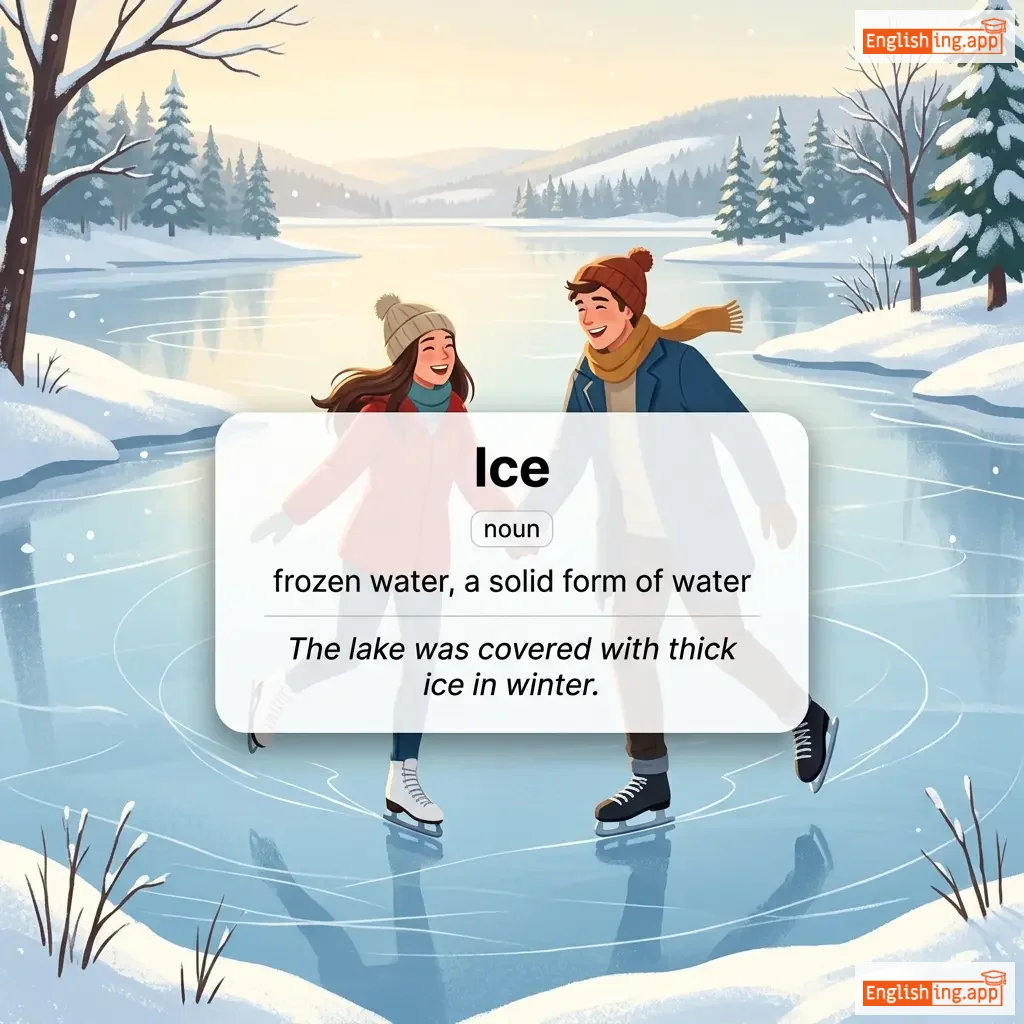
Ice definition card — visual illustration of the meaning
noun
/aɪs/
(bing)

frozen water, a solid form of water

"The lake was covered with thick ice in winter."
"湖面在冬天被厚厚的冰覆盖。" (hú miàn zài dōng tiān bèi hòu hòu de bīng fù gài.)
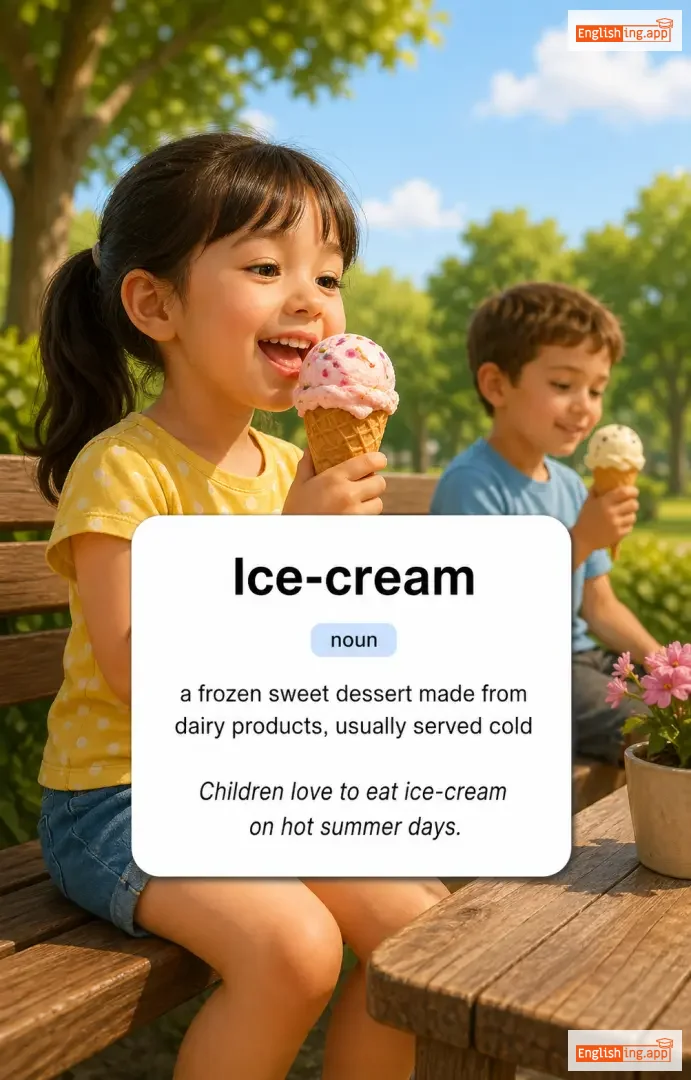
Ice-cream definition card — visual illustration of the meaning
noun
/ˈaɪs kriːm/
冰淇淋 (bīng qí lín)

a frozen sweet dessert made from dairy products, usually served cold

"Children love to eat ice-cream on hot summer days."

"孩子们喜欢在炎热的夏季日子里吃冰淇淋。" (Háizimen xǐhuān zài yánrè de xiàjì rìzi lǐ chī bīngqílín.)
adjective
/ˈɪkθiɪk/
鱼类的 (yú lèi de)

Relating to or resembling fish.

"The artist's painting had an ichthyic quality."

"艺术家的画作具有鱼类的特质。" (Yìshùjiā de huàzuò jùyǒu yúlèi de tèzhì.)
noun
/ˌɪkθiˈɒlədʒɪst/
鱼类学家 (yuleixuejia)

A scientist who studies fish.

"The ichthyologist discovered a new species of fish in the river."

"鱼类学家在河里发现了一种新的鱼类。" (Yuleixuejia zai heli faxianle yizhong xinde yulei.)
noun
/ˌɪkθiˈɒlədʒi/
鱼类学 (yú lèi xué)

The branch of zoology that deals with fish.

"He pursued a degree in ichthyology at the university."

"他在大学获得了鱼类学学位。" (Tā zài dàxué huòdéle yúlèi xué xuéwèi.)
noun
/ˈɪkθiəˌsɔːrz/
鱼龙(已灭绝的海洋爬行动物) (yulong)

Extinct marine reptiles that resembled fish and dolphins, dominant during the Mesozoic era.

"Ichthyosaurs were swift predators of the ancient seas."

"鱼龙是古代海洋的迅猛掠食者。" (Yulong shi gudai haiyang de xunmeng lueshizhe.)
adverb
/ˈaɪsɪli/
冷漠地 (lěngmò de)

In a very cold, unfriendly, or hostile manner.

"She replied icily to his question."

"她冷漠地回答了他的问题。" (Tā lěngmò de huídále tā de wèntí.)
noun
/ˈaɪsinəs/
冰冷 (bīng lěng)

The state of being cold in manner or temperature.

"There was a distinct iciness in his voice."

"他的声音中有一种明显的冰冷感。" (Tā de shēngyīn zhōng yǒu yī zhǒng míngxiǎn de bīng lěng gǎn.)
noun
/ˈaɪkɒn/
图标, 象征 (túbiāo, xiàngzhēng)

A person or thing regarded as a symbol of something, or a graphic symbol on a screen.

"The singer became a cultural icon."

"这位歌手成为了文化图标。" (Zhè wèi gēshǒu chéngwéile wénhuà túbiāo.)
iconic definition card — visual illustration of the meaning
adjective
aɪˈkɒn.ɪk
标志性 (biaozhixing)

Symbolic, legendary, famous, representing something significant or characteristic.

"The Eiffel Tower is an iconic landmark of France."

"埃菲尔铁塔是法国的标志性地标。" (Aifeier tieta shi Faguo de biaozhixing dibiao.)
noun
/aɪˈkɒnəklæst/
破坏偶像者 (pòhuài ǒuxiàng zhě)

A person who attacks or criticizes cherished beliefs, traditions, or institutions.

"He was known as an iconoclast who challenged old traditions."

"他被认为是一个破坏偶像者,挑战旧传统。" (Tā bèi rènwéi shì yīgè pòhuài ǒuxiàng zhě, tiǎozhàn jiù chuántǒng.)
iconoclastic definition card — visual illustration of the meaning
adjective
/ˌaɪ.kə.nəˈklæs.tɪk/
特指攻击或拒绝已建立的信仰、传统或价值观 (tè zhǐ gōng jī huò jù jué yǐ jiàn lì de xìn yǎng, chuán tǒng huò jià zhí guān)

Characterized by attacking or rejecting cherished beliefs, traditions, or established values.

"Her iconoclastic views challenged the conventional wisdom of the industry."

"她的偶像破坏主义观点挑战了行业的传统智慧。" (tā de ǒu xiàng pò huài zhǔ yì guān diǎn tiǎo zhàn le háng yè de chuán tǒng zhì huì.)
adjective
/ˈaɪsi/
冰冷的; 极冷的; 敌对的 (bīng lěng de; jí lěng de; dí duì de)

extremely cold; covered with ice; unfriendly or hostile

"The icy wind made everyone shiver."

"冰冷的风让每个人都颤抖。" (Bīng lěng de fēng ràng měi gè rén dōu chàn dǒu)
noun
/aɪˈdiː/
身份证件 (shenfenzhengjian)

identification; a document or number used to prove who someone is

"Please show your ID at the entrance."

"请在入口处出示你的身份证件。" (qing zai rukou chu chushi ni de shenfenzhengjian)
Idea definition card — visual illustration of the meaning
noun
/aɪˈdiːə/
主意 (zhuyi)

A thought, plan, or suggestion about what to do.

"She had a brilliant idea for a new business."

"她有一个新商业的精彩主意。" (Ta you yige xin shangye de jingcai zhuyi.)
ideal definition card — visual illustration of the meaning
adjective
/aɪˈdiːəl/
理想的 (lǐxiǎng de)

the best possible; perfect for a situation

"This place is ideal for a picnic."

"这个地方非常适合野餐。" (Zhège dìfāng fēicháng shìhé yěcān.)
ideal environment definition card — visual illustration of the meaning
adjective + noun
aɪˈdiːəl ɪnˈvaɪrənmənt
理想环境 (lǐxiǎng huánjìng)

Perfect or most suitable conditions for growth or development

"Winter creates an ideal environment for vegetable growth."

"冬天为蔬菜生长创造了理想的环境。" (Dōngtiān wèi shūcài shēngzhǎng chuàngzàole lǐxiǎng de huánjìng.)
noun
/aɪˈdiː.ə.lɪ.zəm/
理想主义 (lǐxiǎng zhǔyì)

the pursuit of high principles and noble goals; unrealistic pursuit of perfection

"His youthful idealism motivated him to join various social justice movements."

"他的青春理想主义激励他加入了各种社会公正运动。" (Tā de qīngchūn lǐxiǎng zhǔyì jīlì tā jiārùle gè zhǒng shèhuì gōngzhèng yùndòng.)
adjective
/ˌaɪdiəˈlɪstɪk/
理想主义的 (lǐ xiǎng zhǔ yì de)

pursuing high principles or ideals; unrealistically optimistic

"She has an idealistic view of changing the world."

"她对改变世界有着理想主义的看法。" (Tā duì gǎi biàn shì jiè yǒu zhe lǐ xiǎng zhǔ yì de kàn fǎ.)
verb
/aɪˈdiː.ə.laɪz/
理想化 (lǐxiǎng huà)

To regard or represent something as perfect or better than it really is.

"Children often idealize their parents."

"孩子们常常理想化他们的父母。" (Háizimen chángcháng lǐxiǎng huà tāmen de fùmǔ.)
ideation definition card — visual illustration of the meaning
noun
/ˌaɪdiˈeɪʃən/
创意生成 (chuangyi shengcheng)

The process of forming ideas or concepts.

"The workshop focused on ideation and brainstorming."

"研讨会集中于创意生成和头脑风暴。" (Yantao hui jizhong yu chuangyi shengcheng he tounaofengbao.)
adjective
/aɪˈdentɪkl/
相同的 (xiāngtóng de)

Exactly the same in every detail.

"The twins wore identical clothes."

"这对双胞胎穿着相同的衣服。" (Zhè duì shuāngbāotāi chuānzhuó xiāngtóng de yīfu.)
noun
/aɪˌdɛntɪfɪˈkeɪʃən/
身份识别 (shenfen shibie)

the process of recognizing or proving who or what someone or something is

"You need proper identification to enter the building."

"您需要适当的身份证明才能进入大楼。" (Nín xūyào shìdàng de shēnfèn zhèngmíng cáinéng jìnrù dàlóu.)
identified definition card — visual illustration of the meaning
verb
aɪˈdɛntɪfaɪd
已识别 (yi shibie)

To recognize or establish who or what someone or something is.

"The root causes of the issue need to be identified."

"问题的根本原因需要被识别。" (Wenti de genben yuanyin xuyao bei shibie.)
identify definition card — visual illustration of the meaning
verb
/aɪˈdɛntɪfaɪ/
识别 (shìbié)

to recognize or establish what something or someone is

"The police could not identify the suspect."

"警察无法确认嫌疑人。" (jǐngchá wúfǎ quèrèn xiányírén.)
identity definition card — visual illustration of the meaning
noun
/aɪˈdɛntɪti/
身份 (shenfen)

the characteristics, feelings, or beliefs that make a person or group different from others

"Cultural traditions are an important part of national identity."

"文化传统是国家身份的重要组成部分。" (wenhua chuantong shi guojia shenfen de zhongyao zuche bufen)
adjective
/ˌaɪ.di.əˈlɒdʒ.ɪ.kəl/
意识形态的 (yìshí xíngtài de)

Relating to or based on a system of ideas or beliefs.

"The two parties are divided by deep ideological differences."

"这两个党派由于深刻的意识形态分歧而分裂。" (Zhè liǎng gè dǎngpài yóuyú shēnkè de yìshí xíngtài fēnqí ér fēnliè.)
noun
/ˌaɪ.diˈɒl.ə.dʒi/
意识形态 (yishi xingtai)

A system of ideas and ideals, especially one that forms the basis of economic or political theory and policy.

"Democracy is based on the ideology of freedom and equality."

"民主基于自由和平等的意识形态。" (Minzhu jiyu ziyou he pingdeng de yishi xingtai.)
noun
/ˈɪd.i.ə.si/
愚蠢 (yúchǔn)

extremely stupid behavior or actions; foolishness

"The decision to ignore safety protocols was pure idiocy that endangered everyone."

"忽视安全协议的决定是纯粹的愚蠢,危及了每个人。" (Hūshì ānquán xiéyì de juédìng shì chúncuì de yúchǔn, wéijíle měi gèrén.)
noun
/ˈɪd.i.əm/
习语 (xíyǔ)

A group of words whose meaning is different from the meanings of the individual words.

"The idiom 'break the ice' means to start a conversation in a friendly way."

"习语 '打破僵局' 意味着以友好的方式开始对话。" (xíyǔ 'dǎpò jiāngjú' yìwèizhe yǐ yǒuhǎo de fāngshì kāishǐ duìhuà.)
noun
/ˌɪdiəˈsɪŋkrəsi/
特徵 (te zheng)

A distinctive or peculiar characteristic, habit, or mannerism unique to an individual.

"One of her idiosyncrasies was humming while working."
"她的一个偶发性特征是工作时哼歌。" (Ta de yi ge ou fa xing te zheng shi gong zuo shi heng ge.)
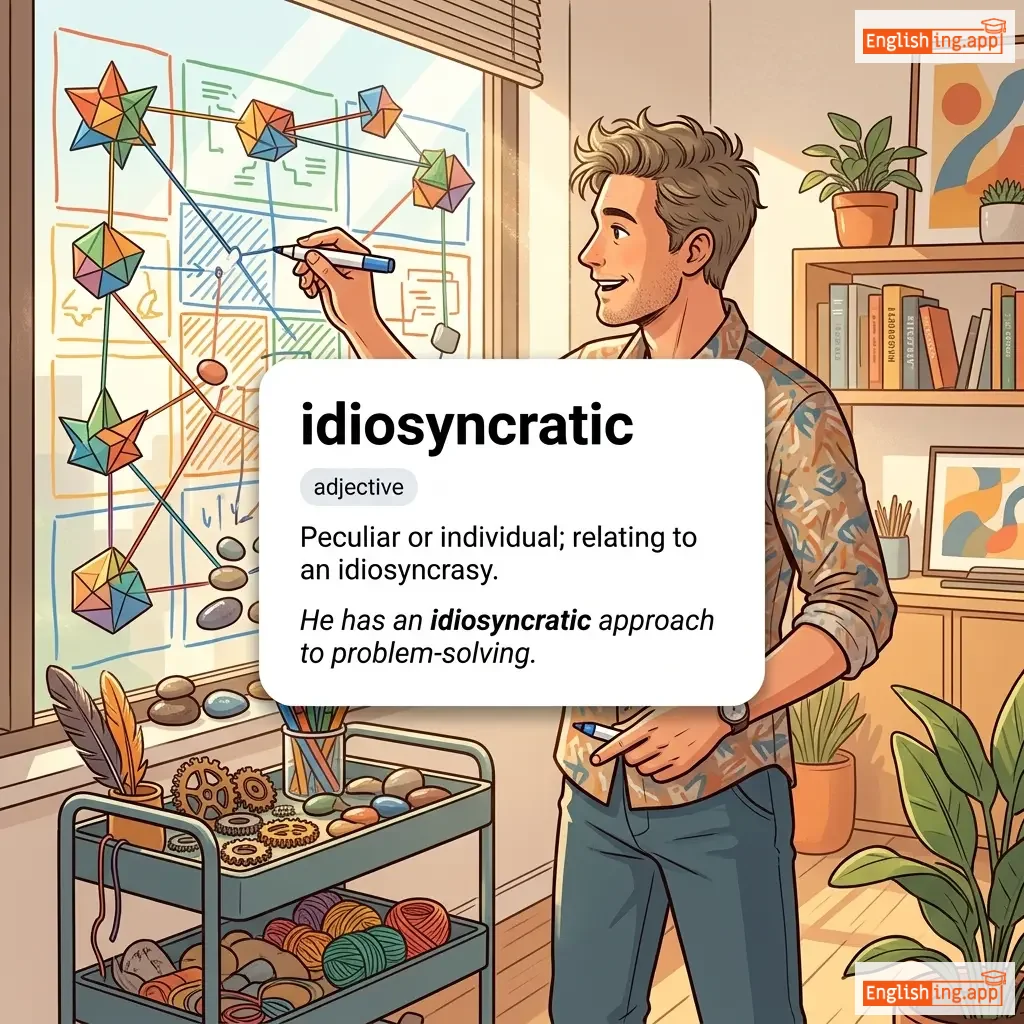
idiosyncratic definition card — visual illustration of the meaning
adjective
/ˌɪdiəsɪnˈkrætɪk/
特立独行的 (te li du xing de)

Peculiar or individual; relating to an idiosyncrasy.

"He has an idiosyncratic approach to problem-solving."

"他有一种特立独行的解决问题的方法。" (Ta you yizhong te li du xing de jiejue wenti de fangfa.)
noun
/ˈɪdɪət/
白痴 (baichi)

a person who acts in a way that is considered very stupid or foolish

"He acted like an idiot at the party last night."

"他昨晚在派对上像个白痴一样表现。" (Ta zuowan zai paidui shang xiang ge baichi yiyang biaoxian.)
adjective
/ˌɪd.iˈɒt.ɪk/
愚蠢 (yúchǔn)

extremely stupid; foolish; senseless

"His idiotic behavior embarrassed everyone at the meeting."

"他的愚蠢行为让会议上的所有人感到尴尬。" (tā de yúchǔn xíngwéi ràng huìyì shàng de suǒyǒu rén gǎndào gāngà)
adjective, verb
/ˈaɪd(ə)l/
闲置的 (xian zhi de)

Adjective: not active or in use; lazy. Verb: to spend time doing nothing.

"The workers sat idle during the power outage."

"在停电期间,工人们坐着闲着。" (zai tingdian qi jian, gongren men zuo zhe xian zhe.)
noun
/ˈaɪdlər/
懒汉 (lǎn hàn)

A person who avoids work or spends time lazily.

"He was known as an idler who wasted his days."

"他被称为一个懒汉,浪费了他的日子。" (Tā bèi chēng wèi yīgè lǎn hàn, làngfèi le tā de rìzi.)
noun
/ˈaɪ.dəl/
偶像; 受人崇拜的人 (ǒu xiàng, shòu rén chóng bài de rén)

an image or representation of a god used as an object of worship; a person who is greatly admired

"The singer became a teenage idol after her hit song topped the charts worldwide."

"这位歌手在她的热门歌曲登顶全球排行榜后成为了青少年偶像。" (zhè wèi gēshǒu zài tā de rèmén gēqǔ dēngdǐng quánqiú páiháng bǎng hòu chéngwéile qīngshàonián ǒuxiàng.)
adjective
/ˌaɪdəˈlɑːtrɪəs/
偶像崇拜的 (ǒu xiàng chóng bài de)

Excessively devoted or reverent towards idols or false gods.

"The ancient tribe was known for its idolatrious practices."

"这个古老的部落因其偶像崇拜的习惯而闻名。" (Zhège gǔlǎo de bùluò yīn qí ǒu xiàng chóng bài de xíguàn ér wénmíng.)
verb
/aɪˈdɒləˌtraɪz/
偶像崇拜 (ǒuxiàng chóngbài)

To worship idols; to regard with excessive devotion or admiration.

"They began to idolatrize the statue as a deity."

"他们开始把这尊雕像当作神明崇拜。" (Tāmen kāishǐ bǎ zhè zhūn diāoxiàng dàngzuò shénmíng chóngbài.)
adjective
/aɪˈdɒlətrəs/
偶像崇拜者 (ouxiang chongbai zhe)

Excessively admiring or worshipping someone or something as an idol.

"The king was criticized for his idolatrous devotion to wealth."

"国王因其对财富的偶像崇拜而受到批评。" (Guowang yin qi dui cai fu de ouxiang chongbai er shoudao piping.)
idolatry definition card — visual illustration of the meaning
noun
/aɪˈdɒlətri/
偶像崇拜 (ouxiang chongbai)

The worship of idols or extreme admiration for someone or something.

"The priest condemned the idolatry practiced in the village."

"牧师谴责了在村里实践的偶像崇拜。" (Mushi qianze le zai cun li shijian de ouxiang chongbai.)