Словари

Словарь английского языка | Значения слов, определения и примеры

adjective
/ˌhɪpəˈkrɪtɪkəl/
лицемерный (litsemernij)

behaving in a way that suggests you have higher standards than you actually do

"It was hypocritical of him to complain about dishonesty."

"Он вел себя лицемерно, жалуясь на нечестность." (On vel sebya litsemernoye, zhaluyas' na nechestnost'.)
adjective
/ˌhaɪpəˈdɜːrmɪk/
гиподермический (hypodermic)

relating to the region immediately beneath the skin; also refers to a type of needle or syringe used to inject drugs beneath the skin.

"The doctor used a hypodermic needle to administer the vaccine."

"Доктор использовал гиподермическую иглу для введения вакцины." (Doktor ispolzoval gipodermicheskuyu iglu dlya vvedeniya vaktsiny.)
noun
/haɪˈpɒtənjuːs/
гипотенуза (gipoteniza)

the longest side of a right-angled triangle, opposite the right angle.

"In a right triangle, the hypotenuse is always longer than the other two sides."

"В прямоугольном треугольнике гипотенуза всегда длиннее двух других сторон." (V pryamougol'nom treugol'nike gipoteniza vsegda dlinnee dvukh drugikh storon.)
verb
/haɪˈpɒθɪkeɪt/

to pledge something, such as property, as security for a debt without giving up possession of it.

"The company hypothecated its assets to secure the loan."

noun
/haɪˈpɒθəsɪs/
гипотеза (gipotizis)

a proposed explanation made on the basis of limited evidence as a starting point for further investigation.

"The scientist tested her hypothesis through multiple experiments."
"Учёная проверила свою гипотезу через серию экспериментов." (Uchyonaya proveryla svoyu gipotezu cherez seriyu eksperimentov)
hypothetical definition card — visual illustration of the meaning
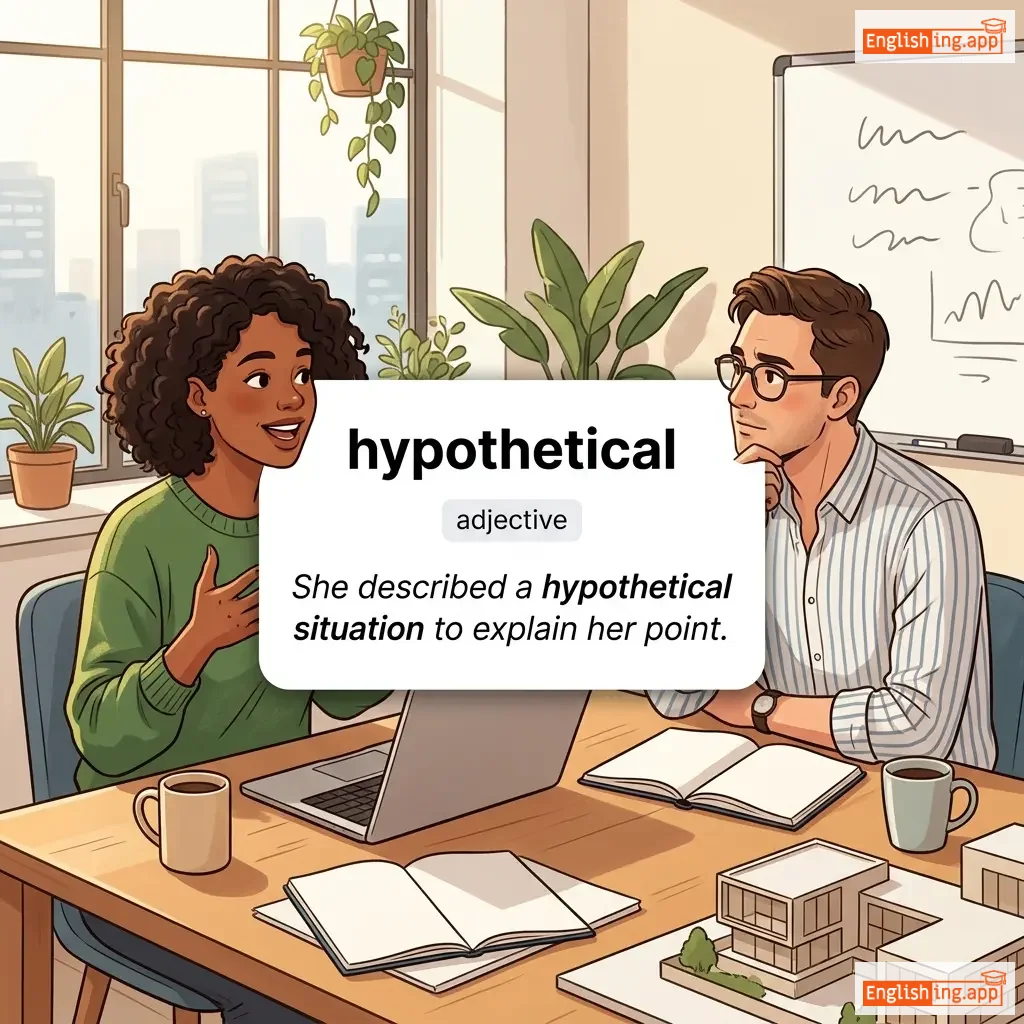
adjective
/ˌhaɪpəˈθetɪkl/
гипотетический (gipoteticheskiy)

based on or serving as a hypothesis; imagined or supposed for the sake of discussion.

"She described a hypothetical situation to explain her point."

"Она описала гипотетическую ситуацию, чтобы объяснить свою точку зрения." (Ona opisala gipoteticheskuyu situatsiyu, chtoby obyasnit' svoiu tochku zreniya.)
noun
/hɪˈstɪəriə/
истерия (isteriya)

An uncontrollable outburst of emotion or fear, often characterized by irrational behavior.

"The crowd was in a state of hysteria during the concert."

"Толпа была в состоянии истерии во время концерта." (Tolpa byla v sostoyanii isteriia vo vremya kontserta.)
adjective
/hɪˈstɛrɪkəl/
истеричный или эмоционально неконтролируемый (isterichnyy ili emosional'no nekontroliruemyy)

Extremely funny or uncontrollably emotional.

"The comedian's jokes were absolutely hysterical."

"Шутки комика были абсолютно истеричными." (Shutki komika byli absolyutno isterichnymi.)
pronoun
/aɪ/
я (ya)

used by a speaker to refer to himself or herself

"I am learning English every day."
"Я учу английский каждый день." (Ya uchu angliyskiy kazhdyy den'.)
Ice definition card — visual illustration of the meaning
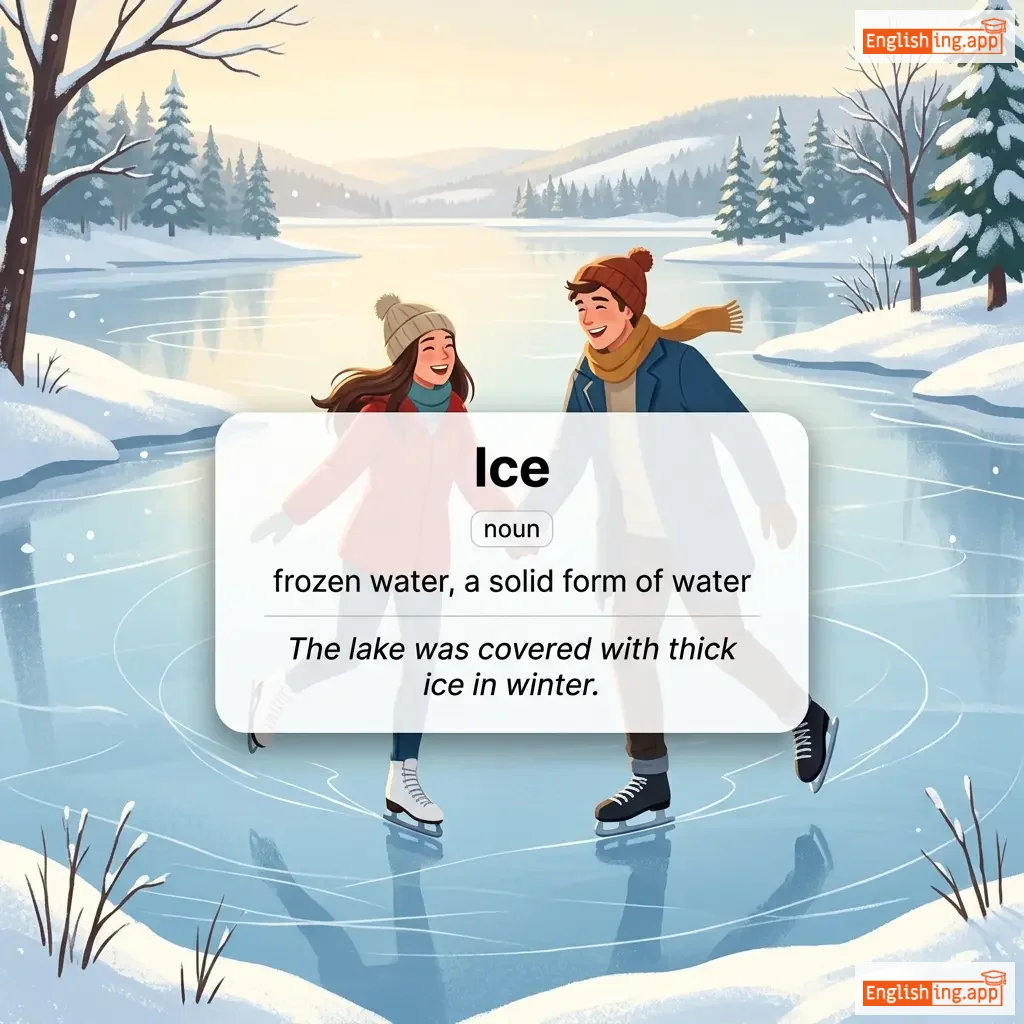
noun
/aɪs/
лед (lyod)

frozen water, a solid form of water

"The lake was covered with thick ice in winter."
"Озеро было покрыто толстым льдом зимой." (Ozyero bylo pokryto tolstym lyodom zimoy.)
Ice-cream definition card — visual illustration of the meaning
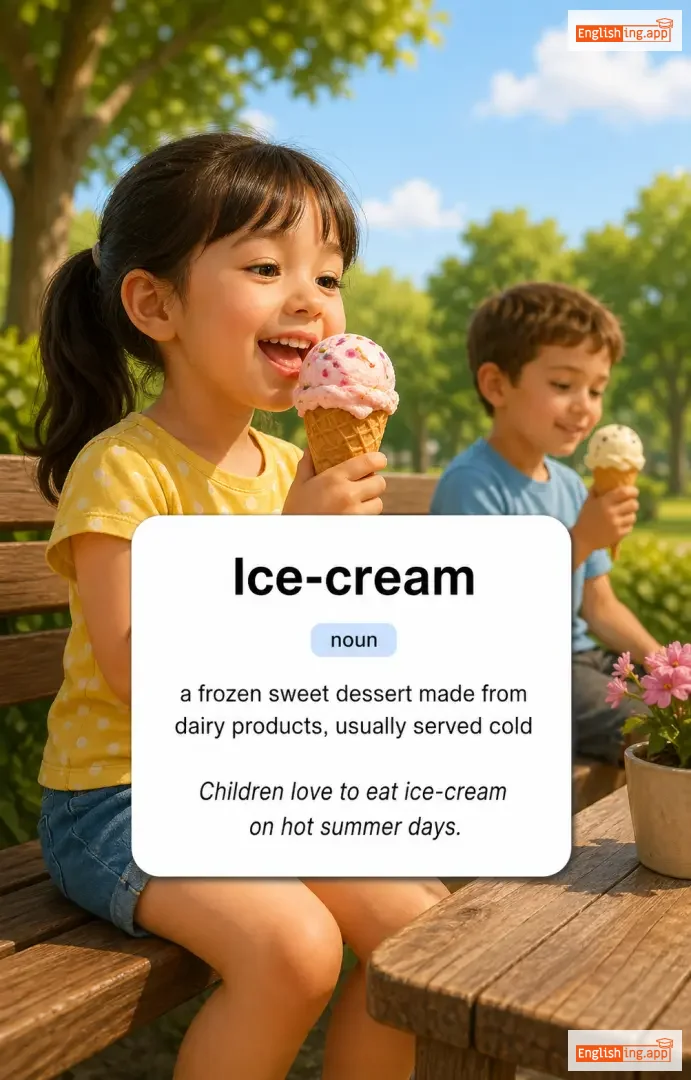
noun
/ˈaɪs kriːm/
мороженое (morozhenoe)

a frozen sweet dessert made from dairy products, usually served cold

"Children love to eat ice-cream on hot summer days."

"Дети любят есть мороженое в жаркие летние дни." (Deti lyubyat yest' morozhenoe v zharkie letnie dni.)
adjective
/ˈɪkθiɪk/
ихтиический (ikhtiyicheskiy)

Relating to or resembling fish.

"The artist's painting had an ichthyic quality."

"Картина художника имела ихтиковое качество." (Kartina khudozhnika imela ikhtikovoe kachestvo.)
noun
/ˌɪkθiˈɒlədʒɪst/
ихтиолог (ikhtiolog)

A scientist who studies fish.

"The ichthyologist discovered a new species of fish in the river."

"Ихтиолог обнаружил новый вид рыбы в реке." (Ikhtiolog obnaruzhil novyi vid ryby v reke.)
noun
/ˌɪkθiˈɒlədʒi/
ихтиология (ikhtiologiya)

The branch of zoology that deals with fish.

"He pursued a degree in ichthyology at the university."

"Он получил диплом по ихтиологии в университете." (On poluchil diplom po ikhtiologii v universitete.)
noun
/ˈɪkθiəˌsɔːrz/
иктиозавры (вид вымерших морских рептилий) (ikhtiozavry)

Extinct marine reptiles that resembled fish and dolphins, dominant during the Mesozoic era.

"Ichthyosaurs were swift predators of the ancient seas."

"Иктиозавры были быстрыми хищниками древних морей." (Ikhtiozavry byli bystrymi khishchnikami drevnikh morei.)
adverb
/ˈaɪsɪli/
ледяным образом (ledyanim obrazom)

In a very cold, unfriendly, or hostile manner.

"She replied icily to his question."

"Она ответила ледяным образом на его вопрос." (Ona otvetila ledyanym obrazom na ego vopros.)
noun
/ˈaɪsinəs/
холодность (kholodnost)

The state of being cold in manner or temperature.

"There was a distinct iciness in his voice."

"В его голосе была явная холодность." (V yego golose byla yavnyaya kholodnost.)
noun
/ˈaɪkɒn/
икона, символ (ikona, simvol)

A person or thing regarded as a symbol of something, or a graphic symbol on a screen.

"The singer became a cultural icon."
"Певец стал культурной иконой." (Pevets stal kul'turnoy ikonoy.)
iconic definition card — visual illustration of the meaning
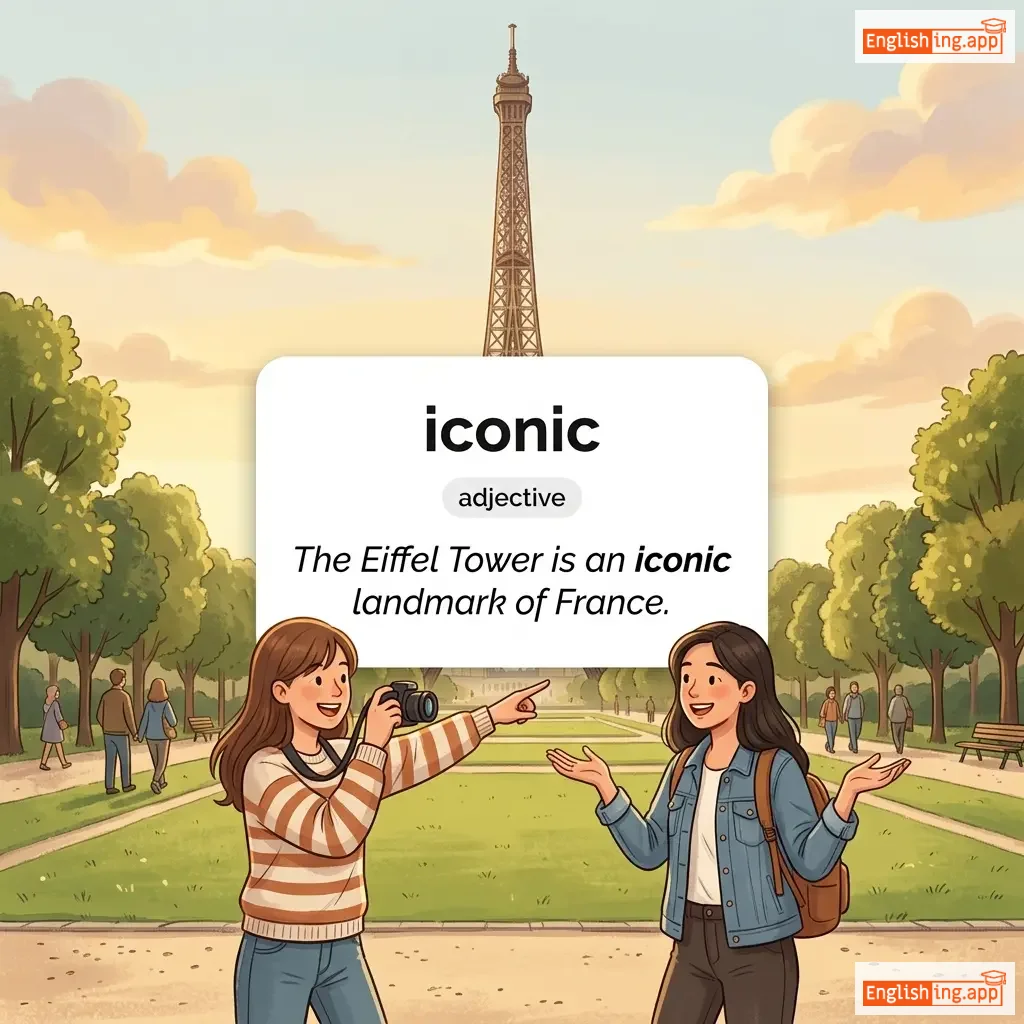
adjective
aɪˈkɒn.ɪk
Иконический (Ikonicheskiy)

Symbolic, legendary, famous, representing something significant or characteristic.

"The Eiffel Tower is an iconic landmark of France."

"Эйфелева башня — это иконическая достопримечательность Франции." (Eyfeleva bashnya — eto ikonicheskaya dostoprimechatel'nost' Frantsii.)
noun
/aɪˈkɒnəklæst/
иконокласт (ikonoklast)

A person who attacks or criticizes cherished beliefs, traditions, or institutions.

"He was known as an iconoclast who challenged old traditions."

"Он был известен как иконокласт, который бросал вызов старым традициям." (On byl izvesten kak ikonoklast, kotoryy brosal vyzov starym traditsiyam.)
iconoclastic definition card — visual illustration of the meaning
adjective
/ˌaɪ.kə.nəˈklæs.tɪk/
характеризуется нападением или отклонением от устоявшихся верований, традиций или ценностей (ikonoklasticheskij)

Characterized by attacking or rejecting cherished beliefs, traditions, or established values.

"Her iconoclastic views challenged the conventional wisdom of the industry."

"Её иконокластические взгляды бросали вызов традиционной мудрости отрасли." (Eyo ikonoklasticheskie vzglyady brosali vyzov traditsionnoj mudrosti otrasli.)
adjective
/ˈaɪsi/
ледяной; чрезвычайно холодный; враждебный (ledyanoy; chrezvychayno kholodnyy; vrazhdebnyy)

extremely cold; covered with ice; unfriendly or hostile

"The icy wind made everyone shiver."

"Ледяной ветер заставил всех дрожать." (Ledyanoy veter zastavil vsekh drozhat)
noun
/aɪˈdiː/
удостоверение личности (udostoverenie lichnosti)

identification; a document or number used to prove who someone is

"Please show your ID at the entrance."

"Пожалуйста, покажите удостоверение личности на входе." (pozhaluysta pokazhite udostoverenie lichnosti na vhode)
Idea definition card — visual illustration of the meaning
noun
/aɪˈdiːə/
идея (ideya)

A thought, plan, or suggestion about what to do.

"She had a brilliant idea for a new business."

"У неё была блестящая идея для нового бизнеса." (U nee byla blestyashchaya ideya dlya novogo biznesa.)
ideal definition card — visual illustration of the meaning
adjective
/aɪˈdiːəl/
идеальный (ideal'nyj)

the best possible; perfect for a situation

"This place is ideal for a picnic."

"Это место идеально подходит для пикника." (Eto mesto ideal'no podkhodyashchij dlya piknika.)
ideal environment definition card — visual illustration of the meaning
adjective + noun
aɪˈdiːəl ɪnˈvaɪrənmənt
идеальная среда (ideal'naya sreda)

Perfect or most suitable conditions for growth or development

"Winter creates an ideal environment for vegetable growth."

"Зима создает идеальные условия для роста овощей." (Zima sozyodayet ideal'nye usloviya dlya rosta ovochhey.)
noun
/aɪˈdiː.ə.lɪ.zəm/
Идеализм (Idealizm)

the pursuit of high principles and noble goals; unrealistic pursuit of perfection

"His youthful idealism motivated him to join various social justice movements."

"Его юношеский идеализм мотивировал его присоединиться к различным движениям социальной справедливости." (Ego yunoshestkiy idealizm motiviroval ego prisoyedinit'sya k razlichnym dvizhheniyam sotsial'noy spravedlivosti.)
adjective
/ˌaɪdiəˈlɪstɪk/
идеалистичный (idealisticniy)

pursuing high principles or ideals; unrealistically optimistic

"She has an idealistic view of changing the world."

"У неё идеалистическое представление о том, как изменить мир." (U neyo idealisticheskoe predstavlenie o tom, kak izmenit' mir.)
verb
/aɪˈdiː.ə.laɪz/
идеализировать (idealizirovat')

To regard or represent something as perfect or better than it really is.

"Children often idealize their parents."

"Дети часто идеализируют своих родителей." (Deti chasto idealiziruyut svoikh roditeley.)
ideation definition card — visual illustration of the meaning
noun
/ˌaɪdiˈeɪʃən/
создание идей (sozdanie idey)

The process of forming ideas or concepts.

"The workshop focused on ideation and brainstorming."

"Мастерская сосредоточилась на создании идей и мозговом штурме." (Masterskaya sosredotochilas' na sozdanii idey i mozgovom shturme.)
adjective
/aɪˈdentɪkl/
идентичный (identichny)

Exactly the same in every detail.

"The twins wore identical clothes."

"Близнецы были в одинаковой одежде." (Bliznetsy byli v odinakovoi odezhde.)
noun
/aɪˌdɛntɪfɪˈkeɪʃən/
идентификация (identifikatsiya)

the process of recognizing or proving who or what someone or something is

"You need proper identification to enter the building."

"Вам необходимо правильное удостоверение личности для входа в здание." (Vam neobkhodimo pravil'noe udostoverenie lichnosti dlya vkhoda v zdanie.)
identified definition card — visual illustration of the meaning
verb
aɪˈdɛntɪfaɪd
идентифицированный (identifitsirovannyy)

To recognize or establish who or what someone or something is.

"The root causes of the issue need to be identified."
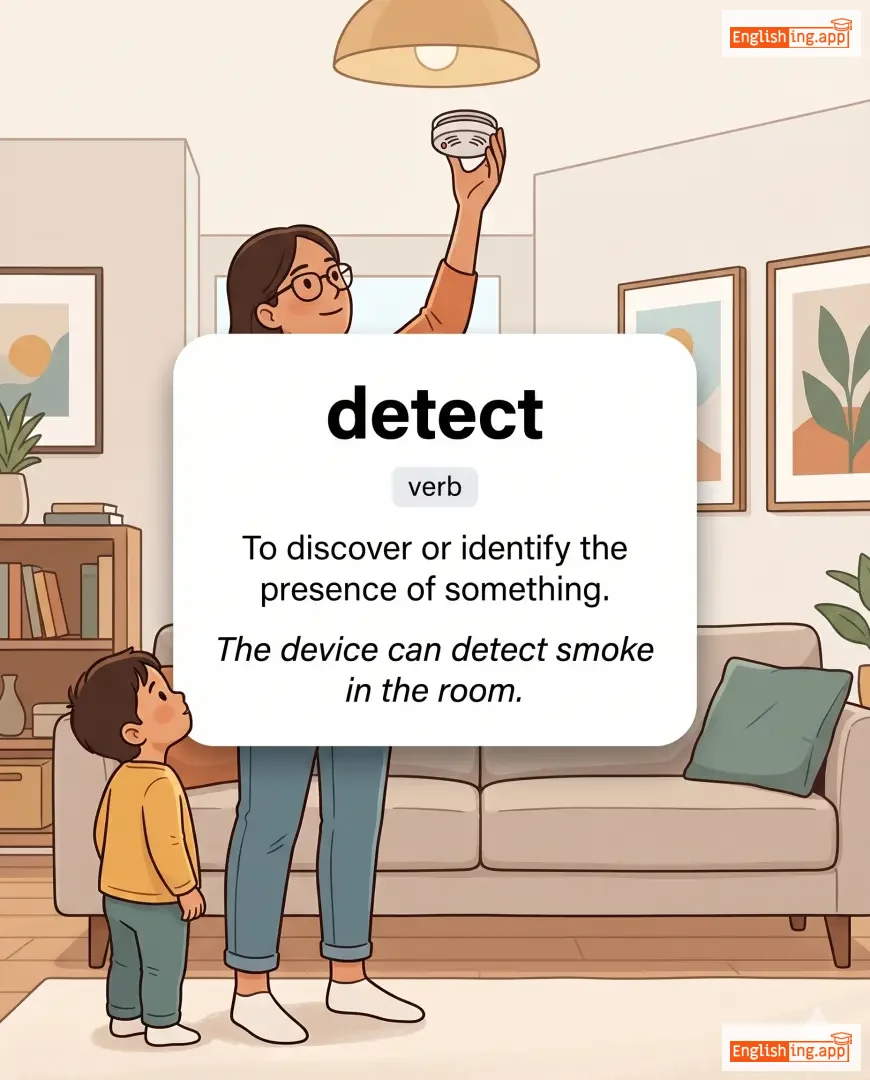
"Основные причины проблемы должны быть идентифицированы." (Osnovnye prichiny problemy dolzhny byt' identifitsirovany.)
identify definition card — visual illustration of the meaning
verb
/aɪˈdɛntɪfaɪ/
идентифицировать (identifitsirovat)

to recognize or establish what something or someone is

"The police could not identify the suspect."
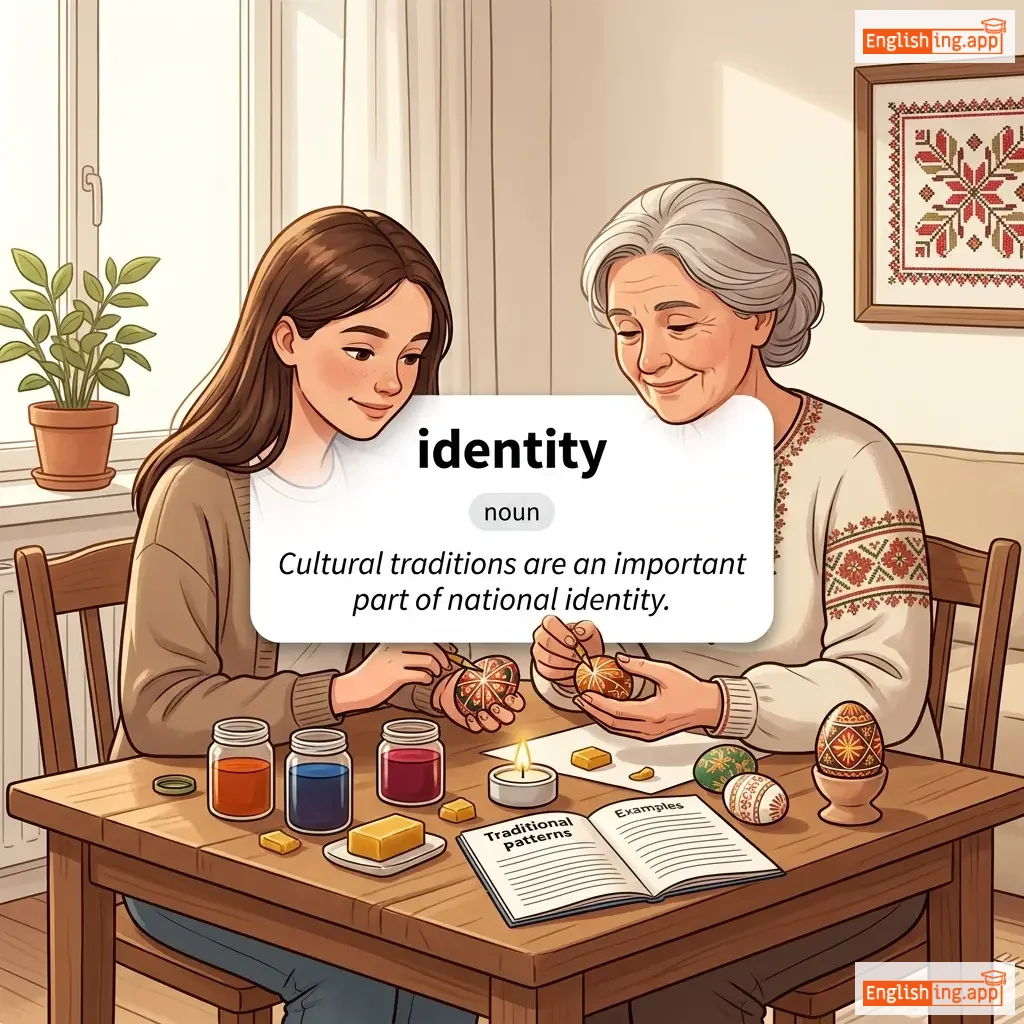
"Полиция не смогла идентифицировать подозреваемого." (Politsiya ne smogla identifitsirovat' podozrevaemogo.)
identity definition card — visual illustration of the meaning
noun
/aɪˈdɛntɪti/
идентичность (identichnost)

the characteristics, feelings, or beliefs that make a person or group different from others

"Cultural traditions are an important part of national identity."

"Культурные традиции являются важной частью национальной идентичности." (Kul'turnye traditsii yavyayutsya vazhnoy chastyu natsional'noy identichnosti)
adjective
/ˌaɪ.di.əˈlɒdʒ.ɪ.kəl/
идеологический (ideologicheskiy)

Relating to or based on a system of ideas or beliefs.

"The two parties are divided by deep ideological differences."

"Обе партии разделены глубокими идеологическими разногласиями." (Obe partii razdeleny glubokimi ideologicheskimi raznoglasiya.)
noun
/ˌaɪ.diˈɒl.ə.dʒi/
идеология (ideologiya)

A system of ideas and ideals, especially one that forms the basis of economic or political theory and policy.

"Democracy is based on the ideology of freedom and equality."

"Демократия основана на идеологии свободы и равенства." (Demokratiya osnova na ideologii svobody i ravenstva.)
noun
/ˈɪd.i.ə.si/
идиотизм (idiotizm)

extremely stupid behavior or actions; foolishness

"The decision to ignore safety protocols was pure idiocy that endangered everyone."

"Решение игнорировать протоколы безопасности было чистым идиотизмом, который поставил всех в опасность." (Reshenie ignorirovat' protokoly bezopasnosti bylo chistym idiotizmom, kotoryi postavil vsekh v opasnost'.)
noun
/ˈɪd.i.əm/
идиома (idioma)

A group of words whose meaning is different from the meanings of the individual words.

"The idiom 'break the ice' means to start a conversation in a friendly way."

"Идиома 'сломать лед' означает начать разговор дружелюбным способом." (Idiyoma 'slomat' led' oznachayet nachat' razgovor druzhelyubnym sposobom.)
noun
/ˌɪdiəˈsɪŋkrəsi/
идиосинкразия (idiosinkraziya)

A distinctive or peculiar characteristic, habit, or mannerism unique to an individual.

"One of her idiosyncrasies was humming while working."
"Одна из ее идиосинкразий заключалась в том, что она напевала, работая." (Odna iz eye idiosinkrazii zaklyuchalas' v tom, chto ona napevala, rabotaya.)
idiosyncratic definition card — visual illustration of the meaning
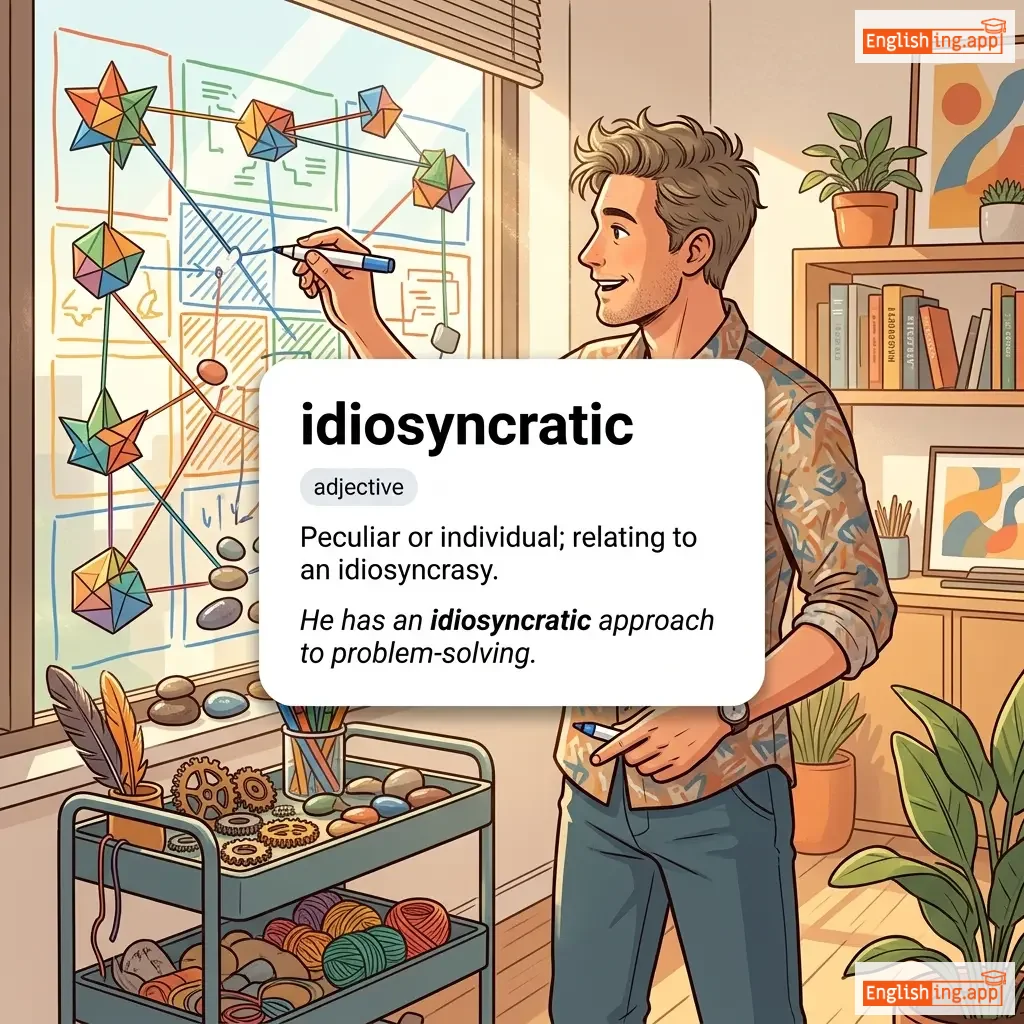
adjective
/ˌɪdiəsɪnˈkrætɪk/
эксцентричный (ekstsentrichnyj)

Peculiar or individual; relating to an idiosyncrasy.

"He has an idiosyncratic approach to problem-solving."

"У него эксцентричный подход к решению проблем." (U nego ekscentrichnyj podkhod k resheniyu problem.)
noun
/ˈɪdɪət/
идиот (idiot)

a person who acts in a way that is considered very stupid or foolish

"He acted like an idiot at the party last night."

"Он вёл себя как идиот на вечеринке прошлой ночью." (On vyol sebya kak idiot na vecherinke proshloy noch'yu.)
adjective
/ˌɪd.iˈɒt.ɪk/
идиотский (idiotskiy)

extremely stupid; foolish; senseless

"His idiotic behavior embarrassed everyone at the meeting."

"Его идиотское поведение смутило всех на встрече." (ego idiotskoe povedenie smutilo vsekh na vstreche)
adjective, verb
/ˈaɪd(ə)l/
пассивный (passivny)

Adjective: not active or in use; lazy. Verb: to spend time doing nothing.

"The workers sat idle during the power outage."

"Рабочие сидели без дела во время отключения электричества." (rabochie sidi bez dela vo vremya otklyucheniya elektrichestva.)
noun
/ˈaɪdlər/
лентяй (lentyay)

A person who avoids work or spends time lazily.

"He was known as an idler who wasted his days."

"Он был известен как лентяй, который тратил свои дни впустую." (On byl izvesten kak lentyay, kotoryy tratil svoi dni vpustuyu.)
noun
/ˈaɪ.dəl/
идол; человек, восхищающийся (idol, chelovek, voskhishchayushchiesya)

an image or representation of a god used as an object of worship; a person who is greatly admired

"The singer became a teenage idol after her hit song topped the charts worldwide."

"Певица стала подростковым кумиром после того, как ее хит поднялся на вершину мировых чартов." (Pevitsa stala podrostkovym kumoirom posle togo, kak yeye khit podnyalsya na vershinu mirovykh chartov.)
adjective
/ˌaɪdəˈlɑːtrɪəs/
идолопоклоннический (idolopoklonnicheskiy)

Excessively devoted or reverent towards idols or false gods.

"The ancient tribe was known for its idolatrious practices."

"Древнее племя было известно своими идолопоклонническими обычаями." (Drevnee plemya bylo izvestno svoimi idolopoklonnicheskimi obychayami.)
verb
/aɪˈdɒləˌtraɪz/
идолопоклонство (idolopoklonstvo)

To worship idols; to regard with excessive devotion or admiration.

"They began to idolatrize the statue as a deity."

"Они начали идолизировать статую как божество." (Oni nachali idolizirovat' statuju kak bozhestvo.)
adjective
/aɪˈdɒlətrəs/
идолопоклонник (idolopoklonnik)

Excessively admiring or worshipping someone or something as an idol.

"The king was criticized for his idolatrous devotion to wealth."

"Царя критиковали за его идолопоклонническое поклонение богатству." (Tsarya kritikovali za ego idolopoklonnicheskoe poklonenie bogatstvu.)
idolatry definition card — visual illustration of the meaning
noun
/aɪˈdɒlətri/
идолопоклонство (idolopoklonstvo)

The worship of idols or extreme admiration for someone or something.

"The priest condemned the idolatry practiced in the village."

"Священник осудил идолопоклонство, практиковавшееся в деревне." (Svyashchennik osudil idolopoklonstvo, praktikovavsheesya v derevne.)