Словари

Словарь английского языка | Значения слов, определения и примеры

verb
/ˈfʌmbəl/
ошибаться (oshibatsya)

to handle something clumsily or to make mistakes while doing something

"He fumbled with the keys and dropped them on the floor."

"Он запутался в ключах и уронил их на пол." (On zaputalsya v klyuchakh i uronil ikh na pol.)
verb
/ˈfjuːmɪˌɡeɪt/
дезинфицировать (dezinficirovat)

to disinfect or purify an area by using chemical fumes

"They fumigated the warehouse to kill the insects."
"Они провели дезинфекцию склада, чтобы уничтожить насекомых." (Oni proveli dezinfektsiyu sklada, chtoby unichtozhit nasekomykh.)
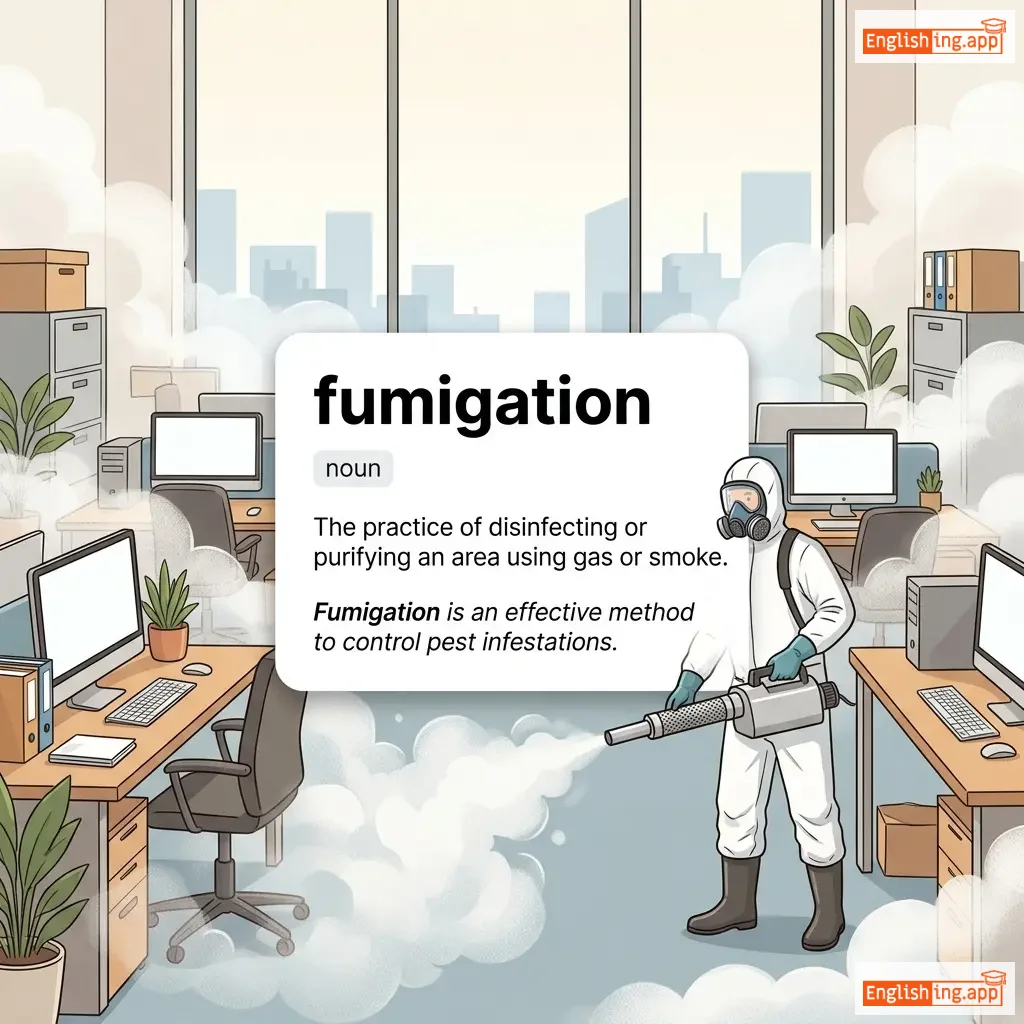
fumigation definition card — visual illustration of the meaning
noun
ˌfjuːmɪˈɡeɪʃən
фумигация (fumigatsiya)

The practice of disinfecting or purifying an area using gas or smoke.

"Fumigation is an effective method to control pest infestations."
"Фумигация - это эффективный метод контроля за нашествием вредителей." (Fumigatsiya - eto effektivnyy metod kontrolya za nasheystviyem vrediteley.)
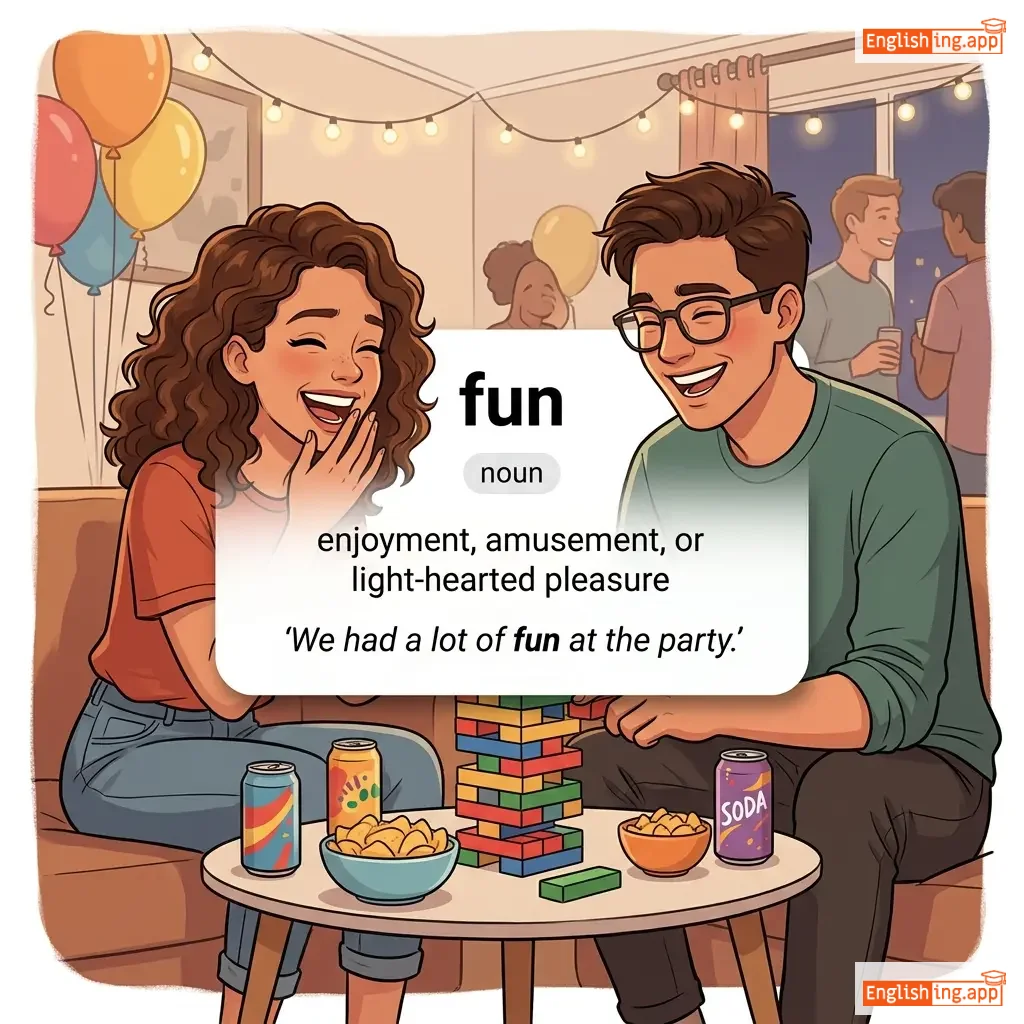
fun definition card — visual illustration of the meaning
noun
/fʌn/
веселье (veselye)

enjoyment, amusement, or light-hearted pleasure

"We had a lot of fun at the party."

"Мы отлично провели время на вечеринке." (My otlichno proveli vremya na vecherinke.)
noun
/ˈfʌŋkʃən/
функция (funkciya)

An activity or purpose natural to or intended for a person or thing.

"The main function of the heart is to pump blood."

"Основная функция сердца - качать кровь." (Osnovnaya funkciya serdca - kachat' krov'.)
adjective
/ˈfʌŋkʃənl/
функциональный (funktsional'nyy)

designed to be practical and useful, rather than just decorative

"The design of the chair is simple but highly functional."
"Дизайн стула прост, но очень функционален." (Dizayn stula prost, no ochen' funktsionalen.)
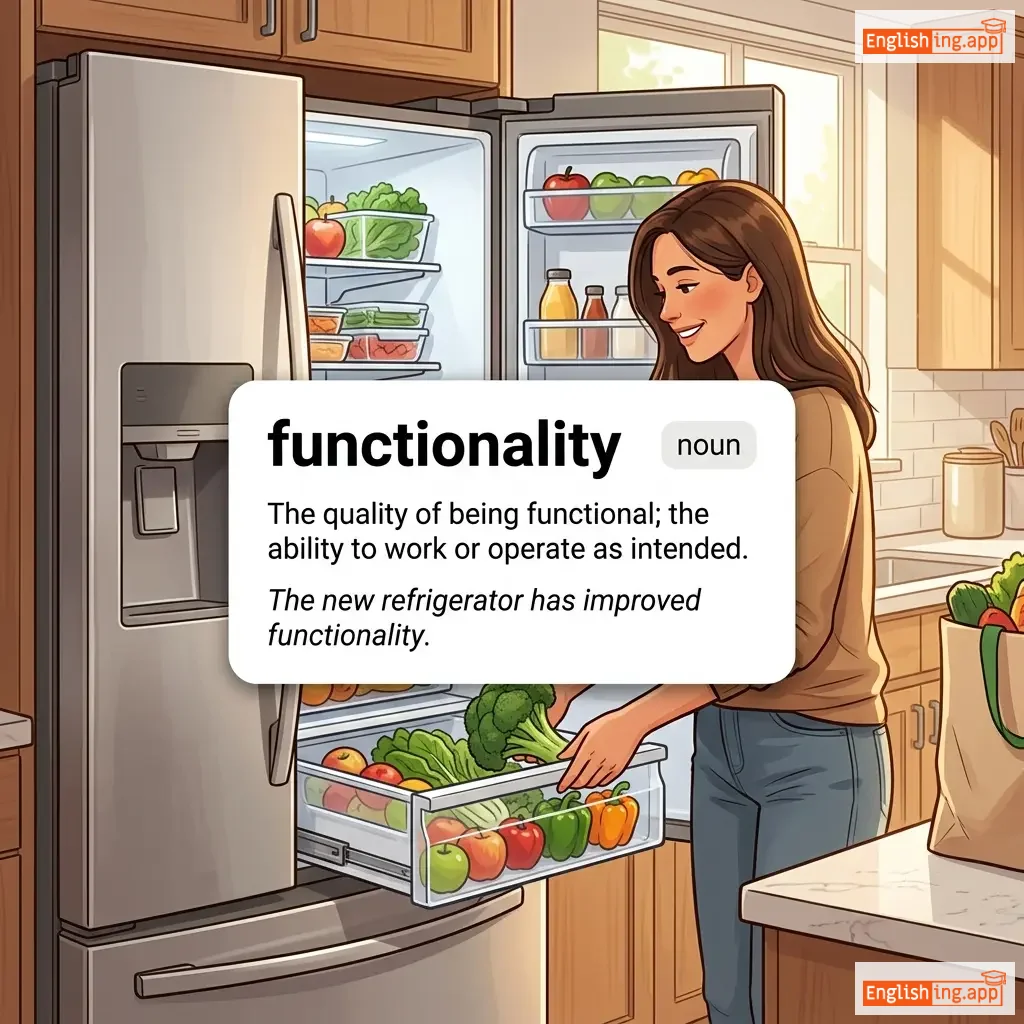
functionality definition card — visual illustration of the meaning
noun
ˌfʌŋk.ʃəˈnæl.ə.ti
функциональность (funktsional'nost')

The quality of being functional; the ability to work or operate as intended.

"The new refrigerator has improved functionality."

"Новый холодильник улучшил функциональность." (Novyy kholodil'nik uluchshil funktsional'nost'.)
noun
/ˈfʌŋkʃəˌnɛri/
служащий (sluzhashchiy)

a person who has official duties in an organization, especially one with little authority

"The minor functionary was responsible for filing reports."

"Низший служащий был ответственен за подачу отчетов." (Nizshiy sluzhashchiy byl otvetstvenen za podachu otchetov.)
fund definition card — visual illustration of the meaning
noun/verb
/fʌnd/
фонд (fond)

a sum of money saved or made available for a particular purpose; to provide money for

"The government created a fund for education."

"Правительство создало фонд для образования." (Pravitel'stvo sozdalo fond dlya obrazovaniya.)
adjective
/ˌfʌndəˈmɛntl/
фундаментальный (fundamental'nyy)

forming a necessary base or core; of central importance

"Honesty is a fundamental principle of good leadership."

"Честность — это фундаментальный принцип хорошего лидерства." (Chestnost' — eto fundamental'nyy printsip khoroshego liderstva.)
adverb
/ˌfʌndəˈmɛntəli/
фундаментально (fundamental'no)

in a basic and important way; at the core

"The two theories are fundamentally different."

"Эти две теории принципиально разные." (Eti dve teorii printsipial'no raznye.)
funding definition card — visual illustration of the meaning
noun
/ˈfʌndɪŋ/
финансирование (finansirovanie)

financial support for a project or organization

"The startup is seeking funding from investors."

"Стартап ищет финансирование от инвесторов." (Startap ishchet finansirovanie ot investorov.)
noun
/ˈfʌndˌreɪzɪŋ/
сбор средств (sbor sredstv)

the process of collecting money for a cause or project

"The organization is organizing a fundraising event."

"Организация организует событие по сбору средств." (Organizatsiya organizuyet sobytiye po sbory sredstv.)
noun
/ˈfjuːnərəl/
похороны (pokhorony)

a ceremony held to honor and bury or cremate someone who has died

"The family attended the funeral of their grandfather."

"Семья присутствовала на похоронах их дедушки." (Sem'ya prisutstvovala na pokhoronakh ikh dedushki.)
adjective
/fjuːˈnɪəriəl/
похоронный (pokhoronny)

having the mournful, somber character of a funeral

"The room was filled with a funereal silence after the announcement."

"Комната была заполнена похоронным молчанием после объявления." (Komnata byla zapolnena pokhoronnym molchaniem posle ob'yavleniya.)
noun (plural of fungus)
/ˈfʌndʒaɪ/
гриб (grib)

a group of spore-producing organisms such as mushrooms, molds, and yeasts

"Fungi play an important role in breaking down organic matter in nature."

"Грибы играют важную роль в разложении органических веществ в природе." (Griby igrayut vazhnuyu rol' v razlozhenii organicheskikh veshchestv v prirode.)
adjective
/ˈfʌndʒəbl/
фунгибельный (fungibel'nyy)

interchangeable; able to replace or be replaced by another identical item

"In finance, money is considered a fungible asset."

"В финансах деньги считаются fungible активом." (V finansakh den'gi schitayutsya fungible aktivom.)
adjective
/ˈfʌŋɡəs/
похожие на гриб (pokhozhiye na grib)

relating to or resembling a fungus

"The damp basement had a fungous smell."

"В сыром подвале был запах, похожий на гриб." (V syrom podvale byl zapakh, pokhozhiy na grib.)
noun
/ˈfʌŋɡəs/
гриб (grib)

a spore-producing organism feeding on organic matter, including molds, yeast, and mushrooms

"A strange fungus was growing on the old tree."
"Странный гриб рос на старом дереве." (Strannyj grib ros na starom dereve.)
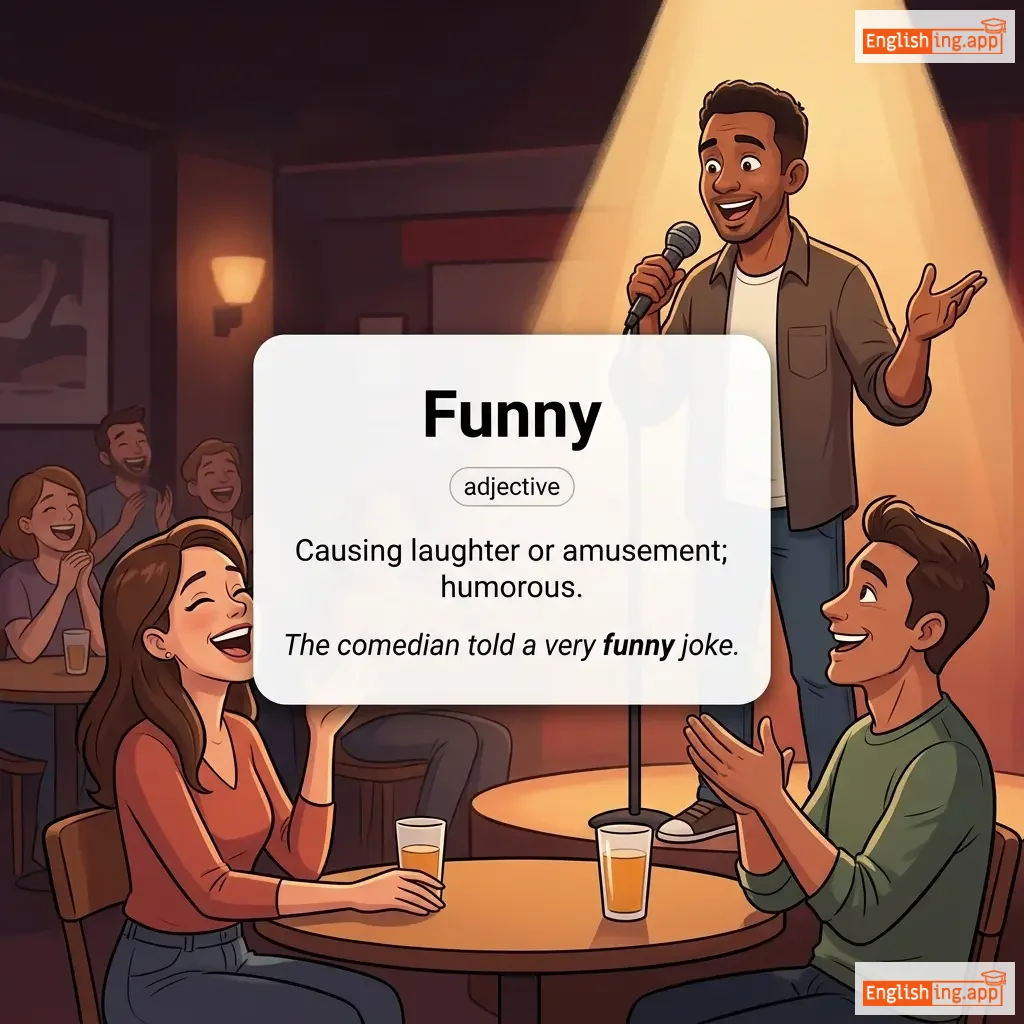
Funny definition card — visual illustration of the meaning
adjective
/ˈfʌni/
смешной (smeshnoy)

Causing laughter or amusement; humorous.

"The comedian told a very funny joke."

"Комик рассказал очень смешной анекдот." (Komik rasskazal ochen' smeshnoy anekdot.)
noun
/fɜːr/
шерсть (sherst)

the thick hair covering the skin of certain animals

"The cat’s fur is soft and shiny."

"Шерсть кошки мягкая и блестящая." (Shersht' koshki myagkaya i blestyashchaya.)
verb
/ˈfɜːrbɪʃ/
полировать (polirovat)

to polish, renovate, or give a fresh look to something

"The workers furbished the old sword until it gleamed like new."

"Рабочие отполировали старый меч, пока он не засиял как новый." (Rabochie otpolirovali staryj mech, poka on ne zasiyał kak novyj.)
adjective
/ˈfjʊəriəs/
яростный (yarostny)

Extremely angry.

"She was furious when she heard the bad news."

"Она была яростной, когда услышала плохие новости." (Ona byla yarostnoy, kogda uslyshala plokhie novosti.)
noun
/ˈfɜːrlɔːŋ/
единица измерения расстояния (220 ярдов или примерно 201 метр) (edinitsa izmereniya rasstoyaniya (220 yardov ili primerno 201 metr))

a unit of distance equal to 220 yards or about 201 meters

"The horse ran a furlong before slowing down."

"Лошадь пробежала фёрлонг, прежде чем замедлиться." (Loshad' probegala fyerlong, prezhde chem zamedlitsya.)
noun, verb
/ˈfɜːrloʊ/
временный отпуск (vremennyy otpuskk)

temporary leave of absence from work, especially that granted to an employee or soldier

"Many workers were placed on furlough during the crisis."

"Многие работники были отправлены в отпуск во время кризиса." (Mnogie rabotniki byli otpravleny v otpusk vo vremya krizisa.)
noun
/ˈfɜːrneɪs/
печь (pech)

an enclosed structure in which heat is produced for a building or for melting metal

"The factory's furnace melted the metal quickly."

"Печь на заводе быстро расплавила металл." (Pech' na zavode bystro rasplavila metall.)
verb
/ˈfɜːrnɪʃ/
обставить, предоставить (obstatit', predostavit')

to provide or supply with furniture or equipment

"They furnished the new house with modern furniture."

"Они обставили новый дом современной мебелью." (Oni obstavili novyj dom sovremennoj mebelyu.)
noun
/ˈfɜːrnɪtʃər/
мебель (mebel)

Objects such as chairs, tables, beds, or cupboards used to make a room suitable for living or working.

"The living room was filled with beautiful wooden furniture."

"Гостиная была наполнена красивой деревянной мебелью." (Gostinaya byla napolnena krasivoy derevyannoy mebelyu.)
noun
/ˈfjʊərɔːr/
буря (burya)

An outbreak of public anger or excitement.

"The politician's remarks created a furor in the media."

"Заявления политика вызвали фурор в СМИ." (Zayavleniya politika vyzvali furor v SMI.)
noun
/ˈfʌriər/
меховщик (mekhovshchik)

A person who prepares or deals in furs.

"The furrier displayed fine coats in his shop."

"Меховщик выставил красивые пальто в своем магазине." (Mekhovechik vystavil krasivye pal'to v svoem magazine.)
noun/verb
/ˈfʌrəʊ/

A long narrow trench made in the ground by a plow; to make wrinkles or grooves.

"The farmer plowed furrows in the field."

adverb/adjective/verb
/ˈfɜːrðər/
продвигать (prodvigat)

At a greater distance; to advance or promote something.

"She studied hard to further her career."

"Она много училась, чтобы продвинуть свою карьеру." (Ona mnogo uchilas', chtoby prodvinut' svoyu kar'yeru.)
noun
/ˈfɜːrðərəns/
содействие (sodejstvie)

The advancement or promotion of something.

"The new policy was introduced in furtherance of social justice."

"Новая политика была введена в целях продвижения социальной справедливости." (Novaya politika byla vvedena v tseljah prodvizheniya sotsial'noy spravedlivosti.)
adverb
/ˌfɜːrðərˈmɔːr/
к тому же (k tomu zhe)

Used to introduce an additional point or idea; in addition.

"The plan is simple and, furthermore, it is affordable."

"План прост, и к тому же он доступен." (Plan prost, i k tomu zhe on dostupen.)
adjective
/ˈfɜːrtɪv/
тайный (taynyy)

Attempting to avoid notice or attention, typically because of guilt or a belief that discovery would lead to trouble.

"He cast a furtive glance at the door before leaving."

"Он бросил тайный взгляд на дверь перед тем, как уйти." (On brosil taynyy vzglyad na dver' pered tem, kak uyti.)
noun
/ˈfjʊr.ʌŋ.kəl/
фурункул; шишка; (furunkul, shishka)

a painful pus-filled bump under the skin caused by infected, inflamed hair follicles

"The doctor prescribed antibiotics to treat the painful furuncle on his neck."

"Врач прописал антибиотики для лечения болезненного фурункула на его шее." (Vrach propisal antibiotiki dlya lecheniya boleznennogo furunkula na ego sheye.)
noun
/ˈfjʊri/
ярость (yarost)

Wild or violent anger; extreme rage.

"She was trembling with fury after the insult."

"Она дрожала от ярости после оскорбления." (Ona drozhala ot yarosti posle oskorbleniya.)
verb
/fjuːz/
сливаться (slivat'sya)

To join or blend two or more things together into one.

"The two metals fused under high heat."

"Два металла слились при высокой температуре." (Dva metalla slilis' pri vysokoy temperature.)
adjective
/ˈfjuːzəbl/
плавкий (plavkiy)

Capable of being melted or fused.

"The engineer used a fusible alloy in the experiment."

"Инженер использовал плавкий сплав в эксперименте." (Inzhener ispol'zoval plavkiy splav v eksperimentye.)
noun
/ˌfjuːzɪˈleɪd/
залп (zalp)

A series of shots fired or missiles thrown all at the same time or in quick succession.

"The soldiers advanced under a fusillade of bullets."

"Солдаты продвигались под залпом пуль." (Soldaty prodvigalis' pod zalpom pul'.)
fusion definition card — visual illustration of the meaning
noun
/ˈfjuːʒən/
смешение (smeshenie)

the process or result of joining two or more things together to form a single entity

"The restaurant offers a unique fusion of Asian and European cuisines."

"Ресторан предлагает уникальное смешение азиатской и европейской кухни." (Restoran predlagaet unikальное smeshchenie aziatskoy i yevropeyskoy kukhni.)
noun
/fʌs/
суматоха (sumatoha)

a display of unnecessary or excessive concern about something

"She made a fuss about the delay in service."

"Она устроила суматоху из-за задержки в обслуживании." (Ona ustroila sumatohu iz-za zaderzhki v obsluzhivanii.)
adjective
/ˈfʌsi/
привередливый (priveredlivyy)

hard to please; very concerned with details

"The child is very fussy about what she eats."

"Ребенок очень привередлив в том, что он ест." (Rebenok ochen' priveredliv v tom, chto on yest.)
noun
/ˈfʌstɪən/
помпезная речь (pompeznaya rech)

pompous or pretentious speech or writing; originally a type of thick cloth

"The politician's speech was filled with fustian and empty promises."

"Речь политика была полна фустиана и пустых обещаний." (Rech' politika byla polna fustiana i pustykh obeshchaniy.)
adjective
/ˈfʌsti/
затхлый и сырой (zatkhlyi i syroi)

smelling stale, damp, or stuffy; old-fashioned

"The room smelled fusty after being closed for months."
"Комната пахла затхлостью после того, как была закрыта на несколько месяцев." (Komnata pakhla zatkhlost'yu posle togo, kak byla zakryta na neskol'ko mesiatsev.)
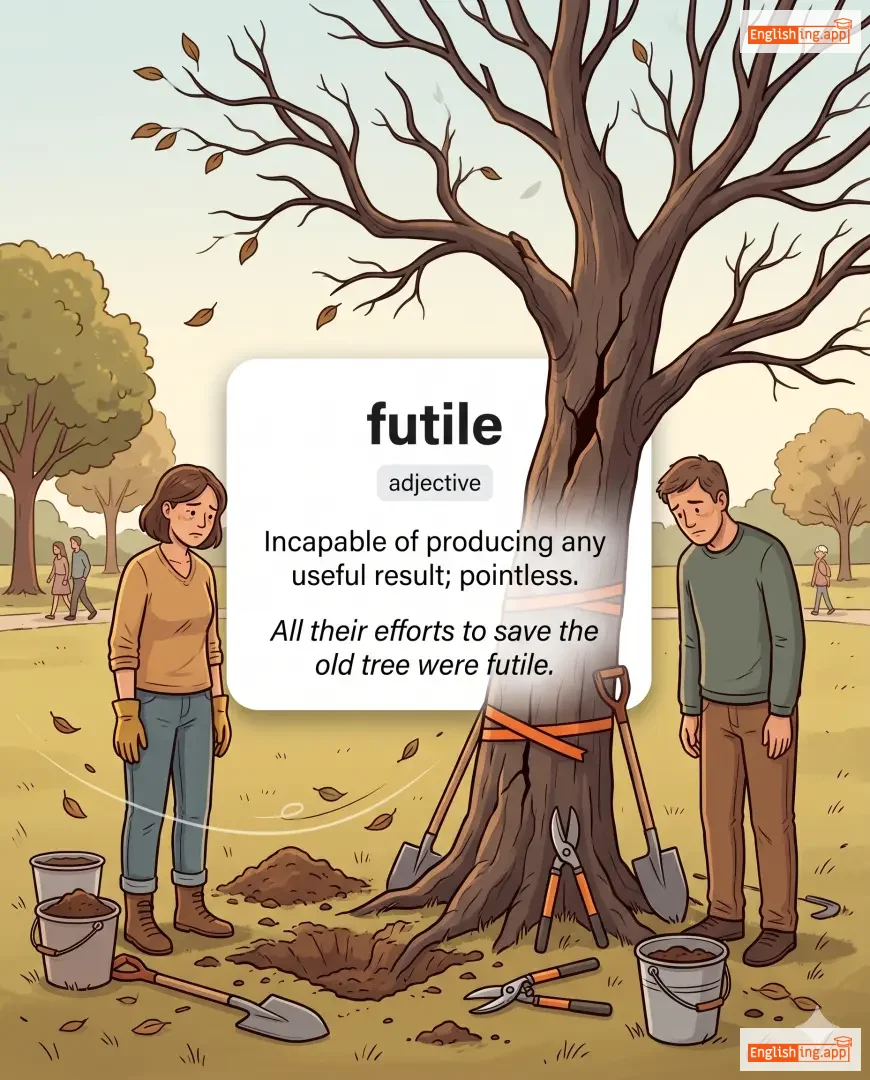
futile definition card — visual illustration of the meaning
adjective
/ˈfjuː.taɪl/
тщетный (tshyetny)

Incapable of producing any useful result; pointless.

"All their efforts to save the old tree were futile."
"Все их усилия спасти старое дерево были тщетными." (Vse ikh usiliya spasti staroye derevo byli tshyetnymi.)
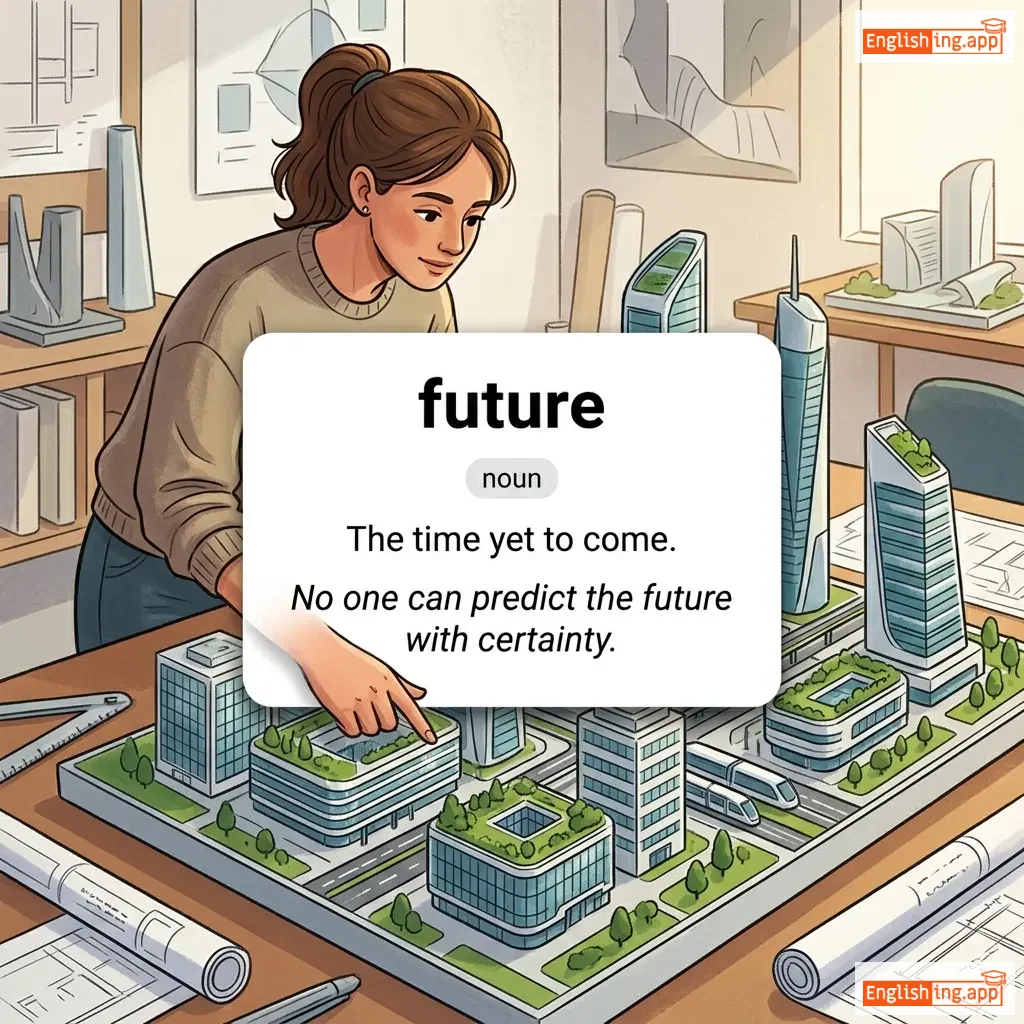
future definition card — visual illustration of the meaning
noun
/ˈfjuːtʃər/
будущее (budushchee)

The time yet to come.

"No one can predict the future with certainty."
"Никто не может точно предсказать будущее." (Nikto ne mozhet tochno predskazat' budushchee.)
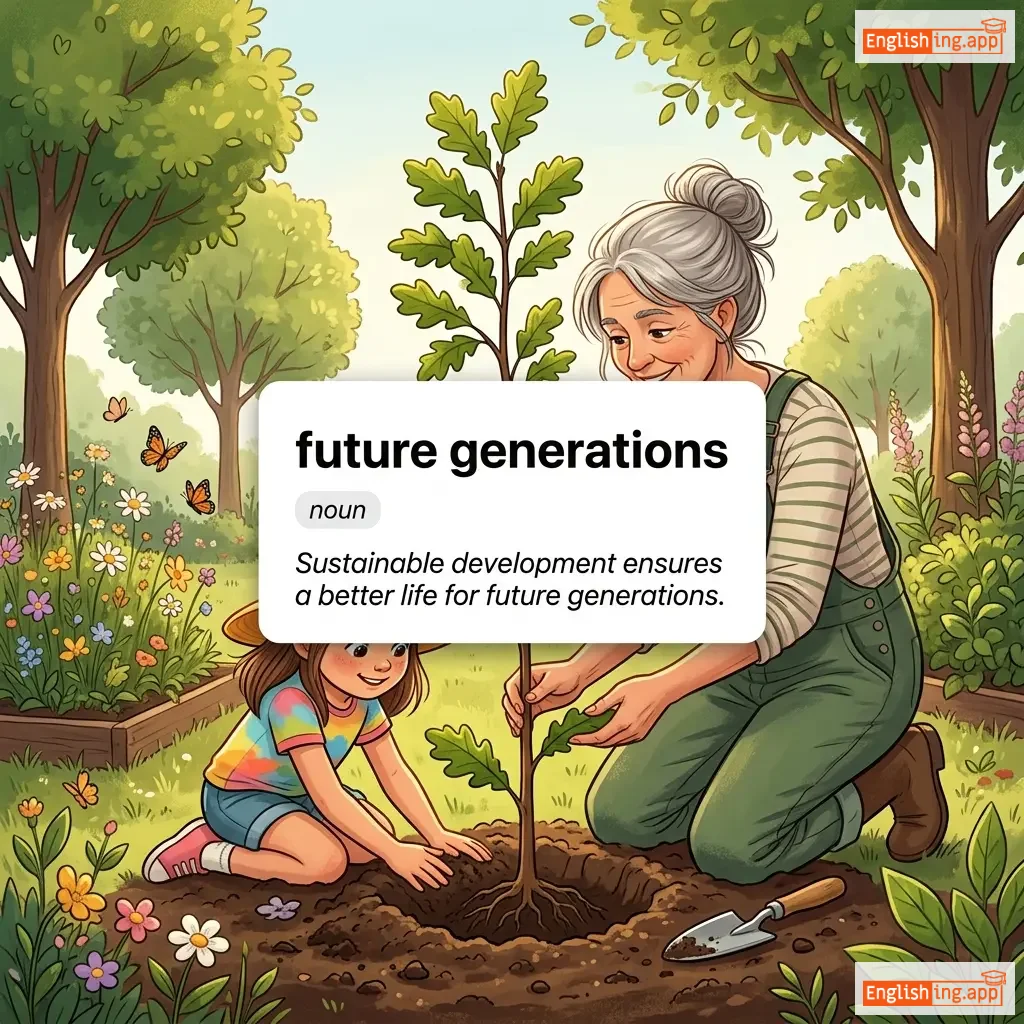
future generations definition card — visual illustration of the meaning
noun
ˈfjuː.tʃɚ ˌdʒen.əˈreɪ.ʃənz
будущие поколения (budushchie pokolenija)

People who have not yet been born, considered in terms of the environment or society they will inherit.

"Sustainable development ensures a better life for future generations."

"Устойчивое развитие обеспечивает лучшее будущее для будущих поколений." (Ustoichivoe razvitie obespechivaet luchshee budushchee dlya budushchikh pokoleniy.)
noun
/ˈfjuː.tʃə.rɪst/
футурист (futurist)

A person who studies or predicts the future, especially trends in science, technology, or society.

"The futurist predicted major changes in transportation within the next decade."
"Футурист предсказал значительные изменения в транспорте в течение следующего десятилетия." (Futurist predskazal znachitel'nye izmeneniya v transporte v techeniye sleduyushchego desyatiletiya.)
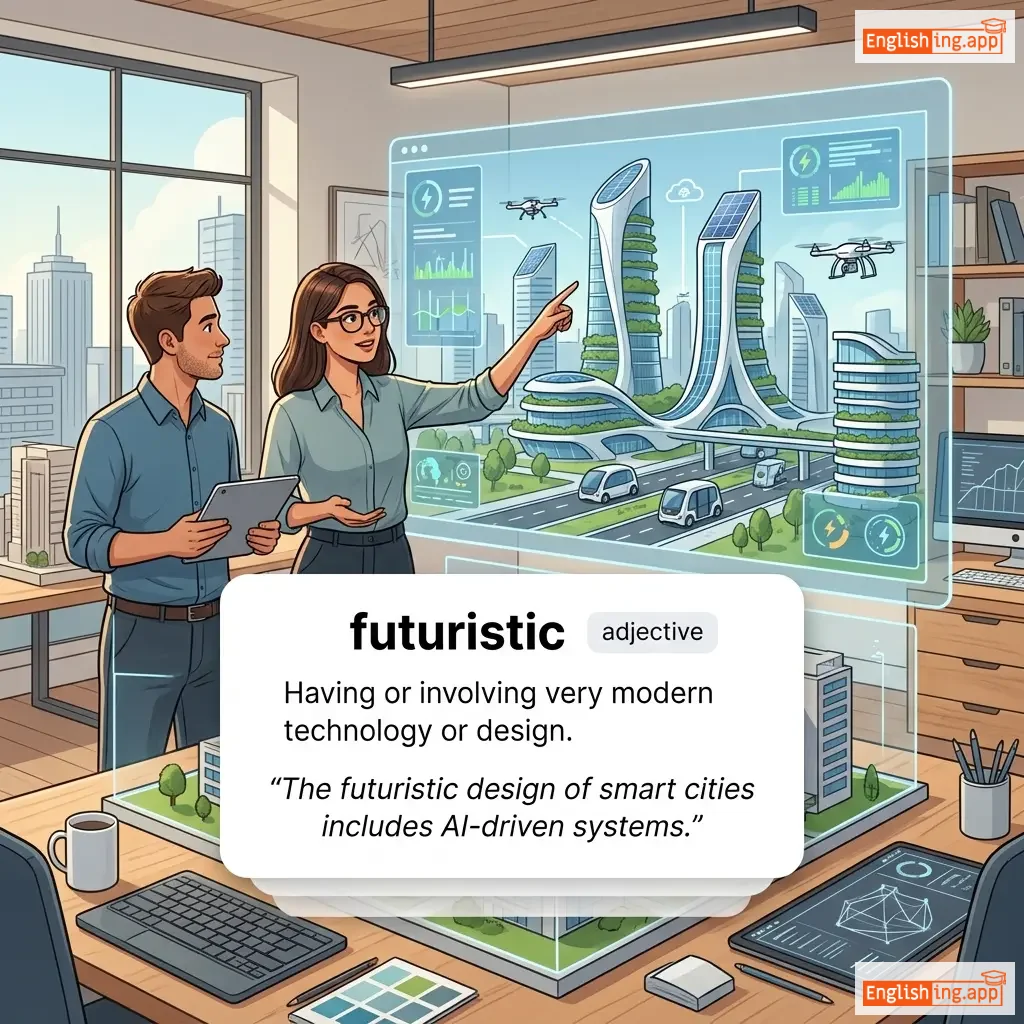
futuristic definition card — visual illustration of the meaning
adjective
ˌfjuː.tʃəˈrɪs.tɪk
футуристический, связанный с передовыми технологиями (futuristicheskiy, svyazannyy s peredovymi tekhnologiyami)

Having or involving very modern technology or design.

"The futuristic design of smart cities includes AI-driven systems."

"Футуристический дизайн умных городов включает системы на базе ИИ." (Futuristicheskiy dizayn umnykh gorodov vklyuchayet sistemy na baze II.)