Словари

Словарь английского языка | Значения слов, определения и примеры

verb
/ˈaɪdəlaɪz/
идолизировать (idolizirovat')

To admire or worship someone excessively.

"Fans often idolize celebrities for their talent and lifestyle."

"Фанаты часто идеализируют знаменитостей за их талант и стиль жизни." (Fanaty chasto idealiziruyut znamenitostey za ikh talant i stil' zhizni.)
noun
/ˈaɪdɪl/
идиллическая сцена (idillicheskaya stsena)

An extremely happy, peaceful, or picturesque episode or scene, often idealized.

"Their honeymoon was an idyll on a tropical island."

"Их медовый месяц был идиллической сценой на тропическом острове." (Ikh medovy mesyats byl idillicheskoy stsenoiy na tropicheskom ostrove.)
adjective
/aɪˈdɪlɪk/
идиллический и красивый (idilicheskiy i krasivyy)

Like an idyll; extremely happy, peaceful, or picturesque.

"They enjoyed an idyllic vacation by the sea."

"Они наслаждались идиллическим отдыхом у моря." (Oni naslazhdalis' idilicheskim otdykhom u morya.)
abbreviation
/ˌaɪˈiː/
т.е. (t.e.)

That is to say; used to clarify or explain something more precisely.

"Many amphibians, i.e., frogs and salamanders, can live both in water and on land."

"Многие амфибии, т.е. лягушки и саламандры, могут жить как в воде, так и на суше." (Mnogie amfibii, t.e. lyagushki i salamandry, mogut zhit' kak v vode, tak i na sushe.)
conjunction
/ɪf/
если (yesli)

used to introduce a condition or supposition

"If it rains tomorrow, we will stay home."
"Если завтра будет дождь, мы останемся дома." (Esli zavtra budet dozhd', my ostanemsya doma.)
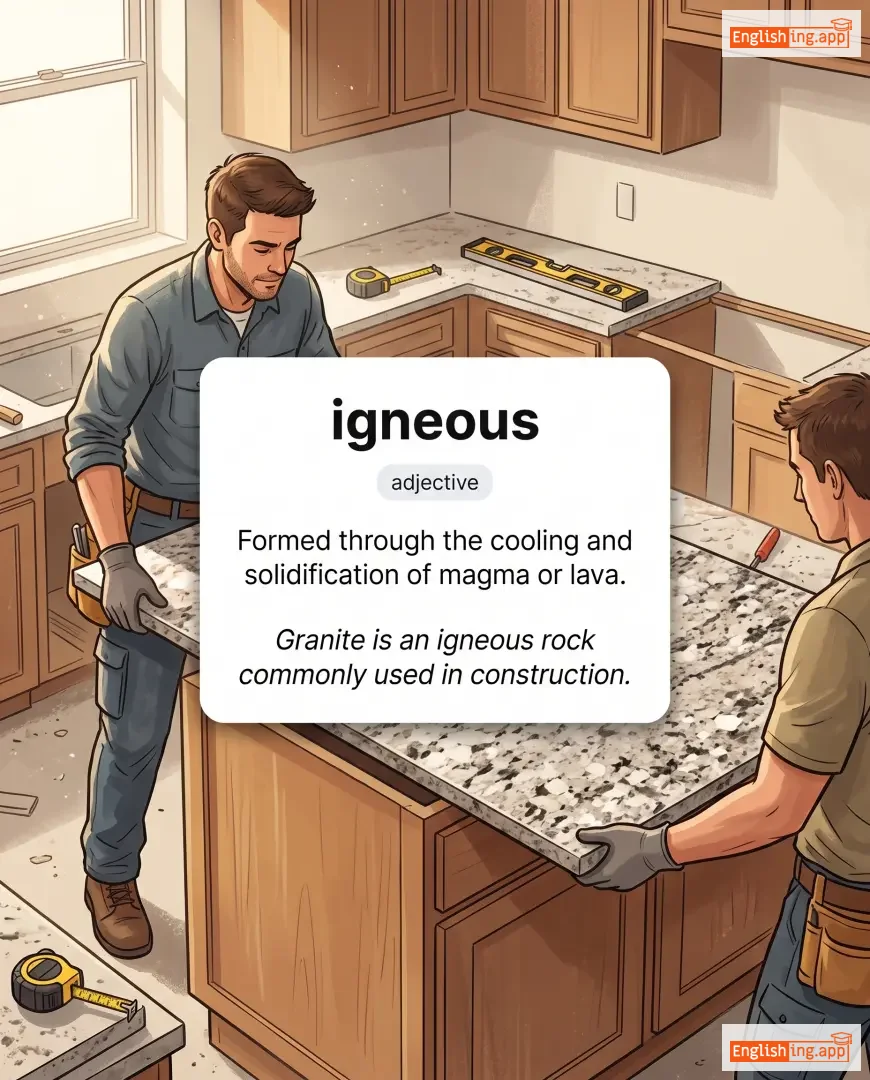
igneous definition card — visual illustration of the meaning
adjective
/ˈɪɡ.ni.əs/
магматический (magmaticheskiy)

Formed through the cooling and solidification of magma or lava.

"Granite is an igneous rock commonly used in construction."

"Гранит - это магматическая порода, которая часто используется в строительстве." (Granit - eto magmaticheskaya poroda, kotoraya chasto ispol'zuyetsya v stroitel'stve.)
verb
/ɪɡˈnaɪt/
зажигать (zazhigat')

To catch fire or cause to catch fire; to start or arouse.

"The sparks ignited the dry leaves in seconds."

"Искры воспламенили сухие листья за считанные секунды." (Iskry vosplamenili sukhie list'ya za schitannye sekundy.)
adjective
/ɪɡˈnoʊ.bəl/
подлый (podlyi)

Dishonorable, shameful, or lacking nobility.

"His ignoble actions ruined his reputation."

"Его подлые поступки испортили его репутацию." (Ego podlye postupki isportili ego reputatsiyu.)
adjective
/ˌɪɡ.nəˈmɪn.i.əs/
позорный (pozorny)

Marked by shame, disgrace, or humiliation.

"The team suffered an ignominious defeat in the finals."

"Команда потерпела позорное поражение в финале." (Komanda poterpela pozornoe porazhenie v finale.)
noun
/ˈɪɡ.nəˌmɪn.i/
игноминия (ignominiya)

Public shame, disgrace, or dishonor.

"He lived the rest of his life in ignominy after the scandal."

"Он прожил остаток своей жизни в игноминии после скандала." (On prozhil ostatok svoey zhizni v ignominii posle skandala.)
noun
/ˈɪɡnərəns/
игнорирование (ignorirovanie)

lack of knowledge or awareness in general

"His ignorance about the subject was evident."

"Его невежество по этой теме было очевидно." (Yego nevezhestvo po etoy teme bylo ochevidno.)
adjective
/ˈɪɡ.nər.ənt/
невежественный (nevezhestvenny)

lacking knowledge, awareness, or education

"He made an ignorant comment about the culture."
"Он сделал невежественное замечание о культуре." (On sdelal nevezhestvennoe zamechanie o kul'ture.)
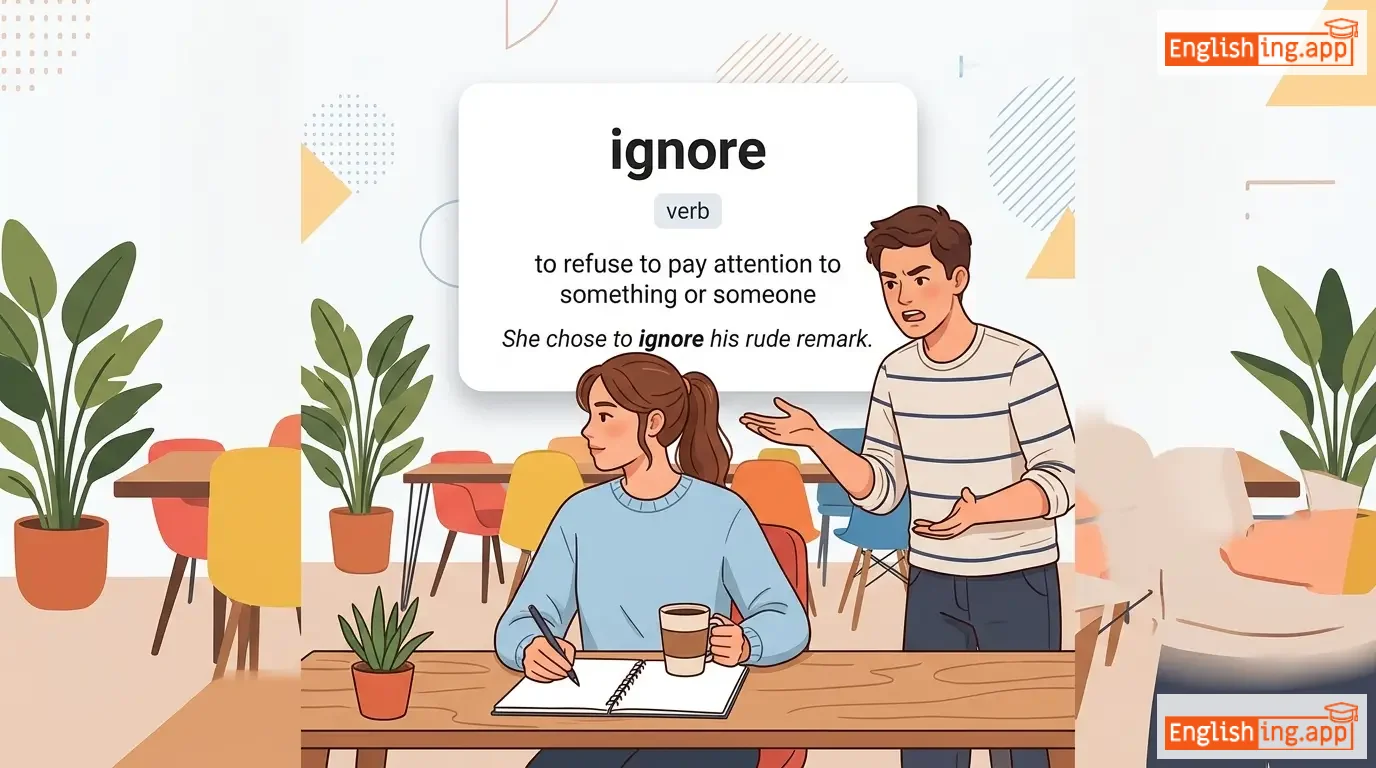
ignore definition card — visual illustration of the meaning
verb
/ɪɡˈnɔːr/
игнорировать (ignorirovat)

to refuse to pay attention to something or someone

"She chose to ignore his rude remark."

"Она выбрала игнорировать его грубое замечание." (Ona vybrala ignorirovat' ego gruboye zamechaniye.)
noun
/ˈaɪ.kɒn/
религиозный образ или символ (religioznyy obraz ili simvol)

A religious image or symbol, especially in the Eastern Orthodox Church.

"The church displayed a beautifully painted ikon of the Virgin Mary."

"Церковь выставила красиво написанную икону Богоматери." (Tserkov' vystavila krasivo napisannuyu ikonu Bogomateri.)
noun
/ˈɪl.i.æd/
Илиада (Iliada)

An ancient Greek epic poem attributed to Homer, describing the events of the Trojan War.

"Students studied the Iliad to understand Greek mythology and heroism."

"Студенты изучали Илиаду, чтобы понять греческую мифологию и героизм." (Studenty izuchali Iliadu, chtoby ponyat' grecheskuyu mifologiyu i geroizm.)
adjective
/ɪl/
больной (bolnoy)

Not in good health; sick or unwell.

"He has been feeling ill since yesterday."

"Он чувствует себя больным с вчерашнего дня." (On chuvstvuyet sebya bol'nym s vchera.)
adjective
/ˈɪl bred/
невоспитанный (nevospitannyy)

lacking good manners; rude; showing poor upbringing

"His ill-bred behavior shocked everyone at the dinner party."

"Его хамское поведение шокировало всех на званом ужине." (Ego khamskoe povedenie shokirovalo vsekh na zvanom uzhine.)
adjective
/ˌɪlˈneɪ.tʃəd/
злой по натуре (zloy po nature)

Having a bad or unpleasant character; unkind or malicious.

"He made an ill-natured remark about his colleague."

"Он сделал злое замечание о своем коллеге." (On sdelal zloye zamechaniye o svoem kollege.)
adjective
/ɪˈliː.ɡəl/
незаконный (nezakonnyy)

Not allowed by law; unlawful.

"It is illegal to drive without a valid license."

"Незаконно водить машину без действующей лицензии." (Nezakonno vodit' mashinu bez deystvuyushchey litsenzii.)
noun
/ɪˌledʒ.əˈbɪl.ə.ti/
неразборчивость (nerazborchivost)

the quality of being impossible or difficult to read; unclear writing or print

"The doctor's handwriting was famous for its illegibility among the pharmacy staff."

"Рукопись врача была известна своей неразборчивостью среди персонала аптеки." (Rukopis' vracha byla izvestna svoey nerazborchivost'yu sredi personala apteki.)
adjective
/ɪˈledʒ.ə.bəl/
неразборчивый (nerazborchivyy)

Not clear enough to be read; unreadable.

"The doctor’s handwriting was almost illegible."

"Рукопись врача была почти неразборчивой." (Rukopis' vracha byla pochti nerazborchivoy.)
adjective
/ˌɪlɪˈdʒɪtɪmət/
незаконный (nezakonny)

Not authorized by law, rules, or standards; not recognized as valid.

"The court ruled the contract to be illegitimate."

"Суд постановил, что контракт является незаконным." (Sud postanovil, chto kontrakt yavyalistsya nezakonny.)
adjective
/ɪˈlɪbərəl/
иллиберальный (illiberalny)

Opposed to liberal principles; restricting freedom of thought or behavior.

"The government was criticized for its illiberal policies."

"Правительство было раскритиковано за свои иллиберальные политики." (Pravitel'stvo bylo raskritikovano za svoi illiberal'nye politiki.)
noun
/ˌɪlɪbəˈræləti/
нетерпимость (neterpimost)

The quality of being illiberal; lack of tolerance or generosity.

"The illiberality of the new laws alarmed the citizens."

"Иллиберализм новых законов насторожил граждан." (Illiberalizm novyh zakonov nastorozhil grazhdan.)
adjective
/ɪˈlɪsɪt/
незаконный (nezakonny)

Forbidden by law, rules, or custom.

"The police shut down the illicit drug operation."

"Полиция закрыла незаконную операцию с наркотиками." (Politsiya zakryla nezakonnuu operatsiyu s narkotikami.)
adjective
/ɪˈlɪmɪtəbl/
безграничный (bezgranichny)

Without limits or bounds.

"The universe is often described as illimitable."
"Вселенная часто описывается как безграничная." (Vselennaya chasto opisivayetsya kak bezgranichnaya.)
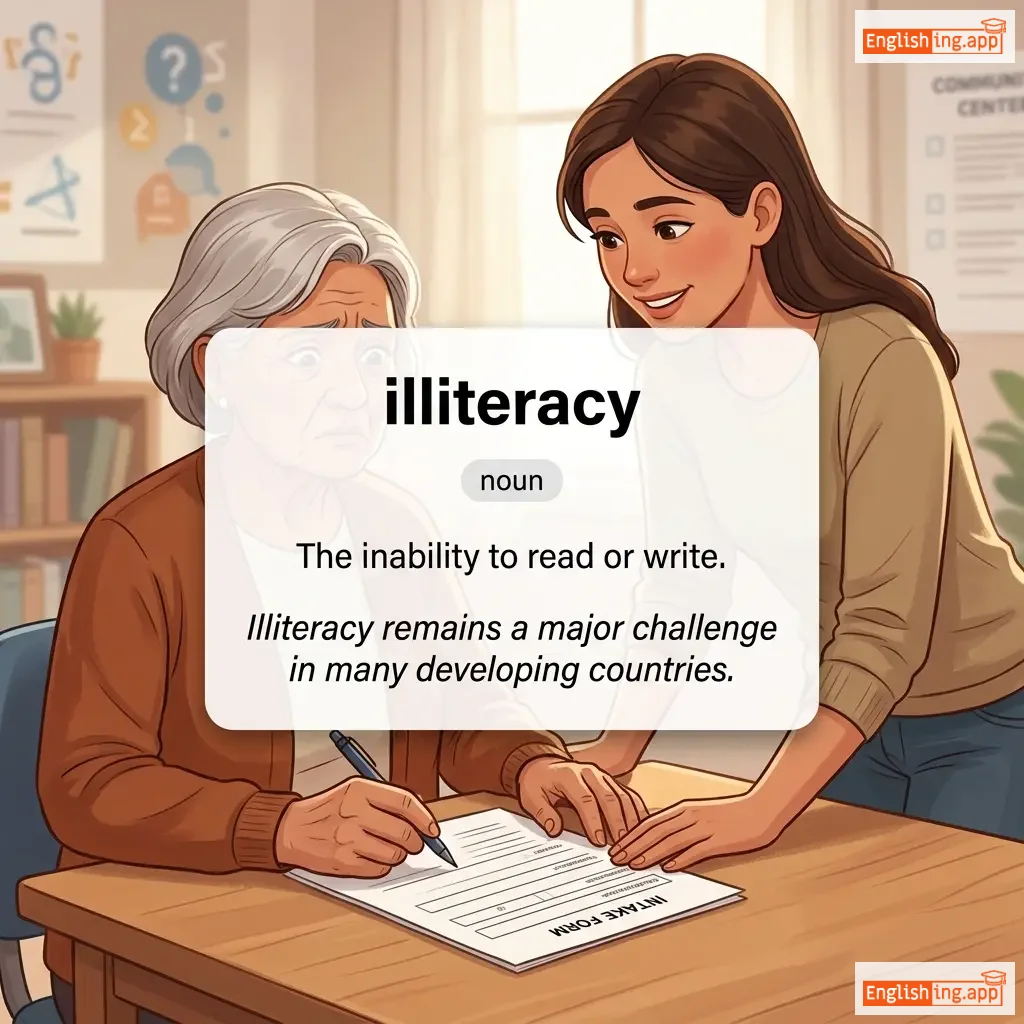
illiteracy definition card — visual illustration of the meaning
noun
/ɪˈlɪtərəsi/
безграмотность (bezgramotnost)

The inability to read or write.

"Illiteracy remains a major challenge in many developing countries."

"Безграмотность остается серьезной проблемой в многих развивающихся странах." (Bezgramotnost' ostayetsya ser'yoznoy problemoy v mnogikh razvivayushchikhsya stranakh.)
adjective
/ɪˈlɪtərət/
безграмотный (bezgramotny)

Unable to read or write.

"Many villagers were still illiterate in the past."

"Многие деревенские жители были безграмотными в прошлом." (Mnogie derevenskie zhiteley byli bezgramotnymi v proshlom.)
noun
/ˈɪlnəs/
болезнь (bolezn)

A condition of being unwell or suffering from a disease.

"She missed school due to a serious illness."

"Она пропустила школу из-за серьезной болезни." (Ona propustila shkolu iz-za seryoznoy bolezni.)
adjective
/ɪˈlɒdʒɪkl/
иллогичный (illogichnyy)

Not making sense or lacking clear reasoning.

"It is illogical to blame children for adult mistakes."

"Нелогично винить детей за ошибки взрослых." (Nelogichno vinit' detey za oshibki vzroslykh.)
noun
/ɪˈluːmɪnənt/
освещающий объект (osveshchayushchiy ob'ekt)

A substance or device that produces light.

"The lamp acted as an illuminant in the dark cave."

"Лампа выступала в роли освещающего объекта в темной пещере." (Lampa vystupala v roli osveshchayushchogo ob'yekta v temnoy peshchere.)
verb
/ɪˈluːmɪneɪt/
освещать (osveshchat)

To light up or make something clearer.

"Streetlights illuminate the road at night."

"Уличные фонари освещают дорогу ночью." (Ulichnye fonari osveshchayut dorogu noch'yu.)
noun
/ɪˌluːmɪˈnɑːti/
иллюминати (illyuminati)

a group of people claiming to have special enlightenment or secret knowledge, often linked to conspiracies

"Many conspiracy theories involve the Illuminati as a secret world-controlling group."

"Множество теорий заговора включает в себя Иллюминати как секретную мировую контролирующую группу." (Mnozhestvo teory za govora vklyuchayet v sebya Illyuminati kak sekretuyu mirovuju kontroliruyushchuyu gruppu.)
noun
/ɪˌluːmɪˈneɪʃən/

the act of lighting something or making something clear

"The street was filled with bright illumination from the lamps."

verb
/ɪˈluːmɪn/
освещать (osveshchat)

to light up or make clear

"The rising sun illumined the mountain peaks."

"Восходящее солнце осветило вершины гор." (Voskodyashchee solnce osvetilo vershiny gor.)
noun
/ɪˈluːʒən/
иллюзия (illyuziya)

a false idea or belief; a deceptive appearance

"The magician created the illusion of a floating woman."

"Фокусник создал иллюзию плавающей женщины." (Fokusnik sozdaval illyuziyu plavayushchey zhenshchiny.)
adjective
/ɪˈluːsɪv/
иллюзорный (illyuzorny)

deceptive or misleading; based on illusion

"His hopes of sudden wealth proved to be illusive."
"Его надежды на внезапное богатство оказались иллюзорными." (Yego nadezhdy na vnezapnoe bogatstvo okazalis' illyuzornymi.)
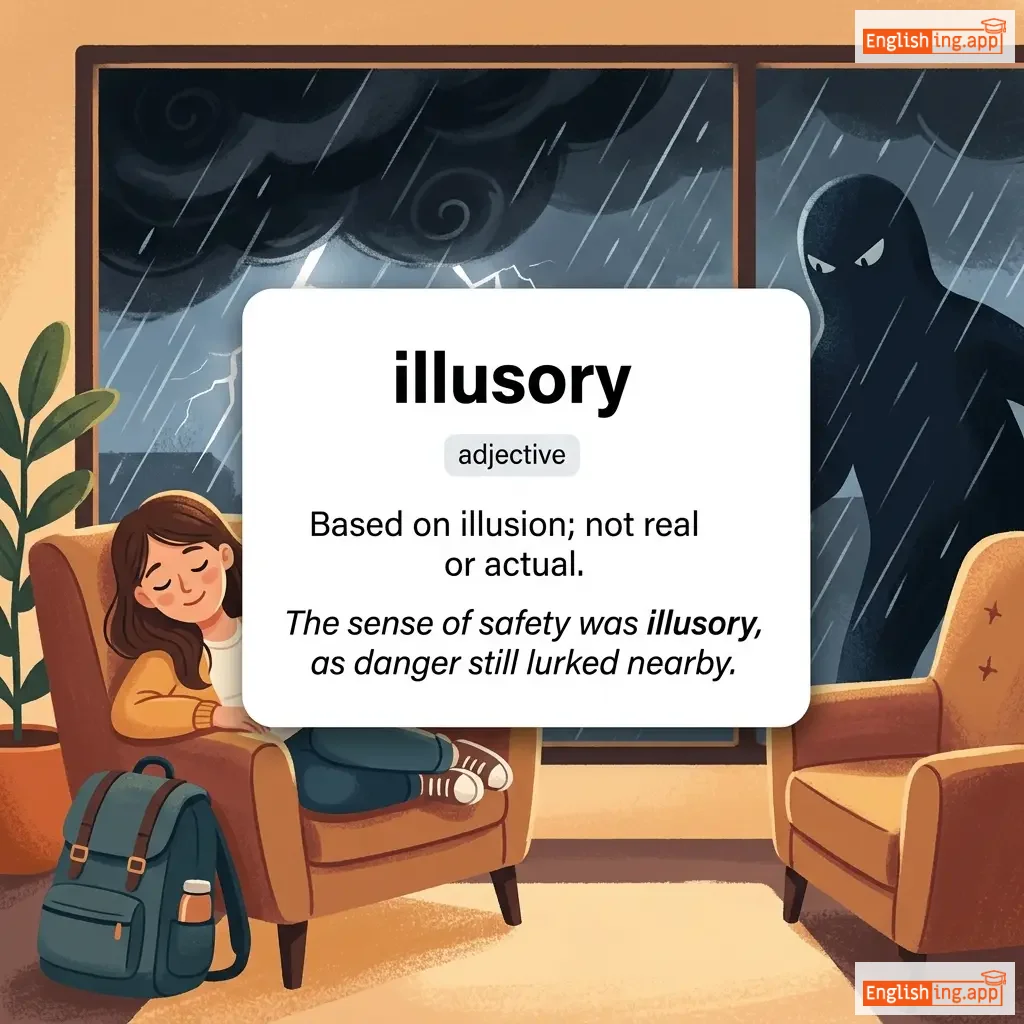
illusory definition card — visual illustration of the meaning
adjective
/ɪˈluːsəri/
иллюзорный (illyuzornyy)

Based on illusion; not real or actual.

"The sense of safety was illusory, as danger still lurked nearby."

"Чувство безопасности было иллюзорным, так как опасность все еще скрывалась рядом." (Chuvstvo bezopasnosti bylo illyuzornym, tak kak opasnost' vse yeshchyo skryvalas' ryadom.)
verb
/ˈɪl.ə.streɪt/
иллюстрировать (illyustrirovat)

to explain or make something clear by using examples, pictures, or comparisons

"The teacher used diagrams to illustrate the concept."

"Учитель использовал диаграммы, чтобы проиллюстрировать концепцию." (Uchitel' ispol'zoval diagrammy, chtoby proillyustrirovat' kontseptsiyu.)
adjective
/ɪˈlʌstriəs/
знаменитый (znamenity)

Well known, respected, and admired for past achievements.

"She had an illustrious career in medicine."

"У неё была знаменита карьера в медицине." (U nee byla znamenita kariera v meditsine.)
noun
/ˈɪmɪdʒ/
изображение (izobrazhenie)

A visual representation of something, such as a picture or likeness.

"The magazine published a clear image of the celebrity."

"Журнал опубликовал ясное изображение знаменитости." (Zhurnal opublikoval yasnoe izobrazhenie znamenitosti.)
noun
/ˈɪmɪdʒəri/
образность (obraznost)

visually descriptive or figurative language, especially in a literary work

"The poet's use of imagery brought the scene to life."

"Использование образности поэтом оживило сцену." (Ispol'zovaniye obraznosti poetom ozhivilo stsenу.)
adjective
/ɪˈmædʒɪnəbl/
вообразимый (voobrazimy)

Capable of being imagined or conceived.

"They offered every imaginable type of food at the festival."

"Они предложили на фестивале каждый возможный тип еды." (Oni predlozhili na festivale kazhdyy vozmozhnoy tip edy.)
adjective
/ɪˈmædʒɪnəri/
воображаемый (voobrazhayemy)

Existing only in the imagination; not real.

"Children often have imaginary friends."
"Дети часто имеют воображаемых друзей." (Deti chasto imeyut voobrazhayemykh druzey.)
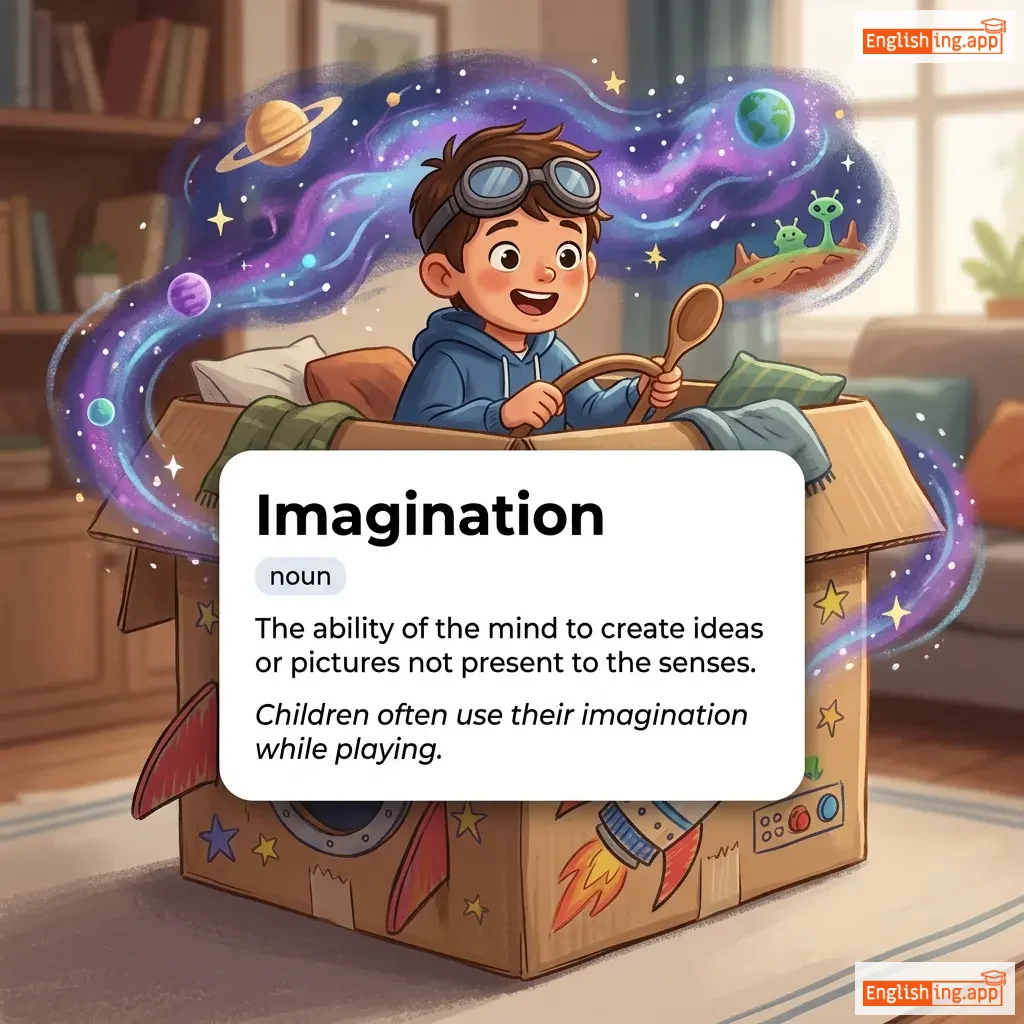
Imagination definition card — visual illustration of the meaning
noun
/ɪˌmædʒɪˈneɪʃən/
воображение (voobrazhenie)

The ability of the mind to create ideas or pictures not present to the senses.

"Children often use their imagination while playing."
"Дети часто используют воображение во время игры." (Deti chasto ispol'zuyut voobrazhenie vo vremya igry.)
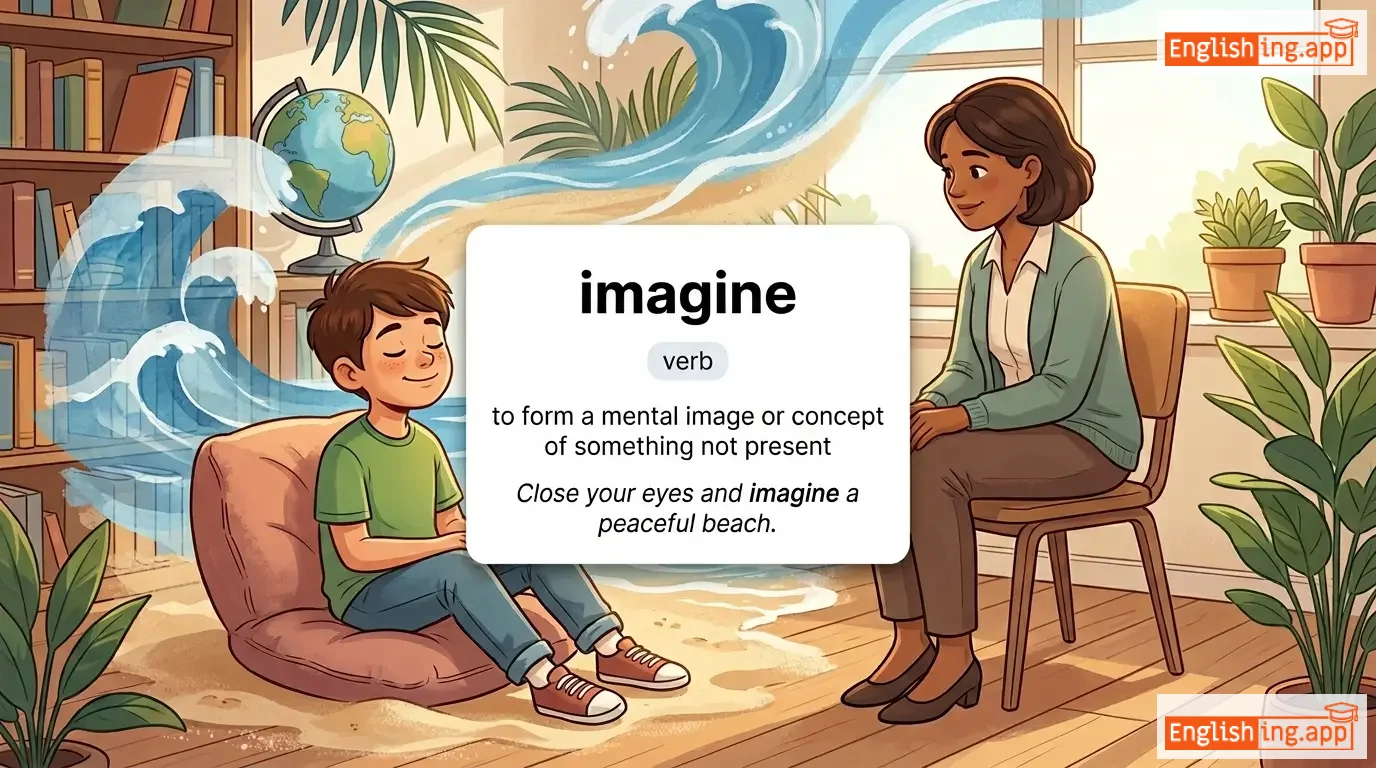
imagine definition card — visual illustration of the meaning
verb
/ɪˈmædʒ.ɪn/

to form a mental image or concept of something not present

"Close your eyes and imagine a peaceful beach."

noun
/ɪmˈbæləns/
дисбаланс (disbalans)

A lack of balance; a state of inequality or disproportion.

"The imbalance of power led to conflict."

"Дисбаланс власти привел к конфликту." (Disbalans vlasti prived k konfliktiu.)
noun
/ˌɪmbəˈsɪləti/
тупость (tupost)

Extreme foolishness, stupidity, or weakness of mind.

"The plan was abandoned due to its sheer imbecility."

"План был заброшен из-за своей абсолютной тупости." (Plan byl zabroshen iz-za svoey absolyutnoy tuposti.)
verb
/ɪmˈbɛd/
встраивать (vstrayivat)

To fix firmly or deeply in a surrounding mass.

"The journalist imbedded himself with the troops to report firsthand."
"Журналист встроил себя в ряды войск, чтобы сообщать с места событий." (Zhurnalist vstroil sebya v ryady voysk, chtoby soobshchat' s mesta sobytiy.)
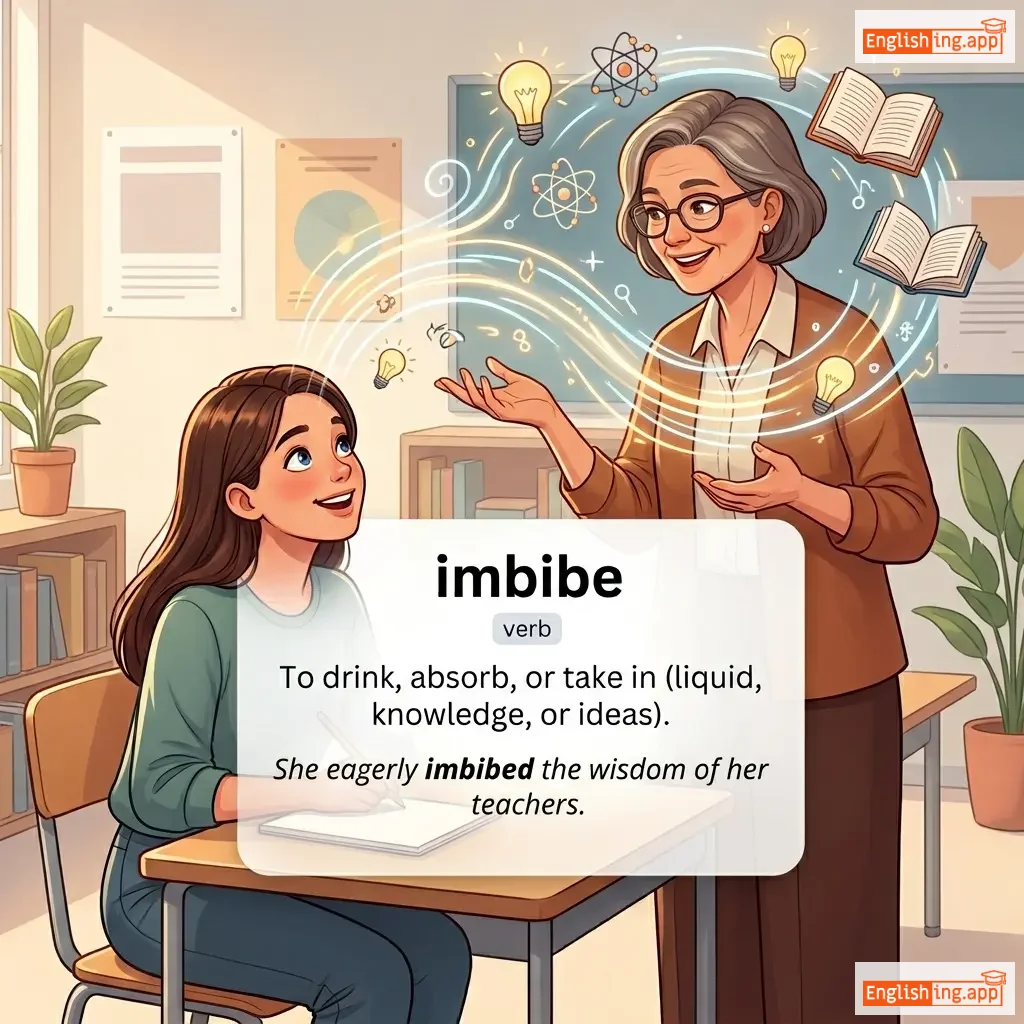
imbibe definition card — visual illustration of the meaning
verb
/ɪmˈbaɪb/
впитывать (vpityvat)

To drink, absorb, or take in (liquid, knowledge, or ideas).

"She eagerly imbibed the wisdom of her teachers."

"Она с энтузиазмом впитывала мудрость своих учителей." (Ona s entuziazmom vpityvala mudrost' svoikh uchiteley.)