Словари

Словарь английского языка | Значения слов, определения и примеры
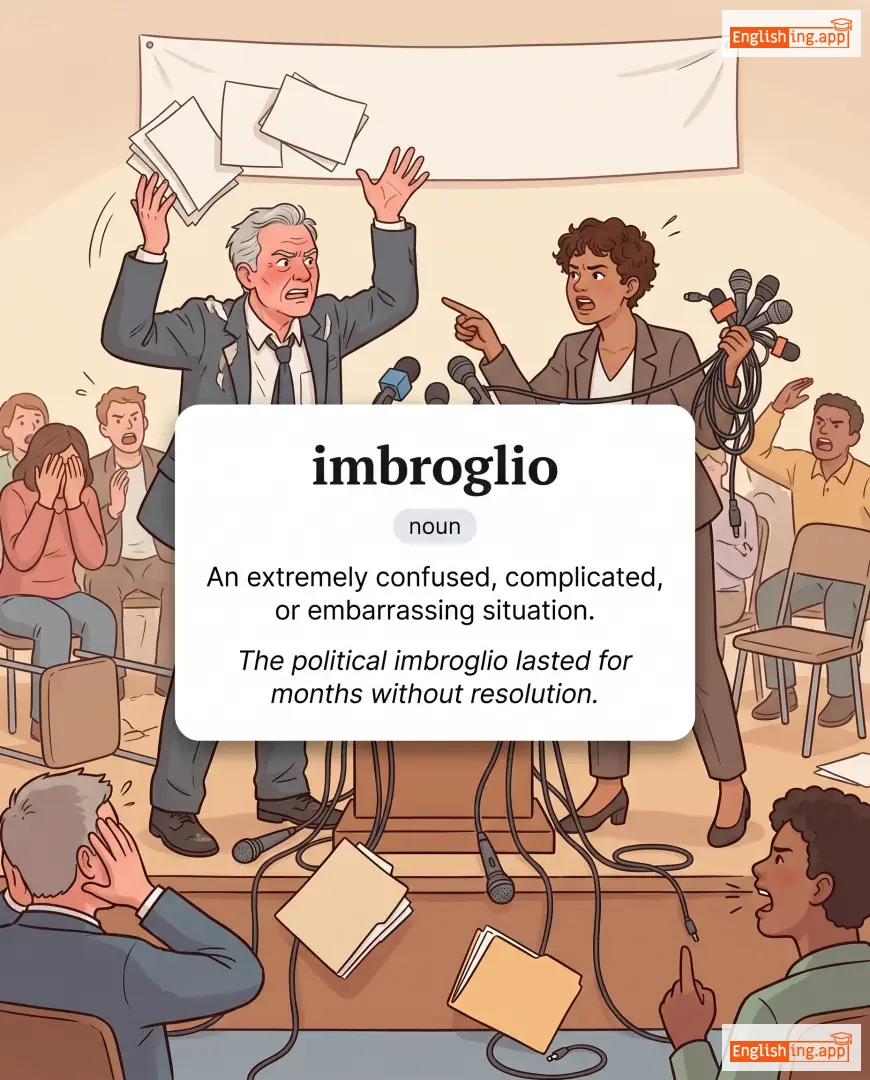
imbroglio definition card — visual illustration of the meaning
noun
/ɪmˈbroʊlioʊ/
переплетение (perepletenie)

An extremely confused, complicated, or embarrassing situation.

"The political imbroglio lasted for months without resolution."

"Политическое переплетение продолжалось несколько месяцев без решения." (Politicheskoe perepletenie prodolzhalos' neskol'ko mesyatsev bez resheniya.)
verb
/frɪsk/
обыскивать (obyskivat)

To search a person by patting their clothing to check for concealed items.

"The security guard frisked the man at the entrance."

"Охранник обыскал мужчину у входа." (Okhrannik obyskal muzhchinu u vhoda.)
adjective
/ˈfrɪski/
живой; энергичный; игривый; озорной (frisky)

lively; energetic; playful; mischievous

"The frisky puppy ran around the garden playfully."

"Игривая собака бегала по саду игриво." (Igrivaya sobaka begala po sadu igrivo.)
verb
/ˈfrɪtər/
растрачивать (rastrachivat)

To waste time, money, or energy on trivial matters.

"He frittered away his savings on unnecessary gadgets."

"Он потратил свои сбережения на ненужные гаджеты." (On potratil svoi sberezheniya na nenuzhnye gadzhety.)
noun
/frɪˈvɒləti/
легкомыслие (legkomyslie)

Lack of seriousness; silly or trivial behavior.

"The teacher discouraged frivolity during the exam."

"Учитель осудил легкомыслие во время экзамена." (Uchitel' osudil legkomyslie vo vremya ekzamena.)
adjective
/ˈfrɪvələs/
легкомысленный (legkomyslennyj)

Not having any serious purpose or value; silly or unimportant.

"She dismissed the frivolous complaint quickly."

"Она быстро отклонила легкомысленную жалобу." (Ona bystro otklonila legkomyslennuyu zhalobu.)
💇‍♀️

frizz

verb
/frɪz/

to form into small, tight curls or cause hair to become fuzzy and tangled

"The humid weather caused her hair to frizz."

verb
/ˈfrɪzəl/
жарить до хрустящей и скрученной текстуры (zharit' do khrustyashchey i skruchennoy tekstury)

to fry something until it becomes crisp and curled, or to make a sizzling noise

"The bacon began to frizzle in the pan."

"Бекон начал шипеть на сковороде." (Bekon nachal shipet' na skovorode.)
noun
/frɒk/
платье для женщин или девочек; свободное внешнее одеяние (plat'ye dlya zhenshchin ili devochiek; svobodnoe vneshnee odeyaniye)

a woman's or girl's dress; a loose outer garment

"She wore a beautiful frock to the party."

"Она надела красивое платье на вечеринку." (Ona nadela krasivoye plat'ye na vecherinku.)
noun
/frɒɡ/
жаба (zhaba)

a tailless amphibian with a short squat body, moist smooth skin, and very long hind legs for leaping

"The frog jumped into the pond with a splash."

"Жаба прыгнула в пруд с брызгами." (Zhaba prygnula v prudi s bryzgami.)
verb
/ˈfrɒlɪk/
играть весело (igrat' veselo)

to play and move about cheerfully, energetically, or playfully

"The children frolicked in the garden all afternoon."

"Дети играли весело в саду весь день." (Deti igrali veselo v sadu ves' den'.)
adjective
/ˈfrɒlɪksəm/
игривый (igrivyy)

full of playful spirit; lively and fun-loving

"The frolicsome puppy kept everyone entertained."

"Игривая щенок развлекал всех." (Igrivaya shchenok razvlekal vsekh.)
preposition
/frəm/ or /frʌm/
из (iz)

Used to indicate the starting point of a journey, action, or source.

"She came from Dhaka to visit her family."

"Она приехала из Дакки, чтобы навестить свою семью." (Ona priekhala iz Dakkī, chtoby navestit' svoyu sem'yu.)
noun
/frɒnd/
лист (list)

A large, divided leaf of a fern, palm, or similar plant.

"The fern's frond stretched gracefully over the garden path."

"Лист папоротника элегантно вытянулся над садовой дорожкой." (List paporotnika elegantly vytyanulsya nad sadovoy dorozhkoy.)
noun
/frʌnt/
спереди (speredi)

the forward-facing part of something

"The house has a garden in front."
"У дома есть сад спереди." (U doma yest' sad speredi.)
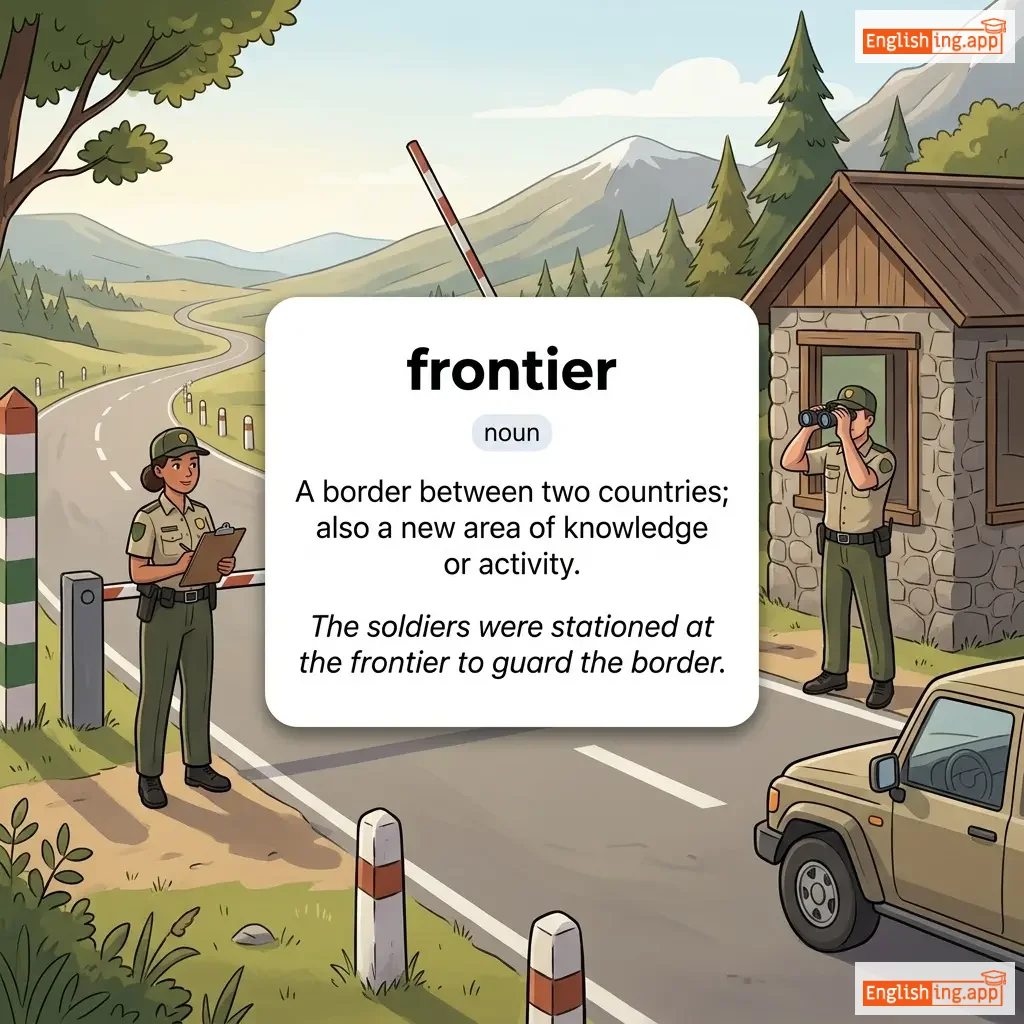
frontier definition card — visual illustration of the meaning
noun
/ˈfrʌntɪə(r)/
граница (granitsa)

A border between two countries; also a new area of knowledge or activity.

"The soldiers were stationed at the frontier to guard the border."
"Солдаты были размещены на границе для охраны границы." (Soldaty byli razmeshcheny na granitse dlya okhrany granitsy.)
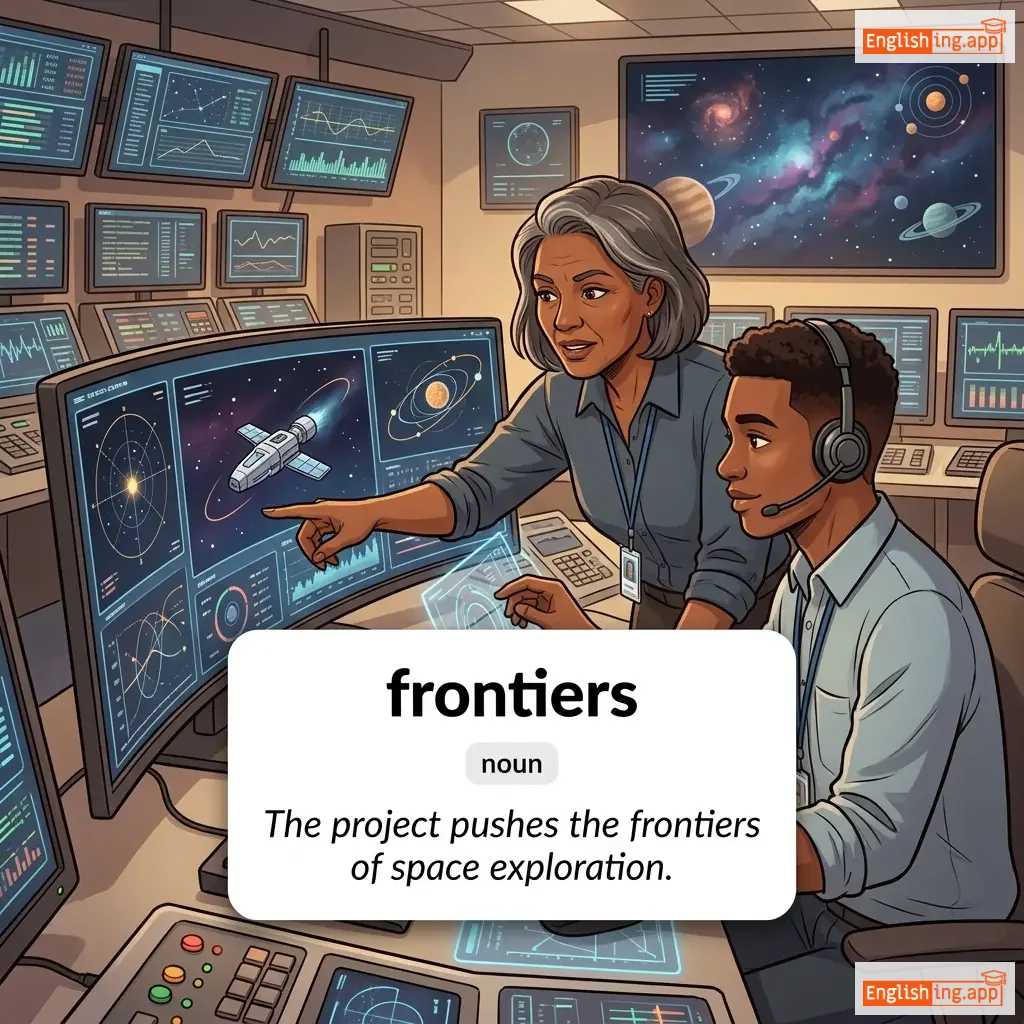
frontiers definition card — visual illustration of the meaning
noun
ˈfrʌn.tɪərz
границы (granitsy)

The extreme limit of settled land beyond which lies wilderness; the limits of knowledge or achievement in a particular field.

"The project pushes the frontiers of space exploration."

"Проект расширяет границы космических исследований." (Proyekt rasshiryayet granitsy kosmicheskikh issledovaniy.)
adjective
/ˈfrɒθi/
пенистый (penistyy)

Full of or covered with small bubbles; light and insubstantial.

"She ordered a cup of frothy cappuccino."
"Она заказала чашку пенистого капучино." (Ona zakazala chashku penistogo kapuchino.)
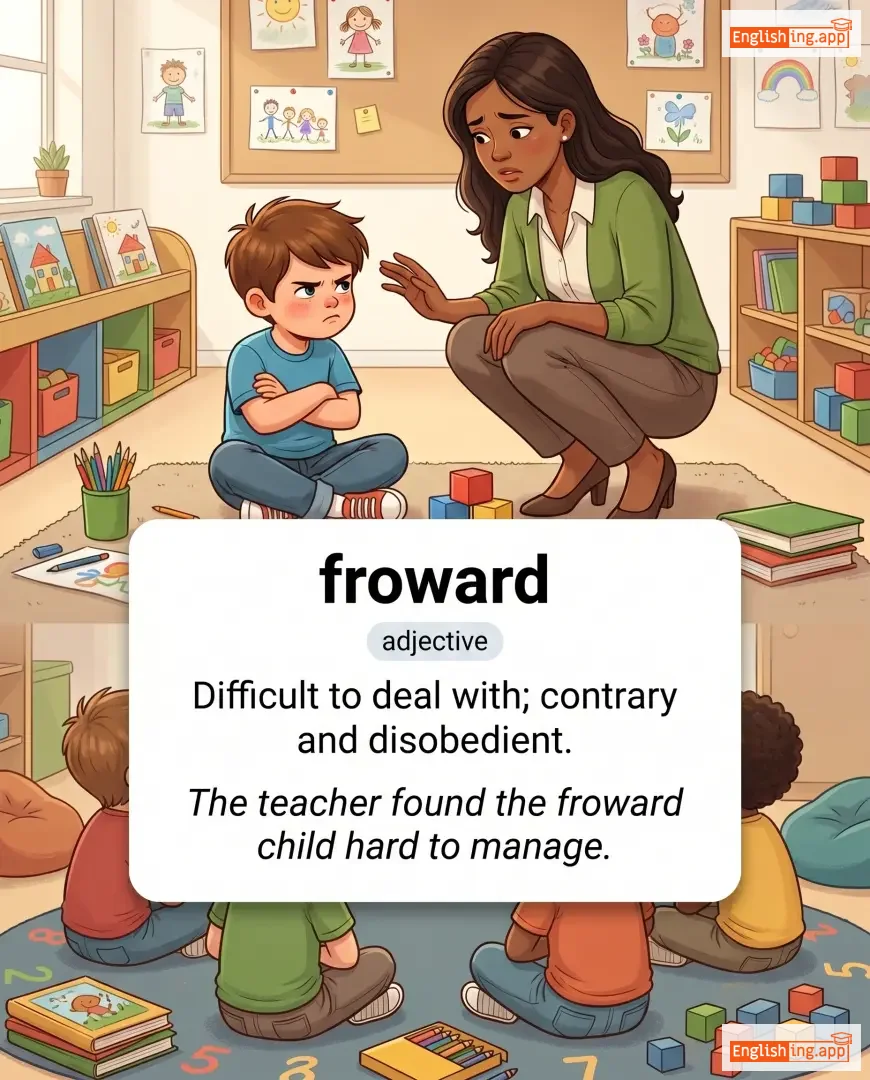
froward definition card — visual illustration of the meaning
adjective
/ˈfrəʊərd/
упрямый (upryamy)

Difficult to deal with; contrary and disobedient.

"The teacher found the froward child hard to manage."
"Учитель считал упрямого ребенка трудным для управления." (Uchitel' schital upryamogo rebenka trudnym dlya uregulirovaniya.)
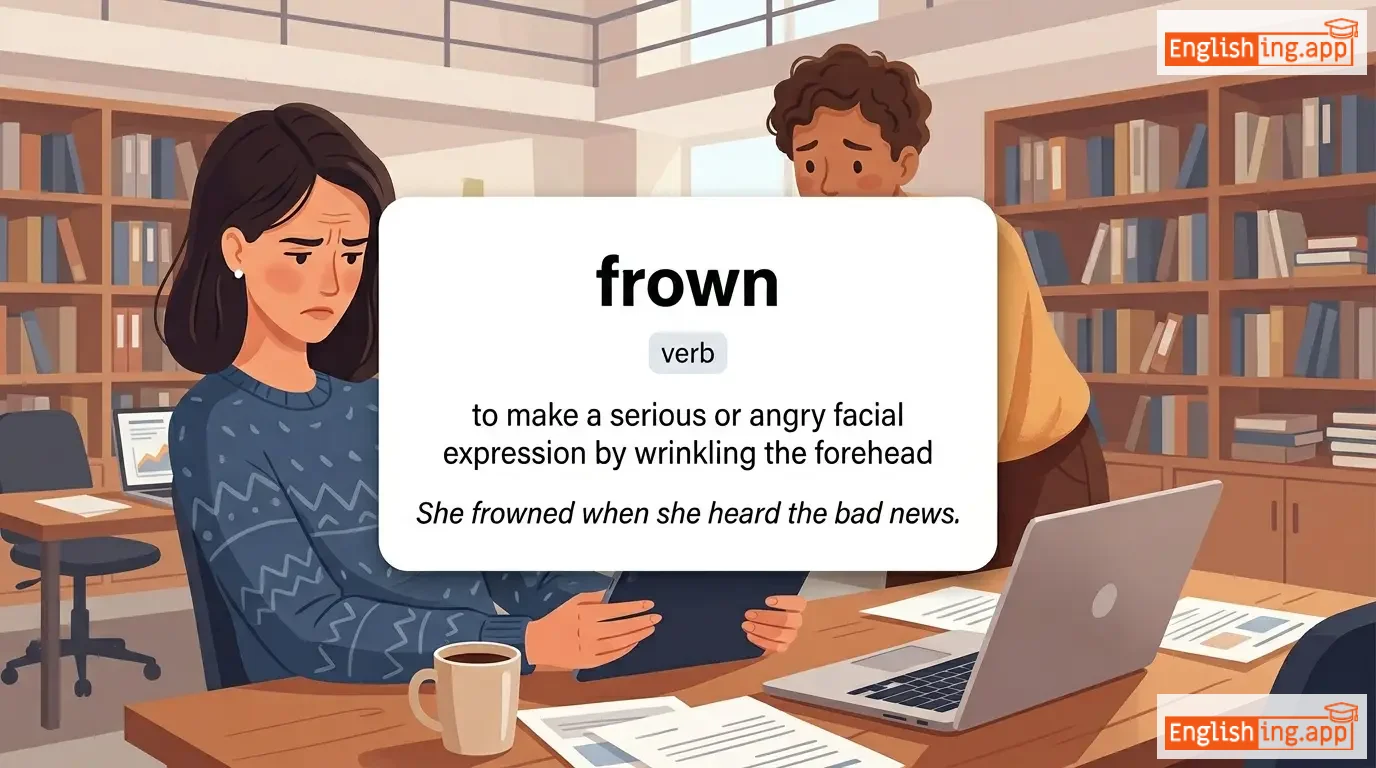
frown definition card — visual illustration of the meaning
verb
/fraʊn/
нахмурить брови (nakhmurit brovi)

to make a serious or angry facial expression by wrinkling the forehead

"She frowned when she heard the bad news."

"Она нахмурилась, когда услышала плохие новости." (Ona nakhmurilas', kogda uslyshala plokhie novosti.)
adjective
/ˈfraʊzi/
потрепанный (potrepyanny)

Scruffy and neglected in appearance; musty or stale in smell.

"He wore a frowsy old jacket that smelled of damp."

"Он носил потрепанную старую куртку, которая пахла сыростью." (On nosil potrepyannuyu staruyu kurtku, kotoraya pakhla syrostyu.)
adjective
/ˈfraʊzi/
неопрятный (neopryatny)

Unkempt, messy, or having a musty, unpleasant smell.

"He entered the room with a frowzy appearance after sleeping on the couch."

"Он вошел в комнату с неопрятным видом после того, как поспал на диване." (On voshel v komnatu s neopryatnym vidom posle togo, kak pospal na divane.)
adjective
/ˈfroʊzən/
замороженный (zamorozhenny)

preserved by being made extremely cold; turned into ice

"The lake was completely frozen during winter."

"Озеро было полностью заморожено зимой." (Ozero bylo polnost'yu zamorozheno zimoy.)
verb
/ˈfrʌktɪˌfaɪ/
приводить в плодоношение (privodit' v plodonoshchenie)

To make fruitful or productive; to bear fruit.

"The new policies will help fructify the economic potential of the region."

"Новые политики помогут фруктифицировать экономический потенциал региона." (Novye politiki pomogut fruktifitsirovat' ekonomicheskiy potentsial regiona.)
adjective
/ˈfruːɡəl/
бережливый (berezhlivyy)

Economical in use or expenditure; avoiding waste.

"She is very frugal and always saves a portion of her income."

"Она очень бережлива и всегда откладывает часть своего дохода." (Ona ochen' berezhliva i vsegda otkladyvayet chast' svoego dokhoda.)
frugality definition card — visual illustration of the meaning
noun
/fruːˈɡæləti/
бережливость (berezhlivost)

The quality of being economical with resources; avoiding waste.

"His frugality allowed him to save enough money to buy a house."

"Его бережливость позволила ему накопить достаточно денег для покупки дома." (Ego berezhlivost' pozvolila emu nakopit' dostatochno deneg dlya pokupki doma.)
noun
/fruːt/
фрукты (frukty)

The sweet and fleshy product of a plant that contains seeds.

"Mango is my favorite fruit."

"Манго — мой любимый фрукт." (Mango — moy lyubimyy frukt.)
adjective
/ˈfruːtfəl/
плодотворный (plodotvornyy)

Producing good results or being productive.

"Their meeting was fruitful and led to many new ideas."

"Их встреча была плодотворной и привела к множеству новых идей." (Ikh vstrecha byla plodotvornoy i privedla k mnozhestvu novykh idey.)
noun
/fruˈɪʃən/
осуществление (osushchestvlenie)

The realization or fulfillment of a plan, project, or desire.

"Her dream of becoming a doctor finally came to fruition."

"Её мечта стать врачом наконец-то осуществилась." (Yeyo mechta stat' vrachom nakonech-to osushchestvilas'.)
adjective
/ˈfruːt.ləs/
бесплодный; тщетный; бесполезный; (besplodny; tchetniy; bespolezniy)

unsuccessful; futile; pointless;

"After hours of searching, their efforts proved fruitless."

"После часов поисков их усилия оказались бесплодными." (Posle chasov pois'kov ikh usiliya okazalis' besplodnymi.)
verb
/ˈfrʌstreɪt/
разочаровывать (razocharovyvat')

To prevent someone from accomplishing something; to cause feelings of annoyance or disappointment.

"The constant delays frustrated the team."

"Постоянные задержки разочаровали команду." (Postoyannye zaderzhki razocharovali komandu.)
adjective
/ˈfrʌstreɪtɪd/
фрустрированный (frustrirovannyj)

feeling annoyed or upset because of inability to achieve something

"She felt frustrated after failing the exam."

"Она почувствовала разочарование после того, как не сдала экзамен." (Ona pochuvstvovala razocharovanie posle togo, kak ne sdala ekzamen.)
adjective
/ˈfrʌstreɪtɪŋ/
раздражающий (razdrazhayushchiy)

causing annoyance or dissatisfaction

"The slow internet connection was really frustrating."

"Медленное интернет-соединение было действительно раздражающим." (Medlennoe internet-soedinenie bylo deystvitel'no razdrazhayushchim.)
noun
/frʌˈstreɪʃən/
фрустрация (frustratsiya)

The feeling of being upset or annoyed due to inability to achieve something.

"He felt deep frustration when his plans failed."
"Он почувствовал глубокую фрустрацию, когда его планы провалились." (On pochuvstvoval glubokuyu frustratsiyu, kogda ego plany provalilis.)
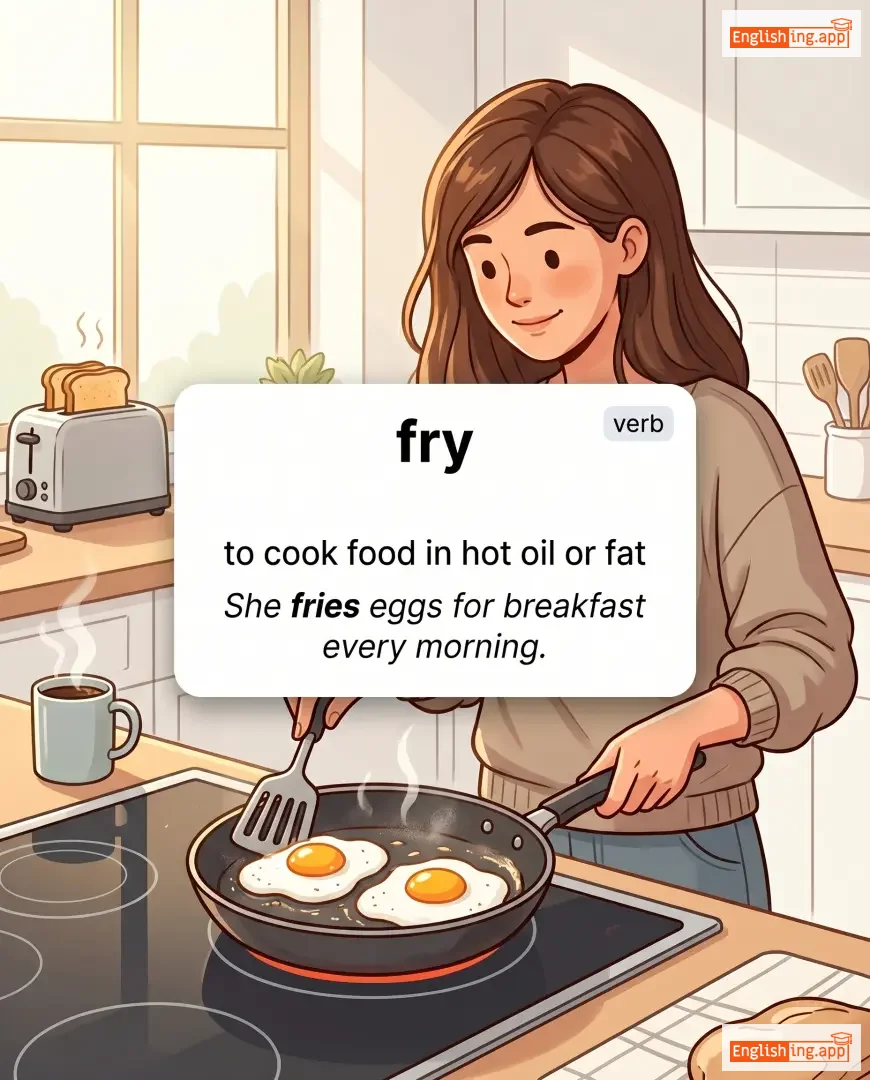
fry definition card — visual illustration of the meaning
noun
/fraɪ/
молодая рыба (molodaya ryba)

young fish; small fish; to cook food in hot fat or oil

"The fisherman caught many small fry in his net."

"Рыбак поймал много мелкой молодой рыбы в своей сети." (rybak poimal mnogo melkoy molodoy ryby v svoey seti)
adjective, adverb (informal, vulgar)
/ˈfʌkɪŋ/
черт (вульгарное слово для акцента) (chert (vulgarnoye slovo dlya aktsenta))

used for emphasis, often expressing anger or frustration (vulgar slang)

"It was a fucking disaster!"

"Это был чертов кошмар!" (Eto byl chertov koshmar!)
verb
/ˈfʌdəl/
сбивать с толку (sbivat' s tolku)

To confuse or stupefy, especially with alcohol or overwhelming information.

"The complicated instructions fuddled the new employees."

"Сложные инструкции сбили с толку новых сотрудников." (Slozhnye instruktsii sbili s tolku novykh sotrudnikov.)

Fuel

noun/verb
/ˈfjuːəl/

A material such as coal, gas, or oil that is burned to produce energy; also to supply with energy or power.

"The car needs fuel to run efficiently."

adjective
/fjuːˈɡeɪʃəs/
мимолетный (mimoletnyj)

Lasting only a short time; fleeting or ephemeral.

"Youth is beautiful but fugacious."

"Молодость прекрасна, но мимолетна." (Molodost' prekrasna, no mimoletnaya.)
noun
/ˈfjuːdʒətɪv/
беглец (beglets)

A person who has escaped from captivity or is in hiding, usually to avoid arrest.

"The police captured the fugitive after a long chase."

"Полиция поймала беглеца после долгой погони." (Politsiya poymala begletsa posle dolgoy pogoni.)
noun
/ˈfʊl.krəm/
опорная точка (opornaya tochka)

The point or support on which a lever pivots; a central or essential point of activity or support.

"The teacher became the fulcrum of change in the school."

"Учитель стал опорной точкой изменений в школе." (Uchitel' stal opornoy tochkoy izmeneniy v shkole.)
verb
/fʊlˈfɪl/
выполнять (vypolnyat)

to complete or achieve something that was expected or promised; to satisfy a requirement or desire

"She worked hard to fulfil her dream of becoming a doctor."

"Она усердно работала, чтобы осуществить свою мечту стать врачом." (Ona userdno rabotala chtoby osushchestvit svoyu mechtu stat vrachom)
verb
/fʊlˈfɪl/
исполнить (ispolnit)

to complete or accomplish something, especially a task or promise

"He worked hard to fulfill his dreams."

"Он усердно работал, чтобы осуществить свои мечты." (On usyerdno rabotal, chtoby osushchestvit' svoi mechty.)
adjective
/ˈfʊl.dʒənt/
сияющий (siyayushchiy)

Shining brightly; dazzling.

"The fulgent stars lit up the night sky."

"Сияющие звезды освещали ночное небо." (Siyayushchie zvezdy osveshchali nochnoe nebo.)
adjective
/fʊl/
полный (polnyy)

Containing as much or as many as possible; complete.

"The glass is full of water."

"Стакан полный воды." (Stakan polnyy vody.)
adjective
/ˌfʊl ˈbɒd.id/
с ярким вкусом (s yarkim vkusom)

Having a strong, rich, and robust quality, especially of wine, coffee, or voice.

"He prefers a full-bodied red wine with his dinner."

"Он предпочитает красное вино с ярким вкусом к своему ужину." (On predpochitayet krasnoye vino s yarkim vkusom k svoemu uzhinu.)
adjective, adverb
/ˈfʊl taɪm/
полный рабочий день (polnyy rabochiy den')

working or studying for the whole standard period of time

"She works full-time as a teacher."
"Она работает полный рабочий день как учитель." (Ona rabotayet polnyy rabochiy den' kak uchitel'.)
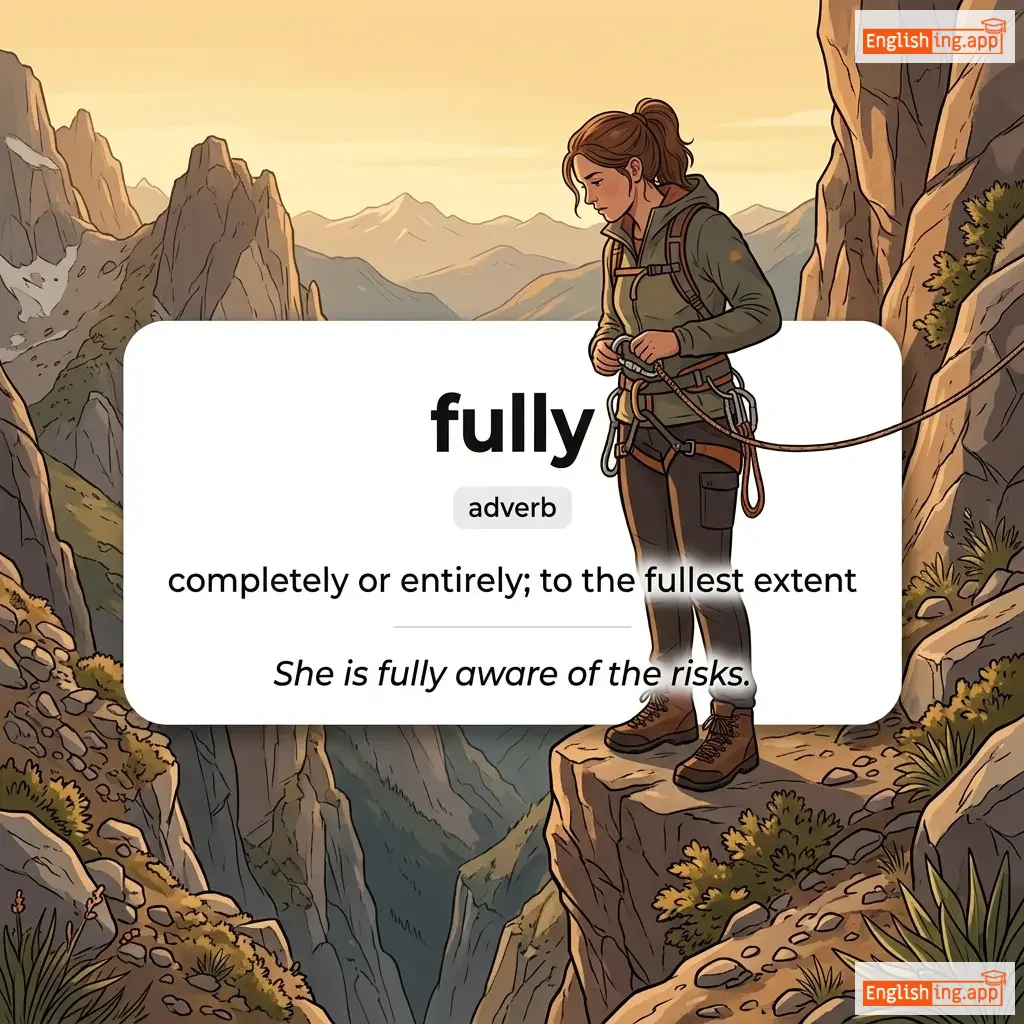
fully definition card — visual illustration of the meaning
adverb
/ˈfʊli/
полностью (polnostyu)

completely or entirely; to the fullest extent

"She is fully aware of the risks."
"Она полностью осведомлена о рисках." (Ona polnostyu osvedomlena o riskakh.)
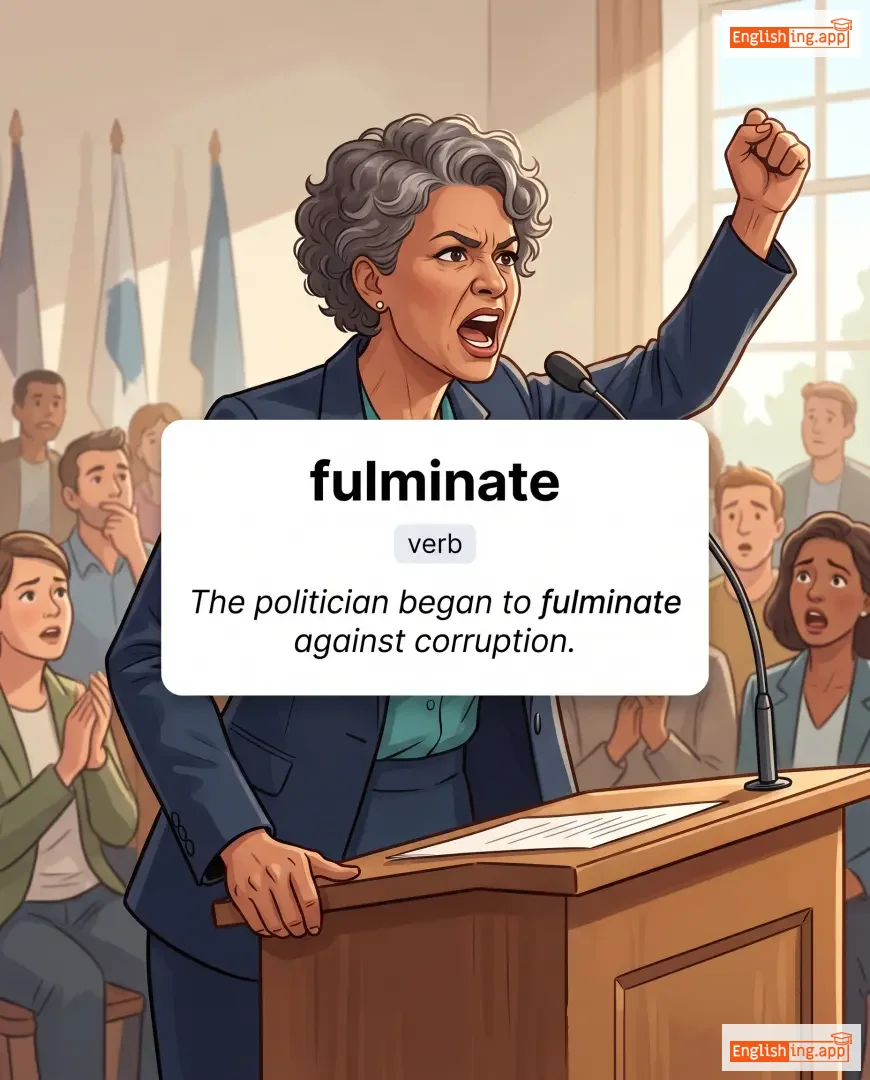
fulminate definition card — visual illustration of the meaning
verb
/ˈfʊl.mɪ.neɪt/
выражать яростный протест (vyrazhat yarostny protest)

To express strong protest or criticism loudly and forcefully; to explode violently.

"The politician began to fulminate against corruption."

"Политик начал яростно протестовать против коррупции." (Politik nachal yarostno protestovat' protiv korrupcii.)
fulsome definition card — visual illustration of the meaning
adjective
/ˈfʊl.səm/
чрезмерные похвалы (chrezmernye pokhvaly)

Excessively flattering or insincere; abundant or generous in amount.

"He offered fulsome praise to his boss."

"Он предложил чрезмерные похвалы своему начальнику." (On predlozhil chrezmernye pokhvaly svoemu nachalniku.)