Vocabularios

Descubra, aprenda y domine el vocabulario en inglés

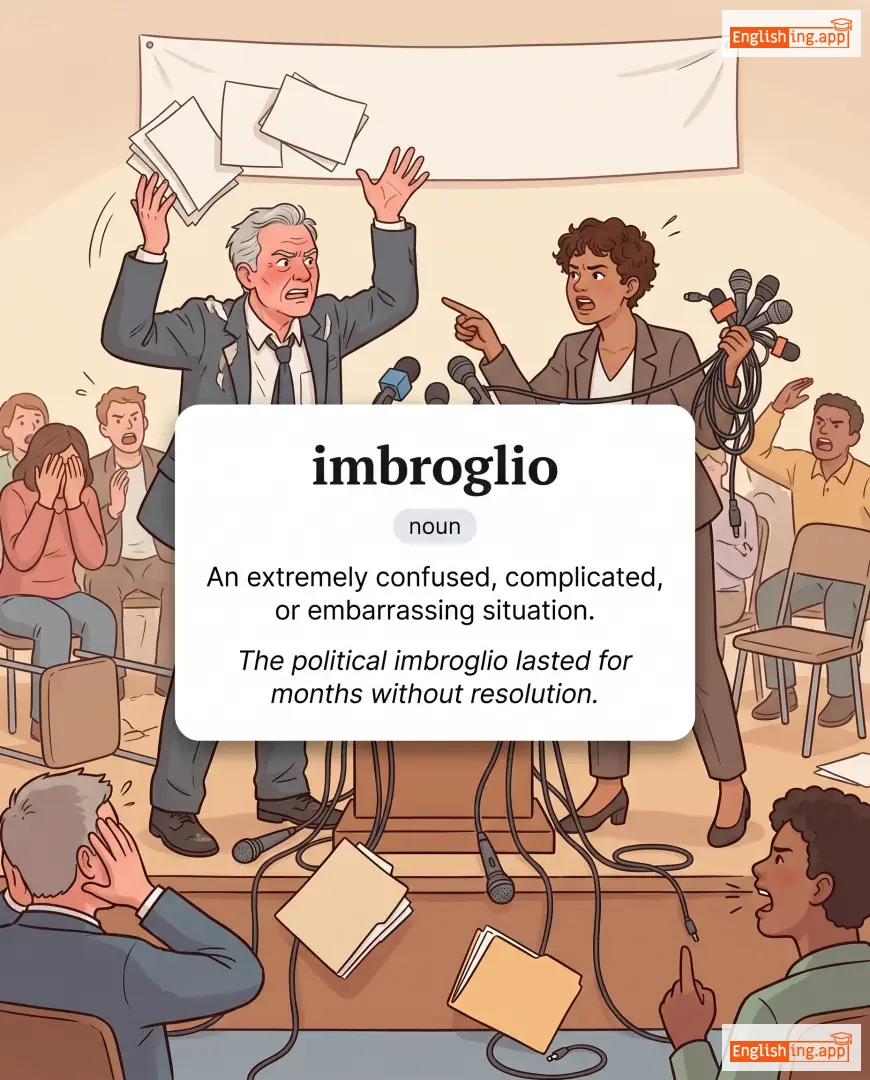
imbroglio definition card — visual illustration of the meaning
noun
/ɪmˈbroʊlioʊ/
embrollo (embrollo)

An extremely confused, complicated, or embarrassing situation.

"The political imbroglio lasted for months without resolution."

"El embrollo político duró meses sin resolución." (El embrollo politico duro meses sin resolucion.)
verb
/frɪsk/
registrar (registrar)

To search a person by patting their clothing to check for concealed items.

"The security guard frisked the man at the entrance."

"El guardia de seguridad registró al hombre en la entrada." (El guardia de seguridad registró al hombre en la entrada.)
adjective
/ˈfrɪski/
vivaz; energético; juguetón; travieso (frisky)

lively; energetic; playful; mischievous

"The frisky puppy ran around the garden playfully."

"El cachorro juguetón corrió alrededor del jardín de manera juguetona." (El cachorro jugueton corrió alrededor del jardín de manera juguetona)
verb
/ˈfrɪtər/
desperdiciar (desperdiciar)

To waste time, money, or energy on trivial matters.

"He frittered away his savings on unnecessary gadgets."

"Él desperdició sus ahorros en gadgets innecesarios." (Él desperdició sus ahorros en gadgets innecesarios.)
noun
/frɪˈvɒləti/
frivolidad (frivolidad)

Lack of seriousness; silly or trivial behavior.

"The teacher discouraged frivolity during the exam."

"El profesor desalentó la frivolidad durante el examen." (El profesor desalento la frivolidad durante el examen.)
adjective
/ˈfrɪvələs/
frívolo (frivolo)

Not having any serious purpose or value; silly or unimportant.

"She dismissed the frivolous complaint quickly."

"Ella desestimó la queja frívola rápidamente." (Ella desestimó la queja frívola rápidamente.)
💇‍♀️

frizz (friz)

verb
/frɪz/
encrespar el cabello o hacerlo desordenado (encrespar el cabello o hacerlo desordenado)

to form into small, tight curls or cause hair to become fuzzy and tangled

"The humid weather caused her hair to frizz."

"El clima húmedo hizo que su cabello se encrespara." (El clima húmedo hizo que su cabello se encrespara.)
verb
/ˈfrɪzəl/
freír hasta que se vuelva crujiente y rizado (freir hasta que se vuelva crujiente y rizado)

to fry something until it becomes crisp and curled, or to make a sizzling noise

"The bacon began to frizzle in the pan."

"El tocino comenzó a chisporrotear en la sartén." (El tocino comenzo a chisporrotear en la sarten.)
noun
/frɒk/
un vestido de mujer o niña; una prenda exterior suelta (un vestido de mujer o niña; una prenda exterior suelta)

a woman's or girl's dress; a loose outer garment

"She wore a beautiful frock to the party."

"Ella llevaba un hermoso vestido a la fiesta." (Ella llevaba un hermoso vestido a la fiesta.)
noun
/frɒɡ/
rana (rana)

a tailless amphibian with a short squat body, moist smooth skin, and very long hind legs for leaping

"The frog jumped into the pond with a splash."

"La rana saltó al estanque con un salpicón." (La rana saltó al estanque con un salpicón.)
verb
/ˈfrɒlɪk/
jugar alegremente (jugar alegremente)

to play and move about cheerfully, energetically, or playfully

"The children frolicked in the garden all afternoon."

"Los niños jugaron alegremente en el jardín toda la tarde." (Los niños jugaron alegremente en el jardín toda la tarde.)
adjective
/ˈfrɒlɪksəm/
juguetón (jugueoton)

full of playful spirit; lively and fun-loving

"The frolicsome puppy kept everyone entertained."

"El cachorro juguetón mantuvo a todos entretenidos." (El cachorro jugueton mantuvo a todos entretenidos.)
preposition
/frəm/ or /frʌm/
de (de)

Used to indicate the starting point of a journey, action, or source.

"She came from Dhaka to visit her family."

"Ella vino de Dhaka para visitar a su familia." (Ella vino de Dhaka para visitar a su familia.)
noun
/frɒnd/
hoja (hoja)

A large, divided leaf of a fern, palm, or similar plant.

"The fern's frond stretched gracefully over the garden path."

"La hoja del helecho se estiró graciosamente sobre el camino del jardín." (La hoja del helecho se estiró graciosamente sobre el camino del jardín.)
noun
/frʌnt/
delante (delante)

the forward-facing part of something

"The house has a garden in front."

"La casa tiene un jardín delante." (La casa tiene un jardín delante.)
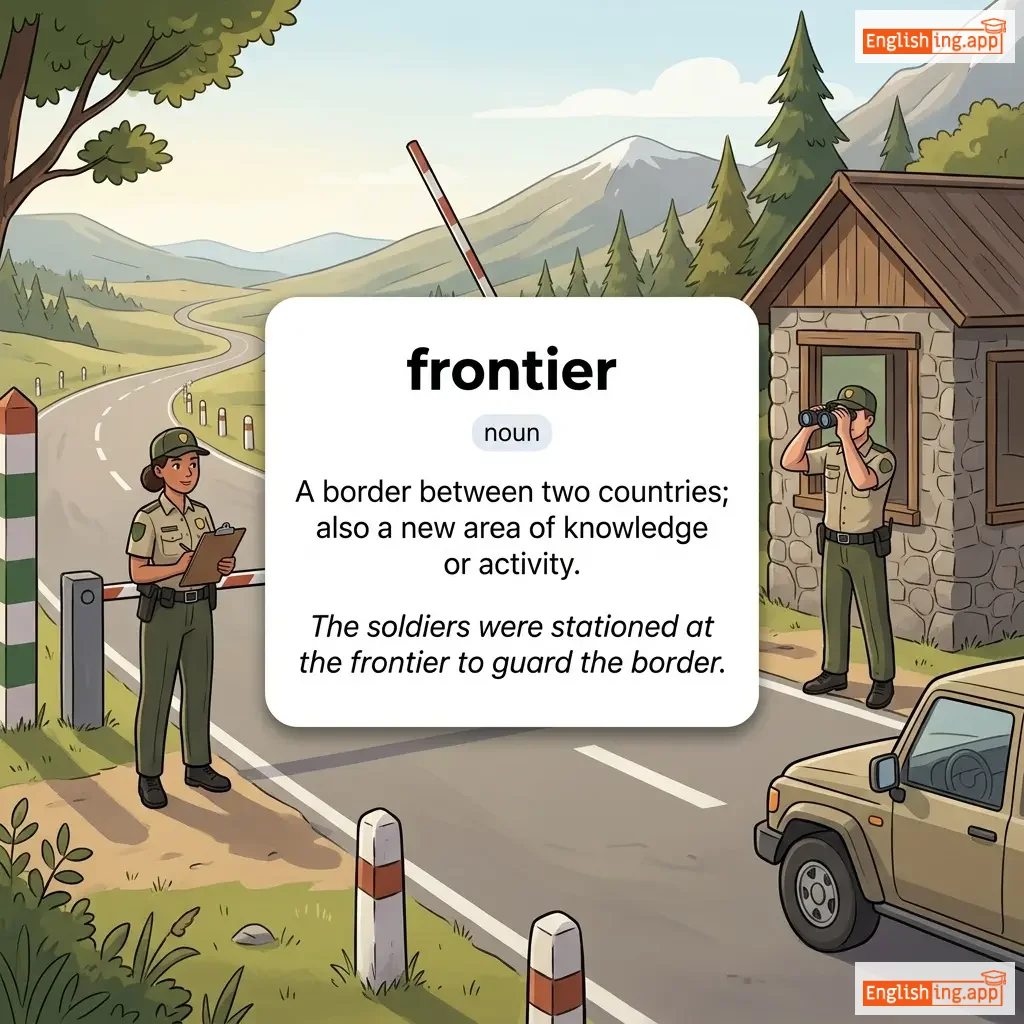
frontier definition card — visual illustration of the meaning
noun
/ˈfrʌntɪə(r)/
frontera (frontera)

A border between two countries; also a new area of knowledge or activity.

"The soldiers were stationed at the frontier to guard the border."

"Los soldados estaban estacionados en la frontera para proteger la frontera." (Los soldados estaban estacionados en la frontera para proteger la frontera.)
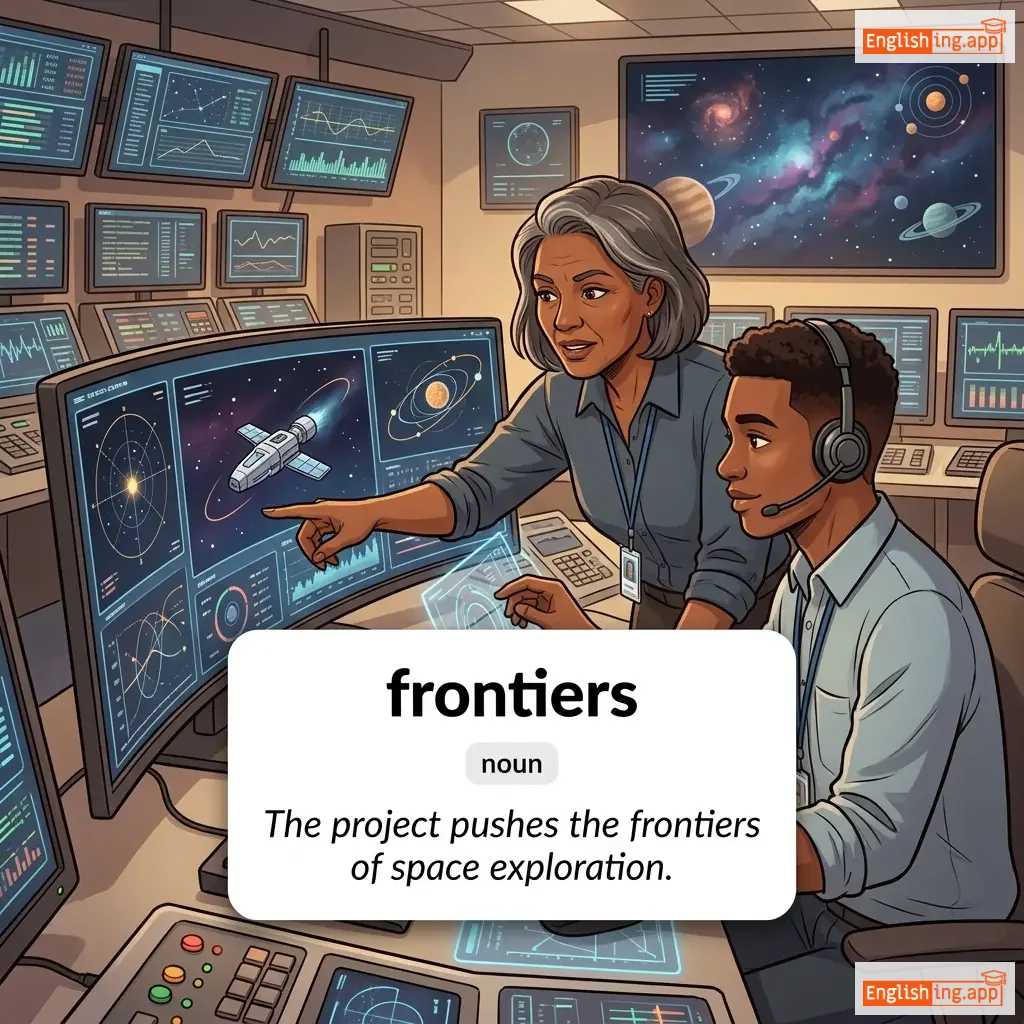
frontiers definition card — visual illustration of the meaning
noun
ˈfrʌn.tɪərz
fronteras (fronteras)

The extreme limit of settled land beyond which lies wilderness; the limits of knowledge or achievement in a particular field.

"The project pushes the frontiers of space exploration."

"El proyecto expande las fronteras de la exploración espacial." (El proyecto expande las fronteras de la exploración espacial.)
adjective
/ˈfrɒθi/
espumoso (espumoso)

Full of or covered with small bubbles; light and insubstantial.

"She ordered a cup of frothy cappuccino."

"Ella pidió una taza de capuchino espumoso." (Ella pidio una taza de capuchino espumoso.)
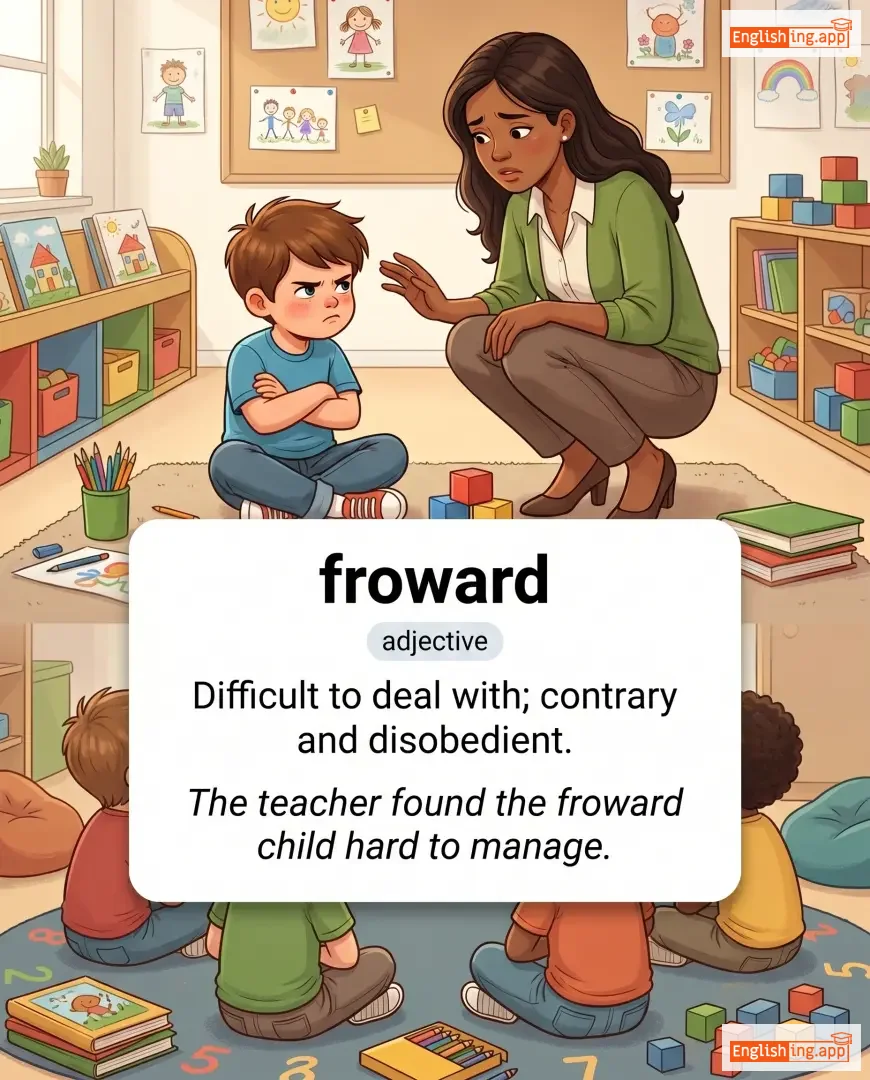
froward definition card — visual illustration of the meaning
adjective
/ˈfrəʊərd/
terco (terko)

Difficult to deal with; contrary and disobedient.

"The teacher found the froward child hard to manage."

"El maestro encontró al niño terco difícil de manejar." (El maestro encontró al niño terco difícil de manejar.)
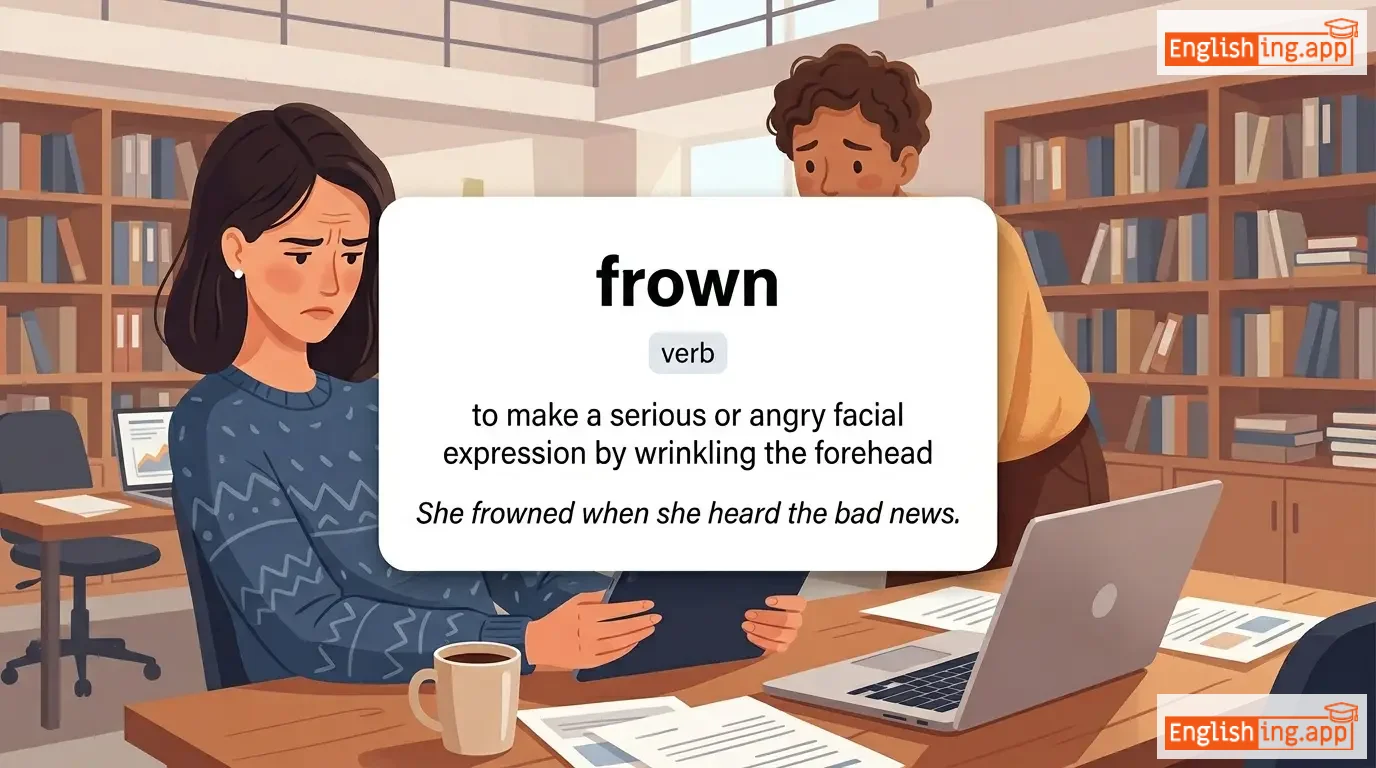
frown definition card — visual illustration of the meaning
verb
/fraʊn/
fruncir el ceño (fruncir el seno)

to make a serious or angry facial expression by wrinkling the forehead

"She frowned when she heard the bad news."

"Ella frunció el ceño cuando escuchó las malas noticias." (Ella fruncio el seno cuando escucho las malas noticias.)
adjective
/ˈfraʊzi/
desordenado (desordenado)

Scruffy and neglected in appearance; musty or stale in smell.

"He wore a frowsy old jacket that smelled of damp."

"Él llevaba una chaqueta desordenada y vieja que olía a humedad." (Él llevaba una chaqueta desordenada y vieja que olía a humedad.)
adjective
/ˈfraʊzi/
desaliñado (desalinhado)

Unkempt, messy, or having a musty, unpleasant smell.

"He entered the room with a frowzy appearance after sleeping on the couch."

"Entró en la habitación con una apariencia desaliñada después de dormir en el sofá." (Entró en la habitación con una apariencia desaliñada después de dormir en el sofá.)
adjective
/ˈfroʊzən/
congelado (congelado)

preserved by being made extremely cold; turned into ice

"The lake was completely frozen during winter."

"El lago estaba completamente congelado durante el invierno." (El lago estaba completamente congelado durante el invierno.)
verb
/ˈfrʌktɪˌfaɪ/
fructificar (fructificar)

To make fruitful or productive; to bear fruit.

"The new policies will help fructify the economic potential of the region."

"Las nuevas políticas ayudarán a fructificar el potencial económico de la región." (Las nuevas políticas ayudarán a fructificar el potencial económico de la región.)
adjective
/ˈfruːɡəl/
ahorrativo (ahorrativo)

Economical in use or expenditure; avoiding waste.

"She is very frugal and always saves a portion of her income."

"Ella es muy ahorrativa y siempre ahorra una parte de sus ingresos." (Ella es muy ahorrativa y siempre ahorra una parte de sus ingresos.)
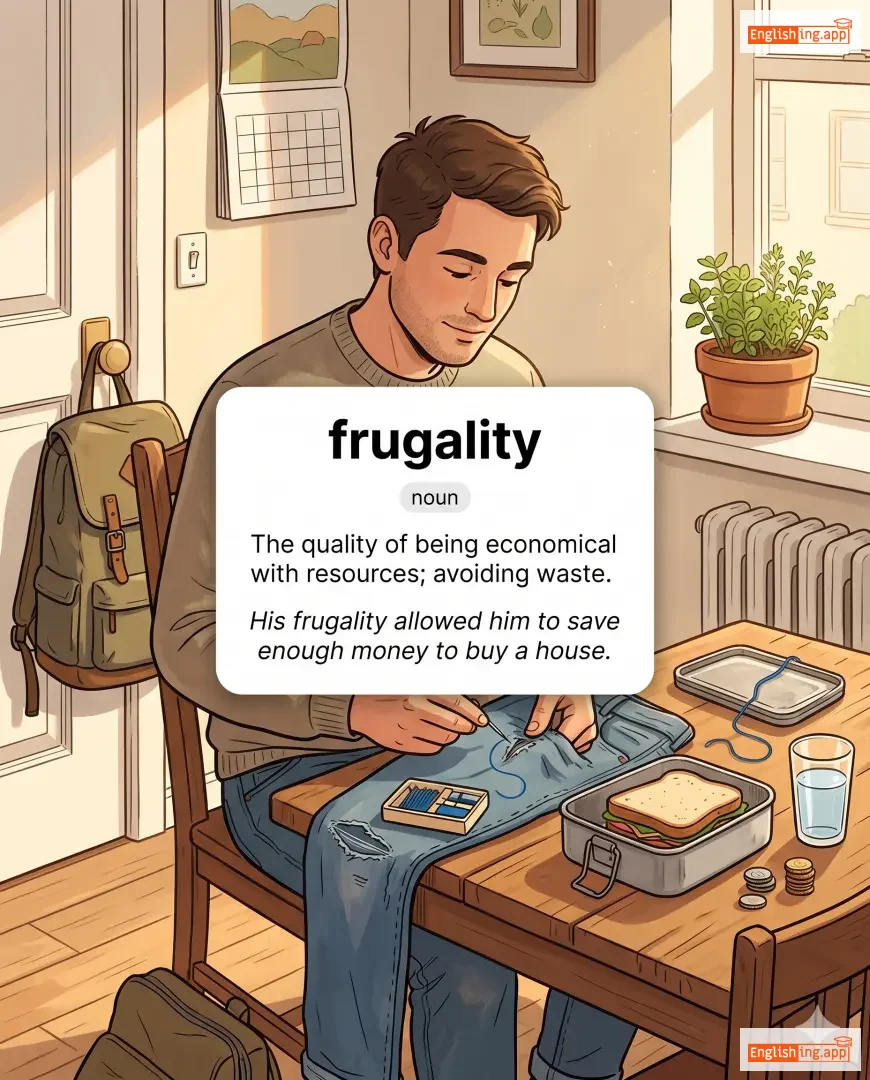
frugality definition card — visual illustration of the meaning
noun
/fruːˈɡæləti/
frugalidad (frugalidad)

The quality of being economical with resources; avoiding waste.

"His frugality allowed him to save enough money to buy a house."

"Su frugalidad le permitió ahorrar suficiente dinero para comprar una casa." (Su frugalidad le permitio ahorrar suficiente dinero para comprar una casa.)
noun
/fruːt/
fruta (fruta)

The sweet and fleshy product of a plant that contains seeds.

"Mango is my favorite fruit."

"El mango es mi fruta favorita." (El mango es mi fruta favorita.)
adjective
/ˈfruːtfəl/
productivo (productivo)

Producing good results or being productive.

"Their meeting was fruitful and led to many new ideas."

"Su reunión fue productiva y llevó a muchas ideas nuevas." (Su reunion fue productiva y llevo a muchas ideas nuevas.)
noun
/fruˈɪʃən/
cumplimiento (cumplimiento)

The realization or fulfillment of a plan, project, or desire.

"Her dream of becoming a doctor finally came to fruition."

"El sueño de convertirse en doctora finalmente se hizo realidad." (El sueno de convertirse en doctora finalmente se hizo realidad.)
adjective
/ˈfruːt.ləs/
infructuoso; inútil; fútil; (infructuoso; inutil; futil)

unsuccessful; futile; pointless;

"After hours of searching, their efforts proved fruitless."

"Después de horas de búsqueda, sus esfuerzos resultaron infructuosos." (Despues de horas de busqueda, sus esfuerzos resultaron infructuosos.)
verb
/ˈfrʌstreɪt/
frustrar (frustrar)

To prevent someone from accomplishing something; to cause feelings of annoyance or disappointment.

"The constant delays frustrated the team."

"Los retrasos constantes frustraron al equipo." (Los retrasos constantes frustraron al equipo.)
adjective
/ˈfrʌstreɪtɪd/
frustrado (frustrado)

feeling annoyed or upset because of inability to achieve something

"She felt frustrated after failing the exam."

"Ella se sintió frustrada después de reprobar el examen." (Ella se sintió frustrada después de reprobar el examen.)
adjective
/ˈfrʌstreɪtɪŋ/
frustrante (frustrante)

causing annoyance or dissatisfaction

"The slow internet connection was really frustrating."

"La conexión de internet lenta fue realmente frustrante." (La conexion de internet lenta fue realmente frustrante.)
noun
/frʌˈstreɪʃən/
frustración (frustracion)

The feeling of being upset or annoyed due to inability to achieve something.

"He felt deep frustration when his plans failed."

"Sintió una profunda frustración cuando sus planes fracasaron." (Sintio una profunda frustracion cuando sus planes fracasaron.)
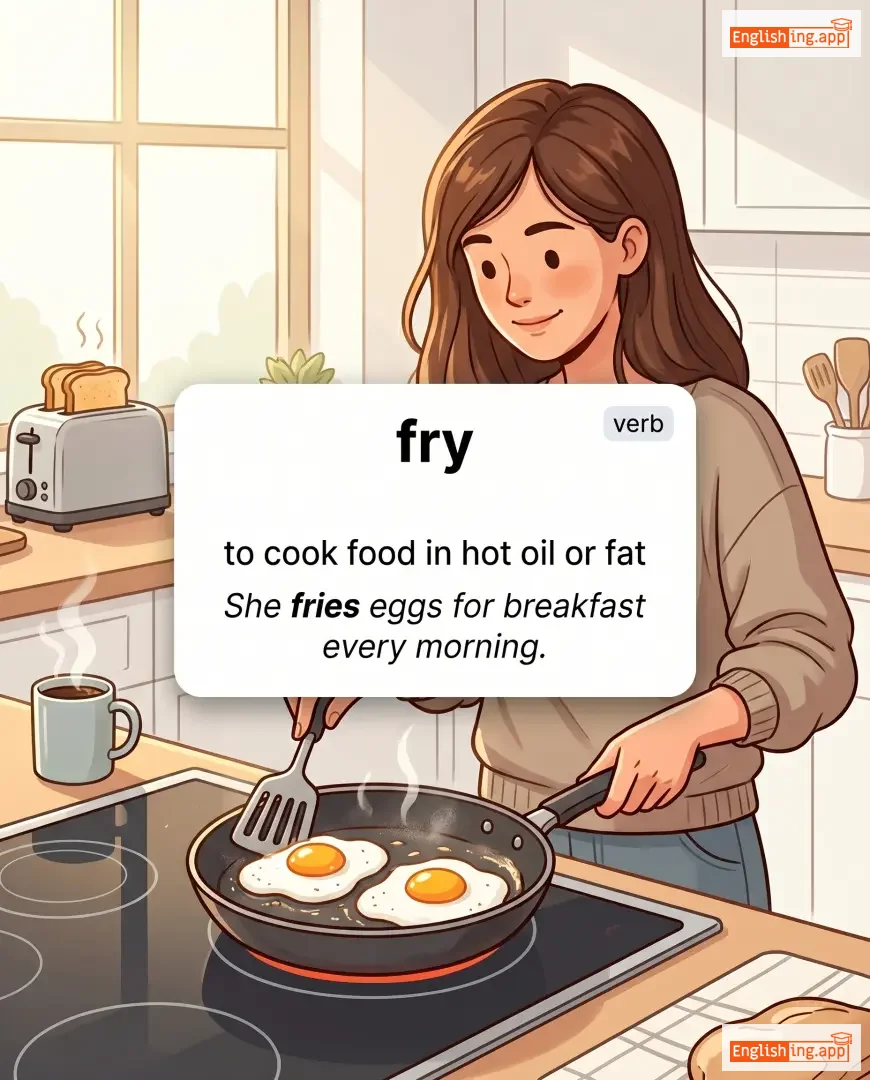
fry definition card — visual illustration of the meaning
noun
/fraɪ/
alevín (alevin)

young fish; small fish; to cook food in hot fat or oil

"The fisherman caught many small fry in his net."

"El pescador atrapó muchos alevines pequeños en su red." (el pescador atrapo muchos alevines pequenos en su red)
adjective, adverb (informal, vulgar)
/ˈfʌkɪŋ/
maldito (palabra vulgar para énfasis) (maldito (palabra vulgar para enfasis))

used for emphasis, often expressing anger or frustration (vulgar slang)

"It was a fucking disaster!"

"¡Fue un maldito desastre!" (¡Fue un maldito desastre!)
verb
/ˈfʌdəl/
confundir (confundir)

To confuse or stupefy, especially with alcohol or overwhelming information.

"The complicated instructions fuddled the new employees."

"Las instrucciones complicadas confundieron a los nuevos empleados." (Las instrucciones complicadas confundieron a los nuevos empleados.)
noun/verb
/ˈfjuːəl/
combustible (combustible)

A material such as coal, gas, or oil that is burned to produce energy; also to supply with energy or power.

"The car needs fuel to run efficiently."

"El coche necesita combustible para funcionar eficientemente." (El coche necesita combustible para funcionar eficientemente.)
adjective
/fjuːˈɡeɪʃəs/
fugaz (fugaz)

Lasting only a short time; fleeting or ephemeral.

"Youth is beautiful but fugacious."

"La juventud es hermosa pero fugaz." (La juventud es hermosa pero fugaz.)
🏃‍♂️

Fugitive (fugítiv)

noun
/ˈfjuːdʒətɪv/
fugitivo (fugitivo)

A person who has escaped from captivity or is in hiding, usually to avoid arrest.

"The police captured the fugitive after a long chase."

"La policía capturó al fugitivo después de una larga persecución." (La policía capturó al fugitivo después de una larga persecución.)
noun
/ˈfʊl.krəm/
punto de apoyo (punto de apoyo)

The point or support on which a lever pivots; a central or essential point of activity or support.

"The teacher became the fulcrum of change in the school."

"La maestra se convirtió en el fúlcrum del cambio en la escuela." (La maestra se convirtió en el fúlcrum del cambio en la escuela.)
verb
/fʊlˈfɪl/
cumplir (cumplir)

to complete or achieve something that was expected or promised; to satisfy a requirement or desire

"She worked hard to fulfil her dream of becoming a doctor."

"Trabajó duro para cumplir su sueño de convertirse en doctora." (Trabajó duro para cumplir su sueño de convertirse en doctora)
verb
/fʊlˈfɪl/
cumplir (cumplir)

to complete or accomplish something, especially a task or promise

"He worked hard to fulfill his dreams."

"Trabajó duro para cumplir sus sueños." (Trabajo duro para cumplir sus sueños.)
adjective
/ˈfʊl.dʒənt/
brillante (brillante)

Shining brightly; dazzling.

"The fulgent stars lit up the night sky."

"Las estrellas brillantes iluminaron el cielo nocturno." (Las estrellas brillantes iluminaron el cielo nocturno.)
adjective
/fʊl/
lleno (lleno)

Containing as much or as many as possible; complete.

"The glass is full of water."

"El vaso está lleno de agua." (El vaso está lleno de agua.)
adjective
/ˌfʊl ˈbɒd.id/
de sabor intenso (de sabor intenso)

Having a strong, rich, and robust quality, especially of wine, coffee, or voice.

"He prefers a full-bodied red wine with his dinner."

"Él prefiere un vino tinto de sabor intenso con su cena." (Él prefiere un vino tinto de sabor intenso con su cena.)
adjective, adverb
/ˈfʊl taɪm/
a tiempo completo (a tiempo completo)

working or studying for the whole standard period of time

"She works full-time as a teacher."

"Ella trabaja a tiempo completo como profesora." (Ella trabaja a tiempo completo como profesora.)
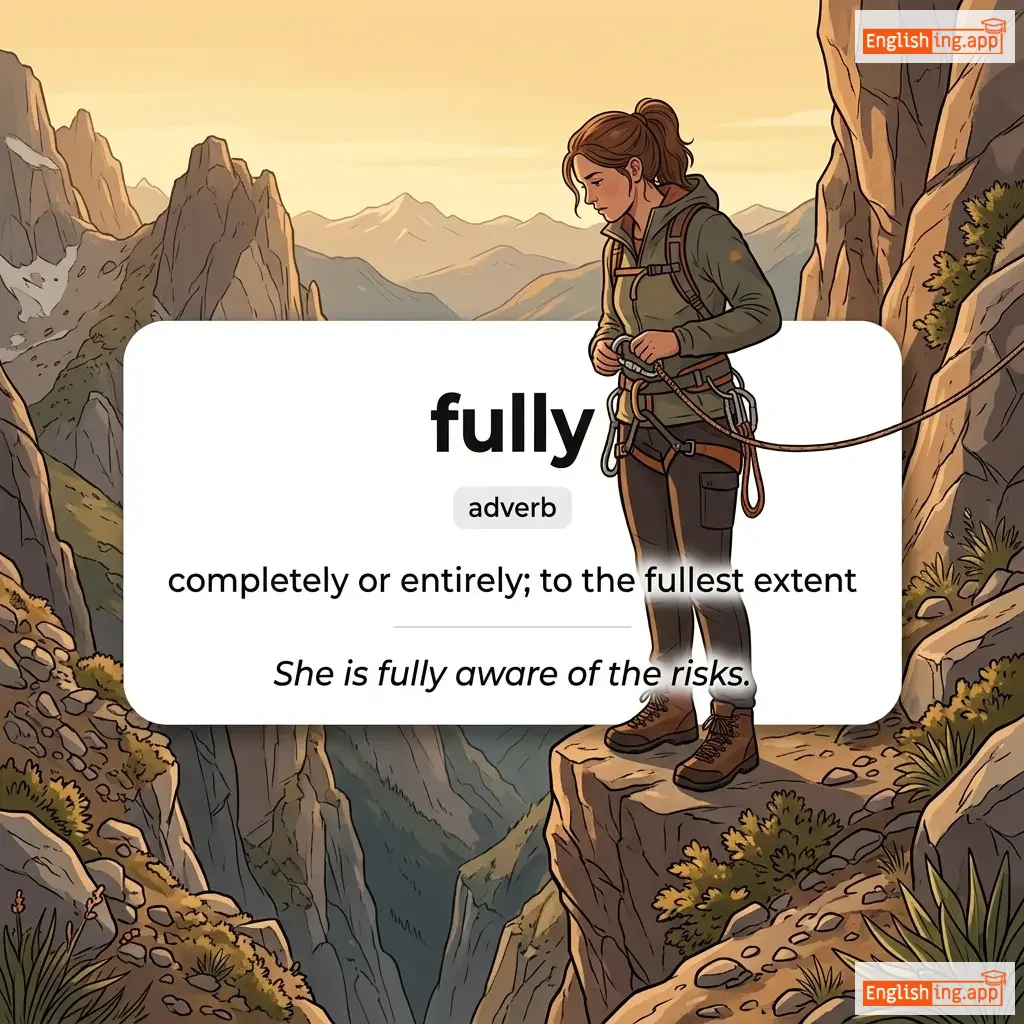
fully definition card — visual illustration of the meaning
adverb
/ˈfʊli/
completamente (completamente)

completely or entirely; to the fullest extent

"She is fully aware of the risks."

"Ella está completamente consciente de los riesgos." (Ella esta completamente consciente de los riesgos.)
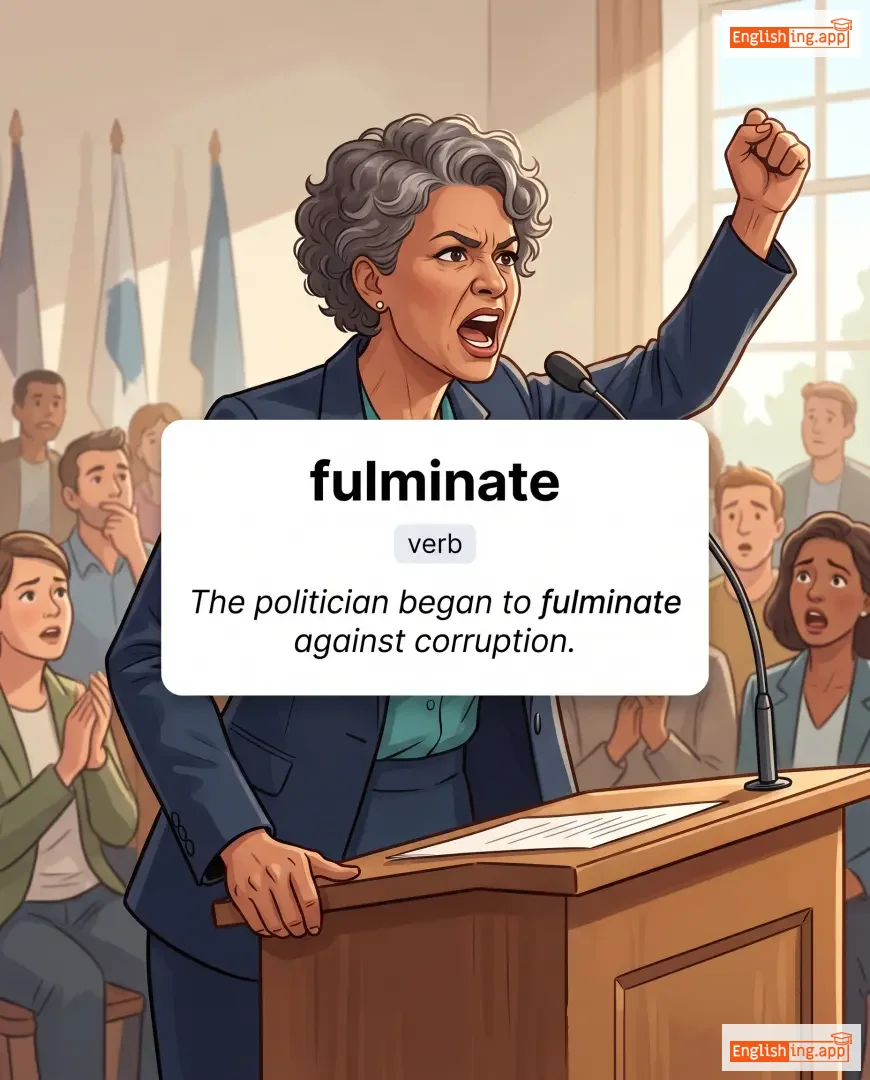
fulminate definition card — visual illustration of the meaning
verb
/ˈfʊl.mɪ.neɪt/
protestar enérgicamente (protestar energicamente)

To express strong protest or criticism loudly and forcefully; to explode violently.

"The politician began to fulminate against corruption."

"El político comenzó a protestar enérgicamente contra la corrupción." (El politico comenzo a protestar energeticament contra la corrupcion.)
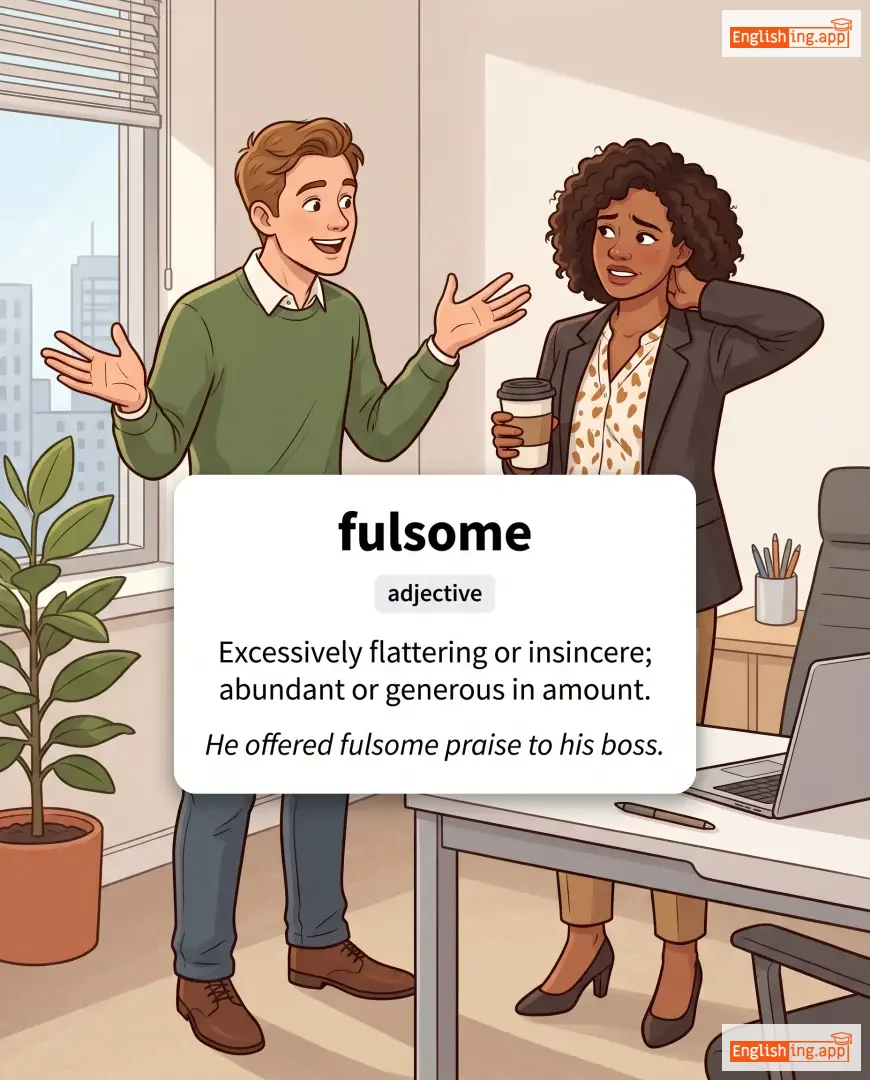
fulsome definition card — visual illustration of the meaning
adjective
/ˈfʊl.səm/
elogios excesivos (elogios excesivos)

Excessively flattering or insincere; abundant or generous in amount.

"He offered fulsome praise to his boss."

"Él ofreció elogios excesivos a su jefe." (Él ofreció elogios excesivos a su jefe.)