語彙集

英単語辞書 | 単語の意味、定義、例文

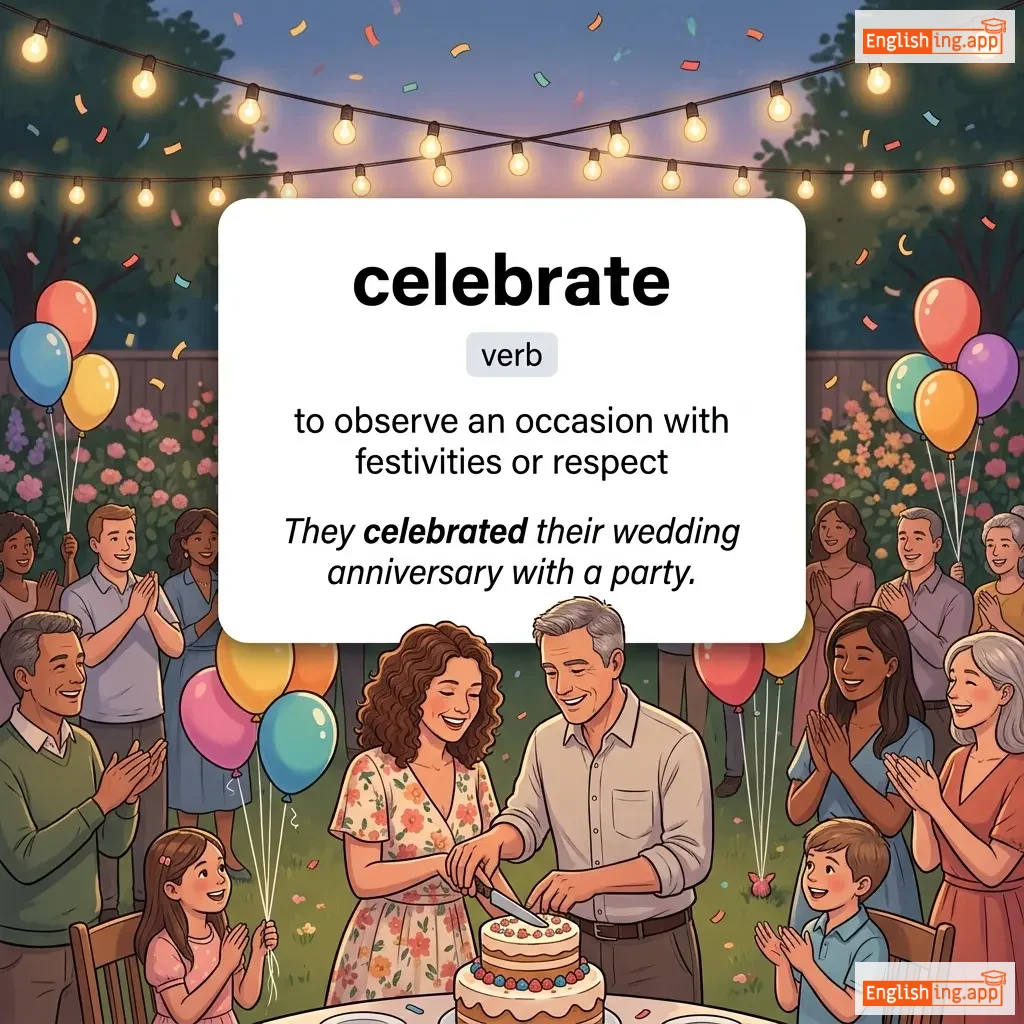
caution definition card — visual illustration of the meaning
noun
/ˈkɔːʃən/
注意 (chuui)

care taken to avoid danger or mistakes

"He proceeded with caution during the storm."

"彼は嵐の中で注意深く進んだ。" (Kare wa arashi no naka de chuibukaku susunda.)
adjective
/ˈkɔːʃənˌɛri/
警告的な (keikokuteki na)

serving as a warning; intended to prevent problems or mistakes by giving advice or examples

"The report offers a cautionary message about unchecked spending."

"その報告書は無計画な支出について警告的なメッセージを示している。" (Sono hokokusho wa mukeikakuna shishutsu ni tsuite keikokuteki na messeji o shimeshite iru)
adjective
/ˈkɔːʃəs/
慎重 (shinchou)

careful to avoid potential problems or dangers

"She was cautious about trusting strangers."

"彼女は見知らぬ人を信頼することに慎重だった。" (Kanojo wa mishiranu hito o shinrai suru koto ni shinchou datta.)
noun
/ˌkæv.əlˈkeɪd/
行列 (gyōretsu)

a formal procession of people riding on horses or in vehicles

"The king’s arrival was marked by a grand cavalcade."

"王の到着は壮大な行列で印象付けられた。" (Ō no tōchaku wa sōdaina gyōretsu de inshōdzukerareta.)
adjective
/ˌkævəˈlɪər/
無頓着 (mutonchaku)

showing a lack of proper concern; dismissive or offhand

"He had a cavalier attitude toward safety regulations."

"彼は安全規制に対して無頓着な態度を持っていた。" (Kare wa anzen kisei ni taishite mutonchaku na taido o motte ita.)
noun
/ˈkæv.əl.ri/
騎兵 (kibing)

soldiers who fight on horseback; the part of an army formerly composed of troops on horseback

"The cavalry charged across the field with great speed."

"騎兵は速さでフィールドを横断しました。" (Kibing wa hayasa de fiirudo o oudanshimashita.)
noun
/keɪv/
洞窟 (doukutsu)

a large natural underground space in a hill or cliff

"The explorers discovered paintings on the walls of the cave."

"探検者たちは洞窟の壁に絵を発見しました。" (Tanken-sha-tachi wa doukutsu no kabe ni e o hakken shimashita.)
noun
/ˈkæviˌæt/
警告 (keikoku)

a warning or condition to be considered before taking action

"The proposal was accepted with one caveat."

"提案は警告付きで受け入れられました。" (Teian wa keikoku tsuki de ukeiraremashita.)
noun
/ˈkævərn/
洞窟 (doukutsu)

a large cave or chamber in a cave

"The explorers entered a dark cavern beneath the mountain."

"探検家たちは山の下にある暗い洞窟に入った。" (Tankenka-tachi wa yama no shita ni aru kurai doukutsu ni haitta.)
verb
/ˈkævəl/
無駄な反論をする (mudana hanron o suru)

to make petty or unnecessary objections

"She caviled at every detail of the plan."

"彼女は計画のすべての詳細について無駄な反論をしていた。" (Kanojo wa keikaku no subete no shousai ni tsuite mudana hanron o shite ita.)
verb
/kəˈvɔrt/
楽しそうに跳ねる (tanoshisou ni haneru)

to jump or dance around excitedly

"The children cavorted happily in the garden."

"子供たちは庭で楽しそうに跳ねていました。" (Kodomotachi wa niwa de tanoshisou ni haneteimashita.)
verb
/siːs/
停止する (teishi suru)

to bring or come to an end; to stop doing something

"The noise ceased as soon as the children went inside."

"騒音は子供たちが中に入るとすぐに止まりました。" (Sōon wa kodomotachi ga naka ni hairu to sugu ni tomarimashita.)
adjective
/ˈsiːs.ləs/
途切れのない; 終わりのない (shisuresu)

continuing without pause or interruption; endless

"The ceaseless rain lasted for three days."

"途切れのない雨は三日間続いた。" (Togire no nai ame wa mikka kan tsuzuita.)
verb
/siːd/
譲渡する (jōtosuru)

to give up power, territory, or rights to another

"The country ceded territory after losing the war."

"その国は戦争に負けた後、領土を譲渡した。" (Sono kuni wa sensō ni maketa ato, ryōdo o jōtoshita.)
noun
/ˈsiːlɪŋ/
天井 (tenjō)

the upper interior surface of a room

"The ceiling of the hall was painted beautifully."

"ホールの天井は美しく塗られていました。" (Hōru no tenjō wa utsukushiku nurarete imashita.)
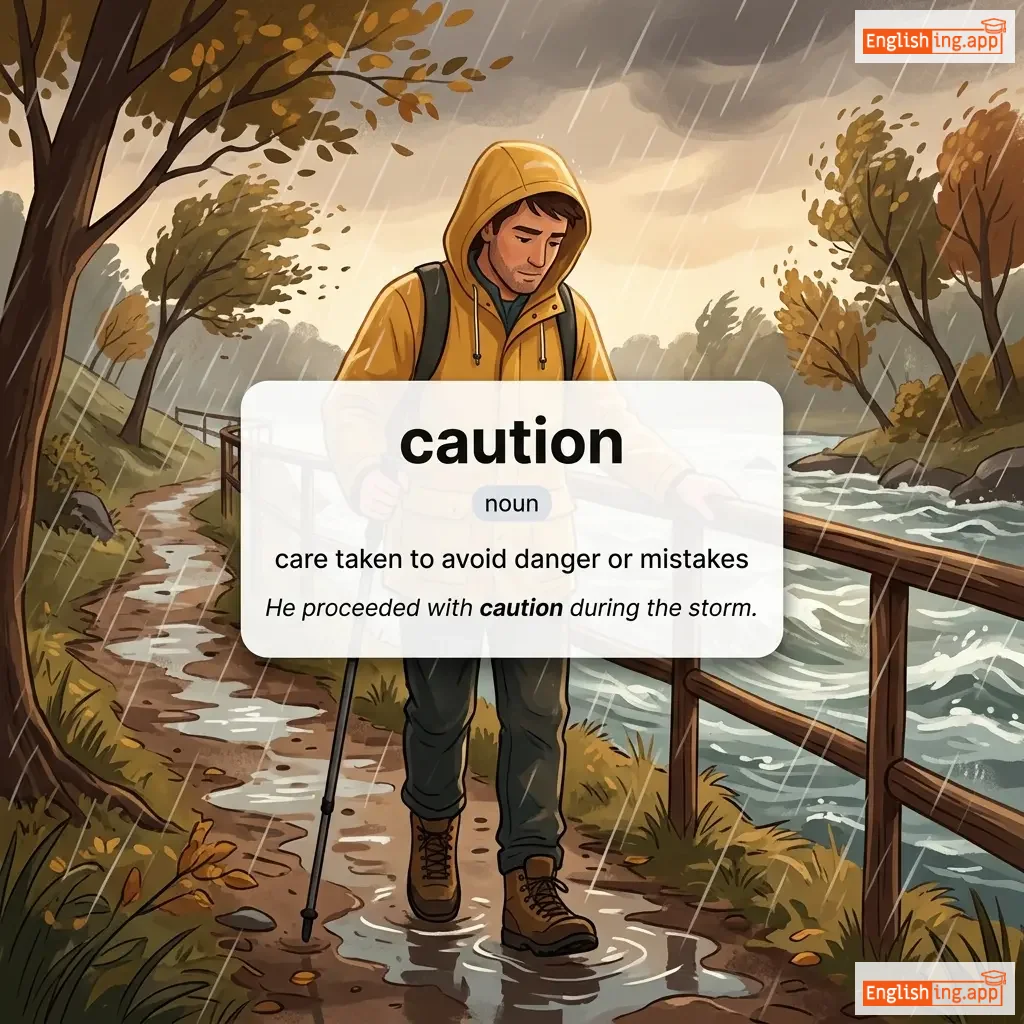
celebrate definition card — visual illustration of the meaning
verb
/ˈsɛlɪˌbreɪt/

to observe an occasion with festivities or respect

"They celebrated their wedding anniversary with a party."

adjective
/ˈsɛl.əˌbreɪ.tɪd/
有名な (yūmeina)

Widely known and praised; famous for an achievement.

"He is a celebrated author in the field of literature."

"彼は文学の分野で著名な作家です。" (Kare wa bungaku no bunya de chomeina sakka desu.)
celebrating definition card — visual illustration of the meaning
verb
ˈsɛləbreɪtɪŋ
祝う (iwau)

The act of acknowledging a significant or happy day or event with a social gathering or enjoyable activity.

"Celebrating awareness days helps spread important messages."

"啓発デーを祝うことは、重要なメッセージを広めるのに役立ちます。" (Keihatsu dē o iwau koto wa, jūyōna messēji o hiromeru no ni yakudachimasu.)
noun
/ˌsɛlɪˈbreɪʃən/
祝典 (shukuten)

a festive event or activity to honor an occasion

"The city held a grand celebration on Independence Day."

"その都市は独立記念日に大規模な祝典を開催した。" (Sono toshi wa dokuritsuki nenshi ni daikibo na shukuten o kaisai shita.)
noun
/səˈlɛbrɪti/
有名人 (yūmeijin)

a famous person, especially in entertainment or sports

"The celebrity was surrounded by fans at the airport."

"その有名人は空港でファンに囲まれていた。" (Sono yūmeijin wa kūkō de fan ni kakomarete ita.)
noun
/səˈlɛrɪti/
素早さ (subayasa)

swiftness of movement; speed

"The soldier moved with great celerity to deliver the message."

"兵士はメッセージを届けるために素早く動いた。" (Heishi wa messeeji o todokeru tame ni subayaku ugoita.)
noun
/ˈsel.ər.i/
セロリ (serori)

a green vegetable with long crisp stems that can be eaten raw or cooked

"I added chopped celery to the soup for extra flavor."
"私はスープにセロリを加えて、さらに風味を増しました。" (watashi wa sūpu ni serori wo kuwaete, sarani fūmi wo mashimashita.)
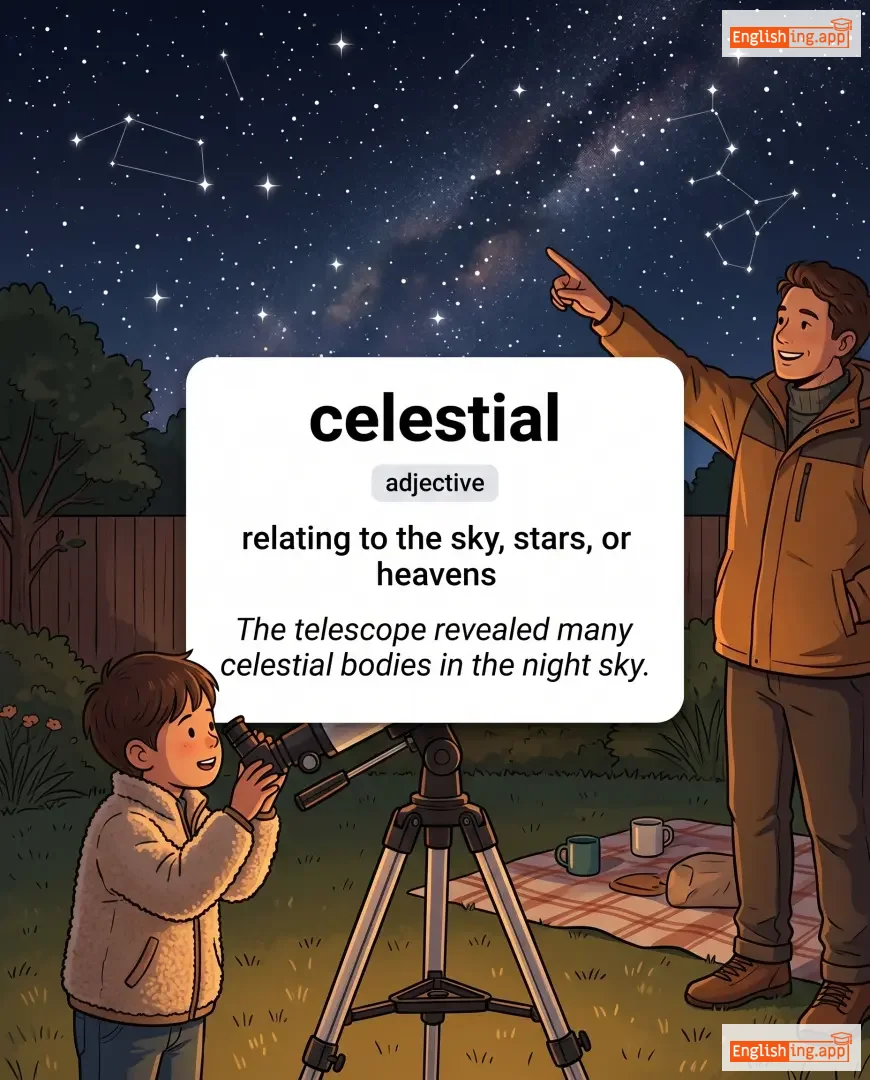
celestial definition card — visual illustration of the meaning
adjective
/səˈlɛstiəl/
天体の (tentai no)

relating to the sky, stars, or heavens

"The telescope revealed many celestial bodies in the night sky."

"望遠鏡は夜空に多くの天体を明らかにしました。" (Bōenkyō wa yozora ni ōku no tentai o akiraka ni shimashita.)
adjective, noun
/ˈsɛlɪbət/

abstaining from marriage and sexual relations; a person who does so

"He chose to remain celibate for religious reasons."

noun
/sɛl/
細胞 / セル (saibou / seru)

a small basic unit of life; or a small enclosed space like a prison room

"The prisoner was locked in a small cell."

"囚人は小さなセルに閉じ込められた。" (Shuujin wa chiisana seru ni tojikomerareta.)
noun
/ˈsɛlˌfoʊn/
携帯電話 (keitai denwa)

a portable telephone that uses a cellular network for wireless communication

"She forgot her cellphone at home and couldn’t call anyone."

"彼女は家に携帯電話を忘れて、誰にも電話できなかった。" (kanojo wa ie ni keitai denwa o wasurete dare ni mo denwa dekinakatta)
adjective
/ˈsel.jə.lər/
細胞の (saibou no)

relating to cells; consisting of cells; relating to mobile phone technology

"Cellular technology has revolutionized communication."
"セルラー技術は通信を革新しました。" (Seruraa gijutsu wa tsuushin wo kakushin shimashita.)
noun/verb
/sɪˈmɛnt/

a powdery substance that binds materials together; to make something strong or permanent

"The treaty helped cement the relationship between the two countries."

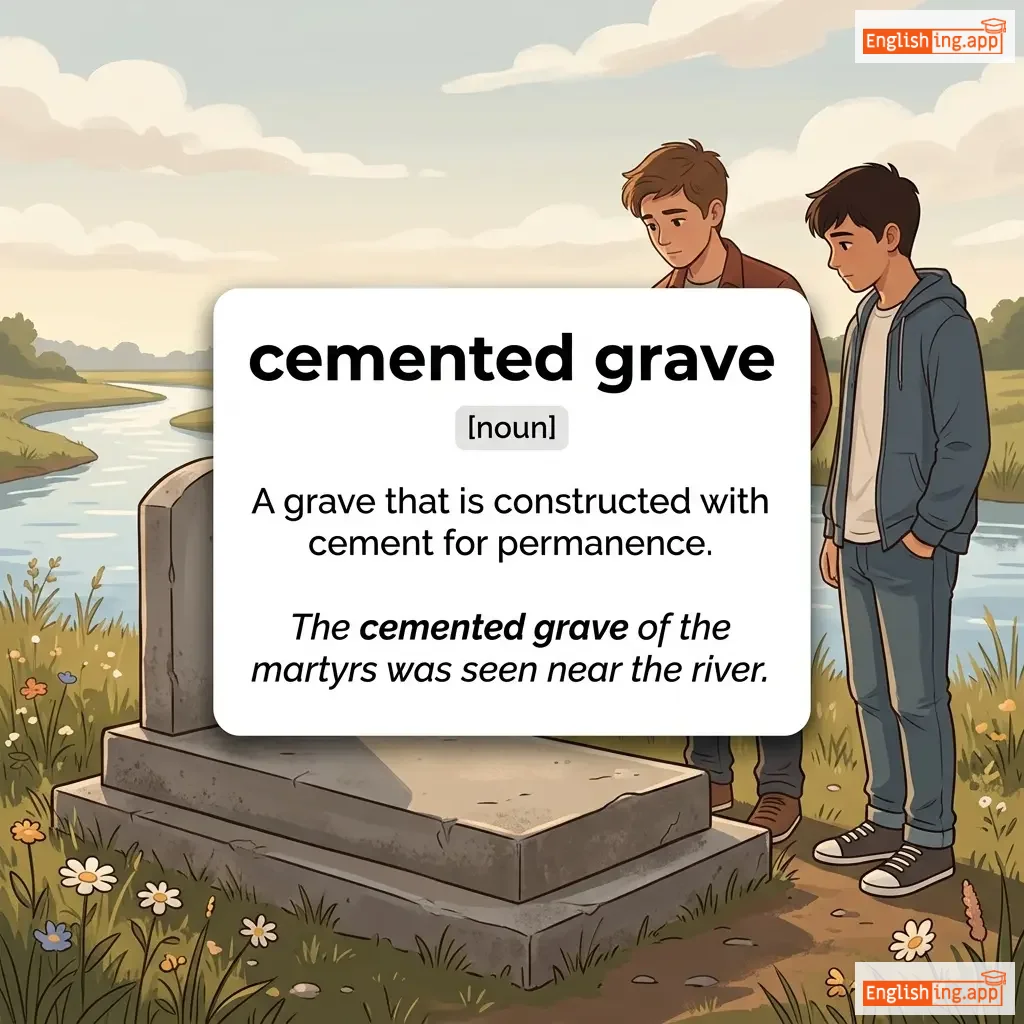
cemented grave definition card — visual illustration of the meaning
noun
sɪˈmɛntɪd ɡreɪv
セメントで作られた墓 (semento de tsukurareta haka)

A grave that is constructed with cement for permanence.

"The cemented grave of the martyrs was seen near the river."

"殉教者のセメントで作られた墓が川の近くで見られました。" (Junkyousha no semento de tsukurareta haka ga kawa no chikaku de mirarimashita.)
noun
/ˈsɛmɪˌtɛri/
墓地 (bochi)

a place where dead people are buried

"The old cemetery is located at the edge of the village."

"古い墓地は村の端にあります。" (Furui bochi wa mura no hashi ni arimasu.)
verb/noun
/ˈsɛnsər/
検閲 (ken'etsu)

to suppress or remove parts of books, films, or information considered offensive or harmful; a person who does this

"The government tried to censor the controversial film."

"政府はその物議を醸す映画を検閲しようとしました。" (Seifu wa sono butsu gi o kamosu eiga o ken'etsu shiyou to shimashita.)
adjective
/sɛnˈsɔːriəs/
過度に批判的な (kado ni hihan teki na)

severely critical of others

"She was always censorious about her colleagues' mistakes."
"彼女は同僚のミスに対して常に批判的でした。" (Kanojo wa douryou no misu ni taishite jou ni hihanteki deshita.)
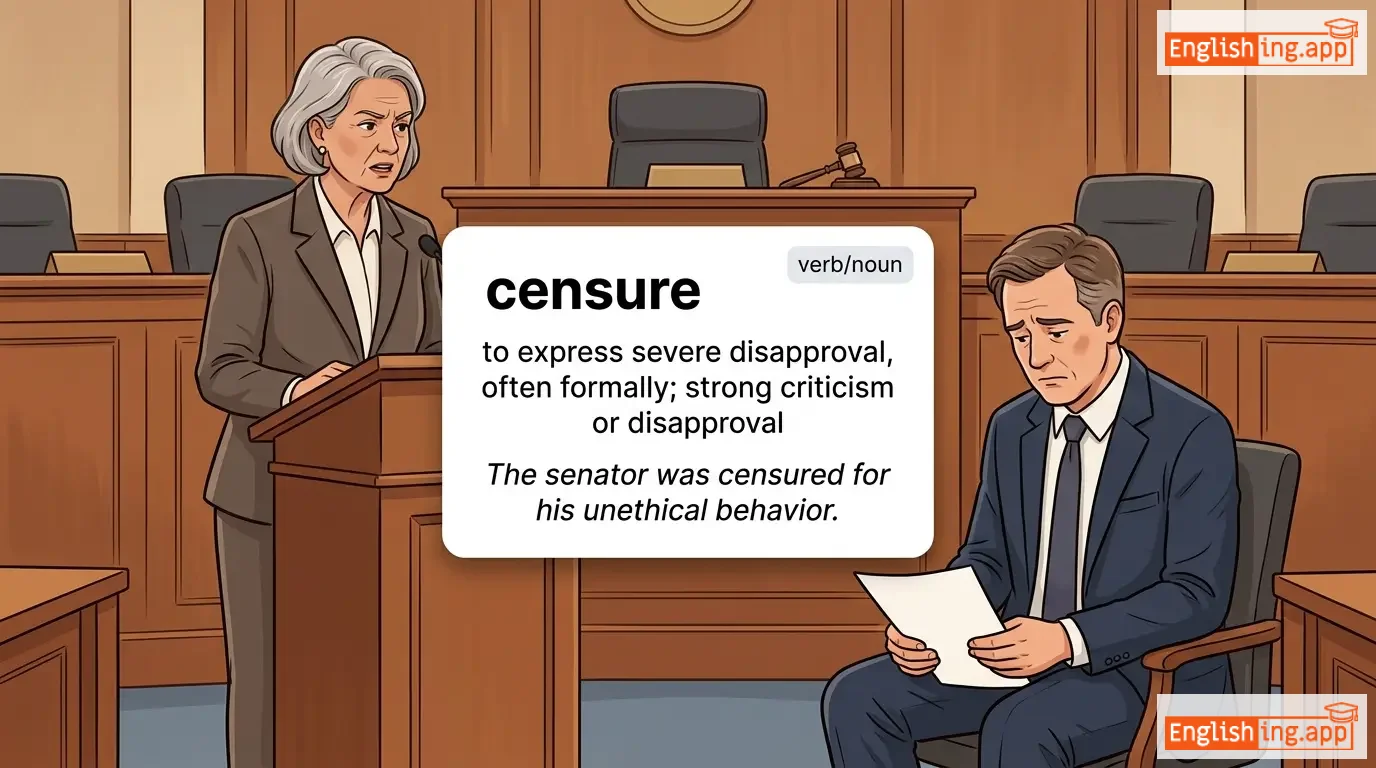
censure definition card — visual illustration of the meaning
verb/noun
/ˈsɛnʃər/
非難 (hinan)

to express severe disapproval, often formally; strong criticism or disapproval

"The senator was censured for his unethical behavior."

"その上院議員は不道徳な行動で非難されました。" (Sono jōin giin wa fudōtoku na kōdō de hinansaremashita.)
noun
/ˈsɛnsəs/
国勢調査 (kokusei chousa)

An official count or survey of a population, typically recording various details of individuals.

"The government conducted a census to update demographic data."

"政府は人口統計データを更新するために国勢調査を実施しました。" (Seifu wa jinkou toukei deeta wo koushin suru tame ni kokusei chousa wo jisshi shimashita.)
noun
/ˈsɛntɔːr/
ケンタウロス (kentaurosu)

A mythological creature with the upper body of a human and the lower body of a horse.

"The centaur is a well-known figure in Greek mythology."

"ケンタウロスはギリシャ神話においてよく知られた存在です。" (Kentaurosu wa Girisha shinwa ni oite yoku shirareta sonzai desu.)
noun, adjective
/ˈsɛntənəri/ or /sɛnˈtɛnəri/
百年記念 (hyakunen kinen)

The hundredth anniversary of a significant event; relating to a period of 100 years.

"The school celebrated its centenary with a grand event."
"学校は百年記念を盛大なイベントで祝いました。" (Gakkō wa hyakunen kinen o seidaina ibento de iwai mashita.)
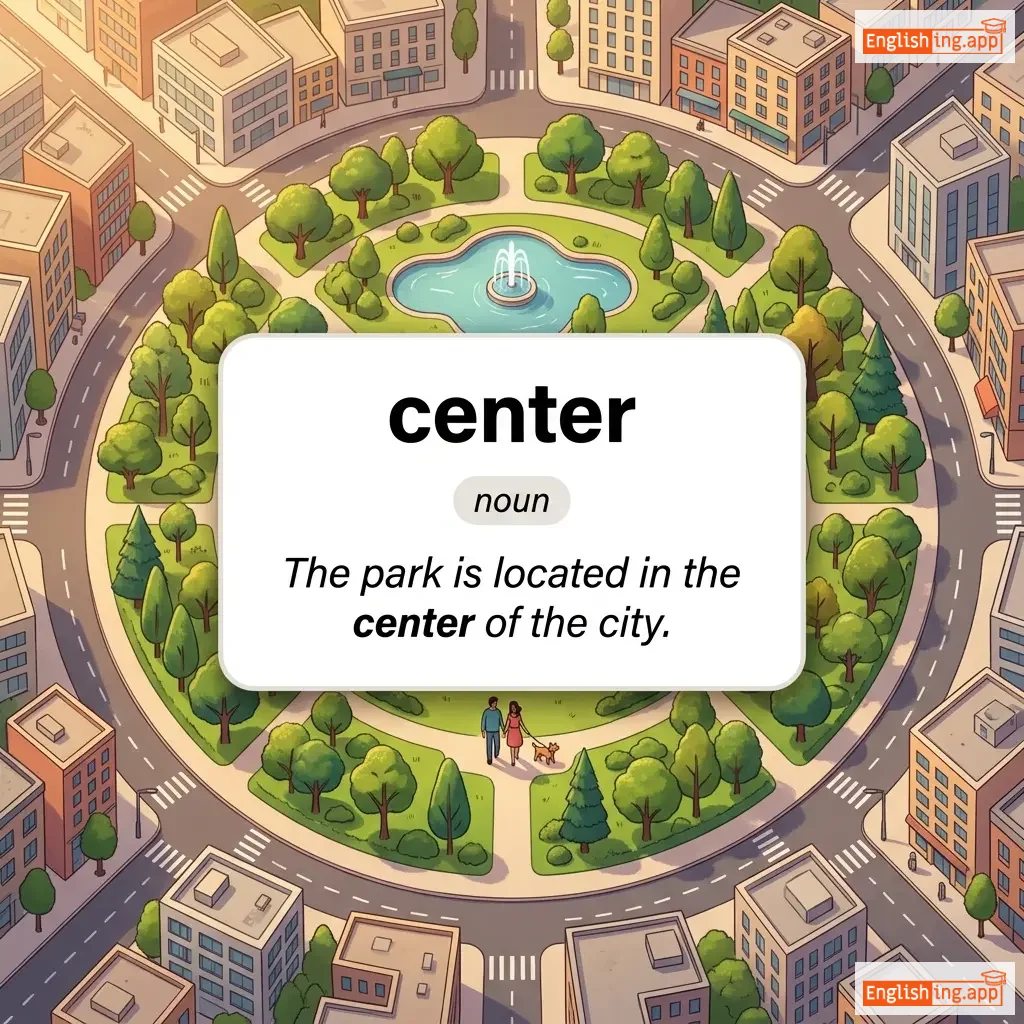
center definition card — visual illustration of the meaning
noun
/ˈsɛntər/
中心 (chūshin)

The middle point or part of something; a place where a particular activity is concentrated.

"The park is located in the center of the city."
"公園は街の中心にあります。" (Kōen wa machi no chūshin ni arimasu.)
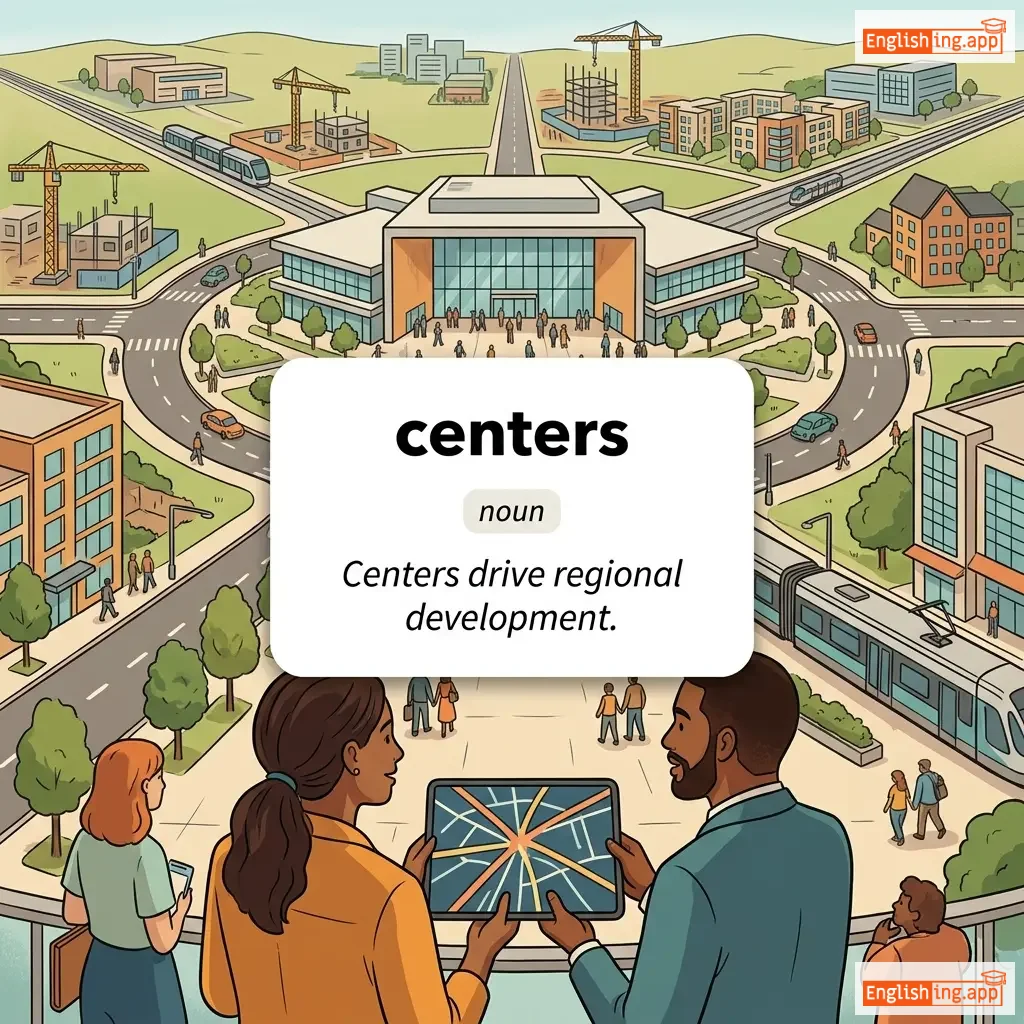
centers definition card — visual illustration of the meaning
noun
ˈsen.tərz
センター (sentā)

The middle point of a circle or sphere, equidistant from every point on the circumference or surface; a place or group of buildings where a specified activity is concentrated.

"Centers drive regional development."

"センターは地域の発展を促進します。" (Sentā wa chiiki no hatten o sokushin shimasu.)
adjective
/ˈsɛntɪɡreɪd/
摂氏度 (センチグレード) (sesshido (sentigureedo))

Relating to the Celsius temperature scale, where water freezes at 0° and boils at 100°.

"The weather forecast predicted 30 degrees centigrade."

"天気予報では30度セントグレードと予測されました。" (Tenki yohou dewa 30 do sentigureedo to yosoku saremashita.)
noun
/ˈsɛntɪˌliːtər/

A metric unit of capacity equal to one hundredth of a liter.

"The recipe calls for 20 centiliters of milk."

noun
/ˈsɛntɪˌmiːtər/
センチメートル (senchimetoru)

A metric unit of length equal to one hundredth of a meter.

"The table is 120 centimeters long."

"テーブルは120センチメートルの長さです。" (Tēburu wa 120 senchimetoru no nagasa desu.)
noun
/ˈsen.tɪ.piːd/
ムカデ (mukade)

a long thin creature with many legs that lives in dark places

"I found a centipede crawling under the rock."

"私は岩の下でムカデが這っているのを見つけました。" (Watashi wa iwa no shita de mukade ga hatte iru no o mitsukemashita.)
adjective
/ˈsɛntrəl/
中央の (chūō no)

Situated in the middle; of the greatest importance.

"Water is central to human survival."
"水は人間の生存にとって中央の役割を果たします。" (Mizu wa ningen no seizon ni totte chūō no yakuwari o hatashimasu.)
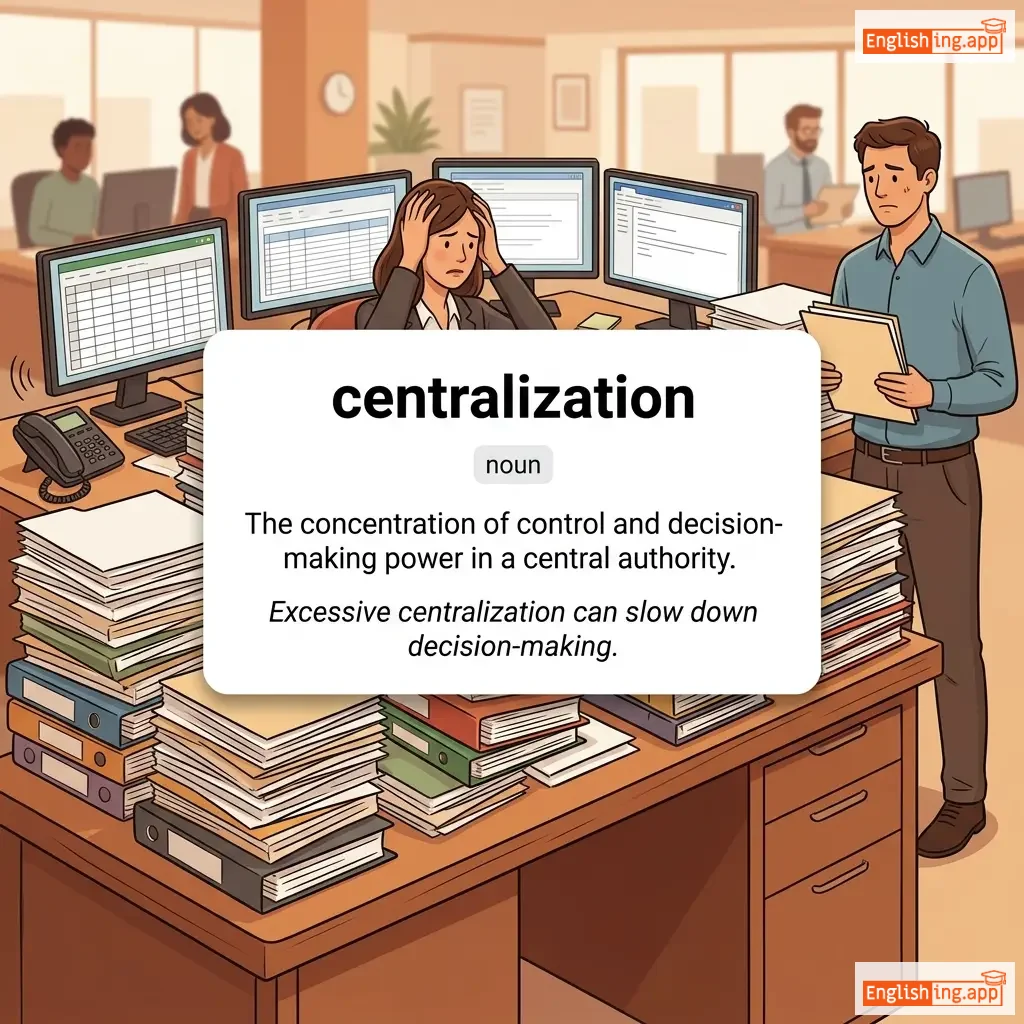
centralization definition card — visual illustration of the meaning
noun
ˌsɛn.trə.laɪˈzeɪ.ʃən
中央集権化 (chuuou shuukenka)

The concentration of control and decision-making power in a central authority.

"Excessive centralization can slow down decision-making."
"過度の中央集権化は意思決定の速度を遅くすることがあります。" (Kado no chuuou shuukenka wa ishi kettei no sokudo wo osoku suru koto ga arimasu.)
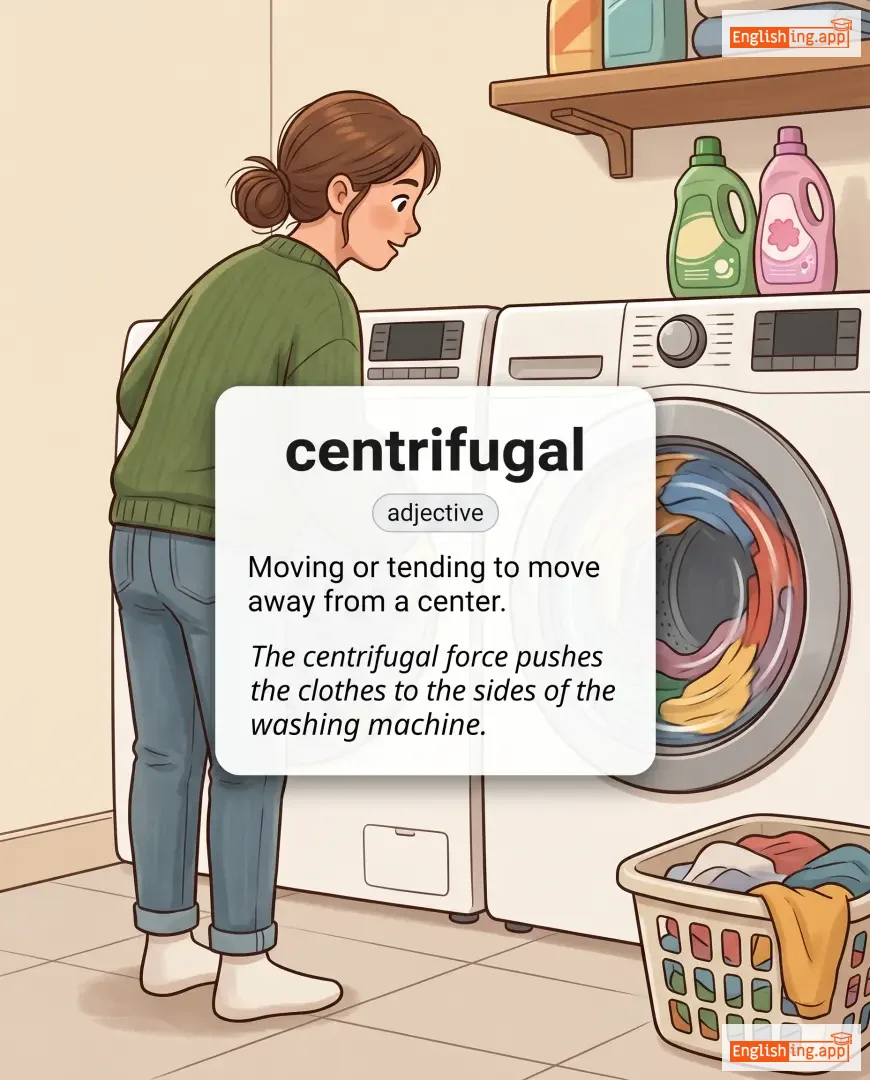
centrifugal definition card — visual illustration of the meaning
adjective
/sɛnˈtrɪfjʊɡəl/
遠心 (enshin)

Moving or tending to move away from a center.

"The centrifugal force pushes the clothes to the sides of the washing machine."

"遠心力は洗濯機の側面に服を押しやる。" (Enshinryoku wa sentakuki no sokumen ni fuku o oshiyaru.)
noun
/ˈsɛntrɪˌfjuːdʒ/
遠心分離機 (enshinbunriki)

A machine that spins substances at high speed to separate different components.

"The lab technician used a centrifuge to separate the blood cells from the plasma."
"実験室の技術者は、血液細胞を血漿から分離するために遠心分離機を使用しました。" (Jikken shitsu no gijutsusha wa, ketsueki saibo o kesshō kara bunri suru tame ni enshinbunrikī o shiyō shimashita.)
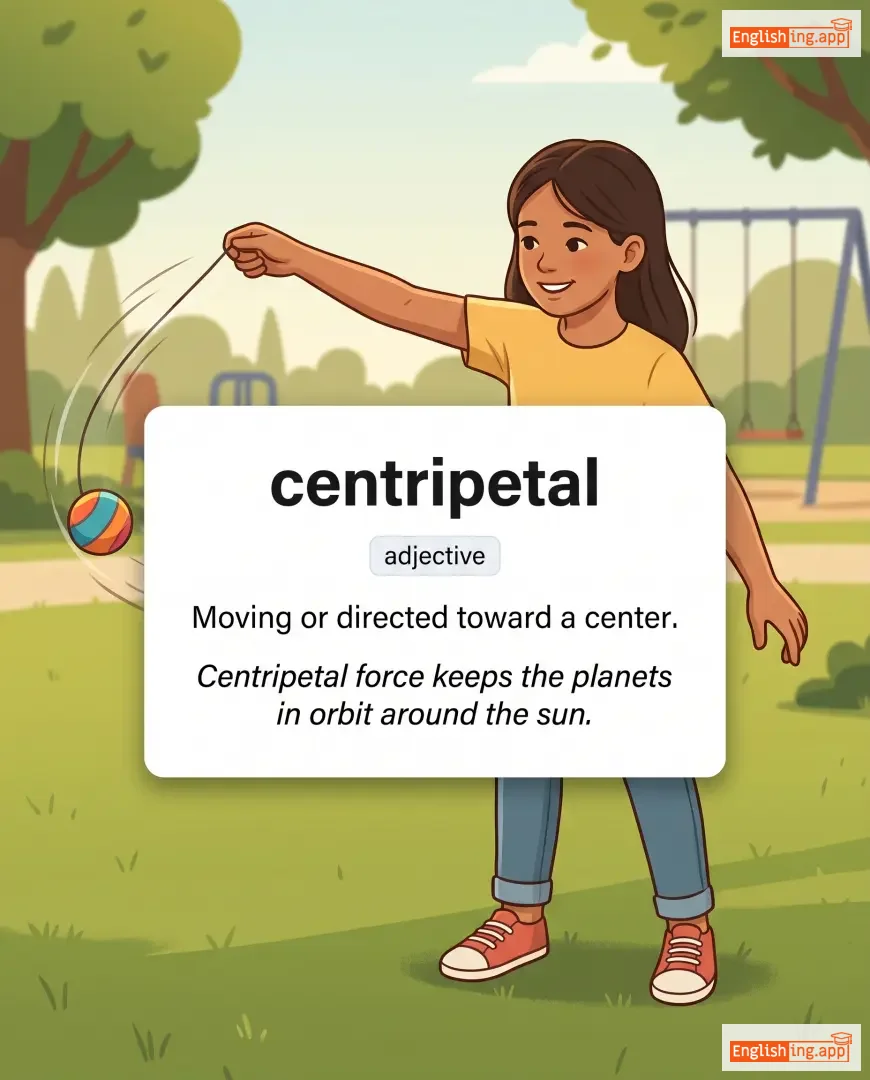
centripetal definition card — visual illustration of the meaning
adjective
/sɛnˈtrɪpɪtəl/
向心力 (koushinryoku)

Moving or directed toward a center.

"Centripetal force keeps the planets in orbit around the sun."

"向心力は惑星を太陽の周りの軌道に保ちます。" (Koushinryoku wa wakusei o taiyō no mawari no kidō ni tamochimasu.)
noun
/sɛnˈtjʊəriən/
百人隊長 (hyakunitai-chou)

A commander of a unit of one hundred soldiers in the ancient Roman army.

"The centurion led his men into battle with courage."

"セントゥリオンは勇気を持って戦いに臨んだ。" (Senturion wa yuuki o motte tatakai ni nozonda.)
noun
/ˈsɛnʧəri/
世紀 (seiki)

A period of one hundred years.

"The 20th century saw significant technological progress."

"20世紀は技術的な進歩が顕著であった。" (20seiki wa gijutsuteki na shinpo ga kencho de atta.)
noun
/ˌsiːiːˈoʊ/
最高経営責任者 (saikou keiei sekininsha)

The highest-ranking person in a company, responsible for overall management.

"The CEO announced a new strategy for the company."

"CEOは会社の新しい戦略を発表しました。" (CEO wa kaisha no atarashii senryaku wo happyou shimashita.)