वोकैबुलरीज

इंग्लिश वोकैबुलरी डिस्कवर, लर्न और मास्टर करें

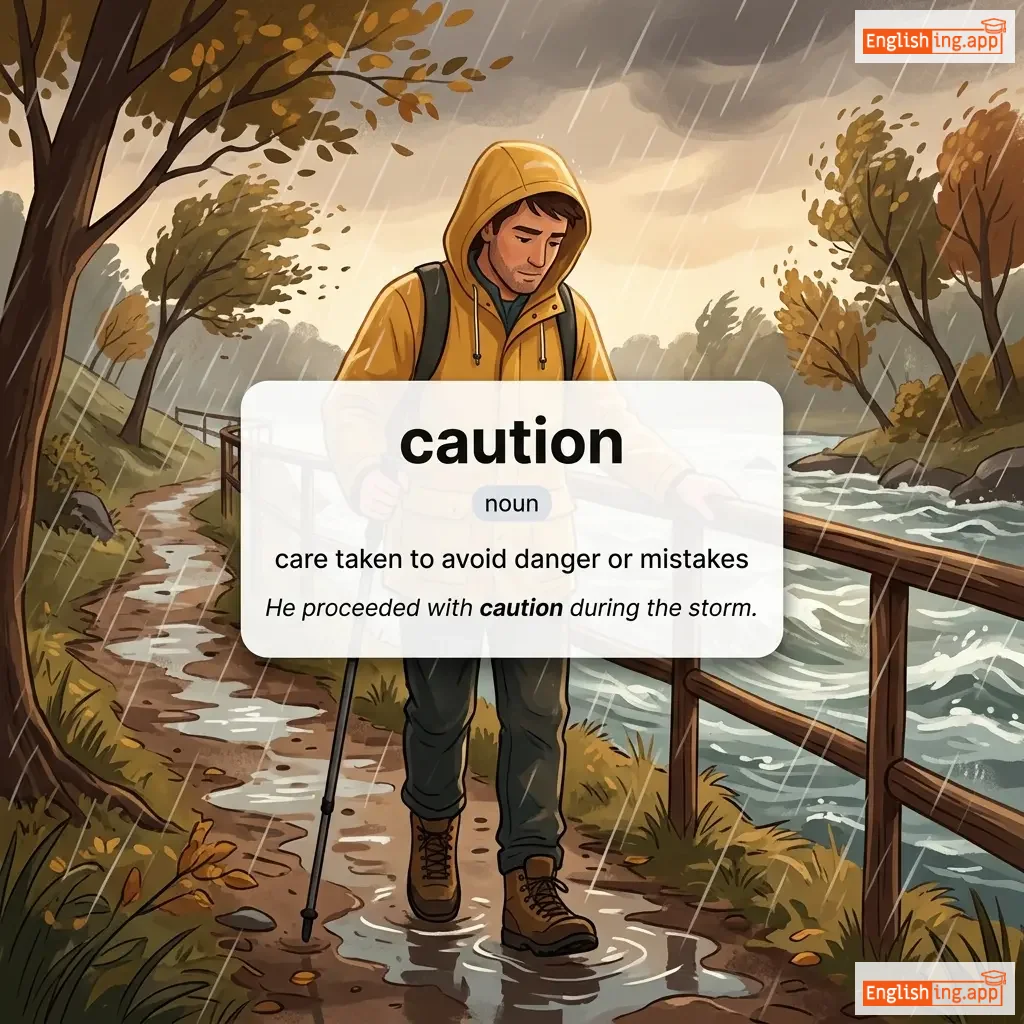
caution definition card — visual illustration of the meaning
noun
/ˈkɔːʃən/
सतर्कता (satarkata)

care taken to avoid danger or mistakes

"He proceeded with caution during the storm."

"वह तूफान के दौरान सतर्कता के साथ आगे बढ़ा।" (Vah toofan ke dauran satarkata ke sath aage badha.)
adjective
/ˈkɔːʃənˌɛri/
चेतावनीपूर्ण (chetavnipurn)

serving as a warning; intended to prevent problems or mistakes by giving advice or examples

"The report offers a cautionary message about unchecked spending."

"रिपोर्ट अनियंत्रित खर्च के बारे में एक चेतावनीपूर्ण संदेश देती है।" (report aniyantrit kharch ke baare mein ek chetavnipurn sandesh deti hai)
adjective
/ˈkɔːʃəs/
सतर्क (satark)

careful to avoid potential problems or dangers

"She was cautious about trusting strangers."

"वह अजनबियों पर विश्वास करने में सतर्क थी।" (Vah ajnabiyon par vishwas karne mein satark thi.)
noun
/ˌkæv.əlˈkeɪd/
आधिकारिक जुलूस (aadhikarik julus)

a formal procession of people riding on horses or in vehicles

"The king’s arrival was marked by a grand cavalcade."

"राजा का आगमन एक भव्य जुलूस से चिह्नित था।" (Raja ka aagman ek bhavya julus se chihnit tha.)
adjective
/ˌkævəˈlɪər/
उदासीन (udasheen)

showing a lack of proper concern; dismissive or offhand

"He had a cavalier attitude toward safety regulations."

"उसका सुरक्षा नियमों के प्रति कैवेलियर रवैया था।" (Uska suraksha niyamon ke prati cavalier ravaiya tha.)
noun
/ˈkæv.əl.ri/
घुड़सवार सेना (ghudswar sena)

soldiers who fight on horseback; the part of an army formerly composed of troops on horseback

"The cavalry charged across the field with great speed."

"कैवलरी ने मैदान में तेजी से हमला किया।" (kaivalari ne maidan mein tezi se hamla kiya.)
noun
/keɪv/
गुफा (gufa)

a large natural underground space in a hill or cliff

"The explorers discovered paintings on the walls of the cave."

"खोजकर्ताओं ने गुफा की दीवारों पर चित्रों की खोज की।" (Khojkartao ne gufa ki deewaron par chitron ki khoj ki.)
noun
/ˈkæviˌæt/
चेतावनी (chetaavani)

a warning or condition to be considered before taking action

"The proposal was accepted with one caveat."

"प्रस्ताव को एक शर्त के साथ स्वीकार किया गया था।" (Prastaav ko ek short ke saath sweekar kiya gaya tha.)
noun
/ˈkævərn/
गुफा (gufa)

a large cave or chamber in a cave

"The explorers entered a dark cavern beneath the mountain."

"अन्वेषक पर्वत के नीचे एक अंधेरे गुफा में प्रवेश किए।" (Anveshak parvat ke neeche ek andhere gufa mein pravesh kiye.)
verb
/ˈkævəl/
निरर्थक आपत्तियाँ करना (nirarthak aapattiyan karna)

to make petty or unnecessary objections

"She caviled at every detail of the plan."

"वह योजना के हर विवरण पर निरर्थक आपत्ति कर रही थी।" (Wah yojana ke har vivaran par nirarthak aapatti kar rahi thi.)
verb
/kəˈvɔrt/
आनंद में कूदना (aanand mein koodna)

to jump or dance around excitedly

"The children cavorted happily in the garden."

"बच्चे बग़ीचे में खुशी से कूद रहे थे।" (Bacche bagiche mein khushi se kood rahe the.)
verb
/siːs/
रोकना (rokna)

to bring or come to an end; to stop doing something

"The noise ceased as soon as the children went inside."

"शोर तब रुक गया जब बच्चे अंदर गए।" (Shor tab ruk gaya jab bachche andar gaye.)
adjective
/ˈsiːs.ləs/
निरंतर; निरंतर चलने वाला (seesles)

continuing without pause or interruption; endless

"The ceaseless rain lasted for three days."

"निरंतर बारिश तीन दिनों तक जारी रही।" (niranatar barish teen dinon tak jari rahi.)
verb
/siːd/
त्याग करना (tyag karna)

to give up power, territory, or rights to another

"The country ceded territory after losing the war."

"देश ने युद्ध हारने के बाद क्षेत्र सौंप दिया।" (Desh ne yuddh haarne ke baad kshetra saunp diya.)
noun
/ˈsiːlɪŋ/
छत (chhat)

the upper interior surface of a room

"The ceiling of the hall was painted beautifully."

"हॉल की छत को खूबसूरती से पेंट किया गया था।" (Hall ki chhat ko khubsurati se paint kiya gaya tha.)
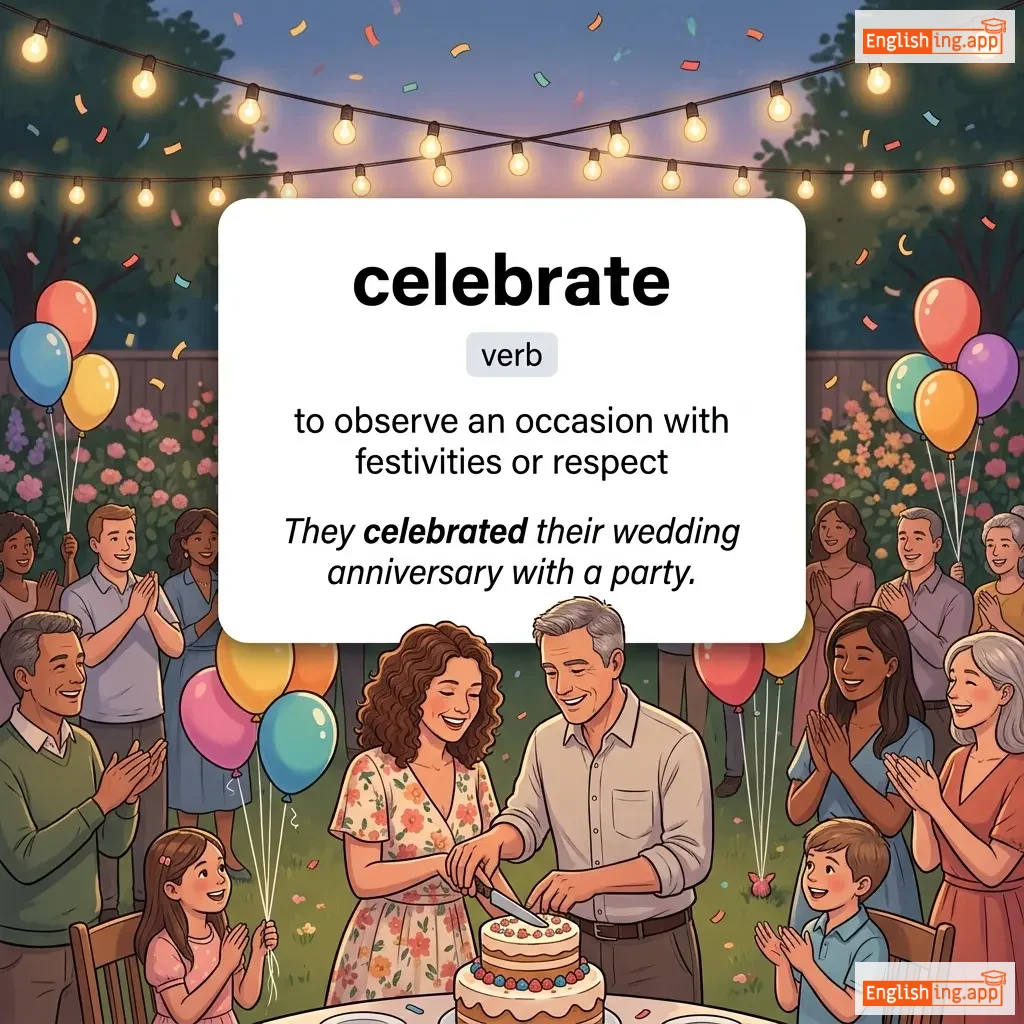
celebrate definition card — visual illustration of the meaning
verb
/ˈsɛlɪˌbreɪt/
मनाना (manana)

to observe an occasion with festivities or respect

"They celebrated their wedding anniversary with a party."

"उन्होंने अपनी शादी की सालगिरह पार्टी के साथ मनाई।" (Unhone apni shaadi ki saalgirah party ke saath manayi.)
adjective
/ˈsɛl.əˌbreɪ.tɪd/
प्रसिद्ध (prasiddh)

Widely known and praised; famous for an achievement.

"He is a celebrated author in the field of literature."

"वह साहित्य के क्षेत्र में एक प्रसिद्ध लेखक हैं।" (Vah sahitya ke kshetra mein ek prasiddh lekhak hain.)
celebrating definition card — visual illustration of the meaning
verb
ˈsɛləbreɪtɪŋ
उद्‍जापन करना (udjapan karna)

The act of acknowledging a significant or happy day or event with a social gathering or enjoyable activity.

"Celebrating awareness days helps spread important messages."

"सचेतना दिवस मनाना महत्वपूर्ण संदेश फैलाने में मदद करता है।" (Sochetna divas manana mahatvapurn sandesh phailane mein madad karta hai.)
noun
/ˌsɛlɪˈbreɪʃən/
उत्सव (utsav)

a festive event or activity to honor an occasion

"The city held a grand celebration on Independence Day."

"शहर ने स्वतंत्रता दिवस पर एक भव्य उत्सव आयोजित किया।" (Shahar ne svatantrata divas par ek bhavya utsav aayojit kiya.)
noun
/səˈlɛbrɪti/
प्रसिद्ध व्यक्ति (prasiddh vyakti)

a famous person, especially in entertainment or sports

"The celebrity was surrounded by fans at the airport."

"सेलिब्रिटी को एयरपोर्ट पर फैंस ने घेर लिया था।" (Celebrity ko airport par fans ne gher liya tha.)
noun
/səˈlɛrɪti/
त्वरिता (tvarita)

swiftness of movement; speed

"The soldier moved with great celerity to deliver the message."

"सैनिक संदेश पहुँचाने के लिए बड़ी त्वरिता से आगे बढ़ा।" (Sainik sandesh pahuchane ke liye badi tvarita se aage badha.)
noun
/ˈsel.ər.i/
शलरी (shalari)

a green vegetable with long crisp stems that can be eaten raw or cooked

"I added chopped celery to the soup for extra flavor."

"मैंने सूप में अतिरिक्त स्वाद के लिए कटी हुई शलरी डाली।" (maine soup mein atirikt swad ke liye kati hui shalari daali.)
celestial definition card — visual illustration of the meaning
adjective
/səˈlɛstiəl/
आकाशीय (aakashiya)

relating to the sky, stars, or heavens

"The telescope revealed many celestial bodies in the night sky."

"दूरबीन ने रात के आकाश में कई आकाशीय पिंडों का पता लगाया।" (Doorbeen ne raat ke aakaash mein kai aakaashiya pindon ka pata lagaya.)
adjective, noun
/ˈsɛlɪbət/
ब्रह्मचर्य (selibet)

abstaining from marriage and sexual relations; a person who does so

"He chose to remain celibate for religious reasons."

"उसने धार्मिक कारणों से ब्रह्मचर्य बनाए रखने का निर्णय लिया।" (Usne dharmik karano se brahmacarya banaye rakhne ka nirnay liya.)
noun
/sɛl/
कोश / सेल (kosh / sel)

a small basic unit of life; or a small enclosed space like a prison room

"The prisoner was locked in a small cell."

"क़ैदी को एक छोटे सेल में बंद किया गया था।" (Qaidi ko ek chhote sel mein band kiya gaya tha.)
noun
/ˈsɛlˌfoʊn/
मोबाइल फोन (mobile phone)

a portable telephone that uses a cellular network for wireless communication

"She forgot her cellphone at home and couldn’t call anyone."

"वह घर पर अपना मोबाइल फोन भूल गई और किसी को कॉल नहीं कर सकी।" (vah ghar par apna mobile phone bhool gai aur kisi ko call nahin kar saki)
adjective
/ˈsel.jə.lər/
कोशीय (selular)

relating to cells; consisting of cells; relating to mobile phone technology

"Cellular technology has revolutionized communication."

"सेल्युलर प्रौद्योगिकी ने संचार में क्रांति ला दी है।" (selular praudyogiki ne sanchar mein kranti la di hai.)
noun/verb
/sɪˈmɛnt/
सीमेंट / मजबूत करना (sement / majboot karna)

a powdery substance that binds materials together; to make something strong or permanent

"The treaty helped cement the relationship between the two countries."

"संविधान ने दोनों देशों के बीच संबंध को मजबूत बनाने में मदद की।" (Sammidhan ne dono deshon ke beech sambandh ko majboot banane mein madad ki.)
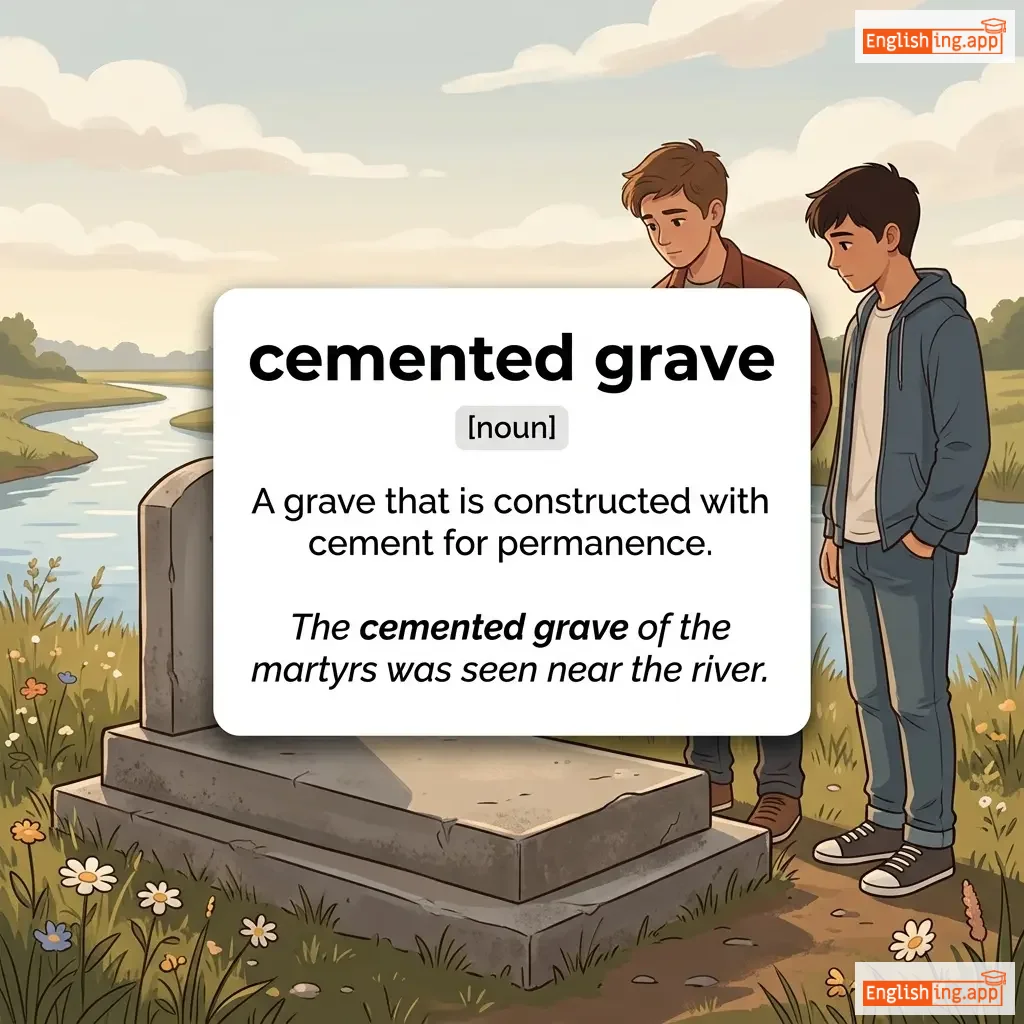
cemented grave definition card — visual illustration of the meaning
noun
sɪˈmɛntɪd ɡreɪv
सीमेंटेड कब्र (semented kabar)

A grave that is constructed with cement for permanence.

"The cemented grave of the martyrs was seen near the river."

"शहीदों की सीमेंटेड कब्र नदी के पास देखी गई थी।" (Shaheedo ki cimented kabar nadi ke paas dekhi gayi thi.)
noun
/ˈsɛmɪˌtɛri/
श्मशान (shamshan)

a place where dead people are buried

"The old cemetery is located at the edge of the village."

"पुराना श्मशान गांव के किनारे स्थित है।" (Purana shamshan gaon ke kinaare sthit hai.)
verb/noun
/ˈsɛnsər/
सेंसर (sensor)

to suppress or remove parts of books, films, or information considered offensive or harmful; a person who does this

"The government tried to censor the controversial film."

"सरकार ने विवादास्पद फिल्म को सेंसर करने की कोशिश की।" (Sarkar ne vivadaspad film ko sensor karne ki koshish ki.)
adjective
/sɛnˈsɔːriəs/
अत्यधिक आलोचनात्मक (atyadhik alochanatmak)

severely critical of others

"She was always censorious about her colleagues' mistakes."

"वह हमेशा अपने सहकर्मियों की गलतियों पर अत्यधिक आलोचनात्मक थी।" (vah hamesha apne sahkarmiyon ki galtiyon par atyadhik alochanatmak thi.)
censure definition card — visual illustration of the meaning
verb/noun
/ˈsɛnʃər/
निंदा करना (ninda karna)

to express severe disapproval, often formally; strong criticism or disapproval

"The senator was censured for his unethical behavior."

"सीनेटर को उनके अनैतिक व्यवहार के लिए निंदा किया गया।" (Senator ko unke anaitik vyavhaar ke liye ninda kiya gaya.)
noun
/ˈsɛnsəs/
जनगणना (janganna)

An official count or survey of a population, typically recording various details of individuals.

"The government conducted a census to update demographic data."

"सरकार ने जनगणना का आयोजन किया ताकि जनसांख्यिकी डेटा को अपडेट किया जा सके।" (Sarkar ne janganna ka aayojan kiya taki jansankhyiki data ko update kiya ja sake.)
noun
/ˈsɛntɔːr/
अर्धमानव अर्धघोड़ा पौराणिक प्राणी (ardhmanav ardhghoda pouranik prani)

A mythological creature with the upper body of a human and the lower body of a horse.

"The centaur is a well-known figure in Greek mythology."

"सेंटौर ग्रीक पौराणिक कथाओं में एक प्रसिद्ध पात्र है।" (Sentor Greek pouranik kathao mein ek prasiddh patra hai.)
noun, adjective
/ˈsɛntənəri/ or /sɛnˈtɛnəri/
सौवीं वर्षगांठ (sauvin varshganth)

The hundredth anniversary of a significant event; relating to a period of 100 years.

"The school celebrated its centenary with a grand event."

"स्कूल ने अपनी सौवीं वर्षगांठ एक भव्य कार्यक्रम के साथ मनाई।" (School ne apni sauvin varshganth ek bhavya karyakram ke saath manai.)
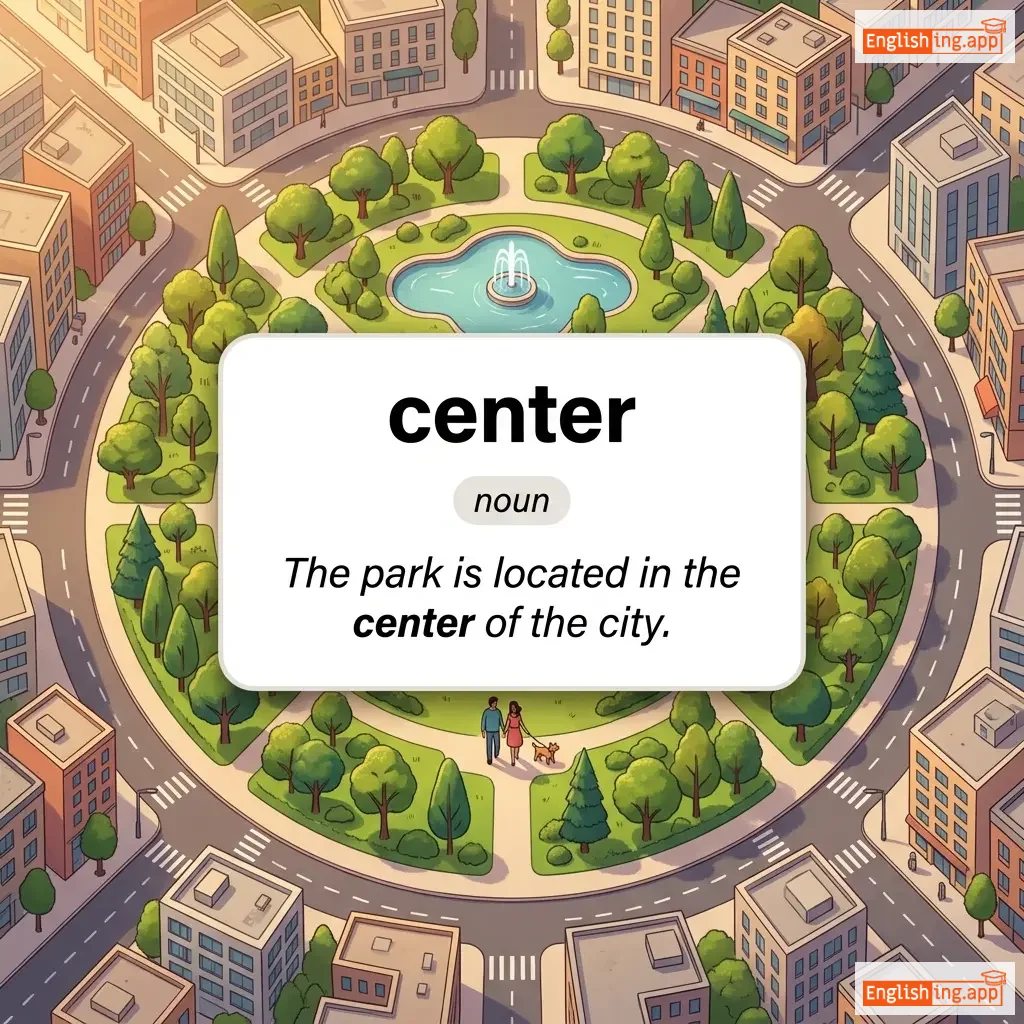
center definition card — visual illustration of the meaning
noun
/ˈsɛntər/
केंद्र (kendra)

The middle point or part of something; a place where a particular activity is concentrated.

"The park is located in the center of the city."

"पार्क शहर के केंद्र में स्थित है।" (Park shahar ke kendra mein sthit hai.)
centers definition card — visual illustration of the meaning
noun
ˈsen.tərz
केंद्र (kendra)

The middle point of a circle or sphere, equidistant from every point on the circumference or surface; a place or group of buildings where a specified activity is concentrated.

"Centers drive regional development."

"केंद्र क्षेत्रीय विकास को बढ़ावा देते हैं।" (Kendra kshetriya vikas ko badhawa dete hain.)
adjective
/ˈsɛntɪɡreɪd/
सेंटिग्रेड (सेल्सियस) (centigrade (celsius))

Relating to the Celsius temperature scale, where water freezes at 0° and boils at 100°.

"The weather forecast predicted 30 degrees centigrade."

"मौसम पूर्वानुमान में ३० डिग्री सेंटिग्रेड की भविष्यवाणी की गई थी।" (Mausam purvaanumaan mein 30 degree centigrade ki bhavishyavaani ki gayi thi.)
noun
/ˈsɛntɪˌliːtər/
सेंटीलीटर (sentiliter)

A metric unit of capacity equal to one hundredth of a liter.

"The recipe calls for 20 centiliters of milk."

"रेसिपी में दूध के 20 सेंटीलीटर चाहिए।" (reseepi mein doodh ke 20 senti leetar chahiye)
noun
/ˈsɛntɪˌmiːtər/
सेंटीमीटर (sentimeter)

A metric unit of length equal to one hundredth of a meter.

"The table is 120 centimeters long."

"टेबल 120 सेंटीमीटर लंबा है।" (Tebal 120 sentimeter lamba hai.)
noun
/ˈsen.tɪ.piːd/
केंचुआ (kenchua)

a long thin creature with many legs that lives in dark places

"I found a centipede crawling under the rock."

"मैंने एक सेंटीपीडे को चट्टान के नीचे रेंगते हुए पाया।" (Maine ek centipede ko chattan ke neeche rengte hue paya.)
adjective
/ˈsɛntrəl/
केंद्रीय (kendriya)

Situated in the middle; of the greatest importance.

"Water is central to human survival."

"पानी मानव जीवन के लिए केंद्रीय है।" (Pani manav jeevan ke liye kendriya hai.)
centralization definition card — visual illustration of the meaning
noun
ˌsɛn.trə.laɪˈzeɪ.ʃən
केंद्रीकरण (kendrikaran)

The concentration of control and decision-making power in a central authority.

"Excessive centralization can slow down decision-making."

"अत्यधिक केंद्रीकरण निर्णय-निर्माण को धीमा कर सकता है।" (atyadhik kendrikaran nirnay-nirman ko dheema kar sakta hai.)
centrifugal definition card — visual illustration of the meaning
adjective
/sɛnˈtrɪfjʊɡəl/
केंद्रविमुख (kendravimukh)

Moving or tending to move away from a center.

"The centrifugal force pushes the clothes to the sides of the washing machine."

"सेंट्रीफ्यूगल बल कपड़ों को वॉशिंग मशीन के किनारों की ओर धकेलता है।" (Centrifugal bal kapdon ko washing machine ke kinaron ki or dhakelta hai.)
noun
/ˈsɛntrɪˌfjuːdʒ/
सेंट्रीफ्यूज (centrifuge)

A machine that spins substances at high speed to separate different components.

"The lab technician used a centrifuge to separate the blood cells from the plasma."

"लैब तकनीशियन ने रक्त कोशिकाओं को प्लाज्मा से अलग करने के लिए सेंट्रीफ्यूज का इस्तेमाल किया।" (Lab technician ne rakt koshikaon ko plasma se alag karne ke liye centrifuge ka istemal kiya.)
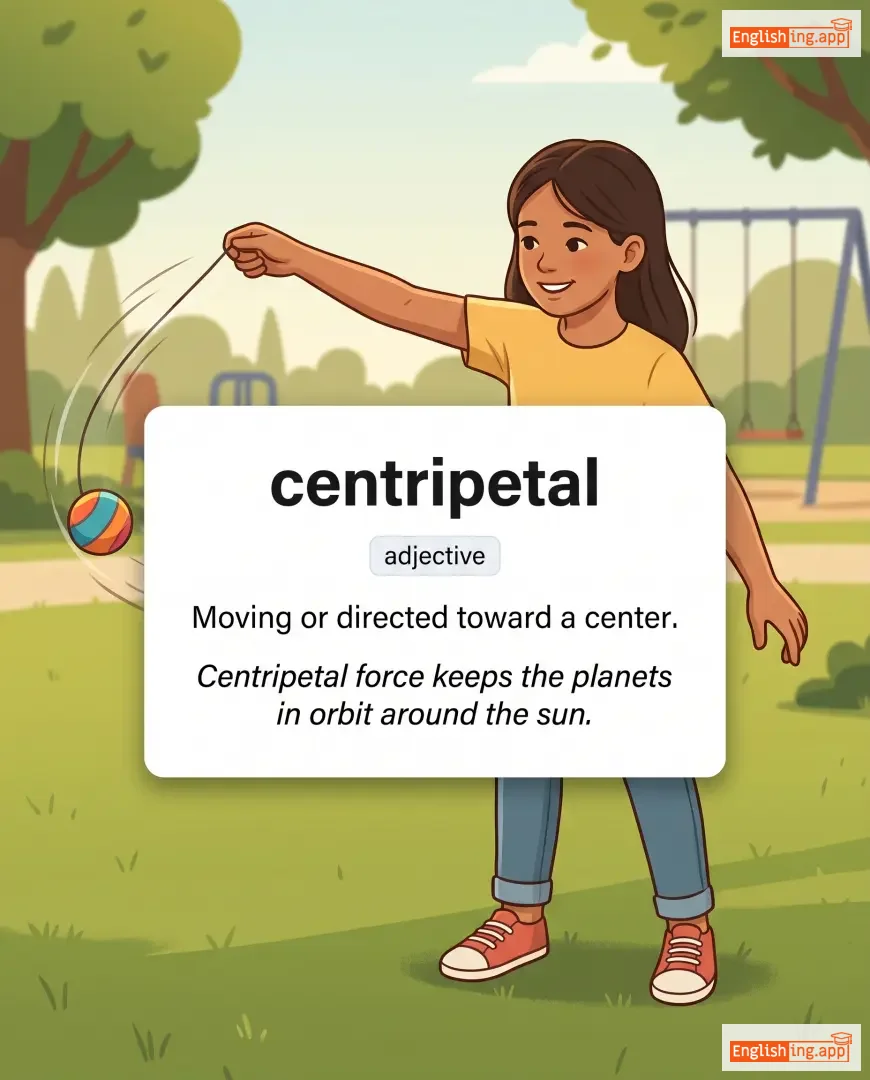
centripetal definition card — visual illustration of the meaning
adjective
/sɛnˈtrɪpɪtəl/
केंद्राभिमुख (kendrabhimukh)

Moving or directed toward a center.

"Centripetal force keeps the planets in orbit around the sun."

"केंद्राभिमुख बल ग्रहों को सूर्य के चारों ओर कक्षा में रखता है।" (Kendrabhimukh bal grahon ko sury ke chaaro or kaksha mein rakhta hai.)
noun
/sɛnˈtjʊəriən/
सेंचुरियन (centurion)

A commander of a unit of one hundred soldiers in the ancient Roman army.

"The centurion led his men into battle with courage."

"सेंचुरियन ने अपने सैनिकों को साहस के साथ युद्ध में नेतृत्व किया।" (Centurion ne apne sainikon ko sahas ke saath yudh mein netritva kiya.)
noun
/ˈsɛnʧəri/
सदी (sadi)

A period of one hundred years.

"The 20th century saw significant technological progress."

"20वीं सदी में महत्वपूर्ण तकनीकी प्रगति हुई थी।" (20vi sadi mein mahatvapurn takneeki pragati hui thi.)
noun
/ˌsiːiːˈoʊ/
मुख्य कार्यकारी अधिकारी (mukhya karyakari adhikari)

The highest-ranking person in a company, responsible for overall management.

"The CEO announced a new strategy for the company."

"सीईओ ने कंपनी के लिए एक नई रणनीति की घोषणा की।" (CEO ne company ke liye ek nai rananiti ki ghoshna ki.)