語彙集

英単語辞書 | 単語の意味、定義、例文

noun
/ˌsætɪsˈfækʃən/
満足 (manzoku)

the feeling of being pleased or content with something

"Her satisfaction with the results was evident."

"彼女の結果への満足感は明らかでした。" (Kanojo no kekka e no manzokukan wa akirakadeshita.)
adjective
/ˈsæt.ɪs.fæk.tər.i/
満足のいく (manzoku no iku)

acceptable; meeting requirements; adequate

"The test results were satisfactory."

"テストの結果は満足のいくものでした。" (tesuto no kekka wa manzoku no iku mono deshita.)
adjective
/ˈsætɪsfaɪd/
満足 (manzoku)

Pleased or content with what has been achieved or received.

"He felt satisfied after finishing his project."
"彼はプロジェクトを終えた後、満足していると感じた。" (Kare wa purojekuto o oeta ato, manzoku shiteiru to kanjita.)
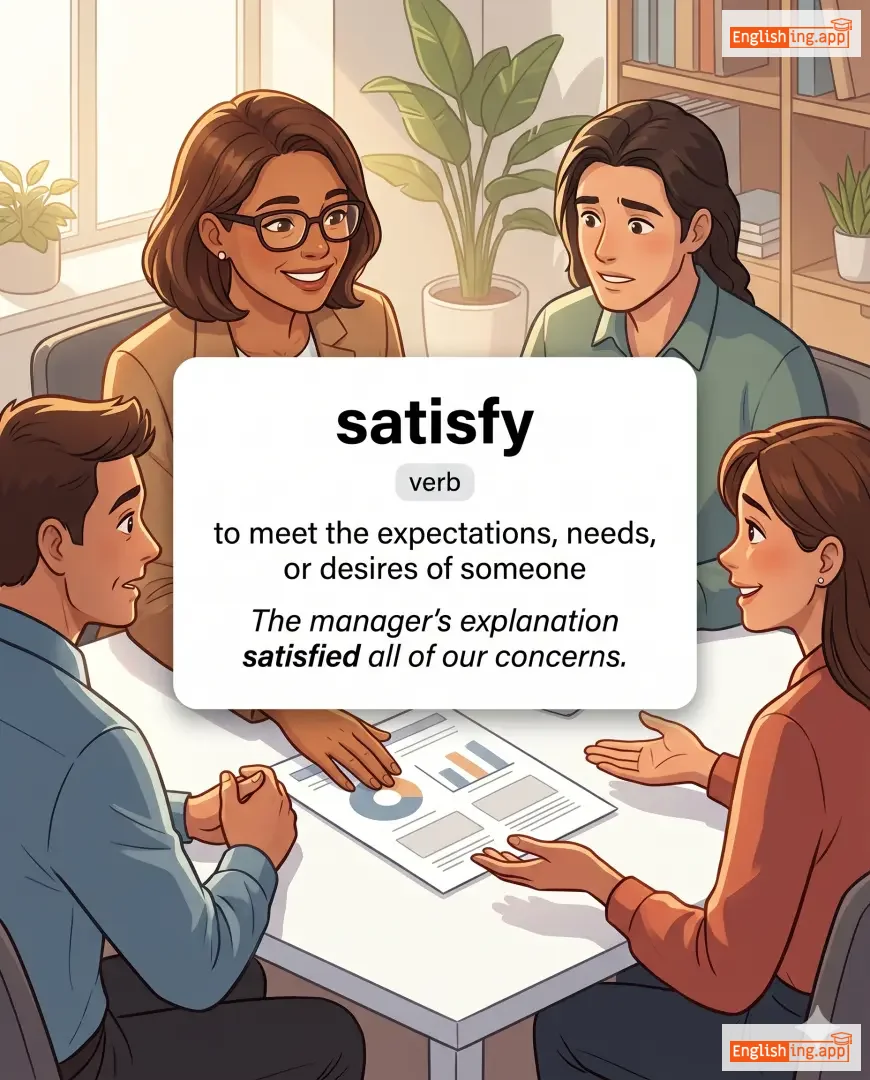
satisfy definition card — visual illustration of the meaning
verb
/ˈsætɪsfaɪ/
満たす (mitasu)

to meet the expectations, needs, or desires of someone

"The manager's explanation satisfied all of our concerns."

"マネージャーの説明は私たちのすべての懸念を満たしました。" (Manejā no setsumei wa watashitachi no subete no shinpai o mitashimashita.)
noun
/ˈsætræp/
総督 (sōtoku)

a governor of a province in ancient Persia; also used figuratively for a subordinate ruler

"The king appointed a satrap to oversee the distant province."
"王は遠くの州を監督するために総督を任命しました。" (Ō wa tōku no shū o kantoku suru tame ni sōtoku o ninmei shimashita.)
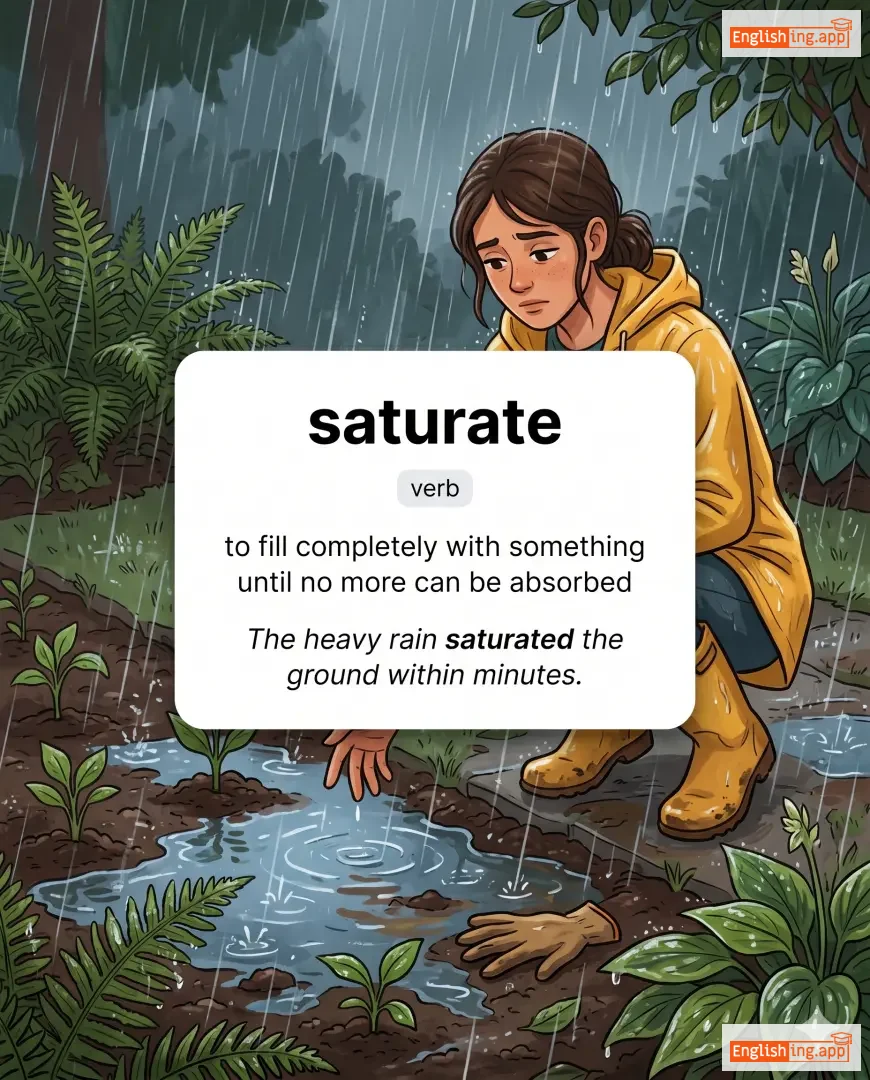
saturate definition card — visual illustration of the meaning
verb
/ˈsætʃəˌreɪt/

to fill completely with something until no more can be absorbed

"The heavy rain saturated the ground within minutes."

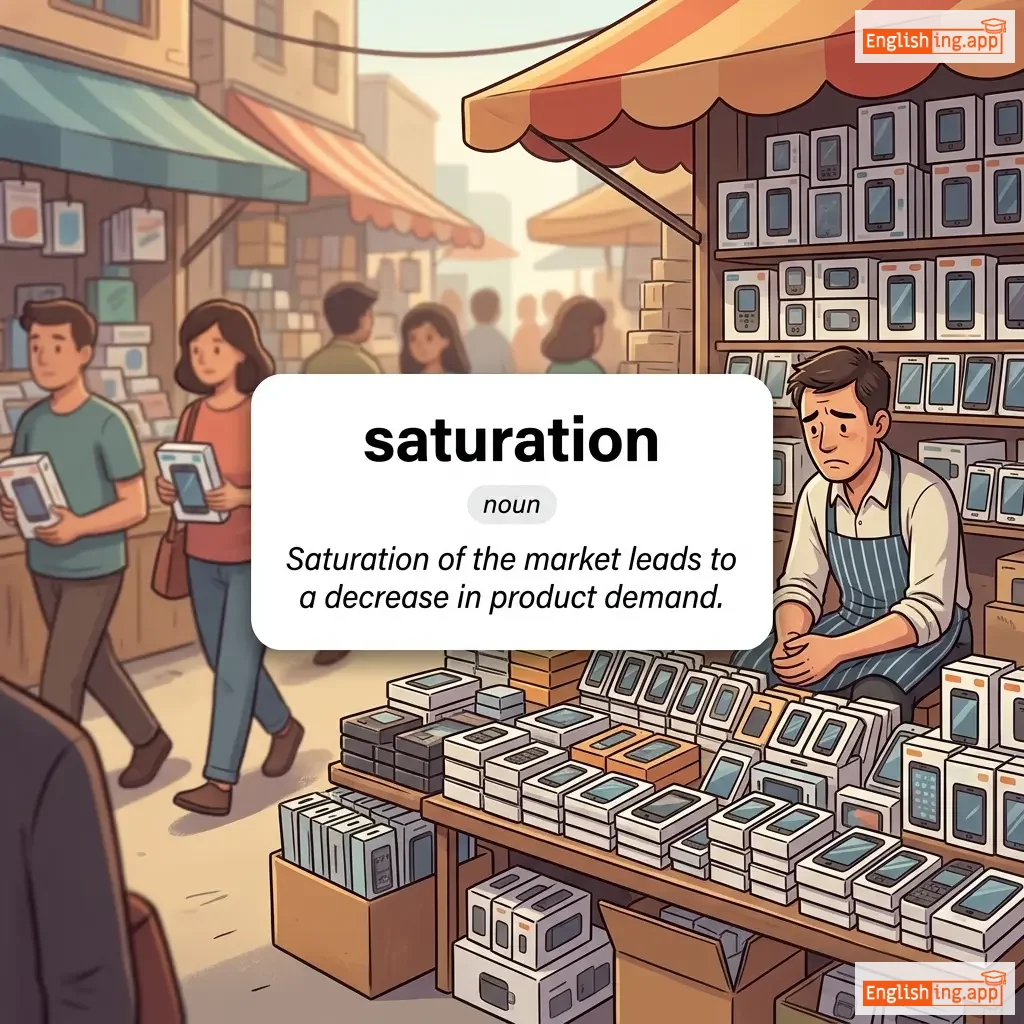
saturation definition card — visual illustration of the meaning
noun
/ˌsætʃəˈreɪʃən/
飽和 (hōwa)

The state or process that occurs when no more of something can be absorbed, combined with, or added.

"Saturation of the market leads to a decrease in product demand."

"市場の飽和は製品の需要の減少を引き起こします。" (Shijō no hōwa wa seihin no juyō no genshō o hikiokoshimasu.)
noun
/ˈsætərdeɪ/
土曜日 (doyoubi)

The day of the week between Friday and Sunday; traditionally the sixth day of the week

"We are going to the beach on Saturday."
"私たちは土曜日にビーチに行きます。" (Watashitachi wa doyoubi ni biichi ni ikimasu.)
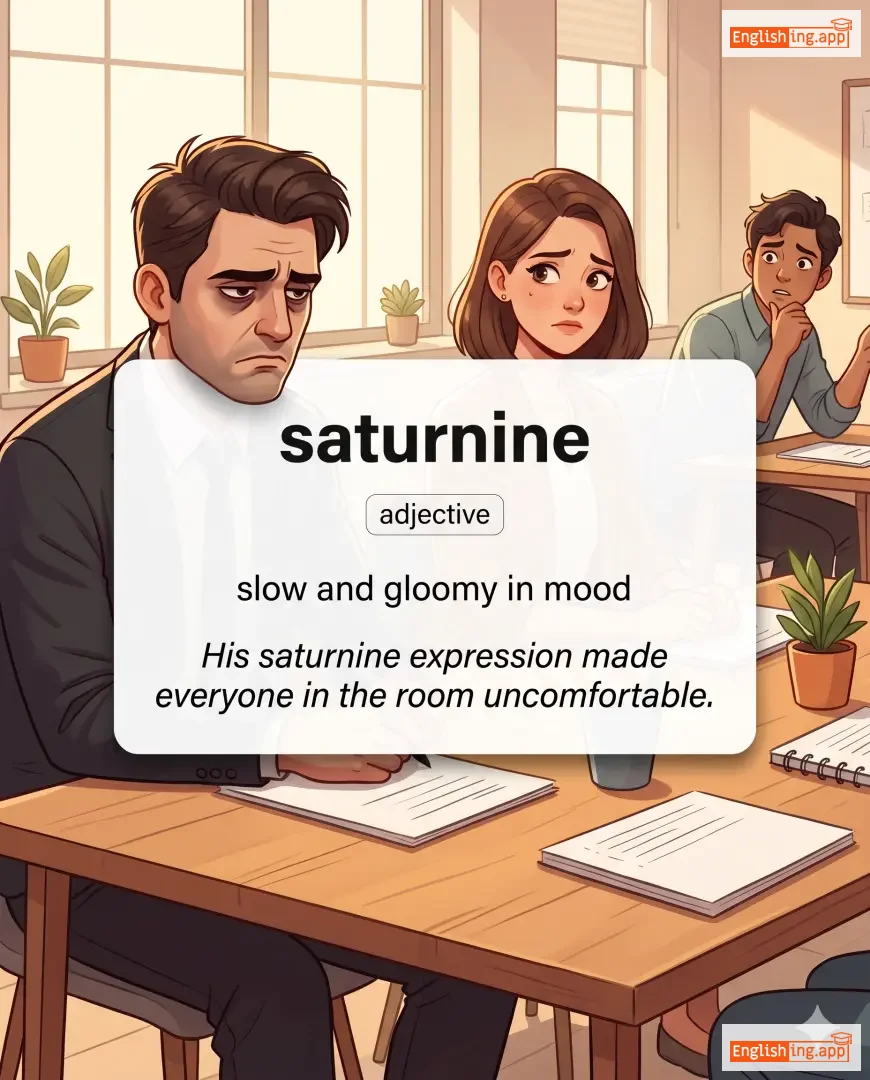
saturnine definition card — visual illustration of the meaning
adjective
/ˈsætərˌnaɪn/
陰気な (inki na)

slow and gloomy in mood

"His saturnine expression made everyone in the room uncomfortable."
"彼の陰気な表情は部屋の中の誰もが不快に感じさせた。" (Kare no in'kina hyōjō wa heya no naka no dare mo ga fukai ni kanjisaseta.)
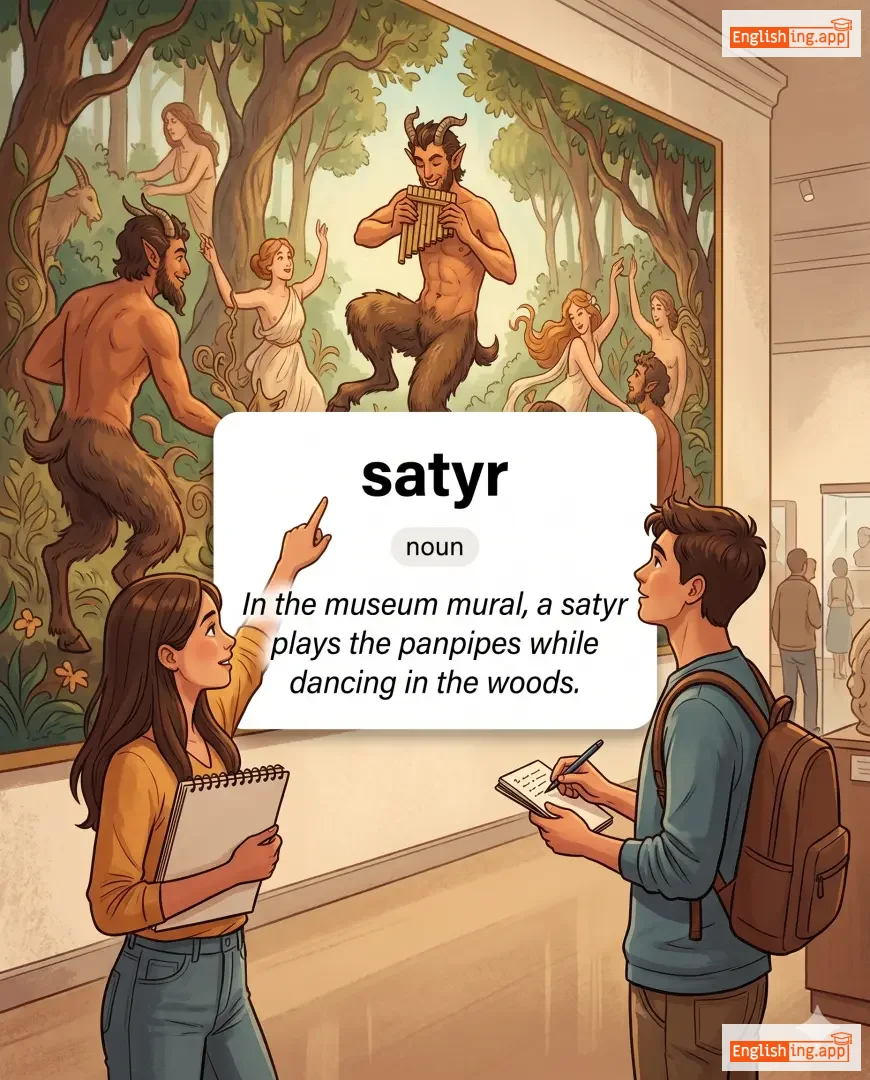
satyr definition card — visual illustration of the meaning
noun
/ˈsætər/
幸せ (shiawase)

a creature from Greek mythology depicted as a lustful being, often half-man and half-goat; by extension, a lecherous man

"In the museum mural, a satyr plays the panpipes while dancing in the woods."
"彼女は賞を受け取ったとき、自分の幸せを隠すことができませんでした。" (Kanojo wa shou wo uketotta toki, jibun no shiawase wo kakusu koto ga dekimasen deshita.)
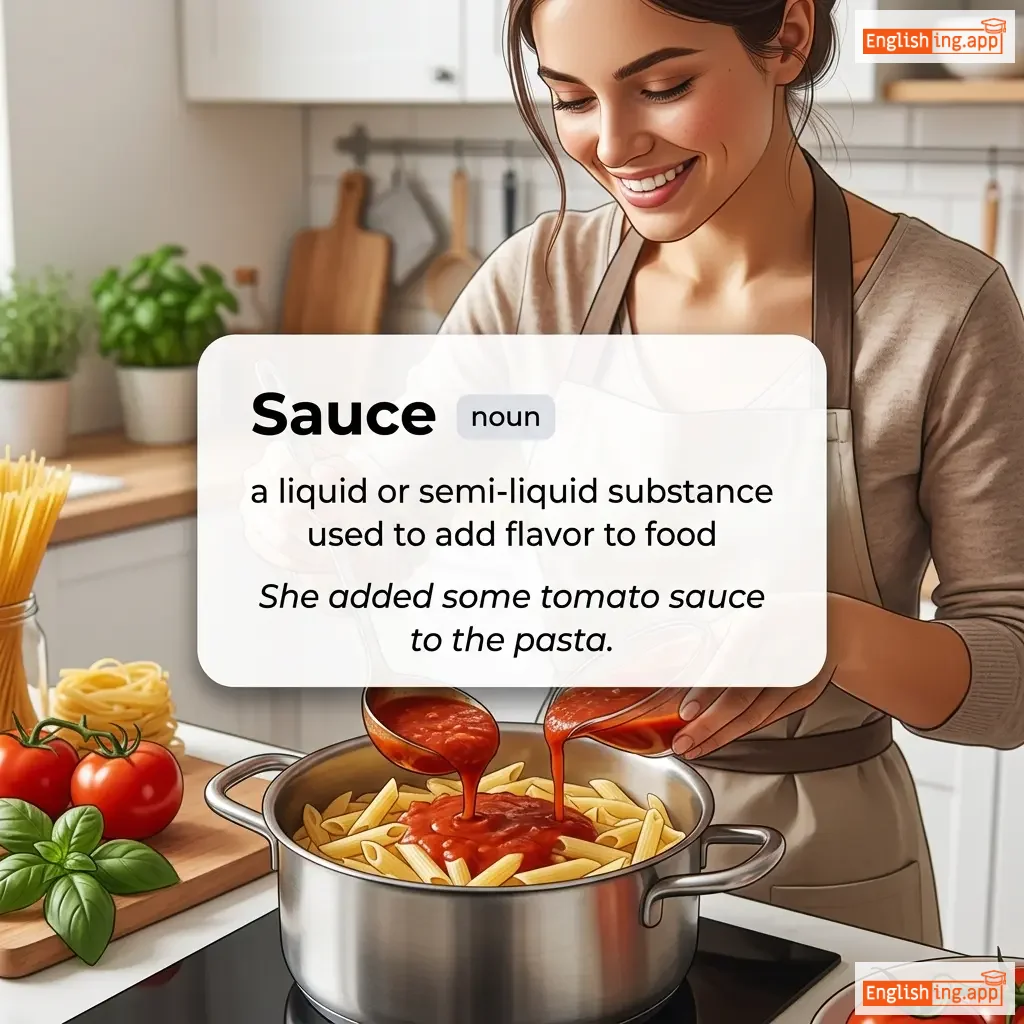
Sauce definition card — visual illustration of the meaning
noun
/sɔːs/
ソース (soosu)

a liquid or semi-liquid substance used to add flavor to food

"She added some tomato sauce to the pasta."

"彼女はパスタにトマトソースを加えた。" (Kanojo wa pasuta ni tomato soosu o kuwaeta.)
adjective
/ˈsɔːsi/
生意気な (namaiki na)

Boldly rude, cheeky, or playfully disrespectful.

"The child gave a saucy reply to his teacher."

"その子は先生に生意気な返事をした。" (Sono ko wa sensei ni namaiki na henji o shita.)
verb
/ˈsɔːntər/

to walk in a slow, relaxed manner without hurry or effort

"We sauntered along the riverside, stopping now and then to watch the boats."

adjective
/ˈsævɪdʒ/
野蛮; 残酷 (yaban; zankoku)

fierce, violent, or uncontrolled; cruel or brutal

"The storm brought savage winds that tore branches from the trees."

"嵐は、木の枝を引き裂くような荒々しい風をもたらしました。" (Arashi wa, ki no eda o hikisaku yō na araarashī kaze o motarashimashita.)
noun
/səˈvænə/
サバンナ(散在する木々がある草原) (saban'na (sanzai suru kigi ga aru sōgen))

a grassy plain with scattered trees, typical of tropical and subtropical regions

"Giraffes browsed on acacia trees across the wide savanna."

"キリンは広いサバンナでアカシアの木の葉を食べていました。" (Kirin wa hiroi sabanna de akashia no ki no ha o tabete imashita.)
noun
/səˈvɑːnt/

a learned person, especially a distinguished scientist or scholar; sometimes used in the phrase ‘savant syndrome’ for someone with exceptional abilities alongside developmental differences

"The conference keynote was delivered by a linguistic savant who studies endangered languages."
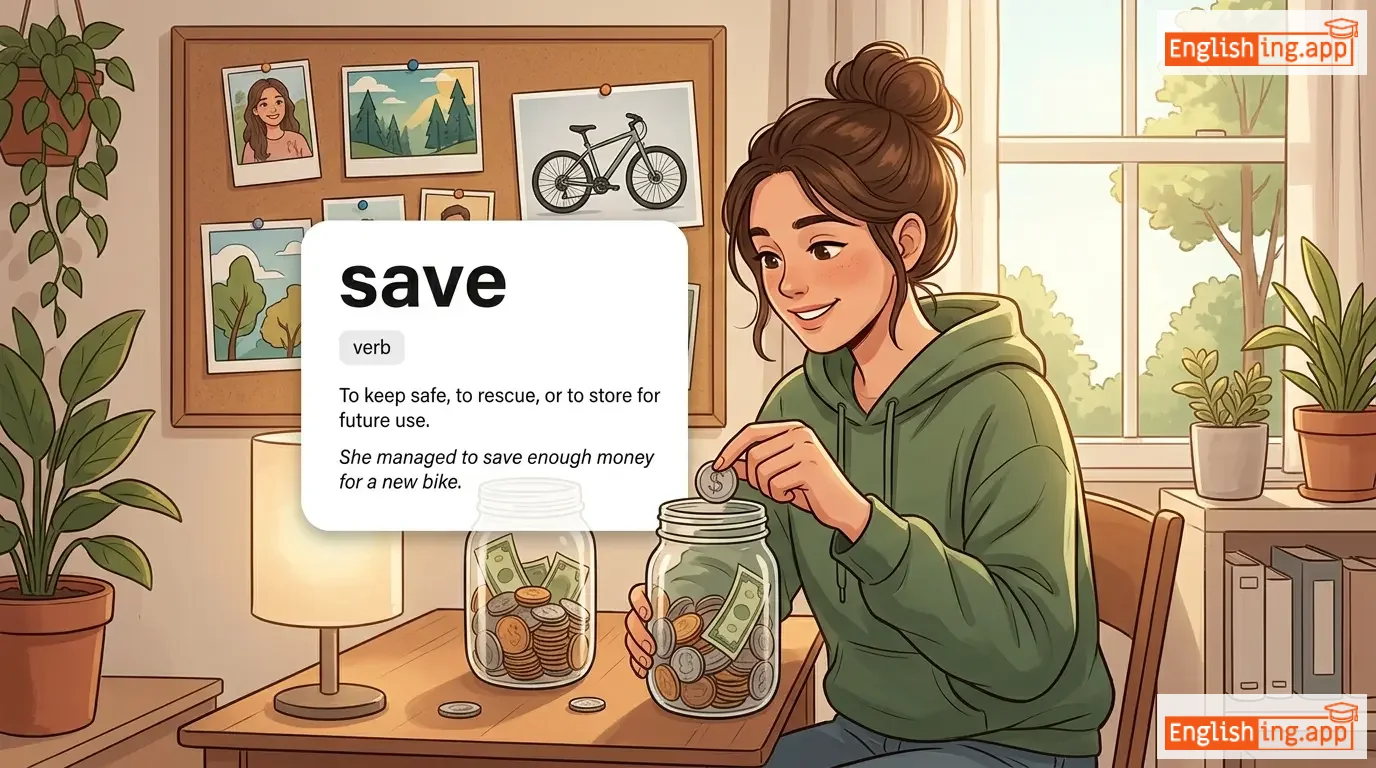
save definition card — visual illustration of the meaning
verb
/seɪv/
救う / 保存する (sukuu / hozon suru)

To keep safe, to rescue, or to store for future use.

"She managed to save enough money for a new bike."
"彼女は新しい自転車のために十分なお金を貯めることができた。" (Kanojo wa atarashī jitensha no tame ni jūbun na okane o tameru koto ga dekita.)
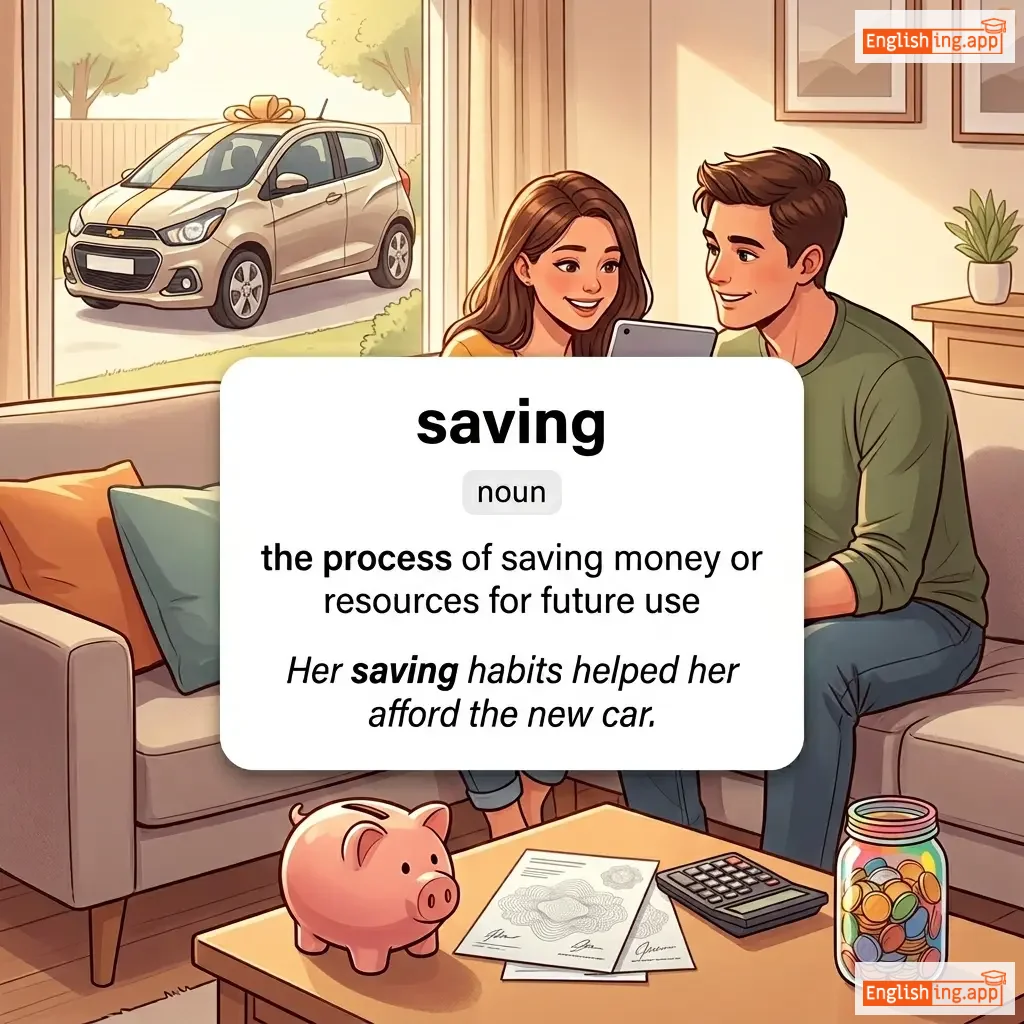
saving definition card — visual illustration of the meaning
noun
/ˈseɪvɪŋ/
貯金 (chokin)

the process of saving money or resources for future use

"Her saving habits helped her afford the new car."

"彼女の貯金習慣は新しい車を買うのに役立ちました。" (Kanojo no chokin shūkan wa atarashī kuruma o kau no ni yakudachimashita.)
savings definition card — visual illustration of the meaning
noun
ˈseɪ.vɪŋz
貯金 (chokin)

Money that is kept for future use or investment.

"Many people invest their savings in real estate."

"多くの人々は自分の貯金を不動産に投資します。" (Ōku no hitobito wa jibun no chokin o fudōsan ni tōshi shimasu.)
noun
/ˌsæv.wɑːr ˈfeər/
社交術 (shakou-jutsu)

The ability to act or speak appropriately in social situations; polished social skills.

"She handled the delicate situation with remarkable savoir-faire."
"彼女は見事な社交術で微妙な状況をうまく処理しました。" (Kanojo wa migoto na shakou-jutsu de bimyou na joukyou wo umaku shori shimashita.)
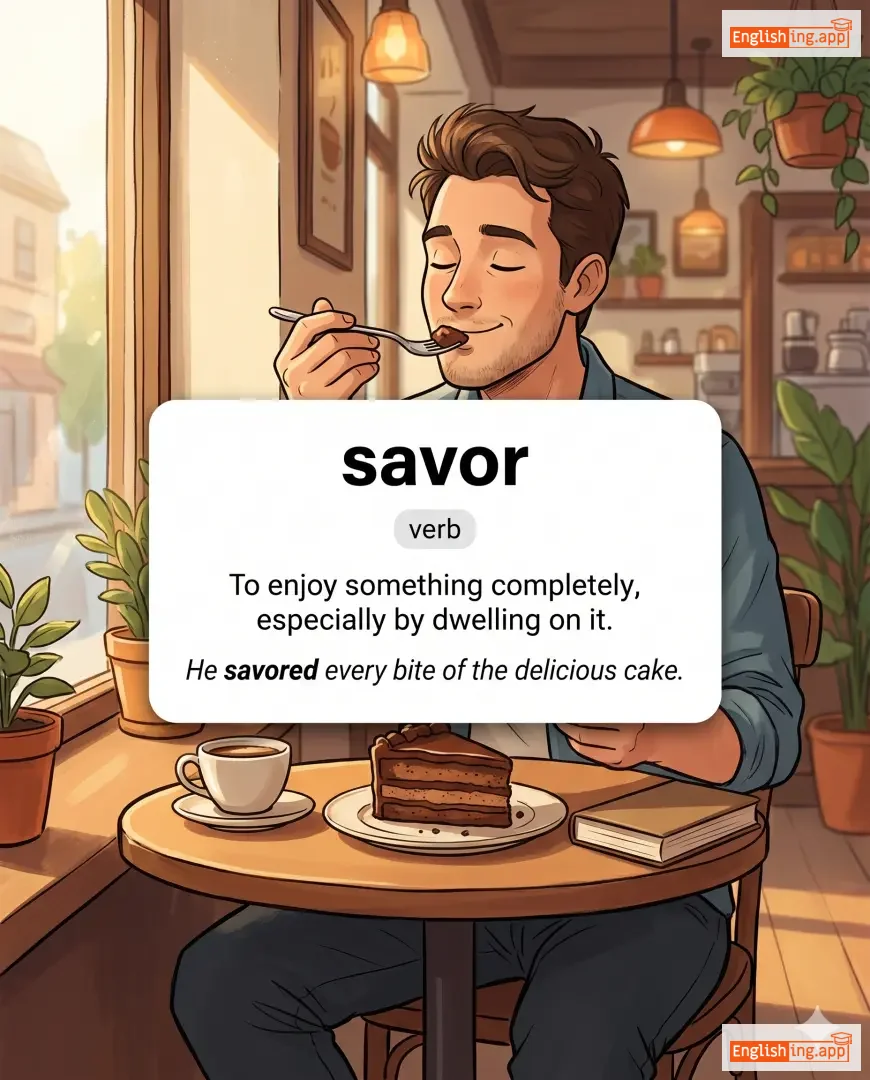
savor definition card — visual illustration of the meaning
verb
/ˈseɪ.vər/
味わう (ajiwau)

To enjoy something completely, especially by dwelling on it.

"He savored every bite of the delicious cake."

"彼はおいしいケーキの一口一口を味わった。" (Kare wa oishii kēki no hitokuchi hitokuchi o ajiwatta.)
adjective
/ˈseɪ.vər.i/
風味のある(塩辛いまたは辛い) (fūmi no aru (shiokarai mata wa karai))

Having a pleasant salty or spicy taste; morally acceptable.

"The restaurant serves a variety of savory dishes."

"そのレストランはさまざまな風味のある料理を提供しています。" (Sono resutoran wa samazama na fūmi no aru ryōri o teikyō shiteimasu.)
adjective
/ˈsæv.i/
賢い, 熟練した (kashikoi, jukuren shita)

Having practical knowledge and the ability to make good judgments.

"She is a tech-savvy entrepreneur."

"彼女はテクノロジーに詳しい起業家です。" (Kanojo wa tekunorojī ni kuwashī kigyōka desu.)
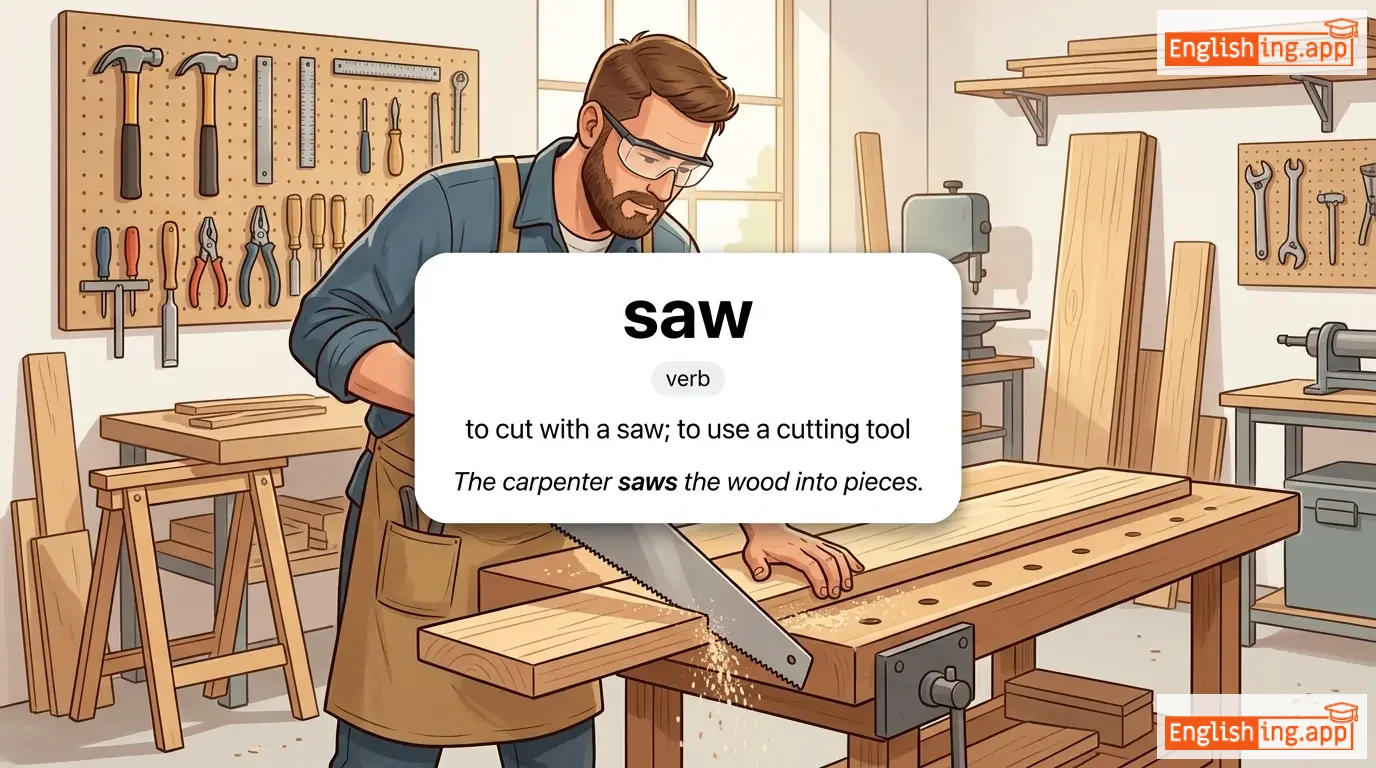
saw definition card — visual illustration of the meaning
noun
/sɔː/
のこぎり (nokogiri)

a tool with a sharp blade used for cutting wood or other materials

"He used a saw to cut the wooden plank."

"彼は木の板を切るためにのこぎりを使いました。" (Kare wa ki no ita o kiru tame ni nokogiri o tsukaimashita.)
noun
/ˈsɔː.dər/
お世辞; おべっか (oseji; obekka)

flattering or wheedling talk; soft soap

"His sawder couldn't convince anyone of his sincerity."

"彼のオベッカは誰にも彼の誠実さを納得させることができなかった。" (Kare no obekka wa dare ni mo kare no seijitsusa o nattoku saseru koto ga dekinakatta.)
noun
/ˈsɔː.dʌst/
木屑 (mokusesu)

The tiny particles of wood produced by sawing or sanding.

"The floor was covered with sawdust from the carpentry work."

"床は大工仕事からの木屑で覆われていました。" (Yuka wa daiku shigoto kara no mokusesu de ōwarete imashita.)
noun
/ˈsɔːjər/
材木職人 (zaimoku shokunin)

a person who saws wood, especially as an occupation

"The skilled sawyer cut the logs into planks."

"熟練した材木職人は丸太を板に切りました。" (Jukuren shita zaimoku shokunin wa maruta wo ita ni kirimashita)
noun
/ˈsæksəfoʊn/
サクソフォン (sakusofon)

a wind musical instrument with a curved metal body and a single reed mouthpiece

"The jazz musician played a beautiful solo on his saxophone."

"ジャズのミュージシャンは自分のサクソフォンで美しいソロを演奏しました。" (Jazu no myūjishan wa jibun no sakusofon de utsukushī soro o ensō shimashita.)
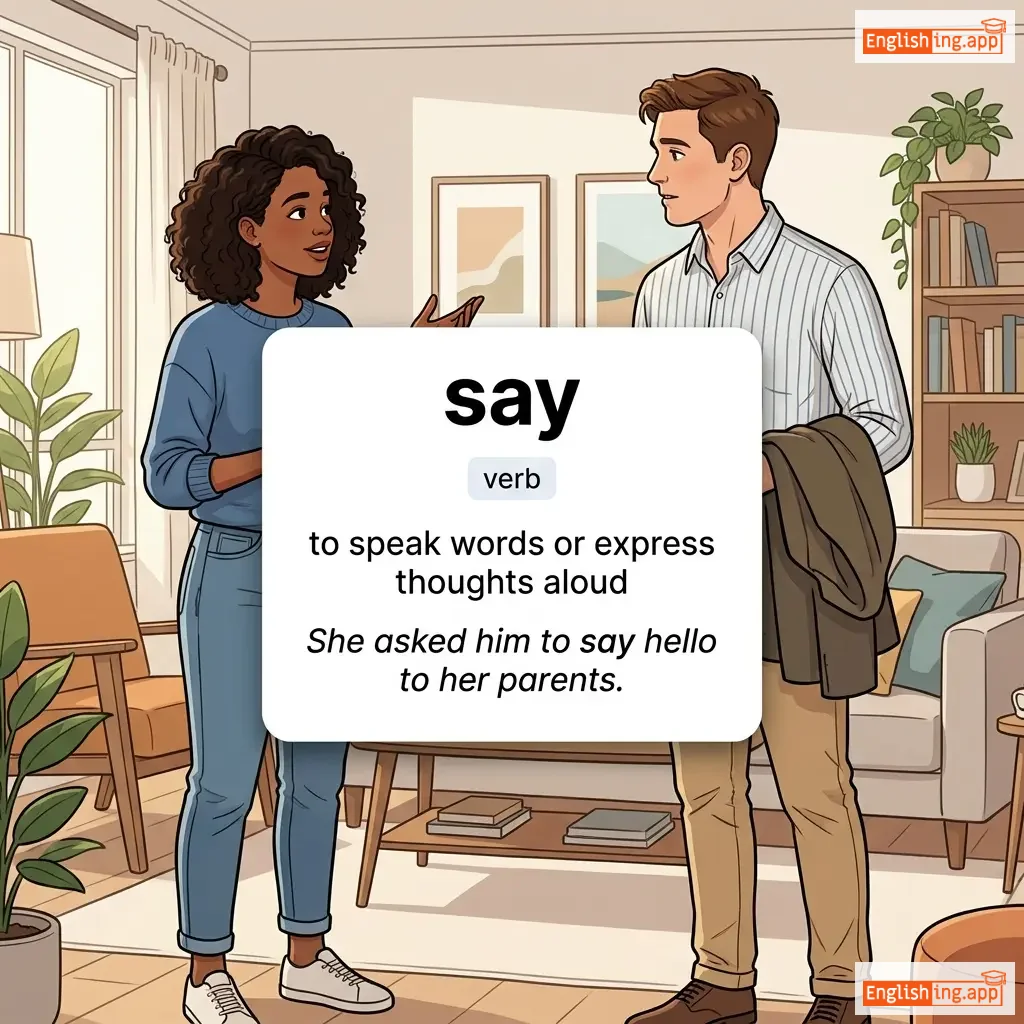
say definition card — visual illustration of the meaning
verb
/seɪ/
言う (iu)

to speak words or express thoughts aloud

"She asked him to say hello to her parents."

"彼女は彼に親にこんにちはと言うように頼んだ。" (Kanojo wa kare ni oya ni konnichiwa to iu yō ni tanonda.)
noun
/ˈseɪ.ɪŋ/
格言 (kakugen)

a well-known phrase that expresses something true about life; a proverb

"There's an old saying that practice makes perfect."

"「継続は力なり」という古い格言があります。" (Keizoku wa chikara nari to iu furui kakugen ga arimasu.)
noun
/ˈskæb.ərd/
(kaya)

A sheath for the blade of a sword or dagger, typically made of leather or metal.

"The knight drew his sword from the scabbard."

"騎士は鞘から剣を抜きました。" (Kishi wa kaya kara ken o nukimashita.)
noun
/ˈskeɪ.biːz/
疥癬 (kaisen)

a contagious skin disease caused by mites that causes intense itching

"The doctor diagnosed him with scabies after examining the rash."

"医師は発疹を調べた後、彼に疥癬と診断した。" (Ishi wa hasshin o shirabeta ato, kare ni kaisen to shindan shita.)
noun
/skæd/
スカッド魚 (sukaddo sakana)

A type of fish of the jack family; also informally means a large number or quantity.

"The fisherman caught a scad in the net."

"漁師は網でスカッドを捕まえました。" (Gyoshi wa ami de sukaddo o tsukamaemashita.)
noun (plural, informal)
/skædz/
たくさん (takusan)

A large number or quantity of something (informal).

"She has scads of friends in the city."

"彼女は街にたくさんの友達がいます。" (Kanojo wa machi ni takusan no tomodachi ga imasu.)
noun
/ˈskæf.əʊld/
足場 (ashiba)

A temporary platform used to support workers and materials during the construction or repair of a building.

"The workers stood on the scaffold to paint the building."

"作業員は建物を塗装するために足場に立っていました。" (Sagyō-in wa tatemono o tosō suru tame ni ashiba ni tatte imashita.)
scalability definition card — visual illustration of the meaning
noun
/ˌskeɪ.ləˈbɪl.ə.ti/
スケーラビリティ (sukearabiriti)

The ability to expand to larger scales while maintaining efficiency

"The startup focused on scalability to handle future growth."

"スタートアップは、将来の成長を処理するためにスケーラビリティに注力しました。" (Sutaatappu wa, shourai no seichou wo shori suru tame ni sukeerabiriti ni chūryoku shimashita.)
scale definition card — visual illustration of the meaning
noun/verb
/skeɪl/
スケール / サイズ調整 (sukēru / saizu chōsei)

A system of ordered marks used for measurement; also means to climb or to adjust in size.

"The company plans to scale its operations globally."

"その会社は世界規模で事業を拡大する予定です。" (Sono kaisha wa sekaikibo de jigyō o kakudai suru yotei desu.)
noun
/ˈskælpəl/
メス (mesu)

A small and extremely sharp bladed instrument used for surgery and dissection.

"The surgeon carefully used a scalpel to make the first incision."

"外科医は慎重にメスを使って最初の切開を行いました。" (Geka-i wa shinchō ni mesu o tsukatte saisho no sekkai o okonaimashita.)
adjective
/ˈskeɪ.li/
鱗状の (uroko-jou no)

covered with scales; having a rough surface like scales

"The fish has scaly skin."

"その魚はうろこ状の皮膚を持っています。" (Sono sakana wa urokogata no hifu o motteimasu.)
verb
/skæn/
幸福 (kōfuku)

To look at something carefully or quickly; to digitally copy or capture an image or document.

"She scanned the document before sending it by email."

"彼女は賞を受け取ったとき、喜びを隠せませんでした。" (Kanojo wa shō o uketotta toki, yorokobi o kakusemasen deshita.)
noun
/ˈskændəl/
スキャンダル (sukyandaru)

an event or action that causes public outrage or damage to one's reputation

"The politician's affair became a public scandal."

"その政治家の不倫は公然のスキャンダルとなった。" (Sono seijika no fukin wa kouzen no sukyandaru to natta.)
adjective
/skænt/
乏しい (mushii)

Barely sufficient or inadequate in amount, degree, or quantity.

"There was scant evidence to support the claim."

"その主張を支持する証拠はほとんどなかった。" (Sono shuchou o shiji suru shōko wa hotondo nakatta.)
adjective
/ˈskænti/
乏しい (toboshii)

Small in quantity; insufficient or meager.

"The refugees survived on scanty food supplies."

"難民は乏しい食料で生き延びました。" (Nanmin wa toboshii shokuryou de ikinobimashita.)
noun
/ˈskeɪpˌɡoʊt/
スケープゴート (sukēpugōto)

A person who is unfairly blamed for problems, mistakes, or faults of others.

"He became the scapegoat for the company’s financial troubles."

"彼は会社の財政問題のスケープゴートになった。" (Kare wa kaisha no zaisei mondai no sukēpugōto ni natta.)
noun
/skɑːr/
傷跡 (kizuato)

a mark left on the skin after a wound has healed; lasting emotional damage

"The accident left a permanent scar on his forehead."

"その事故は彼の額に永遠の傷跡を残しました。" (Sono jiko wa kare no hitai ni eien no kizuato o nokoshimashita.)
adjective
/skɛərs/
希少 (kishou)

insufficient in quantity; hard to find

"Water was scarce during the long drought."

"長い干ばつの間、水は希少だった。" (Nagai kanbatsu no aida, mizu wa kishou datta.)
adverb
/ˈskeəs.li/
ほとんど; ほとんどない; わずかに (hotondo; hotondo nai; wazuka ni)

hardly; barely; only just

"I could scarcely believe my eyes."
"私は自分の目をほとんど信じられなかった。" (Watashi wa jibun no me o hotondo shinjirarenakatta.)
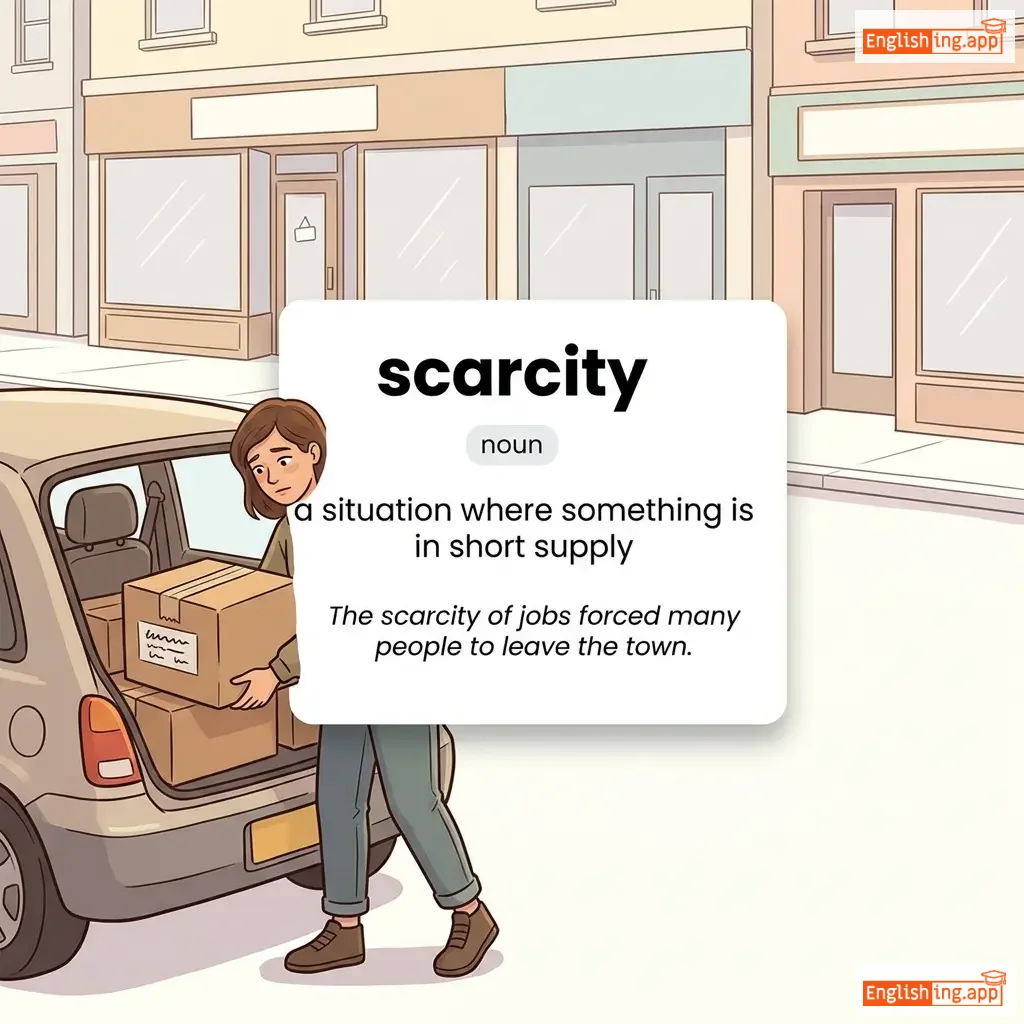
scarcity definition card — visual illustration of the meaning
noun
/ˈskɛərsəti/
不足 (busoku)

a situation where something is in short supply

"The scarcity of jobs forced many people to leave the town."

"仕事の不足が多くの人々に街を離れさせました。" (Shigoto no busoku ga ooku no hitobito ni machi o hanare sasemashita.)
verb
/skeər/
怖がらせる (kowagaraseru)

to frighten someone or make them feel afraid

"The loud noise scared the baby."
"大きな音が赤ちゃんを怖がらせた。" (Ōkina oto ga akachan o kowagaraseta.)
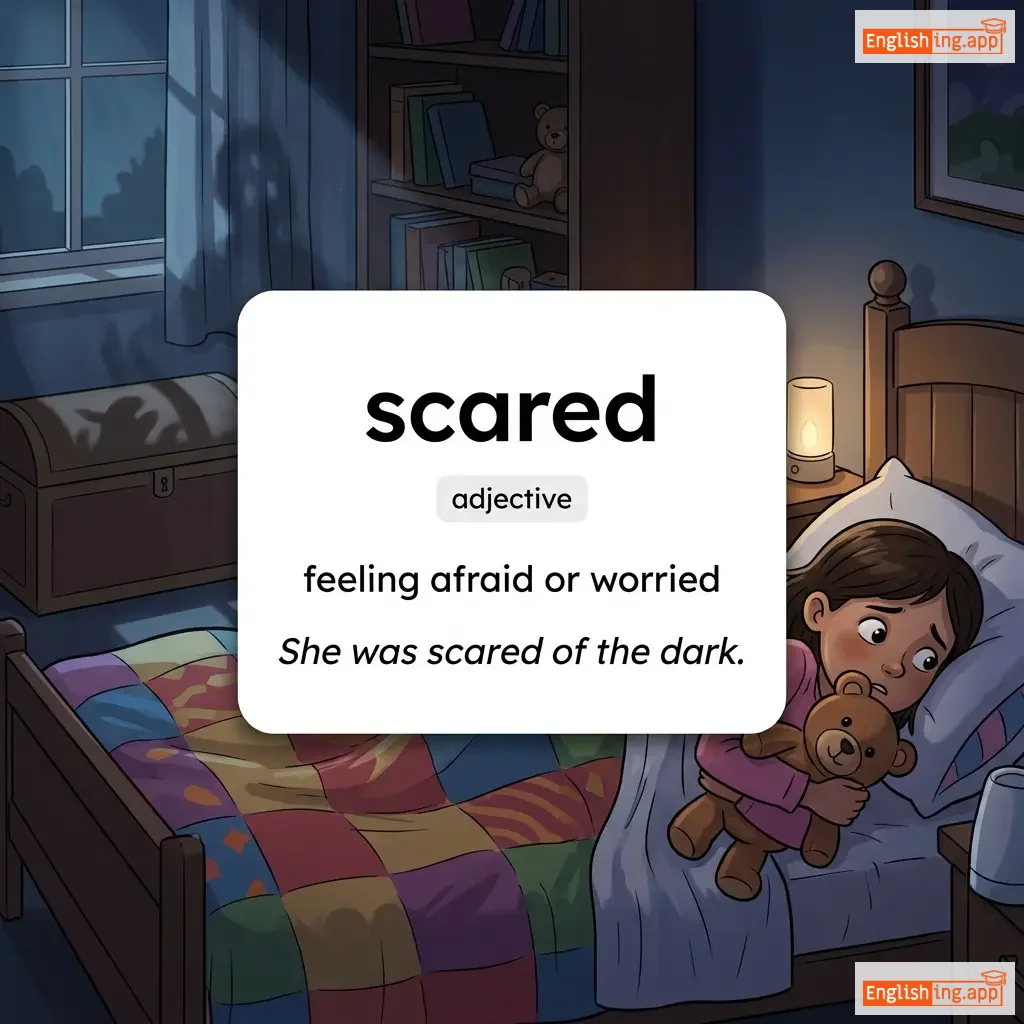
scared definition card — visual illustration of the meaning
adjective
/skɛrd/
怖がっている (kowagatteiru)

feeling afraid or worried

"She was scared of the dark."

"彼女は暗闇を怖がっていた。" (Kanojo wa kurayami o kowagatteita.)