語彙集

英単語辞書 | 単語の意味、定義、例文

verb
/rɪˈtaɪə/
引退する (intai suru)

to stop working after reaching a certain age or having completed a career

"She decided to retire after working for 40 years."

"彼女は40年間働いた後、引退することに決めました。" (Kanojo wa 40 nenkan hataraita ato, intai suru koto ni kimemashita.)
adjective
/rɪˈtaɪərd/
引退した (intai shita)

no longer working at one's job, typically because of having reached a certain age

"My grandfather is a retired teacher who now enjoys gardening."

"私の祖父は引退した教師で、今は園芸を楽しんでいます。" (Watashi no sofu wa intai shita kyōshi de, ima wa engei o tanoshindeimasu.)
noun
/rɪˈtaɪə.mənt/
退職 (taishoku)

the period of time when someone stops working after reaching a certain age

"She is looking forward to her retirement in two years."

"彼女は2年後の退職を楽しみにしています。" (Kanojo wa 2-nen go no taishoku o tanoshimi ni shiteimasu.)
adjective
/rɪˈtaɪərɪŋ/
内向的 (naikōteki)

Shy and reserved; avoiding social contact.

"She is a quiet, retiring woman who avoids attention."

"彼女は静かで内向的な女性で、注目を避ける。" (kanojo wa shizuka de naikōteki na josei de, chūmoku wo sakeru.)
verb
/rɪˈtɔːrt/
反論 (hanron)

To reply quickly or sharply, often in a witty or angry manner.

"He quickly retorted that he was not to blame."

"彼は素早く反論した、彼が悪くないと言った。" (Kare wa subayaku hanron shita, kare ga warukunai to itta.)
verb
/ˌriːˈtʌtʃ/
修正する (shūsei suru)

To improve or repair a picture, photograph, or image by making small changes.

"The photographer retouched the image to remove blemishes."

"写真家は画像を修正して、シミを取り除きました。" (Shashinka wa gazō o shūsei shite, shimi o torinozakimashita.)
↩️

retrace

verb
/rɪˈtreɪs/

to go back over a path or route; to recall and repeat steps taken earlier

"She retraced her steps to find her lost keys."

↪️

retract

verb
/rɪˈtrækt/

to withdraw a statement, promise, or part of the body; to pull back

"The company retracted its earlier statement after realizing the error."

noun
/rɪˈtrækʃən/
撤回, 言明撤回 (tetsukai, genmei tetsukai)

the act of taking back a statement, promise, or belief

"The newspaper issued a retraction of the false report."

"新聞は虚偽の報告の撤回を発表しました。" (Shinbun wa kyogi no hōkoku no tetsukai o happyō shimashita.)
verb
/rɪˈtriːt/
撤退する (tettai suru)

to move back or withdraw from a position or situation

"The soldiers had to retreat after losing the battle."

"兵士たちは戦いに負けた後、撤退しなければならなかった。" (Heishitachi wa tatakai ni maketa ato, tettai shinakereba naranakatta.)
verb
/rɪˈtrɛntʃ/
コスト削減、従業員の解雇 (kosuto sakugen, jūgyōin no kaiko)

to reduce costs, spending, or staff to save resources

"The company had to retrench employees due to financial difficulties."

"会社は財政的な困難のため、従業員をリトレンチしなければならなかった。" (Kaisha wa zaiseiteki na konnan no tame, jūgyōin o ritolenchi shinakereba naranakatta.)
noun
/ˌrɛtrɪˈbjuːʃən/
報復, 罰 (hōfuku, batsu)

punishment inflicted as vengeance for a wrong or crime

"The villagers demanded retribution for the crime committed."
"村人たちは犯された犯罪に対して報復を要求しました。" (Murabito-tachi wa okasareta hanzai ni taishite hōfuku o yōkyū shimashita.)
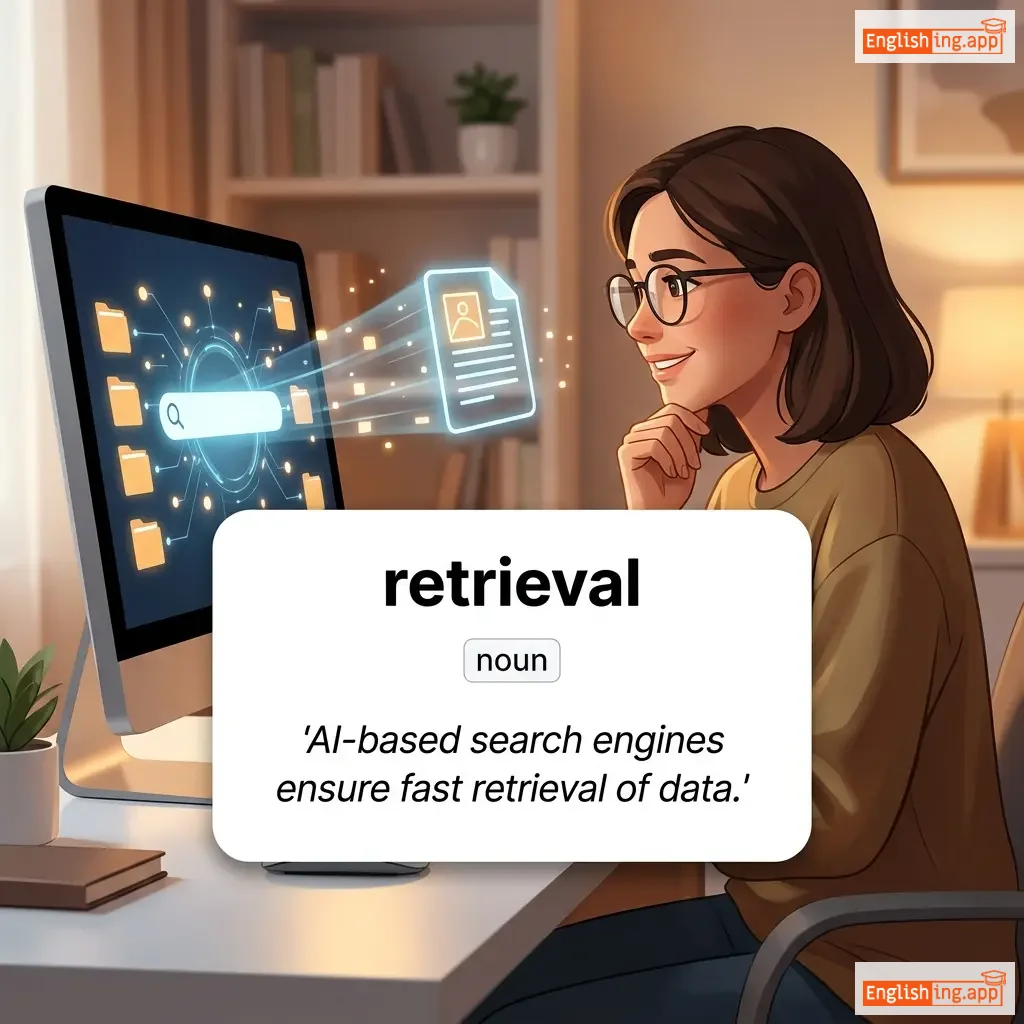
retrieval definition card — visual illustration of the meaning
noun
rɪˈtriː.vəl
回収 (kaishuu)

The process of getting or bringing something back; recovery of stored information.

"AI-based search engines ensure fast retrieval of data."

"AIベースの検索エンジンはデータの迅速な回収を保証します。" (AI bēsu no kensaku enjin wa dēta no jinsoku na kaishū o hoshō shimasu.)
verb
/rɪˈtriːv/
取り戻す (torimodosu)

to get something back that was lost or taken; to recover

"She managed to retrieve her lost phone from the taxi."

"彼女はタクシーから失われた電話を取り戻すことができました。" (Kanojo wa takushi kara ushinawareta denwa wo torimodosu koto ga dekimashita.)
adjective
/ˌrɛtroʊˈæktɪv/
遡及的 (sokyū-teki)

applying to a period before it was enacted or established

"The new law was made retroactive to cover past cases."
"新しい法律は過去のケースをカバーするために遡及的に作られました。" (Atarashī hōritsu wa kako no kēsu o kabā suru tame ni sokyū-teki ni tsukuraremashita.)
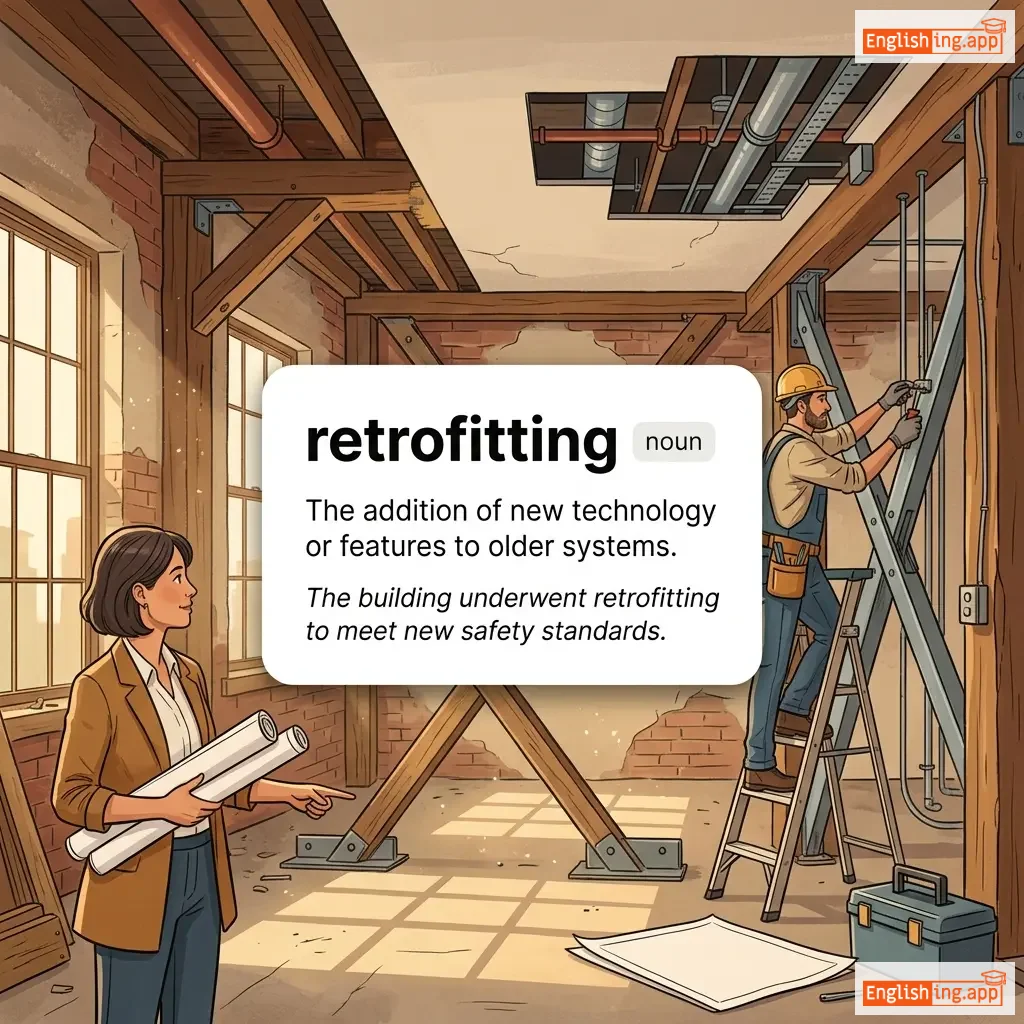
retrofitting definition card — visual illustration of the meaning
noun
/ˈrɛ.trəʊ.fɪt.ɪŋ/
古いシステムに新しい技術や機能を追加すること (furui shisutemu ni atarashī gijutsu ya kinō o tsuika suru koto)

The addition of new technology or features to older systems.

"The building underwent retrofitting to meet new safety standards."

"その建物は、新しい安全基準に適応するためにレトロフィッティングされました。" (Sono tatemono wa, atarashī anzen kijun ni tekiō suru tame ni retorofittingu saremashita.)
adjective
/ˈrɛtroʊˌɡreɪd/
後退的 (kōtaiteki)

moving backward or returning to a worse condition

"The policy was seen as a retrograde step for human rights."

"その政策は人権に対する後退的な一歩と見なされた。" (Sono seisaku wa jinken ni taisuru kōtaiteki na ippo to minasareta.)
noun
/ˌrɛtroʊˈɡrɛʃən/
後退 (koutai)

a return to a worse or less developed state

"The country experienced economic retrogression after the crisis."

"国は危機後、経済的な後退を経験しました。" (Kuni wa kiki go, keizaiteki na koutai o keiken shimashita.)
noun
/ˈrɛtrəsˌpɛkt/
回顧 (kaiko)

the act of looking back on or reviewing past events

"In retrospect, the decision seemed unwise."

"回顧すると、その決定は賢明ではなかったように思えた。" (Kaiko suru to, sono kettei wa kenmei dewa nakatta yō ni omoeta.)
adjective
/ˌrɛtrəˈspɛktɪv/
回顧的 (kaikotekina)

Looking back on or dealing with past events or situations.

"The museum held a retrospective exhibition of the artist's work."
"博物館はアーティストの作品の回顧展を開催しました。" (Hakubutsukan wa ātisuto no sakuhin no kaikoten o kaisai shimashita.)
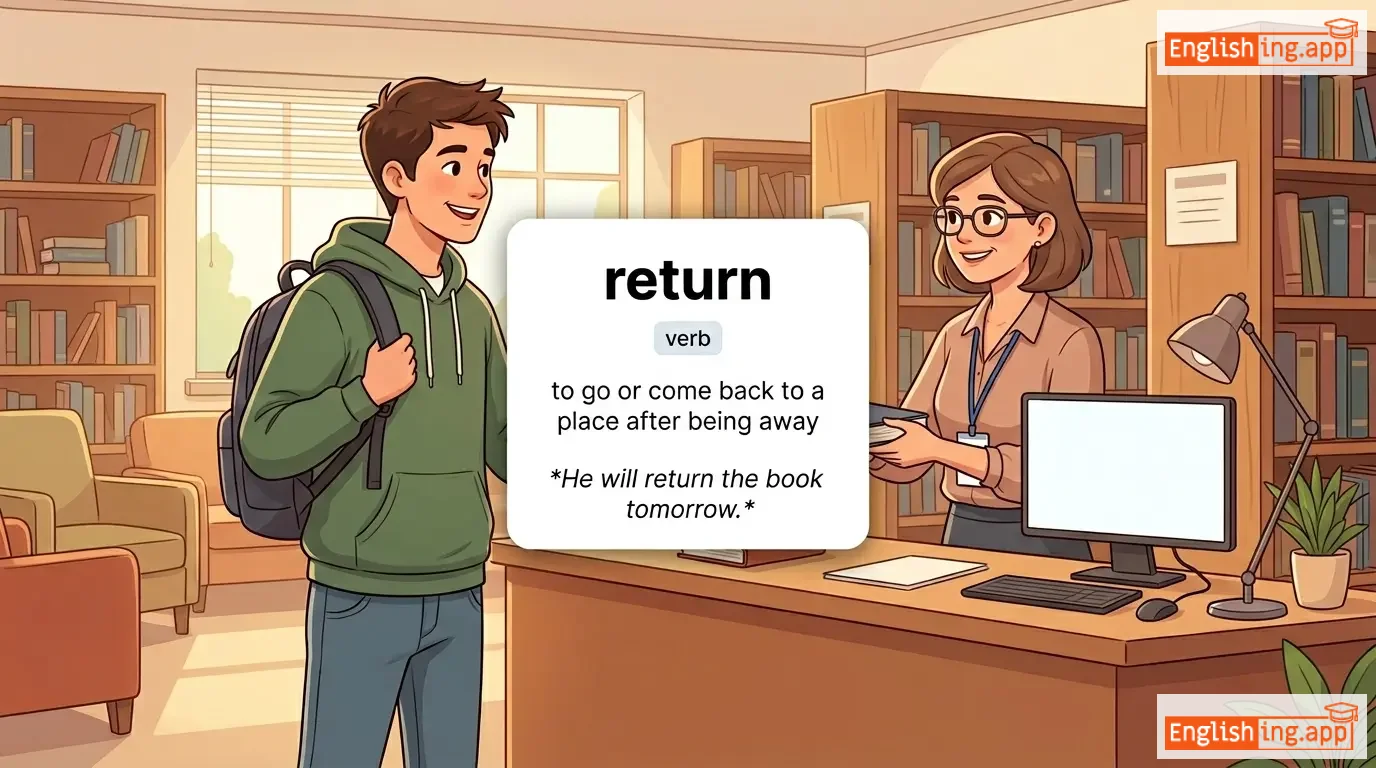
return definition card — visual illustration of the meaning
verb
/rɪˈtɜːn/
返す (kaesu)

to go or come back to a place after being away

"He will return the book tomorrow."

"彼は明日その本を返すでしょう。" (Kare wa ashita sono hon o kaesu deshou.)
adjective
/rɪˈtɜː.nə.bəl/
返品可能 (henpin kanou)

able to be returned or given back

"The bottle is returnable for a deposit refund."
"ボトルはデポジット返金のために返品可能です。" (Botoru wa depojitto henkin no tame ni henpin kanou desu.)
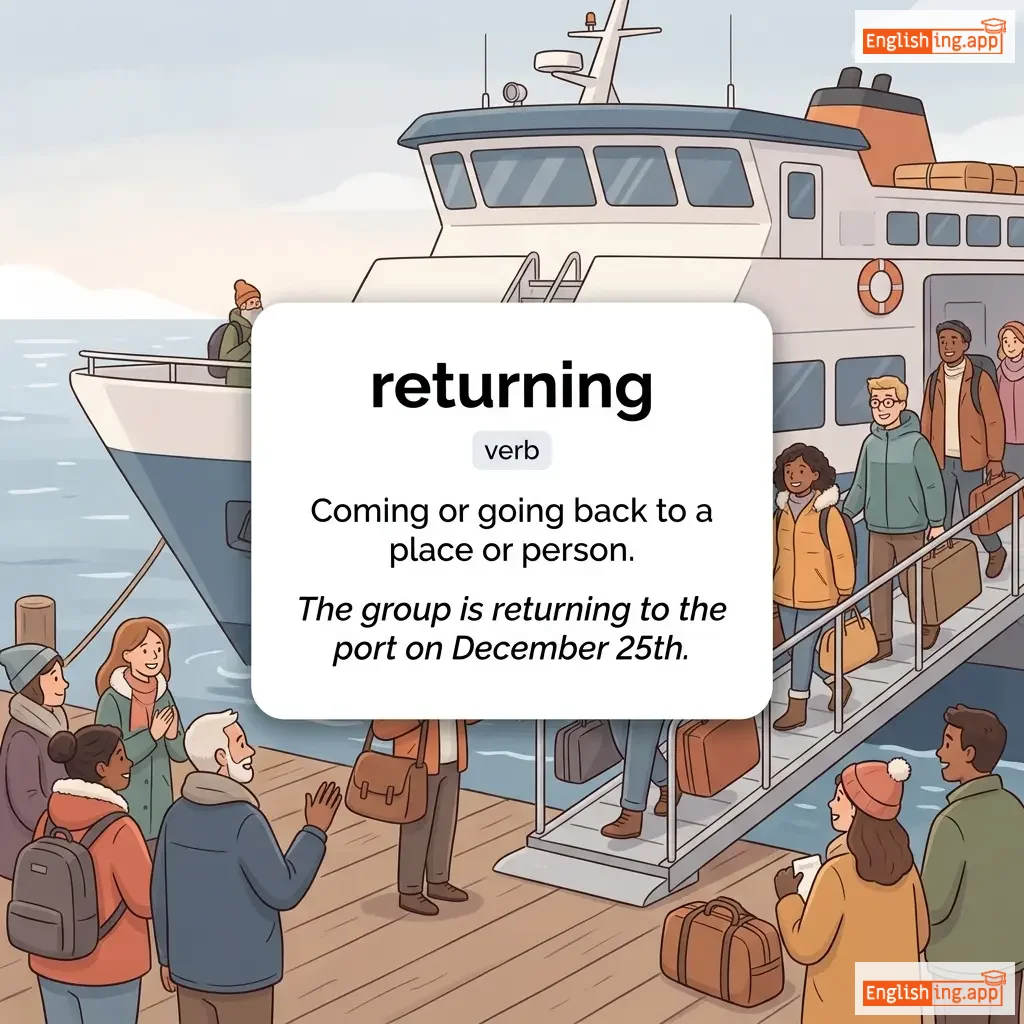
returning definition card — visual illustration of the meaning
verb
/rɪˈtɜrnɪŋ/
戻る (modoru)

Coming or going back to a place or person.

"The group is returning to the port on December 25th."
"グループは12月25日に港に戻ります。" (Gurūpu wa 12-gatsu 25-nichi ni minato ni modorimasu.)
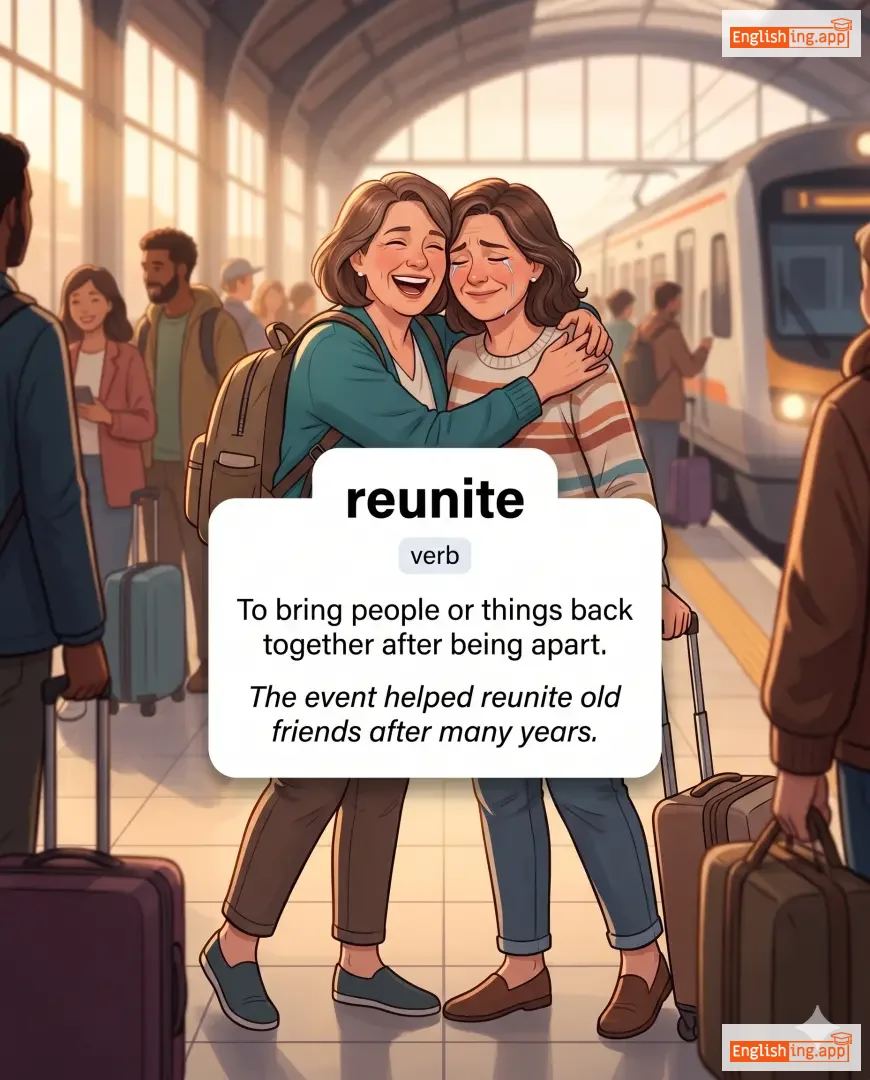
reunite definition card — visual illustration of the meaning
verb
/ˌriːjuːˈnaɪt/
再会する (saikai suru)

To bring people or things back together after being apart.

"The event helped reunite old friends after many years."

"イベントは長年の後、古い友達を再会させる手助けをしました。" (Ibento wa naganen no ato, furui tomodachi o saikai saseru tedasuke o shimashita.)
verb
/ˌriːˈvæmp/
改装 (kaizō)

To give a new and improved form, structure, or appearance to something.

"The company decided to revamp its website for a modern look."

"その企業は、モダンな外観のためにウェブサイトをリヴァンプすることを決定しました。" (Sono kigyō wa, modan na gaikan no tame ni u~ebusaito o rivanpu suru koto o kettei shimashita.)
reveal definition card — visual illustration of the meaning
verb
/rɪˈviːl/
明かす (akasu)

to make something known that was previously hidden or secret

"The magician refused to reveal his secrets."
"魔法使いは彼の秘密を明かすことを拒否した。" (Mahōtsukai wa kare no himitsu wo akasu koto wo kyohi shita.)
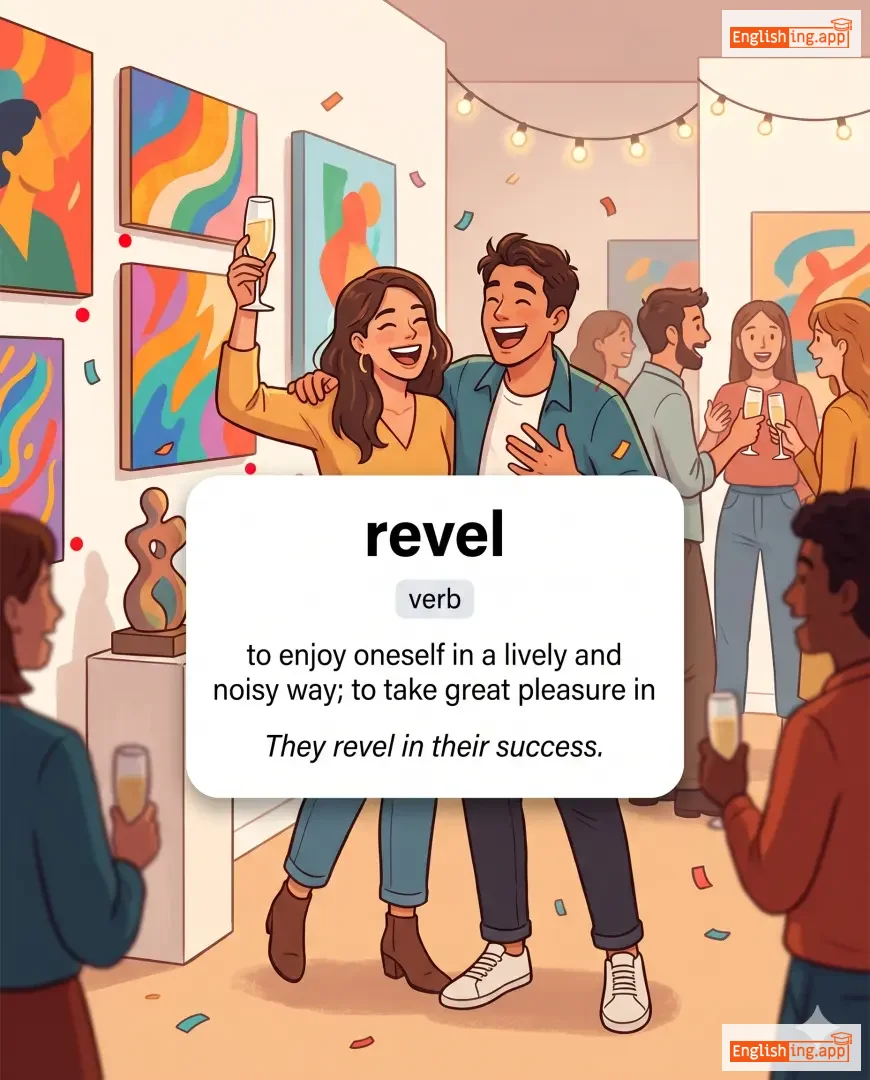
revel definition card — visual illustration of the meaning
verb
/ˈrevəl/
楽しむ (tanoshimu)

to enjoy oneself in a lively and noisy way; to take great pleasure in

"They revel in their success."

"彼らは成功を楽しんでいます。" (Karera wa seikou o tanoshindeimasu.)
noun
/ˌrɛvəˈleɪʃən/
啓示 (keiji)

A surprising and previously unknown fact, especially one made known in a dramatic way.

"The book was full of shocking revelations about the politician."

"その本はその政治家に関する衝撃的な啓示で満ちていました。" (Sono hon wa sono seijika ni kansuru shōgeki-tekina keiji de michiteimashita.)
noun
/ˈrɛvəlri/
祭り (matsuri)

Lively and noisy festivities, especially involving drinking and dancing.

"The sound of revelry could be heard throughout the night."

"一晩中、祭りの音が聞こえていました。" (Hitobanju, matsuri no oto ga kikoete imashita.)
noun, verb
/rɪˈvɛndʒ/
復讐 (fukushū)

The action of inflicting harm on someone as punishment for a wrong suffered.

"She sought revenge for the betrayal of her trust."

"彼女は信頼を裏切られたことで復讐を求めた。" (Kanojo wa shinrai o uragirareta koto de fukushū o motometa.)
adjective
/rɪˈvenʒ.fəl/
復讐心に燃える (fukushū shin ni moeru)

seeking or desiring revenge; vindictive

"He became revengeful after being betrayed by his friend."

"彼は友達に裏切られた後、復讐心に燃えるようになった。" (Kare wa tomodachi ni uragirareta ato, fukushū shin ni moeru yō ni natta)
revenue definition card — visual illustration of the meaning
noun
/ˈrɛvənjuː/
収益 (shuueki)

income generated from business activities, especially sales

"The company's revenue increased by 20% last year."

"会社の収益は昨年20%増加しました。" (Kaisha no shuueki wa sakunen 20% zouka shimashita.)
verb
/rɪˈvɜːrbəreɪt/
反響する (hankyō suru)

To echo repeatedly or have continuing effects.

"The sound of the explosion reverberated through the valley."

"爆発音は谷を通り過ぎて反響しました。" (Baku hatsu on wa tani o tōrisugite hankyō shimashita.)
verb
/rɪˈvɪər/
尊敬する (sonkei suru)

To deeply respect or admire someone or something.

"The students revered their teacher for his wisdom."

"生徒たちはその知恵に対して教師を崇敬しました。" (Seito-tachi wa sono chie ni taishite kyōshi o sūkei shimashita.)
noun
/ˈrɛvərəns/
尊敬 (sonkei)

deep respect for someone or something

"The students showed reverence to their teacher."

"学生たちは先生に尊敬を示した。" (Gakusei-tachi wa sensei ni sonkei o shimeshita.)
noun, adjective
/ˈrɛvərənd/
牧師, 尊敬される (bokushi, sonkei sareru)

A title of respect used for members of the clergy; deserving deep respect.

"The Reverend gave an inspiring sermon at the church."
"レヴァレンドは教会で感動的な説教をしました。" (Reverend wa kyōkai de kandōteki na sekkyō o shimashita.)
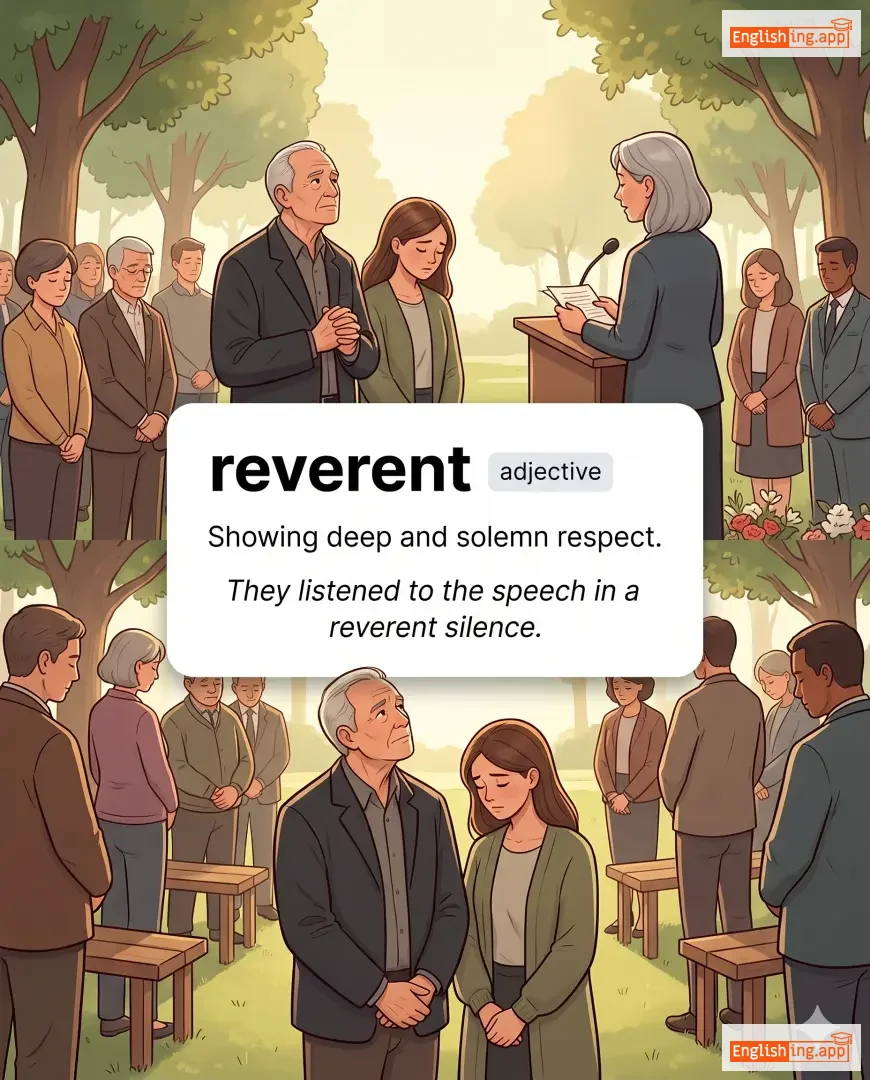
reverent definition card — visual illustration of the meaning
adjective
/ˈrɛvərənt/
敬虔な (keiken na)

Showing deep and solemn respect.

"They listened to the speech in a reverent silence."

"彼らは敬虔な沈黙の中でスピーチを聞いた。" (Karera wa keiken na chinmoku no naka de supīchi o kiita.)
reverie definition card — visual illustration of the meaning
noun
/ˈrɛvəri/
夢想 (musou)

a state of being pleasantly lost in one's thoughts; a daydream

"She drifted into a reverie while staring at the sunset."

"彼女は夕日を見ながら夢想にふけっていた。" (Kanojo wa yūhi o minagara musou ni fukette ita.)
verb
/rɪˈvɜːs/
反転する (hanten suru)

to change something to the opposite direction, position, or result

"She quickly reversed the car out of the driveway."

"彼女はすぐに車をドライブウェイからバックさせました。" (Kanojo wa sugu ni kuruma o doraibuwei kara bakku sasemashita.)
adjective
/rɪˈvɜː.sə.bəl/
可逆的な (kagyakuteki na)

able to be turned the other way around; able to be undone or changed back

"This jacket is reversible and can be worn on both sides."

"このジャケットはリバーシブルで、両面で着られます。" (kono jaketto wa ribashiburu de, ryoumen de kiraremasu.)
noun
/rɪˈvɜːrʒən/
逆転 (gikuten)

the act of returning to a previous state or condition

"The new policy marked a reversion to traditional methods."

"新しい政策は伝統的な方法への逆転を意味しました。" (Atarashī seisaku wa dentō-teki na hōhō e no gikuten o imi shimashita.)
verb
/rɪˈvɜːrt/
戻る (modoru)

to return to a previous state, condition, or practice

"The system will revert to its original settings after the update."

"システムは更新後、元の設定に戻ります。" (Shisutemu wa kōshin-go, moto no settei ni modorimasu.)
noun
/rɪˈvjuː/
レビュー (rebyū)

an evaluation or assessment of something

"I wrote a review of the movie for the blog."

"私はブログのために映画のレビューを書きました。" (Watashi wa burogu no tame ni eiga no rebyū o kakimashita.)
verb
/rɪˈvaɪl/
非難する (hinan suru)

to criticize in an abusive or angrily insulting manner

"The politician was reviled by the public for his corruption."

"その政治家は腐敗のために公衆から非難されました。" (Sono seijika wa fuhai no tame ni kōshū kara hinan saremashita.)
noun
/rɪˈvaɪlər/
侮辱者 (bujokusha)

a person who criticizes or insults others abusively

"He was known as a reviler of all who opposed him."

"彼は自分に反対する全ての人々を侮辱する者として知られていました。" (Kare wa jibun ni hantai suru subete no hitobito o bujoku suru mono to shite shirarete imashita.)
noun
/rɪˈvaɪ.zəl/
改訂 (kaitei)

The act of revising, reviewing, or making changes to something.

"The revisal of the contract took longer than expected."

"契約の改訂には予想以上の時間がかかりました。" (Keiyaku no kaitei ni wa yosō ijō no jikan ga kakarimashita.)
verb
/rɪˈvaɪz/
修正する (shūsei suru)

To change, improve, or update something, especially a written work.

"She had to revise her essay before submission."

"彼女は提出前にエッセイをリヴァイズする必要があった。" (Kanojo wa teishutsu mae ni essei o rivaizu suru hitsuyō ga atta.)
noun
/rɪˈvɪʒən/
改訂 (kaitei)

the action of revising or updating something, typically in preparation for something else

"She made some last-minute revisions to her report before submitting it."
"彼女は報告書を提出する前に最後の修正を加えました。" (Kanojo wa hōkokusho o teishutsu suru mae ni saigo no shūsei o kuwaemashita.)
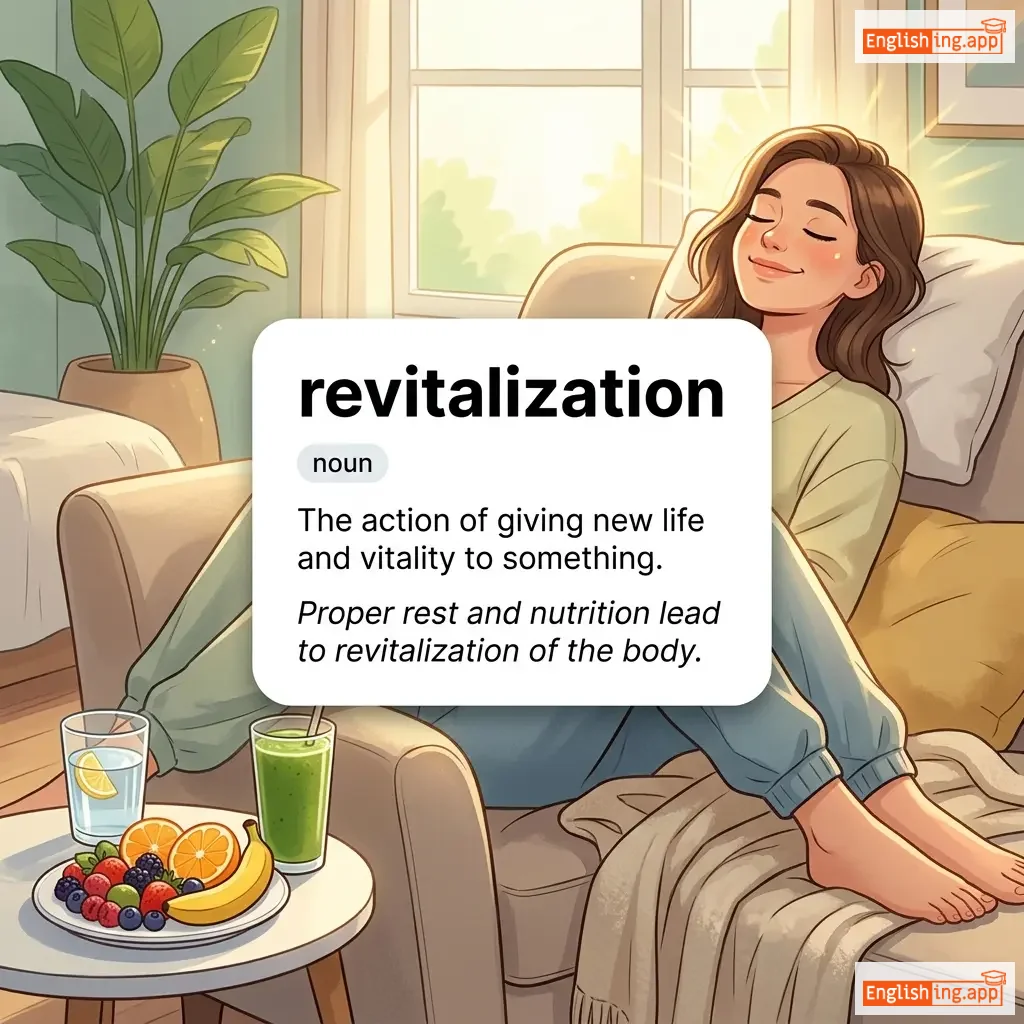
revitalization definition card — visual illustration of the meaning
noun
ˌriːˌvaɪ.təl.aɪˈzeɪ.ʃən
再生 (saisei)

The action of giving new life and vitality to something.

"Proper rest and nutrition lead to revitalization of the body."
"適切な休息と栄養は体のリバイタライゼーションに繋がります。" (Tekisetsu na kyūsoku to eiyō wa karada no ribaitaraizēshon ni tsunagarimasu.)
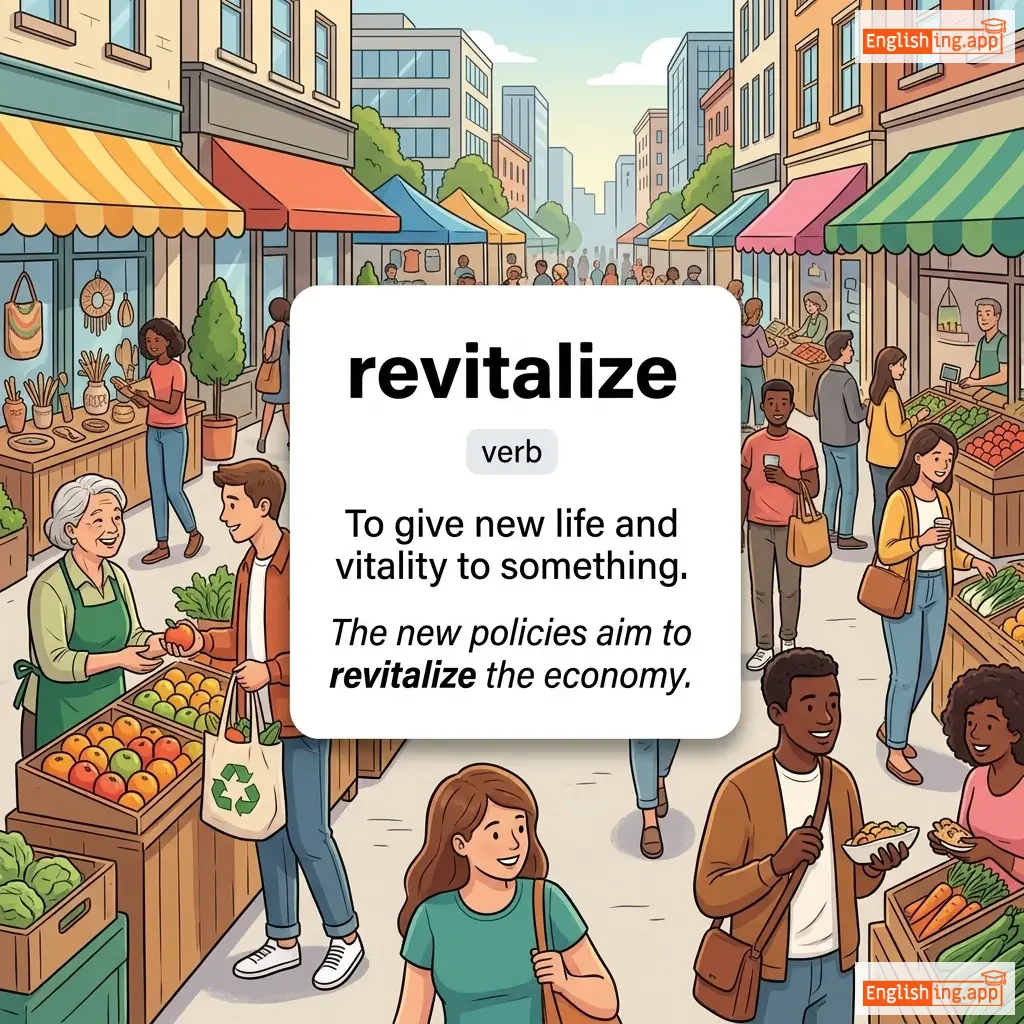
revitalize definition card — visual illustration of the meaning
verb
/ˌriːˈvaɪ.təl.aɪz/
活性化する (kasseika suru)

To give new life and vitality to something.

"The new policies aim to revitalize the economy."

"新しい政策は経済を活性化することを目指している。" (Atarashī seisaku wa keizai o kasseika suru koto o mezashite iru.)