語彙集

英単語辞書 | 単語の意味、定義、例文

noun
/pɑːrt/
部分 (bubun)

a piece or segment of something

"She gave me a part of her chocolate."

"彼女は私にチョコレートの一部をくれました。" (Kanojo wa watashi ni chokorēto no ichibu o kuremashita.)
adjective
/ˈpɑːt taɪm/
パートタイム (pāto taimu)

working for only part of the usual working day or week

"She works part-time as a waitress."

"彼女はパートタイムのウェイトレスとして働いています。" (Kanojo wa pāto taimu no weitoresu to shite hataraiteimasu.)
adjective
/ˈpɑːrʃəl/
部分的な、偏った (bubun-teki na, katagatta)

existing only in part; biased toward one side

"The report gave a partial view of the situation."

"レポートは状況の部分的な見解を示しました。" (Repōto wa jōkyō no bubun-teki na kenkai o shimeshimashita.)
noun
/ˌpɑːrʃiˈæləti/
偏見 (henken)

an unfair preference or bias toward one side or person

"The judge was criticized for showing partiality in the case."

"裁判官は事件で偏見を示したとして批判されました。" (Saibankan wa jiken de henken o shimeshita to shite hihan saremashita.)
adverb
/ˈpɑːrʃəli/
部分的に (bubun-teki ni)

to some extent but not completely

"The project was partially completed before the deadline."

"プロジェクトは締め切り前に部分的に完了しました。" (Purojekuto wa shimekiri mae ni bubun-teki ni kanryou shimashita.)
adjective
/ˈpɑːrtəbl/
分割可能な (bunkatsu kanō na)

capable of being divided or separated

"The estate was partible among the heirs."

"その財産は相続人の間で分割可能でした。" (Sono zaisan wa sōzokunin no aida de bunkatsu kanō deshita.)
noun
/pɑːrˈtɪsɪpənt/
参加者 (sankasha)

a person who takes part in an event or activity

"Each participant received a certificate after the workshop."
"各参加者はワークショップ後に証明書を受け取りました。" (Kaku sankasha wa wākushoppu go ni shōmeisho o uketorimashita.)
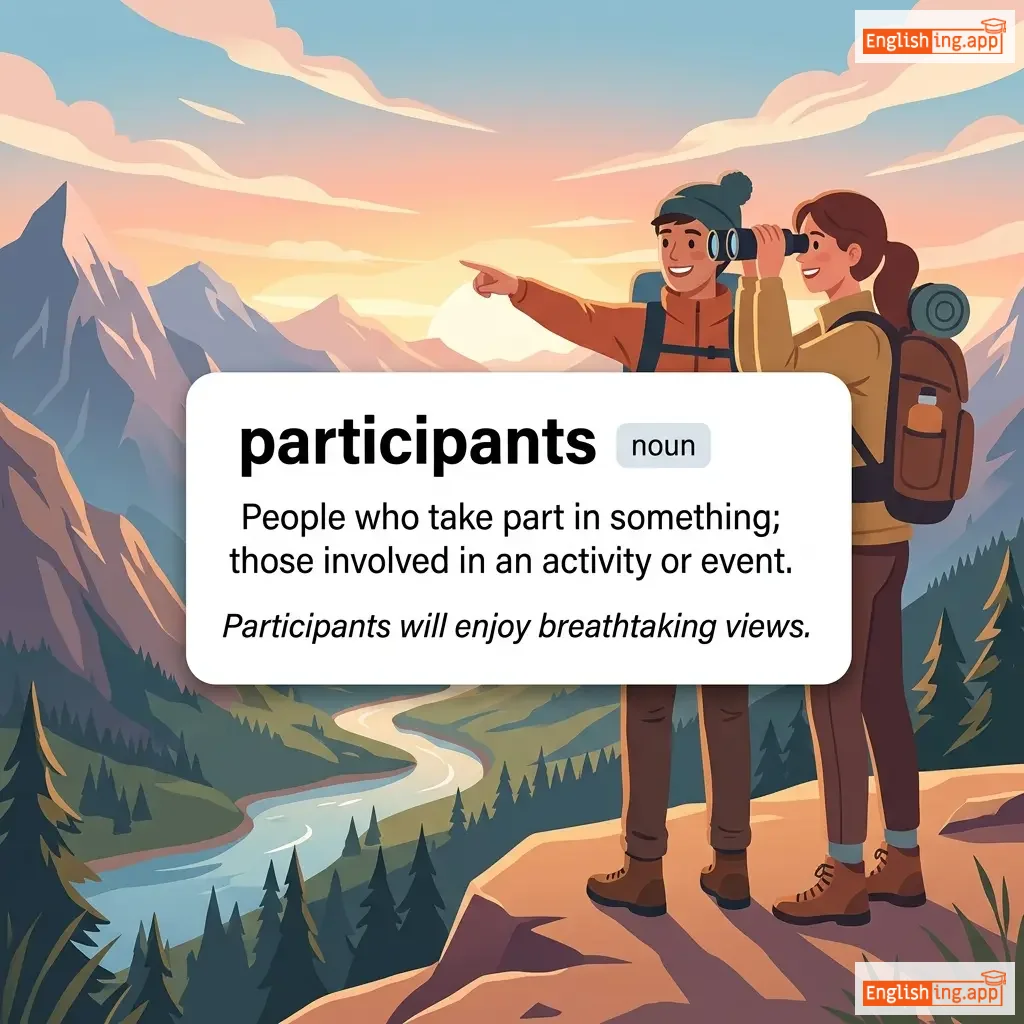
participants definition card — visual illustration of the meaning
noun
pɑːˈtɪs.ɪ.pənts
参加者 (sankasha)

People who take part in something; those involved in an activity or event.

"Participants will enjoy breathtaking views."
"参加者は息をのむような景色を楽しむでしょう。" (Sankasha wa iki o nomu yōna keshiki o tanoshimu deshō.)
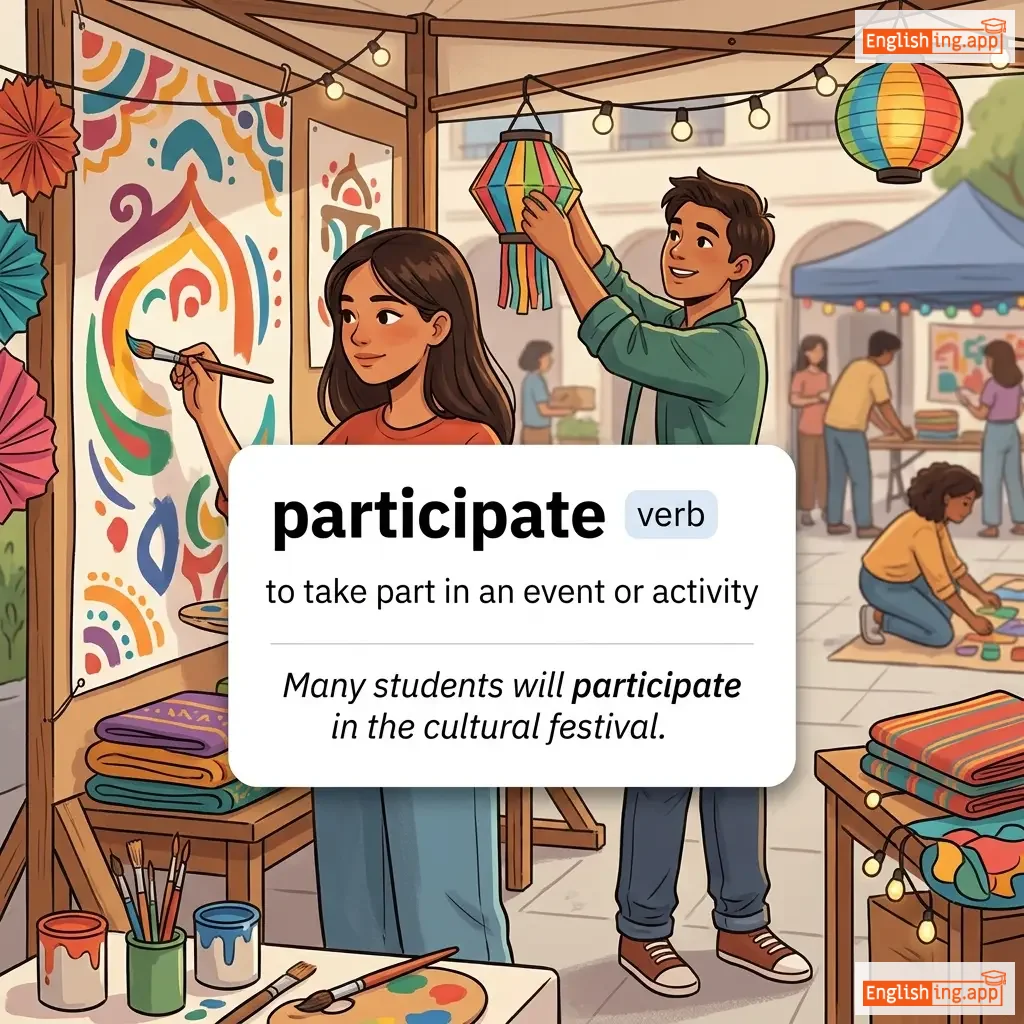
participate definition card — visual illustration of the meaning
verb
/pɑːrˈtɪsɪpeɪt/
参加する (sanka suru)

to take part in an event or activity

"Many students will participate in the cultural festival."
"多くの学生が文化祭に参加する予定です。" (Ōku no gakusei ga bunkasai ni sanka suru yotei desu.)
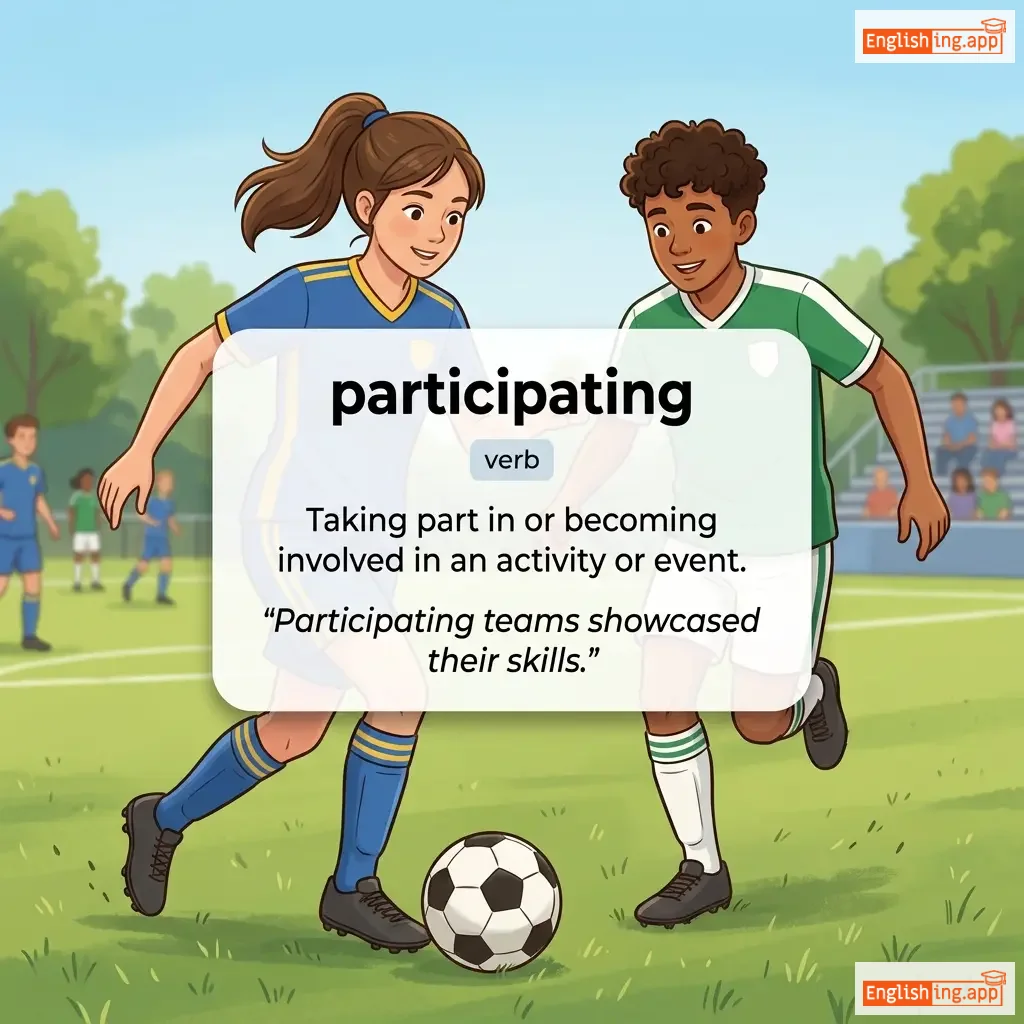
participating definition card — visual illustration of the meaning
verb
pɑːˈtɪs.ɪ.peɪ.tɪŋ
参加する (sanka suru)

Taking part in or becoming involved in an activity or event.

"Participating teams showcased their skills."

"参加しているチームは自分たちのスキルを披露しました。" (Sanka shite iru chīmu wa jibuntachi no sukiru o hirō shimashita.)
noun
/pɑːrˌtɪsɪˈpeɪʃən/
参加 (sanka)

the action of taking part in something

"Her participation in the competition was commendable."

"彼女の競技会への参加は称賛に値しました。" (Kanojo no kyogikai e no sanka wa shousan ni atai shimashita.)
noun
/ˈpɑːrtɪkəl/
粒子 (ryūshi)

a very small piece or amount of something

"Dust particles floated in the air near the window."
"窓の近くの空気中にほこりの粒子が浮かんでいました。" (Mado no chikaku no kūkī-chū ni hokori no ryūshi ga ukande imashita.)
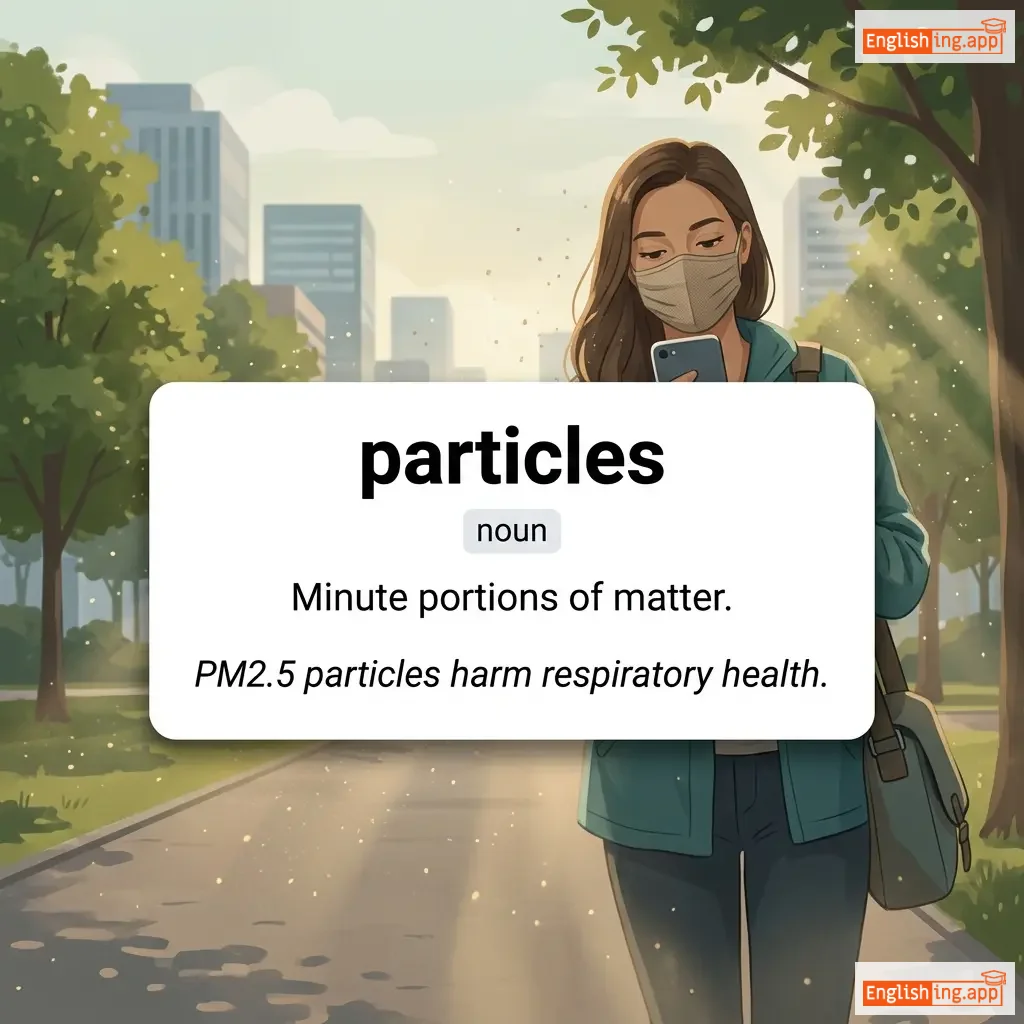
particles definition card — visual illustration of the meaning
noun
/ˈpɑː.tɪ.klz/
粒子 (ryushi)

Minute portions of matter.

"PM2.5 particles harm respiratory health."

"PM2.5粒子は呼吸器系の健康に害を与えます。" (PM2.5 ryushi wa kokyukikei no kenko ni gai o ataemasu.)
adjective
/pərˈtɪk.jʊ.lər/
特別 (tokubetsu)

specific or special; distinct from others

"He is very particular about his diet."

"彼は自分の食事に非常にこだわりがあります。" (Kare wa jibun no shokuji ni hijou ni kodawari ga arimasu.)
verb
/pərˈtɪkjələrˌaɪz/
詳細に述べる (shousai ni noberu)

to mention or describe something in detail

"The witness was asked to particularize the events of that night."

"証人はその夜の出来事を詳細に説明するように求められました。" (Shōnin wa sono yoru no dekigoto o shōsai ni setsumei suru yō ni motomeraremashita.)
adverb
/pɑːrˈtɪkjʊləli/
特に (tokuni)

to a higher degree than is usual or expected

"She is particularly fond of Italian food."
"彼女は特にイタリア料理が好きです。" (Kanojo wa tokuni Itaria ryōri ga suki desu.)
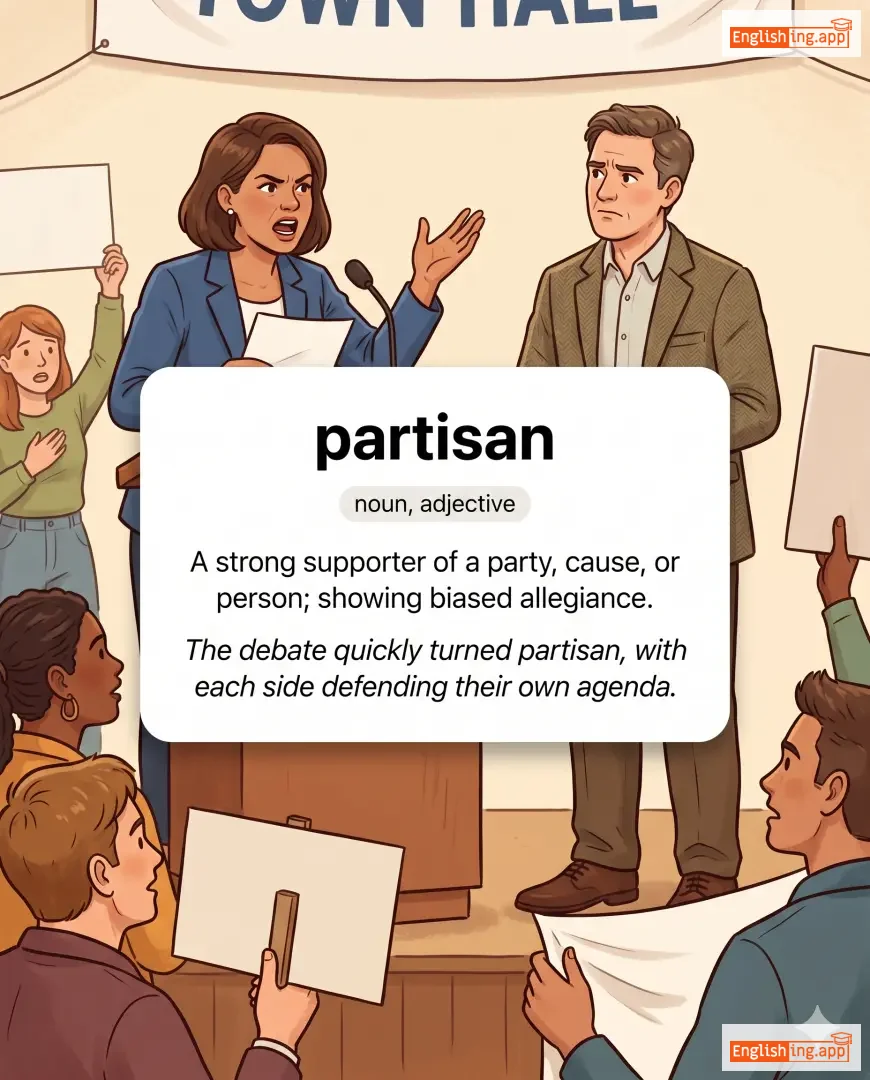
partisan definition card — visual illustration of the meaning
noun, adjective
/ˈpɑːrtɪzən/
党派の支持者 (tōha no shijisha)

A strong supporter of a party, cause, or person; showing biased allegiance.

"The debate quickly turned partisan, with each side defending their own agenda."
"議論はすぐに党派的になり、各側は自分のアジェンダを擁護しました。" (Giron wa sugu ni tōhateki ni nari, kaku-gawa wa jibun no ajenda o yōgo shimashita.)
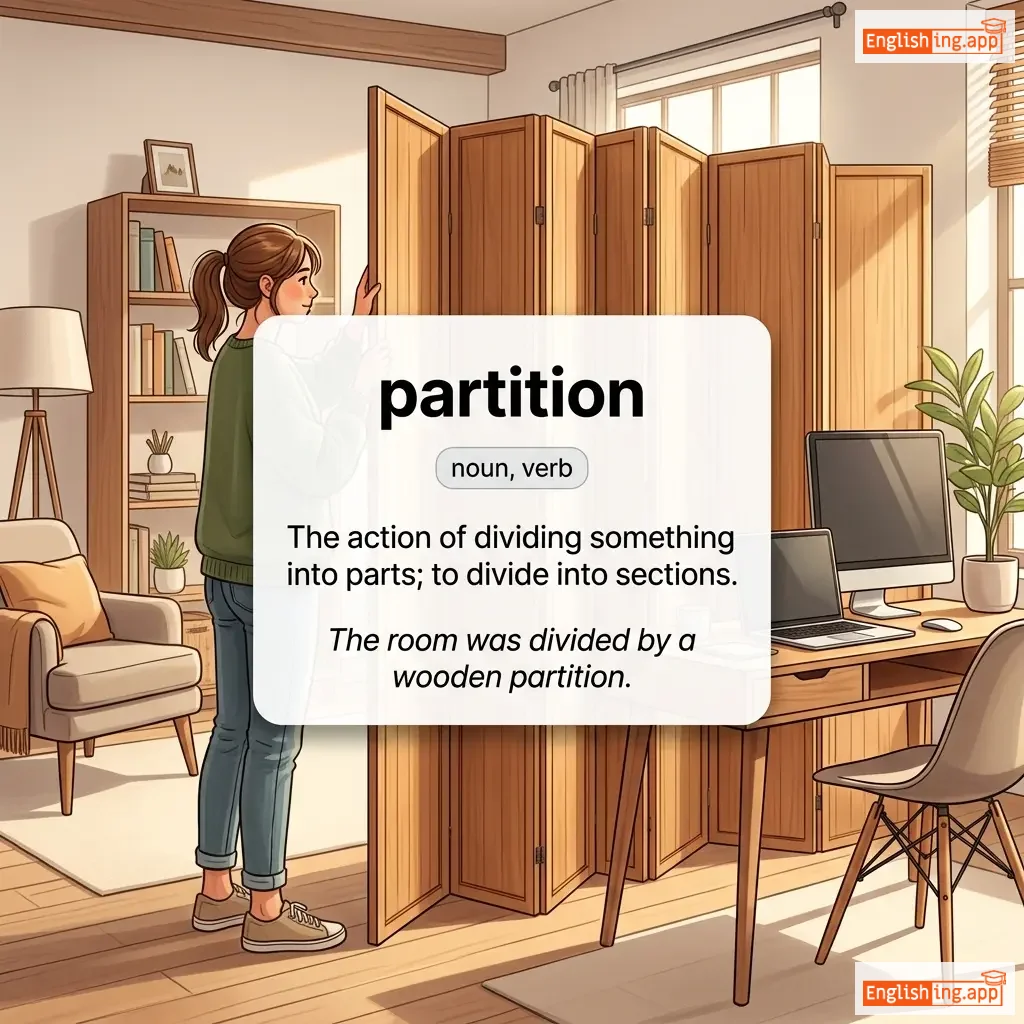
partition definition card — visual illustration of the meaning
noun, verb
/pɑːrˈtɪʃən/
仕切り / 分割 (shikiri / bunkatsu)

The action of dividing something into parts; to divide into sections.

"The room was divided by a wooden partition."

"部屋は木製のパーティションで仕切られていました。" (Heya wa mokusei no pātishon de shikirarete imashita.)
adverb
/ˈpɑːrtli/
部分的に (bubun teki ni)

to some extent but not completely

"The project was partly successful, but more work is needed."

"プロジェクトは部分的に成功しましたが、さらに多くの作業が必要です。" (Purojekuto wa bubun teki ni seikou shimashita ga, sara ni ooku no sagyou ga hitsuyou desu.)
noun
/ˈpɑːtnər/
パートナー (pa-tona)

a person who shares or is associated with another in some action or endeavor

"She is my business partner in the new venture."

"彼女は私の新しい事業でのビジネスパートナーです。" (Kanojo wa watashi no atarashii jigyo de no bijinesu pa-tona desu.)
noun
/ˈpɑːtnəʃɪp/
パートナーシップ (pātonāshippu)

the state of being a partner or a group of partners

"Our partnership has helped both companies grow."

"私たちのパートナーシップは、両社の成長に役立ちました。" (Watashitachi no pātonāshippu wa, ryōsha no seichō ni yakudachimashita.)
noun
/ˌpɑːrtjʊˈrɪʃən/
分娩 (bunben)

The act of giving birth; childbirth.

"The doctor explained the stages of parturition to the students."

"医者は学生たちに分娩の段階を説明しました。" (Isha wa gakuseitachi ni bunben no dankai o setsumei shimashita.)
noun
/ˈpɑːti/
パーティー (paatii)

a social gathering of people, typically for entertainment

"We had a great time at the birthday party."

"私たちは誕生日パーティーで素晴らしい時間を過ごしました。" (Watashitachi wa tanjōbi pātī de subarashī jikan o sugoshimashita.)
noun
/ˈpɑːrvənuː/
新興富裕層 (shinkō fuyūsō)

A person who has recently gained wealth or influence but is not yet accepted socially.

"He was seen as a parvenu who lacked refinement despite his riches."

"彼は、金持ちでありながら洗練されていないパルヴェヌとして見られていました。" (Kare wa, kanemochi de arinagara senren sarete inai parvenu to shite mirarete imashita.)
🏃‍♂️

pass

verb
/pæs/

to move past or beyond something

"He passed the test with flying colors."

verb (phrasal)
/ˈpæs ˌɔːf/

to present something or someone falsely as something else; to pretend or deceive

"He tried to pass off the fake watch as a luxury brand."

adjective
/ˈpæs.ə.bəl/
受け入れ可能 (ukeire kanou)

good enough to be accepted, though not excellent

"The road is barely passable after the storm."

"嵐の後、道はかろうじて通行可能です。" (Arashi no ato, michi wa karoujite tsuukou kanou desu.)
noun
/ˈpæsɪdʒ/
狭い通路; 断片/引用; 一つの状態や場所から他の場所へ移動するプロセス (semai tōro; danpen/inyō; hitotsu no jōtai ya basho kara hoka no basho e idō suru purosezu)

a narrow way through or between; a section of text or music; the process of moving from one state or place to another

"The narrow passage led from the courtyard to the library."

"狭い通路は中庭から図書館へと続いていた。" (semai tōro wa nakaniwa kara toshokan e to tsudzuite ita.)
adjective
/pæˈseɪ/
時代遅れの; 流行遅れ (jidaiokure no; ryūkōokure)

no longer fashionable or current; out of date

"Some trends from last decade feel utterly passé now."

"昨今のトレンドのいくつかは今や完全に時代遅れに見える。" (Sakonkō no torendo no ikutsuka wa imaya kanzen ni jidaiokure ni mieru.)
noun
/ˈpæsɪndʒər/
乗客 (jōkyaku)

a person traveling in a vehicle but not operating it

"The passenger was reading a book during the trip."

"乗客は旅行中に本を読んでいました。" (Jōkyaku wa ryokōchū ni hon o yonde imashita.)
noun
/ˈpæsɪt/
カッテージチーズ (katteji chīzu)

Fresh cheese curds; cottage cheese made from curdled milk

"The cook prepared fresh passet by curdling warm milk with lemon juice."

"料理人は温かい牛乳にレモン汁を加えて新鮮なカッテージチーズを作りました。" (Ryōrinin wa atatakai gyūnyū ni remon jūsu o kuwaete shinsen na katteji chīzu o tsukurimashita.)
adjective
/ˈpæsɪbəl/
感じることができる; 苦しみに対して敏感 (kanjiru koto ga dekiru; kurushimi ni taishite binkan)

capable of feeling or suffering; susceptible to sensation or emotion (often theological)

"In some traditions, deities are described as passible, sharing human emotions."

"いくつかの伝統では、神々は感じることができるとされ、人間の感情を共有している。" (Ikutsuka no dentō de wa, kamigami wa kanjiru koto ga dekiru to sare, ningen no kanjō o kyōyū shite iru.)
noun
/ˈpæsɪŋ/
通過, 死 (tsuuka, shi)

the act of moving past something or the end of someone's life

"The passing of the leader was a great loss for the nation."

"リーダーの死は国にとって大きな損失でした。" (Rīdā no shi wa kuni ni totte ōkina sonshitsu deshita.)
noun
/ˈpæʃ.ən/
情熱 (jōnetsu)

a strong feeling of enthusiasm or excitement for something or about doing something

"Her passion for teaching was evident in every class."

"彼女の教育への情熱は、すべてのクラスで明らかでした。" (Kanojo no kyōiku e no jōnetsu wa, subete no kurasu de akirakadeshita.)
noun
/ˈpæʃ.ən ˌflaʊ.ər/
パッションフラワー (passhon furawā)

A climbing plant with intricate, colorful flowers; also refers to royal poinciana tree with red-orange blooms

"The passion flower vine covered the garden wall with beautiful blooms."

"パッションフラワーのつるが美しい花で庭の壁を覆いました。" (passhon furawā no tsuru ga utsukushī hana de niwa no kabe o ōimashita.)
adjective
/ˈpæʃənət/
情熱的な (jōnetsuteki na)

showing or caused by strong feelings or a strong belief

"He is passionate about environmental conservation."

"彼は環境保護に情熱を注いでいます。" (Kare wa kankyō hogo ni jōnetsu o sosogiteimasu.)
adjective
/ˈpæsɪv/
受動的; (文法) 受動態 (judōteki; (bunpō) judōtai)

not actively responding or participating; in grammar, denoting the voice in which the subject undergoes the action

"Instead of taking charge, he remained passive during the meeting."

"会議では責任を取る代わりに、彼は受動的なままでした。" (Kaigi de wa sekinin o toru kawari ni, kare wa judōteki na mama deshita.)
noun
/ˈpɑːsˌpɔːrt/
パスポート (pasupooto)

an official government document that identifies a person and allows them to travel internationally

"She renewed her passport before traveling abroad."

"彼女は海外旅行の前にパスポートを更新した。" (kanojo wa kaigai ryokou no mae ni pasupooto o koushin shita)
noun
/ˈpɑːswɜːd/
パスワード (pasuwādo)

a secret word or phrase used to gain access to something

"Make sure your password is strong and unique."

"あなたのパスワードが強力でユニークであることを確認してください。" (Anata no pasuwādo ga kyōryoku de yunikude aru koto o kakunin shite kudasai.)
noun/adjective/preposition
/pɑːst/
過去 (kako)

the time before the present; gone by in time

"He often thinks about his past mistakes."

"彼はよく自分の過去の誤りを考えます。" (Kare wa yoku jibun no kako no ayamari o kangaemasu.)
noun
/ˈpæstə/
パスタ (pasta)

an Italian food made from flour and water, typically shaped into noodles or sheets

"We had creamy pasta for dinner last night."

"昨晩、私たちはディナーにクリーミーパスタを食べました。" (Sakuban, watashitachi wa dinā ni kurīmī pasuta o tabemashita.)
paste definition card — visual illustration of the meaning
verb, noun
/peɪst/
貼る (haru)

to stick or attach something using a soft, moist substance; also a thick, soft, moist substance itself

"She pasted the picture into her notebook."

"彼女はノートに写真を貼り付けた。" (Kanojo wa nōto ni shashin o haritsuketa.)
noun
/pæˈstiːʃ/
パスティーシュ (pasutīshu)

a work of art, literature, or music that imitates the style of another artist, period, or genre

"The film was a clever pastiche of 1950s detective movies."

"その映画は1950年代の探偵映画の巧妙なパスティーシュでした。" (Sono eiga wa 1950 nendai no tantei eiga no kōmyō na pasutīshu deshita.)
noun
/ˈpæs.taɪm/
余暇 (yoka)

an activity done regularly for enjoyment; a hobby or recreational activity

"Reading books is her favorite pastime during weekends."

"読書は週末の彼女のお気に入りの余暇活動です。" (Dokusho wa shūmatsu no kanojo no okiniiri no yokakatsudō desu.)
noun
/ˈpæstər/
牧師 (bokushi)

a minister in charge of a Christian church or congregation

"The pastor delivered a heartfelt sermon on compassion."

"牧師は思いやりのある説教をしました。" (Bokushi wa omoiyari no aru sekkyou o shimashita.)
adjective, noun
/ˈpæstərəl/
田園の、牧羊者に関連する (den'en no, bokuyousha ni kanren suru)

relating to the countryside, shepherds, or rural life; also relating to spiritual guidance by a pastor

"The painting had a calm pastoral scene with sheep grazing."
"その絵画には羊が草を食べている静かな田園風景が描かれていた。" (Sono kaiga ni wa hitsuji ga kusa o tabete iru shizuka na den'en fuukei ga egakarete ita.)
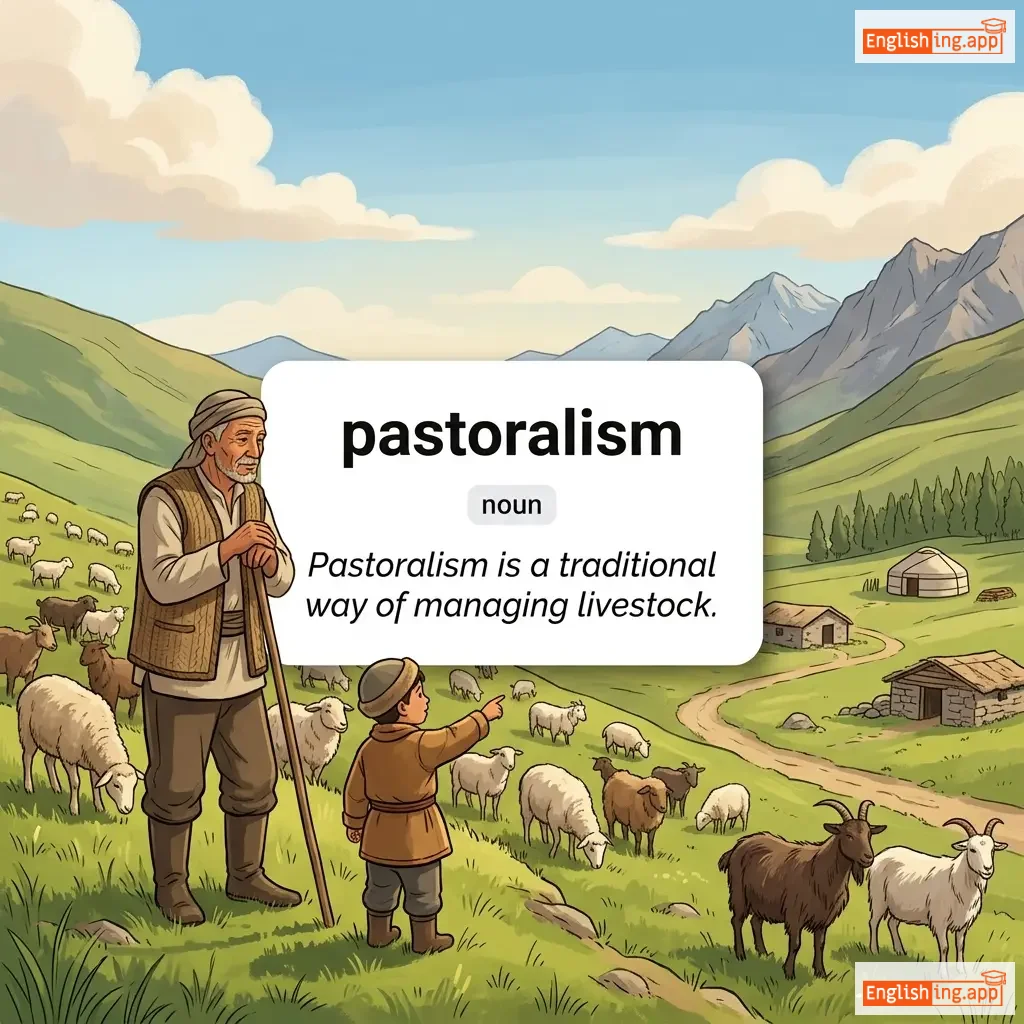
pastoralism definition card — visual illustration of the meaning
noun
ˈpɑː.stər.ə.lɪ.zəm
牧畜業, 草原放牧システム (boku chiku gyou, sougen houboku shisutemu)

A form of animal husbandry where domesticated animals are released onto large vegetated outdoor lands for grazing.

"Pastoralism is a traditional way of managing livestock."

"パストラリズムは伝統的な家畜管理方法です。" (Pastoralism wa dentō-teki na kachiku kanri hōhō desu.)
noun
/ˈpeɪstri/
ペストリー (pesutori)

a baked food product made from flour, fat, and water, often sweet or savory

"I bought a box of fresh pastries for breakfast."

"私は朝食のために新鮮なペストリーの箱を買いました。" (Watashi wa chōshoku no tame ni shinsen na pesutori no hako o kaimashita.)
🤚

pat

verb
/pæt/

to touch someone or something gently, often to show affection or approval

"She gently patted the dog on its head."

noun
/pætʃ/
パッチ (patch)

a piece of cloth or material used to cover or mend a hole or a tear

"He put a patch on his jeans to cover the tear."

"彼はジーンズに裂け目を隠すためにパッチをつけました。" (Kare wa jīnzu ni sake me o kakusu tame ni patchi o tsukemashita.)