語彙集

英単語辞書 | 単語の意味、定義、例文

adverb
/ˈmeɪbi/
たぶん (tabun)

used to express possibility or uncertainty

"Maybe we will go to the park tomorrow."

"たぶん明日公園に行くでしょう。" (Tabun ashita kōen ni iku deshō.)
noun
/ˈmeɪhɛm/
混乱 (konran)

Violent or extreme disorder; chaos and destruction.

"The protest turned into mayhem when the crowd clashed with the police."

"抗議活動は群衆が警察と衝突したときに混乱に変わった。" (Kōgi katsudō wa gunshū ga keisatsu to shōtotsu shita toki ni konran ni kawatta.)
noun
/ˈmeɪər/
市長 (shichō)

The elected head of a city, town, or municipality.

"The mayor announced a new policy to improve public transport."

"市長は公共交通機関を改善するために新しい政策を発表しました。" (Shichō wa kōkyō kōtsū kikan o kaizen suru tame ni atarashī seisaku o happyō shimashita.)
noun
/meɪz/
迷路 (meiro)

A complex network of paths or passages that are difficult to navigate.

"Tourists often get lost in the maze of narrow streets in the old city."

"観光客はしばしば古い街の狭い通りの迷路で迷子になります。" (Kankōkyaku wa shibashiba furui machi no semai tōri no meiro de maigo ni narimasu.)
pronoun
/miː/
(watashi)

Used by a speaker to refer to themselves as the object of a verb or preposition.

"She gave me a beautiful gift."

"彼女は私に美しいプレゼントをくれました。" (Kanojo wa watashi ni utsukushī purezento o kuremashita.)
noun
/miːd/
ミード酒 (mīdo-shu)

An alcoholic drink made from fermented honey and water.

"The Vikings were known to drink large amounts of mead during feasts."

"ヴァイキングは宴会で大量のミードを飲むことで知られていました。" (Vaikingu wa enkai de tairyo no mīdo o nomu koto de shirarete imashita.)
noun
/ˈmedoʊ/
草地 (medo)

A piece of grassland, especially one used for hay

"The cows grazed peacefully in the green meadow."

"牛は緑の草地で平和に草を食べていた。" (Ushi wa midori no kusachi de heiwa ni kusa o tabete ita.)
adjective
/ˈmiːɡər/
乏しい (moshii)

Lacking in quantity or quality; inadequate.

"He could barely survive on his meager salary."

"彼は乏しい給料でかろうじて生きていけた。" (Kare wa moshii kyūryō de karōjite ikite iketa.)
noun
/miːl/
幸せ (shiawase)

An occasion when food is eaten, or the food that is eaten on such an occasion.

"We had a delicious meal at the restaurant."

"彼女は賞を受け取ったとき、幸せを隠すことができませんでした。" (Kanojo wa shou o uketotta toki, shiawase o kakusu koto ga dekimasen deshita.)
adjective
/ˈmiːli ˌmaʊðd/
うわべだけの (uwabe dake no)

Unwilling to speak directly and honestly; insincere or evasive in speech.

"The manager gave a mealy-mouthed excuse instead of admitting the mistake."

"マネージャーは間違いを認める代わりに、うわべだけの言い訳をしました。" (Manējā wa machigai o mitomeru kawari ni, uwabe dake no iiwake o shimashita.)
adjective
/ˈmiːliˌmaʊðd/
言い逃れをする (ii nagare o suru)

not willing to speak directly and honestly; evasive in speech

"The politician gave a mealymouthed response to the tough question."

"その政治家は難しい質問に対して言い逃れをした。" (Sono seijika wa muzukashii shitsumon ni taishite ii nagare o shita.)
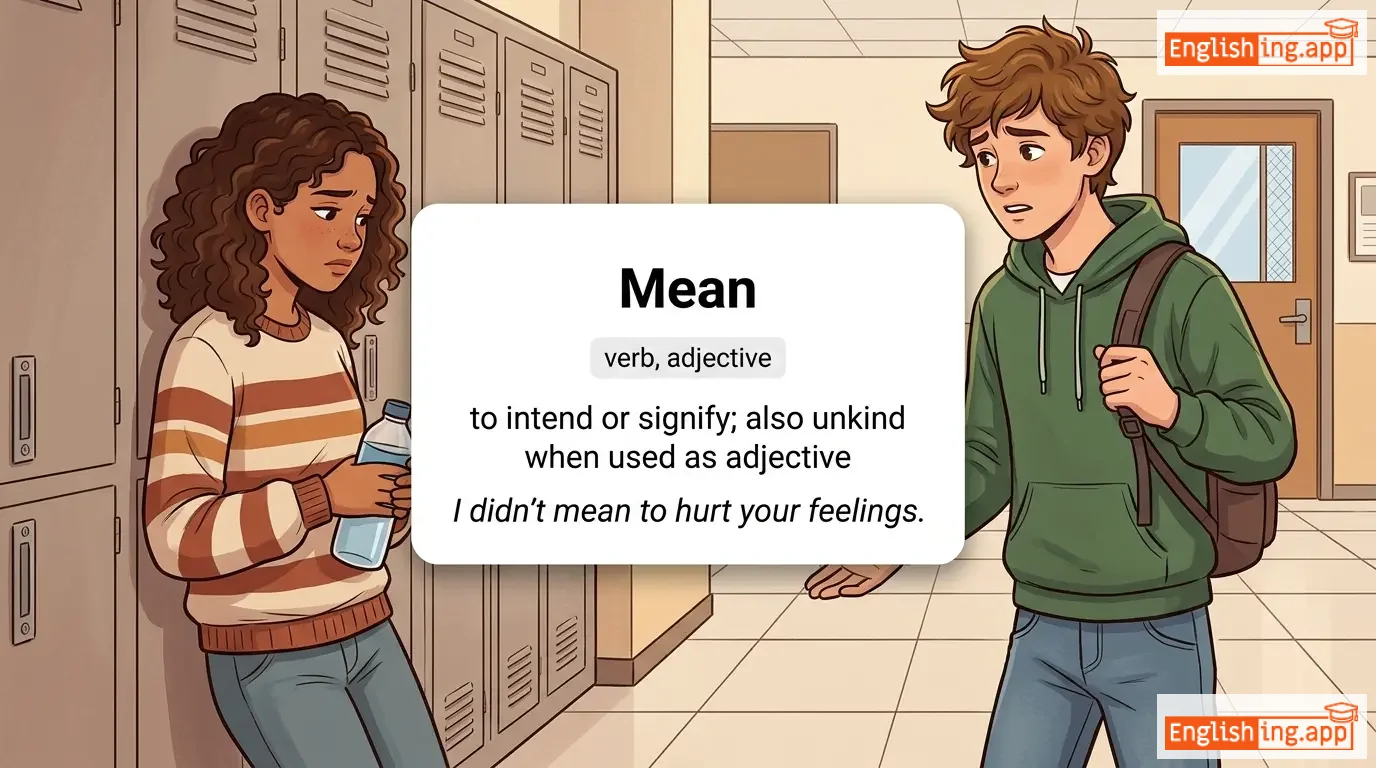
Mean definition card — visual illustration of the meaning
👉

Mean

verb, adjective
/miːn/

to intend or signify; also unkind when used as adjective

"I didn’t mean to hurt your feelings."

verb, noun
/miˈændər/
ぶらぶら歩く (burabura aruku)

to wander aimlessly or follow a winding course

"We meandered through the old streets of the city."

"私たちは街の古い通りをぶらぶら歩きました。" (Watashitachi wa machi no furui tōri o burabura arukimashita.)
noun
/ˈmiːnɪŋ/
意味 (imi)

The definition, purpose, or significance of something.

"The meaning of the word is explained in the dictionary."

"その単語の意味は辞書で説明されています。" (Sono tango no imi wa jisho de setsumei sareteimasu.)
adjective
/ˈmiːnɪŋfəl/
意味のある (imi no aru)

having purpose, value, or significance

"He gave a meaningful smile before leaving the room."

"彼は部屋を出る前に意味のある笑顔を見せた。" (Kare wa heya o deru mae ni imi no aru egao o miseta.)
adjective
/ˈmiː.nɪŋ.ləs/
無意味; 目的がない; 意味がない (muimi; mokuteki ga nai; imi ga nai)

without purpose; having no significance; pointless

"The data became meaningless without proper context."

"データは適切なコンテキストがなければ意味がありません。" (Dēta wa tekisetsu na kontesuto ga nakereba imi ga arimasen.)
noun
/ˈmiːnnəs/
意地悪; ケチ (minesu)

The quality of being unkind, spiteful, or unfair; stinginess

"His meanness towards the poor children shocked everyone in the neighborhood."

"貧しい子供たちに対する彼の意地悪は、近所の誰もが驚きました。" (Mazushii kodomotachi ni taisuru kare no ijiwaru wa, kinjo no daremo ga odorokimashita.)
noun
/miːnz/
手段; 資源; 方法; (means)

An action or system by which a result is achieved; financial resources

"They don't have the means to afford such an expensive vacation."

"彼らにはそんなに高価な休暇を支払う手段がありません。" (karera niwa sonna ni kōka na kyūka o shiharau shudan ga arimasen.)
noun/adverb
/ˈmiːnˌtaɪm/
その間 (sono aida)

the period of time between two events; meanwhile

"The train will be late, so in the meantime let's have some tea."

"電車は遅れますので、その間お茶でも飲みましょう。" (Densha wa okuremasu node, sono aida ocha demo nomimashou.)
adverb
/ˈmiːnˌwaɪl/
その間に (sono aida ni)

At the same time; in the intervening period.

"She was cooking dinner; meanwhile, I set the table."

"彼女は夕食を作っていた; その間に、私はテーブルをセットした。" (Kanojo wa yūshoku o tsukutte ita; sono aida ni, watashi wa tēburu o setto shita.)
adjective
/ˈmiːzli/
取るに足らない (toruni taranai)

contemptibly small or insignificant

"He was paid a measly sum for the hard work."

"彼はその辛い仕事に対して取るに足らない金額を支払われました。" (Kare wa sono tsurai shigoto ni taishite toruni taranai kingaku o shiharawaremashita.)
adjective
/ˈmeʒ.ər.ə.bəl/
測定可能な; 定量的な (sokutei kanou na; teiryoutekina)

able to be measured; quantifiable

"The project's success was measurable by increased sales."
"プロジェクトの成功は売上の増加で測定可能でした。" (Purojekuto no seikou wa uriage no zouka de sokutei kanou deshita.)
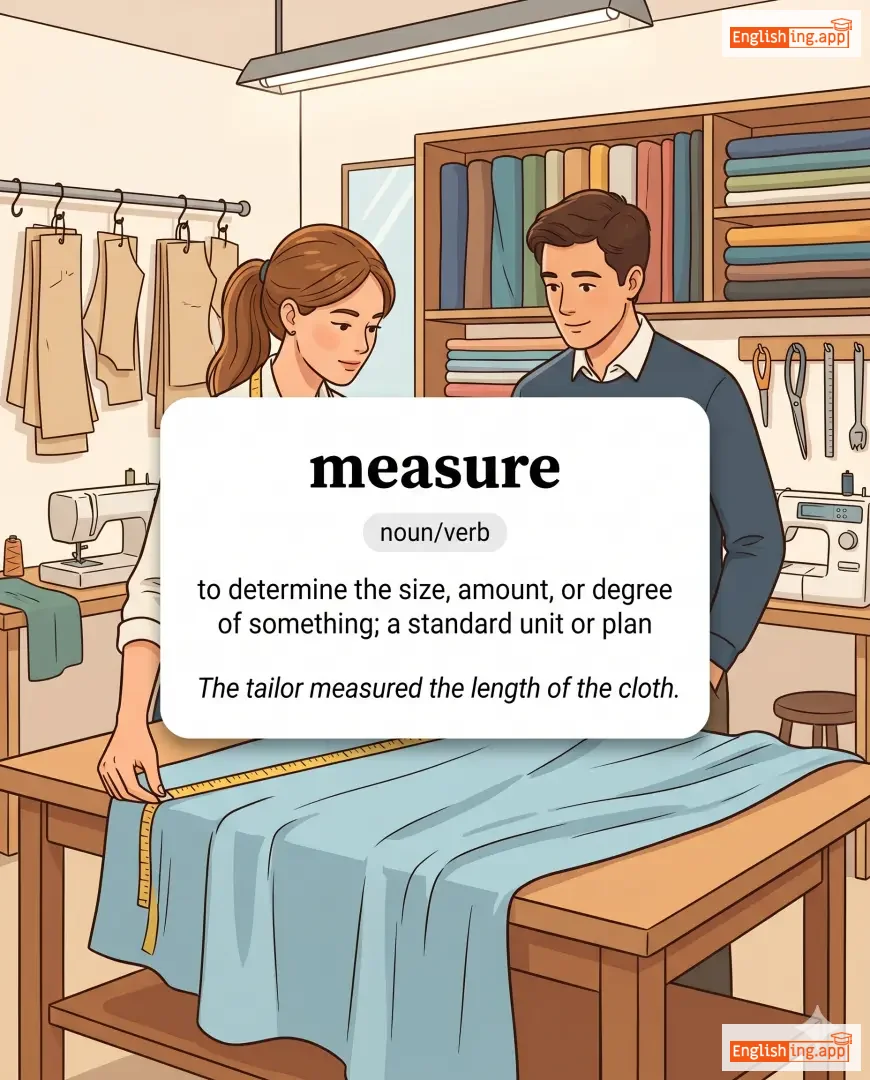
measure definition card — visual illustration of the meaning
noun/verb
/ˈmɛʒər/
測定 / 測定基準 (sokutei / sokutei kijun)

to determine the size, amount, or degree of something; a standard unit or plan

"The tailor measured the length of the cloth."

"仕立て屋は布の長さを測りました。" (Shitateya wa nuno no nagasa wo hakarimashita.)
adjective
/ˈmɛʒərd/
測定された (sokutei sareta)

carefully considered and deliberate

"She spoke in a calm, measured tone."

"彼女は冷静で測定された口調で話しました。" (Kanojo wa reisei de sokutei sareta kuchou de hanashimashita.)
noun
/ˈmeʒərmənt/
測定 (sokutei)

the size, length, or amount of something, as determined by measuring

"The tailor took my waist measurement before stitching the suit."
"仕立て屋はスーツを縫う前に私のウエストの測定を取りました。" (Shitateya wa suutsu o nuu mae ni watashi no uesuto no sokutei o torimashita.)
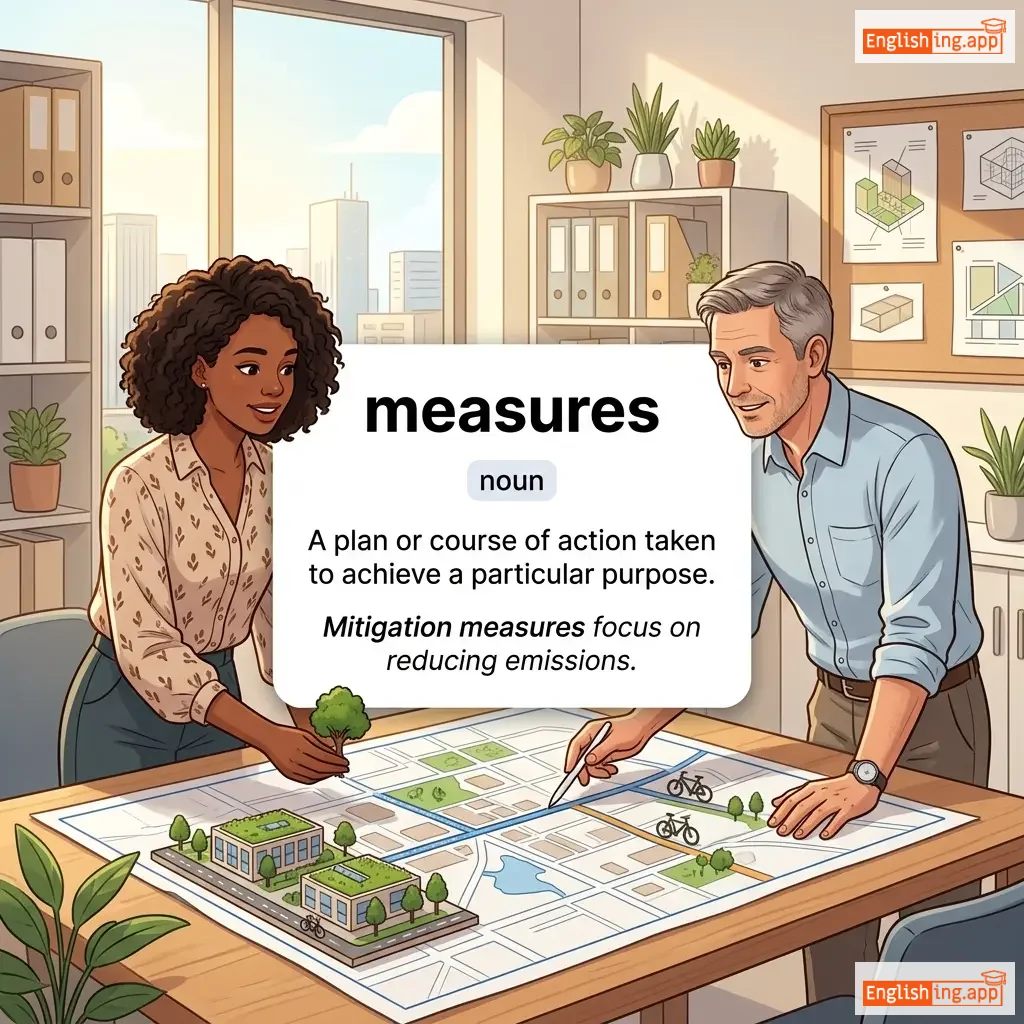
measures definition card — visual illustration of the meaning
noun
ˈmeʒ.ərz
措置 (sochi)

A plan or course of action taken to achieve a particular purpose.

"Mitigation measures focus on reducing emissions."

"緩和措置は排出量の削減に焦点を合わせています。" (Kanka sochi wa haisutsuryō no sakugen ni shōten o awaseteimasu.)
noun
/miːt/
(niku)

the flesh of animals used as food

"She bought fresh meat from the market."

"彼女は市場で新鮮な肉を買いました。" (Kanojo wa ichiba de shinsen na niku o kaimashita.)
noun
/məˈkænɪk/
メカニック (mekanikku)

a person who repairs and maintains machines or vehicles

"The mechanic fixed the engine in less than an hour."

"そのメカニックは1時間以内にエンジンを修理しました。" (Sono mekanikku wa 1 jikan inai ni enjin wo shuuri shimashita.)
adjective
/məˈkænɪkəl/
幸せ (shiawase)

relating to machines or the way they work

"She has a good understanding of mechanical systems."

"彼女は賞を受け取ったとき、自分の幸せを隠すことができませんでした。" (Kanojo wa shō o uketotta toki, jibun no shiawase o kakusu koto ga dekimasen deshita.)
noun
/məˈkænɪks/
力学 (rikigaku)

the branch of physics concerned with the motion of objects and the forces acting on them; also refers to the practical details of how something works

"He studied the mechanics of the machine before fixing it."

"彼は機械を修理する前に、その力学を学んだ。" (Kare wa kikai o shūri suru mae ni, sono rikigaku o mananda.)
noun
/ˈmɛkəˌnɪzəm/
機構 (kikou)

A system of parts working together in a machine; a process or technique for achieving something.

"The mechanism of the clock stopped working after years of use."
"時計の機構は長年の使用後に動作を停止した。" (Tokei no kikou wa naganen no shiyou go ni dousa o teishi shita.)
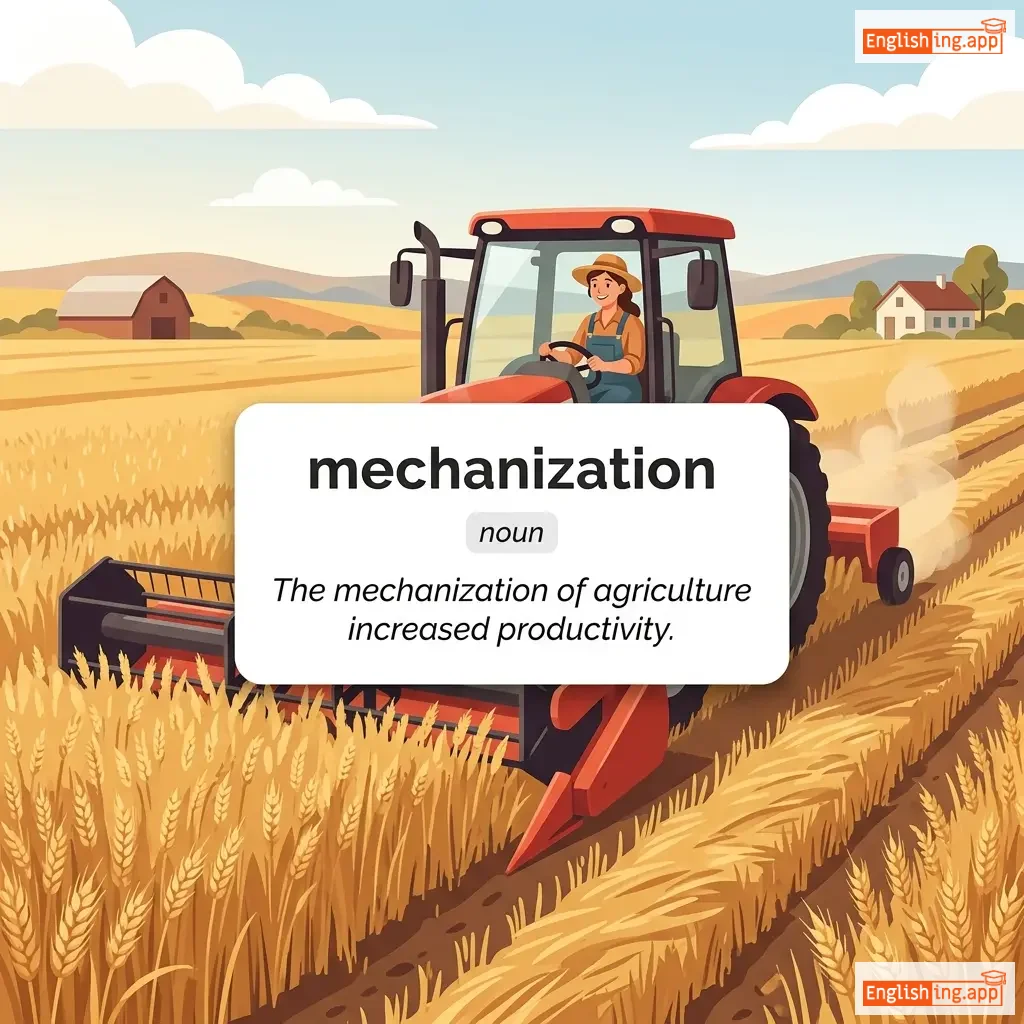
mechanization definition card — visual illustration of the meaning
noun
ˌmɛk.ə.nɪˈzeɪ.ʃən
機械化 (kikaika)

The use of machines in agriculture or industry to increase production efficiency.

"The mechanization of agriculture increased productivity."

"農業の機械化は生産性を向上させた。" (Nōgyō no kikai-ka wa seisansei o kōjō saseta.)
noun
/ˈmɛdəl/
メダル (medaru)

a piece of metal given as an award for achievement

"She won a gold medal in the 100-meter race."

"彼女は100メートル競走で金メダルを獲得しました。" (Kanojo wa 100 mētoru kyōsō de kin medaru o kakutoku shimashita.)
noun
/məˈdæliən/
メダリオン (medarion)

a large medal or decorative piece, often worn as jewelry or used in architecture

"She wore a gold medallion around her neck."

"彼女は首に金のメダリオンをつけていました。" (Kanojo wa kubi ni kin no medarion o tsuketeimashita.)
verb
/ˈmɛdəl/
他人の問題に干渉する (tanin no mondai ni kanshō suru)

to interfere in something that is not one's concern

"He always tries to meddle in other people’s business."

"彼はいつも他人の事に口を出そうとする。" (Kare wa itsumo tanin no koto ni kuchi wo dasou to suru.)
adjective
/ˈmɛdəlsəm/
干渉好きな (kanshō suki na)

fond of interfering in other people’s affairs

"She found her neighbor to be meddlesome and annoying."

"彼女は隣人が干渉的で迷惑だと感じた。" (Kanojo wa rinjin ga kanshō-teki de meiwaku da to kanjita.)
noun
/ˈmiːdiə/
メディア (media)

the main means of mass communication such as newspapers, television, radio, and the internet

"The story quickly spread across the media."

"その話はメディアを通じてすぐに広まりました。" (Sono hanashi wa media o tōjite sugu ni hiromarimashita.)
media dominance definition card — visual illustration of the meaning
noun
ˈmiːdiə ˈdɒmɪnəns
メディア支配 (media shihai)

The control and powerful influence that media has over communication and information distribution in society.

"The internet has enhanced media dominance globally."

"インターネットは世界的にメディア支配を強化した。" (Intānetto wa sekai-teki ni media shihai o kyōka shita.)
adjective
/ˌmed.iˈiː.vəl/
中世の (chūsei no)

relating to the Middle Ages; medieval

"The castle displayed mediaeval architecture and design."

"その城は中世の建築とデザインを展示していました。" (Sono shiro wa chūsei no kenchiku to dezain o tenji shite imashita.)
adjective
/ˈmiː.di.əl/
内側 (uchigawa)

Situated in or pertaining to the middle; located toward the midline of the body or structure.

"The medial side of the knee is more prone to injury."

"膝の内側は怪我をしやすい。" (Hiza no uchigawa wa kega o shiyasui.)
verb
/ˈmiː.di.eɪt/
調停する (choutei suru)

To act as an intermediary in bringing about agreement or reconciliation between parties.

"She was asked to mediate between the two companies."

"彼女は二つの会社の間で調停するよう求められました。" (Kanojo wa futatsu no kaisha no aida de choutei suru you motomeraremashita.)
mediation definition card — visual illustration of the meaning
noun
/ˌmiːdɪˈeɪʃən/
仲裁 (chūsai)

Intervention between parties to promote reconciliation, settlement, or compromise.

"The mediation helped resolve the conflict between the two teams."

"その仲裁は二つのチーム間の対立を解決するのに役立ちました。" (Sono chūsai wa futatsu no chīmukan no tairitsu o kaiketsu suru no ni yakudachimashita.)
mediative definition card — visual illustration of the meaning
adjective
/ˈmiː.di.eɪ.tɪv/
仲裁に関連する (chūsai ni kanren suru)

Related to mediation, helping to resolve conflicts through diplomatic means.

"His mediative skills helped resolve the conflict."

"彼の仲裁スキルは紛争を解決するのに役立った。" (Kare no chūsai sukiru wa funsō o kaiketsu suru no ni yakudatta.)
noun
/ˈmiːdieɪtər/
仲裁者 (chūsai-sha)

A person who attempts to make people involved in a conflict agree

"The United Nations often acts as a mediator in international disputes."
"国際的な争いにおいて、国連はしばしばメディエーターとして機能します。" (Kokusai-teki na arasoi ni oite, kokuren wa shibashiba mediētā to shite kinō shimasu.)
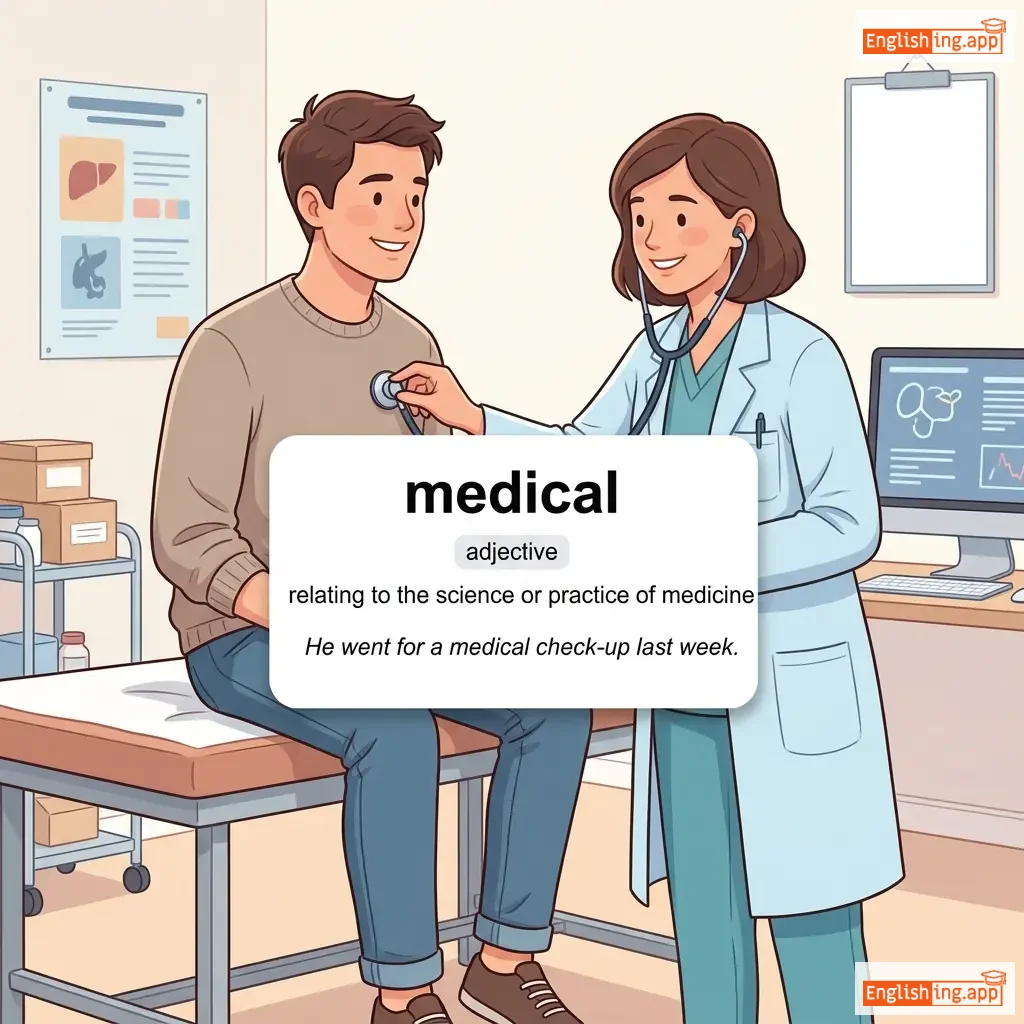
medical definition card — visual illustration of the meaning
adjective
/ˈmedɪkəl/
医療的 (iryōteki)

relating to the science or practice of medicine

"He went for a medical check-up last week."
"彼は先週、医療検査を受けに行きました。" (Kare wa senshū, iryō kensa o uke ni ikimashita.)
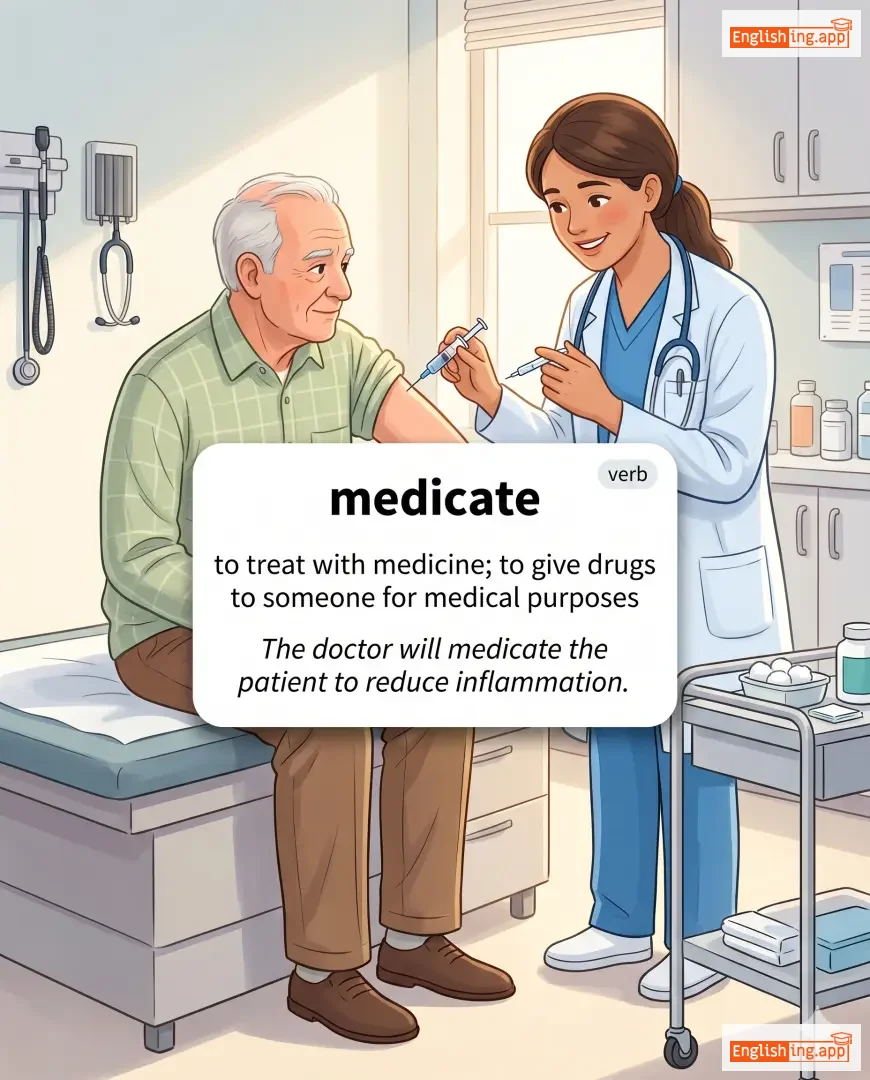
medicate definition card — visual illustration of the meaning
verb
/ˈmedɪkeɪt/
薬を与える (kusuri o ataeru)

to treat with medicine; to give drugs to someone for medical purposes

"The doctor will medicate the patient to reduce inflammation."

"医師は患者に炎症を減らすために薬を処方します。" (Ishi wa kanja ni ensyō o herasu tame ni kusuri o shohō shimasu.)
noun
/ˌmedɪˈkeɪʃən/
(kusuri)

a drug or other form of medicine used to treat or prevent disease

"The doctor prescribed medication for his headache."
"医者は彼の頭痛のために薬を処方した。" (Isha wa kare no zutsuu no tame ni kusuri wo shohou shita.)
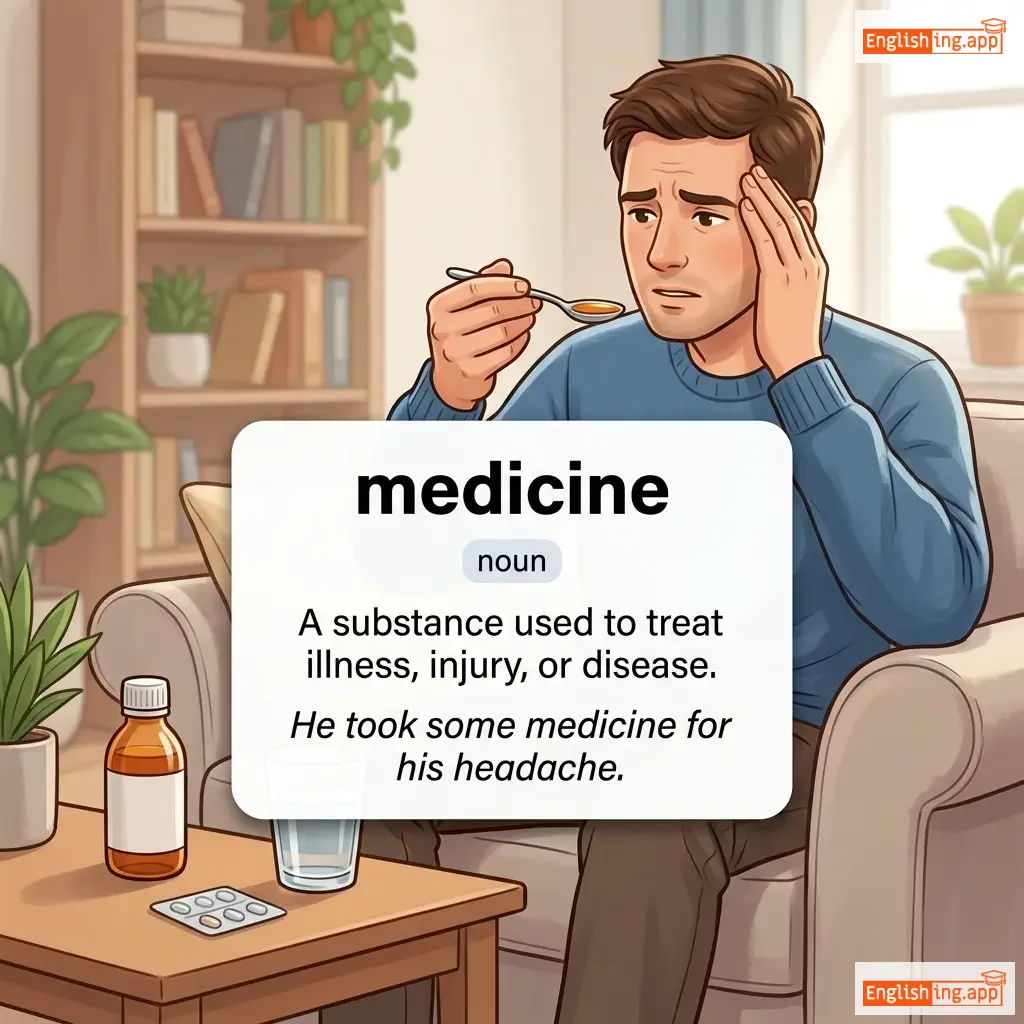
medicine definition card — visual illustration of the meaning
noun
/ˈmed.ɪ.sən/
(kusuri)

A substance used to treat illness, injury, or disease.

"He took some medicine for his headache."

"彼は頭痛のために薬を飲んだ。" (Kare wa zutsū no tame ni kusuri o nonda.)
adjective
/ˌmiː.diˈiː.vəl/
中世の (chūsei no)

Relating to the Middle Ages, the period in European history from about the 5th to the 15th century.

"The castle is a famous medieval monument."

"その城は有名な中世の記念碑です。" (Sono shiro wa yūmei na chūsei no kinenhi desu.)
adjective
/ˌmiː.diˈoʊ.kər/
平凡 (heibon)

Of only average quality; not very good.

"The movie was entertaining but overall mediocre."

"その映画は面白かったが、全体的に平凡だった。" (Sono eiga wa omoshirokatta ga, zentaiteki ni heibon datta.)