語彙集

英単語辞書 | 単語の意味、定義、例文

adjective
/maɪld/
穏やか (odayaka)

not severe or strong; gentle in nature

"The patient had only mild symptoms."

"患者には軽い症状だけがありました。" (Kanja ni wa karui shōjō dake ga arimashita.)
noun
/maɪl/
マイル (mairu)

a unit of distance equal to 1,609.34 meters; a long distance figuratively

"She walked a mile to reach the bus stop."

"彼女はバス停に着くために1マイル歩いた。" (kanojo wa basutei ni tsuku tame ni ichi mairu aruita)
noun
/ˈmaɪlɪdʒ/
燃費 (nenpi)

The distance traveled in miles, or the fuel efficiency of a vehicle.

"This car gives excellent mileage on highways."
"この車は高速道路で優れた燃費を提供します。" (Kono kuruma wa kōsokudōro de yūretta nenpi o teikyō shimasu.)
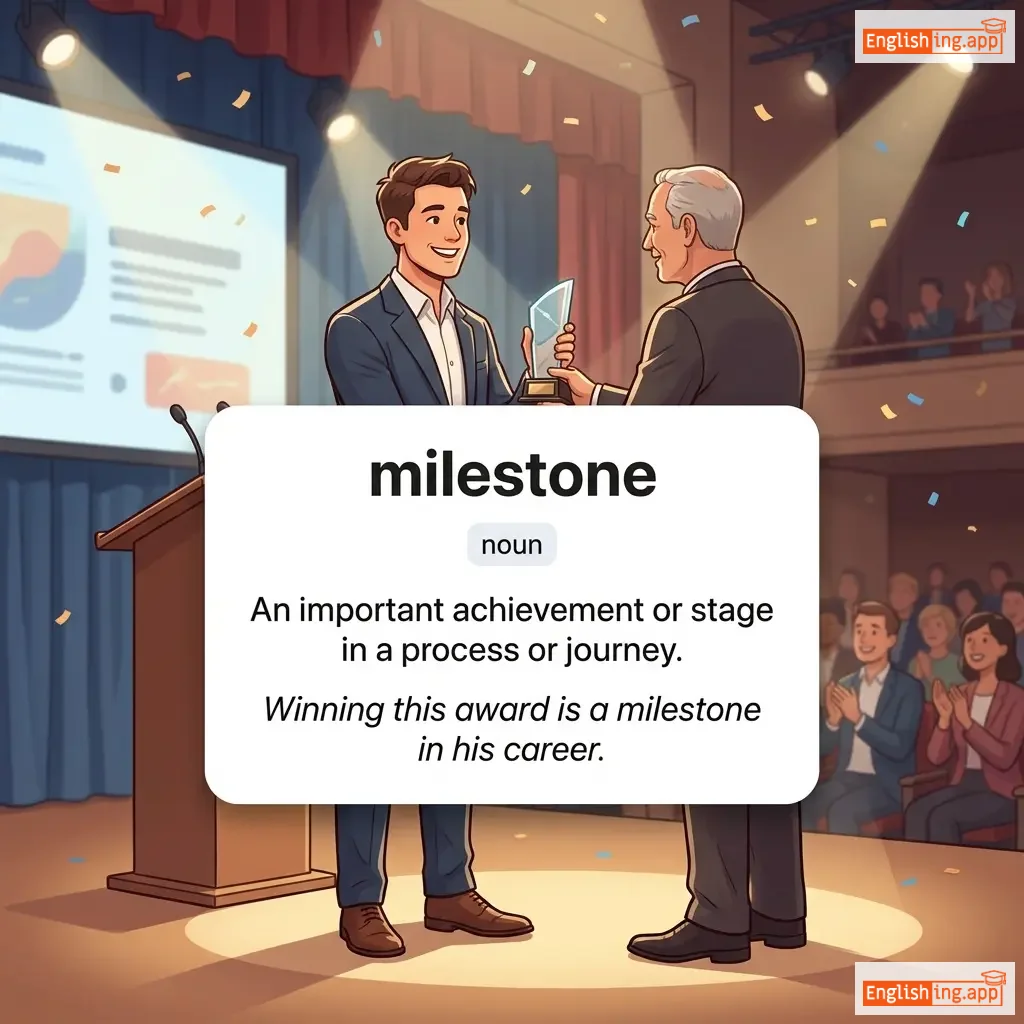
milestone definition card — visual illustration of the meaning
noun
ˈmaɪl.stəʊn
重要な達成 (jūyōna tassei)

An important achievement or stage in a process or journey.

"Winning this award is a milestone in his career."

"この賞を受賞することは彼のキャリアの中でのマイルストーンです。" (Kono shō o jushō suru koto wa kare no kyariā no naka de no mairusutōn desu.)
noun
/miːlˈjuː/
環境 (kankyō)

A person's social environment or surroundings.

"She grew up in an artistic milieu."

"彼女は芸術的な環境で育ちました。" (Kanojo wa geijutsuteki na kankyō de sodachimashita.)
adjective
/ˈmɪlɪtənt/
過激 (kageki)

Aggressively active in a cause, sometimes using forceful methods.

"The group became increasingly militant in their demands."

"そのグループは彼らの要求においてますます過激になった。" (Sono gurūpu wa karera no yōkyū ni oite masumasu kageki ni natta.)
noun
/ˈmɪlɪtəˌrɪzəm/
軍国主義 (gunkokushugi)

The belief in maintaining a strong military and using it aggressively to defend or promote national interests.

"The rise of militarism in the region caused tension among neighboring countries."
"地域での軍国主義の台頭は、隣国間の緊張を引き起こしました。" (Chiiki de no gunkokushugi no taitō wa, ringokukan no kinchō o hikiokoshimashita.)
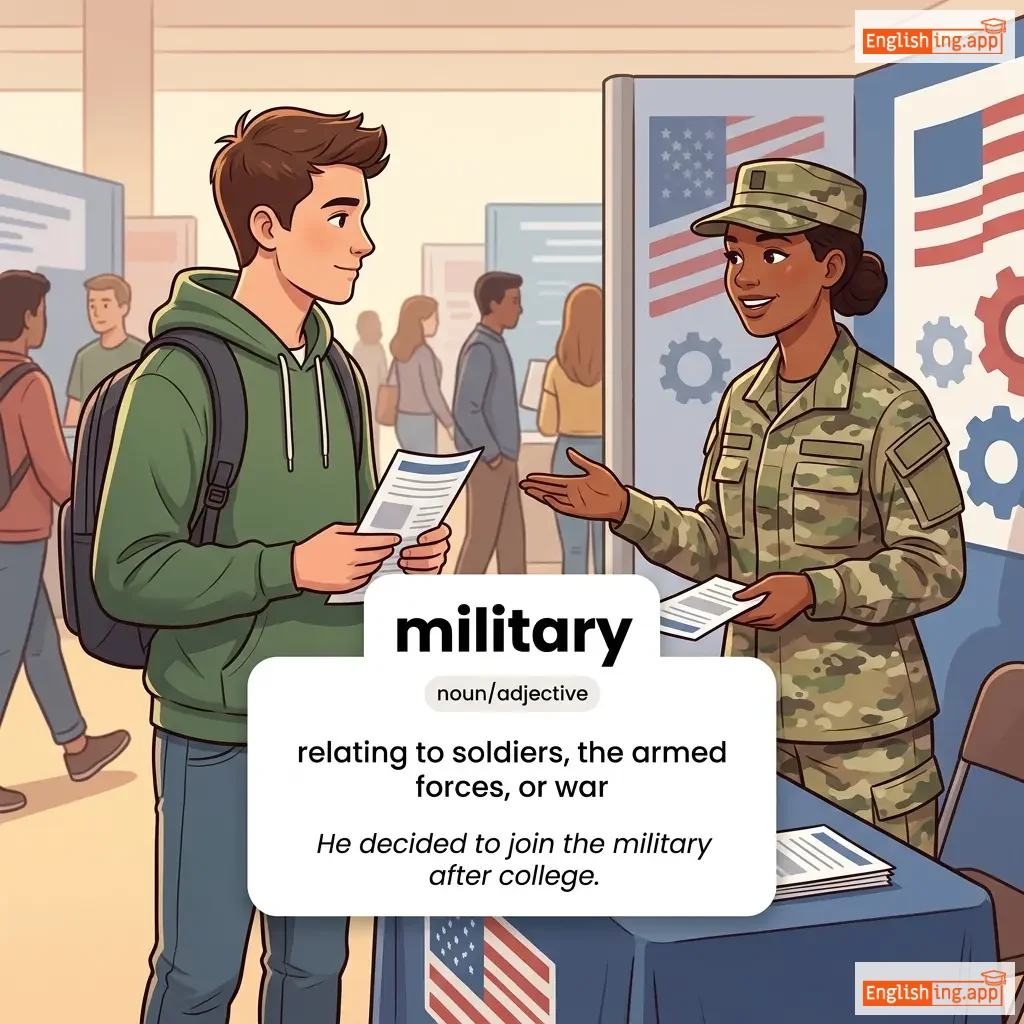
military definition card — visual illustration of the meaning
noun/adjective
/ˈmɪlɪˌtɛri/
軍隊 (guntai)

relating to soldiers, the armed forces, or war

"He decided to join the military after college."
"彼は大学を卒業後、軍隊に参加することに決めた。" (Kare wa daigaku o sotsugyou go, guntai ni sanka suru koto ni kimeta.)
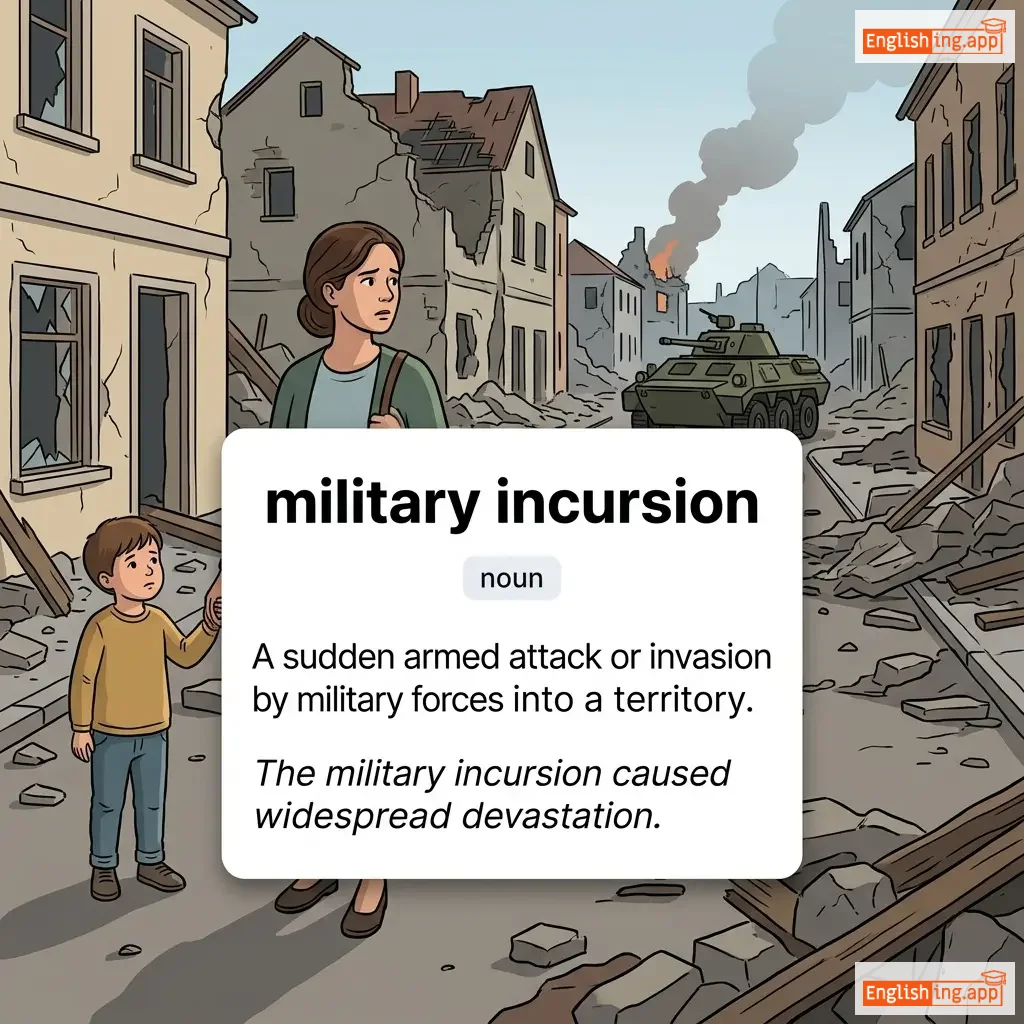
military incursion definition card — visual illustration of the meaning
noun
ˈmɪl.ɪ.tər.i ɪnˈkɜː.ʃən
軍事侵入 (gunji shinnyū)

A sudden armed attack or invasion by military forces into a territory.

"The military incursion caused widespread devastation."

"軍事侵入は広範囲にわたる破壊を引き起こしました。" (Gunji shinnyū wa kōhan'i ni wataru hakai o hikiokoshimashita.)
verb
/ˈmɪlɪˌteɪt/
妨げる (samatageru)

to have a strong effect against something; to work as a powerful factor in preventing or influencing an outcome

"His lack of experience will militate against his promotion."

"彼の経験不足が昇進に対して障害となるだろう。" (kare no keiken fusoku ga shōshin ni taishite shōgai to naru darou.)
noun
/mɪˈlɪʃə/
民兵 (minpei)

a group of ordinary people who are trained to act as soldiers in emergencies

"The village formed a militia to defend against attacks."

"村は攻撃から守るために民兵を結成した。" (Mura wa kougeki kara mamoru tame ni minpei wo kessei shita.)
noun, verb
/mɪlk/
幸せ (shiawase)

noun: a white liquid produced by female mammals for feeding their young; verb: to draw milk from an animal

"She milked the cow early in the morning."

"彼女は朝早くに牛を搾った。" (Kanojo wa asa hayaku ni ushi o shibotta.)
noun
/mɪlk raɪs/
おかゆ (okayu)

A sweet dessert made from rice cooked with milk and sugar

"My grandmother makes delicious milk rice for special occasions."

"私の祖母は特別な機会においしいミルクライスを作ります。" (Watashi no sobo wa tokubetsu na kikai ni oishī mirukuraisu o tsukurimasu.)
noun
/ˈmɪlk pɒt/
ミルクポット (miruku potto)

a container specifically used for storing or serving milk

"She poured fresh milk from the milk-pot into her glass."

"彼女はミルクポットから新鮮なミルクをグラスに注いだ。" (Kanojo wa miruku potto kara shinsen na miruku o gurasu ni sosoi da)
noun
/ˈmɪlk.mæn/
牛乳配達員 (gyūnyū haitatsuin)

a person who delivers milk to homes or businesses

"The milkman delivers fresh milk to our house every morning."

"牛乳配達員は毎朝私たちの家に新鮮なミルクを届けます。" (Gyūnyū haitatsuin wa mai asa watashitachi no ie ni shinsen na miruku o todokemasu.)
adjective
/ˈmɪl.ki waɪt/
ミルクのような白 (miruku no yō na shiro)

a pure white color resembling milk

"The clouds looked milky white against the blue sky."

"青い空を背景に雲がミルキーウェイトに見えた。" (Aoi sora o haikei ni kumo ga mirukīweito ni mieta.)
noun
/mɪl/
製粉所 (seifunsho)

a building equipped with machinery for grinding grain or manufacturing goods

"The old flour mill has been converted into a museum."

"古い小麦粉工場は博物館に改装されました。" (Furui komugiko kōjō wa hakubutsukan ni kaisō saremashita.)
noun
/mɪˈlɛniəm/
千年紀 (sennenki)

a period of one thousand years; often used to mark an anniversary

"The year 2000 was celebrated as the beginning of a new millennium."

"2000年は新しい千年紀の始まりとして祝われました。" (2000nen wa atarashī sennenki no hajimari toshite iwawaremashita.)
noun
/ˈmɪlɪt/
ヒエ (hie)

a small-seeded grass cultivated as a cereal crop

"Millet is often used as food in rural areas."

"ミレットは農村地域で食品としてよく使われます。" (Miretto wa nōson chiiki de shokuhin toshite yoku tsukawaremasu.)
noun
/ˈmɪljən/
百万 (hyakuman)

the number equivalent to one thousand thousand (1,000,000)

"The movie earned over a million dollars in its first week."

"その映画は最初の週に100万ドル以上を稼ぎました。" (Sono eiga wa saisho no shū ni hyakuman doru ijō o kasegimashita.)
noun
/ˌmɪl.jəˈneər/
ミリオネア (mirionea)

A person whose wealth equals or exceeds one million units of currency

"He became a millionaire through smart investments and hard work."

"彼は賢い投資と努力のおかげでミリオネアになった。" (Kare wa kashikoi tōshi to doryoku no okage de mirionea ni natta.)
noun
/maɪm/
マイムアーティスト (maimu atisuto)

A performer who conveys meaning through gestures and body movements without speech.

"The mime entertained the children with exaggerated expressions."

"マイムは誇張した表情で子供たちを楽しませました。" (Maimu wa kochō shita hyōjō de kodomotachi o tanoshimasemashita.)
🦜

Mimic

verb
/ˈmɪmɪk/

To copy the actions, speech, or behavior of someone or something.

"Children often mimic their parents' behavior."

noun
/ˈmɪmɪkri/
模倣 (mohou)

The act of imitating someone or something, often for humor or learning.

"The comedian’s mimicry of celebrities made the audience laugh."

"コメディアンの有名人の模倣で観客を笑わせました。" (Komedian no yuumeijin no mohou de kankyaku wo warawasemashita.)
noun
/ˌmɪnəˈrɛt/
ミナレット (minaretto)

A tall, slender tower of a mosque, from which the call to prayer is announced.

"The minaret of the mosque could be seen from miles away."

"モスクのミナレットは数マイル先から見ることができました。" (Mosuku no minaretto wa suu mairu saki kara miru koto ga dekimashita.)
adjective
/ˈmɪnətɔːri/
威嚇的な (ikakuteki na)

Expressing a threat; menacing.

"The criminal gave the witness a minatory look."
"犯人は証人に威嚇的な視線を送った。" (Hannin wa shōnin ni ikakuteki na shisen o okutta.)
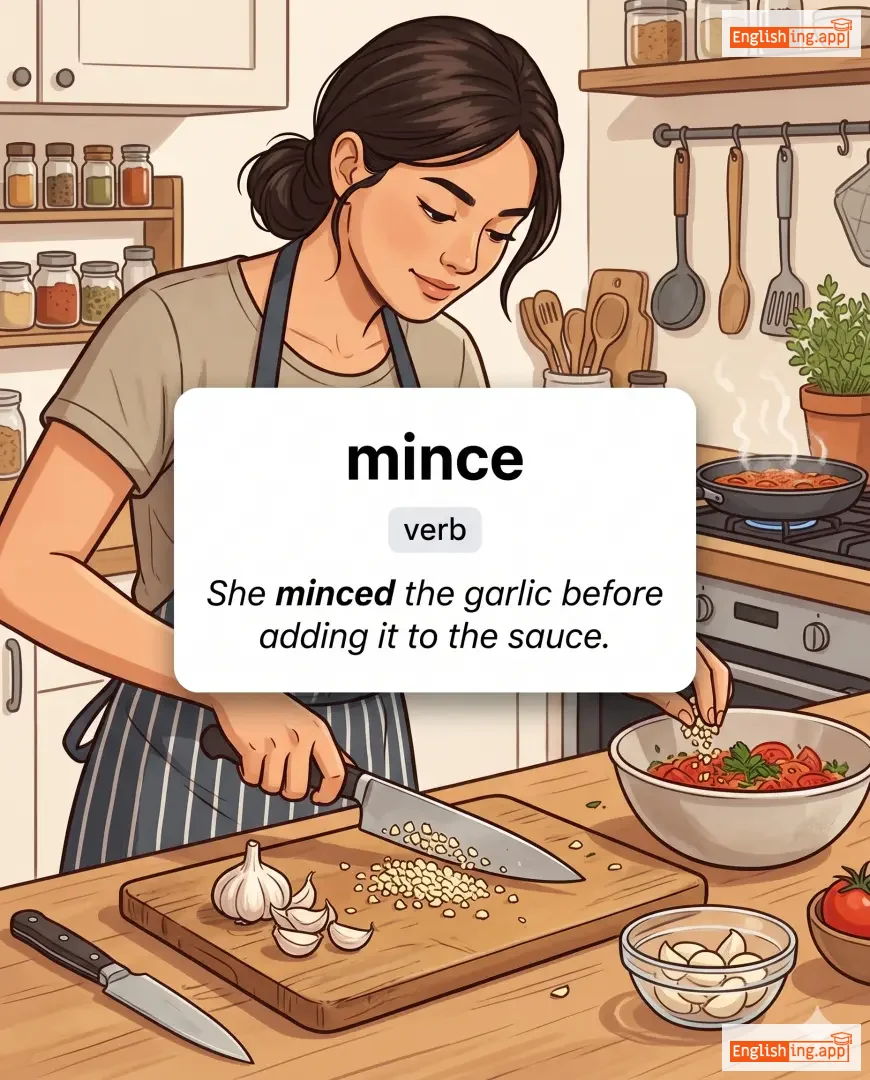
mince definition card — visual illustration of the meaning
verb
/mɪns/
刻む (kizamu)

to cut food, especially meat, into very small pieces; to speak in an affectedly delicate or refined way

"She minced the garlic before adding it to the sauce."

"彼女はソースに加える前にニンニクをみじん切りにしました。" (Kanojo wa sōsu ni kuwaeru mae ni nin'niku wo mijingiri ni shimashita.)
adjective
/ˈmɪnsɪŋ/
気取った (kidotta)

affectedly delicate, dainty, or refined in manner or movement

"He walked with mincing steps across the stage."

"彼はステージを歩くとき、気取った足取りで歩いていました。" (Kare wa suteeji o aruku toki, kidotta ashidori de aruite imashita.)
noun/verb
/maɪnd/
心 / 世話する (kokoro / sewa suru)

the part of a person that enables them to think, feel, and reason; to pay attention or take care

"Please mind the gap between the train and the platform."

"列車とプラットフォームの間の隙間に注意してください。" (Ressha to purattofōmu no aida no suki ma ni chūi shite kudasai.)
adjective
/ˈmaɪnd.fəl/
注意深い; 意識的 (chūibukai; ishikiteki)

being conscious or aware; paying attention to the present moment

"She is always mindful of her surroundings and pays attention to details."
"彼女は常に自分の周りに注意を払い、詳細に気を配っています。" (Kanojo wa jōzu ni jibun no mawari ni chūi o harai, shōsai ni ki o haiteimasu.)
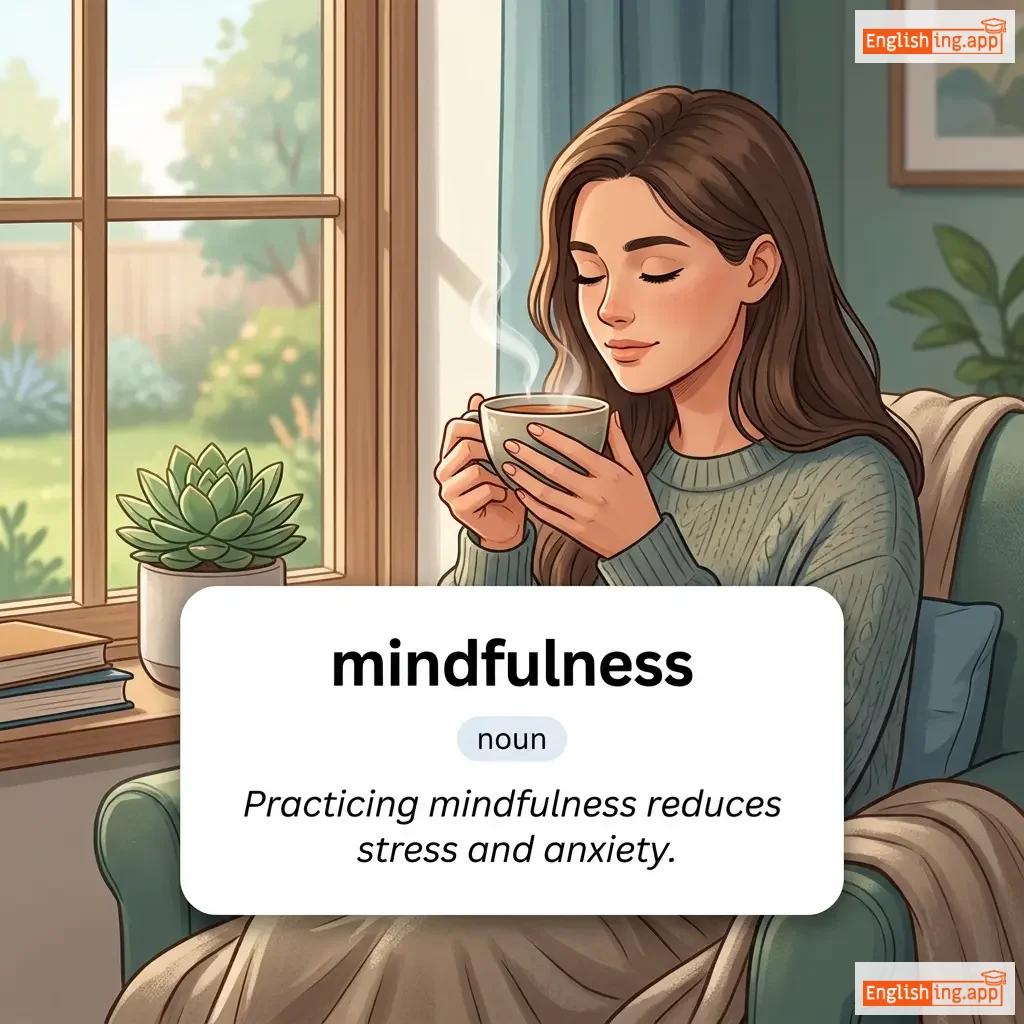
mindfulness definition card — visual illustration of the meaning
noun
/ˈmaɪnd.fʊl.nəs/
マインドフルネス (maindofurunesu)

The quality or state of being conscious or aware of something; a mental state achieved by focusing one's awareness on the present moment.

"Practicing mindfulness reduces stress and anxiety."

"マインドフルネスの実践は、ストレスと不安を軽減します。" (Maindofurunesu no jissen wa, sutoresu to fuan o keigen shimasu.)
adjective
/ˈmaɪndləs/
無意味な (muimi na)

without thought or intelligence; done without consideration

"He was bored by the mindless tasks at work."
"彼は仕事の中で無意味な作業に退屈していた。" (Kare wa shigoto no naka de muimi na sagyō ni taikutsu shite ita.)
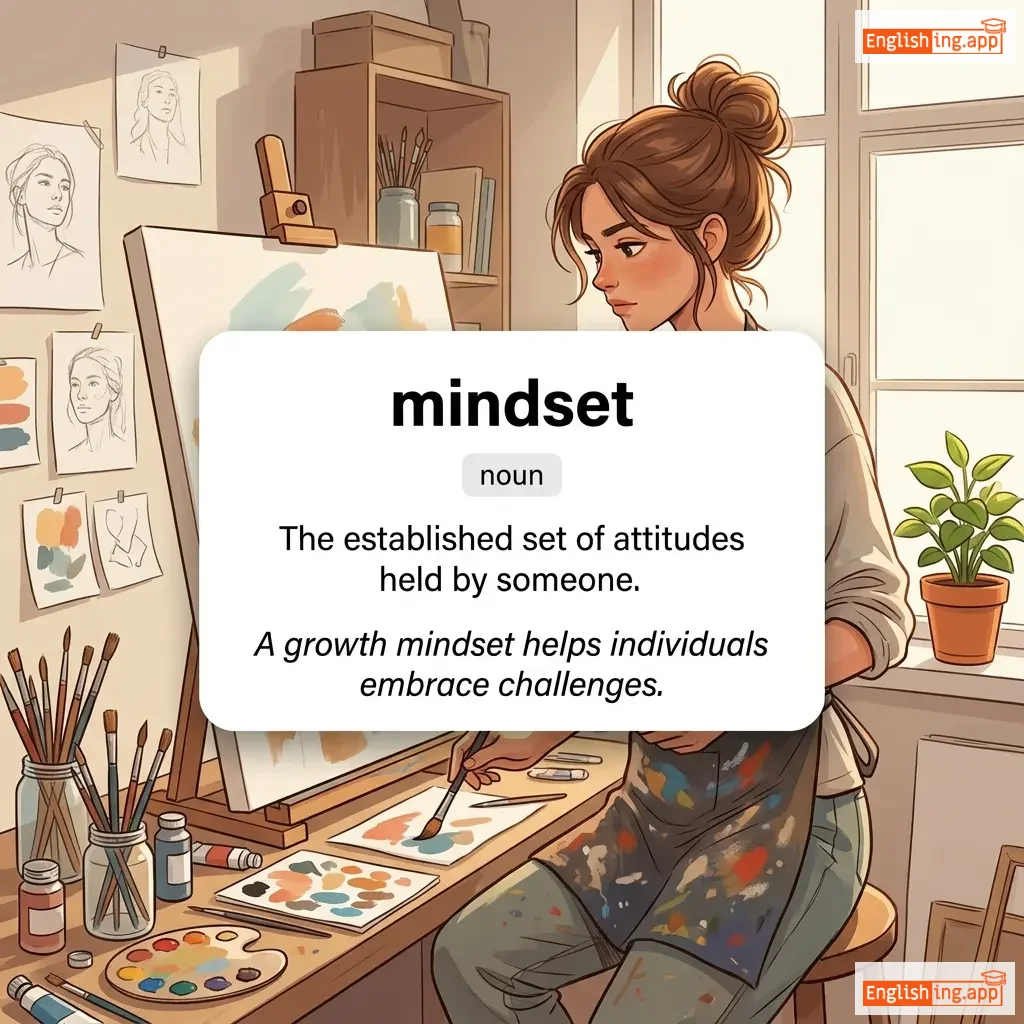
mindset definition card — visual illustration of the meaning
noun
ˈmaɪnd.set
マインドセット (maindosetto)

The established set of attitudes held by someone.

"A growth mindset helps individuals embrace challenges."

"成長マインドセットは、個人が挑戦を受け入れるのを助けます。" (Seichō maindosetto wa, kojin ga chōsen o ukeireru no o tasukemasu.)
noun, pronoun, verb
/maɪn/
鉱山 / 私の (kōzan / watashi no)

a place where minerals are dug from the ground; or something belonging to me

"The workers went deep into the mine to extract coal."

"労働者たちは炭鉱に深く入って炭を採掘しました。" (Rōdō-sha-tachi wa tankō ni fukaku haitte sumi o saikutsu shimashita.)
noun
/ˈmaɪnə(r)/
鉱夫 (kōfu)

a person who works in a mine, extracting minerals or other resources

"The miner worked in the coal mine for many years."

"鉱夫は長年、石炭鉱で働いていました。" (Kōfu wa naganen, sekitan kō de hataraite imashita.)
noun
/ˈmɪnərəl/
鉱物 (kōbutsu)

a naturally occurring substance that is solid and inorganic, often used in industry or nutrition

"Calcium is an important mineral for strong bones."

"カルシウムは強い骨のための重要な鉱物です。" (Karushiumu wa tsuyoi hone no tame no jūyōna kōbutsu desu.)
verb
/ˈmɪŋɡl/

to mix or combine; to move among people and engage socially

"Guests mingled at the party, chatting and laughing together."

adjective
/ˈmɪn.dʒi/
ケチ; 吝嗇 (kechi; rinshaku)

mean or stingy; unwilling to spend money

"He is too mingy to spend money on anything but necessities."

"彼は必要なもの以外にお金を使うのがあまりにもケチだ。" (Kare wa hitsuyou na mono igai ni okane o tsukau no ga amari ni mo kechi da.)
noun/adjective
/ˈmɪnətʃər/ or /ˈmɪniətʃʊr/
ミニチュア版 (minichua-ban)

a very small version of something; small in scale or size

"The artist created a miniature model of the castle."

"アーティストは城のミニチュアモデルを作りました。" (Aatisuto wa shiro no minichua moderu o tsukurimashita.)
adjective
/ˈmɪnɪməl/
最小限 (saishōgen)

the smallest or least amount possible

"The damage to the car was minimal after the accident."
"事故後、車の損傷は最小限でした。" (Jiko-go, kuruma no sonshō wa saishōgen deshita.)
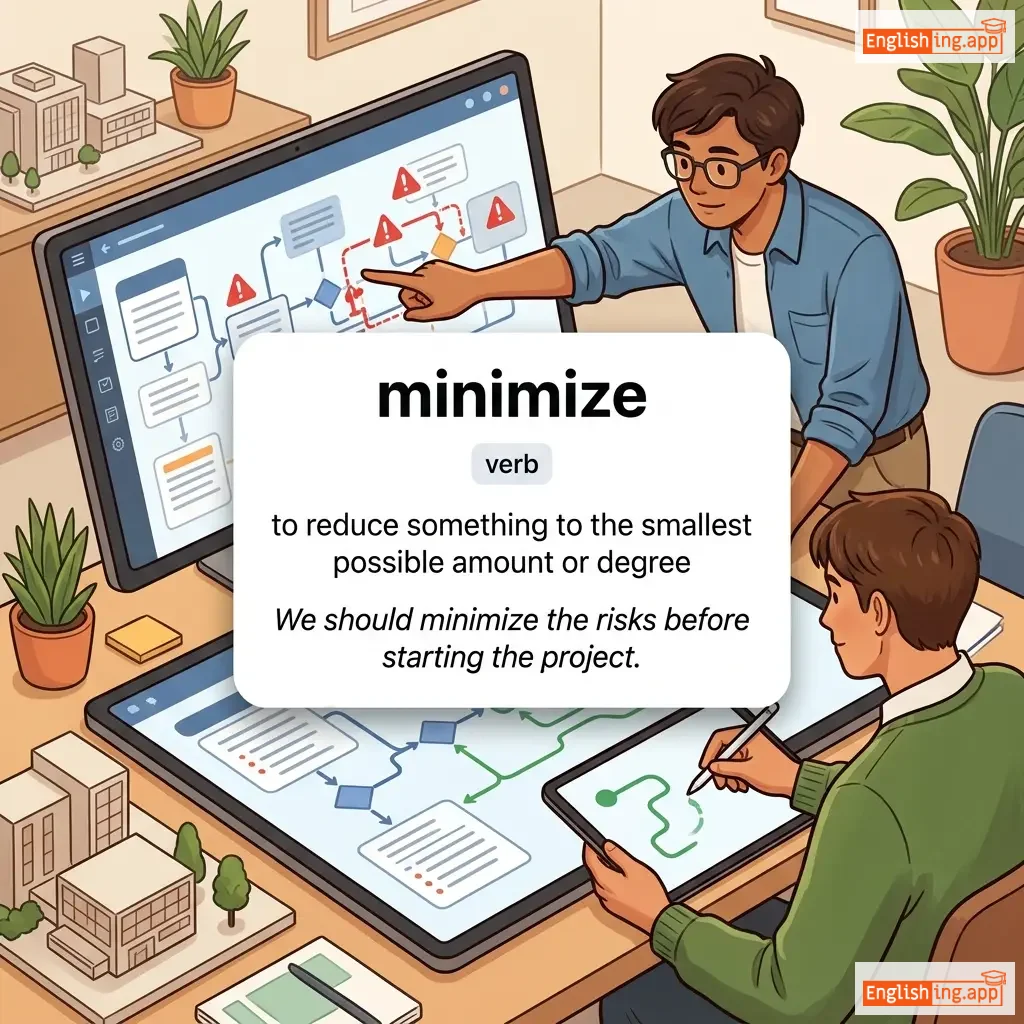
minimize definition card — visual illustration of the meaning
verb
/ˈmɪnɪmaɪz/
最小化する (saishōka suru)

to reduce something to the smallest possible amount or degree

"We should minimize the risks before starting the project."
"プロジェクトを始める前にリスクを最小化するべきです。" (Purojekuto o hajimeru mae ni risuku o saishōka suru beki desu.)
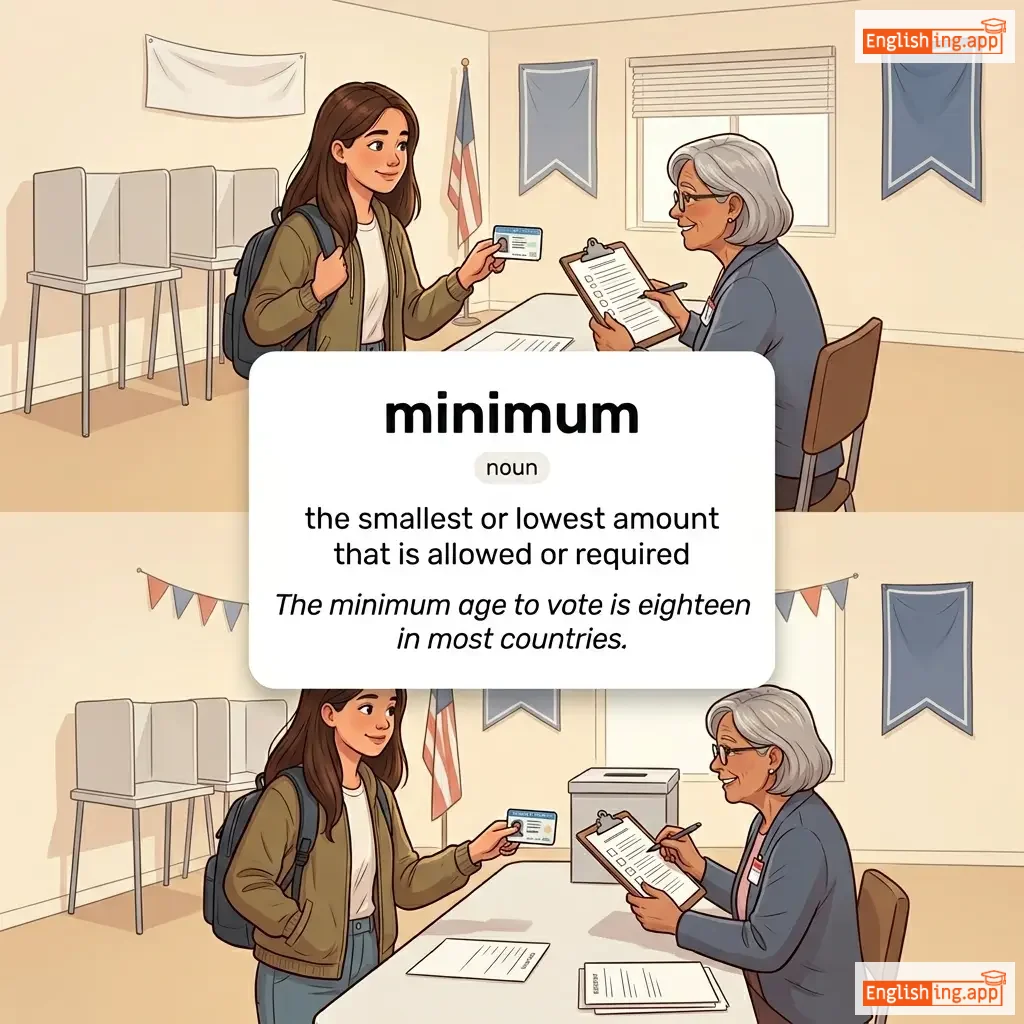
minimum definition card — visual illustration of the meaning
noun
/ˈmɪnɪməm/
最小限 (saishōgen)

the smallest or lowest amount that is allowed or required

"The minimum age to vote is eighteen in most countries."

"投票のための最小年齢は、ほとんどの国で18歳です。" (Tōhyō no tame no saishō nenrei wa, hotondo no kuni de 18-sai desu.)
noun
/ˈmaɪnɪŋ/
採掘 (saikutsu)

the process of extracting valuable minerals or other resources from the earth

"Mining in this area has increased in recent years."

"この地域での採掘は近年増加しています。" (Kono chiiki de no saikutsu wa kin-nen zōka shiteimasu.)
🧑‍🤝‍🧑

minion (ミニオン)

noun
/ˈmɪn.i.ən/
手先 (tesaki)

A follower or underling of a powerful person, especially a servile one.

"The dictator was surrounded by loyal minions who carried out his orders."

"独裁者は忠実な手先に囲まれていて、彼の命令を実行していた。" (Dokusai-sha wa chūjitsu na tesaki ni kakomarete ite, kare no meirei o jikkō shite ita.)
adjective
/ˈmɪn.ɪ.skjuːl/
微小 (bishou)

Extremely small or tiny.

"The error was so miniscule that nobody noticed it."

"その誤りは非常に微小で、誰もそれに気づかなかった。" (Sono ayamari wa hijou ni bishou de, dare mo sore ni kizukanakatta.)
noun
/ˈmɪnɪstər/
大臣 (daijin)

a head of a government department; a person who leads a church

"The finance minister announced new tax policies."

"財務大臣は新しい税制政策を発表しました。" (Zaimu daijin wa atarashī zei-sei seisaku o happyō shimashita.)
noun
/ˌmɪn.ɪˈstreɪ.ʃən/
奉仕 (houshi)

The act of providing care, assistance, or religious service.

"She recovered thanks to the kind ministrations of the nurses."

"彼女は看護師の親切な奉仕のおかげで回復した。" (Kanojo wa kangoshi no shinsetsuna houshi no okage de kaifuku shita.)
noun
/ˈmɪn.ɪ.stri/
(shō)

A government department headed by a minister or the work of a religious minister.

"He works at the Ministry of Education."

"彼は教育省で働いています。" (Kare wa kyōiku-shō de hataraiteimasu.)
adjective/noun
/ˈmaɪ.nər/
小さい / 未成年 (chiisai / misenen)

less important, serious, or significant; a person under the legal age

"Luckily, the accident caused only minor injuries."

"幸運にも、事故は軽いけがだけを引き起こしました。" (kouun ni mo, jiko wa karui kega dake o hikiokoshimashita.)
noun
/maɪˈnɔːr.ɪ.ti/
少数派 (shousuhai)

A smaller number or part, especially a group differing from the majority.

"The law aims to protect the rights of ethnic minorities."

"この法律は、民族的少数派の権利を保護することを目的としています。" (Kono houritsu wa, minzokuteki shousuhai no kenri o hogo suru koto o mokuteki to shiteimasu.)