語彙集

英単語辞書 | 単語の意味、定義、例文

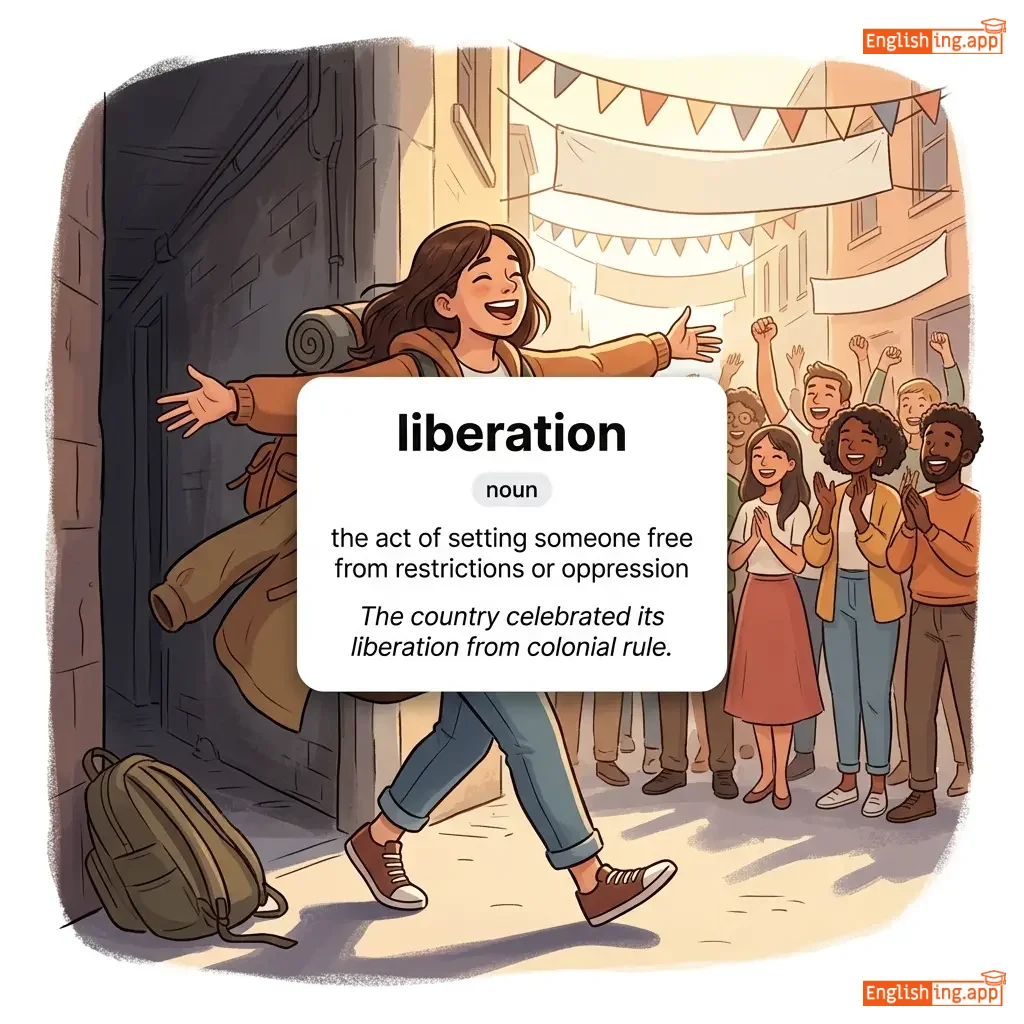
liberation definition card — visual illustration of the meaning
noun
/ˌlɪbəˈreɪʃən/
解放 (kaihō)

the act of setting someone free from restrictions or oppression

"The country celebrated its liberation from colonial rule."

"その国は植民地支配からの解放を祝いました。" (Sono kuni wa shokuminchi shihai kara no kaihō o iwai mashita.)
noun
/ˌlɪbəˈreɪʃən wɔːr/
解放戦争 (kaihou sensou)

a war fought to gain freedom from foreign rule, occupation, or oppression; an armed struggle for national independence

"The liberation war reshaped the nation’s history and identity."

"解放戦争は国の歴史を大きく変えた。" (kaihou sensou wa kuni no rekishi o ookiku kaeta)
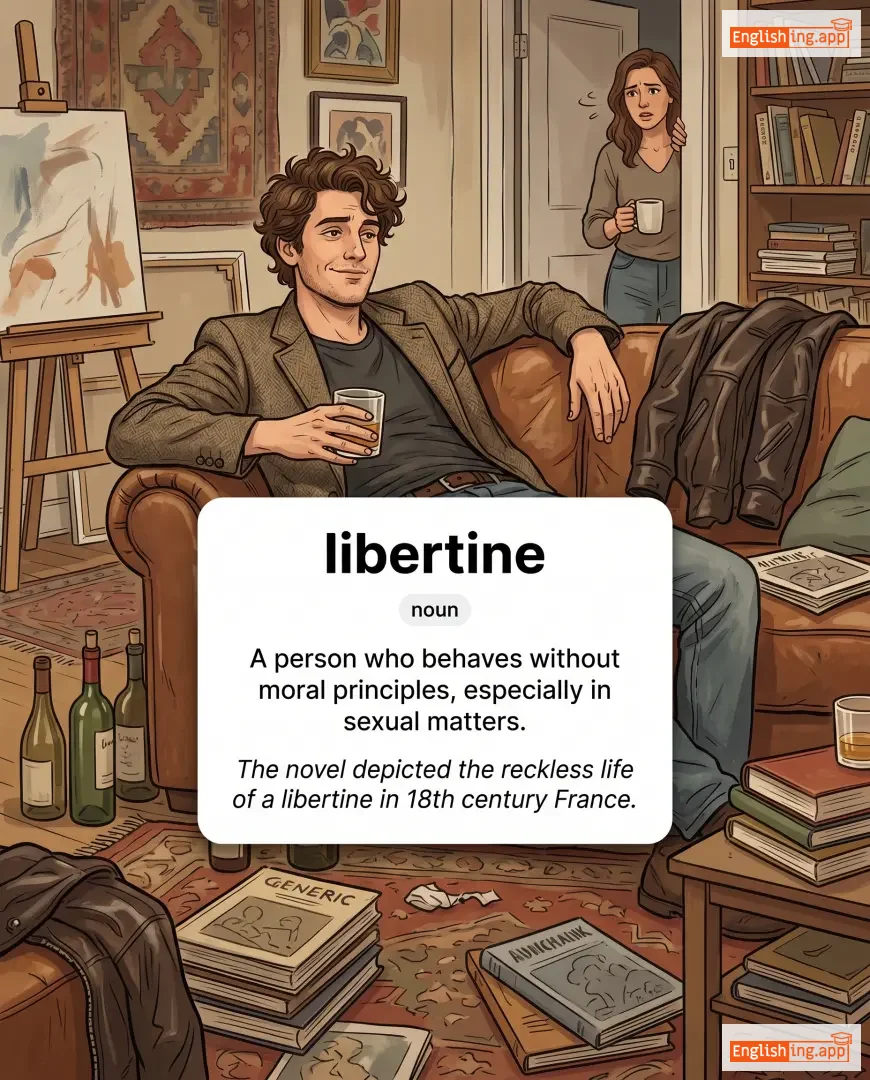
libertine definition card — visual illustration of the meaning
noun
/ˈlɪbərˌtiːn/

A person who behaves without moral principles, especially in sexual matters.

"The novel depicted the reckless life of a libertine in 18th century France."

noun
/ˈlɪbərti/
自由 (jiyuu)

the state of being free within society from oppressive restrictions

"Freedom of speech is a basic liberty."

"言論の自由は基本的な自由です。" (genron no jiyuu wa kihonteki na jiyuu desu.)
adjective
/lɪˈbɪdənəs/
淫ら (midara)

Showing excessive sexual drive; lustful.

"The play was criticized for its libidinous characters."
"その劇は淫らなキャラクターで批判された。" (Sono geki wa midara na kyarakutā de hihan sareta.)
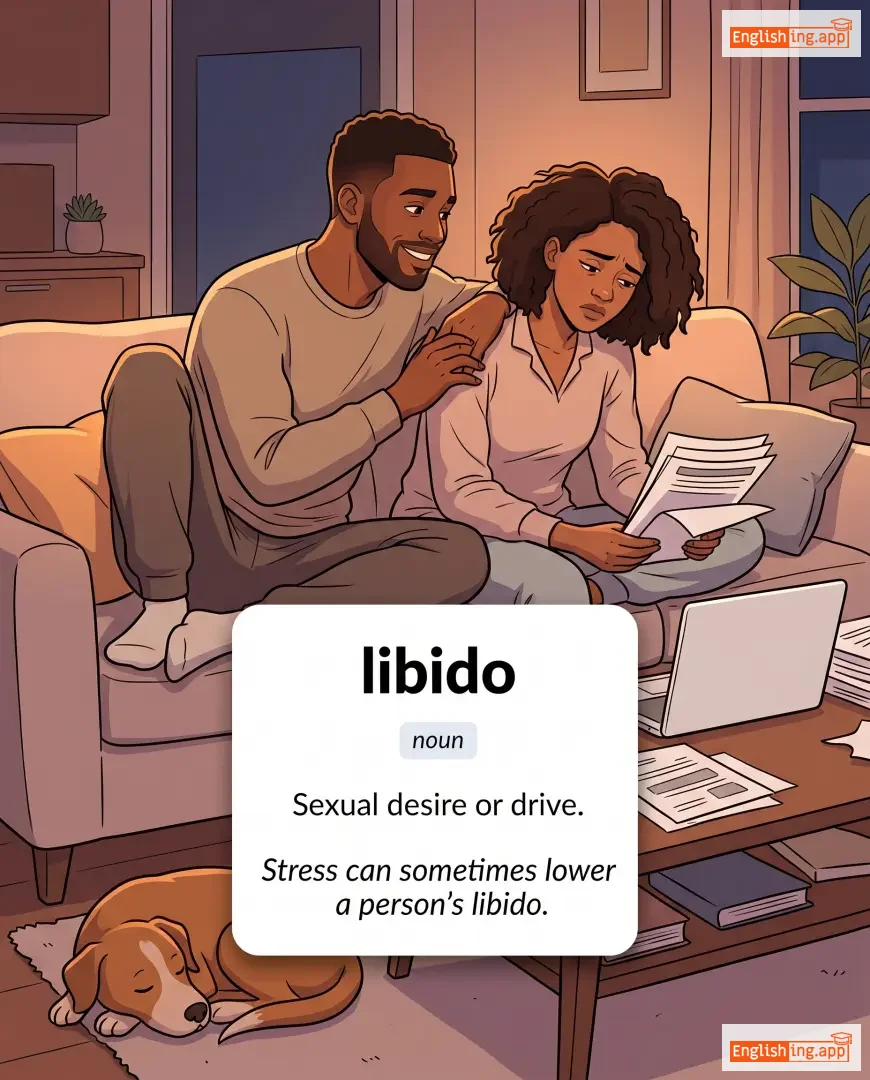
libido definition card — visual illustration of the meaning
noun
/lɪˈbiːdoʊ/
性欲 (seiyoku)

Sexual desire or drive.

"Stress can sometimes lower a person's libido."

"ストレスは時々、ある人の性欲を減少させることがあります。" (Sutoresu wa tokidoki, aru hito no seiyoku o genshō saseru koto ga arimasu.)
noun
/laɪˈbrɛəriən/
司書 (shisho)

a person who manages, organizes, and assists users in a library

"The librarian helped me find a rare history book."

"司書は私が珍しい歴史の本を見つけるのを手伝ってくれました。" (shisho wa watashi ga mezurashii rekishi no hon o mitsukeru no o tetsudatte kuremashita)
noun
/ˈlaɪ.brɛr.i/
図書館 (tosyokan)

A building or room containing collections of books, periodicals, and sometimes other materials for people to read or borrow.

"She spent the afternoon studying in the library."

"彼女は図書館で午後を勉強して過ごしました。" (Kanojo wa tosyokan de gogo o benkyou shite sugoshimashita.)
noun
/lɪˈbrɛtoʊ/
オペラの台本 (opera no daihon)

The text of an opera or other long vocal work.

"She studied the libretto before attending the opera performance."

"彼女はオペラの公演に行く前にリブレットを勉強しました。" (Kanojo wa opera no kouen ni iku mae ni riburetto o benkyou shimashita.)
noun
/ˈlaɪsəns/
免許 (menkyo)

An official document giving permission to do, use, or own something.

"She applied for a driving licence last week."

"彼女は先週、運転免許証を申請した。" (Kanojo wa senshū, unten menkyo-shou o shinsei shita.)
noun, verb
/ˈlaɪsəns/
ライセンス / 許可 (raizensu / kyoka)

A legal permission to do something (noun); to grant such permission (verb).

"You must have a driving license to operate a car legally."

"車を合法的に運転するためには運転免許が必要です。" (Kuruma o gōhōteki ni unten suru tame ni wa unten menkyo ga hitsuyō desu.)
noun
/ˌlaɪ.sənˈsiː/
ライセンス保持者 (raizensu mochi-sha)

a person or organization that holds a license to do something

"The licensee is responsible for following all regulations."

"ライセンス保持者はすべての規制を遵守する責任があります。" (Raizensu mochi-sha wa subete no kisei o junshu suru sekinin ga arimasu.)
adjective
/laɪˈsɛnʃəs/
放蕩 (hōtō)

Lacking moral restraint; disregarding accepted rules of conduct.

"The novel was criticized for its licentious themes."

"その小説は放蕩的なテーマで批判された。" (Sono shōsetsu wa hōtō-teki na tēma de hihan sareta.)
adjective
/ˈlɪsɪt/
合法 (gōhō)

Permitted by law or by rules; legal.

"The trade of certain goods is licit under international law."
"特定の商品の取引は国際法の下で合法です。" (Tokutei no shōhin no torihiki wa kokusaihō no moto de gōhō desu.)
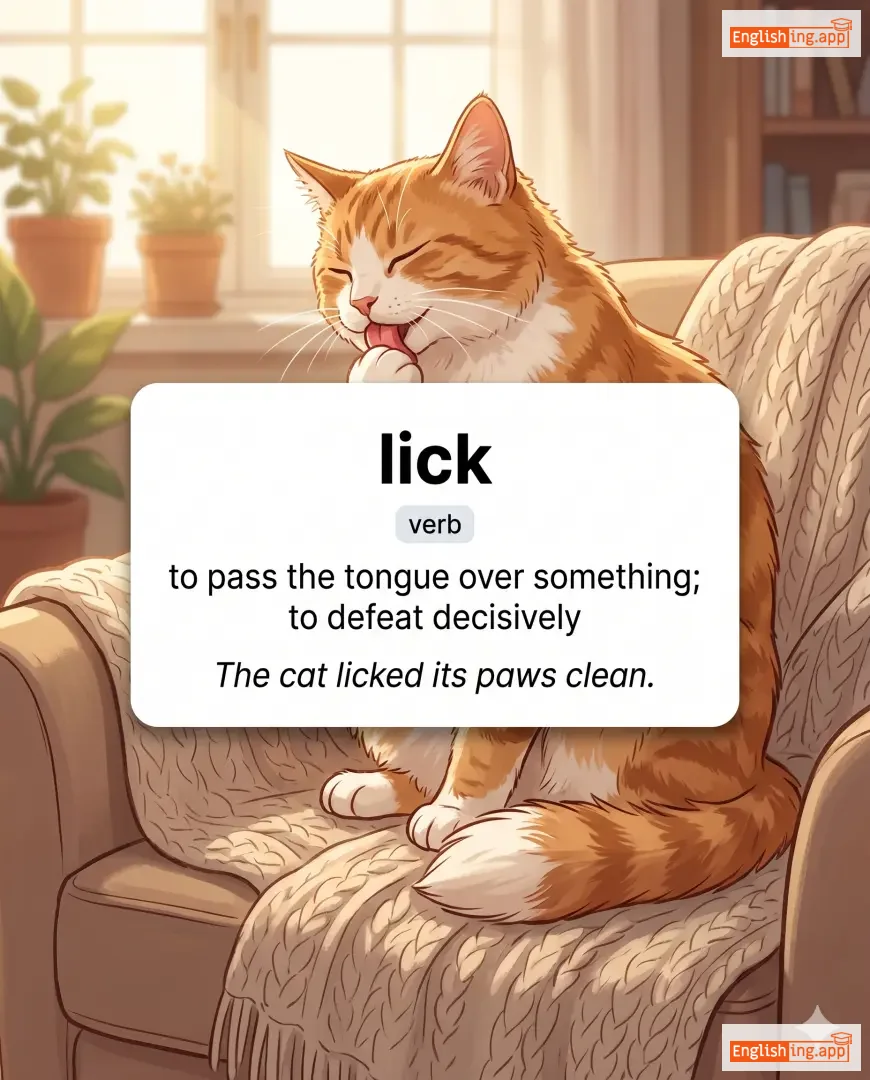
lick definition card — visual illustration of the meaning
verb
/lɪk/
舐める (nameru)

to pass the tongue over something; to defeat decisively

"The cat licked its paws clean."

"ネコは足をきれいに舐めました。" (Neko wa ashi o kirei ni namemashita.)
noun
/lɪd/
ふた (futa)

a cover for the top of a container

"She closed the lid tightly on the jar."

"彼女は瓶のふたをしっかりと閉めました。" (Kanojo wa bin no futa o shikkari to shimemashita.)
lie definition card — visual illustration of the meaning
verb
/laɪ/
嘘をつく (uso o tsuku)

To make a false statement with the intention to deceive.

"He lied about his age to get the job."

"彼は仕事を得るために年齢について嘘をついた。" (Kare wa shigoto o eru tame ni nenrei ni tsuite uso o tsuita.)
noun
/liːdʒ/
領主 (ryoushu)

A feudal lord entitled to allegiance and service; a loyal subject.

"The knight pledged loyalty to his liege."

"騎士は彼の領主に忠誠を誓った。" (Kishi wa kare no ryoushu ni chūsei o chikatta.)
noun
/liːən/
留置権 (ryūchiken)

A legal right to keep possession of property until a debt is paid.

"The bank placed a lien on the house until the mortgage was cleared."

"銀行は住宅にリース権を設定しました、住宅ローンが清算されるまで。" (Ginkō wa jūtaku ni rīsu-ken o settei shimashita, jūtaku rōn ga seisan sareru made.)
noun
/ˈlaɪər/
嘘つき (usotsuki)

a person who tells lies; an alternative spelling of liar

"No one trusted him because he was known as a habitual lier."

"彼は常習的な嘘つきだったので、誰も彼を信用しなかった。" (kare wa shuushuuteki na usotsuki datta node dare mo kare o shinyou shinakatta)
noun
/luː/
代わりに (kawarini)

Instead of; in place of.

"He gave money in lieu of flowers."

"彼は花の代わりにお金を渡した。" (Kare wa hana no kawarini okane o watashita.)
noun
/laɪf/
生命 (seimei)

The existence of an individual human being or animal.

"Life is full of challenges and opportunities."
"生命は挑戦と機会に満ちています。" (Seimei wa chōsen to kikai ni michiteimasu.)
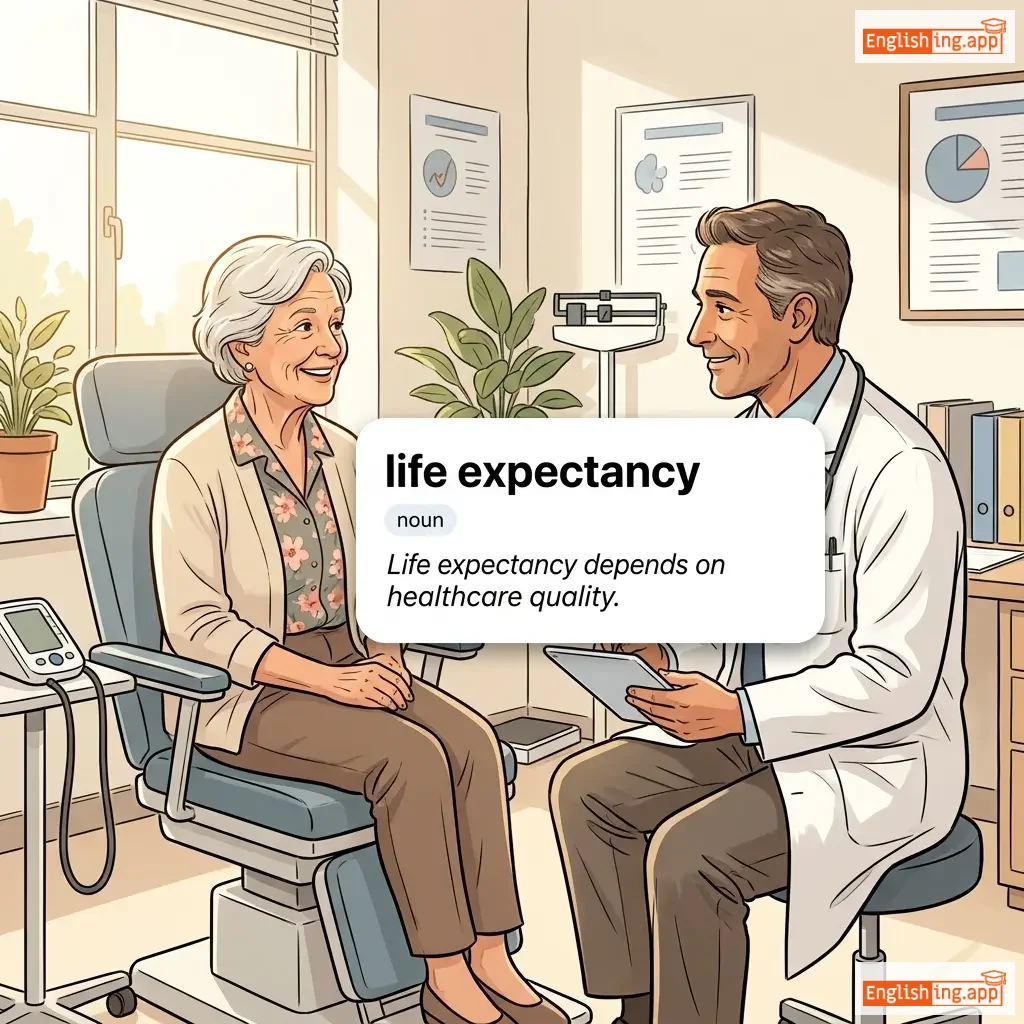
life expectancy definition card — visual illustration of the meaning
noun
ˈlaɪf ɪkˌspek.tən.si
平均寿命 (heikin jumyō)

The average period that a person may expect to live; the length of time for which something is expected to last or to continue being effective.

"Life expectancy depends on healthcare quality."

"平均寿命は医療の質に依存します。" (Heikin jumyō wa iryō no shitsu ni izon shimasu.)
adjective
/ˈlaɪf.laɪk/
リアルに似ている (riaruni niteiru)

Very similar to a real person, object, or scene; realistic.

"The wax figure was so lifelike that people thought it was a real person."

"その蝋人形は非常にリアルに似ていて、人々はそれが本物の人物だと思った。" (Sono rōningyō wa hijō ni riaruni niteite, hitobito wa sore ga honmono no jinbutsu da to omotta.)
adjective
/ˈlaɪf.lɒŋ/
生涯 (shōgai)

Lasting or existing for the whole of a person's life.

"They remained lifelong friends."

"彼らは生涯の友人でした。" (Karera wa shōgai no yūjin deshita.)
noun
/ˈlaɪf.staɪl/
ライフスタイル (raifusutairu)

The way in which a person or group lives, including habits, attitudes, and possessions.

"A healthy lifestyle includes regular exercise and a balanced diet."

"健康的なライフスタイルには、定期的な運動とバランスの取れた食事が含まれます。" (Kenko teki na raifusutairu ni wa, teikitekina undo to baransu no toreta shokuji ga fukumaremasu.)
noun
/ˈlaɪf.taɪm/
生涯 (shougai)

The duration of a person's life or the existence of something.

"She achieved more in her lifetime than most people dream of."

"彼女は自分の生涯で、ほとんどの人が夢見る以上のことを達成した。" (Kanojo wa jibun no shougai de, hotondo no hito ga yumemiru ijou no koto o tassei shita.)
verb
/lɪft/
持ち上げる (mochiageru)

To raise something to a higher position or level.

"He lifted the heavy box with ease."

"彼は簡単に重い箱を持ち上げました。" (Kare wa kantan ni omoi hako o mochiagemashita.)
noun
/ˈlɪɡ.əmənt/
靭帯組織 (Jintai soshiki)

A tough band of tissue that connects bones at a joint.

"He tore a ligament in his knee while playing football."

"サッカーをしているときに膝の靭帯を切った。" (Sakkā o shite irutoki ni hiza no jintai o kitta.)
noun
/ˈlɪɡ.ə.tʃər/
括弧 (kakko)

A thing used for tying or binding tightly; in music/printing, two or more notes or letters joined together.

"The doctor used a ligature to stop the bleeding."
"医者は出血を止めるためにリガチュアを使用しました。" (Isha wa shukketsu o tomeru tame ni rigachua o shiyō shimashita.)
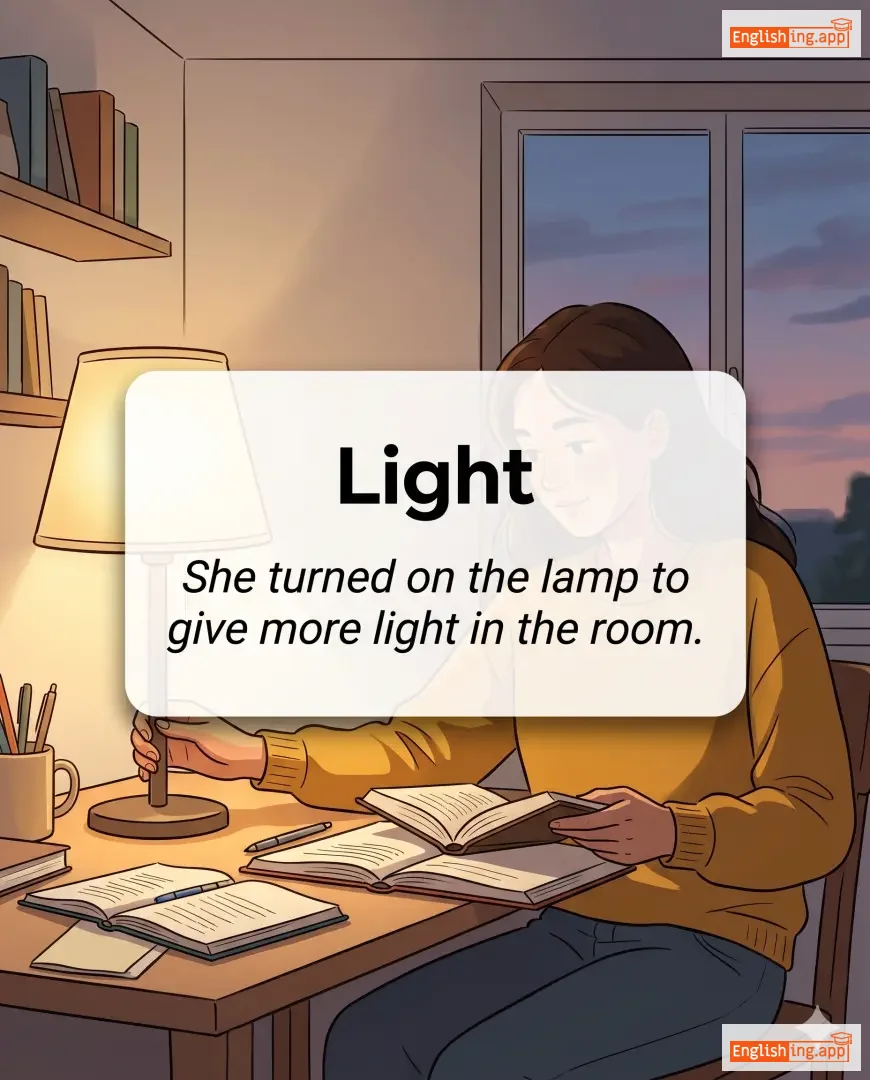
Light definition card — visual illustration of the meaning
noun, verb, adjective
/laɪt/
(hikari)

The natural agent that makes things visible; to illuminate or make something start burning.

"She turned on the lamp to give more light in the room."

"彼女は部屋にもっと光を入れるためにランプをつけました。" (Kanojo wa heya ni motto hikari wo ireru tame ni ranpu wo tsukemashita.)
noun
/laɪt bʌlb/
電球 (denkyū)

a glass or plastic container that produces light when electricity passes through it

"The light bulb in the kitchen needs to be replaced."

"キッチンの電球は交換する必要があります。" (kitchin no denkyū wa kōkan suru hitsuyō ga arimasu)
noun
/laɪt ˈkʌlər/
明るい色 (akarui iro)

a pale or bright shade of any color

"The walls were painted in light colours to make the room look bigger."

"部屋を広く見せるために、壁は明るい色で塗られました。" (Heya o hiroku miseru tame ni, kabe wa akarui iro de nuraremashita.)
adjective
/laɪt ɡriːn/
ライトグリーン (raito guriin)

a pale shade of green color; not dark green

"She wore a light green dress to the garden party."

"彼女はガーデンパーティーにライトグリーンのドレスを着て行きました。" (Kanojo wa gāden pātī ni raito gurīn no doresu o kite ikimashita.)
adjective
/laɪt red/
薄紅色 (usui akairo)

a pale or diluted shade of red color

"She wore a light red dress to the party."

"彼女はパーティーに薄紅色のドレスを着ていました。" (Kanojo wa pātii ni usui akairo no doresu o kite imashita.)
adjective
/ˌlaɪtˈhɑːrtɪd/
軽やかで無頓着な (karoyaka de mutonchaku na)

cheerful, carefree, and not serious

"She gave a light-hearted speech at the party."

"彼女はパーティーで軽快なスピーチをしました。" (Kanojo wa pātī de keikai na supīchi o shimashita.)
verb
/ˈlaɪtən/
明るくする;和らげる (akaruku suru; yawarageru)

to make something brighter or less dark; to make something less heavy or serious

"A joke can lighten the mood during a tense meeting."

"冗談は緊張した会議の雰囲気を和らげることができる。" (joudan wa kinchou shita kaigi no funiki o yawarageru koto ga dekiru)
noun
/ˈlaɪtɪŋ/
照明 (shoumei)

the arrangement or use of light in a place; the act of providing light

"The lighting in the restaurant created a warm and cozy atmosphere."

"レストランの照明は、暖かく快適な雰囲気を作り出しました。" (Resutoran no shōmei wa, atatakai kaiteki na fun'iki o tsukuridashimashita.)
adverb
/ˈlaɪtli/
軽く (karuku)

gently or with little force or weight

"She touched the baby’s hand lightly."

"彼女は赤ちゃんの手を軽く触れた。" (Kanojo wa akachan no te o karuku fureta.)
noun
/ˈlaɪtnɪŋ/
雷光 (raikou)

a flash of light in the sky caused by electricity during a storm

"The lightning struck a tree near our house."

"雷光が私たちの家の近くの木に当たった。" (Raikou ga watashitachi no ie no chikaku no ki ni atatta.)
adjective
/ˈlɪɡ.ni.əs/
木質の (mokushitsu no)

having the texture or appearance of wood; woody

"The ligneous stem supported the heavy flowers."
"木質の茎が重い花を支えました。" (Mokushitsu no kake ga omoi hana wo sasaemashita.)
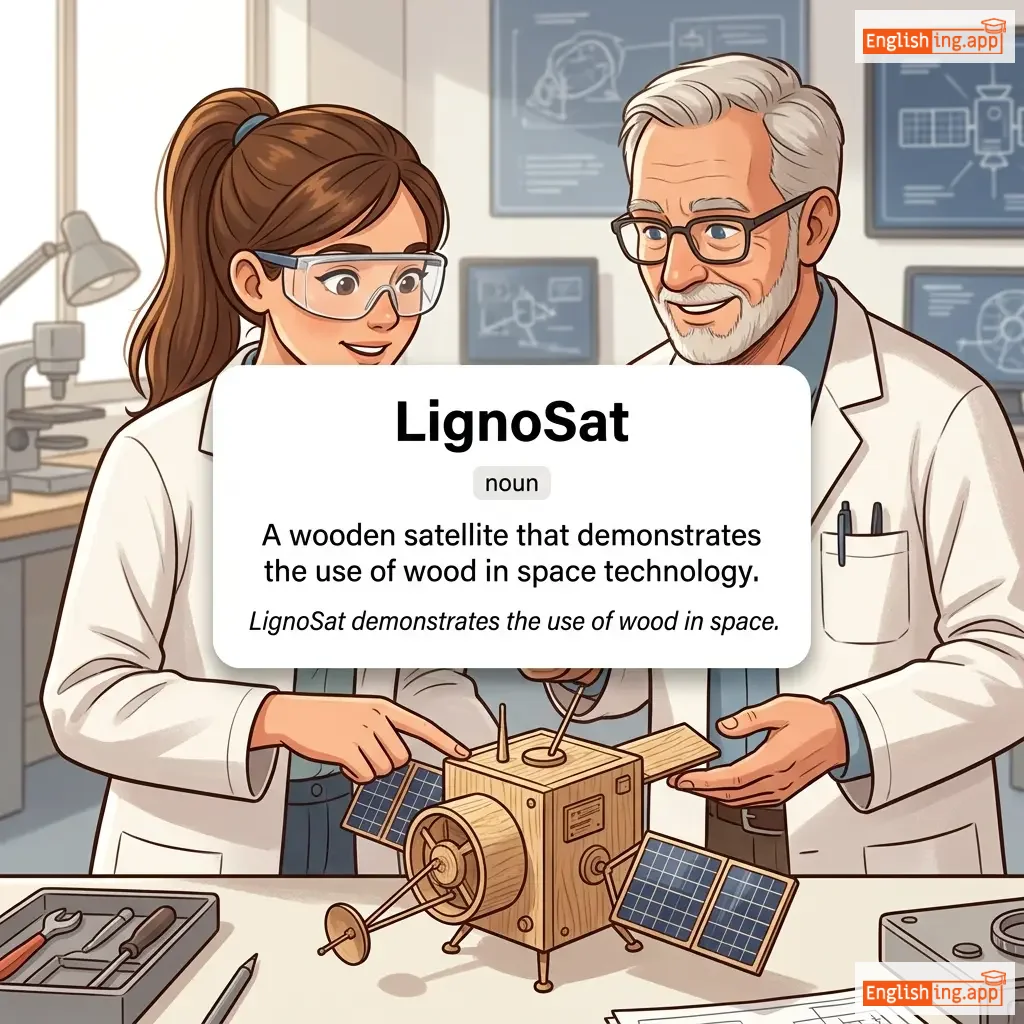
LignoSat definition card — visual illustration of the meaning
noun
ˈlɪɡ.nəʊˌsæt
木製衛星 (mokusei eisei)

A wooden satellite that demonstrates the use of wood in space technology.

"LignoSat demonstrates the use of wood in space."
"LignoSat は宇宙で木材の使用を示しています。" (LignoSat wa uchuu de mokuzai no shiyou wo shimeshiteimasu.)
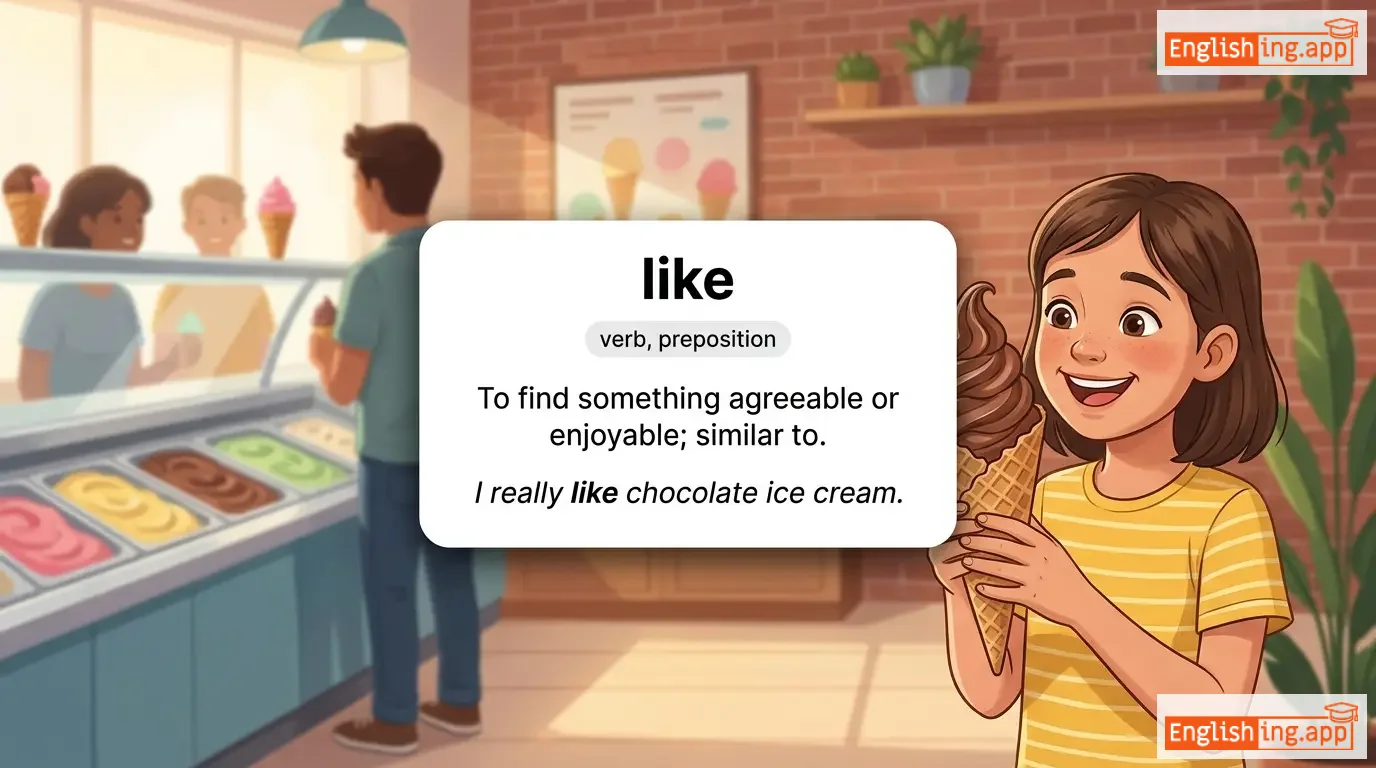
like definition card — visual illustration of the meaning
verb, preposition
/laɪk/
好き (suki)

To find something agreeable or enjoyable; similar to.

"I really like chocolate ice cream."

"私は本当にチョコレートアイスクリームが好きです。" (Watashi wa hontōni chokorēto aisukurīmu ga suki desu.)
noun
/ˈlaɪ.kli.hʊd/
可能性 (kanousei)

the chance or probability of something happening

"There is a strong likelihood of rain tomorrow."

"明日、雨が降る可能性が高いです。" (Ashita, ame ga furu kanousei ga takai desu.)
adjective
/ˈlaɪk.li/
可能性が高い (kanousei ga takai)

probable or expected to happen

"It is likely to rain this evening."

"今晩雨が降る可能性が高いです。" (Konban ame ga furu kanousei ga takai desu.)
verb
/ˈlaɪ.kən/
例える (tatoeru)

to compare one thing to another, often in a figurative way

"He likened her voice to sweet music."

"彼は彼女の声を甘い音楽に例えました。" (Kare wa kanojo no koe o amai ongaku ni tatoemashita.)
noun
/ˈlaɪk.nəs/
類似性; 似ていること (likeness)

the fact or quality of being alike; resemblance; a portrait or representation

"The portrait shows a strong likeness to her grandmother."

"ポートレートは彼女の祖母に強い類似性を示しています。" (Pōtoretto wa kanojo no sobo ni tsuyoi ruijisei o shimeshiteimasu.)
adverb
/ˈlaɪkˌwaɪz/
同様に; それと同じように; 同じように (dōyō ni; sore to onaji yō ni; onaji yō ni)

In the same way; also; similarly.

"She smiled, and he likewise returned the gesture."

"彼女は微笑んだ、そして彼も同様にジェスチャーを返した。" (Kanojo wa hohoenda, soshite kare mo dōyō ni jesshā o kaeshita.)
noun
/ˈlaɪkɪŋ/
好意, 嗜好 (kōi, shikō)

A feeling of fondness or preference for something or someone.

"She has a strong liking for classical music."
"彼女はクラシック音楽を強く好んでいます。" (Kanojo wa kurashikku ongaku o tsuyoku konondeimasu.)
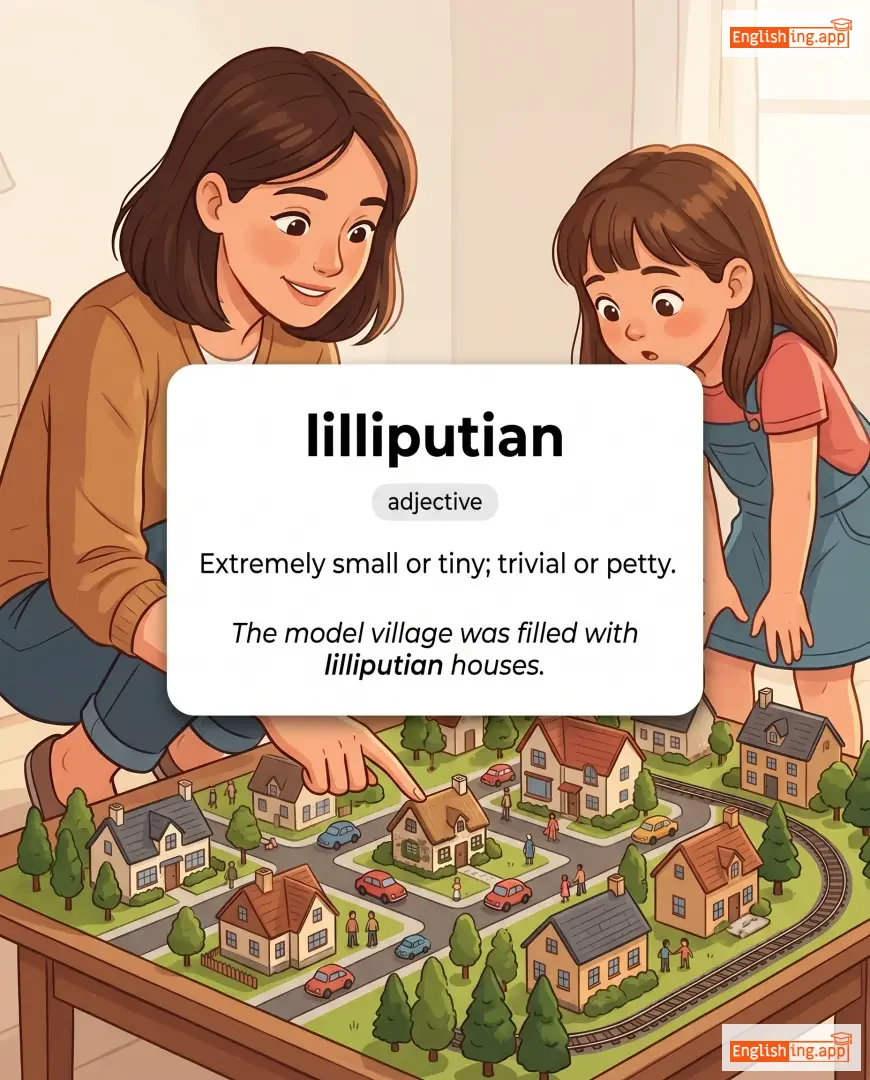
lilliputian definition card — visual illustration of the meaning
adjective
/ˌlɪlɪˈpjuːʃən/
非常に小さい (hijō ni chiisai)

Extremely small or tiny; trivial or petty.

"The model village was filled with lilliputian houses."

"モデル村は非常に小さな家で満たされていました。" (Moderu mura wa hijō ni chiisana ie de mitasarete imashita.)