語彙集

英単語辞書 | 単語の意味、定義、例文

noun
/ˈlæn.sɪt/
外科用ナイフ (gekayou naifu)

a small, sharp, two-edged surgical knife used for making small incisions

"The doctor used a lancet to prick the patient’s finger for a blood test."
"医者は血液検査のために患者の指を刺すためにランセットを使用しました。" (Isha wa ketsueki kensa no tame ni kanja no yubi o sasu tame ni ransetto o shiyou shimashita.)
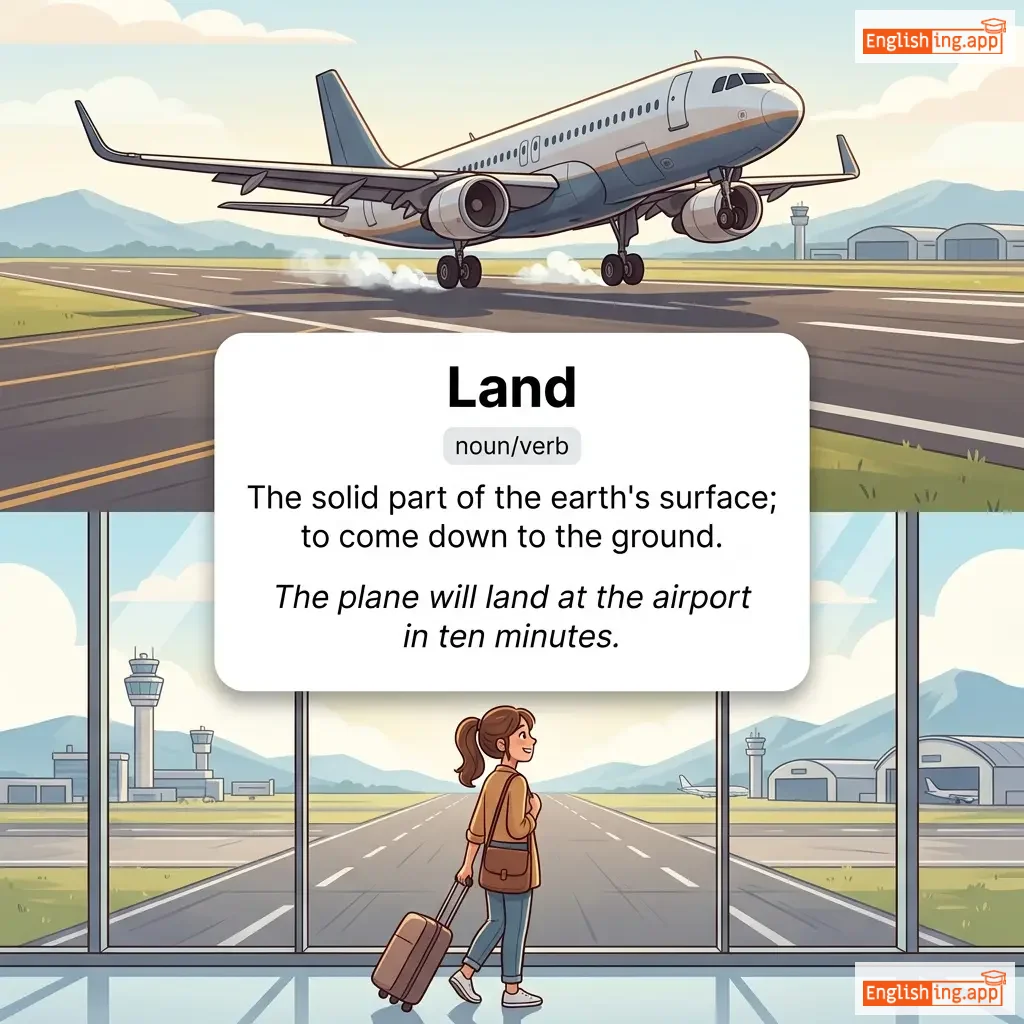
Land definition card — visual illustration of the meaning
noun/verb
/lænd/
土地 / 着陸する (tochi / chakuriku suru)

The solid part of the earth's surface; to come down to the ground.

"The plane will land at the airport in ten minutes."

"飛行機は10分で空港に着陸します。" (hikouki wa juppun de kuukou ni chakuriku shimasu.)
noun
/ˈlænd.lɔːrd/
家主 (yanushi)

a person who owns property and rents it to tenants

"The landlord collected the monthly rent from all tenants."

"家主はすべての借家人から月々の家賃を徴収しました。" (Yanushi wa subete no shakuyanin kara tsuki tsuki no yachin o chōshū shimashita.)
noun
/ˈlænd.fɪl/
埋立地 (umetatechi)

a site where waste material is buried under the ground

"The city built a new landfill to manage its growing waste problem."

"その都市は増え続ける廃棄物問題を解決するために新しい埋立地を作りました。" (Sono toshi wa fue tsudzukeru haikibutsu mondai o kaiketsu suru tame ni atarashii umetatechi o tsukurimashita.)
noun
/ˈlændˌhoʊl.dər/
土地所有者 (tochi shoyuusha)

a person who owns land, especially in large amounts

"The landholder leased part of his property to local farmers."

"土地所有者は自分の財産の一部を地元の農民に貸しました。" (Tochi shoyuusha wa jibun no zaisan no ichibu o jimoto no nōmin ni kashimashita.)
noun
/ˈlændɪŋ/
着陸 (chakuriku)

the act of coming down to the ground or a surface from the air

"The plane made a smooth landing on the runway."

"飛行機は滑走路にスムーズに着陸した。" (hikōki wa kassōro ni sumūzu ni chakuriku shita.)
noun
/ˈlænd.leɪ.di/
女主人 (onnajyurin)

a woman who rents out land, a building, or accommodation; a female property owner

"The friendly landlady provided fresh towels and showed us around the apartment."

"親切な女主人は新しいタオルを提供し、私たちにアパートを案内してくれました。" (Shinsetsuna onnajyurin wa atarashī taoru o teikyō shi, watashitachi ni apāto o annai shite kuremashita.)
noun
/ˈlændlɔːrd/
家主 (iemushi)

A person who owns and rents out land, buildings, or accommodation.

"The landlord increased the rent for all tenants this year."

"今年、家主はすべての入居者の家賃を上げました。" (Kotoshi, iemushi wa subete no nyūkyo-sha no yachin o agemashita.)
landmark definition card — visual illustration of the meaning
noun
/ˈlændmɑːrk/
ランドマーク (randōmāku)

A recognizable object or structure that serves as a point of reference, or an event marking an important stage.

"The Eiffel Tower is a famous landmark in Paris."

"エッフェル塔はパリの有名なランドマークです。" (Efferu-tō wa Pari no yūmei na randōmāku desu.)
noun
/ˈlændskeɪp/
風景 (fūkei)

All the visible features of an area of land, often considered in terms of their aesthetic appeal.

"The mountain landscape was breathtaking."

"山の風景は息を呑むほど美しかった。" (Yama no fūkei wa iki o nomu hodo utsukushikatta.)
noun
/ˈlænd.slaɪd/
地すべり (jisuberi)

a collapse of a mass of earth or rock from a mountain or cliff; an overwhelming victory in an election

"Heavy rains triggered a massive landslide that blocked the mountain highway."

"大雨が大規模な地すべりを引き起こし、山道をふさいだ。" (ooame ga daikibo na jisuberi o hikiokoshi, yamamichi o fusaida.)
noun
/leɪn/
小道 (komichi)

a narrow road or path, often in the countryside or for specific traffic

"They walked down a quiet country lane."

"彼らは静かな田舎道を歩いていました。" (Karera wa shizukana inakamichi o aruite imashita.)
noun
/læŋ'ɡʊər/
オナガザル (ranguru)

a long-tailed monkey found in Asia, especially India and Southeast Asia

"The langoor was sitting on the tree branch eating fruits."
"ラングールは木の枝に座って果物を食べていた。" (ranguru wa ki no eda ni suwatte kudamono o tabeteita.)
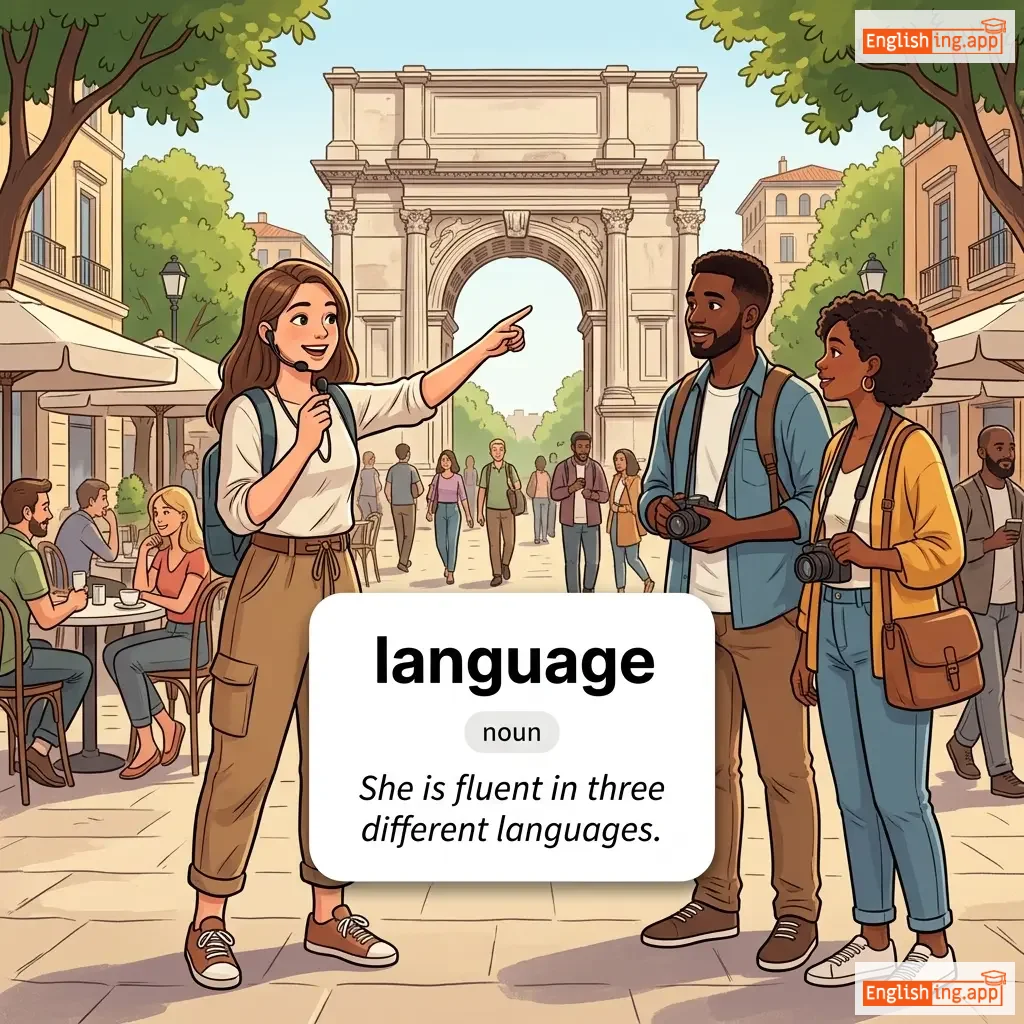
language definition card — visual illustration of the meaning
noun
/ˈlæŋɡwɪdʒ/
言語 (gengo)

the system of communication used by a particular community, including spoken and written words

"She is fluent in three different languages."
"彼女は三つの異なる言語に堪能です。" (Kanojo wa mittsu no kotonaru gengo ni tannou desu.)
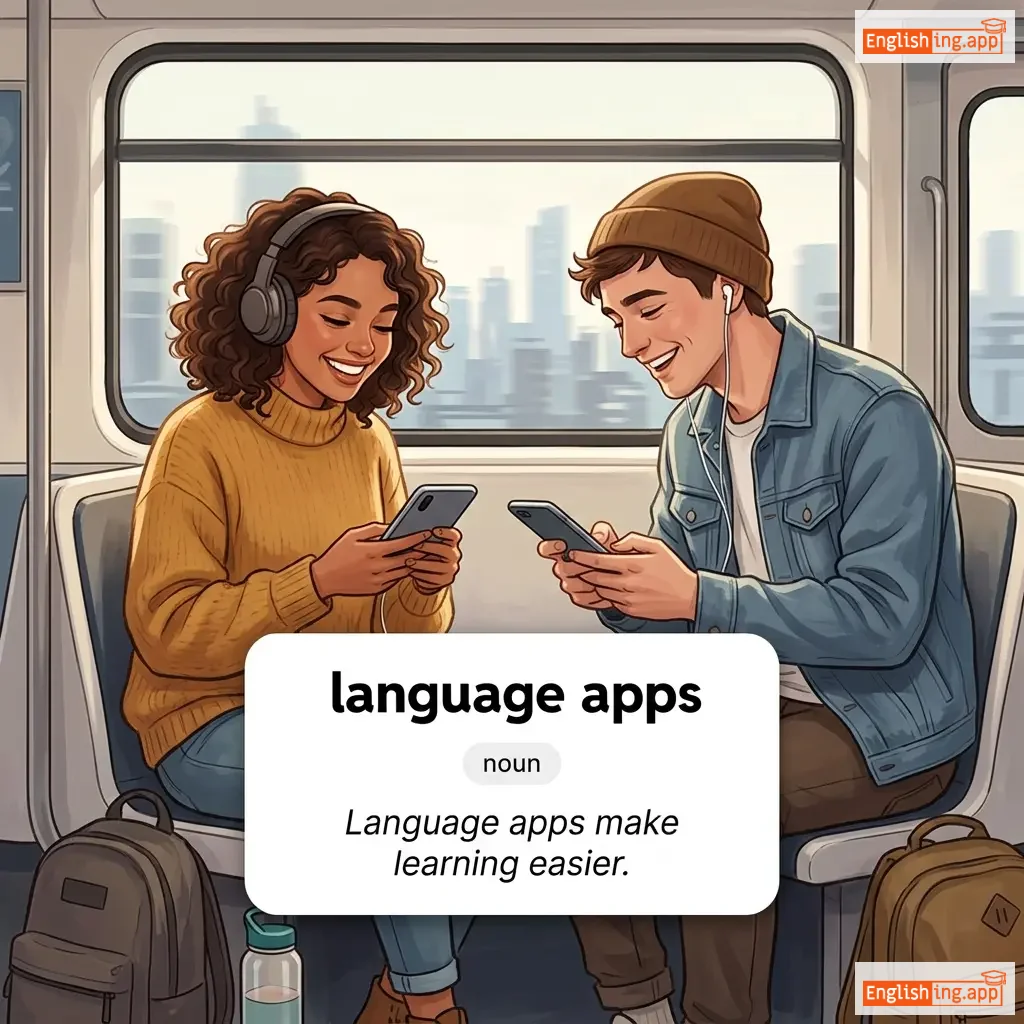
language apps definition card — visual illustration of the meaning
noun
ˈlæŋɡwɪdʒ æps
言語アプリ (gengo apuri)

Mobile or computer applications designed to help users learn new languages through interactive lessons and exercises.

"Language apps make learning easier."

"言語アプリは学習を簡単にします。" (Gengo apuri wa gakushū o kantan ni shimasu.)
adjective
/ˈlæŋɡwɪd/
無気力 (mukiryoku)

Displaying or having a disinclination for physical exertion; weak or faint.

"He gave a languid wave before leaving the room."
"彼は部屋を出る前に無気力な手を振った。" (Kare wa heya o deru mae ni mukiryoku na te o futta.)
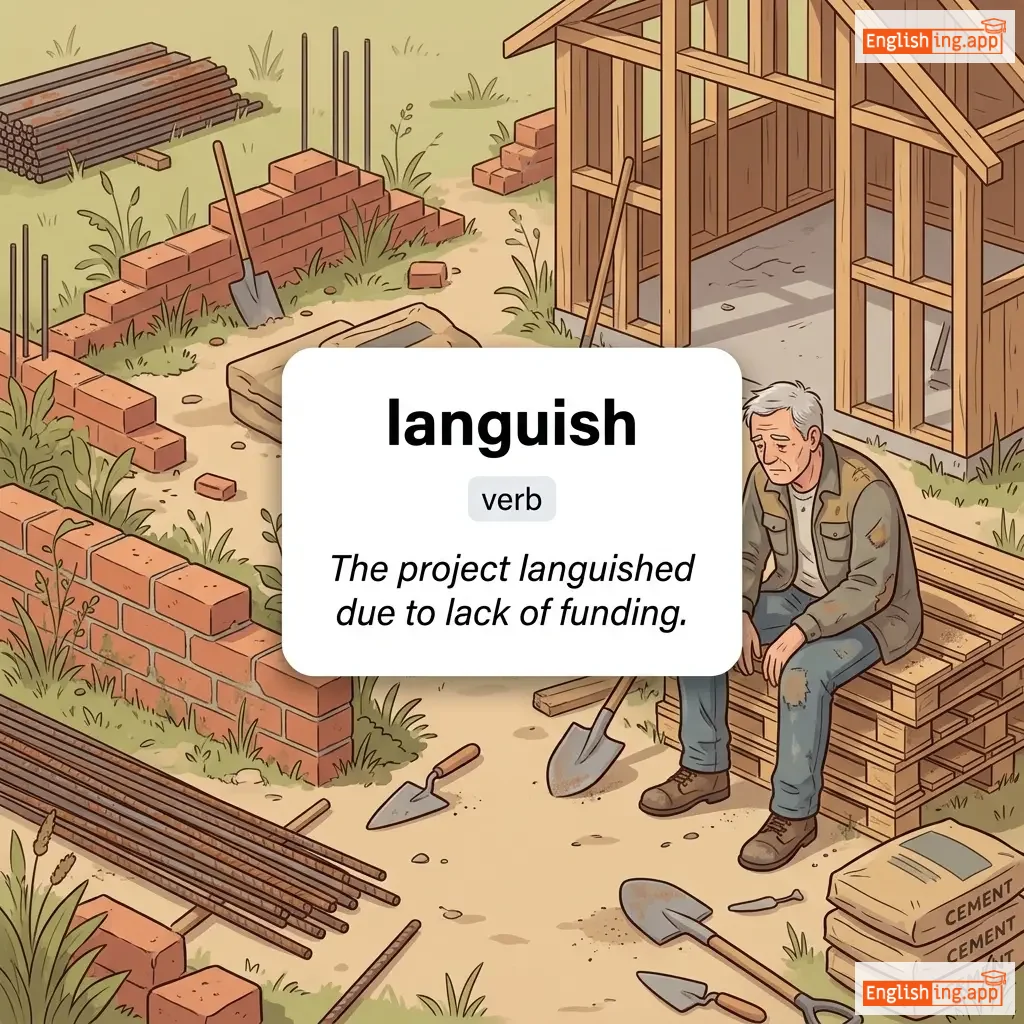
languish definition card — visual illustration of the meaning
verb
/ˈlæŋɡwɪʃ/
衰弱する / 無視される (suijaku suru / mushi sareru)

To become weak or feeble; to suffer neglect or remain in an unpleasant situation for a long time.

"The project languished due to lack of funding."

"プロジェクトは資金不足で停滞しました。" (Purojekuto wa shikin fusoku de teitai shimashita.)
noun
/ˈlæŋɡər/
倦怠 (kentai)

A state of tiredness, inertia, or dreamy relaxation.

"The hot afternoon filled her with languor."

"暑い午後は彼女を倦怠で満たしました。" (Atsui gogo wa kanojo o kentai de mitashimashita.)
adjective
/læŋk/
高くて細い (takakute hosoi)

Tall, thin, and often awkward in appearance.

"The lank teenager towered over his classmates."

"その高くて細いティーンエイジャーはクラスメートよりも高かった。" (Sono takakute hosoi tīneijā wa kurasumēto yori mo takakatta.)
noun
/lænˈtɑː.nə/
ランタナ (lantana)

a tropical flowering plant with clusters of small colorful flowers

"The lantana flowers attract butterflies to the garden."

"ランタナの花は庭に蝶を引き寄せます。" (Rantana no hana wa niwa ni chō o hiki yosemasu.)
noun
/ˈlæn.tərn/
ランタン (rantan)

a portable lamp with a protective covering, often used outdoors

"We carried a lantern during our camping trip."

"私たちはキャンプの旅行中にランタンを持っていました。" (Watashitachi wa kyampu no ryokōchū ni rantan o motte imashita.)
noun/verb
/læp/
幸せ (shiawase)

As noun: the flat area between the waist and knees of a seated person; As verb: to drink liquid with the tongue.

"The child sat on her mother's lap."

"彼女は賞を受け取ったとき、幸せを隠すことができなかった。" (Kanojo wa shō o uketotta toki, shiawase o kakusu koto ga dekinakatta.)
noun/adjective
/ˈlæpɪˌdɛri/
宝石細工師 (houseki saikushi)

As noun: a person who cuts, polishes, or engraves precious stones; As adjective: relating to such work.

"The museum displayed lapidary tools used in ancient times."

"博物館は古代に使用された宝石細工の道具を展示しました。" (Hakubutsukan wa kodai ni shiyou sareta houseki saiku no dougu o tenji shimashita.)
noun/verb
/læps/
誤り (ayamari)

As noun: a temporary failure or slip; As verb: to end or fall into disuse.

"She apologized for her lapse in judgment."

"彼女は判断の誤りについて謝罪しました。" (Kanojo wa handan no ayamari ni tsuite shazai shimashita.)
noun
/ˈlɑːrsəni/
窃盗 (settou)

The unlawful taking of personal property with intent to deprive the rightful owner of it.

"He was arrested for committing larceny at the store."

"彼は店で窃盗を行ったため逮捕されました。" (Kare wa mise de settou o okonatta tame taiho saremashita.)
noun
/ˈlɑːrdər/
食料庫 (shokuryouko)

A place, such as a pantry, where food is stored.

"The larder was full of fresh bread and cheese."
"食料庫は新鮮なパンとチーズでいっぱいでした。" (Shokuryouko wa shinsen na pan to chīzu de ippai deshita.)
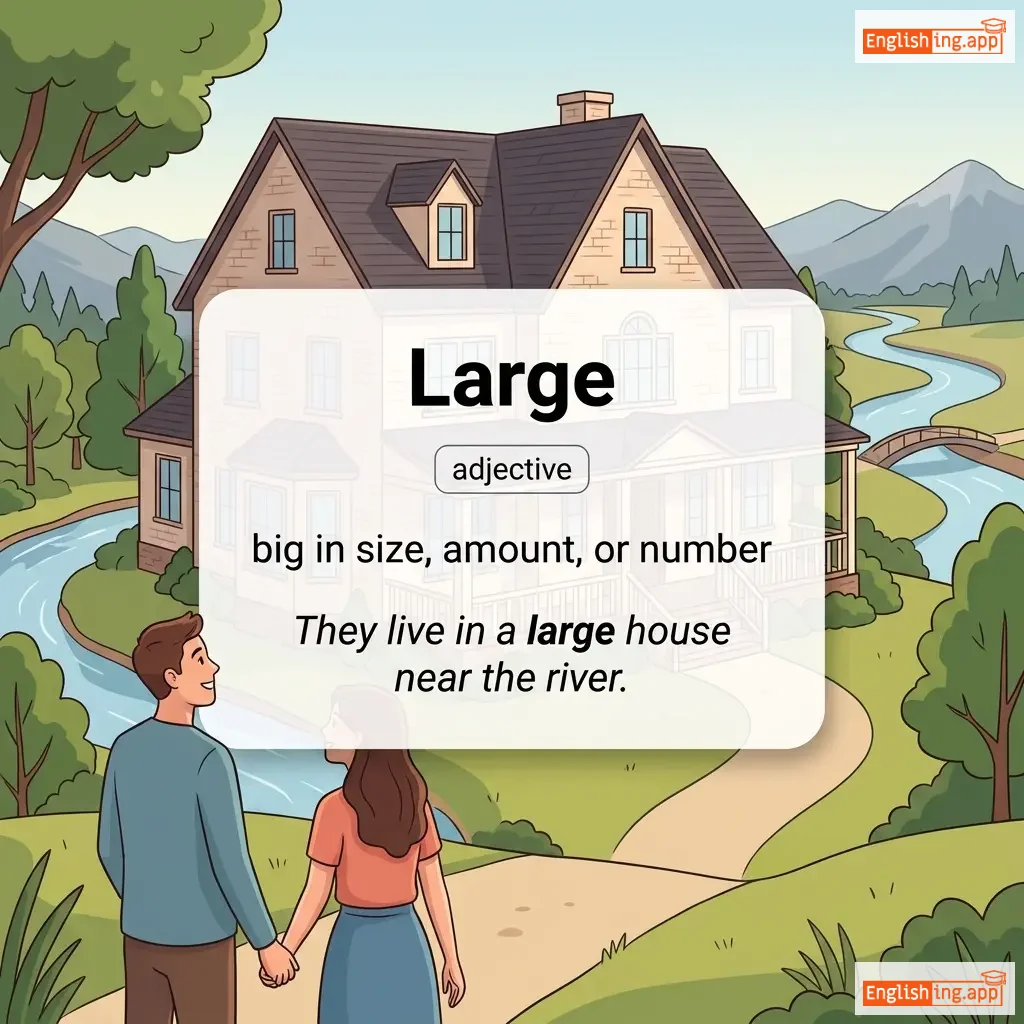
Large definition card — visual illustration of the meaning
adjective
/lɑrdʒ/
大きい (ookii)

big in size, amount, or number

"They live in a large house near the river."

"彼らは川の近くの大きな家に住んでいます。" (Karera wa kawa no chikaku no ookina ie ni sundeimasu.)
adjective
/lɑːrdʒ skeɪl/
大規模 (daikibo)

involving a large number or quantity, or covering a large area

"The company is planning a large-scale expansion into international markets."

"その会社は国際市場に大規模な拡大を計画しています。" (Sono kaisha wa kokusai shijō ni daikibo na kakudai o keikaku shiteimasu.)
adverb
/ˈlɑːrdʒli/
主に (omoni)

to a great extent; mostly or mainly

"The success of the project was largely due to teamwork."

"プロジェクトの成功は主にチームワークによるものだった。" (Purojekuto no seikō wa omoni chīmu wāku ni yoru mono datta.)
noun
/lɑːrˈʒes/
寛大さ (kandaisa)

Generosity in giving gifts or money.

"The foundation survived thanks to the largess of wealthy donors."
"財団は裕福な寄付者の寛大さのおかげで存続しました。" (Zaidan wa yūfukuna kifusha no kandaisa no okage de sonzoku shimashita.)
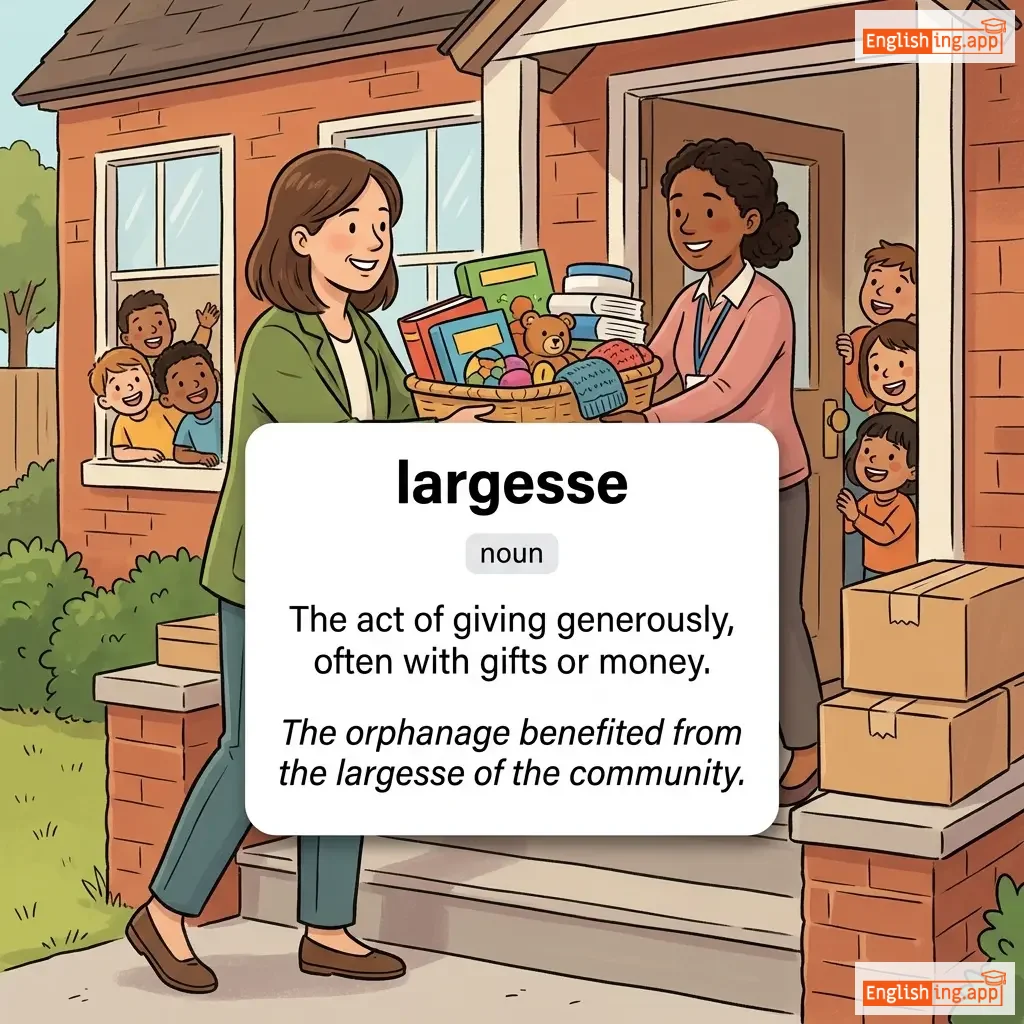
largesse definition card — visual illustration of the meaning
noun
/lɑːrˈʒɛs/
寛大さ (kandaisa)

The act of giving generously, often with gifts or money.

"The orphanage benefited from the largesse of the community."

"孤児院は地域社会の寛大さの恩恵を受けた。" (Kojien wa chiiki shakai no kandaisa no onkei o uketa.)
noun
/ˈlæriət/
ロープ (roopu)

A long rope with a noose at one end used to catch animals such as cattle or horses.

"The cowboy threw his lariat to catch the stray horse."
"カウボーイは迷子の馬を捕まえるためにロープを投げました。" (Kauboi wa maigo no uma o tsukamaeru tame ni roopu o nagemashita.)
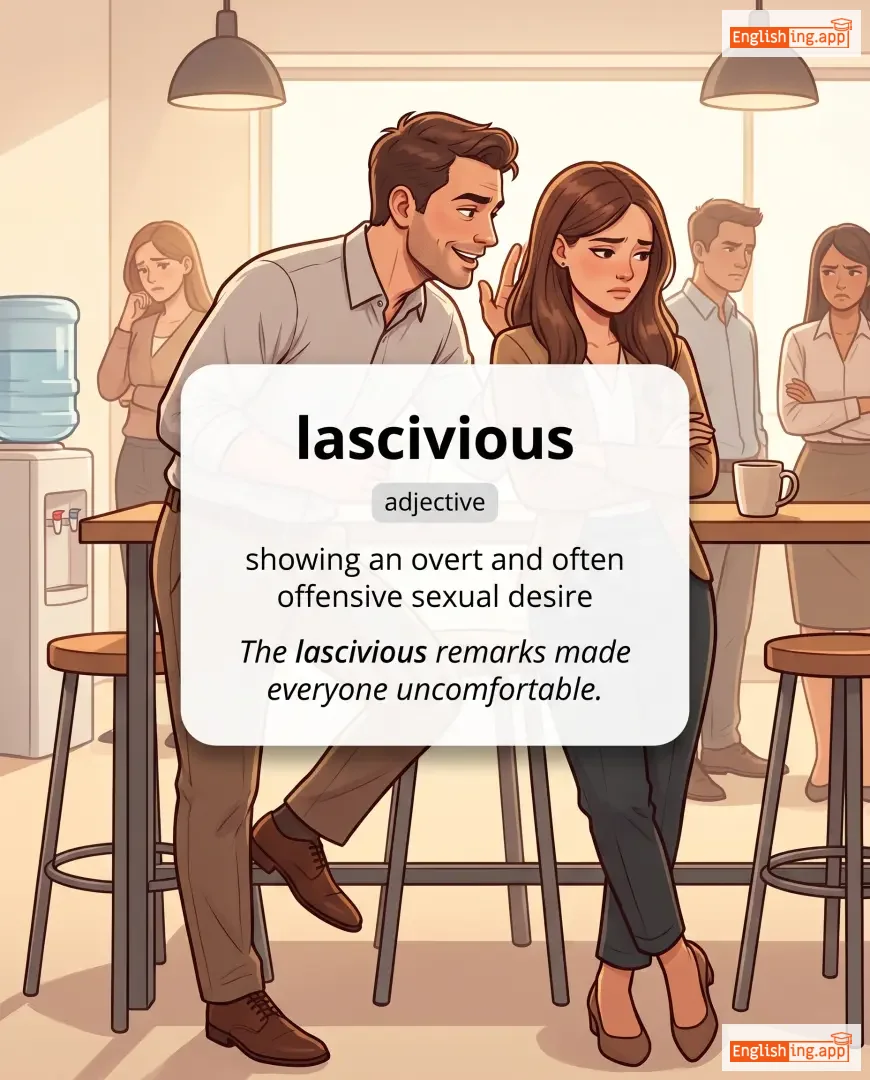
lascivious definition card — visual illustration of the meaning
adjective
/ləˈsɪviəs/
好色な (kōshokuna)

showing an overt and often offensive sexual desire

"The lascivious remarks made everyone uncomfortable."

"その好色な言葉がみんなを不快にさせた。" (Sono kōshokuna kotoba ga minna o fukai ni saseta.)
noun
/ˈleɪzər/
レーザー (reezaa)

a device that emits a concentrated beam of light

"The doctor used a laser to perform eye surgery."

"医師は目の手術のためにレーザーを使用しました。" (Ishi wa me no shujutsu no tame ni reezaa o shiyō shimashita.)
verb
/læʃ/
むち打つ/縛る (muchiutsu/shibaru)

to strike with a whip or to fasten tightly

"The sailor lashed the rope to the mast."

"船員はロープをマストに縛り付けた。" (Sen'in wa rōpu o masuto ni shibari tsuketa.)
noun
/ˈlæsi/
小さな女の子 (chiisana onnanoko)

a young girl (informal, mainly Scottish)

"The old man greeted the little lassie warmly."
"老人は小さな女の子を温かく迎えました。" (rōjin wa chiisana onnanoko o atatakai kaku mukaemashita.)
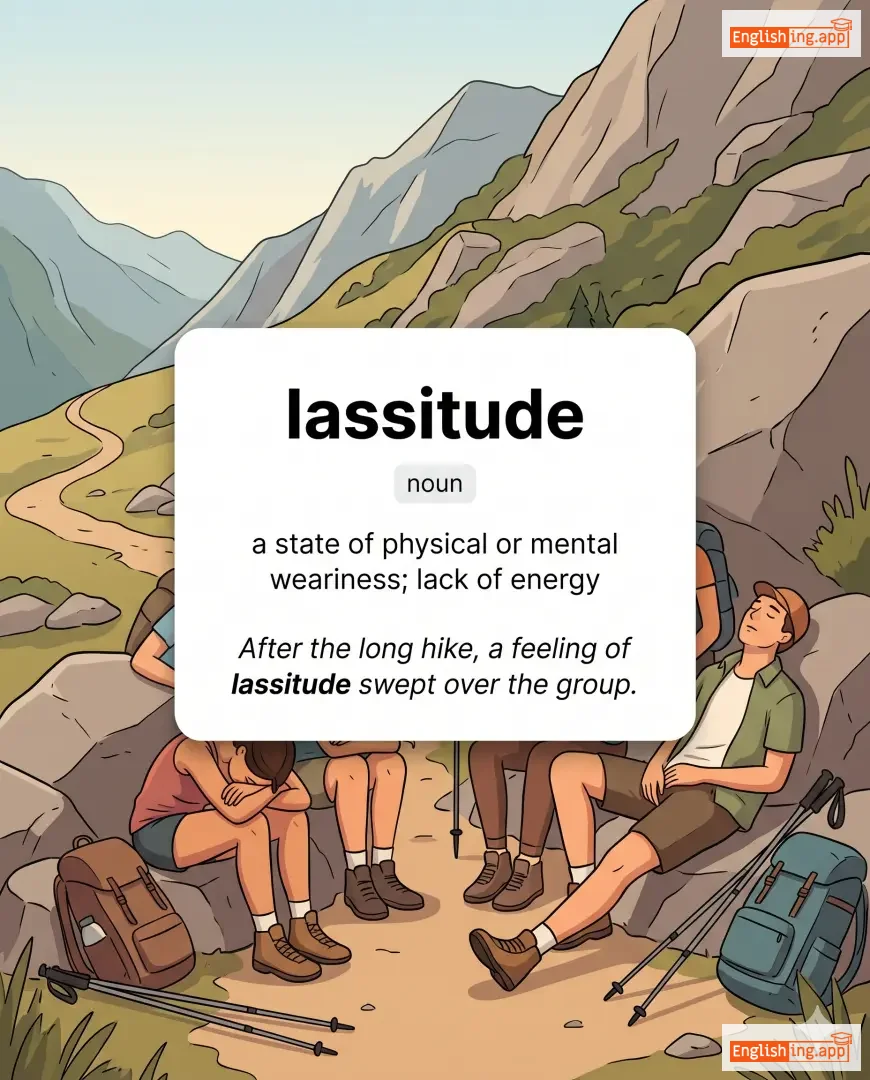
lassitude definition card — visual illustration of the meaning
noun
/ˈlæsɪtjuːd/
疲労 (hirou)

a state of physical or mental weariness; lack of energy

"After the long hike, a feeling of lassitude swept over the group."

"長いハイキングの後、疲労感がグループに広がった。" (Nagai haikingu no ato, hiroukan ga gurūpu ni hirogatta.)
noun/verb
/læˈsuː/
ロープ (roopu)

a rope with a loop used to catch animals; to catch with such a rope

"The cowboy lassoed the horse quickly."
"カウボーイは素早く馬をラッソしました。" (Kaubōi wa subayaku uma o rassho shimashita.)
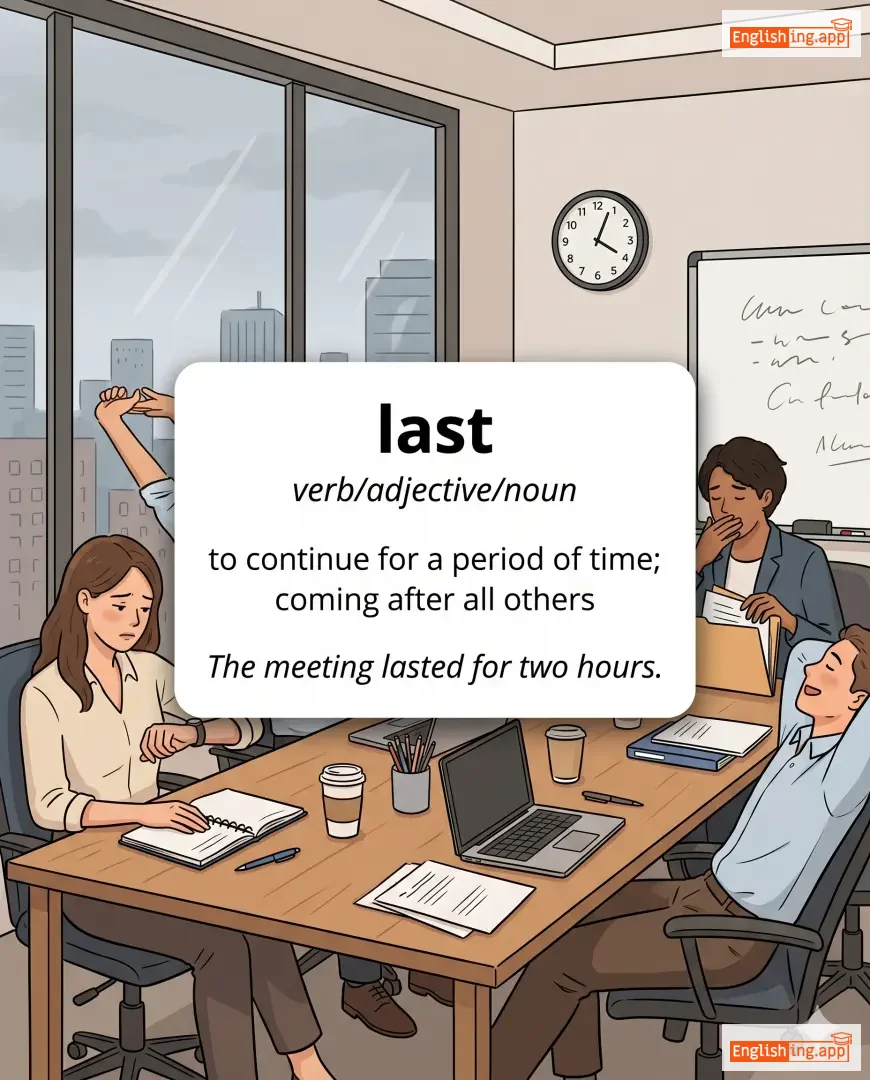
last definition card — visual illustration of the meaning
verb/adjective/noun
/læst/
続く / 最後の (tsudzuku / saigo no)

to continue for a period of time; coming after all others

"The meeting lasted for two hours."

"ミーティングは2時間続きました。" (Mītingu wa 2-jikan tsudzukimashita.)
adjective
/ˈlæstɪŋ/
持続的な; 永続的な (jizokuteki na; eizokuteki na)

enduring for a long time; permanent; durable

"Their friendship had a lasting impact on both their lives."

"彼らの友情は彼らの人生に持続的な影響を与えました。" (Karera no yūjō wa karera no jinsei ni jizokuteki na eikyō o ataemashita.)
verb
/lætʃ/
ラッチで閉める (ratchi de shimeru)

to fasten or close something with a latch

"She latched the door before leaving the house."

"彼女は家を出る前にドアをラッチで閉めた。" (Kanojo wa ie o deru mae ni doa o ratchi de shimeta.)
adjective/adverb
/leɪt/
遅れた (okureta)

arriving, happening, or done after the expected time

"He arrived late to the meeting."

"彼は会議に遅れて到着した。" (Kare wa kaigi ni okurete tōchaku shita.)
adverb
/ˈleɪtli/
最近 (saikin)

recently; during a period of time not long ago

"I haven’t seen her much lately."
"最近彼女をあまり見かけません。" (Saikin kanojo o amari mikakemasu.)
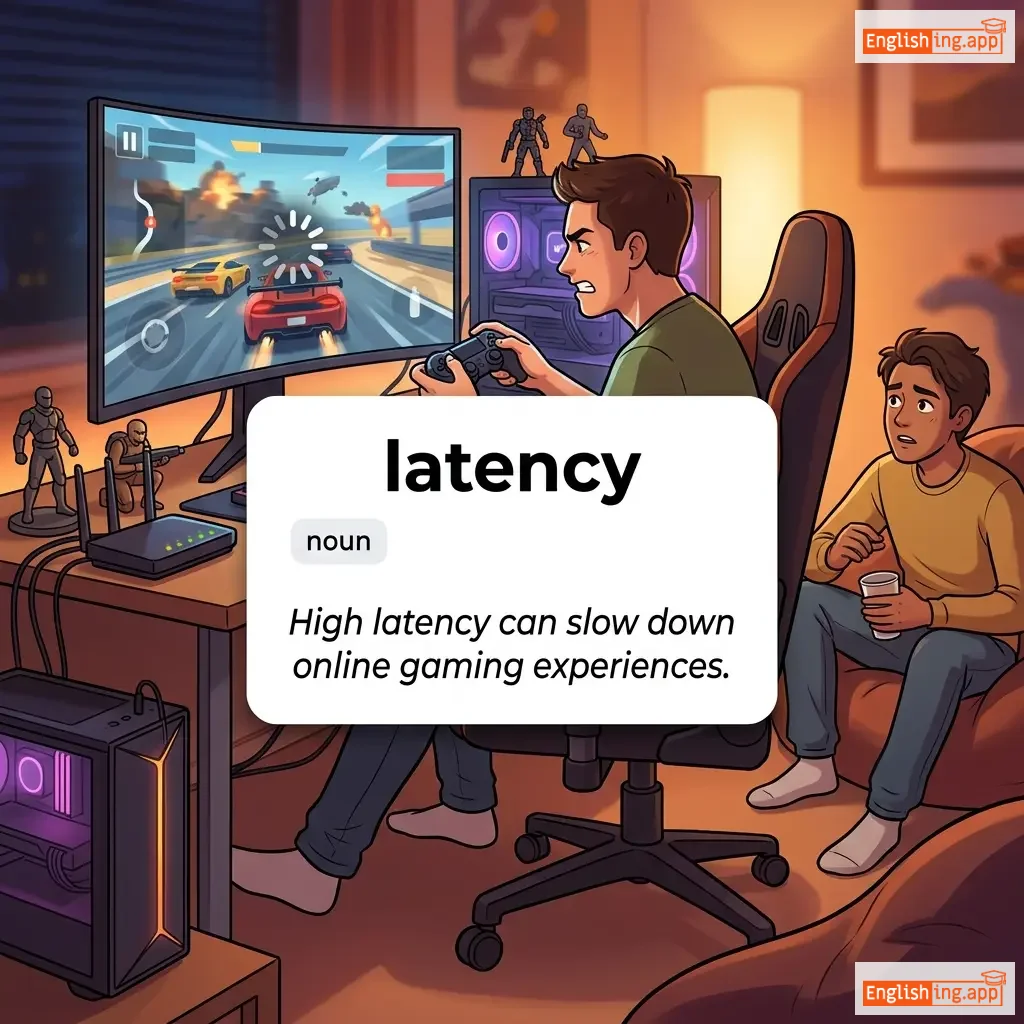
latency definition card — visual illustration of the meaning
noun
/ˈleɪtənsi/
レイテンシ (reitenshi)

The delay before a transfer of data begins following an instruction for its transfer.

"High latency can slow down online gaming experiences."
"高いレイテンシはオンラインゲームの体験を遅くする可能性があります。" (Takai reitenshi wa onrain gēmu no taiken o osoku suru kanōsei ga arimasu.)
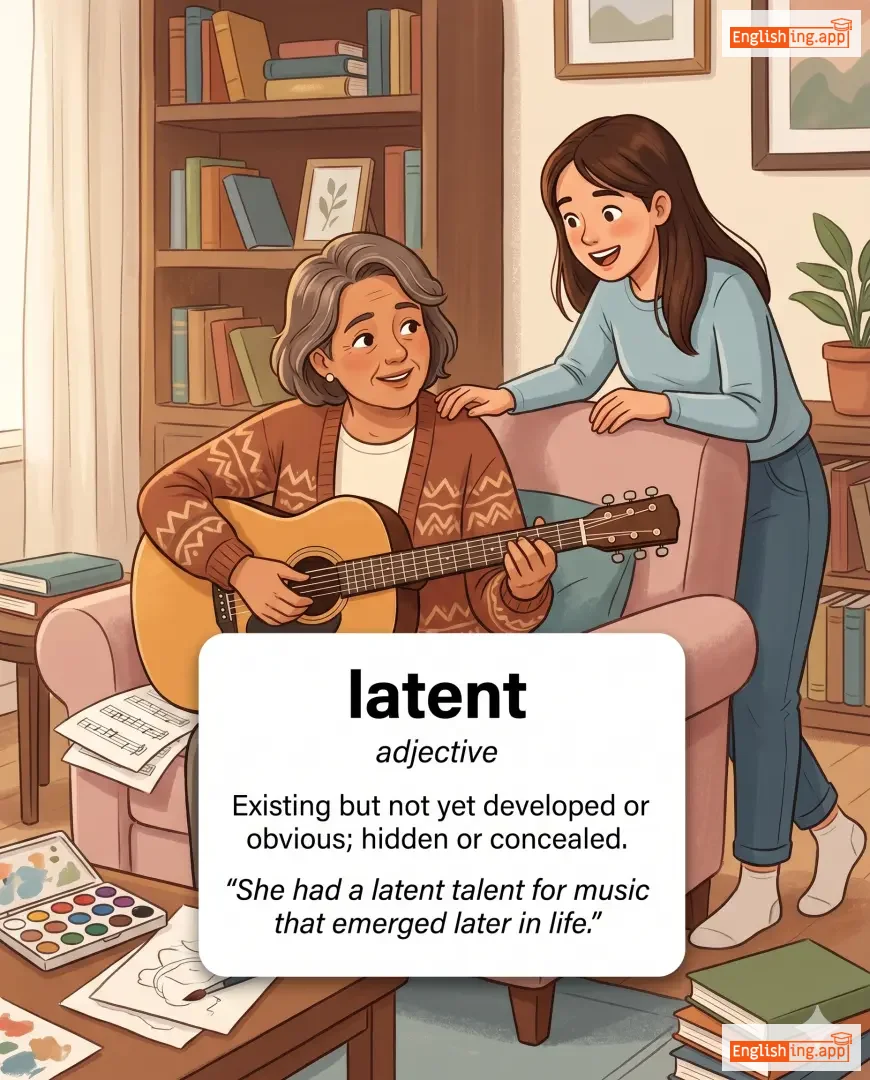
latent definition card — visual illustration of the meaning
adjective
/ˈleɪtənt/

Existing but not yet developed or obvious; hidden or concealed.

"She had a latent talent for music that emerged later in life."

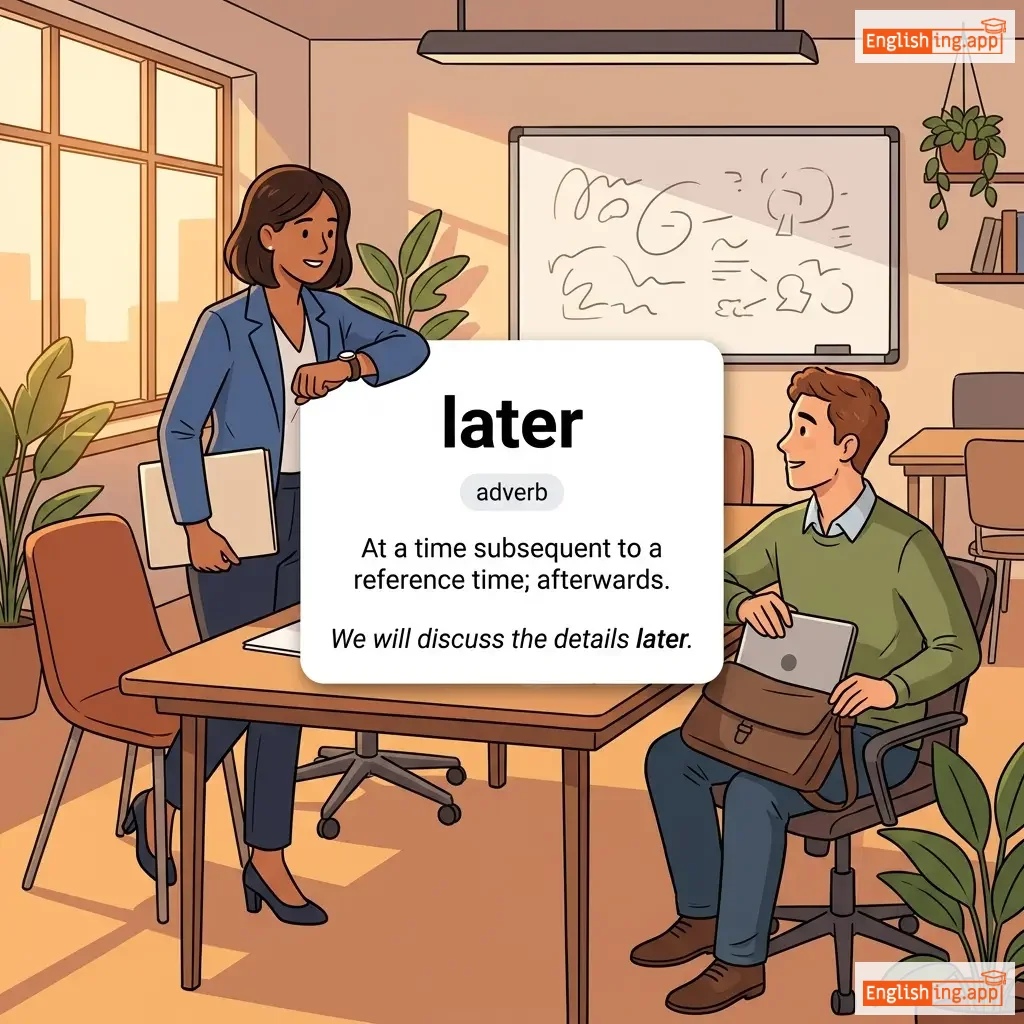
later definition card — visual illustration of the meaning
adverb
/ˈleɪtər/
後で (ato de)

At a time subsequent to a reference time; afterwards.

"We will discuss the details later."

"私たちは後で詳細について話します。" (Watashitachi wa ato de shōsai ni tsuite hanashimasu.)
adjective
/ˈlætərəl/
側面 (sokumen)

Relating to the side or sideways movement.

"The football player made a quick lateral pass."

"サッカー選手は素早い側面パスをしました。" (sakkā senshu wa subayai sokumen pasu o shimashita.)
adjective
/ˈleɪtɪst/
最新の (saishin no)

most recent in time; newest available

"She shared the latest updates with the team."

"彼女はチームと最新のアップデートを共有した。" (kanojo wa chiimu to saishin no appudeeto o kyouyuu shita)
noun
/leɪð/
旋盤 (senban)

A machine for shaping wood, metal, or other material by rotating it against a cutting tool.

"The carpenter used a lathe to shape the wooden bowl."

"大工は木の器を形作るために旋盤を使いました。" (Daiku wa ki no utsuwa o katachi zukuru tame ni senban o tsukaimashita.)
noun/adjective
/ˈlætɪn/
ラテン語 (raten-go)

the language of ancient Rome; relating to Latin culture or language

"Many English words are derived from Latin."

"多くの英単語はラテン語から派生しています。" (Ooku no eitango wa raten-go kara hassei shiteimasu.)