語彙集

英単語辞書 | 単語の意味、定義、例文

verb
/ɪmˈplaɪ/
暗示する (anshi suru)

To suggest something without directly stating it.

"Her tone seemed to imply that she was upset."

"彼女の口調は、彼女が怒っていることを示唆しているようでした。" (Kanojo no kuchou wa, kanojo ga okotte iru koto o shisa shite iru you deshita.)
adjective
/ˌɪmpəˈlaɪt/
無礼 (burei)

Not showing good manners; rude.

"It is impolite to interrupt someone while they are speaking."

"誰かが話しているときに邪魔をするのは失礼です。" (Dareka ga hanashite iru toki ni jama o suru no wa shitsurei desu.)
adverb
/ɪmˈpɒlɪtli/
無礼に (burei ni)

in a rude or discourteous manner; without showing respect or proper manners

"He spoke impolitely to the waiter despite the polite service."

"丁寧なサービスにもかかわらず、彼は無礼にウェイターに話した。" (teinei na saabisu ni mo kakawarazu kare wa burei ni weitaa ni hanashita)
noun
/ɪmˈpɒlɪtnəs/
無礼さ (bureisa)

lack of good manners or courtesy; rude behavior

"His impoliteness towards the guests shocked everyone."

"彼の客に対する無礼さは皆を驚かせた。" (kare no kyaku ni taisuru bureisa wa mina o odorokaseta)
adjective
/ɪmˈpɑːlɪtɪk/
無礼な (burenna)

Unwise or imprudent; not showing good judgment.

"It would be impolitic to criticize them openly."

"彼らを公然と批判するのは無礼だろう。" (Karera o kouzen to hihan suru no wa burena darou.)
adjective
/ɪmˈpɒndərəbl̩/
計り知れない (hakarishirenai)

Something difficult or impossible to estimate, assess, or understand

"The outcome of the election depends on many imponderable factors."
"選挙の結果は、多くの計り知れない要因に依存しています。" (Senkyou no kekka wa, ooku no hakarishirenai youin ni izon shiteimasu.)
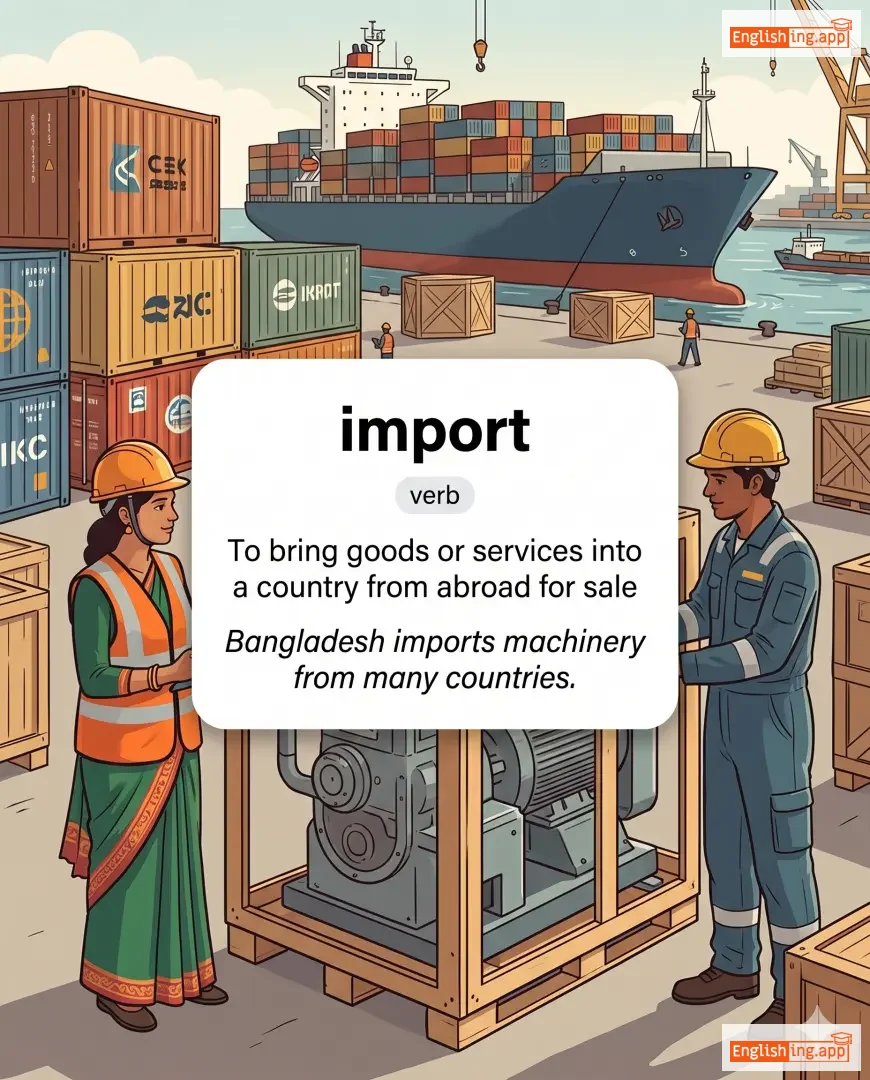
import definition card — visual illustration of the meaning
verb
/ˈɪmpɔːrt/
輸入 (yunyuu)

To bring goods or services into a country from abroad for sale

"Bangladesh imports machinery from many countries."
"バングラデシュは多くの国から機械をインポートしています。" (Banguradeshu wa ooku no kuni kara kikai wo inpo-to shiteimasu.)
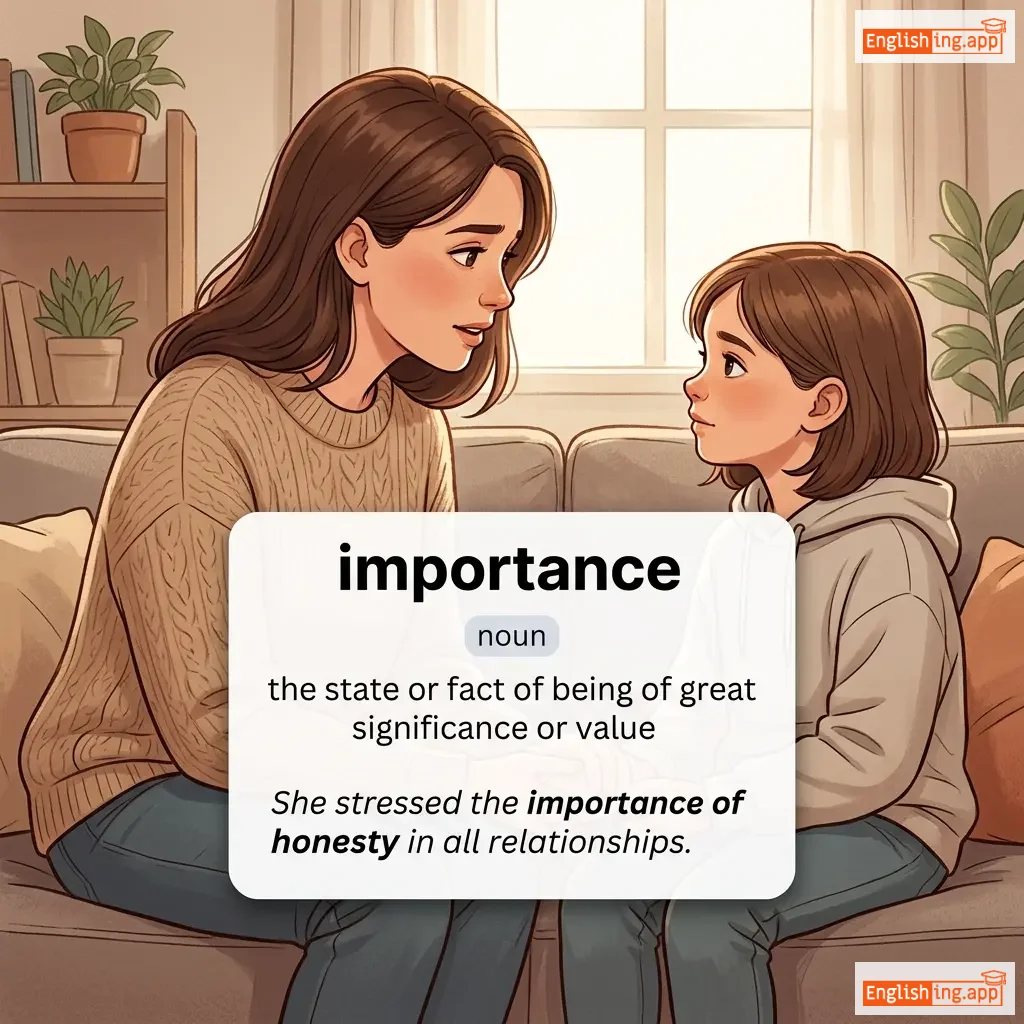
importance definition card — visual illustration of the meaning
noun
/ɪmˈpɔːrtəns/
重要性 (jūyō-sei)

the state or fact of being of great significance or value

"She stressed the importance of honesty in all relationships."
"彼女はすべての関係における誠実の重要性を強調しました。" (Kanojo wa subete no kankei ni okeru seijitsu no jūyō-sei o kyōchō shimashita.)
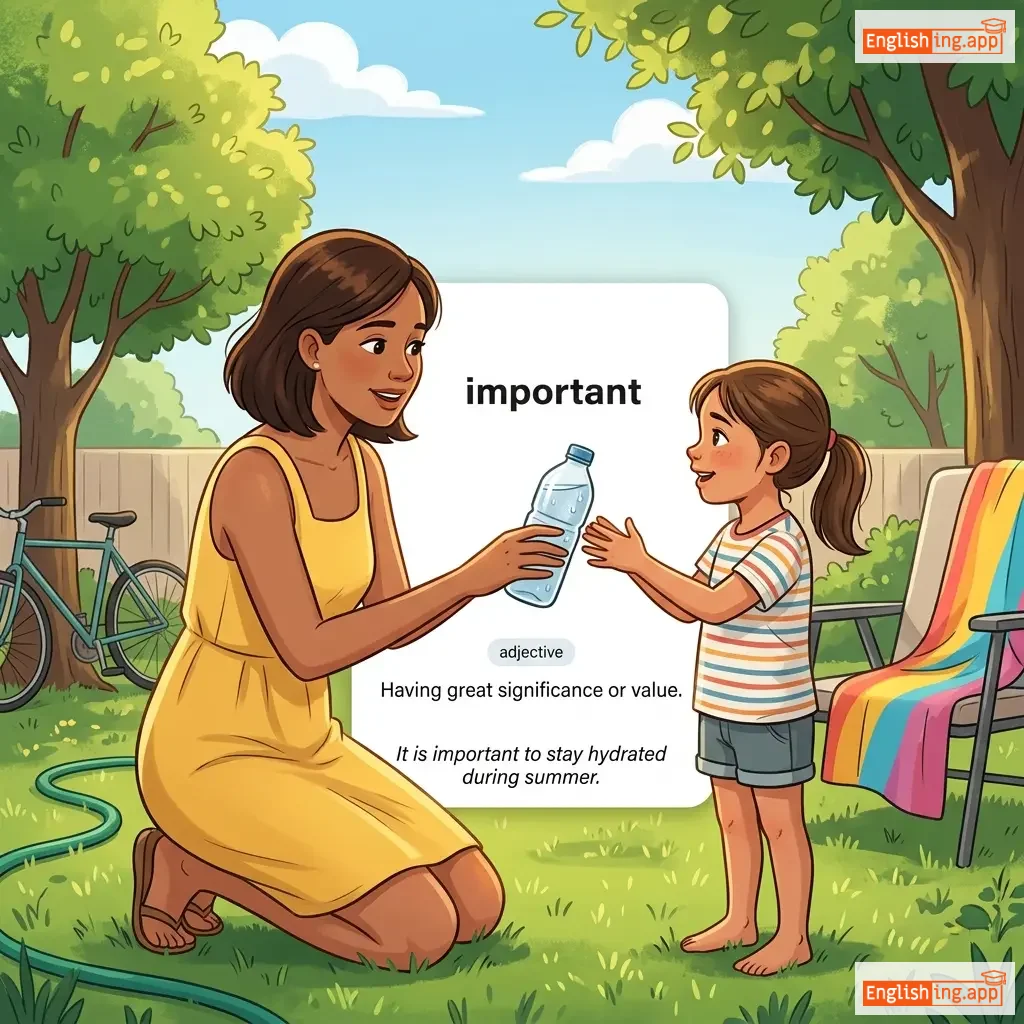
important definition card — visual illustration of the meaning
adjective
/ɪmˈpɔːrtənt/
重要 (jūyō)

Having great significance or value.

"It is important to stay hydrated during summer."

"夏の間は水分補給が重要です。" (Natsu no aida wa suibun hokyū ga jūyō desu.)
adverb
/ɪmˈpɔːtəntli/
重要な方法で (jūyōna hōhō de)

in a way that is of great significance or value

"Importantly, the report highlights the need for immediate action."

"重要な方法で、報告書は即時の行動の必要性を強調しました。" (Jūyōna hōhō de, hōkokusho wa sokujitsu no kōdō no hitsuyō-sei o kyōchō shimashita.)
noun
/ˌɪmpɔːrˈteɪʃən/
輸入 (yunyuu)

The act of bringing goods or services into a country from abroad

"The importation of luxury goods is strictly regulated."

"高級品の輸入は厳しく規制されています。" (Koukyuuhin no yunyuu wa kibishiku kisei sareteimasu.)
adjective
/ɪmˈpɔːrtʃənət/
しつこい (shitsukoi)

Persistent to the point of annoyance or intrusion

"The importunate salesman kept calling despite repeated refusals."

"しつこい販売員は、繰り返し拒否されても電話をかけ続けました。" (Shitsukoi hanbaiin wa, kurikaeshi kyohi saretemo denwa o kake tsudzukemashita.)
verb
/ˌɪmpɔːrˈtuːn/
しつこく頼む (shitsukoku tanomu)

To ask someone persistently or pressingly for something

"The child importuned his mother for a new toy."

"その子供は新しいおもちゃを欲しがって母親にしつこく頼んだ。" (Sono kodomo wa atarashī omocha o hoshigatte hahaoya ni shitsukoku tanonda.)
verb
/ˌɪmpɔːrˈtuːnd/
しつこく頼む (shitsukoku tanomu)

asked someone persistently and pressingly for something

"She importuned her boss for a raise until he finally gave in."
"彼女は昇給を求めて上司にしつこく頼んだ、彼がとうとう折れたまで。" (Kanojo wa shōkyū o motomete jōshi ni shitsukoku tanonda, kare ga tōtō oretamade.)
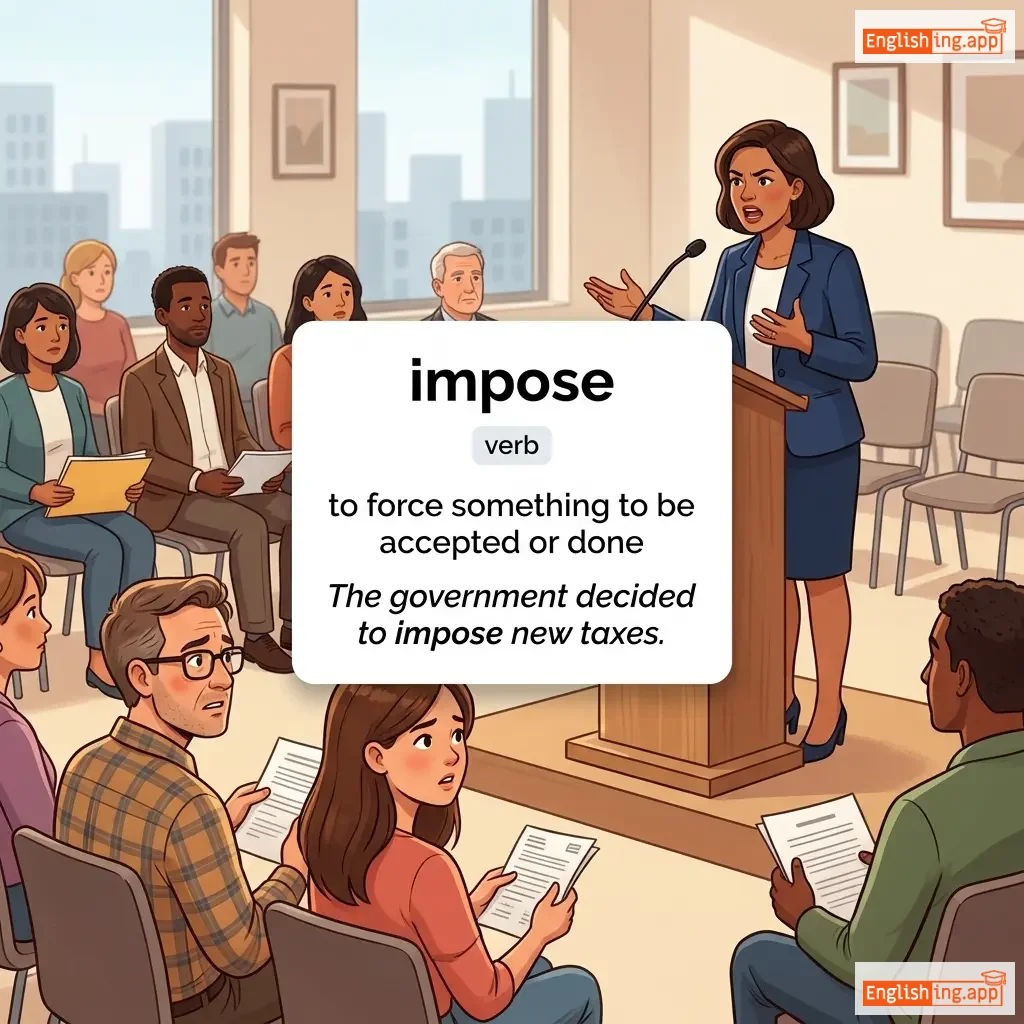
impose definition card — visual illustration of the meaning
verb
/ɪmˈpoʊz/
課す (kasu)

to force something to be accepted or done

"The government decided to impose new taxes."

"政府は新しい税金を課すことを決定した。" (Seifu wa atarashī zeikin o kasu koto o kettei shita.)
verb
/ɪmˈpoʊzd/
課す (kasu)

forced something to be accepted or put in place

"The government imposed new regulations on the industry."
"政府は産業に新しい規制を課した。" (Seifu wa sangyō ni atarashī kisē o kasa shita.)
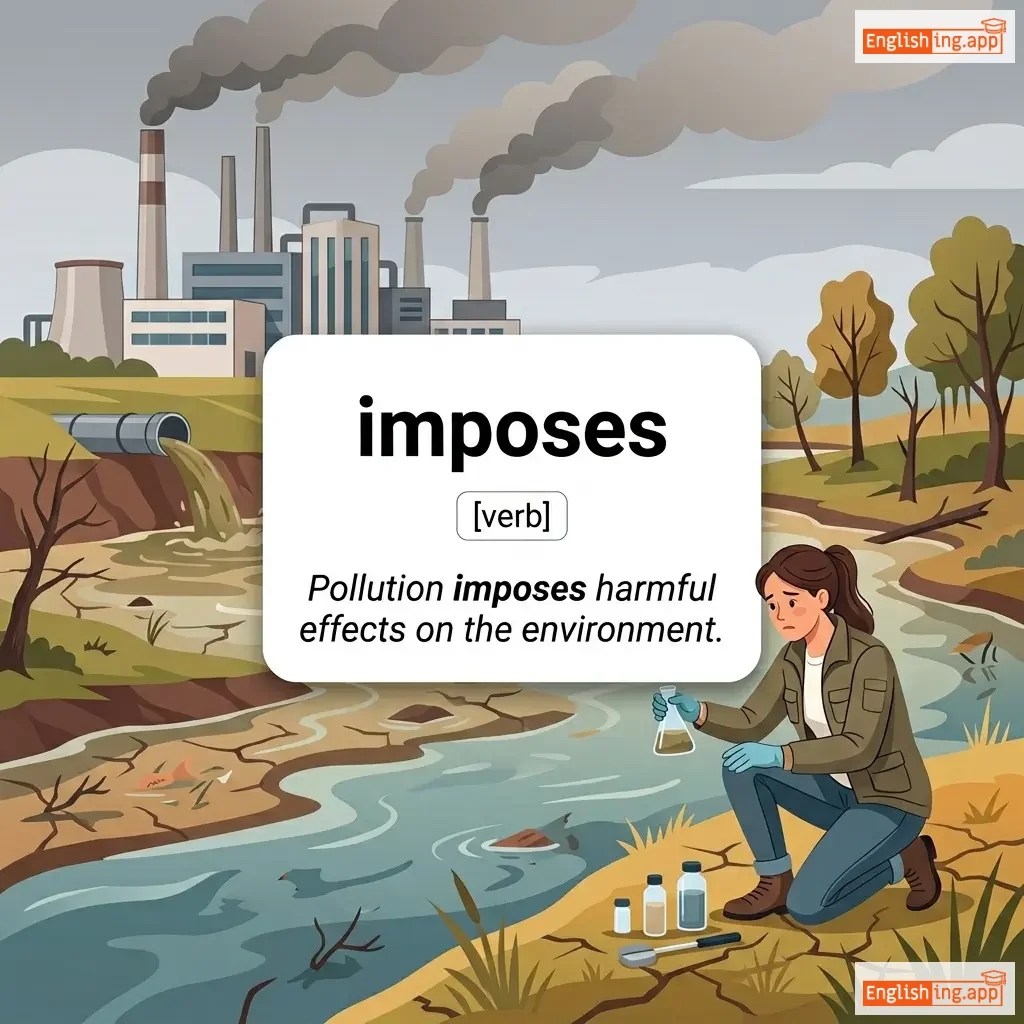
imposes definition card — visual illustration of the meaning
verb
ɪmˈpoʊz
課す (kasu)

To establish or apply by authority; to force something unwelcome or unfamiliar to be accepted or put in place.

"Pollution imposes harmful effects on the environment."

"汚染は環境に有害な影響を課します。" (Oseng wa kankyou ni yuugai na eikyou o kasemasu.)
adjective
/ɪmˈpoʊzɪŋ/
威圧的な (iatsuteki na)

having an appearance that is grand, impressive, or commanding

"The castle is an imposing structure overlooking the valley."

"その城は谷を見下ろす威圧的な構造です。" (Sono shiro wa tani o miorosu iatsuteki na kōzō desu.)
noun
/ˌɪmpəˈzɪʃən/
押し付け (oshitsuke)

the act of forcing something on someone; an unwelcome demand or burden

"The new tax was seen as an unfair imposition on the poor."

"新しい税金は貧しい人々への不公平な押し付けと見なされました。" (Atarashī zeikin wa mazushī hitobito e no fukōhei na oshitsuke to minasa remashita.)
noun
/ɪmˌpɒsəˈbɪlɪti/
不可能性 (fukanousei)

the state or fact of being impossible; something that cannot be done or achieved

"Finishing the project in one day was an impossibility."

"一日でそのプロジェクトを終えるのは不可能だった。" (ichinichi de sono purojekuto wo oeru no wa fukanou datta)
adjective
/ɪmˈpɑːsəbl/
不可能 (fukanou)

not able to occur, exist, or be done

"It is impossible to finish this work in one day."

"この仕事を1日で終わらせるのは不可能です。" (Kono shigoto wo ichinichi de owaraseru no wa fukanou desu.)
noun
/ɪmˈpɑːstər/
詐欺師, 偽者 (sagishi, nise-mono)

a person who pretends to be someone else in order to deceive others

"The man turned out to be an impostor posing as a doctor."

"その男は医者を装った詐欺師だった。" (Sono otoko wa isha o yosotta sagishi datta.)
noun
/ɪmˈpɒstʃər/
偽り (itsuwari)

The act of pretending to be someone else in order to deceive others; deception or fraud.

"The imposture was discovered when the man failed to answer basic questions about his supposed identity."

"偽りは、男が自分の仮の身分についての基本的な質問に答えられなかったときに発覚しました。" (Itsuwari wa, otoko ga jibun no kari no mibun ni tsuite no kihonteki na shitsumon ni kotaerarenakatta toki ni hakkaku shimashita.)
adjective
/ˈɪmpətənt/
無力 (muryoku)

Lacking power, ability, or strength to take effective action.

"The citizens felt impotent against the corrupt system."

"市民は腐敗したシステムに対して無力だと感じた。" (Shimin wa fuhai shita shisutemu ni taishite muryoku da to kanjita.)
verb
/ɪmˈpɒvərɪʃ/
貧困にする (hinkon ni suru)

To make someone poor or reduce the quality or richness of something.

"The long war impoverished the entire nation."

"長い戦争が国全体を貧困にした。" (Nagai sensō ga kuni zentai o hinkon ni shita.)
adjective
/ɪmˈpræktɪkəbl/
実行不可能 (jikkou fukanou)

Not capable of being carried out or put into practice.

"The plan seemed impracticable due to limited resources."

"資源が限られていたため、計画は実行不可能に見えました。" (Shigen ga kagirarete ita tame, keikaku wa jikkou fukanou ni miemashita.)
verb
/ˈɪmprɪkeɪt/
呪う (norou)

To utter a curse or invoke evil upon someone.

"The old woman imprecated her enemies with dark words."
"その年老いた女性は暗い言葉で敵を呪いました。" (Sono toshi oita josei wa kurai kotoba de teki wo noroi mashita.)
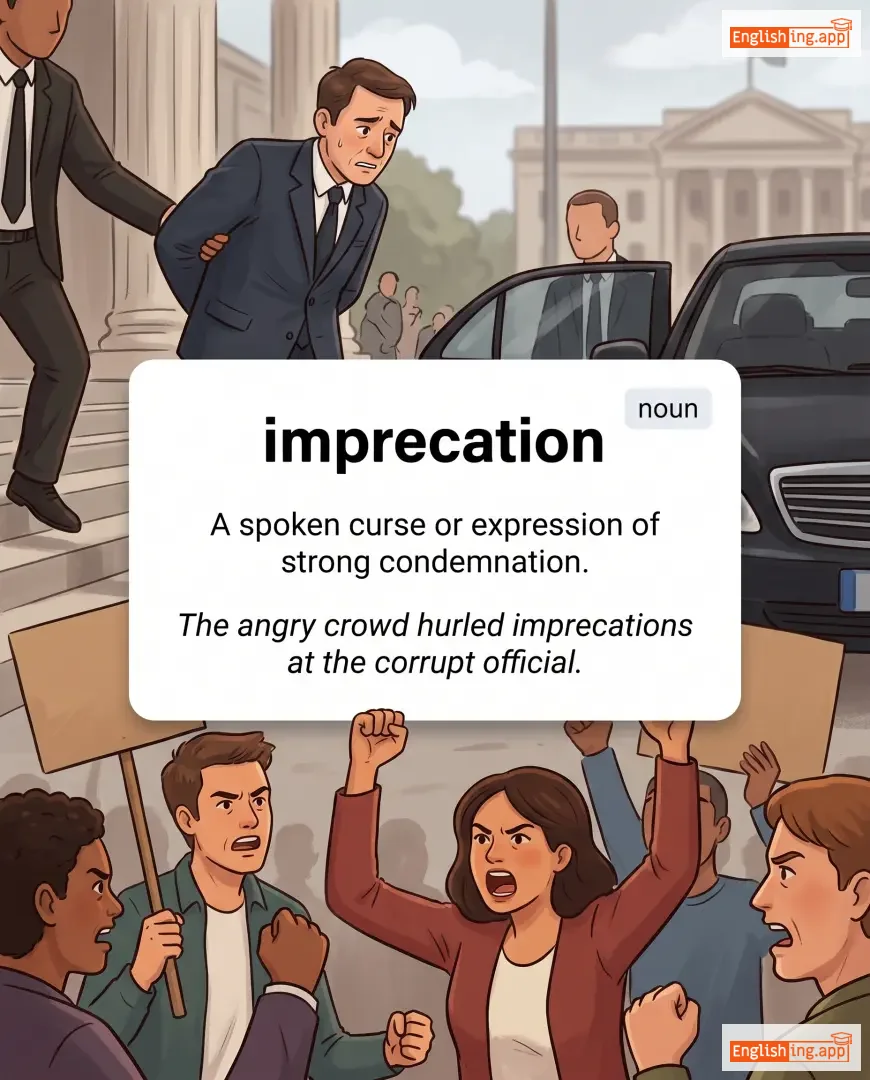
imprecation definition card — visual illustration of the meaning
noun
/ˌɪmprɪˈkeɪʃən/
呪い (noroi)

A spoken curse or expression of strong condemnation.

"The angry crowd hurled imprecations at the corrupt official."

"怒った群衆は腐敗した役人に呪いを投げかけた。" (Okotta gunshuu wa fuhai shita yakunin ni noroi wo nagekaketa.)
adjective
/ˌɪmprɪˈsaɪs/
不正確 (fuseikaku)

Not exact or accurate; vague.

"His explanation was too imprecise to be helpful."

"彼の説明はあまりにも不正確で役に立たなかった。" (Kare no setsumei wa amari ni mo fuseikaku de yaku ni tatanakatta.)
adjective
/ɪmˈprɛɡnəbl̩/
攻略不可能 (kōryaku fukanō)

Unable to be captured, broken into, or defeated.

"The fortress was considered impregnable by the enemy."

"その要塞は敵によって攻略不可能と見なされていました。" (Sono yōsai wa teki ni yotte kōryaku fukanō to minasarete imashita.)
verb
/ˈɪmprɛɡneɪt/
妊娠させる / 飽和させる (ninshin saseru / hōwa saseru)

To make pregnant; to fill or saturate with something.

"The scientist used a method to impregnate the material with resin."

"科学者は樹脂で素材をインプレグネイトする方法を使用しました。" (Kagakusha wa jushi de sozai o inpureguneito suru hōhō o shiyō shimashita.)
noun
/ˌɪmprəˈsɑːrioʊ/
プロデューサー (purodyūsā)

A person who organizes or finances concerts, plays, or operas.

"The impresario arranged a series of concerts for the rising star."

"インプレサリオは、急成長するスターのためにコンサートのシリーズを手配しました。" (Inpresario wa, kyū seichō suru sutā no tame ni konsāto no shirīzu o tehai shimashita.)
verb
/ɪmˈprɛs/
感動させる (kandō saseru)

to cause someone to feel admiration or respect

"Her speech managed to impress the audience."

"彼女のスピーチは聴衆を感動させました。" (Kanojo no supīchi wa chōshū o kandō sasemashita.)
noun
/ɪmˈprɛʃən/
印象, 概念 (inpuresshon, gainen)

an idea, feeling, or opinion about something or someone

"The book gave me a good first impression."

"その本は私に良い最初の印象を与えました。" (Sono hon wa watashi ni yoi saisho no inshou o ataemashita.)
adjective
/ɪmˈprɛsɪv/
印象的な、賞賛に値する (in-shou-teki na, shou-san ni atai suru)

causing admiration or respect; remarkable

"The building is an impressive example of modern architecture."

"その建物は現代建築の印象的な例です。" (Sono tatemono wa gendai kenchiku no inshouteki na rei desu.)
noun
/ˌɪmprɪˈmɑːtər/
承認 (shōnin)

An official license or approval, especially to publish a book.

"The book was released with the official imprimatur of the church."
"その本は教会の正式な承認を得て出版されました。" (Sono hon wa kyōkai no seishiki na shōnin o ete shuppan saremashita.)
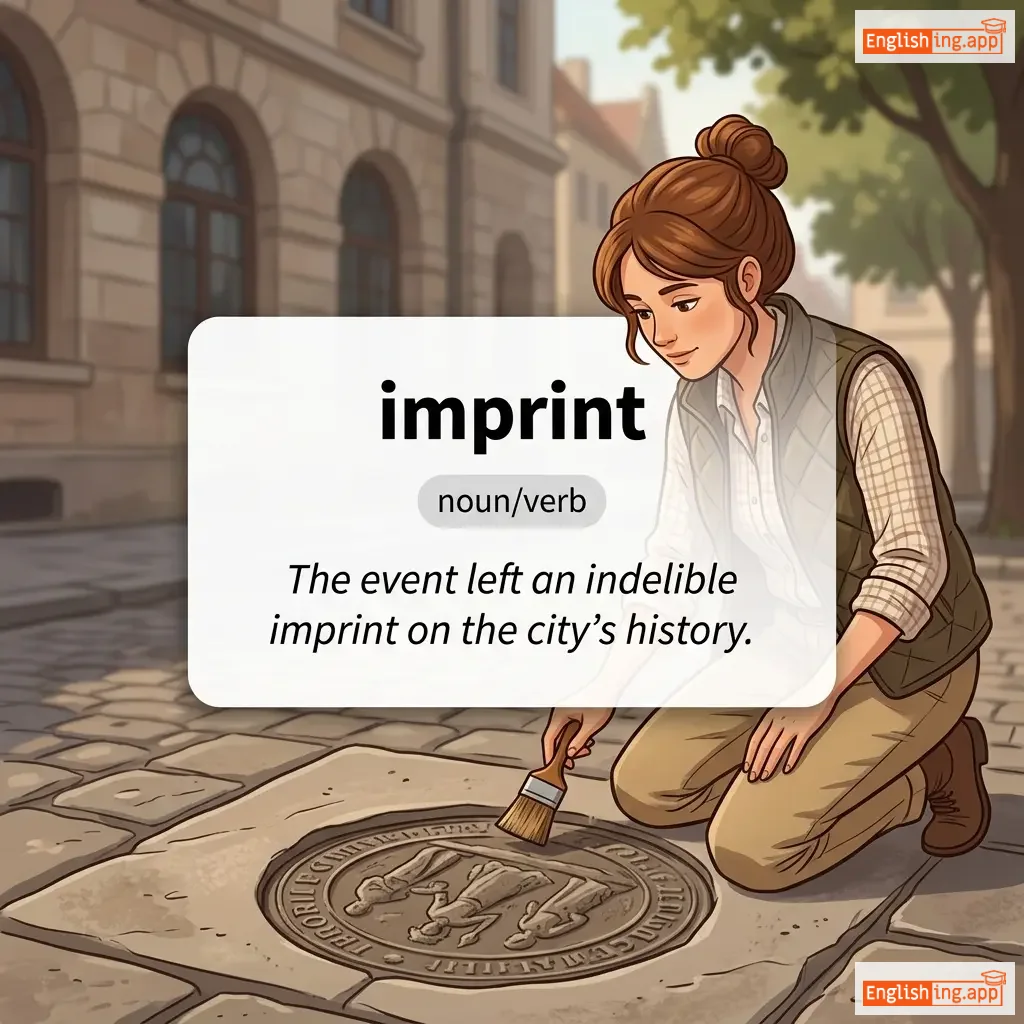
imprint definition card — visual illustration of the meaning
noun/verb
/ˈɪmprɪnt/
刻印 (kokuin)

A mark or impression made by pressure; to establish or fix firmly in someone's mind.

"The event left an indelible imprint on the city's history."
"その出来事は都市の歴史に消えない刻印を残した。" (Sono dekigoto wa toshi no rekishi ni kienai kokuin o nokoshita.)
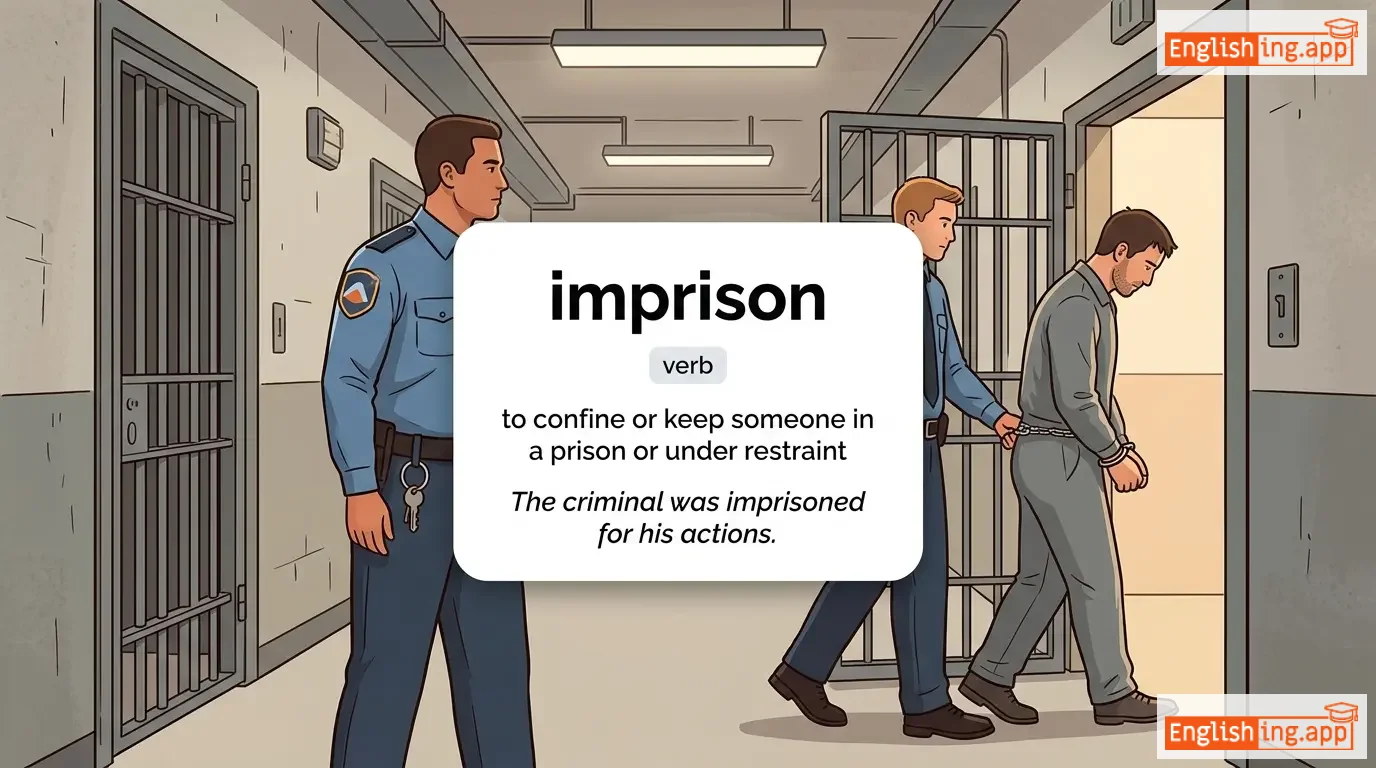
imprison definition card — visual illustration of the meaning
verb
/ɪmˈprɪzən/
投獄する (tōgoku suru)

to confine or keep someone in a prison or under restraint

"The criminal was imprisoned for his actions."

"その犯罪者は行動のために投獄された。" (Sono hanzai-sha wa kōdō no tame ni tōgoku sareta.)
noun
/ɪmˈprɪzənmənt/
投獄 (tougoku)

the act of putting someone in prison; the state of being confined as punishment

"He faced imprisonment for violating the court order."

"彼は裁判所の命令に違反して投獄に直面した。" (Kare wa saibansho no meirei ni ihan shite tougoku ni chokumen shita)
noun
/ɪmˌprɒb.əˈbɪl.ə.ti/
不確実性 (fukakujitsusei)

the quality or state of being improbable; unlikely to be true or to happen

"The improbability of winning the lottery twice didn't stop her from buying tickets."

"ロトで二回連続で当選する可能性の低さは、彼女がチケットを買うのを止めませんでした。" (roto de nikai renzoku de tōsen suru kanōsei no hikusa wa, kanojo ga chiketto o kau no o tome masen deshita.)
adjective
/ɪmˈprɒbəbl/
あり得ない (arienai)

Not likely to be true or to happen.

"It seems improbable that he will arrive on time."
"彼が時間通りに到着するのはあり得ないようだ。" (Kare ga jikan dōri ni tōchaku suru no wa arienai yō da.)
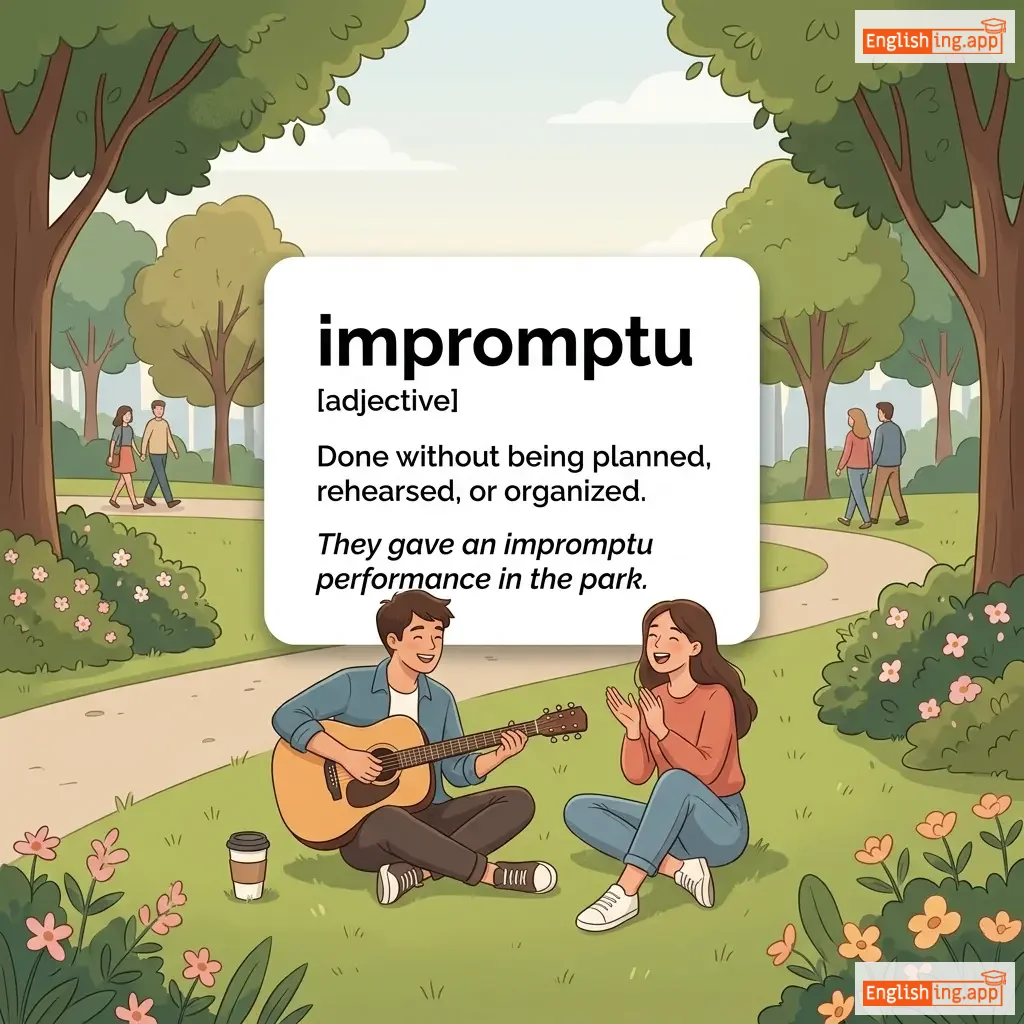
impromptu definition card — visual illustration of the meaning
adjective
/ɪmˈprɒmptjuː/
即興 (sokkyou)

Done without being planned, rehearsed, or organized.

"They gave an impromptu performance in the park."

"彼らは公園で即興のパフォーマンスをしました。" (Karera wa kouen de sokkyou no pafōmansu o shimashita.)
adjective
/ɪmˈprɒpər/
不適切 (futekisetsu)

Not suitable or appropriate; against accepted standards.

"It is improper to talk loudly in the library."

"図書館で大声で話すのは不適切です。" (Toshokan de oogoe de hanasu no wa futekisetsu desu.)
noun
/ˌɪmprəˈpraɪəti/
不正行為 (fusei koui)

Failure to observe standards of honesty or modesty; improper behavior.

"The politician was accused of financial impropriety."

"その政治家は財政的不正行為で告発されました。" (Sono seijika wa zaisei-teki fusei koui de kokuhatsu saremashita.)
verb
/ɪmˈpruːv/
改善する (kaizen suru)

to make something better or become better

"Regular practice will improve your skills."

"定期的な練習はあなたのスキルを向上させるでしょう。" (teikiteki na renshū wa anata no sukiru o kōjō saseru deshō.)
adjective
/ɪmˈpruːvd/
改善された (kaizen sareta)

made better or enhanced in quality or condition

"Her health has significantly improved since last month."

"彼女の健康は先月から大きく改善されました。" (Kanojo no kenkō wa sengetsu kara ōkiku kaizen saremashita.)
noun
/ɪmˈpruːvmənt/
改善 (kaizen)

the act of making something better

"There has been a significant improvement in his health."
"彼の健康には重要な改善がありました。" (kare no kenko ni wa jūyō na kaizen ga arimashita.)
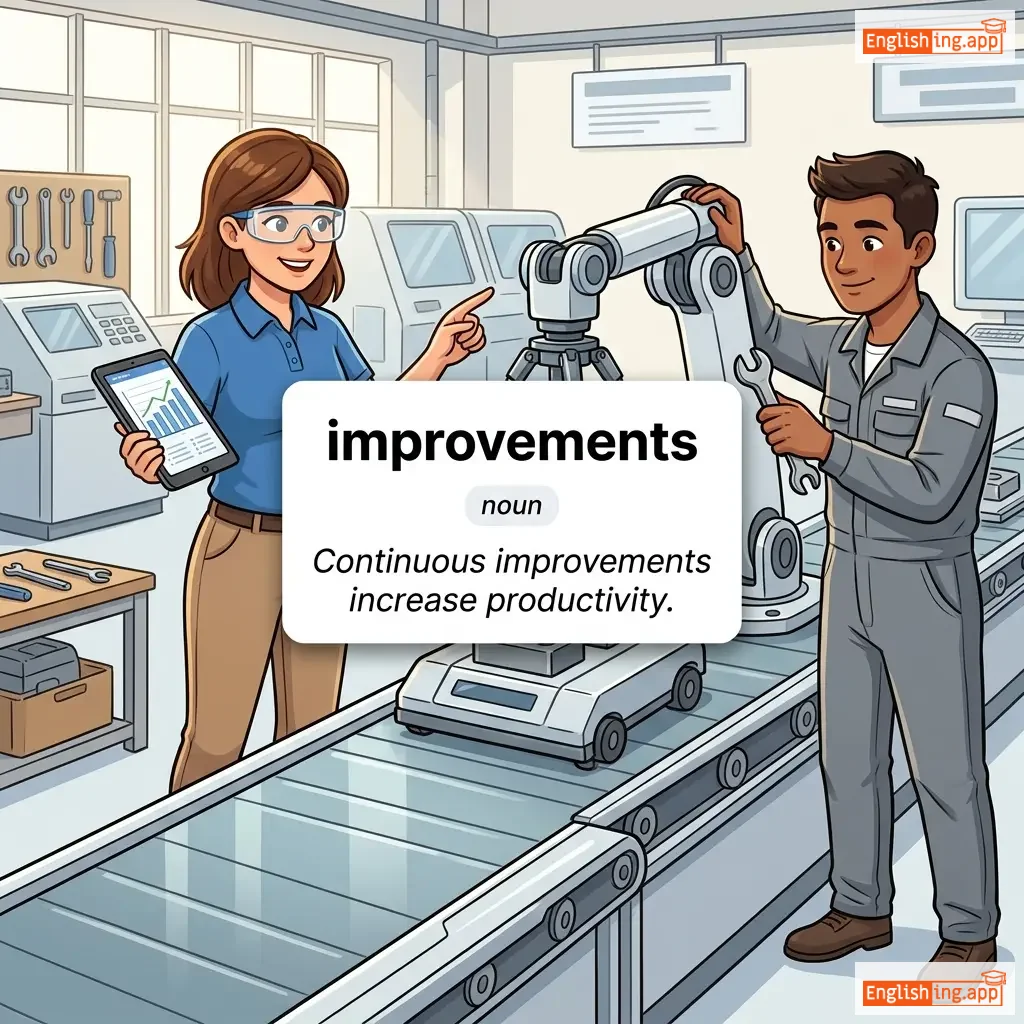
improvements definition card — visual illustration of the meaning
noun
ɪmˈpruːv.mənts
改善 (kaizen)

The action of making or becoming better; an instance of something becoming or being made better.

"Continuous improvements increase productivity."

"継続的な改善は生産性を高めます。" (Keizokuteki na kaizen wa seisansei o takamemasu.)
noun
/ɪmˈprɑːvɪdəns/
不注意 (fuchūi)

Lack of foresight or care for future needs.

"His improvidence led to financial difficulties."

"彼の不注意が彼を財政的な困難に追い込んだ。" (Kare no fuchūi ga kare o zaiseiteki na konnan ni oikonda.)
adjective
/ɪmˈprɒvɪdənt/
先見の明がない (senken no mei ga nai)

Not having or showing foresight; spending wastefully or without thought for the future.

"His improvident habits left him with no savings."

"彼の先見の明がない習慣は、貯金がないまま彼を残した。" (Kare no senken no mei ga nai shūkan wa, chokin ga nai mama kare o nokoshita.)