語彙集

英単語辞書 | 単語の意味、定義、例文

noun
/ˌɪntərˈmiːdiˌɛri/
仲介者 (chūkaisha)

A person who acts as a link between people in order to try to bring about an agreement; a mediator.

"The diplomat served as an intermediary between the two conflicting nations."

"外交官は二つの対立する国々の間で仲介者として機能した。" (Gaikōkan wa futatsu no tairitsu suru kuniguni no aida de chūkaisha toshite kinō shita.)
adjective
/ˌɪntərˈmiːdiət/
中級 (chūkyū)

Coming between two things in time, place, or order; in the middle level or stage.

"She is taking an intermediate-level French course."

"彼女は中級のフランス語コースを受講しています。" (Kanojo wa chūkyū no Furansugo kōsu o jukō shiteimasu.)
noun
/ɪnˈtɜːrmənt/
埋葬 (maiso)

The act of burying a dead body in a grave or tomb.

"The interment took place at the family cemetery."

"埋葬は家族の墓地で行われました。" (Maiso wa kazoku no bochi de okonawaremashita.)
adjective
/ɪnˈtɜːrmənəbl/
終わりのない (owarino nai)

Seemingly endless; having no apparent end.

"The meeting felt interminable and exhausting."

"会議は終わりのない疲れるもののように感じた。" (Kaigi wa owari no nai tsukareru mono no you ni kanjita.)
noun
/ˌɪntərˈmɪʃən/
休憩 (kyūkei)

A pause or break, especially during a performance or event.

"The play had a twenty-minute intermission."

"その劇には20分間の休憩がありました。" (Sono geki ni wa nijūppunkan no kyūkei ga arimashita.)
verb
/ˌɪntərˈmɪt/
中断する (chuudan suru)

To suspend or stop for a time; to pause intermittently.

"The rain would intermit and then start again."
"雨は中断し、再び始まる。" (Ame wa chuudan shi, futatabi hajimaru.)
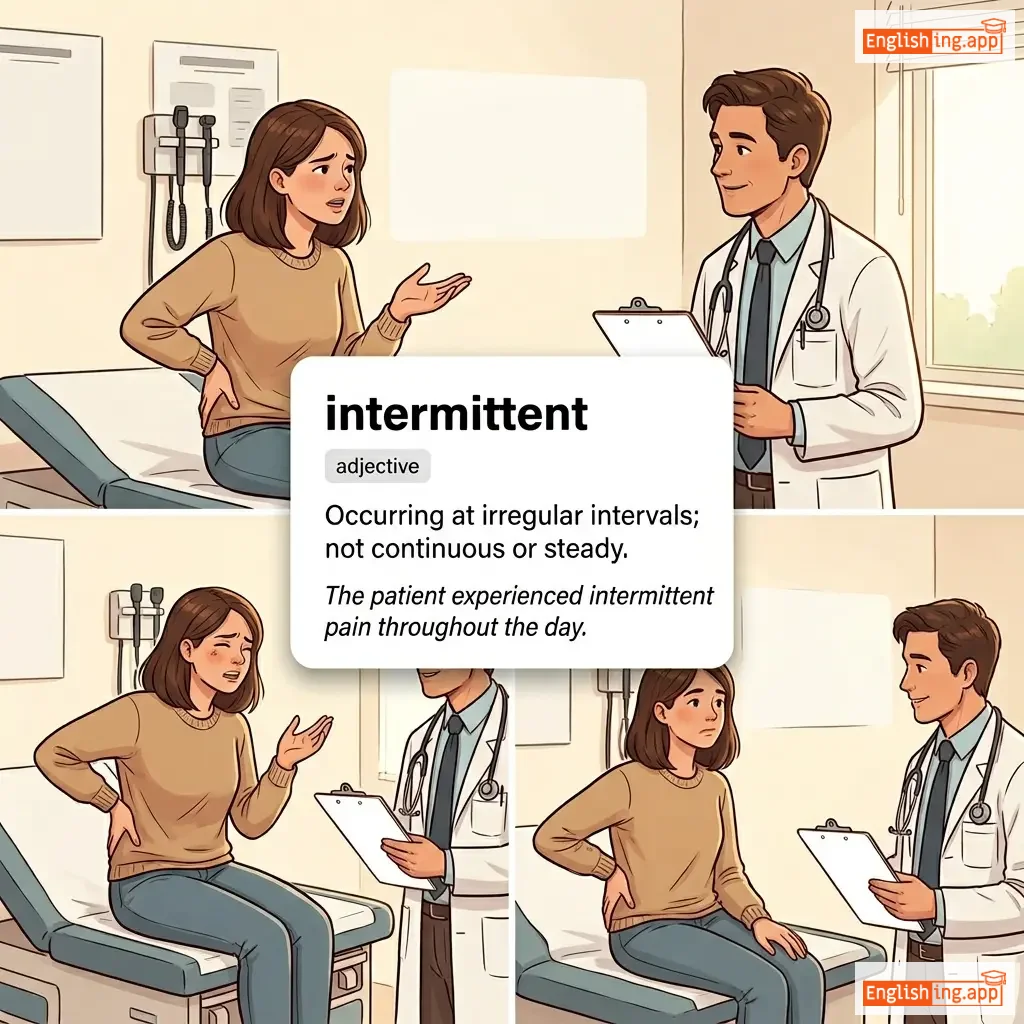
intermittent definition card — visual illustration of the meaning
adjective
/ˌɪntərˈmɪtənt/
断続的 (danzokuteki)

Occurring at irregular intervals; not continuous or steady.

"The patient experienced intermittent pain throughout the day."

"患者は一日中、断続的な痛みを感じました。" (Kanja wa ichinichijū, danzokuteki na itami o kanjimashita.)
adjective
/ɪnˈtɜːrnəl/
内部 (naibu)

situated inside; relating to the inside or inner part of something

"The company is conducting an internal audit this month."

"その会社は今月内部監査を行っています。" (Sono kaisha wa kongetsu naibu kansa o okonatteimasu.)
international definition card — visual illustration of the meaning
adjective
/ˌɪntərˈnæʃənəl/
国際的 (kokusai teki)

Existing, occurring, or carried on between nations.

"The company is planning to expand into international markets."
"その会社は国際市場に拡大する計画を立てています。" (Sono kaisha wa kokusai shijou ni kakudai suru keikaku o tateteimasu.)
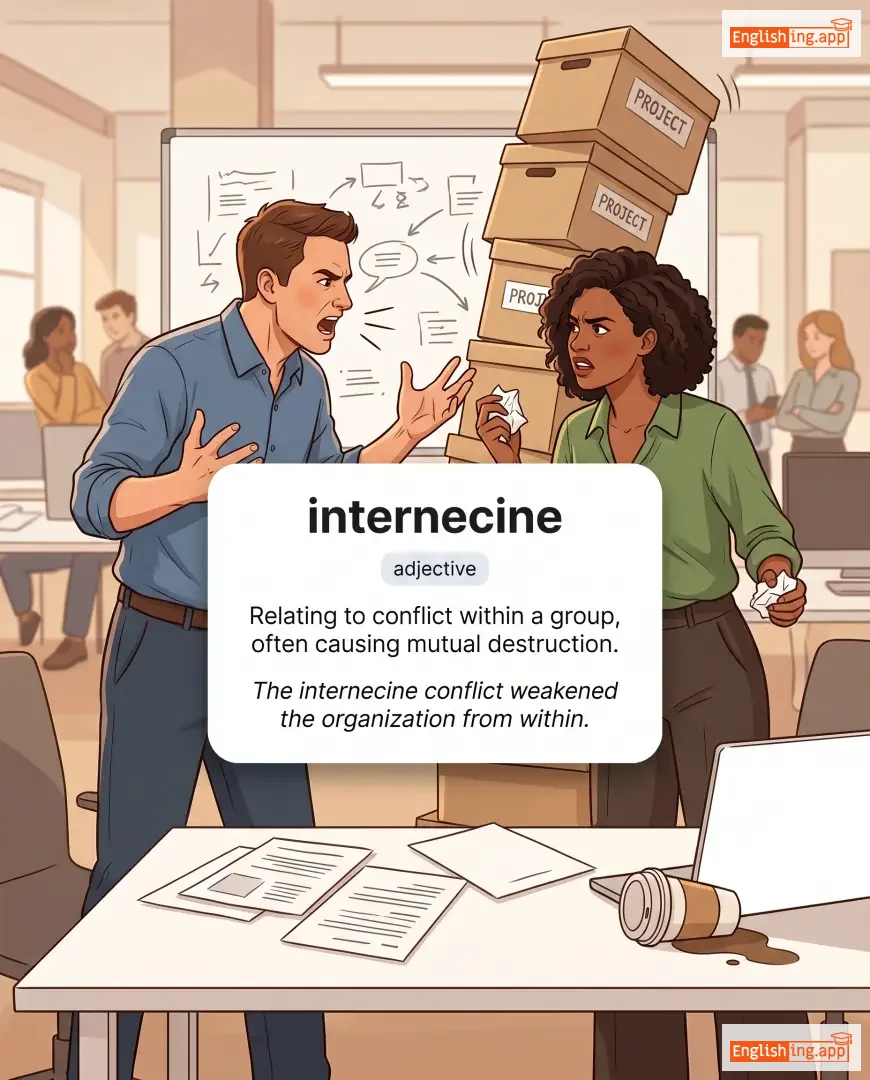
internecine definition card — visual illustration of the meaning
adjective
/ˌɪntərˈniːsaɪn/
内部紛争 (naibu funsou)

Relating to conflict within a group, often causing mutual destruction.

"The internecine conflict weakened the organization from within."
"内部紛争は組織を内部から弱体化させた" (Naibu funsou wa soshiki wo naibu kara jakutaika saseta)
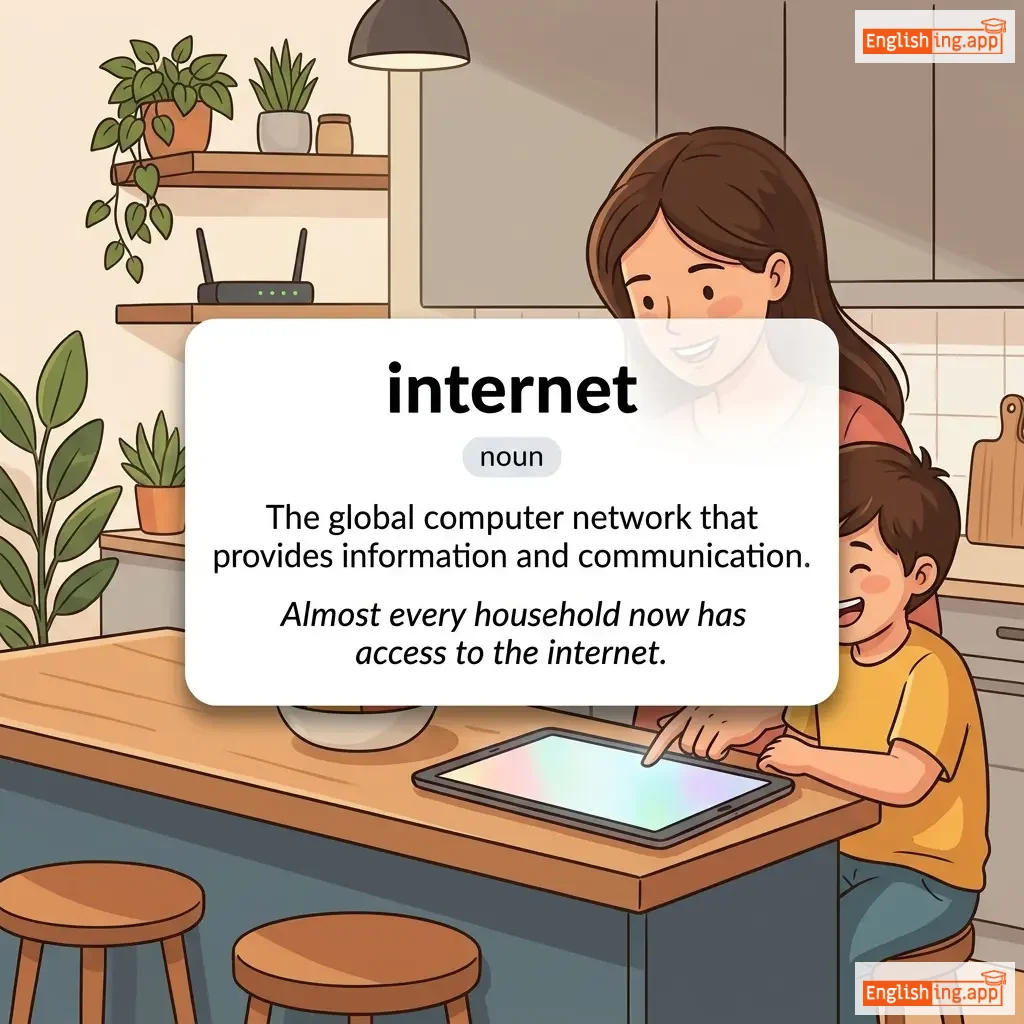
internet definition card — visual illustration of the meaning
noun
/ˈɪntərˌnɛt/
インターネット (intānetto)

The global computer network that provides information and communication.

"Almost every household now has access to the internet."
"ほぼすべての家庭がインターネットにアクセスしています。" (Hobo subete no katei ga intānetto ni akusesu shiteimasu.)
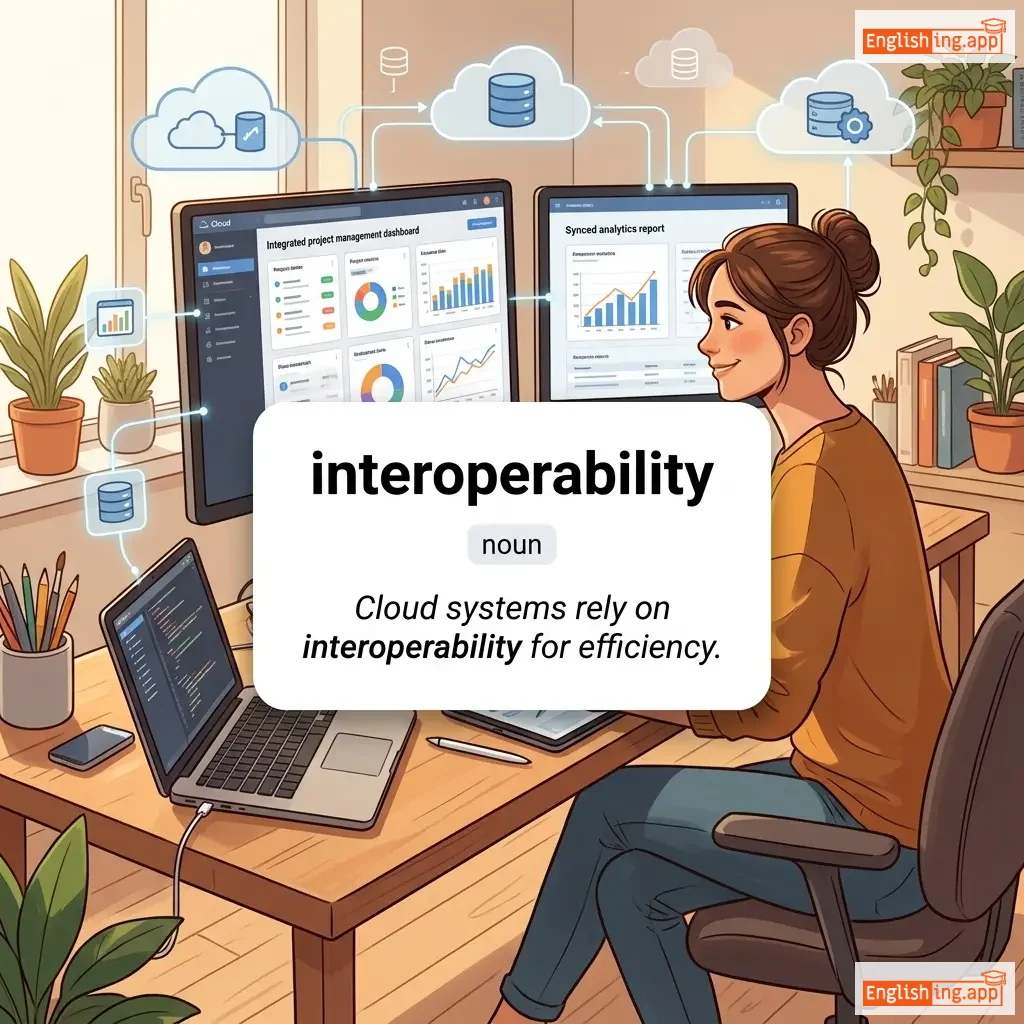
interoperability definition card — visual illustration of the meaning
noun
ˌɪn.tərˌɒp.ər.əˈbɪl.ɪ.ti
相互運用性 (sōgo un'yō-sei)

The ability of computer systems or software to exchange and make use of information.

"Cloud systems rely on interoperability for efficiency."
"クラウドシステムは効率性のためにインターロペラビリティに依存しています。" (Kuraudo shisutemu wa kōritsusei no tame ni intāroperabiriti ni izon shiteimasu.)
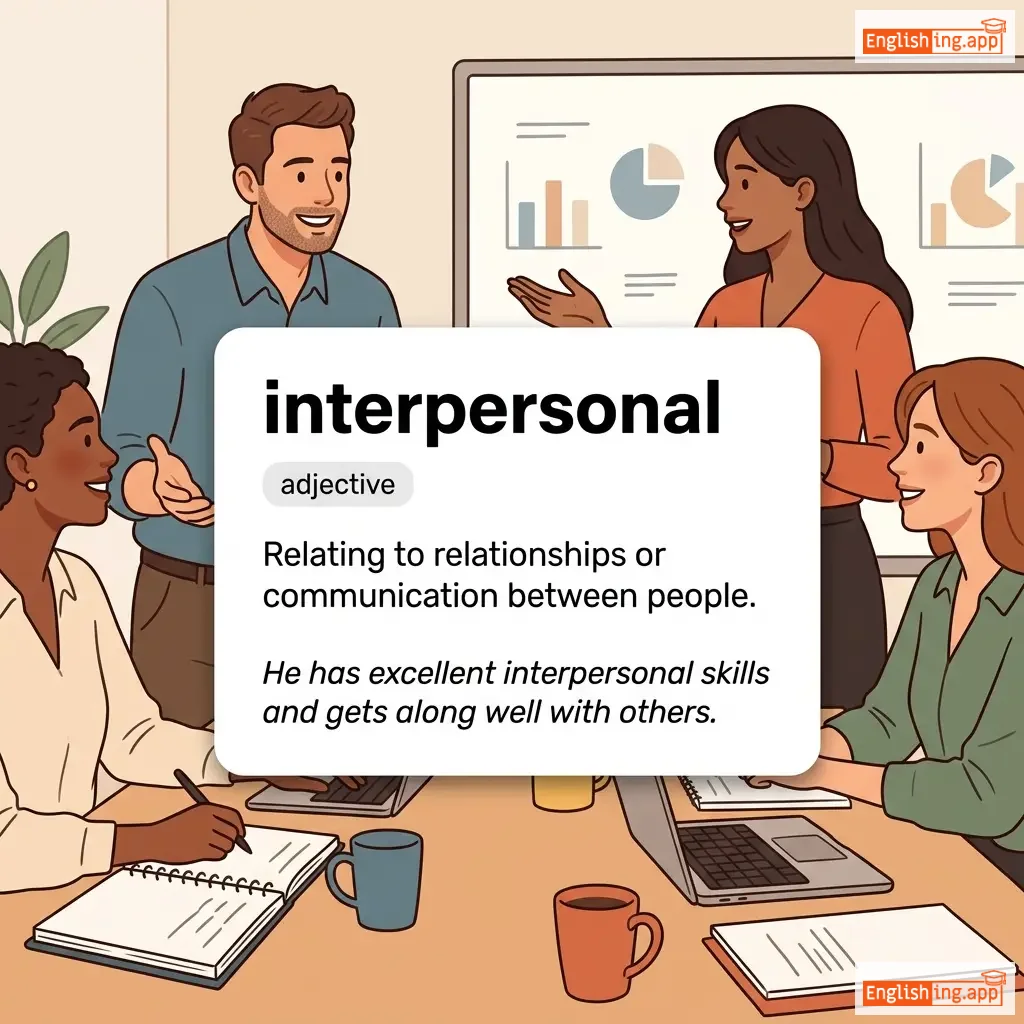
interpersonal definition card — visual illustration of the meaning
adjective
/ˌɪntəˈpɜːsənl/
対人 (taijin)

Relating to relationships or communication between people.

"He has excellent interpersonal skills and gets along well with others."

"彼は優れた対人スキルを持っており、他の人とうまくやっていきます。" (Kare wa sugureta taijin sukiru o motte ori, hoka no hito to umaku yatte ikimasu.)
noun
/ˈɪntərˌpleɪ/
相互作用 (sōgo sayō)

The way in which two or more things have an effect on each other.

"The interplay between culture and technology shapes modern life."

"文化と技術の相互作用が現代生活を形作っています。" (Bunka to gijutsu no sōgo sayō ga gendai seikatsu o katachi tsukutteimasu.)
interpolate definition card — visual illustration of the meaning
verb
/ɪnˈtɜːrpəˌleɪt/
挿入する (sānyū suru)

To insert something, often words, into a text or conversation; to estimate values between known data points.

"The editor interpolated a missing paragraph into the manuscript."

"編集者は原稿に欠落した段落を挿入した。" (Henshūsha wa gengō ni ketsuraku shita danraku o sānyū shita.)
noun
/ɪnˌtɜːrpəˈleɪʃən/
補間 (hokan)

The act of inserting something into a text or estimating values within a sequence of data.

"The scientist used interpolation to predict the missing data points."

"科学者は欠落したデータポイントを予測するために補間を使用しました。" (Kagakusha wa ketsuraku shita dēta pointo o yosoku suru tame ni hokan o shiyō shimashita.)
verb
/ˌɪntərˈpoʊz/

To place or insert between one thing and another; to intervene in a situation.

"He quickly interposed himself between the fighters to stop the quarrel."

noun
/ˌɪntərpəˈzɪʃən/
介入 (kainyū)

The act of intervening or coming between two things, often to influence or prevent an outcome.

"The manager’s interposition prevented a heated argument from escalating."

"マネージャーの介入は、激しい議論がエスカレートするのを防ぎました。" (Manējā no kainyū wa, hageshī giron ga esukarēto suru no o fusegimashita.)
🗣️

interpret

verb
/ɪnˈtɜːrprət/

to explain the meaning of something; to translate orally

"She had to interpret the speech for the foreign guests."

noun
/ɪnˌtɜːrprəˈteɪʃən/
解釈 (kaishaku)

the action of explaining the meaning of something

"The teacher gave her own interpretation of the poem."

"教師は詩の自分の解釈を示しました。" (Kyōshi wa shi no jibun no kaishaku o shimeshita.)
noun
/ɪnˈtɜːrprɪtər/
通訳者 (tsūyaku-sha)

A person who translates spoken language orally in real time.

"The interpreter helped the tourists communicate with the locals."
"通訳者は観光客が地元の人々とコミュニケーションするのを助けました。" (Tsūyaku-sha wa kankōkyaku ga jimoto no hitobito to komyunikeeshon suru no o tasukemashita.)
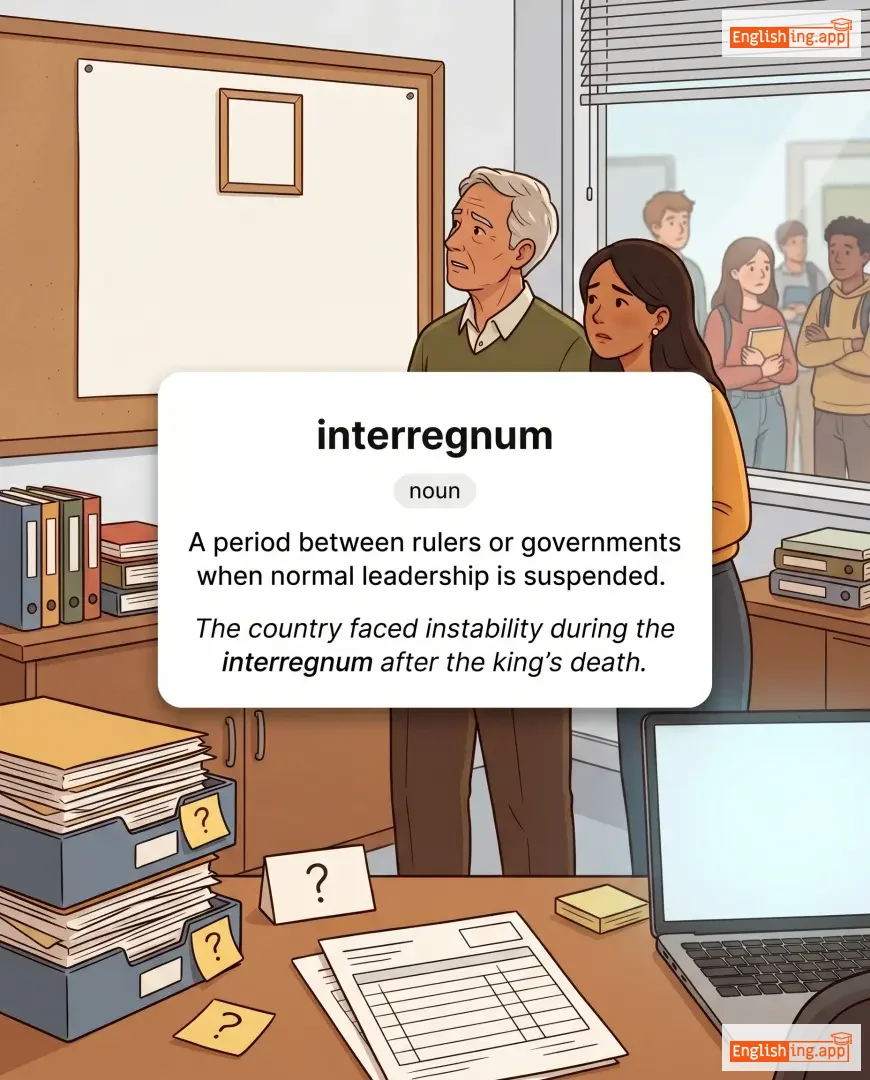
interregnum definition card — visual illustration of the meaning
noun
/ˌɪntərˈrɛɡnəm/
政権空白期 (seiken kūhaku-ki)

A period between rulers or governments when normal leadership is suspended.

"The country faced instability during the interregnum after the king’s death."
"国王の死後、国は政権空白期に不安定さに直面した。" (Kokuō no shigo, kuni wa seiken kūhaku-ki ni fuansei ni chokumen shita.)
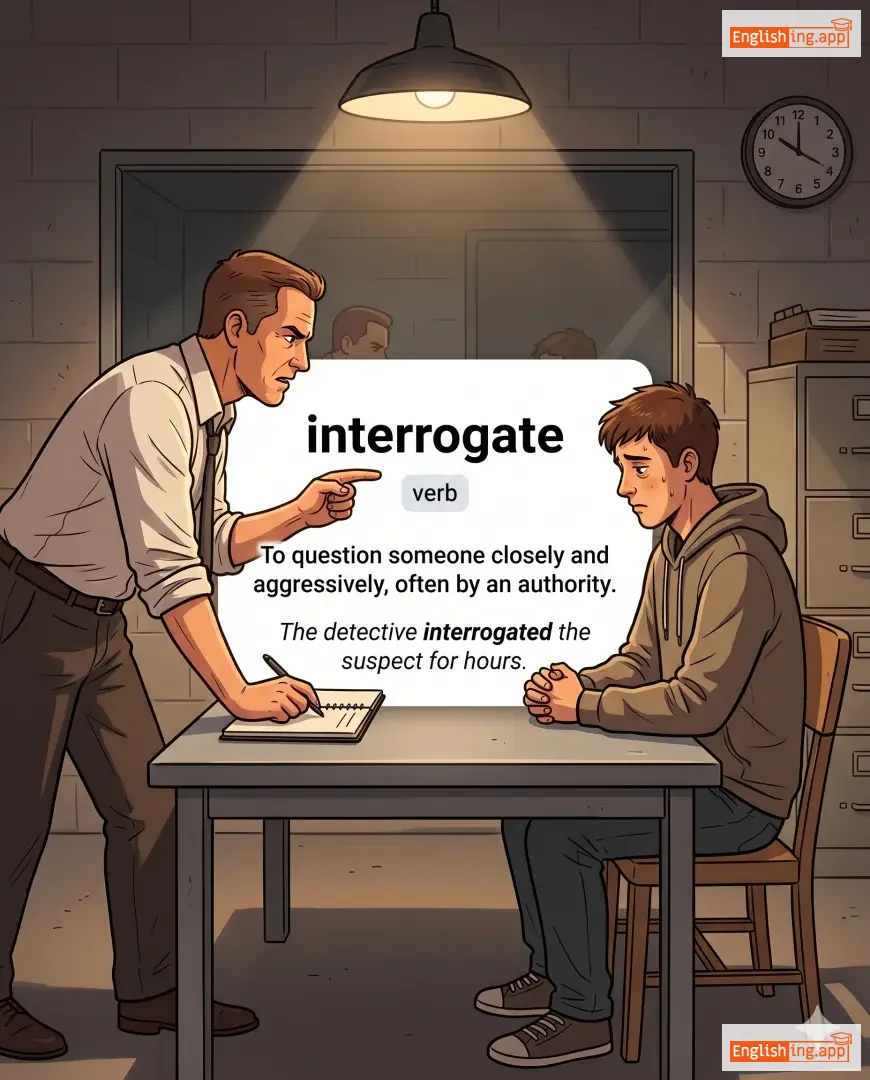
interrogate definition card — visual illustration of the meaning
verb
/ɪnˈtɛrəˌɡeɪt/
尋問する (shinmon suru)

To question someone closely and aggressively, often by an authority.

"The detective interrogated the suspect for hours."

"探偵は容疑者を何時間も取り調べた。" (Tantei wa yogisha o nan jikan mo torishirabeta.)
adjective
/ˌɪntəˈrɑːɡətɪv/
疑問の (gimon no)

Relating to or conveying a question; in grammar, used to form questions.

"She raised an interrogative eyebrow when she heard the news."

"彼女はそのニュースを聞いて疑問のまなざしを向けました。" (Kanojo wa sono nyūsu o kiite gimon no manazashi o mukemashita.)
adjective
/ˌɪntəˈrɒɡətəri/
尋問的な (jinmon-tekina)

expressed in the form of a question; relating to questioning

"The lawyer’s interrogatory tone made the witness uncomfortable."

"弁護士の尋問的な口調は証人を不快にさせました。" (Bengoshi no jinmon-tekina kuchou wa shounin wo fukai ni sasemashita.)
verb
/ˌɪntəˈrʌpt/
割り込む (warikomu)

to stop someone from speaking or doing something by suddenly saying or doing something

"She tried not to interrupt while he was speaking."

"彼女は彼が話している間、割り込まないようにした。" (Kanojo wa kare ga hanashite iru aida, warikomanai yō ni shita.)
noun
/ˌɪntəˈrʌpʃən/
中断 (chudan)

the act of stopping or breaking the continuity of something; a pause caused by an external action

"The meeting was delayed due to an unexpected interruption."

"予期しない中断のため会議は遅れた。" (yokishinai chudan no tame kaigi wa okureta)
verb
/ˌɪntəˈsɛkt/
交差する (kōsa suru)

to cross or pass through each other

"The two roads intersect at the city center."

"二つの道路は市内中心で交差する。" (Futatsu no dōro wa shinaichūshin de kōsa suru.)
noun
/ˌɪntərˈsɛkʃən/
交差点 (kousaten)

a point where two or more things intersect, especially a road or path

"The intersection of Main Street and 5th Avenue is always busy."
"メインストリートと5番街の交差点はいつも混んでいます。" (Mein Sutorito to 5-ban gai no kousaten wa itsumo kondeimasu.)
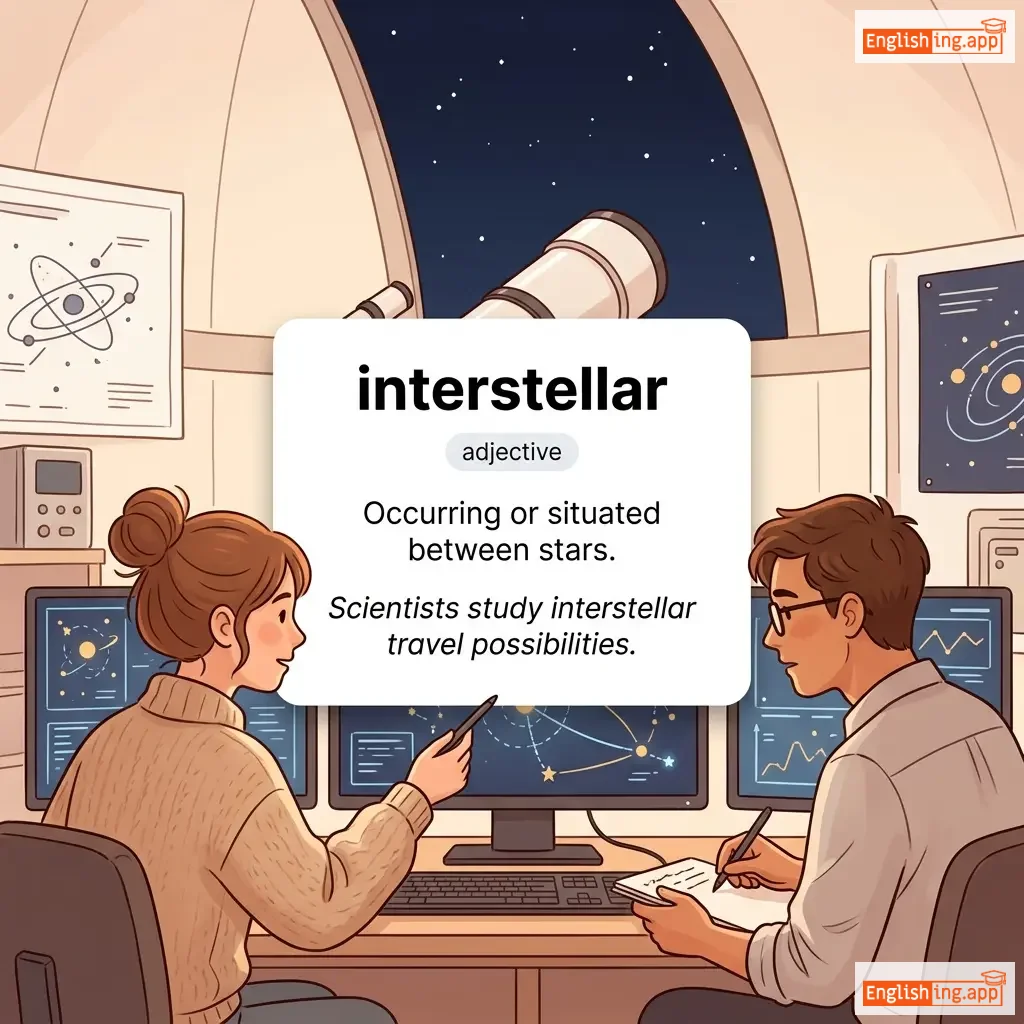
interstellar definition card — visual illustration of the meaning
adjective
ˌɪn.təˈstel.ər
星間の、インターステラ、宇宙の (seikan no, intasutera, uchuu no)

Occurring or situated between stars.

"Scientists study interstellar travel possibilities."

"科学者たちはインターステラ旅行の可能性を研究しています。" (Kagakusha-tachi wa intasutera ryokou no kanousei o kenkyuu shiteimasu.)
noun
/ɪnˈtɜːrstɪs/
隙間 (sukima)

a small space that lies between things

"Light filtered through the narrow interstices of the wall."
"光は壁の狭い隙間を通して漏れた。" (Hikari wa kabe no semai sukima o tōshite moreta.)
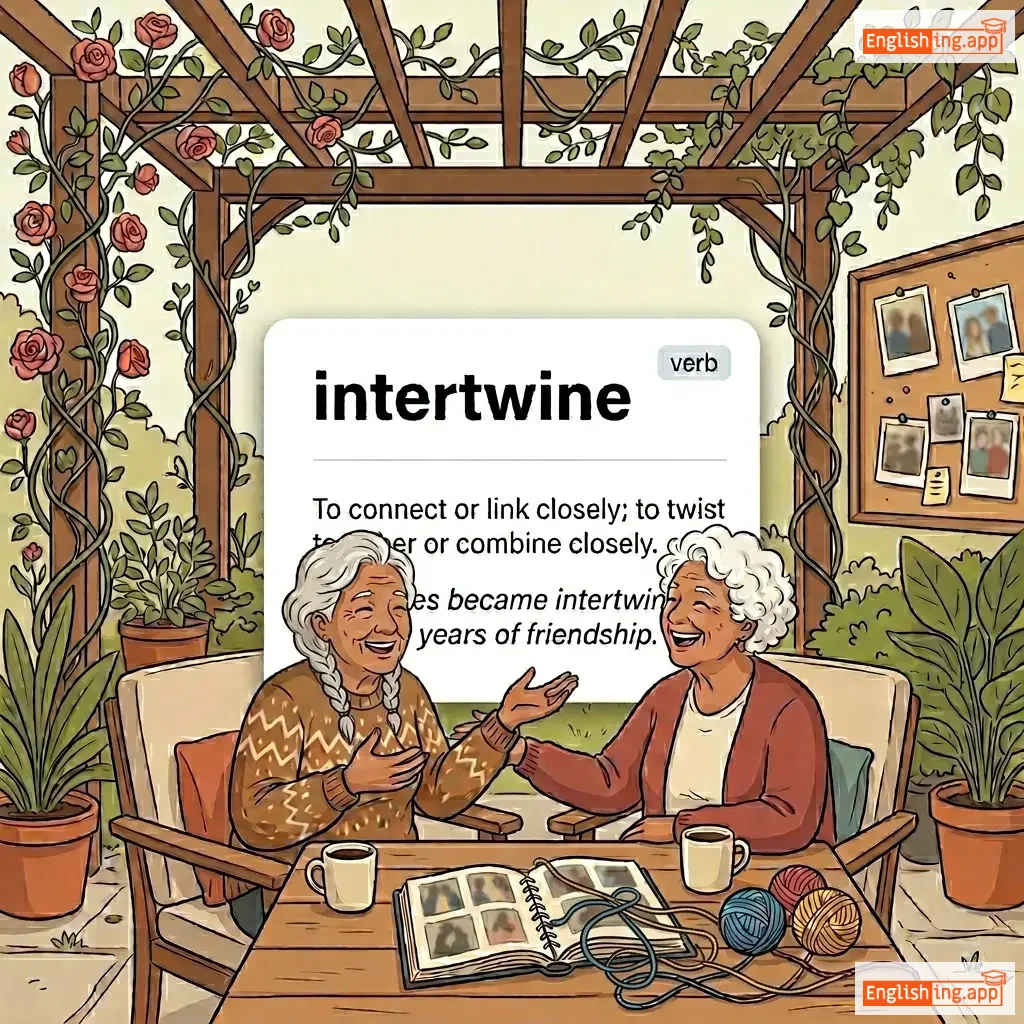
intertwine definition card — visual illustration of the meaning
verb
/ˌɪn.tɚˈtwaɪn/
密接に接続またはリンクする; 一緒にねじるまたは密接に結合する (missetsu ni setsuzoku matawa rinku suru; issho ni nejiru matawa missetsu ni ketsugou suru)

To connect or link closely; to twist together or combine closely.

"Their lives became intertwined through years of friendship."

"彼らの生活は長年の友情を通じて絡み合った。" (Karera no seikatsu wa naganen no yūjō o tōjite karamiatta.)
adjective
/ˌɪntərˈtwaɪnd/
幸福 (koufuku)

closely connected or twisted together

"Their lives became deeply intertwined after the accident."

"彼女は賞を受け取ったとき、幸せを隠せませんでした。" (Kanojo wa shou wo uketotta toki, koufuku wo kakusemasendeshita.)
noun
/ˈɪntərvəl/
インターバル (intābaru)

a period of time between two events or points; a pause or break in activity

"There was a short interval between the two performances."

"二つの公演の間には短いインターバルがありました。" (Futatsu no kōen no aida ni wa mijikai intābaru ga arimashita.)
noun
/ˈɪntərˌveɪl/
川沿いの低地、通常は肥沃で平坦 (kawa-zoi no teichi, tsūjō wa hiwoku de heitan)

A low-lying tract of land along a river, usually fertile and flat.

"The farmers cultivated crops on the lush intervale by the river."

"農民たちは川沿いの肥沃な土地で作物を育てた。" (Nōmintachi wa kawa-zoi no hiwoku na tochi de sakumotsu o sodateta.)
verb
/ˌɪntərˈviːn/
介入する (kainyū suru)

To come between people, groups, or events, often to prevent conflict or improve a situation.

"The teacher had to intervene to stop the fight between the students."
"教師は生徒たちの間で喧嘩を止めるために介入しなければならなかった。" (Kyōshi wa seito-tachi no aida de kenka o tomeru tame ni kainyū shinakereba naranakatta.)
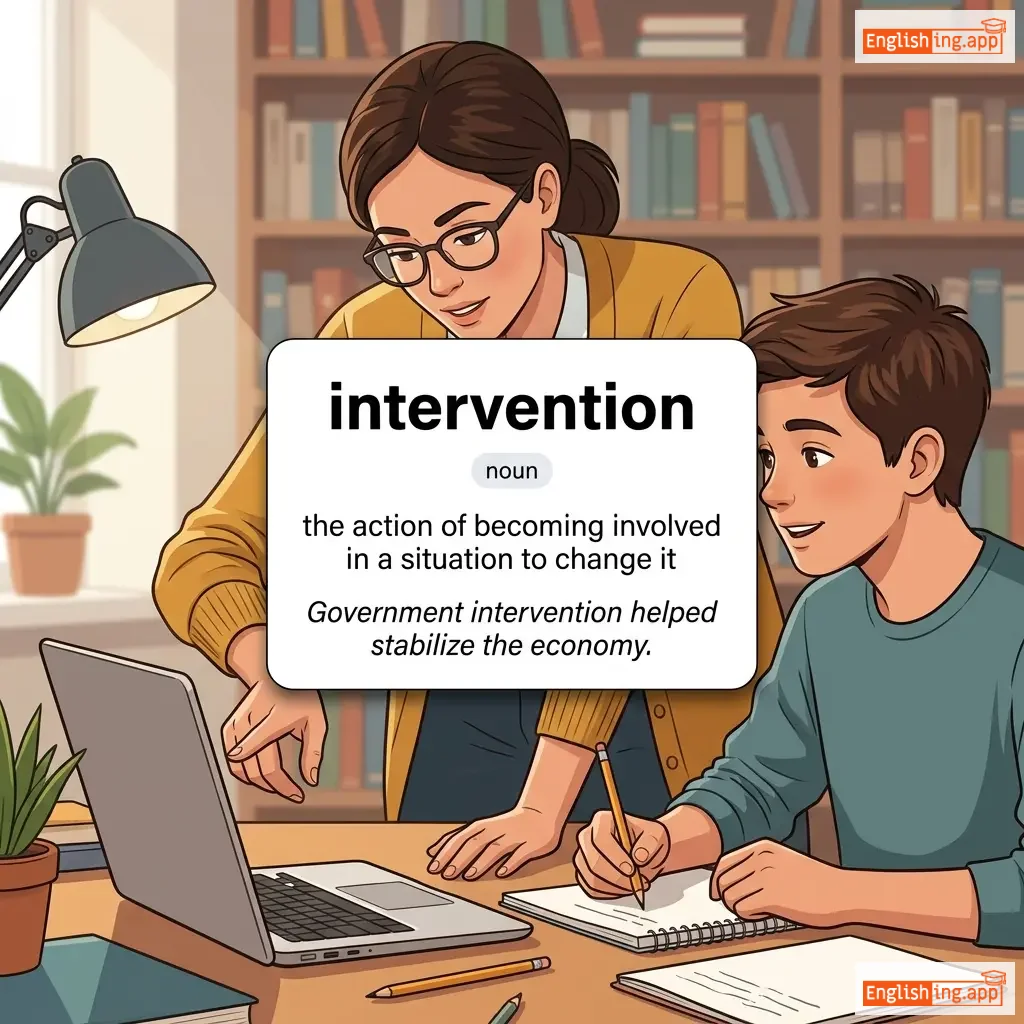
intervention definition card — visual illustration of the meaning
noun
/ˌɪntərˈvɛnʃən/
介入 (kaiyū)

the action of becoming involved in a situation to change it

"Government intervention helped stabilize the economy."
"政府の介入は経済の安定を助けた。" (Seifu no kaiyū wa keizai no antei o tasuketa.)
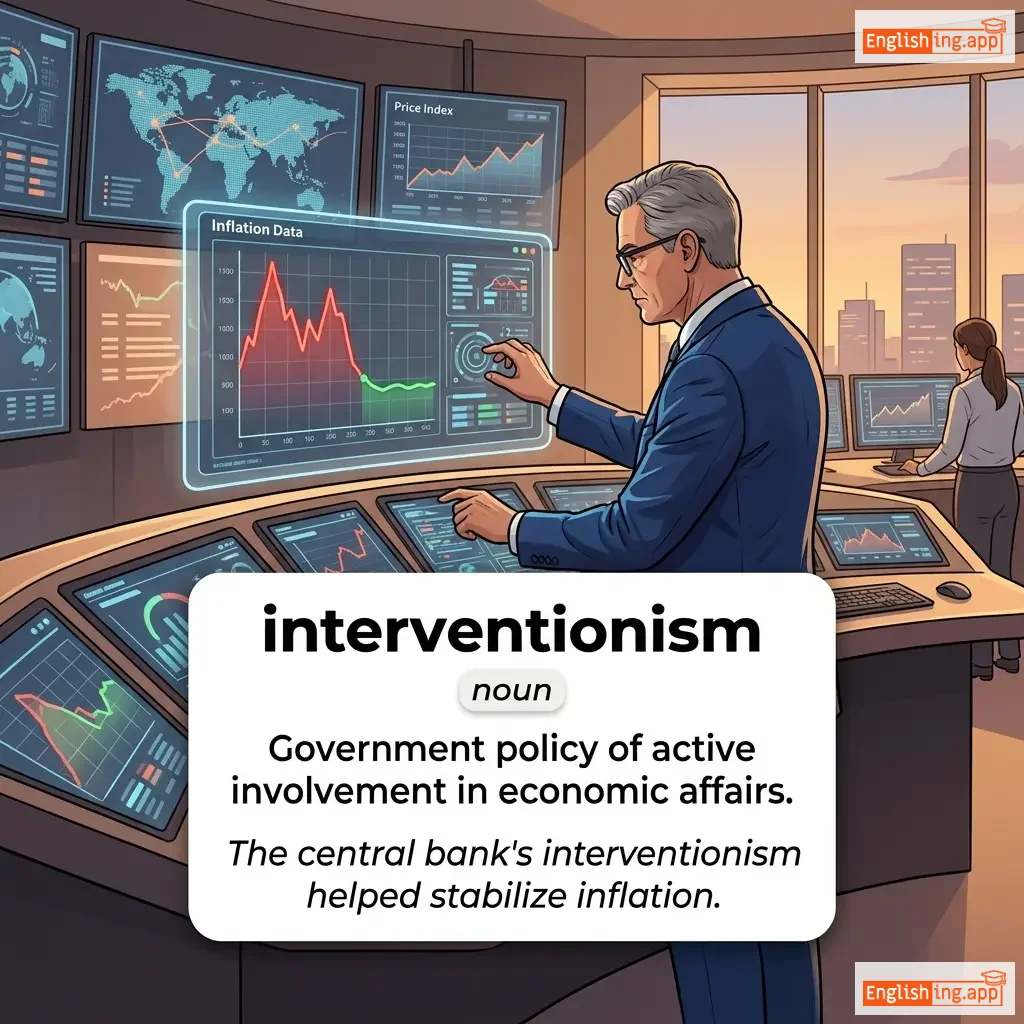
interventionism definition card — visual illustration of the meaning
noun
/ˌɪn.təˈvɛn.ʃə.nɪ.zəm/
介入主義 (kainyū shugi)

Government policy of active involvement in economic affairs.

"The central bank's interventionism helped stabilize inflation."

"中央銀行の介入主義はインフレの安定に役立った。" (Chūō ginkō no kainyū shugi wa infure no antei ni yakudatta.)
interview definition card — visual illustration of the meaning
noun, verb
/ˈɪntərvjuː/
面接 (mensetsu)

a formal meeting in which one person asks another questions

"She prepared well for the job interview."

"彼女は仕事の面接のためにしっかりと準備しました。" (Kanojo wa shigoto no mensetsu no tame ni shikkari to junbi shimashita.)
noun
/ɪnˈtɛstəsi/
遺言なしで死亡 (yigon nashi de shibou)

The condition of dying without having made a valid will.

"His estate was divided according to the laws of intestacy."

"彼の財産は遺言なしでの法則に従って分けられた。" (kare no zaisan wa yigon nashi de no hōsoku ni shitagatte wakerareta.)
adjective
/ɪnˈtɛsteɪt/
遺言なしで死亡 (igon nashi de shibou)

Having died without leaving a valid will.

"She died intestate, so her assets were distributed by law."

"彼女は遺言なしで死亡したため、財産は法に従って分配されました。" (Kanojo wa igon nashi de shibou shita tame, zaisan wa hō ni shitagatte bunpai saremashita.)
noun
/ɪnˈtɛstɪn/
(chou)

The part of the digestive system where food is digested and absorbed, extending from the stomach to the anus.

"The doctor explained how nutrients are absorbed in the small intestine."

"医者は、小腸で栄養素がどのように吸収されるかを説明しました。" (Isha wa, shouchou de eiyouso ga dono you ni kyushuu sareru ka wo setsumei shimashita.)
noun
/ˈɪntɪməsi/
親密 (shinmitsu)

A close familiarity or friendship; a close personal relationship.

"Their friendship developed into a deep intimacy over the years."

"彼らの友情は年々深い親密な関係に発展しました。" (Karera no yūjō wa nen nen fukai shinmitsu na kankei ni hatten shimashita.)
Intimate definition card — visual illustration of the meaning
adjective
/ˈɪntɪmət/
親密 (shinmitsu)

Closely acquainted; very familiar and personal.

"They shared an intimate dinner by candlelight."

"彼らはキャンドルライトの中で親密な夕食を共にした。" (Karera wa kyandoru raito no naka de shinmitsu na yūshoku o tomo ni shita.)
noun
/ˌɪntɪˈmeɪʃən/
示唆 (shisa)

A subtle or indirect hint or suggestion.

"She gave no intimation of her plans."

"彼女は自分の計画について何の示唆も与えなかった。" (Kanojo wa jibun no keikaku ni tsuite nan no shisa mo ataenakatta.)
verb
/ɪnˈtɪmɪdeɪt/

To frighten or overawe someone, especially to make them do what one wants.

"The bully tried to intimidate the smaller kids."

noun
/ɪnˌtɪmɪˈdeɪʃən/
威圧 (iatsu)

The action of frightening or threatening someone to make them do something.

"The workers reported cases of intimidation by the management."

"労働者たちは経営陣による威圧の事例を報告しました。" (Rōdōsha-tachi wa keiei-jin ni yoru iatsu no jirei o hōkoku shimashita.)
preposition
/ˈɪntuː/
中へ (naka e)

expressing movement or direction to the inside of something

"She walked into the room quietly."

"彼女は静かに部屋に入った。" (Kanojo wa shizukani heya ni haitta.)
adjective
/ɪnˈtɒlərəbl̩/
耐えられない (taerarenai)

so bad, difficult, or unpleasant that it cannot be endured

"The heat during the summer was almost intolerable."

"夏の暑さはほとんど耐えられないほどでした。" (Natsu no atsusa wa hotondo taerarenai hodo deshita.)
noun
/ɪnˈtɒlərəns/
不寛容 (fukanyou)

unwillingness to accept or endure beliefs, behaviors, or conditions different from one's own

"The leader was criticized for his intolerance toward other religions."

"リーダーは他の宗教に対する不寛容さで批判されました。" (Rīdā wa hoka no shūkyō ni taisuru fukanyōsa de hihan saremashita.)