語彙集

英単語辞書 | 単語の意味、定義、例文

pronoun
/aɪ/
(watashi)

used by a speaker to refer to himself or herself

"I am learning English every day."

"私は毎日英語を学んでいます。" (Watashi wa mainichi eigo o manandeimasu.)
noun
/aɪs/
(kōri)

frozen water, a solid form of water

"The lake was covered with thick ice in winter."

"湖は冬に厚い氷で覆われていた。" (Mizuumi wa fuyu ni atsui kōri de ōwarete ita.)
noun
/ˈaɪs kriːm/
アイスクリーム (aisukurīmu)

a frozen sweet dessert made from dairy products, usually served cold

"Children love to eat ice-cream on hot summer days."

"子供たちは暑い夏の日にアイスクリームを食べるのが好きです。" (Kodomotachi wa atsui natsu no hi ni aisukurīmu o taberu no ga suki desu.)
adjective
/ˈɪkθiɪk/
魚のような (sakana no yōna)

Relating to or resembling fish.

"The artist's painting had an ichthyic quality."

"アーティストの絵には魚のような特徴がありました。" (Ātisuto no e ni wa sakana no yōna tokuchō ga arimashita.)
noun
/ˌɪkθiˈɒlədʒɪst/
魚類学者 (Gyoruigakusha)

A scientist who studies fish.

"The ichthyologist discovered a new species of fish in the river."

"魚類学者は川で新しい魚の種を発見しました。" (Gyoruigakusha wa kawa de atarashii sakana no shu wo hakken shimashita.)
noun
/ˌɪkθiˈɒlədʒi/
魚類学 (gyorui-gaku)

The branch of zoology that deals with fish.

"He pursued a degree in ichthyology at the university."

"彼は大学で魚類学の学位を取得した。" (Kare wa daigaku de gyorui-gaku no gakui o shutoku shita.)
noun
/ˈɪkθiəˌsɔːrz/
イクチオサウルス(絶滅した海の爬虫類) (ikuchiosaurusu)

Extinct marine reptiles that resembled fish and dolphins, dominant during the Mesozoic era.

"Ichthyosaurs were swift predators of the ancient seas."

"イクチオサウルスは古代の海で素早い捕食者でした。" (Ikuchiosaurusu wa kodai no umi de subayai hoshokusha deshita.)
adverb
/ˈaɪsɪli/
冷たく (tsumetaku)

In a very cold, unfriendly, or hostile manner.

"She replied icily to his question."

"彼女は冷たく彼の質問に答えた。" (Kanojo wa tsumetaku kare no shitsumon ni kotaeta.)
noun
/ˈaɪsinəs/
冷たさ (tsumetasa)

The state of being cold in manner or temperature.

"There was a distinct iciness in his voice."

"彼の声には明確な冷たさがあった。" (Kare no koe ni wa meikaku na tsumetasa ga atta.)
noun
/ˈaɪkɒn/
アイコン, 象徴 (aikon, shouchou)

A person or thing regarded as a symbol of something, or a graphic symbol on a screen.

"The singer became a cultural icon."
"その歌手は文化的なアイコンとなった。" (Sono kashu wa bunkateki na aikon to natta.)
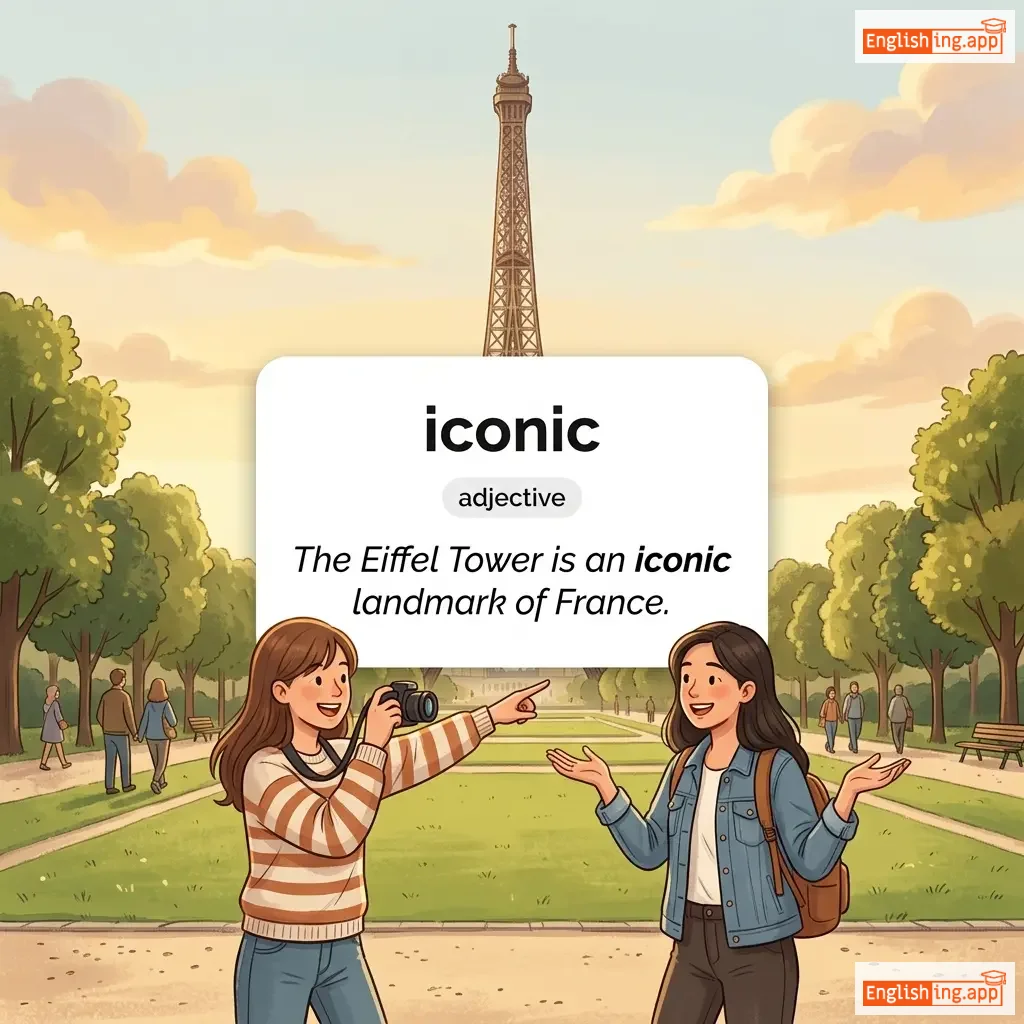
iconic definition card — visual illustration of the meaning
adjective
aɪˈkɒn.ɪk
象徴的 (shōchō-teki)

Symbolic, legendary, famous, representing something significant or characteristic.

"The Eiffel Tower is an iconic landmark of France."

"エッフェル塔はフランスの象徴的なランドマークです。" (Efferu tō wa Furansu no shōchō-teki na randomāku desu.)
noun
/aɪˈkɒnəklæst/
偶像破壊者 (gūzō hakai-sha)

A person who attacks or criticizes cherished beliefs, traditions, or institutions.

"He was known as an iconoclast who challenged old traditions."

"彼は古い伝統に挑戦した偶像破壊者として知られていました。" (Kare wa furui dentō ni chōsen shita gūzō hakai-sha to shira rete imashita.)
iconoclastic definition card — visual illustration of the meaning
adjective
/ˌaɪ.kə.nəˈklæs.tɪk/
確立された信念、伝統、または価値観に対して攻撃的または拒絶的な特徴 (ikonokurasutikku)

Characterized by attacking or rejecting cherished beliefs, traditions, or established values.

"Her iconoclastic views challenged the conventional wisdom of the industry."

"彼女のアイコノクラスティックな見解は業界の従来の知恵に挑戦した。" (Kanojo no aikonokurasutikku na kenkai wa gyōkai no jūrai no chie ni chōsen shita.)
adjective
/ˈaɪsi/
氷のような; 非常に冷たい; 敵対的 (kōri no yō na; hijō ni tsumetai; tekitaiteki)

extremely cold; covered with ice; unfriendly or hostile

"The icy wind made everyone shiver."

"氷のような風が皆を震えさせた。" (Kōri no yō na kaze ga mina o furueta.)
noun
/aɪˈdiː/
身分証明書 (mibun shomeisho)

identification; a document or number used to prove who someone is

"Please show your ID at the entrance."

"入口で身分証明書を提示してください。" (iriguchi de mibun shomeisho o teiji shite kudasai)
noun
/aɪˈdiːə/
アイデア (idea)

A thought, plan, or suggestion about what to do.

"She had a brilliant idea for a new business."

"彼女は新しいビジネスのために素晴らしいアイデアを持っていました。" (Kanojo wa atarashii bijinesu no tame ni subarashii idea wo motte imashita.)
adjective
/aɪˈdiːəl/
理想的な (risōtekina)

the best possible; perfect for a situation

"This place is ideal for a picnic."
"この場所はピクニックに理想的です。" (Kono basho wa pikunikku ni risōteki desu.)
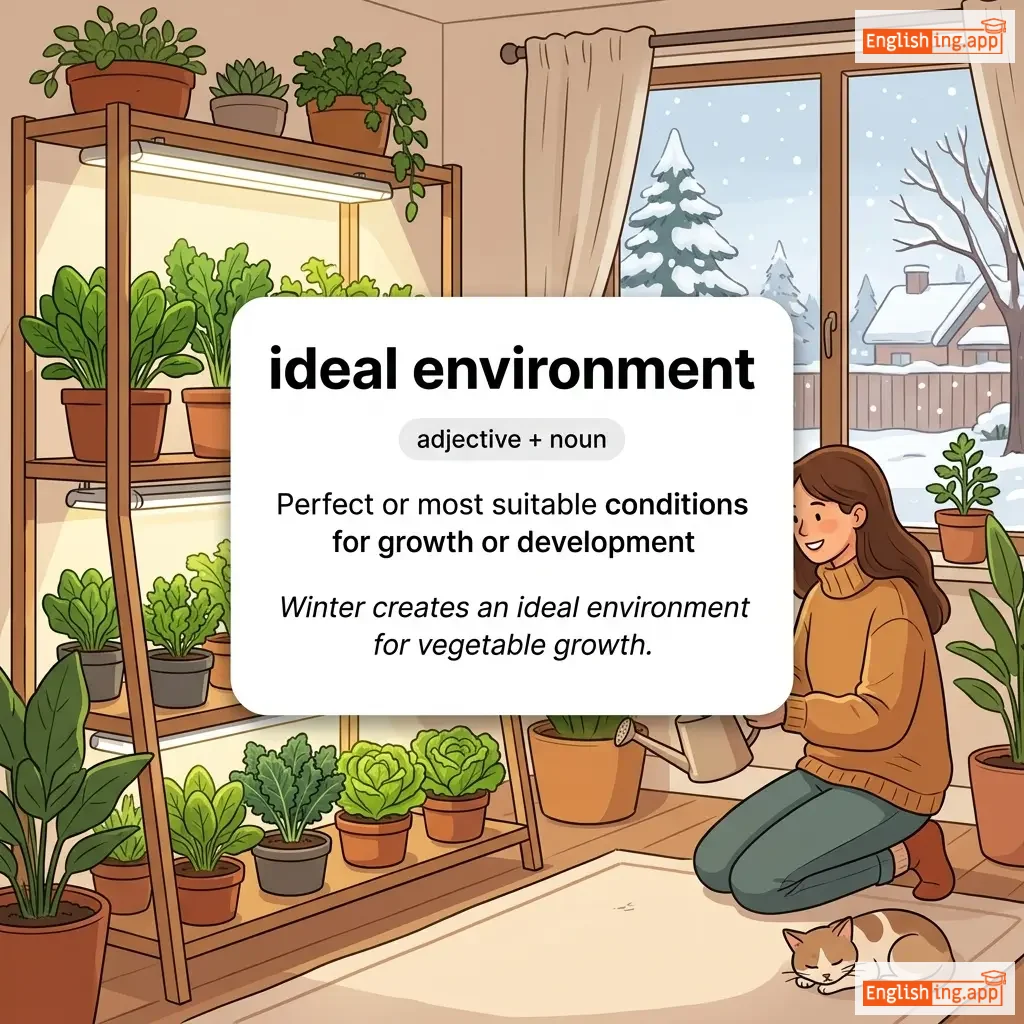
ideal environment definition card — visual illustration of the meaning
adjective + noun
aɪˈdiːəl ɪnˈvaɪrənmənt
理想的な環境 (risō-teki na kankyō)

Perfect or most suitable conditions for growth or development

"Winter creates an ideal environment for vegetable growth."

"冬は野菜の成長に理想的な環境を作り出します。" (Fuyu wa yasai no seichō ni risō-teki na kankyō o tsukuridashimasu.)
noun
/aɪˈdiː.ə.lɪ.zəm/
理想主義 (risō shugi)

the pursuit of high principles and noble goals; unrealistic pursuit of perfection

"His youthful idealism motivated him to join various social justice movements."

"彼の若い理想主義は、彼を様々な社会正義運動に参加させる原動力となった。" (Kare no wakai risō shugi wa, kare o samazama na shakai seigi undō ni sanka saseru gendōryoku to natta.)
adjective
/ˌaɪdiəˈlɪstɪk/
理想主義的 (risoushugiteki)

pursuing high principles or ideals; unrealistically optimistic

"She has an idealistic view of changing the world."

"彼女は世界を変えるという理想主義的な見方を持っています。" (Kanojo wa sekai wo kaeru to iu risoushugitena mikata wo motteimasu.)
verb
/aɪˈdiː.ə.laɪz/
理想化する (risouka suru)

To regard or represent something as perfect or better than it really is.

"Children often idealize their parents."

"子供たちはしばしば親を理想化します。" (Kodomotachi wa shibashiba oya wo risouka shimasu.)
ideation definition card — visual illustration of the meaning
noun
/ˌaɪdiˈeɪʃən/
アイデア創造 (aidea souzou)

The process of forming ideas or concepts.

"The workshop focused on ideation and brainstorming."

"ワークショップはアイデア創造とブレインストーミングに焦点を当てました。" (Wākushoppu wa aidea souzou to bureinsutoomingu ni shōten o atemashita.)
adjective
/aɪˈdentɪkl/
同一の (dōitsu no)

Exactly the same in every detail.

"The twins wore identical clothes."

"双子は同一の服を着ていた。" (Futago wa dōitsu no fuku o kite ita.)
noun
/aɪˌdɛntɪfɪˈkeɪʃən/
身分証明 (minbun shoumei)

the process of recognizing or proving who or what someone or something is

"You need proper identification to enter the building."

"ビルに入るには適切な身分証明が必要です。" (Biru ni hairu ni wa tekisetsu na minbun shoumei ga hitsuyou desu.)
identified definition card — visual illustration of the meaning
verb
aɪˈdɛntɪfaɪd
特定された (tokutei sareta)

To recognize or establish who or what someone or something is.

"The root causes of the issue need to be identified."
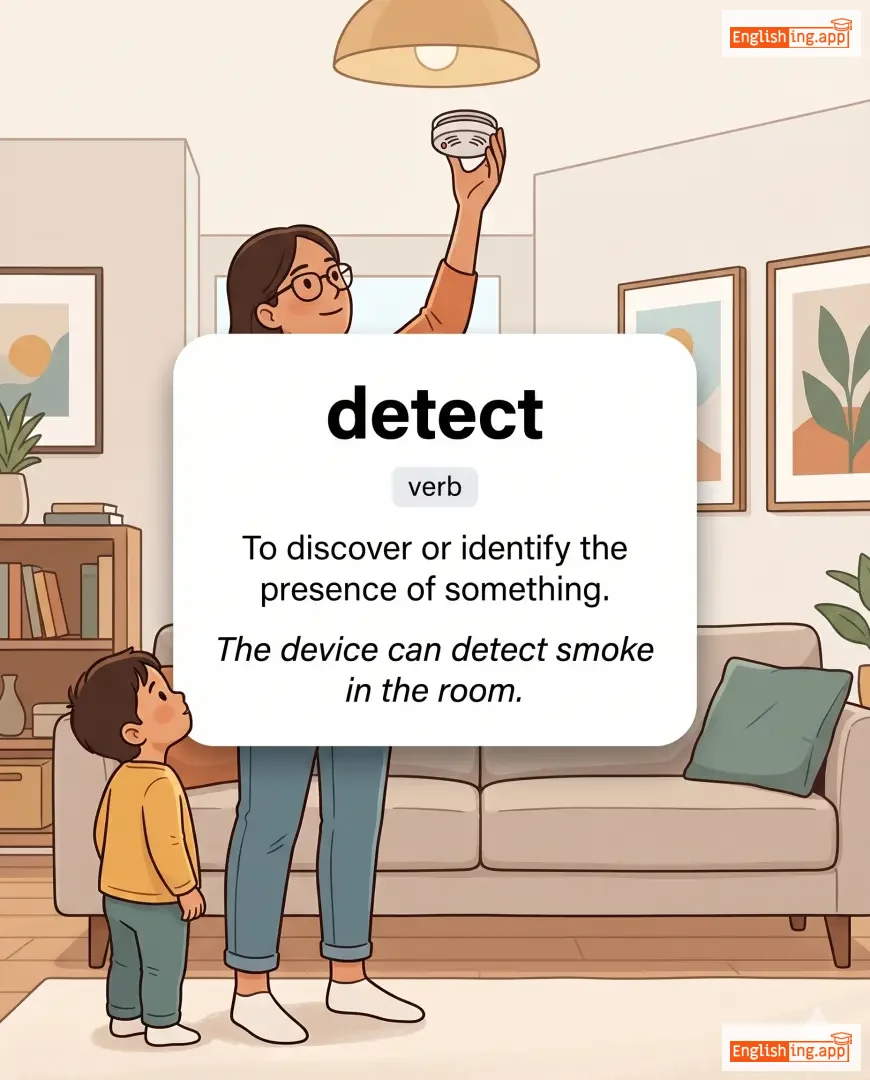
"問題の根本的な原因は特定される必要があります。" (Mondai no konpon-teki na gen'in wa tokutei sareru hitsuyou ga arimasu.)
identify definition card — visual illustration of the meaning
verb
/aɪˈdɛntɪfaɪ/
識別する (shikibetsu suru)

to recognize or establish what something or someone is

"The police could not identify the suspect."
"警察は容疑者を識別できませんでした。" (keisatsu wa yougisha o shikibetsu dekimasen deshita.)
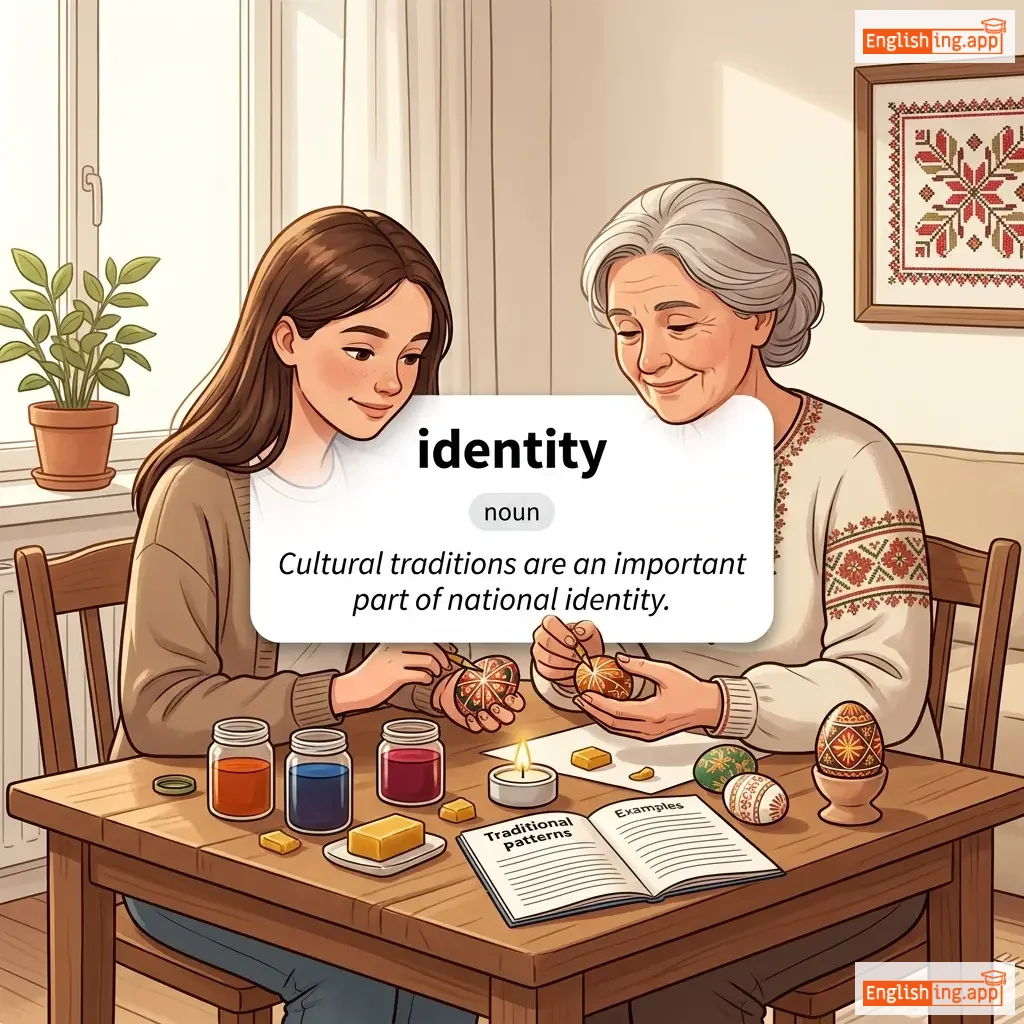
identity definition card — visual illustration of the meaning
noun
/aɪˈdɛntɪti/
アイデンティティ (aidentiti)

the characteristics, feelings, or beliefs that make a person or group different from others

"Cultural traditions are an important part of national identity."

"文化的な伝統は、国のアイデンティティの重要な部分です。" (bunkateki na dentou wa, kuni no aidentiti no juuyou na bubun desu)
adjective
/ˌaɪ.di.əˈlɒdʒ.ɪ.kəl/
イデオロギー的 (ideorogī-teki)

Relating to or based on a system of ideas or beliefs.

"The two parties are divided by deep ideological differences."

"二つの党は深いイデオロギー的な違いによって分裂している。" (Futatsu no tō wa fukai ideorogī-teki na chigai ni yotte bunretsu shite iru.)
noun
/ˌaɪ.diˈɒl.ə.dʒi/
イデオロギー (ideorogī)

A system of ideas and ideals, especially one that forms the basis of economic or political theory and policy.

"Democracy is based on the ideology of freedom and equality."

"民主主義は自由と平等のイデオロギーに基づいています。" (Minshushugi wa jiyū to byōdō no ideorogī ni motozuiteimasu.)
noun
/ˈɪd.i.ə.si/
愚かさ (orokasa)

extremely stupid behavior or actions; foolishness

"The decision to ignore safety protocols was pure idiocy that endangered everyone."

"安全プロトコルを無視する決定は、すべての人を危険にさらす純粋な愚かさでした。" (Anzen purotokoru o mushi suru kettei wa, subete no hito o kiken ni sarasu junsuina orokasa deshita.)
noun
/ˈɪd.i.əm/
イディオム (idion)

A group of words whose meaning is different from the meanings of the individual words.

"The idiom 'break the ice' means to start a conversation in a friendly way."

"イディオム '氷を破る' は、友好的な方法で会話を始めることを意味します。" (Idiomu 'kōri o yaburu' wa, yūkōtekina hōhō de kaiwa o hajimeru koto o imi shimasu.)
noun
/ˌɪdiəˈsɪŋkrəsi/
特異性 (tokuiseki)

A distinctive or peculiar characteristic, habit, or mannerism unique to an individual.

"One of her idiosyncrasies was humming while working."
"彼女の一つの特異性は、仕事中に口ずさむことでした。" (Kanojo no hitotsu no tokuiseki wa, shigotochu ni kuchizusamu koto deshita.)
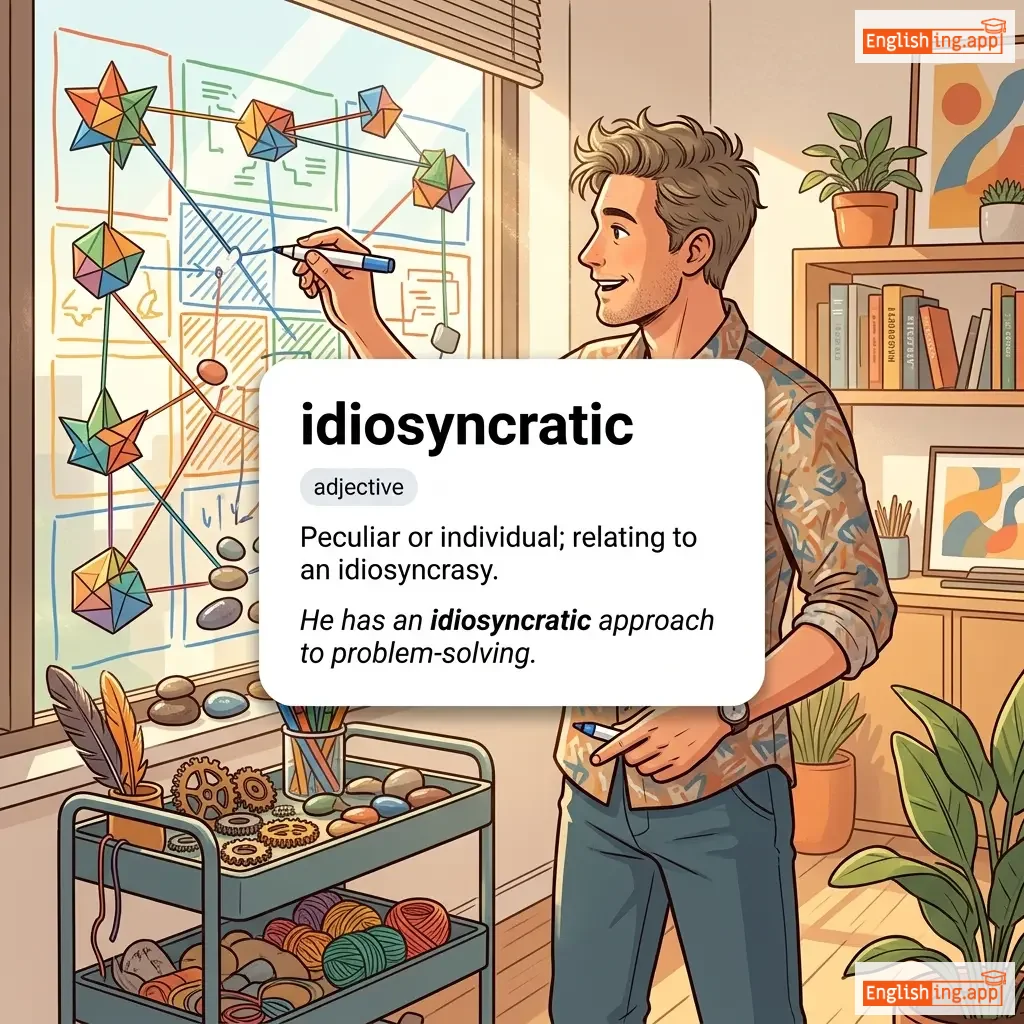
idiosyncratic definition card — visual illustration of the meaning
adjective
/ˌɪdiəsɪnˈkrætɪk/
風変わりな (fukewari na)

Peculiar or individual; relating to an idiosyncrasy.

"He has an idiosyncratic approach to problem-solving."

"彼は問題解決に風変わりなアプローチを持っている。" (Kare wa mondai kaiketsu ni fukewari na apurōchi o motte iru.)
noun
/ˈɪdɪət/
バカ (baka)

a person who acts in a way that is considered very stupid or foolish

"He acted like an idiot at the party last night."

"彼は昨晩のパーティーでイディオットのように振る舞った。" (Kare wa sakuban no pātī de idotto no yō ni furumatta.)
adjective
/ˌɪd.iˈɒt.ɪk/
愚か (oroka)

extremely stupid; foolish; senseless

"His idiotic behavior embarrassed everyone at the meeting."

"彼の愚かな行動は会議でみんなを困らせた。" (kare no oroka na kōdō wa kaigi de minna o komarase ta)
adjective, verb
/ˈaɪd(ə)l/
アイドル (aidoru)

Adjective: not active or in use; lazy. Verb: to spend time doing nothing.

"The workers sat idle during the power outage."

"停電中、作業員たちはアイドル状態で座っていました。" (teidenchuu, sagyouin tachi wa aidoru joutai de suwatte imashita.)
noun
/ˈaɪdlər/
怠け者 (namakemono)

A person who avoids work or spends time lazily.

"He was known as an idler who wasted his days."

"彼は自分の時間を無駄にするアイドラーとして知られていました。" (Kare wa jibun no jikan o mudani suru aidorā to shite shirareteimashita.)
noun
/ˈaɪ.dəl/
偶像; 崇拝される人物 (gūzō, sūhai sareru jinbutsu)

an image or representation of a god used as an object of worship; a person who is greatly admired

"The singer became a teenage idol after her hit song topped the charts worldwide."

"その歌手はヒットソングが世界中のチャートで1位に達した後、ティーンエイジャーのアイドルとなった。" (sono kashu wa hitto songu ga sekaijū no chāto de 1-ii ni tasshita ato, tīneijā no aidoru to natta.)
adjective
/ˌaɪdəˈlɑːtrɪəs/
偶像崇拝的な (gūzō sūhai-teki na)

Excessively devoted or reverent towards idols or false gods.

"The ancient tribe was known for its idolatrious practices."

"その古代の部族は偶像崇拝的な習慣で知られていました。" (Sono kodai no buzoku wa gūzō sūhai-teki na shūkan de shirarete imashita.)
verb
/aɪˈdɒləˌtraɪz/
偶像崇拝 (gūzō sūhai)

To worship idols; to regard with excessive devotion or admiration.

"They began to idolatrize the statue as a deity."

"彼らはその像を神として崇拝し始めました。" (Karera wa sono zō o kami to shite sūhai shihajimemashita.)
adjective
/aɪˈdɒlətrəs/
偶像崇拝者 (guuzou suuhai-sha)

Excessively admiring or worshipping someone or something as an idol.

"The king was criticized for his idolatrous devotion to wealth."

"王は富に対する偶像崇拝的な献身で批判されました。" (Ou wa tomi ni taisuru guuzou suuhai-teki na kenshin de hihan saremashita.)
idolatry definition card — visual illustration of the meaning
noun
/aɪˈdɒlətri/
偶像崇拝 (guuzou suuhai)

The worship of idols or extreme admiration for someone or something.

"The priest condemned the idolatry practiced in the village."

"司祭は村で行われている偶像崇拝を非難した。" (Shisai wa mura de okonawarete iru guuzou suuhai wo hinan shita.)
verb
/ˈaɪdəlaɪz/
偶像視する (gūzō-shi suru)

To admire or worship someone excessively.

"Fans often idolize celebrities for their talent and lifestyle."

"ファンはしばしばその才能とライフスタイルのために有名人を偶像視します。" (Fan wa shibashiba sono sainō to raifusutairu no tame ni yūmeijin o gūzō-shi shimasu.)
noun
/ˈaɪdɪl/
田園詩的なシーン (den'en shiteki na shīn)

An extremely happy, peaceful, or picturesque episode or scene, often idealized.

"Their honeymoon was an idyll on a tropical island."

"彼らのハネムーンは熱帯の島での田園詩的なシーンでした。" (Karera no hanemūn wa nettai no shima de no den'en shiteki na shīn deshita.)
adjective
/aɪˈdɪlɪk/
田園詩のように美しい (den'en-shi no yō ni utsukushī)

Like an idyll; extremely happy, peaceful, or picturesque.

"They enjoyed an idyllic vacation by the sea."

"彼らは海辺で田園詩のような休暇を楽しみました。" (Karera wa umibe de den'en-shi no yō na kyūka o tanoshimimashita.)
abbreviation
/ˌaɪˈiː/
すなわち (sunawachi)

That is to say; used to clarify or explain something more precisely.

"Many amphibians, i.e., frogs and salamanders, can live both in water and on land."
"多くの両生類、すなわちカエルとサラマンダーは、水中と陸上の両方で生きることができます。" (Ooku no ryouseirui, sunawachi kaeru to sarramanda wa, suichuu to rikujou no ryouhou de ikiru koto ga dekimasu.)
conjunction
/ɪf/
もし (moshi)

used to introduce a condition or supposition

"If it rains tomorrow, we will stay home."

"もし明日雨が降ったら、私たちは家にいます。" (Moshi ashita ame ga futtara, watashitachi wa ie ni imasu.)
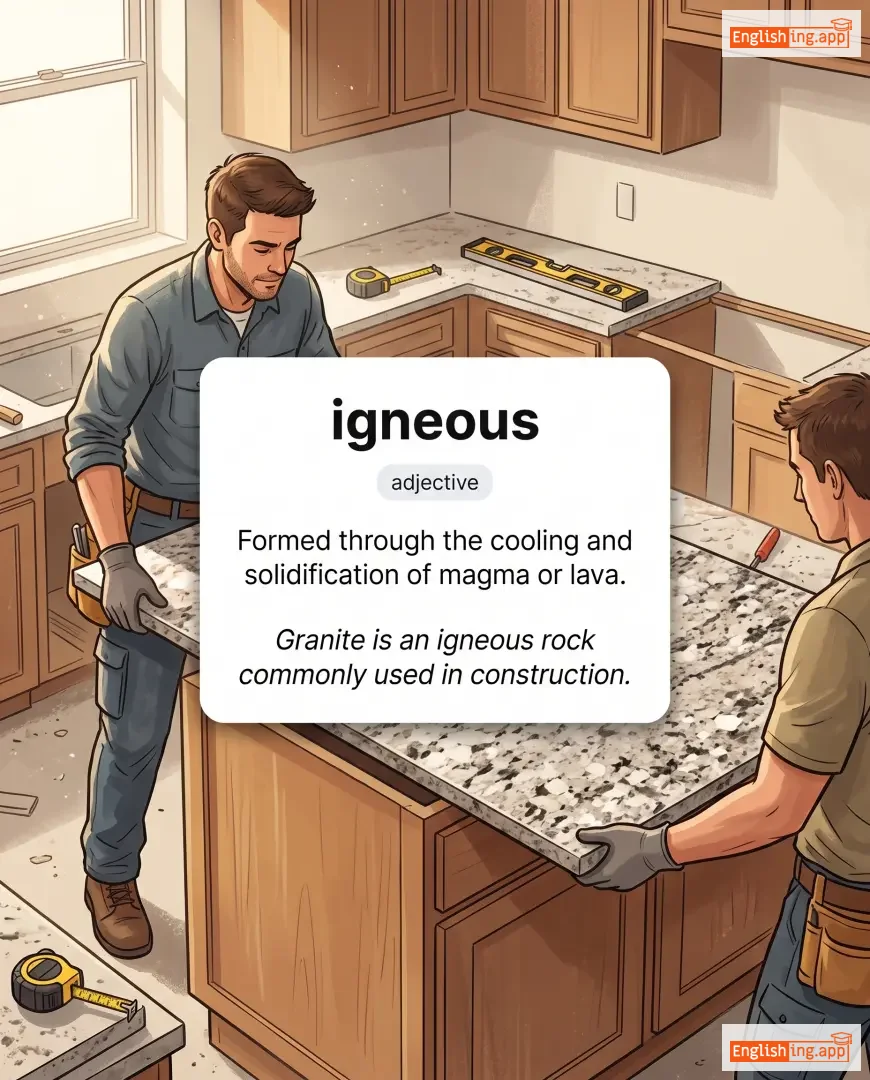
igneous definition card — visual illustration of the meaning
adjective
/ˈɪɡ.ni.əs/
火成 (kasei)

Formed through the cooling and solidification of magma or lava.

"Granite is an igneous rock commonly used in construction."

"花崗岩は建設に一般的に使用される火成岩です。" (Kōgan'yan wa kensetsu ni ippan-teki ni shiyō sareru kasei-gan desu.)
verb
/ɪɡˈnaɪt/
点火する (tenka suru)

To catch fire or cause to catch fire; to start or arouse.

"The sparks ignited the dry leaves in seconds."

"火花が数秒で乾燥した葉に火をつけた。" (Hibana ga suubyou de kansou shita ha ni hi o tsuketa.)
adjective
/ɪɡˈnoʊ.bəl/
卑劣な (hiretsu na)

Dishonorable, shameful, or lacking nobility.

"His ignoble actions ruined his reputation."

"彼の卑劣な行動は彼の評判を台無しにした。" (Kare no hiretsu na kōdō wa kare no hyōban o dainashi ni shita.)