語彙集

英単語辞書 | 単語の意味、定義、例文

noun
/ɪˈmɜːrdʒəns/
出現 (shutsugen)

the process of coming into view, existence, or prominence

"The emergence of new technologies has transformed communication."
"新しい技術の出現は、コミュニケーションを変革しました。" (Atarashī gijutsu no shutsugen wa, komyunikēshon o henka shimashita.)
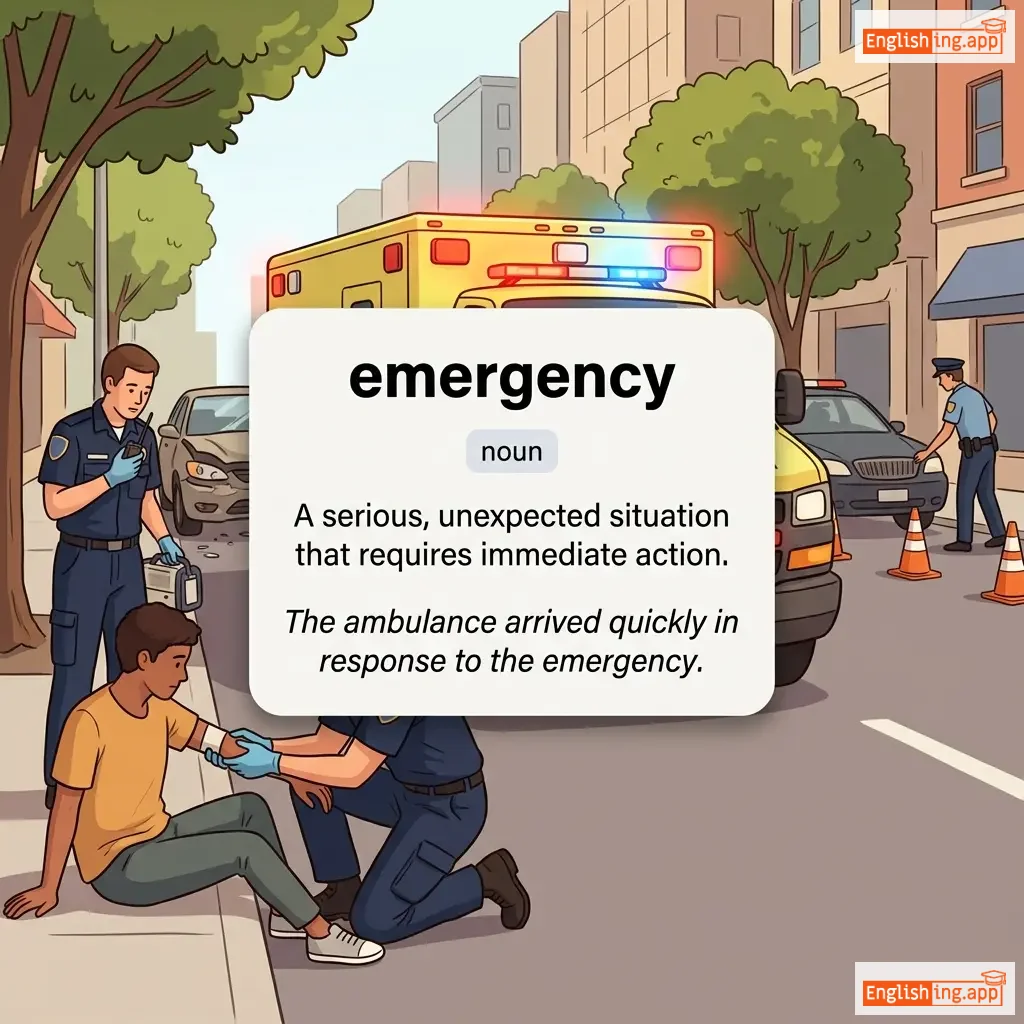
emergency definition card — visual illustration of the meaning
noun
/ɪˈmɜrdʒənsi/
緊急事態 (kinkyū jitai)

A serious, unexpected situation that requires immediate action.

"The ambulance arrived quickly in response to the emergency."

"救急車は緊急事態に迅速に対応しました。" (Kyūkyūsha wa kinkyū jitai ni jinsoku ni taio shimashita.)
adjective
/ɪˈmɜːrdʒənt/
新興 (shinkou)

just coming into existence or becoming prominent

"The emergent startup quickly attracted investors."
"新興のスタートアップはすぐに投資家を引き付けました。" (Shinkou no start-up wa sugu ni toushika wo hikitsukemashita.)
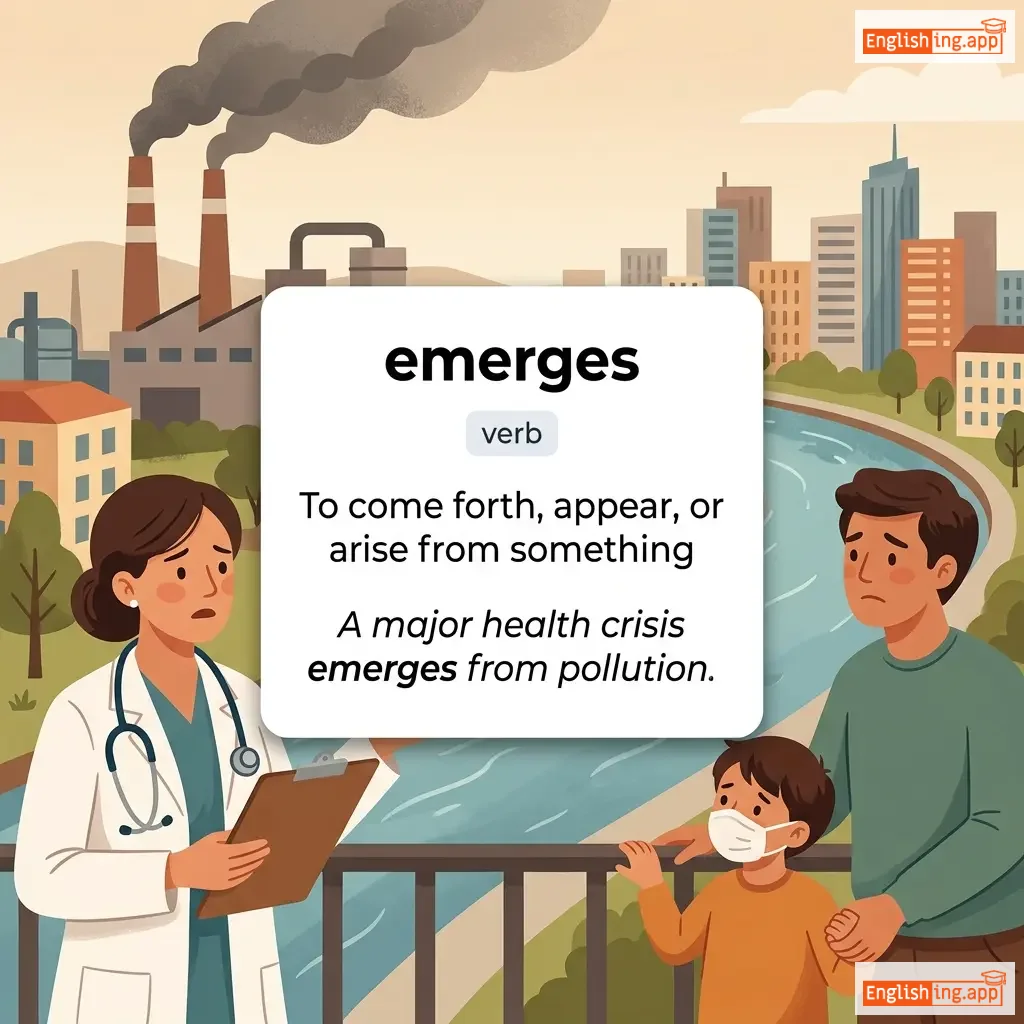
emerges definition card — visual illustration of the meaning
verb
ɪˈmɜːdʒɪz
現れる (arawareru)

To come forth, appear, or arise from something

"A major health crisis emerges from pollution."

"重大な健康危機が汚染から現れる。" (Jūdaina kenko kiki ga osen kara arawareru.)
adjective
/ɪˈmɜːrdʒɪŋ/
新興 (shinko)

becoming known, developing, or starting to exist

"Bangladesh is one of the fastest emerging economies in the world."

"バングラデシュは世界で最も急速に成長している新興経済の一つです。" (Banguradeshu wa sekai de mottomo kyūsoku ni seichō shite iru shinkō keizai no hitotsu desu.)
adjective
/ɪˈmɛrɪtəs/
名誉教授 (meiyo kyōju)

having retired but allowed to retain their title as an honor

"He is a professor emeritus at the university."

"彼は大学の名誉教授です。" (kare wa daigaku no meiyo kyōju desu)
noun
/ɪˈmɛtɪk/
催吐薬 (saito yaku)

a substance that causes vomiting

"The doctor administered an emetic to remove the poison."

"医師は毒を取り除くために催吐薬を投与しました。" (Ishi wa doku o torinozoku tame ni saito yaku o tōyo shimashita.)
noun
/ˈɛmɪɡrənt/
移民 (imin)

A person who leaves their own country to settle permanently in another.

"The emigrant started a new life in Canada."

"移民はカナダで新しい生活を始めました。" (Imin wa Kanada de atarashī seikatsu o hajimemashita.)
verb
/ˈɛmɪˌɡreɪt/
移住する (ijū suru)

To leave one's own country in order to settle permanently in another.

"Many people emigrated from Europe to America in the 19th century."

"多くの人々は19世紀にヨーロッパからアメリカに移住しました。" (Ōku no hitobito wa 19 seiki ni Yōroppa kara Amerika ni ijū shimashita.)
noun
/ˈɛmɪnəns/
名声 (meisei)

Fame or recognized superiority, especially within a particular sphere.

"She rose to eminence as a leading scientist."

"彼女はリーディングサイエンティストとして名声を得た。" (Kanojo wa rīdingusaientisuto toshite meisei o eta.)
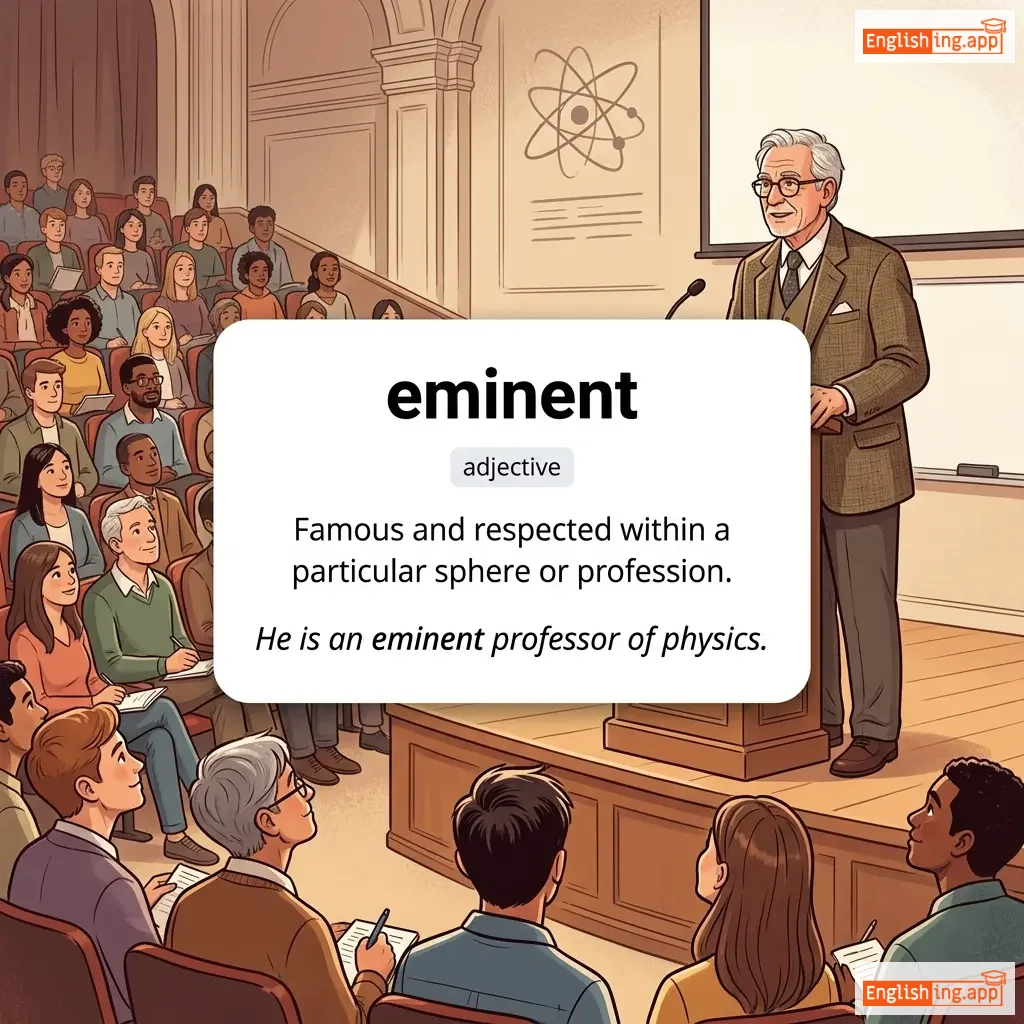
eminent definition card — visual illustration of the meaning
adjective
/ˈɛmɪnənt/

Famous and respected within a particular sphere or profession.

"He is an eminent professor of physics."

noun
/ˈɛmɪsɛri/
使者 (shisha)

A person sent on a special mission, usually as a diplomatic representative.

"The king sent an emissary to negotiate peace."
"王は平和交渉のために使者を送った。" (Ō wa heiwa kōshō no tame ni shisha o okutta.)
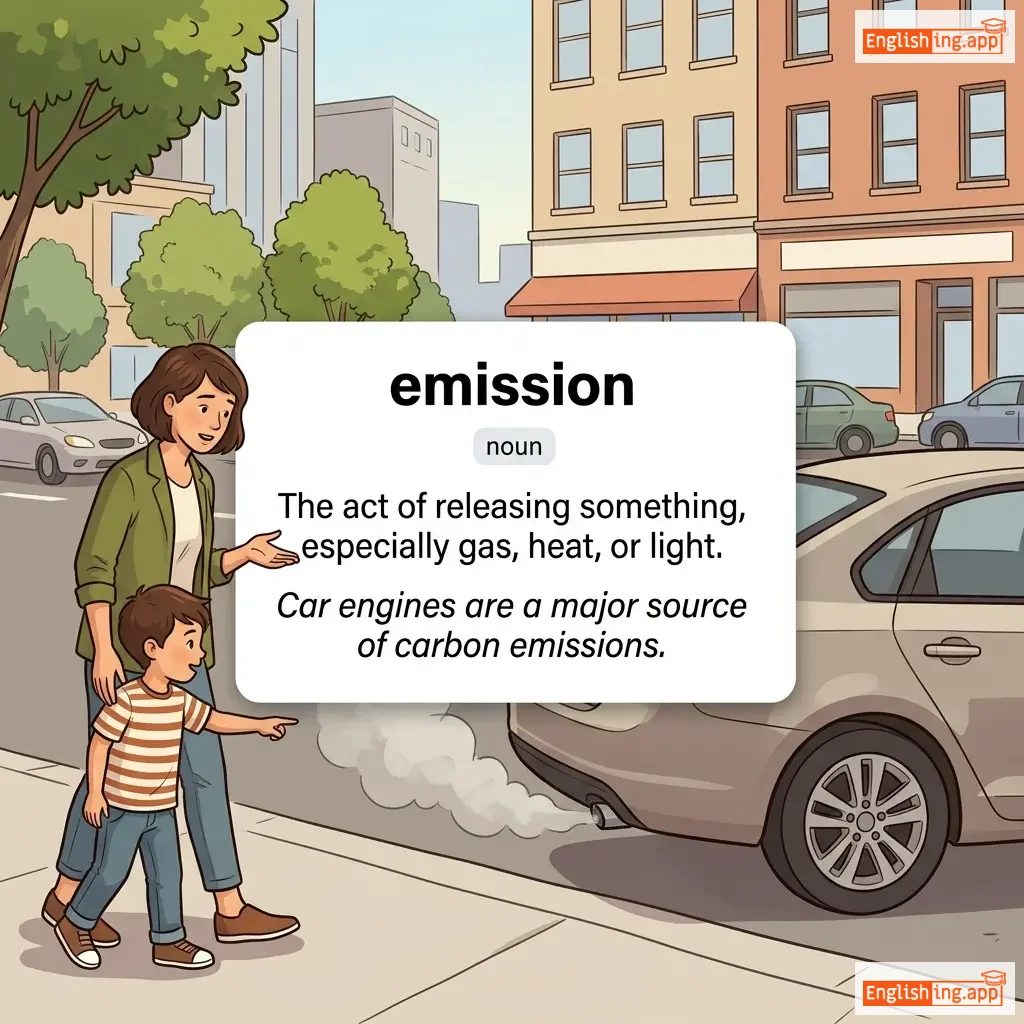
emission definition card — visual illustration of the meaning
noun
/ɪˈmɪʃən/
排出 (haishutsu)

The act of releasing something, especially gas, heat, or light.

"Car engines are a major source of carbon emissions."
"自動車のエンジンは主な二酸化炭素排出源です。" (Jidousha no enjin wa omona nisankatanso haishutsu gen desu.)
emissions definition card — visual illustration of the meaning
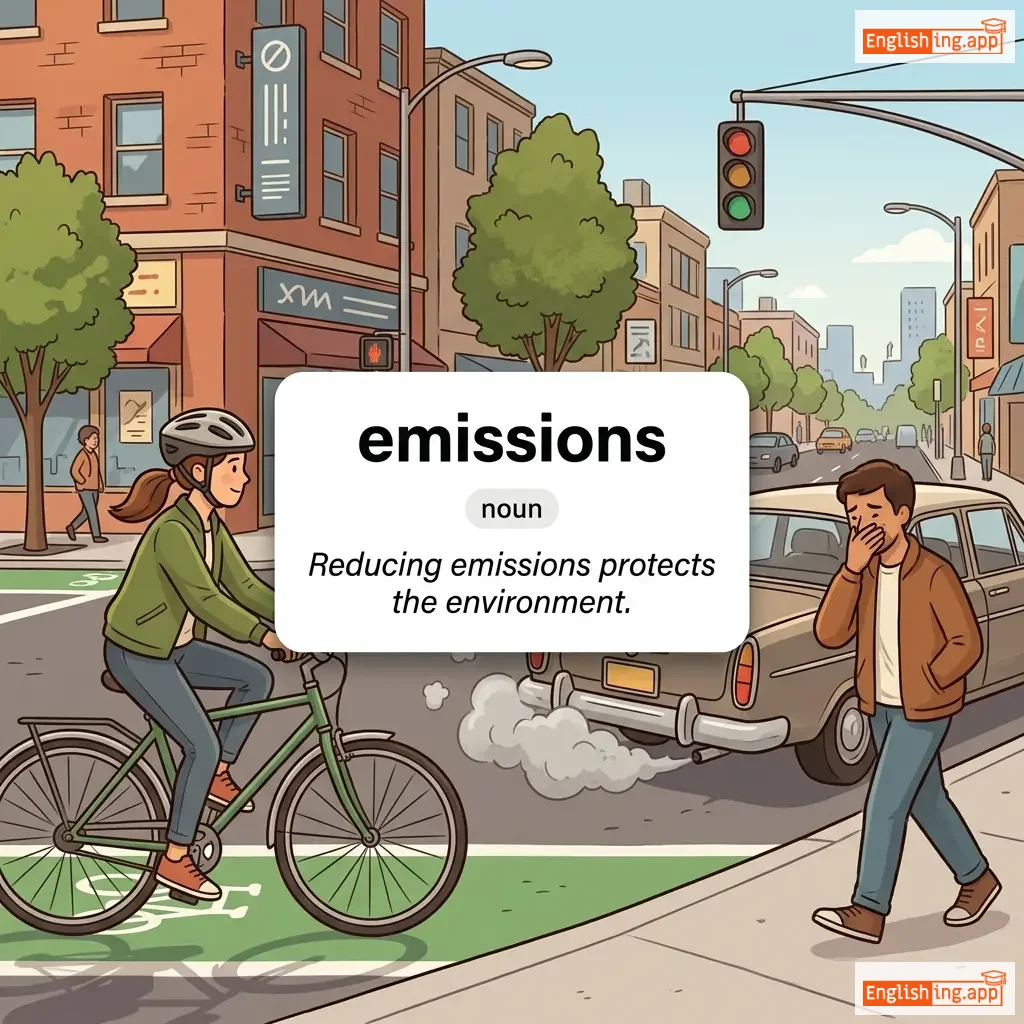
noun
/ɪˈmɪʃ.ənz/
排出 (haishutsu)

The production and discharge of something, especially gas, heat, light, or radiation.

"Reducing emissions protects the environment."

"排出量の削減は環境を守ることに繋がります。" (Haishutsuryou no sakugen wa kankyou o mamoru koto ni tsunagarimasu.)
verb
/ɪˈmɪt/
放出する (Hōshutsu suru)

to send out something such as light, heat, sound, or gas

"The factory emits smoke into the atmosphere."
"工場は大気中に煙を排出します。" (Kōjō wa taikichū ni kemuri o haishutsu shimasu.)
emmet definition card — visual illustration of the meaning
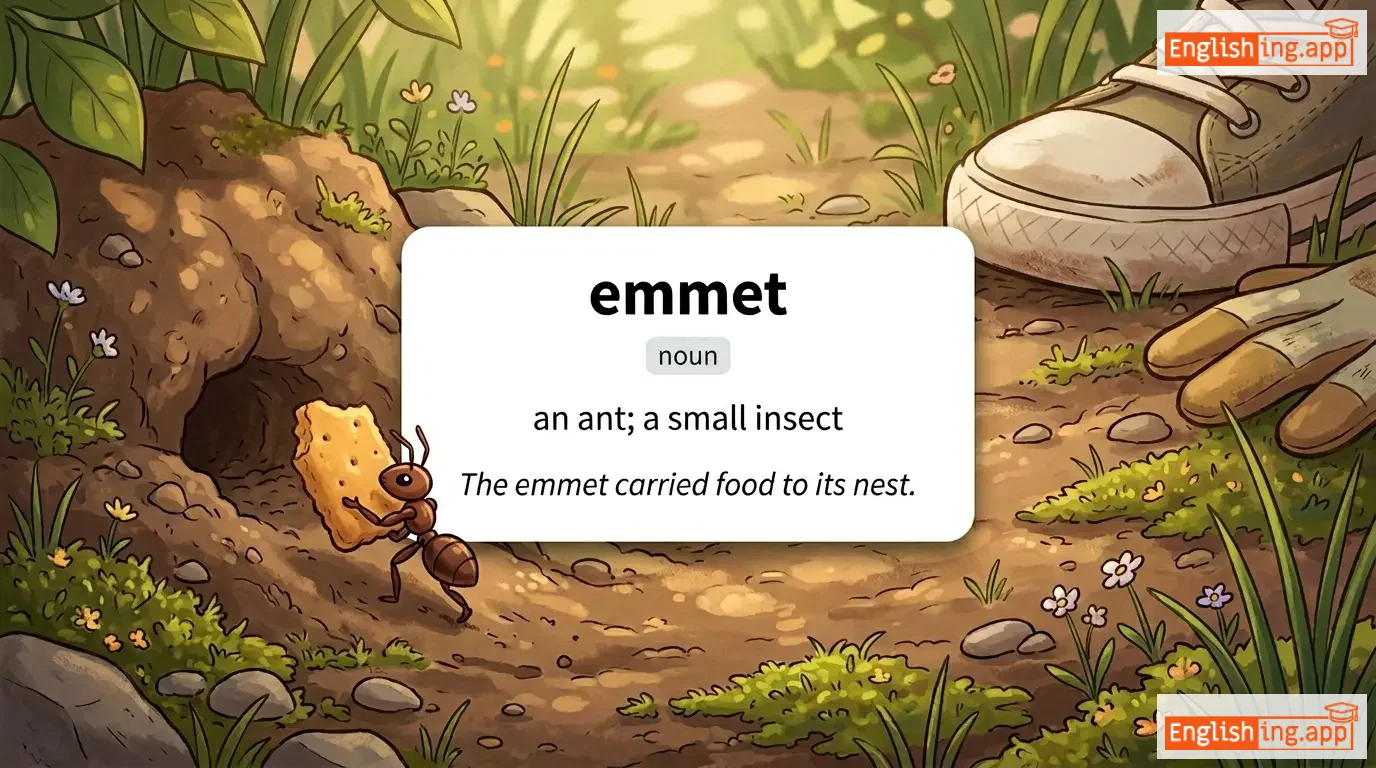
verb
/ˈɛmɪt/
アリ (ari)

an ant; a small insect

"The emmet carried food to its nest."
"アリは食べ物を巣に運びました。" (Ari wa tabemono o su ni hakobimashita.)
emollient definition card — visual illustration of the meaning
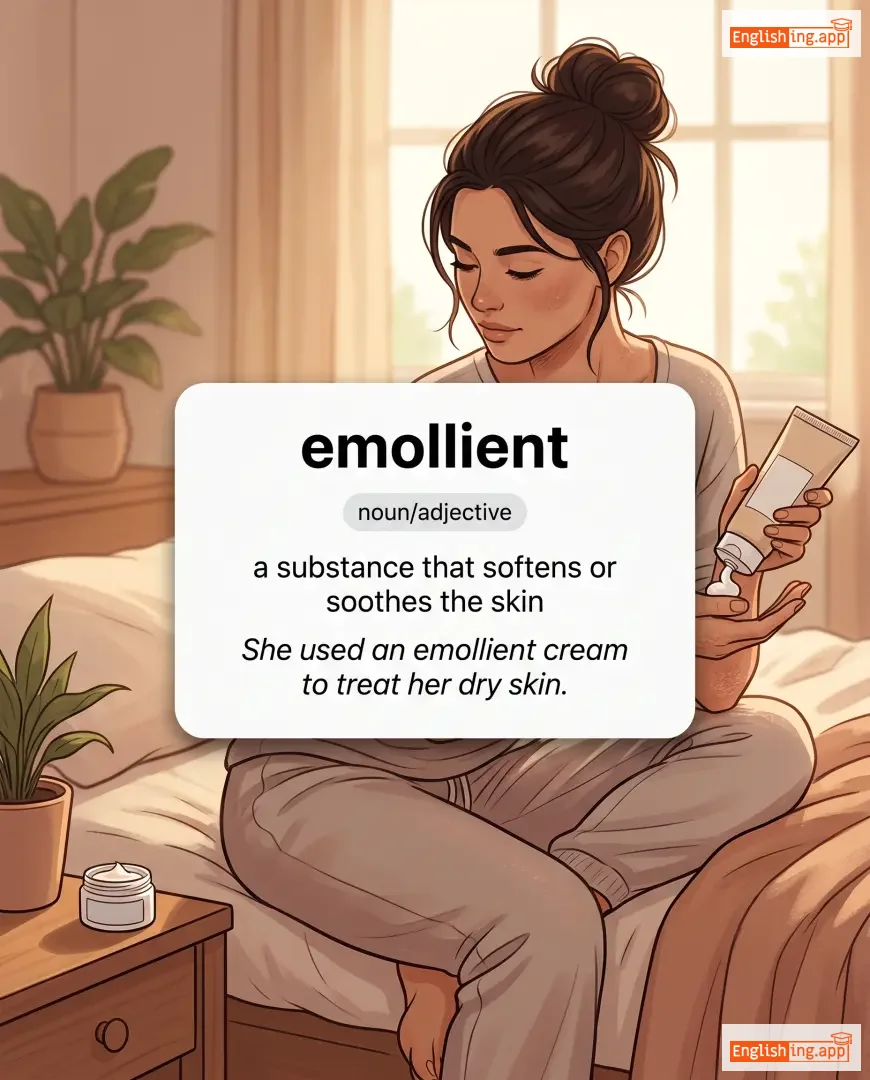
noun/adjective
/ɪˈmɒliənt/
肌を柔らかくする物質 (hada o yawarakaku suru busshitsu)

a substance that softens or soothes the skin

"She used an emollient cream to treat her dry skin."

"彼女は乾燥肌を治すためにエモリエントクリームを使いました。" (Kanojo wa kansouhada o naosu tame ni emorianto kuriimu o tsukaimashita.)
noun
/ɪˈmɒljʊmənt/
給料 (kyuuryou)

payment for work or services; salary or fees

"The professor received his annual emolument from the university."

"教授は大学から年俸を受け取った。" (Kyouju wa daigaku kara nenpo o uketotta.)
noun
/ɪˈmoʊʃən/
感情 (kanjou)

A strong feeling such as happiness, sadness, anger, or fear.

"She was overwhelmed with emotion when she heard the news."
"彼女はそのニュースを聞いたとき、感情に圧倒されていた。" (Kanojo wa sono nyu-su o kiita toki, kanjou ni attou sarete ita.)
emotional definition card — visual illustration of the meaning
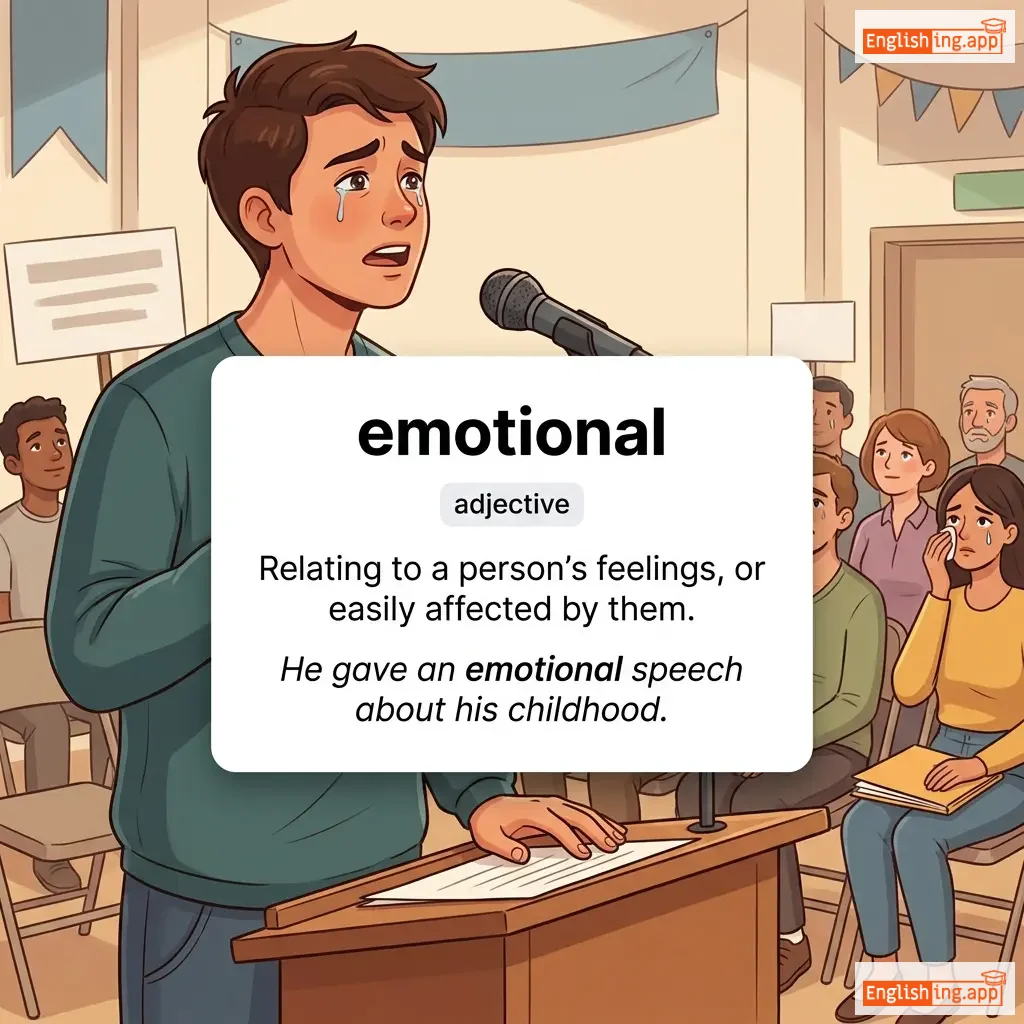
adjective
/ɪˈmoʊʃənəl/
感情的な (kanjōteki na)

Relating to a person’s feelings, or easily affected by them.

"He gave an emotional speech about his childhood."

"彼は自分の子供時代について感情的なスピーチをしました。" (Kare wa jibun no kodomojidai ni tsuite kanjōteki na supīchi o shimashita.)
emotionality definition card — visual illustration of the meaning
noun
ɪˌməʊ.ʃəˈnæl.ɪ.ti
感情性 (kanjousei)

The quality of being driven by emotions rather than reason; emotional responsiveness.

"His emotionality often influenced his decisions."

"彼の感情性はしばしば彼の決定に影響を与えた。" (Kare no kanjousei wa shibashiba kare no kettei ni eikyou wo ataeta.)
adverb
/ɪˈməʊʃənəli/
感情的に (kanjōteki ni)

in a way that relates to a person's feelings or emotions

"She became emotionally attached to her pet."
"彼女はペットに感情的に結びついていた。" (Kanojo wa petto ni kanjōteki ni musubitsuite ita.)
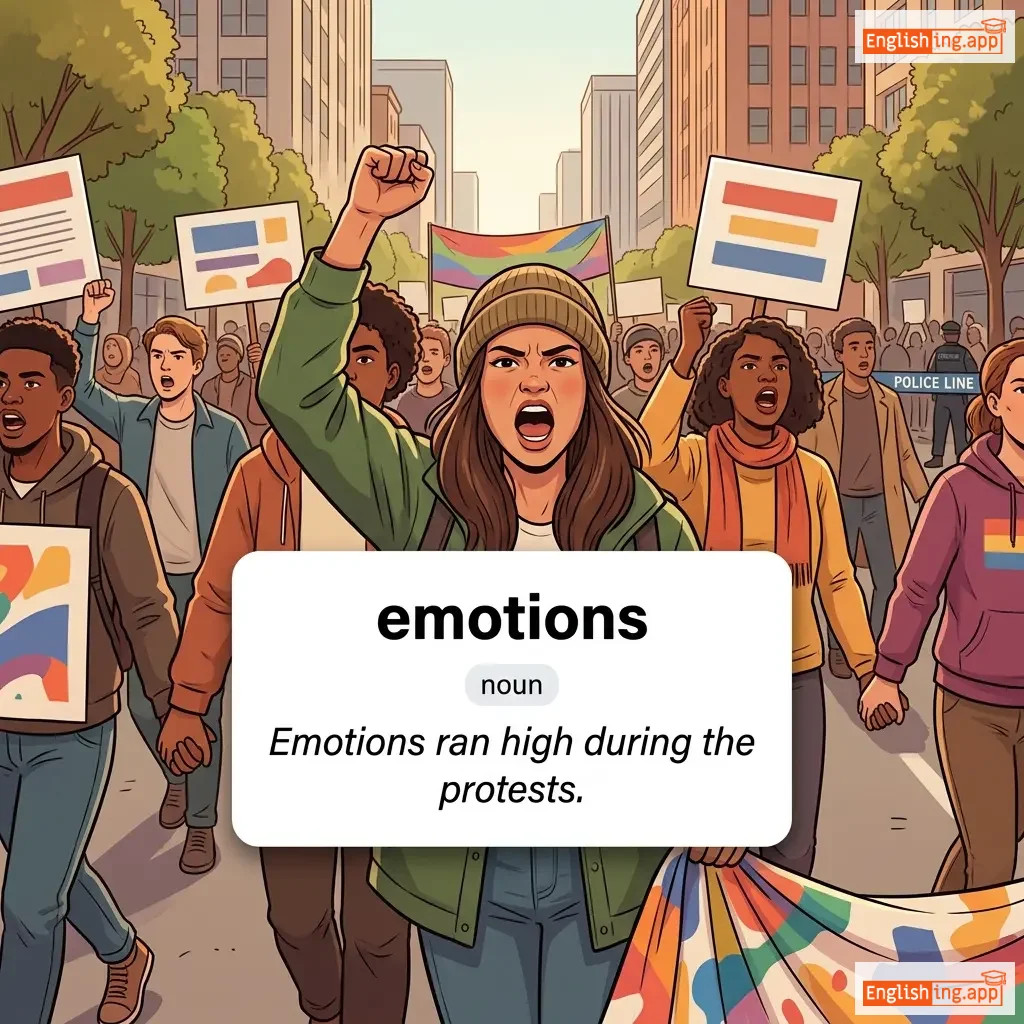
emotions definition card — visual illustration of the meaning
noun
ɪˈməʊʃənz
感情 (kanjō)

Strong feelings deriving from one's circumstances, mood, or relationships with others.

"Emotions ran high during the protests."
"抗議の間、感情は高まりました。" (Kōgi no aida, kanjō wa takamarimashita.)
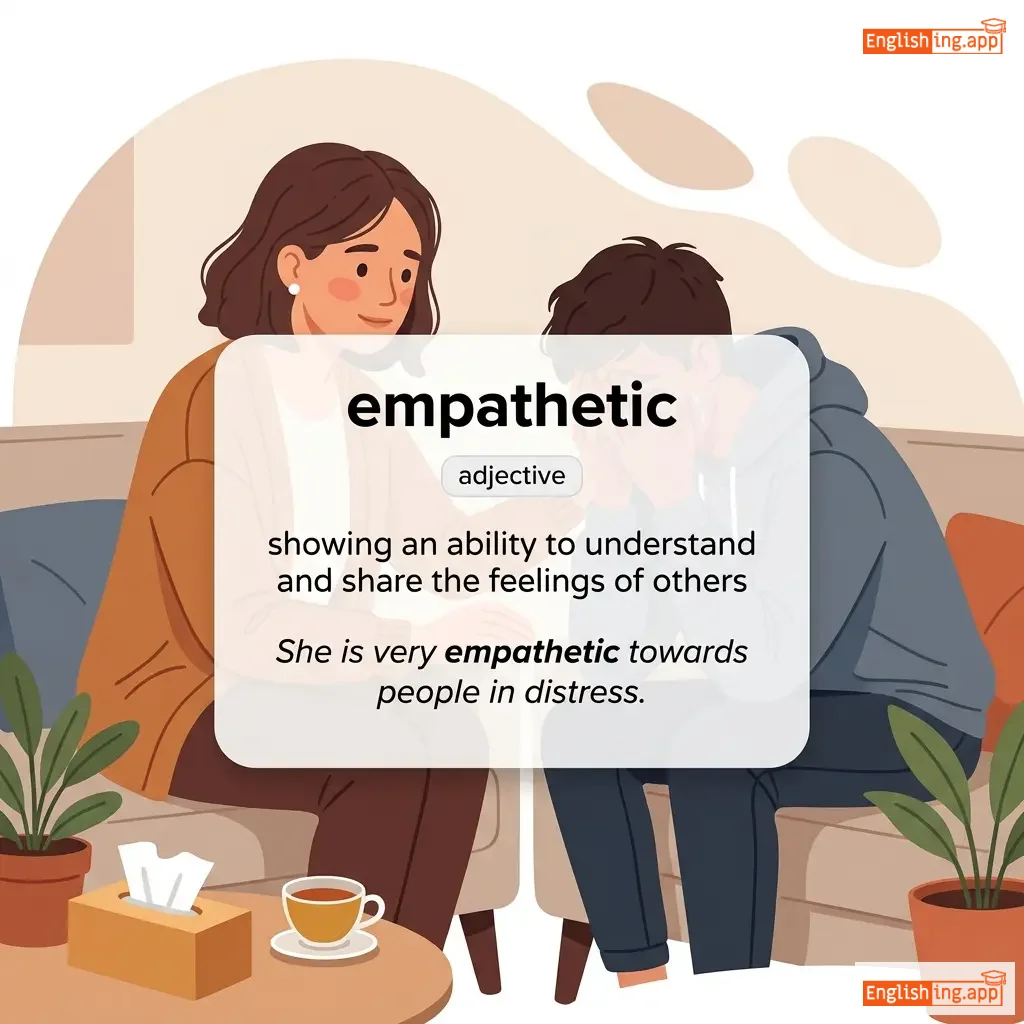
empathetic definition card — visual illustration of the meaning
adjective
/ˌɛmpəˈθɛtɪk/
共感的な (kyōkanteki na)

showing an ability to understand and share the feelings of others

"She is very empathetic towards people in distress."
"彼女は困っている人々に非常に共感的です。" (Kanojo wa komatte iru hitobito ni hijō ni kyōkanteki desu.)
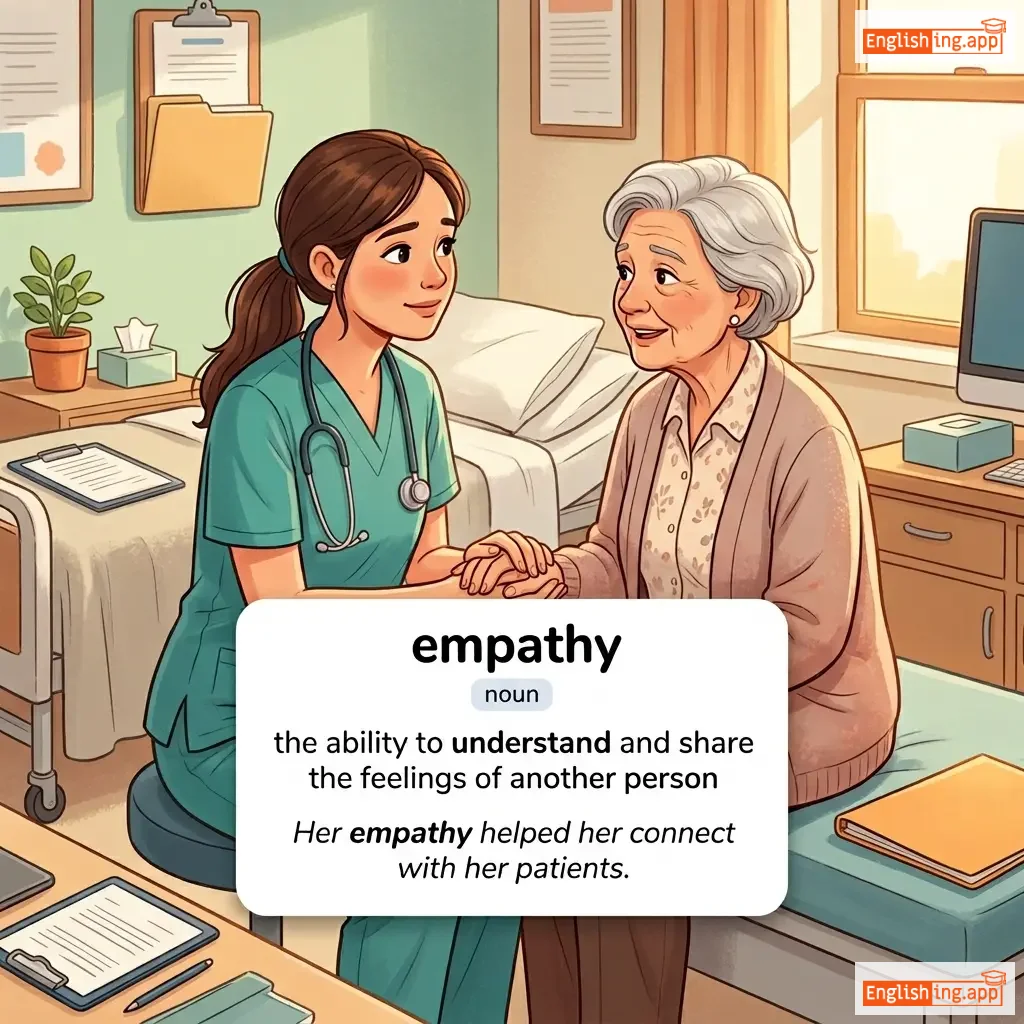
empathy definition card — visual illustration of the meaning
noun
/ˈɛmpəθi/
共感 (kyoukan)

the ability to understand and share the feelings of another person

"Her empathy helped her connect with her patients."
"彼女の共感は、彼女が患者とつながるのに役立ちました。" (Kanojo no kyoukan wa, kanojo ga kanja to tsunagaru no ni yakudachimashita.)
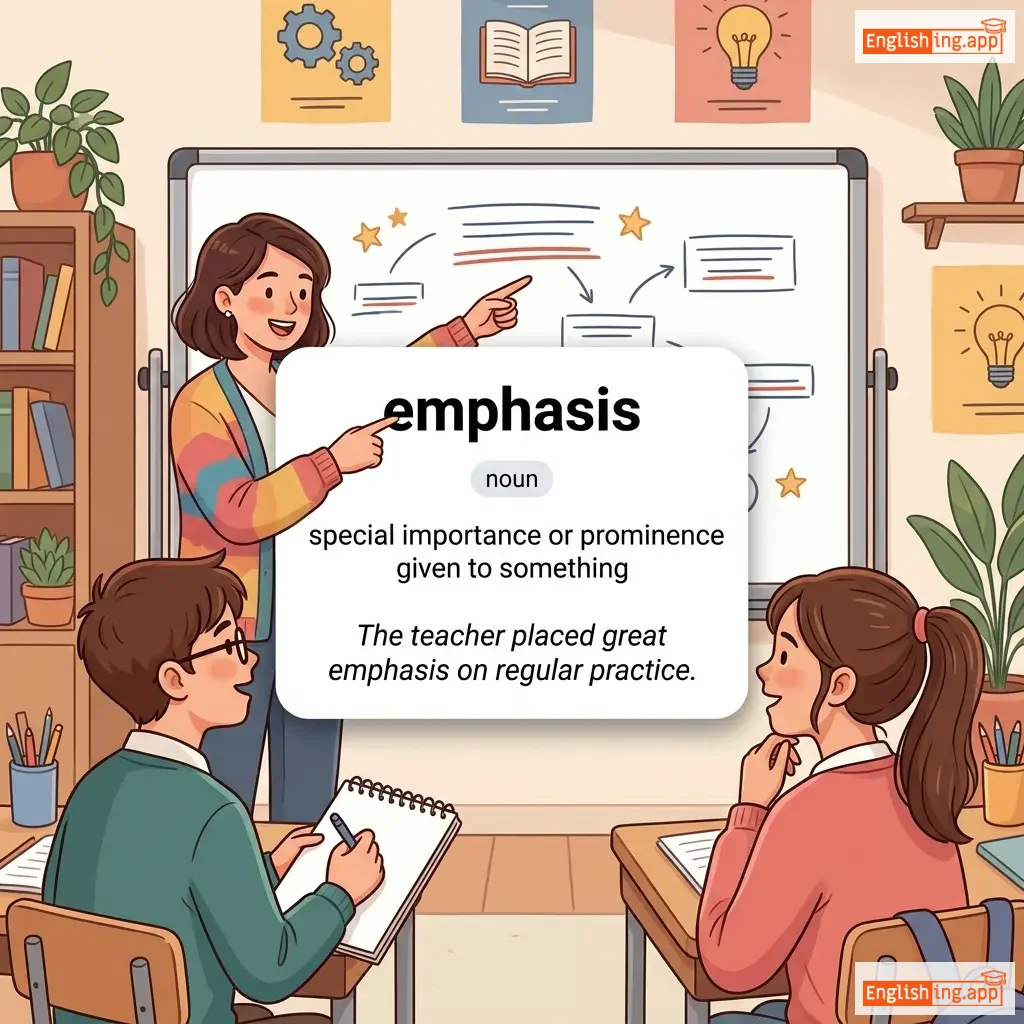
emphasis definition card — visual illustration of the meaning
noun
/ˈɛmfəsɪs/
強調 (kyōchō)

special importance or prominence given to something

"The teacher placed great emphasis on regular practice."
"先生は定期的な練習の重要性を強調しました。" (Sensei wa teikiteki na renshū no jūyō-sei o kyōchō shimashita.)
emphasize definition card — visual illustration of the meaning
verb
/ˈɛmfəsaɪz/
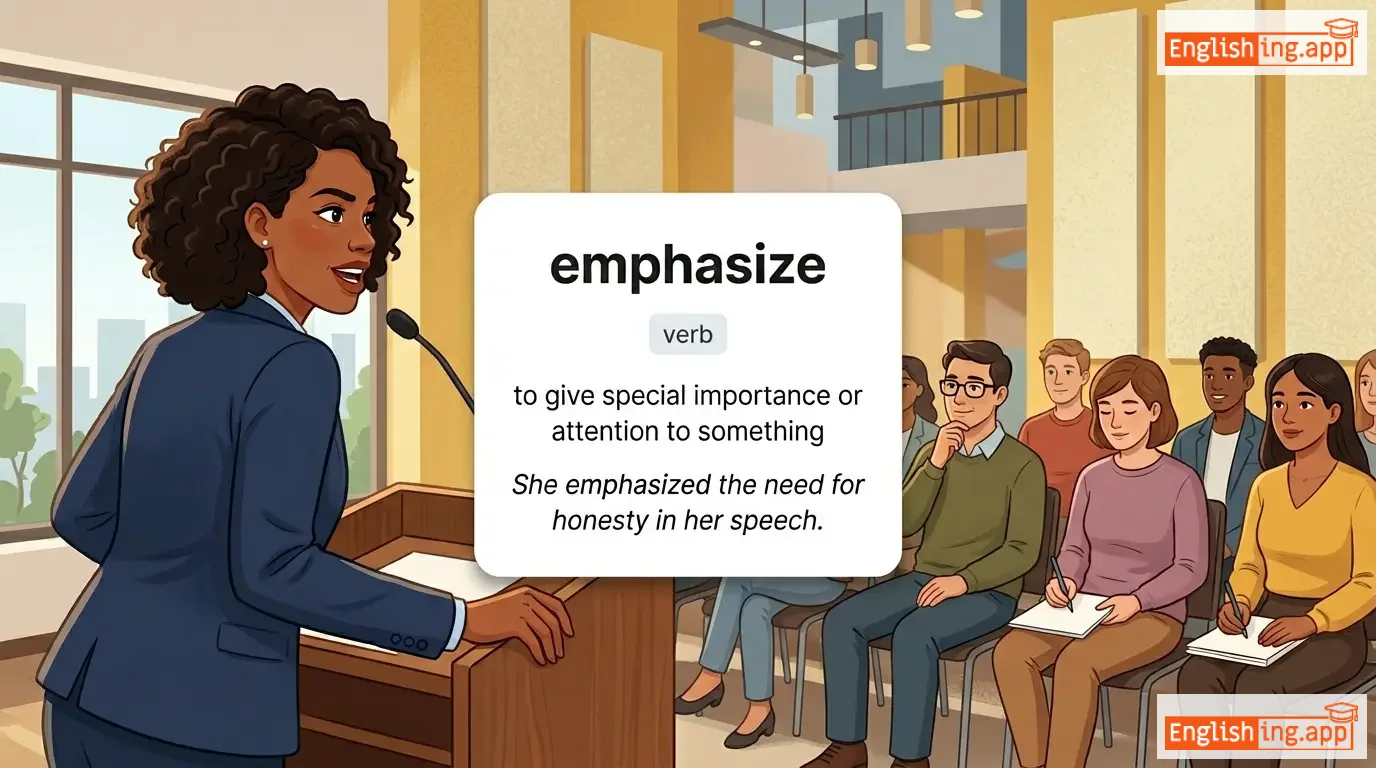
強調する (kyōchō suru)

to give special importance or attention to something

"She emphasized the need for honesty in her speech."

"彼女はスピーチの中で正直さの重要性を強調しました。" (Kanojo wa supīchi no naka de shōjiki-sa no jūyō-sei o kyōchō shimashita.)
adjective
/ɛmˈfætɪk/
強調的な (kyōchō-teki na)

expressed with emphasis; strongly expressive

"He gave an emphatic denial of the rumors."

"彼は噂を強調して否定した。" (Kare wa uwasa o kyōchō shite hitei shita.)
noun
/ˈempaɪər/
帝国 (teikoku)

a group of countries or regions controlled by one ruler or government

"The Roman Empire lasted for centuries."
"ローマ帝国は何世代にもわたって続きました。" (Rōma teikoku wa nan sedai ni mo watatte tsuzukimashita.)
empirical definition card — visual illustration of the meaning
adjective
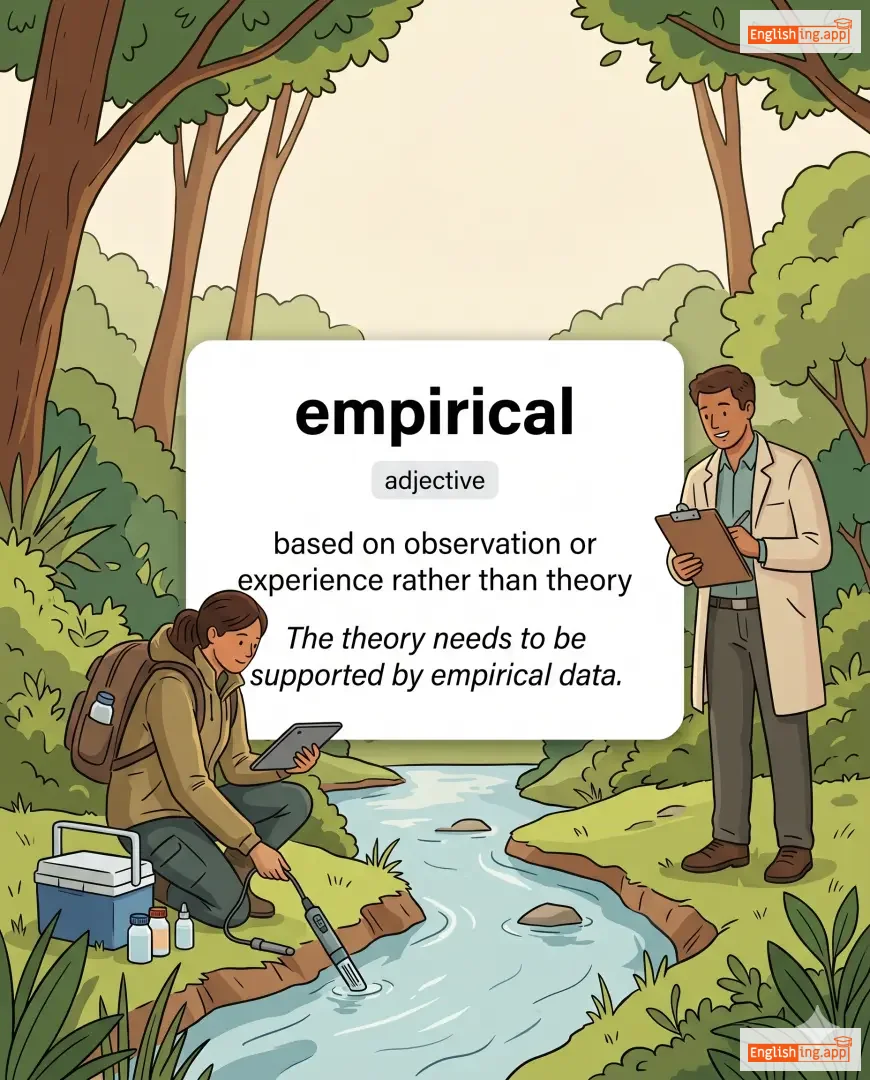
/ɛmˈpɪrɪkəl/
経験的 (keiken-teki)

based on observation or experience rather than theory

"The theory needs to be supported by empirical data."

"理論は経験的なデータで裏付けられるべきです。" (Riron wa keiken-teki na deeta de urazukerarebe ki desu.)
noun
/ɛmˈpɪrɪˌsɪzəm/
経験主義 (keiken shugi)

the theory that all knowledge is derived from sense-experience

"Empiricism argues that knowledge comes from experience and observation."

"経験主義は、知識は経験と観察から来ると主張しています。" (Keiken shugi wa, chishiki wa keiken to kansatsu kara kuru to shucho shiteimasu.)
verb
/ɪmˈplɔɪ/
雇う (yatoi)

to hire someone to do a job; to use something effectively

"The company plans to employ more engineers next year."

"その会社は来年、もっと多くのエンジニアを雇う予定です。" (Sono kaisha wa rainen, motto ōku no enjinia o yatou yotei desu.)
noun
/ɛmˈplɔɪ.iː/
従業員 (jūgyōin)

A person who works for an organization or company in return for payment.

"The company values each employee's contribution to its success."

"会社は各従業員の成功への貢献を重視しています。" (Kaisha wa kaku jūgyōin no seikō e no kōken o jūshi shiteimasu.)
noun
/ɪmˈplɔɪər/
雇用者 (koyōsha)

A person or organization that hires and pays people to work.

"The employer promised better benefits to attract skilled workers."

"雇用者は熟練した労働者を引き付けるために、より良い福利厚生を約束しました。" (Koyōsha wa jukuren shita rōdōsha o hikitsukeru tame ni, yori yoi fukuri kōsei o yakusoku shimashita.)
employment definition card — visual illustration of the meaning
noun
/ɪmˈplɔɪmənt/
雇用 (koyou)

the state of having a paid job or work

"The government is working to increase youth employment."

"政府は若者の雇用を増加させるために取り組んでいます。" (Seifu wa wakamono no koyō o zōka saseru tame ni torikundeimasu.)
noun
/ɛmˈpɔːriəm/
大規模な店 (daikibo na mise)

A large retail store selling a wide variety of goods.

"They visited the new emporium to buy furniture and home decor."
"彼らは新しいエンポリウムを訪れて、家具とホームデコールを買いました。" (Karera wa atarashī emporium o otozurete, kagu to hōmu dekoru o kaimashita.)
verb
/ɪmˈpaʊər/

To give someone the power or authority to do something; to make someone stronger or more confident.

"Education can empower people to improve their lives."

empowering definition card — visual illustration of the meaning
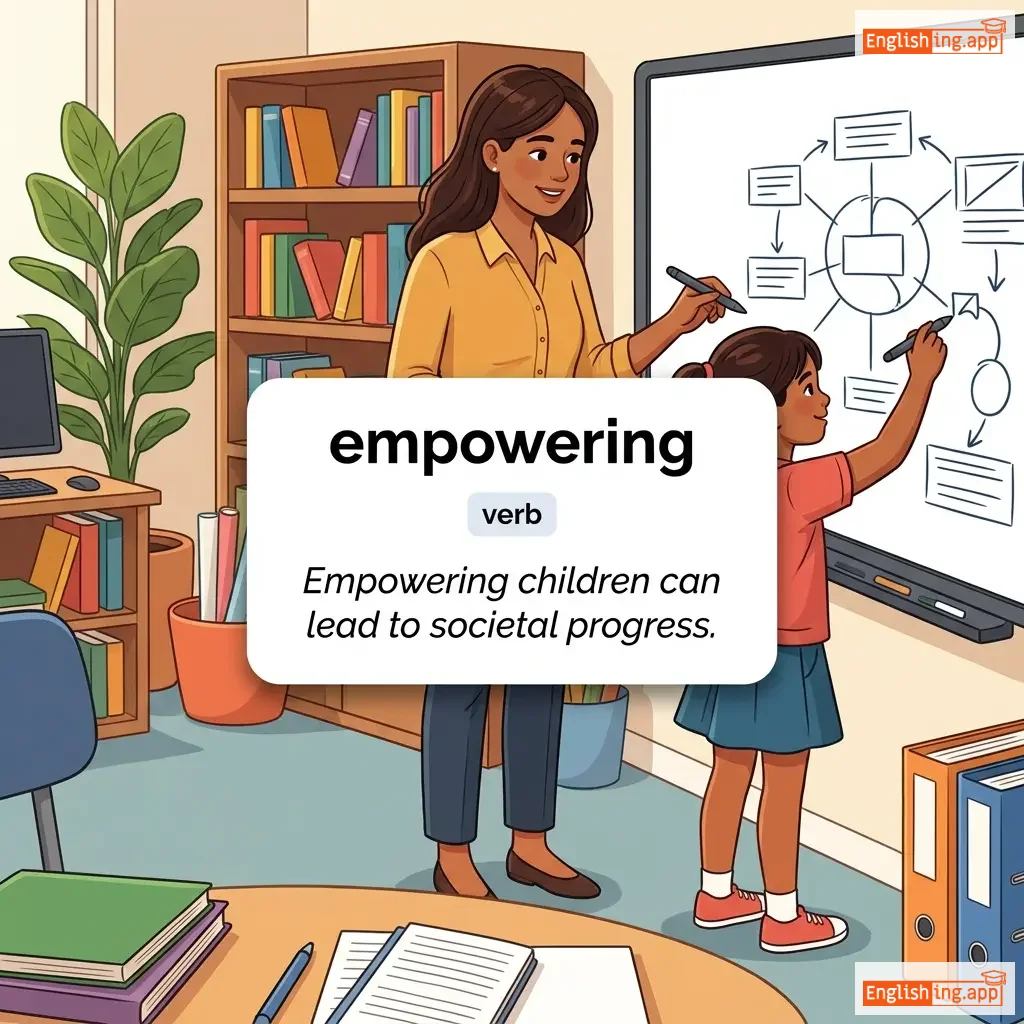
verb
ɪmˈpaʊərɪŋ
権限を与える (kengen o ataeru)

Giving someone the authority or power to do something; making someone stronger and more confident.

"Empowering children can lead to societal progress."
"子供たちに権限を与えることは、社会的進歩につながる可能性があります。" (Kodomo-tachi ni kengen o ataeru koto wa, shakai-teki shinpo ni tsunagaru kanōsei ga arimasu.)
empowerment definition card — visual illustration of the meaning
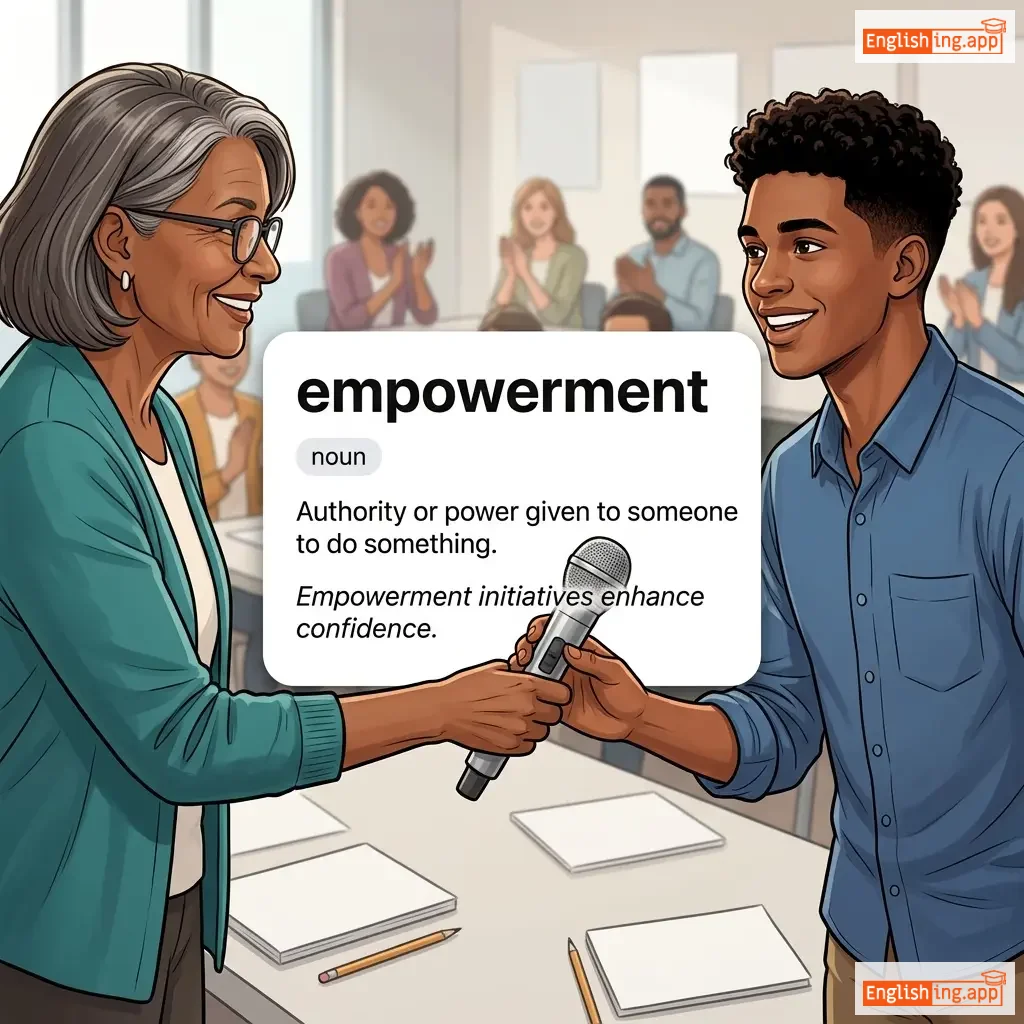
noun
/ɪmˈpaʊə.mənt/
エンパワーメント (enpawāmento)

Authority or power given to someone to do something.

"Empowerment initiatives enhance confidence."

"エンパワーメントのイニシアチブは自信を高めます。" (Enpawāmento no inishiatibu wa jishin o takamemasu.)
adjective
/ˈɛmpti/
空っぽ (karappo)

containing nothing; not filled

"The box was completely empty."

"箱は完全に空っぽだった。" (Hako wa kanzen ni karappo datta.)
adjective
/ɛmˈpaɪriəl/
天上的 (tenjō no)

Heavenly, divine, or relating to the highest heavens.

"The poet described the empyreal beauty of the stars."
"詩人は星の天上的な美しさを描写しました。" (Shijin wa hoshi no tenjō-teki na utsukushisa o byōsha shimashita.)
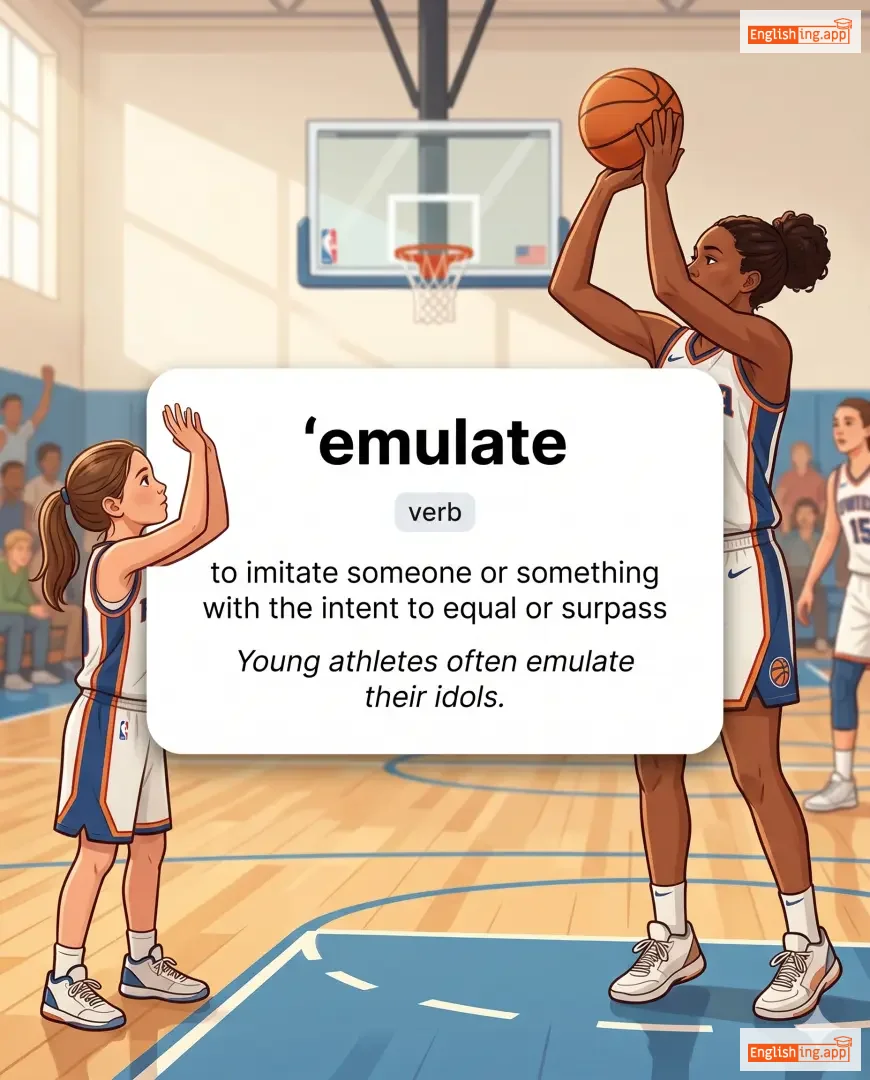
emulate definition card — visual illustration of the meaning
verb
/ˈɛm.jʊˌleɪt/
模倣する (mohō suru)

to imitate someone or something with the intent to equal or surpass

"Young athletes often emulate their idols."
"若いアスリートはよく自分のアイドルを模倣します。" (Wakai asurīto wa yoku jibun no aidoru o mohō shimasu.)
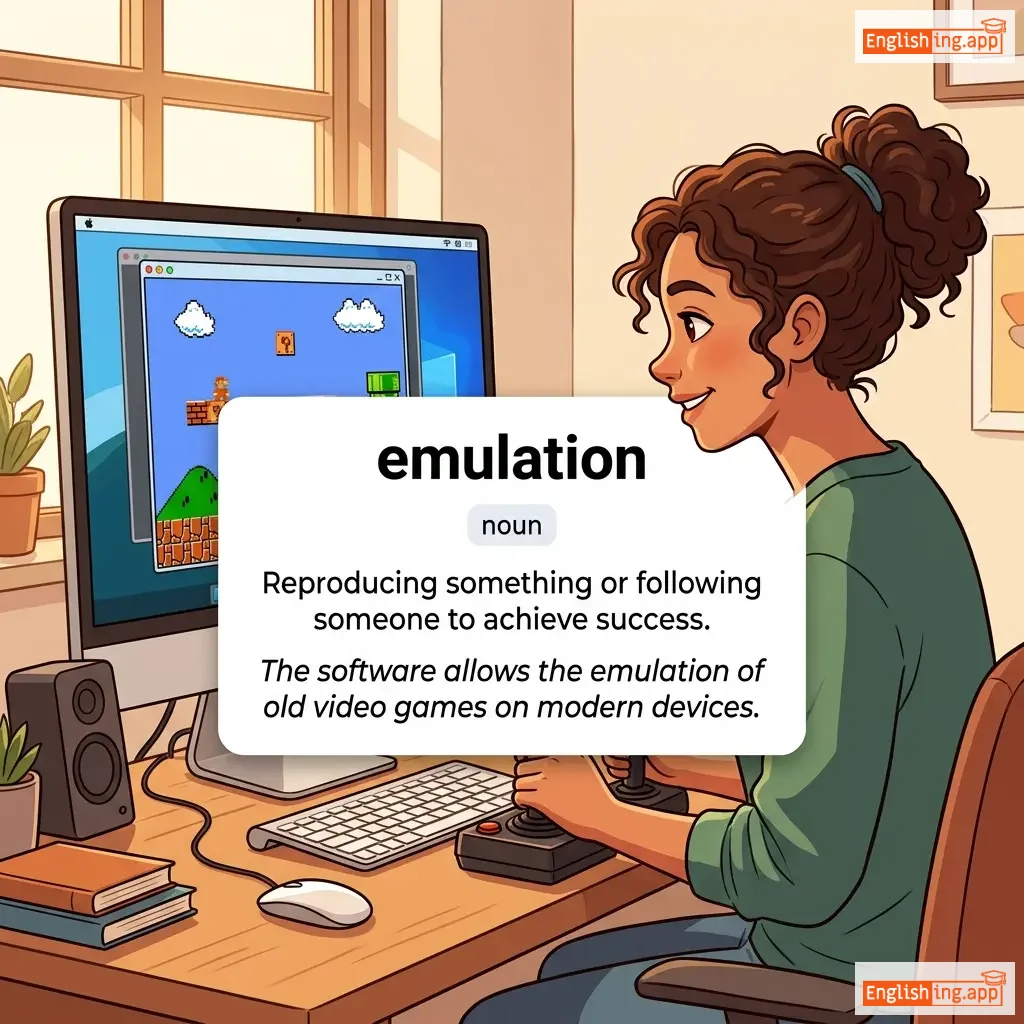
emulation definition card — visual illustration of the meaning
noun
/ˌɛmjʊˈleɪ.ʃən/
エミュレーション (emuryēshon)

Reproducing something or following someone to achieve success.

"The software allows the emulation of old video games on modern devices."
"そのソフトウェアは、古いビデオゲームを最新のデバイスでエミュレートすることを可能にします。" (Sono sofutowea wa, furui bideo gēmu o saishin no debaisu de emurēto suru koto o kanō ni shimasu.)
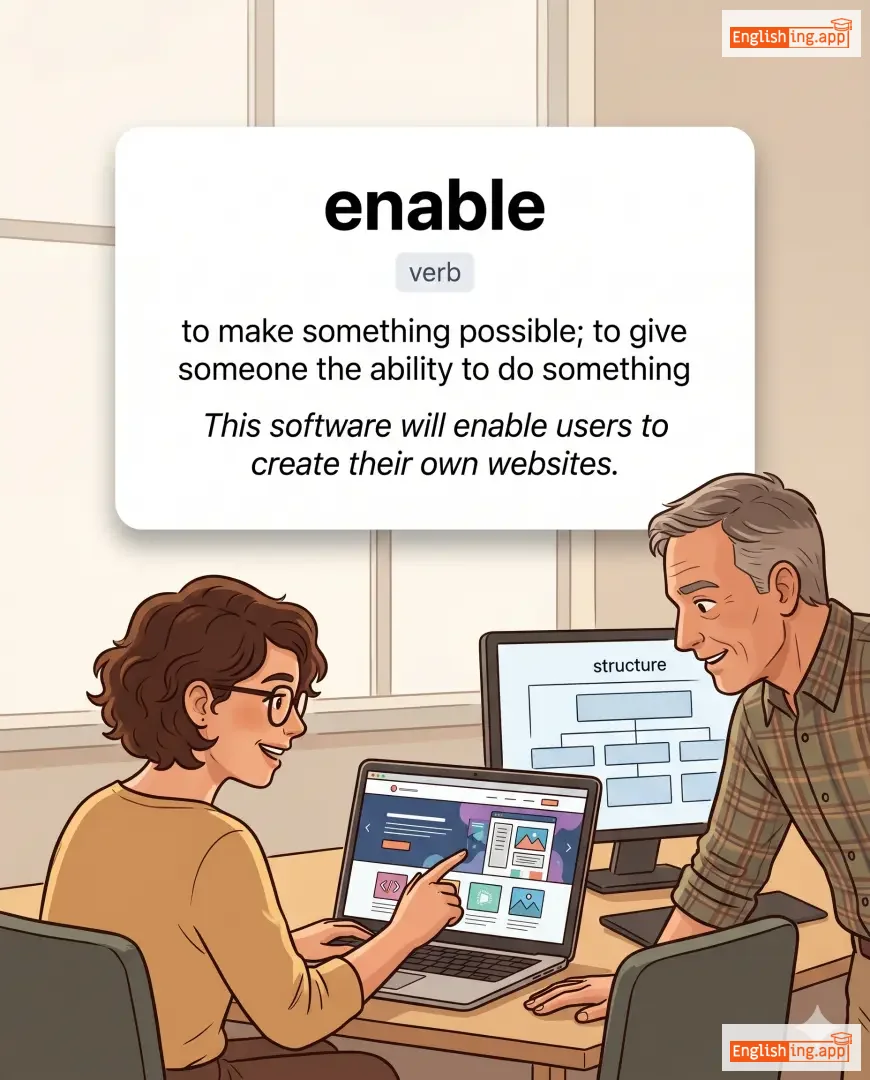
enable definition card — visual illustration of the meaning
verb
/ɪˈneɪbəl/
有効にする (yūkō ni suru)

to make something possible; to give someone the ability to do something

"This software will enable users to create their own websites."

"このソフトウェアは、ユーザーが自分のウェブサイトを作成できるようにします。" (Kono sofutowea wa, yūzā ga jibun no u~ebusaito o sakusei dekiru yō ni shimasu.)
verb
/ɪˈnækt/
制定する (seitei suru)

to make into law; to perform or act out

"The government decided to enact a new policy on education."

"政府は教育に関する新しい政策を制定することを決定しました。" (Seifu wa kyōiku ni kansuru atarashī seisaku o seitei suru koto o kettei shimashita.)
noun
/ɪˈnæməl/
エナメル (enameru)

a hard, glossy substance used as a protective or decorative coating; the hard outer layer of teeth

"The dentist explained that enamel protects the teeth from decay."

"歯科医は、エナメルが歯を虫歯から守ることを説明しました。" (Shikai wa, enameru ga ha o mushiba kara mamoru koto o setsumei shimashita.)
verb
/ɪˈnæmər/
恋する (koisuru)

to be filled with love or admiration for

"She was enamored with the beautiful scenery."

"彼女は美しい景色に恋していた。" (Kanojo wa utsukushī keshiki ni koi shite ita.)
adjective
/ɪˈnæmərd/
夢中 (mucyu)

filled with love or admiration

"He became enamored with classical music after attending the concert."

"彼はコンサートに参加した後、クラシック音楽に魅了されました。" (Kare wa konsaato ni sanka shita ato, kurashikku ongaku ni miryō saremashita.)
verb
/ɪnˈkæmp/
キャンプをする (kyanpu wo suru)

to set up or establish a camp

"The soldiers encamped near the river for the night."
"兵士たちは夜のために川の近くでキャンプしました。" (Heishitachi wa yoru no tame ni kawa no chikaku de kyanpu shimashita.)
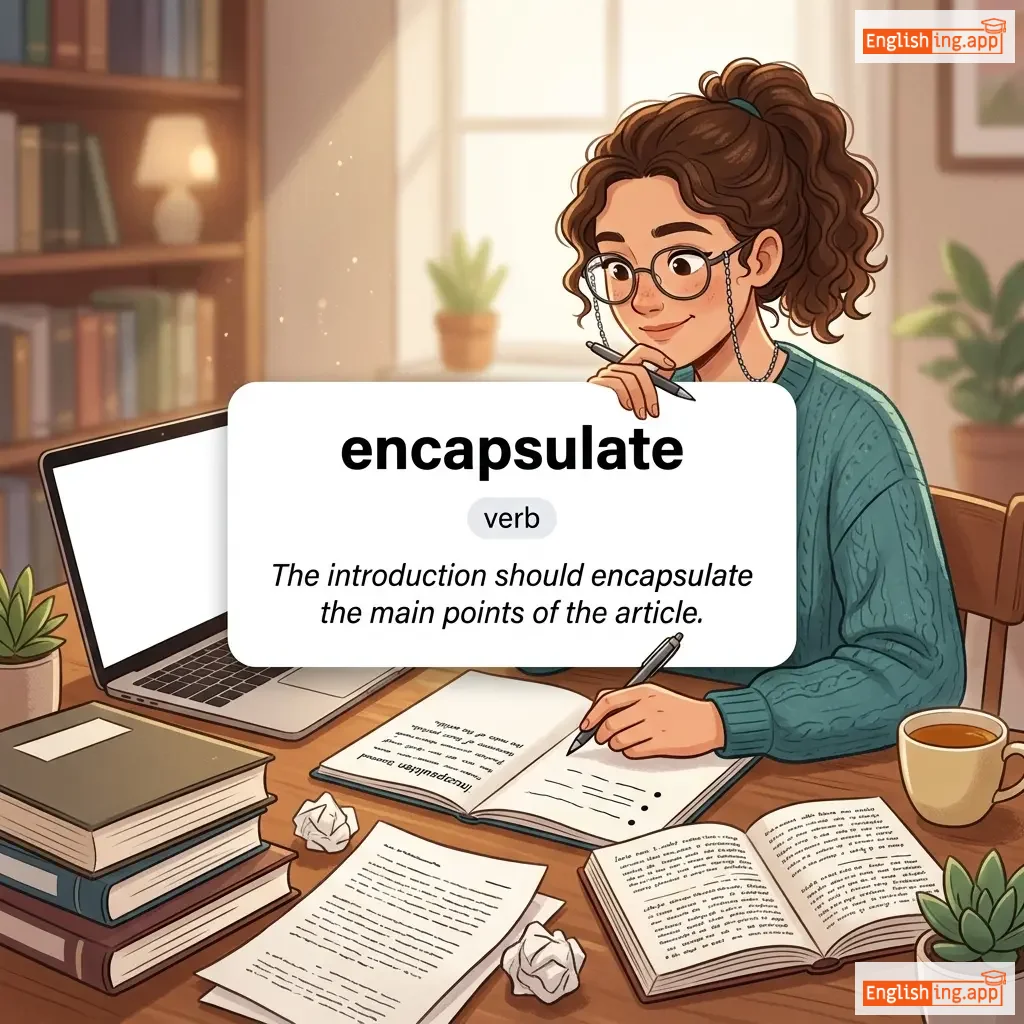
encapsulate definition card — visual illustration of the meaning
verb
/ɪnˈkæp.sjʊ.leɪt/
要約する (yōyaku suru)

To express the essential features of something succinctly; to summarize or contain within.

"The introduction should encapsulate the main points of the article."

"導入部は記事の主なポイントを要約するべきです。" (Dōnyūbu wa kiji no omona pointo o yōyaku suru beki desu.)